

From The Pueblo Chieftain (Robert Boczkiewicz):
The district says the lawsuit, filed by the federal and state governments, followed on the heels of a letter of concern the district sent Oct. 28 to the U.S. Environmental Protection Agency.
The lawsuit was filed Wednesday in U.S. District Court in Denver by the EPA and the Colorado Department of Public Health and Environment against the city of Colorado Springs.
The lawsuit alleges that discharges into the creek from the city’s stormwater sewage system violate the federal Clean Water Act and the state Water Quality Control Act.
“It’s time Colorado Springs be held accountable for its continued violations of discharge limits into Fountain Creek,” said Jay Winner, general manager of the Lower Arkansas district. Its mission is to protect water resources of the Lower Arkansas River Valley.
“We’ve been trying to get the Springs to recognize their responsibility to Pueblo and the Lower Arkansas Valley for the past 12 years, but there has been close to zero progress when it comes to cleaning up the mess on Fountain Creek,” Winner said.
He said the Oct. 28 letter expressed concerns with Colorado Springs’ 2016 Stormwater Program Implementation Plan. The letter was part of the district’s long-standing complaints about the city’s discharges into the creek.
The lawsuit seeks:
- A court order requiring Colorado Springs “to take all steps necessary to redress or mitigate the impact of its violations.”
- A court order requiring the city “to develop, implement and enforce” its stormwater management program, as required by permits the government has issued. The federal and state laws invoked by the lawsuit regulate the discharges.
- Imposition of monetary penalties on Colorado Springs for the violations.
“This is an historic day for Pueblo, which has been waiting decades for Colorado Springs to clean up Fountain Creek,” Anthony Nunez, a former Pueblo County commissioner who sits on the Lower Ark board, said in a statement issued by the district.
Melissa Esquibel, another Pueblo County member of the district’s board, said the board intends to discuss the lawsuit at its Wednesday meeting in Rocky Ford. The district encompasses Bent, Crowley, Otero, Prowers and Pueblo counties.
The Gazette newspaper in Colorado Springs reported Thursday that the city’s mayor, John Suthers, expressed frustration that the EPA and state environmental agency filed the lawsuit rather than recognize recent strides the city has made to deal with its storm sewer discharges.
“They know they have a mayor and City Council that recognize the problem, understand the problem and are intent on fixing the problem,” the mayor said. “Rather than working with us to get this done, they file a lawsuit.
“Every single dime going to litigate this thing and pay fines should be going into fixing the problem,” Suthers said.
The district sees it differently.
“They’ve dumped on Pueblo in the past, and it looks like they’ll keep on dumping,” Winner said. “We’ve seen nothing to convince us they have changed their attitude that Fountain Creek can be used as an open sewer.”
From The Pueblo Chieftain (Robert Boczkiewicz):
The lawsuit seeks a court order requiring Colorado Springs “to take all steps necessary to redress or mitigate the impact of its violations.”
Colorado Springs’ discharge from its storm sewer system of toxic pollutants into Fountain Creek has long been a cause of distrust and bad relations between Pueblo and its upstream neighbor.
The lawsuit was filed Wednesday in U.S. District Court in Denver.
The U.S. Department of Justice filed the lawsuit at the request of the Environmental Protection Agency. The Colorado Attorney General’s office filed the lawsuit at the request of the Colorado Department of Public Health and Environment.
The lawsuit claims that polluted discharges from Colorado Springs’ stormwater system violate the federal Clean Water Act and the state Water Quality Control Act.
The 51-page lawsuit states that the discharges flow into Monument Creek, Camp Creek, Cheyenne Creek and Shooks Run, as well as into Fountain Creek.
The lawsuit also seeks a court order to require Colorado Springs “to develop, implement and enforce” its stormwater management program, as required by permits the government has issued. The federal and state laws invoked by the lawsuit regulate the discharges.
The lawsuit also asks a judge to impose monetary penalties on Colorado Springs for the violations.
Water runoff from streets, parking lots and other surfaces picks up pollutants that drain into the stormwater sewage system, which discharges it into the creeks.
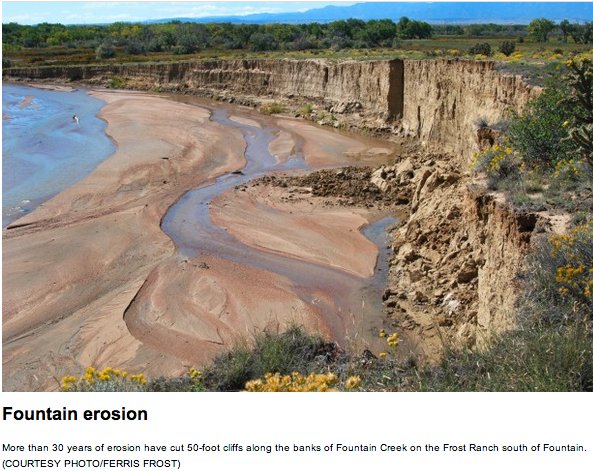
Pollutants include accumulated debris, chemicals and sediment. They “can adversely affect water quality, erode stream banks, destroy needed habitat for fish and other aquatic life, and make it more difficult and expensive for downstream users to effectively use the water,” the lawsuit states.
Under federal courts rules, the city is required to respond to the lawsuit after it is served on a city official. In their responses filed at the court, defendants typically state their position on the allegations and claims against them.
