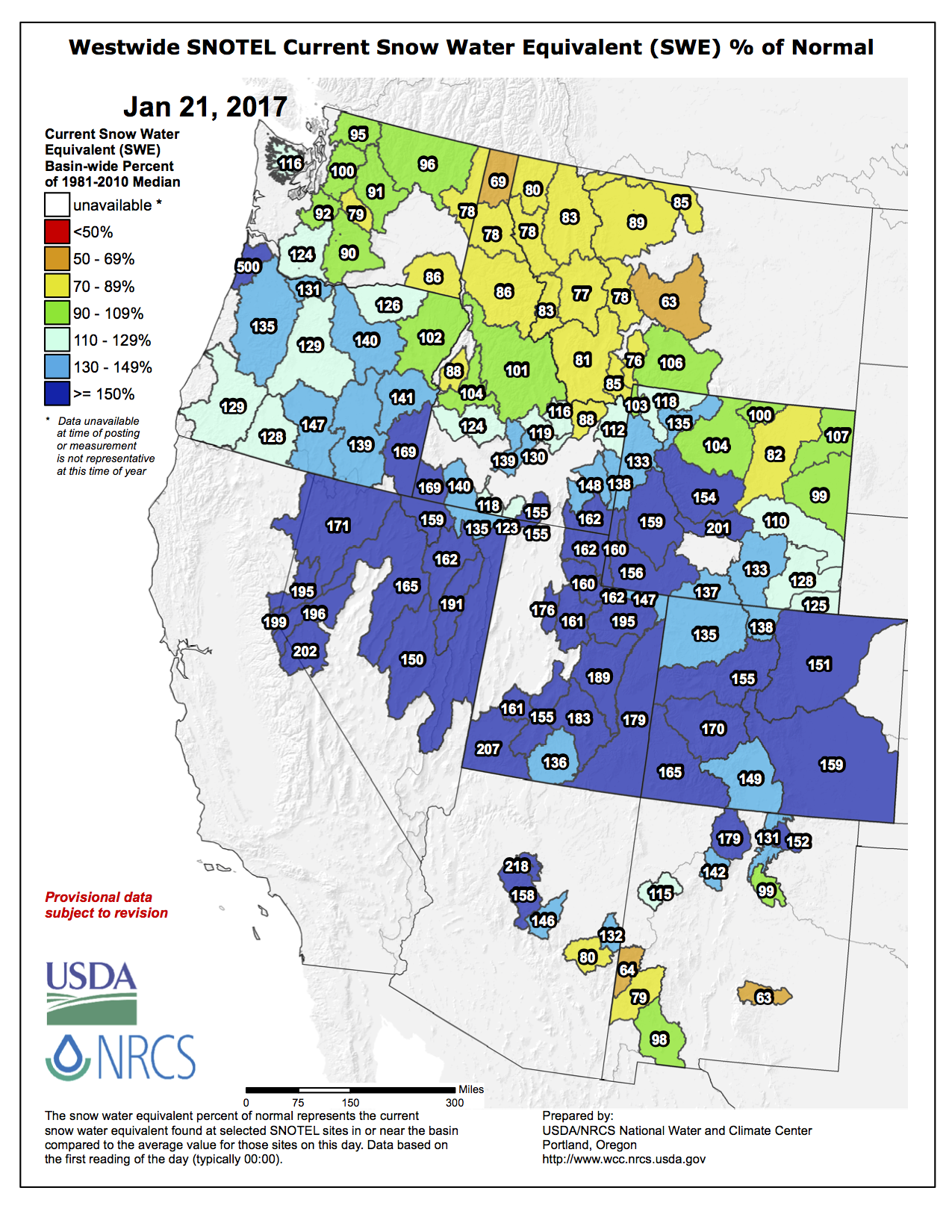
From the Fort Collins Coloradoan (Jacy Marmaduke):
We’re not out of drought yet — the city and most of Larimer County remain in a moderate drought — but the new classification by the U.S. Drought Monitor is good news for Northern Colorado, which has been parched since June and officially entered drought territory in August.
A lot of factors go into the drought classification, including precipitation, soil moisture and stream flows, but it’s likely that recent snows in Northern Colorado and the Front Range were a big factor in the drought improvement. The monitor measures four stages of drought as well as abnormal dryness, the precursor to drought.
Thanks to big January snows, Fort Collins is right on the mark for average snowfall from November through mid-January and above the normal amount of precipitation, according to Colorado Climate Center data. The city has received 21.6 inches of snow since November and about 1.7 inches of precipitation, compared to 1981-2010 averages of 21.8 inches and 1.5 inches, respectively.
Meanwhile, several storms have hit the mountains that feed the South Platte River Basin, the main water supply for Northern Colorado, with 5 to 8 feet of snow since mid-November. That has the snowpack at 152 percent of normal for this time of year as of Friday.
From The Las Vegas Review-Journal (Henry Brean):
Snow is piling up in the Rockies and Sierra Nevada, but this year’s first official water forecast for the Colorado River still predicts Lake Mead will shrink enough to trigger a federal shortage declaration in 2018.
Federal forecasters expect the lake’s surface to drop by about 9 feet by the end of 2017, which would put it inches below the all-important shortage line of 1,075 feet above sea level. That would force Nevada and Arizona to cut their use of Colorado River water under rules adopted a decade ago…
The picture is much rosier — and whiter — in California’s drought-ravaged Sierra Nevada range, where snow accumulations are well above average for this time of year. The southern end of the range especially has received almost double its normal amount of snow so far.
While that precipitation doesn’t directly benefit Lake Mead or Southern Nevada, it could help reduce California’s need for Colorado River water by refilling reservoirs within the Golden State…
Nevada, California and Arizona are closing in on a drought contingency plan, under which the states would voluntarily reduce their use of Colorado River water to prop up the reservoir. Arizona and Nevada would bear the brunt of the cuts early on, but California would also accept reductions to its share of the river for the first time under the deal…
At the same time, water officials in the U.S. and Mexico are in talks to extend and expand a treaty that governs how the Colorado is managed across the international boundary.
The new agreement, known as Minute 32X, lets Mexico continue storing some of its annual river allotment in Lake Mead and allows U.S. water agencies to invest in water-saving projects south of the border for a share of the water that is saved. It also spells out Mexico’s share of any shortages that might be declared on the river.
From InkStain (John Fleck):
At this critical time of year for Colorado River snowpack, things are looking very good. For the first time this year, the April-July runoff forecast has climbed above 10 million acre feet.
The snowpack among the sites above Lake Powell where the federal government maintains real-time monitoring equipment is 57 percent above the long term median for this point in the year.
The amount of snow does not translate directly into river water because of a number of mediating factors – dry soils going into the season can soak up some of that, and warmer temperatures mean greater evaporation. That said, however, the latest model runs by the Colorado Basin River Forecast Center put April-July runoff at 40 percent above average. That’s the 10maf runoff forecast.
But since a key thing in water management is to enjoy the best but be ready for the worst, the most important thing in the CBRFC forecast is the forecasters’ bad news scenario. They calculate not only the most probable runoff, but also a sort of “worst case”, something you would expect in the driest 10 percent of years. That worst case right now is for above average runoff in the Colorado River Basin.
Here’s how this translates to policy, and why this is especially good news for those in the Lower Colorado River Basin trying to cope with the decline of Lake Mead. The nominal required release (shut up lawyers, I know that’s a contested characterization, let’s just go with it) from Lake Powell to Lake Mead each year is 8.23 million acre feet per year. When there’s more water in Powell, we move “bonus water” downstream, and lately there’s enough for 9 million acre foot releases. The current snowpack pretty greatly increases the probability of 9maf releases for the next couple of years, which makes it much easier to keep Mead from slipping into shortage.
The 1-in-10 best case scenario is nearly 13maf. Under Mead-Powell operating rules, a year like that would mean far more than 9 million acre feet for Lake Mead, which combined with current conservation efforts would buy the Lower Basin years of cushion before shortage.