
Mrs. Gulch’s landscape April 18, 2025

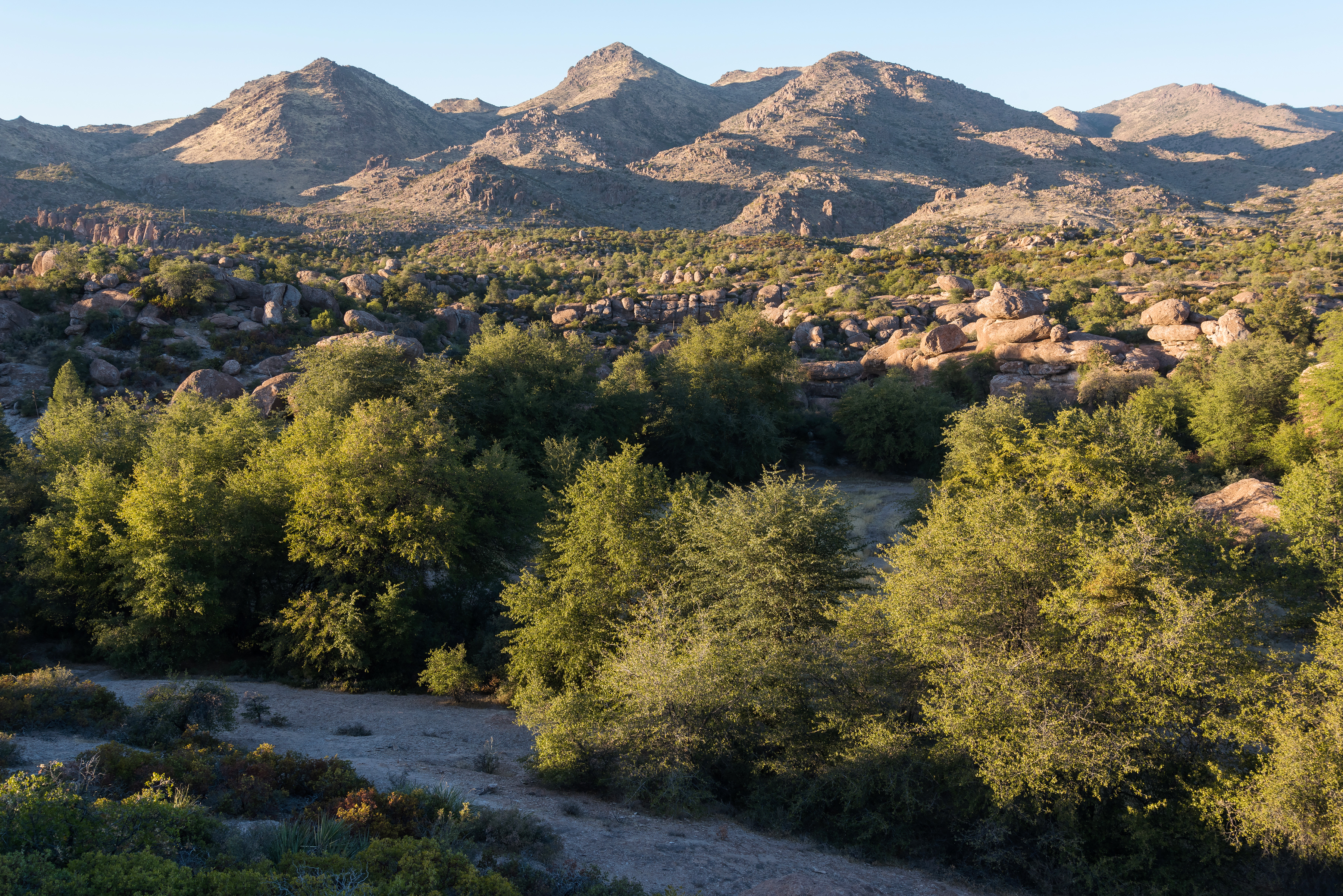
Click the link to read the article on the AZCentral.com website (Debra Utacia Krol). Here’s an excerpt:
April 18, 2025
Key Points
- The Trump administration put Resolution Copper’s proposed mine at Oak Flat on a priority list with nine other mining projects, declaring they were vital to the nation’s security.
- A day earlier, the administration announced it would re-issue an environmental impact statement required to finish a land swap that would allow the mine’s construction.
- Tribes and environmentalists say Trump has clearly decided not to wait for court rulings on the project, putting the sacred site in greater jeopardy.
The Trump administration has now put the Oak Flat copper mine on the fast track for permit approval, a day after moving to push ahead with a land swap. A federal agency that oversees and supports permits for public lands projects added Resolution Copper‘s proposed mine east of Phoenix to a new priority list on April 18, along with nine other mining projects. It is part of the administration’s push to increase domestic production of critical minerals through an executive order issued March 20. The list was posted in the wake of an announcement by the U.S. government on April 17 that it would reissue the final environmental impact statement, clearing the way to transfer ownership of Oak Flat, a site considered sacred to Apache and other Native peoples, to Resolution Copper no earlier than June 17…
A petition attempting to stop the land swap is awaiting action at the U.S. Supreme Court. It was filed by grassroots group Apache Stronghold as part of ongoing litigation to stop the mine from turning Oak Flat into a huge crater through its mining process. The Becket Fund for Religious Liberty, which is representing Apache Stronghold, filed a letter April 18 with the Supreme Court calling for the high court to move quickly to accept Apache Stronghold’s case…The latest order put Oak Flat and nine other mining projects — including the McDermitt and Silver Peak lithium mines in Nevada; the Stibnite open-pit gold mine in Idaho; and the Lisbon Valley copper mine in Utah — on a faster schedule.
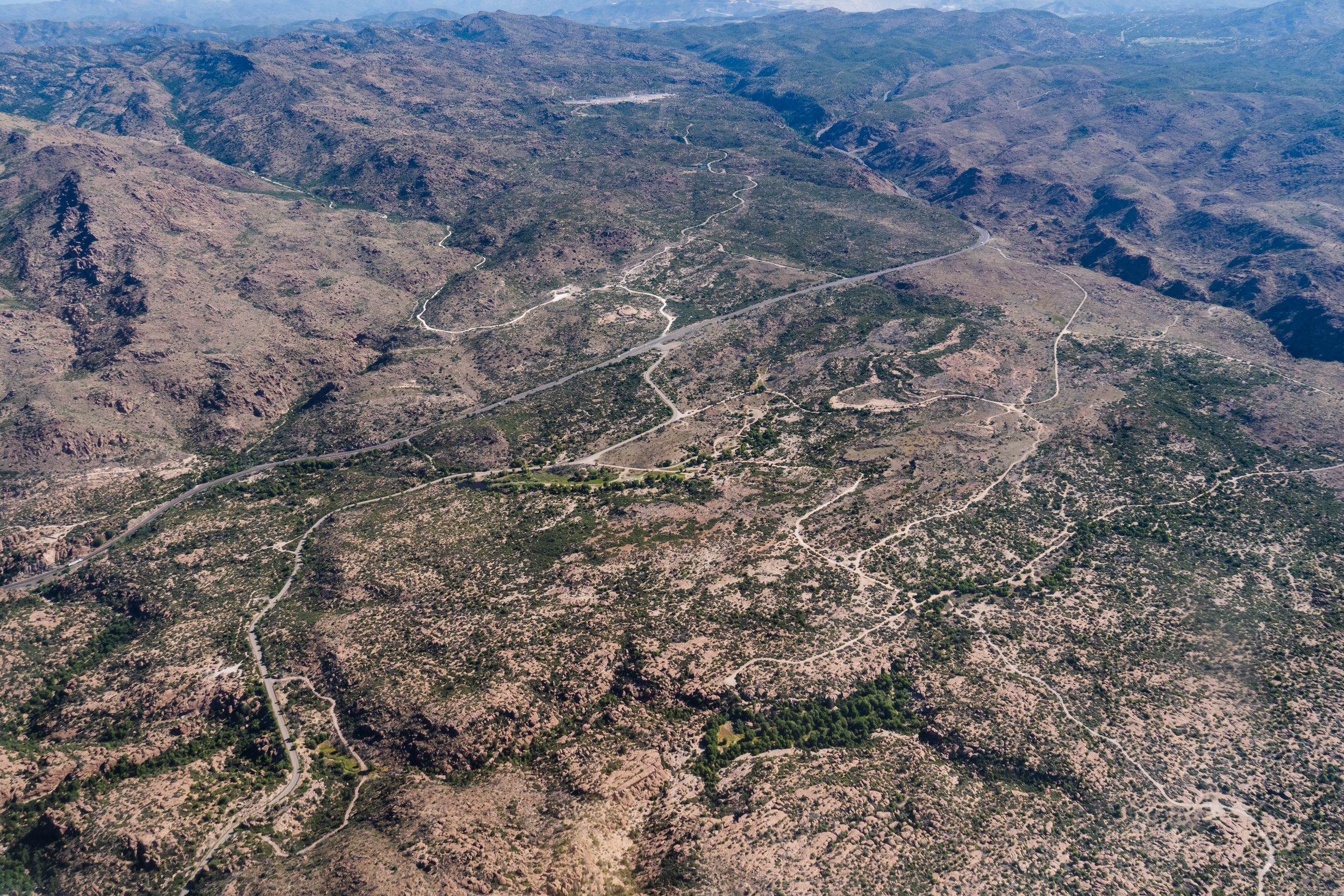
Click the link to read the article on the Inside Climate News website (Wyatt Myskow):
April 18, 2025
The fate of Arizona’s proposed Resolution Copper mine rested with the federal courts, but the administration announced Thursday it would move to approve the project before their rulings.
The Trump administration on Wednesday signaled it intends to approve a land transfer that will allow a foreign company to mine a sacred Indigenous site in Arizona, where local tribes and environmentalists have fought the project for decades and before federal courts rule on lawsuits over the project.
Western Apache have gathered at Oak Flat, or Chi’chil Biłdagoteel in Apache, since time immemorial for sacred ceremonies that cannot be held anywhere else, as tribal beliefs are inextricably tied to the land. The tribe believes the landscape located outside present-day Superior, Arizona, is a direct corridor to the Creator, where Gaan—called spirit dancers in English, and akin to angels—reside. The site allows the Western Apache to connect to their religion, history, culture and environment, tribal members told Inside Climate News.
But beneath the ground at the site of Oak Flat lies one of the world’s largest untapped copper deposits. Resolution Copper, a subsidiary of two of the biggest mining companies in the world, Rio Tinto and BHP, has worked for decades to gain access to the location to utilize what’s called “block cave mining.”
The method, used to access low-grade ore, requires undermining the surface of the land so it collapses under its own weight to reveal the copper. At some point, the proposed mine would create an open pit 1.8 miles wide and 1,000 feet deep, big enough to fit the Eiffel Tower and nearly as large as the local town, according to environmental review documents for the project.
Three lawsuits against the project are still working their way through the courts. Apache Stronghold v. United States, decided by a federal appeals court in favor of the mine, was appealed by plaintiffs more than a year ago to the Supreme Court, which has not yet decided whether to take it up. That case argues the destruction of Oak Flat violates the Apache’s religious freedom, and is a threat to other religions.
The other two cases are awaiting the Supreme Court decision before they advance through the federal court system.
Environmentalists, local opponents and members of the San Carlos Apache Tribe lambasted the administration’s decision to move forward without a ruling from the court.
“The U.S. government is rushing to give away our spiritual home before the courts can even rule—just like it’s rushed to erase Native people for generations,” Wendsler Nosie Sr. of Apache Stronghold, the religious group leading the fight against the mine, and former chairman of the San Carlos Apache Tribe, said in a statement. “This is the same violent pattern we have seen for centuries. We urge the Supreme Court to protect our spiritual lifeblood and give our sacred site the same protection given to the holiest churches, mosques, and synagogues throughout this country.”
The Trump administration did not respond to a request for comment.
Thursday’s decision to move forward with the Resolution Copper mine is the latest in the Trump administration’s efforts to boost the U.S. domestic mining industry as part of its “energy dominance” agenda.
Already this year, President Donald Trump has signed an executive order to streamline the permitting of mines across the country and make mineral extraction the top use of public lands that hold needed minerals. All mining projects for copper, uranium, potash, gold and any critical mineral, element, compound or material identified by the chair of the new National Energy Dominance Council are included under the order. One public comment period regarding an exploration plan for a lithium mine was already drastically reduced, but a fierce pushback from the public prompted an extension.
Mine Will Bring “Devastation and Pollution,” Opponents Say
The news about the mine came in legal filings for the three court cases and on the U.S. Forest Service’s website for the project, which states that it intends to publish the final environmental impact statement and a draft decision for the land transfer and mine within 60 days.
The filing said that if the Supreme Court declines to hear the religious freedom case, federal authorities will move forward with approval of the project. If the court hears the case and rules against the federal approval, the government will reevaluate how to proceed, it says.
“The feds are barreling ahead to give Oak Flat to Resolution Copper, even as the Supreme Court considers whether to hear the case,” Luke Goodrich, vice president and senior counsel at the Becket Fund for Religious Liberty, which is representing Apache Stronghold in its case, said in a statement. “This makes the stakes crystal clear: if the Court doesn’t act now, Oak Flat could be transferred and destroyed before justice can be served.”
Minerals like copper are critical to everything from transmission lines to batteries for electric vehicles. And mines for such minerals can bring coveted jobs to rural regions. But they often destroy local lands and waters.
The federal government’s initial environmental impact statement for Resolution Copper’s mine concludes that the project will destroy sacred oak groves, sacred springs and burial sites, resulting in what “would be an indescribable hardship to those peoples.” It would also use as much water each year as the city of Tempe, home to Arizona State University and 185,000 people. It would pull water from the same tapped-out aquifer the Phoenix metro area relies on, where Arizona has prohibited any more extraction except for exempted uses like mines.
The proposed mine would also leave behind a 500-foot-tall pile of mine tailings filled with 1.5 billion tons of toxic waste that would have to be constantly maintained to prevent the contamination from spreading.
Though Superior town leaders have backed the mine, not every local is supportive of it. Henry Muñoz, a lifelong miner who worked at the town’s previous copper mine until it shut down and is now the chairman of the Concerned Citizens and Retired Miners Coalition, said the administration’s decision is premature but that “money talks in Washington.”

One of the National Mining Association’s top priorities has been moving the stalled project forward.
“Rio Tinto and BHP, they have billions and billions of dollars,” Muñoz said. “They couldn’t care less about the environment, about the health and safety of people. Money is the motivator.”In a statement, Vicky Peacey, general manager at Resolution Copper, said the company was “encouraged to hear” the Forest Service was proceeding with the project.
“This world-class mining project has the potential to become one of the largest copper mines in America, adding up to $1 billion a year to Arizona’s economy and creating thousands of local jobs in a region of rural Arizona where mining has played an important role for more than a century,” she said. “A decade of feedback from local communities and Native American Tribes has shaped this project every step of the way, and we remain committed to maintaining an open dialogue to ensure the Resolution Copper project moves forward responsibly and sustainably as we transition into the next phase of the permitting process.”
All of the project’s impacts, Muñoz said, are out in the open, available for the public to read in the hundreds of pages of permitting documents. He likened Resolution Copper’s public messaging of the project to the Devil telling someone not to read the Bible, as it would change how they felt about him. In this case, he said, the public would realize the project is not in the best interest of Americans.
“They’re talking a 40-year mine life,” Muñoz said, questioning what will happen to Superior after that time. “We’re going to be like all the other former mining towns. We’re going to have that big old toxic toilet on the hill. We’re going to have that big waste dump, and then we’re going to end up wasting 250 billion gallons of water that was meant for the American taxpayer, for the benefit of two foreign mining companies. There’s nothing good for us in this project that I can see. Nothing but temporary jobs. But at the end, devastation and pollution.”
A Decades-Long Fight
Since the 1950s, Oak Flat has been under the jurisdiction of the U.S. Forest Service and listed in the National Register of Historic Places. Legislators for years pushed to have the land made available for mining via a land transfer, where a company typically offers up environmentally important land it owns in exchange for lands better suited for extraction but unavailable for development.
Each attempt failed until 2014, when the late Arizona Sen. John McCain and former Arizona Sen. Jeff Flake attached a last-minute rider to that year’s defense bill that required Oak Flat to be transferred to Resolution Copper. The transfer launched one of the country’s most controversial and high-profile environmental fights, with the San Carlos Apache and environmentalists fighting to stop the transfer and save the sacred land.
The land Resolution Copper would exchange for Oak Flat includes an old-growth mesquite forest located in southern Arizona’s San Pedro Valley, near the town of Mammoth. Although that 3,000-acre site is treasured by birders, critics of the transfer say the site is not enough to compensate for the loss of Oak Flat, which is also habitat for multiple species listed under the Endangered Species Act.
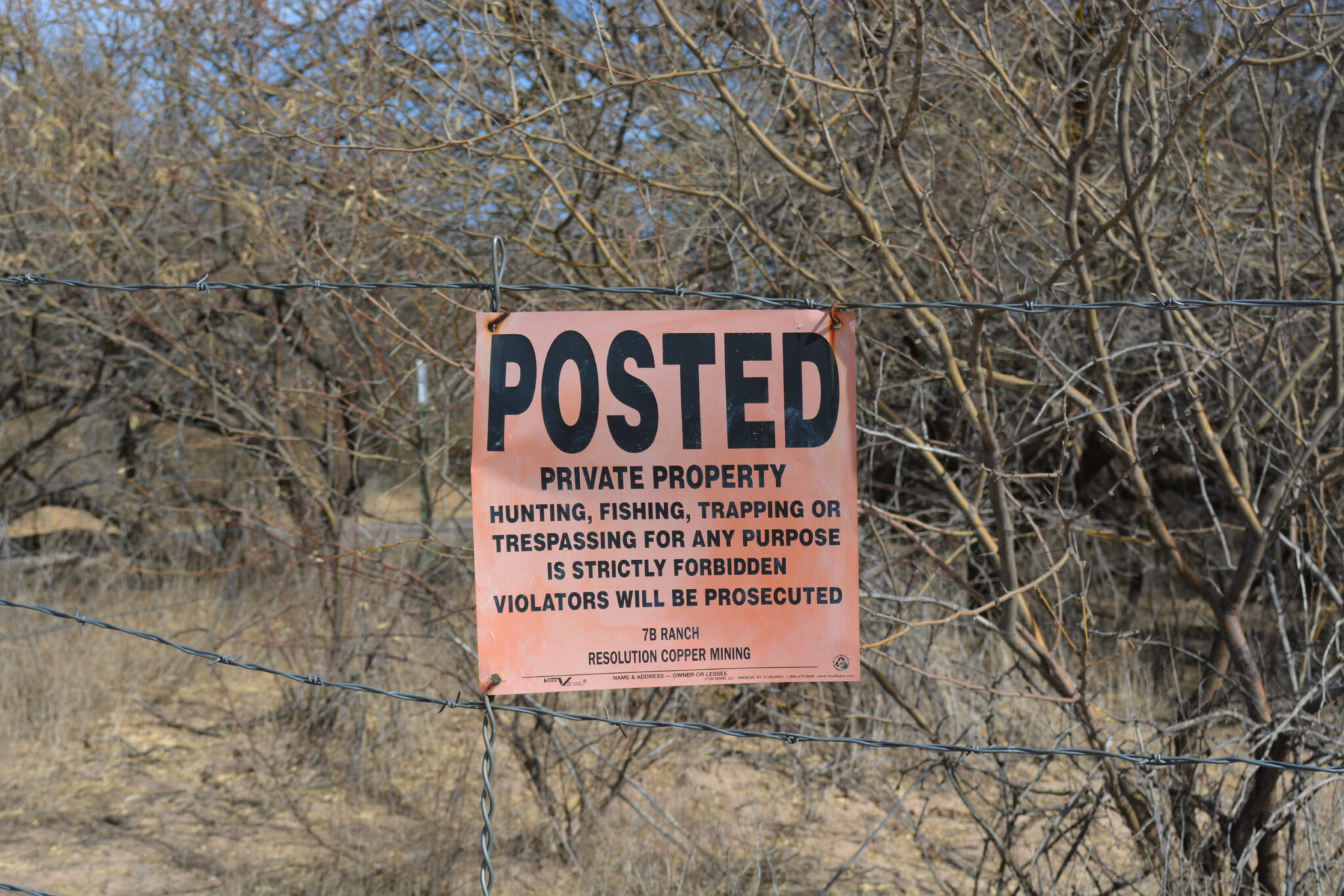
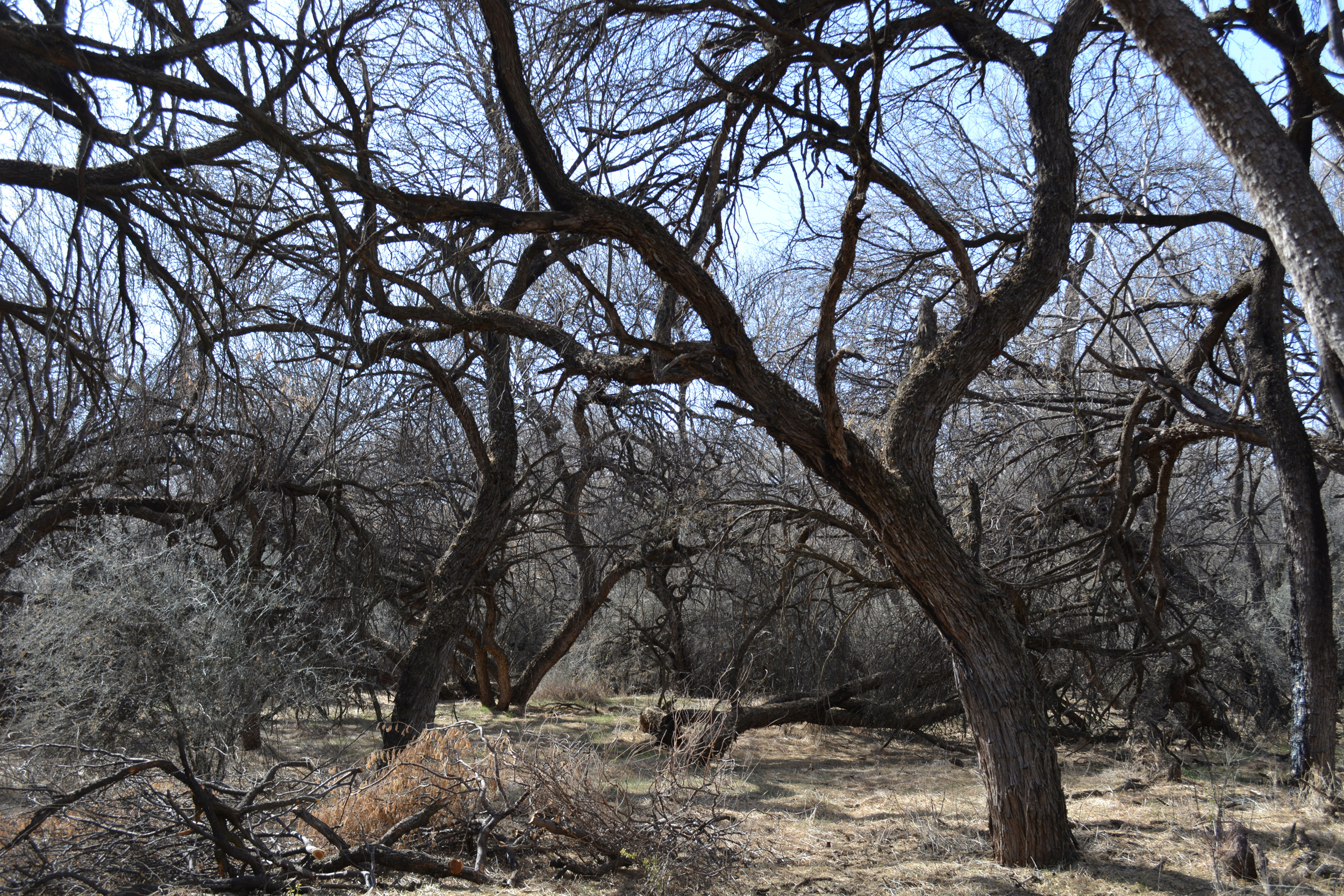
The two other lawsuits over the mine that will go through the court system after the Apache Stronghold case reaches its final resolution include one from the San Carlos Apache tribe itself that argues, under a treaty between the tribe and the U.S. government, the land still belongs to the Apache tribe.
The other lawsuit, filed by the Arizona Mining Reform Coalition, the Center for Biological Diversity, Earthworks, the Grand Canyon chapter of the Sierra Club and the Inter Tribal Association of Arizona, alleged the Forest Service failed to analyze and mitigate the proposed mine’s potential damage to the environment and failed to comply with multiple laws and regulations.
“Once we destroy this,” Muñoz asked of Oak Flat, “what do we have left?”

Click the link to read the article on The Kiowa County Press website (Roz Brown). Here’s an excerpt:
Working without fanfare, federal scientists at 22 U.S. sites maintain the nation’s agricultural plant species collected since 1898, including crops native to New Mexico. But the Trump administration’s DOGE agency has fired them. The move creates uncertainly for hundreds of crop species that undergird the country’s food system. The U.S. National Plant Germplasm System safeguards the genetic diversity of agriculturally important plants. Iago Hale, associate professor of specialty crop improvement at the University of New Hampshire, said the potential loss of these “seed bunkers” should alarm every American.
“If you subsist totally on chicken nuggets and KFC, that’s fine – understand that that comes back to plants grown in the field. The breading on your fried chicken, the French fries that you’re eating – these are all products of crops, and this is how it works,” Iago Hale said.
Hale said the NPGS is central to the nation’s preparedness, because the food system is only as safe as our ability to respond to the next plant disease. Unless dormant seeds are continually cared for and periodically replanted, Hale noted the lines will die, along with their evolutionary history. Hale said potatoes, the fourth-largest crop, require even more care than wheat or corn.
From email from Southeastern Water (Chris Woodka):
April 17, 2025
Two new directors joined the Board of the Southeastern Colorado Water Conservancy District and were sworn in on Thursday, April 17, 2025.

Abby Ortega will represent El Paso County and Mike Bartolo will represent Otero County on the 15-member Board. Returning directors who were sworn in include Matt Heimerich, Crowley County; Greg Felt, Chaffee County; Andy Colosimo, El Paso County; and Seth Clayton, Pueblo County. Terms are for four years. Ortega will fill the term for the seat held by Mark Pifher, who retired in December. The term expires in 2028. Bartolo will take over the seat held by Howard “Bub” Miller, who was recognized for 20 years of service to the Board by President Bill Long at Thursday’s meeting.
Ortega is a Fremont County native who is General Manager of Infrastructure and Resource Planning for Colorado Springs Utilities, where she manages resources for gas, electricity, wastewater and water services. She has worked at CS-U since 2003 and held various positions in the water resources area.
She holds a bachelor’s degree from Colorado State University-Fort Collins and is a licensed professional engineer. She has served on the Colorado River Energy Distributors Board, the Fountain Valley Authority Board, the Arkansas Basin Roundtable, Colorado Canal and Twin Lakes Reservoir Co. board and the Arkansas Headwaters Recreation Area Citizen Task Force.
“Fostering relationships across the entire spectrum of issues is crucial for collaborative progress,” Ortega said. “The SECWCD is positioned to be a leader in the future of water in the Arkansas River Valley and I would like to be part of that as a Board member. I have a history of working with recreation, as well as farmers and ranchers.”
She and her husband of 26 years, Gabe Ortega, have three children and live in Fountain.

Bartolo is a native of Pueblo County and grew up on the St. Charles Mesa. He retired as manager of the Colorado State University Research Center at Rocky Ford in 2023 after more than 30 years. Much of his time since then has been spend advocating for agriculture and developing new strains of peppers. In February 2025, Bartolo was inducted into the Colorado Agricultural Hall of Fame.
He has a PhD in plant physiology from the University of Minnesota, a master’s degree in horticulture from CSU-Fort Collins, and a bachelor’s degree in bioagricultural science from CSU-Fort Collins. He is a member of the Super Ditch Board, the Hilltop Water Company Board and is active in St. Peter’s Church in Rocky Ford.
“I wanted to join the Southeastern Board from a technical aspect to continue learning about water and a concern for agriculture and the communities that rely on agriculture,” Bartolo said.
Bartolo and his wife, Kyle, have two grown children and live in the Rocky Ford area.
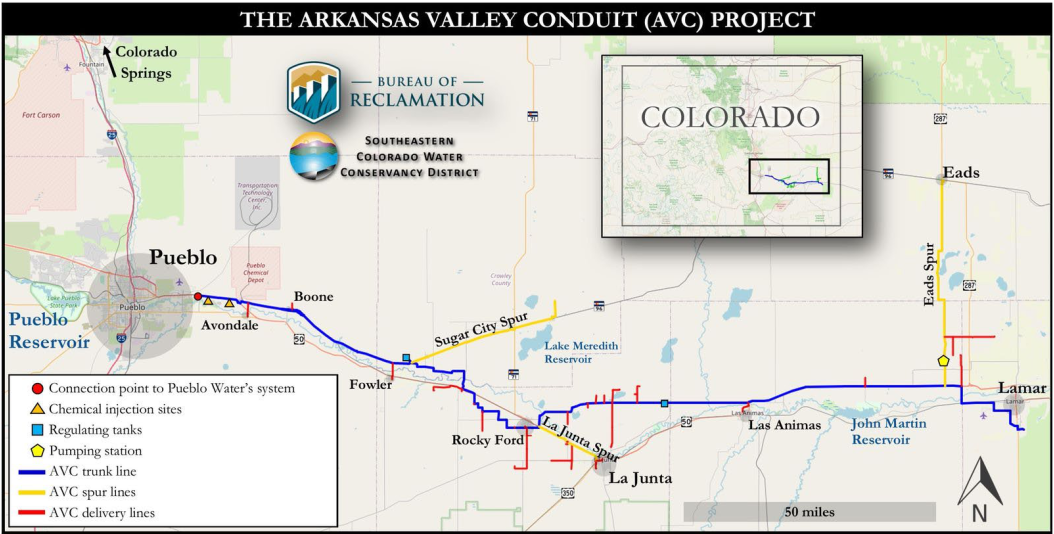
The Southeastern District includes parts of nine counties and has a 15-member Board. Its major purpose is administration of the Fryingpan-Arkansas Project in partnership with the Bureau of Reclamation, and their top project currently is construction of the Arkansas Valley Conduit.

Click the link to read the article on the InkStain website (John Fleck):
April 12, 2025
My Utton Center colleague Rin Tara and I spent the day out in the field yesterday, a visit to River Mile 60 at the bottom end of New Mexico’s Middle Rio Grande.
(Disclosure: We took bikes, but “out in the field” sounds fancier than “on a bike ride.”)
The trip was fodder for a piece I’m working on looking at the US Bureau of Reclamation’s Middle Rio Grande river maintenance program carried out under the Flood Control Acts of 1948 and ‘50. Or possibly it’s a piece about the flooding in the 1920s that doomed the community of San Marcial. Or maybe its a piece about the remarkable geomorphology of a high sediment load river doing river things.
Or maybe it’s just a piece about a breathtaking expanse of desert with a struggling river valley flowing through its heart. Probably all of those things, which is why, dear readers, that you may not see the piece for a while.
The river, as defined by the presence of water, was barely there. It’s a weird stretch where sediment built up when it was the delta for the high stands of Elephant Butte Reservoir, a quaint reminder of when we had a lot of water. The river is now cutting back down through the debris, and the whole area is a mess from a human water management perspective.
From the river’s perspective? Meh, it’s just a river doing river things.
At a time when flows should be rising as a result of melting snow, they are declining as a result of the absence of melting snow. We cut the bike ride shorter than I had planned, because it was hot and I am old. But I’ll be back. It’s a lovely spot, and I have to figure out what to write.
