

Click the link to read the article on the Circle of Blue website (Brett Walton):
December 8, 2025
The Rundown
- Members of Congress want Tijuana River cleanup and Rio Grande water deliveries discussed as part of the U.S.-Mexico-Canada trade agreement.
- EPA publishes a lead service line data dashboard.
- Reclamation finalizes an operating plan to increase water deliveries to farms in California’s Central Valley.
- A water pipeline break disrupts the Grand Canyon’s South Rim services.
- DOE advisory group recommends limiting scope of state Clean Water Act reviews.
- NOAA assesses the 2025 harmful algal bloom in Lake Erie.
And lastly, bipartisan bills in Congress would compensate farmers hurt by PFAS.
“In Maine, PFAS contamination affecting many different sectors, including agriculture, has been discovered over the past several years. The presence of PFAS in wastewater sludge once spread as fertilizer has prevented some Maine farms from selling their products, thus leading to significant financial hardship for these family farmers.” – Sen. Susan Collins (R-ME) speaking on the Senate floor about the Relief for Farmers Hit with PFAS Act. The bill would provide financial aid to farmers affected by PFAS contamination.
The pot of money authorized in the bill could be used in several ways, the representatives say. Reimbursement for lost income. Soil and water testing. Remediation systems. Blood testing for farmers exposed to the chemicals.
By the Numbers
River Mile 58.4: Estimated location, as of December 2, of the saltwater “wedge” in the Mississippi River in southern Louisiana. Due to dry weather, the wedge – saltwater that pushed upriver due to weak flows – has advanced 12 miles since mid-November.
2.4: Severity of the Lake Erie harmful algal bloom in 2025, according to a NOAA assessment. That corresponds to a “mild” bloom – the second mildest since 2008. The severity rating is a measure of the bloom’s biomass, not its toxicity.
News Briefs
Tijuana River Sewage in Trade Talks
California Democrats in the House and Senate want chronic sewage problems in the Tijuana River to be part of trade talks between the U.S., Mexico, and Canada.The representatives made their case in a letter to Jamieson Greer, the U.S. trade representative. The three countries are beginning to discuss revisions to the trade agreement that was signed in 2018.
The California contingent asked for:
- a multi-year funding commitment from the Mexican government
- expand the geographical scope of an infrastructure grant program to include projects in Mexico
- more financing from the North American Development Bank
- a permanent funding source
- include a formal role for existing border river institutions in the trade agreement framework.
The Tijuana River Coalition, a public interest group, also asked the Office of the U.S. Trade Representative to consider sewage pollution in a revised trade agreement.
Tijuana River sewage is not the only cross-border water problem that U.S. representatives would like to see addressed in the trade talks.
Rep. Monica De La Cruz of Texas encouraged the USTR to include Rio Grande water sharing in the agreement and to use its dispute resolution process as a way to enforce accountability. The Lower Rio Grande Valley Water District Managers’ Association also asked for Rio Grande water disputes to be handled through the trade agreement.
Studies and Reports
Lead Service Line Data
The EPA published an online dashboard with data about the number of lead service lines for each public water system.Public water systems were required to submit lead service line inventories to the EPA by October 2024. The agency estimates about 4 million lead drinking water lines in the country.
Central Valley Project Operating Plan
The Bureau of Reclamation finalized a new operating plan for the Central Valley Project, the federal canal system that delivers water south of the Sacramento-San Joaquin Delta.The new plan, which will maximize water deliveries to farms, stems from an executive order requiring the agency to do so.
Permitting and Energy Development
A Department of Energy advisory group that represents oil and gas interests submitted a report recommending limiting the scope of state water-quality reviews.Like many Republican-leaning groups, the National Petroleum Council wants to prevent states from blocking fossil fuel infrastructure through use of Section 401 of the Clean Water Act, which allows states and some tribes to review projects that could pollute their waters. Notably, New York denied a water-quality permit to the Constitution natural gas pipeline in 2016.
The council’s report calls Section 401 a “procedural chokepoint” in project permitting.
The Trump EPA is promoting a “specific and limited” use of Section 401 for water-quality considerations only.
On the Radar
More Renaming
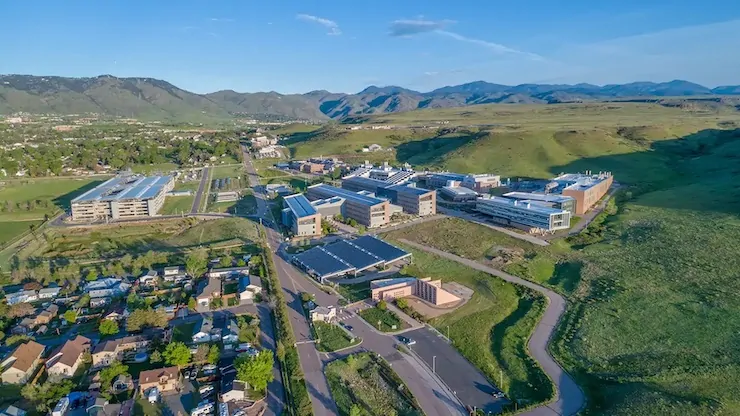
The Department of Energy has renamed the National Renewable Energy Laboratory.The new name is the National Laboratory of the Rockies.
Economic Effects of Permitting Requirements
The Congressional Budget Office is seeking information that would help it better model the economic and budgetary effects of changes in federal permitting requirements for infrastructure.Send comments to communications@cbo.gov.
Grand Canyon Water Troubles
The National Park Service is closing hotels on the Grand Canyon’s South Rim to overnight guests due to breaks in the water pipeline that serves the area.The 12-mile pipeline crosses the canyon. The park service is in the middle of a $208 million pipeline upgrade that it expects to complete in 2027.
Federal Water Tap is a weekly digest spotting trends in U.S. government water policy. To get more water news, follow Circle of Blue on Twitter and sign up for our newsletter.
