Click the link to read the article on the Denver Water website (Jay Adams):
December 31, 2025
Colorado is off to a record-low start to the snow season.
But with snowpack, like in football, what’s important is not how you start. It’s how you finish.
Just ask Bo Nix and the Denver Broncos.
This season, the Broncos made history with 12 comeback victories — a new National Football League record.
Elder pointed to the team’s big win against the New York Giants on Oct. 19, 2025.
“I think most of us thought the Broncos were done in that game after going scoreless for three quarters, but then they had an amazing turnaround in the fourth quarter and came back to win at the last second,” said Nathan Elder, Denver Water’s manager of water supply.
“Let’s hope Mother Nature can do the same as Bo Nix and deliver a big comeback this winter.”

Record low start to the snowpack
Elder said the first three months of the 2025-26 snow season, from Oct. 1 to Dec. 31, 2025, ranked as the driest on record in Denver Water’s water collection area.
The records date back to the winter of 1979-80, when SNOTEL measuring gauges started being used to measure mountain snowpack.
Denver Water’s previous year-ending, record-low snowpack on Dec. 31 occurred during the winter of 1980-81.
This year, as of Dec. 31, 2025, the snowpack in the South Platte and Colorado river basins where Denver Water collects water stood at 51% and 49% of normal, respectively, according to SNOTEL measurements.
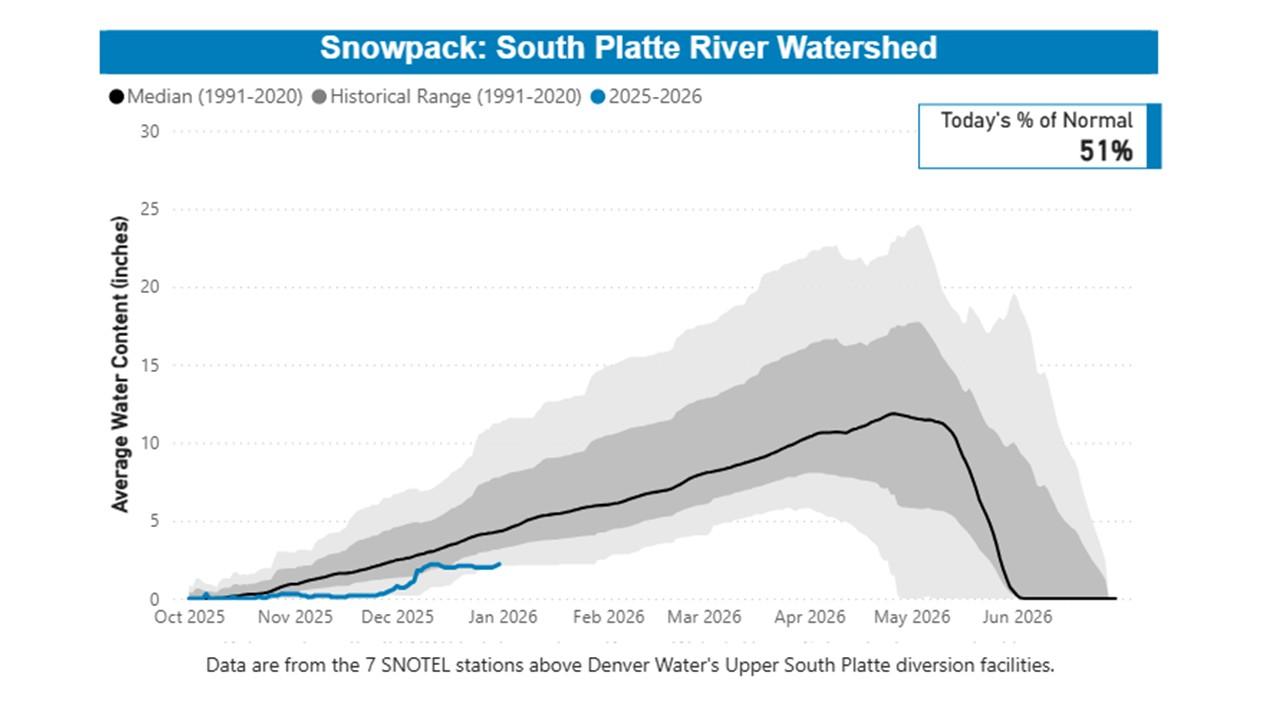

The lack of powder days is not only tough on Colorado’s ski resorts, but low snowpack also raises concerns about river levels and our water supply which comes primarily from mountain snow.
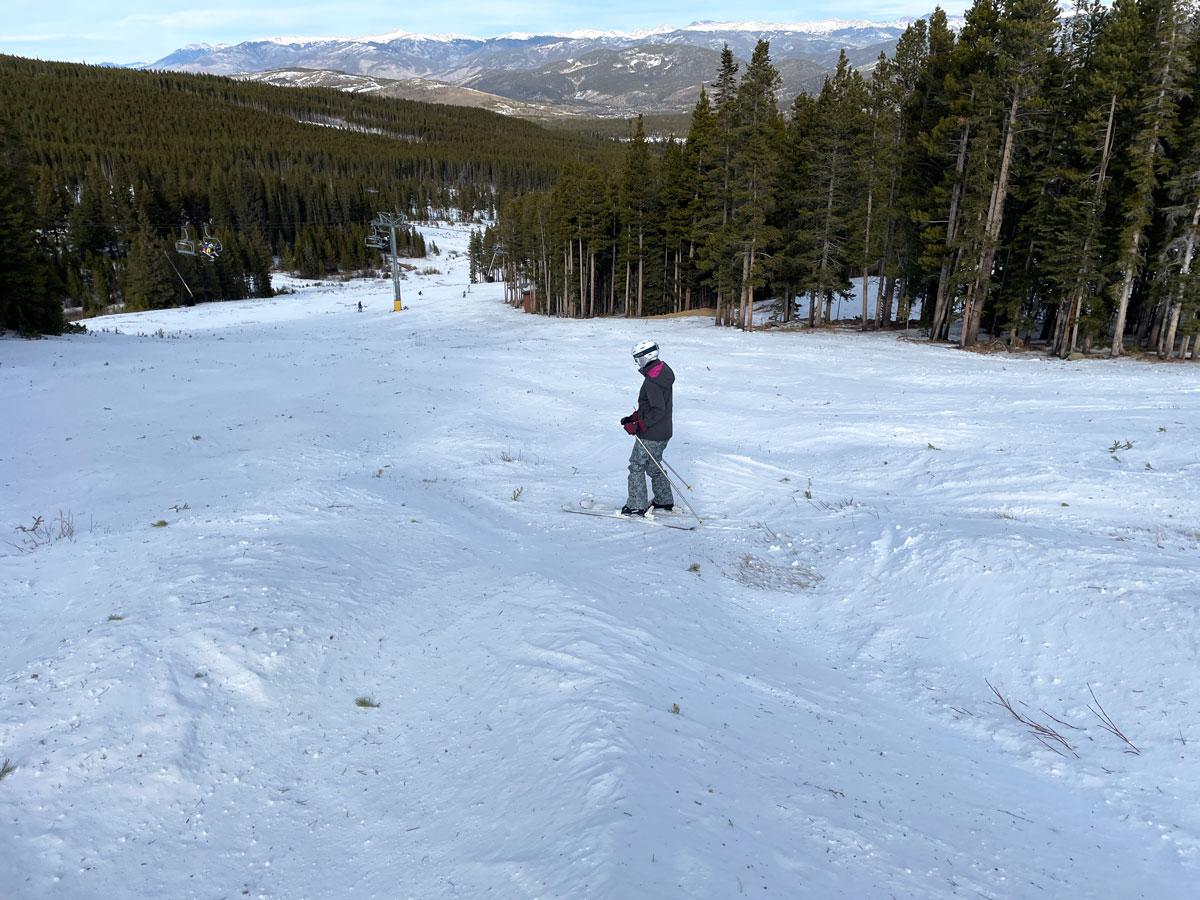
“We definitely prefer a snowier start to winter over a dry one,” Elder said.
“But we still have about four months left in the snow accumulation season. We will need a lot of snow to catch up to get back to normal.”
The first three months of the snow season typically account for about 20% of the annual snowpack. The good news is that the snowiest months of March and April are still ahead.
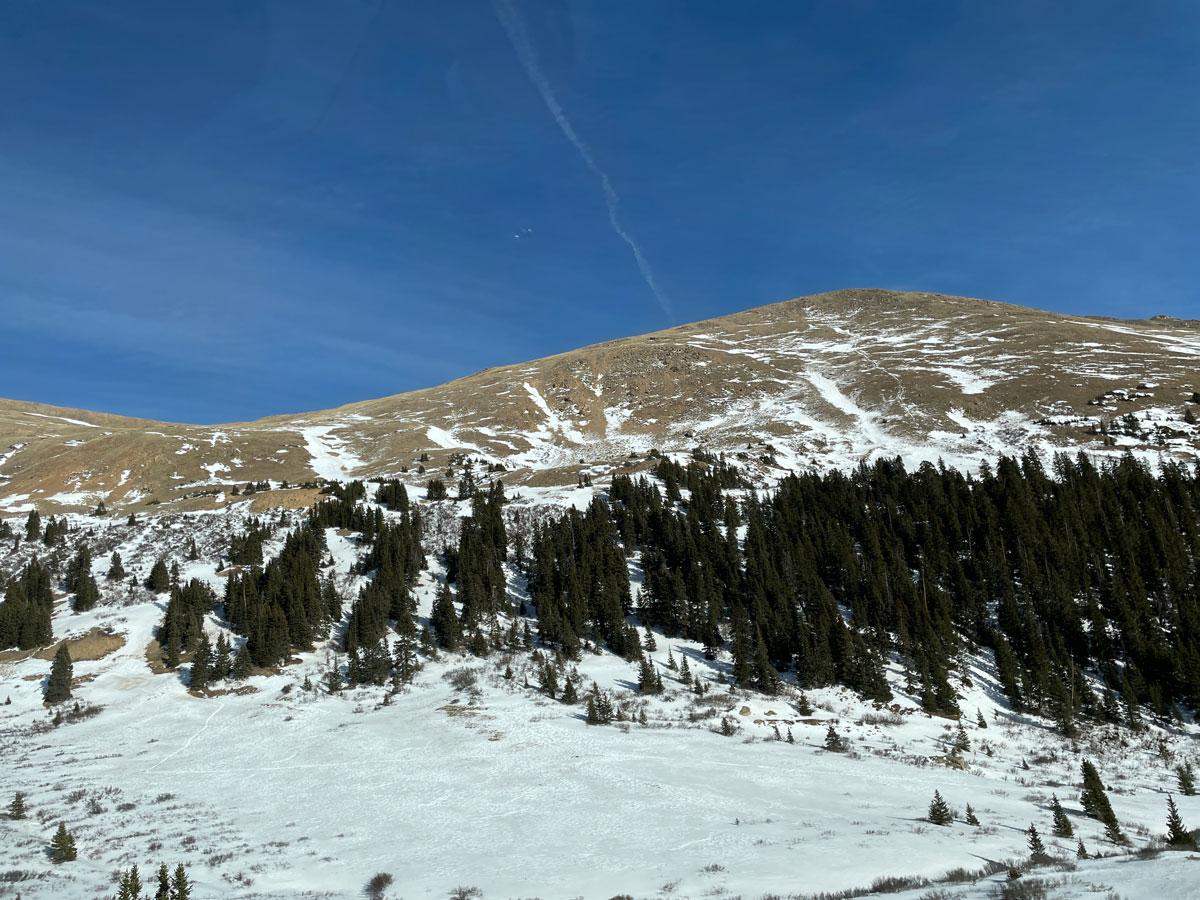
Elder said that along with the low snowfall, strong winds and above-normal temperatures created windy and warm weather, which led to increased sublimation of the snowpack (think of sublimation like evaporation just for snow).
“In mid-December, we actually saw a noticeable drop in the snowpack in the South Platte River Basin, which is very rare for that time of year because it’s usually too cold for snow to melt,” Elder said.
What to expect in 2026?
While unfortunately there’s no crystal ball for snow forecasting, Elder pointed to other years that experienced similarly slow starts to the snowpack for a guess as to where this season could end up.
For Denver Water, snowpack typically peaks in mid-to-late April.
The lowest peak occurred during the winter of 2001-02, when snowpack peaked at just 56% of normal. The second-lowest peak was measured during the winter of 2011-12, when mountain snowpack peaked at 58% of normal.
Both of those seasons started slow and snowfall stayed below normal levels all winter long.
In contrast to those two dismal winters, Elder said the winter of 1999-2000 offers a glimmer of hope.
“That season started slow, but snow came on strong in April and May and we ended up right around normal in terms of peak snowpack by the end of the season,” he said.
Water managers also watch for a couple of big storms that could quickly bolster a lackluster snowpack.
Taking action
Denver Water’s reservoirs are currently at 83% of capacity, which is 4% below average for this time of year.

Elder said that while the reservoir levels are expected to be in relatively good shape heading into summer, it’s too early to say if there will be any watering restrictions.
“We live in a dry climate with increasingly variable weather patterns, which means all of us need to pitch in to help conserve the precious water supplies that we have,” Elder said.
“Now is a good time to check your faucets and toilets for leaks, and fix any you find inside your home. It’s also a good time to start planning how to remodel your yard this summer to save water outside.”
Denver Water’s website has free tips, including a step-by-step DIY Guide that can help you replace thirsty Kentucky bluegrass with water-smart plants, available at denverwater.org/Conserve.
In 2026, the utility will again be offering customers a limited number of discounts on Resource Central’s popular, water-wise Garden In A Box kits and turf removal.
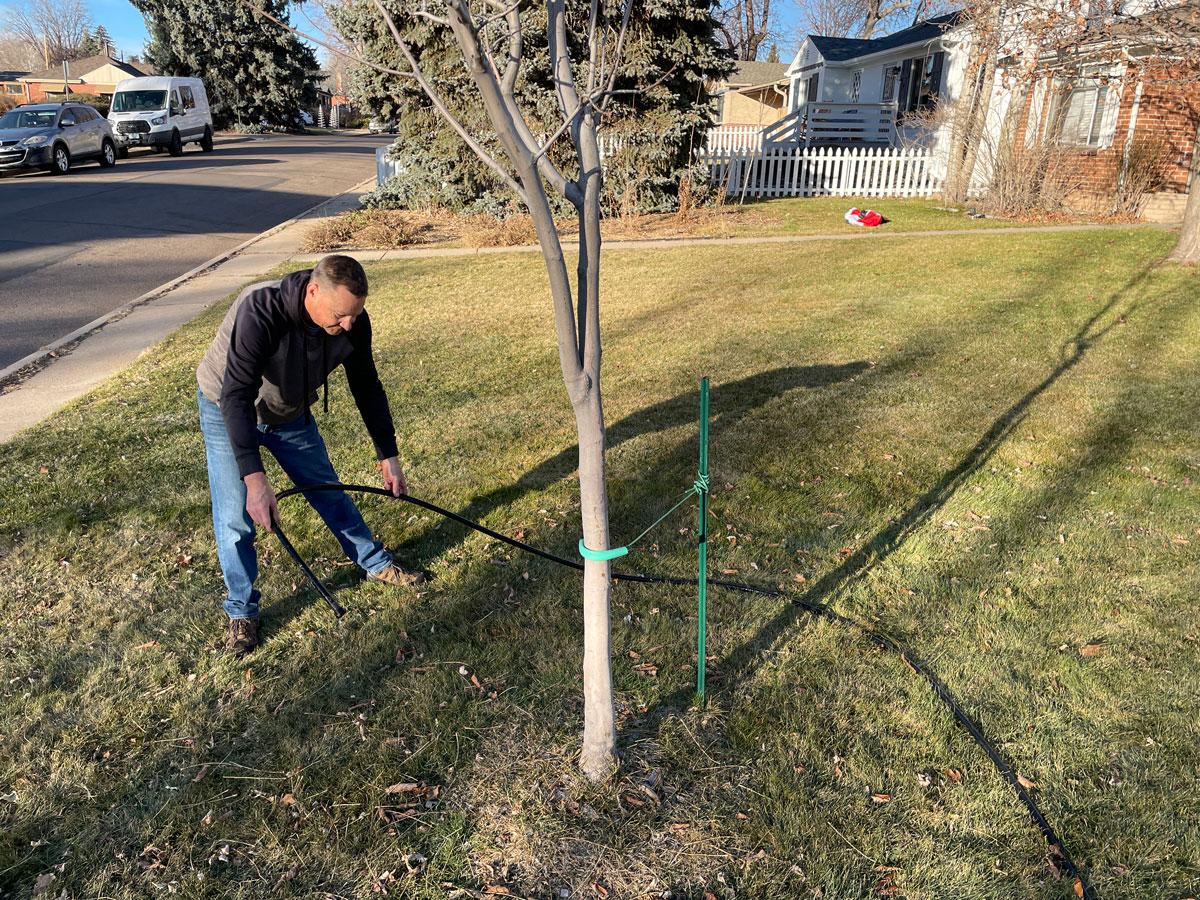
It’s also important to water your plants and trees during dry winter stretches in the metro area.