2015 Colorado legislation: Flexible water markets bill reincarnated in HB15-1038 #coleg

From The Pueblo Chieftain (Chris Woodka):

A controversial bill that failed to find its way into law last year has resurfaced in the state Legislature.

The bill is an attempt to create a flex water right that would allow agricultural water to be applied to other uses for up to five years in 10. The bill has been adjusted to prevent it from being used to move water anywhere, anytime for any use, as the first versions allowed. [ed. emphasis mine]

[HB15-1038, Flexible Water Markets], sponsored by state Rep. Jeni Arndt, D-Fort Collins, would allow a more flexible water right that requires continued irrigation of farmland, identifies end users and includes continued court review as a condition. It also prevents water from being transferred from one basin to another. [ed. emphasis mine]

The bill would allow a water judge to determine conditions that determine continued irrigation.

It would allow up to 50 percent of the consumptive use — that part of water used to grow crops — over a 10-year period to be used for things such as municipal supplies, recreation, environment or compact compliance.

Some changes in the bill are an attempt to comply with the state’s anti-speculation doctrine as outlined to the interim water resources review committee in September by Justice Greg Hobbs.

Among recent Supreme Court decisions prohibiting speculative use is the 2005 decision to uphold Pueblo District Judge Dennis Maes’ 2003 decision to deny an application on the Fort Lyon Canal by High Plains A&M that would have allowed wide-scale water marketing.

A second measure, [SB15-008, Promote Water Conservation In Land Use Planning], sponsored by state Sen. Ellen Roberts, R-Durango, and state Rep. Ed Vigil, D-Fort Garland, would attempt to tie water conservation with land-use planning through state water funding programs.

It passed the Senate ag committee on a 5-4 vote.

The bill came out of the interim water resources committee with provisions and a proposed amendment by Roberts that would make conservation training mandatory for water officials and land use planners. It would apply to water providers that supply more than 2,000 acre-feet of water annually.

That bill is already getting pushback from municipal water providers, who are offering alternative language that allows for more time to develop conservation plans and gives them credit for quantifiable conservation programs in the past.

2015 Colorado legislation: SB15-010 passes out of Senate Ag Committee

Denver Basin aquifer system

2015 Colorado legislation: Bob Rankin plans “Federal Lands Coordination” bill this session #coleg

Fen photo via the USFS

From the Sopris Sun (John Colson):

Rankin said he already has two bills he plans to introduce this session, which is scheduled to run from Jan. 7 until May 11, 2015, barring unexpected extensions.

One bill he is certain he will be introducing is a “Federal Lands Coordination” bill, which calls for greater coordination between state government and the local governments at the county and city level in dealing with federal oversight of public lands in the state.

He termed this “a major bill that I’ve run two years in a row, that I’m going to get passed this year.”

He said that 70 percent of the lands in Western Colorado are federally controlled, a circumstance that often generates friction between federal land managers and local governments for a variety of reasons.

For example, he pointed to the ongoing debate over the status of different wildlife species that the federal government has listed as threatened with extinction, such as the sage grouse.

He pointed out that Garfield County has come up with its own sage grouse management plan, which he felt is as good as anything the federal agencies have in mind, but local governments have trouble convincing federal authorities to accept local management ideas.

“If there’s a species that comes up on the radar, and we’re doing a good job protecting it, it works better with local protection,” Rankin declared, adding that the same is true for resource management plans concerning such areas as the Roan Plateau in western Garfield County, where environmentalists and the energy industry have clashed over oil and gas drilling proposals.

Rankin said he was involved in negotiation of a recent compromise settlement regarding the Roan Plateau, and predicted, “We’re going to try to do that with the Thompson Divide,” an area near Carbondale where a similar dispute over oil and gas drilling plans has done on for the past five or six years.

His bill, he said, would bring the state government into such disputes on the side of local governments, and would result in negotiated settlements that meet the needs of environmentalists, industrialists, ranchers and area communities.

“We can make it a win for everybody,” Rankin said, calling his approach a way of creating “a better partnership with the federal government” and avoiding the cost and time of bureaucratic battles and possibly court action over everything from species protection to mineral extraction and cattle grazing.

Asked if his approach has anything common with the old Sagebrush Rebellion of the 1970s and 1980s, when westerners tried to wrest control of public lands from federal hands and turn control over to state and local governments, Ranking conceded, “There’s some of that going on.”

But, he said, “That’s not what my bill is all about.” He maintained that federal land managers “love it” when local governments offer to form partnerships in these matters, and that his bill will help that to happen.

2015 Colorado legislation: First day recap

Sunrise Black Canyon via Bob Berwyn

From The Grand Junction Daily Sentinel (Charles Ashby):

Lawmakers introduced more than 100 bills on the first day of the 2015 session, including some that are sure to rankle lawmakers on both sides of the political divide.

Republicans, who have more authority in this year’s session with control of the Senate and a narrower margin in the House, have introduced several measures approved by Democratic-led legislatures of the recent past, including several controversial gun laws.

In the House, Rep. Steven Humphrey, R-Severance, introduced a measure to repeal a new law that limited to 15 the number of rounds in firearms magazines.

While there are enough votes in the Senate and House to get such a ban repealed, newly named House Speaker Dickey Lee Hullinghorst, D-Boulder, has made it clear she won’t let that happen.

As a result, she assigned the measure, HB1009 to the House State, Veterans & Military Affairs Committee, which is expected to kill it. Other similar bills, however, are sure to be introduced in the Senate, where such a measure is expected to get more favorable treatment.

In a related effort, Rep. Janak Joshi, R-Colorado Springs, introduced a bill to repeal the universal background check law before purchasing a firearm. That measure, too, was sent to the House State Affairs Committee, which includes enough Democratic lawmakers who supported both gun measures to kill both repeal bills.

In the Senate, Sen. Vickie Marble, R-Fort Collins, introduced SB32, which would do away with concealed-carry permits and allow anyone who is legally allowed to own a firearm to carry it concealed.

Meanwhile, local lawmakers Sen. Ray Scott and Rep. Dan Thurlow have introduced a bill to roll back the state’s renewable energy standards for utility and rural electric cooperatives.

Under current law, investor-owned utilities, such as Xcel Energy, are required to generate 30 percent of their electricity from renewable sources by 2020, and REAs face a 20 percent standard by that same year.

But under SB44, the two Grand Junction Republicans are proposing reducing all the mandates to 15 percent.

While the bill could clear the Senate, it isn’t expected to survive the Colorado House.

Other measures introduced on opening day include:

■ HB1027, which would require all colleges and universities in the state to provide in-state tuition to anyone who is a member of a federally recognized American Indian tribe whether they are Colorado residents or not.

■ HB1031, which would ban the use, possession, sale or purchase of powdered alcohol.

■ HB1037, which would prohibit a college or university from denying religious student groups any benefit that is available to nonreligious groups.

■ HB1041would ban all abortions except those that are intended to protect the life of the mother.

■ HB1043 would make it a felony for three or more convictions of driving under the influence of alcohol.

■ SB18 would repeal a 2009 law that imposed late fees on registering vehicles.

■ SB19 would allow the state auditor to perform routine audits of the state’s health benefit exchange, Connect for Health Colorado, the state’s response to the federal Affordable Care Act.

More 2015 Colorado legislation coverage here.

Great article on #energy legislation at #coleg — David McGimpsey

Legislative agenda: Energy efficiency, water conservation & protecting public lands — Conservation Colorado #coleg

Grand Lake via Cornell University

Click here to read their release:

Conservation Colorado and conservation community partners released our 2015 legislative agenda with a focus on innovative measures to keep Colorado in the forefront of energy efficiency, water conservation, protecting our nation’s legacy of universal access to all of America’s public lands, and protections for local communities facing the ongoing impacts of heavy industrial drilling and fracking.

“Coloradans treasure our mountains, clean water and air, and easily accessible open spaces and they expect their elected representatives to reflect these strong conservation values,” said Pete Maysmith, Executive Director, Conservation Colorado.

In 2015, the conservation community will pursue legislation to increase energy efficiency programs to encourage construction and retrofit or renovation of highly efficient buildings. Complementing years of progress on expanding renewable energy, energy efficiency measures are a vital component to Colorado’s energy future.

“Colorado is already a strong leader in pursuing energy efficiency policies but there is more we can do to provide incentives to encourage energy efficiency in construction and renovation of existing buildings,” said Will Toor, Southwestern Energy Efficiency Project. “Not only does energy efficiency reduce carbon pollution but it enables businesses and homeowners to save money on their utility bills.”

Water remains the lifeblood of Colorado and our state has pursued a number of successful water conservation policies to keep more water in our rivers and streams while more efficiently using water in our homes and to grow our food. But work remains to be done in order to ensure we’re making the most of our limited water supplies.

Chief among these next steps includes making innovative tools available to Coloradans that will educate them on their water use and encourage them to use water more efficiently. “Household rain barrels are a gateway to water fluency, yet they are mostly illegal in Colorado,” said Drew Beckwith, Water Policy Manager, Western Resource Advocates. “Allowing our residents to use rain barrels will build a conservation ethic in the populace, foster a deeper connection to water in the state, and will not impact other water users.”

While the Colorado conservation community will work hard to move proactive legislation, we will strive equally as hard to defeat measures which roll back our gains in expanding wind and solar energy or any attempt to reduce Coloradans’ access to our favorite fishing, camping, hiking and hunting spots on our national public lands. We fully expect to see bills to allow the seizure of America’s public lands and hand control over to state government.

“Colorado hunters, anglers, and outdoors enthusiasts will strongly resist any attempt to sell off federal public lands in Colorado and give control of them to our already cash strapped and overburdened state government. It would be a bad deal for Coloradans because people will lose access to long treasured family camping sites, fishing spots, or favorite hiking trails,” said Suzanne O’Neill, Executive Director, Colorado Wildlife Federation. “Our outdoor heritage is a defining characteristic of Coloradans and we will vigorously work to defend our right to use and enjoy all of our public lands as we have for generations.”

Finally, the conservation community will closely follow the Governor’s oil and gas task force as it concludes its deliberations and forwards recommendations to the Governor and the Colorado legislature.

“It is critical the Governor’s oil and gas task force recommend meaningful reforms to address Coloradans ongoing concerns with the impacts of oil and gas development, “ said Pete Maysmith. “Fundamentally, we believe the State should provide the floor for oil and gas oversight and our local governments provide the ceiling to enforce adequate protections as each community sees fit. Anything less from the taskforce will fall far short of reducing conflicts and will force Coloradans to pursue other means to properly protect their homes, public health and property values.”

More 2015 Colorado legislation coverage here.

Denver Business Journal: 111 bills introduced on Day 1 of #coleg

2015 Colorado legislation: Review of #COWaterPlan planned during session #COleg

southplattecanoe

From the Englewood Herald (Tom Munds):

State Rep. Daniel Kagan, D-Cherry Hills Village, expects a busy session for the state legislature as members deal with issues such as continuing to increase education funding to making sure all state residents benefit from the recession recovery.

“We are a divided Legislature, with a Republican-controlled Senate and a Democrat-controlled House of Representatives,” he said by phone while on vacation. “But I believe we can get a lot accomplished because the two parties working together won’t be something new, as 90 percent of the bills passed by the 2014 Legislature passed with bipartisan support.”[…]

Kagan said the Legislature will review a recently created plan to ensure equitable water distribution to all state users. He said the plan is being devised so water will be available for development but not at the cost of sufficient water supplies for agricultural needs.

More 2015 Colorado legislation coverage here.

2015 Colorado legislation: A look at the Boulder and Broomfield counties delegation

George Washington addresses the Continental Congress via Son of the South

From the Longmont Times-Call (John Fryar):

When the Colorado Legislature’s 2015 session gets under way on Wednesday, Boulder County and Broomfield could once again benefit from being represented by several of the lawmakers holding key leadership positions and committee assignments.

That’s long been the case, several of those current and former leaders said in recent interviews, with current Boulder County and Broomfield legislators playing major parts in determining what bills become state laws, and which ones won’t, by the time the session concludes in May.

State Rep. Dickey Lee Hullinghorst, a Gunbarrel Democrat, will be Speaker of the Colorado House of Representatives, the first Boulder County lawmaker to hold that chamber’s No. 1 post in 121 years…

There now will be no senators representing parts of Boulder County or Broomfield who’ll hold top leadership positions in the GOP-controlled Senate.

Boulder’s Rollie Heath, who last year was Senate majority leader, will the Senate Democrats’ assistant minority leader this year.

Heath said, though, that trying to negotiate compromises while crafting legislative proposals “has always been my style,” regardless of whether his party was in the majority in one or both houses of the Legislature. He said he’ll continue that approach…

Heath said one of the underlying questions facing lawmakers from both parties as they introduce legislation this year is: “Do we really want to get things done, or do we just want to make a point?”

Said Heath: “In my mind, we’ve got to figure out where the public is, in terms of priorities.”[…]

Unlike many recent years, Boulder County won’t have any lawmakers on the Joint Budget Committee, a powerful joint House and Senate panel that crafts annual state government spending recommendations for the full Legislature’s consideration. Levy served on that committee, as did former Reps. Todd Saliman, D-Boulder, Jack Pommer, D-Boulder, and Tom Plant, D-Nederland…

Hullinghorst has also appointed Becker vice chairwoman of the House Agriculture, Livestock and Natural Resources Committee. And the speaker has chosen Rep. Mike Foote, D-Lafayette, to be vice chairman of the House Finance Committee, and has reappointed Rep. Dianne Primavera, a Broomfield Democrat whose district extends into Boulder County, to chair the House Public Health and Human Services Committee. Rep. Jonathan Singer, D-Longmont, will be vice chairman of that Health and Human Services panel.

While no Boulder County or Broomfield-residing Democratic lawmakers will chair GOP-majority Senate committees this year, the new Senate Republican leadership has named Vicki Marble to be chairwoman of the Senate Local Government Committee and vice chairwoman of the Senate Education Committee. Marble, a Fort Collins-area Republican, represents a district that extends from southeast Larimer County through southwest Weld County into Broomfield.

From The Durango Herald (Peter Marcus) via the Cortez Journal:

The GOP has lamented about an “over-reach” by majority Democrats in the last two sessions, during which controversial bills concerning gun control, elections reform and renewable energy, among other issues, enraged the right-leaning base.

Republicans picked up three seats this past November, slashing the Democrats’ majority to 34-31. Republicans also took control of the Senate.

“The reality is that stuff that is highly controversial, common sense tells us that that’s probably not going to pass,” said House Minority Leader Brian DelGrosso of Loveland. “What it is going to bring is middle-of-the-road legislation that is basically supported by both sides of the aisle.”

House Republicans are aiming for an agenda that sticks to the basics: education, the economy, transportation and public safety…

Building the economy

On the economy, Republicans will continue to push for breaks for the business world, once again looking at the business personal-property tax. Last year, Republicans and Democrats came together by allowing small-business owners to claim a tax break up to the first $15,000 on equipment purchased. DelGrosso said Republicans will look to build on that.

Some GOP members are also looking at additional reforms to enterprise zone tax credits. They were outraged last year when Democrats limited the credits for business investment in rural counties, suggesting that the move would inhibit economic development.

“The prosperity on the Front Range has not reached rural Colorado, and by providing additional incentives in these depressed rural areas, we can give businesses more resources to create jobs, increase wages and bring more prosperity to these parts of our state,” said Rep.-elect Yeulin Willett of Grand Junction, who will carry the measure.

Also in the economic-development category, Republicans and Democrats are expected to again try a bipartisan effort to curb construction-defects lawsuits.

Funding transportation

Republicans are especially concerned about transportation, pointing out that general fund spending has not gone toward Colorado’s crumbling roads and highways.

DelGrosso said his caucus will push measures to guarantee multi-year funding for projects by the Department of Transportation. He also will introduce a bill to transfer $100 million in one-time funding from the general fund to rebuild roads and bridges across Colorado.

“The safety of our roads and bridges affects all Coloradans,” DelGrosso said.

My, my to hear them tell it, it was all Kumbaya for the recent session.

2015 Colorado legislation: Sonnenberg to chair Senate Agriculture Natural Resources and Energy Committee

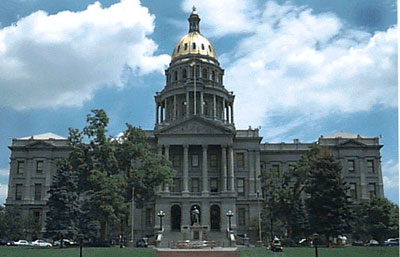
Colorado Capitol building

From the Sterling Journal Advocate (Marianne Goodland):

The Jan. 7 start of the 2015 Colorado General Assembly will bring in a class of ten new members to the 35-seat state Senate and 20 new representatives to the 65-seat House.

And while northeastern Colorado’s two legislators are part of that incoming class, neither is new to the Legislature.

Rep.-elect Jon Becker (R-Fort Morgan) gave up his House seat in 2012 after he and Rep. Jerry Sonnenberg (R-Sterling) wound up in the same district after House districts were redrawn in 2011. Becker is returning to the capitol for a second term under current law, but that’s a law he may challenge in the future.

During his first term in 2010-11, Becker sat on the powerful Joint Budget Committee, which annually produces the state budget. This time around, Becker will serve on two committees: House Agriculture, Livestock and Natural Resources; and Appropriations, a nod to his experience on budget matters…

Heading over to the Senate, Sen.-elect Sonnenberg will continue his agenda for agriculture, as the Legislature’s only full-time farmer.

After the November election, Sonnenberg was immediately tapped to be part of the Senate’s leadership team by Senate President Bill Cadman (R-Colorado Springs), who named him chair of the Senate Agriculture Natural Resources and Energy Committee. Sonnenberg will serve on four other committees: he will co-chair the State, Veterans and Military Affairs Committee; and he will also serve on the Appropriations, Capital Development and Water Resources Review committees.

As a member of the water resources committee, which he also served on while in the House, Sonnenberg will sponsor several of the group’s six bills. Those bills include creating a grant program to fight invasive phreatophytes. A second bill directs the Colorado Water Conservation Board to administer two pilot programs in the Gilcrest/LaSalle/Sterling areas. Those programs would “evaluate alternative ways to lower the water table” in areas experiencing damaging high groundwater levels, according to a draft copy of the bill…

Among his 2015 bills is one to address the continuing concern over fracking. Sonnenberg said this bill would address the “takings” clause of the state constitution as it pertains to mineral rights. “If a community prohibits oil and gas production [including fracking], it has limited a property owner’s right to access” those mineral rights. Under his bill, the community would have to pay for that.

He also will carry a bill on a “sunset review” of pesticide applicators. Sunset reviews are bills that look at whether to continue certain state laws. Sonnenberg said he wants to make sure farmers can continue to utilize pesticides in agriculture and that the state not make it so challenging.

From the Craig Daily Press (Janelle O’Dea):

During Colorado’s 70th legislative session, transportation, funding for education and stunted economic growth in rural areas will be some of the most prominent issues discussed by Colorado’s General Assembly…

One of Northwest Colorado’s state representatives, Republican Rep. Bob Rankin, is already working on the state’s financial plans in his new position on the state’s Joint Budget Committee. The JBC has met since November 2014.

Rankin represents House District 57, encompassing Garfield, Moffat and Rio Blanco counties.

The state will spend $26.8 billion this year and Rankin said based on current projections, it’s an increase of about 11 percent compared to last year. He said the money is all spoken for and even more is being requested for various needs.

“We will still be way underfunded for K-12, higher education and transportation,” Rankin said…

State Senator of District 8 Randy Baumgardner said there’s another education bill that has not been introduced yet, but will direct money to schools instead of raising taxes and attempting to give the money to schools.

“That (raising taxes for education) hasn’t worked thus far and isn’t gong to work in the future,” Baumgardner said.

Senate District 8 encompasses Garfield, Rio Blanco, Moffat, Routt, Jackson, Grand and Summit counties.

Baumgardner also said as chair of the Transportation Legislation Review Committee, he’s going to make sure Colorado’s roads are taken care of. Previous legislation funds transportation repairs, and Baumgardner wants to assure that happens…

With Colorado’s House of Representatives controlled by Democrats and the Senate controlled by Republicans, Democratic Senate President Morgan Carroll hopes the 2015 legislative session ushers in a year of compromise between the parties.

Carroll, State Senator for District 29, has five bills of her own to introduce. District 29 encompasses Aurora and eastern Arapahoe County.

One of Carroll’s bills will focus on refinancing Coloradans’ student debt. Another will give human trafficking victims a defense to criminal charges to prostitution and allow them to purge their criminal record of prostitution if they were a victim of trafficking.

From The Greeley Tribune (Kayla Young):

With Colorado’s legislative session beginning Wednesday, farmers in the Gilcrest area are renewing their call for action on rising groundwater levels.

As the South Platte Basin aquifer continues to spill over into homes and productive cropland, members of Weld County’s Groundwater Coalition hope legislators will treat their situation with emergency measures.

While legislation met opposition in 2014, LaSalle farmer Glen Fritzler, a coalition organizer, said efforts to educate legislators could bring Weld farmers short- and long-term relief.

“What I’m concerned about is that it may not be the emergency type of legislation we need. … The farmers need to know by March 1 to plan accordingly to adjust their acres and what kind of crops to grow,” Fritzler said.

Although the urgency and reality of the Gilcrest area is known, the answers are not as easy to identify. For Groundwater Coalition members, the issue lies in curtailed well usage that has allowed aquifer levels to steadily rise over the past decade.

“Damaging high groundwater is caused because of the curtailment of pumping of irrigation wells. The curtailment of pumping of the irrigation wells is because augmentation requirements are too strict,” Fritzler said. “Stipulated decrees were agreed upon because municipalities had us against the ropes; we might lose everything if we went to trial.” [ed. emphasis mine]

John Stulp, the governor’s water policy adviser, said high groundwater cannot be attributed to one cause alone, however. Gilcrest’s low-lying position in the basin, as well as its clay soils, also leave the town at higher risk for water accumulation, he said.

“If you’re citing a place for a city, you might not choose the location of Gilcrest, knowing what we know today. It sits in a water-prone area where water doesn’t drain out very well,” he said, explaining that the town, as well as areas around Sterling naturally experience higher levels of groundwater.

Golden-based engineering firm Brown and Caldwell has been tasked with carrying out a six-month study of high-risk areas, such as Gilcrest, to better inform the technical committee that Stulp chairs on how the hydrology functions along the basin.

In the meantime, Stulp said farmers should not expect the immediate solution they are hoping for: “It depends on what kind of relief we’re talking about. Will they have ability to pump all water they want? Likely not.”

He expected legislation to pass through the state Legislature early in the year to establish a better monitoring system and pointed to the possibility of a dewatering system being discussed through the Central Colorado Water Conservancy District.

While dewatering wells have been proposed as a possible short-term option, Randy Ray, conservancy district executive director, said the cost of such a system would only place Gilcrest further into debt.

“In the Gilcrest area, you’re looking at $80,000 per well and operating costs of $20 per acre-foot pumped out of it. For 1,000 acre-feet, the cost would be $20,000,” he said. Gilcrest Mayor Jeff Nelson said the town recently took on a 20-year $1.09 million loan through the state revolving fund to repair the damages incurred to the sewer system, rebuilt in 2004, from high groundwater.

Reagan Waskom, director of the Colorado Water Institute, explained that while farms and farmers suffer in the Gilcrest area, Colorado water law is functioning as intended.

“The strict implementation of our water laws has resulted in rising groundwater levels, as it was intended to do. This reversed a long, downward trend of declining groundwater levels in the basin,” Waskom said.

While the rise in water levels can be considered positive overall, the impact has varied drastically along the South Platte Basin.

“Pumping has returned to within 10 percent of historical levels, with the exception of Water District 2 — the area along the main stem of the South Platte downstream of Denver to Greeley,” Waskom said. “Farmers along the Front Range have a harder time developing enough water to ensure full pumping allocations due to proximity to urban areas, which has kept water prices high.”

For downstream users in the Sterling area, strict policy enforcement has meant greater security in the area’s water rights, said Joe Frank, general manager of the Lower South Platte Water Conservancy District for Morgan, Washington, Logan, and Sedgwick counties.

“Senior water rights rely on those return flows and if a junior well intercepts that, it is injuring the stream and when you add a bunch of wells, they have large impacts on the stream,” Frank said.

Respect of senior water rights has been a leading reason farmers have not been able to simply turn their wells back on, explained Greeley Water and Sewer Board chairman Harold Evans, who opposed legislation in 2014 that would have provided temporary relief.

“It didn’t really provide the protection for senior water right holders that has historically been the case in Colorado,” Evans said. “One of the complicating issues is the pumping has a lag time depending on how far away you are from the river. … In the Gilcrest area, there is a lag time of five or six years. The purpose of a water court-approved augmentation plan is to show you won’t have an impact.”

LaSalle farmer Harry Strohauer, who manages Lorenz Farm, in addition to other properties, said that while the Groundwater Coalition recognizes the prior appropriation system, they have been set up for an impossible task.

“The analogy we use is, when you’re flat on your back with a knife to your throat, what are you going to do? None of us could afford to go on, while municipalities like Boulder, Highlands Ranch and the city of Greeley are fighting us with unlimited money, and we couldn’t do it,” Strohauer said

Strohauer has uprooted significant acreage from Weld County, including his signature fingerling potatoes, and moved them out of state because to uncertainty and damages suffered over groundwater levels.

Waskom said long-term damage to croplands could become more common.

“One concern I have that is not on the radar screen for most people is that water logging and poor drainage inevitably lead to salinization of croplands. This is a slow but sure process that will rob the productivity of the basin if not addressed,” Waskom said.

James Eklund, director of the Colorado Water Conservation Board, which drafted the Colorado Water Plan, said the state will be looking to find a groundwater solution in 2015 that satisfies users throughout the basin and protects the prior appropriation system.

“In 2015, we will need to tackle this. The Legislature I’m sure is going to be interested in looking at it, as well as us,” Eklund said. “I’ve tromped around in basements that have been flooded. It’s not a pretty scene. We know those people need relief now, and they don’t need it to be studied to death.”

More 2015 Colorado legislation coverage here.

Colorado Water Congress 2015 Annual Convention January 28-30

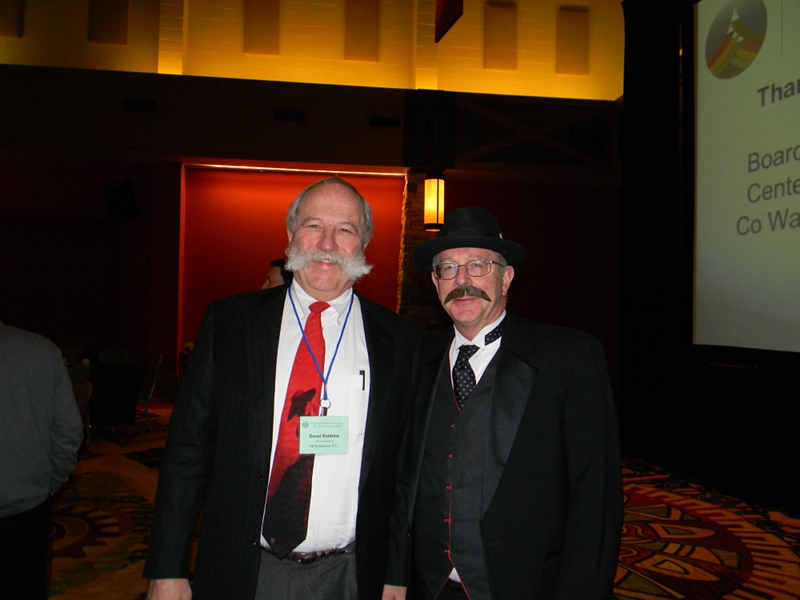
David Robbins and J.C. Ulrich (Greg Hobbs) at the 2013 Colorado Water Congress Annual Convention

Click here to register. From the website:

Our premier event draws more than 500 attendees from across Colorado, including legislators, representatives of state and federal agencies, leading water attorneys, water resource managers, engineers, scientists and a broad spectrum of water users. All share concerns about the legislation, management, protection and preservation of Colorado’s water.

Please email Meg Meyer below in the question box or call 303-837-0812 x2 with any questions.

Registration by fax or mail Click HERE.

From email from the Colorado Water Congress (Fiona Smith):

Registration is open to the public for the 2015 Colorado Water Congress Annual Convention. From January 28-30, 2014, the Hyatt Regency Denver Tech Center will host the premier water industry event in the state, attracting 500+ attendees who convene for networking and collaboration on the important water issues of the day.

Our population is increasing, our climate is constantly throwing curve balls, and our cities are growing taller. Whether we recognize it or not, we have already begun to rethink water both in terms of how we manage it professionally and interact with it personally. Now is the time to join water experts from across the state as we celebrate our successes in water management innovation and plan towards a future with new ideas and flexible philosophies.

A full day of workshops begins on Wednesday at 8:00am. Join us as we use case studies to define and understand our environmental values, and work with media experts to delve into the intricacies of storytelling. The Colorado Ditch and Reservoir Company Alliance will introduce a new model that hopes to aid in the implementation of Colorado’s Water Plan.

The primary Convention sessions will begin on Thursday. We are excited to announce that Dr. Wallace J. Nichols will be Thursday’s lunch speaker at the 2015 CWC Annual Convention. Dr. Nichols is the author of the New York Times Bestseller, Blue Mind, which explains, “the surprising science that shows how being near, in, on, or under water can make you happier, healthier, more connected, and better at what you do.” Dr. Nichols will offer a new perspective and a thought-provoking activity.

In conjunction with the Annual Convention, Colorado State University Water Resources Archive will host their annual Water Tables Event Thursday, January 29 from 6:15-9:15pm. The evening will feature a presentation by the Honorable Ken Salazar, former US Secretary of the Interior.

The CWC Annual Convention is open to the public. Learn more, view the agenda, and register at: http://www.cowatercongress.org

Interview with the Colorado Farm Bureau president from The Greeley Tribune #COWaterPlan

Greeley Irrigation Ditch No. 3 construction via Greeley Water

From The Greeley Tribune (Kayla Young):

The Colorado Farm Bureau gathered for its annual meeting and banquet last week at the Hyatt Regency Denver Tech Center. After four days of events with Colorado ranchers and farmers, CFB President Don Shawcroft discussed the issues he identified as most important for producers, including water and immigration policy.

Question ­— What were the main topics you heard producers discussing during the event?

Answer — There’s a lot of Colorado Farm Bureau producers that are worried about the statewide water plan and in particular that irrigated agriculture be recognized as valuable, and that the statewide water plan needs to recognize methods and means of keeping water in irrigated agriculture. The statewide water plan has been perceived to be a plan to supply municipal and industrial uses in the coming years through 2050. Statewide there is recognition that there are shortages given what supplies we have and identified and what projects we have identified, there is still shortage. Certainly the target is on agriculture to provide that water. … My concern is that Colorado citizens understand that this prior-appropriations system works. It’s reliable, in fact, for municipalities and for industrial uses. And certainly it’s reliable for agricultural uses.

Q — What does agriculture want to get out of the Colorado Water Plan?

A — We would certainly like to see more emphasis on storage of water. It’s very unfortunate that it is so difficult to store water in the state of Colorado. If we had built the Northern Integrated Supply Project (NISP) when it was proposed or shortly there after, when the first environmental studies had been concluded, that could have been filled several times, in fact. There were several opportunities to fill that project and that would have supplied water during years of drought we’ve had since then. That’s unfortunate. I’ve mentioned before that the greatest thing that could happen in the Colorado Water Plan would be a unification of all of the interests in Colorado to say we recognize this as a semi-arid environment. To be prudent, we must store water in times of plenty in order to have enough, not ample, but enough during times of drought.

Q — Is agriculture worried about water transfers to municipalities?

A — Certainly. Right now, many of those cities and municipalities have adequate supplies identified for the near term. Many of them recognize that if the growth occurs that we anticipate, that there will be shortages farther down the road. Even some of those supplies that have been identified now, if those plans become effective, there is water that is now being used in agriculture that will be moved to municipalities.

Q — What about reports of rising groundwater levels in Weld County?

A — I think one of the things that I recognize and other professionals, and ‘water buffaloes,’ if you will, recognize is that the current process does not allow a specific citing of those artificial recharge ponds. I think there is absolutely a need to recognize that the hydrology is not the same from the beginning of the South Platte, from the Greeley/Kersey area to Sterling. The hydrology changes. … We don’t support a wholesale change in water law. We recognize the Colorado water court, because of decisions made by the Colorado Supreme Court, has to be the venue for any change that goes through. That’s expensive, costly, challenging, but I think there is a call for something to be done and really to be studied and understood.

Q — Will these water issues likely be addressed by the next Legislature?

A — Certainly the state Legislature will take this on in some fashion. There will definitely be some legislation that’s introduced. The specifics of the language will determine what Colorado Farm Bureau policy is and what our position will be. We are very pleased that those who are talking about those concepts are talking to us, and we hope that will continue. We recognize it’s important to sit at the table and understand what the language intends and what it may not say but could in fact be interpreted as in it’s implementation. We recognize that in Colorado water law, and the way it has evolved over time, individual basins can have their own peculiar and particular water law, and that’s a good thing. Just as hydrology isn’t the same from the beginning of the South Platte to the end, the South Platte isn’t the same as the Arkansas, isn’t the same as the Rio Grande or the Colorado, not only in the way things happen in those rivers but also in interstate commerce.

Q — What about our relationship with neighboring states? Are we sending too much water across the state line?

A — Certainly those compacts regarding the Arkansas and South Platte rivers are what they are. There is no doubt that they were in fact agreed upon during what we know now was a period of wet hydrology. We didn’t know that then and those founders certainly did not have a clear vision of what was coming, but they recognized that there was a need for certainty. In spite of whether you disagree or like the compact, it does provide certainty. There is, in fact, more water leaving the state of Colorado and going to Nebraska than what we are obligated to deliver. In order to change that, you have to have storage. … It may seem like a tired song but it’s one we will keep singing. I would love through the state water plan that the state unifies and says we’ve got to have storage in Colorado. It’s an emergency.

Q — What is your reaction to the president’s executive action on immigration?

A — The announcement was disappointing. Beyond the constitutional scholars debating whether he had the authority to do that or not, it’s disappointing because we felt like we were approaching what we believe was a political opportunity to have meaningful reform of the immigration system to provide ample, adequate and legal workers in agriculture. To provide the labor that Americans in the United States are not willing to provide. I think what will happen in the end is undetermined. Will there be adequate workforce for agriculture because of that action? Time will tell. Depending on what Congress does; we have a different kind of Congress come January. What will be their response?; what will legal scholars on both sides of the aisle say can, should, could, ought to be done? It will be an interesting discussion. Our position has always been to have an adequate workforce. The H-2A program really needs to be changed. It needs to be improved. It needs to be such that it’s more accessible for employers to have employees when they need them, where they need them, for the length of time they need them.

Q — Is the H-2A program one of the major causes of labor shortages in agriculture?

A — The difficulty of the H-2A program has been a challenge. Folks have to go through so much red tape to get it done, if they choose to do it for themselves individually. If they hire someone to go through the red tape, then they are going to pay extra. I have a problem that it’s difficult to get done. Livestock producers are in a unique situation. They need someone to go with the sheep or the cattle in the middle of the summer perhaps, work long hours, isolated hours or they may work during calving or lambing season when the hours are long and the work is hard. It’s difficult to find someone who is willing to work, even at the prices they are paying to do that.

More 2015 Colorado legislation coverage here. More Colorado Water Plan coverage here.

Water Resources interim committee update #COleg

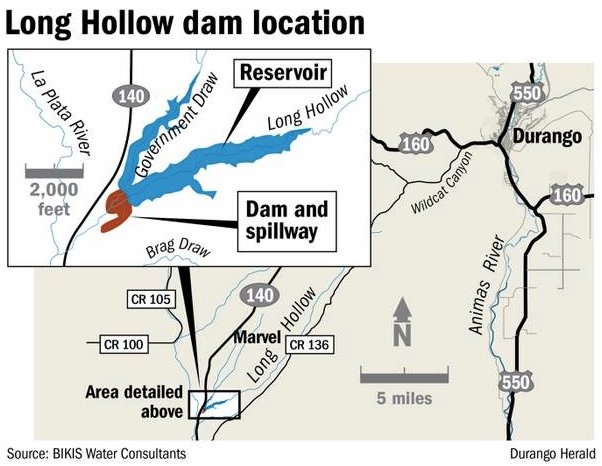
Taylor Reservoir location map via The Durango Herald

From The Pagosa Springs Sun (Ellen Roberts):

Traveling around my district for meetings and events is always a scenic journey and the fall colors have been spectacular. Seeing more of the mountaintops with snow is also beautiful.

That snow making an appearance at higher elevations gives me hope that winter in the southern half of Colorado will bring more moisture than we had last year. Rains in the late summer and early fall have helped, but they also bring the rapid growth of the forest understory that dries out, becoming a wildfire’s kindling.

Water and wildfire issues continued to dominate my work over the last month as the interim committees on these topics wrapped up our Denver meetings. New bill ideas came out of those committees and I’ll be carrying a few of those as the Senate sponsor.

The water resources interim committee also completed its task of holding public hearings in each of the state’s water basins on the idea and contents of a state water plan. We held these hearings in Gunnison, Glenwood Springs, Durango, Alamosa, Pueblo, Steamboat Springs, Walden, Fort Collins and Denver.

While the conversations were spirited and strong concerns raised on different points, we legislators were welcomed in each area by the basin roundtables and general public. Much appreciation was expressed for our outreach to hear the viewpoints.

The many miles on the road in attending all of the water hearings was valuable time spent for me and reinforced how different the water basins are across our state. Accessing water supplies, whether from the ground’s surface or from underground aquifers, is a challenge nearly everywhere, but the dynamics are different in each region. For example, some aquifers are being depleted at an alarming rate while, in the upper northeast corner of the state, basements and farmers’ fields are being flooded by groundwater.

That Colorado can do more on water conservation on the individual and municipal levels was raised by the public at each hearing. Some spoke to this having moved here from other dry, western states and suggestions for improvements were abundant. During the roundtable discussions and in the public comment period of each hearing, attendees mentioned that sufficient water availability in their homes, but also in the environment, directly impacts the quality of life values they hold dear as Coloradans.

Not surprisingly, there’s much concern from Western Slope residents that their communities will be dewatered for the benefit of Front Range urban populations. Another theme raised, statewide, was the importance of keeping food production nearby, recognizing that would only be possible if farming and ranching remain viable pursuits, with sufficient water needed for that food production.

More storage was also repeatedly mentioned at these hearings as a way for Colorado to address the water supply gap. It was recognized that this could mean expansion of existing reservoirs, but also likely would require the construction of new storage projects.

The recent dedication of the new Taylor reservoir in La Plata County is encouraging to many as this storage will help Colorado meet its water delivery requirements to New Mexico and make available more water to that area’s agricultural community. This project was completed with the participation and financial assistance of the Ute Mountain Ute tribe, support from the Southern Ute tribe and the state of Colorado, which is also encouraging.

More 2015 Colorado legislation coverage here.

Six water bills on their way to #COleg for 2015 session but not water flex-marketing

Colorado Capitol building

From The Pueblo Chieftain (Chris Woodka):

A flex marketing bill, similar to one that stalled in the state Legislature earlier this year, failed to make it out of the interim water resources review committee this week. Discussion of the bill snagged on a section that would prohibit transfers between basins in the state, as members of the committee deadlocked in a 5-5 tie at a meeting in Denver Tuesday. Seven votes were needed to move the legislation forward in 2015.

The legislation still could be brought forward if an individual sponsor is found. The idea came out of a South Platte study of water use co-sponsored by the Colorado Corn Growers, Aurora and Ducks Unlimited, and is being promoted primarily by water lawyer Andy Jones.

The flex water right proposed in the legislation would allow agricultural water rights to be used for multiple purposes — including municipal, industrial and recreation — under either a court decree or in a substitute water supply plan. It would allow water to be taken off the land through fallowing or deficit irrigation — a largely untested concept — for five years in every 10. The bill has raised concerns about speculation, which were addressed in the revised version by adding that continuation of agriculture would be the primary purpose of the water right. It also contains a section that would allow a judge to review whether a flex water right would harm other water rights after it has been decreed, presumably placing the filing of a protest and burden of proof on the owner of the water right claiming injury.

Water rights now are decreed after applicants prove or reach agreements that assure other rights will be mitigated for possible damages.

More:

WATER BILLS

Six bills dealing with water issues are headed for the Colorado General Assembly in 2015, following action by the interim water resources review committee. Bills are not yet numbered.

Water issues in land-use planning: Directing the Colorado Water Conservation Board and Department of Local Affairs to provide water education to land-use planners.

Rain harvesting: Refining legislation in 2009 that allowed the CWCB to conduct up to 10 pilot projects for collection of rainwater by new developments. It would reduce the amount of replacement water required.

Dawson aquifer: Repeals an augmentation requirement for the Dawson Aquifer (part of the Denver Basin aquifers) to continue the current standard of replacing actual depletions.

Water-table lowering: Requires CWCB and the state engineer to administer two pilot projects to lower South Platte water tables in northeastern Colorado.

Invasive phreatophytes: Creates a five-year grant program from the noxious weed management fund to control invasive species such as salt cedars and Russian olives.

Groundwater appeals: Allows additional evidence to be presented when appealing decisions by the state groundwater commission or the state engineer.

More 2015 Colorado legislation coverage here.