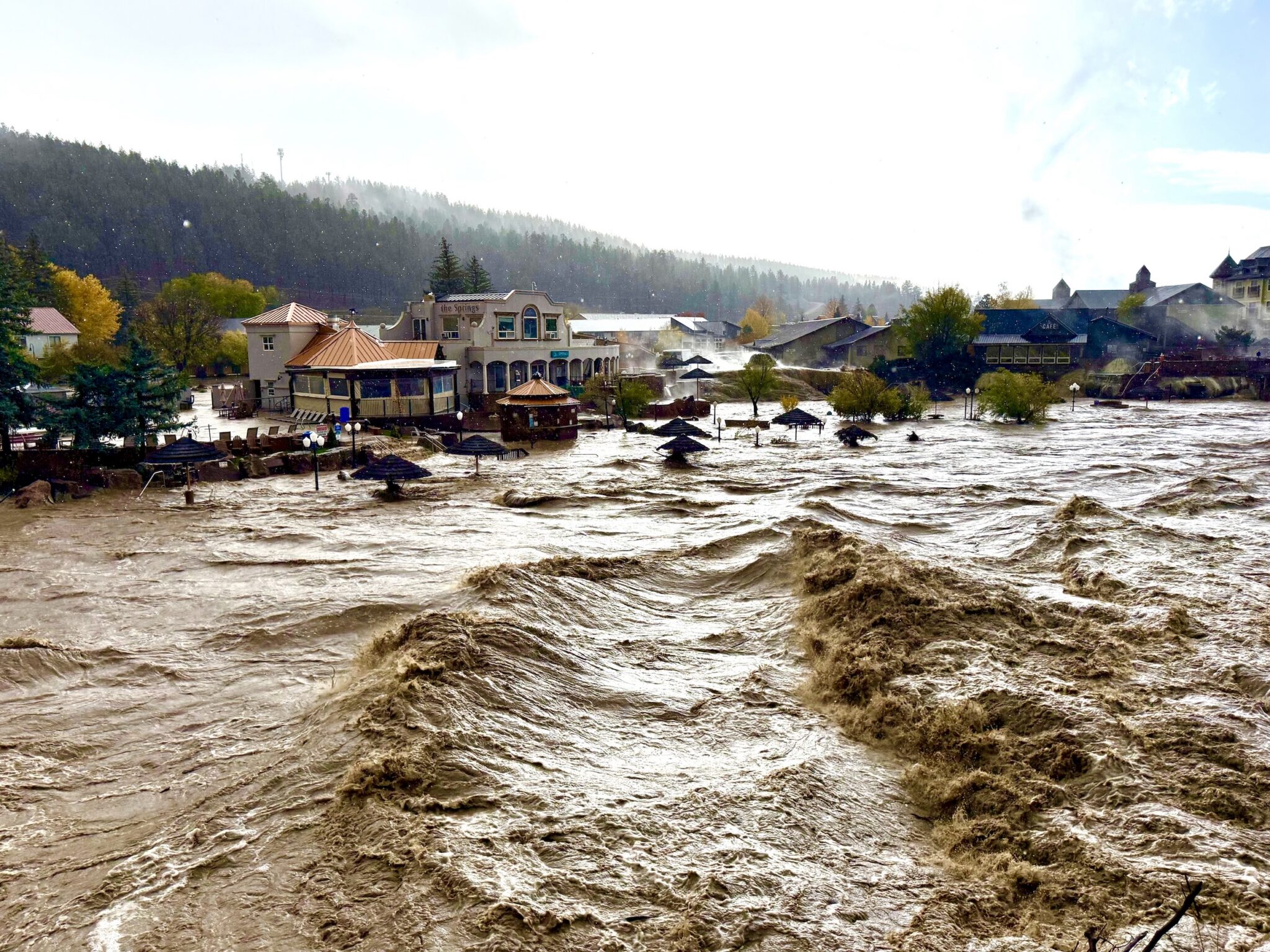
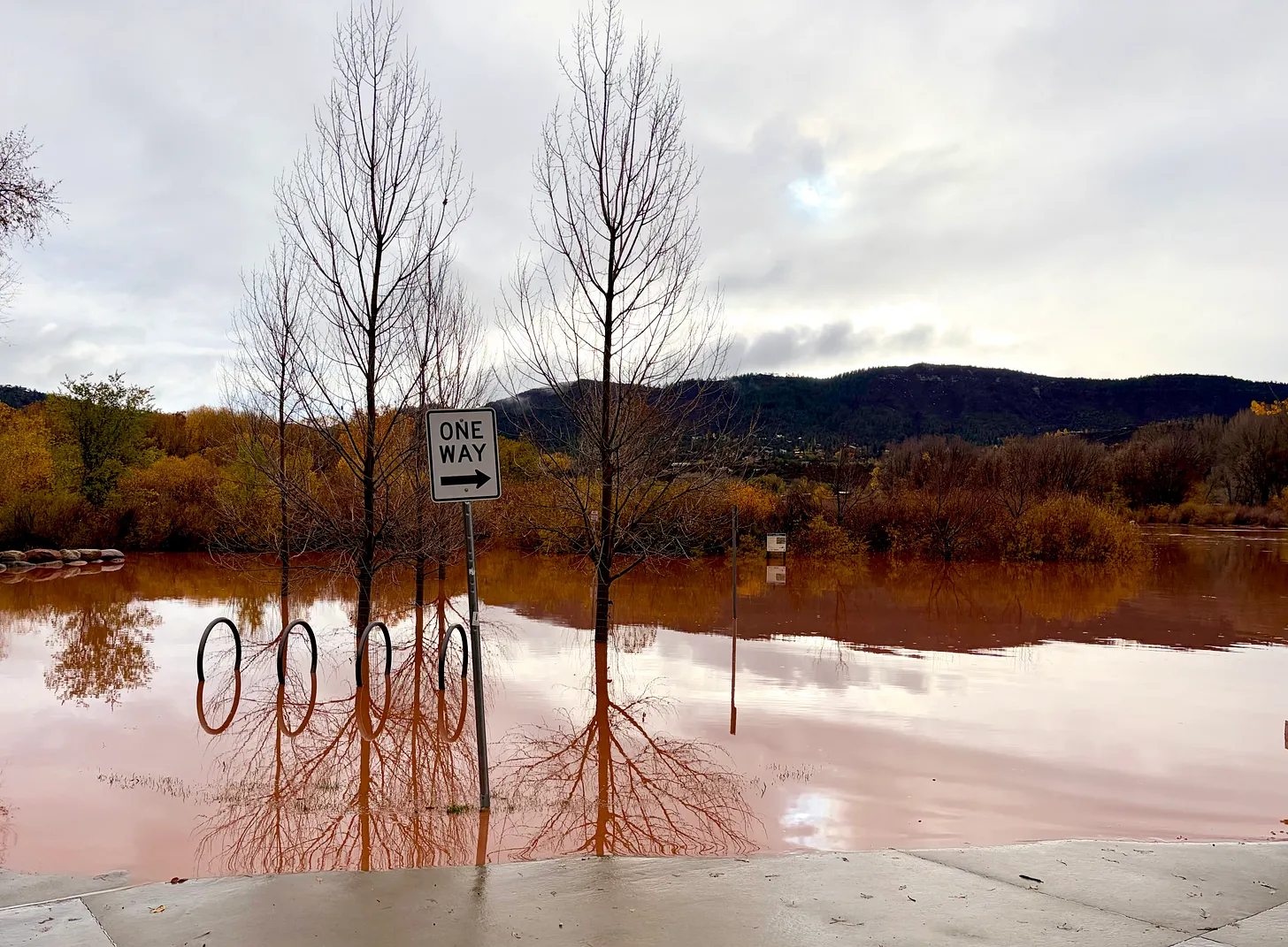
A view of San Juan River flooding in downtown Pagosa Springs on Friday, October 23, 2026. (Photo courtesy of Jacque Aragon)
Click the link to read the article on the Grist website (Matt Simon):
November 5, 2026
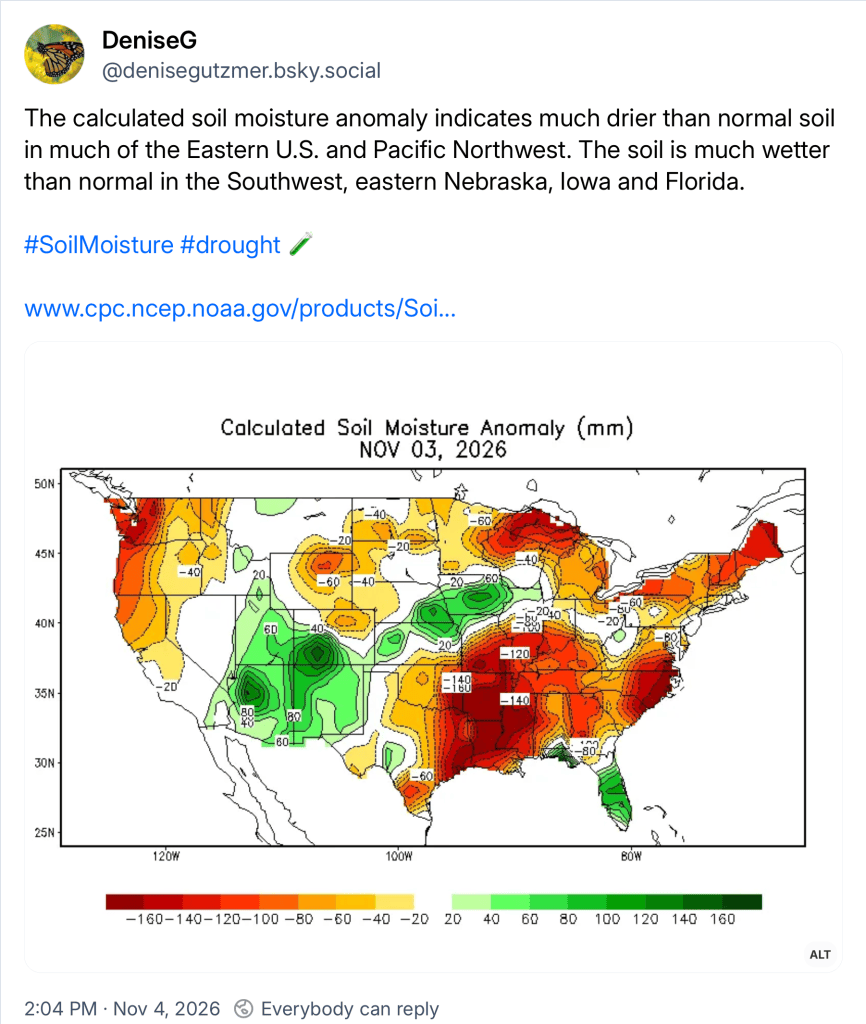
The Southwest just got way too much of a good thing. Last weekend, a ferocious storm inundated communities and killed at least four people. Though precipitation is an essential component of Arizona’s desert climate, the state got two or three months’ worth of it in just a few days — far more than human infrastructure could handle all at once. Since September 20, an astonishing 28.84 inches of rain has fallen on Clovis, New Mexico, compared to its historical average of just 3.3 inches.
“This weekend was just adding more on the rough times that those communities in Southwest Colorado and Arizona and Utah and New Mexico have been having recently,” said Russ Schumacher, director of the Colorado Climate Center at Colorado State University, who’s also the state climatologist. “I think the El Niño connection is pretty clear.”
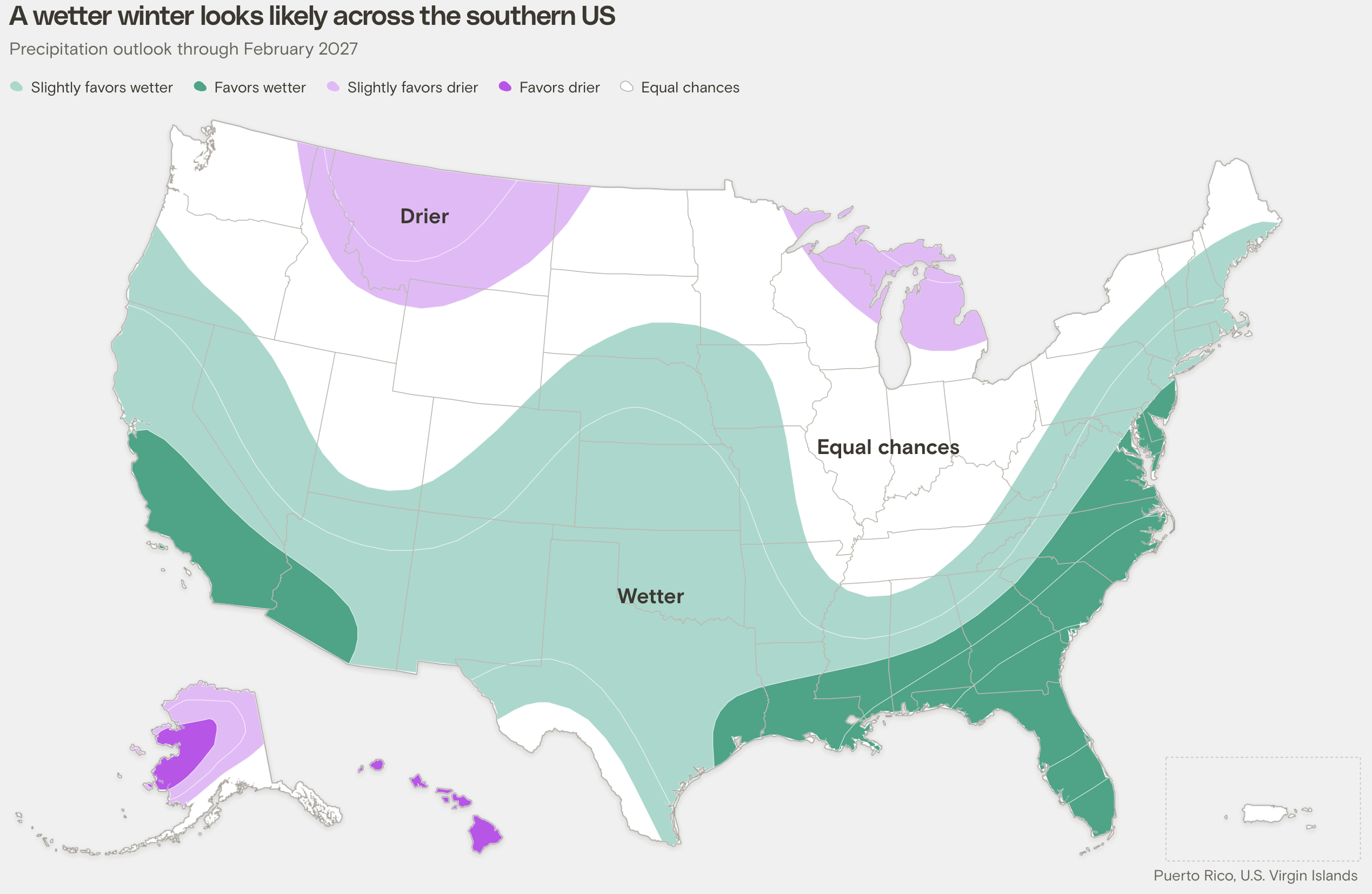
Indeed, that band of warm water in the Pacific could be priming much of the southern United States for a winter of increased precipitation, according to the National Oceanic and Atmospheric Administration’s seasonal outlook. “Could an event like this have happened in a non-El Niño year?” asked Michael A. Crimmins, a climatologist at the University of Arizona. “It could have, but it would have been a lot harder to pull all of the ingredients together at the same time, and would have been a lot less likely.”
“Slightly favors” means a 33–50 percent chance of the favored category, and “favors” means 50 percent or more. Hawaiʻi is shaded from CPC’s Hawaiian Islands outlook. Puerto Rico and the Virgin Islands are unshaded; NOAA’s outlook suggests warmer temperatures in this region but publishes no corresponding probability. Source: NOAA Climate Prediction Center Clayton Aldern / Grist
The looming problem this winter is heat, oddly enough. The unfolding El Niño is already the strongest on record, and it could get stronger still in the next few months. Although that amounts to just a handful of extra degrees in the Pacific, it injects a tremendous amount of energy into the atmosphere, scrambling weather the world over. The phenomenon is so influential, in fact, that it has helped cancel hurricanes over in the Atlantic, by messing with winds high up in the atmosphere. Accordingly, this year shattered the recordfor the latest first hurricane in a season by nearly a month. Normally by this time of year we’d have seen six of these cyclones, but 2026 has still only produced one.
The Southwest, though, gets no such relief from inclement weather. In addition to adding heat to the sky, the warmer waters of El Niño also increase atmospheric moisture. Even beyond the El Niño, temperatures in the Pacific have been running extra hot, which explains why the western part of the ocean has produced 10 hurricanes this season even as the Atlantic has remained quiet. (Overall, more than 90 percent of the excess heat that humans have pumped into the atmosphere has been absorbed by the oceans.)
All this warm water means more moisture for the weather patterns that have been moving into the Southwest over the last month. A separate system in late October, for instance, became one of the most extreme storms in Colorado’s history, pelting higher elevations with up to 8 inches of rain in four days, causing widespread destruction. “It’s just really extreme amounts of water vapor in the atmosphere that have been aimed into the Southwest in each of those storms,” Schumacher said.
This autumn precipitation primed Arizona, Colorado, and other Southwestern states for yet more destruction this past week. For one, rivers were already running high, then ran all the higher. And two, if soils are soaked, a follow-up bout of rain will run off and cause flooding. “We get the second storm, just a little bit after the first one, then everything was primed for even worse flooding this time around,” Schumacher said.
Shaded relief map of the US via Learner.org
In mountainous terrain, this gets especially dangerous, as the topography funnels rainwater into raging torrents. “If you hike around the Southwest, you’re going to see out-of-place boulders all over the place,” Crimmins said. “Water put it there. Maybe it was 5,000 years ago or something like that, but water moves. We can have really epic flash flooding.”
The one silver lining here is that any increased precipitation from this El Niño could bring drought relief to much of the southern U.S., according to NOAA’s projections. Climate change is not only exacerbating these ongoing dry spells — hotter temperatures also increase evaporation from reservoirs. At the same time, populations are growing in the Southwest, meaning more people demanding more water.
Source: NOAA Climate Prediction Center U.S. Seasonal Drought Outlook, Clayton Aldern / Grist
With these factors conspiring, the Colorado River’s two largest reservoirs, Lake Powell and Lake Mead, are approaching the point of collapse. The potential for more rainfall this winter might help fill them, Schumacher said, but it can’t reverse the system’s precipitous decline. “It’s a long way to go to get even back to where we were a year ago,” he said. “Let alone when it was in good condition decades ago.”
The wildcard this year is snowpack: It’s still too early to tell, Schumacher said, how much snow will fall in Colorado. Whereas rainwater flows quickly into rivers, making it harder to store without overwhelming infrastructure — hence all the destructive flooding of late — snowpack slowly releases water as things thaw in the spring. With a record low snowpack earlier this year, Colorado is in desperate need of bountiful flakes in the months ahead.
Water agencies can’t change the weather, but they can at least change how they manage precipitation. Down in Arizona, cities like Tucson have been installing green infrastructure — basically dirt spaces that hydrate native plants — which slow down the flow of water, thus preventing flooding. “There’s really cool and clever ways of thinking about stormwater as a resource,” Crimmins said, “rather than a nuisance.”
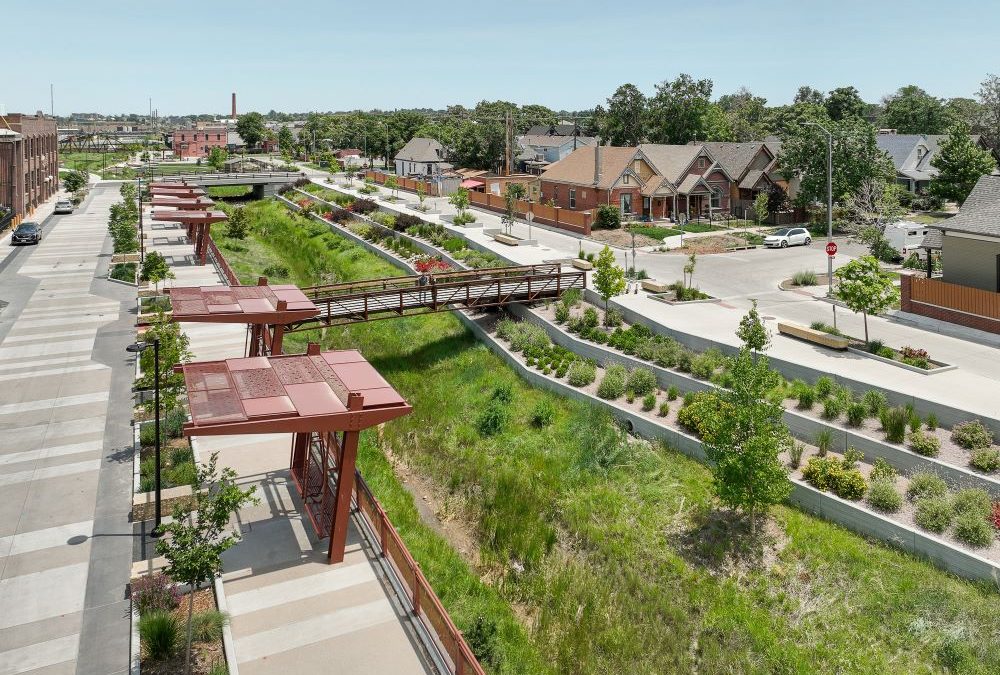
Guided by resident input, the award-winning 39th Avenue Greenway project at the edge of Denver’s RiverNorth neighborhood is an example of One Water in action. The project restored a discontinued rail corridor to improve the aesthetic, create an accessible recreational amenity, and provide stormwater conveyance and filtration as well as 100-year flood protection for the area. (Blake Gordon, Courtesy DHM Design)
Control of Congress headlined a historic 2026 midterm election.
Democrats took power in the House and Senate, tallying victory after victory to repaint the electoral map in broad swaths of blue. Those victories included triumphs in the Senate and governor races in Iowa where water pollution from industrial agriculture and the state’s rising cancer rate were prominent campaign issues.
Down the ballot, voters in state and local elections were asked to approve new spending on water infrastructure or changes in water policy.
Voters, as they typically do, supported public funding for water infrastructure.
In Arkansas, voters endorsed a measure to authorize the state Natural Resources Commission to issue $500 million in general obligation bonds to finance water and wastewater systems, pollution reduction, flood control, and irrigation. The measure passed with 56 percent support after being put on the ballot by the Republican-controlled Legislature.
In Louisiana, voters approved an amendment to the state Constitution that will allow public funds to be spent on removing the part of a lead service line that rests on private property. Advocates say that the change will unlock federal funding for lead pipe replacement and speed the process of eliminating lead from drinking water in homes and businesses.
The ability of local governments to raise revenue via property taxes was at stake in Florida. Voters, by a margin of 62 to 38, approved a constitutional amendment to limit the taxable portion of a property’s value.
The change, championed by state Republican lawmakers, will cut local government property tax revenue by roughly $5 billion in 2027-28, according to a Florida House of Representatives budget analysis. An expected $8.8 billion reduction will come in 2028-29.
Some of that property tax revenue funds local water districts. Opponents argued that the amendment represents a “cost shift” – local governments will have to raise money by other means, or cut services.
Local water funding was also on the ballot in a Texas city that was recently on the brink of a water-supply emergency. Voters in Corpus Christi overwhelmingly passed a citizen-led measure to institute mandatory drought surcharges on industrial water users.
Proposition B, which passed with more than 68 percent of the vote, cancels a voluntary program that was expected to generate $6 million this year. The target of the surcharges is the Coastal Bend region’s industrial corridor – the chemical processing facilities and oil refineries whose past water payments are already the source of legal action. Corpus Christi is seeking new water sources to accommodate its industrial growth after the city’s main reservoirs nearly dried up earlier this year.
Lastly, in California voters seem likely to reject a measure to establish a new environmental review for “essential projects” like certain water, clean energy, transportation, and housing developments. The new California Environmental Quality Act process would have firmer deadlines for these projects and more restrictions on legal challenges.
With ballots still being counted, 54 percent of voters have said ‘No’ to Proposition 45.
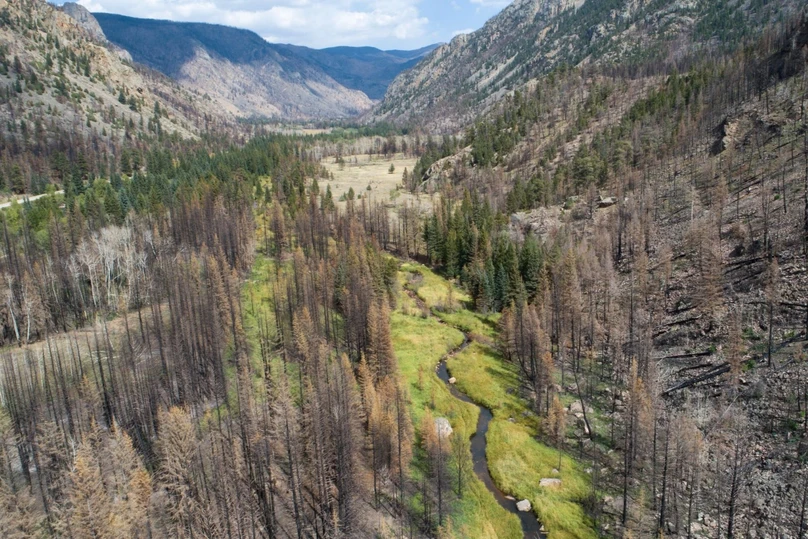
The Cache la Poudre River runs through an area burned by the 2020 Cameron Peak Fire. Photo: Evan Barrientos/Audubon
Click the link to read the article on the Audubon website (Abby Burk):
October 20, 2026
In the 2025 State of the Birds report, a status assessment of the health of the nation’s bird populations, more than 50% of western forest species are declining due to habitat degradation from fire suppression and industrial timber management. The report emphasizes that conservation efforts can succeed when adequately supported by science-based planning and collaborative investment.
Scientific research shows that prescribed fire, managed wildfire, and carefully designed thinning can help restore forest resilience in appropriate settings. But forest restoration and wildfire mitigation aren’t interchangeable.
Restoration focuses on ecological health, including habitat, soils, and regeneration, while mitigation primarily reduces risks to communities and infrastructure. Together, these approaches can support healthier forests while helping protect nearby communities from destructive fires.
For birds, that distinction matters.
A 2020 Colorado Front Range study found that forest restoration treatments can benefit bird communities, although individual species respond differently. Some birds favor more open conditions, while others depend on mature forests, shrubs, or standing dead trees.
Audubon Rockies and Weminuche Audubon Society have monitored bird responses to dry mixed conifer forest treatments near Pagosa Springs for eight years. Their monitoring helps document how birds respond to forest treatments that create openings and encourage understory vegetation, providing habitat and food resources during the breeding season. This monitoring also helps inform forest management with the San Juan National Forest.
Research following the 2018 416 Fire near Durango offers another important perspective. Five years after the fire, researchers found similar overall bird species richness across burn conditions, but differences in which species were present. Standing dead trees in heavily burned areas provided valuable nesting and foraging habitat.
The lesson? Fire has ecological benefits, even as severe wildfires can pose serious risks. Healthy bird communities depend on a mosaic of habitat types and natural processes—not simply the number of trees on the landscape. Managing these landscapes thoughtfully can also help safeguard homes, support outdoor recreation, and protect the natural places Coloradans value.
When forests burn, rivers feel it
Colorado’s mountain forests collect the snow that feeds our rivers, supports agriculture and communities, and sustains wetlands and riparian habitats essential to birds.
Severe wildfire can disrupt those connections. When intense rainfall follows a fire, ash, sediment, and debris can wash into streams and reservoirs, affecting water quality, aquatic ecosystems, and drinking-water infrastructure. Changes to vegetation and soils can also alter runoff and increase flooding.
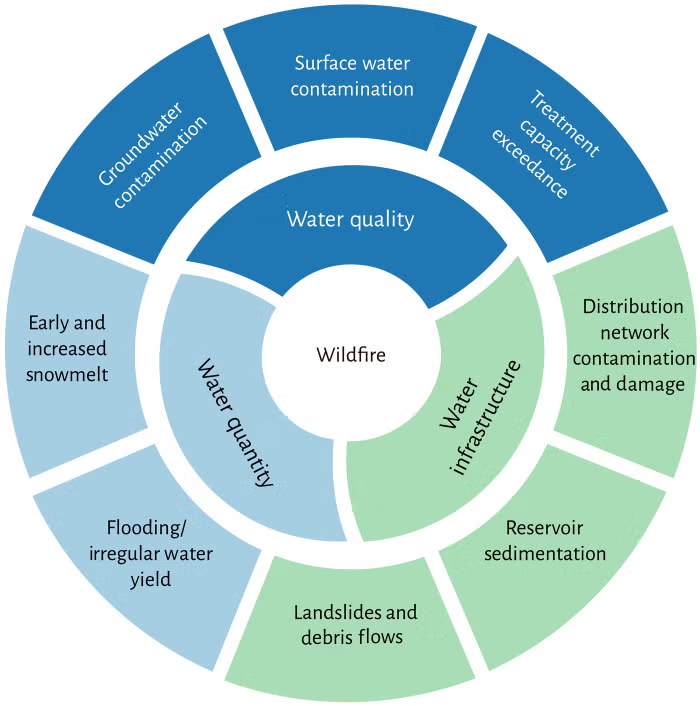
A 2023 study in Science Advances highlights how wildfire risks cascade through water quality, water quantity, and infrastructure, sometimes for years after a fire.
Wildfire impacts extend downstream. Severe wildfire can affect water quality, water quantity, and water infrastructure through interconnected processes, with consequences for watersheds, communities, and wildlife like birds. Photo: Belongia et al. (2023), Science Advances, “Building water resilience in the face of cascading wildfire risks.
Forest management may also influence snowpack. A recent University of Washington and The Nature Conservancy study found that carefully designed thinning increased snow storage by approximately 30% on north-facing slopes and 16% on south-facing slopes in Washington’s eastern Cascades. While results vary by landscape and greater snow storage doesn’t necessarily translate into increased streamflow, the findings underscore the importance of considering forest management within larger watershed systems.
For Audubon, forest health and watershed health are inseparable. How we manage forests affects the rivers, wetlands, and floodplains downstream that sustain wildlife like birds while providing clean water, recreational opportunities, and other essential benefits for communities.
Investing in resilience before disaster strikes
Research increasingly demonstrates the potential benefits of proactive wildfire management.
A 2026 study published in Science examined 285 wildfires across 11 western states. Researchers estimated that fuel treatments helped avoid approximately $2.8 billion in damages, including property losses and impacts associated with carbon emissions and smoke. The study estimated $3.73 in benefits for every dollar invested.
These are modeled benefits, not guaranteed outcomes for individual projects. But they reinforce the value of investing in carefully designed, science-based approaches before severe wildfire occurs.
Additional Resources
The following resources offer additional information on forest management, wildfire resilience, water resources, and habitat for wildlife like birds.
2025 State of the Birds Report
North American Bird Conservation Initiative U.S. Committee (2025). The State of the Birds, United States of America, 2025. https://www.stateofthebirds.org/2025/
Colorado Bird Research
Latif et al. (2020). Dry conifer forest restoration benefits Colorado Front Range avian communities. Ecological Applications. https://doi.org/10.1002/eap.2142
Scott & Korb (2024). Birds of the Burn: Avian Community and Functional Guild Variation Five Years Post-Fire in Warm–Dry Mixed Conifer, Southwest Colorado. Fire. https://doi.org/10.3390/fire7030062
Colorado Front Range bird habitat modeling study (2022). Simulated treatment effects on bird communities inform landscape-scale dry conifer forest management. https://pmc.ncbi.nlm.nih.gov/articles/PMC9285579/
Forest Management, Snowpack, and Watershed Science
Prichard et al. (2021). Adapting western North American forests to climate change and wildfires: 10 common questions. Ecological Applications. https://doi.org/10.1002/eap.2433
Oh, Water, you give and take away. Following one of the driest years on record, the water once again came pouring out of the sky and raging through the streams and rivers, setting new high-water records, bringing new life to the parched earth, and wreaking havoc and destruction wherever waterways and humanity intersected.
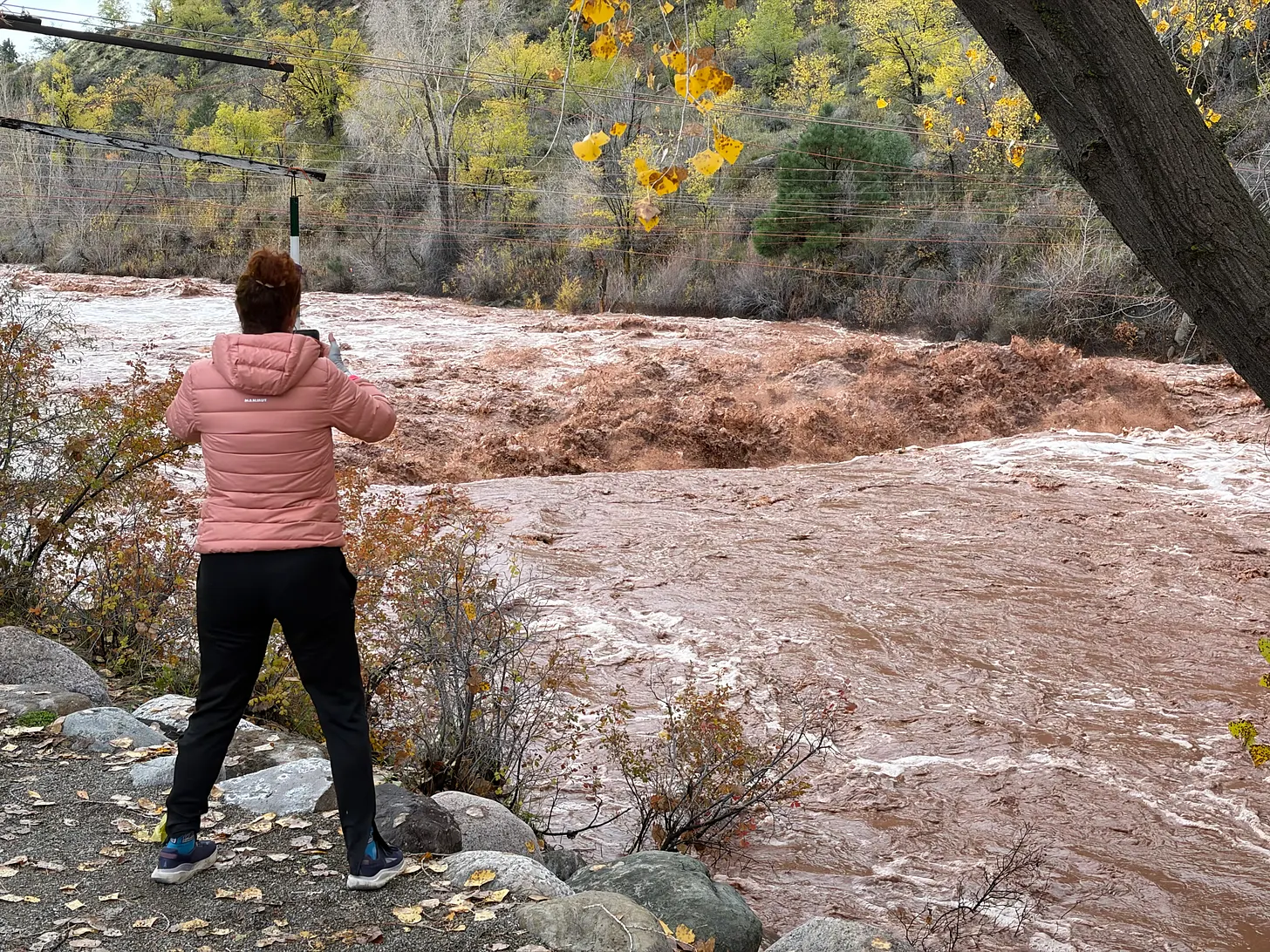
The rains stopped two days ago, but streams in southwestern Colorado continue to run at levels that would have been considered abnormally high a month ago. North of Durango, a tree careening down Hermosa Creek got wedged underneath the railroad bridge, creating a dam of sorts and forcing the muddy waters to jump the bank and run through a trailer park and neighborhoods, forcing more evacuations and closing Highway 550. Several other Durango area roads remain closed due to washouts or debris.
Junction Creek in Durango on the morning of Nov. 2, 2026. Jonathan P. Thompson photo.
Other roads remain closed throughout the region. Highway 160 between Bayfield and Pagosa is shut down because the Piedra River — which exceeded 17,000 cfs yet again — washed out the highway bridge. Hwy 151 from Chimney Rock to Arboles remains closed after being wrecked by the previous flood. Hwy 160 over Wolf Creek Pass is shut, as is Hwy 17 over Cumbres Pass between Chama and Antonito. These closures have basically marooned Pagosa, which suffered serious damage during this round of flooding.
In Utah, State Road 162 north of Montezuma Creek remains closed — this is one of the stretches of road that was totally overhauled over the last couple of years. And Hwy 163 between Mexican Hat and Bluff is shut down after Comb Wash took a big bite out of the highway bridge.
Meanwhile, hundreds of affected residents are just beginning the long ordeal of cleaning up and attempting to cope with this disaster.
Having lived through a flood that filled my home with nine feet of water, I can imagine what these people have gone through, and the difficult journey they face ahead of them. It’s heartbreaking to consider, and pains me even to write it down, yet it seems necessary. (It’s equally heartening to see the communities come together to rescue and support those most affected).
After the sheer panic that hits when you realize the water is rising in your front yard; the adrenalin that sets in as you try to gather up loved ones, pets, important documents, and the phone and the laptop and wade through thigh-deep water in the yard; the elation that follows your escape and survival, comes the devastation of returning to your home, walking inside, and seeing furniture and appliances and books and possessions strewn about as if a mischievous god had picked up the house and shook it. If your home is still there, that is.
Every surface that was under water will be blanketed with fine, dense, tenacious mud. It will coat clothing. In many cases the mud itself will be tainted with sewage or other waste, and as the waters subside, a fecund odor infuses everything. Particle wood rots, drywall deteriorates, hardwoods warp, mold grows. When the mud dries it becomes quasi-sandstone that can be near impossible to remove; break it up and it turns to fine dust that is hazardous to inhale. For months or even years after the cleanup and renovations are done, people who were flooded will find the mud embedded in items or clothing.
Floods don’t discriminate, and are as likely to damage multi-million dollar homes as they are to inundate trailer parks. But the financial burden of recovery and cleanup weighs far heavier on low- and even middle-income folks. Many standard homeowners insurance policies do not include flood insurance, and your average homeowner or renter is likely to forego supplemental flood coverage because it’s very expensive, especially for homes in historic floodplains or near waterways.
I’d like to believe this was an anomaly, something we can look back on as a sort of freak occurrence that, eventually, will be so unusual that it will feel as if it were unreal, something that became exaggerated by the passing of time. The 1911 Flood feels that way to me sometimes. How is it possible that the Animas River carried nearly twice the flows we saw on Nov. 2? Surely that could never happen again. Right?
And yet, we know this was not an anomaly because the early November deluge was the fifth abnormally high precipitation event of the previous six weeks, which was capped off by two record-breaking, catastrophic flooding events. On the one hand this is historic, unprecedented, a once-in-a-century event; on the other hand it could become nearly routine in our rapidly changing climate.
Either way, if my experience is any indication, one thing is almost certain: The people affected by these floods will feel a tinge of anxiety every time the weather forecast calls for heavy rain.
The Animas River at Santa Rita Park on Nov. 2, 2026, when it was running at about 12,100 cfs. Jonathan P. Thompson photo.
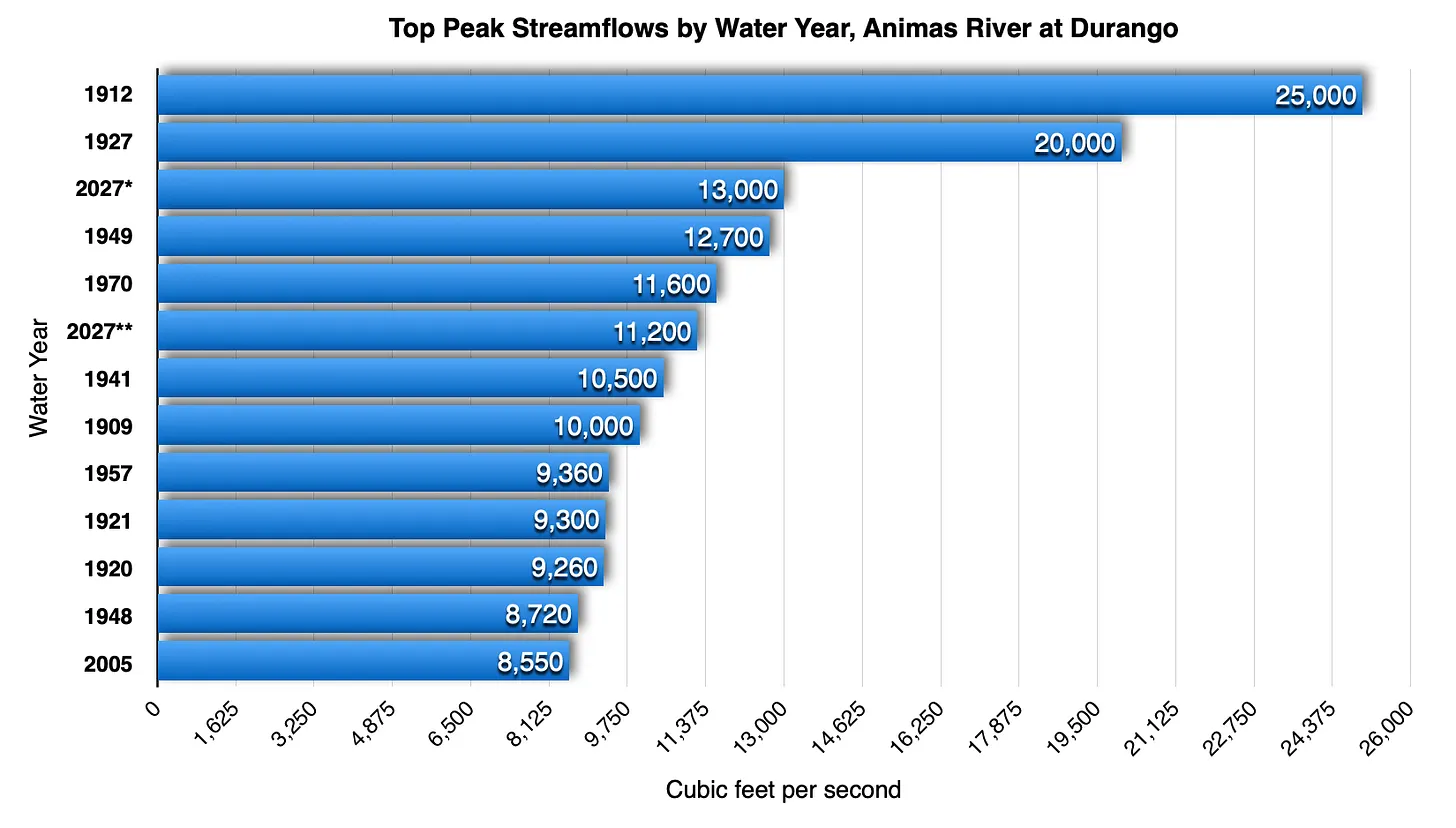
The second flood of 2026 (and water year 2027) was the third largest on record at the USGS streamflow gage on the Animas River in Durango, with a peak flow of 13,000 cubic feet per second. That puts it ahead of both 1949 and 1970, but still well behind both 1911 (water year 1912) and 1927.
†Peak flow on Nov. 2, 2026. ††Peak flow on Oct. 23, 2026. This is listed as 2027 because it occurred during the 2027 Water Year, which goes from Oct. 1, 2026, to Sept. 30, 2027.
It’s interesting to see how the Animas River’s streamflows change over the course of the 45 miles or so between the Durango gage and the Farmington one. On Nov. 2, the Animas appears to have gained about 6,900 cfs over that stretch of river, while on Oct. 23 it only gained 800 cfs. A lot of this came from the two major tributaries — Lightner Creek and the Florida River — joining the Animas downstream from the Durango gage, along with numerous washes and arroyos adding their load.
Meanwhile, back in 1970 the peak streamflow in Farmington was 700 cfs lower than it was in Durango. I’m not sure how to explain that one.
Here’s some video and commentary I made at Santa Rita Park in Durango when the river was around 12,100 cfs. It would still gain another 900 cfs before peaking later that day: https://www.landdesk.org/p/live-with-jonathan-p-thompson