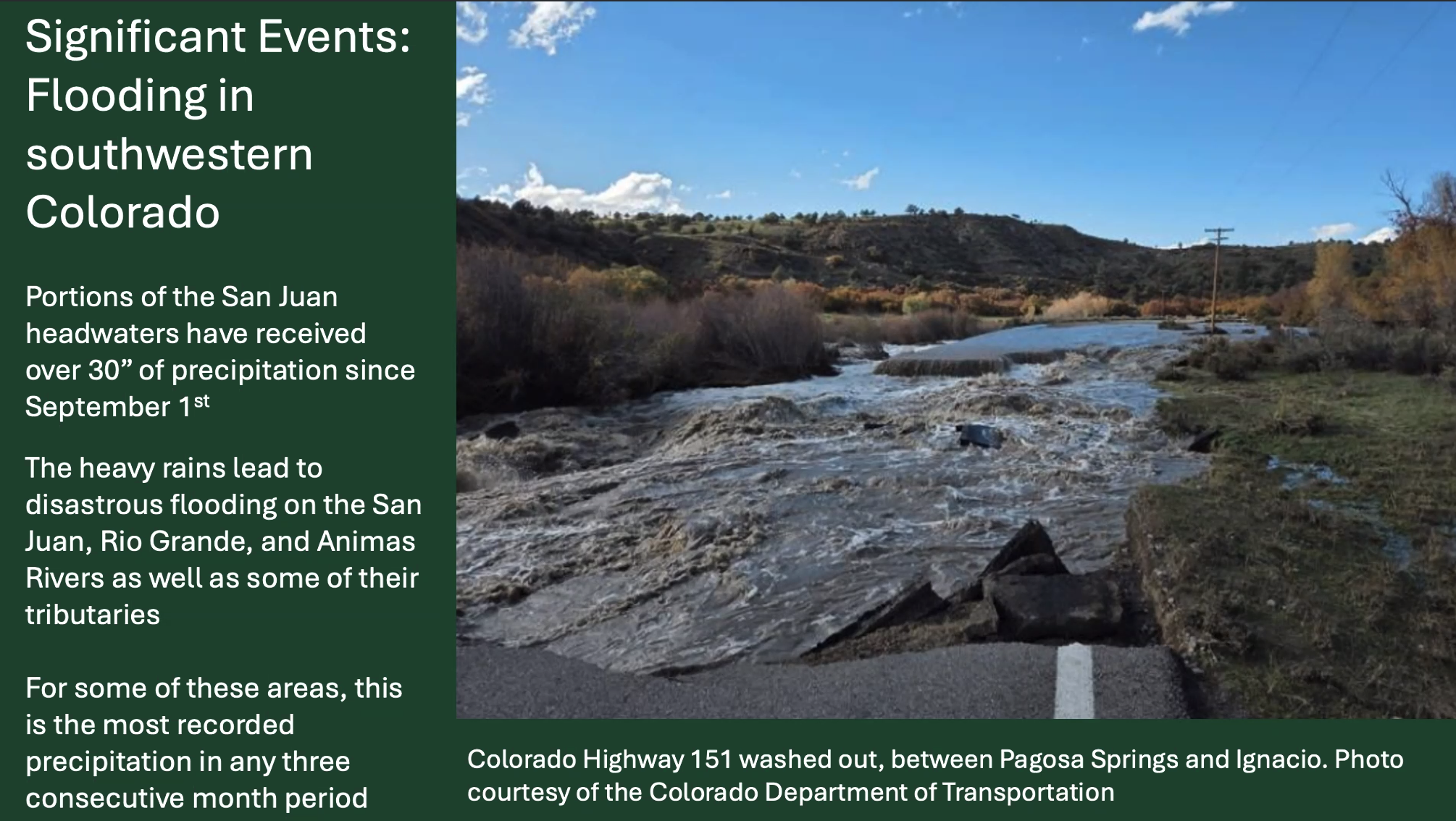
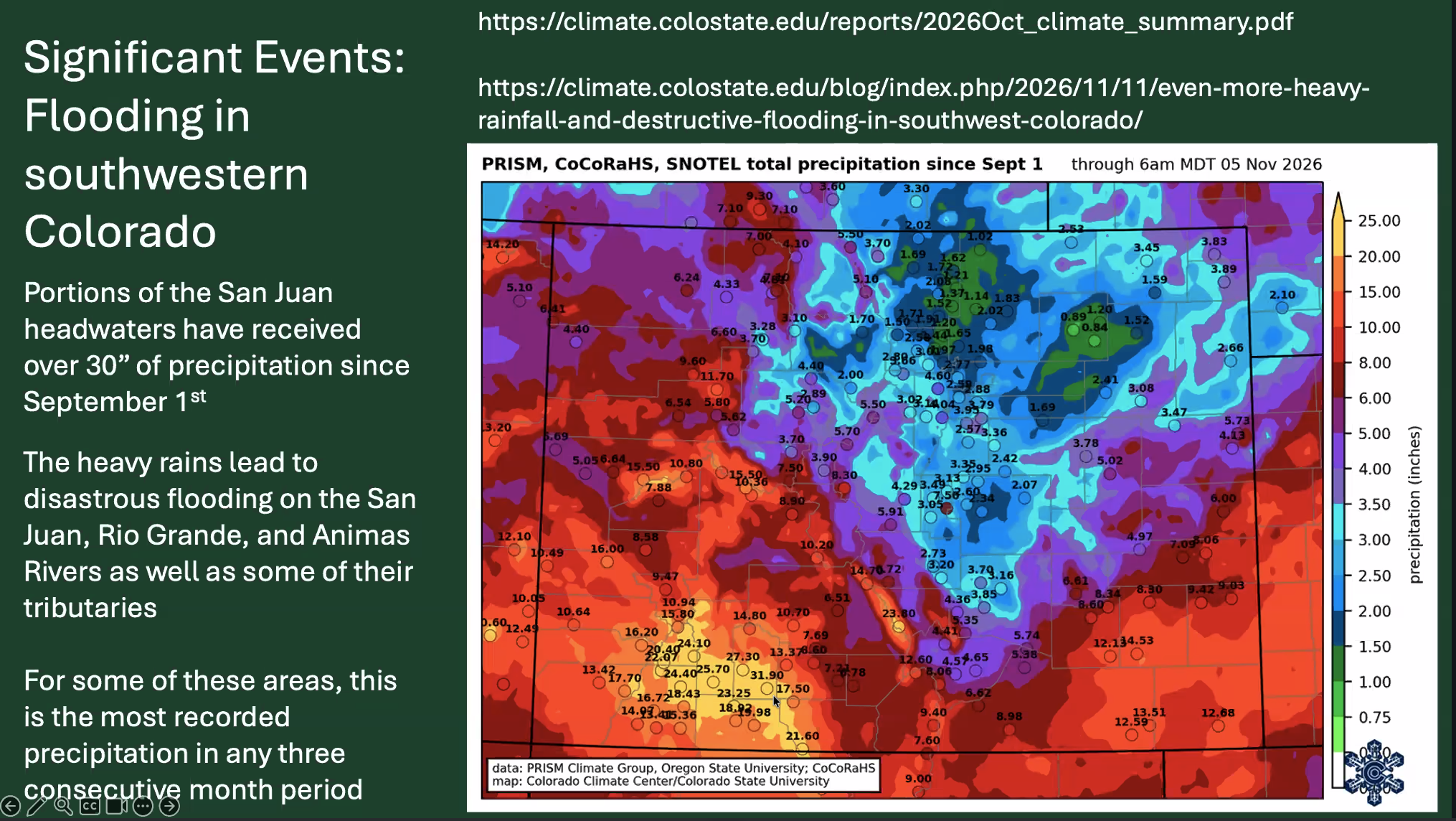
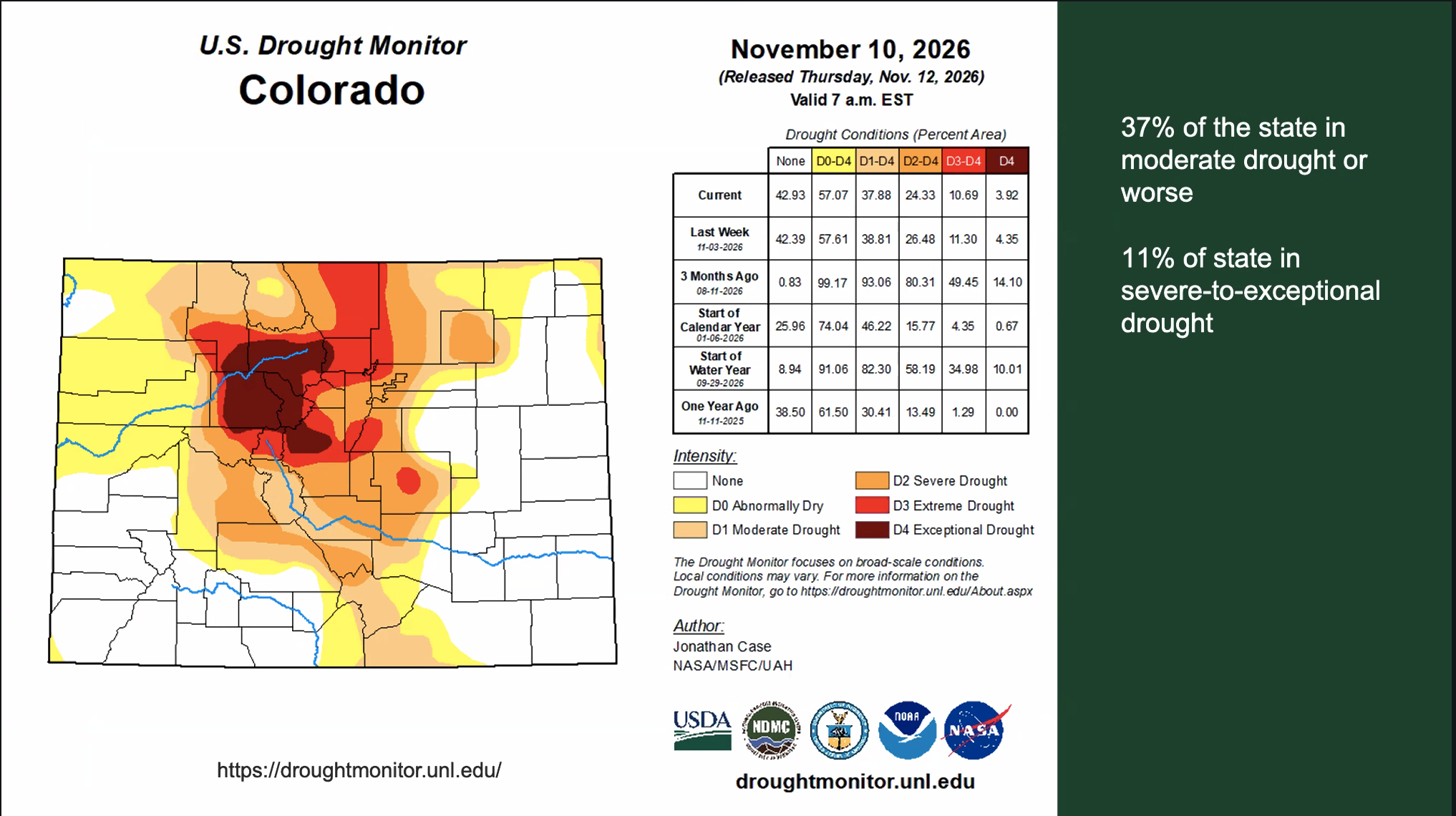
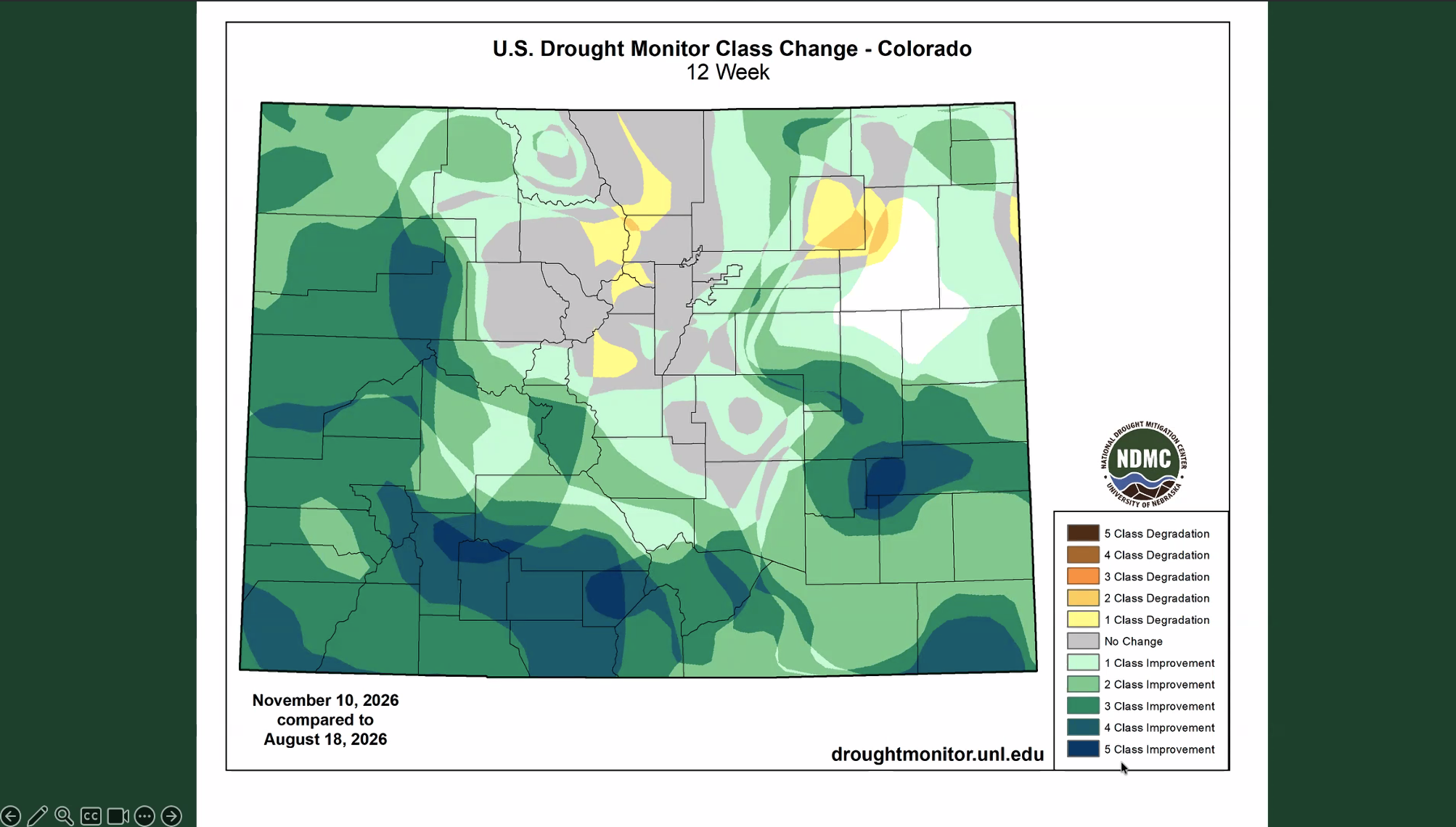
A wetland area along Homestake Creek. The creek is listed as a source of water for Aurora’s Wild Horse Reservoir in Park County. Photo credit: Brent Gardner-Smith/Aspen Journalism
Click the link to read the article on the Aurora Sentinel website (David O. Williams). Here’s an excerpt:
November 15, 2026
Aurora Water officials on Friday confirmed they are working to provide additional water quality information the state has requested as the city water utility seeks a state Regulation 87 dredge and fill permit for the proposed Wild Horse Reservoir in Park County that would partially be filled by Homestake Creek water from Eagle County.
“We are continuing to work with CDPHE to provide the additional information they requested for the Regulation 87 review process,” said Aurora Water Senior Communications Strategist Zach Henry in a statement, adding that the deadline for commenting on the project to the state, which has already been extended once, remains in place for Thursday, Nov. 19…
That means there is still urgency for anyone interested to email their comments to the Colorado Department of Public Health and Environment at cdphe_df_wqcd@state.co.us, with the subject line “WHS PN Comments” by the end of the day on Thursday, Nov. 19.
Once Aurora Water’s additional information on water quality and modeling is provided, there will then be another comment period on that subject, according to state officials. Meanwhile, the list of local water officials opposing the proposal only continues to grow.
“Homestake Creek and the Upper Eagle River are already deeply affected by existing transmountain diversions where water moves through pipes from the Western Slope to the Front Range,” wrote Dick Cleveland and George Gregory, board chairs of the Eagle River Water and Sanitation District and Upper Eagle Regional Water Authority, respectively.
Andy Mueller stood before an at-capacity room Nov. 13 to deliver the facts: The West’s population is booming; climate change is reality; there is no magic button to replenish the Colorado River to feed faucets and crops — and a new legal fight over the 100-plus-year-old compact governing its use is looming. Mueller, the general manager of the Colorado River District, updated those attending Montrose County’s West Slope Water Summit on the brewing dispute between the Upper Basin states (Colorado, New Mexico, Utah and Wyoming) and Lower Basin states (California, Arizona and Nevada), which have long tussled over whether the Colorado River Compact mandates the apportionments agreed to in 1922 regardless of current hydrology. The states, having failed to resolve their central disputes, could now find themselves in a showdown before the United States Supreme Court…
“We have a looming legal fight with the Lower Basin. Do we owe a delivery obligation of 75 million or 82.5 million (acre feet) over 10 years, or is that language in the compact just that we shall not cause that river to be depleted below that amount? It’s not us. It’s a natural circumstance that’s being caused by warming temperatures and so it’s not our fault. It’s the river’s fault. That is an argument that we’re likely to have, unfortunately, at the Supreme Court,” Mueller said…
Amid the day’s detailed discussions of lawsuits, compact history and weather patterns, a central question cast its shadow over the entire summit: If we can’t control how much water Mother Nature provides, what can we do to conserve and store more?
Gunnison Tunnel via the National Park Service
“It seems to me like the biggest bang for the buck in the state of Colorado is to modernize the delivery systems,” State Sen. Marc Catlin, R-Montrose, said, during the summit’s expert panel discussion…“Every system in the Uncompahgre (Valley) was built in 1912 — it’s still earth and lime canals. Water users have gone about piping a lot of these sites and those kinds of things, but if the state of Colorado is serious about saving water, they need to come to the table with dollars that will help secure savings of water on these irrigation systems. We can continue to talk about it, but until something like that happens, individual agricultural users are not going to be able to generate enough saved water to make a difference.”
Catlin said it’s critical to cast an eye on the future, but to act now…A farm is for many like a 401k retirement fund — and the average age of a farmer is about 64, he noted. “How do we step in when the time comes that you cannot continue to farm, or you can’t afford to farm? What are you supposed to do with those farms rather than sell them?” Catlin asked. The buyer could likely be a speculator instead of another farmer, he said. “What will that do to our communities? There’s a lot of questions that are going to need to be answered in regards to this. Do communities think farmland is a valuable enough commodity to purchase it the way on the Front Range, (where) they buy open space? … All over the Western Slope, we have to think about it, because things are changing.”
The risk is real, Catlin also said. “We can’t expect the climate to change back to something we knew when we were kids. So we’re going to have to think about how we address these kinds of things.”
Map of the Colorado River drainage basin, created using USGS data. By Shannon1 Creative Commons Attribution-Share Alike 4.0