#Arvada buys property for new water treatment plant: 25-acre property purchased for $5.7 million is located just west of existing plant — The Arvada Press

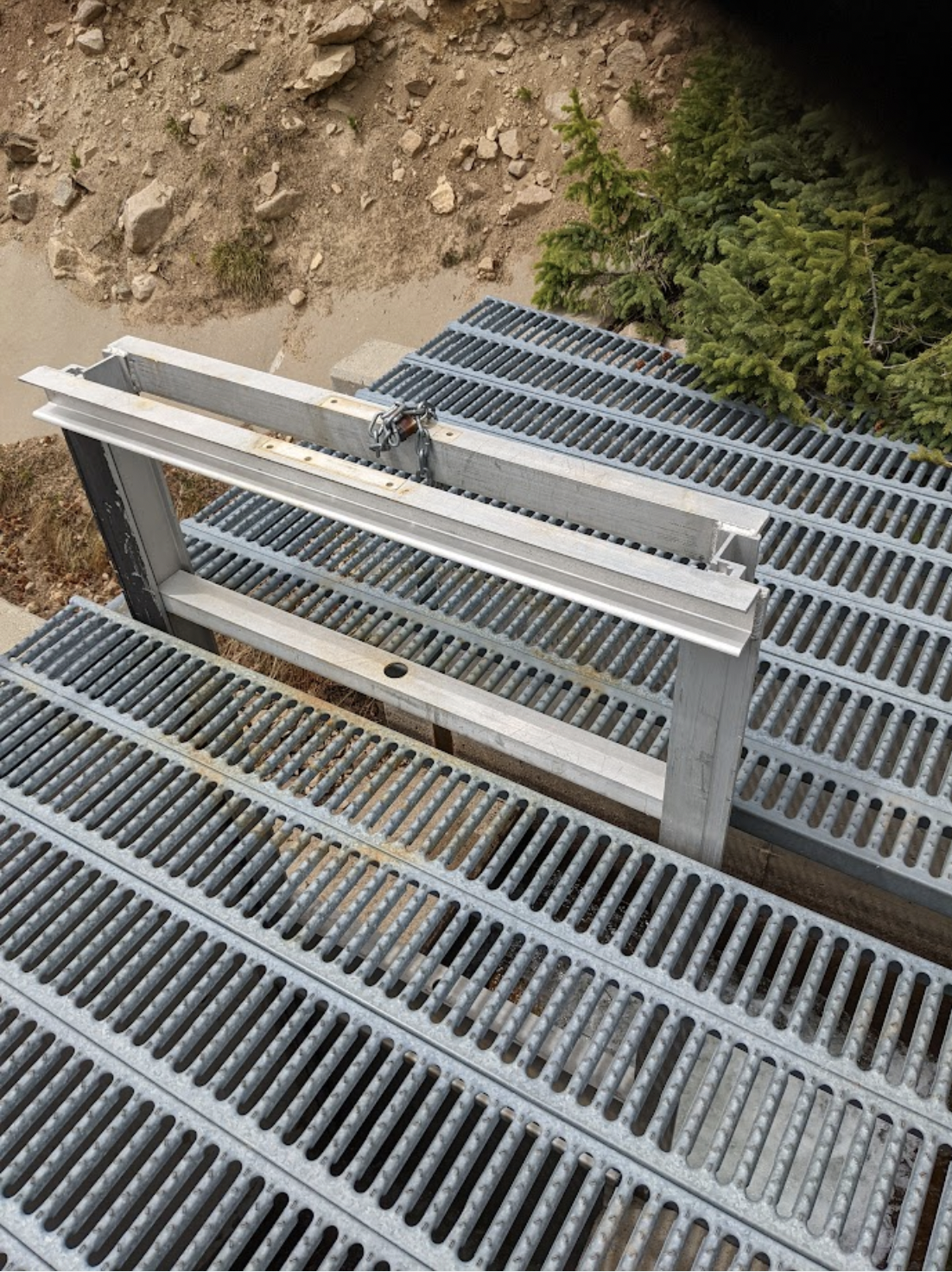
The site for the new water treatment plant, marked “West” on the map. Courtesy City of Arvada.

Click the link to read the article on The Arvada Press website (Rylee Dunn). Here’s an excerpt:

September 25, 2025

The city of Arvada is one step closer to replacing its aging water infrastructure, as city council unanimously approved the purchase of a 25-acre plot of land located at 6809 State Highway 93 for $5.7 million at the Sept. 16 city council meeting. The land is located just west of the existing Arvada Water Treatment Plant, which was built in 1979 and is nearing the end of its life, according to Arvada’s Communications Manager for Infrastructure, Katie Patterson. Arvada purchased the property from the Keller family. The city plans to annex the site, which is currently located in unincorporated Jefferson County, into Arvada as part of its next steps, the city’s Director of Infrastructure Jacqueline Rhoades said…The project is being funded by bond funding, customer rates and fees and development charges, not by general tax dollars. The city is utilizing bonds in an effort to curb rate increases by spreading out the cost of the project over time. Patterson said that once the new plant is operational, the old Arvada Water Treatment Plant will be decommissioned. That plan is still in the works, as some facilities at that site will remain in service after the plant is shut down…According to the Department of Infrastructure, the new site is ideal for a few reasons, including lower potential for groundwater, a property shape that allows for easier construction and an efficient site layout, minimal disruption to the natural views of the area, better terrain for construction and operation, a property size that allows for future expansions if needed and elevation that allows water to be delivered by gravity to most of the city.

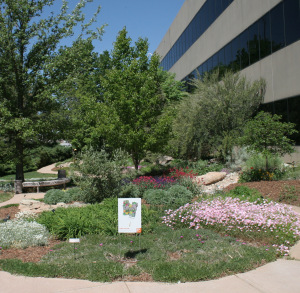
Mrs. Gulch’s landscape April 30, 2025

Mrs. Gulch’s Hawthorn pair April 30, 2025.
Close up of Mrs. Gulch’s Hawthorn April 30, 2025.

And just for grins guess what Coyote Gulch was doing on April 30, 2019?

Farmers Highline Canal near the Tuck Ditch Headgate April 30, 2019. Day 30 of the #30daysofbiking challenge.

#Arvada Historical Society plans ‘History Speaks: The Ditches of Arvada’ informative talk: First in planned series of historical forums to focus on Juchem Ditch and Farmers Highline Canal — The Arvada Press

Juchem Ditch Arvada. Photo credit: Arvada Historical Society

Click the link to read the article on the Arvada Press website (Rylee Dunn). Here’s an excerpt:

April 24, 2025

The discussion will focus on the Juchem Ditch and the Farmers Highline Canal and review how early settlers dug ditches by hand to support mining and agriculture. The event is free to the public and is scheduled for 10:30 a.m. to noon on May 17 at the Arvada Elks Lodge in Olde Town, at 5700 Yukon St. Panelists will include local historians Ed Rothschild, Tom Fletcher and Bob Krugmire. The event will be moderated by Arvada City Councilmember Sharon Davis. Arvada Historical Society President Judith Denham said the idea for the first History Speaks lecture — which will potentially be part of a larger series of talks — came when the organization was planning last year’s Cemetery Tour, which centered on the early pioneers who built the city’s ditches.

“We thought it would be a great idea to expand on this story and find a way to talk more about this crucial part of Arvada’s history,” Denham said. “I think people are going to really enjoy hearing about this large piece of Arvada’s history. It’s a panel and we’ve invited water experts and ditch company representatives to talk about how water influenced Arvada’s early history.

“They’re going to tell us the fascinating stories about how early settlers Wadsworth, Swadley and Jochem dug ditches with hand tools and mules so they could provide water for their farms,” Denham continued. “And add in the stories about the early conflicts over water usage and how that whole complicated system of water rights and water law started.”

Registration for the event can be completed at historyarvada.org. The Arvada Press and Colorado Community Media are partnering with the Arvada Historical Society for this project.

Farmers Highline Canal near the Tuck Ditch Headgate April 30, 2019. Day 30 of the #30daysofbiking challenge.

New options for the #ClearCreek Trail near 52nd Avenue announced — Allen Cowgill (The #Denver North Star)

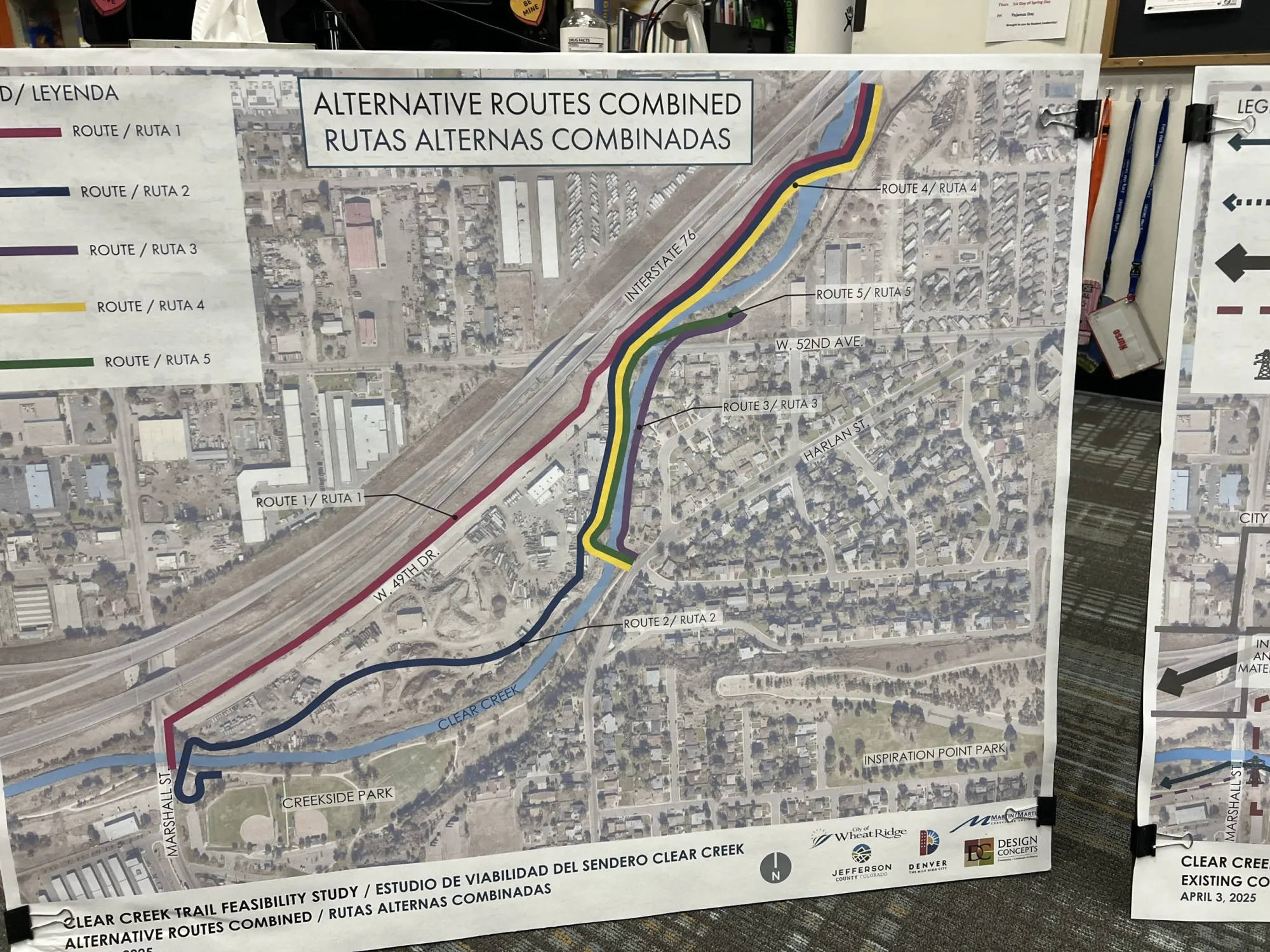
This map displays the five different route options presented at the open house for the new section of the Clear Creek Trail. Photo by Allen Cowgill

Click the link to read the article on the Colorado Community Media website (Allen Cowgill):

April 15, 2025

The city of Denver along with Jefferson County, The Mile High Flood District and the city of Wheat Ridge presented options for potential upgrades to the Clear Creek Trail during an open house in early April at Centennial Elementary School.

A section of the trail near Inspiration Point may get an upgrade for people that bike and walk. Currently, trail-users headed west must cross over West 52nd Avenue and then travel down about 1,100 feet of Gray Street, a residential street, before reaching the trail again. 

The new plans unveiled at the open house offered five different options for new routes to avoid going down Gray Street, and all of them included under passes or bridges so trail users won’t have to cross West 52nd Avenue at grade anymore. 

All of the options presented include new bridges or underpasses and involve several different routes that meander between Marshall Street and West 53rd Avenue. All of the proposed routes are west of the residences on Gray Street and south of Interstate 76. A study of the trail is expected to be completed in the fall. 

At the meeting, residents were given the option to rank the five options and pick their favorites and least favorites. To learn more and give input on the potential routes, people can visit https://bit.ly/ClearCreekTrail. A current survey is open until April 18. [ed. emphasis mine]

March snowfall in Northwest #Colorado shifts region away from possible #drought development in spring — Steamboat Pilot & Today #snowpack

Click the link to read the article on the Steamboat Pilot & Today website (Ali Longwell). Here’s an excerpt:

March 24, 2025

Snowfall in March has helped decrease the likelihood of drought developing this spring in Colorado’s northwest mountains. However, a warm and dry spring could still change the tide heading into summer.  The National Weather Service, a division of the National Oceanic and Atmospheric Administration, released its latest seasonal drought outlook on Thursday, March 20. It showed that drought conditions are unlikely to develop in most of northwest Colorado through June…Brad Pugh, a forecaster with the National Oceanic and Atmospheric Administration’s climate prediction center, said these outlooks predominantly take into account the current conditions, climatology temperature and precipitation outlooks over the next three months. 

“In northwestern Colorado at this time of year, you know going into the springtime, mountain snowpack is a critical factor,” Pugh said.

As of March 18, much of northwest Colorado was in line with, or just above, normal snowpack. This has continued to improve in the state’s north-central mountains since January. According to OpenSnow, as of Monday the snow totals and percentage of normal on the season so far were as follows:  

  • Winter Park – 315 inches (117%) 
  • Copper Mountain Resort – 303 inches (113%) 
  • Vail Mountain – 292 inches (101%) 
  • Breckenridge Ski Resort – 284 inches (107%) 
  • Steamboat Resort – 279 inches (108%) 
  • Aspen Highlands — 267 inches (88%) 
  • Loveland Ski Area – 261 inches (108%)
  • Snowmass – 243 inches (83%) 
  • Keystone Resort – 239 inches (107%) 
  • Beaver Creek – 227 inches (108%)
  • Arapahoe Basin Ski Area – 225 inches (112%)
  • Aspen Mountain – 210 inches (92%) 
  • Ski Cooper – 206 inches (106%)
  • Buttermilk – 147 inches (89%)
Colorado Drought Monitor map March 25, 2025.

The latest U.S. Drought Monitor for Colorado reported no drought in many of the northwest counties including Summit, Grand, Routt and Jackson counties as well as the eastern reaches of Eagle and Moffat counties. Heading west, the monitor shows abnormally dry conditions in Pitkin County and the eastern portions of Garfield and Rio Blanco counties. Conditions continue to get progressively drier the further west toward the border.

From Coors to Leprino, #Colorado companies dial down water use as water shortages loom — Fresh Water News

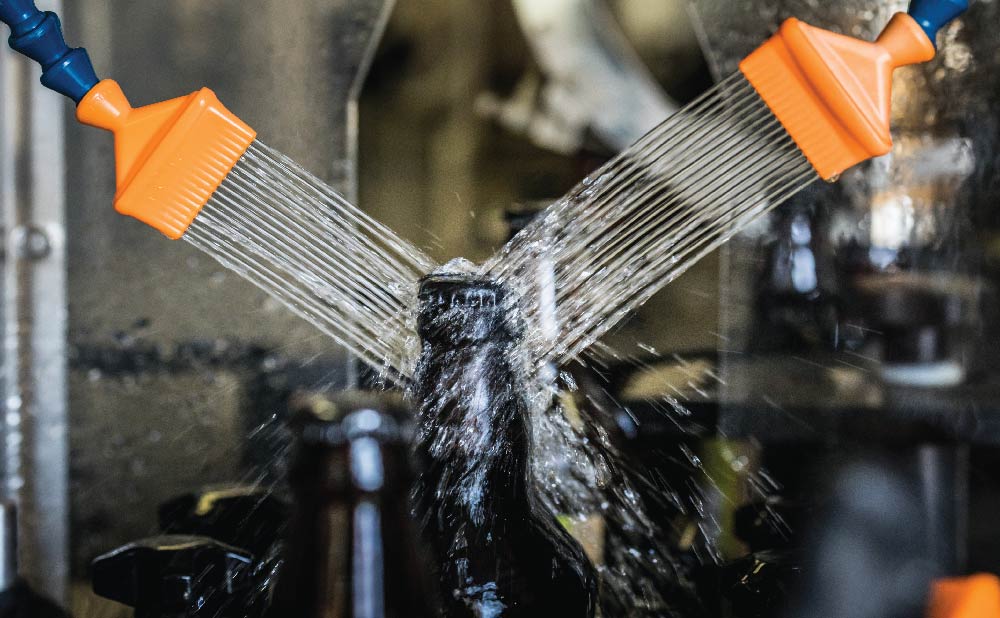
Beer bottles are washed on a conveyor belt in a microbrewery. Less water used in the cleaning process is one way factories are trying to increase water savings. Photo by AETB

Click the link to read the article on the Water Education Colorado website (Emily Payne):

September 5, 2024

Denver-based Leprino Foods Company generates some of its own water. In fact, the company holds a water right for water developed at its Greeley manufacturing facility.

“We actually are contributing more water to the river than we take in from our municipal source,” says Erik Nielsen, associate general counsel at Leprino Foods, which is the world’s largest producer of mozzarella cheese and a global producer of whey protein and other dairy ingredients.

Leprino has been a net contributor to Colorado watersheds since at least 2017. In 2020, the company was granted a water right associated with the quantity of water that it conveys to the Poudre River after deducting the amount of water that it takes in from municipal sources.

Milk is about 87% water. The process of evaporating or concentrating milk products produces condensate of whey water. Leprino recovers this water and stores it on-site in silos, often reusing it multiple times. Later, it is cleaned to stream quality standards and discharged. This, in addition to other water efficiency and recovery projects, generates about 600 acre-feet per year, or enough water to supply around 1,000 homes for a year. Leprino licenses most of this byproduct water to the City of Greeley for municipal uses, says Nielsen.

These water-saving processes not only reduce the company’s environmental footprint but are also critical to Leprino’s manufacturing future in Colorado.

“It seems like you shouldn’t be doing business in Colorado if you’re not thinking really deeply about water,” says Nielsen. “You’ve probably heard the saying, you never think about the value of water until the well runs dry.”

Water is required for cooling, heating, washing, diluting and other processes at nearly 6,000 manufacturing facilities in Colorado. As historic droughts threaten water availability across the state, consumers increasingly demand water-smart practices, and inflation continues to squeeze the private sector, many manufacturers are shifting their approach to water use and conservation.

“Manufacturers are increasingly becoming good stewards of water,” says JC Ye, corporate business director of water reuse at Veolia, a global water services company. “Many have a strong incentive to implement water stewardship practices and invest in improving the reliability of water supply. In most industrial processes, disruption of water availability has an immediate, acute impact on manufacturing operations.”

But water is highly contextual. Every river and stream has a unique ecosystem and different needs depending on the season. Solutions to protect and restore these resources are just as complex. Companies are taking a variety of approaches to water stewardship, from investing millions in local conservation work to making small but impactful infrastructure upgrades.

Leprino Foods processing facility. Photo Courtesy Leprino Foods

A reputational imperative

The original Coors brewery was built in Golden specifically for Clear Creek’s remarkable water quality. The company has a history of conducting projects aimed at protecting this water, which ends up in its product. As a founding member of the Clear Creek Watershed Foundation, the Molson Coors Beverage Company has helped to clean up some of the estimated 1,600 orphaned mines in the watershed, which threaten water quality by overflowing and discharging heavy metals and mine drainage into the river.

These days, water stewardship is about both public perception and product quality: Consumer-facing brands like Coors know that they face a reputational risk if they don’t invest in water-use reduction and watershed protection.

“[People] need to have confidence that we are serious about our water use, that we’re serious about protecting the watershed,” says Ben Moline, director of water resources and environmental policy for Molson Coors Beverage Company.

The entire state of Colorado has experienced severe to extreme drought on and off for more than two decades. The public is watching water use more closely as resource scarcity becomes a more serious concern. Recently, some communities have pushed back against water consumption for manufacturing.

BlueTriton — the owner of major U.S. bottled water brands, including Poland Spring — has been embroiled in legal battles with water boards, environmentalists, and other activists across the country for years. The company pumps water from Colorado’s Upper Arkansas River Basin, a semi-arid region particularly impacted by historic drought. In July 2021, about 20 community members protested outside of the Chaffee County Courthouse, opposing the renewal of a permit that allows BlueTriton to export 65 million gallons of water per year. After negotiating more than $1.25 million in community contributions from BlueTriton, county commissioners approved the permit the following month.

Veolia found in a 2023 study that fewer than 30% of surveyed companies had set water conservation goals, with water lagging behind carbon and waste as the environmental priority for companies. But Ye notes a recent shift in the way companies approach sustainability. Water scarcity concerns, public pressure, reputational risk, and cost-saving opportunities are leading to the proliferation of water initiatives across the private sector.

Michael Kiparsky, founding director of the Wheeler Water Institute at the University of California Berkeley School of Law, sees this as an opportunity: “Can we use transparency coupled with some degree of public awareness of water as a resource to put pressure on corporate entities to do something that might not be strictly in their economic interest otherwise?”

Small changes, big impact

The Coors brewery in Golden uses an estimated 2.7 billion gallons of water from Clear Creek each year: about 782 million gallons for its products, and 2 billion gallons for brewing processes, including production and malting. Of those 2 billion gallons of process water, 95% is cleaned and returned to Clear Creek.

This is representative of manufacturers at large: According to the Colorado Water Plan, industrial users account for only 3% of Colorado’s total annual water consumption, or water that is permanently removed from its source.

“We are diversion heavy, but depletion light,” says Moline, noting that Molson Coors is actively working to bring its water consumption rate even lower, while continuing to work with the Colorado Department of Public Health and Environment (CDPHE) to ensure wastewater discharged back to Clear Creek after treatment meets permit requirements.

Molson Coors treats wastewater from its operations as well as much of the City of Golden’s wastewater. The company entered into a consent order with CDPHE earlier this year to address permit exceedences for total suspended solids, metals, oil and grease, and whole effluent toxicity in its discharge water. Even before the consent order, the brewery began upgrading its wastewater treatment plant in preparation for meeting tightening water quality limits. Water treatment improvements are big changes with big impact, but small infrastructure changes also lead to big results — for example, fermentation tank design.

A few times per month, depending on the type of beer, the brewing team empties each fermentation tank through a valve on its side, leaving a small amount of beer just below the valve’s opening. The team clears the excess beer and thoroughly cleans the floor of the tank to prepare for the next batch, using water and a squeegee multiple times over. Across more than 100 fermentation tanks of varying sizes, which produce approximately 9.7 million barrels of beer per year, a portion of beer is lost in the cleaning process.

Molson Coors Beverage Company is updating its fermentation tanks to a new, vertical design with a cone-shaped bottom, through which a valve completely empties the beer directly below the tank. Now, the brewery can produce the same number of barrels for less, because beer — and water — isn’t left on the tank floor. This means less water used for malting, heating and cooling beer that ultimately doesn’t make it to consumers, and less water used in the cleaning process.

The upgrades are a part of Molson Coors Beverage Company’s G150 project, in honor of the 150-year anniversary of the Coors brewery’s inception. The company has invested “several hundred million dollars” in the project, which is expected to save 80 million gallons of water annually after its completion by the end of 2024. Moline says that upgrading its fermentation tanks is contributing a large part of these water savings.

Other food and beverage manufacturers are updating infrastructure to save water: Swire Coca-Cola, which produces, sells, and distributes Coca-Cola and other beverages in 13 states across the American West, says that it installed a new filtration and recovery system at its Denver plant to reduce water usage by about 20%. And Bellvue-based Morning Fresh Dairy, a fifth-generation dairy farm that produces the nationally popular Noosa Yogurt brand, installed an automated clean-in-place system to clean the interior of food and beverage process pipes, reducing water consumption by 30%.

Corporate mandates

PepsiCo, Amazon, Google and Facebook have all committed to being water-positive, or replenishing more water than they use from natural systems, by 2030. In addition to water-efficiency projects, much of this work is done through cross-sector partnerships, which have provided critical support to local water stewardship efforts.

“Corporate support has been very important to our ability to staff project work and, even more so, to purchase water for streamflow restoration,” says Kate Ryan, executive director of the Colorado Water Trust.

For example, the tech giant Intel relies on the Colorado River and the Rio Grande to supply water downstream to its Arizona and New Mexico manufacturing facilities. The company has partnered with the Colorado Water Trust and Trout Unlimited on multiple projects to support the Colorado River watershed. Intel reports that 120% of the water it used across the U.S. in 2023 was either returned to the source or restored through investment in water stewardship projects.

The Colorado Water Trust has received more than $421,000 in corporate funding from companies like Intel, Coca-Cola, MCBC, Seltzer, and Niagara Cares, a philanthropic arm of Niagara Water, since 2019. This money, in addition to foundation funding, individual contributions, and water donations, has enabled the organization to lease well over 10,000 acre-feet of water, which would typically cost $400,000 to $2,500,000, depending on the water right, says Ryan. The projects improved flows on the 15-Mile Reach of the Colorado River — a critical stretch of river for endangered fish species near Grand Junction, Colorado — as well as on the Yampa River and tributaries to the Fraser River.

And while BlueTriton has received pushback from community members on its water use, the company has partnered with Colorado Parks and Wildlife to dedicate a conservation easement to preserve 122 acres of wildlife habitat and protect groundwater resources along the Arkansas River.

“These sustainability programs work well, and Western rivers would benefit from more of them,” says Ryan. “The amount of water they have made possible for streamflow restoration in recent years is significant.”

But experts agree that the pathway to meet water-positive goals, or even water-neutral goals, is not straightforward.

Context is key

A Colorado Water Trust project benefits the Little Cimarron River using a senior water right that keeps productive land irrigated in a split-season arrangement, where water is applied to fields in the first part of the season, then left in the river during later summer months when fish need it most. The trust also partners with corporations, such as Coca Cola, to secure funding for water conservation work. Courtesy Colorado Water Trust

“Being ‘water neutral’ in an honest way requires a great amount of thought and engagement with people who have direct interest or represent the interest of the communities and environment that might be affected,” says Kiparsky.

In 2023, the nonprofit Ceres published a benchmark analysis of 72 companies from four water-intensive industries — apparel, beverage, food, and high-tech — and found that only 35% consider contextual factors such as local watershed conditions, regulatory dynamics, and community water needs when assessing water use risks. Only 14% consider contextual factors when assessing water quality risks.

“[We] found that while many companies are setting goals aimed at using less water, most are not setting strong targets to reduce water pollution,” says Kirsten James, senior program director for water at Ceres. “We also noted a lack of commitment around protecting freshwater ecosystems and clean water supplies for communities.”

Where and when water is replenished makes a significant difference for water systems. Simply measuring the amount of water a company uses and returns to its source each year, for example, does not account for when that water was used or returned. If most water is pumped during the summer and returned during the winter, these activities could still be disruptive to wildlife, ecosystems, and overall river flow rates.

“Unlike in sustainability efforts involving carbon offsets, there is no single atmosphere to improve. Every river has different needs at different times of the year,” says Ryan.

Implementation of corporate water goals requires detailed reporting and independent validation to ensure the efforts are sustaining or restoring and not damaging ecosystems.

“It’s a simple concept, becoming water neutral, but putting it in practice is not simple,” says Kiparsky. “A lot of the implications are going to rely on analysis by third parties that are experts in understanding water impact.”

This year, the U.S. Securities and Exchange Commission (SEC) began requiring most public companies to disclose climate-related information, including water-related financial risks, so investors can consider how companies are managing climate risks when making investment decisions. James says this is an important step that will help raise the bar with U.S. companies on water-related disclosures.

“As water risk continues to escalate, investors and companies need full transparency to be able to manage and adapt to these threats,” says James.

Northglenn testing underground water storage at Northwest Open Space site: City to test setting aside water for a dry day — #Northglenn #Thornton Sentinel

The 32-foot-tall sound erected at Northglenn’s Northwest Open Space is hiding a test drill. The city is testing pumping drinking water underground to store it at the site. Credit: Courtesy / City of Northglenn

Click the link to read the article on the Northglenn Thornton Sentinel website (Scott Taylor):

“Normally what we do is pump our water from Berthound Pass into Standley Lake, but there are evaporative losses there,” said Northglenn Water Resource Administrator Silas Adams. “What we’re testing is storing this water in case we need it. You say you plan for a rainy day, but we’re trying to set some water aside in case we have a dry day — or an extended drought period.”

Crews were set to begin drilling into the aquifers at the city’s 2350 W. 112th Ave. water treatment facility in the Northwest Open Space during the first week of January. Drilling should be finished in April…Denver Water has tested underground storage, but Northglenn is the first northern metro community to try it. The plan is to test the water’s quality before pumping it underground, beginning in April. The tests will look for trace elements, minerals and potential pollutants. Then, water will be pumped out from the aquifer a year or more later and will be tested again…

Water stored in Colorado’s Denver Basin aquifers, which extend from Greeley to Colorado Springs, and from Golden to the Eastern Plains near Limon, does not naturally recharge from rain and snow and is therefore carefully regulated. Courtesy U.S. Geological Survey.

Colorado’s Front Range sits atop several aquifers, from Wyoming south to Colorado Springs — the Dawson, Denver, Arapahoe, Laramie/Fox Hills and the Pike Rampart aquifers. Adams said Northglenn’s goal is to pump water it gets from Berthoud Pass via Clear Creek into the Arapahoe and Laramie/Fox Hills aquifers. The Arapahoe aquifer covers some 4,700 square miles and is as deep as 1,700 feet below ground. More than 1,000 wells have been drilled into the aquifer, including several Colorado municipalities. The deeper Laramie/Fox Hills aquifer covers 6,700 square miles and is 2,400 feet below ground at its deepest points — the deepest of the Front Range aquifers. Adams said Northglenn crews will need to drill about 500 feet down to reach the Arapahoe aquifer and 1,400 feet to reach the Laramie/Fox Hills aquifer…Northglenn already has the rights to pump a limited amount of water from the aquifers, but Adams said there is no limit to how much water it can pump in and then pump back out.

#Westminster moving forward with a new #water treatment plant plan — The Westminster Window

Westminster

Click the link to read the article on the Westminster Window website (Luke Zarecki). Here’s an excerpt:

After reevaluating an original layout for a new water treatment plant for over a year, Westminster City Council approved general plans for a new plant on Jan 23 – one that will cost $100 million less than originally planned…

According to Stephanie Bleiker, capital projects administrator, the improved plant will use existing infrastructure, can treat wildfire-contaminated water, is flexible for future replacement and has robust infrastructure. It’s estimated to cost $196 million, plus an additional $15 million for ozonation, though it may cost more with inflation.  Ozonation is a process that injects pure oxygen into the water to kill a wide range of biological contaminants and to oxidize metals. The budget is supported by the current water rate structure, she said…

Concerns over water affordability stopped the project on Nov. 29, 2021. Over the past year, the plant’s capacity, locations and other supporting infrastructure have all been re-evaluated.  That resulted in a call for less water treatment capacity at the new plant, from 60 million gallons of demand per day to 44 million. The location remained on Westminster Boulevard. Much of that lower demand is due to conservation measures for commercial and residential zones, said Bleiker…

Right now, Semper doesn’t have the ability to do ozonation, to handle solids easily,  to do deep bed filtration or mechanical flocculation – a water treatment process where solids form larger clusters that are easier to filter out – or to treat emerging contaminants, such as so-called forever chemicals or PFAs. The new treatment plant would be able to do these things. Treating emerging contaminants comes down to having the space that will be provided with the new plant, she said. Bleiker mentioned some contaminants are known today, but more will come in the future that are not known. She said it’s the decision of the EPA and CDPHE to decide what’s regulated, and it’s not optional for the city to comply. 

#Northglenn said they won’t be revisiting the IGA they signed with #Westminster and #Thornton banning trailered boats on Standley Lake — The Westminster Window #ClearCreek #SouthPlatteRiver

Standley Lake sunset. Photo credit Blogspot.com.

Click the link to read the article on The Westminster Window website (Luke Zarzecki). Here’s an excerptt:

Letter puts kibosh on Westminster’s efforts to bring boating back

Northglenn Mayor Meredith Leighty sent a letter, signed by the eight other council members, declining Westminster’s request to meet regarding bringing boating back to Standley Lake.

“Northglenn’s water in Standley Lake is irreplaceable, valued at more than $209 million dollars. There is no level of risk that our community is willing to accept when it comes to protecting our drinking water supply,” the letter reads.

That means unless Northglenn changes their minds, Westminster will have to wait until 2030 to renegotiate the Intergovernmental Agreement. According to Thornton Spokesperson Todd Barnes, the agreement needs all three cities to agree to amend it. The move comes after Westminster held a study session on Nov. 21 discussing the possibility of reallowing boating on the lake. At the meeting, Mayor Pro Tem David DeMott, City Councilor Rich Seymour and City Councilor Lindsey Emmons said they wanted to make sure all councilors —  for Northglenn and Thornton — understand the entire issue.  DeMott emphasized that the decision comes down to risk and the threshold each council is comfortable accepting. Seymour said it’s a complicated subject and takes a long time to understand.  In response to the letter, DeMott said he was disappointed. 

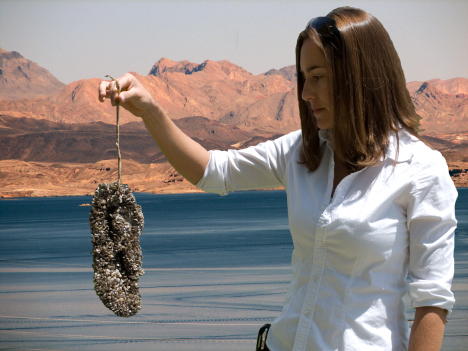
Quaggas on sandal at Lake Mead

#Northglenn increasing #water rates — The Northglenn/Thorton Sentinel

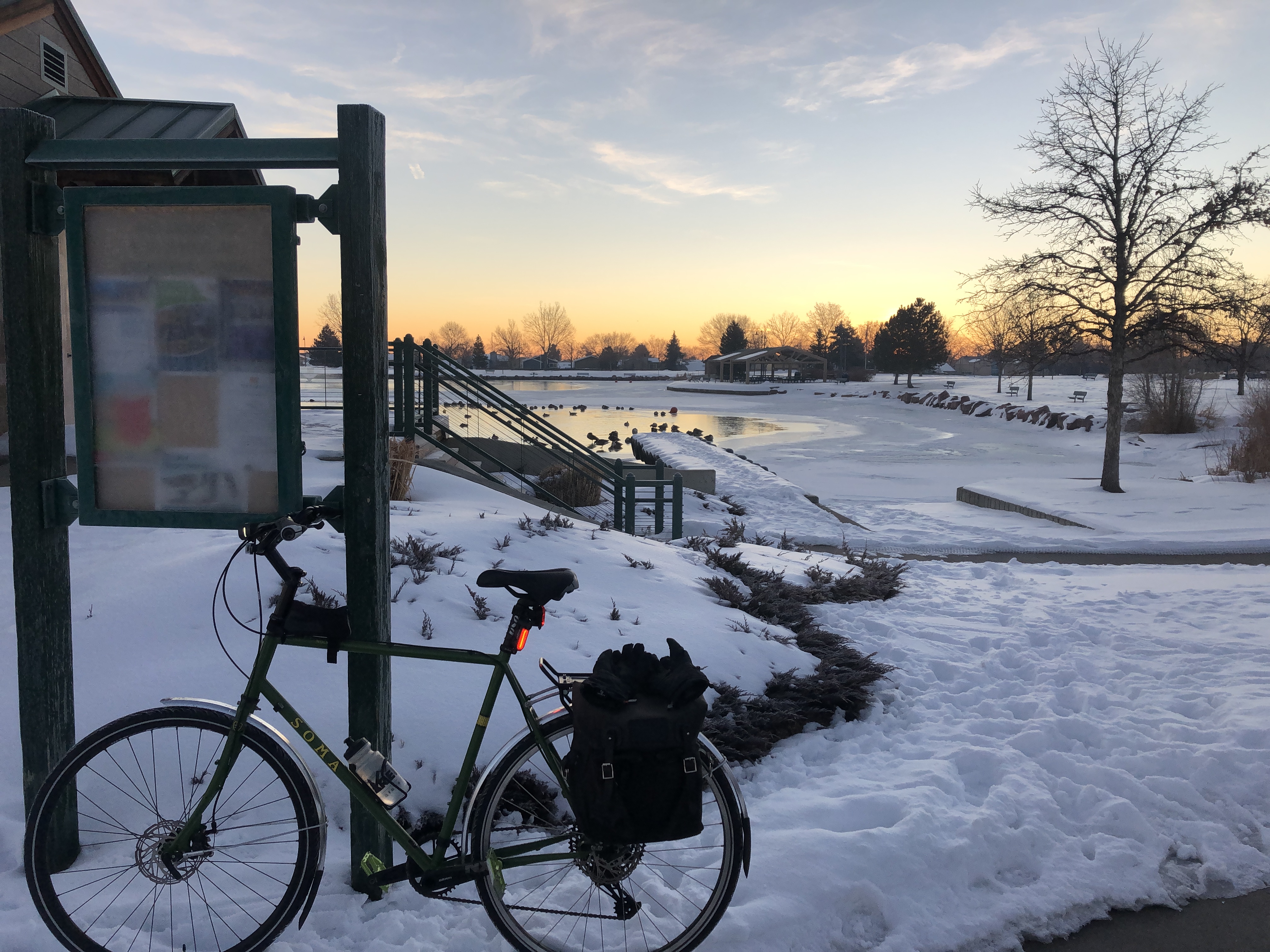
Webster Lake in Northglenn February 14, 2020, Winter Bike to Work Day 2020.

Click the link to read the article on the Northglenn/Thornton Sentinel website (Luke Zarzecki). Here’s an excerpt:

The increase is part of a long-term plan for the city to be able to meet the funding and service requirements of water operations. In 2017, the city contracted Stantec Consulting to do a rate study. 

“The study determined that to meet the funding and service requirements of water and wastewater operations, revenue collections would need to increase approximately 3.6% to 6.7%  annually in each of the subsequent 10 years beginning in 2018,” the agenda read.

Future projects are the main drivers of the increase. From 2025 to 2027, there will be $37 million needed in repairs and another $37 million from 2028 to 2031.  Rates will slowly increase between Jan. 1, 2023 and Jan. 1, 2027. The first 3,000 gallons will go from $4.24 to $4.59; 3,000 to 10,000 gallons will increase from $5.31 to $5.75; 10,000 gallons to 20,000 gallons will jump from $6.64 to $7.19; and over $20,000 gallons will creep up from $9.96 to $10.78.  City Councilor Rich Kondo asked if there were any rhyme or reason to establishing the tiers. Director of Finance Jason Loveland said they were established a long time ago to encourage conservation.  The average winter consumption for Northglenn residents is about 5,000 gallons, which will go from costing $66.76 in 2022 to $69.09 in 2023. Summer months are higher: the average usage is 15,000 gallons. The price tag will increase from $125.36 to $128.84. 

Arvadans to see 12.3% water rate hike in 2023 — The Arvada Press

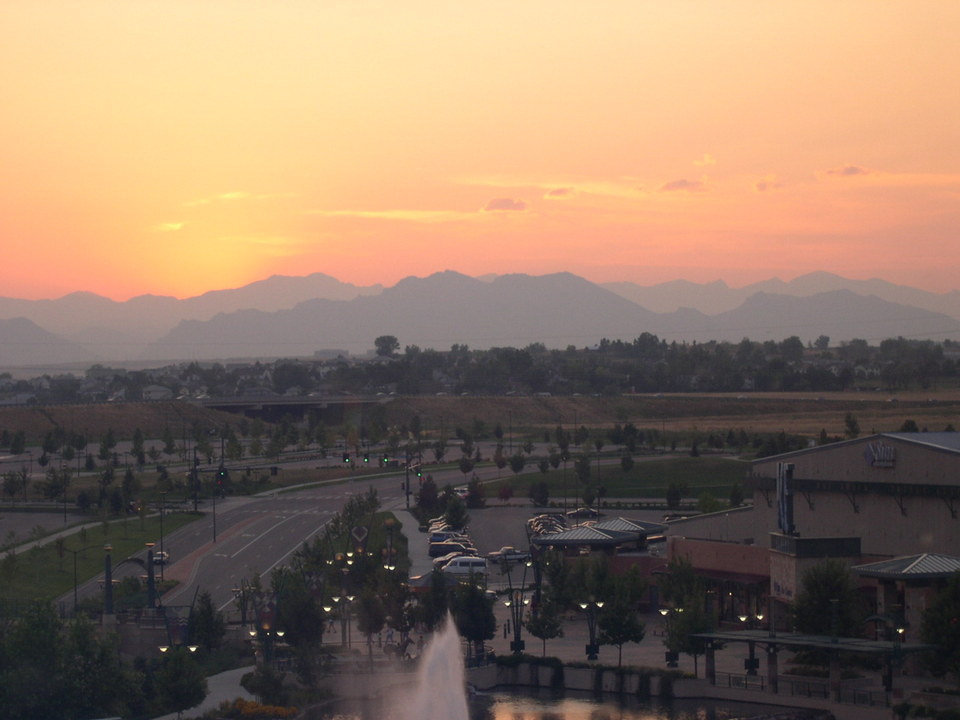
The downtown Denver skyline from Arvada. Photo credit: Allen Best/Big Pivots

Click the link to read the article on The Arvada Press website (Rylee Dunn). Here’s an excerpt:

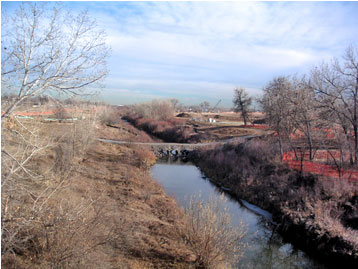
After multiple water treatment plant mishaps over the past year, Arvada’s City Council unanimously approved a 12.3% water rate increase to fund improvements for the city’s aging infrastructure on Oct. 17. The rate hike will increase single-family water bills by roughly $19 per bi-monthly billing cycle on average for single-family homes. The increase will see water and wastewater usage rates increase  by an average of $13 per bi-monthly billing cycle for single-family homes.  It also includes a $4 bi-monthly water service fee increase and a $2 bi-monthly wastewater service fee increase.  Primary cost drivers of the rate hike are a 15% price hike for raw water from Denver Water, the recommended issuance of a $50 million bond later this year that will fund infrastructure upgrades and an expected overall operation cost increase of $4.2 million in 2023. Over the past five years, the average in-city water rate has increased by about 3.55% annually, Gillis said. The bi-monthly service fee was last adjusted in 2022 for the first time since 2009.
Credit: The City of Arvada

At the heart of Arvada’s decision to invest in aging infrastructure are two water treatment plants: the Ralston Water Treatment Plant, built in the 1960s; and the Arvada Water Treatment Plant, built in the 1980s. The RWTP is rated at 36 million gallons per day, while the AWTP is rated at 16 million gallons per day. 75% of Arvada’s raw water comes from Denver Water, while the remainder is provided by Clear Creek. Two recent water line breaks and leaks through an exterior wall at the RWTP over the summer have threatened the city’s water supply, as Arvada Director of Utilities Sharon Israel recounted during a tour of the RWTP with the Arvada Press…

At the Oct. 17 city council meeting, Arvada Mayor Marc Williams summed up the position of many council members, all of whom voted for the rate increase.

“We had two major water line breaks in the last two weeks that cost us well over a million gallons of water, I believe,” Williams said. “We’ve got to take lasting care of our community and this is an appropriate step that we’re taking…That passes 7-0; reluctantly, but necessarily.”

Possible second sabotage of #Northglenn’s #water diversion gates reported on Berthoud Pass: Grand County Sheriff’s Office is seeking information regarding vandalism — The Sky-Hi News #FraserRiver #ClearCreek

One of the City of Northglenn’s water diversions on Berthoud Pass that was vandalized the week of June 19. | City of Northglenn / Courtesy Photo
Unknown-1

Click the link to read the article on the Sky-Hi News website (Tracy Ross). Here’s an excerpt:

The Grand County Sheriff’s Office reported last Friday that several water diversion gates on Berthoud Pass that deliver water to the city of Northglenn were intentionally damaged or destroyed, creating “monumental losses” for that city. Northglenn officials first contacted the sheriff’s office on June 22. They reported a theft of water and criminal mischief of the diversion gates on the Berthoud Pass Ditch in Current Creek Basin. Northglenn collects water from the ditch and diverts it into Clear Creek, said Andy Miller, president of the board of directors of the Upper Colorado River Watershed Group. On June 22, Northglenn staff reported “a sudden and significant decrease in water output routed for Northglenn” on the two days previous to their call. When Northglenn staff responded to the ditch, they found that several water diversion gates were intentionally damaged or destroyed…

Some are questioning whether the vandalism was sabotage by a water conservation group. Kirk Klancke, president of the Colorado River Headwaters chapter of Trout Unlimited, said a similar act happened at the same spot several years ago. In 2019, vandals caused an estimated $1 million worth of damage to the City of Northglenn’s collection system and disrupted both Northglenn and Golden water supplies…

Northglenn’s water right on Berthoud Pass is 600 acre feet of water per year, available between May 15 and October 15. Northglenn’s average annual water use is 6,000 acre feet, “so this is about one-tenth of our annual water supply,” said Moon. “It doesn’t seem like a lot, but on a good year, Berthoud Pass water is incredibly important to us. And now that we’re watching climate change change our weather patterns, and summer weather getting drier and drier, getting that water early in the season and being able to use it is one of the ways we can keep our residents from having water restrictions when we see our neighbors not the doing the same.”

Colorado transmountain diversions via the State Engineer’s office

Job opportunity: Deputy Water Commissioner for Water Districts 6 & 7 – Engineering/Physical Sciences Tech I @DWR_CO

From email from DWR (Michael Hein):

The Division of Water Resources, Division 1 Office in Greeley, CO is hiring for the Deputy Water Commissioner for Water Districts 6 & 7 – Engineering/Physical Sciences Tech I position. The purpose of this position is to ascertain the available surface water supply and distribute, control and regulate the surface and groundwater tributary to the South Platte River in the Boulder Creek and Clear Creek basins on a daily basis pursuant to water decrees, substitute water supply plans and state statutes, and may assist in adjacent water districts with water administration. Anyone interested in learning more about the position or seeking to apply can access the following link to the job announcement on the State of Colorado Job Opportunities website:

https://www.governmentjobs.com/careers/colorado/jobs/3594902/dwr-deputy-water-commissioner-water-districts-6-7-engineering-physical-sc?location%5B0%5D=boulder%20county&sort=PositionTitle%7CAscending&pagetype=jobOpportunitiesJobs

The South Platte River Basin is shaded in yellow. Source: Tom Cech, One World One Water Center, Metropolitan State University of Denver.

#Westminster considering way forward with water treatment plant — The Westminster Window

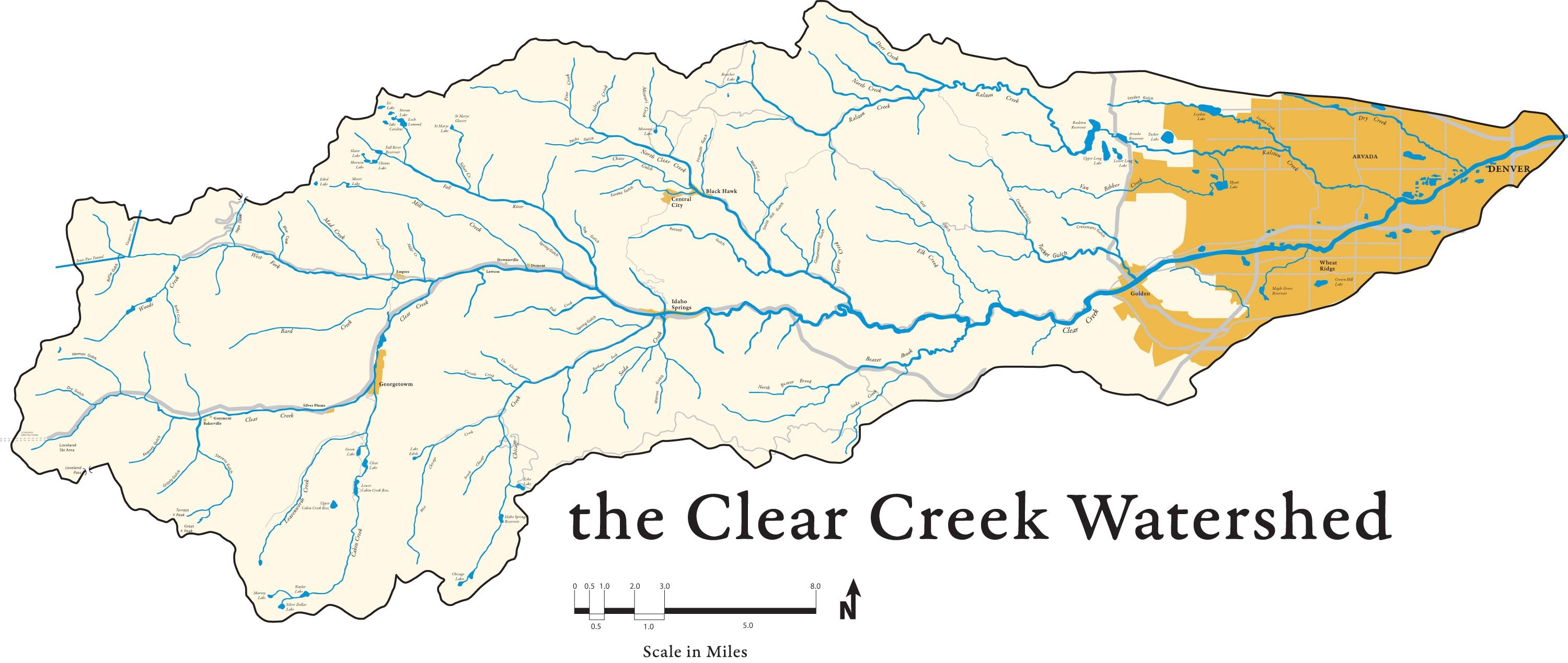
Graphic via the Clear Creek Watershed Foundation

Click the link to read the article on the Westminster Window website (Luke Zarzecki). Here’s an excerpt:

The biggest risk to Westminster’s drinking water is wildfires and algae blooms, according to Tom Scribner, water treatment superintendent with Westminster. The water flows from Loveland pass to Clear Creek to Farmers Highline canal and into the lake.

Borgers said wildfire risk is high.

“Unfortunately, Clear Creek is at a very high risk for having a catastrophic wildfire,” she said.

It is something the city is very aware of and Westminster is heavily involved with mitigating wildfire in the watershed, she said.

“If it were to get into Stanley Lake, Semper probably would have a hard time treating it. But we have the ability to divert water around Standley so that Semper is not having to treat that poor quality water,” Borgers said.

The Semper Water Treatment Plant was built in the 1960s and does not have the technology to treat wildfire contaminated water to make it drinkable, according to Scribner.

Standley Lake has about a year of water storage the city would use, she said. The city would be able to find a new, reliable source for drinking water in that year, she said. Standley Lake supplies water for Northglenn and Thornton as well as Westminster.

#Empire narrows down #water issue to two suspect areas: Board of Trustees approves emergency declaration — The Canyon Courier

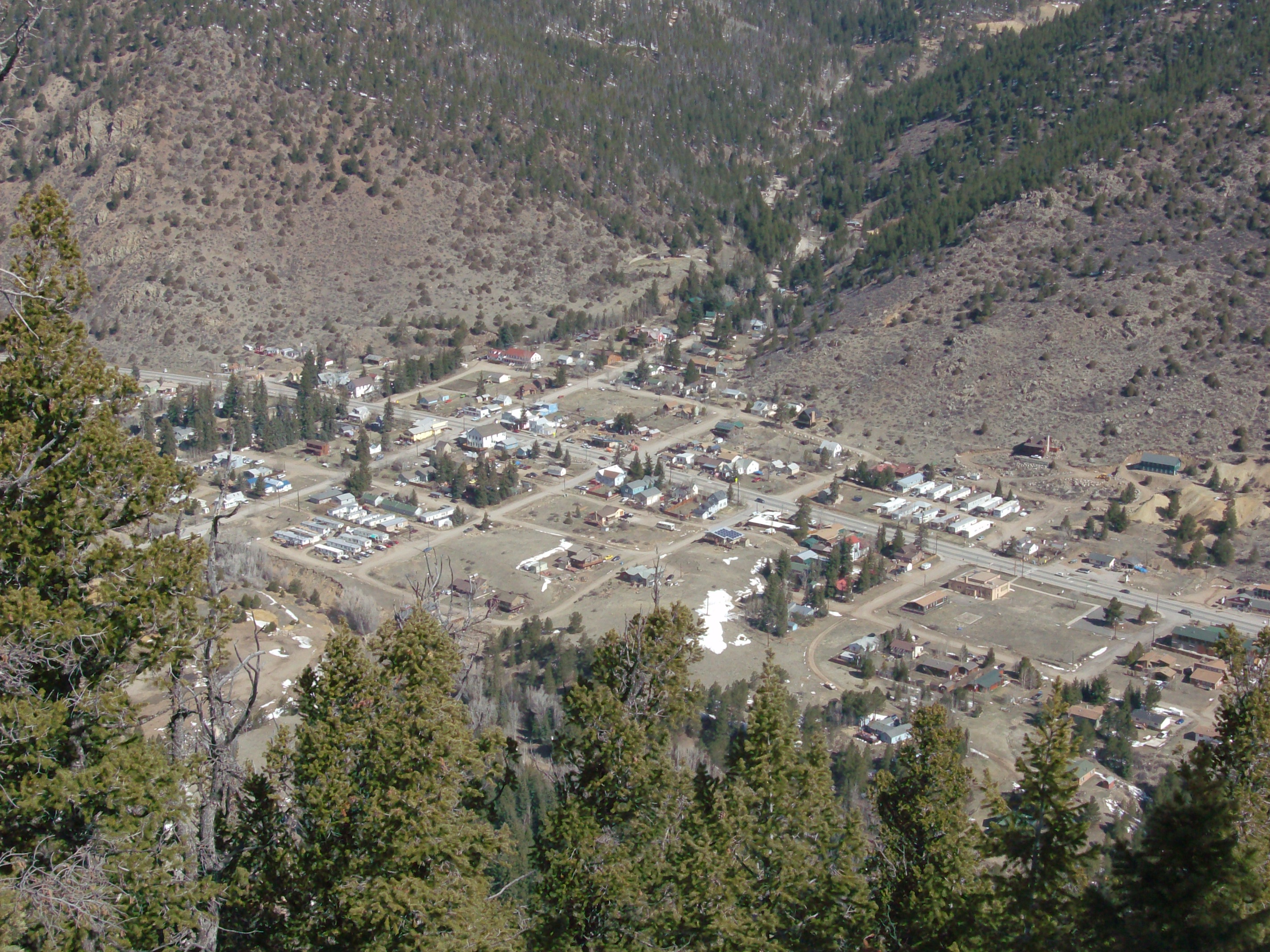
View down Clear Creek from the Empire Trail 1873 via the USGS

Click the link to read the article on the Canyon Courier website (Corinne Westeman). Here’s an excerpt:

Empire has confirmed there’s a leaking water pipe on private property, and there’s another suspect area underneath U.S. Highway 40.

Police Chief John Stein stated on April 1 that, while the leak on private property was confirmed to be drinking water, it was relatively small compared to the town’s overall system. So, it cannot be the sole cause of Empire’s loss in water last month, he described.

The suspect area underneath U.S. 40, which Stein said could be a valve that isn’t shutting completely or a cracked pipe, requires further research. If it’s a valve that’s not closing completely, water might not be leaving the system in that location, he explained.

Stein said he couldn’t guarantee it, but Empire’s water woes could be from these two problems plus residents’ relatively high water use during last month’s cold spell.

It’s still possible, he continued, there is a larger issue with the water infrastructure that the town and its partners haven’t identified yet.

#Empire still without #water as leak detection efforts continue: Public updates at 10 a.m. March 28, 2022 and 6:30 p.m. March 29, 2022 at Town Hall — The #ClearCreek Courant

Empire as seen from Douglas Mountain. By Xnatedawgx – Own work, CC BY-SA 3.0, https://commons.wikimedia.org/w/index.php?curid=25798349

Click the link to read the article on the Clear Creek Courant website (Corinne Westeman):

Most Empire residents and businesses are still without water, as of March 25, 2022 as town officials continue to search for a suspected large leak in the town’s water infrastructure. Anyone who does have water service is under a boil warning, which will remain in place until water service is restored to the entire town and it has been tested, Mayor Wendy Koch said. According to Koch and Police Chief John Stein, most of the town’s infrastructure has been pressurized with gas to locate the suspected leak. Those efforts didn’t yield any major leaks, but several smaller issues were noted and are now being addressed, Koch said. Now, Empire is restoring water service to different sections of the town to see if that helps to locate the suspected leak.

Stein said Empire will be hosting public updates at 10 a.m. March 28 and 6:30 p.m. March 29 at Town Hall. The latter will include an opportunity for public comment, but the former is an informational meeting only…

An emergency declaration has been made to assist with resources and seeking funding, Stein stated. Colorado’s Water/Wastewater Agency Response has been activated and is assisting, and volunteers were scheduled to deliver two cases of bottled water to every housing unit on March 25…

Stein said that, thankfully, several municipalities have offered to help fix whatever the problem is. However, the town is “still in detection mode,” he said. Another piece of good news, Koch detailed, is that surface water levels are back up thanks to the warmer weather. Additionally, Koch and Stein stated, Empire is adding a new filtration system to its old well. The state health department approved the design on March 24, and crews will start work on March 28.

If all goes according to plan, Koch said the town might have water service mostly restored by April 1. However, she stressed that she couldn’t guarantee it.

Town of #Empire at “critically” low levels of drinking #water as demand outpaces supply: Low water source, suspected leak compounding problems — TheDenverChannel.com #ClearCreek

Empire as seen from Douglas Mountain. By Xnatedawgx – Own work, CC BY-SA 3.0, https://commons.wikimedia.org/w/index.php?curid=25798349

Click the link to read the article on TheDenverChannel.com website (Robert Garrison). Here’s an excerpt:

The town of Empire is warning residents of possible interruptions to their water service as its treatment plant struggles to meet demand. In a press release Saturday, town officials warned residents that they should prepare for intermittent loss of water and low pressure, with residents at higher elevations expected to see a greater loss of water pressure.

The Clear Creek County town’s water treatment facility is not able to produce enough clean water to meet demand and is at critically low levels, the release said. Officials said the facility’s water supply, Madd Creek, is too low because of freezing conditions and an ongoing suspected water leak, which crews are attempting to locate, is compounding problems. The town is working to increase the water intake at the source and supplement water into the plant.

Some residents and businesses Sunday morning were reporting no running water, which has forced businesses like Guenella Pass Brewery to close indefinitely.

#Westminster lowers #water rates — The Westminster Window

Westminster

Click the link to read the article on the Westminster Window website (Luke Zarzecki). Here’s an excerpt:

The Westminster city council voted 5-2 on February 28, 2022 to lower water rates starting June 1, 2022. Councilors Sarah Nurmela and Obi Ezeadi stood opposed.

Councilors voted to change both the bracket for water used and the pricing tiers. For the city’s lowest pricing tier, the price per gallon was reduced and the amount of water used increased by 2,000 gallons. Previously, customers paid $3.96 per 1,000 gallons of water used per month for the first 6,000 gallons. Beginning June 1, they’ll pay a lower $3.57 per 1,000 gallons used each month for the first 8,000 gallons, according to Westminster spokesman Andy Le. Councilors had already made the price per gallon the same for the middle and top tiers, $8.15 per 1,000 gallons used per month. Now, councilors are reducing the middle tier’s price to $6.52 per 1,000 gallons and expanding the top limit. Previously, the second tier covered customers that used between 6,001 gallons and 20,000 gallons. Now, that tier will include customers who use between 8,001 and 40,000 gallons, Le said. The price per gallon for the top tier remains at $8.15 per 1,000 gallons used per month. But while the amount for that tier covered customers who used more than 20,000 gallons per month before, it covers customers who uses more than 40,000 gallons per month beginning in June…

According to the agenda, the move will result in approximately $4,100,000 in reduced revenues.

The reduced rates comes after a year of debate surrounding water. Former Mayor Anita Seitz and former city councilors Kathryn Skulley and Jon Voelz survived recall efforts because of their support of the previous water rates and tiers.

#Colorado Parks & Wildlife and Partners stock greenback cutthroat trout into the West Fork of #ClearCreek

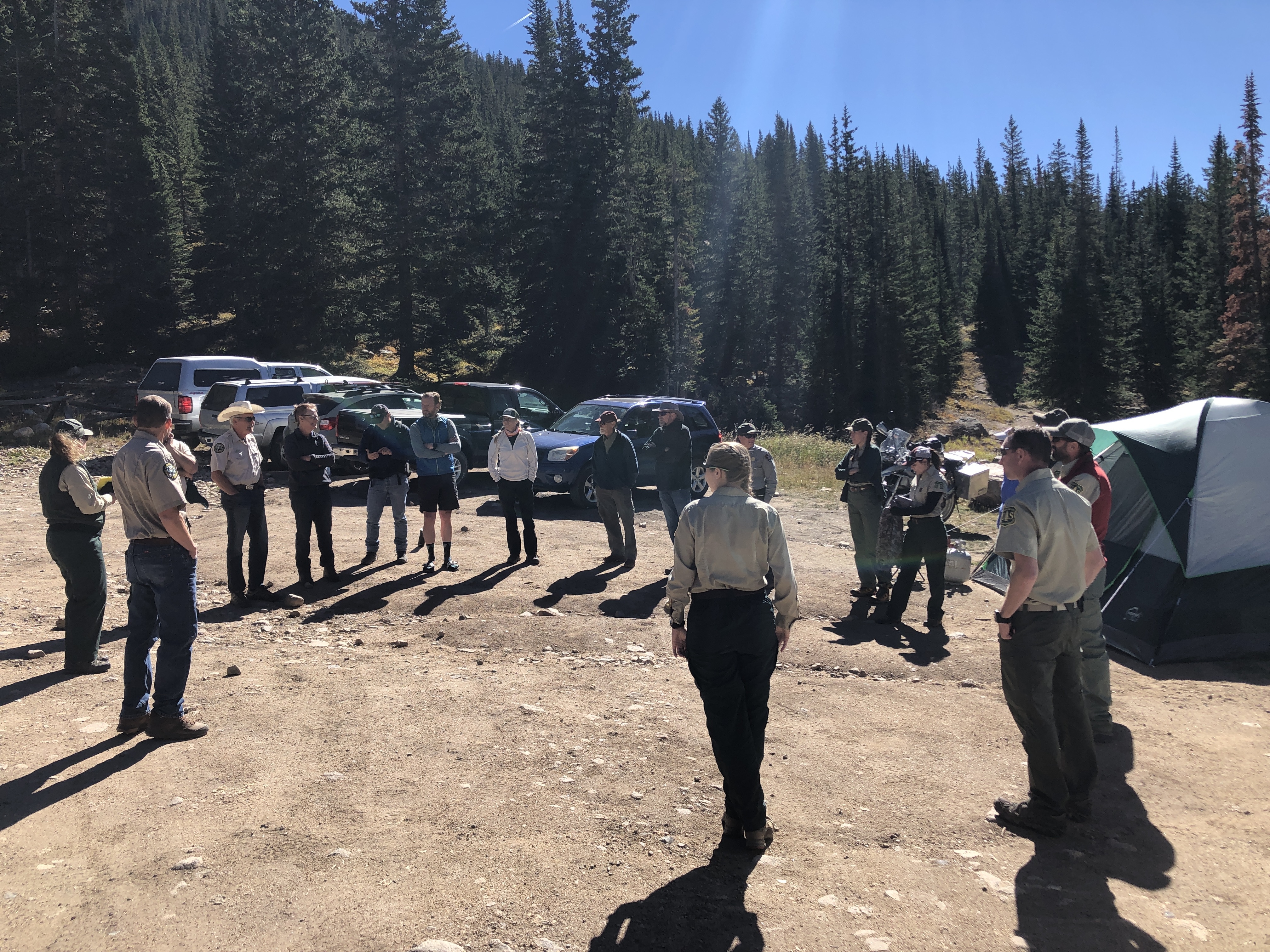
Members from Colorado Parks and Wildlife, Trout Unlimited, US Fish and Wildlife Service, the USDA Forest Service, Rocky Mountain National Park and the Greenback Cutthroat Trout Recovery Team meet up by Jones Pass before stocking 6,000 greenback cutthroat trout into the West Fork of Clear Creek September 22, 2021. Photo credit: Colorado Parks & Wildlife

Here’s the release from Colorado Parks & Wildlife (Reid Armstrong and Jason Clay):

The USDA Forest Service, Colorado Parks and Wildlife, Trout Unlimited, and a host of volunteers stocked 6,000 greenback cutthroat trout fry into Upper West Fork Clear Creek near Jones Pass on Wednesday, Sept. 22.

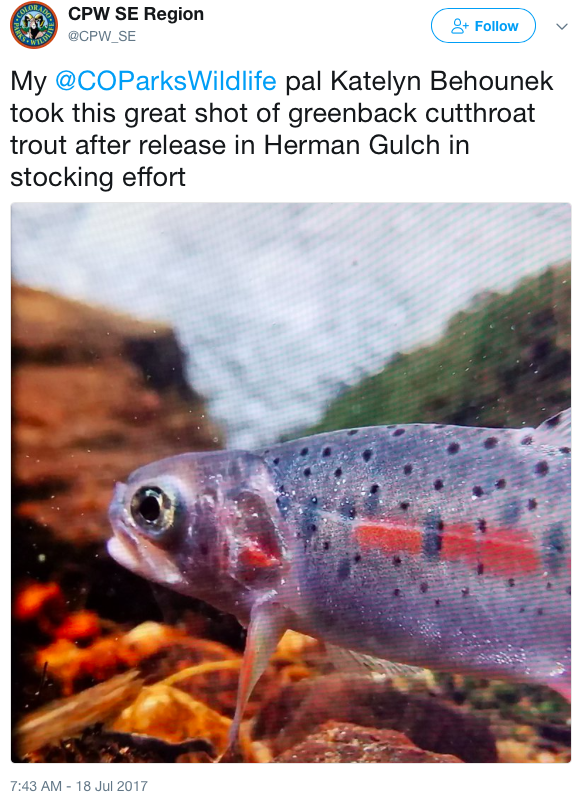
This is the third location in the Clear Creek drainage where the Greenback Cutthroat Trout Recovery Team has stocked greenbacks into, joining Dry Gulch and Herman Gulch.

“Greenback cutthroat trout reintroductions such as the West Fork Clear Creek are really only able to occur due to the coordination and efforts of each cooperating agency and non-profit partners such as Colorado Parks and Wildlife, Trout Unlimited, US Fish and Wildlife Service, the USDA Forest Service and the Greenback Cutthroat Trout Recovery Team to name a few,” said Valerie Thompson, South Zone Fisheries Biologist for the Forest Service. “Each partner contributes in unique ways that enable the success of major conservation projects such as this one on West Fork Clear Creek, where over fourteen years of stream health data was collected, an old mine site was remediated, and stream banks were restored to allow for habitat that is suitable to sensitive aquatic life and now a new home to the Colorado State Fish, the Greenback Cutthroat Trout.”

The fact that this tributary was fishless to begin with made it a good candidate for the greenbacks, among other factors.

“We’ve done temperature monitoring and the temperatures are conducive to support natural reproduction,” said Paul Winkle, Aquatic Biologist for CPW. “It is a goal to get another population of fish on the landscape, so this is definitely an important thing for the recovery of greenbacks.”

This stretch of stream was fishless due to downstream barriers, such as a quarter-mile-long culvert underneath the Henderson Mine Site, among other natural barriers. That saved some heavy lifting, not requiring a reclamation of the stream to remove other non-native species of fish. Removal of all other species is necessary to ensure the successful reestablishment of greenbacks, which are native to the South Platte River basin.

“We knew that there were no fish in that section of Clear Creek and what a great thing to be able to put fish in without having to do a reclamation,” Winkle said. “The more streams of greenbacks we stock along the Front Range drastically improves the conservation status of the species.”

Today, the greenbacks are listed by the U.S. Fish and Wildlife Service as a threatened species. Greenbacks have previously been stocked into Herman Gulch, Dry Gulch, the East Fork of Roaring Creek and Zimmerman Lake. Those all reside within the South Platte River drainage. The sixth body of water in Colorado where the official state fish currently resides is in Bear Creek outside of Colorado Springs.

These rare fish, twice believed to be extinct, are descendants of the last wild population of native greenback cutthroat trout. Researchers from CU Boulder in partnership with CPW discovered in 2012 that the cutthroat in Bear Creek were the last remaining population of greenback cutthroat trout.

CPW’s Mount Shavano Hatchery in Salida is responsible for rearing and delivering all greenbacks that get stocked. They hatch fertilized eggs in its Isolation Unit. Extra milt collected from male greenbacks in Bear Creek goes to the U.S. Fish and Wildlife Service’s Leadville National Fish Hatchery to fertilize eggs from the greenbacks in its brood stock.

The eggs are then taken to Salida to be hatched and eventually stocked onto the landscape at various sizes. Sometimes those fish are of fingerling lengths (one to two inches), sometimes they are fry. Fry is a recently hatched fish that has reached the stage where its yolk-sac has almost disappeared and its swim bladder is operational to the point where the fish can actively feed for itself.

“Trout Unlimited and our West Denver Chapter have a long history of supporting the Forest Service and Colorado Parks and Wildlife in stewardship of the Clear Creek drainage,” said David Nickum, executive director of Trout Unlimited. “We are so pleased to see those efforts coming to fruition with our volunteers working side by side with our partners to finally return greenbacks to their home waters in the West Fork headwaters.”

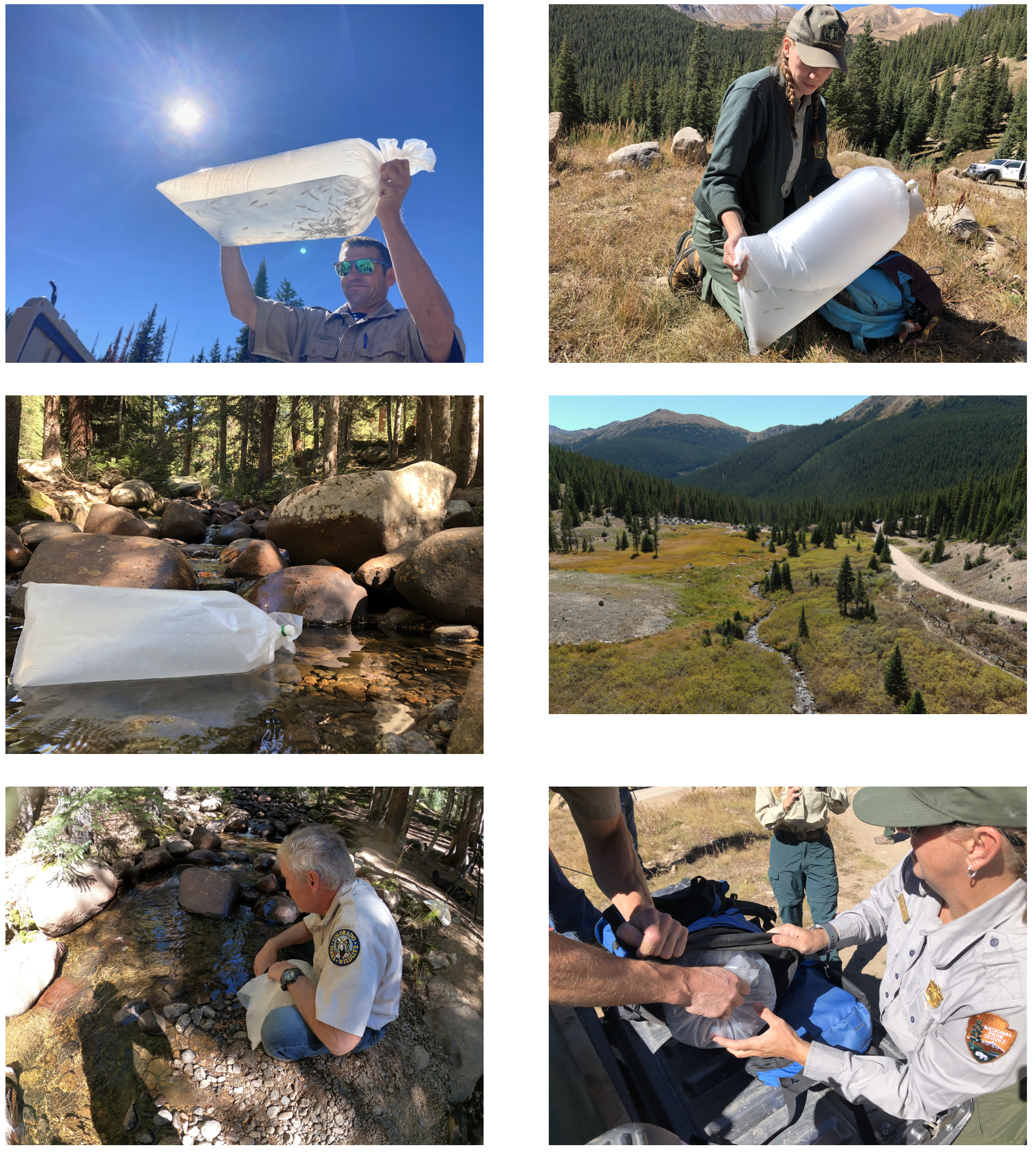
Stocking Greenback cutthroat trout September 22, 2021. Photos credit: Colorado Parks & Wildlife

#SouthPlatteRiver gets no new protections after heated Water Quality Control Commission hearing — The #Colorado Sun

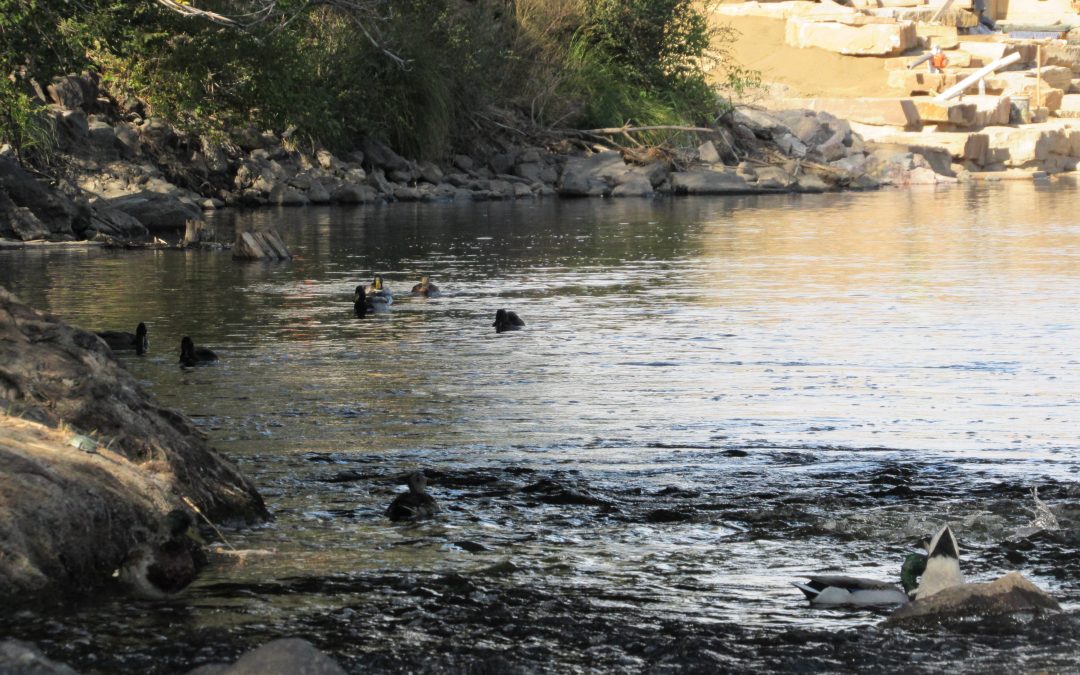
Ducks patrol the South Platte River as construction workers shore up bank. Oct. 8, 2019. Credit: Jerd Smith

From The Colorado Sun (Michael Booth):

Colorado water commissioners declined to upgrade water quality rules for the urban stretch of river, though conservation groups say they are finally being heard.

Public officials, conservation groups and citizen speakers pleaded with the Colorado Water Quality Control Commission [August 9, 2021] to reverse a 2020 decision and strengthen protections for the South Platte River in north Denver and Adams County, but the commissioners declined.

Opponents of the commission’s decision last year thought they had one last chance in a “town hall” feedback format to urge the commissioners to revisit the controversial vote, which rejected a staff recommendation to upgrade the South Platte to higher water quality protections. They pointed to the recent weeks of high heat and air pollution in metro Denver, as well as a new climate change report showing irrefutable and irreversible damage to the environment, as more reasons to protect the river with tougher regulations…

“We cannot wait five more years to upgrade or revisit what’s happening to the communities in north Denver,” said Ean Tafoya, Colorado director of the nonprofit GreenLatinos.

The commissioners, who are appointed by Gov. Jared Polis to oversee the Water Quality Control Division of the Colorado Department of Public Health and Environment, said they would not reverse their 2020 decision now. The coalition favoring more protections said after the town hall they would consider trying to force the commission to reconsider through a petition process, by taking legal action…

The Platte River plods through downtown Denver, a small workhorse with a big load. Photo/Allen Best

But some commissioners appeared to leave the door open to further discussions and to seek more community input on future river decisions…

Those who want to elevate the South Platte’s urban stretches used the commission’s town hall comment period to attack the 2020 decision. The staff of the water quality division last year had recommended that the South Platte River through north Denver and Adams County, long plagued by industrial releases and wastewater effluent, be upgraded to the next higher level of stream protections.

Metropolitan Wastewater Reclamation District Hite plant outfall via South Platte Coalition for Urban River Evaluation

The higher level would have forced existing polluters in that section, like Metro Wastewater, Suncor or Molson Coors, to avoid further degrading water quality with any new activity unless they could prove it was essential to their continuing business. As it stands now, those existing polluters have “protected use” status that permits them to degrade the water, even though water quality in those central urban streams has improved in recent decades.

The Colorado division of Parks and Wildlife, the Environmental Protection Agency, the Adams County Commissioners and others had supported the staff request for a river protection upgrade. The water commissioners rejected the idea last year, and then again in June.

Adams County Commissioner Steve O’Dorisio said he wanted to be frank with the water commissioners that not enough opponents were prepared for the discussion ahead of the 2020 decision.

“Back in 2020 we did not know how this specific decision would affect our river and our communities,” O’Dorisio said.

Jeff Neuman-Lee, describing himself as a citizen speaker for the town hall forum, pointed to Colorado’s air fouled by wildfire smoke and heat-generated ozone in recent weeks.

“We’ve been just degrading our Earth over and over and over again, and we can’t tolerate any more,” he said. “It’s depressing to see that we’re allowing water quality to go unheeded; to create stretches of our rivers and say we don’t care about them, we’re just going to let them go.”

[…]

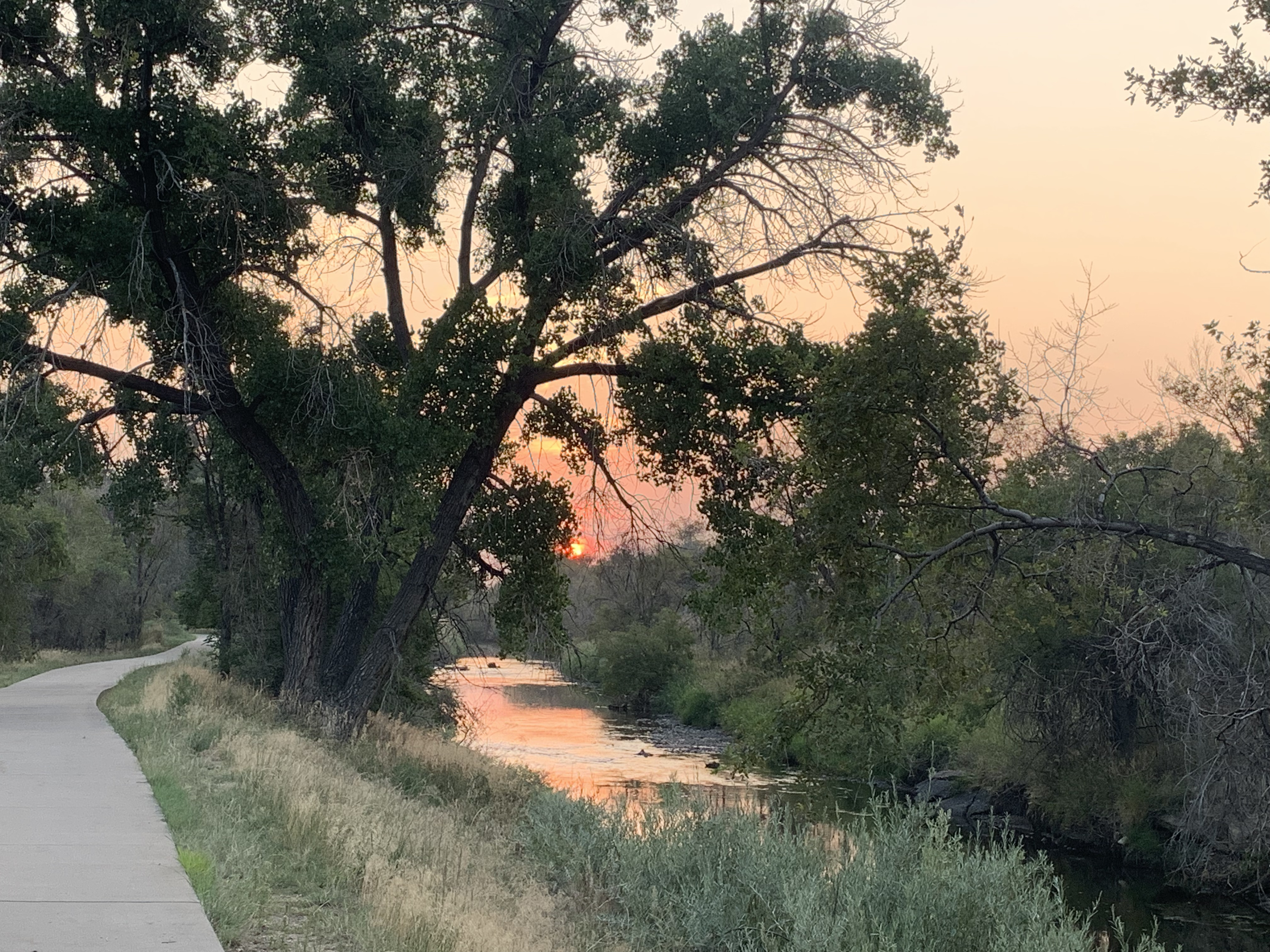
Sunrise along the Clear Creek Trail August 12, 2021.

Some of Monday’s speakers said they were concerned that leaving the South Platte’s water quality protection where it is now will weaken the current permit renewal process underway for the Suncor refinery, which borders Sand Creek as it empties into the South Platte. The state health department is reviewing and answering public comments on Suncor’s permit application, and conservationists and neighborhood groups want Suncor’s water and air pollution caps cut way back.

“This idea of grandfathered legacy pollution,” Tafoya said, “just because they always have, doesn’t mean they should continue to.”

Waterways get a break as #Colorado refuses to ease rules for how much pollution gets discharged to rivers and streams — The Colorado Sun

The Suncor refinery in Commerce City is pictured on Sand Creek near where it meets the South Platte River. Both streams have highly challenged water quality, though many conservationists argue they can get still better. Photo credit: Suncor

From The Colorado Sun (Michael Booth):

Members of the Water Quality Control Commission said they were shocked by the blowback to a proposed change that would have made it easier for industry, utilities to send more pollution downstream.

The state Water Quality Control Commission has delayed for at least a decade a controversial proposal that would have allowed further degradation of Colorado waters already challenged by pollution

In a scheduled review of the state’s “antidegradation” provision — a key to the federal Clean Water Act — some on the commission had sought to broaden chances for industries to discharge more pollutants into streams already considered heavily impacted by historic degradation. The rule currently in place says polluters must make a compelling argument that worsening the conditions of a stretch of river is unavoidable in creating economic growth for a community.

Colorado waters are divided into three categories: “outstanding” waters, where no degradation can be permitted; “reviewable,” meaning degradation is only allowed if there is no other way for the economic activity to move forward; and “use protected,” where industrial or city dischargers can degrade existing water quality in heavily impacted streams in order to maintain or expand their operations.

Conservation groups and multiple local and state officials argued last week that the commission’s proposed change would have allowed many more Colorado streams to fall under “use protected,” even when the entity seeking higher pollution permits was the one responsible for historic pollution.

Metropolitan Wastewater Reclamation District Hite plant outfall via South Platte Coalition for Urban River Evaluation

Heavy industrial users, such as Metro Wastewater Reclamation, which treats all metro area sewage, could have used the opening to say they didn’t need to further clean up their discharge.

Citing the intense blowback against the proposed change by dozens of conservation and community groups testifying earlier in the week, the commission late Friday said current protections would stay in place until at least 2031.

“The decision comes after extensive stakeholder engagement with the EPA, Colorado Parks and Wildlife, environmentalists and regulated entities, and it maintains the regulations as they are for the time being,” the state Water Quality Control Division said in a statement…

Coors Brewery in Golden Colorado. Photo credit: Molson Coors via Westword

Opponents of the change said it would open the door for existing permitted polluters such as Molson Coors, Suncor and Metro Wastewater to discharge more pollutants if they could show the water was already degraded beyond a chance for improvement. The industries could have asked for the leeway even if they were the ones whose waste had previously damaged streams, such as on the South Platte River through Adams County. In that stretch of river, discharge from Metro Wastewater’s treatment facility makes up most of the stream volume for much of the year.

Groups testifying against the change ranged from Adams County commissioners to Colorado Parks and Wildlife, to Trout Unlimited and Green Latinos. Industrial dischargers, meanwhile, had argued in submitted filings that their use of waters supported important economic interests for communities, and that some heavily used Colorado streams simply won’t support more aquatic life than they already do…

Conservation groups did not get the relief on Friday that they’d sought since a 2020 commission decision declining to upgrade protections for urban stretches of the South Platte River and Clear Creek, which flows past the Molson Coors plant. They said they will continue to seek ways to tighten down on pollution discharges into those waters and give them a chance to recover further.

Industries could dump more pollution into Colorado rivers under proposed rule change that goes against recommendations — The #Colorado Sun

The Suncor refinery in Commerce City is pictured on Sand Creek near where it meets the South Platte River. Both streams have highly challenged water quality, though many conservationists argue they can get still better. Photo credit: Suncor

From The Colorado Sun (Michael Booth):

Clean water advocates say a state commission is preparing to double down on a bad decision last year that failed to protect Clear Creek and the South Platte, and that a broader ruling may endanger more pristine streams.

year ago, the state’s water quality commissioners overruled not only their staff but other state agencies like Colorado Parks and Wildlife, along with a broad and very angry coalition of conservation groups.

Now, according to the conservation groups, the commission is about to do the same thing again. Only this time, the river advocates say, their proposals threaten every river in the state, weakening a bedrock 33-year-old rule the state uses to implement the federal Clean Water Act.

Colorado industries and city wastewater plants could legally dump more pollution into state rivers if water quality commissioners endorse this year’s plan while also sticking with last year’s changes, conservation groups say.

They argue the actions would mean the potential reversal of intensive efforts to clean city waters flowing past low-income areas already heavily impacted by economic and environmental problems.

They claim it opens the way for water dischargers like Metro Wastewater, Molson Coors and others to seek permits for discharges that would further degrade waters they themselves have already tainted.

“It’s just going to roll the clock backwards on pollution,” said Mely Whiting, legal counsel for the Colorado chapter of Trout Unlimited.

Last year, the Colorado Parks and Wildlife division argued to upgrade protection of the South Platte and Clear Creek by saying there is “no evidence that pollution is irreversible,” according to supporting statements filed at the state. The Water Quality Control Commission in June rejected stronger protections for those urbanized stretches of water, including Clear Creek, which flows out of Golden and past the Molson Coors plant on its way to the South Platte.

“I’ve always felt that a strong anti-degradation policy is very important in Colorado,” Water Quality Control Commission Paul Frohardt said during last year’s hearing about the South Platte and Clear Creek. “But I also believe that that policy makes sense and will have broad public support when it’s focused on truly high quality waters.”

Sand Creek in Aurora.

Now the commission is taking on a scheduled five-year review of the anti-degradation rule applying statewide. Conservationists fear the commission is leaning toward loosening the strictest level of water quality review for all streams.

The “anti-degradation” rule currently in place says polluters seeking a new or renewed water quality permit must make a compelling argument that worsening the conditions of a stretch of river is an unavoidable part of an important economic development or civic improvement.

They must offer this proof even if the given stretch of water is already better than EPA water quality minimums. The state has until now effectively raised the floor of quality as a stream improves, and says those waters can’t be “degraded” below the new floor.

The Water Quality Control Commission has proposed new rules critics say would weaken that long-standing practice, by allowing dischargers to degrade the overall quality of a stream if even one regulated contaminant in the stream is already high.

Fierce opposition by conservationists

Big water dischargers who opposed the upgrade of urban river protections in written statements last year include Metro Wastewater, whose treated discharge makes up most of the water in the South Platte through Commerce City, and heavy industrial water users like Coors, according to state documents.

Metro Wastewater declined to comment. Molson Coors spokesman Marty Malone said in an emailed statement, “We have an established track record of leading water protection initiatives in our industry. We do not support degradation of water quality.”

Now that commissioners are pushing for a statewide weakening of the anti-degradation rule at their June 14 meeting, environmental advocates from Audubon to Trout Unlimited to Conservation Colorado are combining to mount fierce opposition.

Decades of intense and expensive cleanup efforts on urban streams like the South Platte, including by Metro Wastewater, have improved water quality and given the river a chance at more fish, wildlife and recreation, the coalition says. The state’s job is to keep pushing for even cleaner water, Whiting said, not to clear the way for backsliding…

At last year’s hearing, commission chairman Frohardt mentioned concerns of Metro Wastewater and others that they shouldn’t be responsible for further cleaning up river sections like the urban South Platte, because the waters are unlikely to ever support a major improvement in fish and wildlife beyond what they’ve recently achieved…

State officials said Thursday they are writing alternate versions of the change that they hope will satisfy concerns of the conservation groups. The commissioners will hear the various proposals and arguments about them in their June 14 meeting…

State officials have struggled, though, to explain why the regulations need to be changed. Clarifying the rules, Oeth said, will help establish how Colorado rivers got to their current water condition, and “to provide more clear direction to the commission about how to apply that past when they’re considering the specific example of segments in the future.”

[…]

The conservation alliance said the draft alternatives are also unacceptable unless they come with much stronger language guaranteeing the state will include economic justice concerns, and the voices of impacted neighborhoods, when considering controversial water discharge permits.

#Drought news: One class improvement in a few small areas of western #Colorado

Click on a thumbnail graphic to view a gallery of drought data from the US Drought Monitor.

Click here to go the US Drought Monitor website. Here’s an excerpt:

This Week’s Drought Summary

The heaviest precipitation this week fell on a swath across southwestern Kentucky and immediately adjacent locales (3.0 to 4.5 inches), and the higher elevations of Arizona (3.5 to locally over 6 inches). Moderate to heavy amounts of 1.5 to locally 4.0 inches pelted the rest of Kentucky, southern Missouri, northeastern Arkansas, just north of the central Gulf Coast, and patchy areas across southern Virginia and the interior Southeast. Similar amounts dotted southern California and the higher elevations of the southern Sierra Nevada and the Four Corners region, especially across Arizona. Light to moderate precipitation extended across the remainder of the interior Southeast, from central Texas northward through the upper Midwest, across some lower elevations of the Four Corners region, in parts of the southern Great Basin, through most of the Sierra Nevada, and along much of the immediate West Coast. Much of the precipitation fell as heavy snow late in the period from Kansas and Nebraska to the lower Great Lakes. Amounts topped one foot at scattered spots across southwestern Iowa and southeastern Nebraska, with Omaha, NE reporting just under a foot. Small areas of moderate precipitation were observed in some areas to the lee of Lakes Erie and Ontario, but otherwise, the driest areas this week – reporting little or no precipitation – stretched along the northern tier of states from the Cascades through New England, most of the Intermountain West, the High Plains, southern Texas, Florida, the southern Atlantic Coast, the northern Ohio Valley, and the middle Atlantic States. No large, broad-scale changes were appropriate as a result, but numerous smaller-scale adjustments were introduced…

High Plains

Moderate precipitation and/or heavy snow hit eastern Nebraska and Kansas, and isolated but heavy precipitation fell on some of the higher elevations of Colorado. Other areas received light amounts at best. Decent snowpack and recent heavy precipitation in the highest mountains led to some improvement in the protracted D2-D4 in a few ranges in north-central and south-central Colorado. Areas farther north experienced another dry week, resulting primarily in a fairly broad expansion of severe drought into northeastern Wyoming and the western Dakotas…

West

Persistent above-normal precipitation led to improvements across the southern tier of the region as well as the southern Oregon coast. At the same time, continued deficient precipitation led to significant expansion and/or deterioration of D3 and D4 conditions near the Nevada/California border, and D0 to D2 conditions across Montana and adjacent Wyoming. Notably, the protracted D4 conditions in central Arizona finally eased slightly as the higher elevations report above-normal precipitation and a favorably enhanced snowpack. Smaller areas of improvement due to recent increased precipitation were brought into north-central New Mexico, southwestern Arizona, and southeastern California…

South
Moderate to heavy precipitation fell on swaths of Tennessee and the lower Mississippi Valley, bringing improvements to some of those regions. But the precipitation was not widespread, and some parts of this area that missed the heavier precipitation saw an increase in dryness and drought. Farther east, heavier precipitation was more sparsely distributed through Oklahoma, northeastern Texas, and central Texas, with the remainder of Texas recording only light amounts. Besides adjustments to short-term cry areas in response to the rainfall pattern, moderate drought persisted in southwestern Tennessee, and expanded into larger sections of northwestern Mississippi and south-central Louisiana. In addition, an area of severe drought was assessed in an area centered near Tallahatchie County, MS where 90-day rainfall totals were 8 to 10 inches below normal and 6-month totals were 10 to 12 inches below normal. In the expanded area of moderate drought in southern Louisiana, 6-month rainfall totals were as much as 15 inches below normal, but shorter-term deficits are less remarkable…

Looking Ahead

Over the next 5 days (January 28 – February 1, 2021) the heaviest precipitation is expected along the immediate West Coast, southern Cascades, and Sierra Nevada. These areas are expecting 3 to locally 7 inches of precipitation. Meanwhile, 1 to 3 inches are expected in the central and northern Cascades and the higher elevations from northeastern Oregon to northwestern Wyoming. Up to 2 inches may fall on north-central Utah, the higher elevations of Arizona, and part of Nevada. Farther east, the western half of the Plains should be dry, and only light precipitation is forecast across the northern Great Lakes, lower Mississippi Valley, Gulf Coast, Florida, and upper New England. Moderate to locally heavy precipitation should fall on a swath from much of the Mississippi Valley eastward through the southern half of the Appalachians, middle Atlantic region, and upper Southeast. The eastern half of North Carolina should pick up 1 to 2 inches. In the portions of the Plains expecting very little if any precipitation, daytime temperatures should average at least 3 degrees F above normal, with a swath from the Texas Panhandle to eastern Montana averaging 6 to 12 degrees F warmer than normal. In contrast, most of the Pacific and Atlantic Coasts and the Southwest should average at least 3 degrees F below normal. Daytime high temperatures will average at least 6 degrees F below normal in central Arizona, northern California, the upper Northeast, and lower New England.

The ensuing 5 days (February 2 – 6, 2021) bring enhanced chances of surplus precipitation in a broad area from the Rockies to the East Coast, excluding much of Texas and Florida. Odds favor above-normal precipitation throughout Alaska as well. Meanwhile, deficient precipitation is more likely across the Florida Panhandle, the southern one-third of Texas, northern California, and the Pacific Northwest. Warmer than normal weather is favored east of the Mississippi Valley and north of Florida, with the highest probabilities covering New England. Milder than usual conditions are also expected in the southern half of Alaska. Meanwhile, the odds favor subnormal temperatures from the High Plains to the West Coast, especially across California and most of Nevada, Utah, and Arizona.

US Drought Monitor one week change map ending January 26, 2021.

From The Clear Creek Courant (Deb Hurley Brobst):

The first six months of 2021 are predicted to be dryer than normal, and the Evergreen Metropolitan District is reminding residents that it isn’t too soon to conserve water.

All foothills residents, whether in a water district or on private wells, should be concerned about drought, and EMD General Manager Dave Lighthart is already expecting to impose water restrictions in the district as soon as April.

“The stream-flow forecast that came out in January is showing critical issues throughout the state but most importantly in the Bear Creek and the Mount Evans watersheds,” Lighthart said. “We want people to be aware that we are extremely dry. The long-range forecasts for the (foothills) are that temperatures will likely be higher than normal with an equal chance of lower-than-normal precipitation.”

According to the Natural Resources Conservation Service, as of Jan. 1, Colorado’s year-to-date mountain snowpack was 83% of normal and precipitation was 70% of normal. Last year, the snowpack was 119% and precipitation was 92% of normal.

The 2020 water year, which ended on Sept. 30, 2020, finished on a record dry note, according to the conservation service. The combined precipitation in August and September 2020 totaled the lowest in the 36 years the service has kept records. Then October precipitation across Colorado was 47% of average.

Last summer, EMD instituted Level 2 drought restrictions and was concerned it would need to move to Level 3 — the strictest level — until a couple of rainstorms in July increased water flows in Clear Creek.

EMD’s Level 1 requests voluntary reductions in water usage; Level 2 requires mandatory cutbacks in both residential and commercial outside watering; Level 3 requires no outside water uses and assesses fines for violations.

Lighthart said EMD generally waits until April to begin water restrictions, hoping that the typical spring snowstorms will positively impact snowpack, but “the long-range forecasts are not being very positive in that regard.”

Demolition of Molson Coors Coming Soon in #Colorado — ConstructionEquipmentGuide.com

From The Associated Press via ConstructionEquipmentGuide.com:

As part of its corporate farewell to Denver, Molson Coors Beverage Co. vowed last fall to invest hundreds of millions of dollars in the company’s brewing plant in Golden, Colo., the second-largest beer-making facility in the world. Now the scope of that work is coming into focus, and heavy machinery is on the horizon in Jefferson County…

G150, scheduled to stretch into 2024, will completely overhaul the infrastructure between the company’s Golden brewhouse and the packaging facility at the massive plant. New, more-efficient fermenting, aging and filtration facilities will be built. The so-called “government cellars” where beer is stored prior to packaging will also be replaced with a state-of-the-art upgrade, Coors said. That building dates back to the 1950s…

The existing fermenting, filtering and storage facilities aren’t being removed as part of the work, Coors said. Instead, they will be abandoned in place. The new tank farms coming as part of the project will be replacing surface parking lots and ponds on the property…

New facilities will mean much greater efficiency, Peter J. Coors said, something he expects to benefit the business and the environment. When it’s all said and done, G150 should mean 25 percent less beer waste and 15 percent less energy usage on an annual basis. Water usage at the plant should decrease by 100 million gallons per year…

Golden Mayor Laura Weinberg lauded the focus on reducing energy and water usage at the plant through the project.

“The city of Golden is committed to a sustainable future and its wonderful to know that Molson Coors has that same commitment as well,” she said at the groundbreaking.

Coors Brewery in Golden Colorado. Photo credit: Molson Coors via Westword

#ClearCreek through #Golden will close indefinitely starting Monday, August 24, 2020 #COVID19 #coronavirus

Photo credit Terry Smith via The City of Golden.

From OutThereColorado.com (Breanna Sneeringer):

Clear Creek in Golden will be indefinitely closed starting on Monday, August 24 due to large crowds of tubers and other waterway recreators ignoring masks and social distancing regulations.

The City of Golden originally closed off access to Clear Creek in July. The creek itself remained open with recreators entering the water west of city limits and exiting the creek at Vanover Park. However, not all COVID-19 guidelines were not being followed along the creek and within downtown areas.

According to the City of Golden, police made contact with more than 500 individuals in one weekend (August 1-2) related to mask requirements and violated creek access. A total of six citations were issued, which included for cutting of the fence and climbing over it.

As a result, the City of Golden will tighten its closure of Clear Creek access within city limits. Temporary waterway restrictions will be enacted on Monday, prohibiting the operation of vessels in Clear Creek including all single-chambered air inflated devices such as belly boats, inner tubes, single chambered rafts, body surfing, and swimming as well as kayaks, whitewater canoes, and multi-chambered river boards.

City officials say they have been busy “counting mask order compliance twice a day, every day” with an average compliance of 88%. In addition to mask compliance, officials say they have also been monitoring the area with “photos and drone video footage” to see if gatherings are taking place.

Vanover Park, which is located just before the Coors property, will also no longer be used as a point of exit. Signage and barriers to be placed in the area warn of a possible citation for trespassing into the creek and banks.

Westminster: No water rate hike in 2021

Westminster

From the City of Westminster via The Northglenn-Thornton Sentinel:

Westminster councilors made a plan official that keeps the city’s water and sewer rates in 2021 the same as this year.

Councilors voted 7-0 June 22 to hold off on a planned increase due to impacts from COVID-19.

The city had been considering a 6% increase in water and sewer rates for 2021 and 2022. That would have increased water rates by about $3.31 month and sewer rates by $3.36 per month. Much of the increase was earmarked for capital work on the city’s pipes and water and sewer infrastructure.

Instead, the city was able to use savings from refinancing some city debt and claiming lower interest rates to cover the costs of the utilities. The city refunded $17.9 million in bonds it sold in 2010, reducing the overall amount owed by $3.6 million over the same term. That savings should allow the city to fund necessary operations and projects in 2021 without a rate increase.

The city will also tap into a $2 million rate stabilization fund and cut $500,000 from the money the utility pays into the general fund to pay water and sewer expenses for the next year.

Westminster offers several programs to help interested customers use less water and manage their bill.

A water bill assistance program offers income-qualified customers — including customers financially impacted by COVID-19 — a $15 per month credit toward their utility bill.

The city also offers several water conservation programs to help residents use less water outdoors including an irrigation consultation program that saves participating customers an average of $150 on their water bill.

The city has also formed an internal task force to identify innovative solutions to maintaining the city’s infrastructure while reducing costs.

Westminster to raise water and sewer rates for next two years — The #Denver Post

Water infrastructure as sidewalk art

From The Denver Post (Megan Webber):

Westminster’s city leaders want to replace aging water tanks and a water main and keep up with environmental regulations, and they are asking residents to fork out an extra $7 a month in their water and sewer bills to pay for it.

City Council is hosting public meetings to explain the needs and why it wants to increase rates in 2021 and 2022 for the projects. Under the proposal, the average customer will be billed an extra $4 for drinking water and $3 for sewer each month in 2021, and then again in 2022. That equates to about $168 per customer over the next two years.

The exact rate increase depends on each customer’s usage and varying usage year-round, said Westminster Public Works Director Max Kirschbaum…

The projects on the table include $16 million to replace deteriorating storage tanks for drinking water, $11.5 million to replace a water main on Lowell Boulevard and $4.6 million to meet new environmental regulations for the Big Dry Creek Wastewater Treatment Facility, according to the city’s website.

The city’s water is filtered in a plant that was built in 1970, Tom Scribner, water treatment plant superintendent, said. Age and everyday wear and tear has chipped away at the concrete and pipes. The plant still works and is expected to last another 20 years before it needs to be shut down…

The city is working on repairing infrastructure at several sites throughout Westminster, including a $16 million underground pipe project on 112th Avenue and Huron Street and a waste-water pump on Zuni Street between 84th and 88th Avenues…

For the past decade, the department has been spending about $30 million a year on maintaining infrastructure, Kirschbaum said…

The Public Works department is hosting a series of open houses to inform Westminster residents about the bill increases and changing infrastructure. The first was on Feb. 26 at City Park Recreation Center, and a second is scheduled for March 18 at the same location at 6 p.m. Refreshments will be provided.

#CentralCity councillors approve 2020 budget

Central City back in the day

From The Mountain Ear (Patrice LeBlanc):

The council looked over Resolution No. 19-32: A resolution approving a General Fund purchase of Development Fee Credits from the Water Enterprise Fund for issuance to a City Economic Development Incentive Program. The City loaned funds over a number of years from the General Fund to the Water Fund for operational and capitol expenses.

The current fiscal year end balance on the loan is $819, 205. The City intends to establish a program that can provide economic incentives to the development projects.

City Manager Daniel Miera explained the process to the Council. The payback plan will change from 20 years to 11 years. Mayor Fey asked Miera if the City is forgiving the balance of the loan from the Water Fund. Miera replied that the Water Fund will still be owed to the City, but it will come in a different form.

Alderman Aiken wanted to know if the City charges interest on the loan, and Miera reported that no interest was charged. Alderman Hidahl thought this was a creative solution and an advantage for the City to encourage development. Mayor Fey agreed and felt the incentive program should be used for the core of the city rather than exterior development. The Resolution passed 5-0…

Miera was asked if the water budget was too high. [Daniel Miera] responded the budget shows a positive operating fund, for which the city has been striving for many years. It has been in the negative in years’ past.

@DenverWater ‘evaluating options’ after Gross project ruling — The Arvada Press #ColoradoRiver #COriver #aridification

Gross Reservoir, west of Boulder. Photo by Brent Gardner-Smith/Aspen Journalism

From The Arvada Press (Casey Van Divier):

A court ruling from the end of 2019 determined Denver Water officials must obtain an additional permit for the Gross Reservoir Expansion Project — a project that Arvada is depending on so it can continue developing land…

Arvada has a contract to purchase raw water from the reservoir and, in return, is sharing the cost of the project with Denver Water…

Denver Water is one of two sources through which Arvada obtains its water, with the other being Clear Creek, said Jim Sullivan, the city’s former director of utilities.

In total, the city has the rights to roughly 25,000 acre-feet of water, with about 19,000 of that provided through its existing contract with Denver Water, he said.

“We have a comprehensive plan that shows what the city limits will eventually grow to” by 2065, when an estimated 155,000 people will live in Arvada, Sullivan said. This plan would require approximately 3,000 additional acre-feet of water, which will be provided by the expansion project.

If the project was canceled, the city would need to halt development until it could secure alternate resources, Sullivan said.

Those other resources “have been harder and harder to come by,” said Arvada water treatment manager Brad Wyant. Other entities have already laid claim to the other major water supplies in the area, he and Sullivan said.

“The next big water project will be some kind of diversion of water from the Western Slope to the Denver area,” Sullivan said. This would be a major endeavor and “there’s nothing even on the horizon at this point,” he said, making the success of the Gross project a necessity for Arvada development.

So far, the city has contributed about $3 million to the project, with plans to contribute about $100 million by 2030.

The contributions are funded through Arvada Water’s capital improvement budget, which consists of one-time tap fees that customers pay when they first connect to the Arvada Water system. Resident’s bimonthly water billing funds ongoing operations and will not be used for the Gross project, Sullivan said.

Denver Water has estimated the project will cost a total of $464 million.

Eco-vandals shut down high country water diversions bound for the #FrontRange, causing $1 million in damage — @WaterEdCO

From Water Education Colorado (Jerd Smith):

Vandals caused an estimated $1 million worth of damage to the City of Northglenn’s collection system on top of Berthoud Pass earlier this month, shutting the system down for several days. As the Grand County Sheriff investigates, Northglenn water officials say they fear the damage is the work of eco-vandals, upset over ongoing diversions from the drought-stressed upper Colorado River to the Front Range.

For years, the City of Northglenn has captured water on top of Berthoud Pass and delivered it down to its customers north of Denver.

But on Aug. 2, when water should have been flowing freely, the reading on the measuring gauge on what’s known as the Berthoud Pass Ditch fell to zero. On investigation, the city found the system had been vandalized, with diversion structures torn apart and locks cut, allowing millions of gallons of water to flow back into the Fraser River, a tributary to the upper Colorado River, instead of Northglenn’s ditch.

“It seemed very intentional,” said Tamara Moon, Northglenn’s manager of water resources. “They did a doozy on us.”

Roughly $100,000 worth of damage was done to the diversion system, with another $900,000 in water lost, according to the Grand County Sheriff’s office.

Lesser damage to the structure, part of which can be accessed off a hiking trail near the old Berthoud Pass ski area, occurred in March, Moon said.

But she believes now that both efforts are linked to the political tension over transmountain diversions from the water-stressed upper Colorado River to the Front Range.

Two major expansion projects, including an effort by Denver Water to bring more water from the Fraser River and one by Northern Water to bring over more from the upper Colorado River near Granby, have sparked major lawsuits by several environmental groups, including Save The Colorado, WildEarth Guardians and the Sierra Club, among others. The lawsuits are pending in court…

Though Northglenn isn’t involved in either project, Moon said the fact that her city’s diversion system is pulling from the same watershed has likely exposed it to the frustration over the diversions.

The week the system was disabled, Northglenn was delivering water to the City of Golden, one of its customers on the system.

Golden lost several days’ worth of water as a result of the incident, but because its system, like most, has benefited from an abundance of water this year, the temporary cut-off didn’t affect the city’s ability to provide water to its own customers.

“It really hasn’t had an impact on us,” said Anne Beierle, Golden’s deputy director of public works. “From our perspective though, it’s a little disconcerting and it’s disappointing. If it turns out to be [eco-vandalism], it is unfortunate.”

The Grand County Sheriff’s office is still investigating the incident.

Grand County, home to Winter Park and Granby, is also one of the most heavily diverted counties in Colorado, with millions of gallons of water from the upper Colorado and Fraser rivers being diverted to the Front Range to serve dozens of communities.

“This was a purposeful, deliberate act,” said Lieutenant Dan Mayer, the Grand County Sheriff’s public information officer.

The four diversion gates that were broken were roughly one-half mile apart, Mayer said. “Somebody wanted to break these gates. You had to [hike in to] find them.

“We have a lot of water agencies running [water] out of here. But we haven’t seen any incidents like this at other systems. It makes it seem as if it could very well be some kind of eco-terrorism, and we would very much like to find out who did it.”

Mayer said the charges any suspect would face include felony theft, felony criminal mischief, and first degree criminal tampering and trespass, all of which could result in significant jail time and fines.

In addition to installing new diversion gates and locks, Northglenn’s Moon said the city is installing remote cameras in an effort to better monitor the site and to be able to identify the culprits should they return.

“We don’t even have power up there,” she said. “There’s not a lot more we can do.”

Jerd Smith is editor of Fresh Water News. She can be reached at 720-398-6474, via email at jerd@wateredco.org or @jerd_smith.

View down Clear Creek from the Empire Trail 1873 via the USGS

There are advantages to commuting by bicycle #Denver #Colorado

Coyote Gulch on the Clear Creek Trail near Little Dry Creek Lake in the industrial area of S. Adams County August 9, 2019.

Clear Creek Trail near Little Dry Creek Lake in the industrial area of S. Adams County August 9, 2019.

#Runoff news: #ClearCreek tubing and swimming ban lifted, #Boulder #TubeToWorkDay now scheduled for July 19, 2019

From The Denver Post (Kirk Mitchell):

Belly boaters, swimmers, inner-tubers and body surfers take note: You can now do your thing on Clear Creek in Jefferson County.

The Jefferson County Sheriff’s Office has removed its ban on water activities that had been considered too dangerous on July 1 because of fast water flows.

The ban – which had extended from State Highway 119 to Golden – has been lifted for swimmers and those using all single-chambered air inflated devices including belly boats, inner tubes and rafts, said a sheriff’s office news release Friday.

From Westword (Michael Roberts):

Today, July 12, the Jefferson County Sheriff’s Office ended all restrictions for activities on Clear Creek, including limits put in place through Golden circa July 1. Likewise, the Boulder Police Department has removed a tubing ban on Boulder Creek, which resulted in the postponement of the city’s annual Tube to Work Day…

By the way, Boulder’s Tube to Work Day is now scheduled to get underway at 8 a.m. on Friday, July 19. Life jackets and wetsuits are strongly recommended to be worn beneath business attire, and mandatory items include helmets, closed-toe footwear and waivers.

From The Aspen Times (Jason Auslander):

With the North Star Nature Preserve flooded and space dwindling under bridges, county open space officials are asking boaters to put in at the popular float spot’s midway point until further notice.

“We’re encouraging everybody across the board … to put in at Southgate,” Pryce Hadley, ranger supervisor for the Pitkin County Open Space and Trails program, said Monday. “The water is high for July and people need to be careful.”

[…]

The lack of Front Range diversions adds about 550 cubic feet per second to the Roaring Fork River, they said. That water began flowing down the Roaring Fork on Thursday evening, and the river peaked at just over 1,000 cfs July 6, Hadley said. It was running at 779 cfs Monday morning, he said…

“That’s still well above the 300 cfs we had midday on July 4,” Hadley said.

And that means boaters who begin at the normal North Star put-in at Wildwood are not going to be able to make it under a pedestrian bridge and a car bridge at McFarland Gulch, he said. While some stand-up paddlers might be able to make it under the bridges lying on their bellies face down, most likely cannot, Hadley said.

Portage is not possible either, he said, because the bridges and surrounding land are on private property, he said.

Project for rebuilding the Lower Beaver Creek Dam in Clear Creek County scores $3,987,750 from FEMA

Graphic via the Clear Creek Watershed Foundation

From CBS4Denver (Ben Warwick):

Today, Congressman Joe Neguse announced a FEMA grant will help rebuild the Lower Beaver Brook Dam in Clear Creek County. The dam is more than 100 years old.

The grant, worth $3,987,750, will fund a new concrete gravity dam to replace the highly-hazardous 114-year-old rockfill embankment dam. The purpose is to reduce risk of a future break and any related damage to communities downstream from a burst…

The dam is located just more than 7 miles northwest of Evergreen, on a Clear Creek tributary called Beaver Brook.

First efforts to revive populations of #Colorado’s state fish seemed fruitless. Then the #greenback cutthroat trout surprised everyone — again — @ColoradoSun

Greenback cutthroat trout photo credit: Colorado Parks and Wildlife.

From The Colorado Sun (Jesse Paul):

The species — previously considered extinct — is thriving in Herman Gulch, off Interstate 70, after initial stocking attempts now appear to be successful

Colorado Parks and Wildlife biologists first tried to reproduce and reintroduce the greenback cutthroat trout into a stream, not far from Interstate 70 and the Eisenhower-Johnson Tunnel, in the summer of 2016.

When they returned the next summer, the results were grim. Researchers examining the ribbon of stream that winds down Herman Gulch found that none of the thousands of inch-long swimmers that were hauled up a steep trail by volunteers and placed in the waterway had survived.

But as history has shown, there’s never really an end to the story of the ancient, threatened greenback cutthroat trout.

A few months later, in September 2017, there was a good sign.

“Lo and behold, we found some of the fish that we stocked as young-of-year in September 2016,” said Boyd Wright, a native aquatic species biologist for Colorado Parks and Wildlife’s northeast region. “We thought that it was a failed plant. We are seeing those fish, albeit in a very low percentage of what we stocked out.”

The news for greenbacks got better from there.

The creek has been stocked five times since 2016. Last year, CPW put in older fish, some of which were about 5 inches long.

“The real success story, I think, right now is with those fish we stocked last year as 1-year-olds,” Wright said. “We’ve seen on average about 35 percent survival on those. We’re really happy with that level of success. A year later, they’ve lived through a winter, they’ve lived through a runoff cycle. That’s significant.”

State wildlife officials chose the Herman Gulch stream, near a popular hiking trail, because a barrier where it spills into Clear Creek near I-70 prevents other types of trout — browns, brooks and rainbows — from sullying the genetics of the pure greenback population.

Before stocking the greenbacks, biologists remove other trout species from the creek.

CPW says the retention rate of the greenbacks in Herman Gulch is an encouraging sign for projects that the agency is working on to reintroduce the fish in other watersheds…

Greenbacks are being stocked in Dry Gulch, near Herman Gulch, and there are two more streams where CPW is building barriers — at a cost of about $250,000 — to stock the trout and keep other species out.

“Everything we know about this system tells us that it should support a population of native trout,” Wright said of Herman Gulch. “For us, we expect to have reproductively mature fish by 2019 and will best be able to detect if those fish reproduce successfully by 2020. If we see 1-year-old fish in the system in 2020, we know we had good, successful reproduction in 2019. I think 2020 is going to be a big year for this project.”

The hope is then to replicate that success elsewhere…

That passion for the greenbacks and for fishing was on display on a recent weekday morning. Several dozen volunteers from Trout Unlimited gathered with CPW officials waiting for a truck filled with thousands of tiny greenback cutthroats to arrive from Mount Shavano Fish Hatchery near Salida.

They huddled together in the chilly wind since the truck was more than an hour late. But they didn’t care about the delay.

“It’s pretty amazing to see not only the fish take hold, but the people it brings out in support of this,” Omasta said of the different people involved in hauling the trout up to Herman Gulch. “Just this past summer we had families, we had kids from middle school and a high school, walking alongside old fishermen.”

The volunteers fashioned an informal line as they waited for sloshing, 2-foot-tall, clear-plastic bags, each filled with 500 tiny greenbacks. They stuffed the bags into backpacks and headed uphill to free them into Herman Gulch.

As volunteer Brett Piché strolled up to the stream, several 5- or 6-inch greenbacks darted back and forth in the water. Piché placed his bag of fish in the water and, after a few minutes, carefully released its contents into the crystal-clear stream.

Immediately, a larger greenback swam up and gobbled a few of its smaller brethren and darted away.

Herman Gulch via TheDenverChannel.com

Native trout hitch a ride — Colorado Trout Unlimited

From Colorado Trout Unlimited (Randy Scholfield):

Last week, the endangered Greenback cutthroat trout got a major boost from Trout Unlimited volunteers and agency partners in Colorado.

Once thought to be extinct, this rare fish is making a big comeback thanks to the efforts of the Greenback Cutthroat Recovery Team – a partnership that includes the US Forest Service, Bureau of Land Management, US Fish and Wildlife, the National Park Service, Colorado Parks and Wildlife, the Western Native Trout Initiative, and Trout Unlimited.

Over the course of two days in mid-July, 1,700 Year 1 Cutthroats (~4-6 inches) made their way into two headwater drainages in the Clear Creek watershed, an hour west of Denver. The Dry Gulch and Herman Gulch creeks represent the first major river populations for this threatened species since it was rediscovered in 2012.

To help agency partners stock these important little fish, over 80 Trout Unlimited volunteers carried the cutthroats in large packs up steep switchbacks and bushwacked through dense brush to get to the remote rivers. Some people hiked over six miles into the top of the drainage (over 11,500 feet)! These volunteers came from 10 different TU chapters and represented all walks of life – anglers and conservationists coming together to recover this native trout.

“We couldn’t do it without the volunteers,” says Paul Winkle, Colorado Parks and Wildlife biologist for the Clear Creek drainage. It was a major undertaking that took a lot of support from agency staff, non-profit partners, and local businesses.

At Colorado TU, we are very proud of the hard work and dedication that our chapters and volunteers provide to these projects. It shows what can happen when people focus on collaboration and overcoming differences. It didn’t matter whether someone was young or old, Democrat or Republican, a dry fly purist or never fished before – we were all side by side, climbing those steep trails together. All to save the Greenback.

The event even drew local media attention and even made it on the nightly cable news:

Colorado’s North Clear Creek & Tuthill

For 150 years, the North Clear Creek in Black Hawk, Colorado has been contaminated from historic mining. A new water treatment plant that came online in 2017 is removing 350lbs of heavy metals every day from the stream with the hopes of reestablishing a brown trout population. The facility uses Tuthill’s Blower Packages to aerate the water to remove the heavy metals more easily. Learn more about Tuthill’s products here: https://www.tuthillvacuumblower.com/i…

The facility was built and run by the Colorado Department of Public Health and Environment and the Environmental Protection Agency. The Colorado Department of Transportation was integral to this project.

Westminster is creating a digital tour of their waterways

Westminster

From The Westminster Window (Scott Taylor):

The data [Duke] Douglas collects between June 25 and the end of July will be collected into public database online — not just 360 degree panoramic photographs but stream temperatures, salinity, pH balance and other factors.

“Its terabytes of data,” said Andrew Hawthorn, senior engineer for the City’s utility department. “It’s going to be 30 full days of data collection with a half-dozen or so different data points as sources that will all be sorted through and assembled into a package in post-production. That will give us a data product that will look like Google’s Street view but in the stream.”

The city has contracted with Littleton-based Enginuity Engineering Solutions to perform the survey. Project Manager Colin Barry said it’s the first time a Colorado municipality has performed this kind of stream-side survey.

Setting future projects

The survey tell city officials which waterways are in need of maintenance, like stabilizing a shore, removing trash or vegetation or seeking out pollution sources, according to Sharon Williams, Westminster’s stormwater utility manager.

“Some of this is about water quality but most of it is about observing the banks themselves and looking for what areas need maintenance,” she said. “But it can also tell us if there are sources of pollution we need to be look for, like someone dumping motor oil in a storm sewer or leaking containers somewhere.”

It’s been 11 years since the city last surveyed its stormwater drainages. That includes 63 miles miles of ditches, concrete conduits and canals feeding into broader creeks and streams, like the Big Dry Creek.

But rather than flowing from mountain snow stockpiles, many of these drainages start from within the city itself — running off when people water their lawns or wash their cars in their driveways or from rain funneling through roadside drains. Whatever is on the lawns, the driveways or the roads gets swept down the drains.

“That can mean soap or phosphates from fertilizers getting washed into the steams and into lakes, eventually,” Williams said.

That can encourage algae to grow in blooms, which can ruin a waterway and lead to dead fish.

Digital survey

It’s the kind of thing the survey is meant sniff out, and it involved staffers walking the area and inspecting it in 2007.

Today’s effort is much more high-tech — and heavy. Douglas, a Colorado School of Mines environmental engineering graduate student, shoulders the bulk of the equipment, carrying a 30-pound rig bristling with antennas, sensors and gadgetry.

“Our goal is to give them new imagry and views of the creek they have not had before,” Barry said. “The more we can get in the creek and in the middle, the better.”

A key part is a GoPro Omni quad camera that captures panoramic photos every few feet Douglas walks, linked to GPS system. Not only does it record as many as 4,000 high-resolution photographs per day, it links them to a map.

Eventually, Williams said, city officials will be able to inspect the drainages from the comfort of their own desk, looking at the photos Douglas’ rig captures they way they might Google Street View.

“It’s really helpful because we get an instantaneous snapshot of what’s happening at that place and at that point in time,” Williams said. “It’s different from what we would typically see and have to evaluate the condition.”

Douglas also carries water quality sensors, designed to test for temperature, pH balance, salinity and electrical conduction as well as an optional depth finder.

“It’s basically a lab,” Williams said. “He’s carrying a little water quality lab on his back.”

The rig can also be hooked to a fish camera that can be mounted to the bottom of the walking stick Douglas carries. It’s not necessary for shallow puddles but can show water quality in deeper waterways, like the Dry Creek.

“We did the river by the course and that’s deeper we got some great pictures and the fish,” Barry said.

Golf balls

It certainly draws attention, they said. It’s not everyday you see two men walking down the middle of creek.

“We were up in a by the Hyland Hills golf course and the golfers all wanted to know if we had scuba gear with us, and could we go diving golf balls,” Barry said.

They saw plenty of golf balls, but didn’t collect them.

“But only the bright white ones are really easy to see,” Barry said. “But we saw plenty of fish.”

Barry follows along with a handheld GPS unit, making notes and observations about the condition of the drainage. He notes when it drops down, when other drains join in and when it widens or narrows.

All that information is logged into a computer at the end of each day and will eventually become a comprehensive digital model of the city, showing where they might be problems with pollution, erosion or places that might be in need of maintenance.

“We expect a pretty constant temperature and pH balance throughout the stream, so if we see a significant drop or increase at one point it’s a clue that we need to do a little more investigation in the area,” Williams said.

City staff will use that information to plan maintenance work around the city’s watershed for the next decade. In all the project is costing $238,000 and is being paid from the city’s stormwater utility funds.

The survey won’t only aid city planners, but it’ll be available for the public to look at, too. Westminster is the first Colorado municipality to create this kind of study, but Enginuity has created similar digital tours for waterways in Texas and Washington State and around Key West in Florida.

“They can go to fishviews.com and see those sites and get a better idea of what we are hoping get,” Hawthorn said.

Douglas and Barry found examples of high phosphates almost the moment they got started, in the form of thick green algae covering the sides of the concrete Ketner tributary, the narrow concrete ditch that runs alongside the walking path that started at Oak and 102nd.

Williams said that algae is common along suburban drainages, encouraged to grow by fertilizers common to suburban lawns.

“It causes problems down streams, so if we can do something to treat our urban runoffs, we can improve the quality of natural streams down the line,” Williams said.

The #Colorado Supreme Court upholds water court decision on Coors augmentation plan

Clear Creek Canyon via Bob Berwyn

From The Denver Post (Kirk Mitchell):

Coors had appealed a water court decision that said any water not used by Coors in its augmentation plans must be returned to Clear Creek.

Coors wanted to reuse water after it left its treatment plant and lease water rights for that water to other companies, according to the appeal.

Coors’ water reuse plan was opposed by competing Clear Creek water users including the cities of Denver, Golden, Centennial, Arvada, Thornton, Georgetown and Northglenn along with private companies including the Farmers High Line Canal.

The Supreme Court ruled that Coors could not circumvent a requirement to obtain a new water right by amending its augmentation plans in order to reuse water leaving the plant.

“We further conclude that the diversion of native, tributary water under an augmentation plan does not change its character,” the court ruling says.

Currently a tributary of Clear Creek is diverted to the Coors plant. Water that is not used flows through its wastewater treatment plant and then back into Clear Creek.

Coors believed that it could reuse water leaving its wastewater plant or lease it to other users downstream.

But in 2014, the Colorado State Engineer did not approve a new lease request by Coors to send treated water to Martin Marietta Materials, Inc., according to the lawsuit.

The Supreme Court ruled that Coors’ water rights only allowed a single use of the water diverted by Coors. Any unconsumed water remains waters of the state and must be returned to the stream, the ruling says.

Northglenn water-wise landscaping program returns

The Xeriscape Garden at Denver Water. Xeriscaping is a cost-effective way to save water and beautify your yard.

From the City of Northglenn via Colorado Community Media:

The City of Northglenn is partnering with nonprofit group Resource Central on its popular ‘Garden In A Box’ program to provide low-water gardens to local residents.

The program helps Colorado residents conserve water and save money. It’s a regional water conservation program that provides an assortment of water-wise plants and flowers that can reduce outdoor water use by up to 60 percent. As a participating community, Northglenn residents can get a limited number of $25 discounts on these water-saving plants through this nonprofit program.

“Local families are rethinking their grassy yards,” said Neal Lurie, president of Resource Central, a Boulder-based nonprofit. “Traditional turf lawns are surprisingly thirsty and expensive.

After years of watering and mowing, people are starting to look at how drought-tolerant gardens can help simplify their yards.”

There are five new Garden In A Box kits this year, with a big focus on colors and pollinators. The new kits include “Hummingbird Delight,” “Butterfly Bounty,” and “Colors of Colorado.”

Additional kits focus on vegetable gardens, shaded areas, sun-loving flowers, and attracting honeybees. All gardens are Colorado-grown, pollinator-friendly, and available for pickup in May or June.

Garden In A Box is one of the largest programs of its kind in the United States, helping Front Range families transition more than 1.4 million square feet of land to beautiful, low-water landscaping. This initiative has saved more than 100 million gallons of water since the program started in 1997.

“It’s heartening to see so many people embracing this program,” said Devon Booth, water program manager at Resource Central. “Garden In A Box makes water conservation simple – change happens one family at a time.”

For more information about the program and to register for a box, visit http://ResourceCentral.org/gardens online or call them at 303 999-3820, extension 222.

Down ‘The River Of Lost Souls’ With Jonathan Thompson — Colorado Public Radio

From Colorado Public Radio (Nathan Heffel). Click through to listen to the interview:

A new book puts the Gold King Mine spill within the long history of mining and pollution in Southwest Colorado.

Jonathan Thompson will be at the Book Bar tonight. I wonder if Denver is a bit of a shock to his system even though he’s a sixth-generation Coloradan?

I am so happy to finally get to finally meet Jonathan. His new book, River of Lost Souls, is an important read. Understanding the industrialization of our state over the years will help us chart a less destructive course.

I loved the passages where Jonathan reminisces about spending time around the Four Corners and in the San Juans. He transports you to those times in your life spent next to the river or exploring what sights the land has to offer. He connects you to the Four Corners in a way that only a son of the San Juans could.

Cement Creek aerial photo — Jonathan Thompson via Twitter

Westminster hopes to bring on a new water treatment plant by 2025

Westminster

From the Nortglenn-Thornton Sentinel (Scott Taylor):

Westminster looking for spot for Semper successor

City officials will begin looking around Westminster for a good place to put a new water treatment plant with the aim of having it ready for service by 2025.

“This is the first phase of longer program and we’re calling this first phase Water 2025,”said Stephen Grooters said. “That’s designed to give us the quantity, quality and reliability goals we need to meet today’s population.

“And as the city grows and as our other treatment facilities age, the city can gauge the cost and efficacy of adding a second phase plant — when to add it and how big to make it.”

The new plant would provide backup service to the city’s two existing treatment plants, the Northwest plant and the Semper, and give the city time to consider options for replacing Semper some time in 2040.

City Councilors voted Jan. 8 to set aside $609,749 to begin the multi-year Water 2025 process. That would pay for engineering and a city-wide site selection process. The potential sites should be at a lower elevation from Standley Lake but higher than most city storage tanks.

Grooters said he hopes the city can find as many as 12 potential sites for a water treatment facility…

The budget includes $150,000 for a public engagement process to get public opinion about the facility.

Arvada water rate increase on January 1, 2018

Water infrastructure as sidewalk art

From The Arvada Patch (Jean Lotus):

Water rates in Arvada will increase about 2.5 percent next year, starting in Jan., 2018, the city announced. The increase will go toward expenses running the water system in infrastructure and to bolster the city’s water supplies.

“[Residents will] start seeing the increase on their March/April bills,” said Jim Sullivan, the city’s director of utilities in a video released by the city.

Sullivan said the increases should add up to about 90 cents a month per average household of three-four people, totaling around $11 a year…

The city will not be increasing rates for wastewater storm water charges, Sullivan said.

Idaho Springs approves 2018 budget — The Clear Creek Courant

Idaho Springs photo credit by Priscila Micaroni Lalli (prilalli@gmail.com) – File:Montanhas Idaho Springs, CO.jpgFirst derivative version possibly by Dasneviano (talk).Second derivative version by Avenue (talk)., CC BY-SA 2.5, https://commons.wikimedia.org/w/index.php?curid=6871667

From The Clear Creek Courant (Ian Neligh):

Greenway

The city received $2 million in Great Outdoors Colorado funding this year to put toward building a greenway trail through the city, according to Marsh.

“Bottom line is with the $2 million grant, the greenway will be completed,” Marsh said. “When the construction is done, the greenway will be completed from exit 239 on the west end of the city all the way to the roundabout.”

The city is planning and looking for additional grant funding to complete the greenway trail from the roundabout on the east end of town to near the Veterans Memorial Tunnels…

Other road projects

Marsh said other road projects the city will be taking next year include reconstructing Soda Creek Road and the portion of Miner Street near the Visitors Center, with the help of a 1 percent sales-tax boost approved by city residents in 2014.

“This project will be the first big project we’re doing from the 1 percent street sales tax approved by voters,” Marsh said. “We’re not only just doing the street, but we’re also redoing water and sewer lines, storm sewer, and it also includes part of the project cost (that) will be offset by a ($250,000) grant we received from (the Colorado Department of Local Affairs) for the water and sewer infrastructure.”

[…]

Additional projects

The city is also working on expanding its wastewater treatment plant, which won’t begin construction until 2019. However, planning will begin in 2018.

“And we’re hoping to use a combination of city funds, loans through the state and grants to make this project happen,” Marsh said.

Clear Creek watershed map via the Clear Creek Watershed Foundation

Clear Creek: August wet weather leads to longer rafting season

Clear Creek rafting via MyColoradoLife.com

From The Clear Creek Courant (Ian Neligh):

Local rafting businesses agree they’ve already experienced a busy and prolonged rafting season in the county, and several rafting companies were still operating in mid-August. However, some have closed for the season.

Suzen Raymond, owner of Mile-Hi Rafting, pulled her boats out of the water the week of Aug. 14.

“We’ve quit rafting because the water just got too low for us to raft,” Raymond said, “but overall the season was a really good rafting season for us.”

Raymond predicts that her business may see a 10 percent jump over last year.

“It’s a pretty good spike for us every year,” Raymond said. “We traditionally run up a little bit, except, of course, in the drought years.”

According to the Colorado Outfitters Association, late-season rafting is still going strong across the state including on the upper Colorado River and Arkansas River.

Brandon Gonski, general manager at AVA Rafting, said the business is already experiencing a longer season on both rivers.

“Clear Creek tends to end a little earlier, but (as of) Aug. 23, we’re pretty excited that we’ve stayed open this year this late,” Gonski said…

Gonski said his company has also seen a good year, which he said could be in part attributed to the prolonged season. While the end of the season differs for every company, AVA ended its season last year on Aug. 16.

Herman Gulch greenback reintroduction

Here’s the release from Colorado Parks and Wildlife:

Colorado Parks and Wildlife aquatic biologists and volunteers each carried 10-pound bags of rare greenback cutthroat trout up steep Herman Gulch near Georgetown this week in a bid to permanently return the state fish to its ancestral waters in an alpine stream fed by snowmelt.

CPW biologists hope the fish, each a year old and about 4 inches long, will thrive and continue the long process of restoring the native greenback in its historic habitat of the South Platte River drainage and remove it from the U.S. Fish and Wildlife Service’s list of threatened species.

But there are no guarantees that all the hard work will succeed in rescuing the rare fish. Still, CPW and its partners at USFWS, the U.S. Bureau of Land Management, the U.S. Forest Service and the National Park Service, are determined to try to save the greenback, honored as the official state fish of Colorado.

Since discovering in 2012 the pure greenback population in a tiny ribbon of water known as Bear Creek on the southwest edge of Colorado Springs in the Arkansas River drainage, CPW staff has mounted a massive effort to walk Bear Creek, collect and spawn the fish each spring, rear them in hatcheries and now painstakingly stock them in a reservoir and two streams that the agency cleansed of other non-native fish to create the best conditions possible for their survival.

Despite all that work, the first stocking effort of 4,000 tiny, one-inch greenbacks on Herman Gulch and Dry Gulch last September was somewhat disappointing. A recent survey of the streams found no survivors. As a result, CPW decided to restock July 17 with 960 older, more robust greenbacks. The earlier release date also was designed to give the fish more time to acclimate and grow before winter. What CPW researchers know is that it takes approximately 3 years to restock and establish fish in a stream.

Presiding over the restocking effort were Boyd Wright, CPW’s Northeast Region aquatic conservation biologist and Paul Winkle, area aquatic biologist. Also assisting was Harry Crockett, CPW’s native aquatic species coordinator and chairman of the multi-agency Greenback Cutthroat Trout Recovery Team.

“This is a really big deal,” Crockett said of the effort that saw dozens of volunteers serve as fish Sherpas hauling bags up fish up four miles of steep terrain to find ideal spots along Herman Gulch where the greenbacks might take residence. “We need to get these fish in here and see them survive.”

To prepare the streams as greenback incubator sites, CPW staff in 2015 walked each, mile by mile, electroshocking about 600 hybrid cutthroat and carrying them out for relocation in Clear Creek. The streams were chemically cleansed of other species so baby greenbacks might thrive.

Then came the stocking of tiny greenbacks last September, the survey for survivors last week and finally the second restocking July 17. Though greenbacks stocked into Zimmerman Lake west of Fort Collins are thriving, biologists want to see them restored in their more typical habitat: cold, clear, alpine streams.

“This is a fish that evolved in streams over thousands of years.” Wright said. “Then it was almost wiped out in a century and a half of human interference. This is where we want to see them back and thriving again. Here in the wild.”

The long-term goal is to have greenbacks populating a network of streams like Herman, Dry Gulch and Clear Creek, for example, throughout the South Platte drainage. But for now, CPW biologists have to get them to survive a winter.

“The vision is a metapopulation with connected streams,” Crockett said. “But that’s a long way away. For now, we’ve got to maximize the genetic diversity that’s left and get them to take in these streams.”

The survey and stocking efforts will be repeated next year and biologists will be able to track the cutthroats by scanning them with a wand to read identifying tags inserted in each fish.

Among the nonprofit conservation organizations providing a small army of several dozen volunteers to assist in the restocking was Trout Unlimited and its member, Joe Haak of Castle Rock. He labored up the trail about four miles, determined to get his fish in the water in the two-hour window allotted by the scientists, because he feels so strongly about the CPW mission to save the greenback.

“It’s an honor to be a part of this important work,” Haak said as he gently coaxed his 10 greenbacks into a calm pool under two boulders, protected from the swift whitewater of Herman Gulch.

“I feel like I’m kind of a dad to these fish,” Haak said, watching with pride as his greenbacks hovered in the stream, surfacing to eat insects on the surface. “I wanted to be a part of history.”

Herman Gulch gets population of greenbacks

Cutthroat trout historic range via Western Trout

#Runoff news: Cool temps have dampened snowmelt

From 9News.com (Matt Renoux):

Usually peak runoff hits sometime during the first week of June but cool weather has kept snow from melting on the higher peaks with the states snowpack 191 percent of normal on June 1.

“It’s been a slow start to the season with the cold weather we have had this year,” said McGrath…

The Colorado River near Glenwood and Clear Creek near Georgetown are all below average, and Dustin Doss with Breckenridge Outfitters says the Blue River near Breckenridge is also flowing below average.

Westminster Historical Society’s latest exhibit: “The Driving Force: The story of Westminster water.”

Crews work to build a channel to guide water for Westminster residents and farms in this historic photograph. Credit Westminster Historical Society via The Englewood Herald.

From The Englewood Herald (Kevin M. Smith):

[Phil] Goedert was among the volunteers who worked on the Westminster Historical Society’s latest exhibit: “The Driving Force: The story of Westminster water.”

Six panels explain the history of the water in words, photos and maps in addition to additional panels with a timeline and summary of the water laws. There are also a few artifacts, like a cast iron pipe laid in about 1911 next to a PVC pipe that is commonly used today.

Ron Hellbusch said the exhibit is appropriately named.

Modern-era

Hellbusch was in charge of figuring out the city’s water issue in the 1960s — one of the pivotal times that created a channel to the current day Westminster.

“To see it develop it where the city has grown … a lot of it, you can point to having sufficient water to control your destiny and to control your growth and keep local decisions,” Hellbusch said.

A drought in the 1960s along with the city’s water rights at the bottom of the barrel spurred residents to campaign for change. The water Westminster received had gone through other water treatment plants first before hitting household taps here…

Hellbusch was asked to spearhead a proposal for the city’s own system because he started working for the city’s utilities department part-time in 1953 when he was a sophomore in high school. He continued working summers through high school and college.

He wasn’t an engineer, but he had more field experience than anyone in the city.

In addition to being at the bottom of water rights, city leaders feared that Denver would dictate Westminster’s growth by restricting the number and types of new buildings to stem water usage.

In 1963, a ballot question put the fate in the city of Westminster’s hands instead of Denver’s and it won — by just 170 votes, a 4.4 percent margin.

“That’s when they started to acquire surface water rights,” Goedert said.

Instead of relying on ditch water and canals running through Golden where others had first rights and wells that dried up during droughts, the city made a deal to tap into Standley Lake. Standley Lake was built and owned by Farmers Reservoir and Irrigation Company (FRICO).

“Those guys are very protective of their water and they didn’t want any municipalities fussing around with what they could — until they started to have serious problems with the dam,” Goedert said.

The dam was cracking and FRICO didn’t have the money to repair it.

“So Westminster bought into it and said, `We’ll fix the dam and raise it if you give us half the water.’ And they said, `It’s a deal,’ ” Smith said.

And that holds true today.

Westminster added 12 acres of height to the dam. The city has rights to more than 50 percent of Standley Lake water with Northglenn, Thornton and FRICO getting the rest.

Further back

But the water issues started with the first population influx during the Gold Rush in the late 1850s.

“At the time, there were no water laws,” Goedert said. “Whoever was there first, that’s whose water it was.”

First, placer mines, which separated sand from gold, were made from ditches off Clear Creek.

“We started out with the ditches and the canals,” Smith said.

Those were dug with livestock on either side of the ditch dragging a bucket to scrape out earth.

The miners drew farmers and ranchers.

“So that started to expand the ditches,” Goedert said.

Eventually, FRICO built its reservoir in about 1907 to serve agricultural and livestock needs.

Westminster was incorporated in 1911 and included an $11,000 bond issue to drill the city’s first well.

More in the exhibit

The exhibit also covers water as recreation, like the bond issue in 1979 to build Water World and building city swimming pools.

Smith said he hopes to add to the exhibit throughout the next few months and eventually move it to city hall.

The Westminster History Center, 7200 Lowell Blvd., is open 10 a.m. until 2 p.m. Wednesdays and Thursdays and by appointment. For more information, call 303-428-3993.

Standley Lake sunset. Photo credit Blogspot.com.

#Snowpack news: Water officials cautiously optimistic about #drought — The Westminster Window

Westwide SNOTEL basin-filled map March 10, 2017 via the NRCS.

From The Westminster Window (Scott Taylor):

“The big snow events in the metro area honestly do not help us,” said Emily Hunt, Thornton’s water resources manager. “We’d really much rather see the snow up in the mountains. But if we can keep cold weather down here through March, with the trees barely starting to come out in April and people not turning on their irrigation systems until May, that’s ideal for us. Ideally, we don’t want people to have to water their lawns and trees until after Mother’s Day.”

The latest reports for Colorado’s Front Range put snowpack depth at between 120 and 160 percent of annual averages, according to the National Resources Conservation Service.

It’s one of the several measurements local water officials monitor all year long as they prepare for the summer.

“It’s great when the snowpack tracks its normal route, or it’s above-normal route like this year,” Hunt said. “But the other measure is the snow water equivalent, and that really tells us how much water is actually in the snowpack. For us, that usually maxes out about 15 inches.”

NRCS measures show the Snow Water Equivalent along the Front Range at between 13 and 17 inches.

“If we get to 15 inches or higher, then we feel like we are having a normal year,” Hunt said.

Those show that the Denver metro area should avoid drought conditions and water restrictions for another summer…

Hunt said the weather down here can have just as much impact. People use more water when it gets warm. She’d prefer that waits until the local reservoirs have started filling up.

Westminster, Thornton, Northglenn and the Farmer’s Reservoir and Irrigation Company all rely on Standley Lake as one of their main water supplies, but each city has a number of other reservoirs and canals that feed municipal water treatment plants.

@denverpost: Jeffco Open Space plans to repair, reopen historic Welch Ditch

A portion of the Welch Ditch in Clear Creek Canyon. Photo credit Jefferson County Open Space via The Denver Post.

From The Denver Post (Josie Klemier):

The unique trail is one of a few projects planned at the mouth of Clear Creek Canyon

Jefferson County Open Space will be hosting a community meeting in January looking at a handful of projects planned for the mouth of Clear Creek Canyon.

Among them are development of the Welch Ditch Trail, a unique project reviving a trail atop an irrigation ditch first built in the 1870s to divert water from Clear Creek to around 4,000 acres of farmland in Jefferson County.

In a presentation created for the meeting, Jefferson County Open Space calls it “one of the most remarkable engineering achievements in Jefferson County.” The Golden Historic Preservation Board listed it as one of the most endangered sites in the area in 2003 and 2006.

Parts of the ditch are wooden flumes handbuilt in the 1930s and are elevated above the creek, particularly where it begins near Tunnel One in Clear Creek Canyon, offering a unique overhead view, said Nancy York, a planning supervisor for Jefferson County Open Space.

“It is an absolutely magical experience,” York said.

The ditch, in Jeffco Open Space’s Clear Creek Canyon Park, used to be open to hikers but much of it was closed in 2013 due to hazardous conditions.

York said it is an exciting project for its history — Open Space hopes to work with local historians to install educational signs along the way — but it is also an opportunity for a hiker-only trail alongside the Peaks to Plains Trail being built through the canyon.

York said Open Space is exploring the possibility of a suspension bridge connecting the ditch to the Peaks to Plains trail via a suspension bridge near the popular Twilight Zone and canal Zone climbing areas.

The community meeting, scheduled for 6-8 p.m. Jan. 18 at the Golden Community Center, 1470 10th St., Golden, will also provide updates on the ongoing work on the Peaks to Plains Trail, which received grants from Great Outdoors Colorado and the Colorado Department of Transportation, according to a Jeffco Open Space release.