
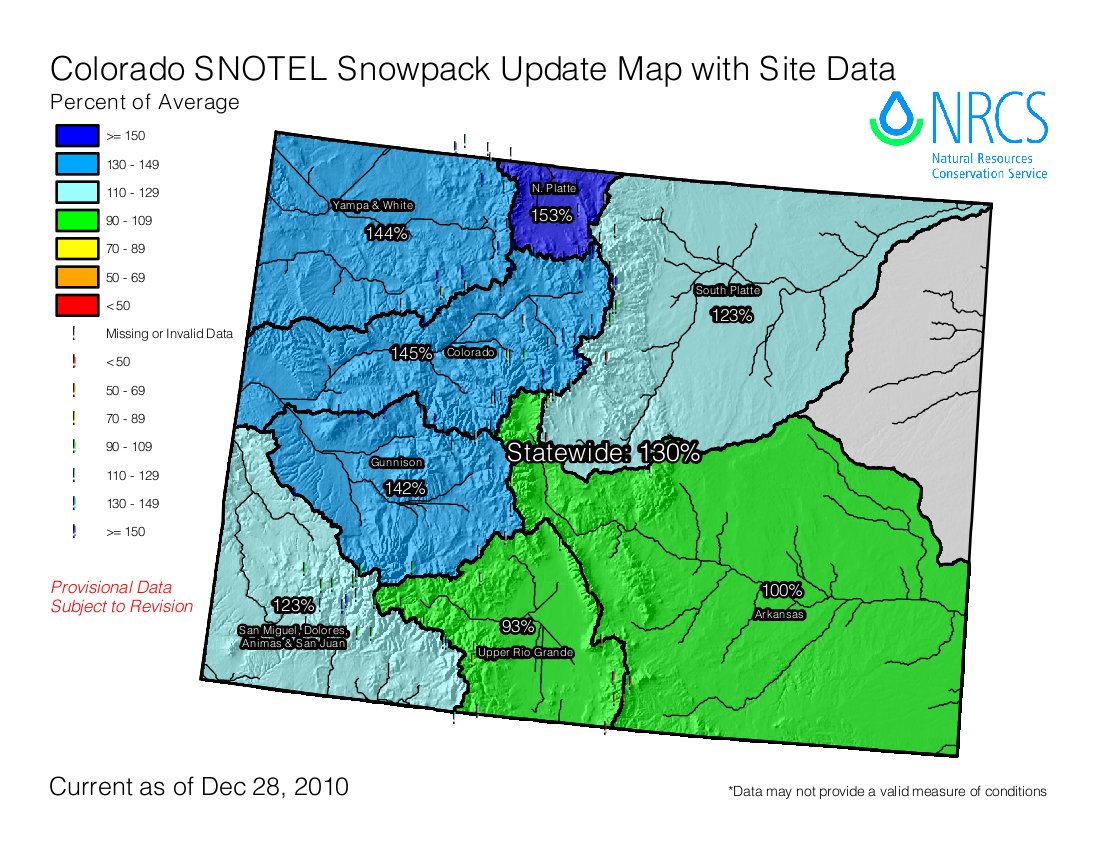
Click on the thumbnail graphic to the right to view the latest snowpack map from the NRCS. It’s still early but Colorado is ending the year in great shape except the eastern plains. Click here for the current U.S. Drought Monitor map.

Meanwhile winter wheat crops are threatened by the drought on the eastern plains, according to Sharon Dunn writing for The Fence Post. From the article:
“Now, it’s probably the worst we’ve seen in 30 years,” said Jim Cooksey of Cooksey Farms southeast of Roggen. Four months of little to no moisture is taking its toll on the crop, which blankets fields across northern Colorado. That means hopes for even an average harvest next summer are starting to dwindle. The Cooksey family’s 3,600 acres of winter wheat so far are patchy at best. By now, the winter wheat crop should be up a good 3-4 inches heading into its winter dormancy, Cooksey said. Winter wheat is planted in the fall so it shoots up into a nice ground cover before it hits the winter dormancy. The crop will wake back up in the spring and is harvested in the summer. While hardy, it also depends on moisture, which should be kick-started in the fall. Subsoil moisture is a good 6 inches below the surface. Without moisture to bridge that gap, the crop struggles.
“We usually have at least one storm in fall, but that hasn’t happened this year,” Cooksey said. “As a farmer, you live a lot on hope. You put a lot of faith in mother nature and God to bring moisture to make a crop.”[…]
“They say the winter wheat crop has nine lives,” [Darrell Hanavan, executive director of Colorado Wheat in Fort Collins] said. “Some of the farmers have said we’ve used two or three so far. It’s not over yet. … If we can get the right conditions, we could still have the potential for an average crop.”