The public vs. private water systems debate

A picture named waterfromtap.jpg

From the Summit Daily News (Elanor Starmer):

…a threat different from diversion has come to town. As communities struggle to balance their ever-shrinking budgets, investment firms and large, predominantly foreign companies are seizing the moment. Across the country, communities are being aggressively courted to sell or lease their drinking water and wastewater utilities to private companies. Since 1991, water utilities interested in profit have seduced at least 144 cities and towns into privatizing their domestic water systems. Most were in the nation’s Rust Belt. But this year, a record number of communities are considering it, including some in the West: Tulsa, Okla., Fresno County and Rialto, Calif., and Comal County, Texas, are all considering privatization.

But before they answer the siren call of private water companies, Western cities should heed the experiences of other communities. Because after the jolt of cash that comes when a city leases or sells its water utility, benefits drop off — sometimes precipitously. In the 10 largest cities around the country that have sold or leased their water systems, companies have raised consumers’ water rates by an average of 15 percent a year. Residents of Fairbanks, Alaska, saw their water and sewer bills jump from $543 a year before the utilities were sold in 1997, to $1,197 today, an increase of 9 percent annually. Residents of East Palo Alto, Calif., have seen their bills rise by 10 percent a year since their water system was leased to the for-profit company, American Water.

Luckily, as in all good Westerns, rebels abound. In the last two years alone, at least 18 cities across the country have terminated contracts with private water companies, usually because of poor service or increasingly high rates. The cities have learned that private companies often cut costs by eliminating jobs and delaying maintenance. Inevitably, this leads to service problems, while pressure to boost shareholder returns often leads to an increase in water rates for residents.

In every one of these 18 cities, bringing the utilities back under public control saved big money — an average of 21 percent of operating costs. After Petaluma, Calif., terminated its water contract with the Veolia company in 2008, the estimated savings amounted to nearly $1.6 million during the first three years of public operation.

Some Western cities have refused to be roped in by the new water cowboys. Last November, the city of San Jose, Calif., ruled out privatizing its water system after determining that it would be 30 percent more expensive to do so than to keep the system public. In 2008, Reno, Nev., rejected a bid from Goldman Sachs to lease its water system, which serves over 300,000 people. Yes, that Goldman Sachs: The company whose executives welcomed the subprime mortgage crisis with the line, “Sounds like we will make some serious money,” is also getting into the water business, as are other investment firms.

For further reading try Maude Barlow’s Blue Gold: The Fight to Stop the Corporate Theft of the World’s Water which chronicles the often negative results of privatization around the world. I have not read her later book Blue Covenant: The Global Water Crisis and the Coming Battle for the Right to Water but I have it in the queue.

More infrastructure coverage here.

Arkansas Basin roundtable meeting recap

A picture named arkansasriverbasin.jpg

From The Pueblo Chieftain (Chris Woodka):

The Super Ditch request [to fund a study that would help define how irrigation water is used and stored as part of the effort to launch the Arkansas Valley Super Ditch] for $225,000 came from the CWCB itself, because it originated through another process that is examining alternatives to selling agricultural water rights to cities. Super Ditch would sell water to cities through lease agreements by pooling the ag rights and fallowing the appropriate amount of farm ground. Roundtable members questioned whether the engineering data could be used in court cases that eventually will be needed to change the use of the water. A case is in Division 2 Water Court for an exchange plan to move water into Lake Pueblo. “The study is good, but we need to be cognizant of the decrees,” said Terry Scanga, general manager of the Upper Arkansas Water Conservancy District…

The study has six objectives:

– Modeling reservoirs in the Lower Arkansas Valley that would be used in the exchange plan.
– Modeling Lake Pueblo operations.
– Looking at whether the winter water program could be integrated into Super Ditch operations.
– Recovering supplies that aren’t available for direct exchange.
– Calibrating and optimizing flow data from the Arkansas River
-Finalizing engineering data on each of the ditches to determine yield under different scenarios….

More on project funding from the article:

Arkansas Headwaters Recreation Area, $350,000 to rebuild a dangerous diversion structure on the Arkansas River near Buena Vista. The project will improve water delivery on the Helena Ditch, which includes the Buena Vista Correctional Facility; provide safer passage for commercial and private rafters (one fatality and numerous injuries have been reported at the site); and allow trout to move upstream with the construction of a fish ladder, said Rob White, AHRA manager.

Blue Mesa study, $245,000 in a joint project with the Gunnison Basin Roundtable to study whether releases from Blue Mesa Reservoir on the Gunnison River can be used to avoid or reduce the impact of curtailment under the Colorado River Compact. Otherwise, supplying additional water to downstream states during drought years could mean reducing transmountain diversions.

Statewide celebration of water, $86,000 for an effort by the Colorado Foundation for Water Education and major water interests in Colorado to improve public understanding of water issues in 2012.

Colorado State University Extension, $47,000 for a program that would improve distribution of data from the Colorado Agricultural Meteorological network through traditional media like newspapers and radio, as well as in emerging media through text services. The network includes weather stations up and down the Arkansas River.

State Engineer. The roundtable also agreed to write a letter of support for a grant request from the account by the Colorado Division of Water Resources to improve its database used to tabulate water rights. The grant will look at how to calculate changes in the alluvial aquifer into water analyses.

More IBCC — basin roundtables coverage here.

Fort Morgan: City council approves Colorado-Big Thompson water lease renewal

A picture named fortmorganrainbowbridge.jpg

From The Fort Morgan Times (Dan Barker):

The council may approved a resolution allowing city officials to apply to the Northern Colorado Water Conservancy District to renew the city’s right to use Colorado-Big Thompson project water. The city of Fort Morgan will apply for 87 acre feet primarily for domestic, irrigation and industrial use within the city. Fort Morgan Director of Water Resources Gary Dreessen said that it was 87 acre feet, not 80 acre feet as indicated in the council’s agenda packet. Renewing the right to use Fort Morgan’s allocation of Colorado-Big Thompson water is an annual event, he said.

More Morgan County coverage here and here.

The Colorado Mined Land Reclamation Board upholds the approval additional prospecting for the Mt. Emmons molybdenum mine near Crested Butte

A picture named mountemmons.jpg

From the Associated Press (Catharine Tsai) via Bloomberg. From the article:

Riverton, Wyo.-based U.S. Energy Corp. won state approval last year of a revised plan to build a mine tunnel at Mount Emmons. The Colorado Mined Land Reclamation Board voted 4-1 Wednesday to uphold the approval and reject an appeal from the High Country Citizens’ Alliance.

The group’s executive director Dan Morse says the High Country Citizens’ Alliance still has concerns about water quality for Crested Butte.

More Gunnison River basin coverage here.

EPA Issues Guidance for Enhanced Monitoring of Hexavalent Chromium in Drinking Water

A picture named hexavalentchromiumwikipediacommons.jpg

Here’s the release from the Environmental Protection Agency (Jalil Isa):

Several weeks ago, EPA Administrator Lisa P. Jackson committed to address hexavalent chromium (also known as chromium-6) in drinking water by issuing guidance to all water systems on how to assess the prevalence of the contaminant. Today, the agency is delivering on that promise and has issued guidance recommending how public water systems might enhance monitoring and sampling programs specifically for hexavalent chromium. The recommendations are in response to emerging scientific evidence that chromium-6 could pose health concerns if consumed over long periods of time.

“Protecting public health is EPA’s top priority. As we continue to learn more about the potential risks of exposure to chromium-6, we will work closely with states and local officials to ensure the safety of America’s drinking water supply,” said Administrator Jackson. “This action is another step forward in understanding the problem and working towards a solution that is based on the best available science and the law.”

The enhanced monitoring guidance provides recommendations on where the systems should collect samples and how often they should be collected, along with analytical methods for laboratory testing. Systems that perform the enhanced monitoring will be able to better inform their consumers about any presence of chromium-6 in their drinking water, evaluate the degree to which other forms of chromium are transformed into chromium-6, and assess the degree to which existing treatment affects the levels of chromium-6 in drinking water.

EPA currently has a drinking water standard for total chromium, which includes chromium-6, and requires water systems to test for it. Testing is not required to distinguish what percentage of the total chromium is chromium-6 versus other forms such as chromium-3, so EPA’s regulation assumes that the sample is 100 percent chromium-6. This means the current chromium-6 standard has been as protective and precautionary as the science of that time allowed.

EPA’s latest data show that no public water systems are in violation of the standard. However, the science behind chromium-6 is evolving. The agency regularly re-evaluates drinking water standards and, based on new science on chromium-6, has already begun a rigorous and comprehensive review of its health effects. In September 2010, the agency released a draft of the scientific review for public comment. When the human health assessment is finalized in 2011, EPA will carefully review the conclusions and consider all relevant information to determine if a new standard needs to be set. While EPA conducts this important evaluation, the agency believes more information is needed on the presence of chromium-6 in drinking water. For that reason, EPA is providing guidance to all public water systems and encouraging them to consider how they may enhance their monitoring for chromium-6.

More information on the new guidance to drinking water systems: http://water.epa.gov/drink/info/chromium/guidance.cfm

More information on chromium:

http://water.epa.gov/drink/info/chromium/index.cfm

More information on the status of the ongoing risk assessment:

http://cfpub.epa.gov/ncea/iris_drafts/recordisplay.cfm?deid=221433

More EPA coverage here.

Colorado Water Institute: ‘Colorado Water’ newsletter January/February 2011 issue

A picture named biocharproduction.jpg

You can download it here.

Restoration: Biochar for mine cleanups?

A picture named biocharproduction.jpg

From the High Country News weblog The Range (Heather Hansen):

[A] possible solution, currently being field-tested by a non-profit based in Carbondale, may change the reclamation landscape entirely. Since 2007, the Flux Farm Foundation has been working on reclamation with a promising substance known as biochar. Biochar is made by burning biomass (like wood, animal and crop waste) in an oxygen-limited environment, resulting in a stable form of carbon that has superior water- and nutrient-retention abilities.

These characteristics make it an ideal candidate to restore moonscape-like mine sites, where vegetation (that could capture toxic metals leaching out of abandoned mines and into waterways) is long gone.

Using biochar to reduce metal toxicity and to boost the fertility of compromised soil isn’t a new concept, but using it clean up mines is. The Mountain Studies Institute, based in Silverton, has done some small-scale biochar trials on mine lands in the San Juan Mountains, but Flux Farm’s Hope Mine Project is the first time an entire mine has been taken on.

More restoration coverage here. More biochar coverage here.

Wastewater: Cargill Fort Morgan beef plant is getting a $6 million bacteria-based system to reduce nitrogen and phosphorus releases to the South Platte River

A picture named cuttingdeboningline.jpg

From Environmental Leader:

The system will use bacteria to break down nitrogen and release nitrogen gas, thus preventing emissions into the South Platte River. Work on the project is expected to complete by the third quarter of 2012, at an estimated cost of over $6 million.

Cargill says it has already reduced nitrogen discharges at the plant by 65 percent in the past four years, and the new initiative should help the plant reach 80 or 90 percent. The company says the facility is compliant with the Colorado Department of Public Health & Environment’s requirements for discharge into the South Platte River…

Most of Cargill’s meat plants use methane from wastewater lagoons to help fuel operations. Biogas now displaces at least 20 percent of natural gas demand at Cargill’s North American beef processing plants, while reducing GHG emissions by more than 1.3 million metric tons over the past four years. By the end of fiscal year 2010, Cargill obtained 11 percent of its energy from renewables, exceeding its 10 percent goal.

More South Platte River basin coverage here.

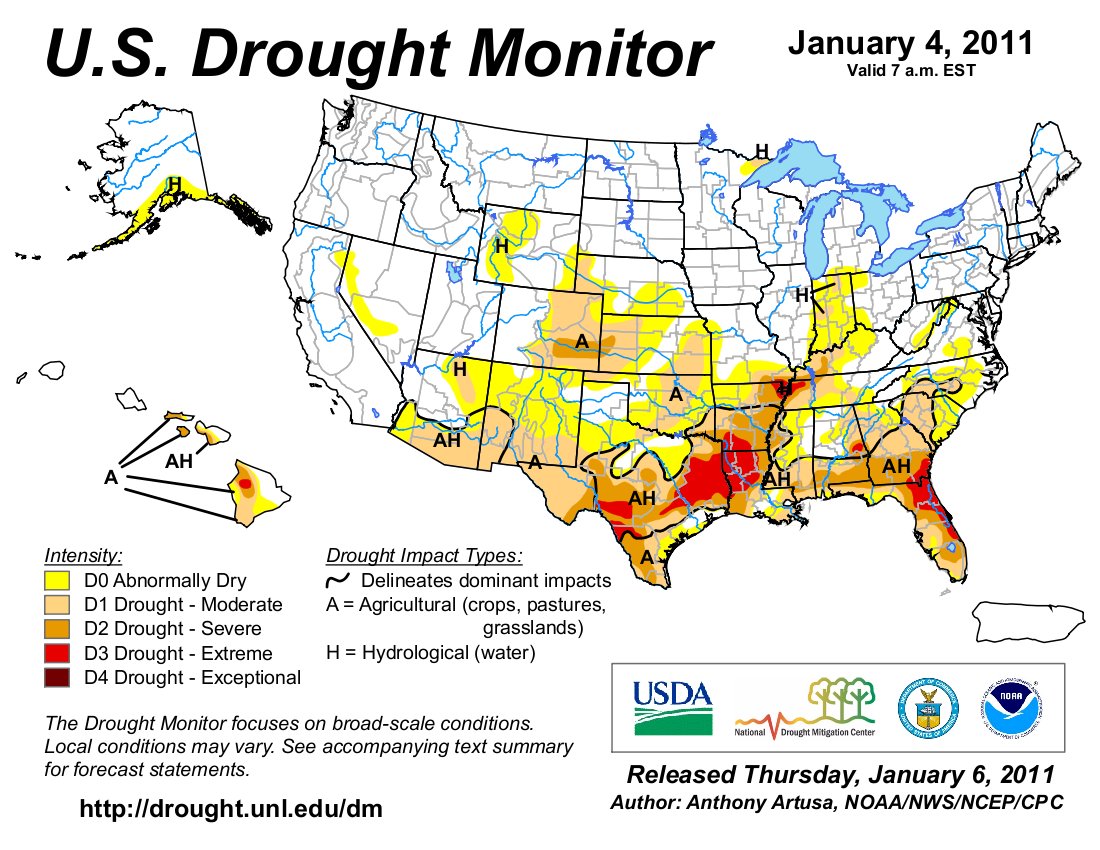
NIDIS Weekly Climate, Water and Drought Assessment Summary of the Upper Colorado River Basin

A picture named usdroughtmonitor01042011

Here are the notes from the Colorado Climate Center.

One interesting note. The Bureau of Reclamation is planning a “balancing flow” release of over 9 million acre-feet from Lake Powell this season. The representative told webinar participants that if the Upper Colorado River Basin streamflow forecast holds with early indications that Reclamation may increase the release to over 12 million acre-feet.

Many are trying to help out the water levels in Lake Mead. Arizona is considering passing on some of their Colorado River allocation this year in an attempt to keep the Lake Mead water level above the level (1,075 feet above sea level) that would trigger the 2007 drought management plan for Lake Mead and Lake Powell. Mexico plans to store 300,000 acre-feet of Colorado River water in Lake Mead due to their not being able to utilize the water in their earthquake damaged irrigation system.

More Colorado River basin coverage here.

Water treatment: What will new fluoride rules mean for Colorado water suppliers?

A picture named watertreatment.jpg

From The Pueblo Chieftain (Loretta Sword):

The U.S. Department of Health and Human Services on Friday announced a proposal to lower its fluoride recommendations to 0.7 milligrams per liter, down from a range of 0.7 to 1.2 milligrams per liter. Based on a recent study showing adverse dental and health impacts from higher levels and long-term consumption, the HHS also is reviewing the Environmental Protection Agency’s stance that up to 4 milligrams per liter is safe. HHS officials believe that level may be too high.

Don Colalancia, division manager for water quality and treatment at the Whitlock Water Treatment Plant , said natural fluoride levels of Pueblo’s water average about 0.4 milligrams per liter “and we feed fluoride to arrive at a 1.0 final concentration. We measure the raw water and then add enough to get to 1 milligram per liter.” Colalancia said he was aware of potential new guidelines and is awaiting word from state health officials before reducing target fluoride ranges at the Whitlock treatment plant. “Whenever the state says it’s OK to reduce the level, we’ll do that,” he said, adding that the state’s current recommendations mirror the federal guidelines that are under review. Adjusting the fluoride level is “very easy to do, and in fact we’ll save money by doing it,” Colalancia said.

Steve Harrison, director of utilities in Pueblo West, said the metro district does not add fluoride to the community’s water, and that periodic monitoring shows natural levels average about 0.5 milligrams per liter — just under the lowest level that is part of current guidelines as well as the proposed new recommendation of 0.7 milligrams per liter.

From The Greeley Tribune

[Jon Monson, water director for the City of Greeley] said Mother Nature helps Greeley fulfill that fluoride threshold because it’s naturally occurring in the water the city pumps from its Bellvue Water Treatment Plant and from Boyd Lake Treatment Plant. Both contain from 0.4 to 0.5 milligrams per liter, which the city boosts with chemical additions. Reducing that will save the city $10,000 a year in chemical costs, Monson said…

Monson said the city could use that money instead to buy activated carbon, which it uses typically in the late summers, when algae in Boyd Lake grows. That algae has a tendency to stink up the water, prompting calls from residents complaining about the smell and sometimes the taste.

From Denver Water:

On Jan. 7, 2011, the U.S. Department of Health and Human Services and the U.S. Environmental Protection Agency announced proposed changes to the standards and guidelines on fluoride in drinking water. Addition of fluoride to drinking water supplies is recommended by Centers for Disease Control, HHS, and the American Dental Association to help prevent tooth decay, particularly in children. It was recognized by the CDC as one of the ten greatest public health achievements of the 20th century.

The agency is lowering the recommended concentration of fluoride from a range of 0.7–1.2 mg/L to a flat 0.7 mg/L.

More water treatment coverage here.

2011 Colorado legislation: State Senator Gail Schwartz to sponsor bill that will allow the State Engineer to approve groundwater sub-district management plans as substitute water supply plans in the San Luis Valley

A picture named slvdischargerecharge.jpg

From the Valley Courier (Ruth Heide):

Steve Vandiver, manager for the Rio Grande Water Conservation District that is sponsoring the water management sub-districts in the Valley, explained the pending legislation to Rio Grande Roundtable members during their meeting on Tuesday…

He said the state engineer’s office and attorney general’s office requested the bill, which adds a phrase or two to existing legislation regarding substitute water supply plans. Vandiver said the current statute allows the state engineer to approve temporary operation of an augmentation plan or rotation crop management contract that has been filed with the water court, but the court has not yet issued a decree. The state engineer can approve the temporary operation of those plans until the decree is completed, Vandiver explained. The proposed legislation would add wording allowing the state engineer to do the same thing with sub-district water management plans. Under the proposed legislation, the state engineer could approve temporary operation of a groundwater management plan as a substitute water supply plan as long as the state engineer has approved the groundwater management plan application, judicial review of that approval has been filed with a water court and the court has not issued a decree…

Otherwise, [Vandiver] explained, the groundwater rules the state engineer is currently finalizing could become effective while water management plans are hung up in court, and all of the people who were relying on those plans to cover them might suddenly find their wells shut off.

Several proposed water management sub-districts, separated by Valley hydrology and geography, are in various stages of development. The sub-districts are designed to make up depletions to surface water rights and the aquifer as a whole, at least in part through reduction in irrigated acreage within the sub-district boundaries.

More San Luis Valley groundwater coverage here and here.

Flaming Gorge pipeline update

A picture named flaminggorgepipelinemillion.jpg

From the Fort Collins Coloradoan (Bobby Magill):

The U.S. Army Corps of Engineers, the chief federal agency in charge of reviewing and approving the project, plans to issue a draft environmental impact statement on the project in 2016, with a final version and possible approval to follow in 2018.

Whether Million’s pipeline could actually produce as much hydropower as Million suggests and whether the energy needed to pump the water over the Continental Divide will cancel out the benefits of producing hydropower are two of a host of unknowns about the project that the public won’t be able to learn until the environmental review is released in five years, said Stacy Tellinghuisen, an energy and water policy analyst for Boulder-based Western Resource Advocates, a critic of the project…

Barry Wirth, spokesman for the Utah office of the Bureau of Reclamation, which oversees Flaming Gorge, said it’s unclear how the pipeline would affect hydropower at Flaming Gorge, and he did not know if the bureau had studied the matter.

More Flaming Gorge pipeline coverage here and here.

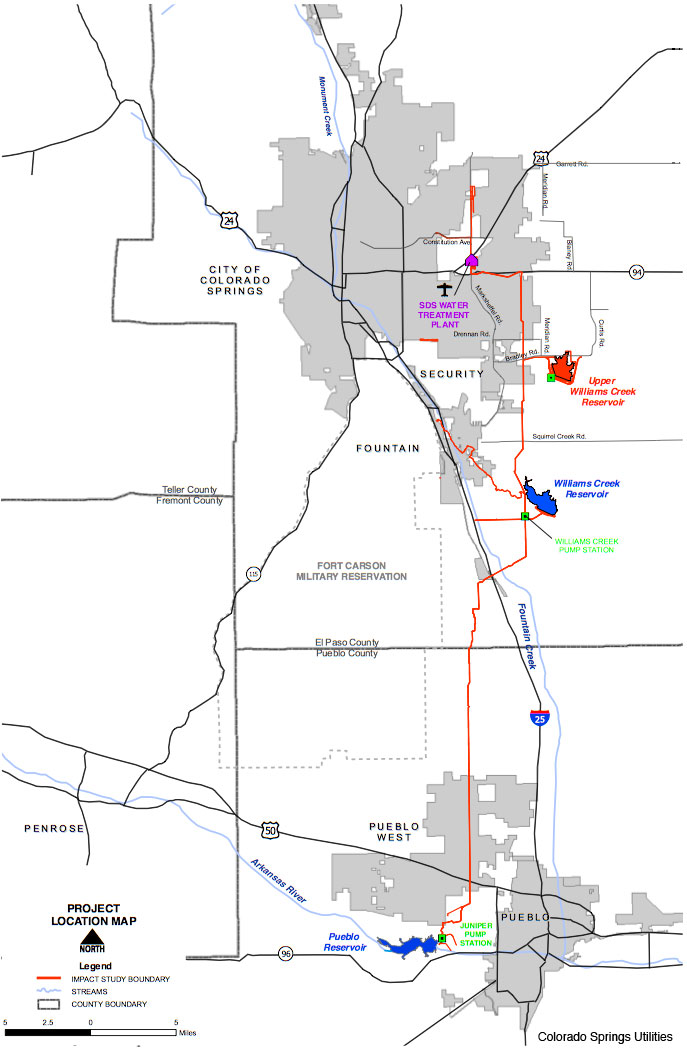
Southern Delivery System: Colorado Water Quality Control Commission affirms the state Water Quality Control Division’s decision for 401 certification for the project

A picture named sdspreferredalternative.jpg

From The Pueblo Chieftain (Chris Woodka):

The certification is needed before work on SDS may begin…

At a hearing in December, lawyers for the coalition and Thiebaut argued that numeric standards are needed to determine how SDS will affect levels of contaminants such as selenium and E. coli in Fountain Creek and the Arkansas River.

Colorado Springs and state lawyers argued for an adaptive management plan, which was described in the Bureau of Reclamation’s Environmental Impact Statement for SDS, that would provide flexibility in dealing with future problems…

Colorado Springs lawyers also defended the city’s 2009 decision to eliminate a stormwater enterprise that figured heavily into protection of Fountain Creek, assuring the state that other provisions were in place to control stormwater.

“It’s pretty clear to me that the division and the commission have bent over backward to accommodate Colorado Springs and its SDS partners,” said Ross Vincent of the local Sierra Club, a member of the coalition. “Without seeing the written decision, it’s inconceivable to me that the commission can justify supporting the division’s decision.” Vincent pointed to a budget briefing by the division last month, which acknowledged that the division does not have adequate funding to perform all of the duties required by the Legislature. The Dec. 22 memo claims the division would need more than 30 additional employees to keep up with the current workload of permits and inspections. The adaptive management plan relies on Colorado Springs to monitor itself, in much the same way that other compromises have been negotiated, Vincent said…

[Pueblo County District Attorney Bill Thiebaut] said he will wait until a written decision is issued before deciding how to proceed. “Our office is disappointed with the decision and direction of the Water Quality Control Commission. We will assess our legal options after receiving the written decision,” Thiebaut said. “The Bureau of Reclamation’s study showed that the SDS project will further degrade water quality in Pueblo County. Yet again, Colorado Springs will benefit from the project and Pueblo will be harmed,” he said. Thiebaut also questioned the state’s ability to enforce water quality laws. “I am concerned that the Water Quality Control Division does not utilize adequate information when making their decisions, and they fail to effectively respond to the current and future challenges of protecting and restoring the integrity of Colorado’s water bodies, including our Fountain Creek and Arkansas River,” Thiebaut said.

More Southern Delivery System coverage here and here.

Snowpack/storage news

A picture named snowpackcolorado01112011

From The Pueblo Chieftain (Chris Woodka):

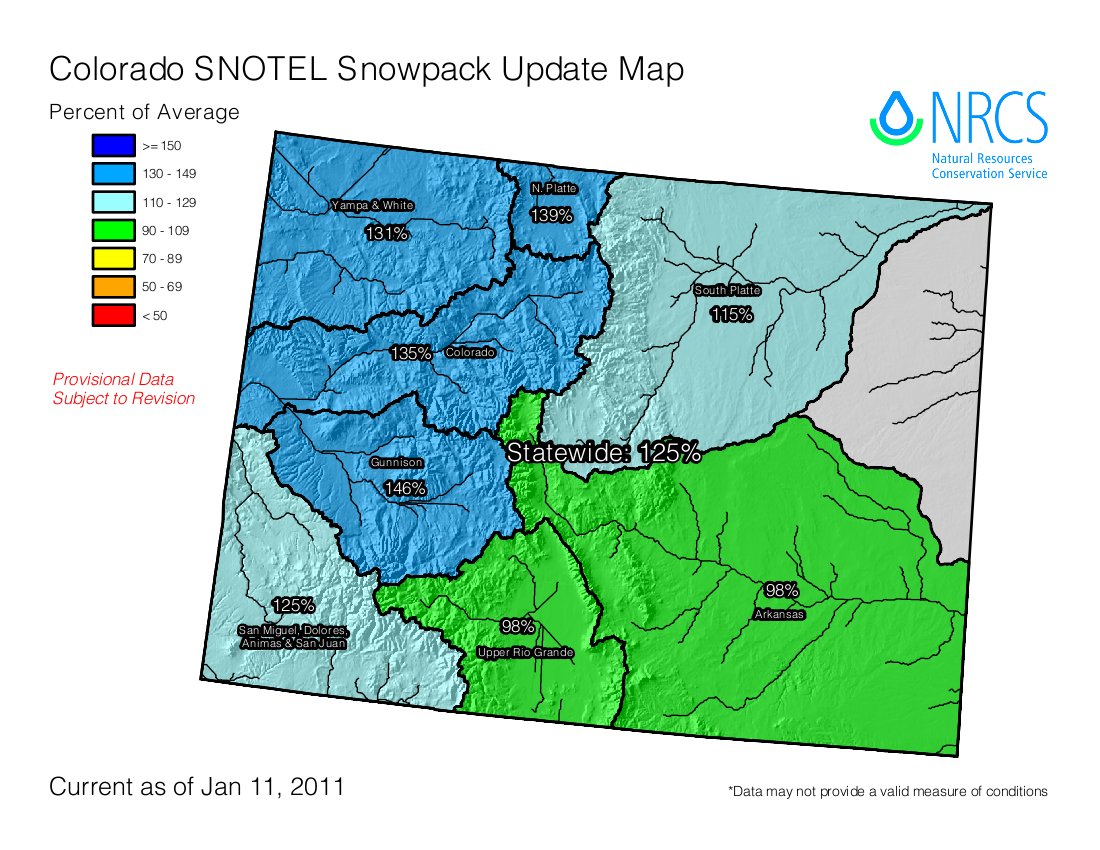
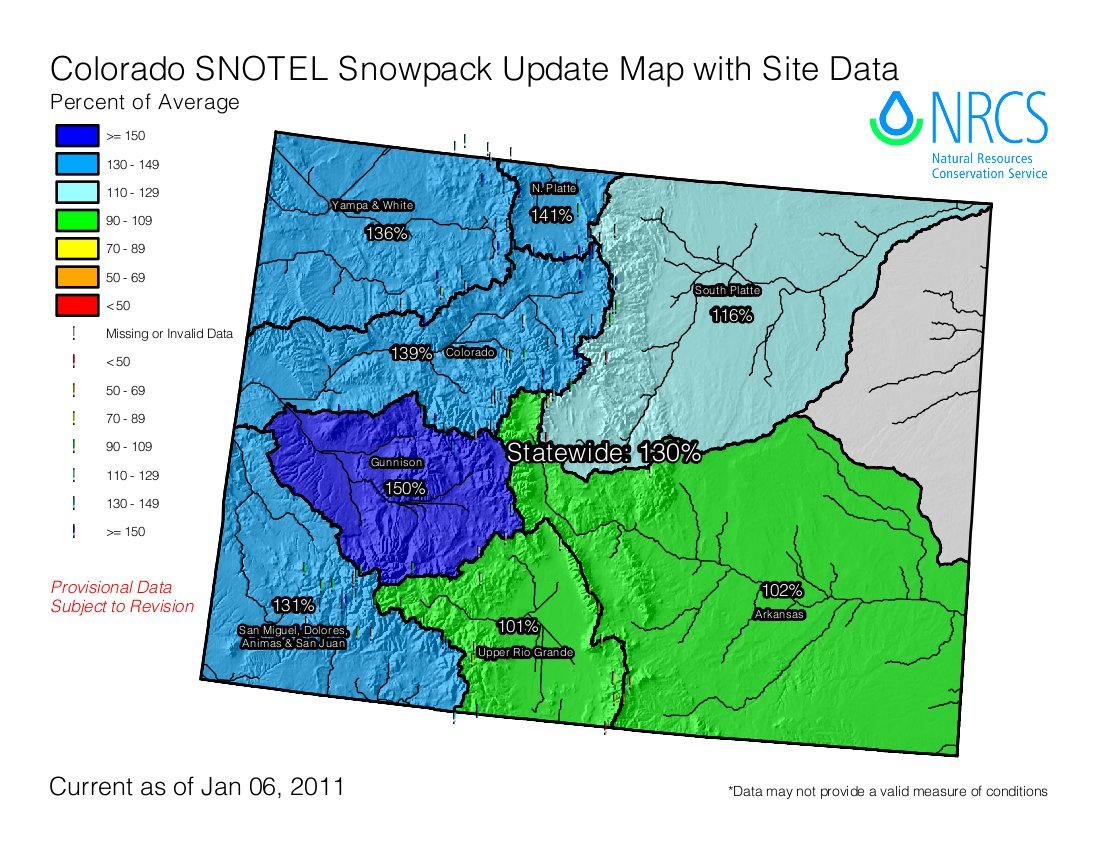
Statewide snowpack was at 125 percent of average Tuesday as parts of the state received a foot or more of new snow.

Wolf Creek Ski Area reported a base of 94 inches, with 13 inches added Sunday and Monday. Monarch had a base of 63 inches, while Ski Cooper was at 42 inches.

In terms of water supply, the Arkansas River and Rio Grande basins were at average levels, while the Colorado River watersheds were anywhere from 125-146 percent of average Tuesday. The South Platte River basin was at 115 percent. At Snotel sites maintained by the Natural Resources Conservation Service, snow depths in the Arkansas River watershed ranged from 8-46 inches, with moisture content anywhere from 1-10 inches.

Statewide, Snotel sites in some places are now close to 100 inches, with more snow added to last week’s totals. Snow water equivalent was almost 2 feet at the higher elevations, and most sites ranged between 10-20 inches.

The NRCS also reported that as of Jan. 1, snowpack was 159 percent of last year’s totals statewide, with the biggest gains in the Colorado River and tributary watersheds…

In the Roaring Fork basin, which supplies the bulk of water imports for the Arkansas River, sites were at 139 percent of average. Reclamation is moving about 150 cubic feet per second of water from Turquoise Lake to Lake Pueblo in order to make space for imports once runoff begins. That’s about one-third of the water in the river above Lake Pueblo. Flows are lower below Lake Pueblo as winter water storage continues. As of Dec. 31, about 15,600 acre-feet of winter water were stored in Lake Pueblo, with about twice that amount stored in reservoirs downstream. The amount of water in winter storage was about 85 percent of normal.

Moffat Collection System Project: CDOW public meetings January 18 and 20

A picture named greenbackvscorivercutthroat.jpg

Here’s the release from the Colorado Division of Wildlife (Randy Hampton). Here’s an excerpt:

Members of the Colorado Wildlife Commission will be hosting two public meetings next week to hear concerns about the impact of Denver Water’s proposed Moffat Collection System Project on fish and aquatic resources.

On Tuesday, Jan. 18, the public is invited to a meeting being hosted by Wildlife Commissioners Dorothea Farris and Dennis Buechler at the Inn at Silver Creek in Granby.

On Thursday, Jan. 20, Wildlife Commissioners Bob Streeter and David Brougham will solicit public comment at the Boulder Senior Center East. This meeting was previously scheduled to occur at The Ranch in Larimer County, but has been moved to the Boulder Senior Center East for the public’s convenience.

Denver Water proposes to meet projected future water needs by developing 18,000 acre-feet per year of new, annual firm yield water that would be delivered to its Front Range delivery system. Denver Water’s preferred project to meet this need is to raise Gross Reservoir in Boulder County to store an additional 72,000 acre-feet of water diverted from the Fraser and Williams Fork river systems. The proposed project would increase Gross Reservoir from its current storage capacity of 41,811 acre-feet to approximately 114,000 acre-feet.

As proponent of the project, Denver Water is developing a mitigation plan that is scheduled to be presented to the Wildlife Commission at its March meeting in Denver. The project must receive a federal permit from the U.S. Army Corps of Engineers. However, state statute does give the Colorado Wildlife Commission the opportunity to review the mitigation plans and work with the proponents to ensure that the plans address project impacts. The Division’s goal is to identify habitat management actions that will ensure a functioning river that supports fish and wildlife given anticipated future flow conditions. Restoring the river to a past condition is beyond the scope of the project approval process and Wildlife Commission authority.

Ken Kehmeier and Sherman Hebein, senior aquatic biologists for the DOW’s Northeast and Northwest Regions, will provide a presentation on the project and lend their expertise to the discussion.

More Moffat Collection System Project coverage here and here.

Snowpack news: The Steamboat ski area exceeds 200 inches

A picture named snowpackcolorado01112011

From Steamboat Today (Jack Weinstein):

The ski area didn’t reach the 200-inch milestone last season until March 8, and the 2009-10 season total was 261.75 inches. As of Sunday afternoon, the ski area was reporting 209.5 inches of snow at mid-mountain, with a base of 69 inches.

Aurora: No 2011 water rate hike

A picture named uvpretreatmentbinneyplant11172010

From The Denver Post:

The last time the utility provider didn’t raise its rates was 2001, said Greg Baker, spokesman for Aurora Water. The decision to keep rates the same was made, in part, by cost savings on the massive Prairie Waters treatment facility, which finished ahead of schedule and more than $100 million under budget, he said.

More infrastructure coverage here.

2011 Colorado legislation: The General Assembly will start work on Wednesday

A picture named coloradocapitolfront.jpg

Bump and update: Here’s a report on last week’s meeting between Republican legislators and business groups, from Randy Woock writing for The Trinidad Times. From the article:

The roundtable discussion, hosted by the Colorado Association of Commerce and Industry in downtown Denver, was described by State Senate Majority Leader Mike Kopp as an opportunity for industry leaders to share their ideas on how best to minimize government hindrances to their operations. “We’re concerned about job growth in our state…we want to have more businesses hiring more people and more people investing more capital,” Kopp said. “Republicans in the Senate have put out there an aspirational goal: achieving a 15 percent reduction in the compliance costs for regulated businesses…we want to drive down the costs for regulated businesses of doing business, operating here in the State of Colorado because we recognize (that) the more you have on the bottom line, the more likely you are to hire that next employee or to extend your operation.”[…]

Tisha Schuller, president of the Colorado Oil and Gas Association, pointed to the economic impacts of the oil and gas industry, in addition to voicing concerns about industry taxes and federal and local oversight. “We are aware, as everyone is, of the potential $1 billion budget deficit (faced by the state government), and we must ensure that Colorado remain a business friendly, low tax state; any discussion of tax reform, we want to make sure that we’re at the table,” Schuller said. “Oil and gas companies pay over 90 percent (of severance taxes in Colorado)…Colorado has world-class oil and gas reserves, but we cannot take investment here for granted, and the last two years have really shown that.” Adding, “We’ve seen companies flee Colorado for reserves in other states, not because those reserves are any better, but because the perception was that Colorado was closing down for business. And the tax environment and the regulatory environment are the two key pieces of that.”

The massive slowdown of industry activity in Las Animas County actually began in Fall 2008 due to a drop in commodity prices months before the Colorado Oil and Gas Conservation Commission’s (COGCC) controversial regulatory overhaul was completed and approved by the state in Spring 2009. As reported by the Canadian industry group, The Fraser Institute, in its 2010 Global Petroleum Survey, energy executives rank Colorado 61 out of 81 worldwide locations for favorable energy investments, up from its rank of 52 in 2008…

Schuller also expressed concern last Wednesday about the Environmental Protection Agency’s (EPA) impending study on the potential impacts of hydraulic fracturing on water resources, stating that the industry preferred “state primacy” for regulatory enforcement. “Sometimes to have the smallest, most efficient government, you need to strongly place authority in the state’s hands, and we would like to see that with the (COGCC)…the federal government is showing interest in regulating hydraulic fracturing — something that is regulated at every step at that level,” she said. “We see the same thing with air regulations, that we’ve been having encroaching, growing potential for EPA to increase (oversight).”

Schuller also named as a “potential threat” oversight at the local levels of government. “Local governments want to become mini-Oil and Gas Conservation Commissions through their planning process…they’re taking increasing authority over oil and gas development, and this is a huge concern,” she said. “If a company is going to invest in Colorado, they need to have the certainty that they have one set of rules to operate under.”[…]

Pioneer Natural Resources, the largest employer in Las Animas County at 460 reported employees, was not present at last Wednesday’s roundtable discussion, but the company was contacted by The Times Independent for its desired changes to Colorado’s oil and gas regulations…

Regarding water issues in the state, Pioneer requested that the various regulatory bodies tasked with oversight on industry impacts to water resources — such as the State Engineer’s Office, the Colorado Department of Public Health and Environment and the COGCC — collaborate to “seek innovative solutions to wed the state water issues and needs with the capability of the industry to produce water.”

Adding, “Break down administrative and regulatory barriers to viewing [coalbed methane] water as a resource, rather than as a waste product.” The company also suggested that since CBM had been “the target of additional regulations related to gas seep monitoring” that applied only to CBM-based operations, “The need for some of the rules, and the fairness of requiring natural gas operators to shoulder the cost of studies unrelated to CBM development (e.g. coal mine gas seep surveys), needs to be re-evaluated.”

Pioneer also requested that industry be involved “proposed permit revisions and draft policy changes,” using as examples the COGCC pit-fencing draft policy and discharge permits on the Apishapa watershed. “Reach out to all landowners, not just landowners who complain,” Sheffield stated. “Formalize the complaint process where definitive steps and procedures are followed to assess the complaint validity and ensure the complaint has a solid scientific base; then only proceed on modifying polices, rules, and laws for complaints based on sound science and data.”

Using pit closure rules as an example, Pioneer also requested that the COGCC and other state agencies review its regulations and policies in order to, “See that the paperwork and preliminary field costs associated with the rule/policy do not exceed the actual costs of implementing the proposed rule…(and) conduct an objective, third-party cost-benefit analysis of new proposed rules and regulations.”

From the Colorado Statesman (Marianne Goodland):

Water issues won’t be on his plate in the 2011 session, [House Minority Leader Sal Pace] said.

Here’s a recap of last week’s sit-down between Republican legislators and, “business groups, ” to discuss, “regulatory reform and [review] the Independence Institute’s proposals on how to solve the state’s budget woes,” from Marianne Goodland writing for the Colorado Statesman. From the article:

The contractors, represented by Mike Gifford of the Association of General Contractors, asked for changes in four areas: retention of payments for public projects, which affects cash flow; storm water regulations; sales and use tax expansion, much of it by local governments; and contractor licensing and registration, a problem that requires contractors to be licensed by multiple local governments and the state. “We need a common system of license and registration,” Gifford pleaded.

More coverage from Marianne Goodland writing for The Fort Morgan Times. From the article:

[First-time legislator Rep. Jon Becker…who represents House District 63], like any legislator, can carry five bills in the session, and he`s looking at a bill to reduce the size of government by combining departments. He`s also interested in legislation on water storage, and is looking for funds from the Division of Wildlife that would go to the Colorado Water Conservation Board…

“Getting these departments to play well together on this issue will be the hard part,” he said, but the state is way behind in dealing with water storage issues. And he believes that using DOW money for water storage matches its mission. “I don`t want to hurt hunters, [or have people think he`s taking DOW money for agricultural purposes] but as long as we benefit wildlife with water storage, that can be another purpose” of those dollars, he said. The bill carries a sunset provision that will end the transfer in 10 years, which he says will be standard in his bills…

[Rep. Jerry Sonnenberg,…of HD 65 has been tapped to play several leadership roles in the 2011 session. Sonnenberg is the new chair of the House Agriculture, Livestock and Natural Resources Committee. also plans to carry a sunset review bill that applies to weather modification in water conservation districts.

More 2011 Colorado legislation coverage here.

2010 Colorado gubernatorial election transition: Governor Hickenlooper’s prepared remarks

A picture named superhick.jpg

Here are the prepared remarks via The Denver Post. Here’s an excerpt:

We will measure everything we do and make changes where change makes sense. We will protect our land and water and preserve the natural beauty that helps define Colorado.

Nothing about storage?

More 2010 Colorado elections coverage here.

Roaring Fork River basin: ‘Front Range Water Supply Planning Update’ authors seek to inform on transmountain diversions

A picture named roaringfork.jpg

Here’s a look at the report prepared for the Ruedi Water and Power Authority, from Scott Condon writing for the Glenwood Springs Post Independent. From the article:

The study was commissioned by the Ruedi Water and Power Authority, which represents local governments on watershed issues. The study was conducted by G. Moss Driscoll, a Colorado attorney with experience in water law, environmental law and natural resource management. Mark Fuller, director of the Ruedi Water and Power Authority, said the study was designed to educate Roaring Fork Valley government officials and residents about how water issues could affect them in the future. It wasn’t intended to drive a wedge deeper in the relationship between the valley and Front Range water rights owners. To the contrary, he said, the study, “opened lines of communication.” “There are people in Colorado Springs who know what’s on our minds. That wasn’t the case a year ago,” Fuller said.

The study provides a thorough inventory of who owns what when it comes to the Roaring Fork watershed’s liquid gold and it describes the infrastructure associated with each of the three major diversion projects. For example, the Independence Pass Transmountain Diversion system diverts water from numerous creeks east of Aspen into Grizzly Reservoir, then sends the water east via two tunnels. The major shareholders and recipients of the water in that system are Colorado Springs, Pueblo, Pueblo West and Aurora. The system yields an annual average of 40,589 acre feet, the study said. Fuller said he learned from the study that the Front Range cities that own the system have conditional water rights that could be converted into regular rights, meaning more water gets diverted. One example would be getting court approval to extend their diversion season. “They basically don’t have to ask our permission” to exercise those conditional rights, Fuller said.

In other cases, greater diversions would be difficult, in practical terms, Fuller said. The Fryingpan-Arkansas Project is approved for additional diversion structures, but constructing them would require local government approvals. The Front Range cities understand the political and public relations challenges they face from adding diversions or developing new water resources, Fuller said. He is of the opinion that water supply and demand issues will be negotiated on a broad scale in an amicable way but he acknowledged that other observers believe the historically contentious issue of West Slope water supply and Front Range use will lead to a sort of “World War III” before settled.

He hopes that the Front Range Water Supply Planning Update will be used by officials in governments and entities in the Roaring Fork Valley to inform themselves on the big issues coming in the future. The more officials know, the better they can represent the valley and protect water resources, he said.

From the executive summary:

Three major transmountain diversions currently operate in the Roaring Fork Watershed – the Fryingpan-Arkansas Project (“Fry-Ark Project” or “Fry-Ark”), the Busk-Ivanhoe System, and the Independence Pass Transmountain Diversion System (“Twin Lakes System”) (see inset). At present, these three systems collectively divert over forty percent of the flow in the headwaters of the Roaring Fork and Fryingpan rivers for use in the Arkansas and South Platte basins. Although these diversions have been in operation for decades, each of the projects are still incomplete, with undeveloped conditional water rights, excess diversion capacity, and even major structural components that could yet be built.

According to the Colorado Water Conservation Board’s most recent estimates, the Arkansas and South Platte basins are facing a combined shortfall in water supply of at least 130,000 acre- feet of water (and potentially as great as 470,000 acre-feet) by 2050, due to the influx of another 3.2 to 4.5 million new residents by that time.3 To meet this projected gap, Front Range water providers are scrambling to secure additional sources of water. For many of them, the options for new water supplies are limited: most of the rivers on the East Slope are already over-appropriated; groundwater supplies are declining in some areas due to excessive well pumping; and in recent decades, the costs and uncertainty surrounding new transmountain diversions have prevented many such projects from being built.

For many Front Range water providers, firming up existing transmountain water rights and maximizing the diversion capacity of existing infrastructure is likely to represent one of the most cost-effective, publicly acceptable means of developing additional water supplies. Local interests in the Roaring Fork Watershed should therefore expect Front Range water providers to eventually attempt to firm up undeveloped water rights and excess diversion capacity associated with the Fry-Ark Project, Busk-Ivanhoe System, and Twin Lakes System. In fact, such efforts may already be underway on the East Slope.

More Roaring Fork River watershed coverage here and here.

Southern Delivery System: Colorado Water Quality Control Commission affirms the state Water Quality Control Division’s decision for 401 certification for the project

A picture named sdspreferredalternative.jpg

From The Colorado Springs Gazette (Daniel Chaćon):

The Rocky Mountain Environmental Labor Coalition and Pueblo County District Attorney Bill Thiebaut had appealed the 401 certification. They claimed that SDS failed to comply with all applicable state water quality requirements, among other assertions. They asked the commission to set aside the certification or send it back for further review.

Colorado Springs Mayor Lionel Rivera, a strong proponent of SDS, hailed Monday’s vote, saying the attempt to overturn the 401 certification was rooted in politics. “I think it highlights again that Bill Thiebaut is all about political grandstanding than actually prosecuting or spending his time on issues,” Rivera said…

The 401 certification was a prerequisite to the 404 permit issued by the U.S. Army Corps of Engineers, the last major approval Utilities needed for SDS.

More Southern Delivery System coverage here and here.

Gunnison River basin: CPDHE orders U.S. Energy Corp. to clean up water from the Mt. Emmons mine

A picture named mountemmons.jpg

From email from the High Country Citizens’ Alliance (Dan Morse, High Country Citizens’ Alliance/Jeff Parsons, Western Mining Action Project):

The State of Colorado has found US Energy Corp’s Mount Emmons mine site outside of Crested Butte exceeding state water quality standards for multiple heavy metal pollutants and is requiring the company to remedy the water quality issues or face further violation orders and penalties. In a letter sent to US Energy Corp CEO Keith Larsen on December 27, 2010 the Colorado Water Quality Control Division details possible violations of the Colorado Water Quality Control Act for discharges of Aluminum, Cadmium, Copper, Iron, Lead, Manganese, Zinc and low pH levels. The State’s letter requires a response from US Energy Corp by January 12, 2011 and requires a plan to be developed and implemented that would bring the discharges into compliance. The CDPHE letter is available here.

The revelations of contamination come just as the State of Colorado mining division is simultaneously in the process of reviewing and approving new mine development activity at the same Mt. Emmons site. The mine proponents are seeking permission to construct a new mine tunnel, produce waste rock and conduct drilling in the mine. The proposed operations would involve the handling of large volumes of water and ground disturbance in the Crested Butte watershed. Dan Morse, Executive Director of the Crested Butte environmental group High Country Citizens’ Alliance commented, “The State’s review process for a new mining tunnel at this site has so far avoided addressing these water quality risks including the need for substantial financial guarantees if new work is approved.”

The Colorado Mined Land Reclamation Board will hear an appeal of the proposed mining activities on Wednesday January 12 at 9am at 1313 Sherman Street, Room 318, in Denver.

Morse added “We have had long standing concerns about the quality of surface water, ground water and water in the historic mine workings on Mt. Emmons. The state’s advisory letter to US Energy clearly confirms our fears and shows that water from this mine site is polluting Coal Creek as it runs through Crested Butte. We are deeply concerned for the protection of Crested Butte’s drinking watershed and the natural environment of Coal Creek.”

The Mt. Emmons Project is a proposed molybdenum mine located three miles west of Crested Butte on the flanks of 12,000 foot Mt. Emmons. The mine property is owned by US Energy Corp of Riverton, Wyoming and operated in conjunction with Denver based partner Thompson Creek Metals Company. The mine proposal is at the site of historic mining activity that resulted in severe mining pollution that is now treated in a water treatment plant. The state’s recent advisory letter addresses surface water runoff not captured in the treatment plant, instead flowing directly to Coal Creek. Coal Creek is the sole source of drinking water for the Town of Crested Butte.

Water quality monitoring by another local group, the Coal Creek Watershed Coalition, has shown elevated pollutant levels in the creek for the last five years, but the sources of the metals have remained unclear. Efforts to improve water quality in Coal Creek date back as far as the late 1970’s when AMAX, Inc. installed an industrial water treatment plant at the mine site at the requests of the Town of Crested Butte, State of Colorado, US Forest Service, and area residents. Although that plant improved water quality, Coal Creek continues to be listed as an impaired water body by state regulators.

Jeff Parsons, Senior Attorney with Western Mining Action Project stated, “These pollution problems are serious and deserve immediate attention. U.S. Energy should not be allowed to expand its mining activities and create more impacts until it can clean up the mess that’s already there.”

More Gunnison River basin coverage here.

CWCB: Draft Final SWSI 2010 Key Findings and Recommendations report — public comments due by January 21

A picture named suburbs.jpg

From email from the Colorado Water Conservation Board (Eric Hecox):

Attached please find the Draft Final SWSI 2010 Key Findings and Recommendations. The CWCB would appreciate any comments that you have on the…document. CWCB will be summarizing feedback on the key findings and recommendations and will present and discuss this information at the Board Workshop on January 24, 2011. The workshop will be held starting at 1:00 p.m. More details on the workshop can be found here:

http://cwcb.state.co.us/Documents/ShortTermHomePage/January30DayNotice.pdf.

During the workshop, CWCB will also be accepting public comment on the Draft Final SWSI 2010 Key Findings and Recommendations. On Wednesday, January 26, it is expected that the Board will take action on SWSI 2010.

More CWCB coverage here.

2011 Colorado legislation: The General Assembly will start work on Wednesday

A picture named coloradocapitolfront.jpg

From the Colorado Statesman (Marianne Goodland):

Water issues won’t be on his plate in the 2011 session, [House Minority Leader Sal Pace] said.

Here’s a recap of last week’s sit-down between Republican legislators and, “business groups, ” to discuss, “regulatory reform and [review] the Independence Institute’s proposals on how to solve the state’s budget woes,” from Marianne Goodland writing for the Colorado Statesman. From the article:

The contractors, represented by Mike Gifford of the Association of General Contractors, asked for changes in four areas: retention of payments for public projects, which affects cash flow; storm water regulations; sales and use tax expansion, much of it by local governments; and contractor licensing and registration, a problem that requires contractors to be licensed by multiple local governments and the state. “We need a common system of license and registration,” Gifford pleaded.

More coverage from Marianne Goodland writing for The Fort Morgan Times. From the article:

[First-time legislator Rep. Jon Becker…who represents House District 63], like any legislator, can carry five bills in the session, and he`s looking at a bill to reduce the size of government by combining departments. He`s also interested in legislation on water storage, and is looking for funds from the Division of Wildlife that would go to the Colorado Water Conservation Board…

“Getting these departments to play well together on this issue will be the hard part,” he said, but the state is way behind in dealing with water storage issues. And he believes that using DOW money for water storage matches its mission. “I don`t want to hurt hunters, [or have people think he`s taking DOW money for agricultural purposes] but as long as we benefit wildlife with water storage, that can be another purpose” of those dollars, he said. The bill carries a sunset provision that will end the transfer in 10 years, which he says will be standard in his bills…

[Rep. Jerry Sonnenberg,…of HD 65 has been tapped to play several leadership roles in the 2011 session. Sonnenberg is the new chair of the House Agriculture, Livestock and Natural Resources Committee. also plans to carry a sunset review bill that applies to weather modification in water conservation districts.

More 2011 Colorado legislation coverage here.

Colorado Water Congress’ 53rd Annual Convention January 26-28

A picture named mountprincetonfrommtprincetonorg.jpg

From email from the Colorado Water Congress (Doug Kemper):

Australia is the driest inhabited continent on Earth. Emerging from one of the most devastating droughts in recent memory and faced with long-term water crisis, Australia’s approach to water management has undergone radical change. Is the American West following close behind?

Join a delegation of eleven top Australian water experts as they meet with Colorado water professionals to review key water issues faced in Colorado and the West, and compare and contrast those issues with the Australian experience. If you think water management Down Under is so different from our approach in the arid U.S., consider the following:

Ø Australia recently completed a number of long-range (2050) visioning projects on the local, regional, and national levels.

Ø The Murray–Darling River Basin supports some three million people and 40 percent of the Australia’s agricultural production. But the Murray River no longer reaches the sea, and 90 percent of the basin’s wetlands have been drained.

Ø Australia has more than 500 large dams and more than a million farm dams and other small storage reservoirs. Most major rivers have a least one dam.

Australian Trade Commission USA Water Tour

Australian speakers at the CWC Convention are part of The Australian Trade Commission’s national water tour. This tour is a highlight of the G’Day USA program designed to strengthen the relationships between Australia and the United States in business, innovation, and culture. The USA Water Tour is a two-week program which highlights the depth of Australia’s experience in climate change and their unique approaches to water policy, management, distribution and efficiency. The total size of the delegation coming to our convention from Australia will be approximately 30 people and 5 corporations.

Advance registration will remain open until Friday, January 21.

Aspinall Unit operations meeting January 20

A picture named aspinallunitdescription.jpg

From email from Reclamation (Dan Crabtree):

The January 2011 Aspinall Operations Meeting will be held on January 20th at the Holiday Inn Express, 1391 Townsend, Montrose, Colorado. The meeting will begin at 1:00 p.m. and last about 2 hours. Topics include: Review of recent operations and discussion of projected operations; results of last year’s Division of Wildlife Fish Survey in the Gunnison Gorge; South Canal Hydropower project update; Aspinall Operations EIS update; and Crystal powerplant maintenance and related flow requirements. This is an opportunity for those interested in activities related to Aspinall Operations and the Gunnison River to share information.

More Aspinall Unit coverage here.

Energy policy — nuclear: Environmental groups send letter to CPDHE over license for the proposed Piñon Ridge uranium mill

A picture named conventionaluraniummill.jpg

Here’s the letter from the Colorado Independent. Here’s an excerpt:

The approval of this mill would likely lead to degradation of the environment, economy and health of the region. And as the developers of the mill recently told the state’s major newspaper, uranium mined in the region and processed at the mill will likely be shipped abroad to Asia – leaving Colorado taxpayers and local residents to cope with problems that will certainly come from this new mill.

We do not believe that the short‐term benefits of a uranium boom will outweigh the abundant agricultural and recreational economic opportunities in the Dolores River Canyon.

In the past the uranium industry has proved itself to be an unreliable engine of economic progress, vulnerable to the vicissitudes of the energy market and prone to boom and bust cycles that leave behind destitute communities saddled with an additional burden of environmental cleanup. The development of this mill and mining activity in the region will undermine the sustainable economic engines that have been increasing the quality of life in southwest Colorado since the last uranium boom of the 1970’s.

The recent Gulf Oil Spill provides an illustration of the disastrous consequences when a corporate entity fails to analyze and prepare adequately for a “worst‐case‐scenario.” We ask that you deny this mill based on the lack of worst‐case scenario analysis in its planning and the clear examples of the toxic, destructive legacy of the uranium industry in Colorado, which demonstrate that this industry is neither able nor willing to manage the impacts it leaves behind.

The uranium industry in Colorado has placed a huge financial burden on the taxpayers of Colorado and the United States. Close to $1 billion has been spent on cleanup efforts in Colorado alone, but the radioactivity of these sites will be with us forever. The negative economic impacts of this mill would far outweigh its benefits.

As the regulatory authority for granting uranium mill permits in Colorado you have the authority to consider a broad range of factors in your decision. We ask that you weigh all of the possible impacts from this mill in your consideration. It is the responsibility of the applicant, Energy Fuels to provide technically and scientifically sound evidence that this proposal will not harm the public health or the environment and to adequately plan for worst‐case scenarios. From the independent analysis submitted and the lack of adequate information presented by the applicant, we feel that you have substantive cause for the denial of this proposal and ask that you do so.

More Piñon Ridge coverage here. More nuclear coverage here and here.

Energy policy — nuclear: Coloradoans Against Resource Destruction files petition with EPA over the agency’s decision to grant Powertech an aquifer pumping test permit

A picture named uraniuminsituleaching.jpg

From the Colorado Independent (David O. Williams):

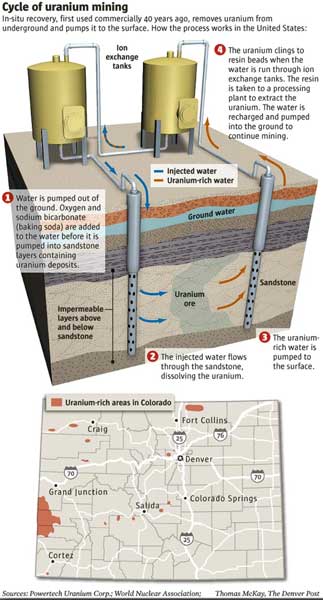
Coloradoans Against Resource Destruction (C.A.R.D.) filed an appeal with the EPA alleging the regulatory agency didn’t look at Powertech pump tests from 2008 before issuing a permit to allow another pump test out of the Upper Fox Hills Formation to collect hydrogeologic information needed to ultimately approve the Centennial project. The proposed mine is about 15 miles northeast of Fort Collins. C.A.R.D. insists those tests will reveal the true integrity of the underground layers that separate the Upper Fox Hills Formation — which contains uranium, radium, antimony and iron exceeding federal water quality standards — from the overlying Laramie Formation, which doesn’t contain unsafe levels of minerals and is used as a source of drinking water. The in-situ leach mining process of extracting uranium uses large quantities of water, which then must be reclaimed. “While on the surface the permit appeared complete, a detailed review showed that critical information was lacking,” said Jay Davis, a C.A.R.D. co-founder whose Mustang Hollow Ranch is next to the proposed Centennial project. “As we’ve said from the beginning, we want the EPA to apply a high standard to protect our groundwater, and that includes reviewing all relevant information.”

It’s also hoped EPA review of Powertech’s 2008 tests before allowing more pump testing will reveal the extent to which thousands of uranium exploration bore holes drilled in the area in the late 1970s might have degraded the containment layers between the two water aquifers…

A Powertech attorney at the time [when Powertech filed their lawsuit against the new regulations spawned by H.B. 08-1161] told The Colorado Independent that the company’s legal challenge had nothing to do with higher costs. “If you want to narrow it down, it’s a resource issue in terms of utilizing more water resources to make sure that you meet the mandate and bring water quality back to background or better, which is what the rule states, and of course that’s what the legislation states,” said John Fognani of Fognani and Fought law firm. “At the end of the day it’s really the water resource issue.”

More Powertech coverage here and here. More nuclear coverage here and here.

Snowpack news

A picture named snowpackreservoirstorage01012011nrcs.jpg

Here’s a release from the Natural Resources Conservation Service (Mike Gillespie):

Although recent weather conditions across lower elevations may appear to be dry, Colorado’s high country has received above normal snowfall this winter in most basins. According to the latest snow surveys, conducted by the USDA-Natural Resources Conservation Service (NRCS), Colorado’s snowpack is well ahead of the long-term average. In addition, the current snowpack far exceeds that measured last year at this same time in most basins. As of January 1, Colorado’s statewide snowpack was 136% of average and was 159% of last year’s readings, according to Allen Green, State Conservationist, with the NRCS. This is the highest January 1 snowpack measured since 1997, when the state boasted an overall snowpack of 160% of average.

For portions of the state, this season’s snowpack began building slowly. Accumulations across southern Colorado were at disappointing levels just a few weeks ago. With the San Juan, Animas, Dolores, and San Miguel basins at only 57 percent of average back on December 16, 2010, it appeared that southern Colorado would be facing a dry winter which would have been a major concern for water users in those areas. Then, the Pacific storm track shifted further south and brought a series of moisture laden storms across California and the southern tier of states. In a matter of just a couple of weeks, snowpack percentages increased from well below average to well above average across southern Colorado. In the San Juan, Animas, Dolores, and San Miguel basins, snowpack percentages increased to 140 percent of average by December 31. At one automated snow measuring site (SNOTEL) on Coal Bank Pass north of Durango, these storms delivered an additional 16.7 inches of liquid water equivalent. The snow depth at this site increased by 78 inches during these storms.

Although northern Colorado didn’t benefit from the December storms as much as the southern basins, the storm track has been much more consistent and productive throughout the season. Snowpack totals in these basins are consistently above average, ranging from 126 percent of average in the South Platte Basin, to 147 percent of average in both the Colorado and North Platte basins.

The current snowpack far exceeds that measured last year in all of the state’s major river basins. This is especially true across northern Colorado where this year’s snowpack has almost doubled last year’s readings on January 1. “This is a welcome start to the year for Colorado’s water users, and we’re hoping these conditions remain with us for the next few months”, said Green.

Reservoir storage remains in good condition across most of the state. Only the Rio Grande Basin has dipped significantly below average for this time of year.

[Click on the thumbnail graphic above and to the right for a table of] Colorado’s snowpack and reservoir storage as of January 1, 2011.

This post is number 4,000 since I switched to WordPress on February 12, 2009. I think that it is fitting that it turned out to be a snowpack post.

Thanks to all you readers. Your kind encouragement keeps me going.

Energy policy — hydroelectric: Is there micro-hydroelectric potential in Telluride?

A picture named microhydroelectricplant.jpg

From The Telluride Daily Planet (Katie Klingsporn):

The town plans to complete two micro-hydro projects in 2011. One is a feasibility study of its wastewater and water systems to determine if there are opportunities to install turbines in the town’s existing structures. The other entails installing a discharge monitoring station upstream of the Jud Wiebe Bridge to obtain data necessary in determining the financial feasibility and environmental impacts of a micro-hydro project at Stillwell Tunnel.

The town has identified two other micro-hydro projects it would like to investigate — a project at the yet-constructed Pandora water treatment plant and a power purchase from the Bridal Veil power station — and hopes to get to those a year or so down the line. A work plan drawn up by public works project manager Karen Guglielmone details the projects…

[Mayor Stu Fraser] said the hydrology studies need to happen before the town goes out looking for grants to fund the actual installations.

The first project involves looking for opportunities for micro-hydro in the town’s existing water plant and wastewater treatment plant. Fraser said this will involve determining if the town can insert mini micro-hydro turbines into pressure release valves. This could represent easy and relatively cheap opportunities for the town, because it already owns the infrastructure.

The second project will accomplish a recommendation that came out of the 2009 Stillwell Micro-Hydro Feasibility Study — installing a discharge monitoring station up-stream of the Jud Wiebe Bridge. The goal is twofold: to determine if a project would dry up a portion of Cornet Creek and Cornet Falls during part of the year, and to determine information necessary for a cost-benefit analysis.

More hydroelectric coverage here and here.

Arkansas River Valley: Test bed for water transfers

A picture named rockyfordditch.jpg

From The Pueblo Chieftain (Chris Woodka):

Most methods of alternative water transfer listed in a draft state report has real-life examples in the Arkansas River basin. The basin also has served as a proving ground to measure the effects of permanent sales of water rights from farms to cities. The state has funded $1.5 million in studies to look at alternatives to the buy-and-dry deals of the past. Included in those studies were reports that looked at legal and technical issues for the Arkansas Valley Super Ditch by the Lower Arkansas Valley Water Conservancy District ($349,650) and a similar plan by the High Line Canal to market water ($70,000). Also in the mix was an $80,000 study by Colorado State University to look at the costs of bringing fallowed ground back into production. Reading through the draft report, it’s apparent the Arkansas Valley’s history has textbook examples of new alternatives.

– Interruptible supply agreements, where cities make arrangements to use agricultural water supplies in dry times, were pioneered by Aurora and the High Line Canal in 2004-05.

– Rotational fallowing agreements, which would provide water on a routine basis by drying up some acreage, are being suggested by the Super Ditch.

– Water banks were first tried in the Arkansas Valley in 2003, under the sponsorship of the Southeastern Colorado Water Conservancy District. While that pilot program had limited use, the concept is seen as an answer to protecting water supplies against downstream calls in the Colorado River basin.

– Purchase and lease-back agreements are being used by the Pueblo Board of Water Works on the Bessemer Ditch and Tri-State on the Amity Canal. In both cases, the water rights have been purchased, but the water is still being used by farmers.

Another idea being tested under the state grant program is changing irrigation practices to reduce the water needs of crops, either by improved efficiency of irrigation, which would reduce waste of water, or by reducing the actual consumptive use, which could lead to marketable water.

More coverage from Chris Woodka writing for The Pueblo Chieftain. From the article:

State water leaders will continue to wrestle with the central question of future water development in 2011: How will water be provided to new residents without sacrificing agriculture? The question has preoccupied the water community for nearly a decade, after the historic drought of 2002 showed water supplies were not sufficient to maintain the current landscape of farms, lawns and wildlife habitat…

Soon after, in 2004, the Colorado Water Conservation Board developed the Statewide Water Supply Initiative that identified how much agricultural water would have to be converted to municipal use to meet the needs of growing urban population…

The Interbasin Compact Committee formed in 2005 to attempt to deliver a framework that would make water transfers less damaging. The 27-member panel was formed by a “grass-roots” process that included representatives from nine basin roundtables. Early last year, the IBCC was charged by Gov. Bill Ritter to accelerate its discussions. Last month, the IBCC delivered its report to Ritter and Gov.-elect John Hickenlooper that looked at solutions beyond simply drying up farms through purchases by urban water users…

Hickenlooper has named John Stulp, a Lamar farmer and rancher who was Ritter’s agriculture commissioner, to head the IBCC as part of his duties as special adviser for water policy. The roundtables will begin considering how that approach could be implemented beginning this month. A summit of roundtables is planned in Denver on March 3 to give all of the 300-or-so roundtable members from throughout the state a chance to comment.

In the meantime, the CWCB is anticipating completion of a series of technical reports. The reports look at updating numbers for municipal water use, alternative ways of using ag water to meet urban demands, agricultural demand and nonconsumptive needs for wildlife, recreation and the environment.

More Arkansas River basin coverage here.

Rocky Ford: Arkansas Valley Farm-Ranch-Water Symposium and Trade Show will be February 3

A picture named arkansasriverbasin.jpg

From The Pueblo Chieftain:

The seventh annual Arkansas Valley Farm-Ranch-Water Symposium and Trade Show will be Feb. 3 at the Gobin Community Building in Rocky Ford. Local food production, organic agriculture and other farm-related topics will highlight the daylong event, which is sponsored by Colorado State University Extension, the City of Rocky Ford, Lower Arkansas Valley Water Conservancy District, Farm Service Agency and the Natural Resources Conservation Service…

Registration begins at 8 a.m. The program will begin at 8:30 a.m. Early registration is $20 per person or $30 per couple before Jan. 28, and $25 and $35 after Jan. 28. Student registration is $5. For information, contact the CSU Extension office in Rocky Ford at 719-254-7608, Emily Lockard at 719-583-6566 or the website.

More Arkansas River basin coverage here.

Snowpack news

A picture named snowpackcolorado01072011

From the Aspen Daily News (Brent Gardner-Smith):

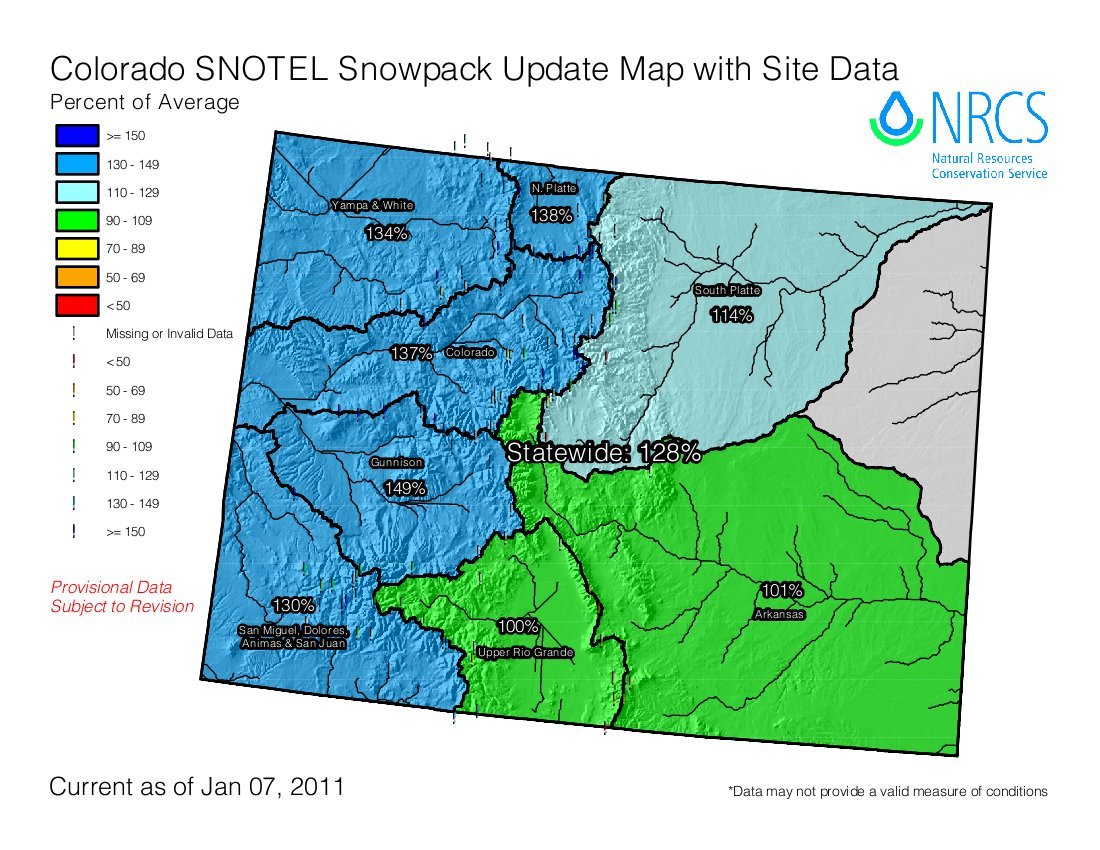
Friday Jan. 7, the local snowpack had dropped slightly to 138 percent of average for the Roaring Fork basin, despite light snow falling throughout the first week of the year. The snowpack at the NRCS measuring station on Independence Pass Friday showed the snowpack there was at 126 percent of average, while the McClure Pass station showed 146 percent of average and the Ivanhoe station in the upper Fryingpan River valley showed it was at 128 percent of average. On the upper valley’s four ski areas, the Aspen Highlands ski patrol is reporting that snow depths at Cloud Nine are 150 percent of the 30-year average. At the Snowmass Ski Area, snowfall from Oct. 1 to Dec. 31 was 124 percent of average, as the area has recorded 152 inches of snow against the 122-inch average. December alone at Snowmass was 142 percent above average, as 67 inches fell against the 47-inch average…

As of Jan. 1, Colorado’s statewide snowpack was 136 percent of average and 159 percent of last year’s readings, according to the NRCS, making it the highest Jan. 1 snowpack since 1997, when statewide it was at 160 percent…

Southern Colorado was at 57 percent of average until mid-December, when wet storms then quickly boosted the snowpack in the combined San Miguel, Dolores, Animas and San Juan rivers basins to 144 percent of average on New Year’s Day. As of Friday, the Dolores River basin snowpack was 119 percent above average, the San Juan River basin was at 118 percent and the Animas River basin was at 132 percent of average. In the northern part of the state, the Yampa and White River basins were at a combined 136 percent of average. The snowpack in the Gunnison River basin was 149 percent of average Friday. The snowpack in the entire Colorado River basin above Lake Powell on Thursday was at 140 percent of the long-term average.

Stormwater: Boxelder Basin Regional Stormwater Authority update

A picture named boxeldercreekatershed.jpg

From the North Forty News (Cherry Solokoski):

The Boxelder Authority board voted at its Dec. 16 meeting to make recommendations involving both the fee area and rate brackets for the project. The board wants to expand the fee area to include an additional 554 homes. Partly because of the added properties, the authority foresees lower fees for 2011. In the unincorporated county, the lower fees would be reflected in 2012 bills, since the county bills in arrears. To accommodate the lower fees, the authority board is also requesting a change in fee brackets. In the original IGA, the board was allowed to charge between 3 and 4 cents per square foot of impervious surface. The suggested new bracket would put fees between 2 and 4 cents.

Fort Collins, Wellington and Larimer County must agree on any changes to the Boxelder Stormwater IGA. Authority manager Rex Burns said the proposed changes will be sent to all three entities by mid-January…

According to Burns, the board is also recommending credits for some properties whose runoff is captured by irrigation reservoirs. The “thumb” area near the Windsor #8 reservoir will likely be credited 100 percent, he said, but it will still remain within the fee area.

The proposal to expand the Boxelder fee area is not popular with everyone. The law firm Lawrence Jones Custer Grasmick LLP, acting on behalf of James Fry and Richard Seaworth, submitted a letter to Larimer County, Fort Collins and Wellington on Dec. 16, asking them to “resist any proposed expansion of the Authority’s fee area.” Fry and Seaworth also want the “thumb” area taken out of the fee area. The letter asks that the power of the Boxelder Authority be “sharply curtailed,” arguing that “the Authority’s ambitions have exceeded the public mandate supporting it.” The letter states that “the upstream rural property owners receive no discernable benefit, and serve only as a source of funding for improvements benefitting the downstream properties.”[…]

In the meantime, construction plans for the Boxelder improvements are moving ahead. It is expected that most Phase I work will be completed by the end of 2011. Besides enlarging Clark Reservoir, work will include widening the Inlet Canal flowing into Clark Reservoir and building a new bridge over the canal.

More stormwater coverage here and here.

Energy policy — nuclear: Does the CPDHE license for the proposed Piñon Ridge mill signal that Colorado is open for business for uranium mining and processing?

A picture named uraniuminsitu.jpg

From the Fort Collins Coloradoan (Bobby Magill):

Critics of the [Powertech Centennial Project] said Thursday the Western Slope mill approval says little about how the state might approach its review of the Centennial Project…

Powertech’s uranium mining and processing method [in situ leach mining] would be different than the conventional hard-rock uranium mining and milling that may occur in Montrose County. At the Centennial Project, Powertech proposes to use a baking soda-like solution to dissolve the uranium underground, pump it to the surface and process it on site. “It’s up to us to lay out a responsible and clear guideline of what we’re going to be doing there so the agency can review it and determine a positive result,” Powertech USA President Richard Clement said Thursday. “The companies who understand the resources know there are clear guidelines they have to follow to get permits and licenses. As long as you follow those guidelines, then you will be successful.”[…]

Environmentalists said the approval doesn’t mean the state won’t scrutinize the Centennial Project carefully before permitting it. “I think it’s fair to say that the state is not opposed to uranium mining, so they’re going to make judgments on a case-by-case basis,” said Matt Garrington of Environment Colorado. He said the state’s approval of the mill might signal to other uranium mining companies that Colorado’s door is open for uranium extraction.

More nuclear coverage here and here.

Southern Delivery System: Update for contract negotiations between Reclamation and Colorado Springs Utilities

A picture named sdspreferredalternative.jpg

From The Colorado Springs Gazette (Daniel Chaćon):

“There’s a couple of points they’re trying to work out and get clarified with the bureau,” Mayor Lionel Rivera said Friday. The mayor declined to elaborate on those sticking points because of ongoing discussions.

More Southern Delivery System coverage here and here.

2011 Colorado legislation: State Representative Jerry Sonnenburg talks water in Sterling

A picture named northsterlingreservoir.jpg

From the Sterling Journal Advocate (Callie Jones):

“Over the last two years, we have allowed over 500,000 acre feet of water leave this state over and above our compact obligations on the South Platte,” Sonnenberg said. “That`s enough to fill Jackson Reservoir, North Sterling Reservoir and Jumbo Reservoir three times.” He wants to do what he can to make sure there is water available with loans and grants for water projects. “Small water projects, water quality projects, water storage projects, those type of things,” Sonnenberg said.

One option they`re looking at for water storage is expanding existing water facilities. “Unfortunately, the problem is, is there is so much negative pressure of people not wanting storage,” he said. “We`re looking at that and trying to get that to happen and those are projects that I will try to move to the top of the list for funding for grants and loan proposals.”

Sonnenberg said if something isn`t done about water storage, it puts this area at risk of losing it to larger cities. “If we don`t find a way to store water, keep water here in northeastern Colorado for us to use, we`re going to have that big red target and cities will come here to get that water,” he said.

More South Platte River basin coverage here.

Gunnison River basin: CPDHE orders U.S. Energy Corp. to clean up water from the Mt. Emmons mine

A picture named mountemmons.jpg

From The Denver Post (Bruce Finley):

A Colorado Department of Public Health and Environment “compliance advisory” orders site owner U.S. Energy Corp. to clean up the contamination at the Mount Emmons mine near Crested Butte.
But a watchdog group says mining regulators have not collected required bond money from the company to guarantee a cleanup if U.S. Energy can’t do the job.

“We’re doing everything in our power to comply with all regulations. We certainly want to do everything we can to keep the drinking water as safe as we can,” U.S. Energy chief executive Keith Larsen said. “We’re addressing the issues. It’s not our obligation to get it out of the creek. It is our obligation to treat water as it comes out of the mine.”

The contamination documented by state water-quality inspectors complicates a case where state mining regulators already have granted U.S. Energy a prospecting permit to work one of the world’s largest and purest known deposits of molybdenum.

More Gunnison River basin coverage here.

‘Managing Custer County’s Water’ conference January 15

A picture named wetmountainvalley.jpg

From the Wet Mountain Tribune (Nora Drenner):

The free conference sponsored by the Custer County Conservation District and Natural Resources and Conservation Service offices, as well as the Custer County commissioners, will be held Saturday, Jan. 15, from 9 a.m. to 2 p.m. in Hope Lutheran Church’s fellowship hall…

Guest speakers will include Steve Witte and Steve Kastner from the Division Two State Water Engineers office in Pueblo, and Upper Arkansas Water Conservancy District board president Glenn Everett among many others. Topics will include a review of Custer County’s water resources, management of that water, water uses, state water law, water augmentation, and a history of the Upper Arkansas Water Conservancy District.

More Custer County coverage here and here.

2011 Colorado legislation: Continuous groundwater monitoring around hydraulic fracturing sites?

A picture named marcellushydraulicfracturing.jpg

From the Glenwood Springs Post Independent (John Stroud):

Legislation aimed at developing a high-tech method for continuous water quality monitoring around natural gas frac’ing operations is among the bills state Rep.-elect Roger Wilson plans to introduce when he takes the House District 61 seat in the Colorado Legislature next week. The focus of the ground-water monitoring bill will be to create a demonstration project in cooperation with the state’s universities to do ongoing, real-time monitoring using electronic sensor networks around well sites, the Glenwood Springs Democrat said this week as he prepares to be sworn into office on Jan. 12. “Rather than having individuals conducting infrequent sampling, the idea is to use inexpensive, widely deployed sensor networks to do the monitoring on an ongoing basis,” Wilson said.

More 2011 Colorado legislation coverage here. More oil and gas coverage here and here.

Snowpack news: Is spring flooding in the forecast?

A picture named snowpackcolorado01072011

From The Denver Post (Tom McGhee):

Snow in some basins, particularly those in northern Colorado, was almost double last year’s readings on Jan. 1, according to the Natural Resources Conservation Service snow survey office. Statewide snowpack is 159 percent of last year’s Jan. 1 readings and 136 percent of the 30-year average, according to the snow survey office.
State officials say it is too early to predict the runoff levels that typically crest in late May and early June. “It depends on how the weather patterns are entering the spring. We don’t see (major) flooding in most years, but it is not uncommon to see some minor flooding,” said Mike Gillespie, snow-survey supervisor of the U.S. Department of Agriculture’s NRCS…

If the snowpack remains high into February, officials of the Colorado Water Conservation Board will reach out to local emergency managers in vulnerable areas, said Kevin Houck, engineer with the board’s flood mitigation section.
“We may work with them as the season goes on, if appropriate,” he said. “You can’t stop flooding from coming; the only thing you can do is be as prepared as you can.”

Meanwhile, you can download the NRCS’ January 11, 2010 Colorado Basin Outlook Report here. So far runoff looks good due to the great early season snowpack. Reservoir storage is at last year’s levels or better most everywhere.

Energy policy — nuclear: First new uranium mill in the U.S. in 25 years gets the go ahead from the Colorado Department of Public Health and Environment

A picture named doloresrivercanyon.jpg

From The Telluride Daily Planet (Katie Klingsporn):

The progress of the mill has been followed with fervid interest here since the early stages of its application, and Wednesday’s news evoked a mix of elation — from supporters who see in it the promise of jobs — and grim disappointment — from opponents who believe a uranium mill will bring devastation to the environment and health of the region.

But in the offices of Energy Fuels Inc., the Canadian company that proposes to build the mill, the mood was one of joy. “We’re extremely pleased and we feel like the decision substantiates the case we’ve worked so hard to make for the last couple of years,” said Gary Steele, senior vice president of corporate marketing at Energy Fuels. “We look forward to moving our project ahead.” Steele said the company still needs to secure investments and tie up a few loose ends. But if all goes well, Energy Fuels hopes to have the mill up and running in the first half of 2012, he said.

The license, which was granted by the Colorado Department of Public Health and Environment, permits Energy Fuels to construct a uranium/vanadium mill roughly 12 miles west of Naturita in Paradox Valley — a lonely and wind-scoured valley where redrock walls rise to the sky and the Dolores River flows. The mill, which would sit on a site that is roughly 17 acres, could process up to 500 tons of materials per day. As planned, the facility would run 24 hours a day, almost every day of the year, with up to 85 employees, Energy Fuels has said…

On Wednesday, Hilary White, SMA’s executive director, said the state ignored crucial information and overlooked holes in the applicant’s application. “We’re of course extremely disappointed,” she said. “We feel this was a rushed decision, and we feel that the state chose to ignore hundreds of pages of comments submitted by scientific and technical experts expressing concerns about the impacts…” Sheep Mountain funded a position on its staff to research the mill and fight the application. White said Energy Fuels lacks adequate plans to address an emergency and its plan to contain radioactive waste doesn’t meet state standards. And while the decision comes with conditions, White called them insufficient. A report commissioned by SMA also argued that the mill will actually do further damage to the region’s already hobbled economy…

Historically, the west ends of Montrose and San Miguel counties boomed with mining activity. Ore from the area went toward the Manhattan Project, and the culture of mining is deeply imbedded in the communities. Naturita’s Tammy Sutherland, who watched her family make a living off of the mining companies during a childhood in the West End, said the news felt like victory. “We’re more than thrilled,” she said. “It’s something this country needs, this area needs … We’re all pretty excited.”

From the Montrose Daily Press (Katharhynn Heidelberg):

In 2009, Montrose County commissioners approved a special-use permit that allows the mill to be sited in an area zoned for general agriculture.

More Pinon Ridge Mill coverage here. More nuclear coverage here and here.

Boulder County completes the cleanup of the Argo Mine

A picture named lefthandcreekwatershedcleanup.jpg

From the Longmont Times-Call (John Fryar):

The onetime gold and fluorspar mine is about 1.5 miles northwest of Jamestown. It’s on a 13.7-acre parcel the county acquired for $70,000 in December 2000 to preserve as open space and to prevent future mining or development on the property. While a county historical survey indicated that the Argo Mine was originally developed in 1875, there’s not known to have been any active mining there since the late 1950s or early 1960s. However, waterborne contaminants from the mine and its piles of waste rock have been found to be loading copper, iron, lead, zinc and magnesium into Little James Creek…

Little James Creek converges with James Creek, with their waters eventually flowing into Lefthand Creek. Lefthand Creek, in turn, is one of the sources of water the Left Hand Water District provides to about 18,000 residents and agricultural producers in unincorporated Boulder County, including drinking water for areas such as Niwot. But Left Hand Water District general manager Kathy Peterson and Glenn Patterson, watershed coordinator for the Lefthand Watershed Oversight Group, both said in interviews that the Argo Mine pollutants weren’t an immediate threat to the safety of the drinking water that’s treated and distributed downstream…

A more important reason for the Argo Mine cleanup, Patterson said, was to help improve Little James Creek’s own stream health and its ability to support aquatic life…

[Barry Shook, the Boulder County Parks and Open Space Department’s coordinator of the project] and EPA officials said the cleanup work took the mine’s waste rock, mixed it with fly ash, cement and water, and stowed that paste mixture inside the old mine’s central cavern, or “stope.” The next step, Shook said, was reclaiming the sites where the waste rock had come from. One of the rock piles was graded and capped with 18 inches of topsoil, officials said. Shook said that elsewhere, about 8 inches of topsoil was spread over areas that were disturbed when waste rock was removed. The topsoil areas were then seeded and mulched, and Shook said that “we’re waiting for a good winter of snow so that the seeds out there germinate.”[…]

Shook and EPA officials said removal of the waste rock and the closing of the cavernous stope will make the property itself safer if Boulder County opens the property to hikers or other public uses. EPA officials said removal of the piles of mine tailings means they’ll no longer be in direct contact with water or exposed to surface water runoffs and drainage. Also, entombing the mine tailings in concrete reduces their exposure to groundwater.

More restoration coverage here.

Wastewater: Treated Biosolids Safe for Agricultural Uses

A picture named biosolidsideslinger.jpg

Here’s the release from the University of Arizona (Jeff Harrison):

A newly published report from a University of Arizona research group says biosolids, properly treated, pose little if any health risk to the public. The study, “Pathogens in Biosolids: Are They Safe?,” is online in the Journal of Environmental Quality.

Ian L. Pepper, director of the NSF Water and Environmental Technology Center and a professor of soil, water and environmental science, or SWES, at the UA, led the study, a 19-year analysis tracking pathogens in biosolids from the wastewater stream in Tucson, Ariz. The study also included current data from 18 other wastewater treatment plants across the country.

The study’s co-authors include another SWES professor, Charles P. Gerba, as well as researchers from the U.S. Department of Agriculture, Loma Linda University and Drexel University. The study is the first of its kind since current federal regulations, specifically the Environmental Protection Agency’s Part 503 Rule, for wastewater treatment began in 1993.

The Part 503 Rule governs how wastewater is treated in order to maintain public and environmental safety.

Most people in the U.S. live in communities where raw sewage is treated at wastewater facilities. Biosolids, the end product of the treatment process, have a broad range of uses in agriculture, from fertilizing agricultural fields and woodlands to lawns and gardens. Biosolids fall into two categories, Class A and Class B. Both use a combination of processes to kill pathogens including heating, composting, anaerobic digestion or changing pH levels.

Class A biosolids are those that have been treated to the point where pathogens are undetectable and there are no restrictions on their use as fertilizer. Standards for Class B biosolids are less stringent and have small but measurable levels of bacteria and come with restrictions on how they can be used on crop plants, grazing livestock and human exposure.

Pepper said one big question has been what kind and how many human pathogens are found in Class B biosolids. He said the study analyzed data prior to and after 1993, when the Part 503 rule took effect in order to determine the impact of regulations.

The study, Pepper said, showed that concentrations of fecal coliform bacteria and viruses are actually lower than 1993 levels. It also showed that between 94 and 99 percent of pathogens are eliminated by wastewater treatment, crediting treatment in reducing pathogen loads.

“Further, the fact that pathogen levels are lower now than in the 1980s shows that the Part 503 Rule has been effective in reducing public exposure to pathogens relative to 25 years ago,” he said.

The study suggests that levels of some enteric viruses, the bacteria Salmonella and Ascaris ova, or roundworm eggs, in the U.S. are low in Class B biosolids that are treated by anaerobic digestion. Pepper and his colleagues also found no Campylobacter or E. coli bacteria in their tests.

Other studies suggest that Class B biosolids also are treated further simply by exposure to sunlight, wind, heat and soil microbes as they are distributed as fertilizer. Using biosolids as fertilizer also is a more ecologically sound approach to their disposal than either taking up space in landfills or polluting air and water through incineration.

The UA Water and Environmental Technology Center has gained a nationwide reputation for research on biosolids by providing data on human exposure to microbial pathogens, allowing for risk assessments on potential adverse effects of pathogens on human health and welfare.

Thanks to Science Daily for the link.

More wastewater coverage here and here.

2010 Colorado gubernatorial election transition: John Stulp will lead the Interbasin Compact Committee

A picture named ibccroundtable.jpg

The Pueblo Chieftain editorial board gives Governor-elect Hickenlooper a thumbs up for tapping John Stulp and John Salazar. From the editorial:

…Gov.-elect John Hickenlooper has named Mr. Stulp to the important position as chairman of the Interbasin Compact Committee, which has been developing plans on how to use the state’s limited water resources. As Mr. Stulp noted this week, “Water has always been a critical part of Colorado’s quality of life.”

More 2010 Colorado elections coverage here.
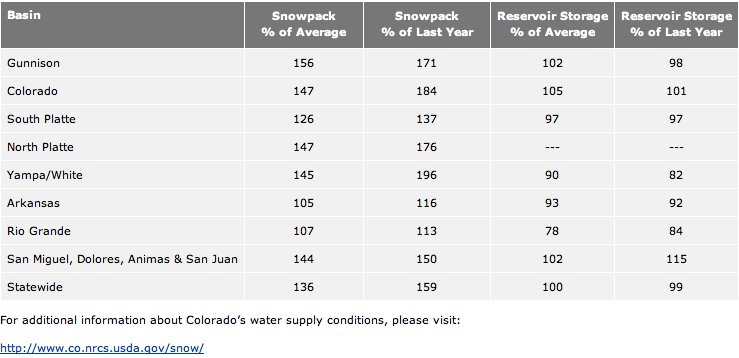
Energy policy — nuclear: Coloradoans Against Resource Destruction files petition with EPA over the agency’s decision to grant Powertech an aquifer pumping test permit

A picture named uraniuminsitu.jpg

Here’s the release from Coloradoans Against Resource Destruction.

Coloradoans Against Resource Destruction (CARD) filed a Petition for Review with the Environmental Protection Agency’s Environmental Appeals Board in Washington, D.C. The petition appeals the December 3, 2010 decision by the EPA’s Region 8 office to issue a final Class V Underground Injection Control permit to Powertech (USA) Inc.

The permit is required for the reinjection of water that would first be pumped out of the Upper Fox Hills Formation during a proposed aquifer pump test. The purpose of the pump test is to collect data on the hydrogeologic characteristics of the aquifer including the integrity of confining layers that isolate the Fox Hills aquifer from the overlying Laramie Formation, which serves as an underground source of drinking water. The data would be used to prepare permit applications for the proposed Centennial in-situ leach uranium mining project.

The integrity of the confining layers is critical because the groundwater in the Upper Fox Hills Formation contains concentrations of uranium, radium, antimony and iron that exceed federal water quality standards. The groundwater in the overlying Laramie Formation does not exceed these water quality standards.

The Appeal alleges that EPA was required to request from Powertech and review existing relevant information from previous pump tests performed by Powertech. The previous pump tests were conducted as recent as 2008 in the same geologic formation, one as close as 500 feet from the currently proposed injection well. This prior pump test data could show the extent of the confinement of the aquifers, including the effect of the thousands of historic (late 1970’s) uranium exploration bore-holes drilled in the direct vicinity. As detailed in the appeal, some of these historic bore-holes have been documented as improperly sealed and abandoned, raising concerns of cross-contamination of the aquifers which could be exacerbated by the pump test and injection activities.

“While on the surface the permit appeared complete, a detailed review showed that critical information was lacking,” observed Jay Davis, whose Mustang Hollow Ranch is located adjacent to the proposed Centennial project area, and a co-founder of CARD. “As we’ve said from the beginning, we want the EPA to apply a high standard to protect our groundwater, and that includes reviewing all relevant information.”

Powertech filed its permit application with the EPA on April 30, 2009. Because the first draft permit, issued on June 15, 2009, contained errors, a second draft permit was issued on November 20, 2009. The public comment period for the second draft permit ran from November 20 through December 24, 2009.

After extensive public comments were submitted, EPA did not issue the final permit until December 3, 2010. The permit would have become effective as of January 3 if no appeal had been filed.

The Environmental Appeals Board, which is part of the EPA but is established to provide independent review of permitting and other decisions, will decide whether or not it will review C.A.R.D.’s appeal. In the meantime, the permit is stayed. The board has several options; it can deny review, it can send the permit back to Region 8 for modification, or it can overturn Region 8 and deny the permit. Board decisions are subject to judicial review in federal court.

“Powertech has failed to provide and EPA has failed to review necessary and available information regarding the condition of the confining layers in the aquifer and the condition of improperly abandoned historic drill holes in the immediate area” explains Jeff Parsons, senior attorney with the Western Mining Action Project who filed the appeal on behalf of C.A.R.D. “It is critical that all relevant information be incorporated into any permit that will allow groundwater injection of fluids with levels of radioactive uranium and radium, along with antimony and iron, in excess of water quality standards” notes Parsons.

“Powertech and the EPA committed to adhering to the highest standard in protecting groundwater quality and this permit falls short” stated Ken Tarbett, nearest neighboring resident and owner of the closest domestic well due west of the proposed aquifer pump test site. “Not unlike Powertech’s decision to sue over groundwater protections at the state level, it appears this company is unwilling or incapable of living up to their repeated promises to do everything necessary to protect local water supplies.”

“Groundwater supplies in Northern Colorado and Weld County serve as the economic lifeblood of our region and are far too precious to risk” contends Tarbett, “My family and livestock depend on our well for clean water and we’re depending on the Environmental Protection Agency and the Environmental Appeals Board to protect our water resources.

The appeal petition can be viewed and downloaded from the Environmental Appeals Board’s Active Dockets page.

More coverage from Monte Whaley writing for The Denver Post. From the article:

The petition appeals a Dec. 3 decision by the Environmental Protection Agency’s Region 8 office in Denver to issue an underground injection-control permit for the proposed in-situ operation near Nunn in Weld County. The filing of the appeal stays the permit and keeps Powertech Inc. — developer of the Centennial Project uranium mine — from reinjecting groundwater from an aquifer-pump test at the site, according to CARD…

The appeal claims the EPA failed to gather relevant information from pump tests performed by Powertech in 2008 in the same geologic formation, one as close as 500 feet from the currently proposed injection well. Some of those bore holes have been documented as improperly sealed, raising concerns of cross-contamination of the aquifers that could be exacerbated by the pump test and injection, CARD wrote.

More coverage from the Associated Press via Bloomberg. From the article:

This week, James Woodward and a group called Coloradoans Against Resource Destruction filed petitions challenging the EPA decision. CARD argues the EPA didn’t review all critical information. Meanwhile Woodward, who lives near the proposed mine site, says the permit’s conditions should be more specific so drinking water is protected.

More Powertech coverage here and here. More nuclear coverage here and here.

Snowpack/precipitation news

A picture named snowpackcolorado01062011

From the Cortez Journal (Paula Bostrom):

According to Cortez Meteorologist Jim Andrus, Saturday, Jan. 1, set a new record low temperature for that date at minus 13. The previous record was 11 degrees below zero on Jan. 1, 1991. Sunday, Jan. 2, also set a record low for that same date at a nosehair freezing 18 degrees below zero, breaking the record of minus 16 set in 1976. A third day of sub-zero temperatures continued on Monday, Jan. 3, with a temperature of minus 10, but didn’t break the record of minus 17 set way back on Jan. 3, 1937…

“This last storm on Dec. 29 through Dec. 31 brought a total of 14 inches of snow to the area,” Andrus said. Snowfall amounts for 2010 soared above the 18- to 24-inch average with a total of 77.4 inches for the entire year. Current snowpack levels for the Colorado Basin are hitting the average mark with 7.5 inches of precipitation, according to Snotel. Snowpack levels for the year 2010 were above average for the second year in a row with 17.5 inches of precipitation reported by Snotel on Lizard Head Pass between Rico and Telluride…

Precipitation amounts are taken from any rainfall and the liquid equivalent of snowfall. Overall, the region received 15.50 inches of precipitation in 2010, which is 117 percent of normal. Last year was an El Nino weather pattern, which means wetter weather, Andrus said…

Current elevation levels for McPhee Reservoir are looking good so far, according to Ken Curtis, an engineer with the Dolores Water Conservancy District. As of Monday, McPhee had a water elevation level of 6,897.69, which is about 5 percent higher than average for this time of year.

Arctic sea ice falls to third-lowest extent; downward trend persists

A picture named arcticseaiceseptember2010

Here’s the release from the National Snow and Ice Data Center (Katherine Leitzell):

This September, Arctic sea ice extent was the third-lowest in the satellite record, falling below the extent reached last summer. The lowest- and second-lowest extents occurred in 2007 and 2008. Satellite data indicate that Arctic sea ice is continuing a long-term decline, and remains younger and thinner than it was in previous decades.
“All indications are that sea ice will continue to decline over the next several decades,” said NSIDC Director Mark Serreze. “We are still looking at a seasonally ice-free Arctic in twenty to thirty years.”

Over the summer of 2010, weather and ocean conditions in the Arctic ranged from warm and calm to stormy and cool. Overall, weather conditions were not extremely favorable to melt, but ice loss proceeded at a rapid pace. NSIDC Scientist Julienne Stroeve said, “Sea surface temperatures were warmer than normal this summer, but not as warm as the last three years. Even so, the 2010 minimum rivaled that in 2008—this suggests that other factors played a more dominant role.”

The amount of old, thick ice in the Arctic continues to decline, making the ice pack increasingly vulnerable to melt in future summers. While there was an increase this year in second and third year ice, which could potentially thicken over the next few years, the oldest and generally thickest ice (five years or older) has now disappeared almost entirely from the Arctic. This September, less than 60,000 square kilometers (23,000 square miles) of five-year-old or older ice remained in the Arctic Basin. In the 1980s an average of 2 million square kilometers (722,000 square miles) of old ice remained at the end of summer. “While the total coverage of multiyear ice is the third lowest on record, the amount of younger multiyear ice has rebounded somewhat over the last two years. A key question is whether this ice will continue to survive over the next couple of summers, perhaps slowing the overall decline in multiyear ice area,” said James Maslanik, a research professor in the Department of Aerospace Engineering Sciences at the University of Colorado, who provided the ice age data.

Arctic sea ice extent on September 19, the lowest point this year, was 4.60 million square kilometers (1.78 million square miles). Averaged over the month of September, ice extent was 4.90 million square kilometers (1.89 million square miles) (Figure 1). This places 2010 as the third lowest ice extent both for the daily minimum extent and the monthly average. Ice extent fell below 2009 and was only slightly above 2008.

After September 10, ice extent started to climb, apparently signaling the end of the melt season. However, uncharacteristically, it then declined again, until September 19. “The late-season turnaround indicates that the ice cover is thin and loosely packed—which makes the ice more vulnerable both to winds and to melting,” said Walt Meier, NSIDC research scientist.

Arctic sea ice follows an annual cycle of melting and refreezing, melting through the warm summer months and refreezing through autumn and winter. Sea ice reflects sunlight, keeping the Arctic region cool and moderating global climate. While Arctic sea ice extent varies from year to year because of changeable atmospheric and ocean conditions, ice extent at the end of the melt season has shown a significant overall decline over the past thirty years. During this time, September ice extent has declined at a rate of 11.5 percent per decade during September (relative to the 1979 to 2000 average), and about 3 percent per decade in the winter months.

More Information

For further analysis and images, please see the related October post on Arctic Sea Ice News & Analysis Web site (http://nsidc.org/arcticseaicenews/)

For a full listing of press resources concerning Arctic sea ice, including previous press releases and quick facts about why and how scientists study sea ice, please see “Press Resources” on the NSIDC Arctic Sea Ice News & Analysis Web page.

Here’s an animation that shows the decline in September sea ice extent over the thirty-year satellite record.

Thanks to the Summit County Citizens Voice for the link.

Central City: Water meters going in for residences, water rates to go up

A picture named wirelessmeterreadingexplained.jpg

From the Weekly Register Call/Gilpin County News (Lynn Volkens):

Following public hearings, with no one from the public speaking either for or against, the Council approved Ordinance 10-15 and 10-16. The first ordinance amends Chapter 13 of the Municipal Code to require all residential units to install water meters and all commercial units to replace water meters. Commercial meters in use now have been found to be inaccurate. The City is purchasing all of the meters at an approximate cost of $281,000. Meter installation will begin in January. Residents will be billed for half of the cost of their meters (approximately $100) by adding about $2 to the monthly billings over a four year time period. Billings will go to the monthly format beginning in January 2011. The City will pick up the other half of the residential meter cost and pay for installation. Commercial water users must pay the full cost of meter replacement and installation and will also have their payments spread out via their water bills over a four year period. Once water use is being metered, the City will be able to accurately track water usage and bill accordingly. Leaks and other problems will also be identified more easily. Residents will be responsible for maintaining the meters in good working order and should contact the City for a list of contractors who can make repairs when needed. The meters are warranted for ten years.

The second ordinance (10-16) adopts water rates and fees. The 2011 water rates reflect an increase of 20% for all water users and may increase by that much each year for the next five years. Once the data from the meters is sufficient to determine actual usage, the City may find it does not need to increase the rates that much. A tiered system will also be developed at a later date so that those who use more than the base allowance of water will have steeper payments. For 2011, the residential base-rate will be $135.50 (Senior rate, $108) per quarter (but will be billed monthly). The current quarterly rate is $112.50. The commercial base-rate for 2011 will go from the current $180 to $216. The rate increases are designed to generate approximately $59,247 in annual revenue with the result of making the Water Fund self-sufficient in five years.

Each residential or commercial unit is to have its own tap, water line and meter-i.e. there is no sharing of this equipment, although there is some provision in the code for integrated units. If the City finds multiple users, the situation will be corrected and, once the water mains are laid in the street in front of those properties, the “new” water users will have to pay for their own tap, water line and meter. Water users are responsible for repairs and maintenance of the water line from the curb or property line to the structure being served.

The City plans to send brochures to water users and hold meetings so that citizens can learn more about the meters and rates. Those meetings are tentatively scheduled for the last two Wednesdays of January and the first Wednesday in February.

More infrastructure coverage here.
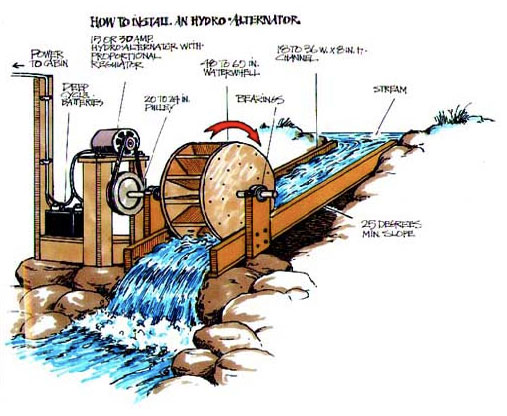
Republican River Water Conservation District board meeting January 11

A picture named republicanriverbasinbydistrict.jpg

From The Yuma Pioneer (Tony Rayl):

It will be held Thursday, January 13, at the Burlington Community and Education Center, 340 South 14th. The meeting will be from 10 a.m. to 4 p.m., with public comment at 1 p.m.
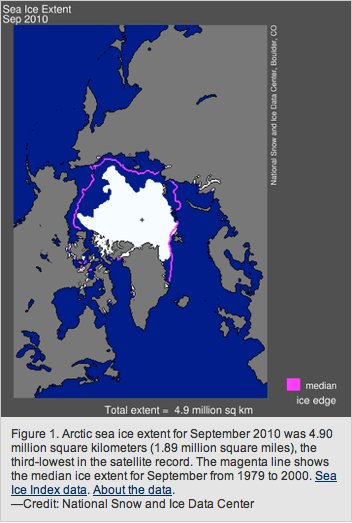
The board recently approved moving forward with the proposed compact compliance pipeline, during a special meeting in Yuma last month. It will review the pipeline schedule at the January 13 meeting, as well as hear a presentation by GEI Consultants, Inc., which is doing the pipeline for the district.

Board members will consider a potential legislative trip to Washington, D.C. They also will review and approve a notice for the position of general manager, as Stan Murphy will be retiring this year. They also will consider actions to prevent diversions by water rights that have been abandoned, look at committee assignments, receive reports on meetings and programs, and designate public places for posting notices of RRWCD meetings.

More Republican River Basin coverage here.