Energy policy — oil and gas: So far there is no evidence that hydraulic fracturing has contaminated water in Larimer or Weld counties

hydraulicfracturing.jpg

Bobby Magill has written a primer of sorts on the state of hydraulic fracturing and oil and gas exploration in northern Colorado for the Fort Collins Coloradoan. Click through and read the whole article. Here’s an excerpt:

Environmental groups and a federal advisory board, among many other residents in Colorado and across the country, are concerned about the impacts of fracking. The public outcry about fracking and the media attention it has received are the primary reason Gov. John Hickenlooper announced last week that state oil and gas regulators will develop by year’s end a rule requiring oil and gas companies to disclose the full contents of fracking fluid to the public…

Though some companies voluntarily report some of the contents of fracking fluid on the online chemical registry http://www.FracFocus.org, many of the ingredients in fracking fluid are proprietary, and the energy industry has been reluctant to divulge its contents…

…energy companies are using such chemicals to frack nearly all oil and gas wells these days, and there is not yet any evidence that fracking fluids have contaminated drinking water in Larimer County or heavily drilled Weld County, home to thousands of oil and gas wells, Colorado Oil and Gas Conservation Commission director Dave Neslin said. No water quality complaints tied to oil and gas development have been made in northern Weld or Larimer counties, he said.

Meanwhile, U.S. Senator Udall is OK with hydraulic fracturing. Here’s a report from John Colson writing for the Glenwood Springs Post Independent via the Summit Daily News. From the article:

“I believe it’s a safe technology,” said Udall. “It’s resulted in a lot of home-grown energy being produced.”

But the industry must be careful about maintaining the integrity of well-bore casings once the drilling and fracking has been completed and the gas begins to flow upward, he said. If a casing deteriorates or cracks, Udall said, the result is an increased possibility of contamination of underground water aquifers and wells. In Garfield County, locals believe that is exactly what happened when a local water well, owned by the Dietrich family, located south of Silt, was found to be contaminated by nearby drilling activities in 2004. The Colorado Oil and Gas Conservation Commission (COGCC) announced last year that, due to continued indications of contamination of area wells, it would renew investigations into the possible link between water well contamination and nearby gas drilling activity.

A separate instance of gas drilling activities polluting local waterways was the Divide Creek Seep case, also in 2004, when chemicals from the gas drilling process were found seeping into the creek. That case lead to a fine of $371,000 levied against the EnCana gas company by the COGCC, and the contamination was blamed on faulty cementing of the well-bore casing.

The New York Times reported on Aug. 3 about another case of alleged contamination of groundwater supplies by nearby fracking of gas wells. The case occurred in 1984 in West Virginia. A report on the case, according to the story, was published by the U.S. Environmental Protection Agency in 1987. “My office has contacted the EPA concerning this case and we are waiting to hear back from them,” said Udall when asked about the West Virginia case. “The bottom line is that drilling and fracking have to be done right for it to be safe.”

The Secretary of Energy Advisory Board Natural Gas Subcommittee released a draft report this week that recommends increases in regulation and greater disclosure. Here’s a report from Bob Berwyn writing for the Summit County Citizens Voice. From the article:

The report comes from the Secretary of Energy Advisory Board Natural Gas Subcommittee, which was directed by President Obama to identify any immediate steps that can improve the safety and environmental performance of shale gas drilling. One of the recommendations targets a key concern among environmental advocates by calling for full disclosure of the chemicals used in fracking.

Here’s what the report had to say about disclosure:

“The Subcommittee shares the prevailing view that the risk of fracturing fluid leakage into drinking water sources through fractures made in deep shale reservoirs is remote. Nevertheless the Subcommittee believes there is no economic or technical reason to prevent public disclosure of all chemicals in fracturing fluids, with an exception for genuinely proprietary information. While companies and regulators are moving in this direction, progress needs to be accelerated in light of public concern.”

The report acknowledges growing public concern about shale-gas impacts in this passage:

“There are serious environmental impacts underlying these concerns and these adverse environmental impacts need to be prevented, reduced and, where possible, eliminated as soon as possible. Absent effective control, public opposition will grow, thus putting continued production at risk. Moreover, with anticipated increase in U.S. hydraulically fractured wells, if effective environmental action is not taken today, the potential environmental consequences will grow to a point that the country will be faced a more serious problem. Effective action requires both strong regulation and a shale gas industry in which all participating companies are committed to continuous improvement.”

The report also calls for a reduction in the use of diesel fuel, explaining that there is no technical or economic reason to use diesel fuel in shale gas production, and that diesel engines for surface power should be replaced with natural gas engines or electricity where available.

Finally, the report was received with cautious optimism by Colorado U.S. Representatives Jared Polis and Diana DeGette, according to this report from David O. Williams writing for the Colorado Independent. From the article:

“The subcommittee’s recommendations and its acknowledgement that changes need to be made are certainly a step in the right direction,” said U.S. Rep. Jared Polis, D-Boulder. “However, until legal shortcomings are fixed and voluntary recommendations become actual requirements, communities will remain without real assurance that their air, water and health are adequately protected.”[…]

“I support their call to develop best practices for casing and cementing jobs in fracking operations,” U.S. Rep. Diana DeGette, D-Denver, said. “Last year’s BP spill in the Gulf has been largely attributed to faulty casing and cementing, and, as I have repeatedly warned, the consequences of a similar tragedy in an onshore well could be even more catastrophic.”

More oil and gas coverage here and here.

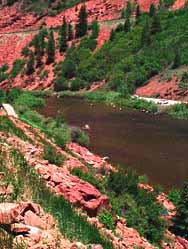
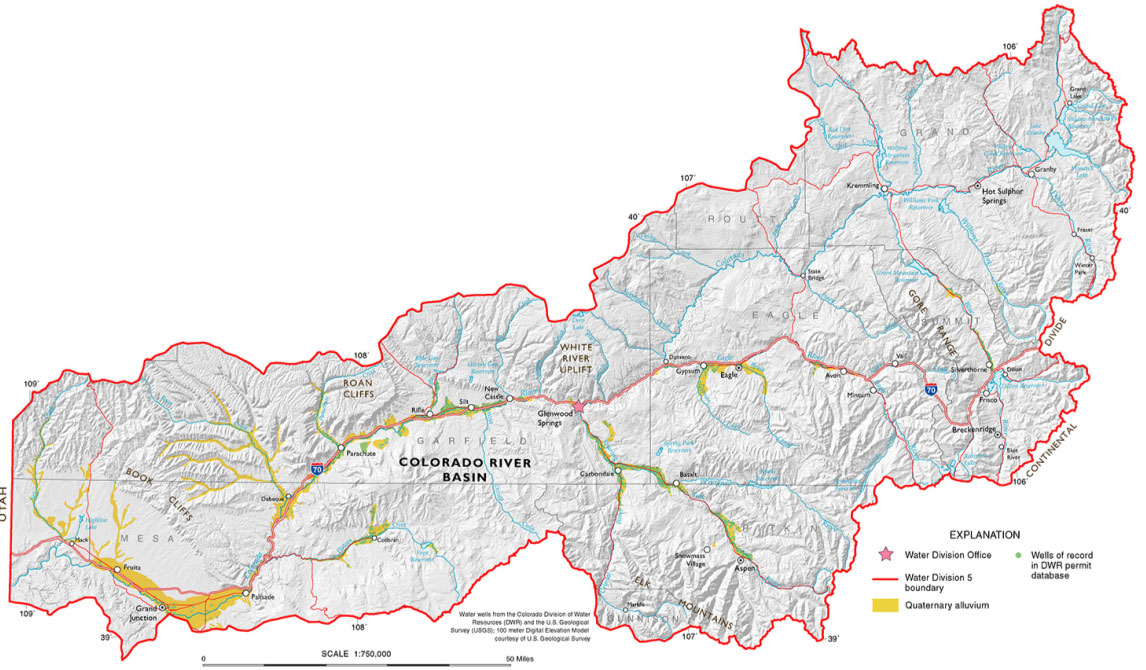
The July newsletter from the Colorado River District is hot off the press

coloradoriverbasincgs.jpg

Here’s the link to the newsletter. Thanks to Jim Pokrandt for sending it along in email.

The Parker Water and Sanitation District snags the ‘Outstanding Water Laboratory’ award from AWWA — Rocky Mountain Section

chemistryglassware.jpg

From the Parker Chronicle:

In addition to receiving highest marks in a broad spectrum of water-quality tests and analysis processes, the award was also given to the district for its fieldwork performed beyond its customer service area of about 16,000 customers. The district’s lab technicians have been called to assist other districts in Arapahoe, Douglas and Elbert counties with water-quality testing and analysis due to inadequate on-site lab capabilities or under-trained personnel. Water district winners in all categories will be recognized at the Joint Annual Conference of the American Water Works Association on Sept. 18-21 in Loveland.

More Parker coverage here.

Lake Powell news: The record Utah, Wyoming and Colorado snowpack has the reservoir sitting at 76% of capacity, despite having the hydroelectric turbines running at full bore

glencanyondam.jpg

From the Los Angeles Times (Bettina Boxall):

…so much snowmelt and storm runoff flowed into the river and its tributaries that for much of the summer Powell rose a foot a day. The reservoir now is 76% full, and its surface has reached the highest point in a decade, dramatically shrinking the white bathtub ring of mineral salts that had ominously marked the lake’s retreat…

This year of surprisingly bountiful snow and rain follows the driest 11-year period in more than a century of record keeping. Ancient tree ring records have shown that droughts can persist for decades in the river basin, punctuated by occasional wet spells. So no one can say if this one is really over or just taking a break. But from Wyoming to California, the seven states that depend on the 1,450-long river are letting out sighs of relief…

The low water levels let hikers into treasured parts of Glen Canyon that had been submerged since Powell began filling in the 1960s. Storms flushed out newly exposed slot canyons that were clogged with sediment accumulated over decades. Now, kayakers are paddling up them…

Less than half full now, Lake Mead is expected to keep rising for the next year and a half. “We’ve pushed off shortage for years,” said Jeffrey Kightlinger, general manager of the Metropolitan Water District of Southern California, which imports Colorado River supplies. California has some of the most senior rights on the river, protecting it from early cuts. But the drought eliminated surplus deliveries that the state — and the MWD — long enjoyed. If next year isn’t dry, Kightlinger said, it’s possible that surplus water could be available in 2013…

“This is a great year; we needed it,” said Terry Fulp, the [Bureau of Reclamation’s] deputy regional director for the lower Colorado. “It is going to take some pressure off a lot of the system. It doesn’t mean we’re out of the woods.”

From Irish Weather Online:

The inflow from April through July turned out to be 162 percent of the long-term average. As of July 28, the surface of Lake Powell had risen to 3660.79 feet, up from 3609.7 feet on April 9. The last time Lake Powell’s reservoir elevation was at this level was in October 2001…Total flow into the lake in July was 4.33 million acre feet…The inflow was 278 percent of the monthly average and made for the second wettest July since the completion of Glen Canyon Dam in 1963. Only 1995 had a wetter July, with 4.41 million acre feet. Water releases from the dam (downstream) were approximately 24,100 cubic feet per second, near the full capacity of the power plant. By the end of July, water storage in Lake Powell was 18.60 million acre feet, or 76 percent of capacity.

Click through for the LandSat images.

From the Summit County Citizens Voice (Bob Berwyn):

The Bureau of Reclamation reported that July inflow along totaled about 4.5 million acre feet (278 percent of average), the second-best year since Glen Canyon Dam was completed in 1963. Only 1995 was wetter, with a total inflow of 4.41 million acre feet in July. Total inflows for the runoff season, April through July, reached 12.9 million acre feet, which is 162 percent of average. June inflow was even higher, totaling 5.4 million acre feet…

As of late July, the reservoir was 76 percent full, storing 18.6 million acre feet. The last time Powell was at this level was in October 2001…

Higher-than-average inflows are predicted through the rest of the summer, with a total projected inflow of 16.7 million acre feet, about 139 percent of average. That’s good news for Lake Mead, the downstream reservoir that’s critically important for Las Vegas. Lake Mead is 20 feet higher than it was last year this time, and projected to climb another 30 feet in the next 12 months with continued releases from Powell.

More Colorado River basin coverage here.

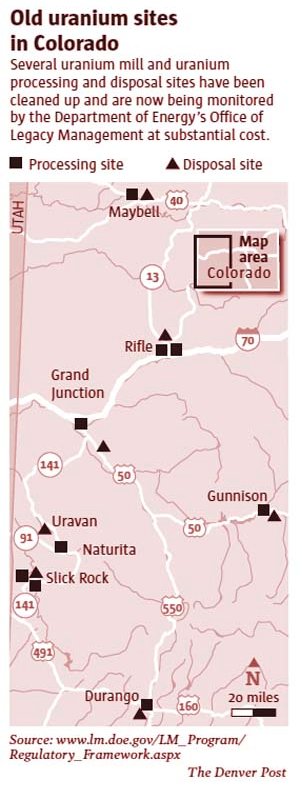
Energy policy — nuclear: Department of Energy review of uranium mining public meeting in Telluride draws many opponents to production and exploration

olduraniumsitesincolorado.jpg

From The Telluride Daily Planet (Matthew Beaudin):

The Department of Energy is conducting a series of meetings across the region to take the pulse of people from Telluride, Montrose, Monticello, Utah and Naturita in regard to the federal program that leases land to mining companies…

Comments from the Telluride audience were sharply opposed to the uranium industry and the federal leasing program. Common concerns were the waste products generated through mining and milling and harm to the environment. The DOE, which did not answer questions during the meeting, was also roundly criticized for its neglect of the Telluride area in its reviews. “The feds call this a legacy project, a legacy program. Is that ironic?” asked Pamela Zoline. The region does need jobs, she said, “but I don’t think any of us want a legacy of toxicity and poison long beyond the management capabilities of our folks to handle it.”
An ideological ridge has long run between Telluride and the communities west of it to the Utah state line, small towns that need jobs after the last boom left their economies badly busted…

Until now, the DOE reviewed the mining operations piecemeal rather than addressing the cumulative impacts of increased production in the region, which it made possible in 2008 with the renewal of its leasing program in the Uravan Mineral Belt, awarding or renewing 31 leases for mining-related activities over 25,000 acres between Naturita and Moab, Utah. The DOE has frozen all activity on the leases while it reviews the program…

A total of 25,000 acres of land in southwestern Colorado, northern New Mexico and southeastern Utah were withdrawn from the public domain during the late 1940s and early 1950s by the Atomic Energy Commission, the predecessor agency to the Department of Energy. In Telluride, there is still deep suspicion of the industry.

More nuclear coverage here.

Fryingpan-Arkansas Project update: Potential customers voice concerns over storage pricing at Reclamation ‘listening session’

puebloreservoir.jpg

From The Pueblo Chieftain (Chris Woodka):

“Are you trying to maximize return to the Bureau of Reclamation, or maximize benefits to the area?” asked Terry Book, deputy executive director for the Pueblo Board of Water Works. The water board has the lowest rate for storage at Lake Pueblo under a 25-year contract signed in 2000. “At the end of 25 years, if the price is too high, will we have to seek alternatives elsewhere? If the price we passed on were too high, would that keep others out and defeat the whole purpose?”

Reclamation plans to develop a pilot program in the Arkansas River basin that would determine how market pricing for storage contracts could be used throughout the western United States, explained Mike Collins, area manager for Reclamation. “We have no draft documents or analysis,” Collins said, adding that the listening session was to gain input from Arkansas River water users on how to determine market prices.

Collins offered no concrete responses about how the criteria for market pricing are being developed, and said a document would be available further into the process. “We’re gathering perspectives to get this process started,” Collins said.

Ed Harvey, an economist who represented the SDS group and Aurora, told Reclamation that it would be difficult to apply market rates in the Arkansas River basin across the western United States. Water markets are few in number and subject to local conditions. “It’s a difficult, but laudable goal that is fraught with difficulties,” Harvey said. He suggested developing a market simulation, looking at comparable situations in the Arkansas River basin. Harvey did that sort of analysis in 2006 for the Aurora contract hearings, and found storage rates varied from $3-$68 per acre-foot, depending on variables like location and the relationship between buyer and seller. Reclamation basically ignored Harvey’s work during those hearings. Reclamation’s current contracts at Lake Pueblo range from $17.25-$51.32 per acre-foot.

Meanwhile there are problems getting consensus on where to apply Fry-Ark revenues. Here’s a report from Chris Woodka writing for The Pueblo Chieftain. From the article:

The Southeastern Colorado Water Conservancy District last October proposed paying off the South Outlet Works first, the Fountain Valley Conduit second and Ruedi last until the Arkansas Valley Conduit is built. The [2009 law that uses excess-capacity revenues to fund parts of the Fryingpan-Arkansas Project] itself does not indicate priorities among the projects prior to completion of the new conduit. Reclamation suggests other alternatives, including paying the majority of the funds from Ruedi, paying equal shares to all three or adjusting payments to the total amount currently owned. It has not chosen an alternative.

“Our expectations are that the East Slope facilities and obligations will be paid off first, with consideration for Ruedi in the future,” Alan Hamel, executive director of the Pueblo Board of Water Works, told Reclamation officials at a meeting to discuss the law Wednesday. “It starts to appear that there will be additional mitigation for the West Slope.”[…]

Reclamation charges fees to store water in Lake Pueblo, primarily, under either long-term or short-term contracts. Previously, the revenues from that went to the general fund of the federal government. Under the new law, they are to be put toward Fry-Ark debt. This year, $2.2 million is available from short- and long-term excess-capacity contracts — enough to cover the South Outlet Works debt. In the next six years, the revenues drop to about half of that because of the structure of the Southern Delivery System contracts. By 2018, revenues are expected to resume at $2.4 million and begin climbing again. Revenues would be sufficient to pay off the Fountain Valley Conduit by 2020, under the Southeastern District plan, but the Ruedi debt would climb to more than $50 million.

More Fryingpan-Arkansas Project coverage here.

The Rio Grande Roundtable approves funding for the Flaming Gorge task force, members emphasize that they want a seat at the table

flaminggorgepipelinemillion.jpg

From The Pueblo Chieftain (Matt Hildner):

The move, which includes $5,000 roundtable members approved Tuesday, was done earlier this week with the idea of making sure the Rio Grande had a voice on the committee. Both Mike Gibson, the roundtable’s chairman, and Travis Smith, who represents the basin on the Colorado Water Conservation Board, told members that the funding did not represent an endorsement of the project…

Gibson said the Rio Grande had an interest in being at the table because of the potential impacts of Front Range water use on the San Luis Valley, which has the second-highest amount of irrigated ground in the state with 622,000 acres. The South Platte River basin is first with 831,000 irrigated acres. While the valley has not suffered from the water transfers that have sent Arkansas Valley water to cities like Aurora, the threat of a Front Range water grab is a not-too-distant memory. The region spent part of the 1980s and 1990s fighting off separate proposals from American Water Development and Stockman’s Water Company that would have piped the valley’s groundwater north.

More Flaming Gorge task force coverage here.

Restoration project on Swan River involves mitigating the effects of dredge piles and the introduction of cutthroats

cutthroat.jpg

From the Summit Daily News (Janice Kurbjin):

Because the Swan River is “a pretty good opportunity to restore a metapopulation of native Colorado cutthroat trout,” the Forest Service is tackling the project with its partners. Summit County and Breckenridge have been working on their Swan River properties since 2007, but with Forest Service technical support, they and the other partners aim to hire a project design firm and begin implementation as soon as possible — but there’s a long way to go. The idea is to re-introduce the cutthroat in different, but connected, habitats.

“We want them to mingle and mix and from a genetic perspective, that’s good,” [Forest Service district fisheries biologist Corey Lewellen] said, adding that part of the reintroduction effort includes relocating as many brown trout as possible and eliminating the rest to prevent them from again out-competing the cutthroat.

The project will likely be expensive, at several millions of dollars funded by grants and other revenue managed by the Blue River Watershed Group, but it will be worth it, Lewellen said.

“There are 17 miles of habitat we can reconnect if we fix this two miles of dredge,” he said, later adding, “We want to promote healthy fish populations on all our lands… We can’t do that without restoring this.”

But that’s just part of it. The Forest Service is involved in the stream project because it’s part of a broader look at the Swan River watershed — an area covering roughly 20,000 acres. It’s also associated with the agency’s revised mission to get “better bang for our buck,” Lewellen said, by focusing resources more directly instead of haphazardly across the national forest.

More Blue River watershed coverage here.

CWCB: Next Water Availability Task Force meeting August 17

mcpheereservoiroverlook.jpg

From email from the Colorado Water Conservation Board (Ben Wade):

The next Water Availability Task Force meeting is on Wednesday, August 17 from 1:30-3:30pm at the Colorado Division of Wildlife Headquarters, 6060 Broadway, Denver, CO, in the Bighorn Room. A meeting agenda…will be posted on the WATF webpage.

More CWCB coverage here.

Fryingpan-Arkansas Project update: 134 cfs in the river below Ruedi Dam

fryingpan.jpg

From email from Reclamation (Kara Lamb):

As we continue to match outflow with inflow, and as inflow continues to go down, we are reducing releases from Ruedi Dam to the Fryingpan River some more. Tomorrow morning, Friday August 12, we will cut back releases from the dam by 30 cfs. The resulting cfs by the Ruedi Dam gage will be about 134 cfs.

More Fryingpan-Arkansas Project coverage here.

Restoration: Aurora and the U.S. Forest Service are partnering on forest restoration near the Hayman burn

haymanburnarea.jpg

From the Associated Press via The Columbus Republic:

Aurora is joining efforts by the National Forest Foundation, Vail Resorts Inc. and the U.S. Forest Service to restore some of the 215 square miles burned by the 2002 Hayman fire. The Forest Service said Thursday that Aurora Water’s investment would help leverage other funds from private partners, including a $200,000 challenge grant from The Gates Family Foundation.

More coverage from Bob Berwyn writing for the Summit County Citizens Voice. From the article:

The Aurora City Council in late July approved agreements with the National Forest Foundation and the U.S. Forest Service that will invigorate an existing partnership including Vail Resorts and other partners. The investment from Aurora Water will help leverage funds from eight other private partners including a $200,000 challenge grant from The Gates Family Foundation.

U.S. Department of Agriculture Undersecretary Harris Sherman helped announce the partnership today, calling it a key to protecting watersheds essential to Aurora’s water supply and emphasizing the importance of partnerships between the Forest Service and other entities. “When we turn on our faucets, we tap water from our forests,” Sherman said. “The National Forests provide more than 70 percent of public water systems that serve millions of Colorado citizens. Improving the health and resiliency of the Pike and San Isabel National Forests in areas critical for delivering water to the City of Aurora benefits the land, the water and the tens of thousands of Aurora Water customers,” he added.

“The quality and reliability of our water supply is dependent upon forest health,” said Aurora Water director Mark Pifher. “A healthy forest is how nature keeps sediment from entering the watershed. Aurora and Denver Water are currently spending millions of dollars to dredge Strontia Spring Reservoir as a result of past fires. Failure to take action now would result in more costly measures in the future.”

More coverage from Sarah Castellanos writing for the Aurora Sentinel. From the article:

The investment, which came from the coffers of Aurora Water, will help plant more than 200,000 trees, revegetate more than 13 miles of riverbank with natural foliage, rehabilitate the landscape and improve the habitat for fish and the endangered Montane Skipper Butterfly. The area is part of the South Platte River Basin, from which Aurora residents receive most of their water. Because of Aurora’s donation, the Gates Family Foundation is also donating $200,000 toward the restoration project.

More coverage from Carlos Illescas writing for The Denver Post. From the article:

Aurora has pledged to help restore 45,000 acres from the Hayman fire. It also plans to seek $200,000 from the private sector, including a grant from The Gates Family Foundation. In all, the project to restore the burn area is estimated at $4.6 million. More than 200,000 ponderosa pine, Douglas fir and other varieties of trees will be planted. Also, 13 miles of riverbank will be revegetated with native foliage.

More restoration coverage here.

Energy policy — oil and gas: The Colorado Oil and Gas Conservation Commission is sampling groundwater to establish baselines

niobrarashale.jpg

From the Fort Collins Coloradoan (Bobby Magill):

Colorado oil and gas regulators are beginning a water testing program in Weld, Jackson, Elbert and Park counties to establish the current water quality in areas likely to see new energy development tapping the Niobrara formation…

Northern Weld County is booming with oil and gas activity, most of which was sparked by a well drilled into the Niobrara formation in 2009 near Grover that gushed oil and natural gas…

The water quality data will help regulators respond to complaints about groundwater contamination from oil and gas drilling, [Colorado Oil and Gas Conservation Commission Director Dave Neslin] said…

Widespread new development tapping the Niobrara formation is now expected throughout the Front Range…

“The Niobrara conservatively is 250,000 square miles,” [Larimer County spokesman John Dill] said. “It runs all the way east of Casper all the way east of Denver. It’s a huge, huge piece of land. We are just in the process of doing our exploration, trying to figure out where the best places to drill a well would be. I think it’s very early in the game to predict what the long-term looks like for any particular area, any particular county.”

More oil and gas coverage here and here.

Colorado Parks and Wildlife and the U.S. Forest Service are embarking on a project to restore Colorado River Cutthroat trout to a 15 mile reach of Big Dominguez Creek

greenbackvscorivercutthroat.jpg

From The Grand Junction Daily Sentinel (Dave Buchanan):

The plan, which biologists say might take up to eight years to complete, would remove non-native fish, including rainbow trout, from a 15-mile expanse of Big Dominguez and La Fair creeks on the Uncompahgre Plateau. Once the cutthroat trout are restored, a fish barrier will be placed at the bottom of the restored stretch to prevent a reintroduction of non-natives, including rainbow and brook trout. The project is a cooperative effort between the Grand Mesa, Uncompahgre and Gunnison National Forest and Colorado Parks and Wildlife. The Forest Service is providing the funding for the project and doing needed preliminary work. Colorado Parks and Wildlife will be the lead in the removal of non-natives and the stocking of cutthroats.

“(Colorado Parks and Wildlife) and us had this list of projects but they didn’t have the money for this one,” said Matt Dare, an aquatic biologist for the GMUG. “For native cutthroat trout this is the best sort of proactive management we can do to restore more populations of cutthroat trout.”[…]

The plan includes poisoning La Fair Creek and a stretch of Big Dominguez Creek above and below its confluence with La Fair to remove non-native fish prior to restocking with cutthroat trout. La Fair meets Big Dominguez at Carson Hole. From there, it’s about two miles to the Big Dominguez Wilderness Area, which is on Bureau of Land Management land. Once the non-native fish are removed, a fish barrier will be built on Big Dominguez Creek near the wilderness boundary.

More restoration coverage here.

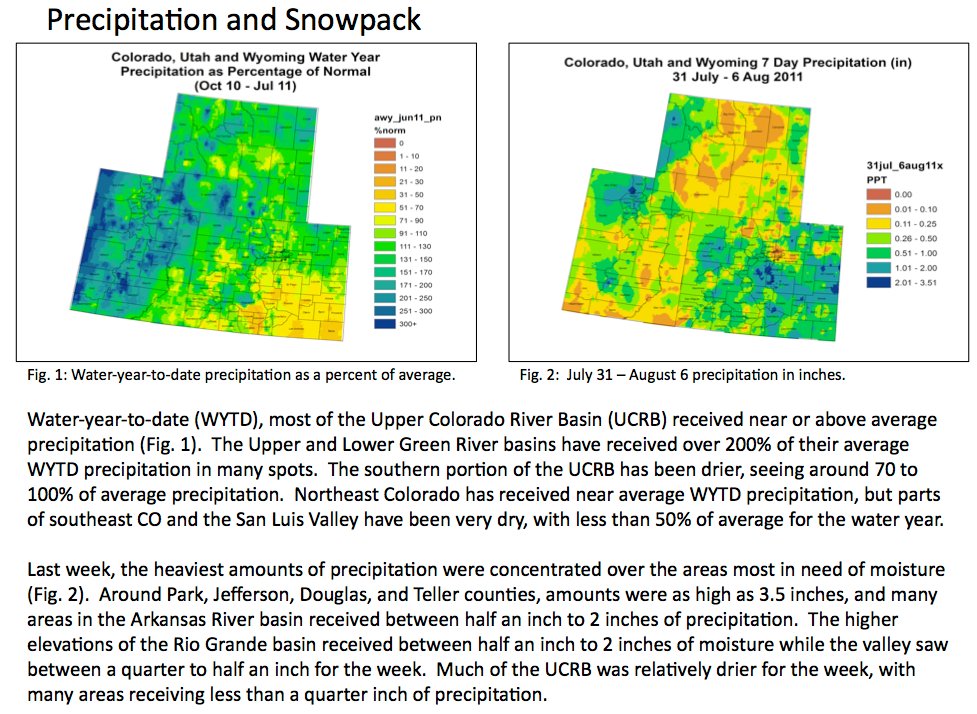
‘NIDIS Weekly Climate, Water and Drought Assessment Summary of the Upper Colorado River Basin’ and Colorado Drought Status Briefing

wyutcoprecipitation0731to09062011.jpg

Here’s the link to the presentations from this week’s webinar from the Colorado Climate Center. Click on the thumbnail graphic to the right for the precipitation roundup.

More Colorado River basin coverage here.

Green Mountain Reservoir operations update: 750 cfs in the Lower Blue River below the dam

greenmountainreservoir.jpg

From email from Reclamation (Kara Lamb):

Today [August 10], we’re dropping releases from Green Mountain Dam to the lower Blue by another 200 cfs. By late this afternoon, flows in the lower Blue should be around 750 cfs. Inflows to Green Mountain Reservoir are dropping off. As we continue to match outflow with inflow, the reservoir water surface elevation is remaining fairly steady at about 2 feet down from full.

More Colorado-Big Thompson Project coverage here.

The Arkansas Basin roundtable approves the Flaming Gorge task force, some members skeptical of project

flaminggorgepipelinemillion.jpg

From The Pueblo Chieftain (Chris Woodka):

Several members of the roundtable said they are against the project or skeptical that it will ever be built, but agreed the group needs to have input in case it develops…

The grant application, submitted by roundtable chairman Gary Barber on behalf of the Pikes Peak Regional Water Authority that he manages, does not propose supporting either proposal for a Flaming Gorge pipeline, but would identify impacts and concerns…

“This is not a good project for Colorado,” said Tom Young, a Fremont County rancher. He said a project from the Missouri River basin, just 50 miles further away in South Dakota, would truly bring more water into the state and not jeopardize Colorado’s entitlement under the Colorado River Compact…

[Alan Hamel, who now represents the basin on the CWCB] said there is still some water available to be developed under the 1922 Colorado River Compact. “It might not be available every year, but that’s the type of thing Colorado needs to look at,” Hamel said. “This is a public process, with all participants at the table.”

More Flaming Gorge task force coverage here.

Grand Lake: Canton O’Donnell — ‘The clarity has so much improved over anything we’ve seen in August over the past 50 years’

secchidiskprocedure1.jpg

From the Sky-Hi Daily News (Tonya Bina):

“The clarity has so much improved over anything we’ve seen in August over the past 50 years,” said Three Lakes Watershed Association President Canton O’Donnell of Grand Lake. The 250-member organization has advocated for better water quality in Grand Lake for at least 20 years.

O’Donnell’s observations during a recent annual sailing regatta on Grand Lake are backed up by a Three Lakes Clarity Monitoring Report for July, which shows improvements in clarity throughout the month. Clarity in Grand Lake reached greater than 13 feet, a far cry from a 2007 reading of 4.8 feet in late summer.

The problem “everyone agrees on,” O’Donnell said, is the shallowness of Shadow Mountain Reservoir. Water delivered to northeastern Colorado to support communities and ranches is pumped through Shadow. Average residency for water in Shadow is about a month, during which the water heats up and produces algae, weeds and sediment brought through the canal into natural Grand Lake.

The monitoring program through the Grand County Water Information Network — which shares data with the U.S. Geological Survey, the Bureau of Reclamation and the Northern Colorado Water Conservancy District — analyzes weather and Secchi depth readings in lakes including natural Grand Lake and the connected Shadow Mountain Reservoir.

More Grand Lake coverage here and here.

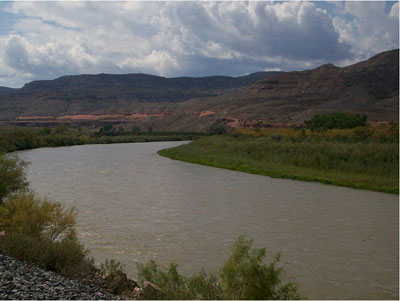
Colorado River Summer Cleanup August 13

coloradorivergjwik.jpg

Here’s the announcement from the Water Center at Mesa State College and the Mesa County Water Association.

Conservation: Massive New Coalition Stands up for Resource Conservation, Outdoor Recreation, Historic Preservation

grizzlyfishing.jpg

Here’s the announcement from the Theodore Roosevelt Conservation Partnership:

Sportsmen aren’t alone in advocating for strongly funded conservation programs in America. The TRCP is helping to lead an unprecedented coalition representing tens of millions of citizens with diverse political backgrounds and areas of interet to call for federal investments in natural resource conservation, outdoor recreation and historic preservation programs.

The coalition, America’s Voice for Conservation, Recreation and Preservation, is made up of more than 600 organizations. The coalition recently sent a letter to the leadership in the House and Senate acknowledging the tremendous fiscal challenges facing the country and reminding members of Congress about the economic importance of natural resource conservation, outdoor recreation and historic preservation programs. The groups offered assistance in quantifying the economic benefits of these programs as a means to inform budgetary decision-making.

“Investments in natural resource conservation, historic preservation and outdoor recreation comprise roughly 1 percent of the federal budget yet provide a return on investment that far exceeds the cost to the taxpayer. Just ask anyone who has ever enjoyed our great American wilderness, or benefited from the clean air and water those lands provide, or the local economies they support,” said Bill Meadows, president of The Wilderness Society, a member of the coalition.

“Historic preservation programs fuel jobs and produce strong returns on public investments that impact primarily rural communities and cannot be exported to foreign countries. We are committed to working closely with Congress to identify savings while also supporting the programs that most effectively achieve these results,” said John Nau, chairman emeritus of the Civil War Trust, a member of the coalition.

This diverse coalition is urging Congress to look at conservation programs as critical investments that can help America grow its way out of our financial challenges.

“Over the years, federal conservation programs have helped leverage billions of dollars of non-federal money to conserve millions of acres of critical habitat, thus helping to preserve America’s rich hunting and fishing traditions,” said Whit Fosburgh, president and CEO of the TRCP, one of the many sporting groups that is helping to lead the coalition.

Read the coalition’s letter.

More conservation coverage here.

Restoration: Biochar is being used to facilitate abandoned mine cleanups

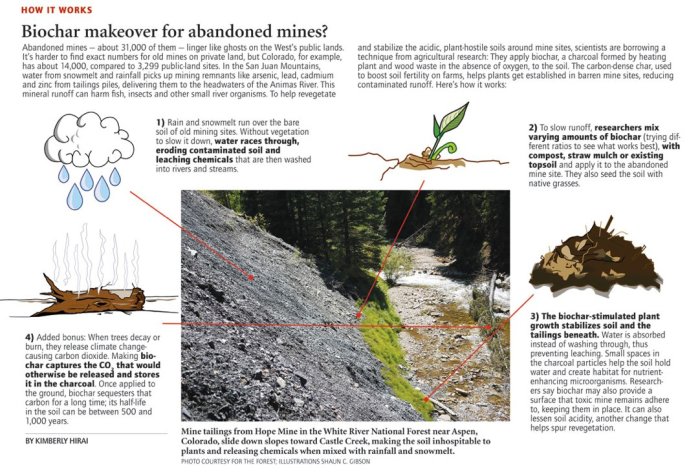
Here’s an infographic created by Kimberly Hiral for the High Country News explaining the application of biochar in abandoned mine cleanup. From the article:

To help revegetate and stabilize the acidic, plant-hostile soils around mine sites, scientists are borrowing a technique from agricultural research: They apply biochar, a charcoal formed by heating plant and wood waste in the absence of oxygen, to the soil. The carbon-dense char, used to boost soil fertility on farms, helps plants get established in barren mine sites, reducing contaminated runoff.

More restoration coverage here.

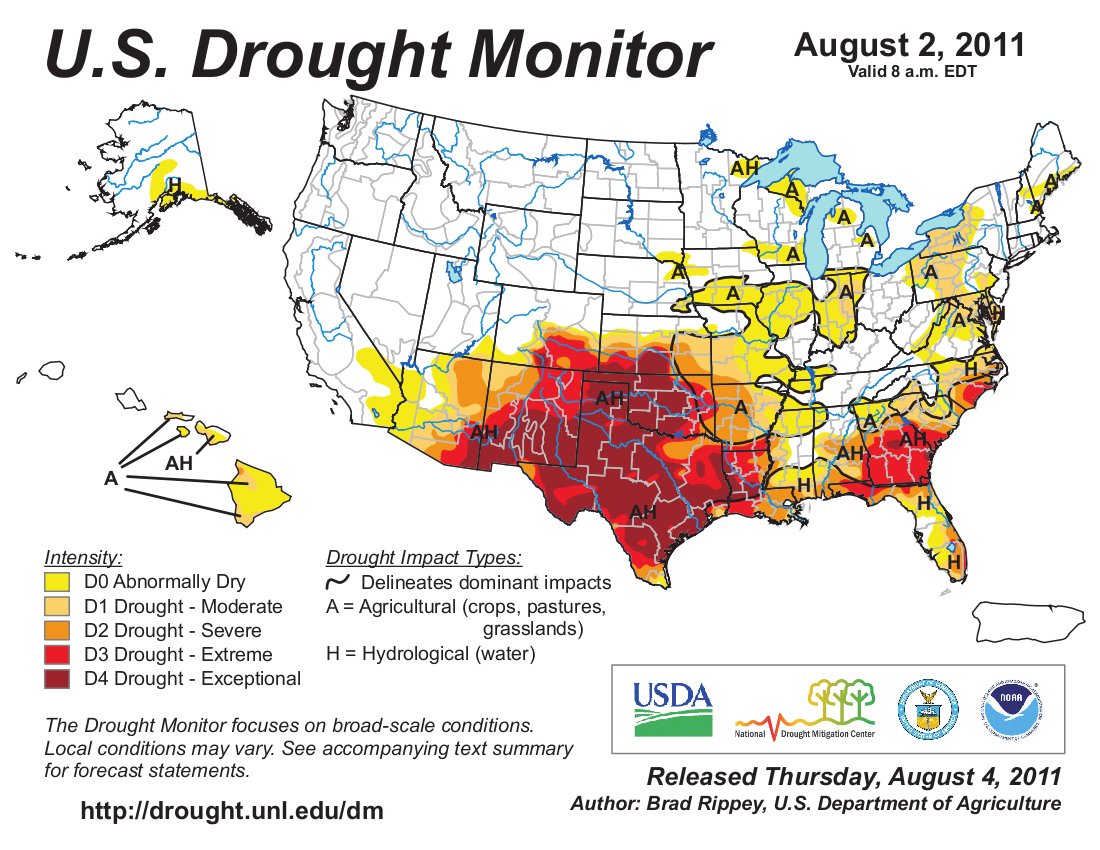
Drought news: Northern Colorado hay farmers enjoy solid prices due to drought in the southeastern part of the state

usdroughtmonitor08022011.jpg

From The Fence Post (Eric Brown):

Lack of moisture in southern Colorado ­— where 12 counties were declared disaster areas by the federal government recently ­— and in neighboring states like Kansas, Nebraska, Oklahoma, Texas and New Mexico — is leaving farmers in those areas struggling to grow feed for their livestock. That is driving up the demand and price of hay for producers where the crop is still growing.

At the end of July alfalfa prices across the board for northeast Colorado were about $50 to $70 higher than they were a year ago. Prices ranged from about $190 to $210 per ton for premium alfalfa down to about $140 to $150 for fair quality hay.

“On the one hand, you like it as a hay farmer because you can sell your commodity for a higher price,” said Jerrold Brethauer of Kersey, Colo., who farms about 110 acres of hay on his own land and helps custom cut about another 2,200 acres. “But on the other hand, you don’t want to see the high prices hurt the livestock industry.”

Raton, New Mexico: Funds raised from ‘The Battle of the Bands Benefit’ Friday and Saturday to help with Track fire restoration

sugaritecanyonnewmexico.jpg

From The Trinidad Times (Todd Wildermuth):

The Battle of the Bands Benefit is designed by Raton MainStreet to raise money to go toward the restoration efforts in the city’s damaged watershed area in Sugarite Canyon and the surrounding area northeast of Raton. The watershed was severely damaged by the Track Fire that burned for a week or more in mid-June.

Nine bands are to take part in the event, with attendees each getting one vote for their favorite band. Admission is a minimum donation of $10, which buys the right to vote once, although additional votes can be purchased for $1 each. The money raised will go to Fire Relief Fund for Sugarite Canyon rehabilitation and the watershed project.

The band battle will go on Friday outside the VFW on Park Avenue from 6 p.m. to midnight. Playing that night will be Grupo Vive (6-8 p.m.), Nicole Unser and The Open Range Band (8:30- 9:30 p.m.) and JD Castillo Y Los Compas (10 p.m.-midnight).

The battle will continue much of the day and night Saturday outside the White House Saloon on Cook Avenue. The music is scheduled for 11 a.m. to midnight that day. The bands will be Fritti Fonteneau and Fat Tuesday Band (11 a.m.-1 p.m.), Highway 38 Hound Dogs (1:30-3:30 p.m.), Nicole Unser (4-5 p.m.), Colfax Reunion (5:15-7:15 p.m.), Turning Point (7:30-9:30 p.m.) and Level 5 (10 p.m.-midnight)…

Work is ongoing in the watershed — the north part of Sugarite Canyon and extending north into Colorado — to protect it from too much ash and debris running off hillsides into Lake Maloya, Raton’s main water supply. Rehabilitation efforts such as seeding of new vegetation has also taken place.

Fort Collins: Imagine H2O and the Colorado Water Innovation Cluster sign a memorandum of understanding with an eye towards helping build successful water businesses

gehomespringwaterfiltersystem.jpg

From the Fort Collins Coloradoan (David Young):

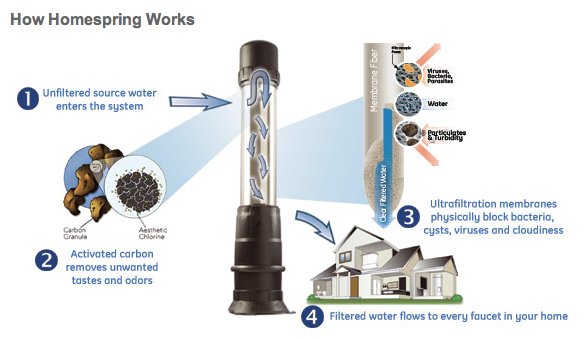
The partnership permits access to each partner’s programming resources to provide a greater depth of resources for entrepreneurs, according to a news release. The city of Fort Collins is a founding member of the CWIC.

“This agreement creates new opportunities for Colorado water innovators” said Jeff Throck-morton, chairman of the CWIC, in a prepared statement. “And partnerships with organizations like Imagine H2O will fuel innovation, collaboration and growth throughout the region.”

Imagine H2O, a nonprofit organization, provides support and mentoring to entrepreneurs and businesses that are advancing water innovation. Launched this year, the CWIC is building a network that includes Colorado-based academic, governmental or commercial institutions from which innovative water solutions and new businesses can evolve.

Potential water projects include: home water conservation, agricultural water rights management, water infrastructure asset management and other water-related issues.

The collaboration with Imagine H2O is intended to position Northern Colorado and the Colorado Water Innovation Cluster as a leader in the water sector…

This year, Imagine is focusing on innovations surrounding waste water with funding for ideas related to gray water systems, energy waste water, treatment systems and other related business plans.

As for the CWIC, it is moving forward with its first project with the Lake Canal Alternative Practices and In-stream Flow Demonstration. The demonstration addresses municipal, industrial and environmental water “gap” during irrigation season in the Lake Canal area by using packaged software, field instrumentation solution developed by Colorado-based Regenesis Management Group, along with researchers from Colorado State University and U.S. Department of Agriculture.

More Colorado water coverage here.

Colorado-Big Thompson Project update: Reclamation is moving water from Grand Lake to Shadow Mountain Reservoir to test the effects on Grand Lake clarity

coloradobigthompsonmap.jpg

From email from Reclamation (Kara Lamb):

Even though we finally have the snow melt run-off behind us, we are still releasing water from Granby Dam to the Colorado River. Currently, we are releasing about 500 cubic feet per second. The reservoir is still pretty full, dropping slowly. Today, it is at a water level elevation of 8278 feet above sea level–about two feet below full.

The current release of 500 cfs will continue most likely through September and possibly into October.

The reason for the longer-than-most-years release is two-fold. First, we just have a lot of water this year. The heavy snow pack is still melting out from the highest mountain elevations, albeit much more slowly than in June and July.

Second, and most significantly, with all the snow melt and then the rain we had this summer, there just is not a lot of demand for water from the east slope. Plus, east slope storage is close to full. Without a call for or a place to store C-BT water, we cannot import it from the west to the east slope.

Additionally, this is the time of year we adjust how we run the C-BT west slope system as part of our on-going work to improve clarity in Grand Lake. For the past four years we have experimented with different operations. This year, we are attempting to maintain a steady flow from Grand Lake to Shadow Mountain Reservoir. Usually, the flow is in the opposite direction because we are diverting more water to the east slope.

I have received several questions over the past few days regarding the west slope collection system. Please feel free to contact me directly with any additional questions. More C-BT information is also available by visiting Northern Water on-line, or by visiting Reclamation’s website.

From email from Reclamation (Kara Lamb):

Most of you have probably noticed that Pinewood has not gotten as high this summer as it has in previous years. I’ve had a couple inquiries so I thought it was a good time to send out an e-mail update.

The reason for Pinewood’s elevation fluctuation is because it is a forebay for the Flatiron hydro-electric power plant ; it’s the water storage above a power plant. Water is stored in the reservoir to build up “head,” or energy, then run downhill to produce that energy at the plant below . Because we are only generating with one of the two units and because we have had so much water move through the system this year, Pinewood’s fluctuations this summer have been slightly different than in other summers: it isn’t getting as high as most are used to seeing.

We’re going to try and get the water elevation at Pinewood back up for this weekend, however. Right now, Pinewood’s water surface elevation is on the decline. Its current elevation is about 6567 feet–about 13 feet below full–and it will probably go down another three feet or so. The good news is the decline will stop later today and the reservoir will begin to rise again. The elevation climb will continue well into the coming weekend…

If you’d like more information on the Colorado-Big Thompson Project of which Pinewood is a part, please visit us on-line.

From email from Reclamation (Kara Lamb):

As snow melt run-off has declined in the Blue River basin, we’ve been cutting back our releases from Green Mountain Dam to the lower Blue River. Releases have dropping over the last week.

The most recent change was this morning, calling for another reduction. By early evening, releases from the dam should be around 950 cfs. Additional changes will depend on weather and water demands.

The reservoir elevation has remained very close to full. It is currently at about 7948 feet, two feet down from full.

More Colorado-Big Thompson Project coverage here.

More Grand Lake clarity coverage here. Check out this article from November, 2007 written by Tonya Bina for the Sky-Hi Daily News. I think it’s cool that the deep link still works.

Restoration: Trout Unlimited’s West Denver Chapter to tackle stream reach in Clear Creek near Mayhem Gulch

clearcreekwatershed.jpg

From The Denver Post (Daniel Smith):

The Canyon Reach project, with multiple funding sources, will begin near Jefferson County Open Space Park’s Mayhem Gulch, then continue upstream to near the paved turnout just below the junction of Colorado 119 and U.S. 6.

The project, which will require heavy construction equipment, should help correct some of the problems. Some of the natural rocks in the creek will be moved to create “better winter habitat, deeper holes and feeding lanes and just places for fish to survive the winter,” he said. Edwards said 15 elements will be used, including cross vanes, U-shaped large rock structures that create turbulence that constricts stream flow and deepens the channel to create spawning beds and wintering pools. A J-hook structure in stream beds also will create deep habitat in curves and protect banks from erosion. A toe-wood structure, a newer concept, uses tree trunks, layered with willows and blankets of organic material, that will help streamside riparian growth in the rocky stream. The project’s $264,000 price tag will be covered by a $168,700 grant from the Colorado Division of Wildlife’s Fishing is Fun program, $60,000 from the Jefferson County Conservation Trust Fund, and $20,000 from the Water Conservation Board.

More Clear Creek watershed coverage here.

Energy policy — nuclear: Cotter, Corp. wants to stop testing inactive leaky and toxic impoundment pond

lincolnparksuperfund.jpg

From the Cañon City Daily Record (Rachel Alexander):

“As you are aware, the pool of water in the impoundment has diminished by evaporation to the extent that only the addition of base material has maintained the pool and consequently the head,” [Radiation Safety Officer Jim Cain] said in the letter. “In addition, introduction of base material to the pool has become inefficient and we have no means to improve the delivery.”

Steve Tarlton, of CDPHE, said the pH monitoring was necessary when the pond was in active use, but it is no longer operating. “Since they started dewatering the ponds, maintaining the pH is not critical,” he said. “The pH issue has gone away. We don’t want them to add water to the pond if they don’t have to. It makes sense to stop monitoring.”

CDPHE officials are looking at the monitoring issue in conjunction with the company’s dewatering plan and they expect to make a decision in the next few weeks.

More Lincoln Park/Cotter Mill superfund site coverage here and here.

USDA and EPA Create New Partnership to Improve Drinking Water Systems and Develop Workforce in Rural Communities

fortmorganrainbowbridge.jpg

Here’s the release from the United States Department of Agriculture and the Environmental Protection Agency:

The U.S. Department of Agriculture (USDA) and the Environmental Protection Agency (EPA) today announced a national partnership to improve rural drinking water and wastewater systems. Across the country, small water and sewage treatment facilities with limited funding and resources often face challenges due to rising costs and aging equipment and pipes. Today’s agreement will target federal resources and provide training to support communities that need assistance most.

“The agreement we are announcing today represents an exciting partnership between USDA and EPA that will greatly enhance our investments in water systems and also develop a skilled workforce to oversee them,” said USDA Rural Utilities Service Administrator Jonathan Adelstein. “By working together, our agencies will strengthen their capacity to provide rural residents with safe, clean, well-managed water and wastewater systems for years to come.”

“EPA and USDA have joined forces to leverage our expertise and resources to improve drinking water and wastewater systems in small towns across the country,” said EPA Acting Assistant Administrator for Water, Nancy Stoner. “A critical part of this agreement is to ensure that we have a well trained, professional workforce available to replace workers when they leave or retire.”

Under the agreement, EPA and USDA will work together to promote jobs by targeting specific audiences, providing training for new water careers and coordinating outreach efforts that will bring greater public visibility to the workforce needs of the industry, and develop a new generation of trained water professionals. EPA and USDA will also facilitate the exchange of successful recruitment and training strategies among stakeholders including states and water industries.

In June, President Obama signed an Executive Order establishing the first White House Rural Council, chaired by Agriculture Secretary Tom Vilsack. Secretary Vilsack is working to coordinate USDA programs across the government and encourage public-private partnerships to improve economic conditions and create jobs in rural communities. Today’s agreement is an example of how government can work together across federal agencies to utilize resources that will help rebuild and revitalize America’s rural communities.

Since taking office, President Obama’s Administration has taken significant steps to promote prosperity and improve the lives of rural Americans. For instance, the Administration has set goals to modernize infrastructure by providing broadband access to 10 million Americans, provide improved water service to 1.8 million rural residents, expand educational opportunities for students in rural areas, and provide affordable health care. In the long term, these unparalleled rural investments will help ensure that America’s rural communities are, self-sustaining, and thriving economically.

USDA, through its rural development mission area, administers and manages housing, business and community infrastructure and facility programs through a national network of state and local offices. Rural development has an existing portfolio of more than $153 billion in loans and loan guarantees to improve the quality of life through economic stability of rural communities, businesses, residents, farmers and ranchers.

For more information about the EPA-USDA agreement visit: http://water.epa.gov/type/drink/pws/smallsystems/index.cfm

Information about USDA’s Water and Environmental Programs for rural communities: http://www.rurdev.usda.gov/UWEP_HomePage.html

Information on EPA’s programs and tools for small water systems: http://water.epa.gov/type/drink/pws/smallsystems/index.cfm

More water treatment coverage here.

Drought news: Federal grazing relief extended for Colorado counties affected by drought

usdroughtmonitor08022011.jpg

From The Pueblo Chieftain (Chris Woodka):

Grazing and haying on Conservation Reserve Program acreage was extended for a month. That means grazing or haying on the land will extend to Oct. 31 without further payment reduction. Producers must contact local Farm Service Agency offices to sign up and gain permission to graze. More than 2.2 million acres have been enrolled in CRP in Colorado, yielding $74 million in revenue to farmers and ranchers. Because of drought conditions, the land was opened for use this year, along with a 25 percent reduction in payments. As a second condition designed to help livestock producers, FSA will allow producers nationwide to utilize harvested hay from expiring CRP acres when those acres are being prepared for fall seeded crops.

Prior to this modification, all mechanically harvested hay was required to be destroyed. This change enables livestock producers to feed the hay that is mechanically harvested to their own livestock or to sell or donate hay. Consistent with existing policy for managed or emergency haying and grazing of eligible CRP acres, rental payments will be reduced by 25 percent for those using this option.

“We are eager to do all we can in the face of this drought crisis across the southern plains,” said FSA Administrator Bruce Nelson. “This has been one of the worst dry and hot spells since the Dust Bowl era of the 1930s.”

Here’s a primer about Colorado droughts from John F. Henz and William J. Badini writing for HDR Hydro-Meteorological Services. Here’s an excerpt:

Stephen Long, a U.S. Army lieutenant who passed through Colorado in 1822, giving his name to the most visible peak in Rocky Mountain National Park, wrote off the entire block of real estate that included Kansas, eastern Colorado and the Texas panhandle as “the great American desert.’’ His assessment was much the same as Pike, who preceded him, even as to the limiting factor of the plains:

The Great Plains region is almost wholly unfit for cultivation, and of course inhabitable by a people depending upon agriculture for their subsistence. Although tracts of fertile land considerably exten- sive are occasionally met with, yet the scarcity of wood and water, almost uniformly prevalent, will prove an insuperable obstacle in the way of settling the country.

If we are to plan water supplies of Colorado’s future, a good place to start is in the understanding of Colorado drought: its history, its cycles, how we measure it, where it comes from and how we might plan for its occurrence in the future. The Drought of 1999-2002 in Colorado has provided a rude awakening to drought’s impacts on mod- ern life. A mandate to respond has been sounded. The time for decisive but meaningful action requires that we humbly appreciate and understand nature’s power.

Denver Water’s Chips Barry to be memorialized August 12

barry.jpg

From email from Denver Water (Lori Peck):

Montclair Pump Station will be renamed the Hamlet J. “Chips” Barry III Pump Station

WHAT: Denver Water Board members, employees, local officials, Montclair neighborhood residents and the family of Chips Barry will honor Denver Water’s former manager at a ceremony to rename the Montclair Pump Station. This event will include tribute speeches and an unveiling of the new sign. Montclair Pump Station is in the Barry family neighborhood and is part of the recycled water system put into service during Barry’s tenure as manager of Denver Water.

WHEN: Friday, Aug.12, 8 a.m.

WHERE: Montclair Pump Station; 1100 Quebec St.; Denver, CO 80230

NOTE: Due to space constraints, this event is limited to invitees and members of the news media.

HISTORY: Chips Barry was the manager of Denver Water for 19 years. He had planned to retire last summer, but was killed in an accident May 2, 2010. During his tenure at Denver Water, the utility implemented a conservation program that is nationally and internationally recognized as a model of success, built a recycled water distribution system, invested millions of dollars in improvements at its treatment facilities, monitored recovery from several devastating wildfires in Denver Water’s watershed and led the work to recover from one of the worst droughts in the city’s history.

More Denver Water coverage here.

Fryingpan-Arkansas Project update: 162 cfs in the river below Ruedi Reservoir

fryingpanarkansasproject.jpg

From email from Reclamation (Kara Lamb):

As inflows to Ruedi Reservoir continue to drop off, we continue to match outflow to inflow. As a result, we’ll be decreasing our release at 5 p.m. today [August 8] by 30 cfs.

The resulting release from the dam to the Fryingpan should be about 156 cfs. With the Rocky Fork contributing 6 cfs, flows past the Ruedi gage should be about 162 cfs. The reservoir remains basically full–only about three feet down.

More Fryingpan-Arkansas Project coverage here.

Energy policy — nuclear: Energy Fuels is aggressively buying up uranium properties in the Uravan Mineral Belt

manhattanproject1944uravan.jpg

From The Telluride Daily Planet (Matthew Beaudin):

The newly purchased Crain Lease is located on approximately 640-acres in San Juan County, Utah, and is near the historic Calliham and Sage Mines, which are properties already controlled by Energy Fuels. It cost the company about $520,000.

Its deposit is historically rich, according to Energy Fuels, and it sits in the Uravan Mineral Belt, one of the richest deposits of uranium and associated elements, in the country. The company recently announced it had also bought two other properties, the Energy Queen and Whirlwind, and has spent “millions” buying up mineral leases.

According to Energy Fuels, it costs about $250,000 and 18 months to permit a new uranium mine, outside of land and mineral right costs…

At the mill, [Curtis Moore, an Energy Fuels spokesperson] said jobs will pay anywhere from $45,000 to $75,000 a year, with benefits. At the mines, those jobs are likely to pay $90,000 to six figures, he said. It’s estimated by the company that the mill would create 85 jobs at its full capacity and spawn 200 additional jobs in the area, from trucking to restaurants. The life of the mill is pegged at 40 years, or, in other words, a generation.

Hilary White, the executive director of Sheep Mountain Alliance, said the company was mining — for investors.

“Energy Fuels needs at least $150 million to build the Piñon Ridge Mill and they do not have all the state and federal permits or the water to start construction or operation of the proposed mill,” she wrote in an email.

“The price of uranium has tumbled since the DOE released stockpiles of ore and the unfortunate disaster in Japan. They are in need of cash just to continue day-to-day operations. It is not surprising that we continue to see these press releases from the company mainly aimed at investors … Even if the mill were built today, it would most likely be seeking radioactive waste to process as the processing of ore at today’s prices is not economically viable. These are the realities that they do not mention in the press release.”

More nuclear coverage here and here.

Energy policy — oil and gas: Colorado State University Receives $2 Million from Shell Oil Company for Endowment in Restoration Ecology

oilfieldtylertexas.jpg

Here’s the release from Colorado State University (Kimberly Sorensen):

Shell Oil Company has endowed a $2 million chair in Colorado State University’s Warner College of Natural Resources. Mark Paschke, associate professor of restoration ecology in the Department of Forest and Rangeland Stewardship, has been designated the Shell Endowed Chair in Restoration Ecology. Paschke will continue his research on mitigating ecological impacts associated with energy development in the Rocky Mountain region.

“We are so grateful for Shell’s investment in our college and generous support of Dr. Paschke’s groundbreaking work in restoration ecology,” said Joyce Berry, dean of the Warner College of Natural Resources. “This endowed chair will allow us to have an ongoing partnership with Shell and to focus on the most pressing and state-of-the-art practices in restoration related to energy development in the West. This support is a testament to Shell’s desire to be responsible stewards of the land, and we look forward to working with them to sustainably manage Colorado’s natural resources.”

CSU has a long history of conducting reclamation research and, continuing in that tradition, partnered with Shell in 2008 to build on work conducted during the past 30 years. In 1976, CSU began a substantial research project in the Piceance Basin of Northwest Colorado to provide basic and applied information that would aid in the reclamation of land disturbances associated with energy development.

The 2008 CSU and Shell partnership allowed scientists to revisit some of the original studies and make recommendations to the energy industry regarding long-term effects of various revegetation approaches.

“Shell and CSU share the goal of finding new, innovative ways to restore habitats affected by energy development,” said Chandler Wilhelm, Shell Exploration Manager for the Onshore U.S. and Latin America. “Shell has a long history of working with universities to support critical research, and we look forward to a long and productive partnership with CSU.”

In recent years, the Piceance Basin – located northeast of Grand Junction, Colo. – has become a valuable study site as a source of long-term data on ecosystem development resulting from a variety of reclamation approaches that were initiated by CSU researchers in the 1970s.

Paschke was a lead scientist on the latest project with Shell in which his team of researchers and graduate students studied long-term ecological dynamics including effects of disturbance on plant communities and ecosystems. The information collected helped determine how to optimize ecosystem restoration following land uses such as temporary road construction associated with oil and gas drilling or oil shale development.

“This generous support from Shell will allow CSU to explore new methods for healing damaged and degraded ecosystems. Our research will focus on lands impacted by energy development, but in the long term, we hope that our discoveries will lead to improved stewardship of all ecosystems impacted by a growing human population,” Paschke said.

Endowed chairs help attract and retain outstanding scholars and teachers and provide them with recognition and additional funding. Funds may be used to help upgrade laboratories and equipment as well as for seed money to develop innovative technologies with the help of undergraduate and graduate students performing cutting-edge research.

Paschke has been at the university since 1993 and became a faculty
member in 2005.

About Shell Oil Company

Shell Oil Company, including its consolidated companies and its share in equity companies, is one of America’s leading oil and natural gas producers, natural gas marketers, gasoline marketers and petrochemical manufacturers. Shell, a leading oil and gas producer in the deepwater Gulf of Mexico, is a recognized pioneer in oil and gas exploration and production technology. Shell Oil Company is an affiliate of the Shell Group, a global group of energy and petrochemical companies employing 93,000 people in more than 90 countries. The company’s goal is to help meet the energy needs of society in ways that are economically, environmentally and socially responsible.

About the Warner College of Natural Resources

The Warner College of Natural Resources is the most comprehensive and largest named college of its kind in the country. It boasts an enrollment of 1,500; 1,200 undergraduate and 300 graduate students. The college facilitates $50 million in research annually in 40 countries on every continent and has 500 research scientists and staff alongside its 65 tenured track faculty. Experiential learning is a mandatory component of each of the college’s five disciplines and speaks to the strength of the undergraduate experience. As part of its outreach efforts, the Warner College is home to several centers and special units such as the Colorado State Forest Service, the Center for Collaborative Conservation and the Center for Environmental Management of Military Lands.

More oil and gas coverage here and here.

Energy policy — oil and gas: Governor Hickenlooper points to transparency to build trust in the hydraulic fracturing debate

marcellushydraulicfracturing.jpg

From The Colorado Statesman (Peter Marcus):

The Democratic governor made his comments Aug. 2 during a keynote address at the Colorado Oil and Gas Association’s annual Energy Epicenter Conference held at the Colorado Convention Center. Hickenlooper himself is an alum of the industry, having worked as a geologist in the 1980s before he ventured into the beer crafting brewing business and later politics. The governor said he would like to see new rules in Colorado that would require the oil and gas industry to disclose ingredients used in the hydraulic fracturing process. But Hickenlooper is not encouraging the disclosure because he thinks the so-called fracking process is dangerous — he believes the public will back off their concerns when they see that the ingredients used in the process, and the process itself, is nothing to worry about in terms of contaminating groundwater.

“Everyone in this room understands that hydraulic fracturing doesn’t connect to groundwater, and we can’t find any chemicals in Colorado… It’s almost inconceivable that we would ever contaminate groundwater through a fracking process, and yet there are reports, not just the New York Times, that have created the impression that this happens and that this is something we should be fearful of,” said Gov. Hickenlooper. “The best way to fight back on that kind of misinformation is to be transparent. To really step out and say this isn’t something that happens, and we’re so confident that this is not going to happen that we’re going to measure before drilling and then after drilling, and we’ll monitor and just clearly demonstrate beyond any possible doubt that this doesn’t happen.”[…]

Environmentalists say they haven’t quite made their minds up yet on Gov. Hickenlooper, hesitant to applaud him following eight appointments he made recently to the Oil and Gas Conservation Commission. Gov. Hickenlooper has big shoes to fill, considering that former Gov. Bill Ritter was considered to be one the greatest of friends to the state’s environmental community. Following the announcement of the appointments last week, the Colorado Environmental Coalition said, “The jury is still very much out as to whether this set of appointments meets that important standard [of striking the right balance] or whether instead the balance has shifted away from protecting Colorado’s air, water, wildlife and communities from the impacts of drilling.”

The appointments include: Fort Lupton Mayor Tommy E. Holton, John H. Benton, vice president of the Rockies Division of Rex Energy Corp. in Denver, W. Perry Pearce, manager of state government affairs for ConocoPhillips/Burlington Resources, Andrew Lawrence Spielman, chairman of Colorado’s Regional Air Quality Council, Mike King, executive director of the Department of Natural Resources and Dr. Chris Urbina, executive director of the Department of Public Health and Environment. Hickenlooper also reappointed Thomas L. Compton, owner and manager of Compton Cattle Co., and Richard D. Alward, a principal ecologist and environmental scientist at Aridlands Natural Resource Consulting in Grand Junction.

From the Colorado Springs Independent (Chet Hardin):

The next day [ed. after Governor Hickenlooper spoke], the New York Times published a story detailing a known incident of well water contamination due to fracking materials.

For decades, oil and gas industry executives as well as regulators have maintained that a drilling technique known as hydraulic fracturing, or fracking, that is used for most natural gas wells has never contaminated underground drinking water.

The claim is based in part on a simple fact: fracking, in which water and toxic chemicals are injected at high pressure into the ground to break up rocks and release the gas trapped there, occurs thousands of feet below drinking-water aquifers. Because of that distance, the drilling chemicals pose no risk, industry officials have argued.

But there is in fact a documented case, and the E.P.A. report that discussed it suggests there may be more. Researchers, however, were unable to investigate many suspected cases because their details were sealed from the public when energy companies settled lawsuits with landowners.

This particular incident of contamination occurred in Jackson County, W.Va., in 1984. The Environmental Protection Agency produced a report on the contamination in 1987. You can read it here.

More oil and gas coverage here and here.

Lamar pipeline: GP Water chief executive Ken Nyquist — ‘Private enterprise has got to pull the sled’

lamarpipeline.jpg

From The Pueblo Chieftain (Chris Woodka):

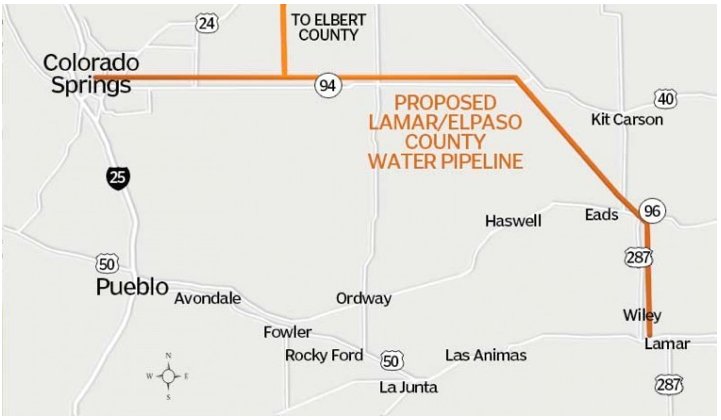
[The Lamar pipeline, a] $340 million proposal would divert the water 150 miles from where it was traditionally used, possibly out of the Arkansas River basin. “Private enterprise has got to pull the sled,” Karl Nyquist, GP Water chief executive, said. He touts both municipal and agricultural benefits of the project he is proposing. “But nothing is done in the private sector without an idea of making money.”[…]

Nyquist said the up-front costs of developing a large project can be too much for a growing community to afford. There is a competitive market for new sources of water as cities that rely on the Denver Basin aquifers slowly tap it out. GP Water quietly bought up shares of water in the Lower Arkansas Valley for nine years before deciding to make its move…

At a state Roundtable Summit in Denver last March, former State Engineer Jeris Danielson, who has worked as a consultant for both Boyce and Million, asked Gov. John Hickenlooper if there is a place for private development of state water projects. “We have to be careful bringing in private capital as part of the solution,” Hickenlooper answered. “I don’t have a problem with bringing private capital into the picture, but we need to make sure their goals line up with the state’s goals.”[…]

State officials are taking a wait-and-see approach to private projects, watching projects like Flaming Gorge and the newly announced GP plans cautiously. “I think the jury’s still out,” said Alan Hamel, a member of the Colorado Water Conservation Board and executive director of the Pueblo Board of Water Works. “In recent years, it has become harder to develop a large water project unless you’re a big water provider.”

Hamel said there could be a place for the private sector in filling state water needs, but like Hickenlooper he urges caution. “The unincorporated areas are struggling with coming up with a way to replace non-renewable groundwater assets,” Hamel said. “The Flaming Gorge Task Force is a way to flush out the issues. I think, before we’re done, there have to be some public-private partnerships.”

Be sure to click through. Mr. Woodka provides a lot of detail about water projects in Colorado in the article.

More coverage from Karen Crummy writing for The Denver Post. From the article:

Elbert County residents fear the group will take too much water out of the aquifers, some of which are being depleted faster than they can be recharged. County residents are also worried about an eventual plan to store treated Arkansas River water in their aquifers, fearing it will hurt their water quality. Meanwhile, Prowers County, where Lamar is located, is expected to lose irrigated farmland and seasonal farm-labor jobs as Arkansas River water is pumped north. “The big concern in our community is dried-up land. It’s extremely difficult to get things to grow after it dries up,” said Prowers County Commissioner Henry Schnabel. “I would rather the water was used in our area, preferably for agriculture. But we don’t know much about (the plan) right now.”

Karl Nyquist, head of GP, said the “net benefits” in both counties will outweigh the negative impacts. The pipeline from the Arkansas River means Elbert County will eventually get a renewable water source, which he said should help with economic opportunities. Prowers will enjoy a larger tax base and higher-paying jobs from the plant that will treat the river water to drinking standards. He also said GP intends to retain some farmland, using sprinkler irrigation. “We’re trying to create a win-win for every stakeholder,” said Nyquist, who has scheduled community meetings in Elbert, El Paso and Prowers counties this month to educate residents on the project…

After the public questioned the speed with which the proposal was being considered [by the Elbert County Commissioners] and the secrecy surrounding it, the commission delayed voting on the matter until Aug. 24. “This project popped up and caught a lot of people by surprise,” said John Stulp, special water adviser to Gov. John Hickenlooper and director of the Interbasin Compact Committee, a group created under a 2005 state law to promote cooperation on water- management issues and storage projects…

…through public records and an interview with Nyquist, The Denver Post was able to put together a basic picture of the project. Generally, the financing involves GP Water Group, which is made up of Nyquist and his two partners, David Pretzler and David Bechtel. Pretzler and Nyquist are also on the Highway 86 district board. Both men are also partners in C & A Holding Co., a real- estate management and development company. The Highway 86 district owns 180,000 acre-feet — roughly 58 billion gallons — of aquifer water. That water would be pumped through a 32.5- mile pipeline from southwestern Elbert County to Falcon, which is 15 miles northeast of Colorado Springs, for use while districts are waiting for Arkansas River water. Nyquist said the group is not focused on oil and gas exploration, which is set to begin in Elbert County and will need millions of gallons of water. But he also didn’t rule it out in the future. GP, which owns 39 percent of the Lamar Canal, will pull water from the Arkansas River near Lamar. Once GP, or one of its related companies, goes through the courts to change the use of the river water from agricultural to municipal, it will build a treatment facility near Lamar and the pipeline to Falcon. The group is already constructing a gravel pit in Lamar for water storage. Additional storage at the other end of the pipeline will be in aquifers…

The Arkansas River Compact Administration — made up of two Colorado members, two Kansas members and a federal representative appointed by the president — must give its seal of approval, said Steve Witte, an engineer for Colorado’s natural-resources division. It’s unclear how long that will take. “There isn’t a lot of precedent for this,” Witte said, noting that others have considered similar projects but haven’t followed through.

More Lamar pipeline coverage here.

The elk were hanging out on the late summer snowfields along Trail Ridge Road today

elktrailridgeroad08072011.jpg

I took a lap around Longs Peak today — over Trail Ridge Road and then back home over Berthoud Pass — with Mrs. Gulch.

The elk were hanging out on the snowfields. Everyone needed water today, there was hardly a cloud in the sky up on the Great Divide.

The watersheds look great this season, lots of growth. most of it still very green, lupine and paintbrush everywhere.

Animas-La Plata Project Repayment Negotiations Continue between Reclamation and Colorado

lakenighthorse.jpg

Here’s the release from Reclamation (Ryan Christianson):

The Bureau of Reclamation and the state of Colorado are continuing negotiations on a proposed repayment contract for the Animas-La Plata Project. The contract will provide the terms and conditions by which the state will repay the construction costs associated with all or a portion of its statutory allocation of project water. The third negotiation meeting is scheduled for Wednesday August 10, 2011, at 10:00 a.m. at Reclamation’s office, 835 E. 2nd Ave., Suite 300, Durango, Colo. 81301.
The contract to be negotiated will provide for storage and delivery of project water, identify the amount of project construction costs to be paid to the federal government by the state, and provide for operation and maintenance of the project.

All negotiations are open to the public as observers, and the public will have the opportunity to ask questions and offer comments pertaining to the contract during a thirty minute comment period following the negotiation session. The proposed contract and other pertinent documents will be available at the negotiation meeting, or can be obtained on our website under Current Focus or by contacting Brett Griffin of the Bureau of Reclamation, 835 East Second Avenue, Suite 300, Durango, Colorado, 81301, telephone (970) 385-6531.

More Animas-La Plata Project coverage here and here.

Lake Powell/Lake Mead news: 2011 water year on track to be the third wettest since 1963

glencanyondam.jpg

From the Las Vegas Review-Journal (Henry Brean):

The river system that fills Lake Mead and supplies 90 percent of Las Vegas’ drinking water is on track for its third wettest year since Lake Powell was filled for the first time in 1963…

Snowpack expert Randy Julander chalked up this summer’s massive flows on the Colorado to a near-perfect combination of heavy snow, unseasonably cool weather and above-average rainfall in the mountains that feed the river. “It has been a phenomenally good year for reservoirs and for Lake Powell in particular,” said Julander, who supervises the federal snow survey program in Nevada, Utah and California for the U.S. Department of Agriculture. “One good year like this one goes a long way toward fishing us out of the toilet.”

Already, the surface of Lake Powell has risen to its highest level in a decade, while Lake Mead is back to where it was in early 2009. The surface of Lake Mead is now 20 feet higher than it was a year ago, and current projections — ones now likely to be adjusted upward — call for it to rise another 33 feet by Aug. 1, 2012…

Last month’s inflow ranked as the second largest Lake Powell has ever seen in July. The 4.35 million acre-feet of water that poured into the reservoir on the Utah-Arizona border that month was almost three times the July average, and the flow in June was even greater — 5.4 million acre-feet, or almost 24 times the amount of water used in the Las Vegas Valley all of last year…

…Lake Mead is expected to finish the year at about 56 percent of capacity.

More Colorado River basin coverage here.

Colorado State University Precipitation Monitoring Network to Host Free Training Session for Poudre School Teachers, General Public on Aug. 10

nolandoesken1.jpg

Here’s the release from Colorado State University (Emily Wilmsen):

The Community Collaborative Rain, Hail and Snow Network, or CoCoRaHS, has invited Colorado K-12 schools to participate as volunteers in a fun “citizen science” program that helps weather and climate scientists across the nation.

A free training session, which is also open to the general public, will be 7-8:30 p.m. Wednesday, Aug. 10 at the Fort Collins Public Library, Harmony Campus, 4616 S. Shields Road.
Participants will learn how the National Weather Service measures precipitation, why it is important, and will have the opportunity to contribute their own precipitation data that will benefit both their local communities and scientists. The program is fun, easy, and takes only a few minutes a day.

Fundraising efforts have been ongoing, and teachers who sign up and attend a training session are eligible for a free rain gauge for their school.

Nolan Doesken, Colorado State University state climatologist and founder of CoCoRaHS, will host the training session, titled “How to measure rain, hail and snow in your own backyard.”

Current CoCoRaHS volunteers who have not attended a training session are also encouraged to attend.

For more information or to RSVP, contact Noah Newman at (970) 491-8545 or noah@cocorahs.org.

Supply and demand on an imbalanced Colorado River is the theme of the Colorado River District’s Annual Water Seminar set for Sept. 15, 2011

coloradoriverbasin.jpg

Here’s the release from the Colorado River District (Jim Pokrandt):

The hard-working Colorado River received supercharged inflow this spring and summer, but all eyes remain on an uncertain future where supply and demand will remain a delicate balance. Water planners are figuring out how to meet water supply gaps while sustaining the river in the face of climate change, population growth and potential drought.

This balancing act will be examined during the Colorado River District’s Annual Water Seminar from 9 a.m. to 3:30 p.m. on Thursday, Sept. 15, 2011, at the Two Rivers Convention Center in Grand Junction, Colo. The public is invited. Registration is $25, to defray lunch costs. To register, go to http://www.ColoradoRiverDistrict.org, call Meredith Spyker at (970) 945-8522 or e-mail mspyker@crwcd.org. Application is being made for continuing education credits for attorneys and real estate professionals.

One of the panels will feature a West Slope Roundtables’ discussion of Western Colorado’s responsibility to meet the state’s looming water supply gap, which is mostly on the Front Range. Colorado River District General Manager Eric Kuhn will address his risk-management strategy for future water development. Professor Mark Squillace will review the Colorado University School of Law’s “Rethinking the Future of the Colorado River” Project.

Here’s the agenda and registration form.

More Colorado River basin coverage here.

Energy policy — nuclear: Lincoln Park/Cotter Mill superfund site cleanup focusing on groundwater pollution with an eye towards discontinuing pumping

cottercontamination.jpg

From The Pueblo Chieftain (Tracy Harmon):

A top priority, according to Mill Manager John Hamrick, is to move away from having to pump contaminated groundwater that slips past a failed treatment wall and is then moved back onto the mill property. The site is called the dam-to-ditch area which is located between an earthen dam and an irrigation ditch which divides the mill property from the Lincoln Park neighborhood. “We’re investigating the best way to clean it up so the goal will be to eventually quit pumping. It is a small area and the plume is small there but the concentrations (of uranium and molybdenum) have remained the same — they are just sitting there,” Hamrick said. On Monday, Cotter officials notified the state public health department that they have a plan to clean up the dam-to-ditch site…

Cotter officials also are delving into the presence of TCE in groundwater underneath the mill. TCE stands for trichloroethylene and it was first detected in October 2010. “We are investigating the nature and extent of the TCE groundwater plume. There are a couple of things that are puzzling about its presence and we are not even sure the contamination is ours,” Hamrick said. Cotter officials also seek to stop pH testing in the primary waste impoundment. State health officials have ordered Cotter to neutralize the pH level in the impoundment but that requires the injection of a liquid containing lime. “That is going against another order we have to dry out the impoundment,” Hamrick explained…

The tailings pond currently is used as a site to dispose of the old mill buildings that are being dismantled. Also, some old, leftover process liquids, such as kerosene, are being mixed with an absorbent and placed into the impoundment in a dry form, Hamrick said, so keeping the drying-out process going is difficult when liquid containing lime has to be injected into the impoundment.

More Lincoln Park/Cotter Mill superfund site coverage here and here.

Lamar pipeline: The CEO for GP Water Group estimates the pipeline will cost $340 million

lamarpipeline.jpg

From The Pueblo Chieftain (Chris Woodka):

Developers who want to build a 150-mile pipeline from Lamar to growing communities in El Paso and Elbert counties estimate it would cost about $340 million to construct. “We believe we can build it cheaper than government engineers would estimate,” said Karl Nyquist, CEO for the GP Water Group. “We’ve done a fair amount of this type of work, and there are a few similar projects we’ve watched.”

GP Water proposes to build a 24-inch diameter pipeline to deliver water from rights it owns on the Lamar Canal. Customers would include the Cherokee Water and Sanitation District near Colorado Springs, and potentially other users in Elbert or El Paso counties. It would deliver up to 12,000 acre-feet annually. The primary purpose of the project is to provide renewable water to growing communities that are now mining the Denver Basin aquifers as more wells are drilled…

GP’s engineering team estimates it would cost between $330 million and $340 million to build the proposed pipeline. The cost includes the water, pump stations, a treatment plant at Lamar and the pipeline…

There would also be costs associated with treatment and transmission. Water would have to be treated for high salinity and pumped at least 2,400 feet uphill…

In most court decrees for water transfers, only the consumptive use of water may be moved. The Lamar Canal water rights have already been changed to allow multiple uses, but GP would need a new decree to use the water in a new location. GP plans to be able to move the water within five years.

Here’s the schedule of GP Water Group’s planned public meetings:

Thursday: Elbert County issues, the old gym at Simla High School, 619 Pueblo Ave., Simla.

Aug. 16 and 23: Prowers County issues, Lamar Community Building, 610 S. Sixth St., Lamar.

Aug. 17: Elbert County issues, Legacy Academy Charter School, 1975 Legacy Circle, Elizabeth.

Aug. 22: El Paso County issues, Sand Creek High School, 7005 N. Carefree Circle, Colorado Springs.

More Lamar pipeline coverage here.

Energy policy — nuclear: Cotter, Corp. wants to stop testing leaky and toxic impoundment pond

lincolnparksuperfund.jpg

From the Associated Press via The Colorado Springs Gazette:

Cotter is in the process of dismantling its shuttered uranium mill, located south of the Arkansas River near Cañon City.

A makeshift row of wooden pallets leading into the viscous impoundment has sunk into muck, and “it is now unsafe to measure the pH of the pool,” Cotter’s environment coordinator, Jim Cain, said in a July 25 letter to the Colorado Department of Public Health and Environment.

Cotter, a subsidiary of San Diego-based defense contractor General Atomics, also notified department regulators that the company will pursue a lower-cost, passive approach to investigating a recently discovered plume of the industrial solvent trichloroethene. According to Cotter documents, TCE was detected in groundwater at levels exceeding federal health limits and has spread to at least one off-site well.

Public health department officials on Wednesday still were considering Cotter’s request to suspend testing, “but it seems like a reasonable request,” department radiation control unit manager Steve Tarlton said. He also said Cotter’s proposed passive approach to investigating TCE contamination is “a good approach,” although future testing and remediation may be necessary.

More Lincoln Park/Cotter Mill superfund site coverage here and here.

Flaming Gorge Pipeline hydroelectric generation project: Aaron Million says they are ‘double-checking’ things for the project’s FERC application

flaminggorgepipelinemillion.jpg

From the Fort Collins Coloradoan (Bobby Magill):

“We’re just double checking things,” Million said. “We’ve been making sure we had the application just the way we wanted it.”[…]

Million said he wants the Federal Energy Regulatory Commission to conduct the study because of the pipeline’s hydroelectric power generation potential and the agency’s ability to issue a permit in less time than the Army Corps.

Several Larimer County water districts and irrigators have expressed interest in the pipeline, which is vigorously opposed by about 20 Colorado environmental groups because of its possible impacts to Wyoming’s Flaming Gorge Reservoir and the Green River.

More Flaming Gorge pipeline coverage here and here.

Wiggins: No outside watering allowed

watersprinkler.jpg

From The Fort Morgan Times (Dan Barker):

Wiggins residents are not allowed to water their lawns until further notice. Town wells are just not keeping up with the demand for sprinklers, and the water level in the water tower fell until the pipes were sucking air, said Wiggins Town Administrator Bill Rogers. That may be partly due to people watering more due to a lack of rain and intense heat lately, but also perhaps because the wells are falling off in water production, he said. Wiggins’ well levels have been falling consistently for years now, which is why the town is buying water rights, has a new well site in another area and is building a pipeline to bring water from the new source to town.

More Wiggins coverage here.

Republican River basin: The Yuma County Commissioners unanimously approve the Republican River Water Conservation District’s land use request for proposed compliance pipeline

republicanriverbasinbydistrict.jpg

From The Yuma Pioneer (Tony Rayl):

The Yuma County Commissioners unanimously approved the RRWCD’s land use request to construct and operate the 12-mile pipeline system. The approval came last Friday, July 29, following a public hearing held during the commissioners’ regular meeting. Commissioners Dean Wingfield, Robin Wiley and Trent Bushner also approved a request for an exemption from subdivision in relation to the outflow structure and control building at the delivery point into the North Fork of the Republican River…

Responding to a question regarding degradation of the groundwater level, RRWCD Board President Dennis Coryell explained that the wells purchased to provide water to the pipeline will be limited to the 10-year average historical consumptive use. He said the district also has a stipulation with the Sandhills Ground Water Management District, which must approve the exporting of the water, that not more than 2,000 acre feet will be pumped from any one well in a year. Coryell further explained that an agreement between Colorado and Nebraska calls for an annual minimum of 4,000 acre feet sent through the pipeline to the North Fork. He stressed that Colorado will send only what is needed up and above that minimum to meet compliance in a certain year with the Republican River Compact — which includes Kansas, along with Colorado and Nebraska…

Pumping will take place during the irrigation offseason. Coryell said some will be sent in November, and then whatever is still needed to put Colorado into compliance will be sent downstream sometime between January through March.

More Republican River basin coverage here and here.

Lamar pipeline: GP Water Group of Littleton has acquired about 40% of the land and water rights on the Lamar Canal

lamarpipeline

From The Pueblo Chieftain (Chris Woodka):

The GP Water Group of Littleton spent the past nine years quietly buying shares on the canal, which has one of the oldest water rights on the Arkansas River, with the intent of both farming and selling water to satisfy Front Range municipal water needs. While the company’s initial client, the Cherokee Water District near Colorado Springs, would receive Elbert County groundwater, the goal is to develop a renewable source from the Lower Arkansas Valley to serve communities that are essentially mining their groundwater reserves, said Karl Nyquist, CEO of GP Water. “Our goal is to create the most value for the water we already own, while having a net positive economic impact for Prowers County,” Nyquist said.

The 24-inch-diameter pipeline would be capable of delivering up to 12,000 acre-feet of water annually — equivalent to a little less than half of the potable water used in Pueblo each year. Nyquist said the water would be sold for $6-$6.80 per thousand gallons, which is a competitive rate for growing urban areas along the Front Range. The project would require a change case of water rights in Division 2 Water Court. If all goes according to schedule, the pipeline could be built and delivering water within five years…

The water would be destined to fill the gap in municipal supplies, particularly in northern El Paso and Elbert counties. Some of the Arkansas River might end up in the South Platte River basin, since both counties straddle the divide between the two basins. GP has had preliminary discussions with Castle Rock and other users in the South Platte basin as well…

The historical consumptive use of the water GP owns on the Lamar Ditch is about 8,000-10,000 acre-feet annually, which is the amount the company would move on its own. To continue farming, GP has purchased about 1,100 shares of well augmentation water through the Lower Arkansas Water Management Association…

Elbert County commissioners on Aug. 24 will consider a request to expand the district’s scope to statewide service. GP Water is planning five public meetings in Elbert, El Paso and Prowers counties over the next three weeks to explain its plan.

Here’s the release from the GP Water Group via The Prowers Journal:

GP Resources, LLC, a Colorado-based farming and natural resources firm, announced plans today to provide water to Front Range communities, Elbert County, and others as part of a new regional water project intended to serve as a model for how in-state water transfers can be done in a way that benefits all communities involved. The project involves limited amounts of ground water from Elbert County and a significant amount of agricultural surface water from the lower Arkansas River, both of which are privately owned by GP. It is anticipated that the project will create jobs and provide homeowners and businesses with access to much-needed renewable water supplies, helping them to solve the increasing problems associated with reliance on aquifer resources.

GP will hold a series of public information sessions to describe its plans in detail, take questions, and listen to community viewpoints in order to further increase the project’s benefits. Two meetings have already been scheduled in Lamar. These meetings will take place on August 16th and August 23rd from 7:00 to 9:00 p.m. in the multi-purpose room of the Lamar Community Building. Additional meeting times and locations in Elbert county and other venues will be announced soon. In an effort to make this project a model for how agricultural transfers should be done, GP will take guidance from the Water Transfer Template developed by the Arkansas River Roundtable as a framework for addressing the needs and concerns of all stakeholders. Significant groundwork has gone into project analysis, finance, and planning. Key components include: — Investments in equipment, systems, and practices to increase the efficiencies of current water consumption on GP’s farms based in Lamar.

Large portions of the farms will continue to operate after the project is completed and the remaining water will become available for municipal use after going through Colorado’s mandated water court process. The court process ensures that downstream agricultural and municipal users will not be adversely affected by the change in use. Furthermore, because this is an existing diversion, the project will not remove any water from the Arkansas basin that is not already being consumed and therefore should have minimal environmental impacts — Investments in GP’s water rights and systems in Elbert County, involving an upgrade of the capabilities of a local water District to allow transmission of GP’s privately owned and adjudicated water on an interim basis to a water district in the greater Colorado Springs area. This will include construction of a below-ground pipeline through or adjacent to an existing service easement for most of the alignment and will bring much-needed relief to the community, which has experienced problems with its current water sources.

Upon delivery of GP’s renewable water supply to this community, the same pipeline will be re-used to deliver additional renewable water to Elbert County and others. –Investments in water treatment, storage, and transmission facilities which will allow the efficient movement of GP’s excess Lamar water to Front Range communities and Elbert County, providing them with a stable, cost-effective, and renewable water supply. Additionally, jobs will be created in both counties through the construction, on-going maintenance and operation of the system. To implement these plans, GP is currently in discussions with several water districts to provide them with as efficient a solution to their water needs as possible. GP has also had preliminary consultations with relevant County authorities to ensure its project is responsive to local needs and provides a win-win for key stakeholders. GP plans to continue these efforts through immediate contact with all interested parties in the Arkansas Valley and along the Front Range.

More coverage from Chris Woodka writing for The Pueblo Chieftain. From the article:

Over the last nine years, GP quietly purchased 40 percent of the Lamar Canal, which already is used for municipal industrial, augmentation and wildlife in addition to agricultural purposes in the local area. Moving the water to growing communities could have grave consequences for Prowers County.

Nyquist would prefer that everyone benefit from his plan. In a benefit analysis, GP acknowledges that Prowers County would lose some irrigated farmland, export water out of the basin and lose seasonal farm jobs. On the plus side, the company plans to keep some of the farmland in production, improving it with sprinkler irrigation. It would increase the tax base with construction of a water treatment plant that would create jobs and diversify the local economy. Finally, it plans to develop aquifer storage in Prowers County, which would benefit all water users by reducing evaporation.

The most surprising thing about the company’s approach, however, is that it wants to subject the project to analysis under a water transfers template developed by the Arkansas Basin Roundtable. The template was the first attempt in the state to address third-party impacts from water projects — making up for the closed shops on Main Street, loss of tax base and other problems that come with the sale of water. While the template was widely hailed in water circles, it has never been put to practical use. “Our water attorney, Wayne Forman (of Brownstein Hyatt Farber Schreck), suggested we use it,” Nyquist said. “In all of our projects, if we can work with all of the stakeholders, we have a better chance to find a win-win solution.”

More Lamar pipeline coverage here.

South Platte River basin: Sand Creek Volunteer Work Day September 3

sandcreek.jpg

From the Sand Creek Regional Greenway via the Commerce City Sentinel:

The eighth annual REI/Sand Creek Greenway Volunteer Work Day will be from 8 a.m. to noon, Sept. 3, at the Smith Road Trailhead west of Havana Street.

It’s a joint project between the greenway partnership, Denver Parks and Recreation, Aurora Parks Recreation and Open Space and Commerce City Parks and Recreation.

Crew leaders will work with groups of volunteers to maintain the greenway’s urban wilderness. The native prairie habitat is home to many species of animals and it is enjoyed by many including hikers, runners, cyclists, and horseback riders.

Volunteers meet in the parking lot on Smith Road, west of Havana Street in Denver. Wear long pants, sturdy footwear and work gloves, if available. The groups work in Denver, in Sand Creek Park in Aurora and around the Wetlands Park in Commerce City.

Opportunities are available for adults and children 8 and older. Pets are not permitted. Participants will receive an REI tech T-shirt, morning snacks, lunch and beverages.

Preregister online at either http://www.volunteeroutdoors.net or http://www.sandcreekgreenway.org. Contact the Sand Creek Regional Greenway at 303-468-3262 or via email at bschubert@sandcreeekgreenway.org.

More South Platte River basin coverage here.

Work begins on Clark Reservoir enlargement

clarkreservoirboxelderauthority

From the North Forty News (Cherry Sokoloski):

The project is part of Phase I of the Boxelder Basin Regional Stormwater Authority project, designed to reduce flooding along Boxelder Creek. Three ponds, each several acres in size, will be built. When they are finished, likely early this month, dredging of Clark Reservoir will begin. The dredge pump will pump water-laden sediment into the ponds, where sediment will separate from the water and settle to the bottom. The water will then be pumped into the Inlet Canal and returned to Clark Reservoir. Dredging is scheduled to be completed by late November, according to authority manager Rex Burns.

More stormwater coverage here.

Energy policy — oil and gas: West slope conservationists worry that Governor Hickenlooper’s Oil and Gas Conservation Commission appointments lean too heavily towards those companies being regulated

derrick.jpg

From the Washington Independent (David O. Williams):

“The new commission lacks a member who is intimately aware of Western Slope community impacts,” said Frank Smith of Western Colorado Congress. “We’re cautiously optimistic but concerned about the ability of the new COGCC to protect public health and Colorado air and water.”

Republican Fort Lupton Mayor Tommy Holton is a new appointee who replaces former Democratic Garfield County Commissioner Trési Houpt as the local government official on the board.

Other new commission members include Republican John Benton, a vice president and general manager for Rex Energy in Denver; Democrat W. Perry Pearce, manager of state government affairs for ConocoPhillips/Burlington Resources; and Democrat Andrew Lawrence Spielman, a natural resource attorney at Hogan Lovells in Denver.

Thomas Compton of Hesperus and Richard D. Alward of Grand Junction were both reappointed to the board that’s also comprised of Mike King, executive director of the Department of Natural Resources, Dr. Chris Urbina, executive director of the Department of Public Health and Environment, and Republican petroleum engineer Dolly Ann “DeAnn” Craig.

“The new COGCC will have tough decisions to make, and some of these will highlight their allegiances and values,” Smith added. “COGCC will make big decisions related to drilling in and near communities and updating fracking [hydraulic fracturing] regulations. The poor economy led the previous COGCC to expedite drilling and, some may say, place less of an emphasis on understanding natural gas’s impacts to public health.”

Meanwhile, the first meeting of the new board is next week, according to Gene Sears writing for the Fort Lupton Press. From the article:

“Not much time to get ready, so I will be doing some studying over the weekend and make sure I’m up to speed,” [Fort Lupton Mayor Tommy Holton] said. “I was up to speed at one time when we were doing so much with the oil and gas, especially when they brought in the 318-A rule (The Greater Wattenberg Area special well location rule that governs the placement of wells in the Wattenberg field).

“Different voices and a united spirit of collaboration are key to the success of the commission,” Hickenlooper said in a release detailing the appointments. “We are confident this group will help serve the industry, land owners and the environment well as it navigates through issues that are important to both the state’s economy and protection of Colorado’s beautiful landscapes.”

It’s a vision Holton says he shares, bringing along his unique perspective from a lifetime of interaction with oil and gas development, starting at home. “From dealing on the farm with oil and gas, and then dealing with the county on oil and gas and then with the city, it is just something I am interested in. I think Weld County does need representation there, seeing as how 37 percent of the production in the state comes from Weld County. It just makes sense to have someone there,” Holton said.

More oil and gas coverage here and here.

Opinion: State Representative J. Paul Brown wants to see more storage particularly on the eastern plains

roadteasttolaplatas032004.jpg

From The Durango Herald (J. Paul Brown):

Last year, 600,000 acre-feet of Colorado water flowed through the Eastern Plains to Nebraska, water that if stored in Colorado would satisfy that demand. This year, it is estimated that 1 million acre-feet of our water will go to eastern states downstream.

It is imperative that we build water-storage projects in Colorado, especially on the Front Range. I’m convinced that with adequate water storage, places east of the Continental Divide won’t need Western Slope water.

We can all agree that we like to eat, and it is kind of nice to spend less than 10 percent of our income on food. It is truly an honor to be one of a handful of Colorado legislators who are agricultural producers. Agriculture is the second-largest sector of Colorado’s diverse economy with cash receipts of more than $6.3 billion and providing more than 105,000 jobs.

More Colorado water coverage here.