Restoration: Partial cleanup of Saints John Mine in Summit County planned for summer

saintsjohnmineminers1880artsourceinternational.jpg

From the Summit County Citizens Voice (Bob Berwyn):

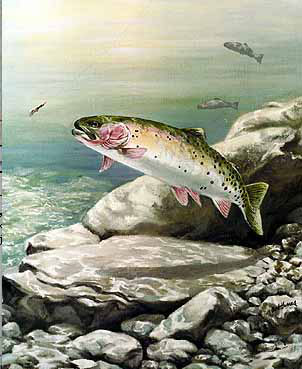
Beautiful as Saints John Creek may look, it’s heavily polluted with cadmium, copper, lead and zinc that leaches into the water from weathered waste rock and from the underground workings of the former mine. Concentrations of some of the metals, especially zinc, are so high that the water is deadly to fish and to the aquatic bugs they feed on. As a result, the short stream segment has been listed as impaired since 1998.

This summer, the Colorado Division of Reclamation, Mining and Safety plans to start cleaning up the mess with an ambitious $500,000 restoration project that involves moving some of the exposed tailings away from the water to an upland repository, where they’ll be capped and covered with native vegetation.

State officials may also divert some of the water pouring out of an old mine opening to prevent the water from coming in contact with the weathered rock. Altogether, they hope the work will reduce the amount of dissolved zinc in the water by about three pounds per day. Zinc is particularly toxic to trout, impairing their ability to breathe.

More water pollution coverage here.

Loopholes in the Clean Water Act are potentially detrimental to waterways

big5tunnel.jpg

From the Colorado News Connection (Kathleen Ryan) via the Fowler Tribune:

…some worry that loopholes in the Clean Water Act could allow the mining industry to turn Colorado’s lakes and rivers into dumping ponds for waste. One loophole allows mines to treat nearby lakes, rivers and other wetlands as “water treatment systems,” exempt from Act provisions. The other allows for toxic mine tailings, or waste, to be treated as “fill.” Prior to 2002 that designation was limited to non-toxic waste such as rock, soil and clay.

Tony Turrini, an attorney with the National Wildlife Federation, says the solution isn’t to stop mining, but to make sure it’s done sensibly.

“We certainly appreciate the economic benefits that a mine can bring to a local community, but we do insist on responsible mining. Discharging waste into waters is not responsible mining.”

The National Wildlife Federation and other groups are calling for the EPA and the Army Corps of Engineers to close the two loopholes, saying it will allow for new hardrock mining at proposed sites while at the same time preserving Colorado’s environment.

More water pollution coverage here.

Flaming Gorge Pipeline: Protect the Flows asks Governor Hickenlooper to put the kibosh on the project

coloradoriverbasin.jpg

Here’s the release from Protect the Flows.

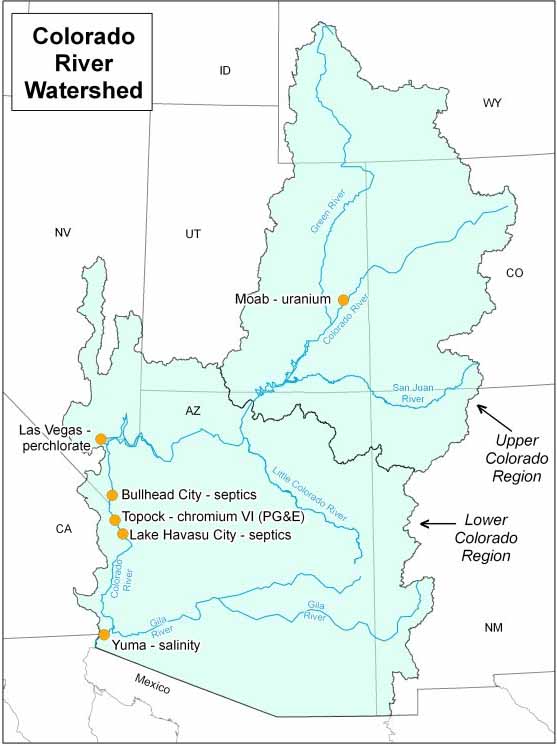
118 West Slope businesses sent a letter this morning to Colorado Governor John Hickenlooper, expressing their opposition to the proposed Flaming Gorge pipeline. The businesses are members of Protect the Flows, a coalition of over 500 small business owners in the seven state Colorado River region (AZ, CA, CO, NM, NM, UT, WY) who depend upon flows in the Colorado River and its tributaries that are adequate to support the recreation economy.

In the letter…Protect the Flows asks that the administration cease devoting state resources to studying the Flaming Gorge pipeline upon conclusion of the state’s special task force examining the project’s feasibility. As the task force has deliberated, troubling facts about the pipeline have continued to emerge, opposition to the pipeline has continued to grow, and federal agencies have continued to deny all permit attempts for the pipeline. Protect the Flows indicated that they would welcome a dialogue on water that welcomes and fosters ideas beyond the proposed pipeline and adequately accounts for the economic interests of the recreation and tourism industry. The task force, known formally as the Basin Roundtable Project Exploration Committee, is funded by a state grant issued by the Colorado Water Conservation Board and is scheduled to continue discussions through the end of 2012.

“The state’s task force is focused only on one increasingly controversial idea — the Flaming Gorge pipeline proposal,” said Molly Mugglestone, Coordinator for Protect the Flows. “But to come up with the most effective solutions on future water usage we must apply a broader, more inclusive framework, like the one that was applied in achieving the newly completed agreement between Denver Water and West Slope interests.”

Protect the Flows recently released a report showing that the Colorado River and its tributaries support a quarter million American jobs and generates $26 billion annually in total economic output. In Colorado alone, the Colorado River supports about 80,000 jobs and about $9.6 billion in total economic output.

The proposed Flaming Gorge pipeline puts that economy in harm’s way. The plan would siphon 80 billion gallons each year from the Green River (a Colorado River tributary), which was recently declared the second most endangered river in America by American Rivers, for shipment to the Front Range. Moreover, the State of Colorado estimates that construction costs for the pipeline could reach $9 billion. An economic study by Western Resource Advocates indicated that the pipeline would take nearly a quarter of the Green River’s flow, which would result in a $58.5 million dollar annual loss to the region’s recreation economy. That same study reported that the water delivered to the Front Range by the pipeline would have to be sold at a price that is the most expensive in Colorado’s history (up to 10 times more than any existing project) because of the pipeline’s steep construction and operation costs.

“Construction of this pipeline would be devastating to the entire Colorado River System,” said Tom Kleinschnitz, President of Adventure Bound River Expeditions in Grand Junction, which employs 30 people. “The significant loss of flows in the Green River would dramatically impact the quality of river recreation and affect tourism for everyone downstream all the way to Mexico.”

Protect the Flows has committed to spend 2012 reminding Governor Hickenlooper and state officials that public resources would be better spent on more affordable solutions that support recreation industry jobs, such as improving water conservation efforts, water reuse and recycling, and better land-use planning and growth management.

More Flaming Gorge Pipeline coverage here and here.

Colorado Water 2012: ‘There was and continues to be tension between the Western and Eastern Slopes’ — Mike Gibson

riograndebasin.jpg

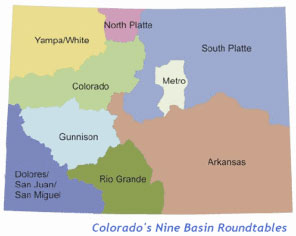
Here’s the latest installment of the Valley Courier’s Water 2012 series. Mike Gibson describes the workings and role of the Rio Grande Basin Roundtable with respect to the IBCC and other basin roundtables. Here’s an excerpt:

There was and continues to be tension between the Western and Eastern Slopes as some feel water should be moved to the Front Range, and many on the Western Slope do not share these ideas. Similarly, these diverse opinions were held in other river basins…

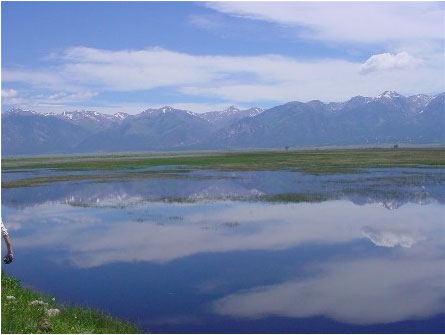
Members of the [Rio Grande Roundtable] RGRT have participated in discussions to address the issues facing other basins and the state. It has been concluded that meeting the shortfall in municipal water (600,00 acre-feet by 2050) will be achieved by conservation, implementation of projects under construction or design, new projects in the future, such as new reservoirs, potential new sources of water, and transfers from the agricultural sector. While the latter may be the easiest way to meet the shortfall, there is general consensus that such transfers should be minimized to preserve the agricultural lifestyle and economy of the State. These deliberations also considered the necessary water for recreational use and maintenance of the natural environment…

The Water Supply Reserve Account has been funded to $41.8 million of which $4.8 million has come to the Rio Grande Basin. The process to obtain these funds is for the proponents to discuss their project with members of the roundtable and its chairman. If it is determined the applicant and their project will meet the necessary criteria for funding, a formal application is completed and presented to the roundtable for their endorsement. The request is subsequently reviewed by CWCB staff and finally presented to the CWCB for approval.

The WSRA funds that have come to the Rio Grande Basin have covered a variety of “water projects” across the Basin, including reservoir studies and rehabilitation; on-site improvements to diversion structures and head gates; repairs of water conveyance structures; river restoration; the conservation of agricultural land and its associated water; and outreach and education. Recipients have included irrigation and reservoir companies and non -profits involved with conservation and restoration. The projects have been geographically widespread, from Creede, to Fort Garland, to San Luis and have been completed on the Rio Grande, Alamosa, and Conejos rivers and their tributaries. Since WSRA funds have been available, the Valley has addressed many outstanding issues that were known but did not have a mechanism to be implemented.

More Colorado Water 2012 coverage here.

Buena Vista: Paddle Fest is coming up this weekend

kayaker.jpg

Here’s the link to the Paddle Fest website.

More whitewater coverage here.

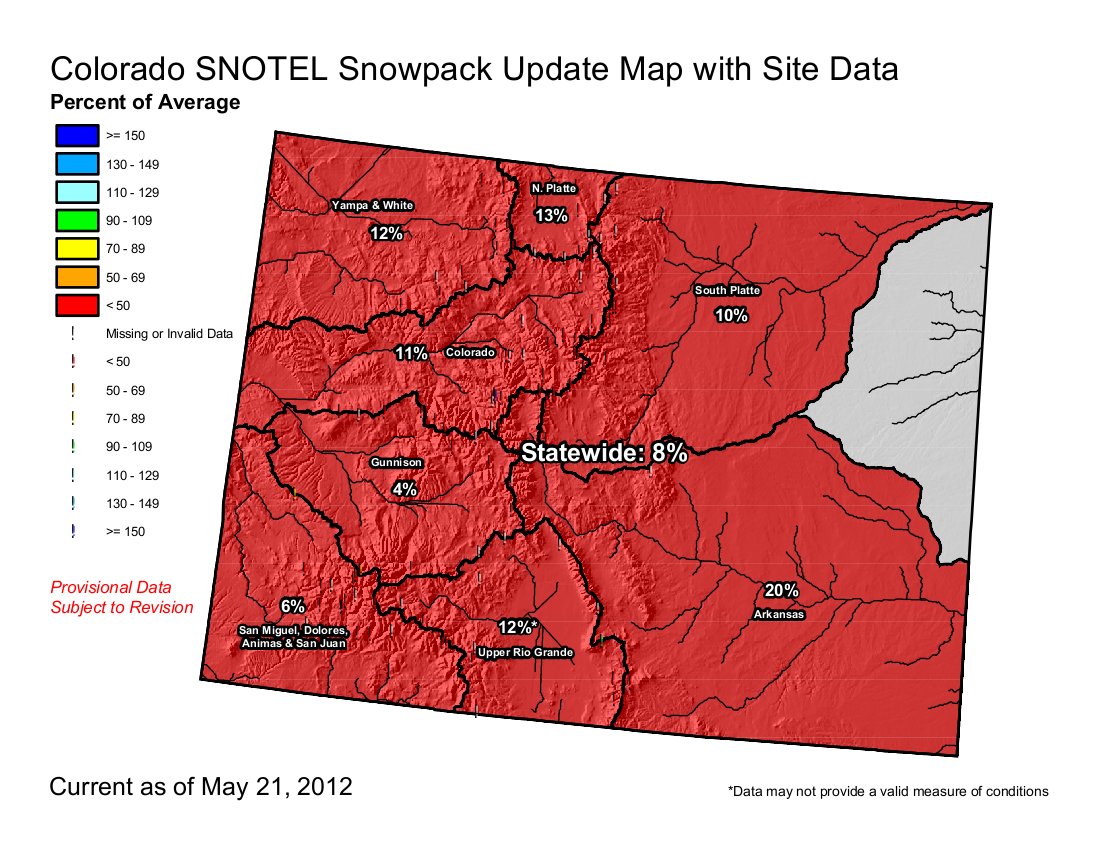
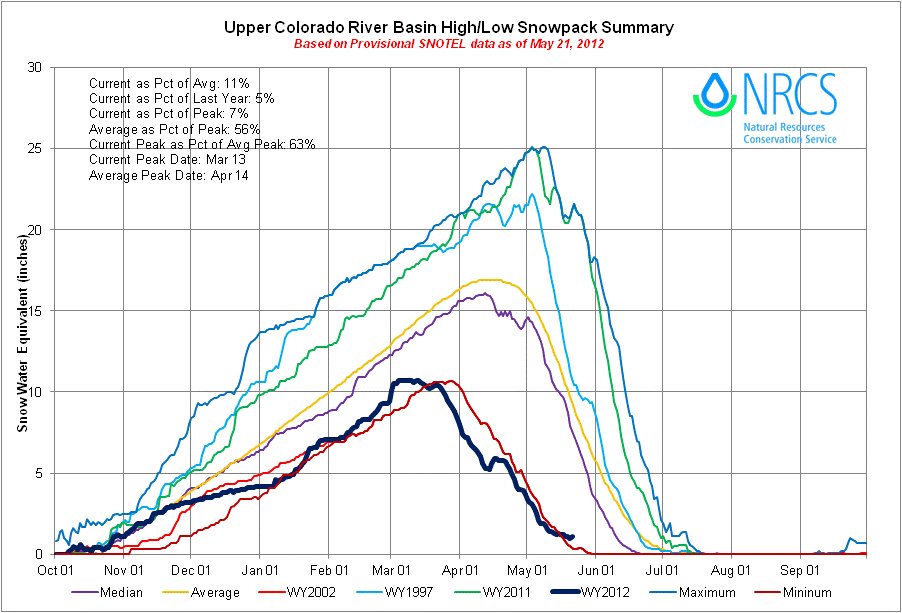
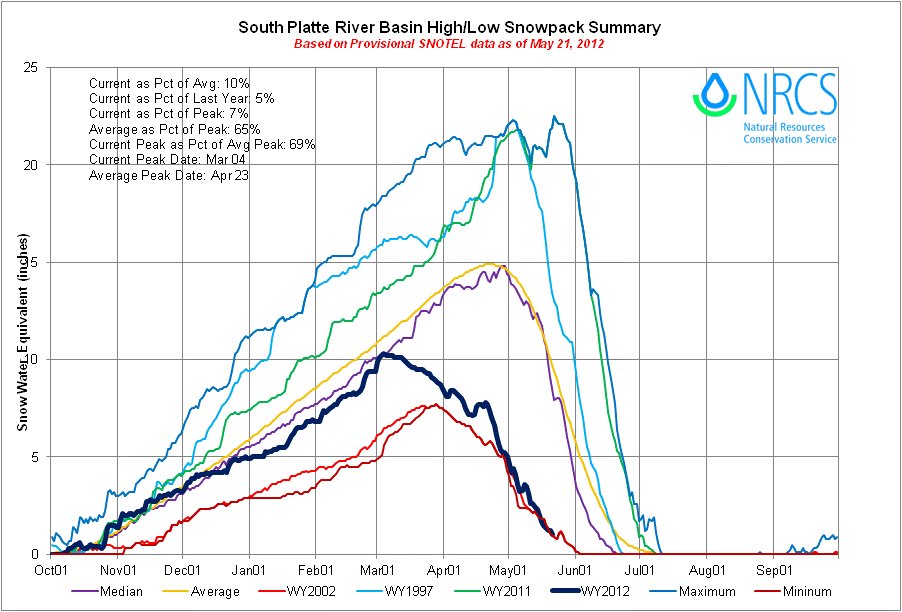
Drought/snowpack/runoff news: The snowpack is all but gone across Colorado, weeks ahead of average

snowpackcolorado05212012.jpg

basinhighlowuppercolorado05212012.jpg

basinhighlowsouthplatte05212012.jpg

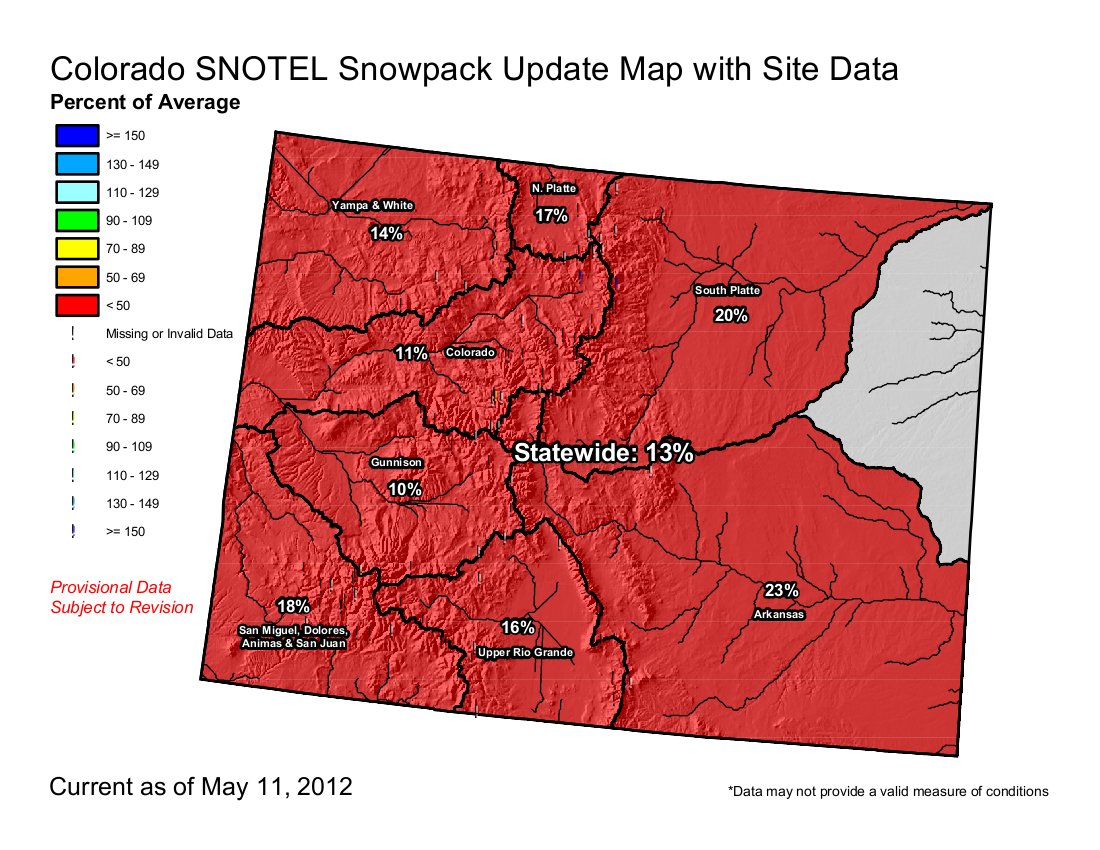
Click on the thumbnail graphics for the current snowpack map along with the basin high/low graphs for the South Platte and Upper Colorado rivers, from the Natural Resources Conservation Service. The median melt out date is usually somewhere in the middle of June.

Bobby Magill has posted two May photos from trail ridge road up on the Restless West Journal. One photo is from 2010 and one from this year. The contrast is stark.

From The Mountain Mail (Mike Campbell):

Amy Larson, spokesperson for Colorado River Outfitters Association, said, “With the Colorado reservoirs at capacity and river levels running ahead of normal, early season rafting offers ideal conditions for families and first-timers looking for some fun and excitement.”

The association’s executive director, David Costlow, said, “There’s a misperception out there this year that, because we didn’t have a lot of spring snow, there won’t be water to raft this year.

Here’s a release from the Eagle River Water and Sanitation District (Diane Johson):

Eagle River Water and Sanitation District customers are reminded that the normal Water Use Regulations apply year-round. The regulations govern how water is used, particularly outdoors, within Eagle River Water & Sanitation District’s service area.

“The district is responsible for protecting an adequate supply of water to its customers,” said General Manager Linn Brooks. “We promote efficient use of water at all times, but given this year’s potential water supply challenges, every customer can lessen the impact of the drought to our community by carefully considering their outdoor water needs.”

As part of the district’s general rules and regulations, the Water Use Regulations are rooted in Colorado water law and state that “water shall be used for beneficial purposes only and shall not be wasted.” This is primarily achieved by watering no more than three days per week and avoiding outdoor water use during hot and windy times of day, when water is lost to evaporation.

The complete Water Use Regulations are available at www.erwsd.org

The district encourages customers to have their irrigation systems properly maintained because water is wasted if sprinkler heads or lines are broken or are spraying onto driveways or roads.

The Colorado Water 2012 travelling exhibit is on display at the Aurora library until June 2

coloradowater2012.jpg

From email from the City of Aurora (Julie Patterson):

Colorado Water 2012 exhibit on display through June 2 at Aurora Central Library

AURORA, Colo. – “Colorado Water 2012,” a traveling exhibit celebrating Colorado water history and the importance of the state’s water resources, will be on display now through June 2 at the Aurora Central Library.

In conjunction with the exhibit, the Aurora Central Library will show a free screening of the documentary “Liquid Assets” at 6 p.m. May 23. This film presents stories from communities across the country to help provide an understanding of hidden water assets, demonstrate watershed protection approaches and illustrate 21st century solutions. It also looks at the 100-year-old aging, neglected and complex infrastructure that delivers water to American communities.

Also, at 6 p.m. May 30, the Aurora Central Library will host a free showing of the documentary “The American Southwest: Are We Running Dry?.” Narrated by Jane Seymour, this film is an intelligent and provocative piece that educates the public about conservation, water reuse, desalination and how population growth will affect future water legislation. The film also includes a significant amount of information about the Colorado River.

Coordinated by the Colorado Foundation for Water Education, the “Colorado Water 2012” exhibit coincides with several water milestones in Colorado history, including the 75th anniversary of legislation that created organizations such as the Colorado Water Conservation Board and the Colorado River Water Conservation District that built the foundation for the management of Colorado’s water resources; the centennial of the Rio Grande Reservoir; and the 50th anniversary of the Fryingpan-Arkansas Project.

The Aurora Central Library, located at 14949 E. Alameda Parkway, is open from 9 a.m. to 9 p.m. Monday through Thursday, from 10 a.m. to 6 p.m. Saturday and from 12:30 to 6 p.m. Sunday. For more information, call 303-739-6600 or visit www.auroralibrary.org.

USGS: What Water Worries Will Climate Change Bring?

yampariverbasin.jpg

The United States Geological Service is modeling the effects of climate change on various basins around the U.S. Here’s a release from the agency (Kara Capelli):

“We are unlikely to see a ‘water-as-usual’ future.” – Marcia McNutt, USGS Director

Arguably, the most important impacts of climate change – including those to ecosystems, agriculture, energy, and industry – will be tied to changes in water availability, especially as the world becomes increasingly water-stressed. It’s crucial that water managers understand the likely impacts of climate change, so that they can plan for new conditions and challenges.

How will your water be affected?

Understanding the impacts that climate change will have on water availability in specific regions and communities is a mammoth task. Water availability in every region, basin, and watershed will be affected differently, depending on the specific precipitation and hydrologic conditions in that area.

Also, for all of the models and technology we have available at our 21st century finger tips, weather patterns are still notoriously unpredictable. Forecasting future precipitation conditions is even more difficult, especially under new climate scenarios, and changes to weather patterns will vary across the country.

Complicating water availability predictions further, each basin has its own unique set of hydrologic and geologic features that affect how much water is available, where that water comes from, and how it flows through a system.

Little by little, though, scientists are beginning to build the information and tools to understand the nuanced effects of climate change to the Nation’s water resources.

USGS predicting changes to water availability in 14 basins across the Nation

In a first-of-its-kind study, scientists from the USGS have predicted changes to water resources for 14 different basins across the country.

First, the scientists downscaled vast climate models, in order to understand changes in temperature and precipitation specific to the 14 study basins. They then used USGS hydrologic models and streamgage information to project how water resources will be impacted by the changing weather patterns, taking into account specific hydrologic and geologic features in each basin, such as snowpack, drought, and groundwater conditions.

For example, the USGS models project that changes to snowpack in the Sprague River Basin in Oregon could cause annual peak streamflows to occur earlier in the spring as overall basin storage decreases. This means that managers may be forced to modify storage operation and reprioritize water delivery for environmental and human needs.

In many areas the biggest impacts to water resources will be a factor of reduced snowpack. For example snowpack in the headwaters of the Colorado River could affect the amount and timing of streamflow to the Colorado River and also impact important recreation areas.

Portions of Maine may see higher streamflows, which could affect populations of endangered Atlantic salmon. On the other hand, areas of the already drought-stressed Flint River Basin, one of Atlanta’s primary drinking water supplies, are projected to become even drier.

More USGS coverage here.

Drought/runoff news: Next up, the North American Monsoon?

northamericanmonsoonmap.jpg

usdroughtmonitor05152012.jpg

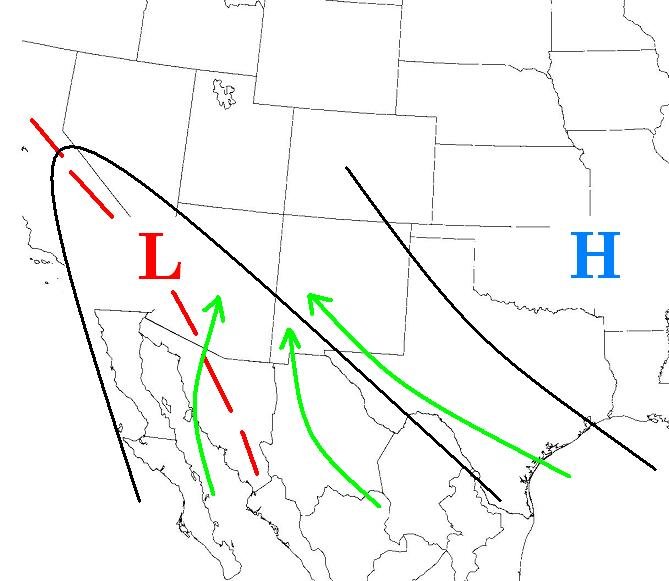
I ride a bicycle to work most days and for most errands so rain in the forecast is always a pain in the derriere. I also work for a water provider faced with a vanishing snowpack and a huge increase in consumption this spring. The realization that our storage will not fill as usual has us looking hopefully at the coming monsoon season both for summer stormflows to divert and to dampen demand for outdoor irrigation.

Meterologist, Brian Bledsoe, is optimistic about the monsoon and for the prospects of a cold and wet fall, according to a report from Chris Woodka writing for The Pueblo Chieftain. From the article:

“I’m most encouraged that we’re going to see a summer monsoon season,” television meteorologist Brian Bledsoe told a drought preparedness workshop last week at the Colorado State Fairgrounds.

The workshop attracted about 50 people, mostly farmers and ranchers from Pueblo, Fremont and Huerfano counties. The daylong event provided information about rangeland management, weed control and farm economics as the area endures its second year of drought. After an early runoff, state snowpack is at 12 percent of average.

While many weather forecasts pay attention to the broad trends associated with La Nina and El Nino — cooling or warming of the Pacific Ocean — there are other climate patterns that influence Colorado’s weather, Bledsoe said. A particularly good indicator is the highly variable Madden-Julian Oscillation, which originates in the Indian Ocean. Other seasonal and multiyear patterns over the Pacific Ocean and North Pole play a part, as does the solar cycle.

The upshot of Bledsoe’s calculations show a good chance that La Nina is over and El Nino is coming. That could mean heavier rains in late summer and fall, like the region saw in 2009, the wettest year of the decade in Pueblo.

The winter is also likely to be colder than usual, with chances of snow depending on what happens with moisture in the Southwest U.S. in the next few months. Conditions could be similar to the winter of 2006-07, when several blizzards hit the Eastern Plains.

Bledsoe showed several climate models that predict with some certainty that an El Nino is brewing in the Pacific Ocean, which usually means more moisture for Southern Colorado. The projections vary wildly as they go further out in time, but there is some degree of confidence that patterns will change in the next few months, he said.

From Steamboat Today (Matt Stenslund):

Conditions are drastically different compared to last year, when record snowpack led to a swollen Yampa River…According to preliminary data from the Colorado River Basin Forecast Center, the flows on the Yampa peaked this spring on either April 27 or May 6, when flows were measured at about 1,570 cfs. The peak will not be made official until the data is analyzed this fall.

Craig Peterson, a hydrologist with the Forecast Center, said the earliest peak on record for the Yampa downtown was April 26, 1974, when the flow was measured at 5,790 cfs. The records go back to 1904.

According to data from the Tower snow measuring station 10,500 feet above sea level on Buffalo Pass, 35 inches of snow remains, containing the equivalent of 16.3 inches of water. The historic average snow-water equivalent for May 18 is 50.7 inches of water. On May 18, 2011, the snow-water equivalent at the Tower measuring station was 74 inches, which was 146 percent of average, and the number still was growing. The snow-water equivalent did not peak last year until May 29, when the snow held 80.1 inches of water.

Sterling: Northeastern Junior College Water Festival welcomes 336 third through sixth grade students

windfarmsterlingvialogancounty.jpg

From the Sterling Journal-Advocate (Callie Jones):

Another presenter was Jennifer Talagrad, from the University of Colorado, who talked about marine biology. During the presentation students learned about various life forms that can be found in different parts of the ocean, from tide pools and kelp forests to coral reefs and the deep sea…

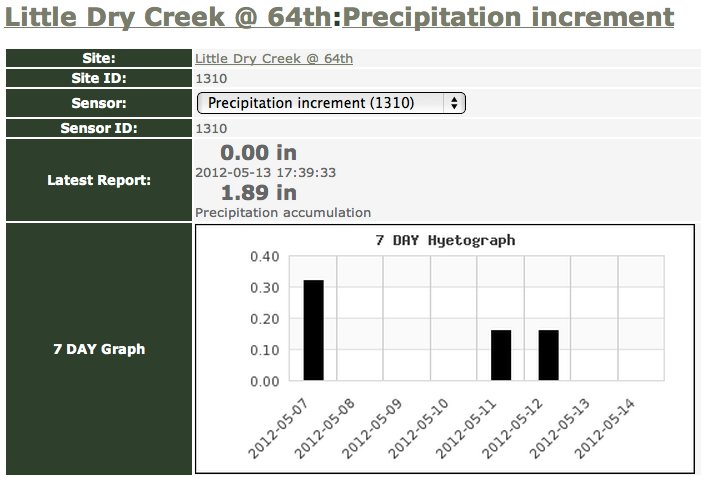
Katie Boyd, from the Community Collaborative Rain, Hail and Snow Network, led the “Let’s Play and Make It Rain,” presentation. Students learned about how rain is measured, by making their own rain with water guns and measuring it in rain gauges. Boyd talked to the students about how scientists measure the amount of precipitation an area gets, telling them it’s important that they know even if it didn’t rain, so they know exactly what happened each day.

More education coverage here.

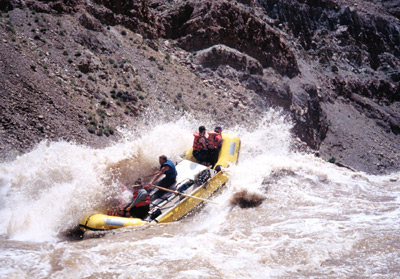
Colorado Mesa University forum — ‘Value of the Colorado River to Western Colorado Economies’ May 22

cataractcanyon.jpg

From email from the Water Center at Colorado Mesa University (Hannah Holm):

Value of the Colorado River to Western Colorado Economies

Hosted by the Mesa County Conservation Forum, Colorado Mesa University Water Center, Protect the Flows Project

Opening Comments by Al White Colorado Tourism Office Director, Denver

Steve Acquafresca, Mesa County’s Director to the Colorado River Water District
Tom Kleinschnitz, Adventure Bound Outfitters, Club 20 Tourism Chair
Max Schmidt, Manager, Orchard Mesa Irrigation District
Kurt Mill, Regional Manager, Colorado Parks & Wildlife
Bruce Talbott, Local Grower and representative of local growers

Moderator: Hannah Holm, CMU Water Center

Join in the dialogue about how many different uses of the Colorado River impact our local economy.

Tues May 22nd 6-8:00pm, CMU Center Ballroom

More Colorado River basin coverage here.

The Crystal River makes the top ten most endangered rivers list, Wild and Scenic designation in the future?

crystalriver.jpg

From The Aspen Times (Scott Condon):

Rivers in Colorado remained off the list in 2011, but appeared again this year with the Crystal River showing up as the No. 8 most endangered river in the United States. It flows out of the mountains, through Redstone and into Carbondale where it meets with the Roaring Fork River.

The threat: dams and diversions. The same reasons the Upper Colorado was listed in 2010.

At stake in both scenarios are fish and wildlife habitat, beautiful vistas and visitor recreation. On top of that, the Crystal River is one of the few remaining free-flowing streams in Colorado. “But new hydropower dams, reservoirs and water diversions threaten to destroy the river’s unique values,” the report states.

The Colorado River District and West Divide Conservancy District hold conditional water rights that could be used to build the 4,000-acre-foot Placita Reservoir; a similar-size reservoir on Yank Creek, a tributary of the Crystal River; and a water diversion on Avalanche Creek, the largest tributary of the river. The Placita Reservoir would be about four miles upstream from Redstone.

The designation is just the beginning of action, American Rivers’ Colorado conservation director Matt Rice said. “We hope this will begin a renewed effort to protect the Crystal River with a ‘Wild and Scenic’ designation,” he said. That designation would bring federal protection and prevent dam building.

More Crystal River coverage here and here.

The Denver Post editorial board weighs in on the Colorado River Cooperative Agreement

coloradorivergranby.jpg

From The Denver Post:

One of the linchpins is that Denver Water, which serves more than 1.3 million customers on the Front Range, gets approval for the expansion of Gross Reservoir near Boulder. The utility needs the project so it may ensure adequate water for customers on the northern edge of its service area…

The agreement calls for Western Slope parties to not oppose — and in some cases support — the Moffat Collection System project, which includes the reservoir expansion.

More Colorado River Cooperative Agreement coverage here.

Colorado Water 2012: Water and livestock

haymeadowsneargunnison.jpg

Water for production is just one factor in the relationship of ranching with water. The impact of livestock upon the watershed and its ability to receive snowmelt and rainfall is critical to a healthy water cycle that makes maximum use of nature’s heavenly gift. The most immediate need for a livestock operation is to supply the daily water consumption of the animals. Roughly 20 gallons of water per head per day are required in summer, and about 10 gallons per head per day in the winter.

Water quality is also very important. One of the most important things a livestock producer has to be concerned about is the dependability and quality of an adequate water supply. This certainly can be challenging at times during drought and with poor or failing wells.

More Colorado Water 2012 coverage here.

2012 Colorado legislation: Governor Hickenlooper signs CWCB construction funds authorization

firstwaterfromadamstunnel1947.jpg

From email from Governor Hickenlooper’s office:

Gov. John Hickenlooper signed several bills today in Poncha Springs, Alamosa and South Fork…SB12S-002, Water Conservation Board Construction Fund Projects, Schwartz & White / Sonnenberg & Baumgardner, Concerning the funding of Colorado Water Conservation Board projects, and, in connection therewith, making appropriations.

More 2012 Colorado legislation coverage here.

‘The Flaming Gorge Pipeline has been rejected more often than a freshman before prom’ — Stacy Tellinghuisen (Western Resource Advocates)

flaminggorgepipelineearthjustice.jpg

It looks like Aaron Million will have to pony up the big bucks for engineering and attorney’s fees to flesh out his application with the Federal Energy Regulatory Commission. Here’s a report from Ben Neary writing for the Associated Press via the Fremont County Ranger. From the article:

The Federal Energy Regulatory Commission on Thursday refused a request from Aaron Million of Fort Collins, Colo., to reconsider its February denial of his permit. In denying Million’s application in February, FERC said it was premature and lacked specifics about the proposed pipeline…

His plans have drawn opposition from Gov. Matt Mead as well as county and local governments in southwestern Wyoming and downstream states. “I continue to oppose this particular proposal and continue to believe that FERC is not the regulatory body to review Mr. Million’s proposal,” Mead said Thursday. “I am glad that FERC denied the request for a rehearing.”[…]

“We anticipated that they would not change the direction from the original response, part of the request frankly had to do with a clarification of issues related to their original decision,” Million said. “And indeed, they did clarify several things, and we now understand the rationale, in essence. They said the application was too broad.”

From The Denver Post (Bruce Finley):

Million’s company, Wyco Power and Water Inc., “presented no information in its permit application or its request for rehearing to indicate that the planning, routing or authorizations for the water conveyance pipeline are in progress or reasonably foreseeable,” FERC’s order said. Until Wyco can do that, the order said, there’s no point in issuing a preliminary permit…

Million said he expected this rejection and learned from the process. “They need some more specifics,” he said, estimating $5 million has been invested so far. “We’re pushing ahead. FERC will be involved at some point because they permit hydropower.”

From the Colorado Independent (Troy Hooper):

FERC deemed the application from Million’s company, Wyco Power and Water Inc., inadequate in February but Wyco returned the next month asking the agency to reconsider. “We are not persuaded by any of Wyco’s unsupported arguments that it should be issued a preliminary permit for its proposed Regional Watershed Supply Project,” the commissioners wrote in their decision. “Therefore, we affirm the February 23 Order and deny Wyco’s request for rehearing.”

Here’s a release from Western Resource Advocates (Jason Bane):

The Federal Energy Regulatory Commission (FERC) today re-affirmed its decision to deny a rehearing on a preliminary permit application for the Flaming Gorge Pipeline. This is now the third time (in less than a year) that a federal agency has rejected plans for the Flaming Gorge Pipeline.

“The Flaming Gorge Pipeline has been rejected more often than a freshman before prom,” said Stacy Tellinghuisen, Water & Energy Policy Analyst at Western Resource Advocates. “It doesn’t matter how you try to alter the proposal, or whose name is on top. You can change the wording. You can change the font. You can print it on a different color paper. It’s still too expensive, too harmful to the environment, and just not necessary for meeting future water demands.”

In July 2011, the U.S. Army Corps of Engineers terminated its review of the pipeline proposal, prompting Million to shift his application request to FERC. On February 23, 2012 FERC denied a preliminary permit application for the pipeline proposal, and on March 23 Million requested a “rehearing and clarification.” In a decision released this morning, FERC stated:

We are not persuaded by any of Wyco’s unsupported arguments that it should be issued a preliminary permit for its proposed Regional Watershed Supply Project. Therefore, we affirm the February 23 Order and deny Wyco’s request for rehearing.

Said Robert Harris, Staff Attorney with Western Resource Advocates: “Enough is enough. This is a strong signal to the State of Colorado to focus more time and attention on proposals that — unlike the Pipeline — are more ripe for serious consideration.”

Million had been seeking a federal permit from FERC to review his ‘Flaming Gorge Pipeline’ (FGP) proposal to pump 81 billion gallons of water a year for more than five hundred (500) miles from the Green River in Wyoming to the Front Range of Colorado—all at a projected cost of $9 billion dollars (according to CWCB calculations). Western Resource Advocates (WRA) filed objections to the application in representing itself, the National Parks Conservation Association (NPCA) and the Colorado Environmental Coalition (CEC); in total, more than 5,000 objections were filed in December 2011 to Wyco’s proposal.

Opposition to the Flaming Gorge Pipeline has continued to grow since December. Wyoming Gov. Matt Mead has formally objected to the proposal, as have numerous local governments in both Colorado and Wyoming (such as Grand Junction, CO and Laramie, WY).

Here’s a release from Earth Justice (McChrystie Adams):

Today, the Federal Energy Regulatory Commission (FERC) closed the door on what will hopefully be the last attempt to permit the Flaming Gorge Pipeline. FERC denied a request for rehearing from Aaron Million’s company, Wyco Power and Water, Inc.—an attempted “do-over” on FERC’s earlier denial of a preliminary permit. The Colorado developer has spent several years, and a claimed $5 million, attempting to launch this ill-conceived boondoggle. His proposal has been met with stiff opposition from conservation groups, individuals, and local communities and businesses. Now, FERC has provided a point-by-point refutation of Wyco’s application and rehearing request, and left no doubt that this pipeline remains a pipe dream.

FERC’s order recognized that the Flaming Gorge Pipeline proposal is poorly defined, and the approval process would be “difficult and lengthy” due to the opposition and controversy surrounding the project. As a result, FERC states that it would be premature to issue the permit for the project at this time. Importantly, FERC also made clear that it would not license the entire 501-mile water conveyance project. FERC is now the second agency to reject Mr. Million’s attempts to review and approve the Pipeline, following the Army Corps of Engineers’ termination of its review of the project in 2011.

McCrystie Adams, staff attorney for Earthjustice, had the following statement on FERC’s action:

“The Flaming Gorge Pipeline would be one of the biggest, most expensive, most environmentally damaging water projects in the history of the western United States. FERC got it right when they dismissed the permit application, and got it right again today when they denied Mr. Million’s rehearing request. We hope this will finally put an end to Mr. Million’s attempt to profit at the expense of one of the West’s last great rivers and the fish and wildlife, as well as the local economies, which depend on it.

“This project—and any similar, large-scale transbasin diversions—is the worst way to meet Colorado’s water challenges. Such a project is unnecessary and distracts us from the important work we must do to build a secure water future. Unfortunately, we cannot be confident that this project is dead until Mr. Million and those who might follow his path abandon this futile scheme. We will continue to work to ensure that the Green River is protected and that this and other assaults on the West’s rivers do not succeed.”

The Flaming Gorge Pipeline is a massive transbasin water supply project that would annually take approximately 81 billion gallons (250,000 acre-feet) of water from the Flaming Gorge Reservoir and the Green River and pipe it more than 500 miles over the Continental Divide to Colorado’s Front Range and southeastern Wyoming. This diversion would have devastating impacts on the native fish and wildlife in the Green and Colorado Rivers, batter regional recreational opportunities and jobs that depend on river flows, and potentially be a fatal blow to one of the West’s last great rivers. The plight of the Green River and the impacts of the proposed Flaming Gorge Pipeline were highlighted this week when American Rivers declared it #2 on its list of “most endangered rivers” in the United States.

After an attempt at permitting through the Army Corps of Engineers was rejected last year, Aaron Million’s new company Wyco Power and Water, Inc. turned to the FERC. In February, FERC, acting well within its discretion and following its governing regulations, dismissed Wyco’s preliminary permit application as “premature.”

FERC, in its review of the preliminary permit application, rightly found that Wyco would be unable to gain the many authorizations and the design certainty necessary to file a license application within the three year permit term. Again failing to take “no” for an answer, Wyco then requested a rehearing, yet failed to provide any meaningful evidence or arguments that FERC got it wrong the first time. FERC’s ruling today upheld its earlier finding and left it clear that Wyco’s application is without merit.

Earthjustice had intervened in FERC’s preliminary permit review and filed papers urging the agency to deny the rehearing request. Earthjustice represents a coalition of ten conservation groups with interests throughout the Colorado River Basin: Sierra Club, Center for Biological Diversity, Rocky Mountain Wild, Save the Poudre: Poudre Waterkeeper, Biodiversity Conservation Alliance, Wyoming Outdoor Council, Citizens for Dixie’s Future, Glen Canyon Institute, Living Rivers: Colorado Riverkeeper, and Utah Rivers Council.

From the Summit County Citizens Voice (Bob Berwyn):

The controversial Flaming Gorge pipeline (formally known as the regional water supply project) was initially under review by the U.S. Army Corps of Engineers, but partway through that process, proponent Aaron Million switched gears and asked the Federal Regulatory Energy Commission to review the proposal as an energy generating project.

FERC rejected the application once and Million subsequently appealed that decision under an administrative procedure. This week’s FERC ruled denies his appeal and appears to put the project on hold, at least for now.
The proposal garnered widespread opposition from businesses that rely on recreational flows in regional rivers and streams, collectively represented by Protect the Flows.

“The thousands of people in our region whose jobs depend upon a strong Colorado River system dodged another bullet today, but it’s time to move beyond this threat once and for all,” said the group’s coordinator, Molly Mugglestone. “Enough time and public money has been spent fixating on this one controversial idea, it’s time to bring people together to come up with a smarter way forward.”

From the Fort Collins Coloradoan (Bobby Magill):

FERC spokeswoman Celeste Miller said in a statement Thursday that the order “confirms that it is premature to issue Wyco a preliminary permit for its seven proposed hydropower developments.”

Miller said Wyco presented no information in its permit application or its appeal to show that Wyco has permission from landowners to build the pipeline across their property.

“Until Wyco is able to do so, there is no point in issuing a preliminary permit for the hydropower developments because Wyco would be unable to study the feasibility of, and prepare a license application for, a project whose location has not been sufficiently narrowed,” the statement said.

From KSL.com (Amy Joi O’Donoghue):

The application for Wyco to study the feasibility of the pipeline — described officially as the Regional Watershed Supply Project — lacked concrete information such as the route or if any authorizations from land managers had been sought, according to the FERC decision. Also incomplete were details about the locations of its proposed hydropower stations. Aaron Million, a Fort Collins, Colo., entrepreneur who is pushing the project, said trying to provide that kind of detail this early in the process is premature — it needs more research…

Wyco has 60 days to file an appeal of Thursday’s decision with the U.S. Circuit Court of Appeals.

From the Northern Colorado Business Report (Steve Lynn):

Million on Friday said the latest ruling has given his team a better understanding of what it must include in its formal application. “We’ll address the issues and keep heading through the permitting process,” he said.

Large engineering construction firms involved in the project remain interested, he added. He declined to name them, citing confidentiality agreements. The pipeline would help meet the water needs of Colorado, which faces a water supply shortfall, Million said. It also would bolster flows in the Poudre River.

Finally, Chris Woodka talked to Aaron Million. The entrepreneur remains focused, according to Mr. Woodka’s report. From the article:

“We plan to move forward and will submit a more complete application,” Million said. He added that he is continuing to secure financing for the project.

More Flaming Gorge Pipeline coverage here and here.

Parker: Frank Jaeger retires, 9News exposé contributes to board angst over his continued employment

rueterhesswithwaterexample1.jpg

From The Parker Chronicle (Chris Michlewicz):

Frank Jaeger, the Parker Water and Sanitation District’s general manager for 31 years, announced his plans to retire at the end of his contract in December, but some of the newly elected directors proposed immediately terminating his contract, just hours after they were sworn in May 17.

However, following a discussion about the advantages and disadvantages of losing the person with the most extensive knowledge of the water district’s history and operations, the board members decided to rescind the resolution to fire Jaeger.

A special executive session, which enables the board to privately discuss sensitive matters, is tentatively scheduled for May 21. Jaeger, who was reached at his office by phone a day after the May 17 meeting, believes the board will likely terminate his contract…

But Wasserman acknowledged that the board might have acted too hastily with the proposal to terminate Jaeger’s contract. He commended what he calls Jaeger’s “far-sighted” decision to build Rueter-Hess Reservoir, but says the project got too costly and out of control.

Jaeger, who makes no apologies for his blunt manner of speaking, said he has been unfairly targeted by the new board, the media and members of the public, despite what he sees as 31 years of devotion to “doing what’s best for our customers.”

Dozens of people attended the May 17 meeting, including Parker Water and Sanitation District employees, who were curious about what would happen to the man who has served as their general manager and been with the district longer than anyone else. Wasserman said it was “understandable” that they might be concerned and said they have no reason to fear losing their jobs.

From 9News.com:

Frank Jaeger has managed the Parker Water and Sanitation District since 1981. 9Wants to Know recently revealed that he and other managers were using government credit cards to pay for vehicle upgrades, numerous lunch meetings, and trips for conferences in places like Las Vegas and Florida. These expenses came as the district raised water rates for Parker residents.

Thursday night, Jaeger announced his retirement, but the new board members still proposed to terminate his contract, effective on Friday…

9Wants to Know found he and other managers had expenses like:

• $892 spent on new rims for the District Manager’s Yukon Denali
• Among dozens of car washes, sometimes several in a week, $560 was spent on a detail job for the District Manager’s Yukon Denali
• $6,000 spent on 127 lunch meetings attended by water managers, consultants and lawmakers at places like the Brown Palace Hotel.
• $20,000 spent on trips to Las Vegas, Florida and Washington D.C. for conferences
• $1,925 paid to marketing consultants to write board member bios

Jaeger defended those expenses as the cost of doing business and keeping up a clean image for the water utility.

I wonder if Mr. Jaeger still plans to be the driving force behind the Colorado Wyoming Coalition’s version of the Flaming Gorge Pipeline?

More Parker coverage here and here.

Runoff news: Dillon Reservoir is inching up

snowpackcolorado05182012.jpg

utwycoprecipitationapril152012.jpg

clearcreekatgoldengage03012012to05192012.jpg

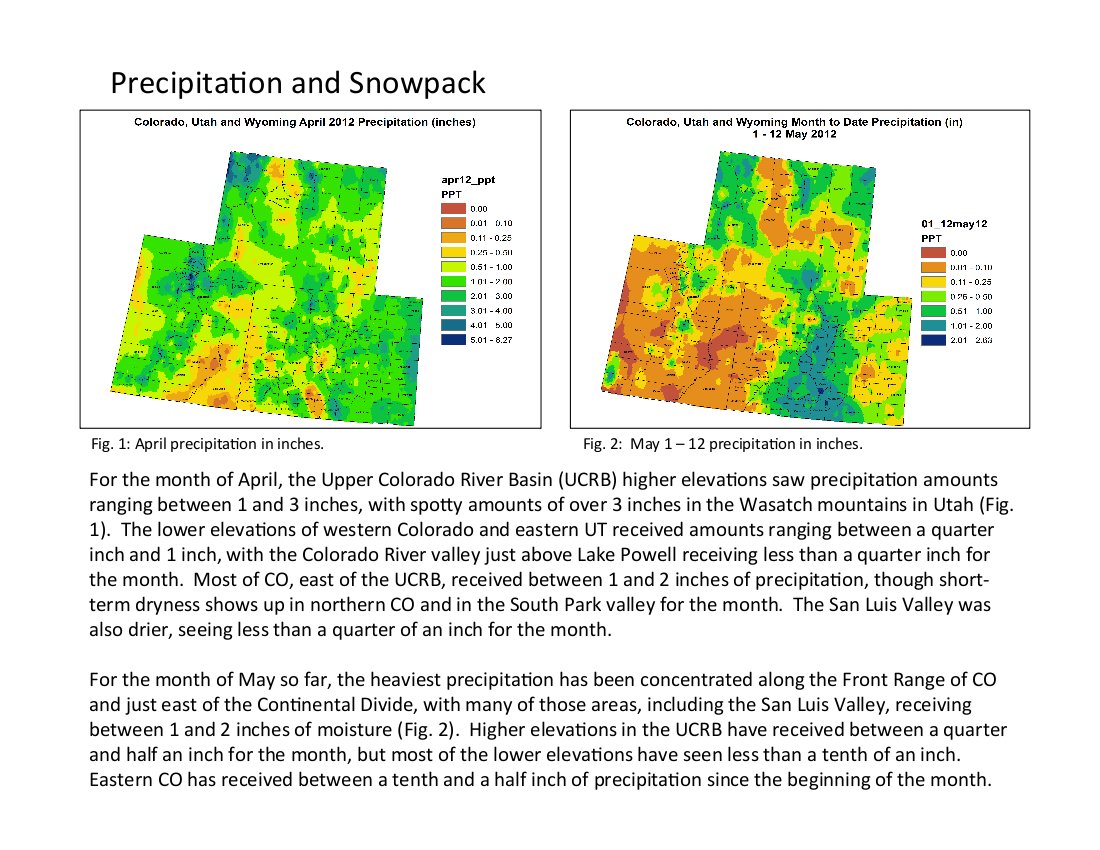
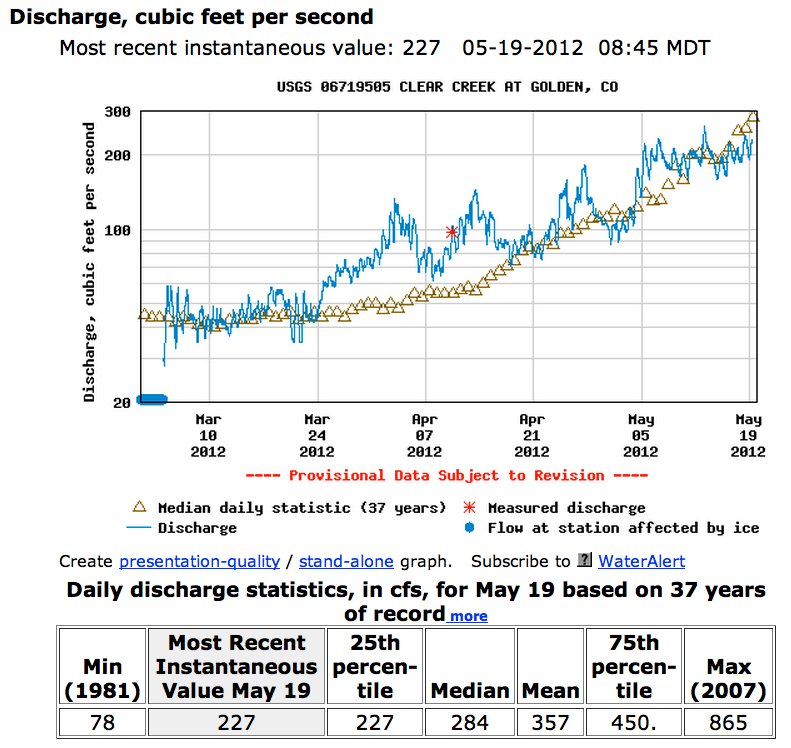
Click on the thumbnail graphics for the current statewide snowpack map from the Natural Resources Conservation Service, the precipitation summary from this week’s Colorado Drought Status Briefing from the Colorado Climate Center and the hydrograph for Clear Creek this spring from the USGS. Clear Creek has been running above average a lot of the time since March reflecting the early melt out this water year. It’s way below average since Thursday.

From the Summit County Citizens Voice (Bob Berwyn):

Since hitting a low on May 5, the elevation of the reservoir climbed by almost six inches, to 9,012.67 feet on May 15. After a small drop, it’s been holding steady since then…

Currently, Denver is diverting about 250 cubic feet per second through the Roberts Tunnel under the Continental Divide to the South Platte drainage. Another 53 cfs is flowing out of the reservoir into the Lower Blue — just above a 50 cfs minimum stream flow set to protect aquatic life, for a total of about 300 cfs coming out of the reservoir daily.

The total combined inflow from the Snake and Blue rivers, as well as Tenmile Creek, has varied between 301 cfs on May 13 to as high as 394 cfs on May 11, [Denver Water’s Bob Steger] said, adding that, since overnight lows in the high country are still dropping below freezing, the runoff hasn’t quite peaked yet.

Denver Water, Grand and Summit counties sign the Colorado River Cooperative Agreement

coloradoriverbasincgs.jpg

From The Pueblo Chieftain (Chris Woodka):

Gov. John Hickenlooper presided over a ceremonial signing of agreements among Denver Water, Grand and Summit counties and the Clinton Ditch & Reservoir Co. on Tuesday in Hot Sulphur Springs.

More Colorado River basin coverage here.

Coyote Gulch outage: I’ll see you Saturday

coyotefullview.jpg

I’m on deadline at Colorado Central Magazine. I’ll see you Saturday morning.

Spring Releases for Endangered Fish a ‘No Go’ This Year

coloradoriverdebeque.jpg

Here’s the release from Reclamation (Kara Lamb):

A voluntary river flow program to provide enhanced spring peak flows for endangered fish will not take effect this year. Operators of Dillon, Green Mountain, Williams Fork, Wolford and Ruedi reservoirs cannot implement the Coordinated Reservoirs Operations program this spring because river flows in western Colorado will not approach levels where increased flows would benefit the endangered fishes. This year is very dry, similar to 2002. The current forecast for the water supply for the Colorado River at Cameo near Grand Junction, Colo., is 44 percent of average.

The Coordinated Reservoir Operations Program was established in 1995 as part of the Upper Colorado River Endangered Fish Recovery Program. Its purpose is to enhance spring peak flows to a section of the Colorado River upstream of Grand Junction without causing flooding. In years when snowpack is above average, surplus inflows to the five reservoirs can be passed on downstream to benefit two species of endangered fish in the Colorado River: the Colorado pikeminnow and the razorback sucker.

This spring, most of the basin reservoirs are not expected to fill. Streamflows are predicted to remain well below the Coordinated Reservoir Operations target threshold of 12,900 cubic-feet-per-second in the Colorado River near Grand Junction.

More Colorado River Basin coverage here.

Colorado Water 2012: ‘The SWSI process implemented a collaborative approach to water supply planning’ — Eric Hecox

ibccroundtable.jpg

Here’s the latest installment in the Valley Courier’s Colorado Water 2012 series. Eric Hecox explains the Statewide Water Supply Initiative and basin roundtable process. Here’s an excerpt:

With the 2010 SWSI update, CWCB has updated its analysis of the state’s water supply needs. CWCB, the IBCC, and Basin Roundtables are now in an implementation phase to determine and pursue projects and methods to help meet the state’s consumptive and nonconsumptive water supply needs. This will be accomplished through the implementation of the SWSI recommendations by the CWCB.

More information is available at http://cwcb.state.co.us/water-management/water-supply-planning/Pages/SWSI2010.aspx.

More Colorado Water 2012 coverage here.

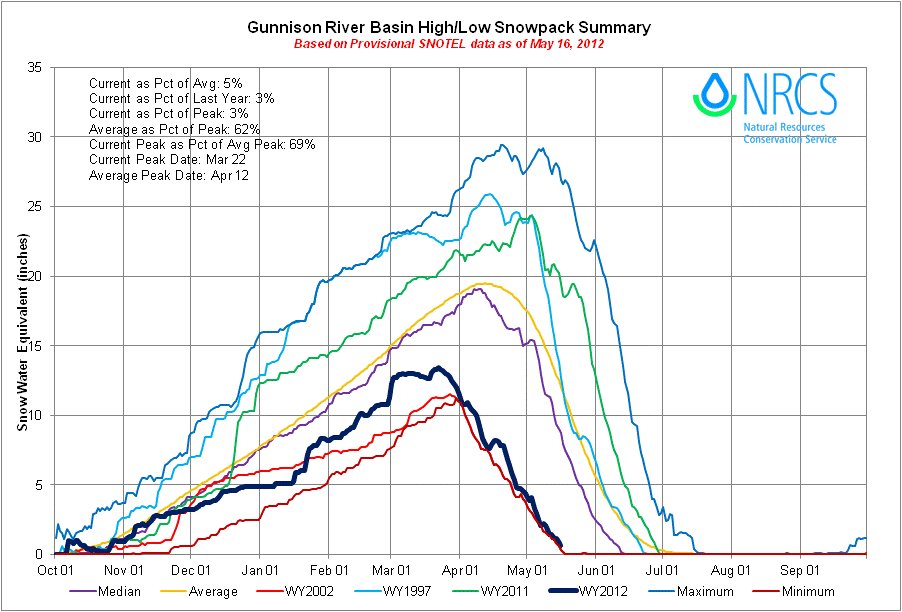
Snowpack/drought/runoff news: Gunnison Basin snowpack at 5% of average, Colorado = 11%

snowpackcolorado05162012.jpg

basinhighlowgunnison05162012.jpg

basinhighlowsouthplatte05162012.jpg

Click on the thumbnail graphic for the current statewide snowpack map along with the Basin High/Low graph for the Gunnison and South Platte basins from the Natural Resources Conservation Service.

From the Aspen Daily News (Andrew Travers):

With runoff on pace with the drought year of 2002, the Aspen City Council on Monday adopted an ordinance to encourage water conservation and penalize overuse with higher rates, in the likely event of a water shortage this summer.

“We already know there’s going to be a drought, we just don’t know how severe its going to be,” city utilities operations manager Lee Ledesma told City Council before its 5-0 vote.

The water shortage ordinance allows the city to enact temporary increases in water rates for users who consume more water than prescribed. They go as high as 200 percent of standard water rates, depending on the severity of a water shortage.

American Rivers names the Crystal River to its 10 most endangered rivers list

crystalriver.jpg

From the Aspen Business Journal (Bob Berwyn):

At issue is a proposed dam that would impound 4,000 acre feet of water between Redstone and Marble, diversions from Avalanche Creek, the largest tributary to the Crystal and potential hydropower development on Yank Creek.

The Colorado River Water Conservation District holds the conditional water rights for the potential Crystal River dam and is pursuing the state-mandated diligence process for maintaining those water rights.

Spokesman Jim Pokrandt said the water in the reservoir could be used to enhance late-season flows to help sustain aquatic habitat.

“The whole purpose of that reservoir is for augmentation and environmental flows. It’s already endangered as it exists today … in leaner years because of all the irrigation that goes on in the valleys … it does create a stretch in the river that’s almost dry,” Pokrandt said, likening the proposed reservoir to others in the state that have water reserved for instream environmental purposes, including Elkhead and Wolford Mountain reservoirs.

There’s also a school of thought that says it’s important for headwaters counties to capture and store water high in the drainages as a hedge against climate change and increased demand far downstream, from the Lower Colorado River Basin states.

But local and national conservation groups say the projects would degrade the river and the surrounding area by destroying valuable riparian habitat and associated recreation and economic values.

We’re in an era when more dams are being dismantled than being built,” said John Emerick, a retired Colorado School of Mines ecologist who helped conduct an in-depth survey of Crystal Creek’s aquatic and riparian resources. “it’s important for us here in the arid West to think about better ways and more efficient ways to use our water,” Emerick said, explaining that the proposed reservoir could end up standing as an empty mud flat much of the year.

More coverage of the 10 most endangered rivers for 2012 from Troy Hooper writing for the Colorado Independent. From the article:

The report, compiled by the nonprofit advocacy group American Rivers, cites Fort Collins businessman Aaron Million’s proposed Flaming Gorge pipeline, as well as a competing diversion proposal by Parker Water & Sanitation District manager Frank Jaeger, as major threats to the world-class recreation, rural economies, critical fish habitats, and the water supply for the lower Colorado River Basin.

“Aaron Million and Frank Jaeger remain committed to build that pipeline,” Matt Rice, Colorado conservation director for American Rivers, said Monday. “There are a hundred reasons why it doesn’t make sense, why it’s a bad idea and why it’s not a responsible use of taxpayer money. We’re calling on Utah Governor Gary Herbert and Colorado Governor John Hickenlooper to publicly oppose it.”[…]

The threats facing the Crystal River include a dam and a 4,000-acre reservoir between Redstone and Marble; a water diversion from its largest tributary, Avalanche Creek; and a hydropower dam and 5,000 acre-foot reservoir on another tributary, Yank Creek.

“Our rivers and streams continue to be under assault from competing interests that too often do not consider the value intrinsic in the ecosystems that rivers and streams create, nurture, and sustain,” said Pitkin County attorney John Ely. “If we are to preserve our rivers, public awareness of the threats and impending changes facing these ecosystems is essential.”

More Crystal River watershed coverage here and here.

Denver Water: ‘A historic moment for Colorado water’

grossdam.jpg

Here’s the release from Denver Water (Stacy Chesney):

Leaders from Grand and Summit counties, Denver Water and the Clinton Ditch & Reservoir Co. — entities that for decades battled in court over water — stood today with Gov. John Hickenlooper and signed the Colorado River Cooperative Agreement, changing the way water will be managed in Colorado.

The Colorado River Cooperative Agreement is the product of years of negotiations, and ultimately included more than 40 parties stretching from Grand Junction to the Denver metro area. The historic agreement is the largest of its kind in the history of the state. It shifts Colorado away from a path of conflict to a path of cooperation and collaboration in managing the state’s water resources.

Signatories described the agreement as a meaningful way forward to protect the Colorado River.

“Our goal through the whole negotiation was to be better off tomorrow than we are today with our water resources,” said Grand County Commissioner Nancy Stuart.

“The collaborative spirit is alive and well in Colorado,” said Gov. John Hickenlooper. “This is a state where we get things done. From farmers and families to businesses and wildlife, this agreement will help protect Colorado’s water and is a testament to how collaboration can overcome even long-standing differences in managing this vital resource.”

The comprehensive agreement focuses on significantly enhancing the environmental health of Colorado’s rivers and streams, as well as supporting many West Slope cities, towns, counties and water providers as they work to improve water quality and quantity of water through new municipal projects and river management initiatives.

“This is a new way of developing water in Colorado,” said Grand County Commissioner James Newberry. “Only through cooperative effort can we do the right thing for the resource.”

“The agreement we sign today marks the beginning of a new era of inter-regional cooperation with one broad goal: a brighter and more sustainable future for Colorado,” said Penfield Tate, vice president, Denver Board of Water Commissioners. “Today, we are saying there is a better way — a way that will make the Colorado River and its tributaries healthier, ensure a more reliable water supply for our customers, and that will develop and use water in a way that protects and improves the environment and benefits all users from the West Slope to the Front Range.”

In exchange for environmental enhancements, including financial support for municipal water projects and providing additional water supply and service area restrictions, the agreement, with the required mitigation, will remove opposition to Denver Water’s Moffat Collection System Project.

“This agreement honors the recognition that protecting water resources and tourism in our headwaters counties also protects the entire state of Colorado’s economy,” said Summit County Commissioner Karn Stiegelmeier.

Bill Baum, president of the Clinton Ditch & Reservoir Company, said: “Since 1992, Clinton Ditch & Reservoir Company has been a monument to what cooperation can achieve. Governmental entities and private industry have worked together through Clinton to provide a source of water for the residents of Summit and Grand County, for the visitors who are our economic lifeblood, and for the industry that provides the resources that allows all of us to live and play in this magnificent part of Colorado.” He continued: “Twenty years later, this new cooperative agreement carries on and extends that spirit of collaboration to a wider group and a new century. Clinton is pleased to be a part of it, and we will all be better off as a result of it.”

The entities also signed on to the “Learning by Doing” process, by which Denver Water, Grand County, the Colorado River District, the Middle Park Water Conservancy District and others will use the flexibility in Denver Water’s water system to manage flows for the benefit of the environment in Grand County.

In addition to today’s signatories, the agreement has been signed by Eagle County, Eagle River Water & Sanitation District, the Upper Eagle Regional Water Authority and Eagle Park Reservoir Company. Other West Slope entities are expected to sign in the near future.

From the Denver Business Journal:

“The collaborative spirit is alive and well in Colorado,” said Gov. John Hickenlooper. “This is a state where we get things done. From farmers and families to businesses and wildlife, this agreement will help protect Colorado’s water and is a testament to how collaboration can overcome even long-standing differences in managing this vital resource.”

The agreement specifies that any new water project by Denver Water in the Colorado River Basin will be developed only in cooperation with those entities impacted by the development.

Other provisions of the agreement:

• Additional water for towns, districts and ski areas in Grand and Summit counties to serve the needs of residents and to improve the health of rivers and streams.

• An agreement to operate key Denver Water facilities, such as Dillon Reservoir in Summit County, and Williams Fork Reservoir and the Moffat Collection System in Grand County, in a way that better addresses the needs and concerns of neighboring communities and enhances the river environment.

• Greater certainty for Denver Water to develop future water resources for its customers by resolving long-standing disputes over its service territory, its ability to use West Slope water, its ability to develop future water supplies in the Colorado River Basin, and other legal issues.

• Additional water and enhanced system reliability for customers of Denver Water, representing nearly 25 percent of the state’s population, by moving forward the Moffat Collection System Project.

• Agreement by all partners to not oppose Denver’s storage of its Blue River and Moffat Project water on the Front Range.

• Reinforcement of the priority and increased conservation and reuse within Denver Water’s service area.

• Improves the health of Colorado’s rivers and streams by dedicating funds to pay for watershed, water treatment and aquatic habitat improvements in the Colorado River Basin.

• Changes in water management associated with the Shoshone Power Plant in Glenwood Canyon that preserves historic flows in the middle and lower Colorado River.

A key part of the agreement allows Denver Water to move ahead with the Moffat Collection System Project to address shortages like the one that occurred in the drought of 2002, when the north end of the system nearly ran dry.

“It is critical to the Denver region that this project moves forward,” said U.S. Rep. Diana DeGette, D-Denver. “I applaud Denver Water and all of the signatories for their dedication to settling old conflicts and coming together to the benefit of our quality of life and economy.”

From email from Colorado Trout Unlimited (Randy Scholfield):

Statement by Trout Unlimited on Denver Water Cooperative Agreement:

Colorado Trout Unlimited today praised the Cooperative Agreement to be signed Tuesday, May 15 in Hot Sulphur Springs by Denver Water, west slope officials and other stakeholders, but cautioned that additional measures are needed to protect the Upper Colorado River ecosystem.

“The Cooperative Agreement shows that by working together, we can find ways to meet our water needs while protecting our natural resources,” said Mely Whiting, counsel for Trout Unlimited’s Colorado Water Project. “But the job isn’t finished. It’s important to remember that this agreement does not cover the future impacts of Denver Water’s proposed Moffat Tunnel expansion on the Fraser River Basin, nor does it address the combined impacts of the Moffat Tunnel expansion and Northern Colorado Water Conservancy District’s Windy Gap Firming Project on the Upper Colorado.” Collectively, these diversion projects will take another 15-20 percent of the flows of the Upper Colorado River, which is already significantly impacted by water diversions. Unless the impacts of these new projects are mitigated, the river habitat will continue to decline, according to the state’s own studies.

“The Colorado River is still very much a river at risk,” said Whiting. ”We call on Gov. Hickenlooper, Denver Water, Northern and other key players to follow through on this achievement by securing a package of protections that offsets these looming impacts on the Upper Colorado.”

For more info: http://www.defendthecolorado.org

More coverage from Bob Berwyn writing for the Summit County Citizens Voice. From the article:

Against a backdrop of an intensifying mountain drought, Hickenlooper said this year’s dry conditions magnify the need for cooperative solutions and highlight the fragility of the state’s rivers in the face of possible climate change impacts and increasing demand from a growing population. “Some of our watersheds are reporting the driest conditions in our recorded history … this puts Colorado on a better footing, with more secure water sources both for headwaters counties and Denver,” Hickenlooper said.

Most importantly for Denver Water, Summit and Grand counties agree not to oppose a plan to expand diversions from the West Slope through the Moffat Tunnel Collection System, a project that, in its present form, is still bitterly opposed by conservation and river advocacy groups.

In return, the headwaters counties get some assurances on flows, as well as money for mitigation and enhancements. All the agreement documents are online at the Colorado River District website. Denver Water also agrees not to expand its service area and to increase water recycling and storage for reuse.

More coverage from the Associated Press via The Columbus Republic:

Gov. John Hickenlooper joked that the water wars have now been scaled back to “rubber bullets and bean bag shotguns.” He said he hoped other similar deals would be worked out across Colorado, where 80 percent of the water comes from west of the Continental Divide but 80 percent of the demand is in the more populous east.

“Colorado is the ultimate beneficiary,” he said.

Denver Water — which serves about 1.3 million people in the Denver area — and nearly three dozen Western Slope water users announced the proposal last year. Eagle County and its water districts became the first to sign in February. The endorsement of the cities of Rifle and Glenwood Springs and some irrigation districts is still pending.

Under the deal, Denver Water will contribute $25 million to western Colorado projects and limit its service area. In return, the signers won’t oppose Denver Water’s proposal to hold more mountain water in Gross Reservoir…

In Summit County, home of the utility’s largest reservoir, Denver Water agreed to pay $11 million for projects including improvements to a wastewater treatment plant and to provide 250 acre-feet of water to districts and towns for free. Denver Water also plans to keep Dillon Reservoir full enough to support summer boating and fishing.

More coverage from KUNC (Kirk Siegler). From the article:

“This agreement solidifies and shows a new way of doing water business in Colorado,” said Grand County Commissioner James Newbury. Newbury spoke at a signing ceremony in Hot Sulpher Springs that included Governor John Hickenlooper, the head of the Colorado River District and others.

More coverage from Tonya Bina writing for the Sky-Hi Daily News via the Summit Daily News. From the article:

The signing took place more than one year after Gov. John Hickenlooper last visited Grand County, when he first rolled out the Colorado Cooperative Agreement, deemed an unprecedented water agreement for our time. The agreement aims to settle years of East and West Slope water disputes. “I’m not sure the fighting’s ever going to completely stop,” Hickenlooper said…

Denver Water’s Moffat Firming Project and its goal to enlarge Gross Reservoir to divert more water from the West Slope, plus its 2006 diligence application in federal court regarding water rights under the Blue River decree, sparked negotiations in an arena when litigation and political disputes between Colorado’s West and East Slopes were ripe with potential. A mediator was hired in 2007 under then-Denver Mayor Hickenlooper’s advisement, and as many as 35 parties from the Front Range to the western state line joined in to try and resolve some of the state’s longest-standing water issues.

The result is a 50- page document, plus pages upon pages of legal attachments, that spells out water resolutions or “enhancements” for the Fraser and Blue rivers, certain tributaries and the upper and middle rivers of the Colorado River to the Grand Valley…

Besides $11 million in Denver Water dollars promised to address some river issues specifically in Grand County, with more dollars for Summit and Eagle counties, the agreement highlights the importance of the Shoshone Power Plant to the entire Western Slope. The plant, which has been around since 1902, “puts a demand on the stream,” according to Eric Kuhn, executive director of the Colorado River District, during an annual State of the River meeting last week. “When it puts a demand on the stream, water is released from Wolford to Green Mountain and from Williams Fork (reservoirs). All that water reaches Kremmling and runs downstream and provides stability,” he said. “The thing we’ve been concerned about is the 110 year-old plant has started to behave like a 100 year-old plant. We’ve asked, and Denver has agreed … to operate its system like the plant was operating, so we wouldn’t put a hole in the river. That hole in the river causes problems for irrigators, causes problems for fishing and causes problems for rafting.”

The agreement is also poised to settle a Green Mountain Reservoir administration dispute, which has been brewing since 1955, according to Kuhn, as well as the Blue River Decree settlement. And in the agreement, Denver Water set its service area so that it does not become a conduit for expansion on the Front Range.

More Colorado River basin coverage here.

CWCB: Next Water Availability Task Force meeting May 22

sanluispeoplesditchchieftain.jpg

From email from the Colorado Water Conservation Board (Ben Wade):

The next Water Availability & Task Force meeting is on Tuesday, May 22 from 1:30p-3:30p.m. at the Colorado Parks & Wildlife Headquarters, 6060 Broadway Denver, CO, in the Bighorn Room.

The agenda…will be posted at the CWCB website.

More CWCB coverage here.

The Colorado Water Trust has netted sixteen offers so far for instream water for this season

littlecone.jpg

From the Colorado Water Trust “Request for Water 2012” webpage:

Many water interested people are asking about the response we received after launching Request for Water 2012; specifics are confidential at this point in time. We do not want to put any water right holder in an uncomfortable position as we screen and assess his or her water right, a valuable asset. As short-term water leases do move forward, some details around the leases will become public information.

In general, Colorado Water Trust received over 30 inquiries that rose to a significant enough level that we included them in our Inquiries database. Subsequently, we received 16 formal submissions in various states of completion (some offers will require additional approvals or supporting documentation, for example). We received offers to lease water from water users in four of Colorado’s seven basins.

We have heard that the quick deadline for submissions kept some very interested water users from entering the Request for Water 2012 pilot program. If you are one of those interested water users, we would suggest that you continue considering the program. We may open the program for late season submissions.

Please stay tuned! We will be updating our Request for Water 2012 webpage with the most up-to-date information we have to share with you. Please feel free to call and speak with anyone here at the Colorado Water Trust at any time if you have questions or concerns.

From The Aspen Times (Janet Urquhart):

The program allows the short-term allocation of water rights to keep more water in a river without jeopardizing loss of water rights for participants, according to the Water Trust, which coordinates the water “loans” and pays for the leases.

The Water Trust, its website notes, is attempting to put the never-before-used 2003 short-term water-leasing statute to work — “moving water into streams on short notice to protect aquatic habitat and riparian ecosystems during dry conditions.”

The offers to leave water in the rivers came from four of Colorado’s seven river basins, the Colorado Water Trust said Tuesday. Friday was the deadline to submit offers, which are now being analyzed.

The offers are confidential, according to Christine Hartman, operations and communications coordinator for Colorado Water Trust. Only those that result in a formal agreement between the trust, the Colorado Water Conservation Board and the water-rights holder will be made public, she said.

The program was announced in late April, and about 25 potential participants attended an informational meeting earlier this month in Carbondale to hear about the particulars of the program, said a Roaring Fork Conservancy spokesman.

More instream flow coverage here.

Southern Delivery System: The CWQCC will appeal judge’s ruling for project water quality permit

fountaincreekthrucoloradospringsfromdippity.jpg

From The Pueblo Chieftain (Chris Woodka):

The Colorado Water Quality Control Commission voted unanimously Monday to appeal the decision. The commission approved staff certification under section 401 of the federal Clean Water Act in 2010, after the decision was protested by Pueblo District Attorney Bill Thiebaut and the Rocky Mountain Environmental Labor Coalition…

“The 401 certification was fully discussed and we’re convinced we made the right decision, controls are in place and that Colorado Springs is in compliance,” said John Klomp, a former Pueblo County commissioner who sits on the state water quality board. Colorado Springs Utilities will join the state in the appeal, said spokeswoman Janet Rummel.

“We agree with the state of Colorado that the Pueblo district court decision was erroneous and believe the court of appeals will affirm the Colorado Water Quality Control Division’s issuance of the 401 water quality certification for SDS,” Rummel said…

Ross Vincent, of the local Sierra Club and the coalition, said the state decision is not appropriate. “The Water Quality Control Commission’s decision makes no sense to me,” Vincent said. “The state did a really sloppy job in its first review of the water quality impacts of SDS. The facts are pretty clear, and that’s why Judge Reyes ruled the way he did. It would be simpler, faster, and a whole lot less expensive for the state to go back to the drawing board and do the thorough water quality review that the law requires.

More Southern Delivery System coverage here.

American Rivers names the Green River as the second most endangered river in the U.S. for 2012, the Crystal River is #8

lowergreenriverlake.jpg

Here’s the webpage from American Rivers. Here’s the 2012 list:

#1: Potomac River (MD, VA, PA, WV, DC)
Threat: Pollution
At stake: Clean water and public health

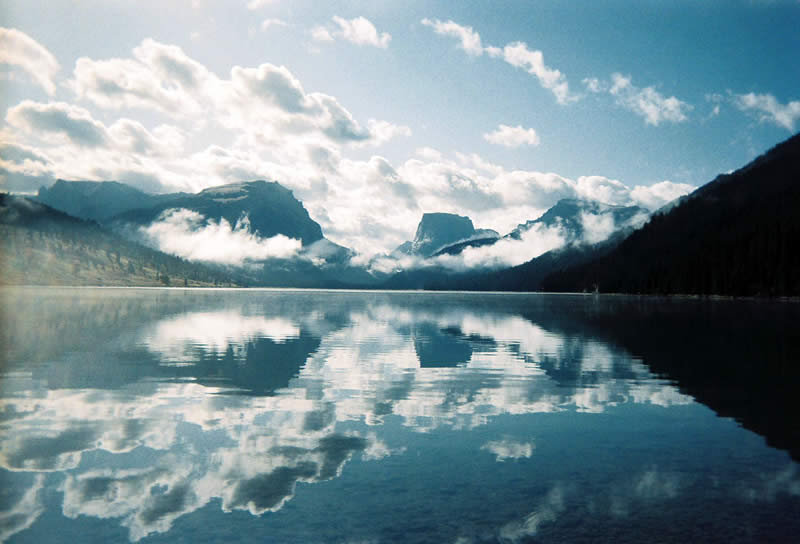
#2: Green River (WY, UT, CO)
Threat: Water withdrawals
At stake: Recreation opportunities and fish and wildlife habitat

#3: Chattahoochee River (GA)
Threat: New dams and reservoirs
At stake: Clean water and healthy fisheries

#4: Missouri River (IA, KS, MO, MT, NE, ND, SD, WY)
Threat: Outdated flood management
At stake: Public safety

#5: Hoback River (WY)
Threat: Natural gas development
At stake: Clean water and world-class fish and wildlife

#6: Grand River (OH)
Threat: Natural gas development
At stake: Clean water and public health

#7: South Fork Skykomish River (WA)
Threat: New dam
At stake: Habitat and recreation

#8: Crystal River (CO)
Threat: Dams and water diversions
At stake: Fish, wildlife, and recreation

#9: Coal River (WV)
Threat: Mountaintop removal coal mining
At stake: Clean water and public health

#10: Kansas River (KS)
Threat: Sand and gravel dredging
At stake: Public health and wildlife habitat

From The Salt Lake Tribune (Brett Prettyman):

The report, by American Rivers, places the Green River at No. 2 on its list of America’s Most Endangered Rivers of 2012.

The greatest threat to the river — which meanders about 730 miles from its headwaters in the Wind River Range in Wyoming through Utah, Colorado and back into Utah where it ends in a confluence with the Colorado River in Canyonlands National Park — is the proposed Million pipeline, says the report. That project would pump more than 250,000 acre-feet of water from the Green River 500 miles across Wyoming to the Front Range area of Colorado. While the Federal Energy Regulatory Commission rejected the proposal in February, developer Aaron Million requested a rehearing of the plan.

“Water in the West is critical to more things than just fueling speculative urban growth,” said Nathan Fey, director of American Whitewater’s Colorado River Stewardship Program. “While the Green River is viewed as a solution to Colorado’s future water shortage, the river today supports a diverse economy, sustains rare wildlife and endangered fish populations and offers unique opportunities for people to experience how water interacts with the landscape.”[…]

Wyoming Gov. Matt Mead has said the proposed pipelines are not a responsible use of taxpayer money. American Rivers, an organization dedicated to protecting and restoring the nation’s rivers and streams, wants to see Herbert and Colorado Gov. John Hickenlooper join Mead in defense of the Green River.

[Utah Governor Gary Herbert] in January said his staff was following the Million pipeline issue closely, but Utah political leaders have not taken a formal position. American Rivers said polls in Utah and Wyoming have revealed the pipeline project is “extremely unpopular among the public.”

More Green River basin coverage here.

Snowpack/drought/runoff news: South Platte River basin snowpack drops under 20% of average

snowpackcolorado05142012.jpg

basinhighlowsouthplatte05142012.jpg

Click on the thumbnail graphics for the statewide snowpack map and the Basin High/Low graph for the South Platte River basin from the Natural Resources Conservation Service.

Hot Sulphur Springs: Denver Water along with Grand and Summit counties to sign the Colorado River Cooperative Agreement today

coloradorivergranby.jpg

From the Associated Press via The Aspen Times:

Denver Water and the leaders of Grand and Summit counties are set to sign the Colorado River Cooperative Agreement at noon Tuesday in Hot Sulphur Springs. Denver Water and nearly three dozen Western Slope water users announced the proposal last year. Eagle County and its water districts became the first to sign in February. The endorsement of the cities of Rifle and Glenwood Springs and some irrigation districts is still pending.

More Colorado River Cooperative Agreement coverage here.

Voters ask for policy changes from Parker Water and Sanitation Board

rueter-hessplans.jpg

From the Parker Chronicle (Chris Michlewicz):

Tracy Hutchins (2,714 votes), Bill Wasserman (2,572) and Kelly McCurry (2,591) were all voted to the water district’s board of directors May 8. Hutchins and Wasserman have been particularly vocal in their opposition to the board’s way of doing business.

Kelly McCurry, who has been in the water and sanitation industry for 22 years, believes his expertise could help guide the agency into the future, but also says that spending could be reined in. He said water bills could potentially be lowered through a change in oversight. McCurry said he is frustrated with the seeming lack of transparency while he tried to conduct research…

“We are really going to work on governance and accountability to the customers,” Hutchins said. “We’re going to do a top-to-bottom analysis of the organization as a whole and do same thing on the financial side.”[…]

Wasserman, who got involved in a recall election when the district tried to raise rates by 28 percent in 2009, said public input will be a large part of going forward. “Looking at the election results last night, it was a clear mandate from the populace: they want change,” he said.

More Parker coverage here and here.

San Luis Valley Wetlands Focus Area Committee hosts free workshop ‘Managing Wet Areas on Agricultural Lands’ June 14

bacanationalwildliferefuge.jpg

From the Rio Grande Headwaters Land Trust via The Mountain Mail:

The San Luis Valley Wetlands Focus Area Committee will host a free workshop, “Managing Wet Areas on Agricultural Lands,” for San Luis Valley landowners and land managers, from 8 a.m. to 4 p.m. June 14 at the Rio Grande County Annex Building, 925 Sixth St., Del Norte. Participants will learn and share ideas about how to best manage wet areas and river and stream corridors for optimal agricultural productivity, wildlife habitat and other economic benefits. The event includes lunch and an afternoon field trip.

Space is limited and reservations may be made before June 6 by calling the Rio Grande Headwaters Land Trust at 719-657-0800 or at http://www.riograndelandtrust.org.

More Rio Grande River basin coverage here and here.

McPhee Reservoir operations update:

mcpheereservoiroverlook.jpg

From the Cortez Journal (Reid Wright):

“Everybody can rest assured that we’re going to meet all our allocations this year,” said Mike Preston, manager of the Dolores Water Conservancy District. Due to a good amount of water being stored from last year, Preston is confident there will be enough water for irrigation, drinking and industrial use this year.

Now the focus is shifting to the coming winter and the 2013 water year. Preston said a below average winter this year could lead to shortages next year. An average winter this year would barely meet allocations, while an above average winter would be required for a whitewater boating spill on the lower Dolores River…

As of Thursday, the reservoir elevation stood at nearly 6,915 feet, compared to a full elevation of 6,924 feet. This translates to 190,187 acre feet of active capacity water compared to a maximum active capacity of 229,182 acre feet…

Up-to-date information on reservoir levels, river flows and canal flows is available on DWCD’s website: http://www.doloreswater.com/

More Dolores River watershed coverage here.

A report from Protect the Flows pegs the Colorado River recreation industry at $26 billion and a quarter of a million jobs

coloradoriverincprotecttheflowsmay2012.jpg

From the Colorado Independent (Scot Kersgaard):

The study — commissioned by Protect The Flows and performed by Southwick Associates — only looked at the money spent by residents of the six-state Colorado River Basin. It did not consider money spent by people from outside these states.

The study contends that nearly 80,000 Coloradans owe their livelihood to the river and that river-related retail sales alone generate more income than agricultural production in Colorado.

Of the six states studied, which included Arizona, Wyoming, Utah, Nevada and New Mexico, Colorado was by far the leader in terms of jobs generated and money spent. Direct spending in the region amounts to just over $17 billion a year, with just under $6.4 billion of that spent in Colorado. California was left out of the study because by the time the river reaches California it has lost most of its recreational value.

More Colorado River basin coverage here.

Colorado River Basin: Will the Mississippi River become a water source for the West?

mississippibasin.jpg

Here’s the second installment in their series “The fight for water” from the Deseret News (Amy Joi O’Donoghue). Click through and read the whole article. Here’s an excerpt:

The U.S. Bureau of Reclamation is nearing the final stages of a study that for the first time in more than 40 years is charting projected supply and demand “imbalances” of Colorado River water — which was over-allocated some 90 years ago through a water-sharing agreement among Utah, six other Western states and Mexico. A draft of the study is slated to be released next month, with a final report scheduled for July.

An early analysis by the federal agency predicts that large-scale deficits of water in the river system — greater than 3.5 million acre-feet — are likely over the next 50 years. It translates into an inability to meet the needs of millions of households, businesses or agricultural operations unless solutions can be found to cut use or increase supply. The grim scenario is especially plausible given the volatile impacts of climate change, leading the agency for the first time to incorporate how weather changes will play out in specific impacts to the seven states that depend on the river. “This is a pretty careful scrub of how water demands will unfold over the next couple of decades,” said Dave Trueman, the bureau’s division chief over resource management…

In the Mississippi River scenario, 675,000 acre-feet of water would be diverted from the nation’s largest river downstream of where it meets up with the Ohio River. From there, the water would be conveyed via tunnel, canal and a monstrous pipe 775 miles long and 144 inches in diameter to dump into the Navajo River in southwestern Colorado. The Navajo would then deliver that water to the San Juan River, a tributary of the Colorado River, for use by agricultural users in Colorado, Arizona and New Mexico. Those users would then be taken off the Colorado system and the savings in water would flow downstream to other cities that need to grow in the future.

More Colorado River basin coverage here.

Reclamation is hosting a tour of Ruedi Dam on May 23

ruedidam.jpg

From Reclamation (Kara Lamb) via The Aspen Times:

The Basalt-based Roaring Fork Conservancy will host a May 23 tour of the Ruedi dam at Ruedi Reservoir, giving participants a chance to learn about the reservoir’s role in the Fryingpan-Arkansas Project and its importance for western Colorado water storage. The current operations plan for this summer also will be discussed. The tour, scheduled from 5 to 8 p.m., will be led by Kara Lamb, of the Bureau of Reclamation, and conservancy staff. Registration in advance is required; go to http://www.roaringfork.org/events. The tour is free to conservancy members and $7 for nonmembers. Tour participants will meet at Basalt Town Hall and carpool to the dam site. Call 970-927-1290 for more information.

More Fryingpan-Arkansas Project coverage here.

Snowpack/drought/runoff news: No watering restrictions in Fort Collins this summer

snowpackcolorado05112012.jpg

precipitationlittledrycreek64th0507to05142012.jpg

Click on the thumbnail graphics for the current Colorado statewide snowpack graph from the Natural Resources Conservation Service along with the Little Dry Creek and 64th avenue (Adams County) 7 Day Hyteograph from the Urban Drainage and Flood Control District. We saw some beautiful rain in the Metropolitan Denver area over the weekend.

From the Fort Collins Coloradoan (Kevin Duggan):

Supplies are strong enough that [Fort Collins] likely will be able to “carry over” up to 8,000 acre feet of water in local reservoirs for next year’s use…

Fort Collins’ main water sources are the Poudre River, where the city holds senior water rights, and Horsetooth Reservoir through the Colorado-Big Thompson system administered by the Northern Colorado Water Conservancy District…

The city has a policy for imposing watering restrictions based on conditions and supplies. Mandatory restrictions are not likely to be needed even if exceptionally dry conditions persist, [Donnie Dustin, the city’s water resources manager] said in an interview.

Red Cliff is back in the water and wastewater business

redcliffminerdinneralexandermartin1888.jpg

From the Vail Daily:

According to a release from the district, Red Cliff and the district mutually decided in mid-April to end the operations agreement and arranged for the contract to expire May 12. Red Cliff’s former and current Board of Trustees supported the decision.

“In 2007, the district brought industry expertise and financial assistance to improve Red Cliff’s drinking water facility and treatment processes,” district director of operations Todd Fessenden said. “We helped bring the new wastewater treatment plant to fruition and upgraded other system components. We agree with Red Cliff that now is a good time to transition to a new operator to run the town’s systems.”

The district provided technical expertise and support to Red Cliff while the town successfully secured funding for a new wastewater treatment plant, which was subsequently built and put into operation in October 2010. Some of the funding Red Cliff secured required upgrades to the town water distribution system, including installation of water meters at every residence and business in town. District staff completed that project between 2007 and 2009 and also coordinated a rehabilitation of Red Cliff’s drinking water facility in 2008.

More Eagle River watershed coverage here and here.

Colorado River Basin: ‘There are no innocent parties’ — Pat Mulroy (Southern Nevada Water Authority)

coriverwatershed.jpg

Here’s the first installment of the Deseret News’ (Amy Joi O’Donoghue) series about, “the impacts of the West’s shrinking water supply and the costly battle to find solutions.” Ms. O’Donoghue is a terrific writer so be sure to click through and read the whole article and check out the photo slideshow. Here’s an excerpt:

“There are no innocent parties,” said Nevada’s Pat Mulroy, who manages a water-delivery system for more than two thirds of her state’s residents. “No one on the river has the luxury of doing nothing.”

The reason? Colorado River flows are shrinking…

Ensuring the availability of water is among Utah Gov. Gary Herbert’s highest priorities. “It is the only limiting factor to growth in Utah,” the governor said. “We’re going to have to worry about loss of flow and less capacity and volume in the river.”[…]

With this past winter’s snowpack well below average for the Colorado basin states — dipping down at 50 percent or below of what states normally get — this year is shaping up to be near-record setting for drought for the Colorado River system in Utah, Wyoming, Colorado and New Mexico…

The two largest reservoirs in the system, Lake Mead in Nevada and Lake Powell in Utah and Arizona, have been experiencing drastic declines. It took 19 years to fill Lake Mead to a level of 24 million acre-feet in 1998, but by 2007, the lake’s level had already decreased 54 percent. Mead supplies water to Las Vegas and surrounding communities — two-thirds of Nevada’s population…

Lake Powell, behind the Glen Canyon Dam, is experiencing a similar situation. It took 17 years to fill Lake Powell to its full capacity of 27 million acre-feet, and in just six years, between 1999 and 2005, the level of the lake was reduced by 60 percent.

The latest numbers projecting the volume of this year’s runoff into Lake Powell show that in only two other years — 1977 and 2002 — was there less water, leaving water managers to yearn for the conditions of last year, which was the third wettest on record since the gates at Glen Canyon Dam were closed in the mid-1960s.

“Never in the historic record have we seen a swing in hydrology from wet to dry of this magnitude,” said Rick Clayton, hydraulic engineer with the Bureau of Reclamation…

“The biggest hazard in my mind is that people don’t take this problem of future imbalances seriously,” [Malcolm Wilson, chief of water resources with the Bureau of Reclamation] said.

More Colorado River Basin coverage here.

The IBCC hopes to focus grassroot efforts on a statewide water plan

ibccroundtable.jpg

From The Pueblo Chieftain (Chris Woodka):

“If we are going to have a meaningful plan, it has to have the respect of everyone in the state,” John Stulp, the governor’s water adviser, told the Arkansas Basin Roundtable last week.

The roundtables and the Interbasin Compact Committee, created by state law in 2005, have been the vehicle moving toward a statewide water plan by 2016.

“What’s going to keep it from getting push-back like every other water plan proposed by previous governors?” asked Jeris Danielson, a water consultant and former state engineer.

“Those were top-down approaches,” Stulp said.

Here’s a guest column written by Lane Wyatt that’s running in the Summit Daily News. Here’s an excerpt:

Like most of the others, the Colorado Basin Roundtable created a list of environmental and recreational attributes for its basin’s waterways and maps that show where they occur. However, due largely to experience with transmountain diversions that take water from the Colorado’s headwaters to the Front Range, the members of the Colorado Basin Roundtable also decided they wanted to better understand how much water was needed to maintain those attributes. To achieve this understanding, the Roundtable participated in the development of the Watershed Flow Evaluation Tool, a cost-effective approach to assess the flow-related status of environmental and recreational attributes across the watershed.

The Colorado Basin Roundtable obtained funds from a pool of state grant moneys set aside for roundtable projects to develop the Watershed Flow Evaluation Tool and to apply it throughout the Colorado River Basin within Colorado. The tool evaluated the flow needs of certain environmental attributes that serve as indicators of the larger ecosystem needs. For example, flow needs for warm- or cold-water fish species indicate aquatic species flow needs, and flows necessary for the abundance and recruitment of cottonwoods indicate riparian flow needs. A key assumption embedded in the tool is that aquatic and riparian ecosystems rely on a variable flow regime: low flows are needed to maintain aquatic habitat; seasonal high flows are often needed to flush fine sediment and cue spawning of certain types of fish; and flood flows are needed to sustain riparian ecosystems, scour the channel, and to maintain alluvial water storage.

More IBCC — basin roundtables coverage here.

GP Resources files change of use application

pipeline.jpg

From The Pueblo Chieftain (Chris Woodka):

“We’re looking for versatility for other uses,” said Bill Grasmick, who sold water rights to GP and continues to farm for the Littleton-based company. “We’re adding some ability to use the wells for other local uses, such as water for oil wells. It’s the ability to change the use from irrigation, but it may not ever be used.” Grasmick is also a member of the board of the Lower Arkansas Water Management Association, which filed the application in Division 2 water court last month.

The application also includes four wells owned by the Santa Fe Trail River Ranch, six by Ronald Wollert and two by the East Prowers Cemetery District.

More Arkansas River basin coverage here.

Project spearheaded by Colorado State University aims to collect water quality data for the Cache la Poudre River

cachelapoudreriver.jpg

From the Fort Collins Coloradoan (Bobby Magill):

a first-of-its-kind Colorado State University project will try to gain a better understanding of the Poudre River and how climate change and industrial, agricultural, energy and urban development within its watershed affect its waters.

The Poudre begins in pristine wilderness, but flows through a variety of developed landscapes on its 126-mile run to the South Platte River. Scientists want to find out exactly how those uses of land above the river’s banks affect its water quality and flow.

When it’s complete, the project, called the Water Innovation Network, will place 60 water quality and water flow monitoring stations along the river from its headwaters in Rocky Mountain National Park to the Poudre’s confluence with the South Platte River east of Greeley. The stations will send real-time data to CSU, where scientists can measure the water flow, pollutants and other information as rain storms and development near the river’s banks affect its waters.

It will take researchers about five years to put most of the stations in place, and up to eight stations are expected to be installed by the end of the year, said project lead Mazdak Arabi, CSU assistant professor of civil and environmental engineering.

“We want to know precisely what the condition of our water is because we drink that water, we use it in industrial processes, we use it to irrigate our crops,” said John Stokes, Fort Collins Natural Areas and Poudre River Sustainability Director. “The more we know about the qualities of that water, the better-equipped we’re going to be to steward that water, to take care of it, to improve the quality of that water and to use it wisely.”

More Cache la Poudre River coverage here and here.

Snowpack/drought/runoff news: Post La Niña monsoons sometimes miss Colorado

northamericanmonsoonmap.jpg

Here’s a report from Bob Berwyn writing for the Summit County Citizens Voice. Click through for the cool graphic of possible monsoon scenarios. Here’s an excerpt:

The larger Pacific weather patterns are in a transitional phase. With winter’s La Niña officially over, it’s unclear if and how quickly an El Niño might form, or whether neutral conditions will persist over the Pacific for the next few months…

Some forecasters have suggested that a quick shift to a strong El Niño could bring better chances for a solid monsoon season to Colorado, but forecasting skills for the summer rains are not completely reliable. Monsoon moisture generally arrives in Colorado in mid-July, rotating clockwise around an area of high pressure to the south and east of the state, but the exact trajectory of that flow is hard to pinpoint in advance.

National Weather Service forecasters in Boulder say that post-La Niña monsoons often shift farther west, delivering the best moisture over Arizona and Nevada.

‘Unlike motorcycle riders, the trout has nowhere else to go besides Bear Creek’ — Jack Hunter

cutthroat.jpg

From the Summit County Citizens Voice (Bob Berwyn):

There are only four populations of pure-strain greenback cutthroat trout in the world, and genetic studies suggest the Bear Creek population is unique — an irreplaceable element of Colorado’s natural history. The trout were nearly extirpated from over-fishing by early settlers, and the introduction of non-native trout, as well as numerous water diversions, nearly drove them to extinction.

“Protecting Bear Creek is absolutely critical to saving this unique population of cutthroat trout,” said Jack Hunter, trout enthusiast and former Colorado Springs resident. “Unlike motorcycle riders, the trout has nowhere else to go besides Bear Creek.”

In recent years, the Forest Service has taken action to address the well-recognized impacts of motorcycles in Bear Creek, where steep slopes and fragile soils are a recipe for destruction by the vehicles, including building bridges to keep some crossings out of the stream.

Despite these efforts, a habitat assessment conducted last year by an independent consultant found ongoing problems with motorcycles causing erosion into the creek, which smothers spawning beds and fills pools that provide critical habitat for the vanishing fish. Population surveys show the trout in steep decline in Bear Creek over the past few years.

More endangered/threatened species coverage here.
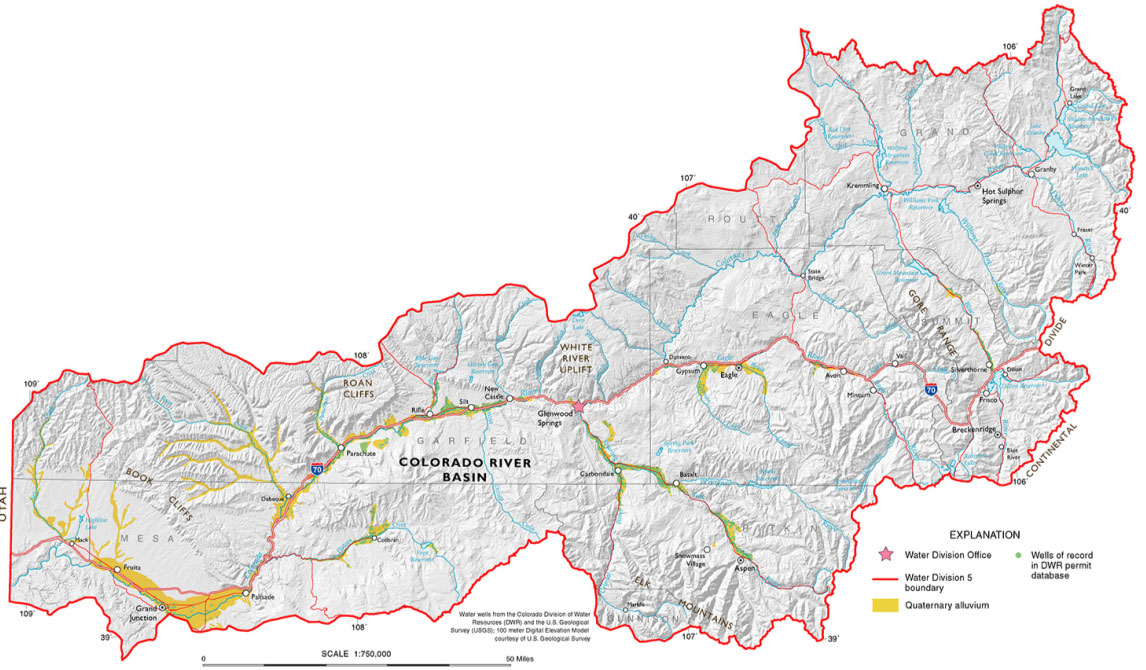
Boulder children’s water festival recap: ‘This is a great way to talk in very concrete ways about a natural resource that kids use every day’ — Sam Messier (Boulder Valley)

bouderchildrenswaterfestivalmay2012dailycamera.jpg

From the Boulder Daily Camera (Amy Bounds):

“We don’t really have a lot of good drinking water,” said Joey DeYoung, a fifth-grader at Boulder’s Crest View. “We can’t waste it.”

Participants include Boulder’s water and open space and departments, Boulder County Parks and Open Space, CU Science Discovery, Growing Gardens, Denver Museum of Nature and Science, CU’s Museum of Natural History, the U.S. Geological Survey and local musicians and artists. Sponsors are the city of Boulder, the Keep it Clean Partnership, Northern Water, CU’s Office of Community Relations and the U.S. Bureau of Reclamation.

Nearly 19,000 Boulder Valley students have attended since the festival’s inception in 1992. Participating students attend a series of four or five 25-minute-long classes taught by about 30 science educators…

Sam Messier, Boulder Valley’s science coordinator, said the program does a good job of aligning with the district’s curriculum and the new state standards, which emphasize natural resources in fifth grade.

“Water is certainly an important resource in Colorado,” she said. “This is a great way to talk in very concrete ways about a natural resource that kids use every day.”

More education coverage here and here.

Northern Water ups the Colorado-Big Thompson quota to 100%, lets hear it for storage

coloradobigthompsonprojecteastslopesystemncwcd.jpg

Here’s the release from the Northern Colorado Water Conservancy District (Brian Werner):

A 100 percent quota for Colorado-Big Thompson Project water was approved today by the Northern Water Board of Directors. Their decision bolsters this year’s C-BT water supplies by 31,000 acre feet with a 10 percent increase from the quota set in April.

Despite paltry snowpack and dismal streamflow forecasts, recent abundant water years replenished C-BT reservoirs enough to give directors the option to increase the quota for a second time this year, demonstrating the value of reservoir storage.

Directors based their decision on the agricultural community’s needs for more water as they plan for the crop-growing season. The board concluded that this is the type of year when a 100 percent quota is needed, based on record-low snowpack readings and streamflow forecasts similar to the drought of 2002.

“The smaller agricultural producers need this water this year,” said Don Magnuson, director from Weld County. “We have an obligation to take care of the little guys.”

The C-BT quota sets the percentage of an acre foot that a C-BT allottee will receive during the current water year for every unit of C-BT water the allottee owns. The 100 percent quota means that each unit will yield one acre foot. This is the tenth time the water year’s total quota has reached 100 percent in the C-BT Project’s 55-year history of full water deliveries.

From the Associated Press via CBSDenver.com:

On Friday, the district’s board of directors approved a 100 percent quota so that project allottees can collect a full acre-foot of water for every unit of project water that they own…District directors say they decided to boost the quota from 90 percent in April because they’re concerned about farmers who will need more water after a dry, mild winter.

More Colorado-Big Thompson Project coverage here.

Cache la Poudre River: Will the Arapahoe snowfly end up on the endangered species list?

arapahoesnowfly.jpg

From the Fort Collins Coloradoan (Bobby Magill):

The U.S. Fish and Wildlife Service announced Wednesday that the snowfly is worthy of protection under the Endangered Species Act, but the agency’s other priorities preclude it from doing so immediately.

Instead of being listed as an endangered species right away, the species will be added to the list of possible species to be added to a queue of species waiting to be considered for endangered status, something that will be reviewed each year.

The snowfly was first discovered in 1986 in Young Gulch in Roosevelt National Forest, one of only two places on earth the snowfly is thought to exist. The other is Elkhorn Creek, about five miles from Young Gulch.

Scientists consider the snowfly an “indicator” species, the health of which is a sign of the overall health of the Poudre Canyon ecosystem…

[Colorado State University entomology professor Boris C. Kondratieff] said if the species is listed, the entire Young Gulch and Elkhorn Creek watersheds would have to be protected, but how that would be done would require more study.

More coverage from Bob Berwyn writing for the Summit County Citizens Voice:

The species was first discovered in 1986 in Young Gulch, a small tributary of the Cache la Poudre River in the Front Range of the Rocky Mountains of Colorado.

It is a small, dark‑colored insect with both a body length and wing length of about 0.2 inches. In 1988, it was identified as a new species. It was also found in a second tributary, Elkhorn Creek, approximately five miles from Young Gulch.

No other populations have been found in searches of nearby tributaries, and numerous visits to Young Gulch since the species’ discovery in 1986 have failed to locate additional specimens. Thus, the Service believes the species is extirpated from Young Gulch and currently only occurs in Elkhorn Creek.

The status review identified threats to the species including the potential present and future threat of habitat modification caused by climate change; the lack of adequate regulatory mechanisms to protect the species from impacts due to climate change; and its small population size (only one known population with few individuals documented).

More Arapahoe snowfly coverage here.

Sand Creek: Metro Wastewater is concerned that Suncor’s groundwater contamination could affect timeline for secondary treatment structure

metrowastewaterbobhiteexpansion.jpg

From The Denver Post (Bruce Finley):

The Metro Wastewater project is designed to remove ammonia and nitrates from Denver’s treated wastewater before it is discharged back into the South Platte River — part of $1.2 billion in improvements at the plant. CDPHE’s water-quality division has required the improvements to meet standards set by the federal government by 2015. Metro Wastewater must construct a large aeration basin structure where secondary treatment can be done. Metro excavation crews have dug out more than 130,000 cubic yards of dirt, pumping groundwater from the emerging hole. Construction crews have begun to build up the new structure.

The toxic plume appears to have approached the excavated area but has not entered it, Metro Wastewater spokesman Steve Frank said. “What we want from Suncor is to continue working on solving this problem,” Frank said. “We intend to do everything we can to remain in compliance with our discharge permit. Compliance is the norm for us.”

Suncor officials on Thursday said they will comply. “We’re meeting with Metro and are working with Metro to understand their construction plans and make sure we do everything we can to allow them to effectively do their work and meet their timelines,” Suncor vice president John Gallagher said. “This is really a potential problem rather than a problem.”[…]

The CDPHE notice to Suncor orders:

• A detailed map of the plume showing where benzene and other contamination exceeds state standards under the Metro Wastewater property.
• Monitoring of the groundwater outside the current extrapolated boundaries where the plume is believed to be — in areas where there’s no current contamination.
• New test wells and a groundwater monitoring plan within 30 days.
• A cleanup work plan, within 60 days, specifying how Suncor will reduce the contamination that has spread from its oil refinery under neighboring property.

More oil and gas coverage here and here.

Combined Metro, Colorado, Arkansas, Gunnison and South Platte roundtables meeting recap: East Slope conservation was a hot topic

transmountaindiversionscoloradostateengineer2011.jpg

From the Grand Junction Free Press (Hannah Holm):

With the state’s population predicted to nearly double to about 10 million people by 2050 — the bulk of that on the Front Range — “basin roundtables” of stakeholders around the state are trying to reach consensus on a statewide plan to meet this new water demand. How much should come from agriculture? How much from the Colorado River system? And how much from conservation?

Conservation was the focus of a four-hour meeting in Montrose Monday night between members of the Gunnison, Colorado, Arkansas, Metro and South Platte Basin Roundtables. Western Slope roundtable members have been making the case for ambitious Front Range conservation strategies in order to minimize losses to agriculture and the Colorado River system, while Front Range representatives have expressed reluctance to build high yields from conservation into planning scenarios…

Some key informational points set the stage for the discussion:

• Per capita water use is expected to decline significantly due to replacement of old, worn-out appliances with newer, more water-efficient ones.

• Front Range cities, spurred into action by the 2002 drought, spend more and employ more people on their conservation programs than Western Slope communities — but efforts are building on this side of the hill, too. Measures include rates that increase with increasing use; leak detection programs; and education.

• Since the 2002 drought, Front Range water providers have seen per capita demand decline about 20% — but they don’t fully understand why and if this will persist.

• Despite per capita savings from conservation, population growth is expected to lead to additional aggregate demands, requiring the development of additional supplies.

Participants aired the following views (among others):

• We should all use water wisely: East Slope and West Slope — not just drinking water providers, but all water users.

• We need a statewide conservation ethic that outlines a reasonable and achievable level of conservation for the whole state.

• What is “reasonable” depends on the level of crisis perceived — actions that seem too expensive now could seem like a bargain in 20 years.

• Colorado headwaters communities are already paying a steep price for trans-mountain diversions, in the form of damaged fisheries and curtailed development. Is that fair?

• High conservation scenarios may not be achievable without regulatory action. Regulations may not currently be feasible or desirable, but a crisis could change this picture.
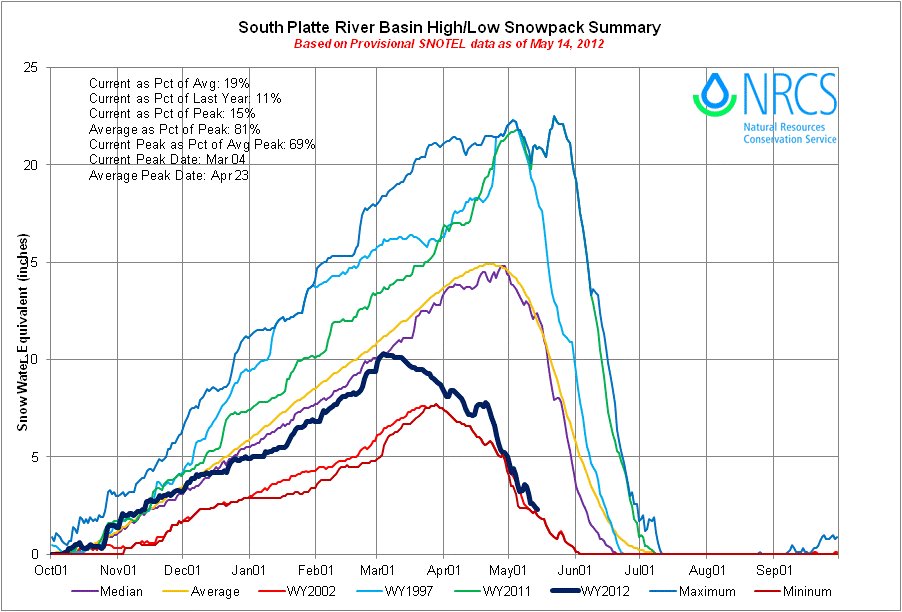
More IBCC — Basin roundtables coverage here.