Presentations from the conference are available on the web at http://www.coloradomesa.edu/watercenter/UpperColoradoRiverBasinWaterForum…
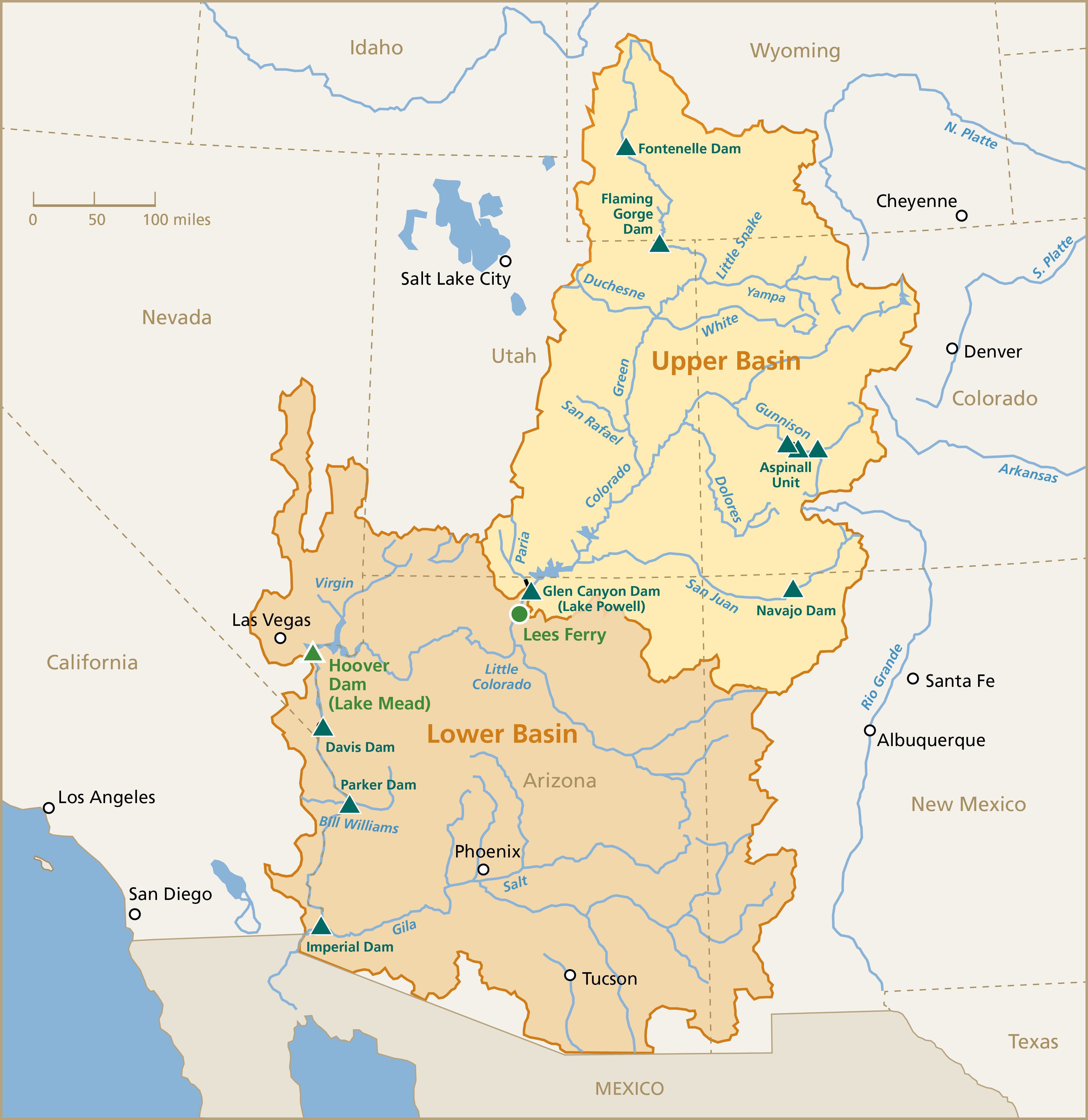
For over 10 years, water use out of the Colorado River and its tributaries for farms and cities has exceeded inflows from rain and snow. One wind storm in 2013 left 419 pounds/acre of snow on the San Juan Mountains, part of a trend of increasing dust falling on snow, which speeds melting. Mountain snowpacks are melting out up to six weeks earlier than they did historically. On the human side, subdivisions are encroaching on farms, and river-based recreation now economically dwarfs agriculture in some areas. Many of the growing cities that rely on the river lie outside the river basin, using pipes and canals to transport water across mountain ranges.
The weather influencing our environment, and the people who inhabit and rely on it, just aren’t behaving the way they did 50-100 years ago, or even 20-30 years ago. While conditions are changing, the legal apparatus and much of the infrastructure we use to manage water are old. The “first in time, first in line” prior appropriation doctrine was established during the early days of mining in Colorado, and many of the ditches that still convey water to hayfields and orchards aren’t much newer. The Colorado River Compact, the cornerstone of the “Law of the River” that apportions the water resources of the Colorado River and its tributaries between the headwaters and down-river states, dates back to 1922.
A central issue of debate among scholars and water managers is whether this legal apparatus, and the physical apparatus that grew up alongside it, is adequate to address our changing natural and social conditions. Both were designed to help communities withstand the variability of our region’s climate, with reservoirs to capture runoff from wet years to meter out during dry years, and rules to handle scarcity in an orderly way, as well as transfer water rights as demands changed.
As a result, the security of access to water for millions of people and millions of rows of lettuce, alfalfa, cotton and peaches has greatly increased. But in helping our communities survive and thrive, despite the variability our climate has dished out over the past 100 years, it has left us even more vulnerable to the larger swings that both ancient tree ring studies and climate change models tell us could be in our future.
On a large scale, proponents of our existing systems point to their flexibility. The states involved in the Colorado River Compact meet regularly and have refined the agreement in numerous ways. These include allowing the lower basin states and even Mexico to bank saved water in Lake Mead for future uses, and to help support a project to reconnect the Colorado River to the sea. The parties also cooperated on the Bureau of Reclamation’s massive Colorado River Basin Water Supply and Demand Study, released in December 2012, which raised the alarm about an intensifying supply-demand imbalance. Stakeholders from each state are now working together to study solutions in the areas of curbing urban demands, enhancing agricultural efficiency, and protecting flows to serve environmental and recreational purposes.
On a smaller scale, farmers and conservation advocates across the basin are increasingly working together to fix leaky canals and headgates in order to improve water management options for farmers while improving streamflows for fish and recreation. Habitat restoration projects are also underway, from small streams and wetlands in the headwaters to industrial contamination sites on the Colorado main stem. On the urban demand side, water providers are helping thousands of homeowners be more efficient with their water use through individual water audits.
Will these efforts be enough to enable our region to smoothly adapt to future conditions? This is an open question, to be answered in part by what the climate dishes out, and in part by the perseverance and creativity of scientists, water managers and stakeholders across the region.