Two kayakers got close to breaking Kenton Grua, et al., speed record thru the Grand Canyon #ColoradoRiver

Map of Grand Canyon National Park via the NPS

From the Spokane Spokesman-Review (Rich Landers):

Ben Orkin of Portland and Harrison Rea of Georgia, paddling separately, launched on the Colorado River on Jan. 7 for an attempt at setting a record: The seasoned Colorado River guides wanted to be the fastest non-motorized boaters to traverse the Grand Canyon 277 miles from Lee’s Ferry to the Grand Wash Cliffs.

The record was set by a dory in 1983 during much faster flood-stage flows, but January was the only time the pair could score a coveted permit. They’d hoped to make up for slower river flows with their high-performance — but fragile — kayaks.

The time to beat was 36 hours and 38 minutes. Orkin and Rea were on track to finish in about 36 hours, until notorious Crystal Rapid had its way with Rea’s boat.

Crystal Rapid via HPS.com

They self-rescued after Rea’s collision with a rock and subsequent capsize, repaired the boat, continued paddling — and still nearly broke the overall record.

Orkin arrived exhausted at Grand Wash Cliffs in 37 hours and 48 minutes after launching, one hour and 10 minutes slower than The Emerald Mile’s flood-assisted run.

A wrap-up story by Canoe & Kayak online says that despite failing to beat the non-motorized record, Orkin, who paddled ahead of Rea after the boat repair, became the fastest kayaker to complete the canyon, “taking the lead in a category legendary whitewater pioneer Fletcher Anderson started in the late ‘70s when he completed a solo kayak descent of the canyon in 49 hours.”

Rio Grande Basin: Second water sub-district progresses — the Valley Courier

San Luis Valley Groundwater

From the Valley Courier:

The proposed Rio Grande Alluvium (aka sub-district #2) is proceeding .

The State of Colorado has assigned or grouped nonexempted wells together to form Response Areas that will become sub-districts . Wells in the Rio Grande Alluvium Response Area are known as Sub-district #2. These are unconfined aquifer wells in close proximity to the Rio Grande River in the general area between Del Norte and Alamosa.

“The work group which is comprised of local land and well owners in the proposed area has been meeting for several years,” said Karla Shriver a work group member . “We have had numerous meetings among ourselves trying to hash out the details of the proposed sub-district formation, and having numerous public meetings trying to get input from those who will be impacted by it.”

The Colorado Division of Water Resources will be submitting Rules Governing the Withdrawal of Ground Water in Water Division #3 for non-exempt wells. Once the rules have been adopted, well owners will have only three options, which include:

1. Be a part of a subdistrict ;

2. Prepare and submit their own augmentation plan;

3. Cease using nonexempt wells on their property .

Proposed Sub-district #2 is a voluntary sub-district , and participation is the well owner’s choice.

“For those in proposed Sub-district #2 if you are wanting to join the subdistrict and have visited with Deb Sarason from Davis Engineering about your farm plan, please contact me at 719-589-6301 to pick up your petition,” said Cleave Simpson, Rio Grande Water Conservation District program manager.

“If you own non-exempt well(s) in proposed Subdistrict #2 and have not completed your farm plan, you will first need to have a meeting with Deb Sarason from Davis Engineering at 719-589-3004 to verify the wells on your lands that you want included in the District” said Simpson. “The goal is to have all the petitions signed by January 31 and then let staff review the petitions for completion and correctness, and then go before the RG Conservation District Board in March.”

The work group is hosting another public meeting so that those interested may come ask questions January 20 at 6 p.m. at the Monte Vista Co-op Community Room.

More San Luis Valley groundwater coverage here.

NWS Pueblo: How much snow across southern Colorado so far this winter?

56 years of tornado tracks in the US — @AmazingMaps

2015 Colorado legislation: Bob Rankin plans “Federal Lands Coordination” bill this session #coleg

Fen photo via the USFS

From the Sopris Sun (John Colson):

Rankin said he already has two bills he plans to introduce this session, which is scheduled to run from Jan. 7 until May 11, 2015, barring unexpected extensions.

One bill he is certain he will be introducing is a “Federal Lands Coordination” bill, which calls for greater coordination between state government and the local governments at the county and city level in dealing with federal oversight of public lands in the state.

He termed this “a major bill that I’ve run two years in a row, that I’m going to get passed this year.”

He said that 70 percent of the lands in Western Colorado are federally controlled, a circumstance that often generates friction between federal land managers and local governments for a variety of reasons.

For example, he pointed to the ongoing debate over the status of different wildlife species that the federal government has listed as threatened with extinction, such as the sage grouse.

He pointed out that Garfield County has come up with its own sage grouse management plan, which he felt is as good as anything the federal agencies have in mind, but local governments have trouble convincing federal authorities to accept local management ideas.

“If there’s a species that comes up on the radar, and we’re doing a good job protecting it, it works better with local protection,” Rankin declared, adding that the same is true for resource management plans concerning such areas as the Roan Plateau in western Garfield County, where environmentalists and the energy industry have clashed over oil and gas drilling proposals.

Rankin said he was involved in negotiation of a recent compromise settlement regarding the Roan Plateau, and predicted, “We’re going to try to do that with the Thompson Divide,” an area near Carbondale where a similar dispute over oil and gas drilling plans has done on for the past five or six years.

His bill, he said, would bring the state government into such disputes on the side of local governments, and would result in negotiated settlements that meet the needs of environmentalists, industrialists, ranchers and area communities.

“We can make it a win for everybody,” Rankin said, calling his approach a way of creating “a better partnership with the federal government” and avoiding the cost and time of bureaucratic battles and possibly court action over everything from species protection to mineral extraction and cattle grazing.

Asked if his approach has anything common with the old Sagebrush Rebellion of the 1970s and 1980s, when westerners tried to wrest control of public lands from federal hands and turn control over to state and local governments, Ranking conceded, “There’s some of that going on.”

But, he said, “That’s not what my bill is all about.” He maintained that federal land managers “love it” when local governments offer to form partnerships in these matters, and that his bill will help that to happen.

The Montrose County Commissioners name Marc Catlin to the Colorado River Conservation District Board of Directors #ColoradoRiver

Colorado River Basin in Colorado via the Colorado Geological Survey

From the Montrose Daily Press (Katharhynn Heidelberg):

Montrose County commissioners say a critical decision was made Monday, when they named local water expert Marc Catlin as to the Colorado River Conservation District Board of Directors.

The 15-member board represents the 15 Western Slope counties in the district, which was established by the Legislature in 1937 to govern the conservation, use, protection and development of Colorado’s apportionment of the Colorado z Colorado River Basin in Colorado via the Colorado Geological Survey River.

The worry on the Western Slope is that more population-dense areas that have water rights on the Colorado are seeking to change policies in a way that could harm agriculture.

Today would by Aldo Leopold’s 128th birthday. Why you should care — The Wilderness Society

An interview with Doug Kenney (Colorado River Research Group) #ColoradoRiver

Colorado River Basin including out of basin demands -- Graphic/USBR
Colorado River Basin including out of basin demands — Graphic/USBR

From National Geographic (Brian Richter):

This week I had the opportunity to speak with Doug Kenney of the University of Colorado, who chairs the [Colorado River Research Group], about the purpose and aspirations of the group.

What motivated the CRRG to compile this set of Guiding Principles?

Kenney: We came together as the CRRG because we all believed that we could offer something that has been lacking in the discussion of Colorado River issues: an independent, science-based, and most importantly – a basin-wide perspective. But before we could begin to speak as a group, we had to make sure we all viewed the current problems and potential solutions in a consistent way. That prompted a group discussion about key CRRG messages, the product of which is our “Guiding Principles” document.

Who’s your audience?

Kenney: Our audience is everyone who cares about the future of the Colorado River. At a minimum, that’s the 40 million people who directly consume water from the river today. But also for those that recognize the river as more than a commodity to be divided up among competing factions. The river is truly a national and global asset. That’s a voice that needs to be heard.

If we are successful, the result will be a better-informed public, and that in turn will put pressure on decision makers that refuse to recognize modern realities. We also hope to provide political cover for leaders that understand the need to behave differently going forward but shy from political controversy.

Our website received over 1,000 different visitors in our first 3 weeks of existence. There’s clearly a demand for the type of information we are providing.

In your Summary Report, you state that “Water users consume too much water from the river and, moving forward, must strive to use less, not more. Any conversation about the river that does not explicitly acknowledge this reality cannot provide a basis for making sound public policy.” Yet you point out that the Basin Plan actually calls for more water consumption in every state. What do you think it will take to get the growth boosters of the basin to come to grips with reality?

Kenney: Even to a cancer, growth at some point becomes self-defeating. In water management that point becomes evident when new consumption undermines the reliability of existing uses. We already see that on the Colorado River. Every new diversion from the river makes it more difficult to satisfy existing needs and rights, to refill strained reservoirs, and to restore flows to depleted river reaches. Ultimately, unsustainable growth becomes a problem for everyone.

The real work can only begin when there is an understanding that an increase in consumption is counterproductive to a healthy river and economy. There are ways to grow without increasing consumption; most large western cities, for example, use the same or less water now than they did 25 years ago, despite significant population growth. That’s tremendously encouraging.

Going forward, any new consumption will have to be offset by reduced consumption elsewhere. That can happen in a planned and strategic matter that protects economic and environmental values, or it can happen in a manner that is inefficient, confrontational, and inequitable. Obviously, we advocate for the former, but that requires viewing the problems through a basin-wide lens, and it necessitates a greater use of markets or policy incentives to reward creative problem-solving.

Why do you think the states have been so slow to invest in conservation at the needed level?

Kenney: Historically, the role of the states has been to promote and assist local governments and water districts in their efforts to develop and consume water. Population growth, increased water consumption, and economic vitality were viewed as self-reinforcing. Similarly, the underlying goal of the federal reclamation movement was to promote population growth and economic expansion in the West, and for a long while, it worked.

But this model has generated many indirect costs, especially on the environment, and now that the available water supplies are nearly exhausted, it’s no longer viable. That’s the new reality in most basins of the West. Yet some water managers still don’t acknowledge this new reality. I’ve spoken to many water managers that argue that the prudent strategy for meeting their local water needs is to expand as fast as possible until all the water is gone. They know that they’ll eventually need to get aggressive with water conservation, but they figure that conservation will be easier when they have a large population base using a lot of water, as compared to being restrained or frugal from the beginning.

That’s an entirely logical philosophy when viewed from the standpoint of individual, local water systems. But when viewed as a system, it is a recipe for disaster—a classic ‘tragedy of the commons’ situation. Unfortunately, most decisions about water development and conservation are made locally, and are driven by an assessment of local costs and benefits.

Water conservation is the key to our future. But it cannot continue to be used solely for the purpose of enabling an expansion of consumption by more people. And conservation faces strong headwinds. For starters, conservation has an image problem. To many, it is viewed as an acknowledgement of failure, a call for sacrifice, a symptom of a stagnating society. It’s un-American. Conversely, growth, of almost any kind, generally has a positive connotation. Conservation is also woefully unexciting. Low-flow toilets will never inspire the awe and respect of giant dams and pumping stations, especially among the engineers that lead many water agencies. Furthermore, conservation can become a fiscal nightmare for projects that were financed on the assumption that water sales would generate the revenues to pay bond obligations. And so on.

Water conservation, sadly, is something that is only embraced when there’s no other obvious solution available. But when that time comes, the merits of conservation are undeniable: it can alleviate shortages, enhance environmental resources, and save ratepayers money. So at some point, the image of water conservation becomes the positive, and the image of water consumption becomes the negative. I’ve seen that in some places, such as Tucson. But at the scale of the Colorado River basin, we just aren’t there yet.

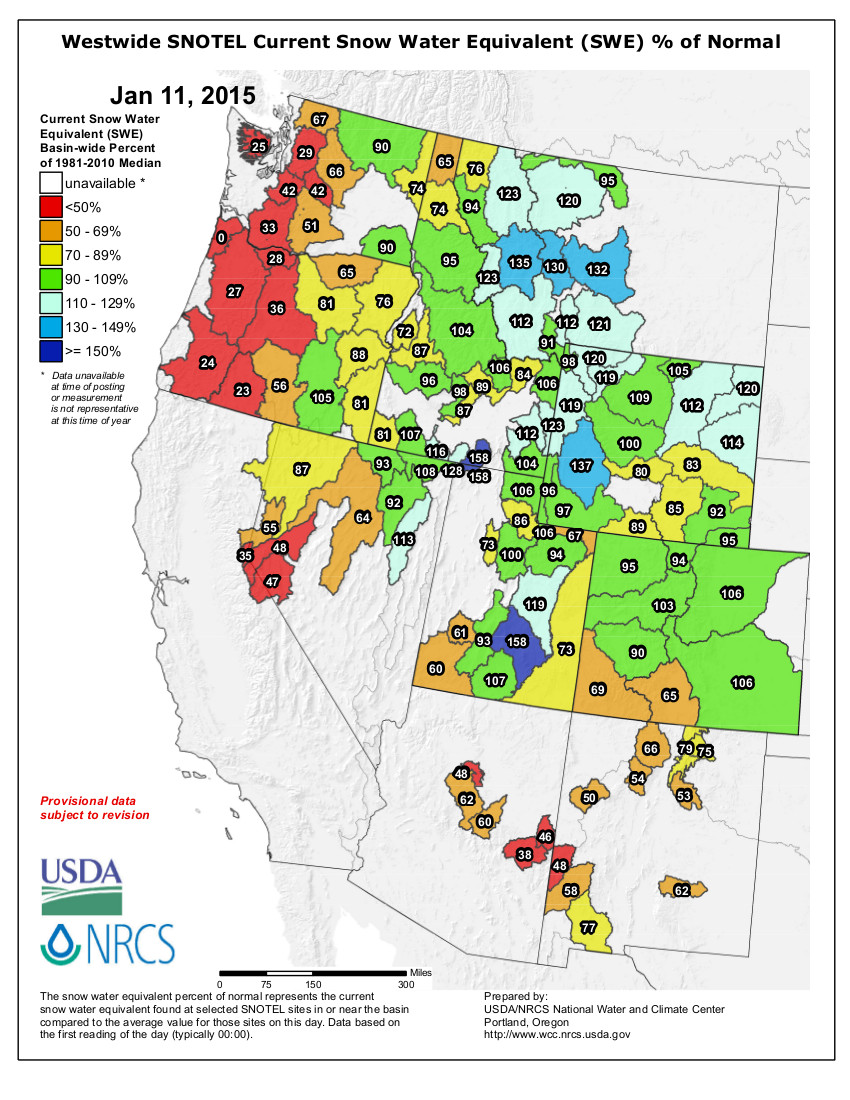
Snowpack news: Green (average) dominates central and northern basins, Rio Grande drops = 65%

westwidesnotel01112015

From The Grand Junction Daily Sentinel (Dave Buchanan):

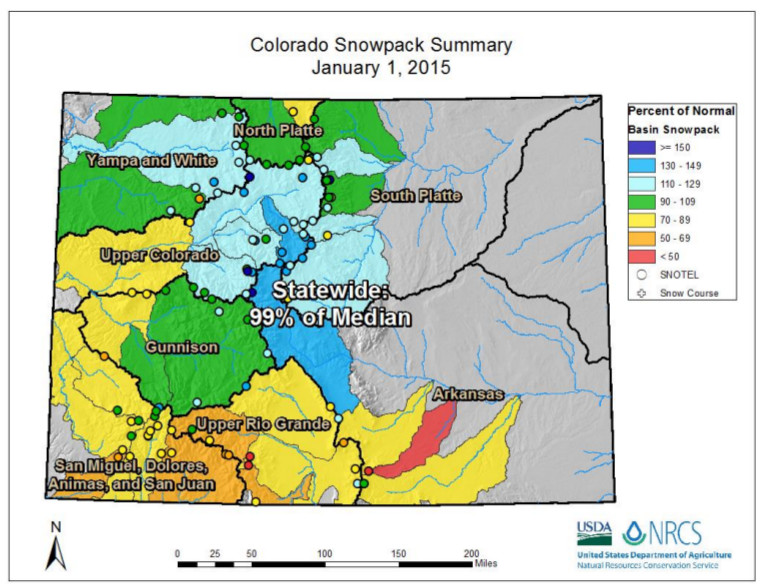
Despite late-staying, unseasonably warm temperatures and almost no precipitation to remark of through the end of October, the statewide snowpack reached 99 percent of median as of Jan. 1, according to Brian Domonkos, Snow Survey Supervisor for the National Resources Conservation Service.

“The statewide snowpack is right where it needs to be for this time of year,” Domonkos said this week in the monthly snow survey report issued by the conservation service. “It’s difficult to make up an early deficit in snow accumulation, so being right at normal is a great place to be.”

The big boost came shortly before Christmas when a series of large storms swept across the state. Some ski resorts reported receiving close to three feet of new snow during one weekend storm cycle.

It has moderated a bit since then, but snow reports this week consistently are claiming midway bases in the high 
20-inch to mid 30-inch range and more.

According to Colorado Ski Country USA, the top five resorts as of Friday were: Wolf Creek, 45-inch base; Copper Mountain, 44; Winter Park, 41; Telluride, 40; and Steamboat, 39.

As has been the rule over the past few years, the snowpack is divided, with the northern and Interstate 70 resorts benefitting from weather patterns and the southwest quadrant seeing the least snow.

The Upper Rio Grande and San Juan river basins are at 71 and 75 percent, respectively, of median.

The National Resources Conservation Service reports these river basins have not received a normal seasonal snowpack since 2010.

The shortfall in runoff in these basins is being felt as far away as Albuquerque, New Mexico, where, according to a story in the Albuquerque Journal, the San Juan-Chama Project, which diverts water from southwest Colorado and sends it via transmountain tunnels to central New Mexico, had the first shortfall this year in its 40-year history.

The water is part of the amount guaranteed to New Mexico in the Colorado River Compact of 1922.

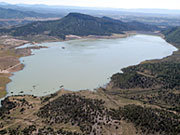
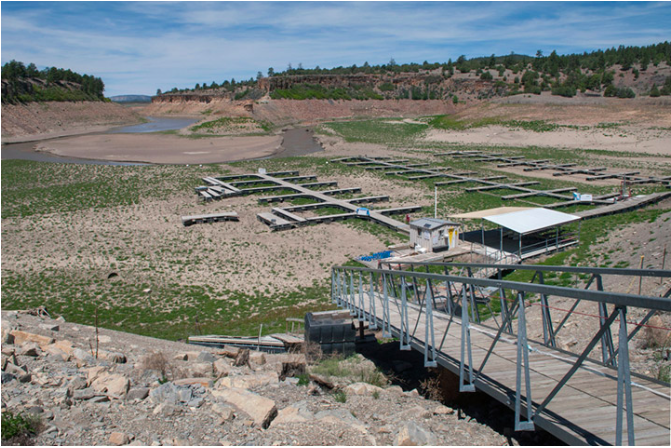
The story, by Journal staff writer John Fleck, said three consecutive years of low snowpack have caused Heron Reservoir in the Rio Chama Basin to nearly run dry, and photos show a slip of water meandering past the New Mexico Sailing Club’s marina.

Albuquerque and Santa Fe, New Mexico, pull San-Juan Chama water from the Rio Grande for their local water supplies.

The story can be found on the website for the Water Center at Colorado Mesa University.

The state’s other major river basins are reporting much better conditions, ranging from 114 percent of median in the Colorado River Basin to 99 percent of median in the Gunnison Basin.

The South Platte River Basin east of the Continental Divide is reporting 112 percent of median.

From The Mountain Mail:

Statewide snow accumulation is off to a near normal start, the Natural Resources Conservation Service reported Thursday.

Snowpack in the Arkansas River Basin is above normal at 114 percent of the median.

Precipitation for December was 101 percent of average, which brings year-to-date precipitation to 105 percent of average.

At 99 percent of normal statewide on Jan. 1, Colorado’s snowpack is at exactly the same level as seen in 2001 and close to the totals recorded in 1995 and 2014.

The snowpack in the Arkansas River Basin is currently ranked 11th of the 35-year period of record.
Statewide snowpack totals range from 47 percent of normal in the Alamosa Creek drainage to 146 percent in the Upper Arkansas Basin.

Reservoir storage at the end of December was 79 percent of average compared to 59 percent last year. Current streamflow forecasts range from 119 percent of average for Chalk Creek near Nathrop to 82 percent of average for the Cucharas River near La Veta.

Statewide reservoir storage is only slightly above normal through Jan. 1 at 103 percent of average. The Arkansas and Upper Rio Grande basins are the only two watersheds with storage totals below 80 percent of average.

Each major watershed has better storage than last year at the same time. The Arkansas’ combined reservoir storage is 20 percent higher than last year at this time.

From The Greeley Tribune (Kayla Young):

Snowpack in Colorado’s northern and eastern basins were at a healthy level this week, said Boulder-based meteorologist Robert Glancy of the National Weather Service.

Snow precipitation levels for the North and South Platte were at 101 and 109 percent of average, respectively, according to the most recent Colorado SNOTEL data.

If similar conditions persist, the basins will be in for good moisture levels come springtime, the meteorologist reported.

Broken down into a water equivalent, the South Platte River Basin index stood at 111 percent of the median, while the Laramie and North Platte River basin index was at 99 percent.

Snowpack above 150 percent of average places the basin at greater risk of flooding during runoff season, Glancy said.

In southwestern Colorado, hit by fewer winter storms so far than the north, basin snowpack ranged from 70 to 85 percent of average. The snow-water equivalent in the region ranged from 67 to 71 percent of the median, according to Colorado SNOTEL.

“The season is still young, so this could turn around,” Glancy said.

The winter season has yet to reach the halfway mark, set at Feb. 1, so there is still plenty of time for conditions to improve, he explained.

As for upcoming changes, Glancy said no serious storms were on the radar for the southern basins. If snowpack remains low in the south, it could mean dry conditions later in the year.

For the northern mountains, more snowfall was expected for early next week.

Reclamation: Daily water elevation of Lake Powell

“I am very worried about the United States Congress turning its back on science” — Bernie Sanders #kxl

Here’s an analysis of the proposed legislation by Katie Rose Quandt writing for Moyers & Company. Here’s an excerpt:

As expected, a bill approving the construction of the Keystone XL Pipeline sailed through the House of Representatives for the tenth time on Friday. The bill is predicted to pass the Senate next week, but Republicans may not have enough votes to override the veto Obama has promised.

On Wednesday we got a preview of the Senate debate when the Energy and Natural Resources Committee met to vote on the bill. Before the vote, which passed 13-9, Democrats used the opportunity to express their environmental concerns, question the bill’s job-creation numbers and propose that the steel piping must be American-made. Republicans touted the pipeline as an economy-boosting job creator that will give the US energy independence. The most striking moments came when the microphone went to Sens. Bernie Sanders (I-VT) and Elizabeth Warren (D-MA), who eloquently summed up the arguments against building a tar sands pipeline directly through the United States.

The great environmental battle of our time.

Science Senator. It's called science.
Science Senator. It’s called science.

More oil and gas coverage here.

Cloud Physics 101 — CBS Denver

Sunrise from the back porch at Gulch Manor after freezing drizzle event January 2015

From CBS Denver (Chris Spears):

My experience with freezing rain comes from the traditional setup which is common in the eastern and southern United States.

THE “TRADITIONAL” SETUP

When you think about temperatures in the atmosphere, especially during the winter, you assume that if it’s at or below freezing at the ground, then it’s even colder up high.

But that isn’t always the case.

In a typical freezing rain or drizzle event, there is usually a thick layer of air just above the ground that has temperatures above freezing.

As snow falls through that air, it melts, arriving at the ground as a liquid that freezes on contact.

THE “COLORADO” SETUP

In Colorado, it’s a much more compilecated scenario because many times the temperature of the air during the winter season, both at and above the ground, is below freezing.

That begs the question of then how do you get freezing drizzle and not snow.

There answer lies in the very complicated subject of cloud physics.

CLOUD PHYSICS 101

A cloud, which is made of thousands of tiny liquid water droplets, has a temperature threshold for those water droplets to turn into tiny particles of ice.

That temperature is right around -10°C, or 14°F.

The formation of these ice crystals serve as the building blocks for snowflakes to form.

In the case of Thursday night’s weather setup along the Front Range, there was a shallow layer of moisture in place with temperatures at or slightly warmer than the threshold for ice formation.

This allowed most of the water droplets to remain in the liquid state, even with temperatures below freezing.

In meteorology, this is called supercooled water.

Because temperatures were flirting with the -10°C threshold, some snow was mixed in with the freezing drizzle.
More times than not, in Colorado, the profile of temperature and moisture in the atmosphere sets us up for either a brief rain to snow or all snow.

But as we saw Thursday night, while prolonged freezing drizzle isn’t common, sometimes, it can happen.

Breckenridge’s celebration of snow , starts Sunday. Who the heck is #ullr?

Good news: more than enough unbought Congresspeople voting “nay” to sustain Obama’s promised #kxl veto — Bill McKibben

NRCS: The first Water Supply Outlook for 2015 is hot off the presses

snowpackbybasin01012014nrcs

Click here to read the report. Here’s an excerpt:

On January 1, at 99 percent of normal, Colorado’s snowpack is at exactly the same levels seen in 2001 and close to the totals recorded in 1995 and 2014. It is a positive sign that these years, which closely compare to this year, all experienced snowpack peaks at or above normal. While this information cannot be used as a forecast, it is often useful to examine what occurred in similar years. The snowpack in the Arkansas River basin is currently ranked 11th of the 35 year period of record. Simultaneously the Colorado River basin is currently ranked 8th of 34 years in the period of record. Unfortunately the southern basins such as the Upper Rio Grande and the San Miguel, Dolores, Animas & San Juan, the watersheds with the greatest needs for above normal snowpack’s to make up for recent deficits, did not see the same snowpack gains as the central basins. The Upper Rio Grande watershed presently has the 7th lowest snowpack in its 29 year period of record. Looking back to the north, the Laramie River basin, at 88 percent of normal, has the lowest snowpack of the sub-watersheds in the Colorado, South and North Platte River basins yet all other sub-watersheds have snowpack’s at 95 percent of normal and above. Statewide snowpack totals range from 47 percent of normal in the Alamosa Creek drainage to 146 percent in the Upper Arkansas basin.

Here’s the first snowpack news release from the Natural Resources Conservation Service (Mage Skordahl) for 2015:

As we began the new water year it looked like summer might never end given the unseasonably warm temperatures and nearly nonexistent precipitation throughout October. Thankfully November brought cooler temperatures and snow to the mountains across the state, but then the moisture dried up before Thanksgiving and the state experienced an unusual lack of moisture for over two weeks. Skiers and winter enthusiasts had no reason to be concerned however as a few big storm systems brought significant snow accumulation just in time for the Christmas holiday and boosted the statewide snowpack totals to 99 percent of median as of January 1. According to Brian Domonkos, Snow Survey Supervisor with the NRCS, “The statewide snowpack is right where it needs to be for this time of year. It’s difficult to make up an early season deficit in snow accumulation, so being right at normal is a great place to be.”

Unfortunately not all of the major basins in Colorado are reporting normal snowpack conditions. According to January 1 snow surveys conducted statewide, the Upper Rio Grande and San Juan, Animas, Dolores, & San Miguel basins are reporting totals at just 71 and 75 percent of median respectively. This is not great news for these areas which have not recorded a normal seasonal snowpack since 2010. If these basins don’t receive increased precipitation over the next few months, they may be looking at their fifth consecutive year of below normal snowpack and seasonal streamflow runoff. The other major basins are faring much better so far this season with snowpack totals for January 1 ranging from 114 percent of median in the Colorado basin to 99 percent of median in the Gunnison basin. East of the Continental Divide the South Platte basin is at 112 percent of median.

Statewide reservoir storage is in good shape; end of December storage totals were at 103 percent of average. The distribution across the state varies however, with the southern basins all reporting below average storage and the northern basins all reporting above average storage. The Upper Rio Grande basin has the lowest percentage at just 67 percent of average and 19 percent of capacity. The South Platte basin has the highest storage totals, which are at 124 percent of average and 82 percent of capacity.

The January 1 streamflow forecasts follow the trends in snow accumulation and precipitation received this season across the state. Predictions for the northern streams call for above normal flows this spring and summer while outlooks for the southern streams are below normal.

2015 Colorado legislation: First day recap

Sunrise Black Canyon via Bob Berwyn

From The Grand Junction Daily Sentinel (Charles Ashby):

Lawmakers introduced more than 100 bills on the first day of the 2015 session, including some that are sure to rankle lawmakers on both sides of the political divide.

Republicans, who have more authority in this year’s session with control of the Senate and a narrower margin in the House, have introduced several measures approved by Democratic-led legislatures of the recent past, including several controversial gun laws.

In the House, Rep. Steven Humphrey, R-Severance, introduced a measure to repeal a new law that limited to 15 the number of rounds in firearms magazines.

While there are enough votes in the Senate and House to get such a ban repealed, newly named House Speaker Dickey Lee Hullinghorst, D-Boulder, has made it clear she won’t let that happen.

As a result, she assigned the measure, HB1009 to the House State, Veterans & Military Affairs Committee, which is expected to kill it. Other similar bills, however, are sure to be introduced in the Senate, where such a measure is expected to get more favorable treatment.

In a related effort, Rep. Janak Joshi, R-Colorado Springs, introduced a bill to repeal the universal background check law before purchasing a firearm. That measure, too, was sent to the House State Affairs Committee, which includes enough Democratic lawmakers who supported both gun measures to kill both repeal bills.

In the Senate, Sen. Vickie Marble, R-Fort Collins, introduced SB32, which would do away with concealed-carry permits and allow anyone who is legally allowed to own a firearm to carry it concealed.

Meanwhile, local lawmakers Sen. Ray Scott and Rep. Dan Thurlow have introduced a bill to roll back the state’s renewable energy standards for utility and rural electric cooperatives.

Under current law, investor-owned utilities, such as Xcel Energy, are required to generate 30 percent of their electricity from renewable sources by 2020, and REAs face a 20 percent standard by that same year.

But under SB44, the two Grand Junction Republicans are proposing reducing all the mandates to 15 percent.

While the bill could clear the Senate, it isn’t expected to survive the Colorado House.

Other measures introduced on opening day include:

■ HB1027, which would require all colleges and universities in the state to provide in-state tuition to anyone who is a member of a federally recognized American Indian tribe whether they are Colorado residents or not.

■ HB1031, which would ban the use, possession, sale or purchase of powdered alcohol.

■ HB1037, which would prohibit a college or university from denying religious student groups any benefit that is available to nonreligious groups.

■ HB1041would ban all abortions except those that are intended to protect the life of the mother.

■ HB1043 would make it a felony for three or more convictions of driving under the influence of alcohol.

■ SB18 would repeal a 2009 law that imposed late fees on registering vehicles.

■ SB19 would allow the state auditor to perform routine audits of the state’s health benefit exchange, Connect for Health Colorado, the state’s response to the federal Affordable Care Act.

More 2015 Colorado legislation coverage here.

Colorado snow is deep and plentiful to start the year — Denver Business Journal

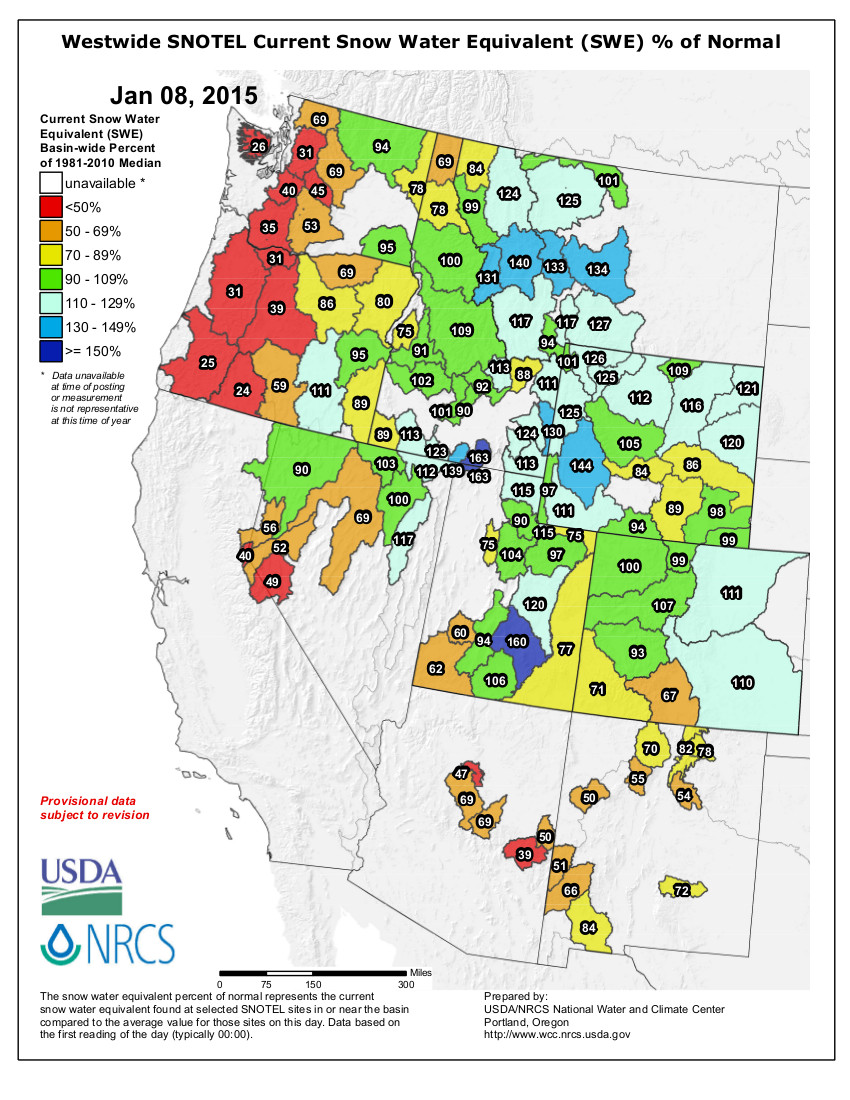
Westwide SNOTEL snow water equivalent as a percent of normal January 8, 2015

From The Durango Herald (Dale Rodebaugh):

“As we began the new water year, it looked like summer might never end, given the unseasonably warm temperatures and nearly nonexistent precipitation through October,” the NRCS said. “Thankfully, November brought cooler temperatures and snow to the mountains across the state.”

But the combined San Juan, Animas, San Miguel and Dolores drainage is hurting with just 75 percent of the median snowpack.

Only the Upper Rio Grande is in a worse position – 71 percent of the median.

If the southern basins don’t get more precipitation in the next few months, they may be looking at their fifth consecutive year of below-normal snowpack and seasonal runoff, the NRCS said.

All the other basins are reveling in above-average snowpack, the report said. They range from 101 to 114 percent of the Jan. 1 median. The only exception is the Gunnison basin, which stood at 99 percent of the median.

Reservoir levels statewide also are looking good, with a combined 103 percent of average storage.

But Upper Rio Grande reservoirs were at 67 percent of average storage, and the average for the San Juan, Animas, Dolores and San Miguel basins was 90 percent, an improvement over the 83 percent Jan. 1, 2014.

South Platte reservoirs had the highest average storage – 124 percent.

Great article on #energy legislation at #coleg — David McGimpsey

Wheat Ridge: “Why a Denver Suburb Has Gone All-In for Farming” — The Atlantic CityLab

The Flatirons from Wheat Ridge photo via Wheat Ridge 2020

Here’s an excerpt from Anna Bergren Miller’s CityLab article:

Wheat Ridge, Colorado, is experiencing an agricultural renaissance. Once known informally as Carnation City, the Denver suburb built its economy on a foundation of flower nurseries, apple orchards, and assorted vegetable crops. But by the time Wheat Ridge incorporated in 1969, residential and commercial development had eaten up much of the town’s farmland.

Five decades later, when city leaders sat down to rewrite the community’s comprehensive plan, they identified urban agriculture as a focal point. “We wanted to move the city forward and encourage investment, but we didn’t want to lose its unique charm, which is largely based on our agricultural history,” says Ken Johnstone, director of community development for Wheat Ridge.

“On top of that, we’re not blind,” Johnstone adds. “We weren’t the only city getting grassroots interest in local farming and food production. We saw it as an opportunity to brand ourselves.”[…]

The changes, which went into effect in July 2011, allow urban gardens (including for-profit farms operated by either the homeowner or a contractor) in all zoning districts. Farmer’s markets and produce stands are likewise authorized throughout Wheat Ridge. The city has streamlined the process as much as possible, eliminating the need for urban-garden permits. (Building permits are required prior to erecting signage or structures within an urban garden, and farmers selling at markets or produce stands must hold business licenses.)

Interestingly, the city’s embrace of urban farming isn’t a measure to keep development at bay, and neither does it reflect “planned shrinkage” (as in some parts of Detroit, for instance). Wheat Ridge is booming: New home construction is brisk, and commercial and retail vacancy rates are exceptionally low. Agriculture is part of what’s making Wheat Ridge attractive to newcomers. “Anecdotally, people I’ve had conversations with are moving here because of [the agricultural] environment,” says Johnstone.

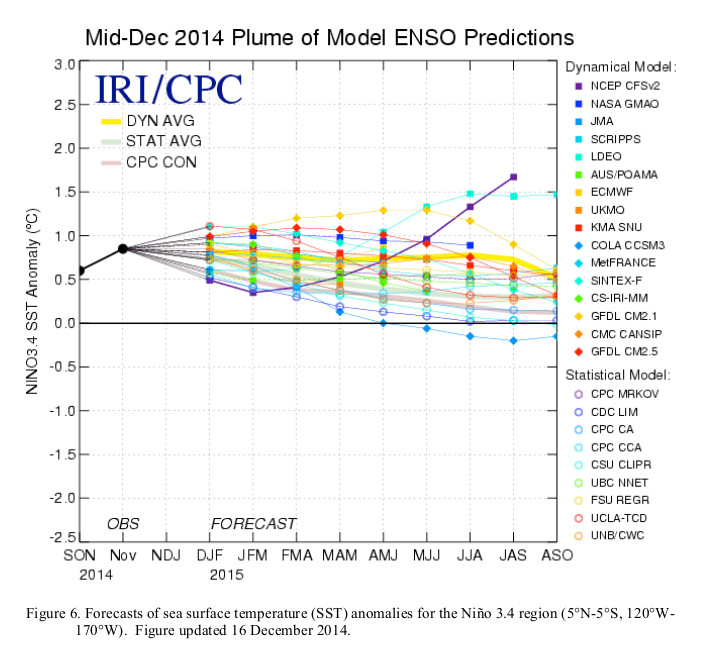
The latest El Niño/Southern Oscillation (ENSO) Diagnostic Discussion is hot off the presses from the Climate Prediction Center

middecember2014plumeofensopredictions

Click here to read the current discussion. Here’s an excerpt:

ENSO Alert System Status: El Niño Watch

Synopsis: There is an approximately 50-60% chance of El Niño conditions during the next two months, with ENSO-neutral favored thereafter.

During December 2014, positive sea surface temperature (SST) anomalies decreased across the central and east-central equatorial Pacific. At the end of the month, the weekly Niño indices ranged from +0.8°C in the Niño-4 region, to +0.5°C in the Niño-3.4 region, to 0.0°C in the Niño-1+2 region. The positive subsurface heat content anomalies (averaged between 180o-100oW) also decreased during December in response to an upwelling equatorial oceanic Kelvin wave. Although the surface and sub-surface temperature anomalies were consistent with El Niño, the overall atmospheric circulation continued to show only limited coupling with the anomalously warm water. The equatorial low-level winds were largely near average during the month, while upper-level easterly anomalies continued in the central and eastern tropical Pacific. The Southern Oscillation Index (SOI) remained slightly negative, but the Equatorial SOI remained near zero. Also, rainfall remained below- average near the Date Line and was above-average over Indonesia. Overall, the combined atmospheric and oceanic state remains ENSO-neutral.

Similar to last month, most models predict the SST anomalies to remain at weak El Niño levels (3-month values of the Niño-3.4 index between 0.5°C and 0.9°C) during December-February 2014-15, and lasting into the Northern Hemisphere spring 2015. If El Niño were to emerge, the forecaster consensus favors a weak event that ends in early Northern Hemisphere spring. In summary, there is an approximately 50-60% chance of El Niño conditions during the next two months, with ENSO-neutral favored thereafter (click CPC/IRI consensus forecast for the chance of each outcome).

Jamestown And Lyons Continue To Work On Post-Flood Housing — KUNC

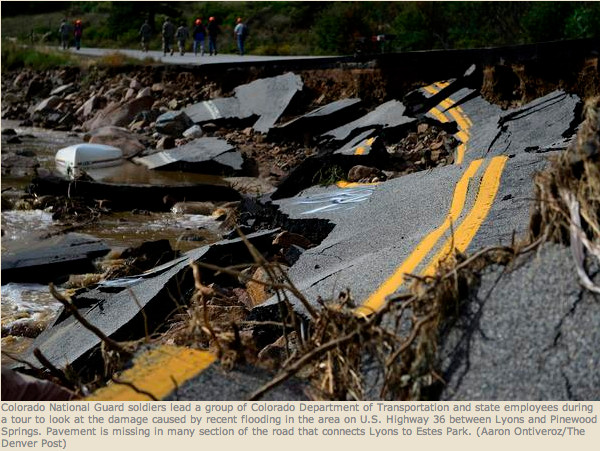
US 36 West of Lyons September 2013 via the Longmont Times-Call

From KUNC (Grace Hood):

In Lyons the challenge around housing centers on building more affordable residences. The town lost two trailer parks which held about 50 homes. Few of those residents have yet to return to Lyons.

To change the picture, the Lyons board of trustees voted Jan. 5 to move forward with one project to build a 50-70 unit housing project using a few acres of Bohn Park south of downtown. Lyons Mayor John O’Brien said the project is vital in replenishing 20 percent of the housing stock lost in the 2013 flood.

“This is an attempt to just partially rebuild some of that stock,” O’Brien said. “It’s a very important step to bring some of our people back and provide affordable housing.”

The project is encountering some opposition from a resident group called Save Our Parks and Open Space. Residents are expected to give the final thumbs-up or down on the project March 31.

Meantime in Jamestown, about 90 percent of residents have returned. Mayor Tara Schoedinger said bringing home the last 10 percent will be more difficult because most are in the midst of applying to federal home buyout programs. The process is posing a financial burden to participants.

“If they’re going to have their property bought out, they really need to do that as soon as possible because they’re paying mortgage payments on a property that doesn’t exist,” Schoedinger said.

The next challenge comes in the form of finding new property for these homeowners. Help could come from federal Community Development Block Grant for Disaster Recovery dollars, which started flowing toward new home construction projects.

Jamestown continues to repair its infrastructure with fixes scheduled for the town square, its water distribution system and replacement of a key bridge on the south side of town in 2015.

More South Platte River Basin coverage here.

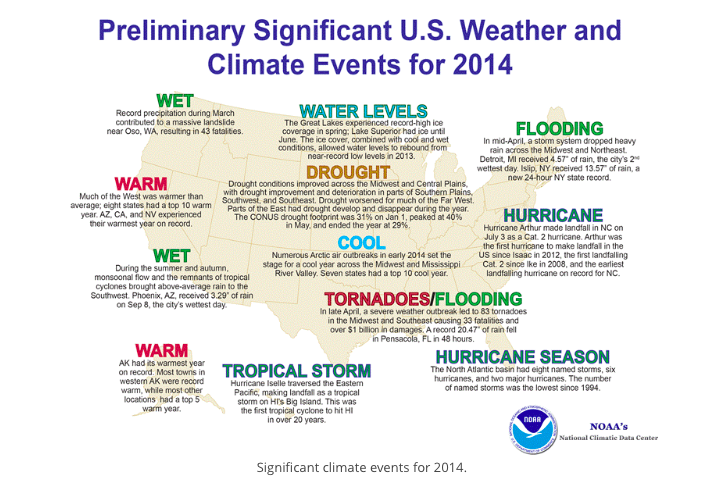
National Climatic Data Center National Summary Information – December 2014

significantclimateevents2014vianoaa

Click here to go to the website for the full report and the cool graphics. Here’s an excerpt:

2014 U.S. temperature exceeds 20th-century average for the 18th consecutive year

Second warmest December boosted 2014 to 34th warmest year for contiguous U.S; eight weather and climate disasters exceeded $1 billion in damages

The 2014 annual average contiguous U.S. temperature was 52.6°F, 0.5°F above the 20th century average. Very warm conditions dominated the West, with four states having their warmest year on record, while the Midwest and Mississippi Valley were cool. This ranked as the 34th warmest year since we began keeping track in the 1895, while the temperature exceeded the 20th Century average for the 18th consecutive year.

The average contiguous U.S. precipitation was 30.76 inches, 0.82 inch above average, and ranked as the 40th wettest year in the 120-year period of record. The Northern U.S. was wet, and the Southern Plains were dry; the national drought footprint shrank about 2 percent.

In 2014, there were eight weather/climate disaster events with losses exceeding $1 billion each across the United States. These eight events resulted in the deaths of 53 people. The events include: the western U.S. drought, the Michigan & Northeast flooding event, five severe storm events, and one winter storm event…

U.S. climate highlights: 2014

  • The West was warmer than average for much of 2014. Nine states had a top 10 warm year. Alaska, Arizona, California, and Nevada each had their warmest year on record. Most locations from the Rockies to the East Coast were cooler than average, with the exception of New England and Florida. Seven states across the Midwest and Mississippi River Valley had a top 10 cool year. No state was record cold during 2014.
  • The Pacific Northwest, Northern Rockies, Midwest, and Northeast were all wetter than average. Michigan and Wisconsin each had their seventh wettest year on record. The Southern Plains and parts of the Ohio Valley were drier than average, but no state was top 10 dry. The rest of the contiguous U.S. had near-average annual precipitation totals.
  • The U.S. Climate Extremes Index (USCEI) for 2014 was 35 percent above average, ranking as the 19th highest annual USCEI in the 105-year record. The components of the USCEI that were much above average for the year included warm nighttime temperatures and 1-day precipitation totals. The USCEI is an index that tracks extremes (falling in the upper or lower 10 percent of the record) in temperature, precipitation, drought, and land-falling tropical cyclones across the contiguous U.S.
  • U.S. climate highlights: December 2014

  • During December, the average contiguous U.S. temperature was 37.1°F, 4.5°F above the 20th century average. This ranked as the second warmest December on record, and the warmest since 1939. Every state in the contiguous U.S. had above-average December temperatures, with nine states across the West, Southern Plains, and Northeast having a top 10 warm December. No state was record warm.
  • The December total precipitation for the contiguous U.S. was 2.51 inches, 0.16 inch above the 20th century average. This ranked near the median value in the 120-year period of record. Above-average precipitation was observed across the West, Central Plains, Southeast, and Northeast. Maine had its seventh wettest December on record. Below-average precipitation was observed across the Southern Plains and Northern Plains. North Dakota had its ninth driest December. No state had its wettest or driest December on record.
  • According to the December 30th U.S. Drought Monitor, 28.7 percent of the contiguous U.S. was in drought, down from 29.1 percent at the end of last month. Drought conditions improved across parts of Northern California, the Southeast, and the Northeast, but worsened across parts of the Northern Plains, Southern Plains, and Lower Mississippi River Valley. Despite above-average precipitation in California, only modest drought improvements occurred due to long-term precipitation deficits.
  • “Your word is everything…Be slow to commit that vote” — Gail Schwartz #coleg

    Gail Schwartz
    Gail Schwartz

    Adios Ms. Schwartz, it was fun watching you work for sensible water policy in the legislature over the years. Thanks for reading Coyote Gulch. Here’s a report from Curtis Wackerle writing for the Aspen Daily News. Here’s an excerpt:

    Gail Schwartz, who for eight years represented Senate District 5, which includes Pitkin County, in the state capitol, looked on Wednesday as her successor was sworn in. Democrat Kerry Donovan of Vail won a narrow election in November over Don Suppes, the Republican mayor of Orchard City, thanks largely to Donovan’s nearly 40-point margin of victory in Pitkin County.

    Schwartz, also a Democrat, won two close elections in 2006 and 2010 for her two terms in the Senate, both with strong Pitkin County support.

    Senate District 5 now includes parts of Gunnison and Delta counties, and the entire counties of Pitkin, Lake, Eagle, Chaffee and Hinsdale. Before a reapportionment process following the 2010 Census, it encompassed Pitkin, Gunnison, Chaffee, Hinsdale, Mineral and a portion of Delta, plus the five counties of the San Luis Valley in south-central Colorado.

    Schwartz on Tuesday said she is proud of her work establishing the Building Excellent Schools Today program, which came about in 2008 and provides competitive grants that support new school construction in rural areas. Other highlights include renewable energy and water conservation efforts she championed in the legislature.

    “It’s been an extraordinary time,” Schwartz said. “We’ve gotten a lot done, not just for Senate District 5, but for rural Colorado and the state as a whole.

    “ … The bottom line is that I have been so blessed and so honored to serve.”

    The now former senator, who at one point was being recruited to challenge Rep. Scott Tipton for his U.S. Congress seat representing the Western Slope, said she does not yet know her next occupation. Schwartz said she has “several balls up in the air.”

    “I’m not looking to go lie on a beach someplace,” she said.

    While she does not want to jump into anything too quickly, Schwartz said she sees opportunities to work on policy development, possibly in education or renewable energy, perhaps with a consulting organization, in a political office or state agency, or with a nonprofit group.

    “I’m tilling the soil to see where the opportunities might be,” she said.

    She said she has no plans to become a lobbyist.

    “I don’t have the genetic makeup,” she said.

    Schwartz also serves on the board of the Aspen Community Foundation and on the High Country Regional Council of the El Pomar Foundation…

    Institutional knowledge

    The Colorado Constitution limits state senators to no more than two consecutive four-year terms. That seems a little counterintuitive to Schwartz, who said she is still running at full speed. Those term limits lead to a loss of a great deal of institutional knowledge, she said, and she has seen plenty of legislators she looked up to walk out the doors of the capitol, perhaps before their time.

    When that is the case, “the question is what happens to that institutional knowledge?” she said. “Who will take the reins? Who will new legislators look to for guidance?”

    Schwartz said that there are more pressing issues that might call for amendments to the state constitution, namely untangling contradictory state revenue and expenditure mandates. But if the term limits question were ever to come up, Schwartz said she would support revisiting the issue. State-level politicians are more accountable to their constituents than on the national level, she said.

    “I believe we already have term limits — they’re called elections,” she said.

    Advice for new a legislator

    Schwartz said she has met extensively with Donovan, whom she endorsed and describes as smart and hard working.

    “She’s quite the student, and she will take the time to study the issues,” Schwartz said of Donovan.

    Schwartz said she and Donovan went through all the files in Schwartz’s office, with Schwartz setting aside those she thought were particularly important. She also passed along to Donovan “about 20 bill ideas I thought would be beneficial to the region.”

    “She heard some of those. I’m extremely grateful that we do have a strong working relationship,” she said. “I believe we share many of the same priorities.

    “ … I certainly respect her independence and being able to do things her way.”

    In general, Schwartz said she would pass along the same advice to Donovan that she was given when she began her tenure in the Senate.

    “I think you want to stay in your seat and listen and learn, and not be too quick to jump on things or provide your opinion until you really understand the issue,” she said.

    The other important piece is to always be cognizant that, as legislator, the only thing you have is your vote, she said. Always be slow to commit it, and don’t promise it to a lobbyist or fellow legislator until you are absolutely sure, and have gone through a thorough process that includes citizen input.

    “Your word is everything,” Schwartz said. “Be slow to commit that vote.”

    Click here and here for Coyote Gulch posts that mention Gail Schwartz.

    Aspen faces deadlines on federal hydro permit — Aspen Journalism

    Aspen
    Aspen

    From Aspen Journalism (Brent Gardner-Smith) via The Aspen Times:

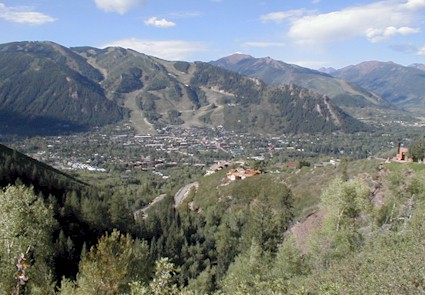
    The Aspen City Council is expected Jan. 12 to face decisions about its federal permit for a hydropower plant on Castle Creek, as the permit expires Feb. 28 and there are deadlines Jan. 29 and March 1 if the city wants to keep the permit alive.

    The Federal Energy Regulatory Commission granted Aspen its first three-year preliminary permit for a 1,175-kilowatt hydropower plant on lower Castle Creek in November 2008, and its second three-year permit in March 2012.

    In the past nine months, the city’s communication with the commission has signaled varying degrees of commitment for the project.

    In March, the city filed a progress report saying it was still working on the project, despite a November 2012 advisory vote where 51 percent of city voters said the city should stop doing so.

    “The Aspen City Council has not abandoned the project … ” the city told the agency in March. “The project remains a viable project at this juncture, one which the city continues to study and to defend the water rights upon which its plans are based.”

    In June, however, the city settled a lawsuit over its water rights for the proposed hydropower plant. Both the settlement and a subsequent City Council resolution said the city “will not be pursuing or seeking to complete the Castle Creek Energy Center hydroelectric project at this time.”

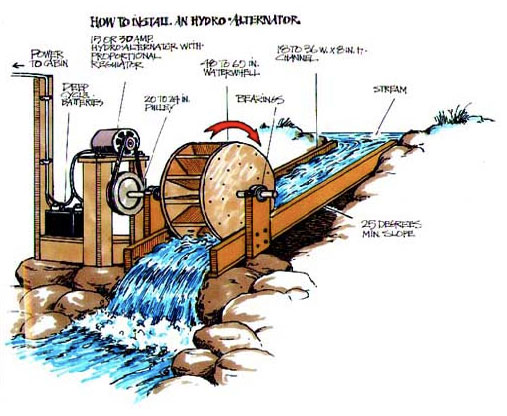
    Instead, the city declared it was going to “pursue other renewable energy projects, including microhydroelectic installations at existing city-owned or controlled facilities.”

    Those facilities are two diversion dams located several miles up Castle and Maroon creeks, which are currently used to divert water to the city’s water treatment plant.

    The city in June sent FERC a copy of the resolution and the settlement agreement, and feels it gave adequate notice to the commission that its position on the project had evolved to embrace microhydro, Aspen City Attorney Jim True said.

    But in September, the city sent FERC a progress report that seemed to suggest the city was leaving the door open for the plant on lower Castle Creek.

    “In the event the City Council decides to proceed with the Castle Creek Energy Center project as a chosen alternative, the city will move forward as appropriate in accordance with applicable statues and regulations,” the city stated.

    On Dec. 23, True said that sentence should not be taken to mean the city is still pursuing the original project.

    Micro-hydroelectric plant
    Micro-hydroelectric plant

    “The city intends to pursue microhydro and we’ve made that clear to FERC,” True said. “We’re not looking at the Castle Creek Energy Center any more, at all.”

    But if the city is not pursuing the lower Castle Creek project and instead plans to study microhydro projects, should it ask FERC to extend or renew its existing preliminary permit?

    That’s one question the City Council is facing Jan. 12.

    The city does have the right to apply for a third “successive” preliminary permit, but Shana Murray, who manages hydro projects at FERC, said it would be difficult.

    “We will take a very hard look at what they have done to develop a license application over the last six years.”

    Karl Kumli, an attorney working for the city on its federal permit, was more upbeat about the chances of extending the city’s current permit, even though the city’s focus has shifted.

    “A preliminary permit, by its very nature, has some flexibility associated with it because you are studying options,” Kumli said.

    Murray said if Aspen did want to file for a third permit, it would be expected to do so on March 1, the day after its current permit expires Feb. 28.

    That is because one purpose of a preliminary permit is to secure the location of a proposed hydropower plant, so most applicants don’t leave a gap of even one day.

    The city also has the option, with the passage of the federal Hydropower Regulatory Efficiency Act of 2013, to apply for a two-year extension to its current permit.

    Murray said so far two-year extensions on second permits are getting about the same level of scrutiny at FERC as applications for a third permit.

    However, if the city wants to go that route, it would need to notify FERC officials 30 days before the existing permit expires Feb. 28, which in this case is Jan. 29.

    Murray wouldn’t speculate on how the agency would respond if the city applies to extend or renew its permit.

    The city also has the option of simply letting its current permit expire and then applying for a new permit, or permits, for its proposed microhydro projects.

    And in June, the city signaled to FERC it might go that route, although it did not discuss letting its current permit expire.

    “In the near future, the city anticipates filing a separate preliminary permit or permits for such microhydro sites, which will be separate and different projects from the Castle Creek Energy Center,” the city said in its update.

    Aspen Journalism and The Aspen Times are collaborating on coverage of rivers and water. More at http://www.aspenjournalism.org.

    More hydroelectric/hydropower coverage here.

    Boulder County approves proposed Longmont flood relief channel

    Flooding in Longmont September 14, 2013 via the Longmont Times-Call
    Flooding in Longmont September 14, 2013 via the Longmont Times-Call

    From the Longmont Times-Call (John Fryar):

    Boulder County commissioners on Tuesday approved Longmont’s proposal to build a relief channel intended to prevent a recurrence of the September 2013 sheet of stormwaters that flooded several westside city subdivisions.

    In that flood, a breach on the north bank of the St. Vrain River resulted in floodwaters filling and overtopping ponds in Boulder County’s Pella Crossing open space area south of Hygiene, with the sheet of water eventually crossing Airport Road north of the river and the entering the city’s Longmont Estates Green, Champion Greens and Valley subdivisions.

    Those neighborhoods are in an area that was never anticipated to flood during a 100-year flood event and that’s outside the previously mapped 100-year floodplain, county land use planner David Beasley said.

    The Heron Lake Drainage Project getting the commissioners’ approval on Tuesday will include construction of a spillway on Heron Lake, the easternmost pond on the county open space, intercepting and deflecting floodwaters in the area and carrying them south toward the St. Vrain River rather than having them flow east into Longmont.

    Dale Rademacher, the city’s general manager for public works and natural resources, said a contractor for the $700,000 project is expected to be chosen soon, with construction to begin by early February and completed by May 1.

    Once that’s completed, the city will remove the temporary concrete flood-prevention barriers it installed along Airport Road…

    The county’s approval of the joint application from Longmont, Boulder County Parks and Open Space and the Golden Land Company has several conditions attached, including the revegetation of the area once the work is done.

    That revegetation is expected to comply with U.S. Fish and Wildlife Service standards to ensure that it will provide suitable riparian habitat in the future and “provide connectivity with an adjacent Preble’s Meadow Jumping Mouse habitat area, according to the county staff.

    County commissioners congratulated the city, the county’s Open Space Department and the Golden Land Company for agreeing on a flood mitigation project the commissioners said will protect the environment, as well as residents of westside Longmont neighborhoods.

    More South Platte River Basin coverage here.

    Legislative agenda: Energy efficiency, water conservation & protecting public lands — Conservation Colorado #coleg

    Grand Lake via Cornell University
    Grand Lake via Cornell University

    Click here to read their release:

    Conservation Colorado and conservation community partners released our 2015 legislative agenda with a focus on innovative measures to keep Colorado in the forefront of energy efficiency, water conservation, protecting our nation’s legacy of universal access to all of America’s public lands, and protections for local communities facing the ongoing impacts of heavy industrial drilling and fracking.

    “Coloradans treasure our mountains, clean water and air, and easily accessible open spaces and they expect their elected representatives to reflect these strong conservation values,” said Pete Maysmith, Executive Director, Conservation Colorado.

    In 2015, the conservation community will pursue legislation to increase energy efficiency programs to encourage construction and retrofit or renovation of highly efficient buildings. Complementing years of progress on expanding renewable energy, energy efficiency measures are a vital component to Colorado’s energy future.

    “Colorado is already a strong leader in pursuing energy efficiency policies but there is more we can do to provide incentives to encourage energy efficiency in construction and renovation of existing buildings,” said Will Toor, Southwestern Energy Efficiency Project. “Not only does energy efficiency reduce carbon pollution but it enables businesses and homeowners to save money on their utility bills.”

    Water remains the lifeblood of Colorado and our state has pursued a number of successful water conservation policies to keep more water in our rivers and streams while more efficiently using water in our homes and to grow our food. But work remains to be done in order to ensure we’re making the most of our limited water supplies.

    Chief among these next steps includes making innovative tools available to Coloradans that will educate them on their water use and encourage them to use water more efficiently. “Household rain barrels are a gateway to water fluency, yet they are mostly illegal in Colorado,” said Drew Beckwith, Water Policy Manager, Western Resource Advocates. “Allowing our residents to use rain barrels will build a conservation ethic in the populace, foster a deeper connection to water in the state, and will not impact other water users.”

    While the Colorado conservation community will work hard to move proactive legislation, we will strive equally as hard to defeat measures which roll back our gains in expanding wind and solar energy or any attempt to reduce Coloradans’ access to our favorite fishing, camping, hiking and hunting spots on our national public lands. We fully expect to see bills to allow the seizure of America’s public lands and hand control over to state government.

    “Colorado hunters, anglers, and outdoors enthusiasts will strongly resist any attempt to sell off federal public lands in Colorado and give control of them to our already cash strapped and overburdened state government. It would be a bad deal for Coloradans because people will lose access to long treasured family camping sites, fishing spots, or favorite hiking trails,” said Suzanne O’Neill, Executive Director, Colorado Wildlife Federation. “Our outdoor heritage is a defining characteristic of Coloradans and we will vigorously work to defend our right to use and enjoy all of our public lands as we have for generations.”

    Finally, the conservation community will closely follow the Governor’s oil and gas task force as it concludes its deliberations and forwards recommendations to the Governor and the Colorado legislature.

    “It is critical the Governor’s oil and gas task force recommend meaningful reforms to address Coloradans ongoing concerns with the impacts of oil and gas development, “ said Pete Maysmith. “Fundamentally, we believe the State should provide the floor for oil and gas oversight and our local governments provide the ceiling to enforce adequate protections as each community sees fit. Anything less from the taskforce will fall far short of reducing conflicts and will force Coloradans to pursue other means to properly protect their homes, public health and property values.”

    More 2015 Colorado legislation coverage here.

    Denver Business Journal: 111 bills introduced on Day 1 of #coleg

    “First official forecast for San Juan-Chama…is crappy” — John Fleck #ColoradoRiver #RioGrande

    @pvowell: Does the Public Trust Doctrine Apply to Groundwater? The California Supreme Court May Decide

    DARCA’s annual convention is nearly here! Check out our list of speakers and topics

    Canadian Broadcasting Corporation: New study says to avoid global warming most of Canada’s oilsands would have to be left in the ground

    CWCB: Next Water Availability Task Force Meeting – January 20

    bristleconepine

    From email from the Colorado Water Conservation Board (Ben Wade):

    The next Water Availability Task Force meeting will be held on Tuesday, January 20, 2015 from 1:00p-2:30p at the Colorado Parks & Wildlife Headquarters, 6060 Broadway, Denver in the Red Fox Room.

    The agenda is posted at the CWCB website.

    More CWCB coverage here.

    FactCheck.org: Ignore the rhetoric, here are the facts about the Keystone Pipeline

    Weekly Climate, Water and Drought Assessment of the Upper #ColoradoRiver Basin

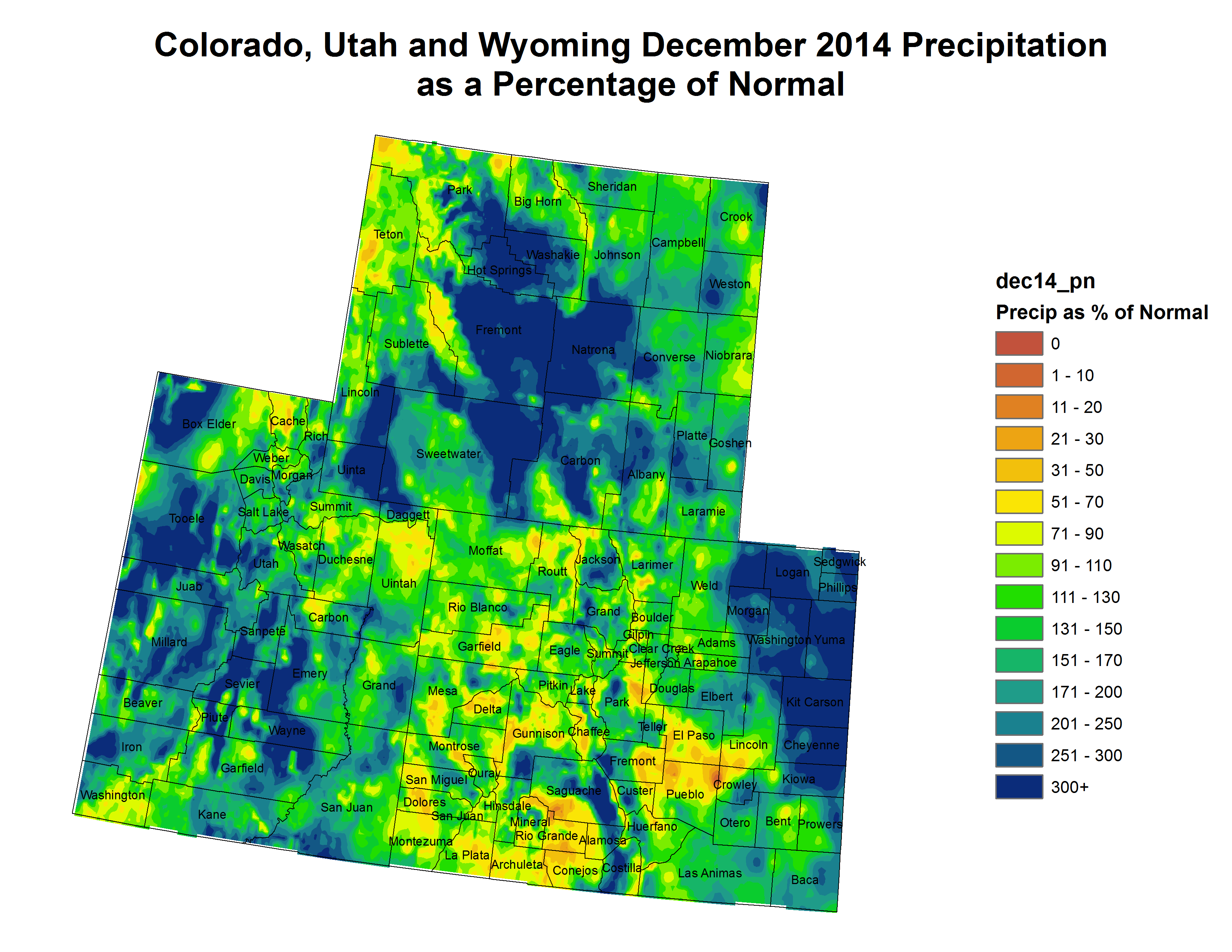
    Upper Colorado River Basin precipitation as a percent of normal December 2014
    Upper Colorado River Basin precipitation as a percent of normal December 2014

    Click here to read the current assessment. Click here to go to the NIDIS website host by the Colorado Climate Center.

    Snowpack news: South Platte Basin = 117% of avg (best in state)

    Click on a thumbnail graphic for a gallery of snowpack data from the Natural Resources Conservation Service.

    2015 Colorado legislation: Review of #COWaterPlan planned during session #COleg

    southplattecanoe

    From the Englewood Herald (Tom Munds):

    State Rep. Daniel Kagan, D-Cherry Hills Village, expects a busy session for the state legislature as members deal with issues such as continuing to increase education funding to making sure all state residents benefit from the recession recovery.

    “We are a divided Legislature, with a Republican-controlled Senate and a Democrat-controlled House of Representatives,” he said by phone while on vacation. “But I believe we can get a lot accomplished because the two parties working together won’t be something new, as 90 percent of the bills passed by the 2014 Legislature passed with bipartisan support.”[…]

    Kagan said the Legislature will review a recently created plan to ensure equitable water distribution to all state users. He said the plan is being devised so water will be available for development but not at the cost of sufficient water supplies for agricultural needs.

    More 2015 Colorado legislation coverage here.

    Grand County Water Information Network has new leader — the Sky-Hi Daily News #ColoradoRiver

    Historical Colorado River between Granby and Hot Sulphur Springs
    Historical Colorado River between Granby and Hot Sulphur Springs

    From the Sky-Hi Daily News (Hank Shell):

    The Grand County Water Information Network is under new leadership.

    Ryan Lokteff joined the GCWIN staff in November and has since taken over as executive director from Jane Tollett.

    GCWIN works with organizations including Denver Water, the Northern Colorado Water Conservancy District, the Bureau of Land Management and the U.S. Forest Service to manage and coordinate water quality testing in Grand County.

    “That’s what I like about GCWIN,” Lokteff said. “It’s not just Grand County but it’s a partnership between Grand County, Denver Water, Northern Water – all these agencies that have a share in the water. It’s a good form of cooperation to get all of those people to the same table.”[…]

    He got his master’s degree in watershed science from Utah State University in 2013.

    “I got to play with fish,” Lokteff said. “I was lucky.”

    Lokteff said he plans to maintain GCWIN’s current data collection as well as explore additional data collection in Grand County.

    “Since I’m new, we’ll keep doing what were doing,” he said. “We’ll keep doing the monitoring on the streams that we have, keep the database up to speed and keep checking the quality of the data to make sure that it’s as good as it possibly can be.”

    Lokteff and his wife Maegan have a 3-year-old son, Curran. Maegan is the executive director of Grand Beginnings.

    More Colorado River Basin coverage here.

    Lake Nighthorse: “This water would really help our future” — Manuel Heart

    Lake Nighthorse via the USBR
    Lake Nighthorse via the USBR

    From The Durango Herald (Mary Shinn):

    The Durango City Council signed a resolution Tuesday supporting the delivery of water from Lake Nighthorse to the Ute Mountain Ute Tribe.

    “This water would really help our future,” Chairman Manuel Heart said.

    The resolution stemmed from a series of recent meetings between city officials and the tribe about the potential recreational use of Lake Nighthorse, City Manager Ron LeBlanc said.

    The city likely will send the resolution to Colorado’s U.S. senators and House members to help support the tribe as it seeks funding for infrastructure to deliver water.

    Lake Nighthorse was built to provide Native American tribes, including the Southern Ute Indian Tribe, the Navajo Nation and the Ute Mountain Ute Tribe, with water they are entitled to receive, said Justyn Hoch, a spokeswoman for the Bureau of Reclamation.

    The Ute Mountain Ute Tribe has water rights to about 31 percent of the water stored in the lake, but Congress has not funded infrastructure to bring it to the reservation, she said.

    Congress has funded a pipeline to the Navajo Nation, which is nearing completion. It will deliver water to the Shiprock area. In addition, the Southern Utes could access water from Lake Nighthorse by releasing it back into the Animas and taking it out of a river diversion, she said.

    However, the infrastructure for the Ute Mountain Utes was dropped from federal legislation in 2000, Heart said.

    The tribal leadership already has met with U.S. Rep. Scott Tipton, R.-Cortez, and has plans to meet with U.S. Sen. Cory Gardner, R.-Colorado, this year to talk about the need to fund a delivery system.

    The additional water would allow for greater economic development on the reservation, Heart said. The reservation covers about 600,000 acres southwest of Cortez and has one of the largest farms in Montezuma County.

    Ute Mountain Ute Councilor Regina Lopez-Whiteskunk also voiced her appreciation of the resolution because the reservation currently has limited water resources. While securing water delivery is a priority for the tribe, she expects it to be years before the tribe receives an appropriation.

    More Animas-La Plata Project coverage here.

    NOW ON FILM: National Young Farmers Coalition focuses on building resilience, one farm at a time

    Happy Birthday Clarence King! (1842) 1st Director of the USGS (1879-81)

    Snowpack news: Arkansas Basin = 115% of normal (best in state), Rio Grande = 71%

    Westwide SNOTEL snow water equivalent as a percent of normal January 5, 2015
    Westwide SNOTEL snow water equivalent as a percent of normal January 5, 2015

    Vail: 14 environmental wins for 2014

    Vail Colorado via Colorado Department of Tourism
    Vail Colorado via Colorado Department of Tourism

    From the Vail Daily (Kim Langmaid):

    • The Eagle County Board of County Commissioners designated the week of April 21-27 as Earth Awareness Week and recommitted to their environmental policy statement and internal goal of reducing the county’s energy, fuel and water use 15 percent by the year 2015 and 20 percent by the year 2020.

    • The U.S. Wilderness Act, which helps protect and preserve our local Holy Cross Wilderness Area and Eagles Nest Wilderness Area, celebrated its 50th anniversary.

    • The Vail Town Council adopted a new environmental sustainability policy to increase recycling and prevent materials from ending up in the landfill.

    • The National Forest Foundation and over 30 local and regional organizations completed a multi-year collaborative planning process to help guide the ecological restoration and enhancement of Camp Hale and the Eagle River Headwaters.

    • The Eagle River Water and Sanitation District and the Eagle River Watershed Council each played important leadership roles protecting our excellent high quality drinking water and providing input on water issues throughout the region. [ed. emphasis mine]

    • The Energy Smart program at Walking Mountains Science Center, in partnership with Eagle County Eco-Build and Holy Cross Energy supported energy efficiency projects in the community resulting in a savings of 1,619,020 kilowatt hours and reducing carbon emissions by 3,406,743 pounds while generating $1,147,364 in economic stimulus.

    • Vail Resorts strengthened its commitment to sustainability with the launch of EpicPromise and supported environmental education and stewardship projects for youth conducted by the Eagle Valley Land Trust and Walking Mountains Science Center in addition to reducing its own energy use and donating over 200 company-sponsored volunteers to restore and enhance the Duck Pond Open Space near Gypsum.

    • Eagle County Open Space celebrated the acquisition of 34 acres upstream of Burns to permanently protect habitat for river otter, mink, migratory birds, black bears and elk while providing a public access point from the Colorado River.

    • The Environment Committee of the 2015 FIS Alpine World Ski Championships reached its goal to train and certify local businesses in sustainability best practices through the new Actively Green 2015 program (for a list of certified businesses, go to http://www.activelygreen2015.com).

    • The Taste of Vail and Vail Farmers’ Market events diverted over 65 percent of their waste from going to the landfill.

    • The town of Avon committed to zero-waste programming at all of their special events and both the WinterWondergrass and the Fourth of July Salute event diverted over 50 percent of their waste from the landfill.

    • Students at Edwards Elementary, Vail Ski and Snowboard Academy and Avon Elementary have formed “green teams” to integrate environmental sustainability into their schools and reduce energy use and increase recycling and schoolyard stewardship while working toward earning the Eco-Schools award in partnership with Vail Resorts EpicPromise, National Wildlife Federation and Walking Mountains Science Center.

    • Colorado Mountain College celebrated the graduation of its first students earning degrees from the new Bachelor of Arts in sustainability studies and the certificate in sustainability leadership programs.

    • Over 30,000 youth and adults participated in environmental science and sustainability education programming under the guidance of passionate graduate student educators and interns at Walking Mountains Science Center.

    State stiffens fines against energy firms: Panel adopts maximum penalty of $15,000 per day per violation — Grand Junction Daily Sentinel

    derrick

    From The Grand Junction Daily Sentinel (Dennis Webb):

    Energy companies will face fines generally ranging from $200 to $15,000 per day of rules violation under a new penalty structure passed by the Colorado Oil and Gas Conservation Commission Monday.

    The agency adopted the new fines structure after the state legislature last year raised the daily penalty limit from $1,000 to $15,000 for each violation. It also was responding to an order by Gov. John Hickenlooper to review its enforcement and penalty assessment procedures.

    Monday’s action came on a 5-3 vote, with some commissioners worrying that the fines established for less-severe violations are too hefty.

    “I think it’s going to create issues,” Commissioner DeAnn Craig said.

    She fears the potential for higher fines could lead to some smaller companies deciding to abandon lower-producing wells, leaving the responsibility of plugging them to the state.

    Commissioner Mike King, also executive director of the state Department of Natural Resources, said while abandonment of wells is a concern for the state, it’s a separate issue from fines and involves companies showing “no responsibility whatsoever.”

    Commissioner Rich Alward of Grand Junction told fellow commissioners the higher fines will transfer the risks of spills from state residents to the companies.

    “Operators will find ways to avoid violating our rules if there are real consequences,” he said.

    The newly adopted schedule establishes standard penalties that include a $15,000 daily fine in the case of violations that create a high risk of health, safety and environmental impacts, and in which those impacts actually occur. The $200 fine is for violations of paperwork or other rules presenting no direct risk of causing harm, and in which no impacts occur. Commission staff had recommended a $500 standard fine for these violations.

    The majority of commissioners stood by the staff–recommended fines for other lesser-level violations, however, despite a call by a few of them for lower fines.

    With the exception of the $15,000 worst-offense fine that can go no higher under state law, the newly established fine amounts can be raised or lowered based on aggravating factors such as knowing and willful misconduct and mitigating ones such as self-reporting of a violation.

    Craig argued that the high-end standard penalty should be less than $15,000, which should be reserved for egregious cases where the commission would be trying to make a point in imposing the maximum. With the commission’s action, she said, there are likely to be a number of instances where mitigating factors drive fines down from $15,000, and she worries about how that will be perceived.

    “Is the public going to feel that we’re cutting too much slack to the industry? It may not be the case, but it may be an optics issue,” she said.

    But Alward said he doesn’t think there would be that many instances where violations would meet the criteria for a $15,000 fine to begin with. And he said such a fine is appropriate for such worst-case violations.

    “That’s exactly where we want to throw the book at somebody,” he said.

    The new rules give the commission director latitude in some instances to waive fines altogether. But attorneys for environmental groups argued that fines should be required in the case of violations creating a high risk of health, safety and environmental impacts even if they don’t occur. Commissioners on Monday agreed, prohibiting the director from waiving fines in such cases.

    Until last year’s legislation, the commission also had been limited to a maximum cumulative fine of $10,000 per violation, regardless of the number of days involved, except in circumstances including where a significant impact to health, safety or welfare has occurred. That cap no longer exists under the new rules. In an interview Monday, Alward said that means companies will have motivation to address violations to keep fines from continuing to go up after 10 days.

    “I’m really pleased that we’re going to have a pretty rigorous penalty rule now and I really hope that it has the deterrence effect — especially that it encourages operators to address problems immediately and get things back on the right page,” he said.

    The Colorado Oil and Gas Association industry group supported last year’s legislation. But in a hearing last month, some industry representatives worried that with the commission able to determine that a violation continued much longer than 10 days, companies could be hit with much higher fines that in some cases could shut them down.

    Association official Doug Flanders said in a statement Monday, “Overall, we’re on the same page with the COGCC and have the same goal, which is to ensure consistency, clarity and certainty as to how the new rules will be enforced, how penalties will be calculated, and how both will (be) applied to all stakeholders.

    “Colorado already has the strongest oil and gas rules in the country and continues to hold the industry to the highest standard in the nation,” Flanders continued. “We expect that the COGCC will implement the new rules in a way that protects stakeholders while providing a predictable business environment.”

    COGCC director Matt Lepore said in a news release, “This is yet another step forward in our long-running and continuing work to build a regulatory approach that stands as a model across the country.”

    The COGCC noted in that release that since 2011 Hickenlooper’s administration also “has crafted rules to increase setbacks, reduce nuisance impacts, protect groundwater, cut emissions, disclose hydraulic fracturing chemicals and increase spill reporting.”

    Jon Goldin-Dubois, resident of the Western Resource Advocates conservation group, said in a news release, “We applaud the Commission passing these stronger standards with consistent mandatory penalties for significant offenses. This is a step forward in holding the industry accountable. It is critical that Coloradans have certainty that their communities, health, clean air, and water are protected. Residents across Colorado have been looking for more oversight and these new rules are important progress.”

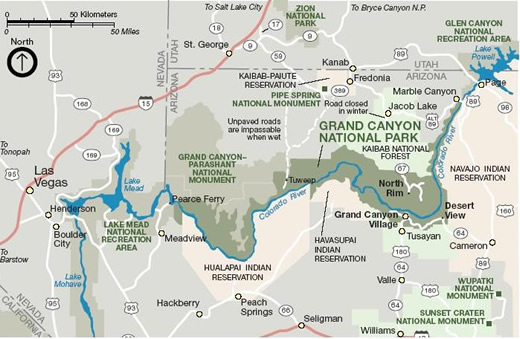
    More oil and gas coverage here.

    Colorado toughens fracking penalties

    NOAA announces significant investment in next generation of supercomputers (5 petaflops)

    A high desert thunderstorm lights up the sky behind Glen Canyon Dam -- Photo USBR
    A high desert thunderstorm lights up the sky behind Glen Canyon Dam — Photo USBR

    Here’s the release from NOAA:

    Today, NOAA announced the next phase in the agency’s efforts to increase supercomputing capacity to provide more timely, accurate, reliable, and detailed forecasts. By October 2015, the capacity of each of NOAA’s two operational supercomputers will jump to 2.5 petaflops, for a total of 5 petaflops – a nearly tenfold increase from the current capacity.

    “NOAA is America’s environmental intelligence agency; we provide the information, data, and services communities need to become resilient to significant and severe weather, water, and climate events,” said Kathryn Sullivan, Ph.D., NOAA’s Administrator. “These supercomputing upgrades will significantly improve our ability to translate data into actionable information, which in turn will lead to more timely, accurate, and reliable forecasts.”
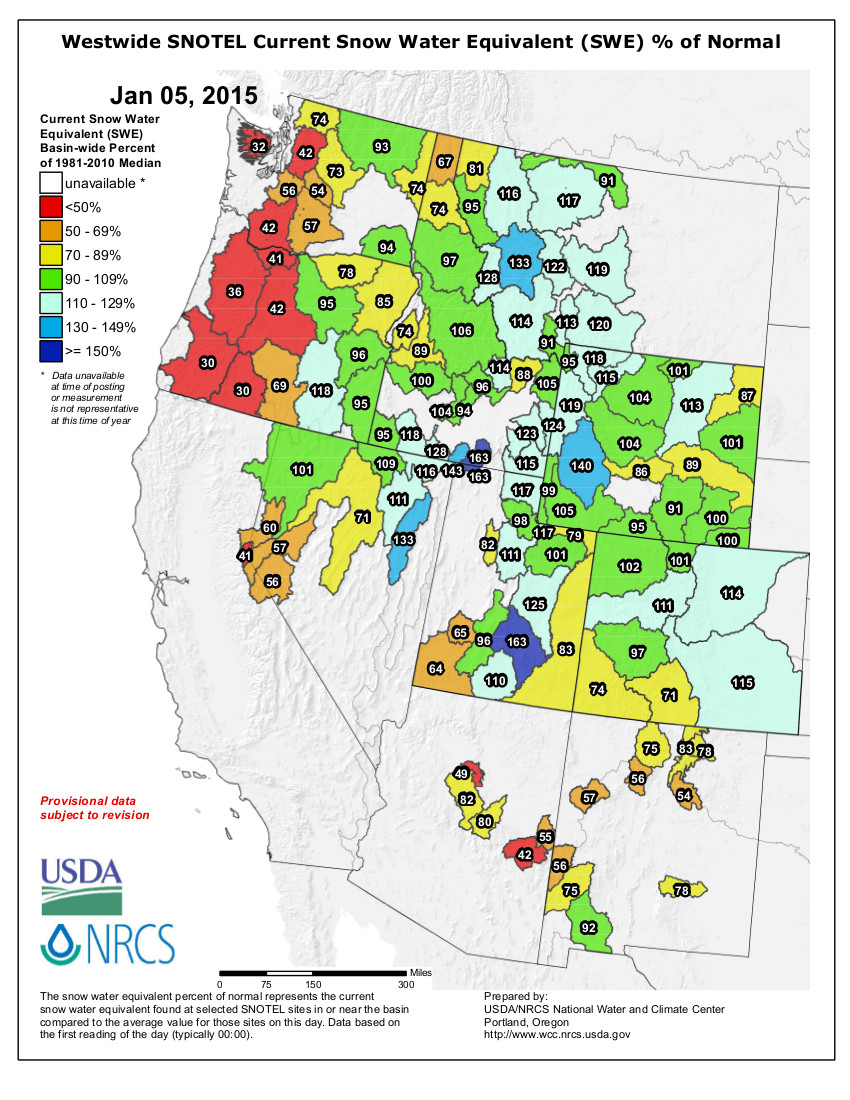
    Ahead of this upgrade, each of the two operational supercomputers will first more than triple their current capacity later this month (to at least 0.776 petaflops for a total capacity of 1.552 petaflops). With this larger capacity, NOAA’s National Weather Service in January will begin running an upgraded version of the Global Forecast System (GFS) with greater resolution that extends further out in time – the new GFS will increase resolution from 27km to 13km out to 10 days and 55km to 33km for 11 to 16 days. In addition, the Global Ensemble Forecast System (GEFS) will be upgraded by increasing the number of vertical levels from 42 to 64 and increasing the horizontal resolution from 55km to 27km out to eight days and 70km to 33km from days nine to 16.

    Computing capacity upgrades scheduled for this month and later this year are part of ongoing computing and modeling upgrades that began in July 2013. NOAA’s National Weather Service has upgraded existing models – such as the Hurricane Weather Research and Forecasting model, which did exceptionally well this hurricane season, including for Hurricane Arthur which struck North Carolina. And NOAA’s National Weather Service has operationalized the widely acclaimed High-Resolution Rapid Refresh model, which delivers 15-hour numerical forecasts every hour of the day.

    “We continue to make significant, critical investments in our supercomputers and observational platforms,” said Louis Uccellini, Ph.D., director, NOAA’s National Weather Service. “By increasing our overall capacity, we’ll be able to process quadrillions of calculations per second that all feed into our forecasts and predictions. This boost in processing power is essential as we work to improve our numerical prediction models for more accurate and consistent forecasts required to build a Weather Ready Nation.”
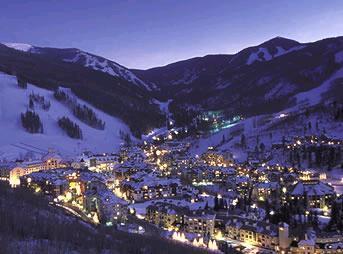
    The increase in supercomputing capacity comes via a $44.5 million investment using NOAA’s operational high performance computing contract with IBM, $25 million of which was provided through the Disaster Relief Appropriations Act of 2013 related to the consequences of Hurricane Sandy. Cray Inc., headquartered in Seattle, plans to serve as a subcontractor for IBM to provide the new systems to NOAA.

    “We are excited to provide NOAA’s National Weather Service with advanced supercomputing capabilities for running operational weather forecasts with greater detail and precision,” said Peter Ungaro, president and CEO of Cray. “This investment to increase their supercomputing capacity will allow the National Weather Service to both augment current capabilities and run more advanced models. We are honored these forecasts will be prepared using Cray supercomputers.”
    “As a valued provider to NOAA since 2000, IBM is proud to continue helping NOAA achieve its vital mission,” said Anne Altman, General Manager, IBM Federal. “These capabilities enable NOAA experts and researchers to make forecasts that help inform and protect citizens. We are pleased to partner in NOAA’s ongoing transformation.”

    The US Supreme Court currently has 4 interstate water disputes before it — John Fleck

    From Circle of Blue:

    Interstate Water Lawsuit

    A special master ruled largely in favor of Wyoming in a legal dispute with Montana over water from the Tongue River. Montana claimed that Wyoming diverted more water from the river than it was entitled to.

    Appointed by the U.S. Supreme Court to hear the evidence, Barton Thompson, a Stanford law professor, determined that in two of the nine years in question, Wyoming exceeded its water rights. The amounts at stake are miniscule: 1,464 acre-feet in 2004 and 62 acre-feet in 2006 — less water than a large farm would use in a year.

    The case began in 2007 when Montana sued Wyoming over water use in two tributaries of the Yellowstone River. Oral arguments before the court, which is not required to follow the special master’s recommendations, could occur in 2015…

    U.S. Supreme Court

    In addition to Montana v. Wyoming, three other disputes between states over shared rivers are moving through the nation’s highest court. The justices have appointed special masters to hear arguments and offer legal guidance in two cases: Florida against Georgia, and Texas versus New Mexico. A third case, between Kansas and Nebraska, was argued before the court last October. A ruling will likely come in 2015.

    Drying up our water, parts I & II, the Pagosa Daily Post

    New Mexico water projects map via Reclamation
    New Mexico water projects map via Reclamation

    From the Pagosa Daily Post (Bill Hudson):

    Politicians and engineers began designing plans to divert water from three tributaries of the relatively-unstressed San Juan River, in southern Colorado, into the Rio Grande valley. It took about 40 years to get the plans approved, and in December, 1964, the U.S. Bureau of Reclamation began construction on the Azotea Tunnel, the primary diversion tunnel that would run from southern Colorado’s stretch of the Navajo River south to Azotea Creek in northern New Mexico.

    The project would be called the San Juan-Chama Project, and would eventually allocate about 56 percent of its water — 48,200 acre-feet per year — to the City of Albuquerque. For comparison, the Pagosa Area Water and Sanitation District (PAWSD) delivers about 1,300 acre-feet per year to Archuleta County customers.

    Work began on the Blanco River Tunnel in 1966, and the following year, construction was started on Heron Dam, which would impound most of the diverted water for future uses in Santa Fe, Albuquerque and throughout northern New Mexico. The new reservoir was to be named Heron Lake.

    The project supplied jobs for some of the men living in the small, economically challenged town of Pagosa Springs, twenty miles to the northwest. I’ve been told that one of the union organizers on the tunnel project was a young man named Ross Aragon.

    The Bureau of Reclamation announced the completion of the project in 1978, but budget cuts had greatly reduced the extent of the project, reducing the amount of diverted water in the original project plans by more than 50 percent. Numerous auxiliary diversions that were supposed to deliver water to agricultural users in northern New Mexico never got built.

    Heron Lake was one of the completed components, however, and it became not only a water storage reservoir but also a popular recreational boating site and the home of Heron Lake State Park.

    And, from Part II:

    I believe there are three intriguing aspects to Mr. Fleck’s article. One is his statement that this was the first time in 40 years that the “San Juan Water” had dried up. Another is the fact that he references a federal study warning us that “climate change would mean less reliable [water] supplies from the [San Juan-Chama] project as temperatures warm during the 21st century.”

    And the third intriguing feature is the photograph that illustrated the article.

    To relate this story properly, we need to view the Albuquerque Journal photo, published on December 29, 2014 and credited to photographer Eddie Moore.

    The photo was accompanied by this caption: “Earlier this year, the New Mexico Sailing Club’s marina at Heron Lake was surrounded by grass and weeds due to the low water level of the lake. The lake, 6 miles west of Tierra Amarilla in Rio Arriba County, is the main storage reservoir of the San Juan-Chama Project.”

    heronreservoirrioarribacountynewmexicosanjuanchama122014

    We humans are often frustrated by failure — such as, for example, the failure of Mother Nature to provide enough water to fill a man-made reservoir that we took all the trouble to build, and to which numerous sailboat owners have become accustomed.

    More San Juan River Basin coverage here.