From The Greeley Tribune (Bridgett Weaver):
The Greeley area will be in good shape when it comes to water availability this year if above-average snowpack and water storage continues for the rest of the winter.
Brian Werner of the Northern Colorado Water Conservancy District explained Wednesday when it comes to Greeley and Weld County, they watch the South Platte and the Upper Colorado river basins to determine what the water supply will look like for the year.
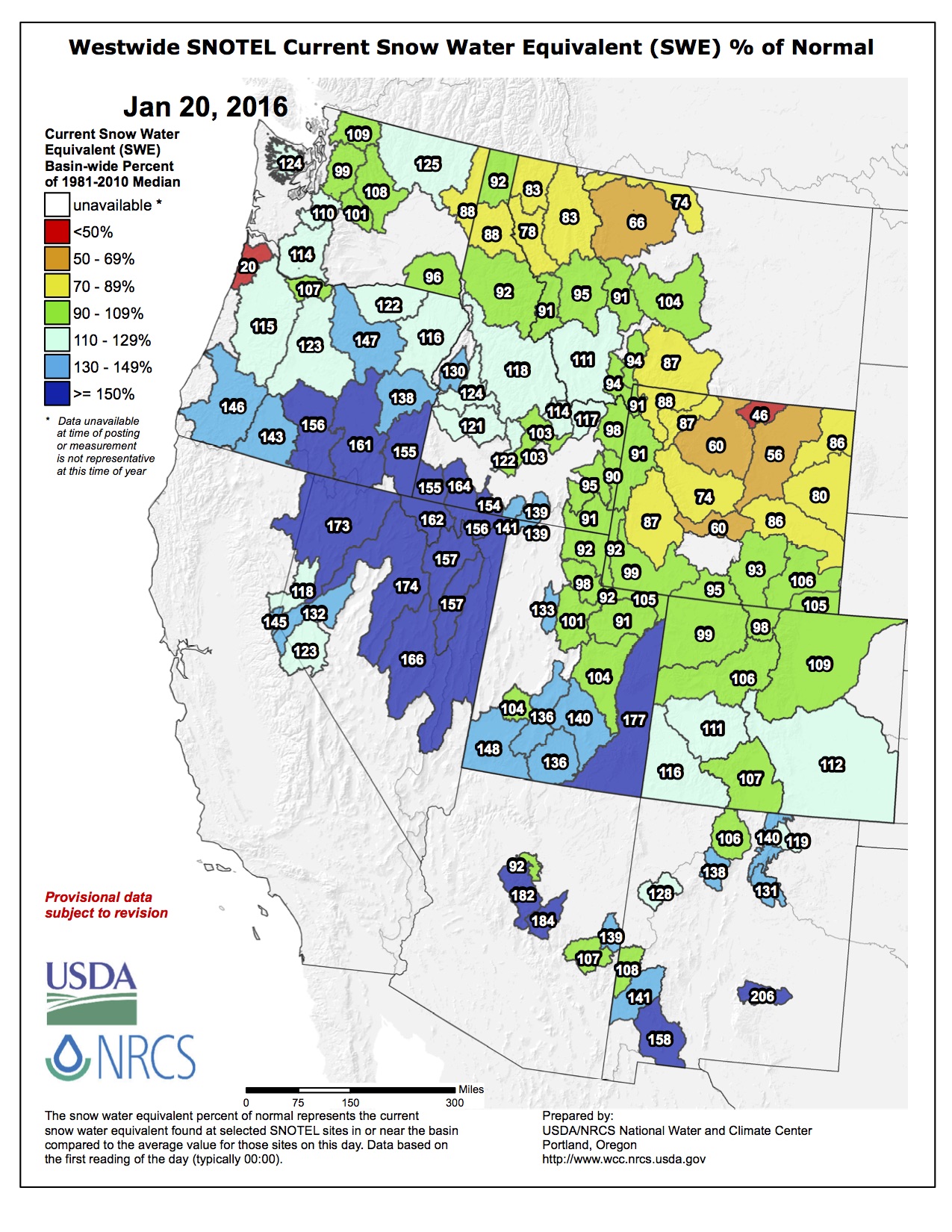
As of Wednesday, the South Platte River basin was 9 percent above the historic average for snowpack, and the Upper Colorado basin was 6 percent above historic average.
“So we’re in good shape,” he said. “Anytime you’re above average, you like that. We want to stay there.”
Likewise, the reservoir storage for the South Platte was 7 percent above average and the Upper Colorado storage was 8 percent above average. Storage amounts were recorded Jan. 1.
“It means that Greeley, at this point in time, should have adequate to above-adequate water supply this year,” Werner said.
The El Niño weather pattern likely is a factor in the healthy snowpack so far this winter, said Nolan Doesken, Colorado state climatologist.
“There’s clearly been a much better flow of Pacific moisture this year than in the last few (years) in terms of the midwinter time period, and that’s sort of consistent with El Niño,” he said.
With snowpack in the mountains above the long-term average so far, experts from the drought-stricken Southwest were hopeful.
But water and weather experts said it’s too early to predict how deep the snow will get or how much of the Colorado River water will make its way into the river and on to Lake Powell in Utah and Arizona, one of two major reservoirs on the Colorado.
“We are cautiously optimistic, but nature has a way of doing what it wants,” said Chris Watt, a spokesman for the federal Bureau of Reclamation, which manages the water in Lake Powell.
The Colorado River serves about 40 million people and 6,300 square miles of farmland in Arizona, California, Colorado, Nevada, New Mexico, Utah and Wyoming. Mexico also is entitled to a share of the water.
Lake Powell, behind the 580-foot-high Glen Canyon Dam, has a key role in regulating and distributing the river.
Some people worry there won’t be enough water in the river to go around in the future because of protracted drought, climate change and unrealistic estimates about how much water was available in the first place. Lake Powell is only about half full after multiple dry years.
April is the key time for predicting how much water will flow into the lake from the annual spring snowmelt in the Rocky Mountains, Watt said. The bulk of the snow has fallen by then, and the runoff has begun.
Most forecasts call for average or above-average water flow in the upper Colorado River and other waterways in the state, Doesken said, but the snow season is only about half over and the picture could change quickly.
“We haven’t gotten so much snow that we’re assured of an average or above-average runoff,” Doesken said. “It could turn on us.”
Although it’s looking good, Werner agreed it’s still necessary to be cautious.
“We’re fairly confident at this point but we never get over-confident with Mother Nature,” he said.

From the Associated Press (Dan Elliott) via The Durango Herald:
Snowpack in the mountains that feed the Colorado River was slightly above the long-term average on Wednesday – welcome news in the drought-stricken Southwest.
But water and weather experts said it’s too early to predict how deep the snow will get or how much of it will make its way into the river and on to Lake Powell in Utah and Arizona, one of two major reservoirs on the Colorado.
“We are cautiously optimistic, but nature has a way of doing what it wants,” said Chris Watt, a spokesman for the federal Bureau of Reclamation, which manages the water in Lake Powell…
April is the key time for predicting how much water will flow into the lake from the annual spring snowmelt in the Rocky Mountains, Watt said. The bulk of the snow has fallen by then, and the runoff has begun.
As of Wednesday, the accumulated snowfall was 104 percent of normal in the Upper Colorado River Basin, which includes the western half of Colorado, the eastern half of Utah and smaller portions of Wyoming, New Mexico and Arizona.
The river begins near the Continental Divide in Colorado, inside Rocky Mountain National Park.
Most forecasts call for average or above-average water flow in the upper Colorado River and other waterways in the state, Colorado state climatologist Nolan Doesken said, but the snow season is only about half over and the picture could change quickly.
“We haven’t gotten so much snow that we’re assured of an average or above-average runoff,” Doesken said. “It could turn on us.”
The El Niño weather pattern is likely a factor in the healthy snowpack so far this winter, Doesken said.
“There’s clearly been a much better flow of Pacific moisture this year than in the last few (years) in terms of the midwinter time period, and that’s sort of consistent with El Niño,” he said.
Klaus Wolter, a research scientist with the National Oceanic and Atmospheric Administration in Boulder, Colorado, said the state’s snowpack could fall below average during the second half of winter, but the moisture will likely rebound in the spring.
Most of Colorado’s east-facing mountain slopes, which feed the Platte and Arkansas rivers as well as the Rio Grande, ranged from 98 to 112 percent of the long-term average.