Elkhead Reservoir fish barrier appears to be working as designed

Elkhead Reservoir

From The Craig Daily Press (Lauren Blair):

Installed last September, a net designed to keep non-native, predatory fish at Elkhead Reservoir from entering the Yampa River appears to be fulfilling its purpose, though it may be too soon to tell.

This spring, Colorado Parks and Wildlife conducted its first count of the two species of concern, northern pike and smallmouth bass, in the stretch of water between the net and the spillway, where water leaves the reservoir and enters Elkhead Creek, which feeds into the Yampa.

“In our first sample this spring, we didn’t see any indication that the net was failing,” said CPW Aquatic Biologist Tory Eyre.

The count was taken before the reservoir filled with spring runoff and water began spilling over the spillway. Another count taken this fall, after the reservoir is done spilling, will give biologists an even better idea of how the net is working.

“This is a big spill year,” Eyre said. “When it’s spilling, it can suck trees and other debris through, damaging the net.”

Officials are hoping the net, made of a sturdy polyethylene mesh, will hold up to any debris that gets swept its way, and divers will check and clean the net once a year.

The net is one piece of a multi-pronged approach to protect four species of endangered fish in the Yampa River, the humpback chub, bonytail, Colorado pikeminnow and razorback sucker…

The net will hopefully keep the predatory fish contained, but with so many factors affecting the species, biologists won’t necessarily be able to determine the precise impact of the net on endangered fish populations…

The life span of the $1.2 million net is only estimated at about seven years, Eyre said, which is why CPW is also hoping to check northern pike and smallmouth bass populations through its new, annual Elkhead Reservoir Fishing Classic.

Upper Colorado River Endangered Fish Recovery Program

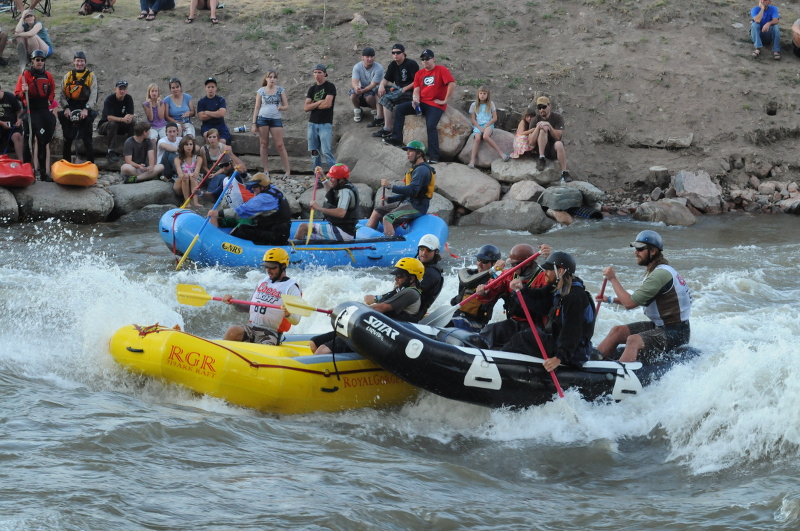
#Runoff news: Royal Gorge open for rafting

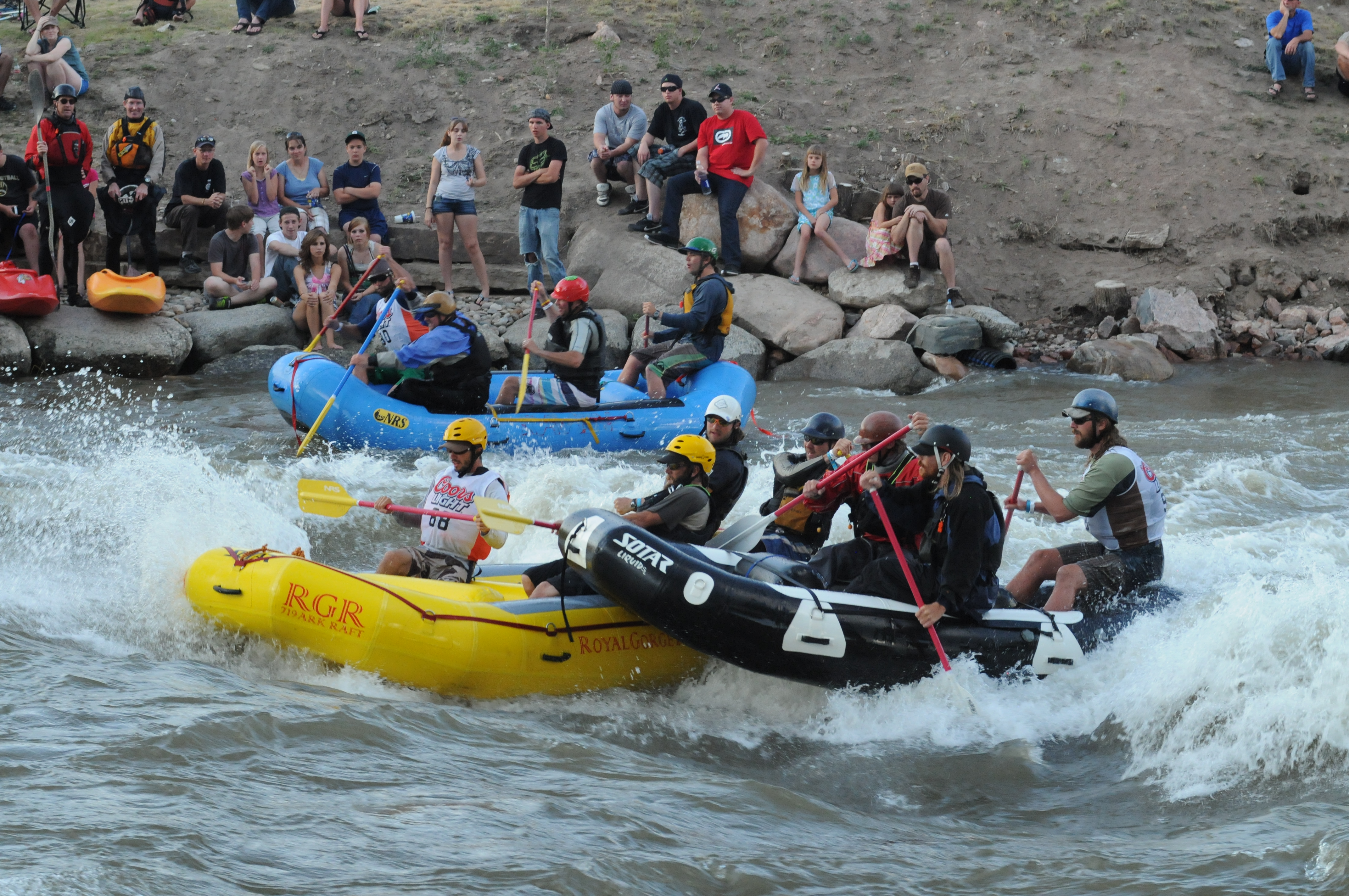
Photo via Royal Gorge Whitewater Festival

From The Pueblo Chieftain (Tracy Harmon):

Rafts have returned to the Royal Gorge section of the Arkansas River this week [June 25th] now that flows are receding and tourism is looking up in the region…

The river was running higher than 3,200 cfs for much of the past three weeks, a level that had commercial rafts voluntarily avoiding that section due to safety concerns…

What August will bring remains to be seen. If the river drops below 700 cfs, the voluntary flow program will kick in and augmentation will keep the flow at that level through Aug. 15 to accommodate rafting.

From the Canon City Daily Record (Sarah Matott):

Kyle Horne, programs director at the Cañon City Area Recreation and Park District and co-chairman for the Royal Gorge Whitewater Festival, said festival attendance was down Friday night [June 23, 2017] and was still waiting on numbers for Saturday.

He said weather definitely played a role Friday night, as it was rainy and cold, as compared to a typical summer night…

On Saturday, Horne said the Arkansas River was flowing at about 3,400 cubic feet per second in the afternoon and was flowing at 3,160 cubic feet per second Sunday morning. Leading up to the festival, the river levels were being watched carefully by festival organizers after an unexpected water release from the U.S. Bureau of Reclamation caused the river to spike.

The water release came from Twin Lakes Reservoir, which is about 13 miles south of Leadville in Lake County.

Last Tuesday, the Arkansas River was flowing at about 4,100 cubic feet per second, hitting a new peak level for this year after the release occurred.

Before the release, festival organizers were expecting the river levels to be at about 2,400 to 2,000 cubic feet per second.

Horne said the release by the Bureau of Reclamation did have some impact, but the high river levels are simply due to this year’s runoff.

The high river levels caused all inter tube events at the festival to be canceled and a last-minute decision to cancel the rafts from the “build your own boat” race.

Colorado joins lawsuit to maintain @EPA methane regulations — @GovofCO

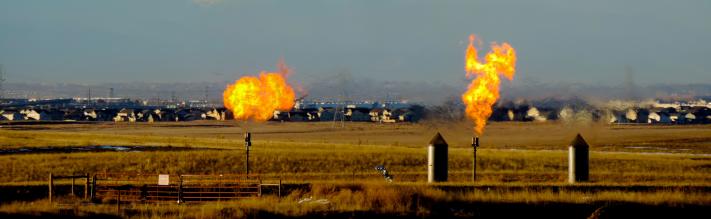
Natural gas flares near a community in Colorado. Federal rules aim to lower risks of natural gas development. Photo credit the Environmental Defense Fund.

Here’s the release from Governor Hickenlooper’s office:

The State of Colorado today joined 13 other states and the District of Columbia in seeking implementation of Environmental Protection Agency (EPA) rules to reduce methane emissions and other harmful air pollutants produced from oil and gas facilities. The State asked the Washington D.C. Circuit Court of Appeals for permission to join plaintiffs and other intervenors in a recently filed lawsuit challenging the decision of EPA Administrator Scott Pruitt to stay the effect of these rules. Colorado is participating in this lawsuit to help assure comprehensive federal regulation of methane emissions, as authorized by the EPA in 2016.

Colorado has a vested interest in the federal government regulating methane emissions from the oil and gas industry across all 50 states. Colorado led the way in 2014 by becoming the first state in the country to regulate methane leaks. These regulations were developed in concert with the oil and gas industry. As a result, this type of regulation is a win-win: it improves the environment and helps reduce leakage and lost revenue in the production and transportation of oil and gas. The EPA used Colorado’s regulations as a template for the federal approach to this issue. Without these rules, Colorado’s methane levels will increase due to pollution from neighboring states, which is why federal regulation is so important.

In today’s action, Colorado urged the Court to require the EPA to implement these important regulations.

View the motion here.

Shed ’17 recap

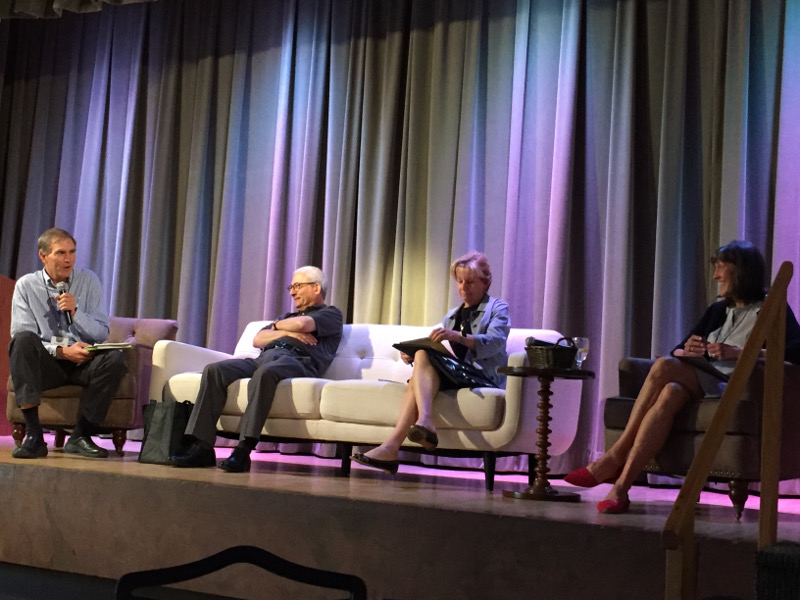
Brad Udall’s panel at Shed ’17. From left, Brad Udall, Sam Mamet, Martha Rudolph, Maggie Fox.

What a hoot at Thursday’s Shed ’17 summit at the Denver Botanic Gardens. Great program and an outstanding venue, the Denver Botanic Gardens. Organizers included volunteers from Denver Botanic Gardens, Denver Water, Aurora Water, City of Boulder, Center for Resource Conservation, Colorado Division of Water Resources, Colorado Water Conservation Board, the the One World One Water Center at Metropolitan State University at Denver. (Go Roadrunners!)

Mike Nelson’s keynote focused on Climate Change. He cited the increase in frequency of large-scale storminess and emphasized that humnankind is changing the water cycle. He is working for the future of his grandchildren he said at the end.

To close out the presentations Brad Udall outlined major events related to climate change since last fall’s election. He ended with a series of maps showing public opinion strongly in favor of policies to combat the effects of climate change.

A panel discussion followed Brad’s presentation. Sam Mamet explored climate change from the municipal perspective. He talked about the challenges to the folks on the front lines, city and town administrators, boards and councils, and their role in planning for a warmer future. Funding heads the list of concerns for the Colorado Department of Health and Environment. Close behind is the uncertainty about policy, rule-making, and priorities for the new administration. Maggie Fox urged climate educators to find common ground with those they seek to influence. She was adamant in her plea for everyone to stay engaged and active politically.


We heard a great story from the recreation folks. Recreation is a muti-billion dollar industry and is responsible for many jobs across the state. The industry also has many interests aligned with the environment. Recreational In Channel Diversions, for example, can call out juniors to help keep water in the stream. The wave feature at Glenwood Springs is a great recreation draw in the valley.

Conservation efforts are morphing towards a focus on resiliency and bolstering the natural environment. Kevin Reidy pointed out a large statewide uptick in interest for developing and revising conservation plans. In the Roaring Fork Valley entities worked together to develop a regional plan.

Farmers are still resistant to Alternative Transfer Methods. One reason is the desire to sell their water rights when they retire. Another is the heightened risk that comes with agriculture year after year — the reality that good years are what get farmers through the other years. There is great uncertainty at the beginning of each growing season.

John Echohawk spoke just before lunch. He catalogued the struggle to litigate Native American water rights. Most of the time the tribes are successful leveraging the Winters v. United States Supreme Court decision and the date a reservation was established. The cost of litigation is prohibitive.

Thanks again to the committee that put this together. Sean Cronin did a great job keeping the agenda on track. It was a treat touring the gardens.

“Water is the defining issue of our time” — @WaterAlliance

Click here to read the paper. Here’s an excerpt:

Water is the defining issue of our time—it has been steadily rising as a top-of-mind concern for community, business, and political leaders across the globe. In fact, the World Economic Forum identifies water crises as one of the greatest risks we face in this decade. Water shapes economic growth, the environment, and the very social fabric of our communities. Ensuring that all people have access to safe, reliable, and affordable water and wastewater systems is the cornerstone of a sustainable and prosperous nation.

This national briefing paper examines the interconnections between water management and vulnerable communities in the United States. Too often, when we think of vulnerable communities that struggle with water-related challenges, we think of places like sub-Saharan Africa, Southeast Asia, and other developing regions. The overall high quality of water systems in America—one of our most monumental achievements as a nation—obscures the fact that water challenges are a daily reality for some communities.

All people need access to the basics—-water, food, shelter– in order to participate fully in society. When these basic conditions are met, our communities and our economy thrive. Water systems that do not deliver clean, affordable water to all people can exacerbate inequality and undermine our nation’s future prosperity. Vulnerable communities that face various forms of water stress are held back from full participation in the economy, lowering productivity and competitiveness. Moreover, as water utilities work to fund the maintenance and operations of their systems, they need financially stable ratepayers.

The good news is that progress is happening on multiple fronts. A range of stakeholders are pioneering equitable and inclusive approaches to water management. Public and private utilities are implementing low-income assistance programs and workforce development strategies, as well as utilizing capital projects to foster neighborhood revitalization. Community-based organizations are building local capacity to engage in water planning and policy making, nurturing a new generation of leaders. Environmental organizations are incorporating community considerations into their ecological work. A growing number of philanthropic organizations are bringing equitable water strategies into their investment portfolios. Businesses are engaging in efforts to restore watersheds and enrich the communities in which they operate. Investors are redefining risk and considering the resilience of communities when contemplating infrastructure investments. Research institutions are partnering with communities to shine a light on the complex interconnections between water, climate, and socioeconomic vulnerability.

The US Water Alliance developed this briefing paper to expand national understanding of the water-related challenges that vulnerable communities face. This paper is inspired and informed by the contributions of diverse stakeholders—utility managers, policymakers, community leaders, advocacy coalitions, direct service providers, and more. It spotlights the promising practices that have emerged to make water systems more equitable, and offers recommendations for their implementation. The audiences we address and the scope of topics we tackle in this paper are intentionally broad. At the US Water Alliance, we believe that all stakeholders have a vital role to play in securing an equitable water future for all.

The report is organized in the following manner:

• Part One: Water Stress and Vulnerable Communities describes the critical challenges facing the water sector and how they impact vulnerable communities; and

• Part Two: The Pillars of Water Equity describes promising practices and strategies in three key arenas showcasing the diverse ways that organizations can advance water equity in the US.

New loan program helps property owners get the lead out – News on TAP

Low-cost financing to replace service line pipes is part of an overall plan to reduce health risks from lead.

Source: New loan program helps property owners get the lead out – News on TAP