Water managers seek certainty in Colorado Basin — @AspenJournalism

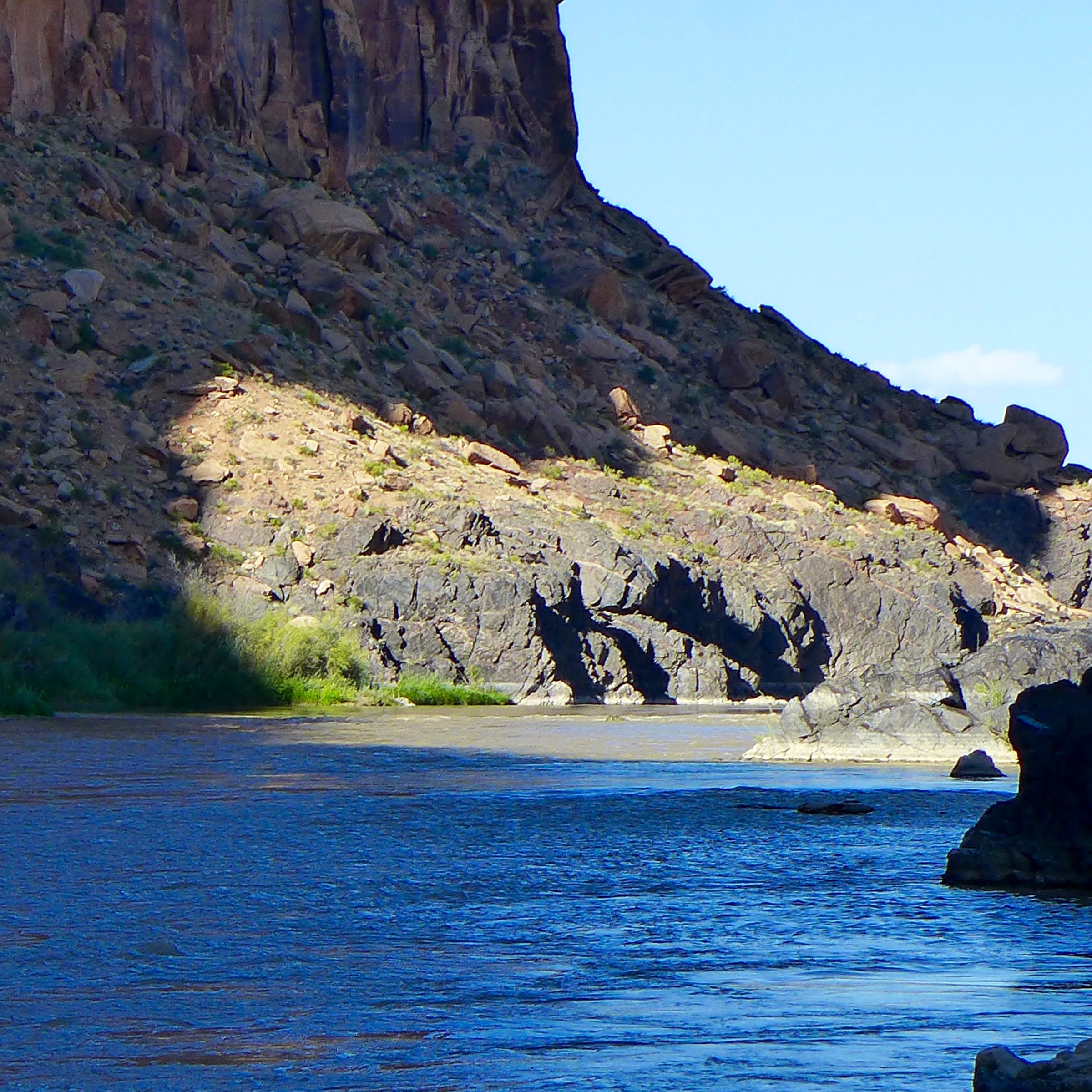
The Colorado River, not far below the Utah-Colorado state line, flowing toward the lower basin.

GRAND JUNCTION — Bringing more certainty to an unruly and unpredictable Colorado River system was a common theme among water managers speaking at the Colorado River District’s annual seminar Friday­­.

Although the drought that has gripped much of the Colorado River Basin for the past 16 years has eased up a bit, population growth and the long dry spell have pushed the river’s supplies to the limit, with every drop of water in the system now accounted for.

Meanwhile, the effects of climate change on the Colorado’s future flows are still a big question mark, and it could mean wide variability in the years to come, with periods of punishing drought followed by a sudden record-setting wet year, as California recently experienced.

Bill Hasencamp, general manager of Colorado River resources for the Metropolitan Water District of Southern California, described how in April 2015, snowpack in the Sierras was at an all-time low. But by this spring, it was at an all-time high, after a winter of heavy precipitation.

The change in snowpack eventually led to huge fluctuations in water prices – from $1,800 per acre-foot at the height of the drought to just $18 per acre-foot this year, Hasencamp said.

That kind of turbulence places enormous pressure on the Colorado River Basin’s big municipalities, which must secure their water supplies for millions of people, said Eric Kuhn, the general manager of the River District, which is based in Glenwood Springs and helps protect western Colorado’s water resources.

Kuhn is retiring next year and was making his last formal presentation as general manager of the river district. As he heads into retirement, he’s working on a book with author John Fleck about the history of managing the Colorado River and the creation of the Colorado Compact.

“The reality is — and we all have to accept this — big-city providers need certainty,” he said. However, Kuhn said he didn’t think that means more transmountain diversions from the Western Slope.

The most obvious source of additional water for cities is agriculture, which holds the lion’s share of senior water rights on the Colorado River, but no one is eager to see rural areas sacrificed for urban growth, Kuhn said.

So, he added, water managers throughout the basin are figuring out ways to adapt 19th-century water laws to a 21st-century reality.
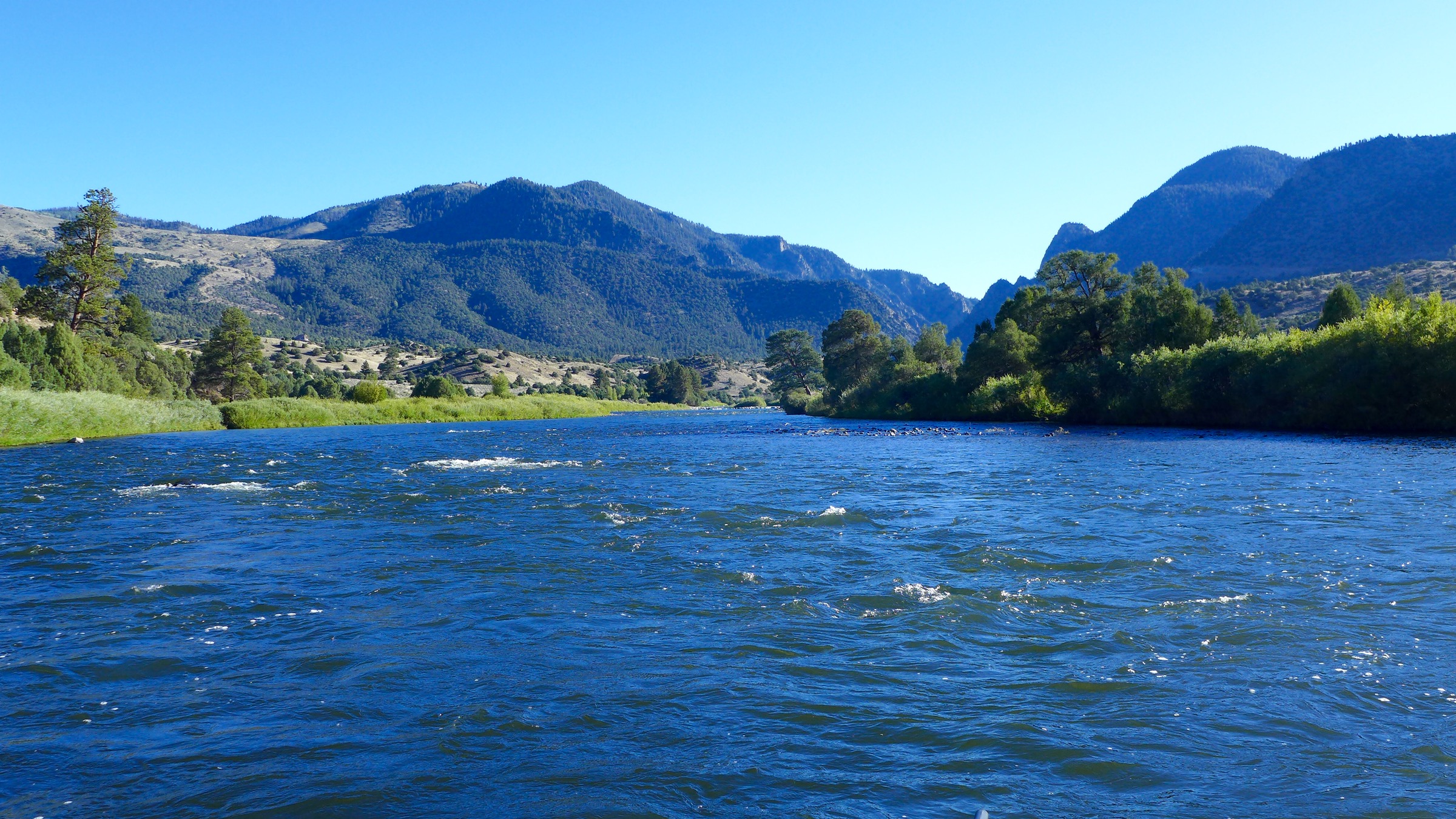
The upper Colorado River below the Pumphouse put-in.

System conservation

Cooperative agreements between irrigators and municipalities are one option, providing cities with additional sources of water during dry periods.

Already, a three-year pilot initiative called the System Conservation Pilot Program has shown that farmers and ranchers are open to using less water in exchange for compensation.

Beginning in 2014, four of the big Colorado River Basin municipalities and the Bureau of Reclamation contributed $15 million to fund water conservation projects throughout the basin.

The program was in limbo after this year while officials worked out some issues, but Hasencamp said Friday that the funders have agreed to continue the pilot program for another year, in 2018.

For water managers, these kinds of flexible arrangements, along with rigorous water efficiency, recycling, and reuse efforts, are the key to finding “certainty” on an inherently volatile river system.

Still, those solutions will not be easy.

As Bill Trampe, a longtime rancher from Gunnison County, explained, less irrigation often comes with unintended consequences such as diminished return flows to the river and nearby fields.

And as Lurline Underbrink Curran, the former county manager for Grand County, described, efforts to heal the destructive impacts of existing water diversions on the Fraser River, a tributary of the Colorado, means accepting that future diversions will in fact take place.

“We tried to form friendships that would help us do more with what we had,” she said.

California’s Salton Sea presents another dilemma, which reaches back up into Colorado River system.

The salty inland lake, created by an accidental breach in an irrigation canal, is drying up.

Since 2002, the state of California has been paying the Imperial Valley Irrigation District to keep the Salton Sea on life support by delivering 800,000 acre-feet of water, but that initiative expires at the end of this year.

Continuing the water deliveries means using up more of the Colorado River’s dwindling supplies, but letting it dry up means exposing local residents to a lakebed full of toxic dust.

None of these problems is new, but as many of the speakers at the river district’s annual seminar explained, water managers now have more tools than ever before to address those challenges — and new urgency with which to apply them.

Recent successes include the successful negotiation of an updated binational water agreement between the U.S. and Mexico, called Minute 232, that is expected to be signed this month. It will outline how the two countries share future shortages on the Colorado River.

“We’re at a point where we can work together, and the success we’ve had is from collaboration,” said Becky Mitchell, the new director of the Colorado River Conservation Board. “It’s really all hands on deck.”

Editor’s note: Aspen Journalism is collaborating with the Glenwood Springs Post Independent, the Aspen Times, the Vail Daily and the Summit Daily News on coverage of rivers and water. The Post Independent published this story in its print edition on Sunday, Sept. 17, 2017. The Aspen Times published it in its print edition on Monday, Sept. 18, 2017. The Vail Daily published it in its print edition on Sept. 18, as did the Summit Daily News.

Increased sedimentation due to wildfire

From News Deeply (Alastair Bland):

New research predicts that an increase in the frequency and magnitude of wildfires will double the rates of sedimentation in one-third of the West’s large watersheds, reducing reservoir storage and affecting water supplies.

In the Paonia Reservoir, completed in 1962 in Gunnison County, Colorado, for example, the dam’s outlet was built 60ft off the lake’s bottom. Now, Randle says, the bottom of the lake is above the outlet. The outlets in many other small reservoirs have become clogged with sediment, requiring expensive dredging or even the removal of the dams. Other times, boat ramps and marinas get buried and filled in. According to Randle, about 35 percent of the reservoirs managed by his agency have been surveyed for sediment fill. With most reservoirs, however, how much capacity has been lost is a matter of educated guesswork.

“Lake Powell probably has 1 million acre-feet less water than what we think,” Randle says.

And now the problem is predicted to get much worse.

According to new research from the U.S. Geological Survey, in many regions erosion rates are now accelerating thanks to wildfires and climate change. The western U.S., which relies on reservoirs for vital water storage and flood control, will be particularly impacted.

The problems of reservoir sedimentation have been at least somewhat understood for centuries, and most dams in the United States have been built with average rates of upslope erosion factored into the placement of the outflow pipes…

Authors of the USGS study, which was published September 7 in the journal Geophysical Research Letters, wrote that projected increases in the frequency and magnitude of wildfires will double the rates of sedimentation in one-third of 471 large watersheds in the western U.S. within the next 33 years. In almost nine out of 10 of the watersheds assessed, sedimentation could increase by at least 10 percent, the researchers warned. In some watersheds, the researchers predict, erosion and sedimentation could increase by 1,000 percent. Climate change, they concluded, is the underlying culprit.

Randle says climate change – which may already be increasing the intensity of droughts and, in turn, wildfires – is driving a vicious cycle whereby sedimentation rates increase. This reduces reservoir storage space, “which leaves you less prepared for the next drought.”

[…]

water and forest managers well know the correlation between fires and post-burn erosion. For example, more than 1 million cubic yards of sediment entered Strontia Springs Reservoir, a major supply lake for Denver Water, following the Hayman fire, which burned 138,000 acres in Colorado in 2002…

Once sediment has settled to the bottom, the most effective means of removal is dredging, which can be costly.

“It’s much more expensive to dredge out your reservoirs after a fire than it is to take preventive action, like reducing fuel loads and restoring forests,” said Jason Kreitler, a research geographer with the USGS and a coauthor of the study.

Dredging a reservoir can cost as much as $60 per cubic yard of material, according to Randle. Some operations remove hundreds of thousands, and even millions, of cubic yards of material. Finer-grained silt and clay is cheaper to deal with.

“Sand and gravel is coarser and tends to do more damage to the dredging equipment,” he noted.

Denver Water has spent $27 million removing debris and sediment from Strontia Springs Reservoir, according to a June report. The Los Angeles County Public Works plans to spend $190 million dredging four reservoirs impacted by sediment from the 2009 Station fire, according to a 2013 report from the U.S. Department of the Interior.

Fecko says his agency has removed 44,000 cubic yards of material from Ralston Afterbay, a small hydroelectric reservoir on the Middle Fork of the American River, at a cost of $2.2 million. Still, the reservoir has lost about 50 percent of its storage capacity thanks to long-term sedimentation, he says.

Besides lost reservoir storage, there are other impacts from sedimentation. Downstream from dams, rivers become depleted of gravel – essential for spawning salmon…

Randle, at the Bureau of Reclamation, thinks all water agencies and local governments would be wise to take a proactive stance against sediment entering reservoirs.

The #Climate Optimist’s Manifesto #ActOnClimate #KeepItInTheGround

Click here to go to the Climate Optimist’s website. Here’s the manifesto:

We must, we can and we will solve climate change. It’s that simple.

And that difficult.

Because the climate change challenge is so great and its consequences are so serious.

Which makes optimism essential. Because hope beats fear. It’s the attitude that inspires progress.

We behave, buy, vote and work for change because we are optimists. And our vocal optimism will take our actions even further. It will make others bold. Political action, business innovation, new investment and global transformation all become possible.

Optimism has always had this power. Humanity has eradicated diseases, overcome great injustices and even reached the stars because enough of us believed we could.

And when we succeed this time, we’ll solve more than climate change. Renewable energy means jobs. Solar energy can help free people from poverty. Cutting pollution benefits our health.

And we’re already doing this. Our optimism is fuelled by the new solutions, inventions and daily efforts from individuals and organisations across the world.

Each of us must face climate change in our own way. We choose belief in a better future. We choose action. We choose hope.

Solving climate change starts with the belief that we can. We are climate optimists. Opt In.

What does ‘solving climate change’ mean?

It means two things:

• Keep well below 2° C of global warming. That’s the level that governments agreed is safe in the COP21 Paris Agreement.
• Help the people who are at risk from the climate change effects that are already happening.

By 2020 we can bend the curve of emissions to make this a reality. That fast.

And we want even more.

The world’s governments have also agreed 17 Global Goals, including ending poverty and hunger, reducing inequality and creating decent jobs through economic growth. We believe that solving climate change can help reach these goals. That’s what we’re most optimistic about.

Can we actually do it?

Fatalism is tempting. We’ve all heard about the scale of the threat. Our optimism doesn’t change the seriousness of what we are facing.

Solving climate change means transforming some of our industries. Especially energy, travel and agriculture. It also means new industries, new jobs and new products need to be invented.

And that’s already begun. More so than most people are aware of. Huge levels of investment are going into renewable energy. Entrepreneurs are creating new climate friendly business models. And millions of people across the world have changed how they eat, buy, vote, build, work and travel.

You can join them.

What can I do?

Opt in to climate optimism. And share your belief that we can solve this.

Then take action in your own life, especially doing things that will make you healthier and happier.

And shine a light on solutions. Find out about the amazing progress already happening.

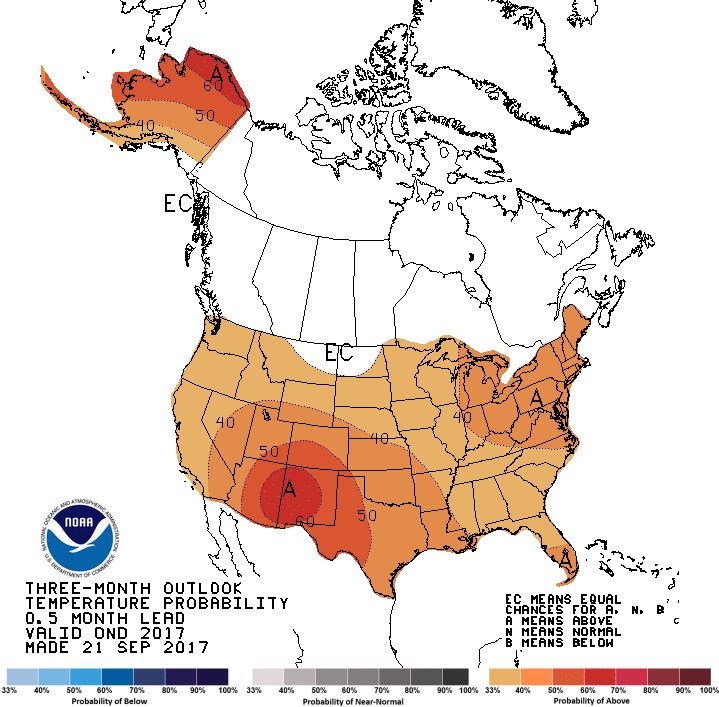
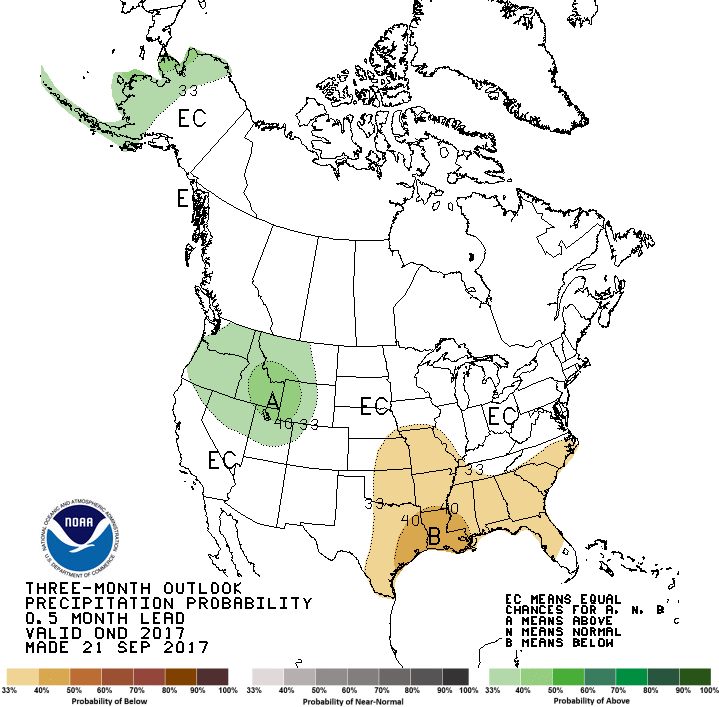
Climate Prediction Center temp. and precip. outlooks through 12/31/2017

Three month temperature outlook through December 31, 2017 via the Climate Prediction Center.
Three month precipitation outlook through December 31, 2017 via the Climate Prediction Center.

#Drought news: Say hello to the new US Drought Monitor website

Click here to go to the US Drought Monitor website. Here’s an excerpt:

Summary

Following Hurricane Irma’s arrival in Florida on September 10 and subsequent demise across the Southeast, generally dry weather dominated the country for a few days. However, the first two significant autumn storms of the season arrived across the northern Plains and Northwest, starting on September 14. Eventually, precipitation fell as far south as the Intermountain West and eastward into the upper Midwest. Several areas of the country, however, remained mostly dry and continued to see mounting short-term rainfall deficits. As a result, portions of the central and southern Plains, as well as the mid-South and lower Midwest, experienced general increases in the coverage of dryness and drought. In mid-September, there was an abrupt weather-pattern change that not only provided the northern Plains and Northwest with much-needed precipitation, but also brought a warming trend to the eastern half of the nation and notably cooler weather to the West…

High Plains

The High Plains region had a mix of improvement and deterioration. Improvement in the drought depiction was most prominent in the western Dakotas, where heavy rain fell, while deteriorating conditions affected parts of Kansas and environs. In fact, some additional severe drought (D2) was introduced in Kansas, where topsoil moisture rated very short to short (by the U.S. Department of Agriculture) jumped from 38 to 58% during the 2 weeks ending September 17. In contrast, North Dakota’s topsoil moisture was rated 44% very short to short on the 17th, down 18 percentage points from the previous week. However, rangeland and pastures in the Dakotas were slow to recover—typical following a hard-hitting drought—with 58% rated very poor to poor in both states on September 17. Also on the 17th, South Dakota led the nation—among major production states—in very poor to poor ratings for sorghum (29%), corn (28%), and soybeans (19%)…

South

Short-term dryness brought modest expansion of dryness (D0) and moderate to severe drought (D1 to D2) to various areas. Topsoil moisture rated very short to short increased at least 10 percentage points each of the last 2 weeks to reach 57% by September 17 in Texas, 47% in Oklahoma, and 43% in Arkansas, according to the U.S. Department of Agriculture. Winter wheat planting is underway in the region, and the crop will soon need rain to support proper autumn establishment. In Texas, 14% of the intended winter wheat acreage had been planted by September 17; Oklahoma had planted 11%…

West

Montana and environs finally received much-needed precipitation, starting on September 14. Prior to the storminess, Cut Bank, Montana, had reported 88 days (June 18 – September 13) with precipitation totaling 0.01 inch or less, breaking the station’s record of 74 days set from October 22, 1908 – January 3, 1909. Cut Bank’s streak ended with a 0.47-inch total on September 14-15. Elsewhere in Montana, daily-record totals for September 15 included 1.22 inches in Billings; 1.10 inches in Great Falls; 1.02 inches in Helena; and 0.65 inch in Butte. Helena had just completed its own record-setting streak—61 consecutive days (July 10 – September 8) without measurable precipitation. Helena’s previous warm-season record for days without accumulating precipitation had been 38 days, from September 1 – October 8, 1880. And, Helena’s previous longest spell without measurable precipitation—60 days—had occurred in the dead of winter from December 15, 1986 – February 12, 1987. Farther west, the season’s first significant precipitation arrived in the Northwest a few days after Montana’s event. Spokane, Washington, did not receive measurable rain from June 29 – September 16, a record-setting span of 80 days (previously, 75 days in 1917), but netted 0.84 inch from September 17-19. More substantial precipitation fell in western sections of Washington and Oregon, curbing the wildfire threat and aiding containment efforts. Through September 19, year-to-date U.S. wildfires had consumed 8.53 million acres of vegetation. In recent years, only 2015 (8.85 million acres) and 2012 (8.61 million acres) had a higher burned acreage on that date.

The rain and high-elevation snow brought some improvements in the drought depiction. Nevertheless, areas that received the most significant precipitation—including some of Montana’s extreme to exceptional drought (D3 to D4) areas—experienced up to one category of improvement. Since drought relief occurred so late in the growing season, and because the drought has been historic in nature, improvement in rangeland and pasture conditions may not be realized until spring. Rangeland and pastures rated very poor to poor on September 17 included 77% in Montana and 65% in Washington. However, topsoil moisture rated very short to short by the U.S. Department of Agriculture improved in Montana from 99 to 65% during the week ending September 17, while Idaho improved from 68 to 44%. The improvements in topsoil moisture should benefit recently planted winter wheat; Washington led the nation with 43% of its wheat planted by September 17…

Looking Ahead

During the next couple of days, a storm system and its attendant cold front will push eastward toward a ridge of high pressure parked over the eastern U.S. Initially, the front will make little progress, resulting in an axis of heavy rain stretching from the upper Midwest to the southern High Plains. Five-day rainfall totals could reach 2 to 4 inches or more along that axis, while isolated 1- to 3-inch amounts can be expected from the Pacific Northwest to the northern Rockies. Early next week, a warming trend will commence in the Far West, while cool conditions will shift eastward across the Plains. Late-season warmth and general dryness will continue, however, in the East.

The NWS 6- to 10-day outlook for September 26 – 30 calls for the likelihood of below-normal temperatures across large sections of the Rockies and Plains, while warmer-than-normal weather will prevail in the Pacific Coast States and across the eastern one-third of the U.S. Meanwhile, below-normal rainfall in the Southeast and Northwest should contrast with wetter-than-normal conditions across New England, the upper Great Lakes region, and southern portions of the Rockies and Plains.

Community Open House & Reception: Edwards wastewater facility improvements, September 26, 2017

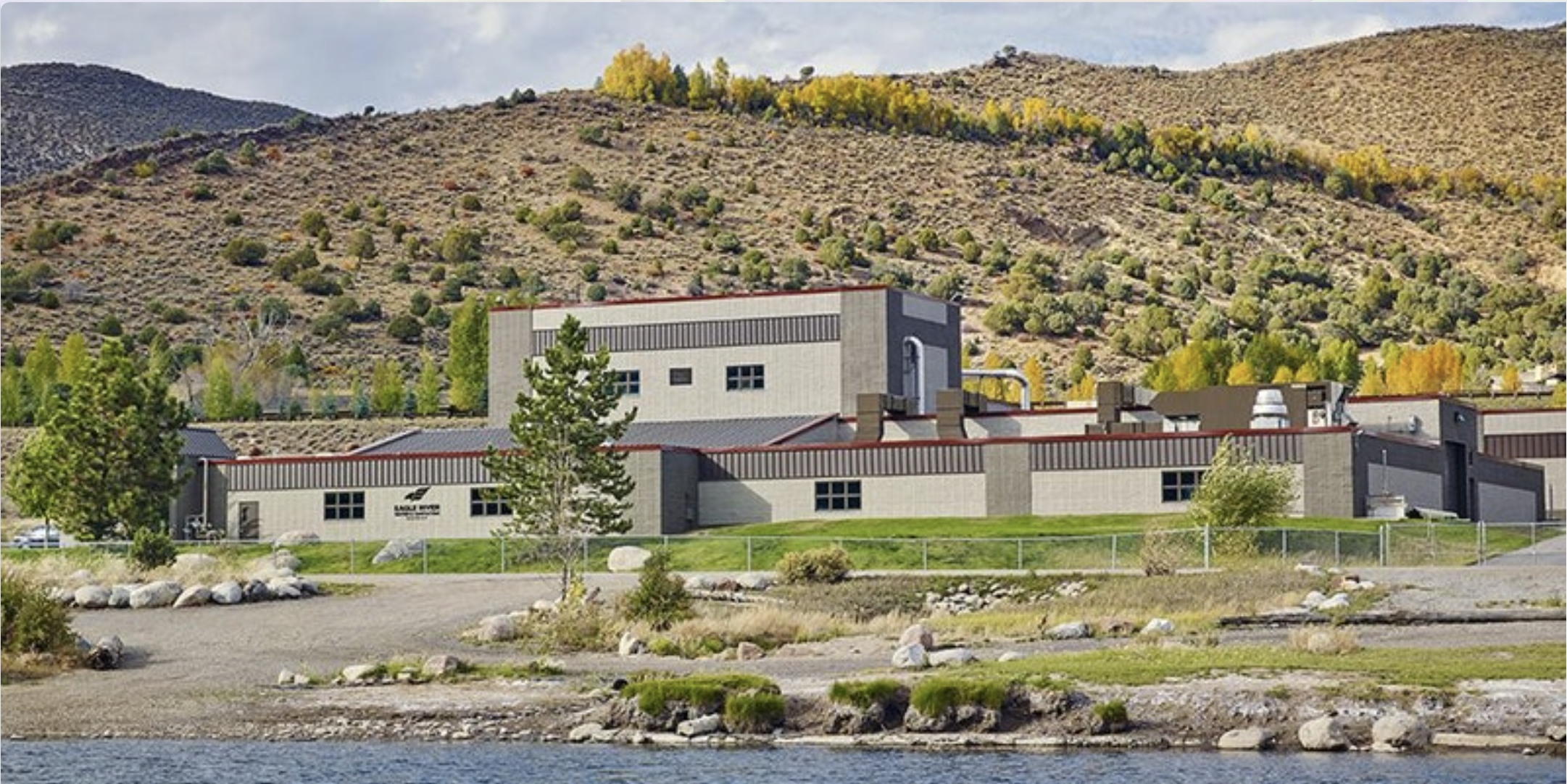
Edwards Wastewater Treatment Facility photo credit Eagle River Water & Sanitation District.

Click here to view the Eagle River Water & Sanitation event page and to register:

Join us for a reception and tour of the $25 million Edwards wastewater treatment facility solids handling improvement project. Now that the landscaping is done, we’re ready for visitors!

Please register so we can plan enough food for all participants.

  • 11 a.m. to 2 p.m. – Open house, facility tours, and complimentary food.
  • Noon to 1 p.m. – Welcome, acknowledgements, speakers, and short tour.
  • […]

    Improvements include:

  • Preliminary treatment enhancements.
  • Expansion of the solids digestion process.
  • Rehabilitation of solids dewatering.
  • Landscaping and aesthetic updates.
  • New odor control systems.
  • How Colorado can get real serious about reducing its carbon footprint — The Mountain Town News

    From The Mountain Town News (Allen Best):

    In Colorado, as elsewhere, recent polling by Yale University shows strong recognition that climate change is real, the result of human activity, and something that we must address.

    But do it now? Really shake things up? Well, maybe it can wait. It ranks very low on the list of priorities for most people. Kick that can down the road.

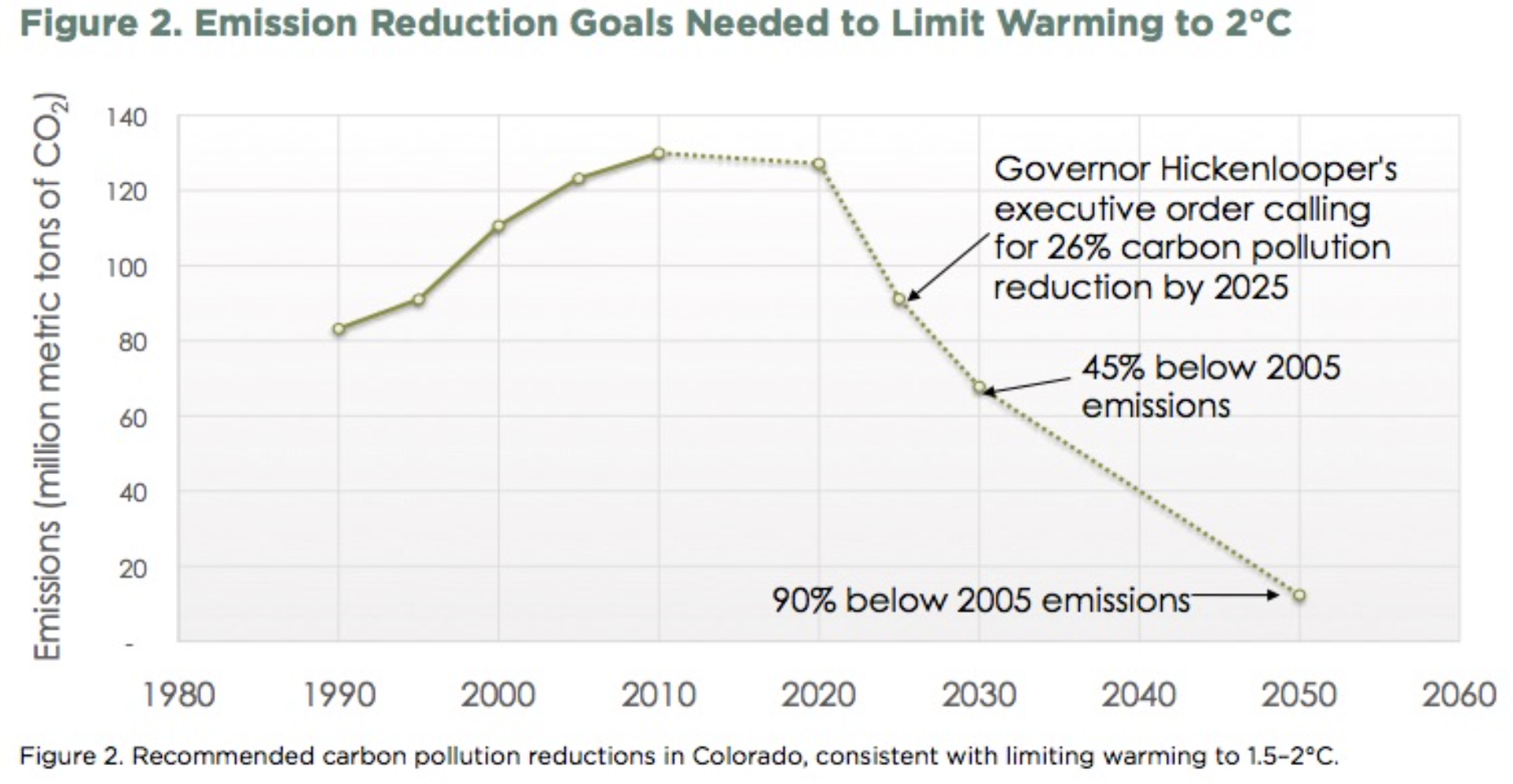
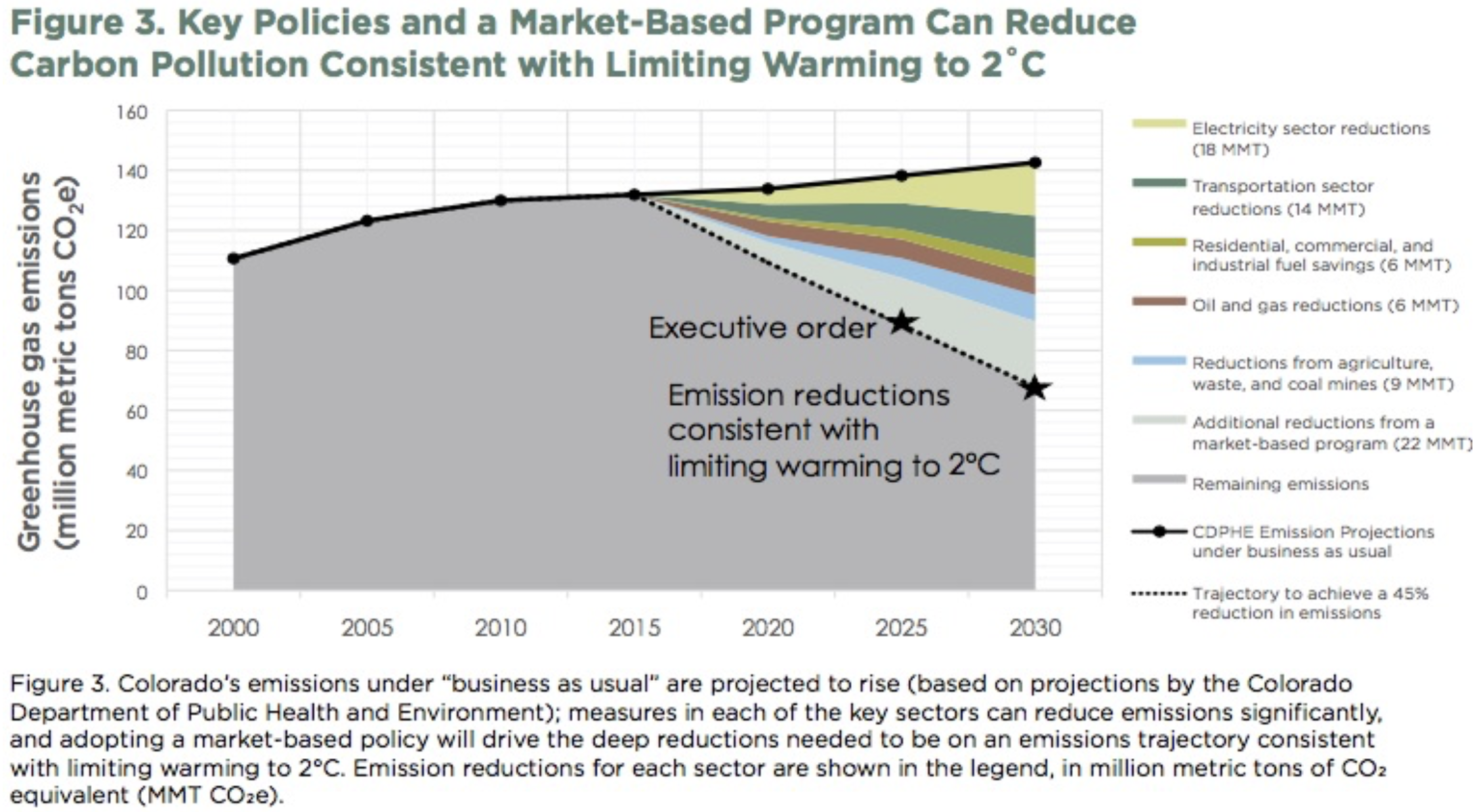
    A report released [September 20, 2017] by Western Resource Advocates and Conservation Colorado called Colorado’s Climate Blueprint argues that Colorado must seize very tool available to do its part in holding temperature increases to no more than 1.5 to 2 degrees Celsius.

    “We need to reduce our carbon pollution very quickly,” says Stacy Tellinghuisen, a co-author of the report. “We can’t wait for the federal government to take action. So we have laid out a blueprint for a three-legged stool of action.”

    Colorado has been doing things. Emissions in the electrical sector has fallen, since 2007, the result of switching from coal-fired generation to cleaner-burning natural gas but also as a result of the deepening penetration of renewables. Transportation sector emissions have also declined.

    But the growing evidence uncovered by scientists argues that, if anything, their assessment of the risk has been conservative. Temperatures are rising, and so are sea levels. Coral reef is disappearing. If the hurricanes and bark beetle epidemics are not directly a result of the warming climate, their severity may well be exacerbated.

    And if they’ve tended toward conservative predictions, what does that say about when they believe the spit really hits the fan within a few decades?

    All of this argues for rapid reduction, not just stabilizing, of emissions.

    Gov. John Hickenlooper in July announced a goal of reducing greenhouse gas emissions 26 percent by 2025 as compared to 2005 base levels. He did not, however, identify exactly how to achieve this, as I wrote in an article for the Colorado Independent. See: “What will it take to reach the climate change goals set by Gov. Hickenlooper?

    Colorado has led the way on regulations designed to limit emissions of methane. Photo/Allen Best

    These two groups, arguably Colorado’s most influential environmental organizations, want significant reductions beyond Hickenlooper’s 2025 goals. By 2030, as compared to 2005 levels, they want a goal of 45 percent reduction in emissions and a 90 percent reduction by mid-century.

    Unlike Hickenlooper’s order, they go into depth. Some are the the usual suspects. For example, the Colorado Public Utilities Commission can push the shift already underway from coal, in particular, to renewable sources. Colorado legislators need to ensure new buildings better maximize energy efficiency.

    But the report points to several levers that the Air Quality Control Commission can pull to achieve action. One is advanced regulations that reduce the venting and flaring of methane, as is commonly done in the Wattenberg and other natural gas fields.

    Tellinghuisen says the gasfield emissions of methane are among the most difficult areas for regulation. In 2010, they represented almost 8 percent of Colorado’s total carbon pollution. Colorado subsequently became a national leader in its regulation of methane emissions after the state’s two largest operators, Anadarko and Noble, working with the Environmental Defense Fund, emerged with an agreement. But more methane, the primary constituent of natural gas, remains to be captured instead of being allowed to be wasted. If prices of natural gas were higher, producers would have more incentive to attend to leaks and capture what is now being flared. Methane has 22 to 28 times the heat-trapping properties of carbon dioxide.

    The two groups would also like to see more stringent fuel economy standards for vehicles, similar to what California and 10 other states have adopted. Colorado, they say, should adopt policies that yield one million electric cars by 2030. It ranked 12th in the nation in sales of EVs from 2011 through 2016.

    What may be most notable about the report is the embrace of market-based solutions. The power of markets has been proven frequently in solving environmental problems. Markets, by definition, must have incentives, in this case a price on carbon in this case. This could be achieved through a cap-and-trade regime or the more straight-forward carbon tax.

    California has adopted a cap-and-trade system, and several states in the northeast have cap-and-trade as it applies to electrical production. British Columbia has a carbon tax. That province adopted a tax of 410 in 2008 and, as previously planned, elevated it to $30 in 2012. As the New York Times noted in a March 2016 story, that was then the equivalent of $22.20 in U.S. dollars. Economists at Duke University and the University of Ottawa in a 2015 study concluded that the carbon tax had reduced emission by 5 to 15 percent with “negligible effects on aggregate economic performance.”

    The tax proceeds are rebated to the public in the form of other tax reductions. A group called Citizens’ Climate Lobby advocates the same revenue-neutral approach in advocating for what it calls a carbon fee and dividend.

    From her study, Tellinghuisen believes a higher tax is needed to motivate changes in the transportation and other sectors. A tax of $20 per ton of CO2 emissions would result in a price increase of only 20 cents per gallon on gasoline. That, Tellinghuisen points out, would likely be lost in the noise of price fluctuations at the gas pump. It’s not enough to motivate changes such as, for example, cause people to ride light rail.

    A constitutional provision in Colorado would also pose a challenge to automatic price increases in carbon prices if Colorado should follow the British Columbia model. The Taxpayers’ Bill of Rights, or TABOR, requires specific voter approval for many specific tax increases.

    Many economists say the minimum starting price for a carbon tax would be $40, if it is to produce significant changes, elevating to about $75 a ton.

    Voters in Washington state, belying their reputation for liberal instincts, rejected a proposed carbon tax there last November. Among the arguments was that the tax is regressive, hurting poor people more than other sectors of society.

    About Allen Best
    Allen Best is a Colorado-based journalist. He publishes a subscription-based e-zine called Mountain Town News, portions of which are published on the website of the same name, and also writes for a variety of newspapers and magazines.

    @CWCB_DNR/@DWR_CO: September 2017 #Drought Update

    Here’s the update from the Colorado Water Conservation Board and the Colorado Division of Water Resources (Taryn Finnessey/Tracy Kosloff):

    Following cooler than average temperatures in August across much of the state, September has been hot and dry. Consequently, both abnormally dry and moderate drought conditions have expanded across western Colorado. Reservoir storage is well above average, and municipal water providers have no immediate concerns with levels of supply and demand in their systems.

  • After receiving only 69 percent of statewide average precipitation in August at SNOTEL stations, September precipitation to date remains low at 30 percent of average as of September 14. The South Platte was the only basin to receive normal precipitation levels in August (100 percent); while the Arkansas is the only basin to receive above normal precipitation (122 percent) September to date. All other basins are experiencing well below average precipitation for the month, ranging from zero (Yampa/ White) to 44 percent (Upper Colorado).
  • Reservoir storage statewide is at 120 percent of normal, with all basins above average. The Rio Grande basin is reporting above average storage (133 percent) for the first time since 2009. The Colorado and Yampa/ White basins have the lowest storage levels in the state at 110 percent of normal.
  • 31 percent of Colorado is classified as abnormally dry (D0), while 4 percent is classified as experiencing moderate drought, predominantly concentrated in Rio Blanco and Garfield Counties.
  • Warmer than normal temperatures have affected Colorado over the last few weeks, with western slope temperatures averaging as much as eight degrees above normal.
  • ENSO-neutral conditions remain, but a La Nina watch has been issued by NOAA with more than 50 percent likelihood of a La Nina developing. Short term forecasts show that temperatures should cool off, with parts of the west receiving significant precipitation. This is a welcome change for those areas currently battling forest fires.
  • Long term forecast shows no major indication towards wet or dry in the upcoming months. If La Niña conditions set in, mountain snows are often enhanced during the winter season, but fall and spring tend to be dry.
  • @SenBennetCO, et al., introduce Hardrock Mining and Reclamation Act of 2017

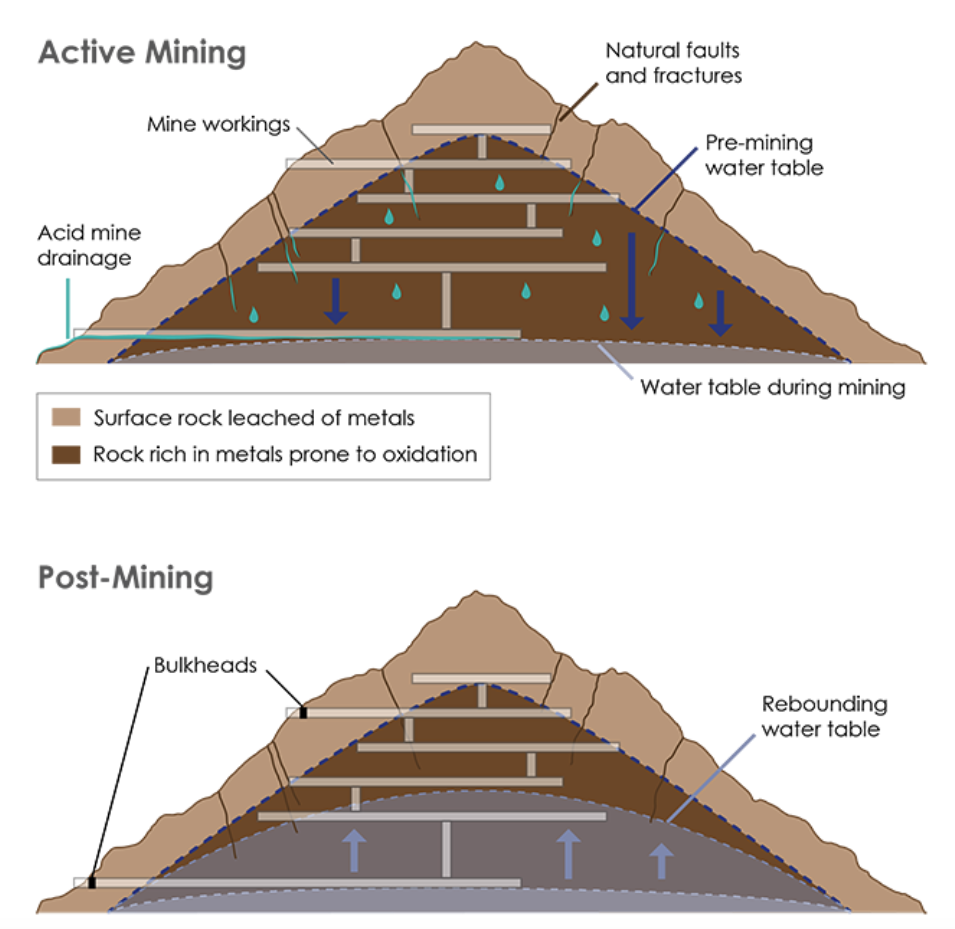
    During mining (top), the water table is often lowered to access ore, exposing the rock to oxygen and creating acid mine drainage. Sealing off a mine can return the water table to pre-mining levels (bottom), creating anoxic conditions inside the mine and preventing further acidification. Credit: K. Cantner, AGI.

    From The Durango Herald (Mia Rupani):

    Colorado Sen. Michael Bennet, along with Sens. Tom Udall, D-N.M., Martin Heinrich, D-N.M., Ron Wyden, D-Ore., and Edward Markey, D-Mass., introduced the Hardrock Mining and Reclamation Act of 2017 on Tuesday to update the nation’s antiquated hard-rock mining laws.

    The bill would reform the General Mining [Act] of 1872 that allows companies to extract minerals such as gold and silver on federal public lands without paying royalties, and while avoiding liability for any environmental damage.

    The proposed legislation would help pay for abandoned mine cleanup and prevent future disasters.

    Bennet referenced the 2015 Gold King Mine spill that sent an estimated 3 million gallons of heavy-metals laced mine wastewater into the Animas and San Juan rivers in a news release on Tuesday…

    If passed, the legislation would make seven primary changes to the General Mining Law of 1872:

  • Require hard-rock mining companies to pay an annual rental payment for claimed public land, similar to other users.
  • Set a royalty rate for new operations of 2 to 5 percent based on the gross income of new production on federal land.
  • Create a Hardrock Minerals Reclamation Fund for abandoned mine cleanup through an abandoned mine reclamation fee of 0.6 percent to 2 percent.
  • Give the secretary of the Interior the authority to grant royalty relief to mining operations based on economic factors.
  • Require an exploration permit and mining operations permit for noncasual mining operations on federal land.
  • Permit states, political subdivisions and Indian tribes to petition the secretary of the Interior to have lands withdrawn from mining.
  • Require an expedited review of areas that may be inappropriate for mining.
  • The bill is supported by leaders throughout Southwest Colorado, including La Plata County Commissioner Julie Westendorff, Durango City Councilor Dean Brookie, San Juan County Commissioner Pete McKay and Trout Unlimited’s Ty Churchwell.

    CPC issues La Niña watch

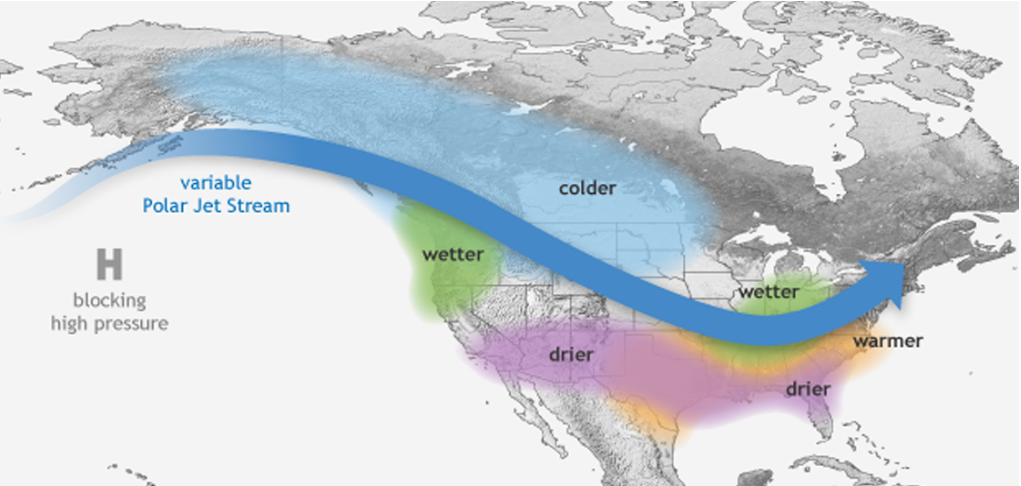
    Typical La Nina weather patterns over North America via NOAA.

    From 9News.com (Cory Reppenhagen):

    La Nina alters the flow of the Polar Jet Stream over the United States. This will often track storms just to the northeast of Colorado, and it lowers the probability of us getting southern storm tracks that deliver upslope winds, which the Front Range and the Foothills rely on for big snow.

    But when the NOAA Winter Outlook is issued with a La Nina, it usually shows little impact one way or the other for Colorado, because our winters can be so variable anyway, but historically, the data does allow you to draw some conclusions.

    La Nina winters have historically, brought warmer, and drier conditions to the Denver metro and the bulk of the I-25 corridor.

    Last year, La Nina conditions developed in August and carried into January, and we finished the winter with neutral conditions. That resulted in the lowest amount of snow that Denver has seen in 128 years.

    While a La Nina doesn’t guarantee less snow for Denver, the data allows some conclusions to be drawn. The last four La Nina’s have resulted in below average snowfall, and 15 out 19 La Ninas since 1950 have also resulted in below average snow for Denver.

    Our mountains have a different La Nina story. They had record snowfall in many areas, during last year’s La Nina. That’s because they can benefit from different jet stream patterns, like a straight westerly jet stream pattern, that is sometimes referred to as the Pineapple Express.

    The mountains intercept the moisture coming from the Pacific Ocean, while the lee side of the mountains, where Denver is, catch nothing but warm, dry air.

    That’s just how the last few La Nina winters have played out for Denver.

    #AnimasRiver: #GoldKingMine update

    On April 7, 2016, the Environmental Protection Agency proposed adding the “Bonita Peak Mining District” to the National Priorities List, making it eligible for Superfund. Forty-eight mine portals and tailings piles are “under consideration” to be included. The Gold King Mine will almost certainly be on the final list, as will the nearby American Tunnel. The Mayflower Mill #4 tailings repository, just outside Silverton, is another likely candidate, given that it appears to be leaching large quantities of metals into the Animas River. What Superfund will entail for the area beyond that, and when the actual cleanup will begin, remains unclear.
    Eric Baker

    From The Associated Press (Dan Elliott):

    The 12-inch (30-centimeter) valve will regulate wastewater pouring from the Gold King Mine in the San Juan Mountains of southwestern Colorado, where the EPA inadvertently triggered a wastewater spill while excavating at the mine entrance in August 2015…

    The valve will be mounted in a steel-and concrete barrier about 70 feet (20 meters) inside the mine. The barrier will have water-tight access doors so workers and equipment can get deeper into the mine for cleanup and investigation.

    The EPA is also drilling a 170-foot (50-meter) horizontal well into another part of the Gold King to drain any water building up there. That water would be routed through a temporary treatment plant below the mine where wastewater draining from the main entrance is cleaned up.

    The EPA said it can control the flow of wastewater from the new drain to avoid another blowout.

    The documents did not say say how much the work will cost and the EPA did not immediately respond to emails and a phone call Wednesday seeking comment.

    The work is expected to be completed next month.

    Peter Butler, a leader of the volunteer Animas River Stakeholders Group, which works to improve water quality in the area, said he agreed with the EPA’s decision to install the barrier and drainage well.

    “It’s probably a good idea,” he said. “They are showing an abundance of caution.”

    Wastewater has flowed from the Gold King for years, and since the 2015 blowout, it has poured out at a rate of about 500 gallons (1,900 liters) a minute.

    Mine waste flows are unpredictable In the San Juan Mountains, where underground water flows through an interconnected warren of mine tunnels and natural faults.

    Precautions such as the barrier, valve and horizontal drain will make it safer for investigators to enter the mines and try to figure out the water flows, Butler said.

    The Gold King and dozens of other mining-related sites in the region were designated a Superfund district in 2016.

    Solving the problem of the declining Ogallala aquifer: “It’s for the generation that’s not here” — Dwane Roth

    The High Plains Aquifer provides 30 percent of the water used in the nation’s irrigated agriculture. The aquifer runs under South Dakota, Wyoming, Nebraska, Colorado, Kansas, Oklahoma, New Mexico and Texas.

    From The Hutchinson News (Amy Bickel):

    Because of technology, [Dwane] Roth is working to embrace what might seem like an unfathomable concept in these parts – especially when you can’t see what is happening underground.

    Sometimes the crop isn’t thirsty.

    “It’s difficult to shut off,” Roth said. “But I called my soil moisture probe guy. He said the whole profile was full and it was only the top 2 inches that was actually dry. So there was no need to turn that irrigation engine on and pump from the Ogallala.”

    Now he is hoping to change the mindset of his peers across a landscape where corn is king and the Ogallala Aquifer – the ocean underneath the High Plains – has been keeping the decades-old farm economy going on the semi-arid Plains.

    At least it is for now.

    Underlying eight states across the Great Plains, the Ogallala provides water to about one-fifth of the wheat, corn, cotton and cattle production in the United States. It’s also a primary drinking water supply for residents throughout the High Plains.

    But the aquifer that gives life to these fields is declining. It took 6,000 years to fill the Ogallala Aquifer from glacier melt. It has taken just 70 years of irrigation to put the western Kansas landscape into a water crisis.

    An economy centered on water is drying up.

    With his own water levels declining, Roth wants to make sure there is water for the next generation, including his nephews who recently returned to the farm.

    On this hot, summer day, water seeped out of a high-tech irrigation system he is testing on his Finney County farm. Soil probes are scattered about, telling him what is happening below the surface.

    Roth also has pledged to the state to cut back his usage by 15 percent through changing farming practices and implementing new technology.

    He wants to make a difference, but, he stressed, he can’t slow the decline alone.

    For the past two years, Roth’s fields have been part of a closely watched demonstration project aimed at showing farmers how to use less irrigation water on their crops. Now he he is taking it a step further.

    With some areas in northern Finney County declining by more than 70 feet since 2005, Roth is helping spearhead a regional effort to curtail pumping through a Local Enhanced Management Area. LEMAs were implemented five years ago as a tool to extend the life of the state’s water resources.

    He’s not the only one looking toward the future. A small but growing group of irrigators are considering different tools to cutback water use. Some are implementing technology. Some are looking at LEMAs. Others are forming their own, farm-wide plans for mandatory cutbacks.

    “It’s for the kids you don’t see yet,” Roth said of why he’s doing this. “It’s for the generation that’s not here.”

    Ogallala aquifer via USGS