The importance of riparian habitat

Here’s a guest column from Pete Wadden that’s running in The Vail Daily:

One of the few things that almost all people can agree on is the calming effect of flowing water. Waterfront property is highly sought after and, as a result, is typically sold at a premium. People often landscape their waterfront property to create an unobstructed view of the river or creek in their backyard.

UNINTENDED CONSEQUENCES

In many places in Colorado, our desire for easy access to the water is having unintended consequences. It may not be surprising to most readers that there is a web of interaction between waterways and the ecosystems that surround them. Riparian corridors, the swaths of water-loving plants that grow along creeks or rivers, protect those waterways from pollution and erosion and provide shade, nutrients and habitat for aquatic animals. When riparian buffers disappear, rivers and creeks suffer.

In the town of Vail, the loss of riparian habitat has had a measurable impact on Gore Creek and several of its tributaries. In 2012, the Colorado Department of Public Health and Environment listed Gore Creek for failing to meet Environmental Protection Agency standards for aquatic life. Other rivers and creeks in Eagle County and across Colorado are beginning to show a similar pattern of decline.

NATURAL FILTRATION SYSTEM

As wetlands and forests are replaced with pavement and turf lawns, services provided by those natural ecosystems are lost. Pavement directs rain and snowmelt into storm drains that flow directly into the creek. The shallow roots of turf lawns do not filter pollution from groundwater the way the roots of willows and other native shrubs do.

The town of Vail sees the impaired health of Gore Creek as a serious issue and has undertaken several programs to try to reverse the creek’s declining water quality. In 2017, the town completed several major riparian restoration projects along Gore Creek. The goal of those projects was to restore native vegetation along creek banks in order to better filter runoff and prevent erosion while maintaining access to the creek for anglers and other users.

PROJECT RE-WILD

The causes of Gore Creek’s recent decline are diverse and widespread. As such, this is not a problem that the town can solve on its own. In order to encourage private property owners to restore riparian habitat on their land, the town of Vail has unveiled Project Re-Wild, a public-private cost-share to assist private property owners with the design of riparian restoration projects. Interested property owners along Gore Creek or its tributaries can learn more about this exciting opportunity under “Programs” at lovevail.org or by calling me at 970-479-2144.

Aquatic health is an issue that impacts the whole community, and the responsibility for maintaining our rivers and creek lies with all of us. Please consider joining the town of Vail in its efforts to Restore the Gore.

Pete Wadden is the town of Vail watershed education coordinator. Contact him at pwadden@vailgov.com, or visit lovevail.org to read more about the town of Vail’s environmental and sustainability efforts.

#ColoradoRiver: Say hello to @ASU’s “Future H2O” project

Click here to go to the website from Arizona State University:

Vision: abundant water to feed and power sustainable economies

The Earth is literally drenched in water. However, conversations about the resource often center around scarcity, vulnerability and risk. While it’s true that getting water to the right place at the right time with adequate quality can be a challenge, we still see a bright future.

ASU’s Future H2O seeks to change the narrative about water from scarcity to abundance. Our goal is to create opportunity for change at scale in regional, national and global water systems. We envision wiser design principles, new data and algorithms for better water governance and business outcomes, and scalable, nature-inspired technologies. In choosing this new path, we will become nimbler in the face of a changing climate and rise to the challenge of water security.

How do we get there? By calling on the creative capacity of the largest student body in the United States. By translating knowledge into action through innovative partnerships with public utilities and the private sector. And by starting the conversation about a more abundant and resilient water future on the Blue Planet.

@CAPArizona: Historic Agreement Signed to Protect #ColoradoRiver #Minute323 #COriver

Roberto Salmon and Edward Drusina at the Minute 323 signing ceremony September 27, 2017. Photo credit .U.S. Bureau of Reclamation.

From the Central Arizona Project:

Since September 2015, the United States, the seven Colorado River Basin states, and key water users including CAWCD, have been working with their counterparts in Mexico to develop a successor agreement to Minute 319, now known as Minute 323.

The direct negotiations with Mexico included the Director of the Arizona Department of Water Resources (ADWR) representing the interests of Arizona. CAWCD staff participated in several work groups supporting the negotiation effort. The Minute was finalized by the Commissioners of the International Boundary and Water Commission in the United States and the Republic of Mexico on September 27, 2017.

The Minute provides significant and lasting benefits to water users in Mexico and the United States, including CAP water users. The Minute provides for new investments in water conservation infrastructure in Mexico which will make water uses in the Mexicali Valley more efficient for the long-term. Mexico and the U.S. agreed to share the risks of shortages and to share opportunities for surplus Colorado River water. In addition, Mexico agreed to participate in additional actions to protect Lake Mead, in the event that the U.S. water users implement a Drought Contingency Plan in the U.S. The new Minute is an extension and expansion of the collaborative and cooperative efforts to protect Lake Mead and sustain the shared resources of the Colorado River.

CAWCD has participated in the binational process between the United States and Mexico since 2008 to achieve four main goals, which have been included in Minute 323:

  • Decrease the duration or magnitude of shortages by seeking Mexico’s voluntary agreement to share in Colorado River shortages with U.S. water users.
  • Increase the storage in Lake Mead through the development and implementation of water conservation projects in Mexico.
  • Augment CAP water supplies through the implementation of conservation projects in Mexico and explore binational desalination projects to benefit Arizona and Mexico water users.
  • Manage salinity compliance operations so that river operational changes made as part of these agreements will not reduce Arizona’s return flows and thereby reduce CAP deliveries.
  • The key components on Minute 323 are:

  • Effective through 2026, consistent with the 2007 Guidelines.
  • Shortage is shared – if one country is in shortage, then the other country is in shortage with the same triggers that are identified for U.S. water users in the 2007 Guidelines; this is similar to Minute 319.
  • Surplus is shared – if one country can receive surplus, then the other country can receive surplus with the same initial trigger as U.S. water users as identified in the 2007 Guidelines; this is also similar to Minute 319.
  • Binational conservation projects have been expanded through the commitment to fund specified conservation projects in Mexico, to develop and fund additional projects, and to study binational desalination in the Gulf of California region.
  • Environmental flows and habitat restoration in the Colorado River delta region in Mexico will continue to be funded.
  • Salinity management projects will be expanded to improve the water quality of deliveries to Mexico while minimizing the impact to U.S. water users.
  • Binational Water Scarcity Contingency Plan has Mexico taking additional voluntary reductions upon the implementation of the Lower Basin Drought Contingency Plan, with the Mexico reductions similar to the Lower Basin states at the same elevation triggers.
  • In order to implement the Minute, a series of domestic agreements between U.S. parties were also executed. Overall, there are eight domestic agreements necessary to implement Minute 323 in Arizona and CAWCD is a party to six of these agreements, including a Memorandum of Agreement with ADWR. The CAWCD Board approved the execution of these agreements at the Board meeting on August 3, 2017. The domestic agreements were executed simultaneously with Minute 323. These agreements will serve to provide additional protection for CAP water users, and further CAWCD’s cooperative actions with its interstate and international partners to protect its Colorado River supply.

    #ColoradoSprings: Ballot issue debate, October 17, 2017

    Heavy rains inundate Sand Creek. Photo via the City of Colorado Springs and the Colorado Springs Independent.

    From The Colorado Springs Independent (Pam Zubeck):

    Two key ballot measures will be debated on Oct. 17 at a public forum at the MCI/Verizon Building, located at 2424 Garden of the Gods Road. The forum will be held from 5:30 p.m. to 7 p.m.

    Mayor John Suthers will promote the city’s proposed stormwater fee. If 2A is approved, it would require every household to pay $5 a month on their water bill to fund stormwater projects, and owners of nonresidential property to pay $30 per acre per month. Property owners of developed land larger than five acres would pay fees set by the city’s stormwater manager, based on impervious surface.

    Taking the “vote no” position will be political strategist Laura Carno, who’s mounting an opposition effort.

    #Snowpack news: Report from Grand County

    From the Sky-Hi News (Lance Maggart):

    A frigid storm front began moving into the Fraser and Colorado River valleys Sunday afternoon, sending sleet down across Grand County as a heavy driving wind pushed many citizens indoors. As night fell across the high Rockies the storm’s precipitation shifted from rain to snow. Colorado Department of Transportation snowplows were hard at work on Berthoud Pass Sunday night as the white stuff started piling up in the valleys below.

    Officials at Winter Park Resort were thrilled with the preseason moisture. Steve Hurlbert, director of Resort Communications, said Winter Park received a minimum of eight inches overnight into the morning of Oct. 2. Hurlbert noted the Resort is working to get their winter snow stake set up for the coming ski season and as such did not have a precise figure for the overnight snowfall.

    #Drought news: DO (Abnormally Dry) trimmed in Denver area, Lake, Chaffee, and eastern Gunnison counties

    Click here to go to the US Drought Monitor website. Here’s an excerpt:

    Summary

    A cold front approached the Eastern Seaboard early in the drought week, which drove Tropical Storm Maria farther away from the mid-Atlantic coast, keeping substantial impacts to a minimum. About the same time, the western edge of this cold front moved through southern Texas and New Mexico, bringing significant upslope precipitation (0.5-3.0 inches, locally greater) to the southern Great Plains and adjacent Rockies. Another cold front then moved southeastward out of central Canada, accompanied by primarily light precipitation (0.75-inch or less) to the Great Lakes region and Northeast. Towards the end of the drought week, yet another cold front progressed eastward across the Rockies, and the northern halves of the Great Plains and Mississippi Valley, bringing 1-2 inches of rain to much of the region…

    High Plains

    Beneficial rains (generally 2-5 inches) in the past 14-days have resulted in drought depiction improvements across North Dakota and eastern South Dakota this week. Accordingly, the impacts line was adjusted to better reflect the updated conditions across this area. In North Dakota, rainfall and cold temperatures halted agricultural progress where rainfall was significant. Short-term precipitation has been helpful, but needs to be weighed against long-term drought impacts…

    West

    In southeastern Arizona, the D0 “hole” in the depiction was filled in with D0, as there is little difference in conditions between that area and its surroundings. In Colorado, D0 was removed from the Denver area, and some D0 was trimmed away from Lake, Chaffee, and eastern Gunnison Counties. These locations received ample precipitation in September, and SPIs are mostly positive across multiple timescales. In eastern Utah (Uintah County), the western part of the moderate drought area (D1) was trimmed away. This area ended the Water Year with near average precipitation, and received above average precipitation in September. In Montana, welcome precipitation and increasing soil moisture warranted significant improvements statewide this week…

    Looking Ahead

    During the upcoming 5-day period (October 5-9), a meandering baroclinic zone is predicted to bring 1-4 inches of rain (locally greater amounts possible) from New Mexico across the south-central Plains, the north-central Mississippi Valley, and Great Lakes region. This may be enough to warrant some improvements across Kansas next week, if this forecast verifies. Across the eastern half of the Gulf Coast region, 2-4 inches of rain are generally anticipated, but these amounts could be exceeded if Tropical Depression 16 (TD-16) moves into that region. As of 2pm EDT, Oct 4, TD-16 is located near the coast of Nicaragua. This scenario would certainly help with some of the dryness across Alabama.

    During the 6-10 day period (October 10-14), odds for above normal precipitation are elevated above climatological odds from about the western slopes of the Appalachians to the Atlantic Coast, and over extreme southern Texas. This would be expected to at least offset additional degradation across this region. From about the Mississippi Valley westward to the Pacific Coast, sub-normal precipitation amounts are favored.

    #ColoradoRiver: #Minute 323 includes binational environmental flows for the delta #COriver

    Colorado River pulse flow (Minute 319) reaches the Sea of Cortez for the first time since 1998 on May 15, 2014 via the Sonoran Institute

    From Water Deeply (Alastair Bland):

    A new agreement signed between the U.S. and Mexico continues an important collaboration in managing the Colorado River, but also gives new hope for reviving stretches of the river that have run dry.

    The new agreement, signed on September 27 in Santa Fe, New Mexico, by officials from both nations, requires the United States to invest millions of dollars in water conservation projects in Mexico – like plugging leaks in irrigation canals and helping farmers implement water-efficient technology.

    Minute 323 also allows Mexico, which has no significant reservoirs in the Colorado basin, to store some of its water north of the border. In return, the U.S. will receive a portion of the Colorado River water to which Mexico has historically been entitled.

    But the river’s beleaguered delta, which has received barely a trickle of water for years, may see the most dramatic benefits of all. Through 2026 – the lifespan of the new arrangement – 210,000 acre-feet of water, provided by stakeholders both north and south of the border, will be allowed to flow through the lower reaches of the Colorado, just upstream from the Sea of Cortez.

    ā€œWe don’t know of any other international agreement that provides for binational environmental flows,ā€ said Anne Castle, a senior fellow with the University of Colorado’s Getches-Wilkinson Center for Natural Resources, Energy and the Environment. ā€œMinute 323 is really an agreement between two countries to manage their shared river as one.ā€

    […]

    Minute 323 requires the U.S. and Mexican governments and a coalition of environmental groups to bear equal shares of the cost of delivering the environmental flows, which will provide basic seasonal benefits, like supporting the regrowth of riparian habitat stressed by dry years and replenishing local groundwater reserves. Pitt says the delta flows will likely be delivered sporadically through each year’s March-October growing season…

    Castle, who was involved in steering the outcome of Minute 319 and calls herself ā€œan interested observerā€ in the newer agreement, said Minute 323 was a ā€œwin-win for both countries.ā€

    In signing the 23-page document, stakeholders north of the border agreed to invest $31 million in Mexican water conservation and development projects, like making farms more efficient, compensating growers who fallow their fields, reducing seepage from irrigation canals and possibly desalinating water from the Sea of Cortez for municipal use.

    The water saved or produced through these projects will be stored in Lake Mead, the nation’s largest reservoir, and could produce up to 220,000 acre-feet to be used by the U.S. – including 110,000 acre-feet for the Metropolitan Water District and the 70,000 acre-feet that the country must set aside for environmental uses. The rest of the water produced by the conservation projects will be reserved for Mexico, which already receives 1.5 million acre-feet each year from the Colorado. North-of-the-border users consume about 15 million acre-feet annually.

    Lake Mead has not been entirely full since 1999. The lower basin, Castle says, has remained for decades in a state of chronic overuse – a troubling imbalance in which total consumption of the reservoir’s water exceeds the volume of water flowing into it. Since 2000, the lake’s elevation has been steadily declining, though it is currently on the rise thanks to last winter’s heavy precipitation and snowfall. Today the lake is only about 40 percent full – its lowest level since the 1950s.

    Minute 323 aims to stabilize the declining level of the lake. When filled, the lake surface elevation is 1,232ft above sea level. It is now at about 1,080ft. The lowest intake on the face of Hoover Dam sits at 860ft above sea level. Below this point, the lake’s water is considered to be ā€œdead storageā€ – water that is essentially inaccessible.

    Detailed Colorado River Basin map via the U.S. Bureau of Reclamation.

    @ColoradoStateU appoints Russ Schumacher State Climatologist @ColoradoClimate

    Russ Schumacher photo credit Colorado State University.

    Here’s the release from the Colorado Climate Center:

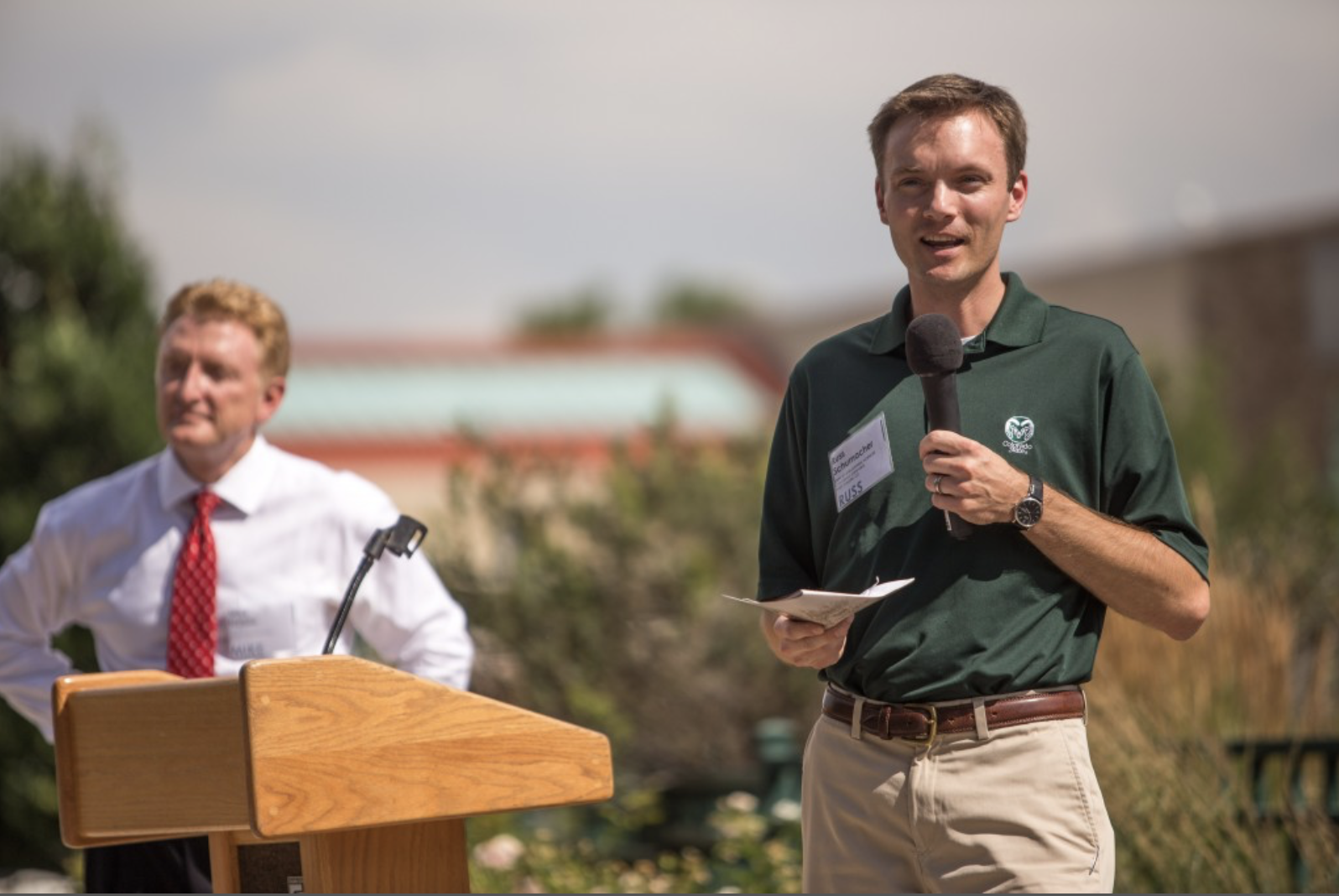
    On October 3, the Department of Atmospheric Science appointed Professor Russ Schumacher as the Director of the Colorado Climate Center and the newest State Climatologist.

    CSU Atmospheric Science Associate Professor Russ Schumacher has been chosen as the next director of the Colorado Climate Center and Colorado State Climatologist. His appointment begins Oct. 6. Schumacher will continue in his role as an ATS faculty member, with a shift in his effort distribution and responsibilities to reflect the significant and important duties associated with this new assignment.

    Schumacher is intimately familiar with Colorado weather and climate, leaving him well-positioned to lead the climate center staff in their three primary missions concerning climate monitoring, climate research, and climate services. In his role as state climatologist, Schumacher will be a key resource to public and private stakeholders within Colorado and beyond as they seek expert information regarding the weather and climate of our state.

    Schumacher first came to Colorado as an ATS graduate student in Fall 2001. He completed his M.S. in 2003 and Ph.D. in 2008. Schumacher joined the ATS faculty in 2011 following a postdoc stint at NCAR and three years as an assistant professor at Texas A&M. He received an NSF CAREER award in 2010 and serves as editor of Monthly Weather Review. Schumacher’s research interests include mesoscale meteorology, mesoscale convective systems, weather analysis and forecasting, the climatology of precipitation, precipitation extremes, flash floods, and societal impacts of weather.

    Outside of work, Russ has been a frequent contestant on the TV quiz show Jeopardy. After his first successful run, he won the Tournament of Champions in 2004 and made it to the semifinals of the Battle of the Decades tournament in 2014. He and his wife, Andrea, live in Fort Collins with their four-year-old son.

    Message from Our New Director…

    I’m honored by and excited about the opportunity to lead the Colorado Climate Center and serve as State Climatologist. Colorado’s weather and climate are diverse and fascinating, and since first moving here in 2001, I’ve been mystified and challenged by trying to better understand and predict it, because it’s important: scientifically, economically, and societally. The Colorado Climate Center collects and provides vital weather and climate information to stakeholders all across our state, and I look forward to working alongside the CCC staff to be a source of the most relevant information backed by the latest research to serve the needs of our state. It will never be possible to fill the shoes of my predecessor, Nolan Doesken, who greatly advanced climate services across Colorado, but I will work hard to apply my background in weather research to continue the Colorado Climate Center’s legacy of excellent service to our state. – Russ

    #ColoradoSprings: Dry September water bills surprise some rate payers

    From KOAA (Lena Howland):

    Unusually high water bills have started to roll in for several folks in Colorado Springs for the month of September.

    Colorado Springs Utilities says there are no leaks and no issues with their meters, it simply comes down to a matter of consumption and usage per household.

    But many homeowners in the Stetson Hills neighborhood say that’s just not the case and they haven’t made any changes all summer.

    “We got our bill and it was $460,” Stephanie Gordon, a Colorado Springs rate payer said…

    So News 5 took these concerns straight to Colorado Springs Utilities.

    “We take them seriously, we look into them, we investigate them, we checked out all of our billing and metering functionalities and our systems are working correctly so there is no reason to believe that we have billing errors on our side,” Eric Isaacson, a spokesperson for Colorado Springs Utilities said.

    They say it’s likely an issue of consumption which could be to blame on the weather.

    “When you see that hot, dry, spell come in for a little while, and you increase, if you do turn on your sprinkler system again, yeah it’s going to be a bit of a jump, you’re going to see that because it’s reflected in what you’re using,” Isaacson said.

    W. Govs sign MOU to plan regional electric vehicle corridor for the west #ActOnCLimate

    Coyote Gulch’s Leaf connected in the parking garage in Winter Park, August 21, 2017.

    Here’s the release from Governor Hickenlooper’s office:

    Today, the Governors of Colorado, Idaho, Montana, Nevada, New Mexico, Utah and Wyoming signed a memorandum of understanding (MOU) to provide a framework for creating a regional electric vehicle plan for the West (ā€œREV West Planā€). The Plan was announced today at the Energy Innovation Summit hosted by the National Governors Association.

    The Plan spans more than 5,000 miles of highway across east-west Interstates 10, 40, 70, 76, 80, 84, 86, 90 and 94, and north-south Interstates 15 and 25. With more than 20,000 electric vehicles (EVs) and plug-in hybrids already on the roads in western states, the electrification of these major corridors is expected to reduce range anxiety and drive further adoption of EVs, while transforming the market to allow smaller communities to plug into the regional system.

    The MOU calls for a coordination group to undertake the following actions:

    Create best practices and procedures that will enhance EV adoption by promoting EV consumer acceptance and awareness by addressing ā€œrange anxietyā€; coordinate on EV charging station locations to avoid redundancy and to ensure stations are sited at a frequency and locations so as to optimize utilization and to minimize inconsistencies between charging infrastructure in each state; and leverage economies of scale;

    Create voluntary minimum standards for EV charging stations, including standards for administration, interoperability, operations, and management;

    Identify and develop opportunities to incorporate EV charging station infrastructure into planning and development processes, such as building codes, metering policies, and renewable energy generation projects;

    Encourage EV manufacturers to stock and market a wide variety of EVs within the Signatory States; and

    Identify, respond to, and where possible collaborate on funding opportunities to support the development of the Regional Electric Vehicle West EV Corridor.

    ā€œThis framework is another example of the innovation and bipartisan collaboration happening around energy here in the West,ā€ said Colorado Governor John Hickenlooper. ā€œThrough this collaboration, we will drive economic growth and promote our outdoor recreation opportunities across our states. Our residents and the millions of visitors to our states will be able to drive electric vehicles from Denver to Las Vegas, from Santa Fe to Helena.ā€

    ā€œThis is the latest example of states like Idaho being on the forefront of energy advancement,ā€ said Idaho Governor C.L. ā€œButchā€ Otter. ā€œIn the West we pride ourselves on what we can accomplish by working together. This initiative will ensure that locals and visitors to Idaho and our neighboring states have the freedom to explore the West in the way they prefer.ā€

    ā€œThis state-led effort shows how western states continue to work together to find innovative solutions and plan for a future where increasing numbers of people and families are traveling the West in electric vehicles,ā€ said Governor Steve Bullock of Montana. ā€œI am pleased to sign onto this bipartisan effort to take practical steps to realize the economic and environmental benefits of coordinated infrastructure planning that will benefit us now and well into the future.ā€

    ā€œIt is important for Western states to work together and prepare as the use of electric vehicles grows,ā€ said Wyoming Governor Matt Mead. ā€œThis initiative encourages infrastructure plans that allow people with electric vehicles to visit and recreate in Wyoming. Strategically spaced charging stations will allow these visitors to enjoy the same independence as traditional vehicles.ā€

    ā€œUtah is proud to take part in modernizing the ā€˜Crossroads of the West’ through working state-to-state to establish this strategic electric vehicle transportation network,ā€ said Utah Governor Gary R. Herbert. ā€œBy knitting together the plans of seven key states through cooperative partnerships one to another, America’s travelers will soon be able to experience the wonders of the West while enjoying the innovations of our day and advancing environmental outcomes.ā€

    ā€œOur state’s portfolio encourages the use of all energy assets,ā€ said New Mexico Governor Susana Martinez. ā€œWe’ve already begun to install electric vehicle charging stations at state-owned buildings, and we stand with other western states by making a bold commitment by supporting successful implementation of an EV charging station network along our main interstate corridors.ā€

    @ColoradoClimate: Weekly Climate, Water and #Drought Assessment of the Intermountain West

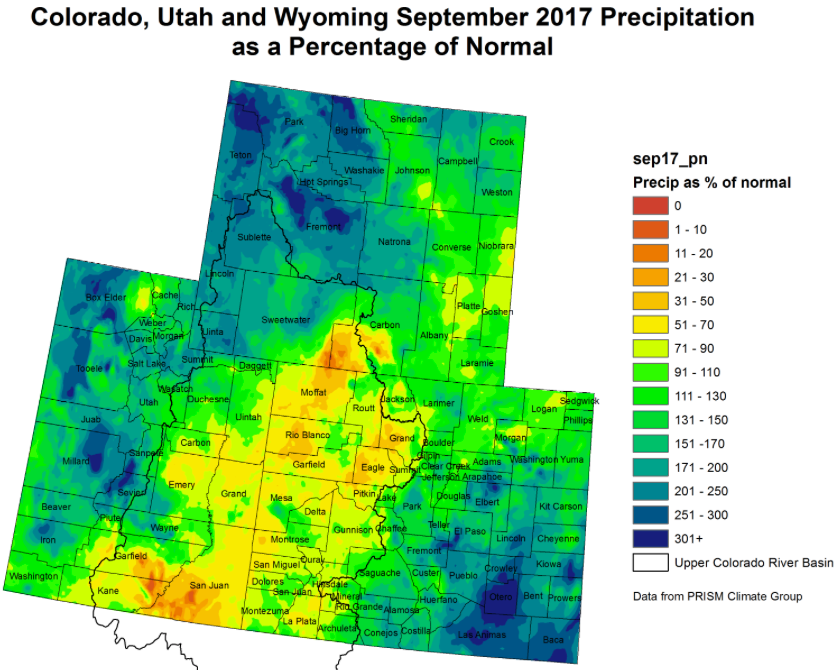
    Upper Colorado River Basin precipitation as a percent of normal September 2017 via the Colorado Climate Center.

    Click here to read the current assessment. Click here to go to the NIDIS website hosted by the Colorado Climate Center.

    Landscape redesign: Don’t get stuck in the mud – News on TAP

    Park Hill couple uses inspiration from their own backyard to address trouble spots in the front.

    Source: Landscape redesign: Don’t get stuck in the mud – News on TAP

    Eco-challenge: Save water with your trash – News on TAP

    After turning nearly 20,000 pounds of waste into compost, sustainability program helps reduce operational impacts to the environment.

    Source: Eco-challenge: Save water with your trash – News on TAP

    South Platte Forum, October 25-26, 2017

    Click here for all the inside skinny and to register:

    The South Platte Forum was initiated in 1989 to provide an avenue for a timely, multi-disciplinary exchange of information and ideas important to resource management in the South Platte River Basin. Its stated mandates are:

  • to enhance the effective management of natural resources in the South Platte River Basin by promoting coordination between state, federal and local resource managers, and private enterprise, and
  • to promote the interchange of ideas among disciplines to increase awareness and understanding of South Platte River Basin issues and public values.
  • The Platte River is formed in western Nebraska east of the city of North Platte, Nebraska by the confluence of the North Platte and the South Platte Rivers, which both arise from snowmelt in the eastern Rockies east of the Continental Divide. Map via Wikimedia.

    The “Great Places” newsletter is hot off the presses from The Nature Conservancy (@nature_org)

    Screen shot Nature Conservancy Great Places newsletter October 4, 2017.

    Click here to read the newsletter. Here’s an excerpt:

    Like Beer? Then Protect Forests

    Beer is 95 percent water, and more than half of our water comes from forests. OktoberForest works with brewers nationwide to highlight the need to restore forests and protect beer’s main ingredient.

    Find Out What You Can Do to Protect Your Favorite Brew.

    #ColoradoSprings sales tax revenue up, stormwater infrastructure could benefit

    Colorado Springs with the Front Range in background. Photo credit Wikipedia.

    From The Colorado Springs Gazette (J. Adrian Stanley ):

    The budget proposal assumes the stormwater fee measure on the Nov. 7 ballot will not pass, but Suthers is prepared to submit an amendment to City Council if it does.

    A big chunk of the anticipated increase in revenue is from sales tax collection increases. At times, the city has needed to refund sales tax collections that grew quickly, due to revenue growth limits set by the Taxpayer’s Bill of Rights. But this year, and in 2018, the city will be able to keep $6 million per year in revenue overage thanks to a measure approved by voters in April. That money is dedicated to stormwater projects. (The city is aggressively dealing with drainage issues, in part, because it’s being sued by the federal government for violation of the Clean Water Act.)

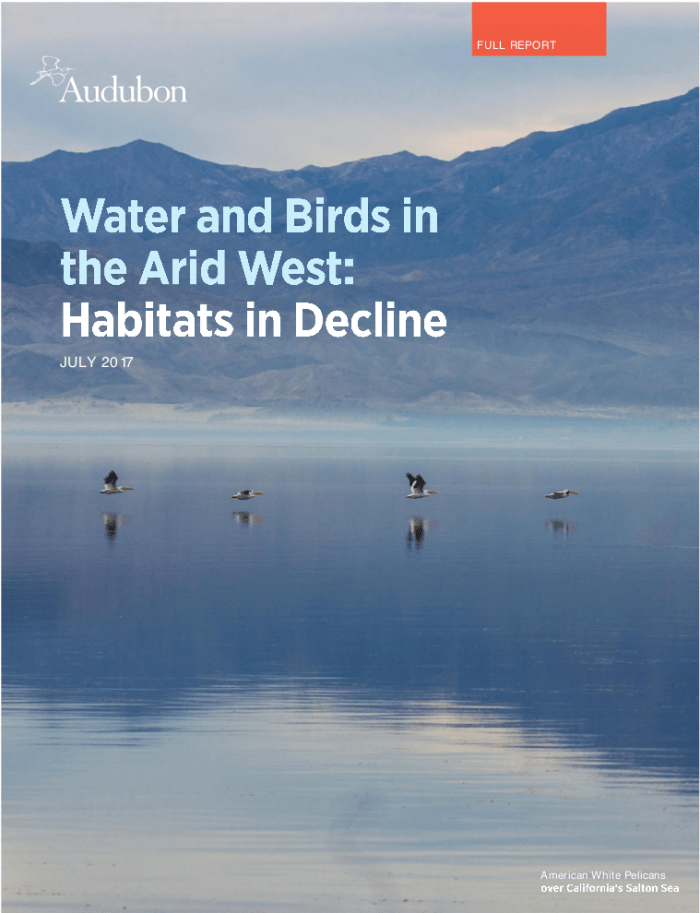
    Report: Water and Birds in the Arid West: Habitats in Decline — National Audobon Society

    Here’s the executive summary. From the website:

    Water is the most precious resource in the West—for people, birds, and other wildlife. Riparian habitats like the forests and wetlands that line the Colorado River support some of the most abundant and diverse bird communities in the arid West, serving as home to some 400 species. The Colorado River also provides drinking water for more than 36 million people, irrigates 5.5 million acres of farms and ranches, and supports 16 million jobs throughout seven states, with a combined annual economic impact of $1.4 trillion.

    But dams, diversions, drought, and water demand along the Colorado River have devastated cottonwood-willow forests and other native riparian habitat that support more than 40 percent of bird species in America’s Southwest. Saline lakes—the landlocked saltwater lakes fringed with wetlands that dot the Intermountain West—are beacons for millions of birds crossing an otherwise arid landscape. But as water recedes and exposes toxic dust, not only is habitat lost, but surrounding communities are at higher risk for asthma and other health issues.

    In short, precipitous declines in Western water quantity and quality are exacting a high toll on the health, prosperity, and quality of life for rural and urban communities, and putting birds and wildlife at jeopardy.

    Water and Birds in the Arid West: Habitats in Declined represents the first comprehensive assessment of the complex and vital relationships that exist among birds, water, and climate change in the region. Our research focused on two of the most imperiled and irreplaceable Western ecosystems: 1) the Colorado River Basin; and 2) the West’s network of saline lakes—including the Great Salt Lake and Salton Sea as well as other smaller but vitally important lakes. To read the full report, click here. Have questions? Read the FAQ. Want to get up-to-date news on water issues in West? Join the Western Rivers Action Network.

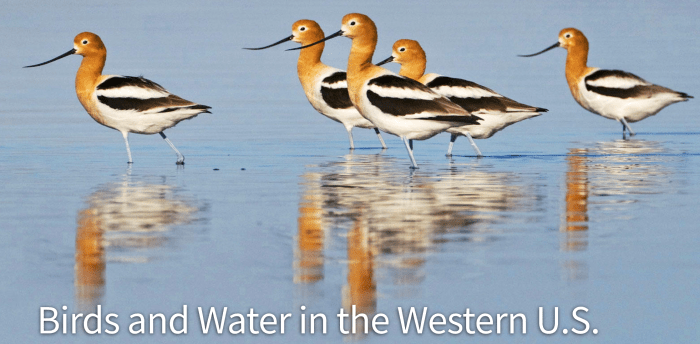
    American Avocets in the Salton Sea. Photo: David Tipling/NPL/Minden Pictures. Screen shot American Audobon Society western water website, October 4, 2017.

    Here’s a report from Ian Evans writing for Water Deeply. Click through and read the whole article. Here’s an excerpt:

    David O’Neill and Karyn Stockdale of the National Audubon Society talk about a recent report that highlights the threats to two major habitats used by migrating birds in the West: saline lakes and riparian habitat along the Colorado River.

    The report highlights how drying saline lakes in the West and changing riparian habitat along the Colorado River are impacting migrating birds. But the two habitats also share a vulnerability to climate change and water management. The demand for water from growing metropolitan areas, like Salt Lake City, is often at the expense of these habitats and wildlife.

    But David O’Neill, Audubon’s chief conservation officer, says that doesn’t have to be the case. In the report, Audubon highlights areas where environmentalists are working with policymakers, water managers and farmers to supply both birds and people in the West with enough water.

    Saline lakes and riparian habitat on the Colorado both provide invaluable habitat for birds flying from Canada to Latin America and back every year.

    Saline lakes, like the Great Salt Lake or the Salton Sea, provide valuable food and resting spots for shore birds, such as American avocets, while riparian shrubs and willows on the Colorado River provide food and shelter for vireos, warblers, flycatchers and more.

    Water Deeply spoke with O’Neill and Karyn Stockdale, director of Audubon’s Western Water Initiative, about the report, the relationship between birds and water in the West and how Audubon hopes to help meet the water needs of people and the environment…

    Water Deeply: Have you had success in solving the issues that you lay out in terms of the saline lakes and riparian systems along the Colorado River?

    Stockdale: In the Grand Valley in Colorado, the Grand Valley Irrigation District has been implementing a few pilot projects, essentially doing more water conservation, upgrading old irrigation infrastructure, improving some of the flows on the Colorado. And while the volume of water is small, what’s really happening is that it’s demonstrating to water users and the decision-makers in the area, this kind of project’s possible, that it actually has mutual benefits. So there are a lot of small examples like that. Sort of, laying out the path and proving that this really works, being able to then talk in kind of the larger scale.

    The latest “The Current” newsletter is hot off the presses from the Eagle River Watershed Council

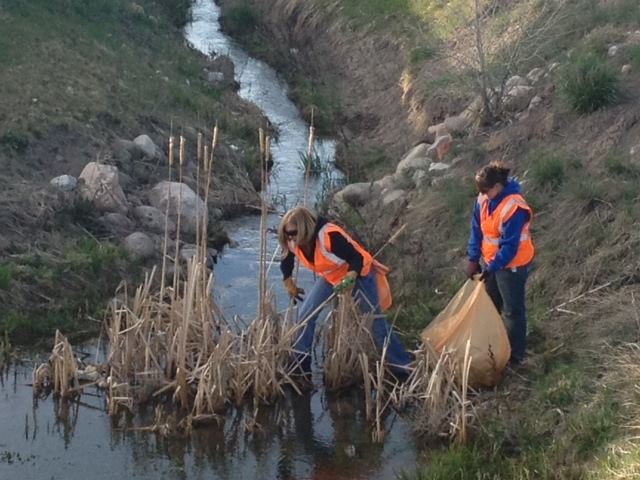
    Photo credit Eagle River Watershed Council.

    Click here to read the newsletter. Here’s an excerpt:

    23rd Annual Eagle River Cleanup

    About 300 people participated in this year’s Eagle River Cleanup, which was the 23rd annual. A large youth turnout at this year’s event helped forward one of the goals of the watershed council — to leave a conservation legacy for generations to come.

    “It’s a start of environmentalism,” watershed council executive director Holly Loff said Saturday. “It connects the community; everyone has worked hard to do something that does make a difference.”

    Loff said they expect to see about 4,000 pounds of trash collected from local waterways as a result of Saturday’s efforts.

    While the trash itself isn’t often as detrimental to the river as the pollution you can’t see, a clean riverbank says a lot about a community, said Eagle County Commissioner Jeanne McQueeney.

    “It takes away from the experience when you see trash as you’re rafting past, or when you’re trying to fish,” McQueeney said.

    R.I.P. Tom Petty: “I was born a rebel”

    By Davidwbaker (Own work) [CC BY-SA 4.0 (https://creativecommons.org/licenses/by-sa/4.0)], via Wikimedia Commons
    From The New York Times (Jon Pareles):

    Tom Petty, a songwriter who melded California rock with a deep, stubborn Southern heritage, died on Monday after suffering cardiac arrest. He was 66 and had lived in Los Angeles…

    Mr. Petty’s songs were staples of FM rock radio through decades, and with hits like ā€œRefugee,ā€ ā€œDon’t Come Around Here No More,ā€ ā€œFree Fallinā€™ā€ and ā€œInto the Great Wide Open,ā€ Mr. Petty sold millions of albums and headlined arenas and festivals well into 2017. He played the Super Bowl halftime show in 2008 and entered the Rock & Roll Hall of Fame in 2002. But his songs stayed down-to-earth, with sturdy guitar riffs carrying lyrics that spoke for underdogs and ornery outcasts. In his 1989 hit, ā€œI Won’t Back Down,ā€ he sang, ā€œYou can stand me up at the gates of hell / But I won’t back down.ā€

    Mr. Petty’s songwriting was shaped by the music he heard growing up: the ringing folk-rock guitars of the Byrds, the crunch of the Rolling Stones, the caustic insights of Bob Dylan, the melodic turns of the Beatles, the steadfast backbeat of Southern soul and the twang of country-rock. Onstage, the Heartbreakers sometimes expanded songs toward psychedelia-tinged jams.

    But across styles, Mr. Petty kept his songwriting tight-lipped, succinct and evocative: ā€œShe was an American girl, raised on promises,ā€ he sang on Tom Petty and the Heartbreakers’ 1976 debut album. ā€œShe couldn’t help thinkin’ / That there was a little more to life somewhere else.ā€

    Overheard Tuesday at a bicycle shop, “Tom Petty saved us from disco!”

    Colorado Corn (@COgrown) research into more sustainable agriculture

    Photo credit Wikimedia.

    From Colorado Corn:

    One of the top priorities of the Colorado Corn Administrative Committee (CCAC) has long been assisting local farmers in their quest to produce more food, feed, fuel and fiber with less resources and through more economically and agronomically sustainable production methods.

    And that tradition continued in 2017, as the CCAC’s Research Action Team in January committed another $130,100 to various projects focusing on drought-tolerance, crop disease mitigation, hybrid development, crop residue management, and other aspects of sustainability in agriculture.

    These investments come in addition to the $650,000-plus that the CCAC invested in research endeavors from 2011-2016.

    For decades, the CCAC has provided dollars – as well as input and other resources – to a long list of projects that have evaluated irrigation practices, alternative water-transfer methods, seed varieties, root structure, meat quality, farm safety, environmental impacts, biofuels and rotational fallowing, among a number of other focuses.

    Along the way, the CCAC has teamed up with municipalities, businesses, universities, research facilities, the state of Colorado and many others – relationships the organization will continue building upon in the never-ending effort to bring more tools and knowledge to Colorado’s producers.

    The funds for these research projects comes from a one-penny-per-bushel assessment on corn grown in Colorado, with the farmers who serve as CCAC board members ultimately deciding where those dollars are invested.

    “The Colorado Corn Administrative Committee invests and leverages its dollars and resources toward endeavors that run the gamut of market development, outreach, education and regulatory affairs. But our research projects rank among the most important investments, if not the most critical,” said CCAC President Mike Lefever, a Longmont-area resident who farms ground near Haxtun. “Taking continuous steps forward in producing more with less resources – and discovering the most sustainable methods of doing so – is absolutely vital, not only for us farmers, but for everyone. And with the knowledge gained from these research projects, we continue taking the needed steps forward.”

    Following meetings and presentations in recent weeks, the CCAC’s Research Action Team agreed to fund the following projects:

    • $48,249 to Colorado State University’s John McKay, to fund various local efforts needed for involving Colorado in a national collaborative project, aimed at identifying the specific genes that cause elite hybrids to be sensitive to drought.

    • $43,663 to CSU’s Kirk Broders, to further examine the bacterial pathogen Xanthomonas vasicola pv vasculorum (Xvv) – officialy reported in the U.S. in 2016 (although it had likely been present before that), with some of the most severe disease pressure observed in Colorado. The information gained from the research will be used to develop mitigation strategies and outreach and education materials.

    • $30,000 to CSU’s Todd Gaines, to lead research on the glyphosate-resistant weed Palmer amaranth (Amaranthus palmeri), with specific goals aimed at addressing environmental and economic sustainability for growers, providing practical value for weed management, and addressing management issues related to biotechnology.

    • $8,188 to CSU Extension’s Joel Schneekloth, to quantify the effects of residue removal and/or tillage on winter soil moisture recharge in irrigated agriculture, as well as the impacts to irrigation requirements for the following growing season and other aspects of these corn-production methods.

    ***

    The projects listed above come in addition to the Colorado Corn Administrative Committee’s investments in other ongoing or recently concluded research projects, which are :

    • $141,282 ($47,094 per year, over three years) to Colorado State University’s Raj Khosla, Robin Reich and Louis Longchamps, to research and determine the most productive, efficient, profitable and sustainable practices in irrigated corn production. In particular, this project will examine the agronomic advantages of using variable-rate and precision irrigation methods, precision-nitrogen management, and variable-seeding rates.

    • $45,747 over three years to Colorado State University to evaluate precision water and nutrient management practices.

    • $31,580 to Kirk Broders at Colorado State University, to complete a comprehensive survey of bacterial, fungal and viral pathogens of corn grown in Colorado, including foliar, ear, stalk and root pathogens. This information will later be used to direct future pathological studies of corn at CSU. Read more here.

    • $30,425 to Colorado State University’s Troy Bauder and Erik Wardle, for their “BMP Research and Demonstration” project, which over two years will monitor the effects of improved nutrient management methods commonly practiced by corn growers, to better understand the agronomic and water quality benefits from these practices. This is expected to be useful in a triennial review for the Colorado Water Quality Control Commission, helping quantify the good work producers are already doing in this area. Read more here.

    • $26,700 to Erick Carlson at CSU, to develop additional methods for reducing deep percolation of nitrates into groundwater, through investigating the functioning of wetlands created by irrigation runoff to trap and process nitrates. Read for here.

    • $26,520 to CSU for evaluation of drought-tolerant corn varieties in dryland conditions.

    • $25,000 to CSU’s Phil Westra and Scott Nissen, for various objectives at the Center for Ecology, Evolution & Management of Pesticide Resistance.

    • $24,850 to Godsey Precision AG LLC, to look in-depth at water savings with variable-rate irrigation for farmers using water from the Ogallala Aquifer. Specifically it will examine the water-holding capacity of the top two feet of soil and the crop’s water use throughout the season, and also determine the differences in fields with 39,600, 36,000 and 32,000 plants per acre, and how many soil probes are needed in-season to accurately monitor soil moisture.

    • $21,240 to Jerry Johnson and Sally Sauer with Colorado State University, to continue testing yield performance of four drought tolerant corn hybrids compared to four traditional, non-drought tolerant hybrids, at three different plant densities, under dryland production conditions in northeast Colorado.

    • $17,287 to Louis Comas with the U.S. Department of Agriculture’s Agricultural Research Service, to continue overseeing development of a tool for monitoring and managing water stress in corn.

    • $15,604 to Louise Comas with the USDA’s Agricultural Research Service, to create a tool to help corn producers identify when their crop is going into stress, help estimate potential yield impacts of that stress, and help producers in assessing potential impacts from constraints in their water supplies.

    • $11,900 to the USDA’s Agricultural Research Service for a 2016 water stress monitoring project.

    • $3,866 to Joel Schneekloth with the Colorado Water Institute, to study the impact of residue removal and tillage upon the soil characteristics important to crop production and crop-production economics.

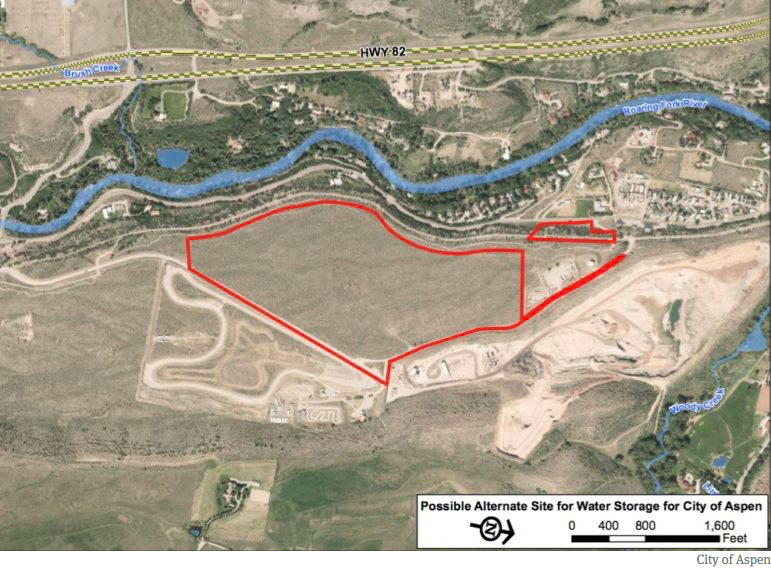
    Study: Aspen looks at Woody Creek storage

    A map provided by the city of Aspen showing the two parcels in Woody Creek it has under contract. The city is investigating the possibility of building a reservoir on the site, as well as looking at the possibility of a reservoir in the neighboring Elam gravel pit.

    From The Aspen Daily News (Curtis Wackerle):

    A preliminary feasibility study of water storage options using a Woody Creek parcel the city of Aspen is under contract to purchase contemplates first building a smaller reservoir at what’s now an adjacent gravel pit, followed by a phased expansion onto the land the city plans to acquire.

    That is one of four scenarios subject to a geologic review and engineering analysis conducted this summer for the city by Deere and Ault Consultants. The options studied range in cost from an estimated $48 million to $81 million and could store between 320 and 8,000 acre-feet of water.

    Aspen voters in November will decide whether to approve $3 million worth of general obligation bonds to finance the city’s purchase of the site, located on a bench above Upper River Road and owned currently by an entity called the Woody Creek Development Co., registered to a Fort Collins address.

    The city in July announced it is under contract to purchase the main 56-acre parcel, located west of the Elam gravel pit, and a 1.9-acre plot closer to Upper River Road, for $2.65 million.

    If voters reject the bonding question, a memo from the municipal utilities apartment recommends the city go forward with the purchase anyway, using another financing option…

    The city is eyeing the land purchase as part of a potential solution to the vexing question of what to do about extensive water storage rights it has held for over 50 years on the upper reaches of Castle and Maroon creeks. The city’s application to extend those conditional water rights is pending in water court and is opposed by a host of other government agencies, environmental groups and private citizens. Settlement talks in the case are ongoing.

    ā€œThese rights are located in alpine valleys and their development would involve difficult and expensive construction and likely cause significant environmental impacts,ā€ says a memo from Margaret Medellin, the utilities portfolio manager, to city council in advance of a Tuesday work session on the topic. The memo asserts that ā€œ[the location] of the site allows for the legal movement of storage rights from Maroon and Castle creeks to a diversion point near the Woody Creek parcel.ā€

    The Maroon and Castle reservoirs, which would involve dams over 100 feet tall in areas renowned for their scenic qualities, would create around 14,000 total acre-feet of water storage.

    Some opposers in the water court case have questioned whether the city needs any water storage; it currently has none besides a small holding pond above the treatment plan, with all required water drawn directly from the creeks. City officials, on the other hand, say that if climate significantly alters snowpack patterns, storage could be needed in the future to keep up with demand. Exactly how much storage would be optimal is being studied by another city-hired consultant.

    Deere and Ault contractors drilled four test borings and dug five test pits at the Woody Creek site; the work went forward without a permit, but after the fact and following up on a citizen complaint, Pitkin County, which has jurisdiction on the site, required the contractor to get a retroactive permit and file a revegetation plan.

    City of Florence revenue shortfall due to prison water #conservation

    From The Canon City Daily Record (Sarah Matott):

    During the last five years, the City of Florence has been steadily losing water revenue because of the Federal Bureau of Prisons cutting their usage.

    The federal prison systems in Florence are one of the largest water customers for Florence.

    In March, the council raised water rates against the federal prisons to address the problem, but Patterson said the federal prison systems are fighting the city on the new rates.

    Patterson explained that in 2008 the federal government ordered that all federal agencies work to eliminate their carbon footprint.

    The federal prisons system began cutting back on its water usage — a cost-saving measure for the prison but a problematic measure for Florence.

    Patterson said the city has been losing about a half a million in revenue during the last few years, which has made it difficult to balance the budget…

    One of the options, Patterson said is raising taxes or the water rates.

    “The dilemma is we already have some of the highest rates in the state of Colorado,” Patterson said, adding the city does not want to raise rates on residents anymore.

    The second option for the city would be to cut back on water projects, such as updating the water lines.

    The last option for Florence would be to aggressively expand who they sell water to. He said the city already has been using this option some by trying to “aggressively” add water users and starts…

    Patterson said they would continue to negotiate with federal prisons, so they can pay a reasonable rate. However, he did also say, if they continue to fight the new rates, a lawsuit in the future could be something else the city would pursue to avoid higher rates.

    Chatfield Reservoir: The best dam flood solution, period – News on TAP

    The South Platte River flood of 1965 led to the construction of Littleton’s popular water recreation destination.

    Source: Chatfield Reservoir: The best dam flood solution, period – News on TAP

    Connecting with the community, one service line at a time – News on TAP

    Denver Water’s master plumber provides expertise, education and relief to customers for nearly 40 years.

    Source: Connecting with the community, one service line at a time – News on TAP

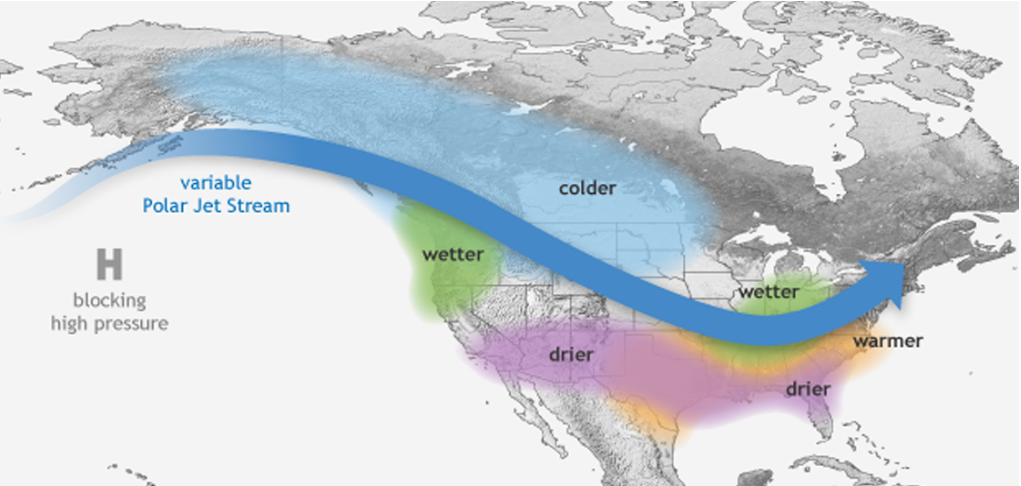
    La NiƱa watch

    Typical La Nina weather patterns over North America via NOAA.

    From The Grand Junction Daily Sentinel (Dennis Webb):

    If at least one thing is becoming clear, it’s that a weak La NiƱa pattern is beginning to set up. La NiƱas occur when surface-level ocean temperatures cool in the equatorial Pacific Ocean. Their opposite, El NiƱos, are associated with warming temperatures there.

    In Colorado, La NiƱas typically result in good snow years in the northern mountains, whereas El NiƱos tend to benefit southern Colorado…

    Dennis Phillips, a meteorologist with the National Weather Service in Grand Junction, agrees that a La NiƱa, although not an overly strong one, is shaping up, which should mean good snow in the northern mountains.

    But he noted that uncertainties involved in predicting the effects of La NiƱas and El NiƱos, especially in Colorado. With La NiƱas typically bringing more moisture to more northern states out West, and El NiƱos doing the same for southwestern states, ā€œthe problem with Colorado is we’re right in the middle of the country,ā€ Phillips said.

    While La NiƱas typically boost snow in northern Colorado, and El NiƱos in southern Colorado, the actual dividing line can be dictated by where weather ridges or troughs set up in the Pacific Ocean, Phillips said.

    He said what are called ā€œatmospheric river eventsā€ also contribute to what happens in Colorado. These usher in subtropical or tropical moisture caught up in the jetstream from the central Pacific, a phenomenon that used to be referred to as the Pineapple Express, he said. While last winter was a La NiƱa winter, atmospheric river events contributed to the whole state having a good snow year, rather than just the northern part, he said.

    Here’s the link to Klaus Wolter’s long-term forecast from the last Colorado Water Conservation Board Water Availability Task Force Meeting.

    Klaus Wolter Long-Term Outlook executive summary Colorado Water Conservation Board Water Availability Task Force Meeting September 2017.

    #TX v. #NM and #CO update

    Elephant Butte Reservoir back in the day nearly full

    Here’s a report Laura Paskus writing for The NM Political Report. Click through and read the whole article. Here’s an excerpt:

    In 2013, Texas sued New Mexico and Colorado in the U.S. Supreme Court, alleging that New Mexico was taking water that legally should flow to Texas under the terms of the 1938 Rio Grande Compact by allowing farmers to pump groundwater connected to the river.

    Were the Supreme Court to side with Texas, it could force some southern New Mexico chile, pecan and cotton farmers to stop pumping groundwater. Or, the state could even wind up paying Texas up to $1 billion in damages. For perspective’s sake, the state’s operating budget for 2017 was $6.1 billion, and the Land Grant Permanent Fund currently has $16 billion.

    But New Mexico State Engineer Tom Blaine, the state’s top water official, painted an optimistic picture for LFC last week, saying settlement discussions are moving forward.

    Blaine said he and Texas’s Rio Grande Compact Commissioner, Patrick Gordon, ā€œtalk about issues that would have to be considered for settlement.ā€

    He also told the 18 members present and LFC director David Abbey that one of the ā€œmost noteworthy accomplishmentsā€ of his office in recent years has been building relationships in and outside the state. ā€œPrevious engineers have referred to the Lower Rio Grande as ā€˜Compact Texas,’ meaning ā€˜We don’t really represent you in New Mexico,ā€™ā€ Blaine said of southern New Mexico farmers who irrigate below Elephant Butte dam. ā€œI am trying to change that paradigm, trying to build a coalition where everybody south of Elephant Butte and north of Texas, you’re in New Mexico.ā€

    Blaine said he’s made ā€œdeliberate efforts to build relationshipsā€ with the Elephant Butte Irrigation District, or EBID.

    That’s the irrigation district stuck smack dab in the middle of the lawsuit.

    Map of the Rio Grande watershed. Graphic credit WikiMedia.

    #Minute323 earmarks additional #restoration water for #ColoradoRiver Delta #COriver

    From The Arizona Daily Star (Tony Davis):

    …a second round of releases is headed to the delta that won’t be nearly as dramatic [as the Minute 319 pulse flow]. But these flows will restore more riverfront with cottonwoods and willows than the last time and their impacts will likely last longer.

    The new U.S.-Mexico Colorado River agreement, announced last week, sets aside 210,000 acre-feet of river water for environmental restoration in the delta over nine years, starting next year. This 2017 agreement also calls on the two countries to share shortages on the river in equal proportions in times of drought.

    The earlier, 2012 agreement under which the huge pulse flow was unleashed also enabled the more gradual release of another 53,000 acre-feet over four years that will end Dec. 31, 2017.

    The first round of flows has restored about 1,100 acres of cottonwood, willow and mesquite habitat, said Osvel Hinojosa, water and wetlands program director for Pro Natura Noroeste and a co-chair of an environmental working group that developed restoration ideas for the new agreement. Pro Natura is headquartered in Ensenada, Baja California.

    In that time, more than 230,000 native cottonwoods and willows were planted along the river, said a coalition of six U.S. and Mexican conservation groups calling itself Raise the River. The groups raised more than $10 million for restoration work and to buy water rights for those releases.

    This time, the goal is to restore about 4,300 acres over the next nine years, the new agreement says.

    Now, ā€œWe will see a resurgence of the Colorado in its delta, the ribbon of green that is re-emerging in the Sonoran Desert,ā€ said Jennifer Pitt of the National Audubon Society at last week’s signing ceremony in Santa Fe, New Mexico. ā€œIt offers relief to every living being that seeks rest in the cool shade of a cottonwood, renewal in the bounty of life that flows from the waters of the Colorado River. We are finding new ways to share the water, among our communities, but also with hundreds of thousands of egrets, herons, flycatchers, rails and other birds that need it to survive.ā€

    Although smaller pulse flows may be released later, the immediate plan is to focus on lesser, steadier amounts of base flows, Hinojosa said. Pulse flows release lots of water over short periods from a single point such as the dam. Base flows deliver lesser amounts, often over longer periods to specific restoration sites.

    ā€œAt this point, the best way to proceed with restoration is base flows. That’s the best use of the water,ā€ said Karl Flessa, a University of Arizona geosciences professor who oversaw the scientific monitoring of the 2014 pulse-flow impacts and hopes to be involved in similar work this time.

    A lot of the 2014 pulse flow infiltrated into deep groundwater and was not available to nourish cottonwoods and other trees, he said.

    ā€œBy applying base flows to restoration sites, you make sure water gets to the right place at the right time,ā€ Flessa said.

    Hinojosa said he considers base and pulse flows equally valuable, and may want to use smaller pulse flows for social purposes — allowing people living nearby to enjoy water in the river and reconnect with nature.

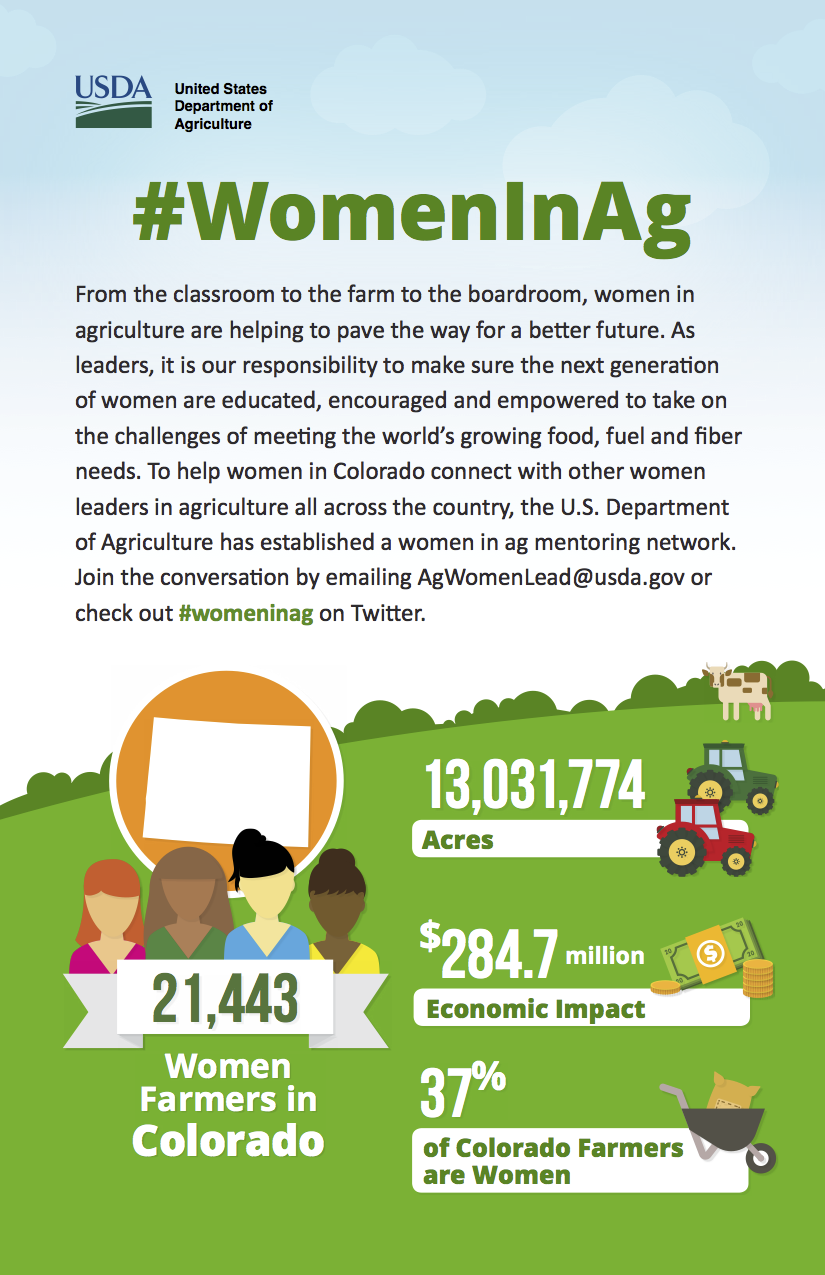
    Series: Women in agriculture — The Sterling Journal-Advocate

    The Sterling Journal-Advocate’s series on women in agriculture (tip of the hat to Jerry Sonnenberg):

    Part 1: Traditional farm wives fill vital role: From keeping books to driving tractors, they are crucial to family farm success

    Part 2: Partner wives have say in operations: They have no titles, but share responsibility for farm’s success

    Part 3: Women are potent force in ag activism: From WIFE to GMO, farm wives change policies and perceptions

    Part 4: Cowgirls are naturals at pen riding duties: Boss of all-female crew says women have special touch

    Part 5: Agronomist worries about feeding the world: Climate change, loss of crop land challenge ag producers

    #Colorado residents generally value agriculture

    Flood irrigation in the Arkansas Valley via Greg Hobbs

    From the Colorado Cattlemen’s Association’s Ag Water NetWORK via The Fence Post:

    Every five years since 1996, the Colorado Department of Agriculture has surveyed Coloradans about food and agriculture.

    What have they found? Residents generally value agriculture. That might not apply to the driver who honks incessantly behind a tractor lumbering down the road, but 95 percent of 1,000 respondents surveyed in 2016 indicated that maintaining land and water in agricultural production was “somewhat or very important.” That is down about 2 percentage points from previous surveys; but still a strong, positive response. The survey also found broad support (83 percent) for preserving agricultural land by using public funds to buy development rights from farmers and ranchers who want to sell them. A majority (86 percent) of respondents also thought open space programs should help minimize farm and ranch loss.

    This is all positive for agriculture, but it’s noteworthy that during the 20-year time span over which the survey has been conducted, Colorado has lost an estimated 600,000 acres of irrigated farmland. That number is based on a comparison of irrigated acreages reported in the 1996 and 2016 Colorado Agricultural Statistics reports. That’s about 938 square miles of land taken out of production — an area slightly larger than the land area of Rio Grande County in the San Luis Valley. During that time, our state’s population has increased by about 1.6 million people based on U.S. Census data.

    According to the state water plan, Colorado could lose another 600,000 acres (+/-) of irrigated agricultural land by the year 2050 if the status quo of “buying and drying” irrigated farmland to supply water for growth continues. For perspective, 600,000 acres represents slightly less than one-fourth of the remaining 2.6 million acres of irrigated acreage we have left in Colorado.

    If history serves as a guide, very few “dried-up” acres will ever return to irrigated production. Yet, future generations of farmers will need more land and water — not less — to grow food for a much larger population, both in Colorado and the western U.S.

    What can be done? The water plan puts forth a strategy for closing the projected 560,000 acre-feet gap between current municipal and industrial water supplies and the amount they’ll need by 2050. The strategy includes conservation, storage and ag water leasing, which is also referred to as an alternative transfer mechanism (ATM).

    Most people living in a front range town or city are already aware of conservation efforts being promoted and implemented by their municipal water suppliers. Rate payers are reminded monthly of the incentive to conserve water when they receive their water bills; which increasingly include tiered rates that ratchet up with increased water use, as well as rebates for purchasing water saving devices. Denver Water, for example, reports that water use has been cut by about 20 percent over the last decade through conservation.

    Planned storage projects, which include the Chatfield Reservoir Reallocation Project, Gross Reservoir Expansion, Chimney Hollow Reservoir, and the Northern Integrated Supply Project (NISP), will collectively add about 400,000 acre-feet of mostly wet weather storage capacity along the northern Front Range. Denver Water and other municipalities are also exploring underground storage areas where treated water can be pumped into aquifers during wet years and pumped back out in dry years.

    The third objective of the water plan’s three-pronged water provision strategy is ag water leasing. The water plan puts forth a goal of 50,000 acre-feet per year to be leased from agriculture to municipal and industrial interests. The conceptual benefit of ag water leasing is two-fold: 1) it can help supply water to communities during dry years and top off storage supplies after droughts, and 2) it provides ag water right holders with a non-commodity-based income that, for some, may serve as a desirable alternative to selling their water permanently. The survey conducted last year by Colorado Cattlemen’s Association’s Ag Water NetWORK found that ag water right holders preferred leasing over selling by more than a 20:1 margin when given the choice.

    Producer interest in ag water leasing and the success of projects such as the Catlin Canal Fallow-Lease Pilot Project and North Sterling Irrigation District’s leases to Xcel Energy and BNN Energy suggest that well-managed, adequately-compensated leases can provide the benefits described above.

    In order for ag water leasing to become widespread, it must work for all involved parties and not incentivize fallowing where water is not under threat of being sold. Ag water right holders must view leasing as a superior alternative to selling their water rights. Municipalities must view leasing as a desirable way to meet a portion of their water needs, through temporal lease agreements; and perhaps, a means of providing broader community benefit. If part of the recognized benefit to communities — beyond just receiving water — is helping to preserve irrigated ag land for future generations, then ag water leasing may garner greater community support based on the findings of the Colorado Department of Agriculture’s survey. To be successful over the long term, irrigation water for leasing cannot be pulled from agriculture production beyond actual demand for municipal water supplies … thus ensuring a strong lease market and limiting unnecessary ag land dry up.

    One in fifteen trees in #Colorado forests are dead

    From The Fort Collins Coloradoan (Jacy Marmaduke):

    The influence of the lingering dead — the product of decades of misguided forest management — trickles down to nearly every Colorado resident. It puts the state in the crosshairs of devastating wildfire and compromises the delicate relationship between forests and the people who rely on them for clean and plentiful water.

    The forests that coat Colorado’s western terrain tell a story of loss, both past and future: the High Park Fire and beetle kills, smoky skies and barren branches. But as the dead fall and the young grow stronger, these forests tell a story of hope, too.

    You need only look a little closer.

    But West doesn’t blame beetles alone for the state of Colorado’s forests. The roots of today’s problems trace back to the early 1900s, when the commercial timber industry was booming and forest fires were blackening millions of acres across the West.

    A newborn federal agency called the U.S. Forest Service started funneling resources into fighting those fires.

    In 1935, the forest service’s ā€œ10 a.m. ruleā€ mandated that all fires be suppressed by 10 a.m. the day after the initial report. In 1944, the forest service introduced Smokey the Bear as the huggable face of fire prevention.

    Those well-intended efforts would eventually set up Colorado for huge wildfires like the High Park Fire, which burned more than 87,000 acres and 259 homes west of Fort Collins in 2012.

    Forests need fire. The flames thin out overgrown stands, making room for younger trees to grow and regenerate forests.

    Removing wildfire from the equation left Colorado forests with a monoculture: Thick, overgrown stands of trees that are the same species, size and age. Some low-elevation ponderosa pine forests have 100 trees per acre where there should be 40, forcing the trees to compete with their neighbors for resources.

    Enter bark beetles, which West calls ā€œthe sanitizers of the forest.” The bugs are a sort of Lysol spray that scrub away the weak, the diseased and the lightning-damaged. Add a dash of bark beetles to overpopulated forests, though, and you end up with an all-you-can-eat beetle buffet.

    ā€œYou throw on top of that a drought, and it allows these bark beetle populations to build up to the point where the trees are basically defenseless,ā€ West said.

    Trees protect themselves with resin, a natural armor. Some tree resins wage chemical warfare on insects, while others trap and smother the attackers.

    But trees stressed by drought or facing a swelling army of insects can’t hold out forever. Eventually their defenses fail.

    When that happens, bark beetles gnaw a hole in the tree’s inner tissues and have celebratory sex right in the entryway. With plenty of grub and faltering tree defenses, beetles breed en masse and work their way through every large tree in the area before moving on. They leave the small trees behind for the grandkids.

    This happened with the mountain pine beetle, which swept across about 3.4 million acres of Colorado forests — 14 percent — between 1996 and 2016. Now it’s happening with the spruce beetle, which infested 1.7 million acres in the same period and has been Colorado’s most-harmful tree pest for five straight years.

    West doubts the spruce beetle will ease up anytime soon as Colorado forests continue to face overcrowding and the effects of climate change.

    #ColoradoRiver: “Why do the downstreamers deserve a pat on the back?” — @EklundCO #COriver

    Detailed Colorado River Basin map via the U.S. Bureau of Reclamation.

    Here’s a guest column written by James Eklund that’s running in The Grand Junction Daily Sentinel. Click through and read the whole article. Here’s an excerpt:

    So why do the downstreamers deserve a pat on the back? Two reasons.

    First, the Lower Basin acknowledges that the river’s projections fluctuate wildly from month to month, sometimes week to week. Readers of this paper know that, in the Upper Basin, we are used to wide swings in water availability from year to year and we maintain flexibility in our water management as a result. If you hadn’t experienced this variability, if you sat below the nation’s two largest reservoirs, it would be easy to put off water shortage discussions until later, maximize your water withdrawals every year, and leave the issue for some future generation. But the Lower Basin isn’t taking the short-term gain/long-term pain approach and that’s commendable. Just as we in the Upper Basin are working on a drought contingency plan, so too is the Lower Basin driving hard at a drought contingency plan that will define how shortages are shared.

    Second, these contingency plans benefit from some understanding with the Republic of Mexico about how water shortages would be shared internationally. Officials in the Basin States and Mexico realize we are all better off with greater certainty on this point and have agreed to Minute 323 to the 1944 U.S.-Mexico water treaty. The Minute — which addresses water shortages, water for the environment, investment in water projects and salinity — smooths the runway for the Basin States to land drought contingency plans.

    Thankfully, our Lower Basin counterparts appreciate our differences as well as the symbiotic nature of the two basins and are working hard to help the varied interests in their states understand the long-term value in more measured reservoir releases from Lake Mead. They recognize that big water releases from Lake Mead present only short-lived highs (insert your worst Colorado marijuana joke) and longer-term hangovers (insert tired old ā€œwhiskey’s for drinking, water’s for fightingā€ quote). Put another way, large releases of water from Lake Mead, while they may benefit some users in the short-run, are more painful for everyone in the long-run. Instead, more measured releases from Lake Mead, combined with shortage-sharing agreements, form the recipe for the seven basin states’ sage stewardship of this river.

    Both basins agree that these negotiations are complex, collegial, at times contentious and always passionate. After all, it’s water we’re talking about! Each state maintains a sense of urgency to craft our contingency plans, not solely due to fear of additional dry years, but primarily because we sense an opportunity. We currently have the right personalities, focused on the right issues, at the right moment in time to achieve successful management of the Colorado River.

    Moreover, the governors in each of the seven basin states may be of different political parties but they share a commitment to wise water management and leaving the Colorado River system better than they found it. Arriving at a mutually-agreeable path forward to protect critical water storage levels in Lake Powell and Lake Mead that all of us should embrace and follow.