La Niña watch: Hoping for high country snow #Snowpack

From The Denver Post (John Meyer):

The CPC, a department of the National Weather Service, has issued a La Niña watch, saying “La Niña conditions are favored” for fall and winter in the Northern Hemisphere. The prediction is based on below-average water temperatures in the equatorial Pacific Ocean.

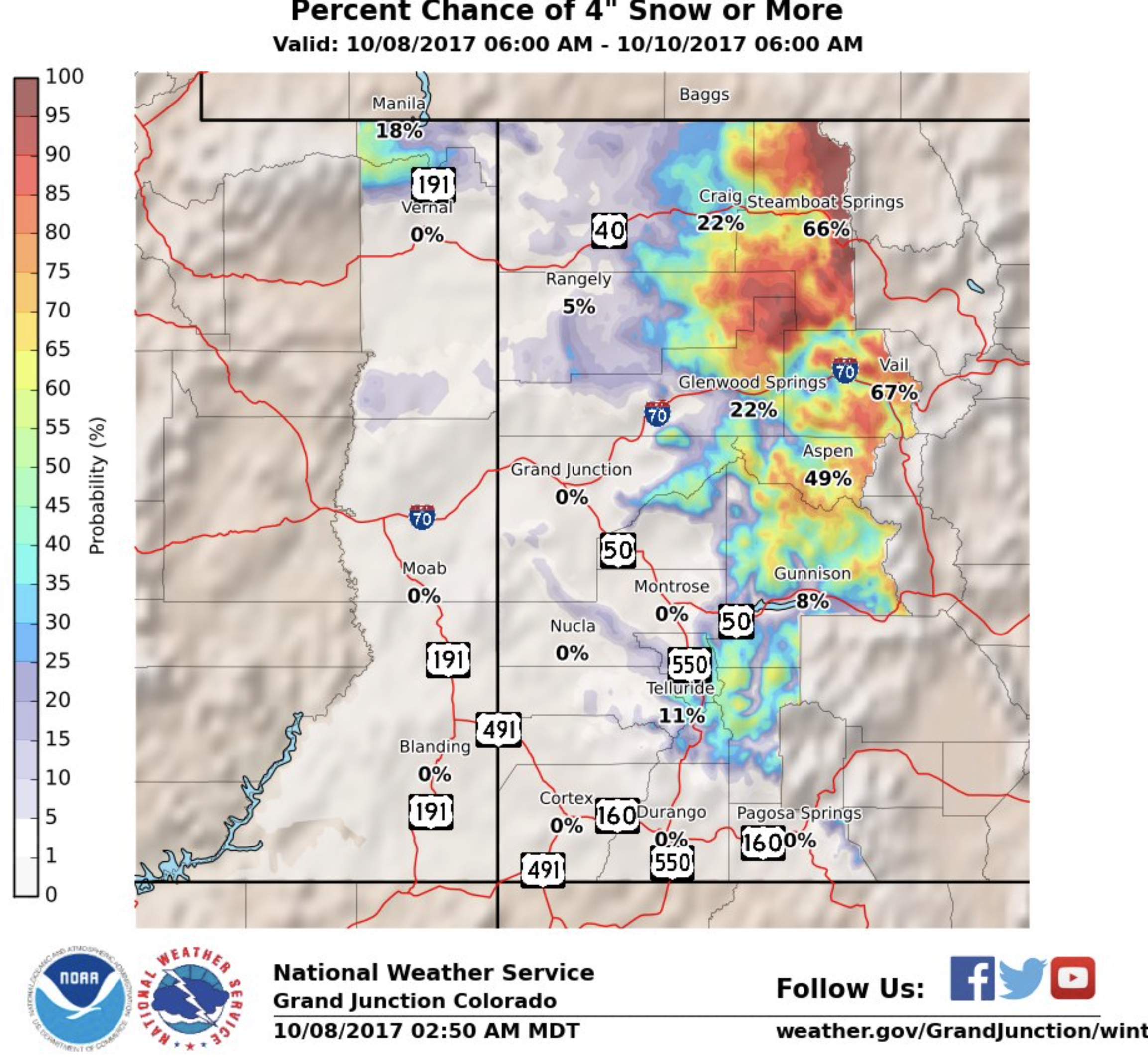
That means it could be a good season to shred in Steamboat Springs, Winter Park, Vail, Aspen and the Summit County resorts.

“What we see when we move into a La Niña is, typically the northern and central mountains do really well for snow,” Kyle Fredin, a meteorologist for the NWS in Boulder, said. “Statistically the bias is that the southwest mountains are a little bit drier than average, and locations east of the Continental Divide tend to be near to below normal snowfall for the season.”

[…]

The big dumps in the mountains may not start coming until after the first of the new year. Above normal temperatures with normal precipitation levels are likely over the next three months, Fredin said, adding that he doesn’t see anything that would indicate significant snowfall over the next seven to 10 days.

Colorado College professor proposes to study Widefield aquifer pollution effects

Widefield aquifer via the Colorado Water Institute.

From KOAA.com (Lena Howland):

Dr. John Adgate, the professor leading the potential study, told dozens of concerned homeowners at the meeting here on Thursday that he wants to know what the health effects are from the firefighting foam that’s said to have caused the widespread contamination across the area.

He has submitted a fast track proposal seeking the funding for this study from the National Institutes of Health back in August and says he hopes to hear back within the next few months, with the goal of starting the study next summer.

Adgate says he would be looking for a pool of 200 volunteers spread out from all three affected water districts.

Their blood would each be tested once and 50 of them would be tested again the following year.

This is to find out the levels of these compounds found in their blood and to see if these levels are going up and down over time.

He says the compounds coming from the firefighting foam haven’t been studied enough to prove certain health effects, which is why he hopes his study will lead to more definitive answers.

Denver: Clean Energy Means Business Corporate Summit, November 7-8, 2017

History Colorado Center

From The Denver Business Journal (Cathy Proctor):

“A growing number of organizations and institutions are interested in solar, and it’s not necessarily about sustainability,” said Henderson, who also is the president of the board of directors of the Colorado Solar Energy Industries Association (COSEIA), a trade group for the state’s solar sector.

“They’re seeing the opportunity to reduce operating costs and impact the bottom line,” he said.

To that end, COSEIA has organized the Clean Energy Means Business Corporate Summit, to be held Nov. 7-8 at the History Colorado Center in downtown Denver.

The two-day summit is aimed at executives and energy management professionals interested in using clean energy to lower operations costs and support sustainability efforts.

“You can go renewable and reduce your operating costs, but people are surprised by that. They want to learn more about it,” Henderson said.

Since 2012, businesses in the U.S. and Mexico — including IKEA, Google, Apple, Kaiser Permanente, 3M and Microsoft — have purchased nearly 9,000 megawatts of renewable energy supplies, according to the Business Renewables Center in Boulder, part of the Rocky Mountain Institute.

The latest ENSO discussion is hot off the presses from the Climate Prediction Center

Click here to read the discussion. Here’s an excerpt:

ENSO Alert System Status: La Niña Watch

Synopsis: La Niña conditions are favored (~55-65%) during the Northern Hemisphere fall and
winter 2017-18.

During September, ENSO-neutral conditions were reflected in near-to-below average sea surface temperatures (SSTs) across most of the central and eastern Pacific Ocean. The weekly Niño indices were volatile during the month, with negative values increasing to near zero during the past week in the Niño-4, Niño-3.4, and Niño-3 regions. In contrast, sub-surface temperature anomalies were increasingly negative during September, reflecting the shallow depth of the thermocline across the central and eastern Pacific. Also, convection was suppressed near the International Date Line and enhanced near Indonesia. Over the western equatorial Pacific Ocean, low-level trade winds were anomalously easterly and upper-level winds were anomalously westerly. Overall, the ocean and atmosphere system remains consistent with ENSO-neutral, although edging closer to La Niña conditions.

For the upcoming Northern Hemisphere fall and winter 2017-18, a weak La Niña is favored in the dynamical model averages of the IRI/CPC plume and North American Multi-Model Ensemble (NMME). Several models indicate a period of near-average Niño-3.4 values in the upcoming weeks, but then predict reinvigorated growth of negative SST anomalies across the equatorial Pacific Ocean. These forecasts are supported by the ongoing easterly wind anomalies across portions of the Pacific Ocean and the reservoir of below-average subsurface temperatures. In summary, La Niña conditions are favored (~55-65%) during the Northern Hemisphere fall and winter 2017-18 (click CPC/IRI consensus forecast for the chance of each outcome for each 3-month period).

#Drought news: Small changes in depiction for W. #Colorado

Click here to go to the US Drought Monitor Website. Here’s an excerpt:

Summary

At the beginning of the drought week, a cold front stretched from the Upper Mississippi Valley southwestward across the Central Plains and far southern Rockies. East and south of this front, daytime temperatures reached the 70’s and 80’s, with the exception of New England which topped out only in the 60’s. During the ensuing 48 hours, the progressive northern portion of the cold front reached the New England coast, while the southern portion remained over the Central Plains. This area, from the Northeast across the Midwest to the south-central Great Plains, served as the focus for much of this week’s precipitation. By Saturday, the southern portion of this frontal boundary made some eastward progress, apparently in response to an approaching 500-hPa shortwave trough. This overall setup was conducive to steering Hurricane Nate northward from the central Gulf of Mexico to the central Gulf Coast, where it made landfall as a category-1 hurricane near the mouth of the Mississippi River, on Saturday night. The remnants of Nate brought additional rainfall to the Appalachians and Atlantic Coast states on Sunday and Monday…

High Plains

In much of northern and central Kansas, a one-category improvement was rendered to the depiction, in areas that received 1-3 inches of rain above their normal weekly amounts. In contrast, D0 was introduced to southeastern Kansas, which experienced another dry week coupled with warmer-than-normal temperatures. In southeastern Nebraska, D1 was removed this week, and the “S” impact label in the western panhandle was changed to “L”, primarily due to recent wetness and the end of the growing season for summer crops. In southeastern South Dakota, additional trimming of the D0 area was performed, as anywhere from 2-6 inches of precipitation has fallen in the past two weeks. The Impacts line was adjusted accordingly. A hard frost (28 degrees F or colder) was reported on the morning of October 10th, bringing the growing season to an end for most of the state…

West

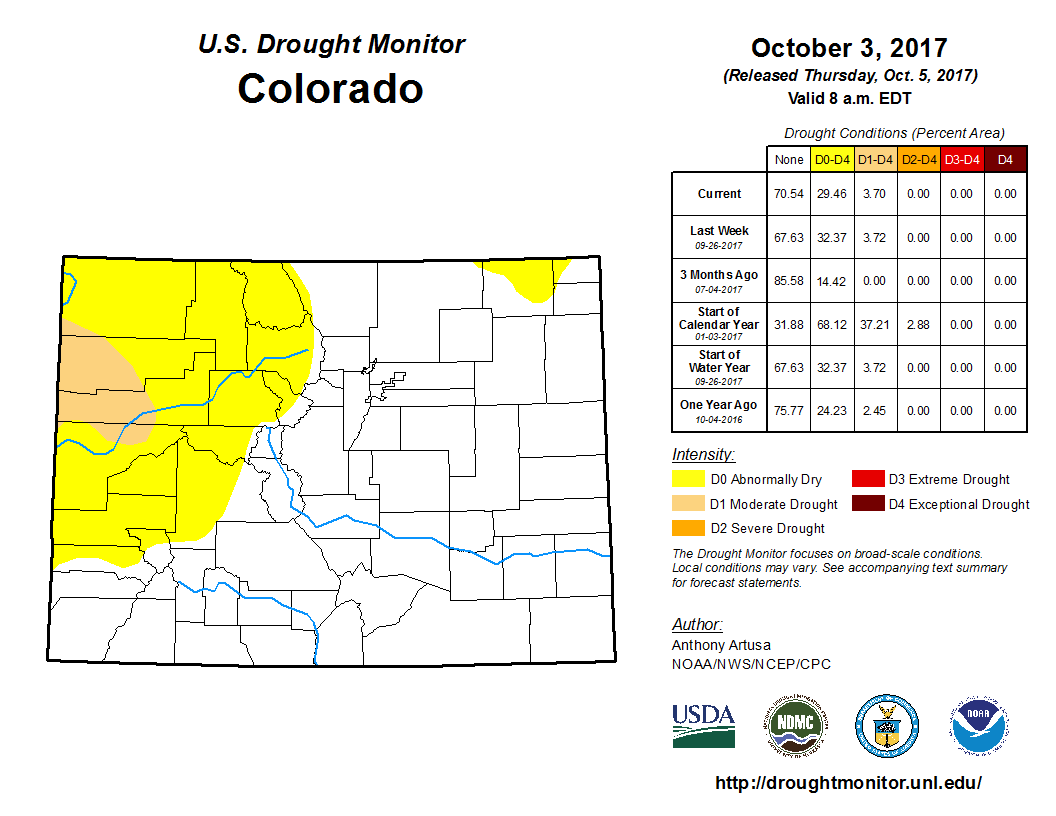
During the past two weeks, PNPs in most of California remained below the 25th percentile. At 30-day and 60-day timescales, the PNP pattern reveals isolated areas of 150% or more in the Sierras, southwestern, and far southern California. Rivers and streams remain in the lowest quarter of the observed distribution statewide. Firefighting resources have been taxed severely this week with the wildfires raging across north-central California; especially in and around Santa Rosa (Sonoma and Napa Counties). Precipitation that fell in the past 1-2 weeks favored the trimming away of some D0 in western New Mexico this week. However, D0 was retained in much of Caltron and Cibola counties, based on ACIS SPIs out through the past 120-days, low stream flows, and AHPS PNPs out to 60-days. In Arizona, the short-term drought status report for September, produced by the State Drought Monitoring Technical Committee, provided a recap of the Southwest Monsoon season. It noted that the majority of monsoon season rainfall fell between mid-July and early-August. This was followed by below-average rainfall and warm temperatures, which contributed to late-summer dryness. With the monsoon season therefore ending earlier than usual, much of southeastern, eastern, and central Arizona ended up with D0. In western Colorado, small-scale improvements were made thanks to beneficial precipitation that fell during the past two weeks. All short-term SPIs, and most longer-term SPIs are now showing conditions have returned to near-normal in these areas. Some one-class improvements were made in central and northeastern Montana this week. Reassessment of conditions next week in western and southeastern Montana may yield additional changes as well…

Looking Ahead

During the upcoming 5-day period (October 12-16), a band of heavy rain (2-3 inches) is predicted from southeastern Iowa across Lower Michigan to extreme northern Maine, with similar totals anticipated over extreme southeastern Florida, and the Cascades of the Pacific Northwest. One to two inches of rain is forecast over portions of the mid-Atlantic region. This raises the possibility of drought relief next week from the Midwest into northern Maine.

During the 6-10 day period (October 17-21), odds for above-normal precipitation are elevated over the Pacific Northwest and northern Rockies, as well as over Florida. Odds for below-normal precipitation are enhanced across most of the Great Plains, the southern Rockies, eastern portions of the Southern Intermountain Region, from the Ohio Valley and central Great Lakes region to the New England coast, and southwestern and south-central Alaska.

Kids imagine a world without water, and it ain’t pretty – News on TAP

Do they really understand that water is life? We asked our own kids.

Source: Kids imagine a world without water, and it ain’t pretty – News on TAP

@COParksWildlife: Open houses set for draft AHRA management plan and environmental assessment

Here’s the release from Colorado Parks and Wildlife (Bill Vogrin):

The public is invited to a series of open houses and to offer written input on the Arkansas Headwaters Recreation Area (AHRA) Draft Management Plan and Environmental Assessment proposed by Colorado Parks and Wildlife, the Bureau of Land Management and the U.S. Forest Service.

Open houses on the draft will be held during the third week of October in Colorado Springs, Buena Vista and Cañon City. The public is invited to make comments until Nov. 10.

The AHRA Management Plan and Environmental Assessment provide a framework for managing numerous recreation activities along the 152-mile river corridor. The release of this draft plan follows a comprehensive review of environmental, recreational and cultural resources along with extensive public involvement and review of public input.

The BLM, USFS and CPW carefully considered key issues identified through a scoping process in 2016. These included boating capacities, management of fisheries and wildlife habitat, public river access and facilities.

The draft outlines four alternatives for future management in the recreation area, providing a diversity of recreation opportunities from primitive lower use/development opportunities to urban higher use/development opportunities.

Public input will be used by the AHRA partnership as it prepares its final management plan and environmental assessment. The agencies hope to release the final document by early 2018.

The AHRA partnership manages river-based recreation through Browns Canyon National Monument. The BLM and USFS manage the 21,589-acre Browns Canyon National Monument, which was designated in 2015.

An explanation of the planning process, links to the draft plan and a public comment form can be found here: http://cpw.state.co.us/ahra-plan

Public Open Houses

5:30-7:30 p.m., Monday, Oct. 23
CPW Southeast Regional Office
4255 Sinton Road, Colorado Springs, 80907

5:30-7:30 p.m., Tuesday, Oct. 24
BLM Royal Gorge Field Office
3028 E. Main St., Cañon City, 81212

5:30-7:30 p.m., Wednesday, Oct. 25
Buena Vista Community Center
715 E. Main St., Buena Vista, 81211

For more information about the AHRA, contact the recreation area at 719-539-7289, or visit the Visitor Center at the corner of G and Sackett Streets in Salida.

The Arkansas River is the most commercially rafted river in the U.S., drawing nearly 240,000 commercial boaters and generating an economic impact of more than $60 million annually. AHRA visitors enjoy rafting, kayaking, fishing, camping, hiking, picnicking, wildlife watching, mountain biking, rock climbing and even gold panning along the river’s 152 miles of shoreline and surrounding canyons, valleys and towering mountain peaks found within the upper Arkansas River valley.​​​​​​​​

Important note: All comments and personal identifying information – including your name, address, phone number and e-mail address – may be subject to public disclosure under Colorado’s Open Records Act, or CORA.

Three reasons for optimism about climate change — The Mountain Town News

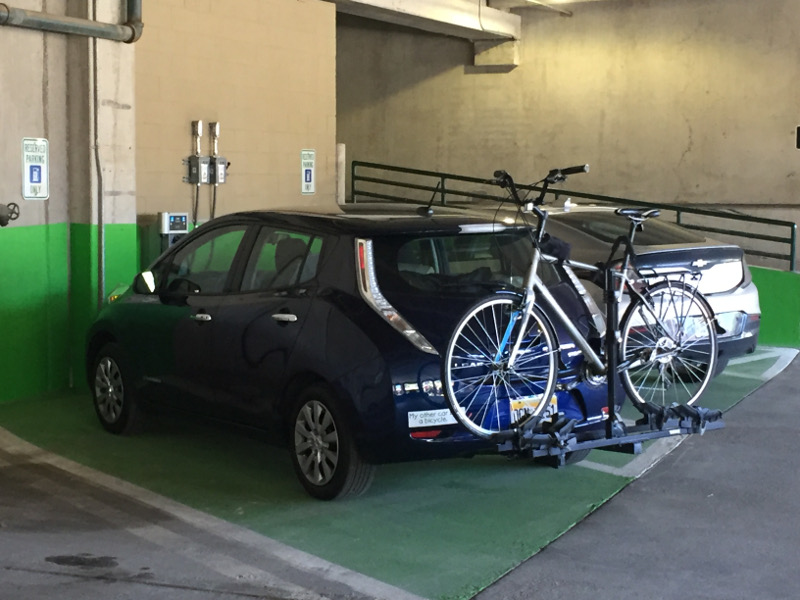
Coyote Gulch’s Leaf connected in the parking garage in Winter Park, August 21, 2017.

From The Mountain Town News (Allen Best):

Despite Trump, train has already left the station, says former Obama aide

U.S. President Donald Trump has initiated steps to withdraw the United States from the Paris climate agreement and end the Clean Power Plan. But a former advisor to President Barack Obama was anything but gloomy recently as he cited three major reasons for optimism.

Brian Deese said one reason was that economic growth has been decoupled from growth in carbon emissions. This was discovered as the United States emerged from the recession. Obama was in Hawaii when Deese informed him of the paradigm shift that had been observed.

Brian Deese photo credit Wikipedia.com.

“I don’t believe you,” Obama said, according to the story Deese told in a forum on the University of Colorado campus that was sponsored by the Center for Science and Technology Policy Research.

Chastened, Deese double-checked his sources. He had been right. Always before, when the economy grew, so did greenhouse gas emissions. Now, the two have been decoupled. This decoupling blunts the old argument that you couldn’t have economic growth while tackling climate change. The new evidence is that you can have growth and reverse emissions.

The second reason for optimism, despite the U.S. exit from Paris, is that other countries have stepped up. Before, there was a battle between the developed countries, including the United States, and China, Indian and other still-developing countries. Those developing countries said they shouldn’t have to bear the same burden in emissions reductions.

But now, those same countries — Chna, India and others — want to keep going with emissions reductions even as the United States falters. They want to become the clean-energy superpowers.

“China, India and others are trying to become the global leaders in climate change. They see this as enhancing their economic and political interests,” he said. “They want to win the race.”

That same day, the Wall Street Journal reported in a front-page story that China plans to force automakers to accelerate production of electric vehicles by 2019. The move, said the newspaper, is the “latest signal that officials across the globe are determined to phase out traditional internal combustion engines that use gasoline and diesel fuels in favor of environmentally friendly vehicles powered by batteries, despite consumer reservations.”

The story went on to note that India has a goal to sell only electric vehicles by 2030 while the U.K. and France are aiming to end sales of gasoline and diesel vehicles by 2040.

In the telling of the change Deese said this shift came about at least partly as the result of an unintended action — and, ironically, one by the United States. Because of China’s fouled air, the U.S. embassy in Beijing and other diplomatic offices in China had installed air quality monitors, to guide U.S. personnel in decisions regarding their own health.

Enter the smart phone, which became ubiquitous in China around 2011 to 2012. The Chinese became aware of a simple app that could be downloaded to gain access to the air quality information. In a short time, he said, tens and then hundreds of millions of Chinese began agitating about addressing globalized air pollution, including emissions that are warming the climate.

A third reason for optimism, said Deese, is that Trump’s blustery rhetoric has galvanized support for addressing climate change. Some 1,700 businesses, including Vail Resorts, have committed to changes and 244 cities, representing 143 million people, have also said they want to briskly move toward renewable energy generation.

To this, Deese would like to add the conservation community, by which he seemed to mean hunters and fishermen. “In the United States, we need to reach people where they are, and communicate to them how they are being affected by climate change,” he said.

He also thinks scientists need to step up to advocate. “Use your voice,” said Deese, now a fellow at the Harvard Kennedy School. “The rest of the world is there.”

@ColoradoClimate: Weekly Climate, Water and #Drought Assessment of the Intermountain West

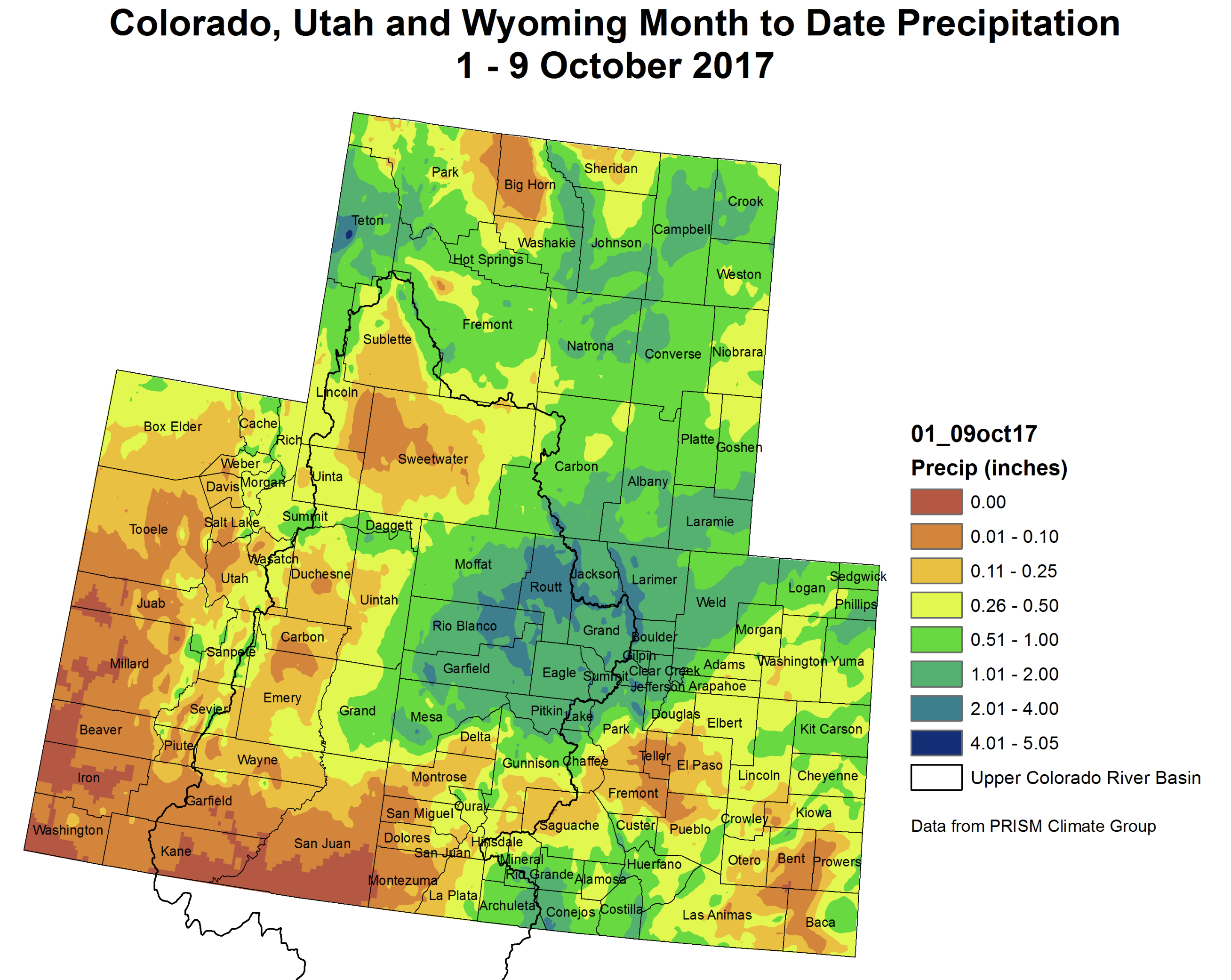
Upper Colorado River Basin month to date precipitation through October 9, 2017.

Click here to read the current assessment. Click here to go to the NIDIS website hosted by the Colorado Climate Center.

Arkansas Valley Ag Water Alliance tour recap

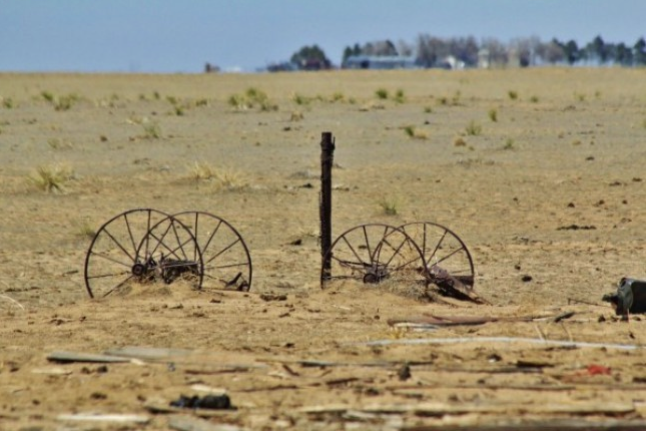
Photo of Crowley County by Jennifer Goodland

From The La Junta Tribune-Democrat (Candace Krebs):

The Arkansas Valley is a leader in finding innovative methods for sharing water between thirsty municipalities miles away and local farms heavily dependent on waterways that flow through the sparsely populated plains, according to the host of a recent agricultural water tour.

In the shadow of Crowley County, where most of the irrigation water was sold out from under productive farmland decades ago, farmers here have been more willing to look at alternatives than in some of Colorado’s other basins, according to Greg Peterson, executive director of the Colorado Ag Water Alliance.

The alliance, along with partner organizations National Young Farmers Coalition, Rocky Mountain Farmers Union and the Colorado Water Conservation Board, recently hosted an educational tour to show how irrigation water is being managed and conserved at several sites between Avondale and Rocky Ford.

Peterson told the tour group that relinquishing claims on the water through alternative transfer methods remains a touchy subject…

Water that once flowed out of the mountains to replenish the prairies increasingly reverses course and heads back upstream through a series of pipelines, pump stations and reservoirs to accommodate surging metropolitan growth.

What happened in Crowley County, in particular, has been the source of hard feelings that still linger.

“There are less than a dozen of us still farming along our ditch,” said Matt Heimerich, who farms near Ordway and serves as the Lower Arkansas Valley Conservation Director for the Palmer Land Trust.

Farmers sold water to put their kids through college or in some cases simply to buy modern appliances they’d done without over a lifetime of backbreaking work, he said. By no means was the choice an easy one…

The Palmer Land Trust is working to develop programs that make it possible to move water around on a temporary basis without permanently drying up farmland. Another goal is to create incentives to dry up marginal ground first rather than forfeit what is most productive.

Remembering back to his experiences during the harsh droughts of the early 2000s, Heimerich said leasing water and fallowing land during drought years might be the most logical solution for everyone involved…

Lease-sharing of water is a relatively new invention, and farmers are approaching it cautiously, in some cases dipping a toe in to test the water, so to speak.

During a tour of the packing shed at Hirakata Farms, where cardboard bins were filled with watermelons and bright orange pumpkins, owners and cousins Glenn and Michael Hirakata explained why they decided to participate in the Catlin Canal lease-fallow pilot program in 2015 along with five other farmers.

“We wanted to get in on this from the ground floor,” Glenn Hirakata said. “Since it’s a pilot program, we’re not locked into it.”

Aspinall Unit operations update: Lower Gunnison streamflow above baseflow target

Fog-filled Black Canyon via the National Park Service

From email from Reclamation (Erik Knight):

Releases from the Aspinall Unit will be decreased by 100 cfs on Thursday, October 12th. Diversions to the Gunnison Tunnel will be reduced by 100 cfs on Wednesday, October 11th so there will be a short period of flows over 1000 cfs in the Gunnison River through the Black Canyon before the river returns to a flow of 950 cfs by late Thursday morning.

Flows in the lower Gunnison River are currently above the baseflow target of 1050 cfs. River flows are expected to stay above the baseflow target for the foreseeable future.

Pursuant to the Aspinall Unit Operations Record of Decision (ROD), the baseflow target in the lower Gunnison River, as measured at the Whitewater gage, is 1050 cfs for October through December.

Currently, diversions into the Gunnison Tunnel are near 975 cfs and flows in the Gunnison River through the Black Canyon are around 950 cfs. After this release change Gunnison Tunnel diversions will be about 900 cfs and flows in the Gunnison River through the Black Canyon will still be around 950 cfs. Current flow information is obtained from provisional data that may undergo revision subsequent to review.

Snowmass wastewater plant overhaul update

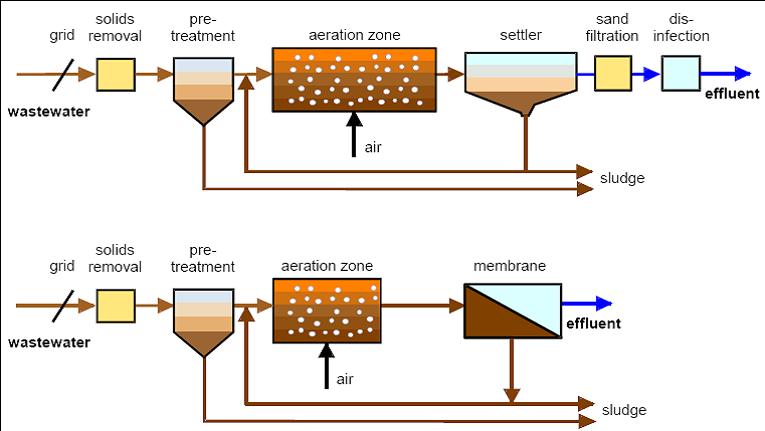
Graphic credit Wikimedia.com.

From The Snowmass Suns (Britta Gustafson):

The water and sanitation district wastewater management plant, located next to the Snowmass Club Commons housing complex, is currently undergoing a major overhaul and expansion.

Upgrades to the current facility and a 44,000-square-foot expansion will allow the water and sanitation district to meet heightened state requirements for total removal of inorganic nutrients such as nitrogen, phosphorus and ammonia from local streams and rivers. It also will improve efficiency as water demands increase.

Gov. John Hickenlooper in May 2013 issued Regulation 85, calling for the implementation of a strategic plan for all of Colorado’s water resources with a phased schedule for statewide wastewater plants to comply.

Each of the 44 water treatment districts in the state will now be required to start implementing these new regulations. Due to its size and location in a priority watershed, the Snowmass plant falls into the Department of Health’s first phase with a 2020 deadline.

The district considered 14 different processes and plant configurations to comply with total removal of inorganic nutrients before deciding on a University of Cape Town configuration with membrane bioreactor for enhanced biological nutrient removal.

Upgraded state-of-the-art equipment — including a supervisory control and data acquisition and an industrial control system that interfaces with equipment — will allow the operation of the plant to be monitored 24/7.

Probes can now detect potential concerns on a minute-by-minute basis, even offering remote monitoring and management.

As an example, Snowmass Water and Sanitation District resident project representative Shea Meyer said, “if a restaurant dumps grease, we can detect it a good deal before it contaminates and clogs up the system.”

Additional improvements will include the installation of new high-efficiency motors and a new charcoal-odor control system…

With a price tag of nearly $24 million, which Snowmass Village voters approved in May 2016 via a mill-levy tax, expectations are high…

The new plant should last at least 30 years, potentially upward of 50 or 60, Hamby said, “assuming additional (Environmental Protection Agency) regulations do not affect us.”

[…]

After thoroughly excavating the existing holding-pond base, the initial phase of the estimated 30-month project will officially begin.

Once the concrete pour is underway, the project construction contractor, RN Civil Construction of Centennial Colorado, will prepare and issue a timeline for the project.

RN Civil project manager Dave Ortt said he expects the construction schedule to be available within the next week.

Hamby said quality, safety and cost efficiency would all take precedence over the 2020 deadline and that the district may ask for an extension if necessary.

@SCOTUS agrees to take up #TX v. #NM and #Colorado

Map of the Rio Grande watershed, showing the Rio Chama joining the Rio Grande near Santa Fe. Graphic credit WikiMedia.

From The Courthouse News (Kevin Lessmiller):

The nation’s high court also agreed to take on Texas’ lawsuit against New Mexico and Colorado over the nearly 80-year-old Rio Grande Compact.

The Lone Star State claims New Mexico’s increasing use of water from the Elephant Butte Reservoir deprives it of water apportioned to it under the 1938 deal, which governs the distribution of Rio Grande water among Texas, New Mexico and Colorado.

Dates for oral arguments have not been set in either case, both of which are original-jurisdiction cases, meaning the lawsuits were filed directly with the Supreme Court.

The Elephant Butte Irrigation District is ending deliveries for the season

Elephant Butte Reservoir back in the day nearly full

From The Las Cruces Sun-News (Diana Alba Soular):

Irrigation officials already have begun dialing back on the water flow coming from two upstream reservoirs because the Las Cruces-based Elephant Butte Irrigation District ended its water-delivery season Sept. 30.

There’s still some water continuing to flow in the Rio Grande near Las Cruces because El Paso irrigators are continuing to use water. But that flow is set to end within the next week, officials said.

“Down here, it’s mostly pecan orchards watering their trees one last time — and some alfalfa,” said Jesus “Chuy” Reyes, general manager for the El Paso County Water Improvement District No. 1. “We’ll be winding up between the 15th and the 18th of this month.”

At that point, after the dam at Caballo Reservoir is shut down, Las Crucens can expect to see the Rio Grande dry. Barring any large rain storms that create significant run-off, the riverbed will stay mostly dry until late next winter or early next spring, when farmers from Doña Ana County, El Paso and Mexico begin watering their crops for 2018…

Irrigators are winding down what has been a bumper water year in comparison to recent drought years. Strong water run-off from the mountains of northern New Mexico and southern Colorado fed into Elephant Butte Lake and Caballo Reservoir. Farmers locally were allotted 24-acre-inches — or 2 acre-feet — per irrigable acre. That was the most water since 2010, when Elephant Butte Irrigation District farmers received the same amount…

The bigger water allotment this year and a strong summer monsoon rainy season, which cuts down on crop water demand, helped the length of the EBID irrigation season stretch into October, said James Narvaez, district irrigation systems director…

There’s roughly 250,000 acre-feet left in storage in the two reservoirs, Narvaez said. The amount, which also has to be finalized, is about double what it was a year ago.

#ColoradoSprings: Mayor Suthers on the stump for stormwater ballot issue (2A)

Colorado Springs with the Front Range in background. Photo credit Wikipedia.

From the Colorado Springs Independent (Pam Zubeck):

..Mayor John Suthers is the chief spokesperson for the 2A campaign in radio ads that began airing Oct. 3.

Rachel Beck, a Colorado Springs Chamber and EDC official who’s running the Invest COS campaign committee (aka the “vote yes” committee), reports the ads will continue until Election Day and that other strategies include flyers targeting likely voters and Google and Facebook digital ads. “It’s a pretty broad audience we’re communicating with,” Beck says.

With just 54 percent of likely voters supporting the measure, according to a poll conducted in early August, Invest COS hopes to move the needle to put the measure comfortably over the top. “Our polling showed that people have a high level of understanding of the issue,” Beck says, adding the campaign is focusing on explaining “that this is the right solution, what the components are and what they can expect to get in return if they support the measure with their vote.”

[…]

The measure, if approved, would require every household, including renters, to pay $5 a month on their water bill to fund stormwater; owners of nonresidential property would pay $30 per acre. Property owners of developed land larger than five acres would pay fees set by the city’s stormwater manager, based on the area of impervious surface on the land. The city itself would also pay the fee, which Suthers says in an interview would cost about $100,000 a year. The fees would be collected for 20 years.

Two seasoned political activists are working separately against the measure. Laura Carno, a political strategist who ran the campaign of the city’s first strong mayor, Steve Bach, in 2011, has set up a new campaign committee called Springstaxpayers.com. She says she’s raised less than $10,000 and plans a radio and digital campaign, plus TV if more money comes in. “The message will be that the city of Colorado Springs has plenty of money,” Carno says. “They just need to prioritize it.”

Stream management plans emerging for Eagle, Colorado and Roaring Fork rivers

The view on Homestake Reservoir in 2014. The reservoir is a key component of the upper Eagle River watershed and is part of a system that diverts water from the basin. The reservoir, and potential new water storage facilities, will likely play a role in a new integrated water management plan being developed by the Eagle River Watershed Council.

By Heather Sackett, Aspen Journalism
EAGLE — The Eagle River Watershed Council is moving ahead with an environmental and recreational needs assessment for the Eagle River basin as part of its effort to create an integrated water-management plan for the river and potentially its tributaries.

To do so, the organization is pulling together disparate groups for some difficult conversations about how the river is used — a requirement of the 2015 Colorado Water Plan.

“We decided the time is right to call all the people into the room,” said Holly Loff, executive director of the Watershed Council.

The Eagle-based nonprofit organization wrapped up meetings last week with representatives from stakeholder groups such as river guides, private land owners, conservation groups, local governments, federal and state agencies, ranchers, water commissioners and trans-mountain diverters in the Eagle River basin, which include the cities of Aurora and Colorado Springs. Representatives from each of the groups are scheduled to participate in a joint meeting this week.

The goal of the talks is to understand the concerns of stakeholders, which will help develop the objectives for the integrated water-management plan. Such plans are also often called “stream management plans.”

In addition to input from stakeholders, a study of the Eagle River basin is also compiling previously collected water-quality data. This information will guide future river-management efforts, as well as permitting and approval processes for future water projects. Loff described the project to members of the Colorado Basin Roundtable on Monday, Sept. 25, at a meeting near Kremmling.

The Eagle River flows past Wolcott in the spring of 2015. The Eagle River Watershed Council has begun talking with regional stakeholders about an emerging integrated water-management plan for the Eagle River.

Studying the river

Loff said the study area would include the length of the Eagle River, from its headwaters at Tennessee Pass to its confluence with the Colorado River at Dotsero. And the two-year planning effort will include a look at the prospect of additional storage in the river basin, as envisioned by a project described in the Eagle River Memorandum of Understanding, which includes a potential new reservoir on lower Homestake Creek below the existing Homestake Reservoir.

The Eagle River watershed plan, which was drafted in 2013 by the Watershed Council, lacks an understanding of environmental and recreational water needs, Loff said, a void the new effort seeks to fill. Carbondale-based Lotic Hydrological will be the hydrological consultant on the project and will perform field data collection and analysis.

The 2013 plans noted that “significant concerns were voiced” about conditions of streams in the Eagle River basin, including “continued impacts from mining, damage to riparian habitats, increasing demands for water, the lack of adequate in-basin storage, impacts from untreated urban and road runoff, the possibility of climate change and the prospect for future population growth and development.”

In addition to its work with various local stakeholder groups, the Watershed Council will soon be seeking input from residents of the Eagle River basin about its river-management plan.

“We do want this to be something the community feels they have a voice in,” Loff said. “The community will most certainly be asked to be involved.”

Eagle Park Reservoir, in the headwaters of the Eagle River basin. Water officials are looking at expanding the capacity of the reservoir.

State funding

The Boulder-based River Network has selected the Watershed Council as one of four organizations in Colorado to receive direct support and assistance in applying for state funding of the project.

Loff said funding for the study would come from the Colorado Watershed Restoration Program, which is overseen by the Colorado Water Conservation Board, with matching funds coming from a variety of sources, including stakeholders. But it is too soon to put a price tag on the project. Loff said the current process with stakeholder groups is helping to determine the scope of work. Only then can the Eagle River Watershed Council create a budget.

“It is unfortunate that we don’t have the scope, objectives or budget complete yet, but when you consider the fact that those are being established with the help of all of the stakeholders from the various groups, I think most would agree that it is the best approach and a good investment of time if we want this to be a strong plan with buy-in from all parties,” Loff said.

The upper Roaring Fork River, east of Aspen, near the river's confluence with Difficult Creek.

Plans for other rivers

The Watershed Council’s integrated water management plan for the Eagle River is one of many such stream management plans in development across the state. In 2015, the Colorado Water Plan called for 80 percent of priority streams in the state to be covered by stream management plans that address the needs of diverse stakeholders.

The Middle Colorado Watershed Council, for example, is working on a river management plan for 75 miles of the Colorado River from above Glenwood Canyon to DeBeque, according to the council’s executive director, Laurie Rink, who also briefed the members of the Colorado Basin Roundtable on Sept. 25. The plan will also include tributaries to the river along that stretch, but not the Roaring Fork River, which flows into the Colorado in Glenwood Springs, as the Roaring Fork Conservancy has previously studied it.

Link said Middle Colorado Council’s effort was also “very much a stakeholder driven process” and that there would be a “very heavy push on stakeholder agreements” as part of the planning process. Rink also said that her group’s aim is to eventually thread together the various river-management plans being developed in the Upper Colorado River basin, including the Eagle River plan.

The upper Roaring Fork River chundering through the Grottos around 6 p.m. on Thursday, June 16, 2016 after the Twin Lakes Tunnel had been closed and the natural flows of Lost Man and Lincoln creeks had been turned back into the river.

Roaring Fork advisors

In the Roaring Fork River basin, City of Aspen officials and a technical advisory group are working on a management plan for the upper reaches of that river above its confluence with Brush Creek, which flows out of Snowmass Village.

Aspen’s technical advisory group is made up of roughly 25 stakeholders and includes Pitkin County officials, the Roaring Fork Conservancy, Trout Unlimited, Colorado Parks and Wildlife and the Salvation Ditch Company, among others.

April Long, an engineer for the City of Aspen whose title is “clean river program manager,” is overseeing the Roaring Fork River management plan. Long said the group met twice during the summer. The meetings with the technical advisors were not open to the public, but Long said the city will seek public feedback as the plan progresses.

Lotic Hydrological is also the consultant on the Roaring Fork plan. Long said officials are using a hydrological simulation computer model, as well as historical data from river gauges, to predict and evaluate different flow scenarios with and without certain diversions.

“You can turn those diversions on or off and see how the river responds when you manage flows differently,” Long said about the model, and can ask, “If you wanted a certain type of ecosystem, what sort of flow do you need?”

Long expects a draft plan of the Roaring Fork River plan to be released in late November.

Editor’s note: Aspen Journalism is collaborating with the Vail Daily, the Summit Daily News, the Glenwood Springs Post Independent and The Aspen Times on coverage of rivers and water. The Vail Daily published this story on Saturday, Oct. 7, 2017. The Glenwood Post published the story in its print version on Monday, Oct. 9.

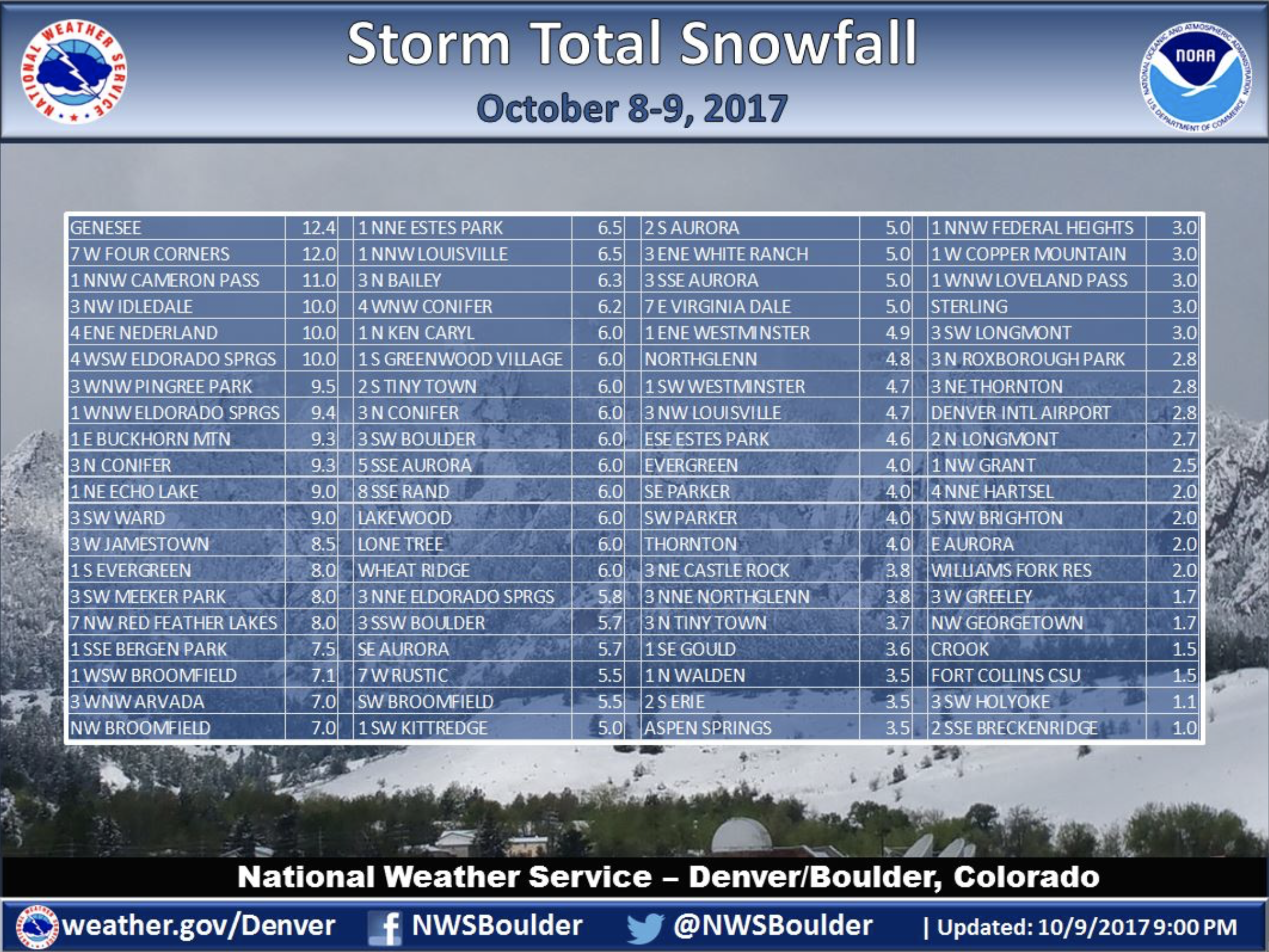
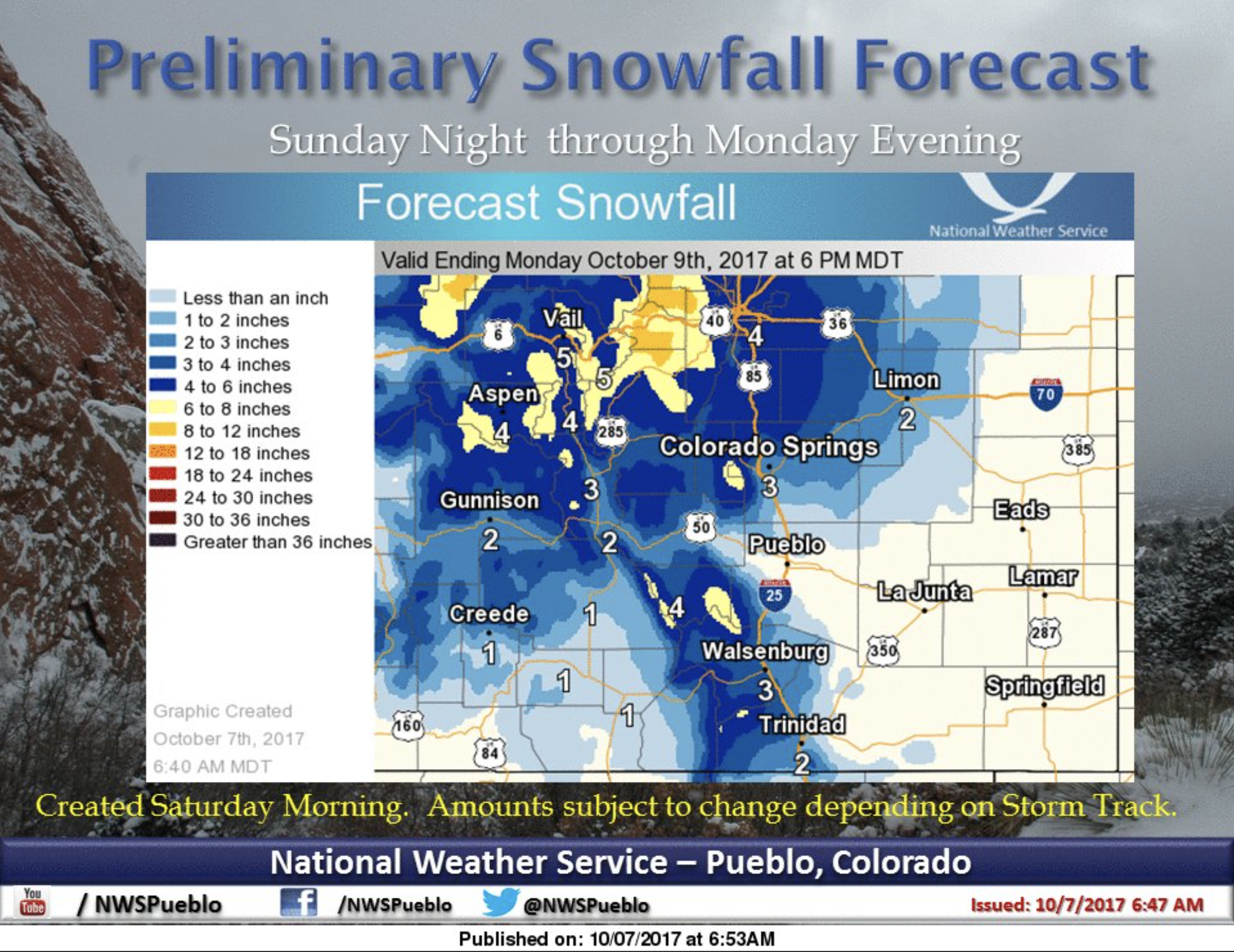
#Snowpack news: Snowfall through 9:00 PM Monday via @NWSBoulder

From 9News.com (Alexander Kirk):

Responsible for the distribution of drinking water to 1.4 million people, Denver Water says snowfall is always a welcome sight.

But while snow is always better than no snow, they say it’s important to remember how quickly things can change.

October 2016 saw the driest October on record in the Denver Water collection system with no snow accumulation until November 17th. Nevertheless, heavy snowfall the rest of the season led to a summer of full reservoirs.

Denver Water says the lesson of 2016 is that the snowfall season is impossible to predict.

Lawsuit filed over September 2013 Olympus Dam releases

Flood damage Big Thompson Canyon September 2013 — photo via Northern Water

From TheDenverChannel.com (Mark Belcher):

According to the lawsuit, the Department of Interior’s Bureau of Reclamation, which operates the dam, made the call to release a massive amount of water from the dam to protect its integrity, as it overflowed with floodwater from a heavy storm that continued to dump water on Sept. 12, 2013.

The plaintiffs in the suit say had they been warned of the massive release, they would have been able to move some of their property, but instead they were surprised to find homes literally washed away.

Details revealed in the lawsuit confirms the victims lost their homes and businesses in the flood, and are seeking compensation from the government for their losses.

The lawsuit says the Bureau of Reclamation “made the determination to take [the victims’] property through its actions in releasing water from the Olympus Dam due to its concern for the integrity of the dam and the greater public good in preserving the dam versus [the victims’] property.”

The victims and their attorney requested a jury trial to judge all issues laid out in the suit, however the trial has not yet been scheduled.

Colorado-Big Thompson Project east slope facilities

Colorado Ag Water Alliance tour recap

Straight line diagram of the Lower Arkansas Valley ditches via Headwaters

From the Ag Journal (Candace Krebs):

[Kevin] Niles was among more than 40 participants who attended a recent Colorado Ag Water Alliance tour in hopes of taking home new ideas.

He was particularly interested in learning about conservation techniques his farmer-members could use to help conserve well use.

Water planners and conservationists from outside of the region also participated in the tour.

Beverly Richards, who works for the Gunnison Water Conservancy, knows the ample water supplies in her district would be the envy of most farmers in Eastern Colorado. Still, she sees competition for water increasing downstream in the Grand Valley and beyond and wants to prepare the district for the drought years that are sure to come.

In fact, the district has started writing a water plan, modeled on the state planning exercise that was completed a couple of years ago.

Richards said by coming to a region where water is already scarce, she hoped get some ideas about how to work collaboratively to address future water allocation…

Carla Hendrickson and Ian Hartley didn’t have far to travel. They are both from Pueblo West.

While involved in various boards and community organizations, they said what drew them was a personal quest to better understand the state’s water issues…

Her grandfather was an engineer for Denver Water and helped to build some of the early transfer tunnels that supply the city. Fast-forward to today, and she’s interested in learning about household conservation practices like gray-water storage and reuse…

Several participants said they were hoping to bridge what they see as an urban-rural divide.

“I have a lot of interaction with urban water users, but I want to develop better messaging so that I can talk to my audience about what farmers are doing,” said Kristin Green, the Front Range field manager for Conservation Colorado, based in Denver.

Let it snow, let it snow, let it snow – News on TAP

An early-October winter wonderland in the mountains is always good news for Denver’s water supply.

Source: Let it snow, let it snow, let it snow – News on TAP

@NOAAClimate: Assessing the U.S. Climate in September 2017

Photo credit: Pixbay.com via NOAA.

From NOAA:

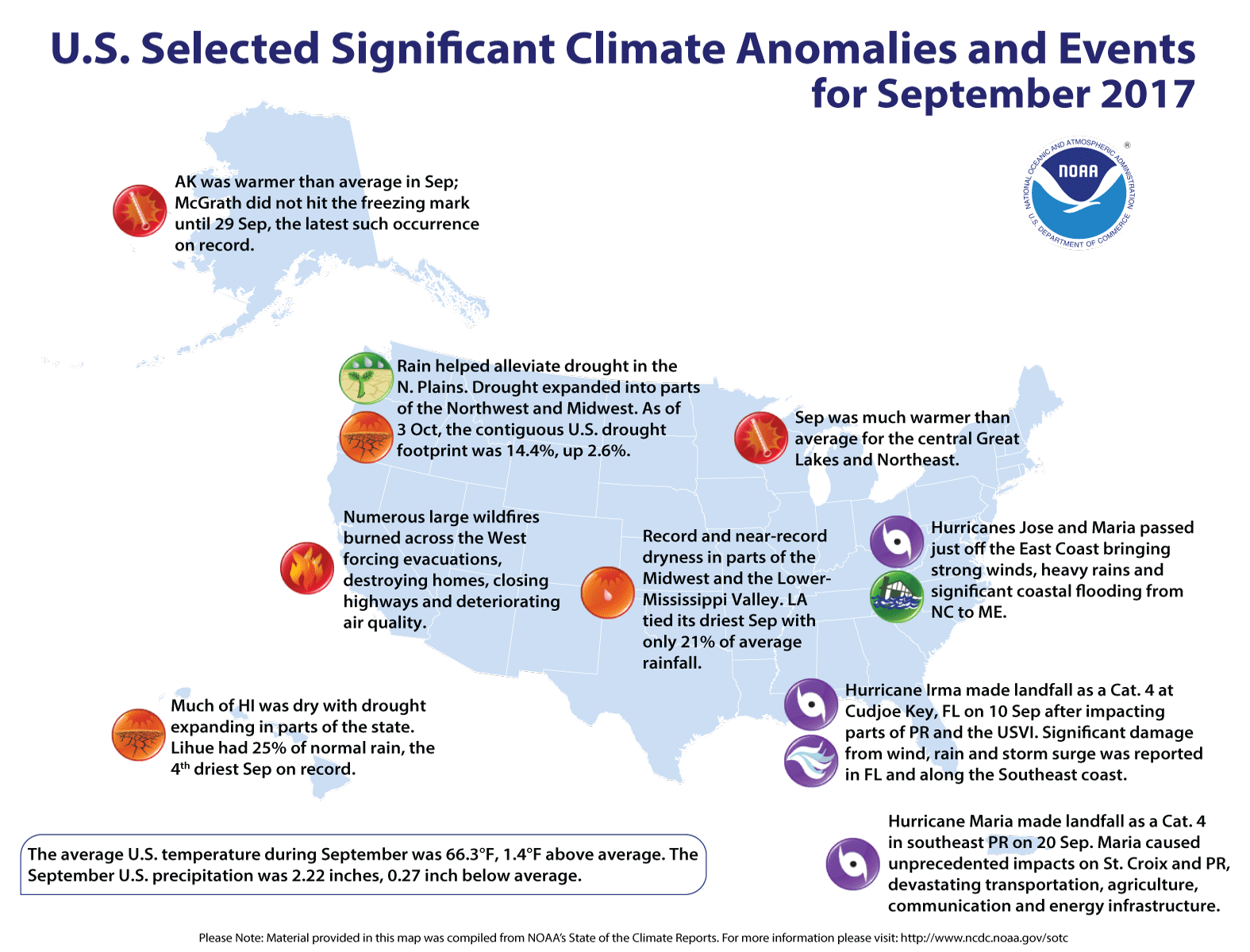
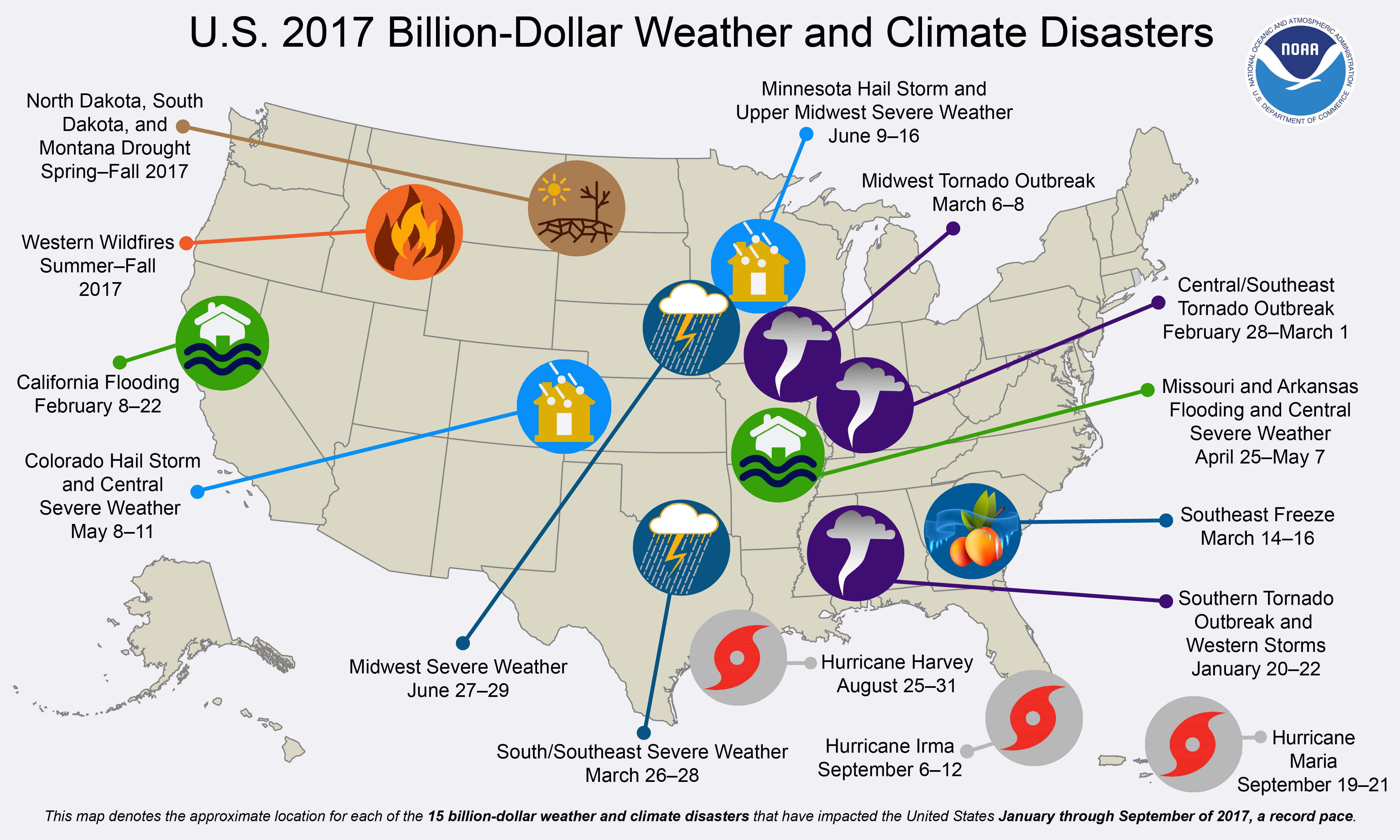
Since June 2017, six additional weather and climate events impacted the nation that had direct, total costs exceeding $1 billion. These new events included the western U.S. wildfires, the Northern Plains drought, a severe weather event in the Midwest, and major Hurricanes Harvey, Irma, and Maria. This brings the year-to-date total to 15 separate billion-dollar weather and climate disasters, tying 2011 for the record number of events during January–September. The record number of billion-dollar disasters for a calendar year is 16 events set in 2011. Cost estimates associated with the 2017 hurricanes will be available in January 2018.

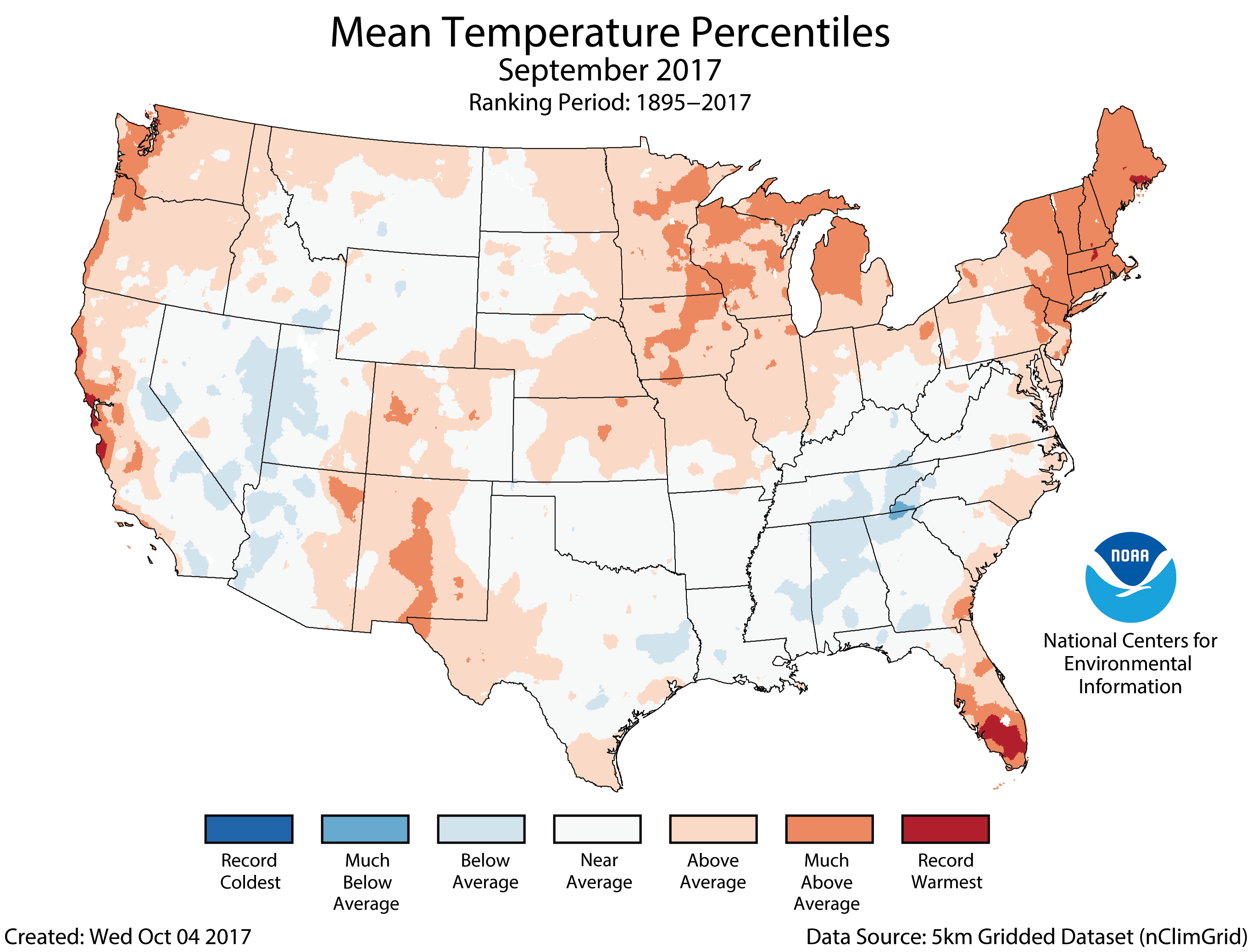
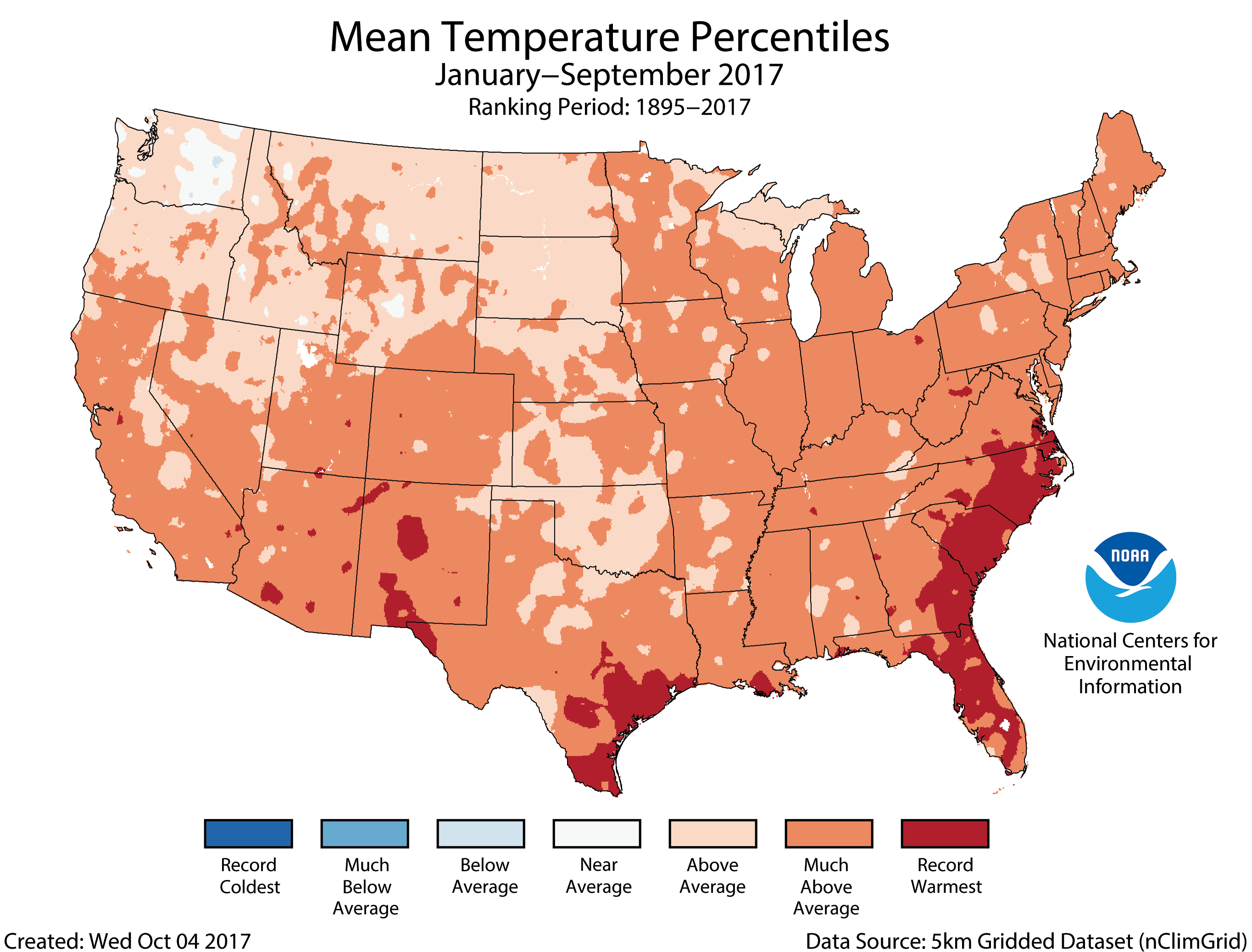
The September nationally averaged temperature was 66.3°F, 1.4°F above the 20th century average, and ranked among the warmest third of the historical record. Near-record warmth was observed in parts of the Great Lakes and Northeast. The year-to-date U.S. average temperature was the third warmest on record at 57.7°F, 2.7°F above average. Only January–September of 2012 and 2016 were warmer. Above-average temperatures spanned the nation for the first nine months of the year.

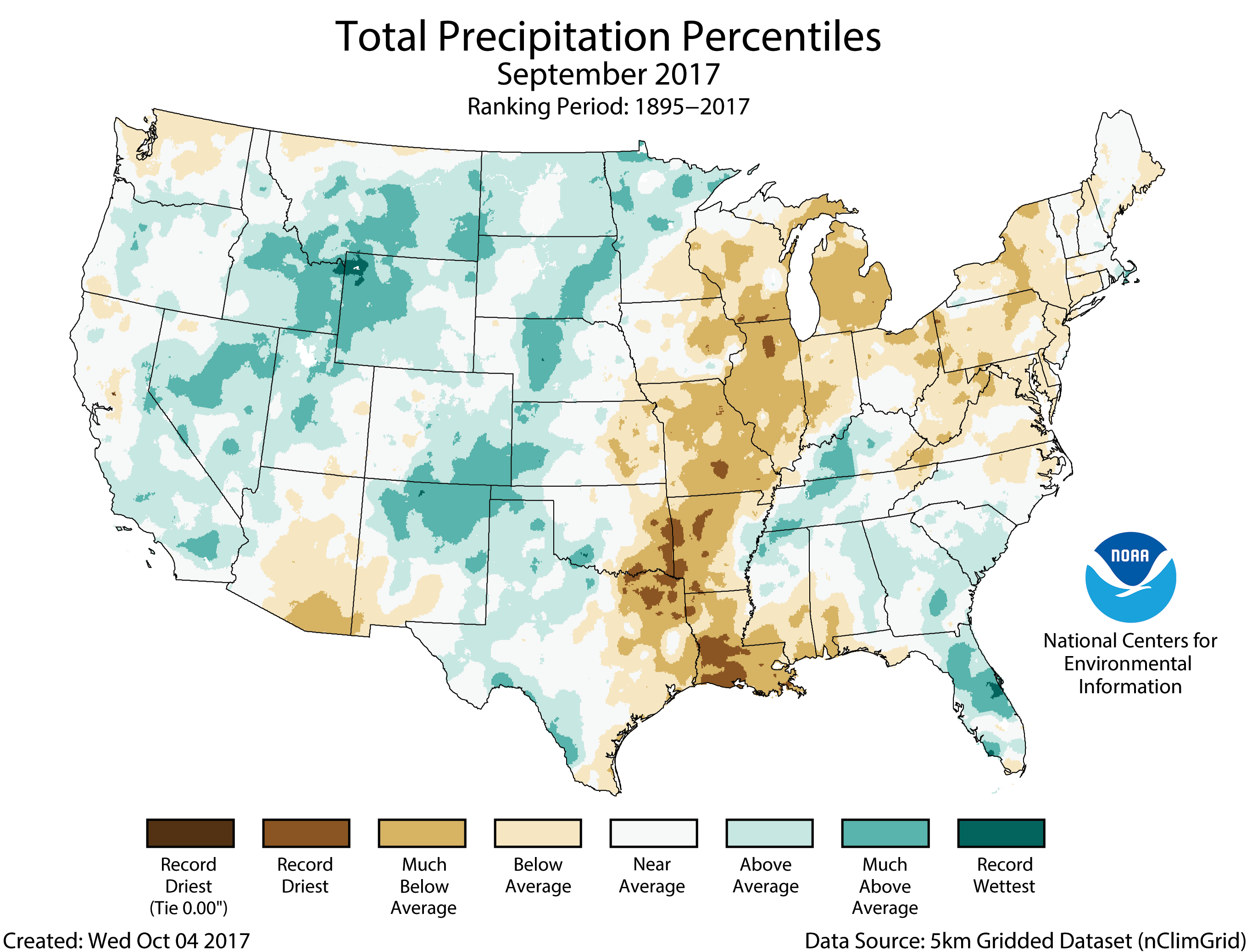
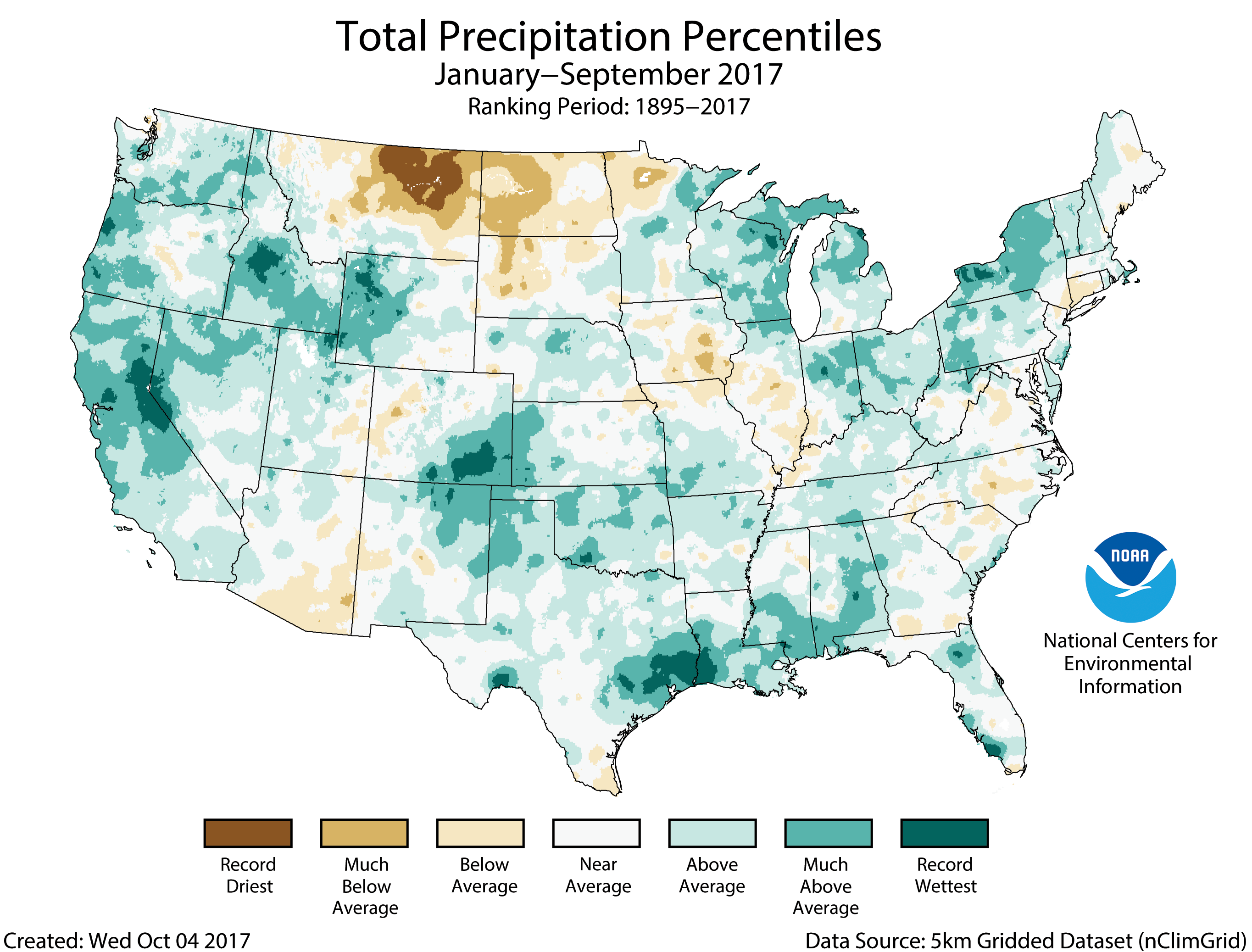
For September, the national precipitation total was 2.22 inches, 0.27 inch below average, and ranked among the driest third of the historical record. Much-below-average precipitation fell in the Lower and Mid-Mississippi Valley and the central Great Lakes with above-average precipitation for the Rockies, Northern Plains, and Southeast. The year-to-date U.S. precipitation total was 26.36, 3.16 inches above average. This was the wettest January–September on record, surpassing the previous record set in 1979.

See all September and year-to-date U.S. temperature and precipitation maps.

This monthly summary from NOAA’s National Centers for Environmental Information is part of the suite of climate information services NOAA provides to government, business, academia, and the public to support informed decision-making.

September Temperature

  • The temperature pattern across the contiguous U.S. shifted dramatically in mid-September. Early in the month, record and near-record warmth spanned the West with below-average conditions across the East. For the last two weeks of September, record or near-record warmth was observed in the East with below-average temperatures in the West. This pattern caused many states to have near- to above-average temperatures for September with much-above-average temperatures in the central Great Lakes and Northeast.
  • During September, the Alaska statewide average temperature was 42.8°F, 2.2°F above average. North-central and southeastern Alaska were much warmer than average. The temperature in McGrath did not drop below the freezing mark until September 29, the latest such occurrence on record. The previous record was September 25, set just last year.
  • September Precipitation

  • Below-average precipitation was observed for the mid- and lower-Mississippi Valley stretching into the Great Lakes and Northeast where five states were much drier than average. After having its second wettest August, Louisiana tied its driest September on record. The Louisiana statewide average precipitation total was 0.87 inch, 3.25 inches below average, tying 1953 as the driest on record.
  • Above-average precipitation was observed for a large area extending from the Great Basin, through the Rocky Mountains and into the Northern Plains. Parts of the Southeast were also wetter than average. Wyoming was the only much wetter than average state. Many mountain locations in the West received their first snow of the season.
  • According to the October 3 U.S. Drought Monitor report, 14.4 percent of the contiguous U.S. was in drought, up nearly 2.6 percent compared to the end of August. Drought improved across parts of the Northern to Central Plains. Drought conditions expanded and intensified in parts of the Northwest, Midwest, and Southern Plains. Outside of the contiguous U.S., drought conditions were alleviated in southern Alaska and southern Puerto Rico but expanded in parts of Hawaii.
  • September Extremes

  • September was an extremely active hurricane month for the North Atlantic Basin with five hurricanes – four of which were major hurricanes. One measure of tropical cyclone activity – the Accumulated Cyclone Energy (ACE) index, which takes into account the combined strength and duration of tropical cyclones – was record high in the North Atlantic during September. Hurricane Irma devastated parts of Puerto Rico, the U.S. Virgin Islands and Florida. Then Hurricane Maria delivered a second punch, causing unprecedented impacts on Puerto Rico and the U.S. Virgin Islands.
  • Year-to-Date Temperature

  • Every state across the contiguous U.S. had an above-average temperature for the first nine months of the year. Forty-one states, stretching from coast to coast, had much-above-average temperatures for January-September. Three states in the Southeast – Florida, North Carolina and South Carolina – were record warm.
  • Year-to-Date Precipitation

  • Most locations had wetter than average conditions during January-September. Much-above-average precipitation was observed across the West, and parts of the Southern Plains, central Gulf Coast, and Great Lakes. Eleven states were much wetter than average, while no state was record wet. Conversely, below-average precipitation was observed across the Northern Rockies and Northern Plains. No state was record dry.
  • Year-to-Date Extremes

  • The U.S. Climate Extremes Index (USCEI) for the year-to-date was the third highest value on record at over one and a half times the average. On the national scale, extremes in warm maximum and minimum temperatures, one-day precipitation totals and landfalling tropical cyclones contributed to the elevated USCEI. The USCEI is an index that tracks extremes (falling in the upper or lower 10 percent of the record) in temperature, precipitation, drought and landfalling tropical cyclones across the contiguous U.S.
  • High Plains Aquifer pumping is impacting surface water and native fish

    High Plains Aquifer via Colorado State University.

    From The Denver Post (Bruce Finley):

    The agricultural overpumping from thousands of wells continues despite decades of warnings from researchers that the aquifer — also known as the Ogallala, the world’s largest underground body of fresh water — is shrinking.

    Even if farmers radically reduced pumping, the latest research finds, the aquifer wouldn’t refill for centuries. Farmers say they cannot handle this on their own.

    But there is no agreement among the eight affected states (Colorado, Kansas, Nebraska, New Mexico, Texas, Oklahoma, Wyoming, South Dakota) to try to save the aquifer. And state rules allow total depletion.

    Republican River Basin by District

    In fact, Colorado officials faced with legal challenges from Kansas over dwindling surface water in the Republican River have found that their best option to comply with a 1942 compact is to take more water out of the aquifer. The state bought wells from farmers during the past decade and has been pumping out 11,500 acre-feet of water a year, enough to satisfy a small city, delivering it through a $60 million, 12-mile pipeline northeast of Wray to artificially resuscitate the river.

    The overpumping reflects a pattern, seen worldwide, where people with knowledge that they’re exceeding nature’s limits nevertheless cling to destructive practices that hasten an environmental backlash.

    The depletion of the High Plains Aquifer has been happening for decades, according to bulletins U.S. Geological Survey has put out since 1988. Colorado farmers this year pumped groundwater out of 4,000 wells, state records show, siphoning as much as 500 gallons a minute from each well to irrigate roughly 580,000 acres — mostly to grow corn, a water-intensive crop.

    The depth where groundwater can be tapped has fallen by as much as 100 feet in eastern Colorado, USGS data show. That means pump motors must work harder to pull up the same amount of water, using more energy — raising costs for farmers. The amount of water siphoned from the aquifer since 1950 to irrigate farm fields across the eight states tops 273 million acre-feet (89 trillion gallons) — about 70 percent of the water in Lake Erie.

    On one hand, the industrial center-pivot irrigation techniques perfected after World War II have brought consistency to farming by tapping the “sponge” of saturated sediment that links the aquifer to surface water in streams and rivers. America’s breadbasket produces $35 billion of crops a year. On the other hand, intense irrigation is breaking ecosystems apart.

    Overpumping has dried up 358 miles of surface rivers and streams across a 200-square-mile area covering eastern Colorado, western Kansas and Nebraska, according to U.S. Fish and Wildlife-backed researchers from Colorado State University and Kansas State University who published a peer-reviewed report in the Proceedings of the National Academy of Sciences. The researchers also determined that, if farmers keep pumping water at the current pace, another 177 miles of rivers and streams will be lost before 2060…

    Disappearing fish species — minnows, suckers, catfish that had evolved to endure periodic droughts — signal to biologists that ecological effects may be reaching a tipping point.

    The amount of water held in the aquifer under eastern Colorado decreased by 19.6 million acre-feet — 6.4 trillion gallons — from 1950 until 2015, USGS records show. That’s an average loss of 300,000 acre-feet a year. Between 2011 and 2015, records show, the water available under Colorado in the aquifer decreased by 3.2 million acre-feet — an annual average shrinkage of 800,000 acre-feet. Climate change factors, including rainfall, play into the rate of the drawdown…

    They say they’re trying. They’ve reduced the land irrigated in eastern Colorado by 30,000 acres since 2006. They plan to retire another 25,000 acres over the next decade, said Rod Lenz, president of the Republican River Water Conservation District, who for years has advocated use of technology to grow more crops with less water…

    Farmer and cattleman Robert Boyd, a leader of the Arikaree Groundwater Management District, said the federal government should intervene to ensure survival of High Plains agriculture…

    Kansas Aqueduct route via Circle of Blue

    He pointed to proposals to divert water from the Missouri River Basin and move it westward through pipelines across the Great Plains…

    But drawing down the aquifer does not violate any law in Colorado. The state engineer’s office monitors well levels and requires permits for wells, limiting the number of acres a farmer can irrigate. But there’s no hard limit on how much water can be pumped…

    [Mike] Sullivan and state engineer Kevin Rein emphasized that thousands of acres no longer are irrigated. “And there need to be some more retirements of land to get us into a more balanced situation,” Sullivan said.

    They defended Colorado’s practice of pumping more groundwater out of the aquifer, saying this is necessary to comply with the Republican River Compact. Disputes over river flows have risen as far as the U.S. Supreme Court and Colorado’s legal obligations to deliver water to Nebraska and Kansas are clear.

    Ultrasonic range finder deployed on Cache la Poudre river to measure streamflow

    Photo credit Iowa Flood Center.

    From the Iowa Flood Center at the University of Iowa:

    Stream Stage Sensors

    Design

    The sensors were developed as a student project to design an affordable, yet effective way to measure stream and river heights. The sensors are solar powered and attached to the side of bridges. A sonar signal is used to measure the distance from the water surface to the sensor and data is transmitted via a cell modem to IFIS where the data is publicly available.

    From The Fort Collins Coloradoan (Kevin Duggan):

    As Thursday morning’s fog and autumn chill gave way to sunlight and intensely blue skies, Dan Ceynar of the Iowa Flood Center toiled to install a sensor on a pedestrian bridge over the Poudre River near Bellvue.

    The sensor is different than conventional gauges along the river that rely on hydraulics to measure the height and flow of the water. This self-contained device uses a sound pulse to measure the distance between the water surface and the bridge.

    “It’s basically an ultrasonic range finder,” he said. “We have it pointed at the water level, so what gets reported back is the elevation of the water above sea level. It’s an automated stage gauge.”

    Measurements are taken every 15 minutes, day and night. The sensor is powered by a battery charged by a solar panel. It transmits signals using a cellular connection.

    Ceynar is a project engineer with the Iowa Flood Center, or IFC, based at the University of Iowa…

    About 250 ultrasonic sensors have been installed in Iowa, which Ceynar described as river-rich and flood-prone. The Bellvue monitor is the second to be placed outside the state…

    Riverside has modeled maps along that stretch of the river that show where water would go in a flood event, said Sean McFeely, product manager for the company.

    Data from the sensor will be used to refine the inundation maps. Coordinating data from the sensor with inundation mapping could have far-reaching ramifications, McFeely said. Project partners included Colorado State University and the University of Kansas.

    At roughly $5,000 a piece, the ultrasonic sensor is significantly less expensive to build and maintain than hydraulic gauges, which require time-consuming calibrations to ensure their accuracy.

    Climate Change is Water Change: October 18 (Denver)

    Scroll down to read the latest posts from Coyote Gulch.

    Please consider attending my presentation, “Climate Change is Water Change,” October 18th in Denver. I will address the 3 questions of the climate crisis: Should we act; Can we act; and, Will we act?

    October 18, 2017: Smiley Branch Library, 4501 W 46th Ave, Denver, CO 80212, 6:00 – 7:00 PM:

    Facebook event

    City of Greeley 2018 budget

    Greeley in 1870 via Denver Public Library http://photoswest.org/cgi-bin/imager?10009071+X-9071

    From The Greeley Tribune (Tyler Silvy):

    The council will officially vote on the $367 million budget Oct. 17…

    The city has a variety of construction projects on the horizon for 2018, but none are more costly than those projects related to water.

    Greeley’s portion of a new reservoir will cost $38.2 million, and the city will spend $44.4 million to renovate the Bellvue Water Treatment Plant near the mouth of the Poudre Canyon. Bellvue has been in operation one way or another for more than 100 years.

    Water-related projects often are paid for through municipal bonds, and the city’s water department is allowed to take on the debt without a vote of the residents because it is an enterprise fund and can charge more for services to pay down the debt.

    Aspen November ballot: Woody Creek parcel purchase for potential reservoir

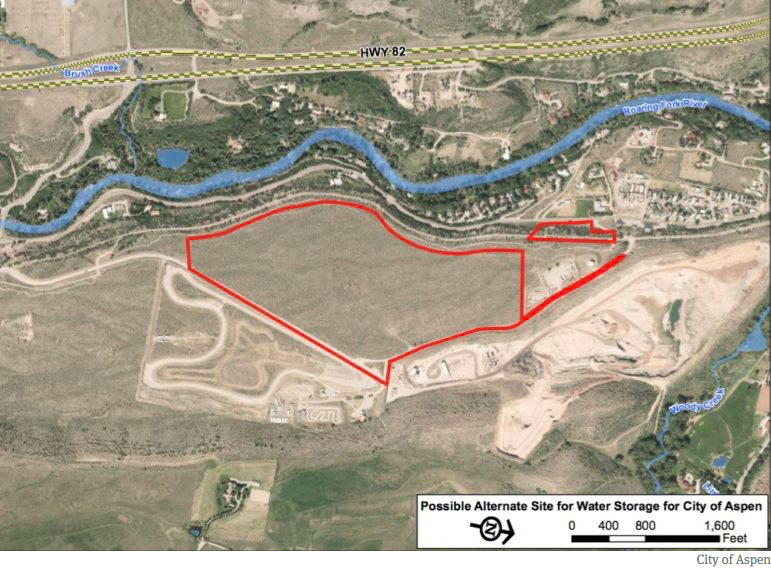
    A map provided by the city of Aspen showing the two parcels in Woody Creek it has under contract. The city is investigating the possibility of building a reservoir on the site, as well as looking at the possibility of a reservoir in the neighboring Elam gravel pit.

    From Aspen Public Radio (Elizabeth Stewart-Severy):

    This fall, voters in Aspen will decide if they’ll approve $3 million in bonds to purchase land in Woody Creek. City Council intends to buy the land regardless of the outcome of the vote.

    The property has been identified as a potential spot for a reservoir. The City of Aspen hopes to move its conditional water rights from Castle and Maroon creeks to this location. City staff has been looking for alternatives to using those rights, which are for water storage in two pristine valleys, and said a reservoir in Woody Creek, near the gravel pit, is the best option.

    At a meeting Tuesday, council member Ann Mullins said the city has done its due diligence and should find another financing option if the bond measure does not pass.

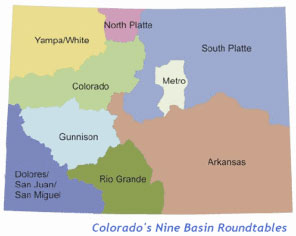
    Yampa-White-Green Rivers Basin Round Table seeks to fill 10 vacancies on board in November

    Basin roundtable boundaries

    From The Rio Blanco Times (Jennifer Hill):

    The Yampa-White-Green Rivers Basin Round Table is a group of 32 stakeholders from Routt, Moffat and Rio Blanco counties who work on local water issues. Established in 2005 when the Colorado General Assembly passed the Colorado Water Act for the 21st Century and officially beginning 2010 by order of the governor, the Round Table often uses studies, system modeling and projects with the goal of preserving the quantity and quality of water. Their goals include protecting the Y-W-G Basin from the Colorado River Compact curtailment of existing decreed water uses and some increment of future uses, protect and encourage agricultural uses of water in the Y-W-G Basin within the context of private property rights, improve agricultural water supplies to increase irrigated land and reduce shortages, identify and address municipal and industrial water shortages, quantify and protect non-consumptive water uses, maintain and consider the existing natural range of water quality that is necessary for current and anticipated water uses. They also seek to restore, maintain, and modernize water storage and distribution infrastructure while developing an integrated system of water use, storage, administration and delivery to reduce water shortages and meet environmental and recreational needs.

    In November the Round Table will need to fill 10 vacancies on their board. Areas that will be open for re-election or new appointments include representatives for recreation, domestic water provider and industrial water user, as well as four at-large representatives plus three individuals or entities who reside outside the basin but own water rights within the basin. Eligibility requirements vary between the positions. Those interested in serving or seeking more information should contact April McIntyre, Round Table Administrative Assistant at 970-985-9924 or mcintyreapril6@gmail.com.

    Those who are interested in protecting and directing the future of the Yampa, White and Green River Basins are encouraged to get involved. Changing population distributions and water demands across the west will only serve to raise the level of importance these rivers play making groups like the Round Table ever more vital.

    “Business of Water Tour” recap (@WaterCenterCMU)

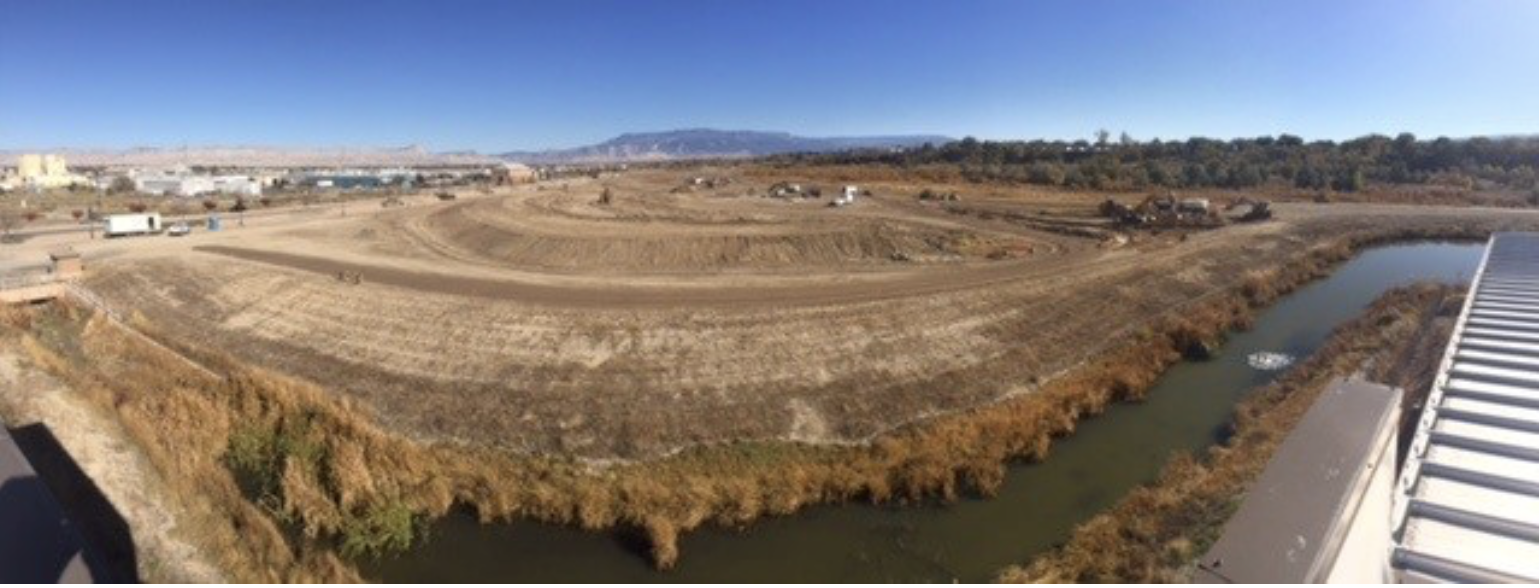
    Las Colonias Park phase 1 construction. Photo credit City of Grand Junction.

    From The Grand Junction Daily Sentinel (Erin McIntyre):

    The Colorado River Business Tour, organized by the Hutchins Water Center at Colorado Mesa University and Business for Water Stewardship, attracted about 20 attendees who examined different economic aspects of the river, including tours through peach orchards and irrigation facilities. Participants discussed everything from agriculture to tamarisk and endangered species.

    At the Las Colonias site, Grand Junction city Engineering Manager Trent Prall told the group the city is working with project partners to start construction in the first quarter of 2018, and that the parcels north of the Riverfront Trail have been permitted for construction. He said details involving a boat ramp are being worked out with the U.S. Army Corps of Engineers and the U.S. Fish and Wildlife Service.

    Bonsai Design CEO Thaddeus Shrader told the group there is one other business owner committed to the project, someone who wants to operate a tap room adjacent to the river, though he declined to provide details. He indicated there is room for one major retail tenant in the development, in addition to the smaller business spaces, and said his company remains the cornerstone tenant in the business park.

    Shrader told the group there are a few companies that seem interested in relocating to the business park once it has been built and that proponents are working on several upcoming milestones for the development, one of which is forming a development corporation to handle the leasing for the property…

    The Grand Junction Economic Partnership built a website, riverfrontcolorado.com, which invites companies to join the development. Shrader said he and other proponents of the project have been passing out promotional materials to potential tenants as well, including attendees of the Colorado Outdoor Industry Leadership Summit’s inaugural summit in Grand Junction last week.

    #ColoradoRiver: 2017 Water Economy Tour of the Grand Valley recap #COriver

    Colorado Drought Monitor October 3, 2017.

    From WesternSlopeNow.com (Tyler Young):

    Craig Mackey, Policy Director of the Business for Water Stewardship, “The goal of this tour today was to get business people from the Grand Valley out looking at water, water systems and how Colorado water applies to the broad economy here in the Grand Valley…

    We have quite a bit of water in Colorado now, but that’s not true about the Colorado River Basin, which means the community needs to come together to figure out a solution.

    #Snowpack news: Should be a beautiful October snowstorm #COwx

    From The North Forty News:

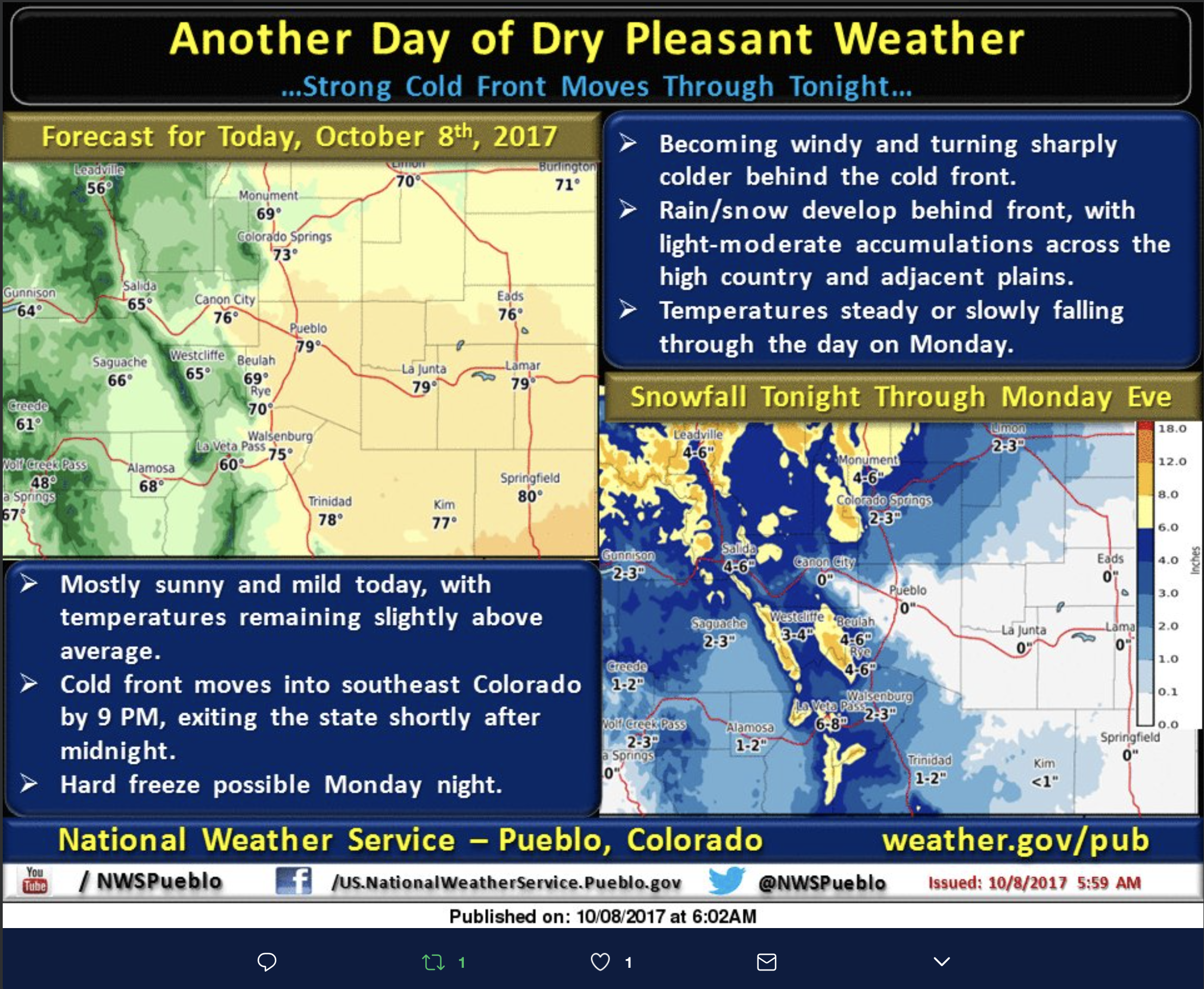
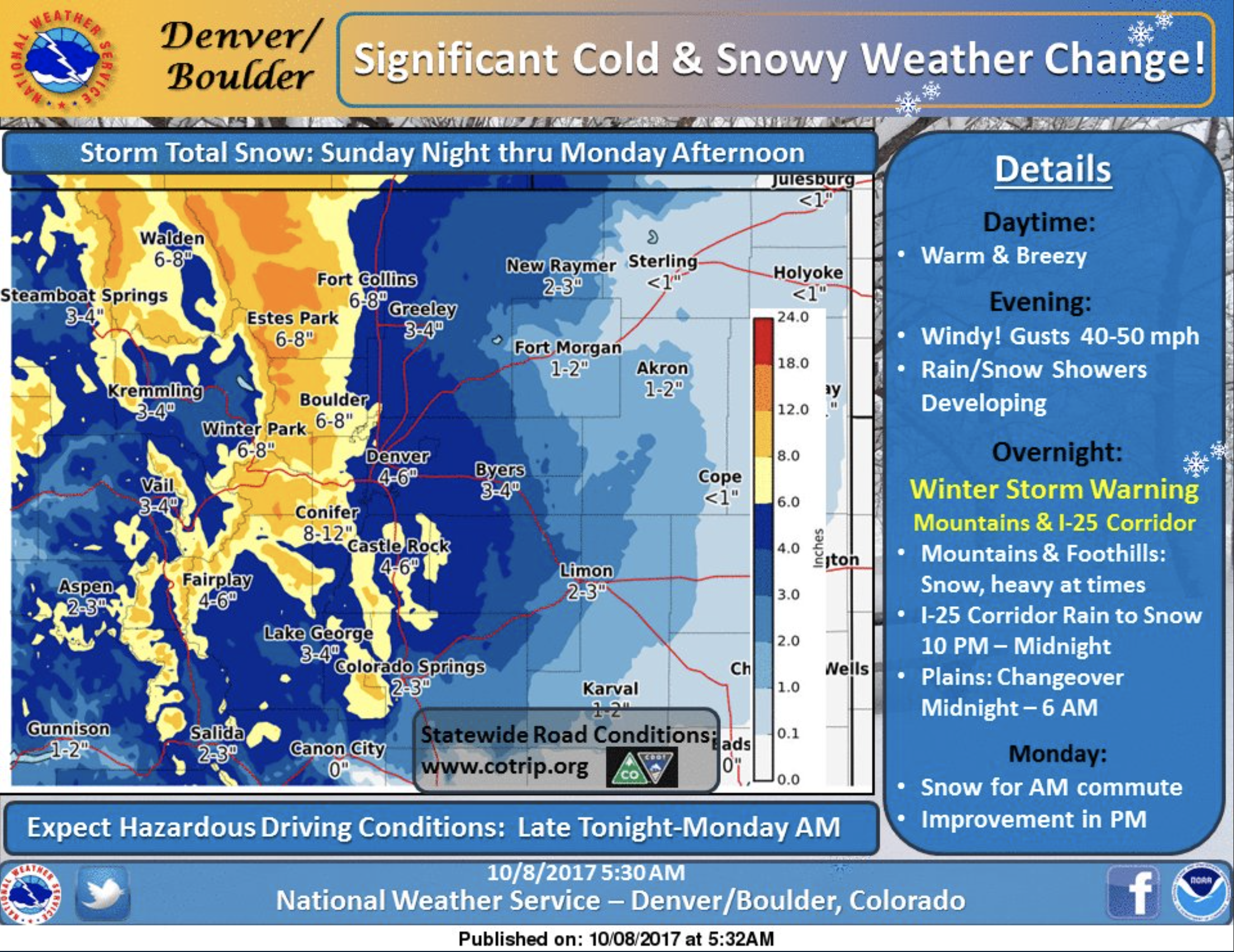
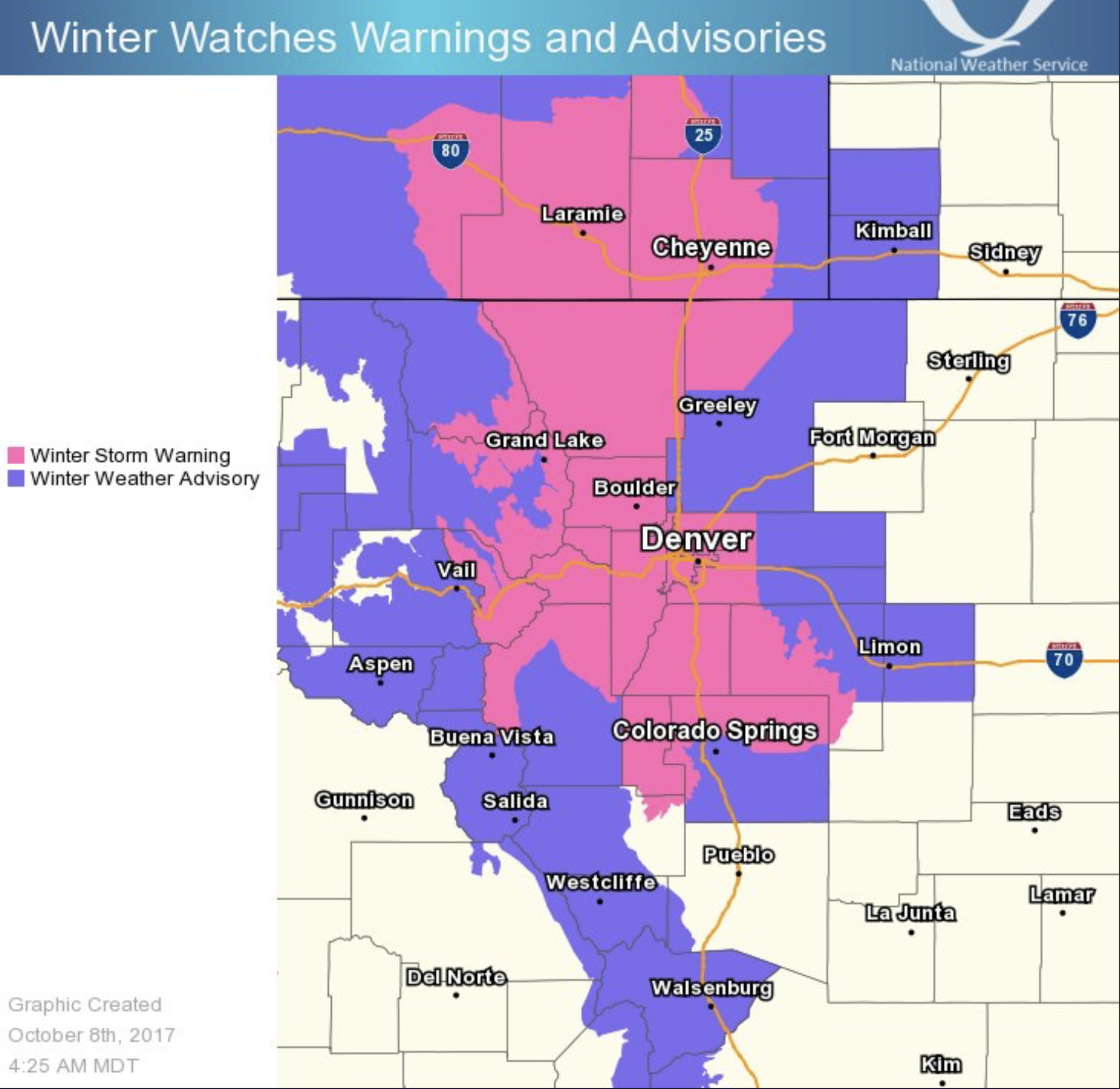
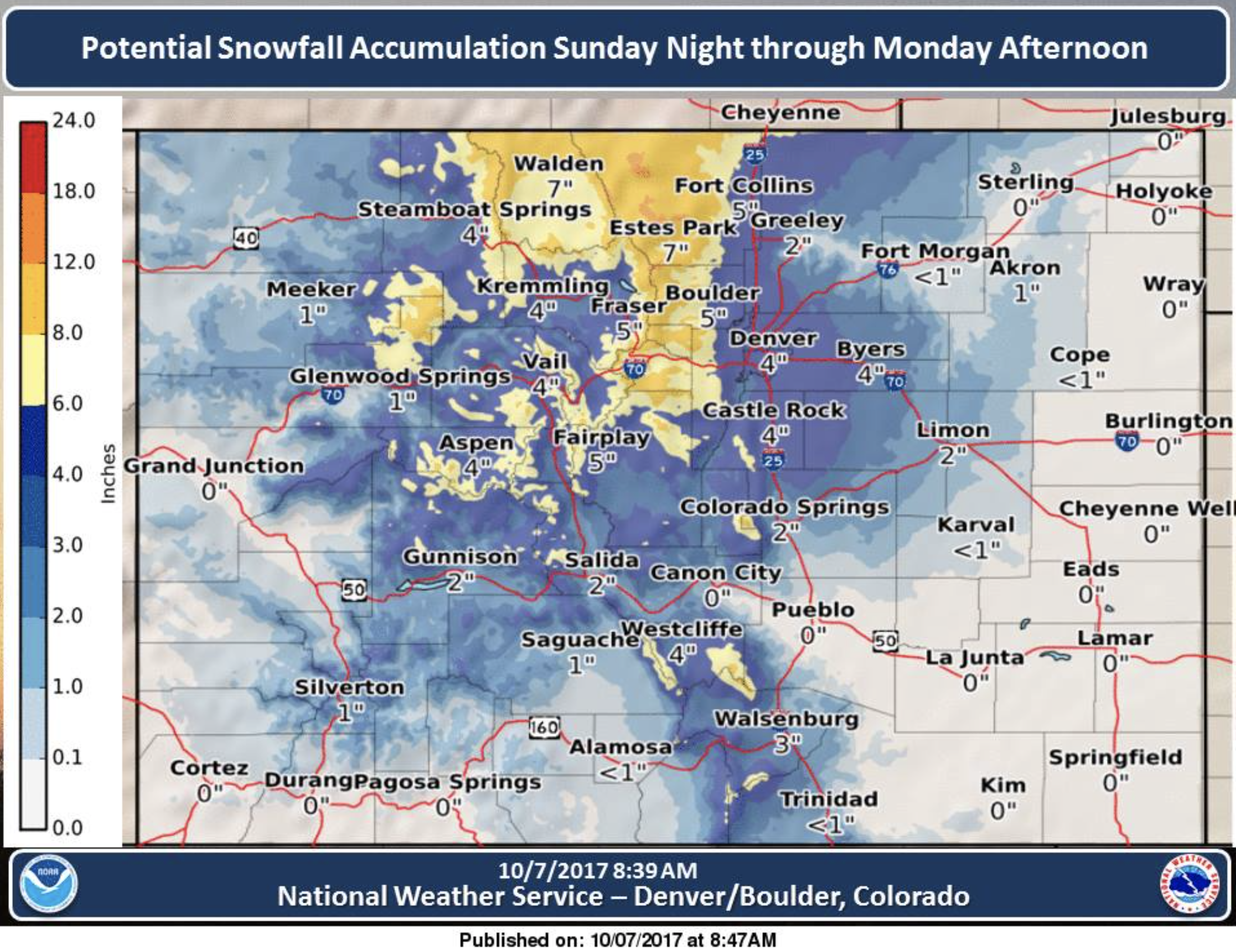
    The National Weather Service has issued a winter storm WARNING for areas in Northern Colorado. Accumulations of 3-5 inches along the I25 corridor are expected to start this evening and continue into early Monday morning…

    A strong cold front and upper level storm system will move into the area this evening. Temperatures will drop rapidly with the passage of the cold front. Snow will develop over the mountains and higher foothills, with rain developing and spreading south during the evening in lower elevations. Temperatures will turn cold enough for rain to change over to snow across most of the I-25 Corridor towards the midnight hour and then across the eastern plains late Sunday night into early Monday morning…

    * WHAT: Heavy snow expected. Some secondary roads and bridges and overpasses may become snow or slush covered. Plan on slow and hazardous travel conditions, including during the morning commute on Monday. Total snow accumulations of 4 to 7 inches are expected, heaviest amounts near the foothills.

    * WHERE: Fort Collins, Boulder, Denver and Castle Rock.

    * WHEN: Midnight to 3 PM Monday.

    * ADDITIONAL DETAILS: Scattered power outages may occur due to heavy wet snow accumulating on trees still bearing their leaves.

    @PalmerLandTrust awards ceremony and farm-to-table dinner recap

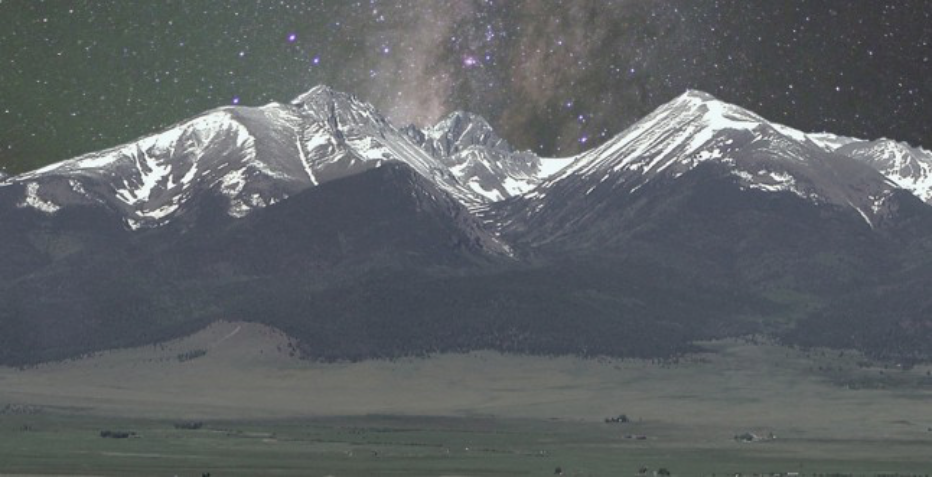
    Photos by Allen Tian, The Colorado Independent, and courtesy of Dark Skies Inc of the Wet Mountain Valley.

    From the Palmer Land Trust via The Wet Mountain Tribune:

    The Palmer Land Trust in Colorado Springs has announced the names of the three award winners, and a prestigious honorary recognition, for the 2017 Southern Colorado Conservation Awards (SCCA). Among the winners were Valley ranchers Randy and Claricy Rusk. The event recognizes individuals and organizations that are dedicated to stewardship, education and innovation in conservation impacting southern Colorado. The winners were honored at The Antlers Hotel in Colorado Springs on Wednesday, September 27, with an awards ceremony and farm-to-table dinner.

    “SCCA showcases the exemplary conservation work being done in southern Colorado. This year’s slate of award winners highlights inspiring stories from an incredibly diverse range of people and projects, including ranching in Westcliffe, recreation in Canon City, and water and land conservation on a statewide scale. We are excited to tell these stories at what has become the premiere conservation event in southern Colorado,” said Rebecca Jewett, Executive Director of Palmer.

    Award winners were nominated by the community at large and underwent a rigorous selection process by a Blue Ribbon Panel. The Stuart P. Dodge Award honors a lifetime achievement in conservation.

    The winners, Randy and Claricy Rusk of rural Westcliffe, are conservation pioneers. Their vision, leadership, and influence within the ranching community has largely been credited for the conservation success achieved in the Wet Mountain Valley and beyond over the last two-and-a-half decades. Working alongside The Trust for Public Land, San Isabel Land Protection Trust, and the Colorado Cattlemen’s Agricultural Land Trust, the Rusks have inspired their community to band together to conserve the rich ranching and open space heritage that has long defined the Wet Mountain Valley.

    The Environmental Stewardship Award recognizes an individual or organization that has positively impacted the land and the way members of our communities understand and respect their relationship to it.

    This year’s winner is Kalem Lenard of Canon City. Since 2012, Lenard has improved more than 17 miles of trails enjoyed by hundreds of bikers, hikers, trail runners, and horsemen every year. Without Lenard’s vision, passion, and expertise, the Oil Well Flats trail system might never have come to fruition.

    The Innovation in Conservation Award honors an individual, group, project, or program that has advanced the cause of conservation by developing new conservation models, creating new conservation funding mechanisms, or implementing unique partnerships that protect our natural heritage. The winner this year was the Colorado Water Trust.

    The Colorado Water Trust was formed in 2001 to partner with Colorado’s Instream Flow Program and amplify its work by supporting and promoting voluntary, market-based efforts to protect and restore Colorado’s streamflows. Today, the Colorado Water Trust is the only nonprofit organization solely dedicated to restoring flows on Colorado’s rivers using market based transactions. The Water Trust has revealed water-sharing possibilities that have never been done before, helping meet the needs of agricultural partners while providing water for rivers.

    Also honored was Great Outdoors Colorado (GOCO) with the Distinction in Conservation award, a prestigious discretionary award recognizing catalytic excellence and influence in conservation in southern Colorado. Since its inception in 1992, GOCO has committed more than $917 million in state lottery proceeds to more than 4,800 projects in all 64 counties in Colorado without any tax dollar support. Through their efforts they have helped protect more than one million acres of land.

    More science needed to assess the safe treatment of oil and gas operations produced water #KeepItInTheGround

    Oil and gas evaporation pond

    From The Greeley Tribune (Nikki Work):

    The U.S. produces about 900 billion gallons of wastewater per year from oil and gas development, such as hydraulic fracturing. Some of the reuses proposed for this water include irrigation or discharging into surface water, but the chemical content and potential health implications of this water are still largely question marks to the scientific community. Currently, this wastewater is disposed of, either through evaporation, into pits or through underground injection.

    But according to recent research out of the Colorado School of Mines in Golden, the question at this point isn’t even about what is in the water or if it is safe. It’s about coming up with the methods necessary for science to even tackle those questions.

    Karl Oetjen, Mines doctoral candidate and one of the lead authors on the paper, published in August in “Trends in Environmental Analytical Chemistry,” said there’s no adequate way to measure the chemical makeup of the wastewater from hydraulic fracturing. All of the current methods used to test the quality of water — such as surface water, ground water and even wastewater from other sources — don’t take into account the high saline content of the water or the numerous chemicals in it. These methods weren’t intended to test water so complex, he said. And since there’s a high level of variability in the water resurfacing from each well, it’s difficult for researchers to even pinpoint what they should be testing.

    “If you’re worried about introducing this water to places where it could interact with the environment or human health, it’s impossible to say if it’s dangerous or not dangerous because we simply don’t know,” Oetjen said.

    He describes the process of looking for certain contaminants in surface water as looking for a needle in a haystack. But when you’re looking for contaminants in oil and gas wastewater, you’re looking for a needle somewhere in a million haystacks.

    Eagle: Officials meet to discuss need, financing for new water treatment plant

    Eagle circa 2010

    From The Vail Daily (Pam Boyd):

    Interim Town Manager Tom Boni launched the discussion by noting the proposed Lower Basin Water Treatment Plant, which would be built upstream from the existing Eagle Wastewater Treatment Plant, is the town board’s top priority.

    “How do we supply reliable water to the town of Eagle now and into the future?” Boni said.

    Boni said discussions about the plan construction actually began 10 years ago, when the town realized it was approaching capacity at its existing 4.3 million-gallons-per-day water plant during the summer months when residents water their lawns and landscaping. Usage during the summer brings the plant operations to 80 percent of capacity.

    WHAT ABOUT CONSERVATION?

    Chris Lehrman, consulting engineer with SGM of Glenwood Springs, has been working with the town on the plant project. He noted the new facility has been planned so that it can expand to treat as much as 5 million gallons per day, but the initial operation would be at the 2.5 million-gallon-per-day level.

    “One of the comments we had seen over the past few months is, ‘Can we put off this new plant with conservation?'” Lehrman said.

    He said the short answer is no.

    Lehrman explained that Eagle already has engaged a number of conservation efforts, including improvements to its water-delivery system to prevent leaks and institution of summertime watering restrictions. But he said Eagle cannot solve its long-term water needs through conservation alone.

    While the capacity issue is one of the driving needs for the new plant, according to Lehrman, the town’s system also lacks redundancy — the ability to find alternate ways to deliver water in the event of a break in one part of the delivery system. Part of the new plant design would address that issue.

    As for the location of the plant, Eagle doesn’t have the water rights it would need to expand the existing water plan located up the Brush Creek Valley.

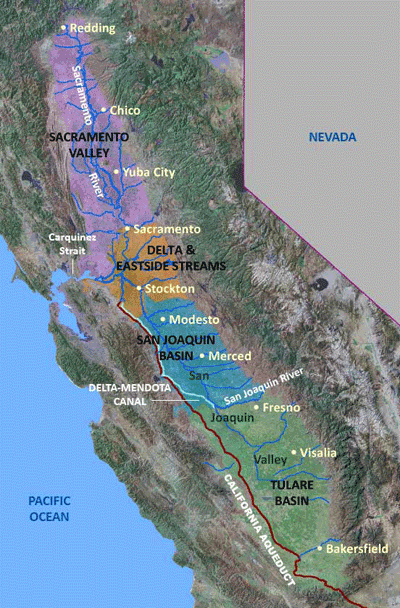
    Study: Dry #groundwater wells in the western United States — @IOPscience #CA

    California Central Valley graphic credit USGS.

    Click here to read the paper. Here’s the abstract (D Perrone1 and S Jasechko):

    Declining groundwater levels are common in parts of the western US, but their impact on the ability of wells to pump groundwater is not known. Here we collate groundwater well records for the western United States and present the recorded locations, depths, and purposes of more than two million groundwater wells constructed between 1950 and 2015. We then use the well records to estimate the percentage of wells that were dry during the years 2013–2015. During the two year period, dry wells were concentrated in rural areas with high agricultural productivity, such as parts of the California Central Valley and the High Plains. Our results support anecdotal evidence that wells used for domestic purposes are more susceptible to drying than wells used for agricultural purposes throughout California’s Central Valley because the former tend to be shallower. However, this is not the case in all regions. Our findings suggest that declining groundwater levels are threatening drinking water reliability and agricultural productivity, and consequently, have key implications for both domestic and agricultural water security. Ongoing reductions to groundwater storage are drying groundwater wells in the western US, and this manifestation of water scarcity warrants innovative groundwater management transcending status quos.

    @SenBennetCO Leads Effort to Standardize the Cost of Climate Pollution #ActOnClimate

    Rush hour on Interstate 25 near Alameda. Screen shot The Denver Post March 9, 2017.

    Here’s the release from Senator Bennet’s office:

    Colorado U.S. Senator Michael Bennet today led 11 colleagues in introducing the Pollution Transparency Act to standardize the metric used by federal agencies to measure the cost of climate pollution. This counters a directive from the Trump administration to agencies to ignore existing metrics-uprooting years of progress and economic certainty-and an attempt made yesterday by Interior Secretary Ryan Zinke in the revised BLM methane rule to change his department’s metric without any prior consultation or transparency.

    Cosponsors of the Pollution Transparency Act include Senators Dianne Feinstein (D-CA), Kamala Harris (D-CA), Ron Wyden (D-OR), Sheldon Whitehouse (D-RI), Maggie Hassan (D-NH), Ben Cardin (D-MD), Jeff Merkley (D-OR), Patty Murray (D-WA), Chris Van Hollen (D-MD), Elizabeth Warren (D-MA), and Martin Heinrich (D-NM).

    “We cannot stand by idly as the Trump administration blatantly disregards broad scientific consensus and economics,” Bennet said. “This irresponsible ploy to upend years of progress is playing fast and loose with the health of our nation’s children. Although we cannot avoid all of the effects of climate change, we can create market certainty about how much those effects harm our children and our economy. This legislation would ensure the federal government runs a transparent process-grounded in science, with public and industry input-to quantify those effects.”

    A companion bill was introduced in the U.S. House of Representatives by Congressman Donald McEachin (D-VA-4).

    “The next generation will have a better opportunity for a healthy economic and environmental future with the implementation of this bill,” McEachin said. “There are clear and undeniable costs of climate change and greenhouse gas emissions in our economy: the cost of poor air quality in our neighborhoods, the loss of a day’s work when taking an asthmatic child to the doctor, droughts, hurricanes, wildfires, and sea-level rise – we have had enough. We need to ensure that the federal government is accurate and consistent in calculating the price of greenhouse gases when issuing regulatory and substantial procurement decisions. We can best address the root-cause of climate change by taking an intellectually honest and evidence-based approach to quantify its impact. This method will allow us to build a more resilient infrastructure and leave a better Earth for our children and our children’s children.”

    Background on the Pollution Transparency Act:

    Since the George W. Bush administration, the federal government has been required to consider the economic damages that result from climate pollution in the rulemaking process. This metric was developed through a rigorous process, using the best available economics and science and revised when necessary. In March, the Trump administration directed federal agencies to ignore the existing metric and instead select their own metrics-uprooting years of progress and economic certainty.

    The Pollution Transparency Act would codify a scientifically-developed value for the cost of climate pollution across all federal agencies. The requirement to consider this cost already exists; this legislation would simply streamline the regulatory process by standardizing the metric and re-establishing a process to revise it through a public process. Ultimately, it would create greater market and regulatory certainty by ensuring federal decisions are transparent, standardized, and grounded in facts.

    A Fact Sheet can be found HERE. A copy of the bill text can be found HERE.

    Statements in support of the legislation:

    “Quantifying the true cost of GHGs helps tell the full story so that we can make more informed policy decisions. This bill move us in an appropriate direction so that we can better review how GHGs impact Colorado communities.” – Larry Wolk, Director of the Colorado Department of Public Health and the Environment

    “I applaud Senator Bennet’s leadership in bringing forward the Pollution Transparency Act to ensure full and accurate consideration of the cost of carbon pollution in decision-making. Ignoring proven science and clear economic risk will not make climate change disappear. Only consistent and transparent accounting for the impacts of climate change can prevent waste of taxpayer funds on subsidies for shaky infrastructure and obsolete technologies.” – Mary D. Nichols, Chair of the California Air Resources Board (Full letter of support can be found HERE)

    “The social cost of carbon is a linchpin of national climate policy, providing a guidepost to balance the costs of climate change to our economy today with the damages that have started to arrive and are projected to grow. This bill ensures that this critical guidepost continues to be robust and grounded in the latest available science and economics, while providing certainty to businesses eager to have a consistent regulatory process.” – Michael Greenstone, Milton Friedman Professor in Economics, the College and the Harris School and Director of the Energy Policy Institute at the University of Chicago

    “It is critically important for policymakers to account for the economic costs of greenhouse gas emissions in their policy decisions. These costs should be quantified using the best available science and economics, in order to inform decisions that affect public wellbeing.” – Richard Revesz, Lawrence King Professor of Law and Dean Emeritus and Director of the Institute of Policy Integrity at NYU School of Law

    “Proper evaluation of the benefits and costs of regulations that affect emissions of greenhouse gases requires that the federal government use the best available estimate of the damages that such emissions cause. This bill would guarantee that this happens. It is consistent with a recent report issued by the National Academies of Sciences, Engineering and Medicine. We, the undersigned, strongly support the Pollution Transparency Act.”

    – Maureen L. Cropper, Distinguished University Professor of Economics, University of Maryland
    – Robert Litterman, Former Head of Risk Management, Goldman Sachs
    – William Pizer, Susan B. King Professor, Sanford School of Public Policy, Duke University
    – Richard Schmalensee, Professor of Management and Economics, Emeritus, MIT, Member of the Council of Economic Advisers from 1989-1991
    – Glen Hubbard, Dean of Columbia School of Business, Chairman of the Council of Economic Advisors under President George W. Bush

    From Denver to Australia: The art of sensing leaks underground – News on TAP

    Aussies welcome dogs to leak detection team; Denver Water relies on super-human hearing to find hidden problems.

    Source: From Denver to Australia: The art of sensing leaks underground – News on TAP

    The @COWaterTrust scores the Innovation in Conservation Award from @PalmerLandTrust

    Click here to read the announcement from the Colorado Water Trust:

    Last week, we were honored to receive the Innovation in Conservation Award at the 2017 Southern Colorado Conservation Awards celebration from Palmer Land Trust. It was wonderful to be recognized with other outstanding leaders in the conservation world. What a proud moment!

    I was part of a table top exercise one time at the CWCB Drought Conference in 2012. Amy and I were assigned to the same team and charged with solving a drought crisis in a river basin with cities, farmers, and the prior appropriation doctrine. Our group was the only one that carved out environmental flows as part of our solution. That’s Amy for you.

    @ColoradoStateU: Stories of Water Equity & Environmental Justice Symposium, October 18

    Click here for all the inside skinny and to register:

    DESCRIPTION

    You are invited to participate in a day of stories and dialogue with authors, academics, and citizens about their experiences with the privatization of water, water as a human right, and access to safe water and sanitation for everyone.

    HIGHLIGHTS INCLUDE:

    8:00 am Registration & Coffee

    Morning Sessions: Water Utilities & Communities – Flint, MI Water Crisis

    12:00 pm Keynote Luncheon

    The Dakota Access Pipeline Conflict

    David Archambault II

    Chairman, Standing Rock Indian Reservation

    Afternoon Sessions: Hazards, Natural Disasters & Underrepresented Communities

    5:30 pm Reception

    The full agenda is avilable online at http://watercenter.colostate.edu/watersymposium.shtml

    There is no charge and the campus and local communities are invited to attend, though space is limited so registration is required.
    This event is co-hosted by the CSU Water Center, the Environmental Justice Working Group sponsored through SoGES, and the Colorado Water Institute. Email csuwatercenter@gmail.com with questions and/or dietary restrictions. We look forward to seeing you there!

    @COParksWildlife opens new State Wildlife Area east of Montrose

    Joel Evans, an outdoor writer and angler from Montrose, holds the first tiger trout caught at the new Cerro Summit State Wildlife Area located east of Montrose. He caught the fish on Sept. 29. Fishing at the area is catch-and-release only. Photo credit Colorado Parks & Wildlife

    Here’s the release from Colorado Parks & Wildlife (Joe Lewandowski):

    An innovative project developed cooperatively by Colorado Parks and Wildlife and the city of Montrose has resulted in the establishment of a new state wildlife area for CPW and a new park for the city

    The Cerro Summit State Wildlife Area, a 162-acre parcel that includes a 40-acre reservoir, opened on Sept. 29. It’s located about 15 miles east of Montrose just off U.S. Highway 50.

    “This is a win-win-win for the public, the city and CPW,” said Renzo DelPiccolo, area wildlife manager in Montrose. “This is a great example of what can be done by some out-of-the-box thinking.”

    CPW operated Chipeta Lake State Wildlife Area, located just south of Montrose, for many years. As the city grew it became obvious that the Chipeta Lake parcel would be more valuable as a park. DelPiccolo proposed to Montrose leaders that the Chipeta Lake property could be turned over to the city in exchange for using the Cerro Summit area as a state wildlife area.

    City leaders and CPW negotiated an agreement that will protect the reservoir’s water quality and keep the property in city ownership. The reservoir is the city’s emergency water supply. CPW will regulate use at the state wildlife area, and the public will gain limited access to a property that has been closed. The agreement was signed in the fall of 2016.

    No money needed to be exchanged to complete the agreement.

    Patt Dorsey, southwest regional manager for Colorado Parks and wildlife, praised the deal.

    “In the era we’re living in, we’re not going to get projects like this done unless we have great partnerships,” Dorsey said. “The city of Montrose has been a great partner; this wouldn’t have happened without the city’s leadership. We hope we can do more projects like this throughout Colorado.”

    Also helping to assure the success of the project was Montrose Mayor Judy Ann Files, State Senator Don Coram, Montrose County Commissioner Glen Davis, and the Bostwick Park Water Conservancy District.

    The new wildlife area is open for fishing, hunting and wildlife viewing. To protect water quality, dogs are not allowed on the property. All fishing is catch-and-release by artificial lures and flies only.
    The reservoir was stocked last fall with fingerling tiger trout that have already grown to 12 inches.

    The property is also open to big-game and small game hunting during regular seasons. Because the area provides excellent winter range for deer and elk, and Gunnison-sage grouse habitat, the property will be closed seasonally from Nov. 30 through March 31.

    DelPiccolo explained that state wildlife areas are managed differently than other public lands, such as U.S. Forest Service or BLM property. The areas are paid for by revenue from the sale of hunting and fishing licenses, and the properties are managed only for wildlife conservation and wildlife-related recreation. Access to Cerro Summit State Wildlife Area is by foot only; it’s an easy half-mile walk to the reservoir.

    “At Cerro Summit we’re protecting important wildlife habitat and providing an opportunity for people to hunt, fish and view wildlife in a beautiful setting,” DelPiccolo said.

    An entry sign is posted on the north side of U.S. Highway 50 at the entry that leads to the parking lot. The trail to the wildlife area is well marked. Visitors are asked to be sure to read the regulation signs before entering.

    The latest @CWCB_DNR newsletter is hot off the presses

    Photo credit: AgriExpo.com.

    Click here to read the newsletter. Here’s an excerpt:

    It’s clear that there is great interest and support for implementing alternatives to permanently drying up irrigated agriculture. This is not only true to maintain the bounty of locally grown food and feed products that come from the lower Arkansas River Valley and other farming locations throughout Colorado, but also to preserve all of the other consequential benefits that would be lost.” – Jack Goble

    Karen Budd-Falen under consideration as next director of @BLMNational

    Rio Grande del Norte National Monument via the Bureau of Land Management

    From WyoFile (Jennifer Yachnin):

    Budd-Falen, who spoke with E&E News from her Cheyenne law office, said she has spoken with Interior Secretary Ryan Zinke about the post, although she does not know when the Trump administration will select a nominee.

    A spokesman for the Interior Department said this week he did not have any information on potential nominees or the selection process.

    But while Budd-Falen, who served on the Trump administration’s transition team at Interior, acknowledged that she is interested in leading the agency, she added that she is torn about potentially leaving her home state.

    “I live in Wyoming — where we don’t have humidity — and we really like it,” she said, referring to her husband, attorney Frank Falen. “We’ve got a law practice here … if the president and the secretary of Interior were to ask me to serve, I’d have to seriously, seriously consider that.”

    Budd-Falen, who worked at Interior for three years during the Reagan administration, demurred when asked about her vision for the agency she could lead, saying she has “not really” focused on specifics and that she has not discussed Zinke’s plans to reorganize the department.

    Why a #ColoradoRiver reunion with the sea isn’t a guarantee — @HighCountryNews #Minute323 #COriver

    Colorado River pulse flow (Minute 319) reaches the Sea of Cortez for the first time since 1998 on May 15, 2014 via the Sonoran Institute

    Here’s a report from Emily Benson writing for The High Country News. Click through and read the whole analysis. Here’s an excerpt:

    For many people, the 2014 “pulse flow,” a large release of water from Morelos Dam, on the U.S.-Mexico border, was the defining feature of the 2012 agreement. The agreement also addressed drought, reservoir storage and environmental restoration in the Colorado River Delta. The 2014 release reunited the Colorado River with the Gulf of California for the first time since the late 1990s; it was both a scientific and symbolic success as communities along the Colorado River saw its dry channel once again fill with water. But the pulse flow also showed that a single release of water may not be the most efficient way to revitalize the Delta. So while the new agreement, called Minute 323, includes environmental water releases, it doesn’t specifically call for another pulse flow.

    Lake Nighthorse update: Annexation by the City of Durango, completion of recreation infrastructure in the works

    Lake NIghthorse September 19, 2016.

    From The Durango Herald (Mary Shinn):

    …the city of Durango must annex the lake on County Road 210 and finish several construction projects before it’s ready for visitors, said Parks and Recreation Manager Cathy Metz. Durango City Council also needs to address a request to make the lake a no-wake area.

    While there is no exact opening date, the city is targeting April 1, but this will depend on the construction season during the winter, Metz said.

    City staff members have forecast an opening year for the lake in the past, but this time, the city is setting aside funding for operation in its 2018 budget. Lake operation, including staffing and materials, is expected to cost about $478,000, according to the city budget. City staff members will manage the lake and an entrance station where they will inspect boats for invasive species, such as zebra mussels.

    Operational costs not covered by user fees will be split with the U.S. Bureau of Reclamation, Metz said. The cost split with the bureau will include the cost of providing police presence at the lake.

    The city is also planning to finish construction projects, including an overflow parking lot and a breakwater before the lake opens.

    The city has proposed spending $300,000 next year on a breakwater and a courtesy dock. A federal grant will pay for the overflow parking lot, which is in the design stage.

    Efforts to annex the property into the city are also underway. The lake and shoreline need to be within city limits so Durango Police Department can patrol the area…

    The Animas La Plata Operation Maintenance Replacement Association is also discussing how to direct visitors away from areas around the lake where there are archaeological sites and cultural resources…

    While a lot of work remains to be done to open the lake, some construction is finished, including an access road, boat ramp, parking lot and restrooms.

    The entrance station where boats will be inspected is also close to completion, she said.

    The city anticipates charging $5 for a day pass and $50 for an annual pass, she said.

    San Juan Water Commission amends operating rules

    Navajo Lake

    From The Farmington Daily Times (Hannah Grover):

    The San Juan Water Commission approved the amendments during its Wednesday meeting in Farmington. Commissioner Jay Burnham, who represents Farmington, abstained from the vote because the city is still waiting for legal analysis on the changes.

    Burnham favored tabling the amendments for a month, but the commission approved the amendments to enable a pending application for water rights to be reviewed and presented to the commission next month.

    One amendment will allow the executive director, Aaron Chavez, to approve short-term emergency allocations. The short term is defined as less than 90 days. The San Juan Water Commission can approve longer emergency allocations of up to a year. The commission consists of representatives from the county, cities and rural water associations.

    Commissioners also discussed a template agreement for temporary water allocation of reserve water for member entities. The commission directed staff members to create options for temporary and permanent allocations because of concerns that an entity could be granted water for 10 years and have to fight to keep the allocation after that term expired…

    The template would help the commission get permission from the Office of the State Engineer to create points of diversion to send water to various entities. If the commission does eventually adopt a template, it would serve as a guidance and not be set in stone for every allocation.

    “Each instance is going to have its own issues and nuances,” said Commission Chairman John Beckstead, who represents San Juan County.

    Denver: 9th Annual Colorado WaterWise Water Conservation Symposium October 24, 2017

    Draft Agenda

    Register Here

    Join us for the 9th Annual Colorado WaterWise Water Conservation Symposium in Denver, Colorado! We have a great program being created that will appeal to many audiences.

    @NOAANCEIclimate: Calculating the Cost of Weather and Climate Disasters

    Here’s the release from NCEI:

    7 things to know about NCEI’s U.S. billion-dollar disasters data

    Drought, floods, freezing temperatures, severe storms, tropical cyclones, wildfires, winter storms—every year since 1980, these weather and climate disasters have claimed countless lives and caused billions of dollars in damages in the United States. And, it is NCEI’s job to chronicle these disasters and document their impacts to the Nation.

    1. Why study the cost of weather and climate disasters?

    NCEI is the Nation’s scorekeeper in terms of addressing severe weather and climate events in their historical perspective. As part of our responsibilities of monitoring and assessing the climate, we track and evaluate climate events in the United States that have great economic and societal impacts.

    NCEI’s U.S. billion-dollar disaster analysis seeks to bring the best public and private disaster loss data together in a systematic approach. To that end, we maintain a consistent record of weather and climate disasters with costs equaling or exceeding $1 billion in damages (adjusting for inflation) using high-quality data sources and peer-reviewed methods. This enables us to provide historical context to these events when they occur while quantifying their total, direct costs.

    Our data and information are used to examine past events and gauge future risk. The National Hurricane Center, the reinsurance industry, and catastrophe modelers incorporate such information into their assessments, to contextualize risk and loss potential for communities across the Nation.

    NCEI currently monitors and assesses the costs and impacts of:

    -Hurricanes
    -Drought
    -Inland floods
    -Severe local storms
    -Wildfires
    -Crop freeze events
    -Winter storms

    2. What are the most costly weather and climate disasters?

    In short, tropical cyclones are the most costly of the weather and climate disasters. Since 1980, the U.S. has sustained at least 218 weather and climate disasters where overall damages/costs reached or exceeded $1 billion (including Consumer Price Index adjustment to 2017). The total cost of these 218 events exceeds $1.2 trillion. However, this total does not include the costs for Hurricanes Harvey, Irma, and Maria, which are substantial and are still being assessed.
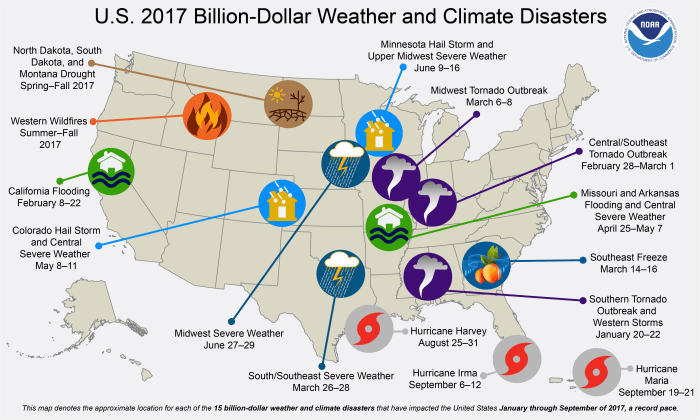
    Not including hurricanes Harvey, Irma, and Maria, 35 tropical cyclones have caused at least $583.5 billion in total damages—with an average of $16.7 billion per event. Accounting for just under a fifth (17 percent) of the total number of events, tropical cyclones have caused almost half (47 percent) of the total damages attributed to billion-dollar weather and climate disasters since 1980. These numbers will dramatically rise once the 2017 hurricanes costs are included.

    Following tropical cyclones, the most costly event types are:

    1. Drought, with an average cost of $9.4 billion per event
    2. Flooding, with an average cost of $4.3 billion per event
    3. Freezes, with an average cost of $3.4 billion per event
    4. Winter storms, with an average cost of $3.1 billion per event
    5. Wildfires, with an average cost of $2.5 billion per event
    6. Severe storms, with an average cost of $2.2 billion per event

    For more information on the distribution of damage from these billion-dollar disaster events, see our summary statistics.

    3. Has every state experienced a billion-dollar disaster?

    While each region of the United States faces a unique combination of weather and climate events, every state in the country has been impacted by at least one billion-dollar disaster since 1980. Over 94 of these disasters have affected at least some parts of Texas, while only one event has impacted Hawaii (Hurricane Iniki in 1992).

    Wildfires are most common west of the Plains states and in several Southeastern states. Inland flood events—not caused by tropical cyclones—often occur in states near large rivers or the Gulf of Mexico, which is a warm source of moisture to fuel rainstorms. Drought impacts are mostly focused in the Southern and Plains states where crop and livestock assets are densely populated. Severe local storm events are common across the Plains, Southeast, and Ohio River Valley states. And, winter storm impacts are concentrated in the Northeastern states while tropical cyclone impacts range from Texas to New England but also impact many inland states.

    In total, the Central, South, and Southeast regions typically experience a higher frequency of billion-dollar disasters than other regions.

    To visualize the the frequency and cost of billion-dollar disasters, check out our mapping tool.

    4. How do you calculate a disaster’s price tag?

    In calculating the cost assessments, we receive input from a variety of public and private data sources including:

    – Insurance Services Office
    – Federal Emergency Management Agency
    – U.S. Department of Agriculture
    – National Interagency Fire Center
    – Energy Information Administration
    – U.S. Army Corps
    – State agencies

    Each of these data sources provides key pieces of information that capture the total, direct costs—both insured and uninsured—of weather and climate events. These costs include:

    – Physical damage to residential, commercial, and government or municipal buildings
    – Material assets within a building
    – Time element losses like business interruption
    – Vehicles and boats
    – Offshore energy platforms
    – Public infrastructure like roads, bridges, and buildings
    – Agricultural assets like crops, livestock, and timber
    – Disaster restoration and wildfire suppression costs

    One of the key transformations is scaling up insured loss data to account for uninsured and underinsured losses, which differs by peril, geography, and asset class.

    However, these loss assessments do not take into account losses to natural capital or assets, health care related losses, or values associated with loss of life. Therefore, our estimates should be considered conservative with respect to what is truly lost, but cannot be completely measured.

    5. How long does it take to calculate the price tag?

    The scale and complexity of a disaster greatly influence the length of time to assess the losses. We’re seeing this with Hurricanes Harvey, Irma, and Maria right now. Hurricanes are particularly challenging, because it takes time to better understand the wind versus water damage losses across a variety of assets (like homes, businesses, boats and vehicles, infrastructure, and agriculture) and how much of this damage is insured versus uninsured. In contrast, with more localized events—like a Colorado hail storm—where property is highly insured, we can more quickly capture the losses.

    6. Are billion-dollar disasters becoming more frequent?

    The increases in population and material wealth over the last several decades are an important factor for higher damage potential. These trends are further complicated by the fact that many population centers and infrastructure exist in vulnerable areas like coasts and river floodplains, while building codes are often insufficient in reducing damage from extreme events. Climate change is also playing a role in the increasing frequency of some types of extreme weather that lead to billion-dollar disasters.
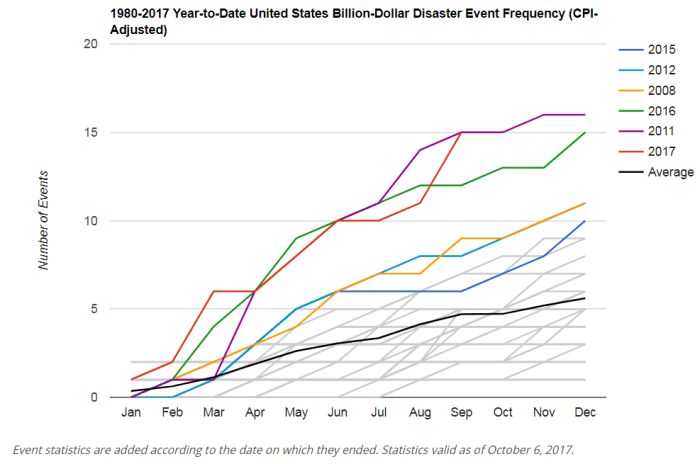
    7. Has the U.S. experienced more flooding events in recent years?

    Billion-dollar inland—non-tropical—flood events have increased in the United States. Most notably, four separate billion-dollar inland flood events occurred in 2016. This doubled the previous record since no more than two of these events had occurred in a year since 1980 until last year.

    So far in 2017, two non-tropical inland flood events have affected the country (in California and Missouri/Arkansas). Also, we experienced historic rainfall from Hurricane Harvey, which is tropical-cyclone related flooding. This perhaps should be expected, as heavy rainfall events and their ensuing flood risks are increasing because warmer temperatures are “loading” the atmosphere with more water vapor. Over time, this increases the potential for extreme rainfall events. And, where we build and how we build determines our resilience to the increasing risk of flood events.

    For more information on how the different types of billion-dollar disaster events have changed over time, see our time series.

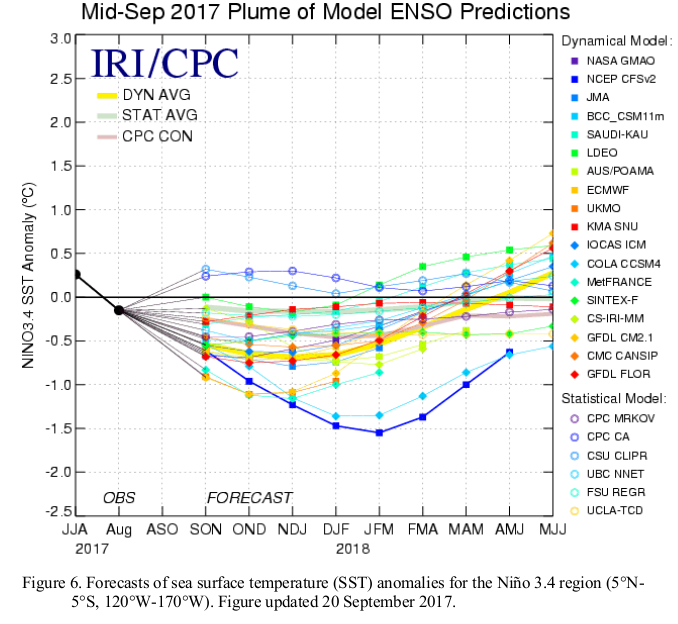
    @EPA awards $225K to protect, manage and restore wetlands in #Wyoming

    Spring sampling location along Little Sandy River in southern Wyoming. Photo credit: Chris Shope, USGSPublic domain

    Here’s the release from the EPA Region 8 office (Lisa McClain-Vanderpool):

    Wyoming Game and Fish and the University of Wyoming are wetlands grant recipients

    The Wyoming Game and Fish Department and the University of Wyoming have each received $112,500 in grant funding from the U.S. Environmental Protection Agency (EPA) to develop protect, manage and restore wetlands in the state of Wyoming. The EPA Wetland Program Development Grants announced today are awarded through a competitive process and are intended to support state and local efforts to increase the quantity and quality of wetlands in the U.S. by conserving and restoring wetland acreage and improving wetland condition.

    “Wetland restoration is key to capturing pollutants that impact Wyoming’s natural resources,” said EPA Administrator Scott Pruitt. “Understanding the current health of wetlands and where restoration efforts are most needed will help the many groups working on making the state’s rivers, lakes and streams healthy.”

    The Wyoming Game and Fish Department will receive $112,500 to develop a voluntary wetland restoration and protection program and develop plans for critical wetlands throughout the state. Project partners include Ducks Unlimited, the Wyoming Governor’s Big Game License Coalition, and Wyoming Wetlands Society.

    “We are excited to receive this funding,” said Steve Tessmann, a biologist with the Wyoming Game and Fish Department. “The grant is supporting a much-needed jump-start of a voluntary wetland restoration and protection program in Wyoming. The effort will also include preparation of plans to manage and improve wetlands located on several State wildlife habitat areas.”

    The University of Wyoming is also receiving a $112,500 EPA wetlands grant to carry out a multi-year project to improve the effectiveness of monitoring and assessment methods related to aquatic resources. These improvements will be achieved by developing, testing, and calibrating Wyoming-specific protocols to assess wetland condition and value. This project will support state priorities for wetland monitoring, protection, and conservation, focusing on the effects of climate change in highly managed basins. Project partners include The Nature Conservancy, the Wyoming Game and Fish Department, and the Wyoming Department of Environmental Quality.

    “Many people don’t realize that even though the area of marshes, ponds, and streamside forests in Wyoming is small, those wetlands have a large impact on biodiversity and other ecological services,” said Teresa Tibbets, a freshwater ecologist at the University of Wyoming. “Wetlands also often overlap with areas important for agricultural production. Our goal is to develop assessment methods that can inform how we can better manage our water resources to balance the needs of wetland habitats and people.”

    EPA Wetlands Program Development Grants assist state, tribal, and local government agencies in building programs that protect, manage, and restore wetlands and aquatic resources. Partners are encouraged to develop wetlands program plans, which help create a roadmap for building capacity and achieving long-term environmental goals. These plans also help prioritize projects and funding needs and ensure that EPA is providing strategic support for states and tribes as they pursue their environmental goals.

    For more information visit: https://www.epa.gov/wetlands/wetland-program-development-grants

    White paper: Funding Trees for Health — The Nature Conservancy @nature_org

    Click here to go to the Nature Conservancy website to read the white paper:

    Imagine if there were one simple action that city leaders could take to reduce obesity and depression, improve productivity, boost educational outcomes and reduce incidence of asthma and heart disease among their residents.

    Urban trees offer all these benefits and more.

    Yet American cities spend less than a third of a percent of municipal budgets on tree planting and maintenance, and as a result, U.S. cities are losing 4 million trees per year.

    A new white paper, written by The Nature Conservancy with input from The Trust for Public Land and Analysis Group, identifies street trees as one of the most overlooked strategies for improving public health in our cities.
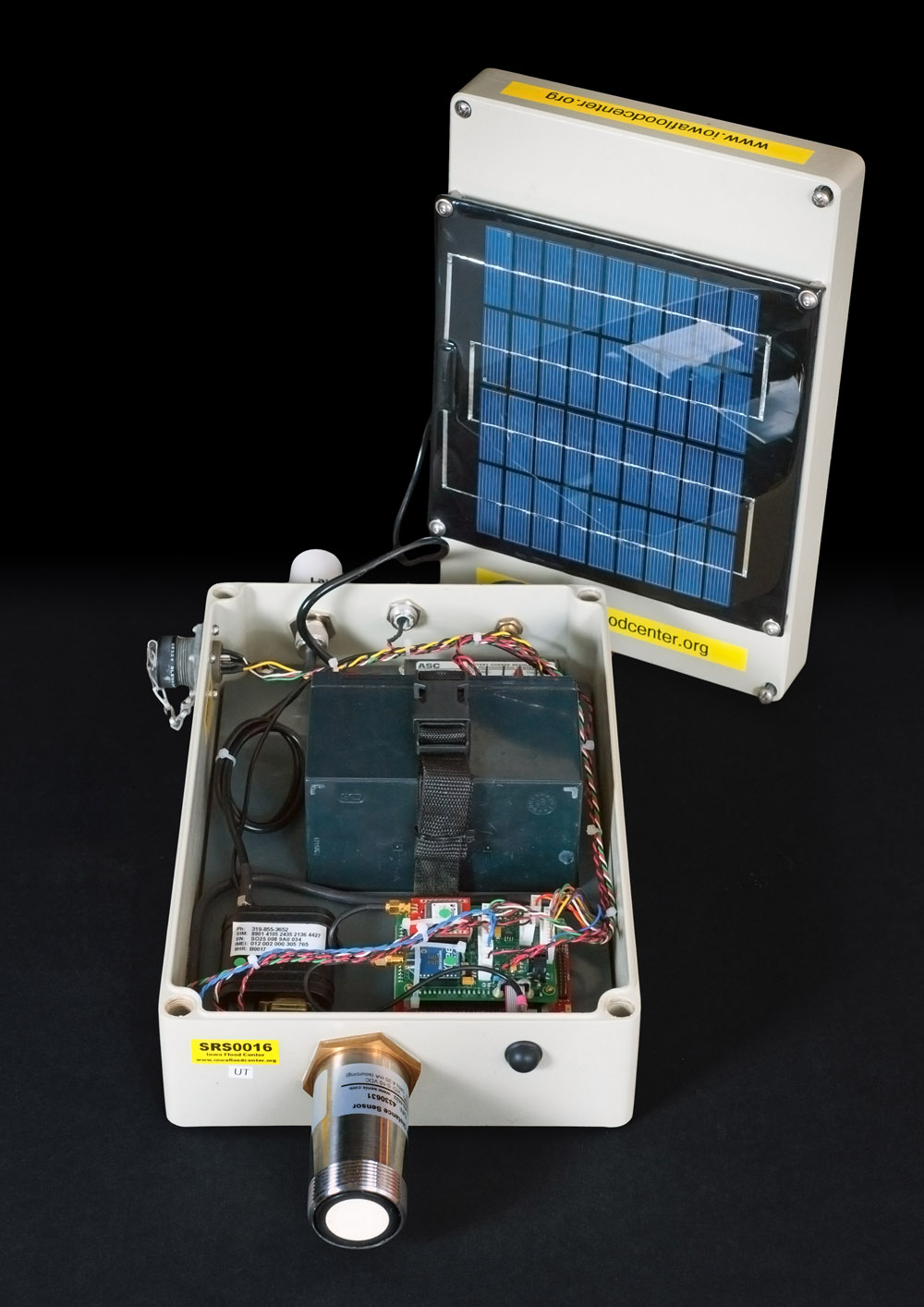
    “For too long, we’ve seen trees and parks as luxury items, but bringing nature into our cities is a critical strategy for improving public health,” said Rob McDonald, lead scientist for global cities at The Nature Conservancy and first author of the white paper.