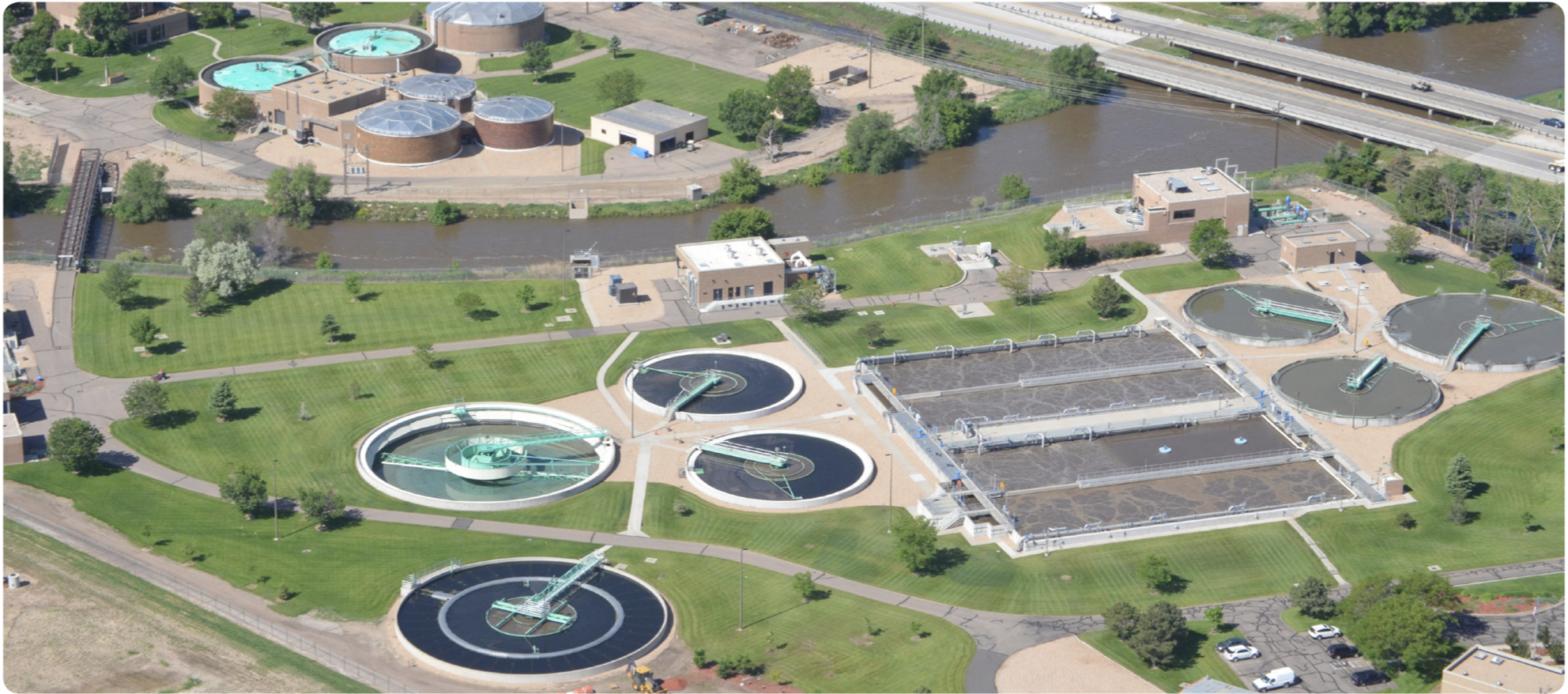
NACWA recognizes wastewater plants that achieve 100% compliance with the National Pollutant Discharge Elimination System (NPDES) over a consecutive five-year period.
The Greeley wastewater plant discharges more than 7 million gallons of treated water back into the Poudre River daily. Compliance with permitted requirements ensures that water is safe for downstream users, aquatic habitats, and the environment, according to a Greeley news release…
The wastewater plant maintains compliance through the operation and support of various systems that remove pollutants from the wastewater. Samples of the water are then tested and analyzed to ensure that the proper treatment has been performed…
or more information on the plant, water and sewer utilities, or to inquire about a tour, call (970) 350-9360 or visit http://www.greeleygov.com/water.
Meadows were greening up in Colorado’s Egeria Park by early May [2017] even as snow held on in the Flat Tops. Photo/Allen Best
Olympus Dam photo via the US Bureau of Reclamation.
Ruedi Dam and Reservoir
From email from Reclamation (James Bishop):
Today, 14 June, releases from Olympus Dam to the Big Thompson increased from 380 to 550 cubic feet per second (cfs) and will remain at 550 cfs until further notice.
It’s going to be awhile before summer comes to the Flat Tops. According to RBC Road and Bridge Director Dave Morlan, there’s still five feet of snow at the top of Ripple Creek.
“We’re working to get those passes open,” he said during Tuesday’s commissioner meeting in Meeker. “Burro Mountain is open to the county line. There’s still about three feet at the county line with Garfield County. Trappers still has two, two and a half feet.”
The Animas River will likely continue to flow high and fast through the upcoming days.
San Juan County Floodplain Manager Michele Truby-Tillen said the U.S. Geological Survey and the National Weather Service both project the peak of season runoff on the Animas River will occur June 15.
That means the Animas River will likely be swifter and higher than its been all year on Saturday.
Truby-Tillen said it has been a long time since there was this much water in the river. The abnormally deep snowpack in the mountains followed an extreme drought last year.
According to the USGS, the last time the Animas River had this much water in it was in June 2015 when the gauge at Cedar Hill registered 8,040 cubic feet per second…
Flows in the Animas River at Cedar Hill have been increasing. A gauge measured nearly 7,000 cubic feet per second on the morning of June 13. In a normal year, the flows would be between 2,500 cubic feet per second and 3,000 cubic feet per second in Cedar Hill, according to the USGS data.
From email from Reclamation (James Bishop):
Releases from Reudi Dam to the Fryingpan River will increase according to the following schedule:
Sunday at 6 a.m.: from 429 to 479 cubic feet per second (cfs)
Sunday at 6 p.m: from 479 to 529 cfs
Monday at 6 a.m.: from 529 to 579 cfs
Monday at 6 p.m.: from 579 to 629 cfs.
After 6 p.m. Monday, releases will remain at 629 until further notice. The purpose of these increased releases is to enhance spring peak flows in a section of the Colorado River upstream of Grand Junction, CO, critical to the survival of four endangered fish species: the humpback chub, razorback sucker, bonytail and the Colorado pikeminnow. Reudi Reservoir is one of many reservoirs participating in a large, coordinated effort to improve the habitat of these endangered native Colorado fish.
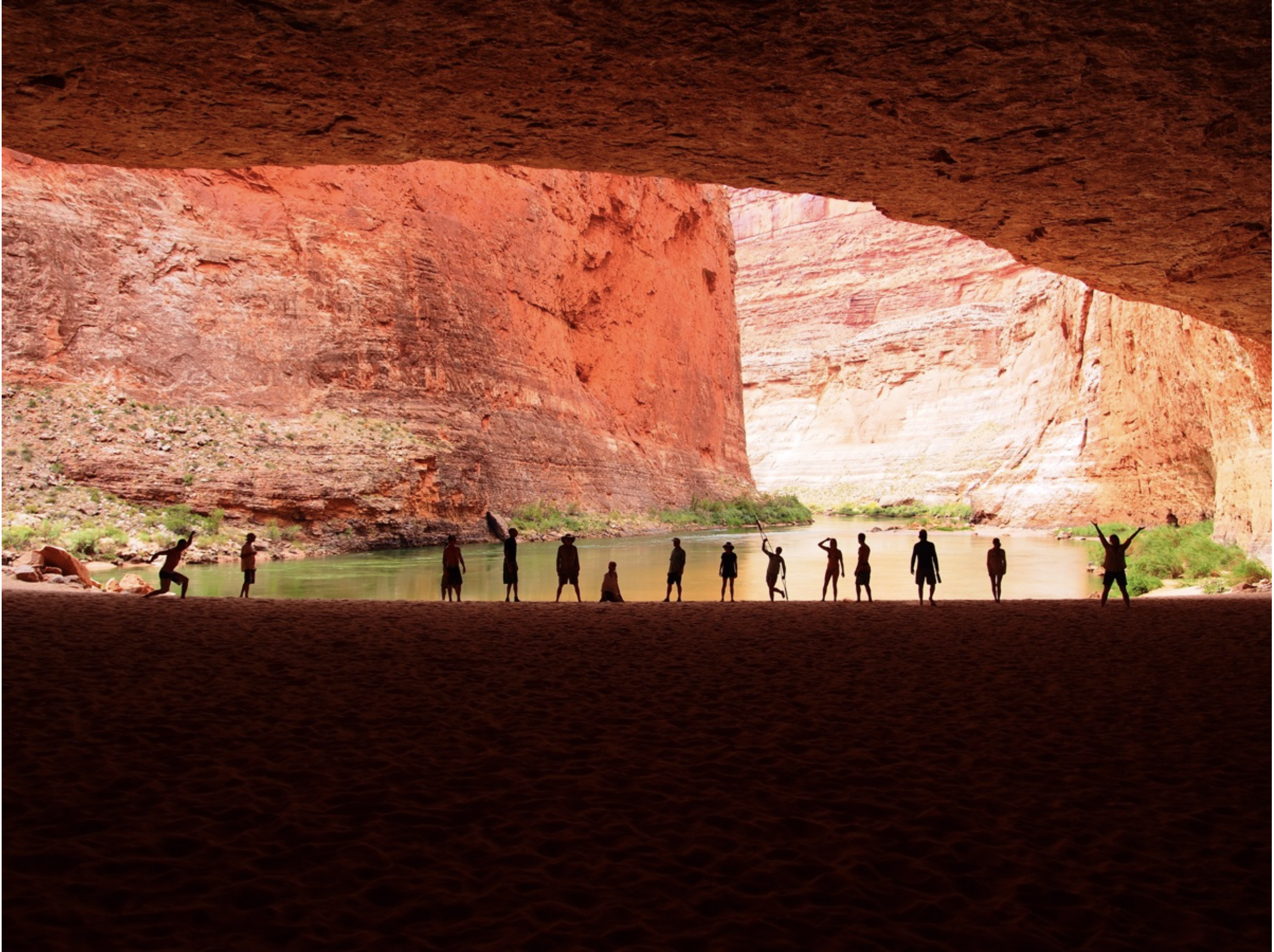
An impromptu workgroup works on a problem on the Colorado River. The group members came together below Doris Rapid in the Grand Canyon after a small raft flipped, and needed to be flipped back over to proceed. The CWCB could be considered to be embarking on a similar exercise in setting up eight workgroups to discuss ways to leave more water in the Colorado River system above Lake Powell. Photo credit: Brent Gardner-Smith/Aspen Journalism
The Colorado Water Conservation Board on Monday released the names of the 74 people it has asked to volunteer on eight workgroups being formed to investigate how a demand-management program might work in the state.
The list of people asked to serve reads like something of a who’s who of Colorado water mavens, and they will be helping the CWCB investigate what’s billed as a “voluntary, temporary and compensated” demand-management — or water-use reduction — program in the state.
The workgroup meetings, which the CWCB considers similar to staff meetings, are to be closed to the public and the media. However, the CWCB staff members holding the meetings then plan to share the insights they’ve gleaned from the workgroup meetings in open settings, including meetings of the CWCB’s board of directors.
“From our point of view, the workgroups are assisting the CWCB’s project-management team in framing demand management issues for public review, comment, and contributions,” said Brent Newman, the chief of CWCB’s Interstate, Federal and Water Information section. “We want to come to our usual public forums with a more informed initial ‘first stab’ at demand management.”
The workgroups, as currently configured, include Andy Mueller, the general manager of the Colorado River Water Conservation District; Jim Lochhead, the CEO of Denver Water; Mely Whiting, an attorney for Trout Unlimited on Colorado river issues; Kathy Chandler-Henry, an Eagle County commissioner; Doug Kemper, the executive director of the Colorado Water Congress; Mark Harris, the general manager of the Grand Valley Water Users Association; and many other notable water managers and experts.
(Please see full list of workgroup participants below).
The workgroups are divided by the following topics: law and policy; monitoring and verification; water-rights administration and accounting; environmental considerations; economic considerations and local government; funding; education and outreach; and agricultural impacts.
A ninth workgroup, on tribal interests, was to be formed, according to a CWCB staff presentation at the agency’s meeting in May, but a tribal workgroup was not included on the workgroup roster released Monday.
The Colorado River Water Conservation District, which is based in Glenwood Springs and represents Western Slope water interests, has five of its employees on five different workgroups.
They are Mueller, who also is an attorney, on the law and policy workgroup; John Currier, the district’s chief engineer, on the monitoring and verification workgroup; Chris Treese, the district’s external affairs manager, on the economic considerations and local government workgroup; Jim Pokrandt, director of community affairs, on the education and outreach workgroup; and Dave Kanzer, deputy chief engineer, on the agricultural impacts workgroup.
Colorado, Utah, Wyoming and New Mexico are each developing demand-management programs after a series of drought contingency-planning, or DCP, agreements were signed last month by representatives of those four states and the three lower-basin states of California, Arizona and Nevada.
The DCP agreements give the four upper-basin states an opportunity to store as many as 500,000 acre-feet of water in Lake Powell, and three other federal reservoirs in the upper basin, to use as insurance against violating the Colorado River Compact of 1922.
The water in the new demand-management pool must be water that otherwise would have been consumed by fields, pastures, lawns and other uses, but instead has been sent down the river system to be stored.
Before any of the demand-management programs can be launched in the four upper-basin states, they each need to be approved by the Upper Colorado River Commission, which includes representatives from the four states and the federal government.
The commission will hold a demand-management stakeholder workshop in Salt Lake City on June 21. The workshop will be open to the public.
The CWCB plans to hold a series of public demand-management workshops — as opposed to the closed workgroups — throughout the state this year.
Despite the closed-door workgroup meetings, the CWCB plans to hold an orientation webinar in July for the workgroup members that also will be open to the public.
The roster of the invited workgroup participants from the CWCB was slated to be released by June 1, but the effort was delayed after a six-page draft confidentiality agreement that was circulated by the state raised concerns among some of the potential workgroup members.
“We heard from multiple people that it was more than was necessary to achieve the goal of being able to have open conversation, and so we really took those words to heart,” CWCB director Becky Mitchell said of the first confidentiality agreement. “After some reflection, we realized that was just not the direction we wanted to go. So we’re taking a good hard look at that.”
An update sent out last week by CWCB staff said the agency was now “considering an approach that will entail a simpler and less restrictive agreement between the parties.”
Mitchell said the next version of the agreement will be closer to one page, not six pages.
The confidentiality agreements are seen by the CWCB as necessary to create “an environment for frank, candid and open discussions,” according to a recent memo to the workgroup participants.
But the confidentiality agreements are also meant to try to keep confidential some of the information provided by the state to the members of the workgroups.
A workgroup, of sorts, on the Colorado River in the Grand Canyon. Photo credit: Brent Gardner-Smith/Aspen Journalism
Proposed roster of CWCB demand management workgroups
Law and Policy
Facilitator:
Karen Kwon, first assistant attorney general, Colorado
Staff:
Brent Newman, chief, Interstate, Federal and Water Information Section, CWCB;
Amy Ostdiek, assistant attorney general, Colorado
Members:
Andy Mueller, general manager, Colorado River District
Jim Lochhead, CEO/manager, Denver Water
Bennett Raley, attorney at Trout Raley, representing Northern Water
John McClow, general counsel, Upper Gunnison River Water Conservancy District
Taylor Hawes, Colorado River Program director, The Nature Conservancy
Anne Castle, senior fellow, Getches-Wilkinson Center, University of Colorado
Beth Van Vurst, attorney, represents Southwestern Water Conservation District
Lee Miller, general counsel, Southeastern Colorado Water Conservancy District
Monitoring and Verification
Facilitator:
Michelle Garrison, water resources specialist, CWCB
Staff:
Brian Macpherson, decision support systems specialist, CWCB
Members:
Kelley Thompson, lead modeler, Colorado Division of Water Resources
John Currier, chief engineer, Colorado River District
Kevin Lusk, principal engineer, Colorado Springs Utilities
Tom Simpson, manager, Colorado and Arkansas Basins, Aurora Water
Luke Gingrich, Western Colorado area manager, J-U-B Engineers Inc.
Laura Belanger, water resources and env. engineer, Western Resource Advocates
Perry Cabot, research scientist and extension specialist, Colorado State University
Cary Denison, Gunnison Basin Project coordinator, Trout Unlimited
Gerry Knapp, consultant, Lower Arkansas Valley Water Conservancy District
Robert Sakata, owner, Sakata Farms
Carrie Padgett, engineer, Harris Water Engineering
Water-Rights Administration and Accounting
Facilitator:
Lain Leoniak, assistant attorney general, Colorado
Staff:
Mike Sullivan, deputy director, Colorado Division of Water Resources
Kevin Rein, state engineer, Colorado Division of Water Resources
Ryan Gilliom, water resource scientist, Colorado School of Mines
Members:
Frank Kugel, general manager, Upper Gunnison River Water Conservancy District
Rick Marsicek, planning manager, Denver Water
Drew Peternell, Colorado director, Trout Unlimited
Kyle Whitaker, Colorado River programs manager, Northern Water
Dick Wolfe, retired Colorado state engineer
Steve Witte, retired Division 2 engineer
Cleave Simpson, general manager, Rio Grande Water Conservation District
Environmental Considerations
Facilitators:
Lauren Ris, deputy director, CWCB;
Linda Bassi, chief, Stream and Lake Protection Section, CWCB
Members:
Kathy Kitzman, water resources principal, Aurora Water
Maria Pastore, senior water resources project manager, Colorado Springs Utilities
Melinda Kassen, senior counsel, Theodore Roosevelt Conservation Partnership
Abby Burk, western rivers regional program manager, Audubon Rockies
Matt Rice, director, Colorado basin program, American Rivers
David Graf, water resource specialist, Colorado Parks and Wildlife
Al Pfister, wildlife biologist, Western Wildscapes, LLC
Torie Jarvis, director, NWCOG Water Quality/Quantity Committee
Mely Whiting, Colorado Water Project legal counsel, Trout Unlimited
Karen Wogsland, director of programs, Colorado Water Trust
Economic Considerations and Local Government
Facilitator:
Amy Moyer
Staff:
Amy Ostdiek, assistant attorney general, Colorado
Members:
Chris Treese, external affairs manager, Colorado River District
Alexandra Davis, deputy director of water resources, Aurora Water
Seth Clayton, executive director, Pueblo Water
Sean Cronin, executive director, St. Vrain and Left Hand Water Conservancy District
Kathy Chandler‐Henry, Eagle County commissioner
Barbara Biggs, general manager, Roxborough Water and Sanitation District
Steven Ruddell, forester and environmental economist, CarbonVerde, LLC
Patti Wells, former general counsel, Denver Water, former CWCB board member
Liesel Hans, water conservation manager, City of Fort Collins
Karn Stiegelmeier, Summit County commissioner
Kelly Romero‐Heaney, water resources manager, City of Steamboat Springs
Funding
Facilitator:
Anna Mauss, chief operating officer, CWCB
Staff:
Russ Sands, senior program manager, Water Supply Planning, CWCB
Members:
Ted Kowalski, Colorado River Initiative lead, Walton Family Foundation
Dave Bennett, director, Water Resource Strategy, Denver Water
Pat Wells, GM, water resources and demand management, Colorado Springs Utilities
Aaron Citron, policy adviser, The Nature Conservancy
Dick Brown, economist
Keith McLaughlin, finance director, CO Water Resources and Power Dev. Auth.
Alan Matlosz, executive VP, Colorado Public Finance Group, George K. Baum & Co.
Education and Outreach
Facilitator:
Brent Newman, chief, Interstate, Federal and Water Information Section, CWCB
Staff:
Megan Holcomb, program manager, Water Supply Planning Section, CWCB
Members:
Jim Pokrandt, director of community affairs, Colorado River District
Todd Hartman, media-relations coordinator, Denver Water
Chris Woodka, issues-management coordinator, Southeastern Water
Andy Schultheiss, executive director, Colorado Water Trust
Hannah Holm, coordinator, Water Center, Colorado Mesa University
Doug Kemper, executive director, Colorado Water Congress
Laura Spann, program coordinator, Southwestern Water Conservation District
Lisa Darling, executive director, South Metro Water Supply Authority
Agricultural Impacts
Facilitator:
Alex Funk, agricultural water resources specialist, CWCB
Staff:
Andrew Rickert, program associate, CWCB
Erik Skeie, special project coordinator, CWCB
Members:
Dave Kanzer, deputy chief engineer, Colorado River District
Alan Ward, water resources division manager, Pueblo Water
Eric Wilkinson, former general manager, Northern Water
John Stulp, former water policy adviser to Colorado’s governor
Cindy Lair, program manager, State Conservation Board, CO Dept. of Agriculture
Mark Harris, general manager, Grand Valley Water Users Association
Aaron Derwingson, agricultural coordinator, The Nature Conservancy
Paul Bruchez, rancher, fly-fishing guide, member of the Colorado Basin Roundtable
Travis Smith, senior water consultant, DiNatale Water Consultants
Allen Distel, president, Bostwick Park Water Conservancy District, Montrose
Ken Curtis, chief of engineering and construction, Dolores Water Conservancy District
Tom Gray, former Moffat County commissioner, Colorado River District Board
Aspen Journalism is collaborating with The Aspen Times and other Swift Communications newspapers on coverage of water and rivers. The Times published a version of this story on June 10, 2019.

![Meadows were greening up in Colorado’s Egeria Park by early May [2017] even as snow held on in the Flat Tops. Photo/Allen Best](https://i0.wp.com/coyotegulch.blog/wp-content/uploads/2017/05/egeriaparkflattopsallenbest.png?w=546&h=414&ssl=1 "egeriaparkflattopsallenbest")