
From Scientific American (Isobel Whitcomb):
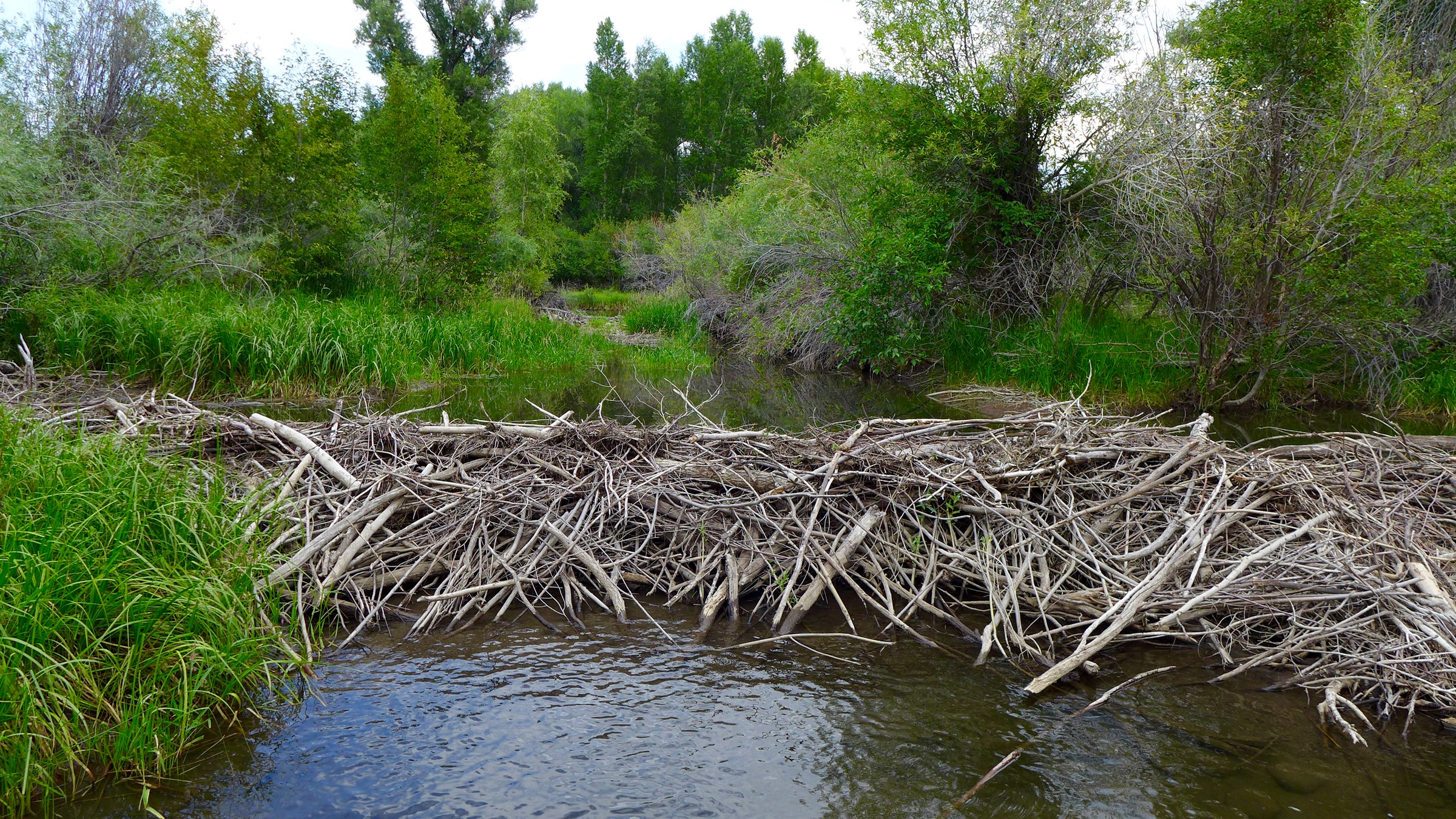
…Tinniswood and his team stumbled upon something even more surprising, and somewhat encouraging: roughly five acres of pristine greenery amid an otherwise burned-out area along Dixon Creek, a tributary in the Sprague River watershed. At the center were roughly eight active beaver dams. But this was more than a refuge from fire, which hundreds of beaver dams are known to have afforded to other riparian areas. Whereas fish seemed to have disappeared upstream of the Dixon Creek dam site, the downstream water was crystal clear—and trout were thriving as though the fire had never happened. The dams and ponds appeared to have altered the hydrology of the landscape around them, Tinniswood says. The beavers had effectively built something like a water treatment plant that staved off fire-related contamination.
Similar dam-driven refuges have been documented from Colorado to California, Idaho to Wyoming. Now, scientists are discovering that these green sanctuaries are part of a larger story of how beaver dams contribute to fire resilience. Along with deterring the flames themselves, beaver dams and ponds also function as filters for ash and other fire-produced pollutants that enter waterways—thus maintaining water quality for fish, other aquatic animals, and humans—emerging evidence suggests.
Tinniswood isn’t the first to observe that beaver dams protect streams from the toxic effects of postfire runoff. In the past several years, as climate change has ramped up wildfire frequency and intensity throughout the western U.S., similar accounts have come in after fires across the region. These range from the 2018 Sharps Fire in Idaho to the 2020 Lefthand Canyon and Cameron Peak fires in Colorado. Ecohydrologist Emily Fairfax of California State University Channel Islands, who personally made such observations in Colorado, says such findings support efforts to conserve and reintroduce beavers in the West, and to establish human-made structures that mimic beaver dams—a growing movement in riparian restoration…
The filtration provided by dams is crucial for the surrounding ecosystem. In the aftermath of wildfires, autumn rain and spring snowmelt wash sediment into waterways—including ash and other debris, and soil that vegetation normally would hold in place. This pulse of pollution can be deadlier to aquatic life than the fire itself, Tinniswood said. Just as humans struggle to breathe air that’s thick with smoke, fish can’t take in enough oxygen from water laden with sediment that their gills are not designed to block…
Beaver dams and ponds filter out sediment by slowing the rate at which water flows, says researcher Sarah Koenigsberg at the Beaver Coalition, an Oregon-based nonprofit organization that promotes conservation. When water lazily drifts through a beaver pond rather than rushing in a torrent down a narrow channel, suspended sediment has time to settle on the bottom where it poses less risk to fish and other aquatic animals. “You can almost think of it like a coffee filter,” Koenigsberg said.
One thought on “Beaver Dams Help #Wildfire-Ravaged Ecosystems Recover: Long after Flames Subside Dams mop up debris that would otherwise kill fish and other downstream wildlife, new observations suggest — Scientific American”