
What Native-held lands in California can teach about resilience and the future of wildfire

Blue oak woodlands in California offer beauty and opportunities to sustain traditional knowledge and ecological resilience. Nina Fontana, CC BY-NC-ND

Nina Fontana, University of California, Davis and Beth Rose Middleton Manning, University of California, Davis

It took decades, stacks of legal paperwork and countless phone calls, but, in the spring of 2025, a California Chuckchansi Native American woman and her daughter walked onto a 5-acre parcel of land, shaded by oaks and pines, for the first time.

This land near the foothills of the Sierra National Forest is part of an unusual category of land that has been largely left alone for more than a century. The parcel, like roughly 400 other parcels across the state totaling 16,000 acres in area, is held in trust by the federal government for the benefit of specific Indigenous people – such as a family member of the woman visiting the land with her daughter.

Largely inaccessible for more than a century, and therefore so far of little actual benefit to those it is meant for, this land provides an opportunity for Indigenous people to not only have recognized land rights but also to care for their land in traditional ways that could help reduce the threat of intensifying wildfires as part of a changing climate.

In collaboration with families who have long been connected to this land, our research team at the University of California, Davis is working to clarify ownership records, document ecological conditions and share information to help allottees access and use their allotments.

California’s unique historical situation

As European nations colonized the area that became the United States, they entered into treaties with Native nations. These treaties established tribal reservations and secured some Indigenous rights to resources and land.

Just after California became a state in 1850, the federal government negotiated 18 treaties with 134 tribes, reserving about 7.5 million acres, roughly 7.5% of the state, for tribes’ exclusive use.

However, land speculators and early state politicians considered the land too valuable to give away, so the U.S. Senate refused to ratify the treaties – while allowing the tribes to think they were valid and legally binding. As a result, most California Native Americans were left landless and subject to violent, state-sanctioned removals by incoming miners and settlers.

Then, in 1887, Congress passed the Dawes Act, which allowed Native people across the U.S. to be assigned or apply for land individually. Though it called the seized land – their former tribal homelands – the “public domain,” the Dawes Act presented a significant opportunity for the landless Native people in California to secure land rights that would be recognized by the government.

These land parcels, called allotments, are not private land, public land or reservation land – rather, they are individual parcels held in trust by the federal government for the benefit of allottees and their descendants.

A map of California showing different habitat regions and marking allotments with black dots, next to a chart showing how many acres of allotments are in each type of habitat.
Allotments are in a wide range of ecosystems, though more are in blue oak woodlands than any other single type of habitat. Images created by James Thorne, Ryan Boynton, Allan Hollander and Dave Waetjan.

Many of these allotments were remote – ecologically rich, yet hard to access. They were carved out of ancestral territories but often lacked access to infrastructure like roads, water or electricity. In some cases, allotments were separated from traditional village sites, ceremonial areas or vital water resources, cutting them off from broader ecosystems and community networks.

Federal officials often drew rough or incorrect maps and even lost track of which parcels had been allotted and to whom, especially as original allottees passed away. As a result, many allotments were claimed and occupied by others, coming into private hands without the full knowledge or consent of the Native families they were held in trust for.

There were once 2,522 public domain allotments in California totaling 336,409 acres. In 2025, approximately 400 of these allotments remain, encompassing just over 16,000 acres. They are some of the only remaining, legally recognized tracts of land where California Native American families can maintain ties to place, which make them uniquely significant for cultural survival, sovereignty and ecological stewardship.

The allotments today

Because of their remoteness, many of these lands remained relatively undisturbed by human activity and are home to diverse habitats, native plants and traditional gathering places. And because they are held in trust for Native people, they present an opportunity to exercise Indigenous practices of land and resource management, which have sustained people and ecosystems through millennia of climate shifts.

We and our UC Davis research team partner with allottee families; legal advocates including California Indian Legal Services, a Native-led legal nonprofit; and California Public Domain Allottee Association, an allottee-led nonprofit that supports allottees to access and care for their lands. Together, we are studying various aspects of the remaining allotments, including seeking to understand how vulnerable they are to wildfire and drought, and identifying options for managing the land to reduce those vulnerabilities.

A map of California showing different fire risk regions and marking allotments with black dots, alongside a chart showing how many acres of allotments are in different categories of fire risk.
Allotments have a range of fire risk, though many are in very-high-risk areas. Images created by James Thorne, Ryan Boynton, Allan Hollander and Dave Waetjan.

An opportunity for learning

So far, our surveys of the vegetation on these lands suggest that they could serve as places that sustain both flora and fauna as the climate changes.

Many of these parcels are located in remote, less-developed foothills or steep terrain where they have remained relatively intact, retaining more native species and diverse habitats than surrounding lands. Many of these parcels have elements like oak woodlands, meadows, brooks and rivers that create cooler, wetter areas that help plants and animals endure wildfires or periods of extreme heat or drought.

Allotment lands also offer the potential for the return of stewardship methods that – before European colonization – sustained and improved these lands for generations. For example, Indigenous communities have long used fire to tend plants, reduce overgrowth, restore water tables and generally keep ecosystems healthy.

Guided by Indigenous knowledge and rooted in the specific cultures and ecologies of place, this practice, often called cultural burning, reduces dry materials that could fuel future wildfires, making landscapes more fire-resilient and lowering both ecological and economic damage when wildfires occur. At the same time, it brings back plants for food, medicine, fiber and basketry for California Native communities.

Challenges on allotments

The Chuckchansi family who reached their land for the first time in the spring of 2025 would like to move onto the land. However, the parcel is surrounded by private property, and they need to seek permission from neighboring landowners to even walk onto their own parcel.

In addition, a small number of employees at the Bureau of Indian Affairs are responsible for allotments, and they must also deal with issues on larger reservations and other tribal lands.

Further, because the lands are held in federal trust, allottees’ ability to engage in traditional management practices like cultural burning often face more stringent federal permitting processes than state or private landowners – including restrictions under the Clean Air Act and the National Environmental Policy Act.

To our knowledge, no fire management plans have been approved by the Bureau of Indian Affairs on California Native American public domain allotments. Nonetheless, many families are interested in following traditional practices to manage their land. These efforts were a key topic at the most recent California Public Domain Allottees Conference, which included about 100 participants, including many allottee families.

A group of people are assembled in a meeting room.
People gather at the second annual California Public Domain Allottees Conference in May 2025. Nina Fontana, CC BY-NC-ND

Why it matters

As California searches for ideas to help its people adapt to climate change, the allotment lands offer what we believe is a meaningful opportunity to elevate Indigenous leadership in climate adaptation. Indigenous land stewardship strategies have shown they can reduce wildfire risk, restoring ecosystems and sustaining culturally important plants and foods. Though the parcels are small, the practices applied there – such as cultural burning, selective gathering and water stewardship – are often low-cost, community-based and potentially adaptable to larger parcels elsewhere around the state.

One option could be to shift some of the regulatory authority from the Bureau of Indian Affairs to the allottees themselves. Shifting authority to Indigenous peoples has improved forest health elsewhere, as found in a collaborative study between University of California Extension foresters and Hoopa Tribal Forestry. That research found that when the Hoopa Tribe gained control of forestry on their reservation along the Klamath River basin in northern California, tribal leaders moved toward more restorative forestry practices. They decreased allowable logging amounts, created buffers around streams and protected species that were culturally important, while still reducing the buildup of downed or dead wood that can fuel wildfires.

At a time when California faces record-breaking wildfires and intensifying climate extremes, allotments offer rare pockets of intact habitat with the potential to be managed with cultural knowledge and ecological care. They show that adapting to change is not just about infrastructure or technology, but also about relationships – between people and place, culture and ecology, past and future.

Kristin Ruppel from Montana State University, author of “Unearthing Indian Land, and Jay Petersen from California Indian Legal Services also contributed to the drafting of this article.

Nina Fontana, Researcher in Native American Studies, University of California, Davis and Beth Rose Middleton Manning, Professor of Native American Studies, University of California, Davis

This article is republished from The Conversation under a Creative Commons license. Read the original article.

#Colorado Parks and Wildlife confirms additional adult zebra mussels discovered in #GrandJunction #ColoradoRiver #COriver

Adult Zebra mussel. Photo credit: Colorado Parks and Wildlife

Click the link to read the release on the Colorado Parks and Wildlife website (Rachael Gonzales):

September 15, 2025

GRAND JUNCTION, Colo. — Through ongoing increased sampling efforts on the Colorado River and nearby bodies of water, Colorado Parks and Wildlife (CPW) Aquatic Nuisance Species (ANS) staff have detected adult zebra mussels in the Colorado River and a nearby lake in Grand Junction. 

“While this is news we never wanted to hear, we knew this was a possibility since we began finding veligers in the river,” said CPW Director Jeff Davis. “I can’t reiterate this enough. It was because we have a group of individuals dedicated to protecting Colorado’s water resources that these detections were made. It is because of these same dedicated individuals and our partners that we will continue our efforts to understand the extent of zebra mussels in western Colorado. ”

On Thursday, Aug. 28, the Aquatic Animal Health Lab (AAHL) notified Robert Walters, CPW Invasive Species Program Manager, that suspect veligers (the microscopic larval stage of zebra mussels) collected from West and East Lake, west of 31 Road within the Wildlife Area section of James M. Robb-Colorado River State Park, had tested positive for zebra mussel DNA. During a follow-up survey on Tuesday, Sept. 2, staff discovered suspected adult zebra mussels in the lake. 

Surveys were also conducted in the side channel, where water from the lake is released before flowing into the Colorado River.  During these subsequent surveys, additional suspect adult zebra mussels were found in the side channel and in the Colorado River where the side channel meets the mainstem of the river. 

Visual identification of the samples from the lake, channel, and river was performed by ANS staff. Samples were then sent to the AAHL for DNA confirmation. On Monday, Sept. 8, the AAHL confirmed the samples collected are adult zebra mussels. 

With this discovery, the Colorado River is now considered an “infested” body of water from the 32 Road bridge downstream to the Colorado-Utah border. This is the first time adult zebra mussels have been detected in the Colorado River. 

A body of water is considered “infested” when a water body has an established (recruiting or reproducing) population of invasive species; in this instance, multiple zebra mussel life stages have been found in that body of water. 

The following bodies of water have the designation of an “infested” body of water:

  • Highline Lake at Highline Lake State Park (2022)
  • Mack Mesa Lake at Highline Lake State Park (2025)
  • West and East Lake at the Wildlife Area Section of James M. Robb – Colorado River State Park (2025)
  • Colorado River from 32 Road bridge downstream to the Colorado-Utah border (2025)
  • Private body of water in Eagle County (2025)

The Colorado River remains “positive” for zebra mussels from the confluence of the Roaring Fork River to the 32 Road bridge.

No detections of zebra mussels have occurred between the headwaters of the Colorado River and the confluence of the Roaring Fork River.

CPW, in collaboration with our partners at the local, state and federal levels, will continue our increased sampling and monitoring efforts from the headwaters of the Colorado River in Grand County to the Colorado-Utah border.  

“We won’t give up,” said CPW Invasive Species Program Manager Robert Walters. “Our priority remains utilizing containment, population management and education to protect the uninfested waters of the state.”

CPW will continue to evaluate options for the future containment and mitigation of Highline Lake, Mack Mesa Lake, and West and East Lake. CPW does not intend to treat the mainstem of the Colorado River due to multiple factors, including risk to native fish populations and critical habitat, length of the potential treatment area, and complexity of canals and ditches that are fed by the Colorado River.

Since sampling efforts began in mid-April, CPW has collected 427 water samples from various locations in the Colorado River. Of those samples, CPW has confirmed six samples to contain zebra mussel veligers. ANS staff has also collected 41 samples from the Eagle River and 42 samples from the Roaring Fork River. There have been no detections of zebra mussel veligers in the samples from the Eagle and Roaring Fork rivers. 

Private Body of Water in Eagle County treatment
During the week of August 25, CPW ANS staff treated a privately owned body of water in western Eagle County using EarthTec QZ, an EPA-registered copper-based molluscicide. In follow-up surveys conducted during the weeks of Sept. 1 and Sept. 8, staff observed positive initial results, having found dead adult zebra mussels in multiple areas around the body of water. CPW staff will continue to routinely monitor the water to evaluate its effectiveness. 

Oh, Shell No!
The Colorado Parks and Wildlife Aquatic Nuisance Species team is asking for your help. If you own a pond or lake that utilizes water from the Colorado River or Grand Junction area canal systems, CPW would like to inspect your body of water. You can request sampling of your body of water by CPW staff at Invasive.Species@state.co.us.

“Despite these additional detections, it remains critical for the continued protection of Colorado’s aquatic resources and infrastructure to fully understand the distribution of zebra mussels in western Colorado,” said Walters. “We can only achieve this with the assistance and participation of the public.”

In addition to privately owned ponds and lakes, CPW  also encourages those who use water pulled from the Colorado River and find any evidence of mussels or clams to send photos to the above email for identification. It is extremely important to accurately report the location in these reports for follow-up surveying.

Prevent the spread: Be a Pain in the ANS
With the additional discoveries of adult zebra mussels, it is even more important for everyone to play their part in protecting Colorado’s bodies of water and preventing the spread of invasive species. Simple actions like cleaning, draining and drying your motorized and hand-launched vessels — including paddleboards and kayaks — and angling gear after you leave the water can make a big difference to protect Colorado’s waters.

Learn more about how you can prevent the spread of aquatic nuisance species and tips to properly clean, drain and dry your boating and fishing gear by visiting our website. Tips for anglers and a map of CPW’s new gear and watercraft cleaning stations are available here.

Federal Water Tap, September 15, 2025: EPA Says It Won’t Regulate Four #PFAS in Drinking Water — Brett Walton (circleofblue.org)

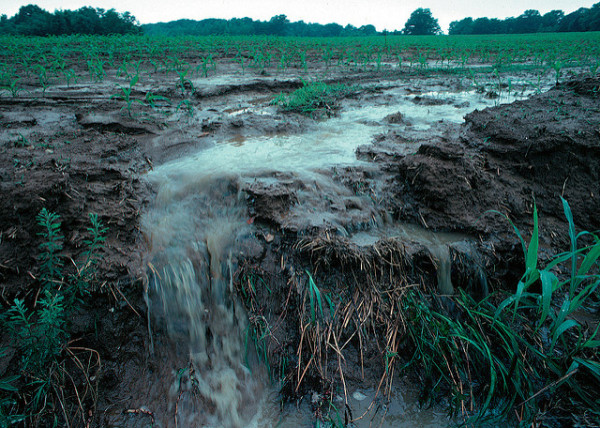
Unprotected farm fields yield topsoil as well as farm fertilizers and other potential pollutants when heavy rains occur.

Click the link to read the article on the Circle of Blue website (Brett Walton):

The Rundown

  • EPA intends to retract a Biden-era regulation for four PFAS in drinking water.
  • Report on children’s health highlights MAHA concern with fluoride in drinking water.
  • GAO finds that the outcomes from Biden-era environmental justice focus are unknown.
  • Defense spending and harmful algal bloom bills move through Congress.

And lastly, Reclamation will do more analysis on an ag-to-urban Colorado River water transfer in Arizona.

“Following the completion of studies on fluoride, CDC and USDA will educate Americans on the appropriate levels of fluoride, clarify the role of EPA in drinking water standards for fluoride under the Safe Drinking Water Act, and increase awareness of the ability to obtain fluoride topically through toothpaste.” – Excerpt from the MAHA Commission strategy for improving children’s health.

By the Numbers

$1 Billion: Federal aid to livestock producers who were affected by wildfire and flooding in 2023 and 2024. The funds, announced by USDA, are intended to offset higher feed costs.

News Briefs

PFAS Regulation…And Others
The EPA says it will attempt to retract its regulation of four PFAS in drinking water, a rule that was established during the Biden administration.

The agency will keep federal drinking water limits on two forever chemicals: PFOA and PFOS. But it wants to drop federal regulation of four others: PFHxS, PFNA, PFBS, and Gen X.

The EPA is also not defending the rule in court, asking judges to invalidate it, Bloomberg Law reports.

Utilities are challenging the rule on procedural grounds as well as objecting to its cost for small systems. Public health groups point out that federal law has “anti-backsliding” provisions to prevent existing drinking water limits from being weakened.

The agency signaled its intention to scrap limits on the four PFAS in the Unified Agenda, a semiannual listing of the federal government’s regulatory plans.

Other water-related regulatory actions mentioned in the agenda: perchlorate in drinking water, a definition of the “waters of the United States” that are subject to Clean Water Act permitting, and expanding the area in which oil and gas wastewater (a.k.a “produced water”) can be reused.

Water Bills in Congress
The House passed a defense spending authorization bill that includes several water provisions.

It instructs the department to provide clean drinking water from an alternative source to any household on a private well that is contaminated with PFAS due to military activities.

The bill also directs the military secretaries to assess water-supply risk at their bases. Each secretary will identify the three most at-risk bases under their command and develop a strategy to reduce water-supply risk.

The Senate, meanwhile, passed a bill that reauthorizes a federal program for harmful algal bloom research and monitoring.

Arizona Injection Well Management
The EPA granted Arizona’s application to oversee permitting for wells that inject fluids and waste underground in the state.

Studies and Reports

Water and Children’s Health
The Make America Healthy Again Commission released its strategy for improving children’s health.

The 20-page document refers to drinking water as a pathway for contaminants. But it provides vague direction on solutions. Federal agencies “will assess ongoing evaluations of water contaminants and update guidance and prioritizations of certain contaminants appropriately,” it states.

Several contaminants are called out. Fluoride, a favored enemy for the MAHA movement, is one. Others are pharmaceuticals and PFAS. Farm chemicals are indirectly cited, in a sentence that asks the USDA to research water quality and farm conservation practices. At the same time, EPA is directed to reduce permitting requirements to “strengthen regional meat infrastructure.”

The report is undermined by actions other federal agencies are taking – approving new chemicals for commercial use, cutting research and enforcement budgets, not defending PFAS regulations.

Evaluating Environmental Justice Push
To help poor and disadvantaged communities overcome histories of pollution, racism, and poverty, the Biden administration ordered that they receive 40 percent of the benefits of certain federal spending. Donald Trump ended this Justice40 initiative in his first month in office.

What did the program achieve?

That’s hard to say, according to an audit by the Government Accountability Office.

Looking at three agencies that were key players in the program – EPA, Interior, and USDA – the audit concluded that, though they modified grant programs, provided assistance, and began to track outcomes, “overall results of agency actions are unknown.”

On the Radar

Arizona Water Transfer
Following a court order for a more-thorough analysis, the Bureau of Reclamation will conduct an environmental impact assessment of an ag-to-urban transfer of Colorado River water that it already approved.

Queen Creek, a fast-growing Phoenix exurb, purchased water from GSC Farm, in La Paz County, on the opposite side of the state. The assessment will also consider the effects of moving the water to Queen Creek via the Central Arizona Project canal.

Cities and counties in western Arizona sued to block the water transfer.

Two virtual public meetings will be held on October 1 to gather comments. Log-in details are found here.

Senate Hearing
On September 17, the Environmental and Public Works Committee will hold an oversight hearing on the Army Corps of Engineers.

House Hearings
On September 16, an Oversight and Government Reform subcommittee will hold a hearing on weather modification. The subcommittee is led by Rep. Marjorie Taylor Greene, who incorrectly blamed Hurricane Helene on a “they” who control the weather. She introduced a bill in July to ban geoengineering, cloud seeding, aerosol injection, and other methods of altering the weather. Carbon emissions, however, are not explicitly mentioned.

Another Oversight subcommittee will hold a hearing that same day on EPA enforcement during the Biden administration.

Also on September 16, an Energy and Commerce subcommittee will hold a hearing on appliance efficiency standards, which Republicans and the president have criticized as limiting customer choice, even though they reduce water and energy consumption.

Federal Water Tap is a weekly digest spotting trends in U.S. government water policy. To get more water news, follow Circle of Blue on Twitter and sign up for our newsletter.

Register today for the #ColoradoRiver District’s 2025 Annual Water Seminar: Across Divides October 3, 2025

Udall/Overpeck 4-panel Figure Colorado River temperature/precipitation/natural flows with trend. Lake Mead and Lake Powell storage. Updated through Water Year 2024. Credit: Brad Udall

Click the link for all the inside skinny from the Colorado River District Annual Seminar:

Click here to reserve your spot!

This year’s seminar on October 3rd will explore the spaces where perspectives don’t always align in the world of western water, and how we still have to find our way forward together. Sometimes, these perspectives are split between upstream and downstream, sometimes between the data and the real-world experience, between science and policy, and between East Slope and West. As we face mounting challenges across the Colorado River Basin, this year’s event will bring together diverse voices to confront those divides, question assumptions, and work toward shared understanding with a focus on what it all means for water users on the Western Slope.

Through candid conversations and solution-focused dialogue, we’ll examine what’s missing, what’s misunderstood, and what bridges we can build. From political disconnects to on-the-ground impacts, we’ll shine a light on the gaps and highlight the innovations, partnerships, and leadership working to close them.

Event Summary:

On October 3rd, the Colorado River District’s will host its Annual Water Seminar from 8:30 am 3:15 pm at Colorado Mesa University in Grand Junction. Speakers will cover topics ranging from interstate negotiations and current hydrology, to innovations in agriculture, water policy, and funding strategies.

Doors will open at 8:00 a.m. Be sure to stick around after the program for a happy hour networking event on the terrace from 3:35 – 5:00 p.m. A complimentary drink ticket is included with all registrations.

DRAFT Agenda Available here (.pdf)