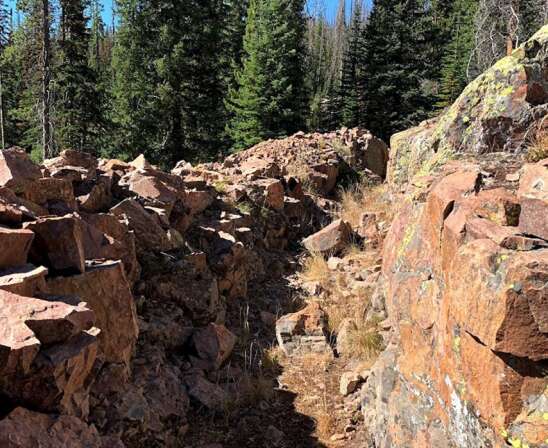
The Farwell Ditch in North Routt County has been added to the U.S. National Register of Historic Places as of Sept. 1 after Historic Routt County applied for its distinction, according to a news release from the nonprofit organization. “When you’re looking at historic places, you’re looking not only at buildings, but also landscapes,” said Kristen Rockford, executive director of Historic Routt County. “There are 100-year-old crabapple trees and lilac bushes and cottonwood trees … All of that together creates the character.” The application process to add the Farwell Ditch to the National Register of Historic Places began in December 2024 after two brothers, Rod and Nolan Farwell, were visiting North Routt County and wondered if the name was a family connection. The brothers, hailing from the Midwest, noticed a map of the area included Farwell Mountain near Hahns Peak — spelled the same way as their last name. After researching the ditch, the brothers found that one of the contractors, John V. Farwell of Chicago, was a distant relative…
The Farwell Ditch, which extends 18 miles in North Routt County, was constructed between 1876 and 1878. (Historic Routt County/Courtesy photo) Historic Routt County / Courtesy photo
Construction of the ditch, which spans 18 miles in North Routt County, began before Colorado became a state in 1876 and was completed about two years later. Around 100-200 people worked on the project, providing some of the first wage-paying jobs in the county. Men used picks, shovels and dynamite to complete construction. No fatalities occurred during the dangerous project, according to Historic Routt County.
From left, Hollie Velasquez Horvath, regional vice president for state affairs and community relations for Xcel, Kathy Chandler-Henry, president of the Colorado River Water Conservation District and Eagle County commissioner and Andy Mueller, general manager of the River District, at the kickoff event Tuesday [December 19, 2023] for the Shoshone Water Right Preservation Campaign in Glenwood Springs. The River District has inked a nearly-$100-million deal to acquire the water rights tied to the Shoshone hydropower plant in Glenwood Canyon. CREDIT: HEATHER SACKETT/ASPEN JOURNALISM
Over two days of hearings, Colorado water managers laid out their arguments related to one of the most powerful water rights on the Colorado River and who should have the authority to control it.
The Colorado River Water Conservation District plans to buy the water rights associated with the Shoshone hydropower plant in Glenwood Canyon from Xcel Energy and use the water for environmental purposes. To do so, it must secure the support of the Colorado Water Conservation Board. The CWCB is the only entity allowed to own instream-flow water rights, which are designed to keep a minimum amount of water in rivers to benefit the environment.
The CWCB heard more than 14 hours of testimony Wednesday and Thursday from the River District and its supporters, as well as the four big Front Range water providers — Northern Water, Denver Water, Aurora Water and Colorado Springs Utilities. All the parties agree that the water rights would benefit the environment.
But the Front Range parties object to certain aspects of the River District’s proposal that they say could harm their interests. They said this is not a water grab for more; their goal is to protect what they already have.
“Colorado Springs Utilities is not looking to gain additional water by the conversion of the Shoshone water rights for use as an instream flow,” said Tyler Benton, a senior water resource engineer with CSU. “Quite simply, Colorado Springs Utilities cannot afford to lose existing water supplies as our city continues to grow.”
The CWCB was supposed to have voted Thursday on whether to accept the senior water rights, which are for 1,408 cubic feet per second and date to 1902, for instream-flow purposes, but the River District on Tuesday granted a last-minute 60-day extension. The board is now scheduled to decide at its regular meeting in November.
Adding this instream-flow right would ensure that water keeps flowing west even when the 116-year-old plant — which is often down for repairs and is vulnerable to wildfire and mudslides in the steep canyon — is not operating, an occurrence that has become more frequent in recent years.
Critically, because the plant’s water rights are senior to many other water users, Shoshone has the ability to command the flows of the Colorado River and its tributaries upstream all the way to the headwaters. This means it can “call out” junior Front Range water providers with younger water rights who take water across the Continental Divide via transmountain diversions and force them to cut back. And because the water is returned to the river after it runs through the plant’s turbines, downstream cities, irrigators, recreators and the environment on the Western Slope all benefit.
Over two days of debate in a meeting room on the campus of Fort Lewis College, the parties went deep into the weeds of complicated technical aspects of the River District’s proposal, including the historic use of the water rights, the interplay of upstream reservoirs, detailed external agreements among the parties, state Senate documents and hydrologic modeling.
But these were all proxy arguments for the underlying implicit questions posed to the state water board: Who is most deserving of the state’s dwindling water supply and who should control it: the Western Slope or the Front Range?
The River District is pushing for co-management of the water rights with the CWCB. It would be a departure from the norm, as the CWCB has never shared management of an instream-flow water right this large or this important with another entity.
“Choosing not to accept these rights now or choosing to impose a condition that involves the lack of co-management of these rights with us means that you have chosen the opposers over the West Slope,” River District General Manager Andy Mueller told board members Wednesday. “It actually is a decision to side with one side of the divide.”
That Front Range water providers take about 500,000 acre-feet annually from the headwaters of the Colorado River is a sore spot for many on the Western Slope, who feel the growth of Front Range cities has come at their expense. These transmountain diversions can leave Western Slope streams depleted.
The board heard from a wide coalition of Western Slope supporters, including irrigators, water providers, elected officials, environmental advocates and recreation groups about how the Shoshone flows are critical to their rural communities, economies and culture. They also heard from Front Range water providers who reminded the board that their cities are an economic engine and home to some of the state’s best hospitals, institutions of higher education, biggest employers and important industries.
The Shoshone hydropower plant in Glenwood Canyon has one of the biggest and oldest nonconsumptive water rights on the Colorado River. The River District plans to buy it from Xcel Energy and add an instream flow water right, but it needs the cooperation of the state water board. CREDIT: HEATHER SACKETT/ASPEN JOURNALISM
Call authority
One of the most contentious issues that remains unresolved between the Western Slope and Front Range is who gets to control the Shoshone call and when the call is “relaxed.” Under existing but rarely used agreements, the Shoshone call can be reduced during times of severe drought, allowing the Front Range to continue taking water. According to the River District’s proposed draft instream flow agreement, the CWCB and River District would have to jointly agree in writing to reduce the call.
The River District and members of the coalition drew a line in the sand on this issue: The Western Slope must have some authority over the exercise of the Shoshone water rights. If control rests solely with the CWCB — meaning the Denver-based staff could control the call without input from the Western Slope which would be purchasing the rights at great expense — it would be a deal-breaker.
“That is the one sword that the West Slope is prepared to fall on,” Mueller said. “It would be a clearly undesirable outcome, from our perspective, not to have that partnership with the CWCB. I think we would be forced to walk away from the instream-flow process.”
Mueller added that if the deal falls apart, the River District would find another way to secure the Shoshone water rights for the Western Slope.
“Do I have other ideas? Do we have other mechanisms that we would then pursue to guarantee the perpetual Shoshone rights?” he said. “Yes, we do. None of them are as collaborative. None of them are as beneficial to the state as a whole.”
The parties also disagree on another major point: precisely how much water is associated with the water rights. But the issue is outside the purview of the CWCB and will be hashed out in a later water court process if the state agrees to move forward with the proposal.
The Front Range parties believe the River District’s preliminary estimate of the hydro plant’s historic water use is inflated and would be an expansion of the water right. Past use of the water right is important because it helps set a limit for future use. The amount pulled from and returned to the river must stay the same as it historically has been because that is what downstream water users have come to rely on.
Kyle Whitaker, water rights manager for Northern Water, said that if the River District insists on co-management of the call, it could make for an ugly water court process that has a chilling effect on cooperation among the parties.
“The most important issue for Northern Water is for the CWCB to retain the full discretion of the exercise of the Shoshone water rights for instream-flow purposes,” Whitaker said. “I can assure you that if any level of discretion on the exercise of the rights is not retained by the CWCB, it will force all the entities involved to drive towards a significantly lower historic-use quantification. We have to protect our systems.”
Board members implored the River District and Front Range parties to use the 60-day extension to come to an agreement over the call authority issue. CWCB Chair Lorelei Cloud asked Mueller if he could bring everybody from both sides together for a win-win agreement that protects the entire state.
“We can’t have another divide within the state of Colorado,” Cloud said. “And so I’m asking: Are you capable and willing to do that by November?”
Mueller promised the River District and Western Slope coalition would do everything in their power to reach an agreement. The River District granted the two-month extension, in part, so that the parties could attempt to negotiate a resolution. But ultimately, Mueller said, it’s not up to him.
“We have been engaged in very good faith efforts, and we have been putting offers on the table and listening to the needs of the Front Range and trying to create solutions for them,” he said. “But can I guarantee you that we will be responsible for getting all of those parties to agree? I can’t say that because I have no actual control or ability over the Front Range to make that happen.”
After the largest and most competitive Water Plan Grant cycle to date, the Colorado Water Conservation Board has voted to recommend nearly $25 million in funding to support 56 projects across the state. These investments will strengthen water infrastructure, enhance watershed resilience and empower communities across Colorado to collaboratively plan for a more sustainable water future.
“This was by far the most competitive Water Plan Grant cycle we’ve ever had,” said Lauren Ris, CWCB Director. “We received more than double the number of applications compared to the last grant cycle and were amazed by the inpouring of incredible proposals. Our grants team worked tirelessly to narrow it down to the most impactful projects that will make a real difference for Colorado.
The projects, approved during the September Board meeting in Durango, reflect some of the most urgent water challenges facing Colorado today— from supporting robust agriculture amid persistent drought conditions, to protecting water systems and communities from post-wildfire impacts, to advancing needed water storage.
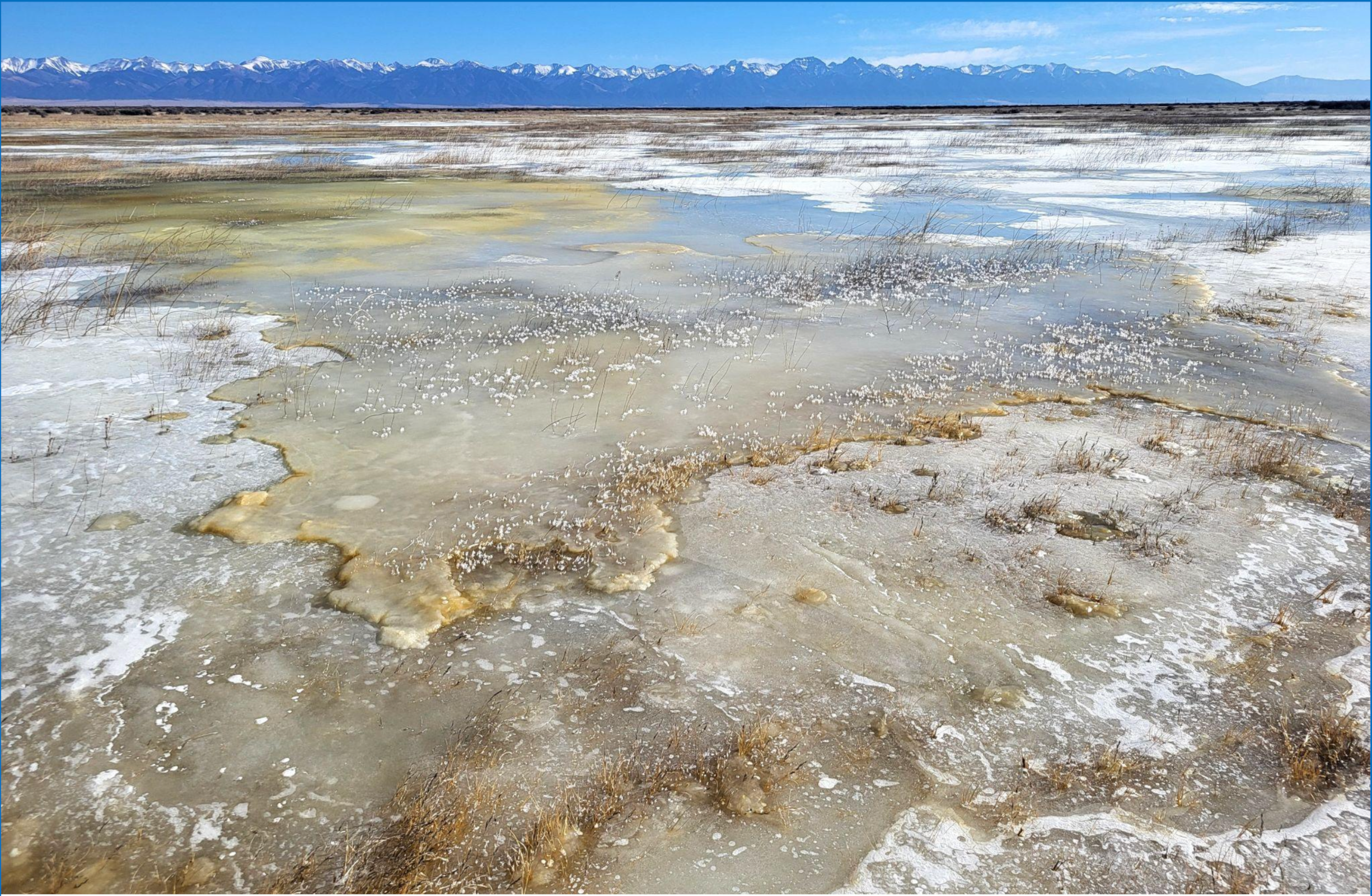
For example, in the Agriculture category, the Frozen Assets project led by American Rivers explores an innovative winter sheet ice strategy in the Rio Grande Basin to recharge groundwater, support farming, and enhance wildlife habitat. Irrigators spread water across fields in winter, mimicking natural freeze-thaw cycles that sustain aquifers to boost early-season soil moisture and create habitat for migratory birds. The grant supports efforts to better quantify and understand the impacts and benefits of this practice.
And in the Watershed Health and Recreation category, the Bear Creek Wildfire Ready Action Plan will develop a proactive strategy to protect water infrastructure and communities from post-fire hazards. Through hazard mapping, stakeholder collaboration and community outreach, the plan will identify priority mitigation projects and improve pre- and post-wildfire preparedness.
Grants also spanned the remaining Water Plan Grant categories: Water Storage & Supply, Conservation & Land Use, and Engagement & Innovation. The projects funded are diverse and impactful—from building new water storage to support long-term water sustainability in Weld County, to improving water efficiency and climate resilience across school campuses, to inspiring water stewardship through an interactive, tree-ring-inspired Colorado River exhibit in Mesa County.
These grants are made possible thanks to funds raised from Colorado sports betting, a unique model for community investment. In 2019, Coloradans prioritized water security by approving Proposition DD, which allocated sports betting revenue to the Water Plan Implementation Cash Fund. In 2024, voters doubled down by passing Proposition JJ, unlocking more funds for Colorado’s critical water work. This collaboration with the Division of Gaming is a win-win, turning recreational dollars into long-term water solutions.
“The overwhelming demand for Water Plan Grants this year clearly shows how critical this program is for Colorado,” said Dan Gibbs, Executive Director, Department of Natural Resources. “These grants are helping communities across the state take action towards addressing Colorado’s water challenges. I can’t wait to see how these projects benefit our environment, watersheds and agricultural communities.