9/18 Drought Update 🌵: We saw more beneficial precipitation last week, which prompted widespread improvements in western and southern Colorado in this week's US Drought Monitor. Good news for now, but we'll need additional moisture to continue chipping away at those longer-term deficits.
— Colorado Climate Center (@climate.colostate.edu) 2025-09-18T21:18:50.443Z
Day: September 19, 2025
Nominee for top federal water role withdraws amid pushback from some #ColoradoRiver states — Alex Hager (KUNC.org) #COriver #aridification

Click the link to read the article on the KUNC.org website (Alex Hager):
September 18, 2025
This story is part of ongoing coverage of the Colorado River, produced by KUNC in Colorado and supported by the Walton Family Foundation. KUNC is solely responsible for its editorial coverage.
The Trump Administration’s nominee to run the Bureau of Reclamation is withdrawing from the process. Ted Cooke, a longtime water manager in Arizona, said he was asked to step back by the White House.
Cooke had been nominated to serve as commissioner of the federal agency that oversees the Colorado River. He faced pushback from some politicians and water officials who worried that he might bring bias into the position.
“I was a political casualty,” Cooke told KUNC on Wednesday.
The seven states that use the Colorado River are stuck in tense talks about how to share its water in the future. They are split into two camps: the Upper Basin states of Colorado, Utah, Wyoming and New Mexico, and the Lower Basin states of Arizona, California and Nevada.
Negotiations ahead of a 2026 deadline appear to be making little progress, and federal water officials can help push states towards agreement. If they can’t reach a deal in time, the federal government can step in and make those decisions itself. After Cooke’s nomination in June, some policymakers in the Upper Basin quietly expressed concern that he might favor the Lower Basin during that process.
Top water officials in the Upper Basin were tight-lipped in their opposition, but multiple sources with knowledge of the situation told KUNC that Cooke would face a difficult path to confirmation.
In a June meeting, Utah’s top Colorado River negotiator, Gene Shawcroft, briefly touched on the Trump Administration’s pick to run Reclamation.
“I hesitate to use the word disturbing, but it is a little disturbing,” Shawcroft said. “That is concerning to us for a variety of reasons, and I’ll probably leave it at that.”

Cooke spent more than two decades working for the Central Arizona Project, which brings Colorado River water to the Phoenix and Tucson areas. Any new plan for managing the Colorado River is likely to include cuts to demand, and Cooke’s former employer is generally among the first entities to lose water under any plan for cutbacks.
Water experts around the region said he was a qualified expert, and Cooke himself denied that he would bring a bias to his new position.

“I don’t really appreciate being pre-judged by folks saying, ‘oh he’s just going to be a Lower Basin or an Arizona partisan,’” Cooke told KUNC in June, shortly after his nomination. “I call that projection. If this is what someone else would do in my shoes, then I feel sorry for them. But it’s not necessarily where I’d be coming from.”
Cooke said he was recently contacted by a White House staffer who asked him to withdraw from the nomination process for a certain reason, but Cooke declined to share that reason.
“I’ve since learned from other folks that I know, and I know lots of people, that that reason was pretty much a BS reason to basically get me out of the running,” Cooke said. “Because there were certain objections that had been raised from some of the states with which I would be dealing.”
Cooke’s withdrawal means that the top federal Colorado River agency will remain without a permanent leader. The seat has already been vacant for eight months. That may make seven-state negotiations more challenging. State water leaders have saidthat the threat of federal action can make it easier to find agreement.
While the top Reclamation role goes unfilled, other federal water officials appear to be filling the gap. Scott Cameron, a longtime federal official who currently serves as the Department of the Interior’s acting Assistant Secretary for Water and Science, told a room of water experts in June that he was intimately involved with those seven-state talks.
As for Cooke, he said he plans to stay in the Colorado River space.
“If this door is shut, there’s lots of other open doors,” he said. “It’s disappointing, don’t get me wrong, but I’m not going to sulk or be mad or develop a resentment about it. Whatever happened, happened.”

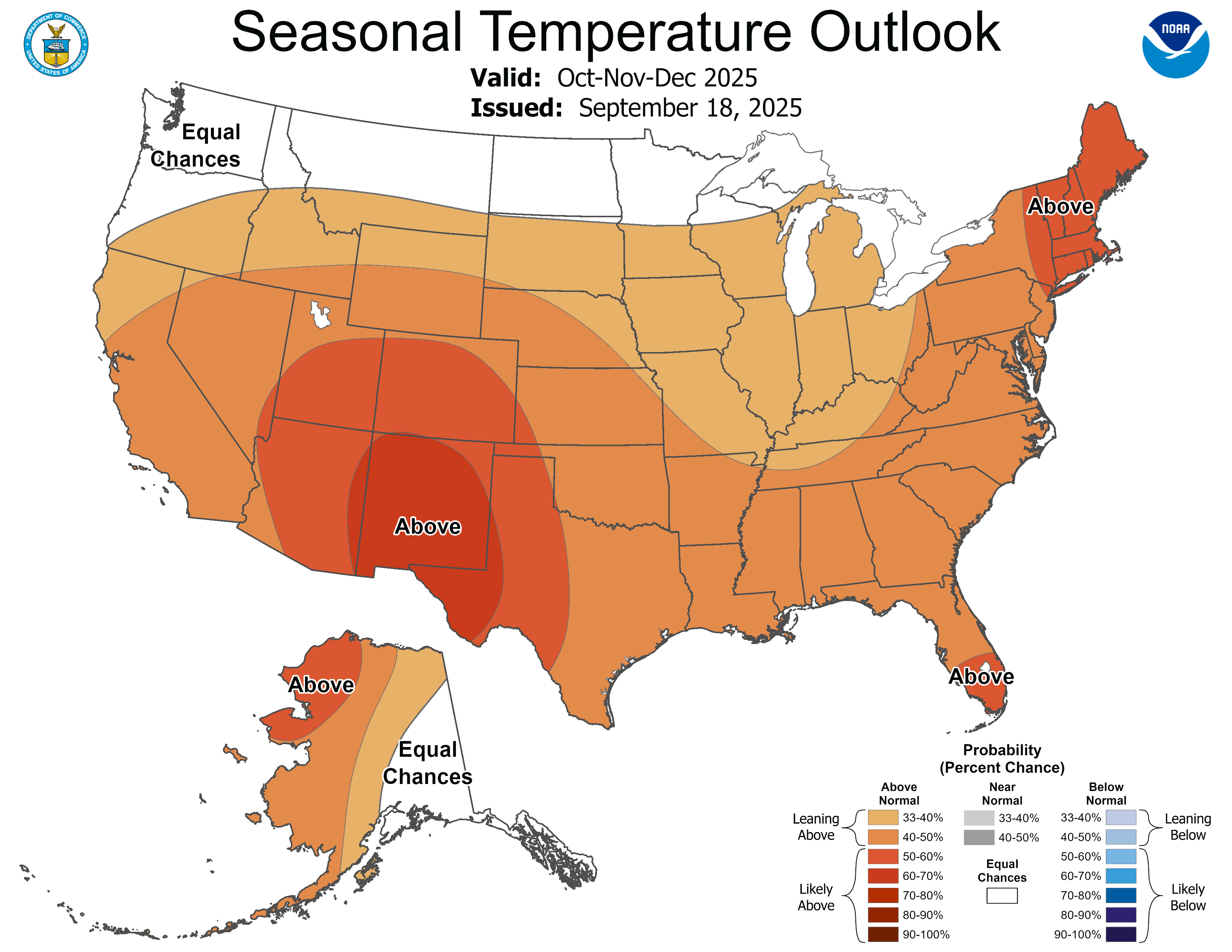
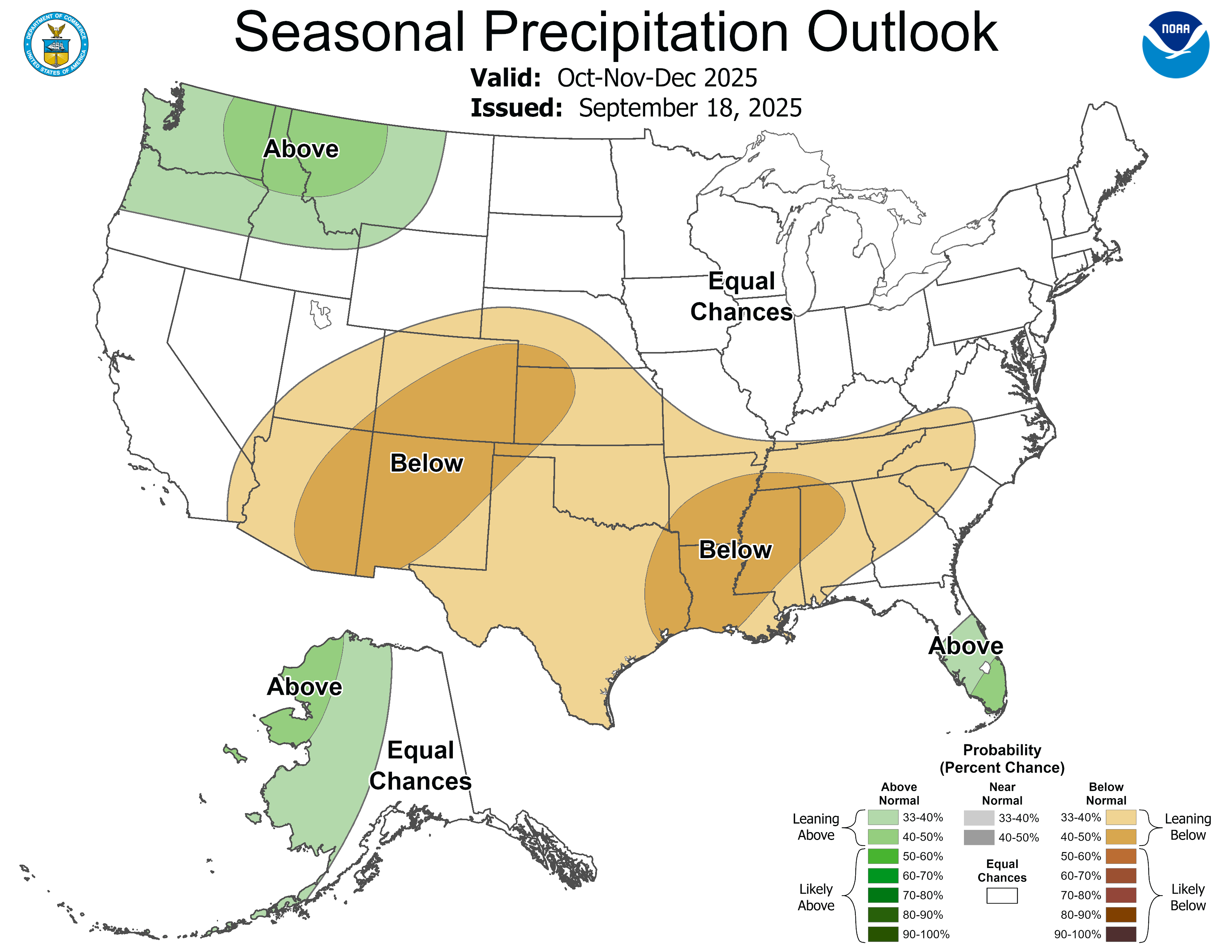
The latest seasonal outlooks through December 31, 2025 are hot off the presses from the #Climate Prediction Center

Why declining aquifers in #Colorado matter: #ColoradoRiver rightfully gets attention. So should the #groundwater depletion underway in the #RepublicanRiver and other basins — Allen Best (BigPivots.com)
Click the link to read the article on the Big Pivots website (Allen Best):
September 12, 2025
Woes of the Colorado River have justifiably commanded broad attention. The slipping water levels in Lake Powell and other reservoirs provide a compelling argument for changes. How close to the cliff’s edge are we? Very close, says a new report by the Center for Colorado River Studies.
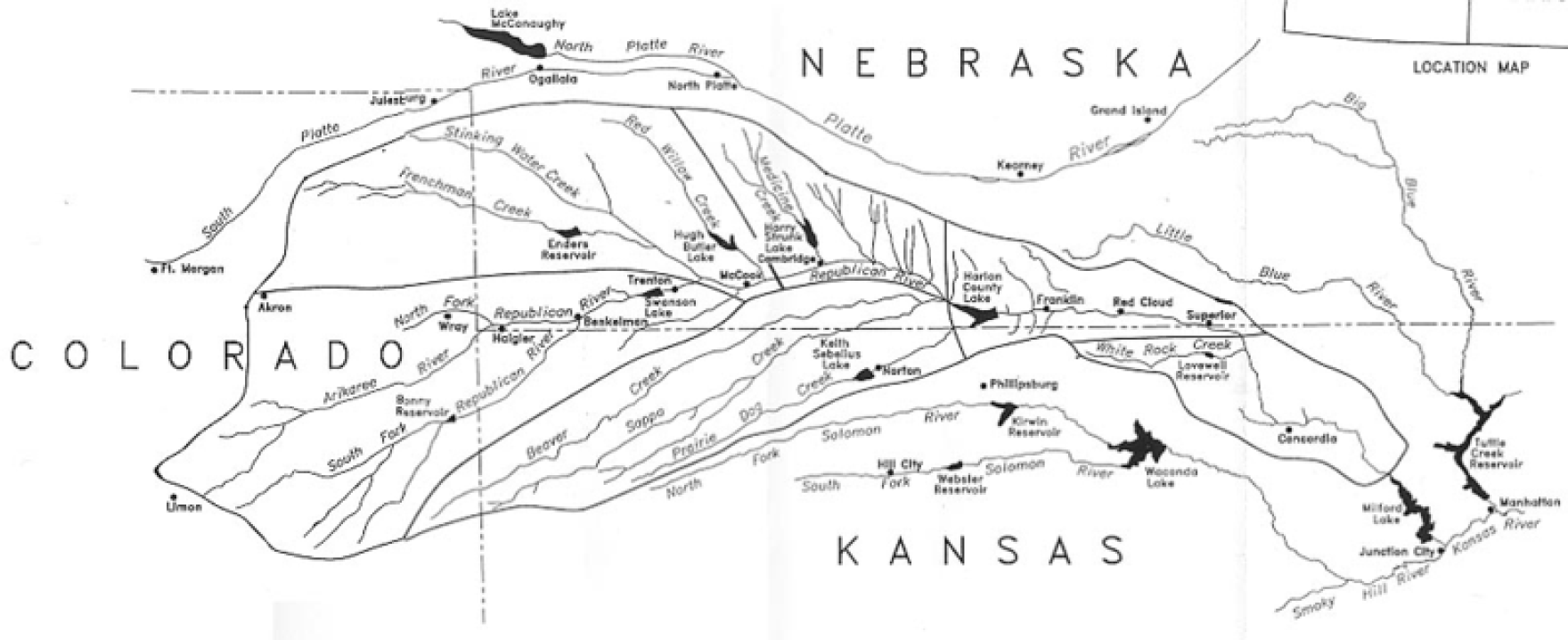
But another cogent — and somewhat related — story lies underfoot in northeastern Colorado. That’s the story of groundwater depletion. There, groundwater in the Republican River Basin has been mined at a furious pace for the last 50 to 60 years.
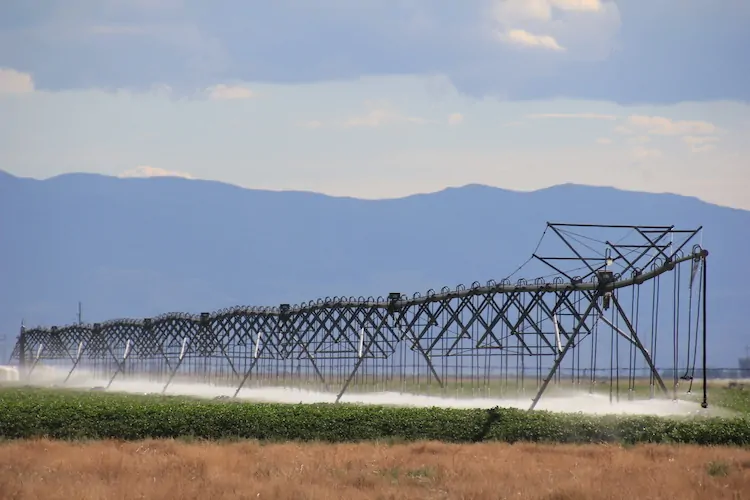
Much of this water in the Ogallala aquifer that was deposited during several million years will be gone within several generations. In some places it already is. Farmers once supplied by water from underground must now rely upon what falls from the sky.
In the San Luis Valley, unlike the Republican River Basin, aquifers can be replenished somewhat by water that originates from mountain snow via canals from the Rio Grande. The river has been delivering less water, though. It has problems paralleling those of the Colorado River. Changes in the valley’s farming practices have been made, but more will be needed.
In a story commissioned by Headwaters magazine (and republished in serial form at Big Pivots), I also probed mining of Denver Basin aquifers by Parker, Castle Rock and other south-suburban communities.
Those Denver Basin aquifers, like the Ogallala, get little replenishment from mountain snows. Instead of growing corn or potatoes, the water goes to urban needs in one of America’s wealthier areas.
Parker and Castle Rock believe they can tap groundwater far into the future, but to diversify their sources, they have joined hands with farmers in the Sterling area with plans to pump water from the South Platte River before it flows into Nebraska. This pumping will require 2,000 feet of vertical lift across 125 miles, an extraordinary statement of need in its own way.
Like greenhouse gases accumulating in the atmosphere, these underground depletions occur out of sight. Gauges at wellheads tell the local stories, just like the carbon dioxide detector atop Hawaii’s Mauna Loa has told the global story since 1958.
Colorado’s declining groundwater can be seen within a global context. Researchers from institutions in Arizona, California, and elsewhere recently used data from satellites collected during the last two decades. The satellites track water held in glaciers, lakes, and aquifers across the globe. In their study published recently in Science Advances, they report that water originating from groundwater mining now causes more sea level rise than the melting of ice.
“In many places where groundwater is being depleted, it will not be replenished on human timescales,” they wrote. “It is an intergenerational resource that is being poorly managed, if managed at all, by recent generations, at tremendous and exceptionally undervalued cost to future generations. Protecting the world’s groundwater supply is paramount in a warming world and on continents that we now know are drying.”
This global perspective cited several areas of the United States, most prominently California’s Central Valley but also the Ogallala of the Great Plains.
In Colorado, the Ogallala underlies the state’s southeastern corner, but the main component lies in the Republican River Basin. The river was named by French fur trappers in the 1700s, long before the Republican Party was organized. The area within Colorado, if unknown to most of Colorado’s mountain-gawking residents, is only slightly smaller than New Jersey.
A 1943 compact with Nebraska and Kansas has driven Colorado’s recent efforts to slow groundwater mining. The aquifer feeds the Republican River and its tributaries. As such, the depletions reduce flows into down-river states.
Farmers are being paid to remove land from irrigation with a goal of 25,000 acres by 2030 to keep Colorado in compliance. So far, it’s all carrots, no sticks. Colorado is also deliberately mining water north of Wray to send to Nebraska during winter months. This helps keep Colorado in compact compliance. So far, these efforts have cost more than $100 million. The money comes from self-assessments and also state and federal grants and programs.
In some recent years, more than 700,000 acre-feet of water have been drafted from the Ogallala in the Republican River Basin. To put that into perspective, Denver Water distributes an average annual 232,000 acre-feet to a population of 1.5 million.
Hard conversations are underway in the Republican River Basin and in the San Luis Valley, too. They will get harder yet. Sixteen percent of all of Colorado’s water comes from underground.
The Colorado River has big troubles. It’s not alone.
For stories in the series, see:
Part I: Hard questions about groundwater mining in Colorado: It’s going fast! What needs to be done in the Republican River Basin?
Part II: South Metro cities starting to diversify water sources: Castle Rock and Parker 25 years ago were almost entirely dependent upon groundwater. They are diversifying, and one plan is to import water from far down the South Platte River Valley.
Part III: 20th century expansions and 21st century realities in the San Luis Valley: The solutions seem fairly obvious. Executing them is another matter.
Part IV: Balancing demands of today and tomorrow: Are we doing better than kicking the can down the road?
How much water remains in Baca County?: Study commissioned by legislators uses newer techniques than were available in 2002.