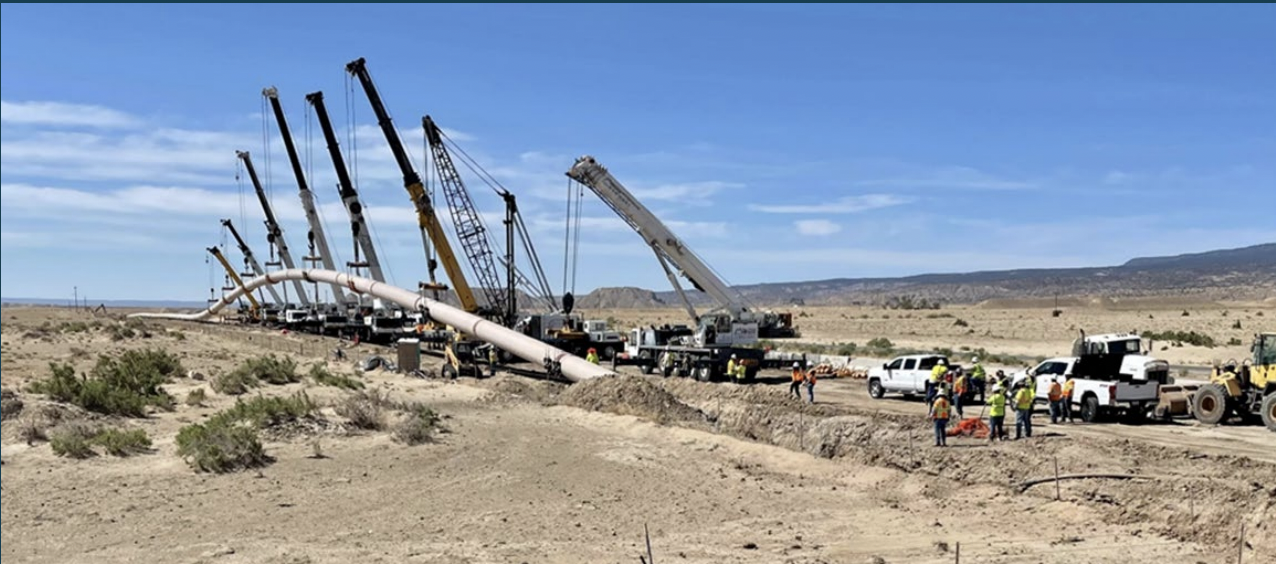
Analysis of #ColoradoRiver Basin Storage Suggests Need For Immediate Action — Jack Schmidt,Ā Anne Castle,Ā John Fleck,Ā Eric Kuhn,Ā Kathryn Sorensen, Katherine Tara (Center for Colorado River Studies) #COriver #aridification

Photo credit: Center for Colorado River Studies

From email from the Center for Colorado River Studies:

September 11, 2025

While Colorado River Basin attention is focused on negotiating post-2026 operating rules, a near term crisis is unfolding before our eyes. If no immediate action is taken to reduce water use, our already-thin buffer of storage in Lake Powell and Lake Mead could drop to just 9 percent of the levels with which we started the 21st century.

Water consumption in the Basin continues to outpace the natural supply, further drawing down reservoir levels. While Basin State representatives pursue the elusive goal of a workable and mutually acceptable set of post-2026 operating rules, our review of the latest Bureau of Reclamation data shows that the gap between ongoing water use and the reality of how much water actually flows in the Colorado River poses a serious near term threat. Another year like the one we just had on the Colorado River would nearly exhaust our dwindling reserves.

In a report issued today, we look at total mass balance in the system – reservoir storage, inflow, and water use – to help clarify how much water the Basin actually has to work with if next year’s snowmelt runoff is similar to 2025, and the risks if we do not take near term action to reduce our use. The findings are stark.

Read the analysis now

Document Authors:

  1. Jack Schmidt,Ā Director, Center for Colorado River Studies, Utah State University, former Chief, Grand Canyon Monitoring and Research Center
  2. Anne Castle,Ā Getches-Wilkinson Center for Natural Resources, Energy and the Environment, University of Colorado Law School, former US Commissioner, Upper Colorado River Commission, former Assistant Secretary for Water and Science, US Dept. of the Interior
  3. John Fleck,Ā Writer in Residence, Utton Transboundary Resources Center, University of New Mexico
  4. Eric Kuhn, Retired General Manager, Colorado River Water Conservation District
  5. Kathryn Sorensen,Ā Kyl Center for Water Policy, Arizona State University, former Director, Phoenix Water Services
  6. Katherine Tara,Ā Staff Attorney, Utton Transboundary Resources Center, University of New Mexico
September 11, 2001

Via WallpaperMaven.com

Re-upping this post from 2017.

The morning of 9/11 I was working at the computer. My son barged into the computer room and said, “Papa a plane hit the the World Trade Center building!”

I will always remember the people that died that day.

The best coverage of the event turned out to come from the bloggers. The talking heads on TV kept interviewing the same people and showing the same footage over and over. Meanwhile the bloggers reported what was going on from the point of view of those most affected by the losses of loved ones and what they observed on the street.

From my post on the first anniversary of the event:

The events of that day led me into the world of weblogging. I started reading Dave Winer’s Scripting News regularly. At the time he was pointing to people writing about the tragedy, in real time, in their own voices, and I was stunned by the effectiveness and quality of the reporting and opinion being published. Here’s the 9/11/2001… Scripting News. No one got much work done that day. A couple of TV’s were on in the building but people mostly sat around talking, working through the events, getting comfort from human conversation and interaction.

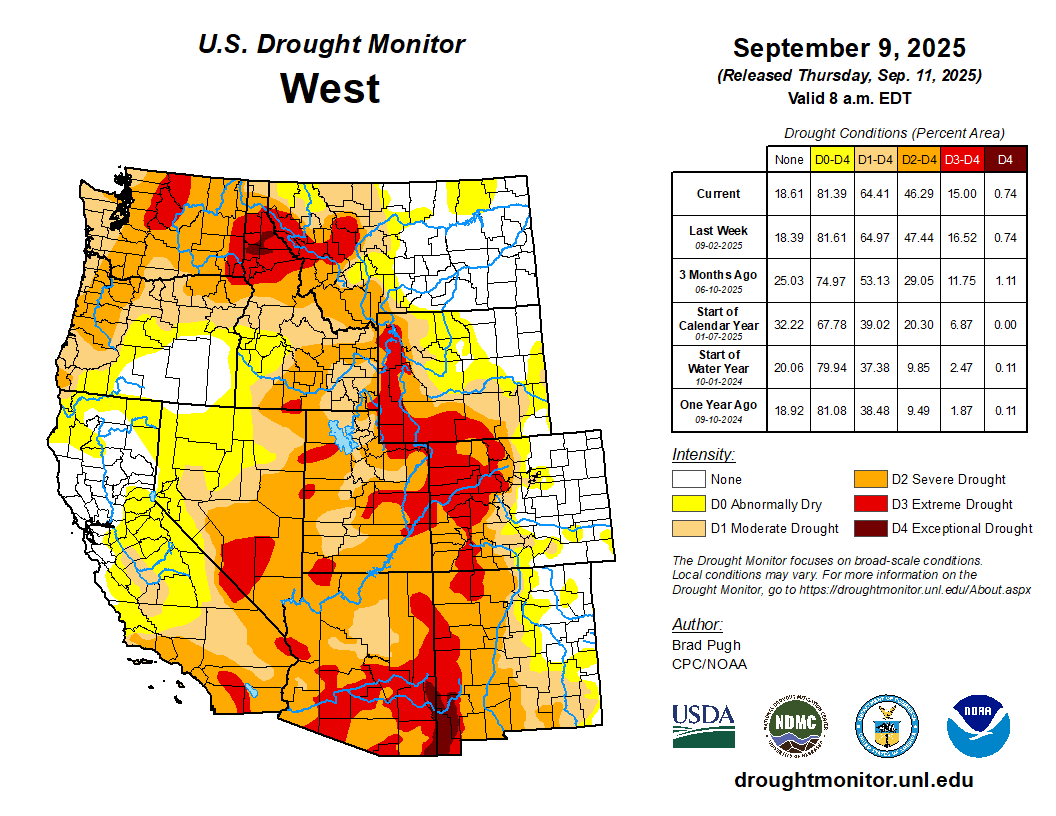
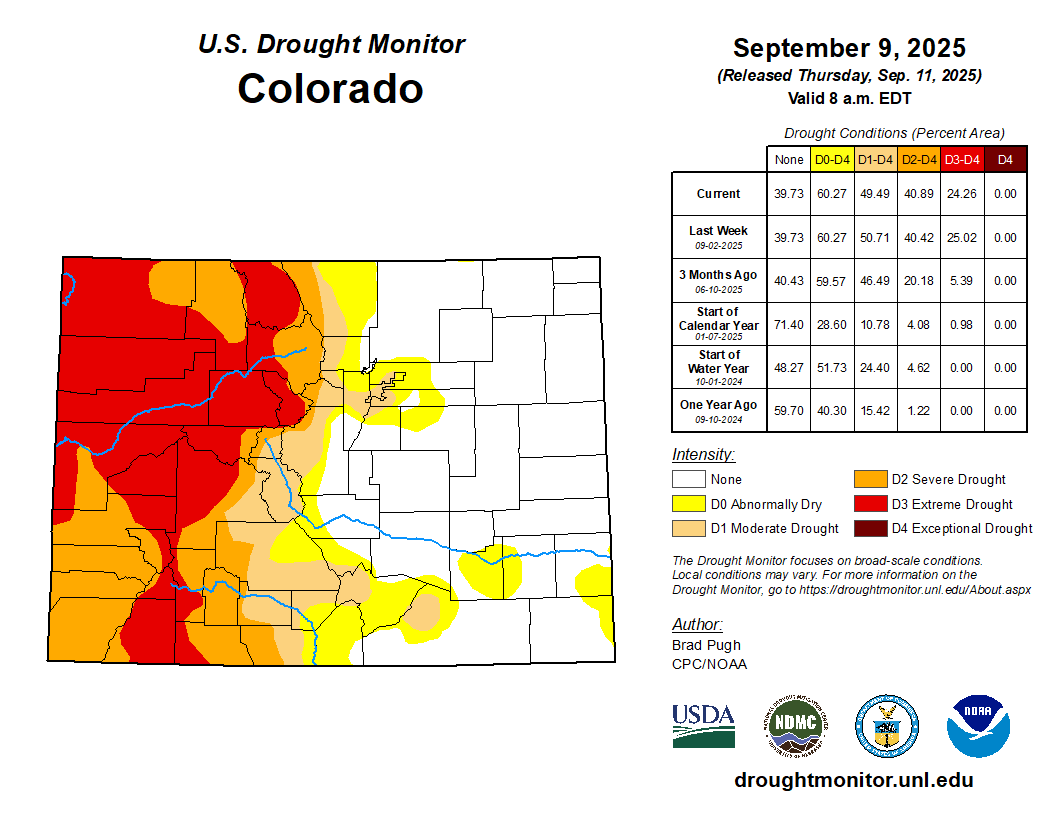
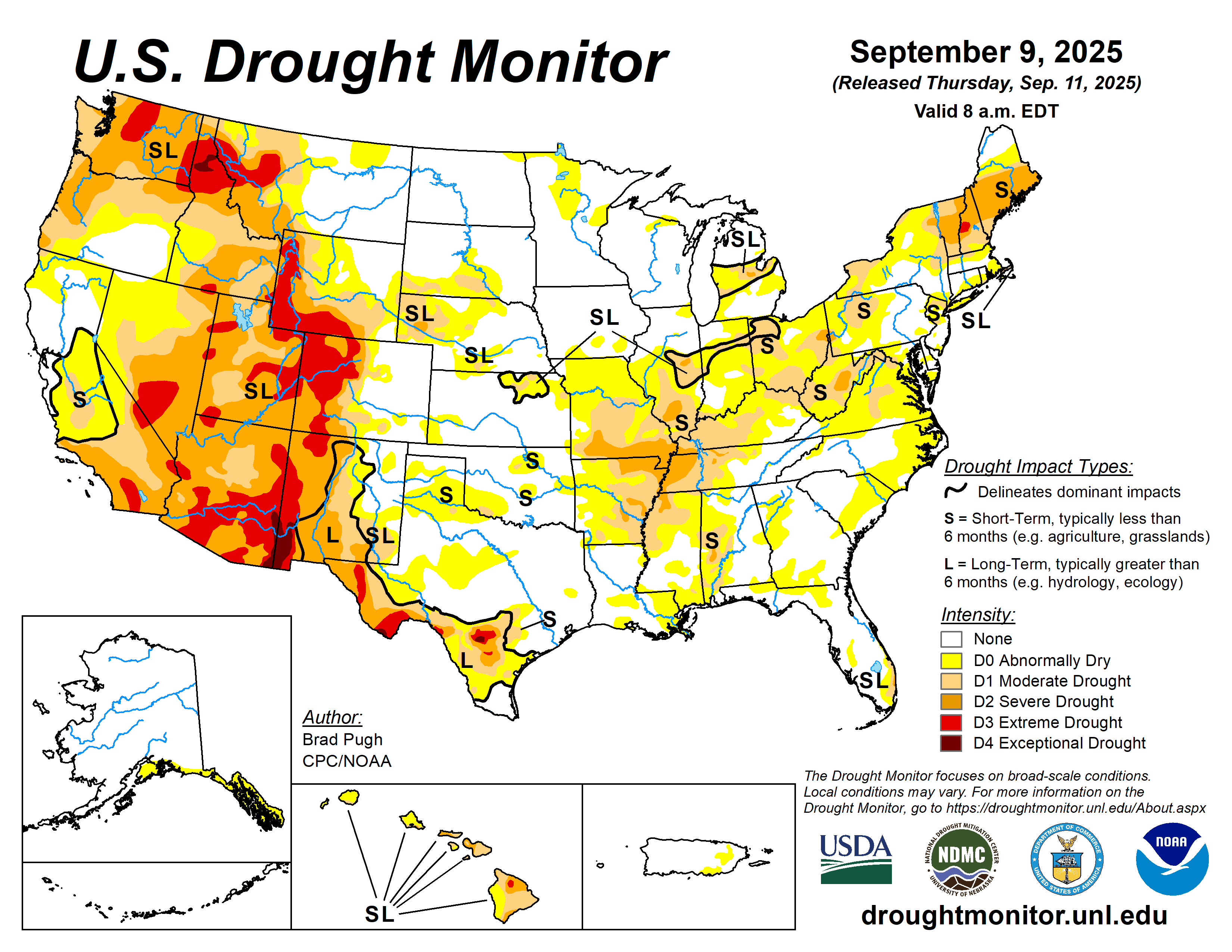
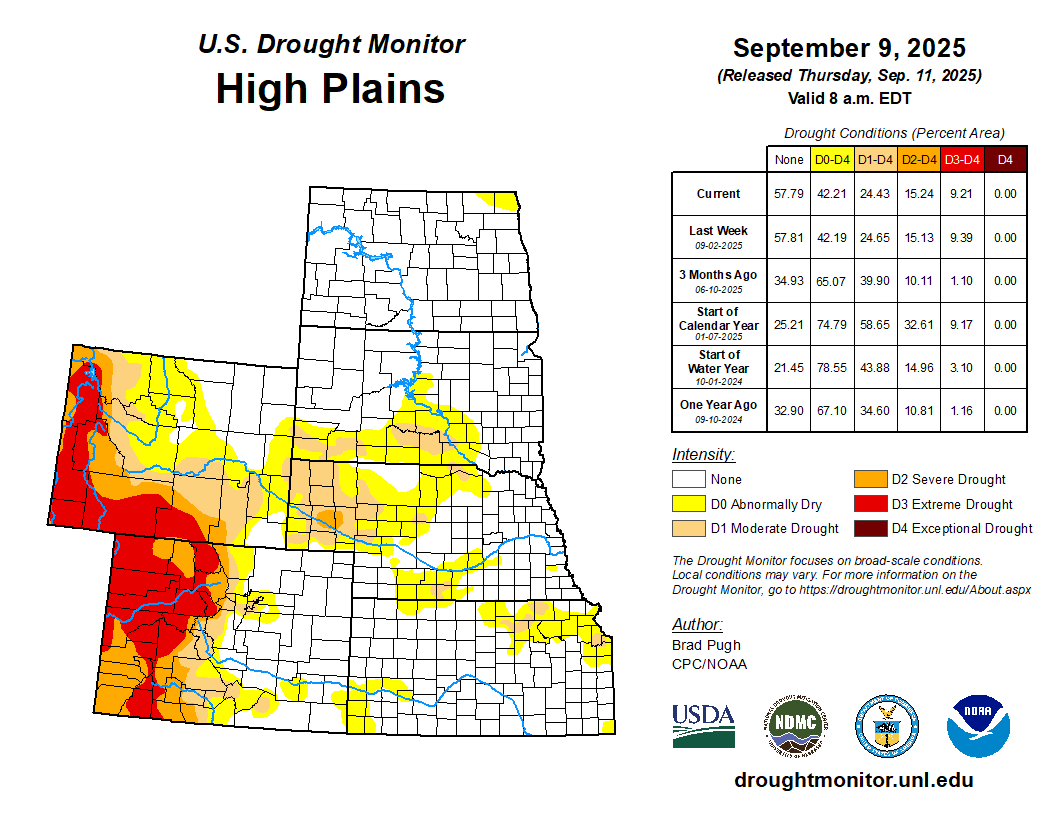
#Drought news September 11, 2025: Significant precipitation (more than 0.5ā€ and locally 2-3ā€) supported improvements across S. #Colorado, while worsening SPIs led to a slight expansion of severe (D2) to extreme (D3) drought for N. Colorado

Click on a thumbnail graphic to view a gallery of drought data from the US Drought Monitor website.

Click the link to go to the US Drought Monitor website. Here’s an excerpt:

This Week’s Drought Summary

Abnormal dryness (D0) and short-term moderate (D1) to severe (D2) drought continued to expand across the Lower to Middle Mississippi Valley, Ohio Valley, Central Appalachians, Northeast, and Southeast. However, heavy precipitation (2 inches or more) resulted in a 1-category improvement to central and eastern portions of Kentucky and Tennessee. Enhanced moisture, associated with Hurricane Lorena in the East Pacific, led to locally heavy precipitation and drought improvements to parts of the Desert Southwest. Following a relatively wet week for this time of year, minor improvements were made to parts of Oregon. Elsewhere, little to no changes were warranted for the Pacific Northwest and California. A strong cold front for early September triggered heavy precipitation and drought improvements across New Mexico and the Rio Grande Valley of Texas. Much of the Central to Northern Great Plains and Upper Mississippi Valley remained drought-free. 7-day temperatures (September 2-8) averaged below-normal across most of the central and eastern U.S. with above-normal temperatures limited to the Pacific Northwest, Northern Intermountain West, Great Basin, and California. Widespread drought of varying intensity continued for Hawaii, while Alaska and Puerto Rico remained drought-free…

High Plains

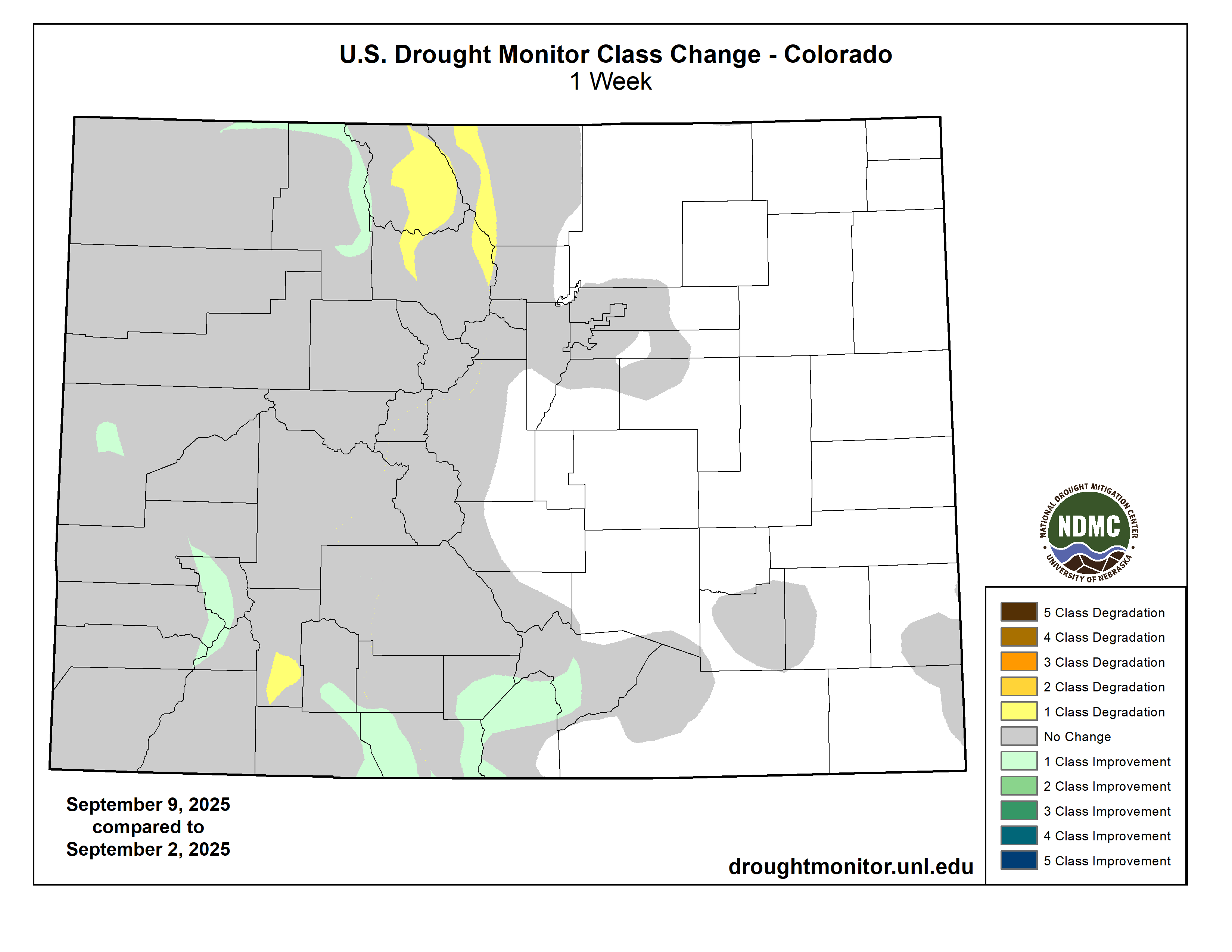
Heavy precipitation (more than 2 inches) occurred in D-nada areas of central Kansas, but significant precipitation (1.5 to inches) led to a minor decrease in abnormal dryness (D0) in southwestern Kansas. Conversely, a slight increase in D0 and moderate drought (D1) was made to eastern Kansas. Significant precipitation (more than 0.5ā€ and locally 2-3ā€) supported improvements across southern Colorado, while worsening SPIs led to a slight expansion of severe (D2) to extreme (D3) drought for northern Colorado. A majority of the Dakotas, Nebraska, and eastern Wyoming remain drought-free…

Colorado Drought Monitor one week change map ending September 9, 2025.

West

Heavy precipitation (1 to 2.5 inches) supported a decrease in severe (D2) to extreme (D3) drought around the Albuquerque, Santa Fe, and Las Cruces areas of New Mexico. In addition, NDMC’s long-term drought blend was used as guidance. Locally heavy precipitation led to improvements across portions of southeastern Nevada, southwestern Utah, and western to southern Arizona. Conversely, the continued drier-than-normal Monsoon (60-day precipitation averaged 50 percent below normal) supported an expansion of extreme drought (D3) for eastern Arizona. A favorable response to heavy precipitation (2 to 2.5 inches) two weeks ago led to the removal of extreme drought (D3) in southwestern Montana. Farther to the north, a 1-category degradation was made in northwestern Montana after a reassessment of longer term metrics including the NDMC blend. A small increase in extreme drought (D3) in eastern Washington was made to match up better with 6-month SPI. An unusually wet start to September resulted in small areas of improvement to Oregon. Elsewhere across the Pacific Northwest and California, no changes were needed…

South

Heavy precipitation (1.5 to 2 inches or more) supported a 1-category improvement to central and eastern Tennessee, while 30 to 60-day SPI along with soil moisture indicators resulted in the expansion of severe drought (D2) across western Tennessee, northern Mississippi, and northeastern Arkansas. Increasing 30 to 60-day precipitation deficits supported extending abnormal dryness (D0) south to the Mississippi Gulf Coast. For the long-term drought areas designated in Texas, a round of heavy precipitation (more than 1.5 inches) this past week resulted in 1-category improvements. Based on the 120-day SPI and NASA SPoRT soil moisture, D0 was expanded across southwestern Oklahoma with the addition of a small moderate drought (D1) area. 30 to 60-day SPIs along with declining soil moisture supported an increasing coverage of D0 across the Texas Panhandle and Edwards Plateau…

Looking Ahead

The drier pattern is likely to persist across much of the eastern and central U.S. through September 15. Along with the continued dryness dating back to August, a transition to warmer-than-normal temperatures is underway throughout the central U.S. and summerlike heat is forecast to expand east across the Mississippi and Ohio Valleys. From September 13 to 15, maximum temperatures are expected to reach the upper 90s to near 100 degrees F from St Louis south to Memphis. Another week of heavy rainfall is forecast to affect the southern third of the Florida Peninsula and portions of New Mexico. Showers and thundershowers will shift eastward from Oregon and the Northern Intermountain West to the Northern Great Plains.

The Climate Prediction Center’s 6-10 day outlook (valid September 16-20, 2025) favors above-normal temperatures for the nearly the entire lower 48 states, southeastern Alaska, and Hawaii. The largest above-normal temperature probabilities (70-80 percent) are forecast across the Mississippi Valley. The outlook leans towards the drier side across most of the Northeast, Mid-Atlantic, Ohio and Tennessee Valleys, and Lower Mississippi Valley. Above-normal precipitation is more likely for the Upper Mississippi Valley, Northern to Central Great Plains, Rockies, and Southwest. The outlook also favors above-normal precipitation for most of Alaska and Hawaii.

US Drought Monitor one week change map ending September 9, 2025.

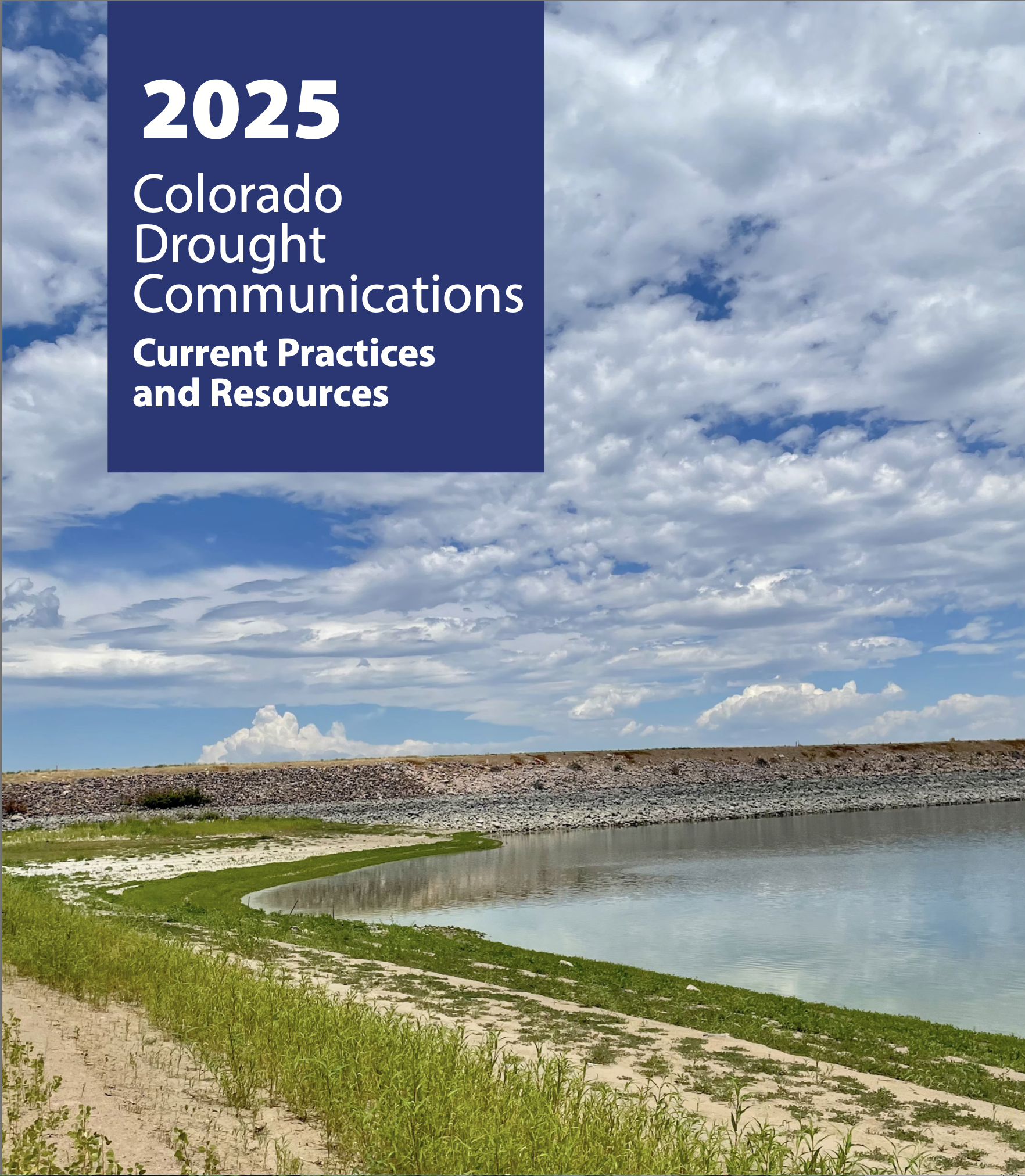
#Colorado Drought Communications: Current Practices and Resources — Colorado Drought Communications Workgroup

Click the link to access the publication on the Colorado Water Wise website:

As drought conditions continue to challenge Colorado’s water systems, the Colorado Drought Coordination Group (CDCG) is working to ensure that communities are better prepared, connected and informed.

In 2023, recognizing the need for more focused guidance on public communication within the water provider community, CDCG members established a voluntary Drought Communications Work Group. This collaborative effort aimed to build transparency, trust and consistency among communities involved in drought and water shortage communications. 

This subcommittee identified and compiled successful communication practices from across Colorado, resulting in a new, practical resource for water providers of all sizes. The document, 2025 Colorado Drought Communications Current Practices and Resources, offers comprehensive overview of communication strategies that have proven effective in communicating drought and water shortages. The guide includes recommended outreach programs, helpful tools and lessons learned. 

The free guidebook is now available through Colorado Water Wise. The full list of survey results taken to assist with the Drought Communications Document is also available for your review. 

Consider how this guidebook might support your community’s drought communication efforts. As part of this initiative, new drought-focused materials are also being developed for the Colorado WaterWise Live Like You Love ItĀ® Toolkit, expanding public outreach tools available to water providers statewide. 

Disclaimer: I am one of the authors of the guidebook.

#New Mexico delegation renews push to fund tribal water settlements — Patrick Lohman (SourceNM.com)

Click the link to read the article on the Source NM website (Patrick Lohman):

September 9, 2025

Members of New Mexico’s congressional delegation are urging Republican leaders to prioritize the funding of tribal water settlements, even as President Donald Trump is proposing little to no funding to honor the nation’s longstanding treaty obligations.

In a letter to House and Senate leaders last week, New Mexico’s delegation — all Democrats — and their Republican colleagues in Montana called on House and Senate leadership to prioritize the passage of 10 water settlements, six of which are in New Mexico.

ā€œCompletion of these settlements will save taxpayers millions of dollars, provide water access and certainty to Tribal and non-Tribal water users across the West, avoid years of protracted and costly litigation, and support the United States’ trust responsibility to Tribes,ā€ the members of Congress wrote in the Sept. 4 letter.

The letter notes that the settlements have ā€œrobust supportā€ and have passed a Senate Committee and received a hearing in a House committee. But Congress has otherwise taken little action on them since members introduced the settlements in February, according to a congressional bill tracker.

New Mexico entered into five settlement agreements in 2022 with the Pueblos of Acoma, Laguna, Jemez and Zia, the Navajo Nation, Zuni Tribe and Ohkay Owingeh. 

The New Mexico delegation subsequently introduced legislation to approve the deals, including approximately $3 billion to establish funds and build infrastructure. The settlements, which have required years and sometimes decades of costly negotiations, would settle tribal rights for the San JosĆ©, Jemez, Chama and Zuni rivers.

Two other bills would correct technical errors in established Tribal water settlements and add an extension of both time and money to complete the long-delayed Navajo-Gallup water project. Federal funding granted the project a short reprieve, but it faces an upcoming deadline only Congress can delay.

The Navajo-Gallup project is the most expensive of the projects, with additional pending costs that Congress will need to approve. 

However, President Donald Trump’s budget proposal does not include the roughly $175 million needed for the Navajo-Gallup project. U.S. Sen. Ben Ray LujĆ”n recently chastised a federal Interior Department official over the lack of funding, saying failure to pay for the pipeline would be the nation’s first-ever violation of a tribal water treaty.

The Interior Department’s budget request for the fiscal year beginning in October seeks Congressional approval of just $4 million for the Navajo-Gallup project, and it’s one of only two tribal water rights settlements to get any proposed funding, according to the budget request. 

The letter calls on House and Senate leaders to extend the use of Customs User Fees, which the U.S. Customs and Border Patrol collects from international arrivals, to fund the settlements. Congress in 2010 funded four tribal settlements with the use of those fees, the letter notes, adding, ā€œWe urge you to consider prior precedent to offset the cost of these proposed settlements and appreciate your consideration.ā€

Native land loss 1776 to 1930. Credit: Alvin Chang/Ranjani Chakraborty

New study looks at ā€˜right to float’ on #Colorado waterways — Colorado Politics

Photo credit: Colorado Parks & Wildlife

Click the link to read the article on the Colorado Politics website (Marianne Goodland). Here’s an excerpt:

September 10, 2025

Two new studies from the Common Sense Institute focus on the economic costs ofĀ wolf restorationĀ and on what could be an upcoming battle at the state Capitol — the right to float. That latter is a belief that anyone using a public waterway may also have the right to access private property that runs along it…The think tank held a forum on Tuesday [September 9, 2025] to discuss both issues, along with a trio of panelists who have a particular interest in both. Greg Walcher, who headed the Department of Natural Resources under Gov. Bill Owens and one of the authors of the ā€œright to floatā€ study, pointed out that Colorado treats the issue differently than other states. That’s partly because Colorado law dictates land under the water, known as the streambed, belongs to the adjacent landowner. That also means stream embankments are private, Walcher said. The study pointed out that wading on private property, which could include anchoring a boat or other floatation device or portaging across private land to access the water, is considered trespassing…Most large rivers in Colorado are surrounded by public land, so the issue of public access doesn’t arise. It’s the hundreds of smaller streams that cross private land where the issue most often resides…

The issue has divided individuals who recreate in Colorado’s waterways and those who own the land adjacent to those waterways. That becomes even more important at a time when Colorado is increasingly becoming a recreation economy. Walcher explained that recreation generates billions of dollars in economic activity, tied to the state’s natural resources, including its bodies of water. The CSI study is the first of three to look at the issue, one that is expected to surface in the General Assembly next year, and potentially as a ballot measure for 2026.

Recreational vehicle: Photo: Brent Gardner-Smith/Aspen Journalism