Mrs. Gulch’s landscape January 9, 2026

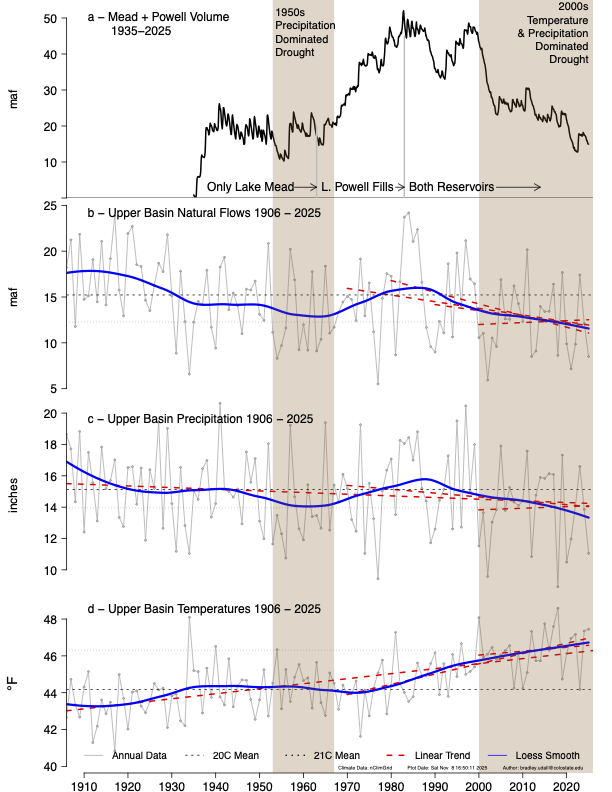
Click the link to read the article on the InkStain.net website (Michael Cohen — Pacific Institute):
December 15, 2025
Key Takeaways
- The consensus-based effort to develop new rules to manage the Colorado River system hasn’t worked – it’s time for a new approach
- Federal leadership and the credible threat of managing reservoirs to protect the system is that new approach
Missing Deadlines
Way back at the end of the last century, at the annual Colorado River conference in Vegas, Marc Reisner repeated the Margaret Thatcher quote that consensus is the absence of leadership. On Veterans Day, the seven Colorado River basin states missed yet another deadline to reach consensus on a conceptual plan for managing the shrinking Colorado River after the current rules expire in 2026. Valentine’s Day marks the next holiday deadline, this time for a detailed plan, but multiple missed deadlines give no indication that the states will reach consensus then, either.
The basin states can’t agree on the substance of a new agreement. They also disagree on the process to get there. While Arizona has called for the federal government to break the negotiation logjam, Colorado opposes federal intervention and continues to call for consensus. Each basin-state negotiator acts to protect their state’s interests, often at the expense of the short and long-term resilience of the Colorado River system as a whole and the 35 million people who rely on it. The continued failure to negotiate a plan challenges the efforts of irrigators, cities, businesses, and river runners throughout the basin to plan for 2027 and beyond.
Meanwhile, river runoff and reservoir storage get lower and lower and snowpack lags well below average. This is not a zero-sum game, with winners and losers. The more appropriate metaphor here is a shrinking pie, with smaller and smaller pieces.
Leadership
The basin state negotiators have met for years behind closed doors, without success. It’s time for a new approach. Aggressive federal intervention and the credible threat of a federally-imposed Colorado River management plan would offer political cover – or a political imperative – for the negotiators. The credible threat of a federal plan would give the negotiators the space to compromise without having to do so unilaterally and then being accused of not protecting their state’s interests.
But federal leadership alone is not enough – it must be coupled with a plausible federal plan that compels the states to act and can meet the magnitude of the ongoing crisis. As the Department of the Interior announced in its 6/15/2023 press release, the purpose of and need for the post-2026 guidelines is “to develop future operating guidelines and strategies to protect the stability and sustainability of the Colorado River.” To date, the development of the post-2026 guidelines has prioritized routine operations of Glen Canyon and Hoover dams over the system as a whole, a focus inconsistent with the magnitude and urgency of the problem. Prioritizing routine dam operations and hydropower generation over water delivery and environmental protection elevates the tool over the task. Seeking to preserve routine operations of the dams while imposing draconian cuts on water users is not a path to resilience and precludes alternatives that would help stabilize the system.
The Plan
Instead, by early next year, the Secretary should announce that Interior will implement a federal plan incorporating the following elements:
- Grant Tribal Nations the legal certainty and the ability to access, develop, or lease their water.
- Make accessible (“recover”) the roughly 5.6 million acre-feet (MAF) of water stored in Lake Powell below the minimum power pool elevation and avoid the additional ~0.25 MAF of annual evaporative losses from Powell by storing such water in Lake Mead and using Powell as auxiliary storage.
- As a condition precedent, the Lower Basin states agree not to place a “compact call” for the duration of the agreement.
- Implement annual Lower Basin water use reductions for the following calendar year based on total system contents on August 1:
- 75% – 60%: cuts to Lower Basin water uses increasing from 0 to 1.5 MAF<60% – 38%: static cut to Lower Basin water uses of 1.5 MAF<38% – 23%: increasing cuts to Lower Basin water uses of up to 3.0 MAF total
- below 23% of total system contents – cut Lower Basin water uses to the minimum required to protect human health and safety and satisfy present perfected rights
- If the Lower Basin states do not satisfy the condition precedent in #3 above, Reclamation limits Lower Basin deliveries to the minimum required to satisfy present perfected rights when total system contents are <75%.
- Recover water stored in federal Upper Basin reservoirs unless the Upper Basin states reduce annual water use based on total system contents:
- <34% – 23%: Assuming the first 0.25 MAF “reduction” would be contributed by the elimination of Powell’s evaporative losses and gains from Glen Canyon bank storage, reduce Upper Basin water uses up to 0.65 MAF
- below 23% of total system contents – limit total Upper Basin water uses to 3.56 MAF (the minimum volume reported this century)
- Expand the pool of parties eligible to create Intentionally Created Surplus (ICS) beyond existing Colorado River contractors, to include water agencies and other entities with agreements to use Colorado River water.
- Eliminate the existing limits on the total quantity of Extraordinary Conservation ICS and DCP ICS that may be accumulated in ICS and DCP ICS accounts, while maintaining existing limits on delivery of such water.
- Fully mitigate the on-stream and off-stream community and environmental impacts of the water use reductions identified above.
- After a three-year phase-in period, condition Colorado River diversions on a clear “reasonable and beneficial use” standard predicated on existing best practices for water efficiency, including but not limited to the examples listed below (state(s) that already have such standards):
- Require removal of non-functional turf grass (California, Nevada)
- Incentivize landscape conversion and turf removal statewide (California, Colorado, Utah)
- Adopt stronger efficiency standards for plumbing and equipment (Colorado, California, and Nevada)
- Require urban utilities to report distribution system leakage, and to meet standards for reducing water losses (California)
- Require all new urban landscapes to be water-efficient (California)
- Require metering of landscape irrigation turnouts (Utah)
- Ensure that existing buildings are water-efficient when they are sold or leased (Los Angeles, San Diego)
- Require agricultural water deliveries to be metered and priced at least in part by volume (California)
Many of the elements listed above raise important questions about federal authorities, accounting and data challenges, the roles and obligations of state water officials to implement coordinated actions in-state, water access for disadvantaged communities, environmental compliance, and potential economic and social costs, among others. For each item listed, many details will need to be refined. Similarly, the plan’s duration will need to be determined. But as temperatures again climb into the high 40s in the Rockies near the Colorado River’s headwaters (in mid-December!), drying soils and reducing next year’s runoff, and the National Weather Service issues red flag fire warnings for Colorado’s Front Range, the need for bold action is clear.
The Dominy Bypass
Recovering water stored in Lake Powell will require the construction of new bypass tunnels around Glen Canyon Dam. Former Reclamation Commissioner Floyd Dominy sketched the design of such tunnels almost thirty years ago (see image). Such tunnels would enable the recovery of about 5.6 MAF of water stored below the minimum power pool elevation – more water than the Upper Basin states consume each year. Current operating rules and the scope of the current planning process effectively treat this massive volume of water as “dead storage” – a luxury the system can no longer afford. After Reclamation constructs the bypass tunnels, water recovery should be timed to maximize environmental and recreational benefits in the Grand Canyon.
Avoiding a Worse Outcome
Last year’s Colorado River conference featured a panel on the risks of litigation. Unfortunately, the continued failure to reach a deal, growing litigation funds, and the preference for repeating the same action that’s led to the continuing impasse suggest that some believe litigation could generate a better outcome (for them). Both sides have attorneys who assure their clients of victory. Yet, as Arizona learned in 1968, winning in the Supreme Court doesn’t ensure a better outcome and certainly won’t increase Colorado River flows. Placing faith in Congress could entangle this basin with challenges in other basins and other political considerations.
Running the River
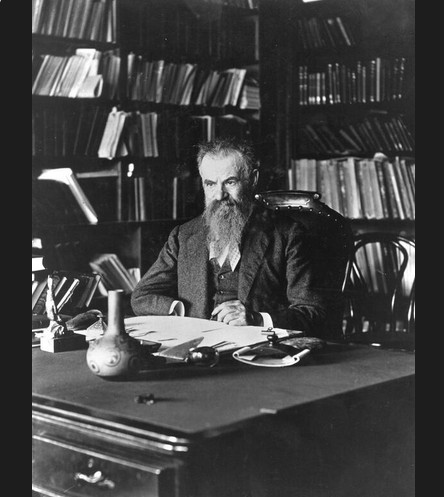
Almost 160 years ago, John Wesley Powell – the reservoir’s namesake – demonstrated bold leadership, going where no (white) man had gone before. With leadership and a clear goal, he charted a route through the Colorado River’s iconic canyons. Now is the time for more bold leadership, a clear goal, and a plan to get there.
About the author

Since 1998, Michael Cohen’s work with the Pacific Institute has focused on water use in the Colorado River basin and delta region and the management and revitalization of the Salton Sea ecosystem. Michael received a B.A. in Government from Cornell University and has a Master’s degree in Geography, with a concentration in Resources and Environmental Quality, from San Diego State University.

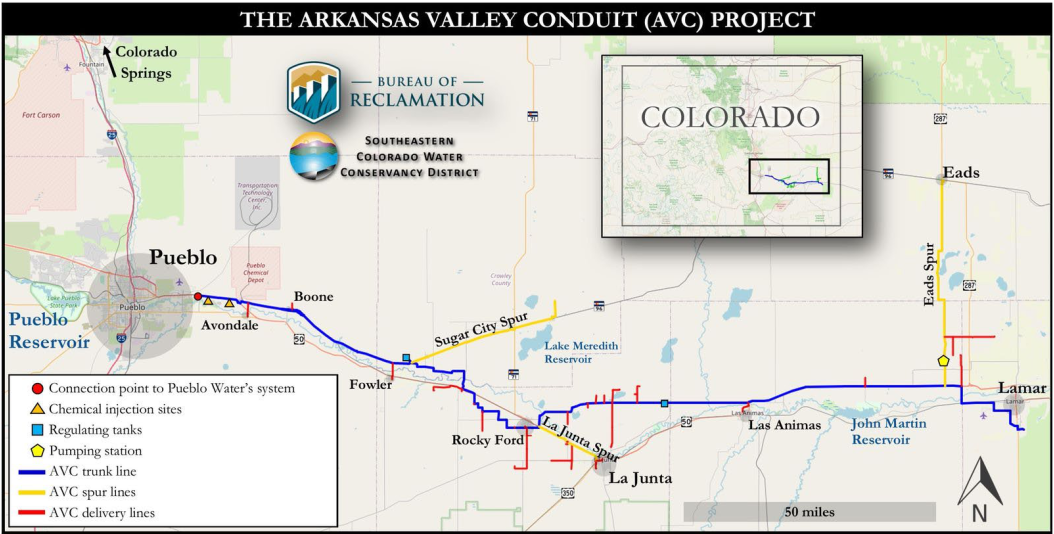
Click the link to read the article on The Denver Post website (Kevin Freking and Nick Coltrain ). Here’s an excerpt:
January 8, 2026
Rep. Lauren Boebert, who sponsored bill, pushed president in November to release Jeffrey Epstein files
The U.S. House refused Thursday to override President Donald Trump’s vetoes of two low-profile bills — including one that would help pay for a water pipeline in Colorado — as Republicans stuck with the president despite their prior support for the measures. Congress can override a veto with support from two-thirds of the members of the House and the Senate. The threshold is rarely reached. In this case, Republicans opted to avoid a fight in an election year over bills with little national significance, with most GOP members voting to sustain the vetoes. The two vetoes were the first of Trump’s second term. One bill was designed to help local communities finance the construction of a pipeline to provide water to tens of thousands in southeastern Colorado. The other designated a site in Everglades National Park as a part of the Miccosukee Indian Reservation…
On the Colorado bill, 35 Republicans sided with Democrats in voting for an override — with all members of the state’s delegation from both parties supporting an override. On the Florida bill, only 24 Republicans voted for the override. The White House did not issue any veto threats prior to passage of the bills, so Trump’s scathing comments in his recent veto message came as a surprise to sponsors of the legislation. Ultimately, his vetoes had the effect of punishing backers who had opposed the president’s positions on other issues. The water pipeline bill came from Republican Rep. Lauren Boebert of Colorado, a longtime Trump ally who broke with the president in November to release files on convicted sex offender Jeffrey Epstein. The bill to give the Miccosukee Tribe of Indians more control of some of its tribal lands would have benefited one of the groups that sued the administration over an immigration detention center known as “Alligator Alcatraz.”


Click the link to read the article on the Glenwood Springs Post-Independent website (Jaymin Kanzer). Here’s an excerpt:
January 8, 2026
It doesn’t matter if you’re a full-time ski bum, a longtime resident, or a first time visitor — the ramifications of the distressing 2025-26 winter on the Western Slope impacts everyone. The combination of unseasonably warm temperatures and jarring lack of snow has created a perfect storm — or lack thereof — and will continue to impact agriculture, recreation, and potable water for over 30 million people long after the 2025-26 winter concludes. Brendon Langenhuizen, the Director of Technical Advocacy for the Colorado River Water Conservation District, compared the snowpack to a reservoir but said the extreme heat is detracting from the benefits of a natural reserve.

“How warm it’s been has been a concern for me, because snowpack is really a big reservoir for us,” he said. “You can hold that water for the warmer times of the year and then it slowly runs off or melts into the deltas and then comes back into the rivers later in the summer when we need it for crops and water temperatures and recreation.
“If we have these really warm temps continuing, it just diminishes the snowpack and we can’t hold as much snow into the spring — making it so even if we had the moisture, we wouldn’t be able to hold it.”
[…]
According to a Colorado Climate Center graph, parts of Colorado experienced some temperatures exceeding averages by double digits during the first week of January. The graph shows all of Garfield County experienced average temperatures at least eight degrees hotter than average, with northern Garfield County facing average temperatures at least 12 degrees hotter than average. He continued to explain that there was already evidence of a fast runoff, using the Dotsero marker on the Colorado River as reference…Although the area has finally experienced some precipitation since the calendar flipped to 2026, the temperatures aren’t letting a solid base build in the higher alpines – further threatening the snowpack. Walter admitted that every little bit helps, but doesn’t think the recent storms were enough to move the needle, especially since the forecast dries out after Thursday night.


Click the link to read the article on the Water Education Colorado website (Caroline Llanes):
January 8, 2026
As guests ski and ride down Schoolmarm, a stretch of beginner-friendly terrain at Keystone Resort in Colorado, they are treated to views of Dillon Reservoir nearly the whole way down. More eagle-eyed skiers and riders will notice that snowmaking machines line the run’s three miles, which spans from summit to base.
On a sunny, cloudless November day, it’s one of the resort’s only accessible ski runs with much of the credit going to those machines.
“It gives pretty much everybody the ability to ski here on day one,” said Kate Schifani, the resort’s senior director of mountain operations. She says Keystone is super focused on that early opening day.
“We are the first resort in the country to open,” she said, referring to the 2025 season. “So we put a lot of stock in what we can do early-season, and having great snowmaking helps us do that.”
It’s a familiar problem for Rocky Mountain ski resorts over the last 20 years, which have become increasingly prone to scant early season snow. [ed. emphasis mine] Many have chosen to stick with their traditional opening days near the Thanksgiving holiday and take the gamble that snow might arrive in time. To match their guests’ demands for skiable acreage amid a warming climate, resorts are doubling down on snowmaking technology and acquiring the water rights needed to make it happen.
Winter is off to a slow start across the West this year. Snowpack is below average in every major river basin across the entire region. That’s a concern for ski resorts, many of which have delayed their opening days. That includes Jackson Hole in Wyoming, Alta in Utah, and Beaver Creek, just down the highway from Keystone.
Human-caused climate change has changed the way precipitation falls in the mountains, especially in autumn. As more early season storm clouds bring rain instead of snow, resorts are increasingly relying on snowmaking to give their guests the ability to ski at all.
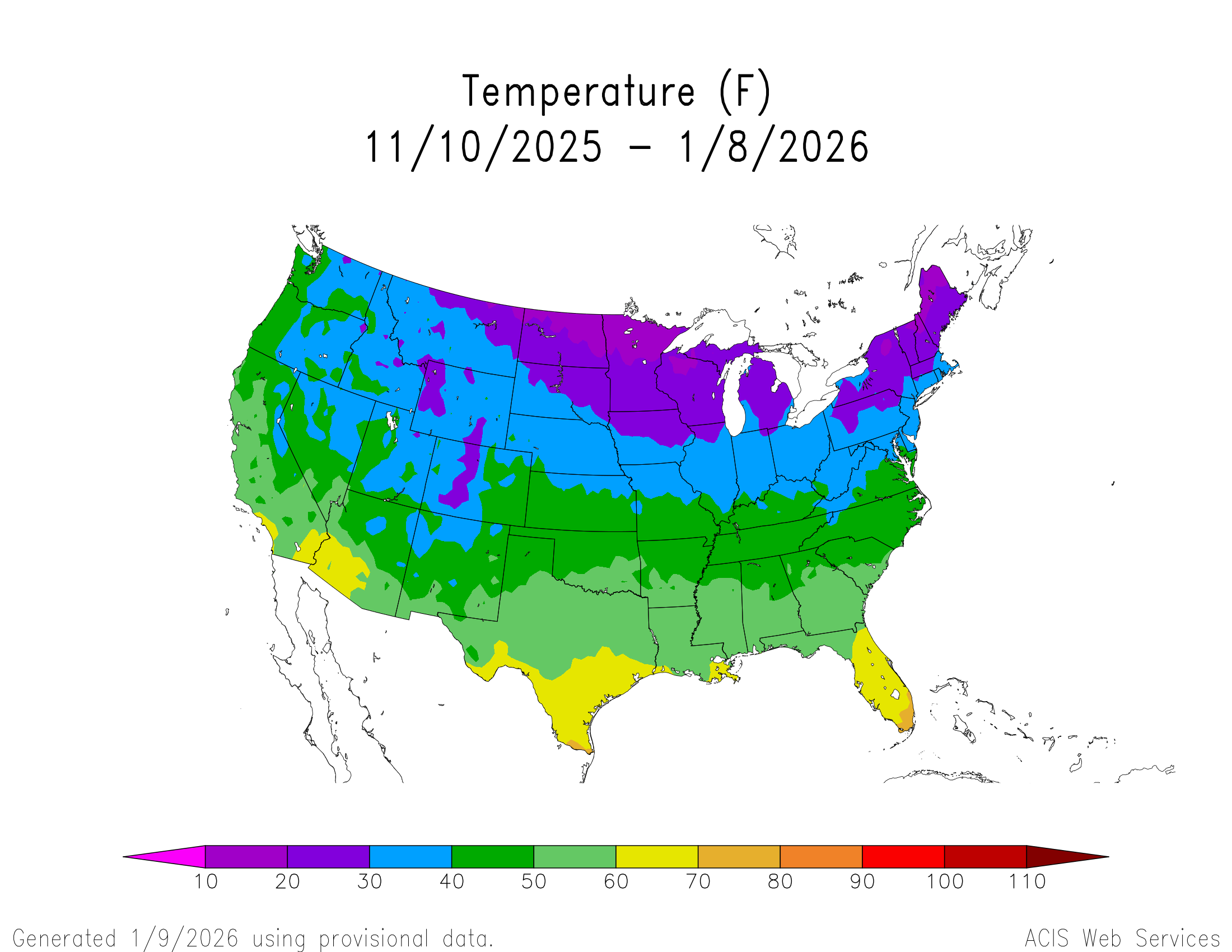
But this year, it wasn’t just a lack of snow that caused resorts headaches. November was warm as well, which also affects snowmaking operations. Throughout the Upper Colorado River Basin, temperatures were anywhere from five to eight degrees above average, with much of Utah setting records. Denver logged its warmest November day ever this year.
Schifani said ideally, snowmaking happens when it’s colder than 28 degrees.
“So it’s 32.7 degrees right now,” she said, checking the temperature on a monitor attached to one of the snow guns at the top of the River Run gondola. “So we’re just a little too warm for snowmaking.”
Keystone made upgrades to its snowmaking system in 2019, so all of its guns are relatively new. Each one has a weather system built into it, detecting temperature and relative humidity. They’re all automated, so when it finally drops below 28 degrees, the guns turn on with a loud rumble.
“This gun will know as it gets colder, we can add more water, we can make more snow,” Schifani explained. “As it gets warmer, we cut back on the water, we make a little bit less snow until it gets too warm for us to make snow at all.”
Once it’s cold enough, man-made snow takes about two parts compressed air and one part water. Unlike other uses in the West that transport water over long distances to sprawling cities or faraway farm fields, snowmaking keeps water close to where it originated.
Steven Fassnacht, a professor of snow hydrology at Colorado State University, said that about 80% of the water used in snowmaking goes back into the watershed it came from.
“[Ski resorts] are taking water out of the river, out of a reservoir … and they’re putting it on the mountain and they’re storing it somewhere different for the winter,” he said. “So the actual use, we call it consumptive use, the amount of water that leaves the system is relatively small.”
But that use still matters in a region where every drop of water is accounted for. Fassnacht said it will matter even more as the region’s climate gets warmer and drier, and as competition for water ramps up.
“In drier conditions, maybe that water use — possibly, likely — that consumptive use is actually going to increase,” he said. “And it may be harder to actually get that water out of the system to put on the mountains.”
Ski areas’ water usage can get contentious. Telluride Resort is currently in a dispute with the town of Mountain Village over its water use, and a federal court recently dismissed a lawsuit from Purgatory, a resort near Durango, over accessing decades-old groundwater rights on Forest Service land.
Chris Cushing is a principal with the consulting firm SE Group, which works on mountain planning for resorts across the country.
He recently worked with Deer Valley in Utah on a massive expansion: the resort added ten new chairlifts and doubled its skiable terrain, which it plans to open this season — with a state of the art snowmaking system.
“It’s just massive, it’s literally building a new ski resort,” he said of the expansion, which is called East Village.
Cushing says the expansion was only possible because the land acquired by Deer Valley already had water rights allocated to it — a calculation many other resorts he works with are having to factor in their plans as well.
“Absolutely the first question I ask is, ‘what’s your water situation?’” he said.
Long-term drought means ski resorts aren’t just in the game of acquiring new supplies, but also how to make the water they do have go further.
In 2023, Keystone added a new chairlift, providing skiers and riders easier access to its Bergman Bowl, which used to be an area only hikers could reach. Schifani says the resort expanded its snowmaking system to blanket that area at will too.
“But for perspective, that didn’t take any more water than we had previously used because we just got better at using what we already have,” she said.
It’s not yet clear what this winter will bring for the ski industry, but resorts, like other water users across the West, will have to prepare for the reality of doing more with less.
This story was produced in partnership with The Water Desk at the University of Colorado Boulder Center for Environmental Journalism.
Alejandro N. Flores, Boise State University
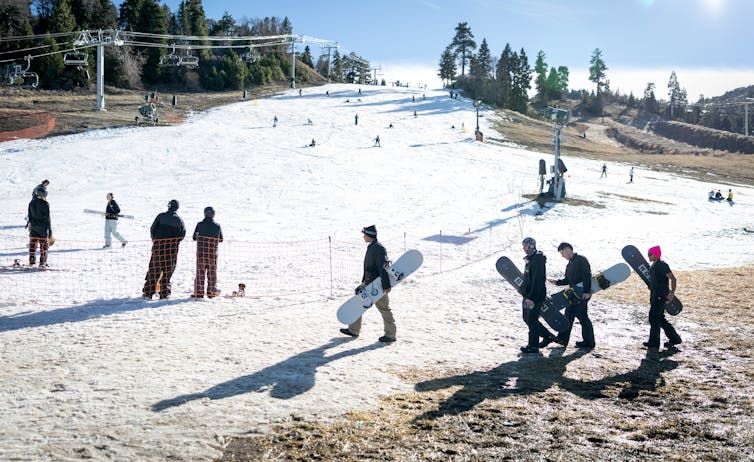
Much of the western U.S. has started 2026 in the midst of a snow drought. That might sound surprising, given the record precipitation from atmospheric rivers hitting the region in recent weeks, but those storms were actually part of the problem.
To understand this year’s snow drought – and why conditions like this are a growing concern for western water supplies – let’s look at what a snow drought is and what happened when atmospheric river storms arrived in December.
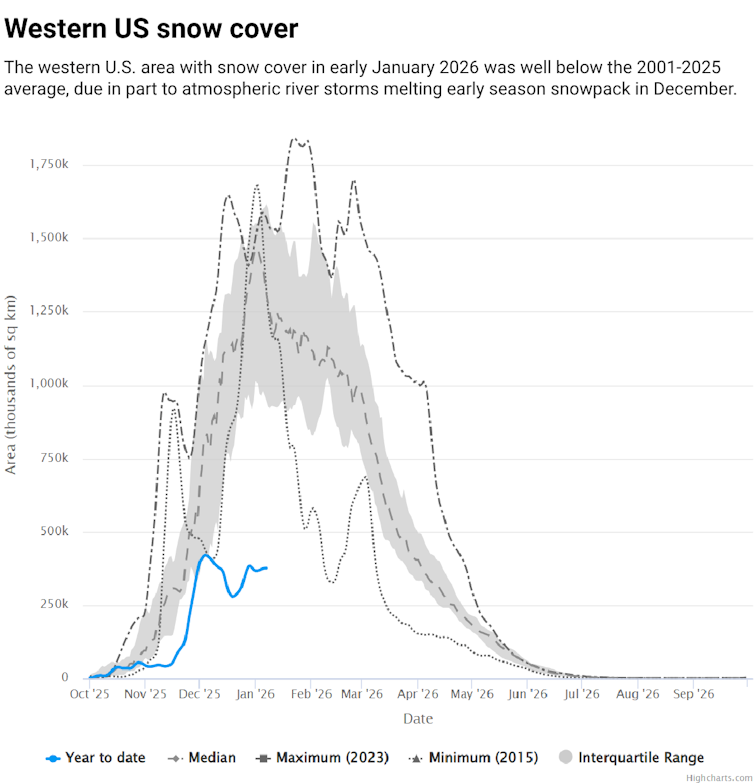
Typically, hydrologists like me measure the snowpack by the amount of water it contains. When the snowpack’s water content is low compared with historical conditions, you’re looking at a snow drought.
A snow drought can delayed ski slope opening dates and cause poor early winter recreation conditions.
It can also create water supply problems the following summer. The West’s mountain snowpack has historically been a dependable natural reservoir of water, providing fresh water to downstream farms, orchards and cities as it slowly melts. The U.S. Geological Survey estimates that up to 75% of the region’s annual water supply depends on snowmelt.

Snow drought is different from other types of drought because its defining characteristic is lack of water in a specific form – snow – but not necessarily the lack of water, per se. A region can be in a snow drought during times of normal or even above-normal precipitation if temperatures are warm enough that precipitation falls as rain when snow would normally be expected.
This form of snow drought – known as a warm snow drought – is becoming more prevalent as the climate warms, and it’s what parts of the West have been seeing so far this winter.
Washington state saw the risks in early December 2025 when a major atmospheric river storm dumped record precipitation in parts of the Pacific Northwest. Up to 24 inches fell in the Cascade Mountains between Dec. 1 and Dec. 15. The Center for Western Weather and Water Extremes at Scripps Oceanographic Institute documented reports of flooding, landslides and damage to several highways that could take months to repair. Five stream gauges in the region reached record flood levels, and 16 others exceeded “major flood” status.
Yet, the storm paradoxically left the region’s water supplies worse off in its wake.
The reason was the double-whammy nature of the event: a large, mostly rainstorm occurring against the backdrop of an uncharacteristically warm autumn across the western U.S.

Atmospheric rivers act like a conveyor belt, carrying water from warm, tropical regions. The December storm and the region’s warm temperatures conspired to produce a large rainfall event, with snow mostly limited to areas above 9,000 feet in elevation, according to data from the Center for Western Weather and Water Extremes.
The rainfall melted a significant amount of snow in mountain watersheds, which contributed to the flooding in Washington state. The melting also decreased the amount of water stored in the snowpack by about 50% in the Yakima River Basin over the course of that event.
As global temperatures rise, forecasters expect to see more precipitation falling as rain in the late fall and early spring rather than snow compared with the past. This rain can melt existing snow, contributing to snow drought as well as flooding and landslides.
Fortunately, it’s still early in the 2026 winter season. The West’s major snow accumulation months are generally from now until March, and the western snowpack could recover.
More snow has since fallen in the Yakima River Basin, which has made up the snow water storage it lost during the December storm, although it was still well below historical norms in early January 2026.
Scientists and water resource managers are working on ways to better predict snow drought and its effects several weeks to months ahead. Researchers are also seeking to better understand how individual storms produce rain and snow so that we can improve snowpack forecasting – a theme of recent work by my research group.
As temperatures warm and snow droughts become more common, this research will be essential to help water resources managers, winter sports industries and everyone else who relies on snow to prepare for the future.
Alejandro N. Flores, Associate Professor of Geoscience, Boise State University
This article is republished from The Conversation under a Creative Commons license. Read the original article.

Click the link to read the release on Senator Hickenlooper’s website:
December 31, 2025
U.S. Senators John Hickenlooper and Michael Bennet issued the following statement after President Trump vetoed their bipartisan Finish the Arkansas Valley Conduit Act:
“Nothing says ‘Make America Great Again’ like denying 50,000 rural Coloradans access to clean, affordable drinking water. President Trump’s first veto of his second term blocks a bipartisan bill that both the House and Senate passed unanimously, costs taxpayers nothing, and delivers safe, reliable water to rural communities that overwhelmingly supported him. Trump’s attacks on Southern Colorado are politics at its worst—putting personal and political grievances ahead of Americans. Southeastern Coloradans were promised the completion of the Arkansas Valley Conduit more than 60 years ago. With this veto, President Trump broke that promise and demonstrated exactly why so many Americans are fed up with Washington. We will keep fighting to make sure rural Coloradans get the clean drinking water they were promised.”
Click the link to read the discussion on the NOAA website:
January 8, 2026
ENSO Alert System Status: La Niña Advisory
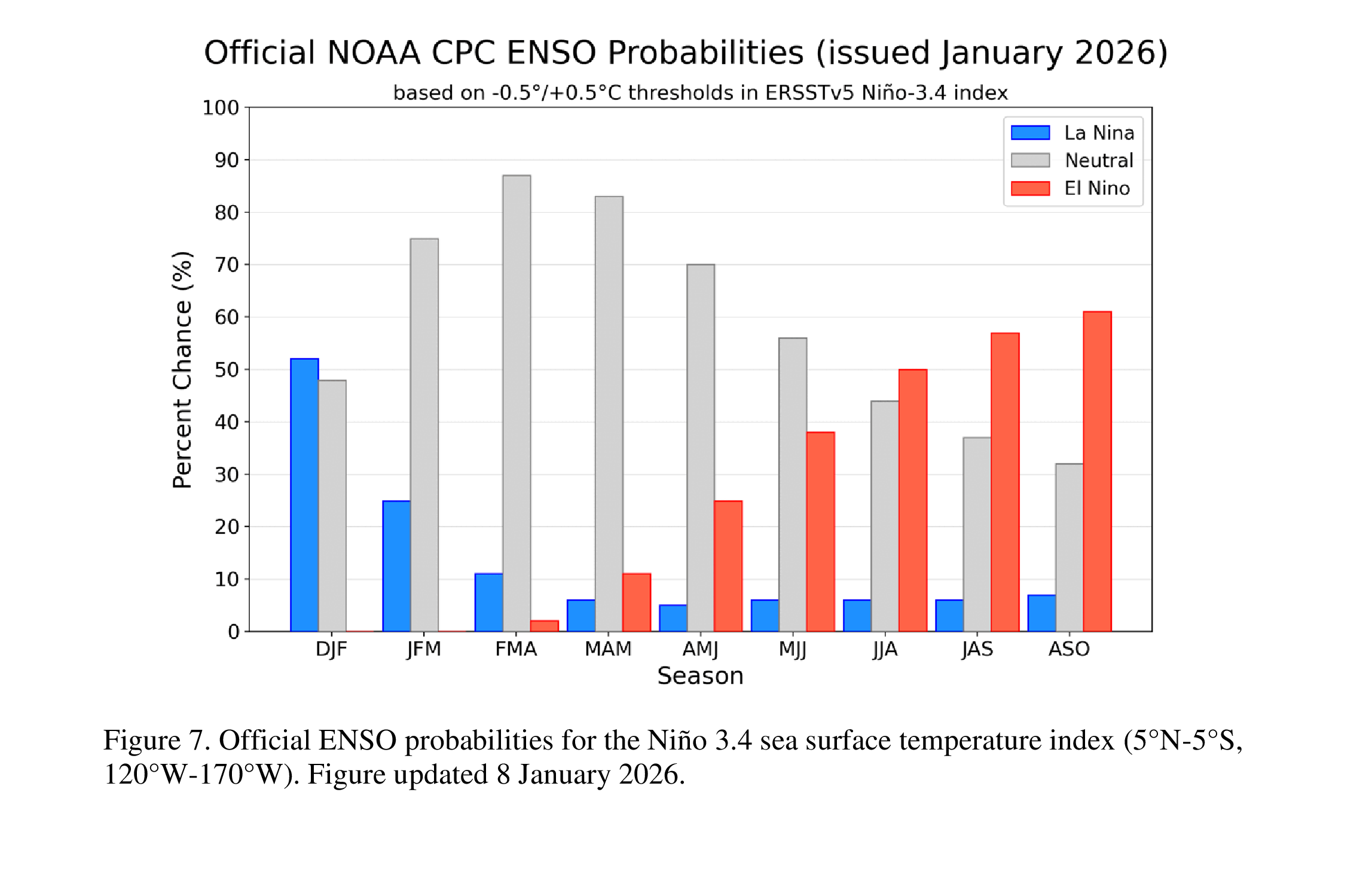
Synopsis: La Niña persists, followed by a 75% chance of a transition to ENSO-neutral during January-March 2026. ENSO-neutral is likely through at least Northern Hemisphere late spring 2026.
In December 2025, La Niña was reflected in the continuation of below-average sea surface temperatures (SSTs) across the east-central and eastern equatorial Pacific Ocean. The latest weekly Niño-3.4 index value was -0.5°C, with the Niño-3 and Niño-1+2 indices remaining cooler at -0.8°C and -0.7°C, respectively. The equatorial subsurface temperature index (average from 180°-100°W) became slightly positive, reflecting the expansion of above-average temperatures from the western to the east-central Pacific at depth. Atmospheric anomalies across the tropical Pacific Ocean remained consistent with La Niña. For most of the month, easterly wind anomalies were present over the central equatorial Pacific, and upper-level westerly wind anomalies continued across the equatorial Pacific. Enhanced convection persisted over Indonesia and suppressed convection strengthened near the Date Line. The equatorial Southern Oscillation index was positive. Collectively, the coupled ocean-atmosphere system remains consistent with La Niña.
The IRI multi-model predictions indicate ENSO-neutral will emerge during January-March (JFM) 2026. In conjunction with the North American Multi-Model Ensemble, the team favors ENSO-neutral to develop during JFM 2026. Even after equatorial Pacific SSTs transition to ENSO-neutral, La Niña may still have some lingering influence through the early Northern Hemisphere spring 2026 (e.g., CPC’s seasonal outlooks). For longer forecast horizons, there are growing chances of El Niño, though there remains uncertainty given the lower accuracy of model forecasts through the spring. In summary, La Niña persists, followed by a 75% chance of a transition to ENSO-neutral during January-March 2026. ENSO-neutral is likely through at least Northern Hemisphere late spring 2026.