Click the link to read the article on The Land Desk website (Jonathan P. Thompson):
January 6, 2026
🤯 Trump Ticker 😱
Five years ago today, President Donald Trump incited an angry mob of his followers to attack the nation’s Capitol building in an attempt to overturn the presidential election that he had just lost. He was trying to launch a coup to overthrow America’s democracy. At the time, many of us expected him to be impeached, and maybe even go to jail for this deplorable act. Little could we have guessed that just half a decade later he’d not only be President once again, but would actually be succeeding in his bid to dismantle democracy, and would be doing it with the tacit and explicit support of Congress, the Supreme Court, and his many supporters who don’t seem to be bothered by his cognitive decline, authoritarianism, broken promises, lies, close association with a convicted sex trafficker and pedophile, disregard for the Constitution, and reckless tinkering with the U.S. economy, international affairs, and his constituents’ well-being.
The administration’s invasion of Venezuela is simply the latest, most egregious example. The military went in, lit up Caracas with explosives and gunfire, killed civilians, kidnapped the nation’s leader (who, admittedly, was a nasty authoritarian), and sowed chaos, all without authorization from Congress. The reason? Trump himself says it was to turn the country’s vast oil reserves over to American corporations, which donated generously to Trump’s campaign. But Trump and his minions were equally motivated by the need to stroke Trump’s fragile ego — which has taken a beating thanks to other failures and low approval ratings, and to distract from his ubiquity in the Epstein files (which the DOJ has yet to release as Congress ordered it to do). Don’t be surprised if they invade Greenland or Cuba or even Mexico, next, as stupid as such a scenario might be.
But let’s focus on the oil factor, since that’s the one that’s most likely to trickle down into the Land Desk beat.
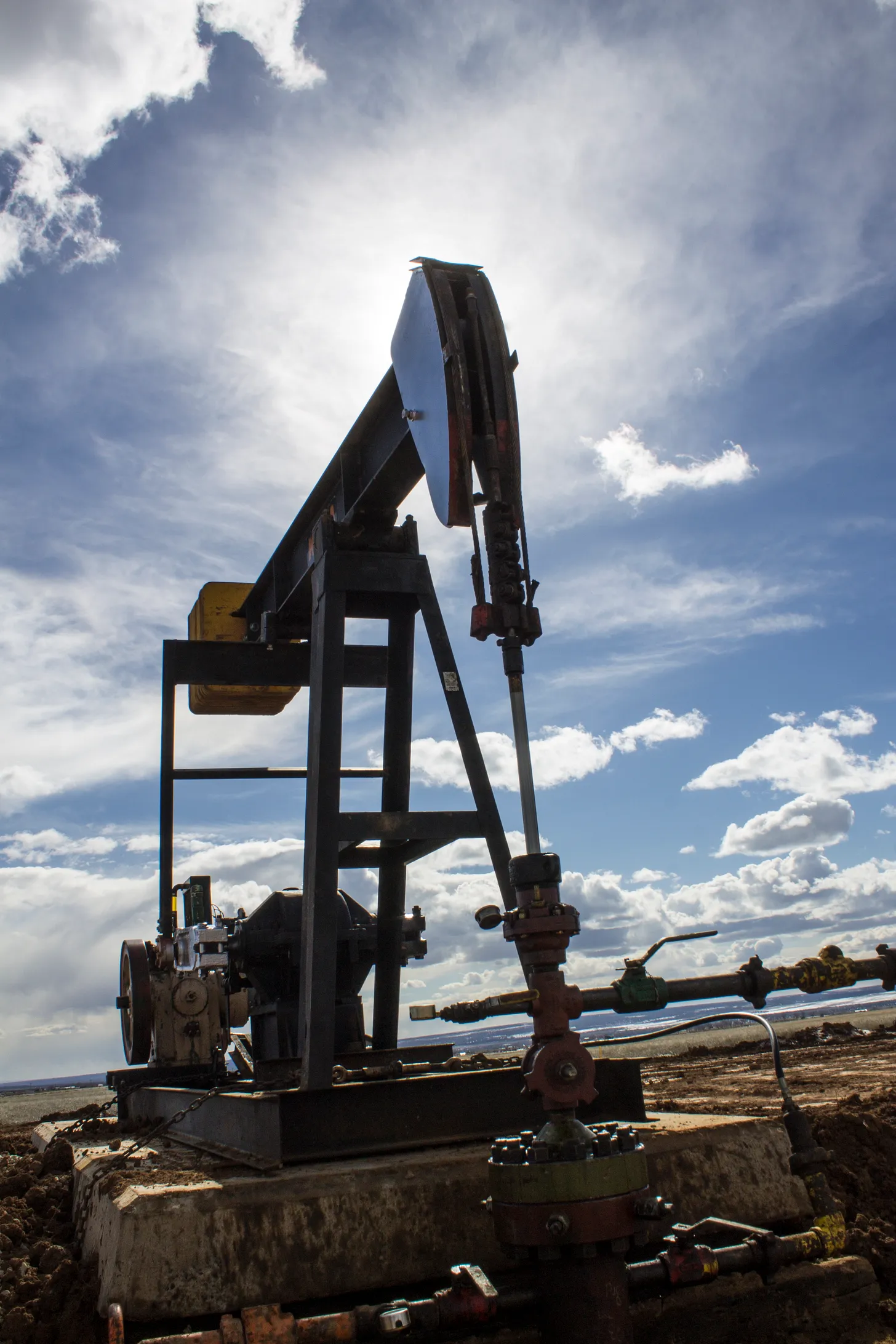
Venezuela has a lot of oil, reportedly the largest proved reserves in the world, and it’s mostly made up of heavy, sour crude (more on this in a minute). It’s currently not extracting very much of that oil, for various reasons (the U.S. produces about 20 times more per day than Venezuela). Trump is encouraging American oil companies to go to Venezuela and develop the oil fields and upgrade the infrastructure. This will take time and money, and it’s not clear that petroleum corporations will be interested in this kind of investment while oil prices are low (as they are, currently). Prices are low because demand and supply are more or less balanced, meaning the world doesn’t really need Venezuelan’s oil — at least not now.
Like fine wine, oil is imbued with terroir. That is, its composition varies depending on where it’s from. Most U.S.-produced oil is tight (from tight shales), light (low density), sweet (low sulfur content) crude that requires less processing than heavy (dense), sour (high sulfur) crude. Thing is, many Gulf Coast refineries were constructed before the shale revolution and are equipped to process heavy, sour crude, like the kind that comes from Venezuela. So there is a domestic demand for the stuff.

If and when Venezuelan production increases, it will add supply to both the global and domestic markets, which could bring prices down even further. That will lower the cost of driving American gas guzzlers around, and increase greenhouse gas emissions and other pollutants, but it will also reduce incentives to drill new wells, which could ease industry pressure on public lands in the U.S. In the meantime, the Trump administration continues to issue drilling permits at a blistering rate, even though companies aren’t all that interested in using them.
Wise Use Echoes — Jonathan P. Thompson
🥵 Aridification Watch 🐫
Last week, the Durango Herald quoted a National Weather Service meteorologist as saying that the snowpack in the southwestern part of the state was “not too bad.” I guess that depends on your definition of “not too bad.” Because it sure as heck isn’t looking good!

The San Juan Mountain snowpack levels are currently at about 50% of normal for the first week of January, and they are tied for third lowest snowpack level on record for this date. That’s not “too bad,” it’s downright dismal. And snow cover is even more meagre in other parts of the state: The Colorado River’s headwaters SNOTEL station is experiencing the lowest snowpack since it started recording in 1986.
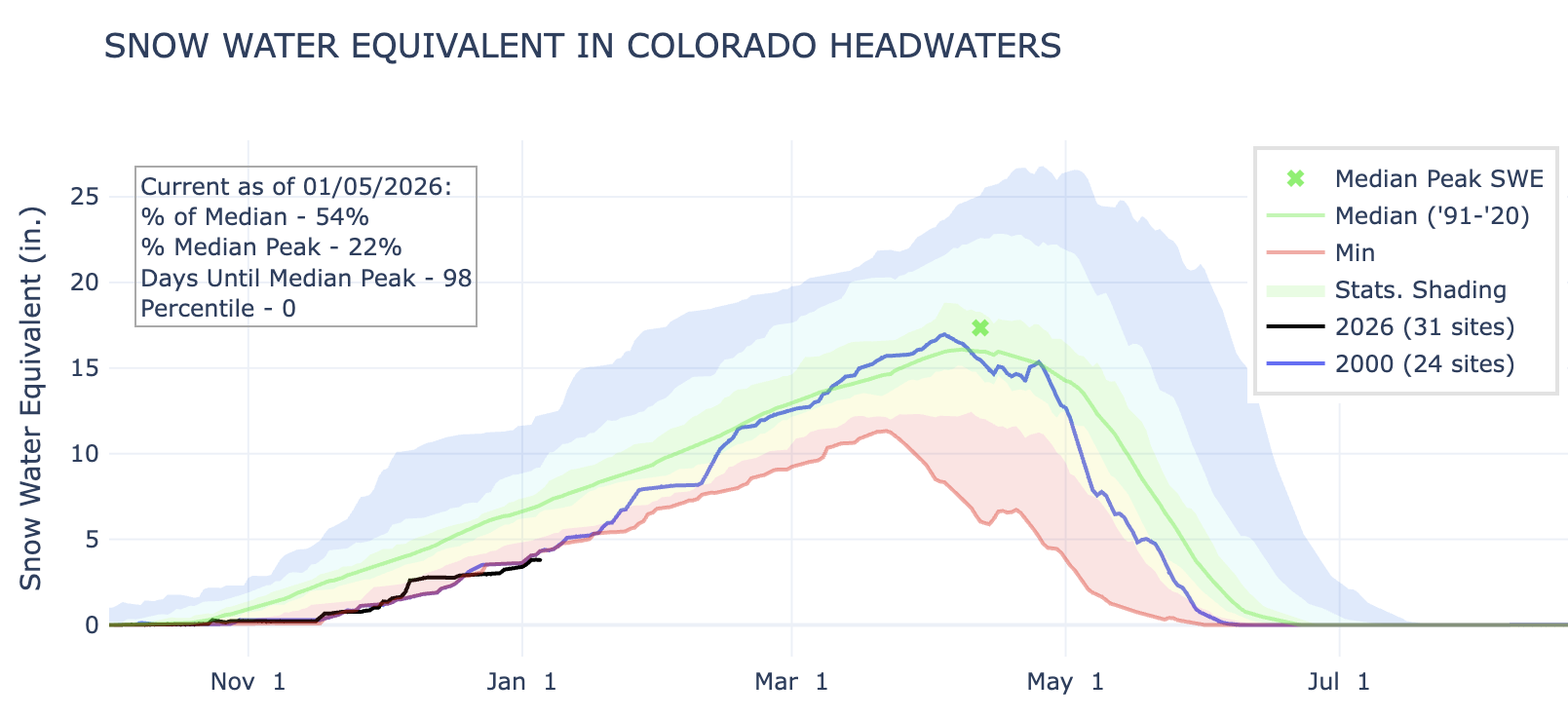
Still, it may be too early for snow lovers to abandon hope altogether, since a full recovery would not be unprecedented. Take the winter of 1989-90, when the early January snowpack was even worse than it is now. It was my first year in college, and when I came home for Christmas we played volleyball and went hiking in the mostly bare La Plata Mountains instead of going sledding or skiing. (At the time it seemed downright apocalyptic, since it followed the unusually wet 1980s, when snow would pile up in Durango and halt car traffic and turn the streets into nordic ski tracks.) But that March the snows finally came and continued into May, leading to some nice spring skiing and a decent spring runoff. The snowpack of 95-96 followed a similar pattern, as did 1999-2000.
During those years, however, the lack of snow was caused by a lack of precipitation. This year, it’s the result of a combination of light winter precipitation and unusually warm temperatures throughout December and early January. A recovery will require not only more snowfall, but also cooler temperatures, making the outlook a little grimmer.
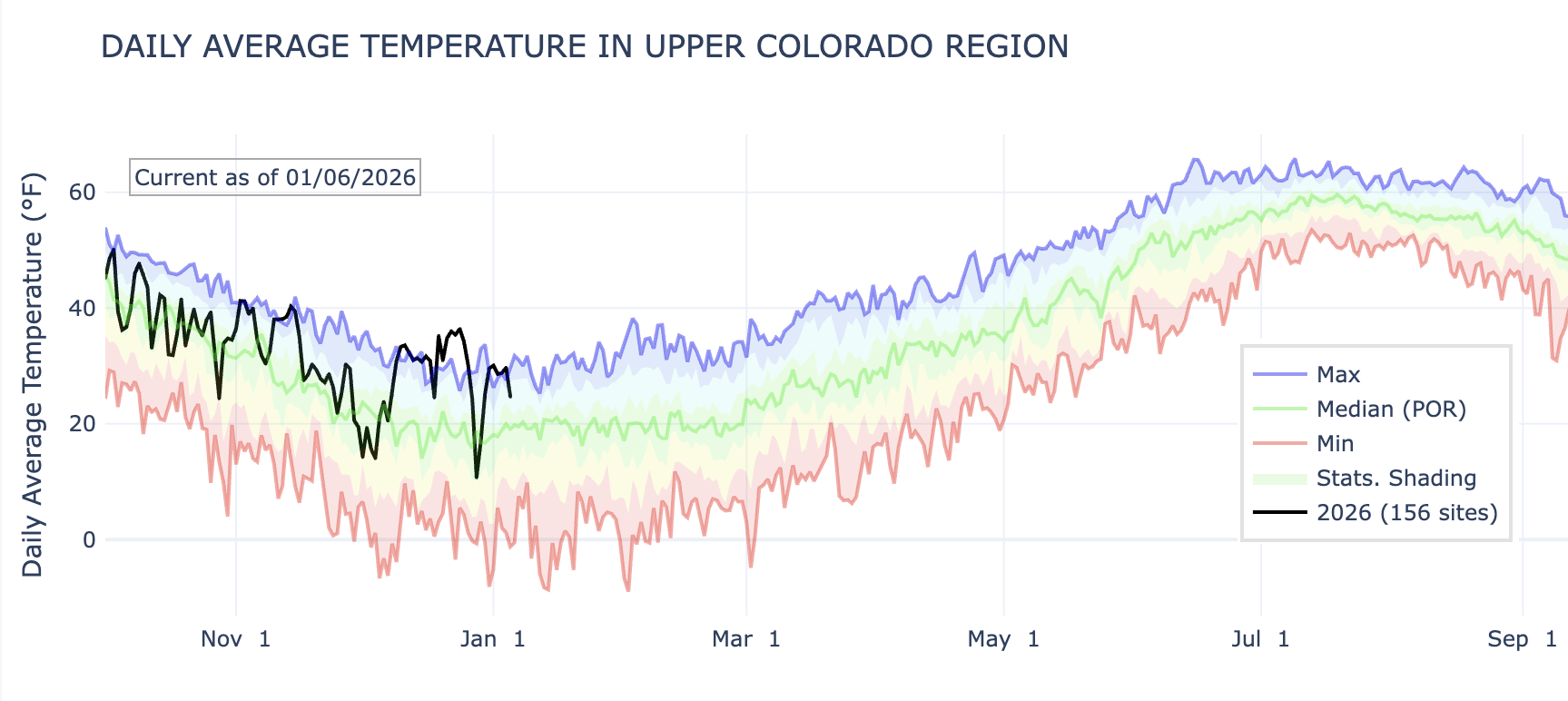
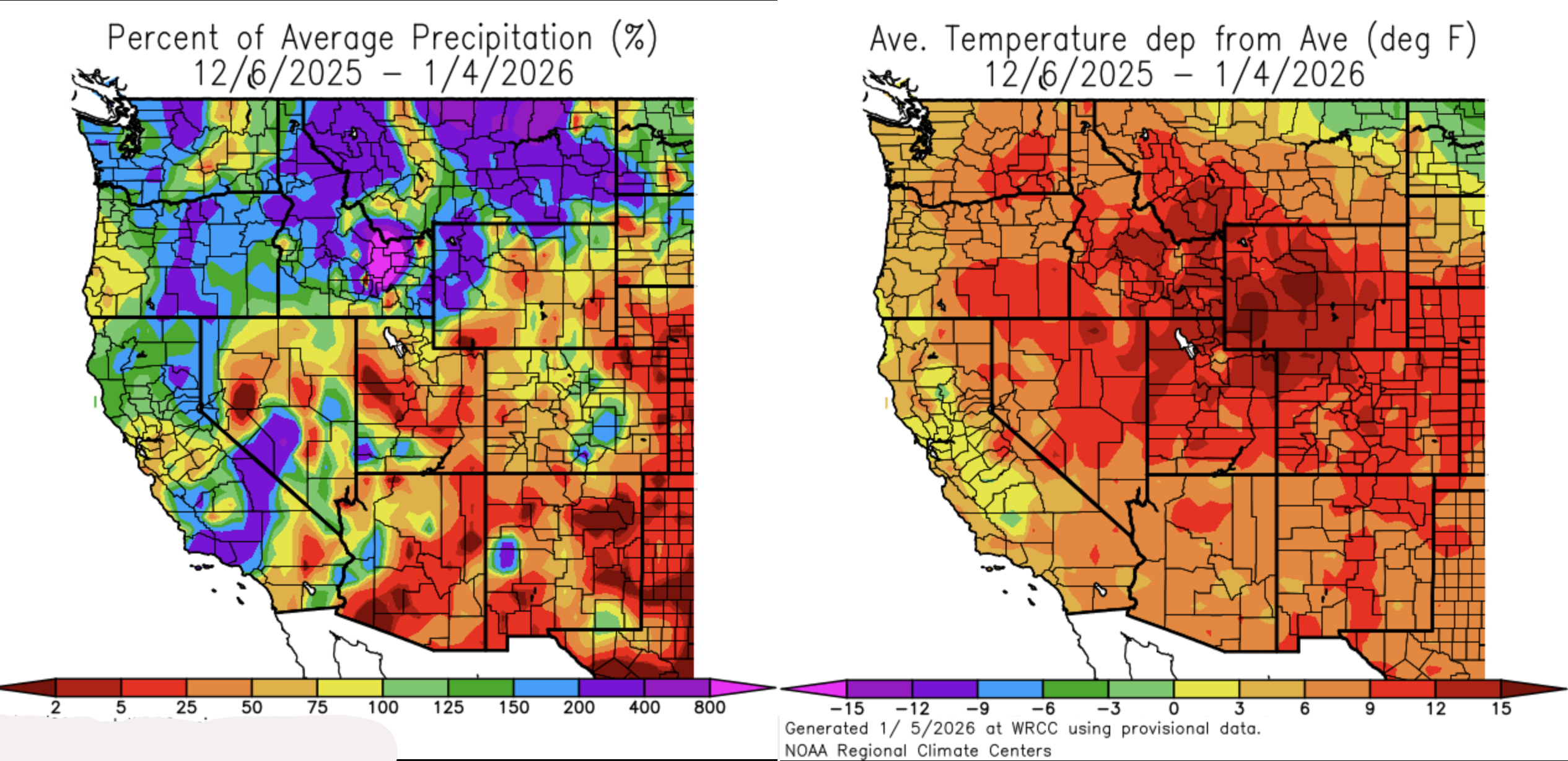

As of mid-December, the snow drought covered most of the West, but a series of atmospheric rivers pounded the West Coast and the Northern Rockies, bringing snow to higher elevations and more northern latitudes (and big rain and flooding to California). Heavy, wet snow piled up on Teton Pass near Jackson, Wyoming, bringing snow water equivalent levels from far below average to above normal for this date. Road crews triggered a huge avalanche that covered the highway in about 30 feet of snow. And, after the skies cleared, a couple of backcountry skiers triggered a slide near Teton Pass; one of the skiers was caught, buried, and killed. It was the nation’s second avalanche-related fatality this season. A few days later, two Mammoth Mountain ski patrollers were caught in a slide while doing avalanche mitigation work and one of them died.
🗺️ Messing with Maps 🧭
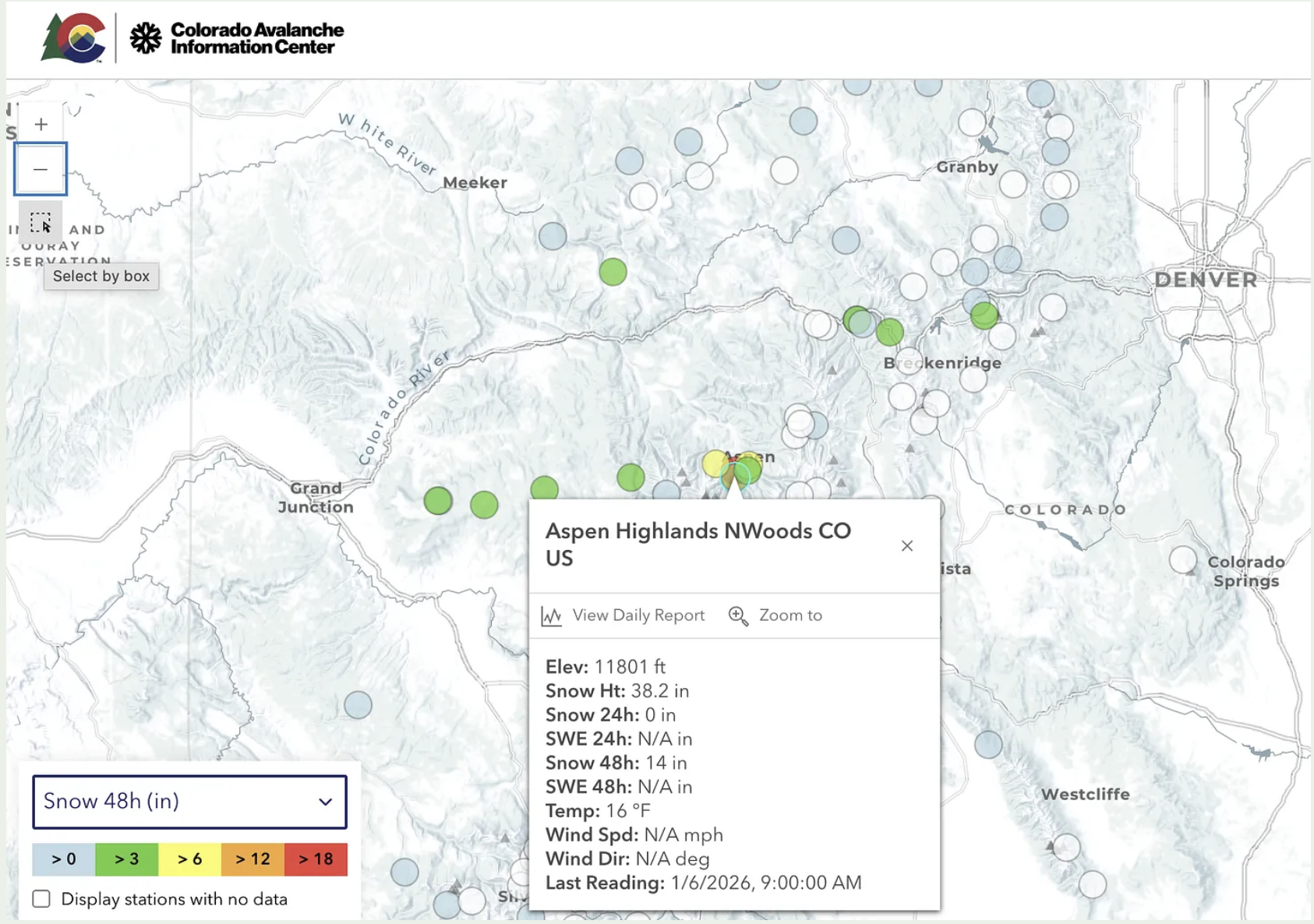
Now for a little New Year’s treat for all of you weather/map nerds: The Colorado Avalanche Information Center has launched an interactive map that shows 24-hour and 48-hour snowfall and snow water equivalents at various locations across the state’s mountains, letting you see at a click where the good powder is and isn’t. You can click on each station and get all the details, including current temperature and snow depth.