Mining Monitor
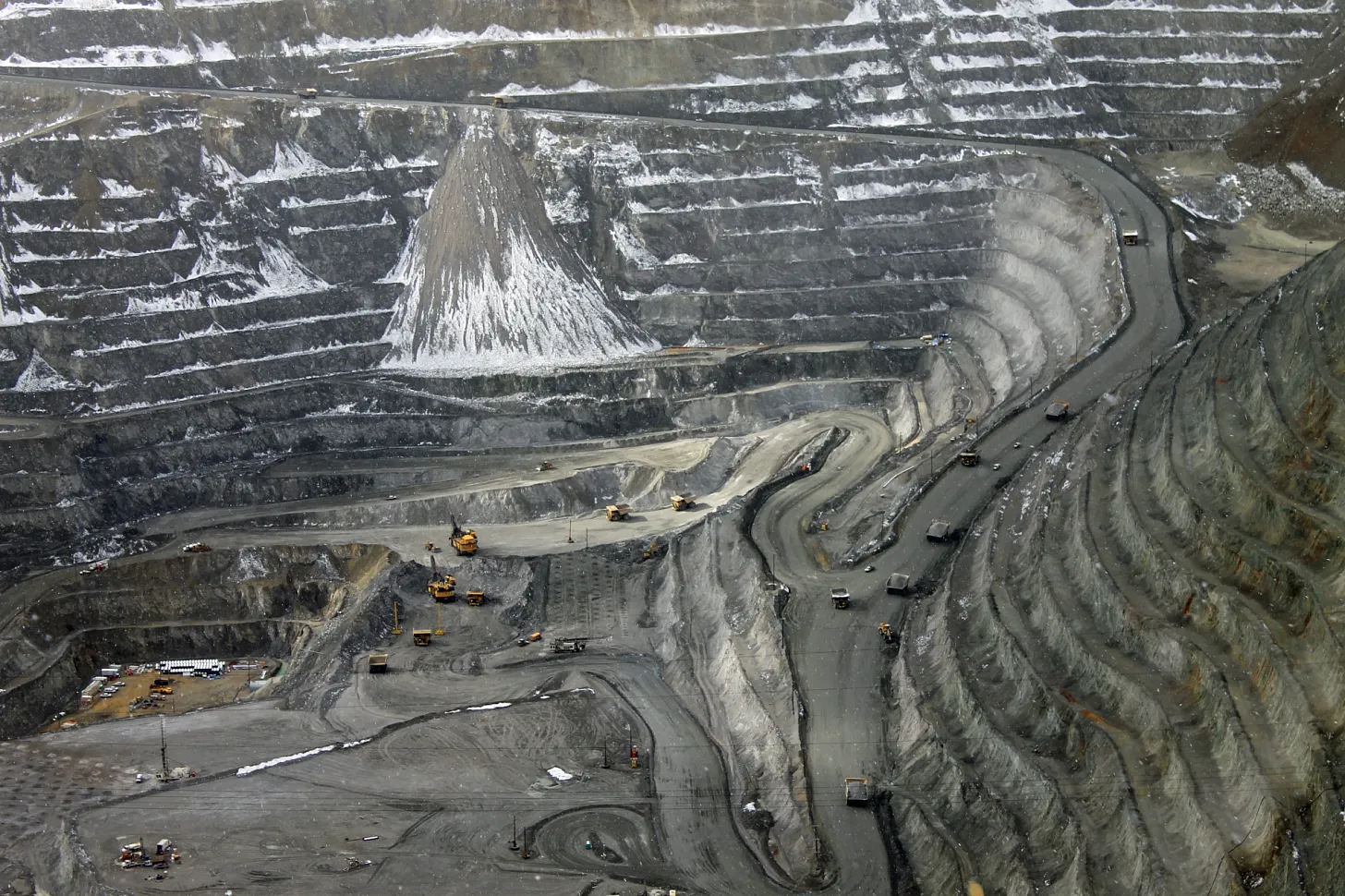
I’ve got to admit that when someone suggested I talk to the director of a global initiative that has developed standards for “responsible” mining, I was a bit skeptical. Conceptually I get it, but whenever I try to imagine an environmentally “responsible” mine, visions of the Bingham Canyon Mine in Utah come to mind — the largest human-made excavation on earth where more than 1,000 tons of explosives are used daily to blast loose about 150,000 tons of copper-bearing ore. How can that kind of destruction ever be labeled environmentally or socially “responsible?”
So I hopped onto a Zoom call a few months ago and put the question to Aimee Boulanger, executive director of the Initiative for Responsible Mining Assurance, or IRMA, which, according to its mission statement, offers “true independent third-party verification and certification against a comprehensive standard for all mined materials.”
It turns out Boulanger was initially even more doubtful than me. “I hated the idea when I first heard it,” Boulanger said, and even refused to take part in it. At the time she was working for Earthworks, a mining and oil and gas watchdog group, one stop in a now three-decade-long career in environmental and health advocacy. She thought the global mining industry was so far gone that a certification system would only serve to greenwash bad behavior.
But, crucially, it wasn’t the mining industry looking to clean up its image that catalyzed the effort, but rather the companies that buy mined materials wanting to do so responsibly. Tiffany, for example, did not want to support or be associated with blood diamonds. So its CEO at the time went to Earthworks, hoping the NGO would be able to direct him to more responsible suppliers. They didn’t, but the request indicated a need for such a service, something analogous to the Marine Stewardship Council, which certifies fisheries.
Such a system, if implemented correctly, helps consumers — or downstream purchasers in this case — make informed choices about sourcing materials for their products. Maybe all mining is somewhat destructive, but if you have to buy copper or gold or lithium to make your business run, wouldn’t it be better to buy it from a more responsible operator? An independent audit can also incentivize mining companies to use best practices rather than running roughshod over the land, water, and communities.
So in 2006, representatives from NGOs, including Earthworks, companies that purchase minerals, affected communities, mining companies, and labor unions came together to form IRMA. By the time Boulanger — having come around to the idea — joined up in 2011, the disparate group was still arguing over the meaning of “responsible mining.” They wouldn’t even bother with designing a logo or building a website until they found consensus on the basic principles. Most members assumed it would be impossible to get environmental groups on the same page as mining companies.
But with Boulanger’s help they were able to create 10 principle points of engagement, which enabled them to formulate a draft charter laying out what “responsible” means when applied to a mining operation. In 2014, they sent out their standards internationally and field tested them at the Stillwater platinum and palladium mine in Montana. They began actual audits shortly before the coronavirus pandemic hit and paused everything. Now they’re back at it.
By this point in the conversation I had become convinced that with enough buy-in, IRMA could push for major improvements in the way mining companies do business, especially in areas where government regulations are weak — like on U.S. public lands. But I was still a bit blurry on one big point, so I asked Boulanger: “What, exactly, does responsible mining look like?”
There isn’t a simple or short answer. IRMA’s Standard for Responsible Mining is now more than two-dozen chapters and hundreds of pages long. “Here’s this 26 chapters, that span everything from resettling community, to pre-informed consent with Indigenous communities, to water and waste management,” Boulanger said. It covers noise and vibration, mercury and cyanide management, worker safety, and cultural heritage.
To even get on the scoring board, so to speak, the mine must meet 40 critical requirements. Dumping waste into natural bodies of water is a virtual deal-killer. Getting consent from the community is mandatory. Then the mine — not the company — is scored based on how many additional standards it achieves. Anglo American’s Unki platinum mine in Zimbabwe, for example, met the 40 requirements plus 75% of the additional standards and received an IRMA score of 75.
Initially the organization worked on a pass-fail system, as do most analogous organizations in other industries. This proved problematic when dealing with existing, legacy mines, which might find it easier to get a passing grade by constructing a new mine rather than upgrade the existing one — which isn’t the goal, obviously. So IRMA shifted to a scoring system, instead, because it leaves room for a mine to improve.
“If you’re a new mine, you should be able to demonstrate that you’re 100%,” Boulanger said. “But if you’re a legacy mine like Bingham Canyon? It’s better to make Bingham Canyon better than cutting a new hole that is perfect.”
Not all mines are eligible for consideration. IRMA members from the labor sector wanted thermal coal to be included, because the average coal miner has been left behind and underground and in the dark. But the environmental sector pushed back, saying that labeling even the best coal mine “responsible” would further enable coal burning, which is fundamentally irresponsible. Same goes for uranium, Boulanger said. “There are too many ‘risk points’ between cradle and grave,” she added. “Even if you say it (nuclear power) is a low greenhouse gas emissions source, it doesn’t count all of the other stuff.”
Coal and uranium mining companies can use IRMA’s self-assessment tool internally to grade themselves and find areas to improve. But they can’t make their score public or use IRMA’s name to burnish their image. And Earthworks’ continued involvement in the Initiative helps ensure industry can’t hijack the certification process for their own ends.
Since its inception, IRMA’s focus has shifted toward so-called “green metals” — e.g. graphite, lithium, rare earths, nickel, and cobalt — that are used in electric vehicles, batteries, and other clean energy applications. Six carmakers have now joined IRMA as members as they look to source these materials more responsibly.

Some of the new lithium mining proposals may have a tough time getting on IRMA’s scoreboard, however. Consent from the community, especially the Indigenous community, is paramount. And tribal nations are opposing some of the largest lithium proposals — Thacker Pass in Nevada, for example. “Let’s say you have an average of 68% in all the chapters but did not have Indigenous consent,” Boulanger said. “You’re not going to get the IRMA 50 award.”
“It’s a train wreck right now,” she said. “You’ve got all these industries looking for materials and you’ve got these communities saying, ‘Hell no!’”












































,_Narew_River,_Poland.jpg#/media/File:Castor_fiber_04(js),_Narew_River,_Poland.jpg)