Southern Delivery System update: Outlet works and pipeline work mostly complete in Pueblo County

sdspreferredalternative.jpg

From The Pueblo Chieftain (Chris Woodka):

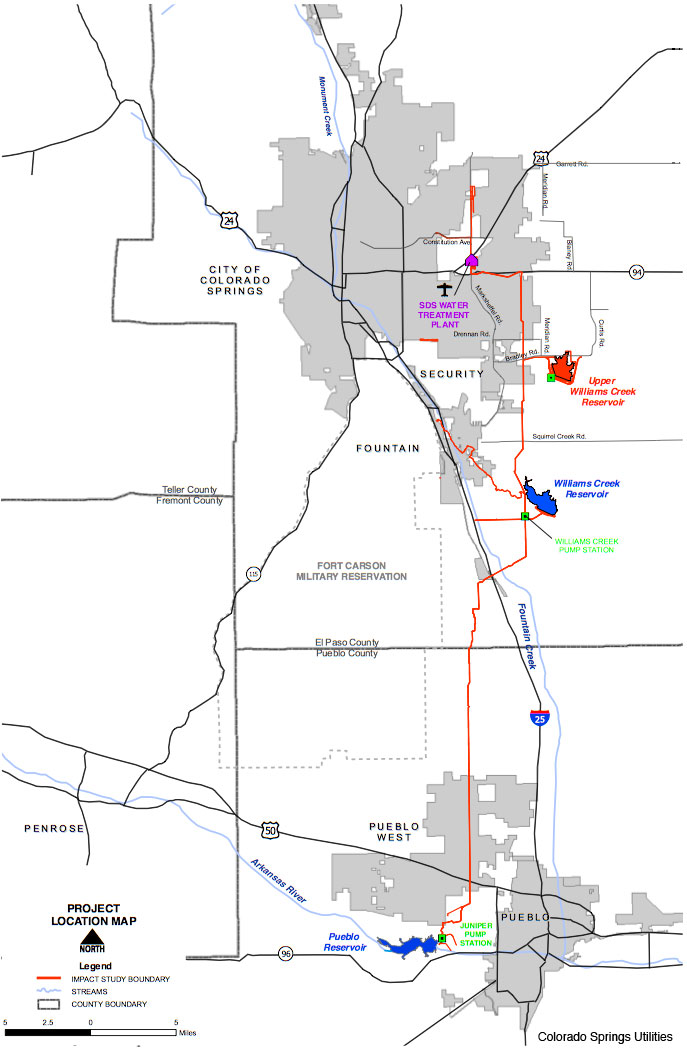
The Southern Delivery System work at Pueblo Dam and pipeline through Pueblo County is substantially complete, and work will begin next year on the pump station below Pueblo Dam. “There are a lot of moving parts, but actually we are ahead of schedule in getting pipeline in the ground,” Allison Mosser, an engineer with Colorado Springs Utilities, told the Fountain Creek Watershed Flood Control and Greenway District board Friday.

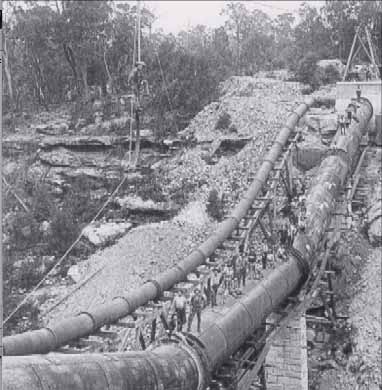
About 14 miles of 51∕ 2foot diameter pipeline through Pueblo West and Walker Ranches is in the ground, as well as some connections that will be needed for the North Outlet Works and Juniper Pump Station. Work is beginning on the pipeline in El Paso County, as well. Some distribution lines already are in the ground. In all, 28 of 50 miles of pipeline are complete, Mosser said.

Ground will be broken for a water treatment plant in northern Colorado Springs next year and SDS should be in operation in early 2016, Mosser said.

The district will be asked next month to decide on pipelines and power lines that will cross Fountain Creek on the east side of Interstate 25 near the Pikes Peak International Speedway.

Mosser also updated the board on progress of Fountain Creek wetlands and realignment work at Clear Springs Ranch, south of Fountain, that is required under Pueblo County 1041 regulations for SDS. That sparked a sharp reaction from board member Jane Rhodes, who lives and farms on Fountain Creek in Pueblo County. “This organization was formed four years ago,” Rhodes said. “A little more ought to be be done to help us. We need projects further down south.”

Carol Baker of Colorado Springs Utilities stepped in and explained that $50 million has been earmarked for use on Fountain Creek when the project is completed in 2016. “The design (for the Clear Springs Ranch project) is part of the master plan, and will help lots when we’re designing projects further downstream.”

More Southern Delivery System coverage here and here.

Fountain Creek: Stormwater needs through Colorado Springs and El Paso County could total $1 billion

fountaincreekwatershed.jpg

From The Pueblo Chieftain (Chris Woodka):

Stormwater needs in the Colorado Springs area could total more than $1 billion, while less than $10 million annually in funding is available from year to year. “This is not going to get done overnight,” said Springs Councilwoman Brandy Williams. “It took 30 years to get here, and I hope it won’t take 30 years to get out.”

An El Paso County stormwater task force Thursday reviewed a partial list of about 500 capital projects in the Fountain Creek watershed with a price tag of more than $760 million, along with annual estimated maintenance needs of $7.5 million annually. The list includes incorporated areas and military bases, and does not factor in a possible $180 million more in projects in unincorporated El Paso County. It will be finalized at the task force’s final meeting in January. Colorado Springs has the greatest need, with $684 million in capital projects and $4.9 million in annual maintenance, while Fountain needs $46 million and the Air Force Academy $24.5 million in construction.

“We will have identified $1 billion in needs and have only about $10 million budgeted,” said Tim Mitros, stormwater engineer for Colorado Springs. “What we’re going to have to look at in phase II is where the money is coming from.” Some concrete structures are more than 50 years old and reaching the end of their usefulness. New methods of controlling flooding are being explored, he added.

The meeting also addressed the need for Colorado Springs to control its stormwater in order to turn on the $986 million Southern Delivery System. When SDS was approved by the Bureau of Reclamation and Pueblo County commissioners, a stormwater enterprise was in place. Stormwater funding is just one part of the requirement, said Mark Pifher, a Colorado Springs Utilities executive. The other major piece is a drainage criteria manual, which should be completed by the city of Colorado Springs next spring. “Our hope is that the drainage criteria manual will allow no increase in flows from new development, which would assure that conditions of the permit are met,” Pifher said.

More coverage of Colorado Springs’ rehab work required by the Waldo Canyon Fire, from Chris Woodka writing for The Pueblo Chieftain:

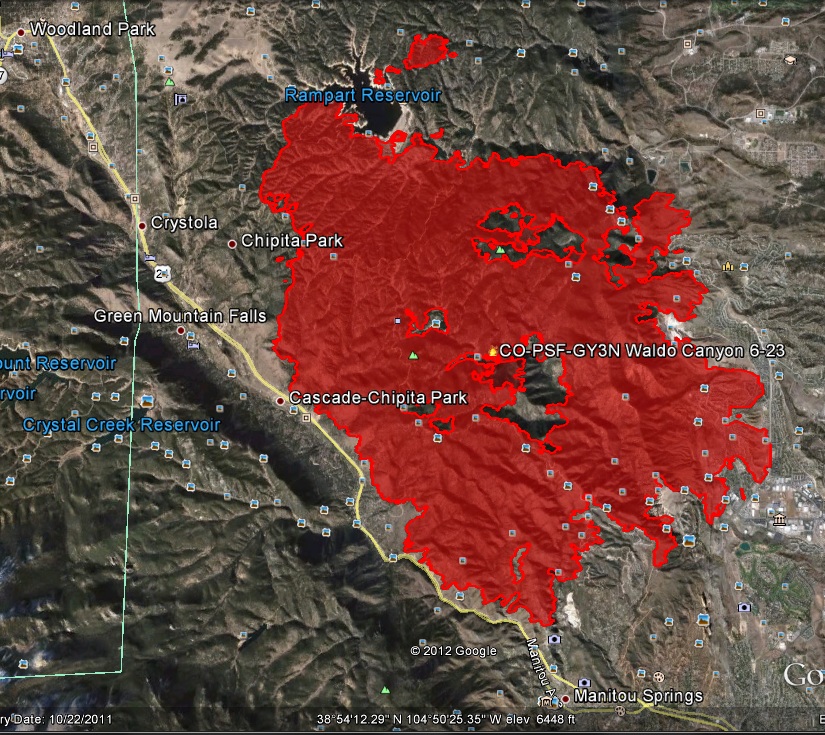
Colorado Springs Utilities will spend about $12 million reinforcing pipelines below Rampart Reservoir, already starting to wash out because of the Waldo Canyon Fire last summer. “Flood flows out of the area are greater than they were before the fire,” said Mark Shea, watershed planning supervisor for Colorado Springs Utilities. He made his comments at a stormwater task force meeting Thursday.

The severity of flooding is 4 to 10 times worse, even for small storms and swells dry creeks to the point where they overflow their banks. Roads and bridges can be washed out as additional sediment clogs drainages.

A back­up water supply main runs from Rampart Reservoir, north of the city, where 80 percent of Colorado Springs water is stored. While the reservoir itself will need some rehabilitation, the supply line is of paramount importance, Shea said. Another $25 million to $50 million will have to be spent to protect other parts of Colorado Springs where mud flows are likely in the wake of the fire.

Ultimately, the sediment would find its way into Monument and Fountain creeks, creating problems for Colorado Springs at its wastewater treatment plant, landowners on Fountain Creek and Pueblo County. The ash from the fire already has caused water quality problems for downstream water users.

The fire started June 23 and burned more than 18,000 acres, destroyed 350 homes and took two lives before it burned out in July. About 10,600 acres suffered moderate to high damage. Threequarters of the land is in the National Forest, but the impacts of flooding will be felt by area property owners.

Based on the experience of the Hayman Fire in 2002, it could be years before the worst effects of the fire show up. So far, mulch of straw and wood chips has been spread on the most damaged hillsides to try to stem erosion.

More Fountain Creek Watershed coverage here and here.

Colorado Springs: Council takes up issue of discounted water rates for city parks, city reserves to be tapped to cover shortfall

pikespeak.jpg

From The Colorado Springs Gazette (Daniel Chacón):

“I think there’s a strong assumption, at least by the executive branch and maybe some others, that there should be a municipal rate as it relates to parks,” Chief of Staff Laura Neumann told council members.

The idea was floated even before Bach was mayor. It came up a few years ago when the city cut parks watering to balance the budget. Utilities, which offered the city a water conservation rate pilot program that has saved more than $1 million, says a discounted water rate would mean that ratepayers would absorb the costs.

“At the end of the day, we’re talking about other people’s money,” Utilities CEO Jerry Forte told the council. “We’re talking about ratepayer dollars, and if we were to find opportunities to reduce costs, that money belongs to ratepayers first.”

After a long debate Monday, a council majority decided to tap the city’s reserve to balance the budget and to direct Utilities to work with the city on a water rate solution before irrigating kicks into high gear.

The city’s proposed budget is up for first reading Tuesday, and the council’s decision to dip into reserves is likely to trigger a mayoral veto.

“I believe I can say confidently that (Bach) does not believe we should dip into the general fund reserves and so if that is the direction of council, I believe he will veto that,” Neumann said.

The council can override a mayoral veto with six votes.

Council President Scott Hente said the Bach administration’s assumption that Utilities would cover the $545,000 gap was unreasonable.

“In making that assumption, you’ve put us between the proverbial rock and a hard place,” Hente said. “If — and this is a big if — if we were to accept that, now all of a sudden we have a $545,000 problem on the Utilities side of the equation.”

Council President Pro Tem Jan Martin said the city was asking for a “special subsidy” for parks…

Leigh said the debate about discounted water rates for parks highlights the “inherent conflict of interest” with council members also serving as members of the Utilities Board.

“I think the real important point is we could resolve this as City Council. We can override Utilities Board. They are subservient to us, so we could resolve this very quickly if we chose to,” [Councillor Tim Leigh] said.

More Colorado Springs Utilities coverage here and here.

Colorado Springs Utilities: SDS pipe installed under Fountain Valley Authority pipe

Pueblo County DA Thiebaut is driving tighter standards for the Arkansas River ahead of increased streamflow from SDS

sdspreferredalternative.jpg

From The Pueblo Chieftain (Chris Woodka):

Pueblo District Attorney Bill Thiebaut is challenging Pueblo’s response to water quality issues on the Arkansas River. In documents filed Tuesday by Thiebaut’s environmental attorney, John Barth of Hygiene, Thiebaut asked the Colorado Water Quality Commission to deny extension of temporary modifications for selenium and sulfate levels in the Arkansas River from Fountain Creek to Avondale. The commission will decide the matter at a Dec. 10 hearing.

Thiebaut, who leaves office in January, said he filed the challenge because that reach of river will deteriorate from increased flows down Fountain Creek when Southern Delivery System goes on line. “We have serious water quality problems in Pueblo County that pose a threat to our health, economy and environment,” Thiebaut said. “The SDS system will only make our water quality problems worse.”

Pueblo has requested temporary modifications for another five years, until 2018, after obtaining extensions from the original waiver in 1998.

More Southern Delivery System coverage here and here.

Fountain Creek: ‘Clearly, our work is not done’ — Helen Migchelbrink (Colorado Springs Public Works)

fountaincreekwatershed.jpg

From The Pueblo Chieftain (Chris Woodka):

Last summer’s Waldo Canyon Fire may rearrange funding priorities for stormwater containment in El Paso County, but downstream interests still are pushing Colorado Springs to honor its past commitments. A stormwater task force formed in August is trying to sort out funding resources and needs throughout the Fountain Creek watershed by January, in an effort to begin addressing massive needs that total more than $500 million.

“Clearly, our work is not done,” said Helen Migchelbrink, Colorado Springs director of public works. “Next year, we have $28 million worth of work to do. We’re going to be looking at more creative solutions.” The Waldo Canyon Fire, which burned more than 18,000 acres, has increased potential flood severity on both the Upper Fountain and Monument Creek.

That’s a good start, said Pueblo County Commissioner Jeff Chostner, who attended the task force meeting to make sure that past commitments by Colorado Springs are not simply shifted into the stormwater category. He also urged the task force to coordinate its efforts with the Fountain Creek Watershed Flood Control and Greenway District. “How does this fit in with the Pueblo County 1041 permit for Southern Delivery System?” he asked at the meeting.

Gary Bostrom, chief of water services for Colorado Springs Utilities, assured Chostner the $75 million for sewer line fortification and $50 million for flood control on Fountain Creek remain separate commitments.

Colorado Springs on Friday released a broad outline of $27.7 million in projects next year that involve stormwater control or planning. That follows the task force’s line of reasoning in getting all El Paso County communities to identify resources.

The group also is looking back, trying to determine what the nowdefunct stormwater enterprise accomplished — watershed planning, project priorities and maintenance activities — when it was funded from 2007­09.

More coverage from Amy Gillentine writing for the Colorado Springs Business Journal. Here’s an excerpt:

The money ($27.7 million) will be spent on:

– $ 2 million in capital projects funding, including the Mirage channel near Rampart High School and Cottonwood creek grade-control structures between Academy and Union.

– $2.09 million transferred from the now-defunct Springs Ranch General Improvement District. The money will be used for two detention ponds north of Woodmen Road.

– $3 millionfrom a pre-disaster mitigation grant for the Greencrest Channel. The project will stabilize the channel in order to allow the Austin Bluffs project to move forward. Widening Austin Bluffs west of Academy will be paid for through money from the Pikes Peak Regional Transportation Authority.

– $3 million pre-disaster mitigation grant for Cottonwood Creek at Vincent Drive. The project will stabilize the creek, protecting the Vincent Drive bridge upgrade.

– $509,500 for street division operations and maintenance.

– $980,000 for salaries and benefits for the public works and city engineer’s stormwater staff.

– $592,315 for public works and city engineering stormwater operations, including expenses.

In addition, the city will use money from grants related to the Waldo Canyon fire to mitigate stormwater issues in the burned area:

– $461,547 National Resources Conservation Service – Emergency Watershed Protection Program grant for Navigators.

– $75,000 National Resources Conservation Service – Emergency Watershed Protection Program grant for Flying W Ranch.

– $30,000 2012 fire relief fund grant for debris racks south Douglas Creek.

– $25,000 2012 fire relief fund grant for the spillway at Autism Pond.

– $24,795 Colorado Post – Wildfire Flooding Early Warning Grant (Camp Creek).

Colorado Springs Utilities (CSU) proposed 2013 budget items related to Stormwater Management:

– $6.2 million for storm runoff mitigation for fire impacts.

– $2.7 million to protect utilities infrastructure.

– $1.5 million for proactive watershed management.

Update: From The Pueblo Chieftain (Chris Woodka):

Last summer’s Waldo Canyon Fire has pulled in resources for dealing with stormwater in Colorado Springs, but more needs to be done for impacts of development on Fountain Creek, an area water leader said Thursday.

“Colorado Springs is about to learn what sediment is, but those of us downstream have been dealing with it for 100 years,” said Jay Winner, manager of the Lower Arkansas Valley Water Conservancy District. “We will do everything we can to help with the impacts of the Waldo Canyon Fire, but Colorado Springs has to live up to its commitments on Fountain Creek.”

Lower Ark and Colorado Springs officials plan to meet next week to talk about resolving differences between the two entities dating to 2005. Both have been in contact with the Bureau of Reclamation regarding the Lower Ark’s request in August to reopen an environmental impact statement on the Southern Delivery System. The original EIS, as well as Pueblo County’s 1041 permit for SDS, included.

More stormwater coverage here and here.

Colorado Springs plans to spend $28 million on stormwater next year, critics do not see a long-term committment

fountaincreek1999floodcwcb.jpg

From The Pueblo Chieftain (Chris Woodka):

Colorado Springs plans to spend $28 million next year on stormwater issues, but local critics say it’s mainly a reaction to last summer’s devastating Waldo Canyon Fire and not a long­term fix for future damage. “It’s a start, but they still need to find a sustainable revenue stream in the future,” said Jay Winner, manager of the Lower Arkansas Valley Water Conservancy District.

City Councilwoman Brandy Williams shared the list of projects with the Fountain Creek Watershed Flood Control and Greenway District board Friday.

Among the projects are $2 million for the Mirage Channel, which has attracted attention in Colorado Springs media; $2 million in transferred funds from a defunct improvement district; $6.6 million in federal grants, matched by $2.2 million in local funding for stabilizing tributaries; $2 million for street and stormwater staff and programs and $12.8 million for Colorado Springs Utilities fire mitigation or stream fortification projects. About $7 million directly addresses Waldo Canyon drainage stabilization.

“This is a beginning to a continuous process,” said Pueblo County Commissioner Jeff Chostner, who chairs the Fountain Creek board. “As commissioners, we’ve tried to talk to (Colorado Springs) Mayor Steve Bach about the stormwater issues, but he hasn’t met with us to explain anything.”

Chostner plans to attend a meeting of the El Paso County stormwater task force next week, as it reviews area responses to stormwater needs.

Winner said it appeared Colorado Springs is shifting city functions like streets, utilities infrastructure and response to the Waldo Canyon Fire into stormwater, rather than strictly addressing issues once covered by the nowdefunct stormwater enterprise.

“As I look through the list, I don’t think it’s a solution to fix Fountain Creek for the benefit of Pueblo,” Winner said. “I hope in the future they are as concerned with the downstream stormwater needs as they are their own.”

Pueblo County and the Lower Ark district have asked for annual Colorado Springs stormwater funding levels of at least $15 million.

More coverage from Daniel Chacón writing for The Colorado Springs Gazette. Here’s and excerpt:

The city and the public utility issued a joint news release Friday outlining their proposed stormwater-related expenditures in 2013. The funding includes $7 million to address impacts caused by the Waldo Canyon fire and $980,000 in salaries and benefits for employees who work explicitly on stormwater projects.

“I am pleased that our staff has been able to find additional resources for the city’s critical stormwater needs and will be coordinating with Colorado Springs Utilities to ensure their funding is also directed at the most urgent stormwater needs,” Mayor Steve Bach said in a statement.

For months, Bach advocated Utilities’ financial involvement in funding stormwater, which the four-service utility said it was already doing.

Helen Migchelbrink, the city’s public works director and city engineer, said the stormwater spending for 2013 was released in anticipation of a meeting Tuesday of a task force that will look at stormwater funding regionally…

Chairman Anthony Nuñez and Commissioner John Cordova said they wanted to review the city’s list of projects before saying whether the funding was sufficient. But both said Colorado Springs has a long way to go.

Utilities obtained a permit from Pueblo to build the Southern Delivery System water pipeline with the promise to address stormwater needs.

“I realize it’s tough times, but with $500 million worth of needs … it seems a little shy,” Cordova said.

From The Pueblo Chieftain (Chris Woodka):

Jane Green, who owns property on Fountain Creek south of Fountain, has become a regular at meetings of a district designed to fix the troubled waterway. She’s spoken to the board several times since a flood washed out a levee protecting her home in September 2011, without many clear­cut suggestions about how to go about fortifying the bank before the next wave of water hits. But Friday, the Fountain Creek was moved to begin taking action to help her and other landowners who experience erosion or flooding from sudden storms on the creek.

“I think we can move forward on this,” said Richard Skorman, a Colorado Springs businessman who sits on the board of the Fountain Creek Watershed Flood Control and Greenway District.

Ferris Frost, another woman who owns land in the creek channel and a member of the district’s citizens advisory committee, showed the board slides of her own property. A logjam 100 feet wide by a quarter­mile long clogged an irrigation headgate last year. The creek has cut away 50­foot cliffs over the last three decades. “Jane Green has been to the district three times this year, and found no one to help,” Frost said. “It should be one of our functions.”

The district did tell her to contact the Corps of Engineers and Natural Resources Conservation Service for help in repairing the levee, and got a permit to do work in the stream, but she had to line up her own materials. The concrete chunks thrown in the creek as a stop­gap measure go against the plans, which were developed during years of meetings leading up to the formation of the district in 2009.

Jay Winner, manager of the Lower Arkansas Valley Water Conservancy District, said state funds for stream stabilization projects went unused last year. The funds are available for public entities like the Fountain Creek district, but not landowners. Board chairman Jeff Chostner set up a special committee to look into options for grants and programs the district can use to help landowners.

From The Pueblo Chieftain (Chris Woodka):

A board dedicated to fixing Fountain Creek took a few more baby steps toward finding permanent funding last week, tempering the desire to get things done with finding the right approach to voter approval. “As I said before, let the discussion begin,” said Pueblo County Commissioner Jeff Chostner, chairman of the Fountain Creek Watershed Flood Control and Greenway District. “There are going to be a lot of nuances.”

Chostner has prodded the board throughout the year to talk about the timing of asking voters for a mill levy. The district’s funds are dwindling, and the only funding in sight is a one-time payment of $50 million to the district in 2016, if Southern Delivery System is online by that time. The district also must ask voters to suspend Taxpayer’s Bill of Right provisions on revenue growth to receive even that money, said general manager Larry Small. Under the 2009 legislation creating the district, which includes all of Pueblo and El Paso counties, the district can assess a tax of up to 5 mills. There are also provisions for subdistricts — a potential way to fund stormwater, for instance — in just parts of the area that would not affect the mill total, Small said.

The board got some more tools to work with as its discussions continue:

– The Trust for Public Land agreed to provide advice and technical assistance in a survey of voters regarding the timing and wording of a ballot issue.

– Sample language for a ballot issue, including stating the district’s objectives, was presented. Flood prevention, water quality, drainage, open space, recreation and wildlife were included.

– Financial projections show the assessed valuation is $6.32 billion in El Paso County, and $1.56 billion in Pueblo County, or $7.88 billion total. Each mill would raise $7.88 million, representing an annual payment of about $20 for a $250,000 home, or $145 for a $500,000 business.

More stormwater coverage here and here.

Drought news: Colorado Springs Utilities — Mandatory restrictions possible in 2013 #CODrought

From KRDO (Joe Dominguez):

The continuing drought is one concern but now utilities leaders are warning the Utilities Board and customers water use habits could also force the company to enforce restrictions for the first time since 2005. “The community’s water use is currently higher than expected,” someone tweeted from the Colorado Springs Utilities Twitter account during the regular board meeting Wednesday. “Mandatory restrictions possible in 2013.”

Yearly water usage was last measured by CSU in July. It found that 2,733.2 million gallons of water had been used by customers. In 2011 at the same time of year, water consumption was 2,509.1 million gallons.

From the Montrose Daily Press (Elaine Hale Jones):

As promised, irrigation water was shut off through the Gunnison Tunnel two weeks early on Monday by the Uncompahgre Valley Water Users Association, which manages the water. Early shut-off dates have not been uncommon throughout the long history of the irrigation project, according to association officials. “In 2002, water was shut down early due to drought conditions. It’s the same this year,” UVWUA manager Steve Fletcher said…

“Our main purpose in shutting the water off early is to conserve our stored water in Taylor Reservoir,” he said.
Located nearly 100 miles from Montrose in the northeastern end of Gunnison County, Taylor Reservoir was built to store spring run-off from the upper Gunnison River to be released and diverted through the Gunnison Tunnel late in the season when needed for maturing crops. Completed in 1937, the reservoir was a cooperative agreement between the Bureau of Reclamation and the Uncompahgre Valley Water Users Association as the second major phase of the Uncompahgre Project, first implemented with the completion of the Gunnison Tunnel in 1909. The project is unique among similar projects in that 100 percent of the first fill is for irrigation purposes only, and the first fill rights are strictly for Uncompahgre Valley irrigation. Taylor Reservoir holds 21.2 million acre-feet of water.

From the Mancos Times:

The Mancos Board of Trustees has established an exterior watering ban until further notice. There is not enough water flowing in the West Mancos River to legally get water through the head gate from the river to the water filtration facility. The town has #3 priority water right, which means river water cannot currently be diverted to the filtration facility.

This means that the town has to use its backup supply that is stored in Jackson Reservoir. Currently the reservoir is only at 14 percent of its capacity and there is no water coming into the reservoir from the river. Therefore, we must conserve water because we don’t know exactly when the reservoir will begin to get water from the river again. The watering ban will be lifted when this situation changes.

From Steamboat Today (Tom Ross):

The unofficial winner of the Routt County rain derby Tuesday night was the rain gauge located about eight miles west of Steamboat Springs, where a participant of Colorado State University’s volunteer weather-monitoring program recorded 0.34 inches of precipitation. Closer to Steamboat Springs, three other participants in CSU’s Community Collaborative Rain, Hail and Snow Network posted measurements of 0.23, 0.26 and 0.19 inches. A rain gauge in Clark collected 0.15 inches of precipitation, and another just outside Oak Creek totaled 0.23 inches.

Colorado Springs: Stormwater proposal = $12.8 million to protect Colorado Springs Utilities’ infrastructure

Colorado Springs Utilities withdraws storage application for the proposed Elephant Rock Dam

elephantrockchaffeecounty.jpg

From The Chaffee County Times:

Celebrating the demise of a plan to dam the Arkansas River near Granite, approximately 100 people gathered Thursday at Salida SteamPlant Event Center.

Colorado Springs Utilities filed a motion 2 weeks ago to withdraw its application for water storage and diversion rights for the proposed Elephant Rock Reservoir, said Brett Gracely, Colorado Springs Utilities water resources manager.

More Arkansas River Basin coverage here and here.

Colorado Springs to pony up $15.5 for infrastructure protection and stormwater projects in 2013

waldocanyonfirecoloradosprings06262012chieftain.jpg

From The Pueblo Chieftain (Chris Woodka):

While Colorado Springs continues to meet with El Paso County and other communities on stormwater solutions, some of the money in its general fund and utilities budgets will be going to meet stormwater needs.

The city budget includes $2.5 million for critical stormwater projects, basically maintaining drainage systems to meet permit requirements.

Meanwhile, Colorado Springs Utilities has included $13 million in its budget to protect infrastructure from flooding.

However, until the stormwater task force completes its assessment, it’s unknown how much of the funding could be applied toward the $500 million backlog in stormwater projects. “It is our understanding that the primary purpose of most of the projects that make up the city’s backlog is to improve local drainage conditions and repair and improve local infrastructure, for example, bridges, streets and culverts,” said Janet Rummel, spokeswoman for Utilities.

About $6 million of the money for stormwater projects in Utilities’ budget would go toward protecting infrastructure from runoff from the Waldo Canyon Fire burn area. Another $2.4 million would go toward realignment of Fountain Creek near Pikes Peak International Raceway, a condition of the Pueblo County SDS permit. Utilities would spend $2.7 million to fortify lines within waterways.

“Utilities does not have direct oversight for stormwater management in Colorado Springs,” Rummel said. “However, we have a history of investing in improvements along area waterways, while partnering with the city, when there is a nexus to protecting utilities infrastructure.” Mayor Steve Bach, who has proposed that Utilities could find $15 million for stormwater in its $1 billion budget. Utilities, which is governed by City Council, maintains that its services are limited to water, wastewater, gas and electric, but not stormwater.

More Colorado Springs Utilities coverage here.

‘Water Wranglers’ is George Sibley’s new book about the Colorado River District #coriver

georgesibleyfromgardsibleyorg.jpg

waterwranglersgeorgesibley2012.jpg

Here’s the link to the web page where you can order a copy. Here’s the pitch:

Water Wranglers
The 75-Year History of the Colorado River District:
A Story About the Embattled Colorado River and the Growth of the West

The Colorado River is one of America’s wildest rivers in terms of terrain and natural attributes, but is actually modest in terms of water quantity – the Mississippi surpasses the Colorado’s annual flow in a matter of days. Yet the Colorado provides some or all of the domestic water for some 35 million Southwesterners, most of whom live outside of the river’s natural course in rapidly growing desert cities. It fully or partially irrigates four-million acres of desert land that produces much of America’s winter fruits and vegetables. It also provides hundreds of thousands of people with recreational opportunities. To put a relatively small river like the Colorado to work, however, has resulted in both miracles and messes: highly controlled use and distribution systems with multiplying problems and conflicts to work out, historically and into the future.

Water Wranglers is the story of the Colorado River District’s first seventy-five years, using imagination, political shrewdness, legal facility, and appeals to moral rightness beyond legal correctness to find balance among the various entities competing for the use of the river’s water. It is ultimately the story of a minority seeking equity, justice, and respect under democratic majority rule – and willing to give quite a lot to retain what it needs.

The Colorado River District was created in 1937 with a dual mission: to protect the interests of the state of Colorado in the river’s basin and to defend local water interests in Western Colorado – a region that produces 70 percent of the river’s total water but only contains 10 percent of the state’s population.

To order the book, visit the Wolverine Publishing website at http://wolverinepublishing.com/water-wranglers. It can also be found at the online bookseller Amazon.

More Colorado River District coverage here.

Fountain Creek: Colorado Springs Utilities $2 million 2013 budget for stormwater ‘woefully inadequate’ — Jeff Chostner

dirtatracterfountaincreekchieftain07302011.jpg

From The Pueblo Chieftain (Chris Woodka):

Pueblo County commissioners are concerned that Colorado Springs is not spending enough money on stormwater
issues, as it promised to do when obtaining county permits for the Southern Delivery System. “I was given information at the Fountain Creek district meeting Friday that Colorado Springs is looking at only $2 million in its budget next year,” said Commissioner Jeff Chostner. “That’s woefully inadequate.”

Chostner said part of the reason for that may be because restoration for the Waldo Canyon Fire in June and July is estimated to be $10 million-$15 million. “That money will have some impact on stormwater, but we need solutions for the long-term welfare of the watershed,” he said. The concern is that flows on Fountain Creek will increase when SDS goes online.

Commissioner Anthony Nunez, who also sits on the Lower Arkansas Valley Water Conservancy District board, agreed with Chostner that Colorado Springs needs to be spending more on stormwater mitigation. “We have not seen the Colorado Springs budget, but we’ve got to force it to where they’re going to do something,” Nunez said.

The Lower Ark board has sent two letters to the Bureau of Reclamation requesting a supplemental environmental impact study to look at stormwater.

“We’re telling Colorado Springs that until you have stormwater, you The Colorado Springs City Council eliminated its stormwater enterprise in 2009, following voter approval of a Doug Bruce measure protesting a “rain tax.” City Attorney Chris Melcher told council earlier this year that the city is obligated by SDS requirements to spend $13 million-$15 million annually toward its $500 million backlog in stormwater projects.

More Fountain Creek Watershed coverage here and here.

EPA recognizes Colorado Springs Utilities as WaterSense Partner of the Year

coloradospringstownviewpikespeakcirca1910.jpg

Here’s the release from the EPA (Molly Hooven/Patrice Lehermeier):

Today, the U.S. Environmental Protection Agency (EPA) honored Colorado Springs Utilities as a 2012 WaterSense Partner of the Year. The water provider, which serves more than 210,000 people, earned EPA’s recognition for its exemplary commitment to encouraging water efficiency in the Colorado Springs area. Thanks to their efforts, along with over 2,600 other WaterSense partners nationwide, WaterSense-labeled products have helped Americans save 287 billion gallons of water and $4.7 billion in water and energy bills.

“WaterSense is proud to partner with these champions of water efficiency who share our mission to protect the future of our nation’s water supply,” said Nancy Stoner, EPA’s acting Assistant Administrator for Water. “The 2012 WaterSense Partners of the Year were exceptional in their efforts to support innovative approaches to help people and companies save water and money on utility bills nationwide.”

In 2011, Colorado Springs Utilities engaged consumers and local businesses in the water efficiency movement by offering them personalized ways to get involved. The organization’s YOUtilities YouTube video contest inspired customers to document the ways in which they save water and energy at home. The contest, which aimed to create consumer advocates for water-efficient products and practices, produced a number of informing and entertaining videos for the community to enjoy.

In 2011, a team effort led by Colorado Springs Utilities, along with local builder Wayne Intermill, EnergyLogic, Inc., and 2008 WaterSense Retailer Partner of the Year Ferguson Enterprises, resulted in the first WaterSense-labeled home in Colorado located in the Gold Hill Mesa neighborhood. During the three-week 2011 Parade of Homes, 5,000 visitors explored the WaterSense-labeled home, which also became the first home in Colorado to receive LEED® for Homes certification, ENERGY STAR® qualification, and the WaterSense label. Also last year, Colorado Springs Utilities issued more than 4,500 water-efficiency rebates to customers, resulting in a savings of 23,078,060 gallons of water.

The utility also helped hundreds of commercial kitchens save water by offering them free, water-efficient pre-rinse spray valve nozzles for cleaning dishes. The commercial retrofit program helped facilities save more than 20 million gallons of water in 2011, or one-third of utility’s annual water savings goal.

More conservation coverage here.

The Colorado Springs Gazette is sifting through receipts from Colorado Springs Utilities’ water tours

oteropumpstation.jpg

From The Colorado Springs Gazette (Daniel Chacón):

Other purchases included:

• $140 for 100 zippered pencil cases

• $47 for prizes for a water tour quiz

• $286 to rent two fans to keep participants cool during a lunchtime barbeque at what Utilities calls an SDS warehouse

Utilities defended the trip, saying the water tour gave participants an up-close look at the city’s water system that couldn’t be replicated with charts and graphs or in one day.

“Colorado Springs is not like cities such as Denver or Pueblo, which have local, in-town major waterways. Our community’s vast, complex water system includes 25 reservoirs and dams, more than 200 miles of pipes, four major pump stations, and facilities and infrastructure in 11 counties,” Utilities spokeswoman Patrice Lehermeier said in an email.

“The water tour gives leaders and officials first-hand knowledge of the massive work, equipment, facilities and people it takes to deliver water to Colorado Springs, as well as the ongoing construction of the Southern Delivery System,” she said. “It would be difficult to give people this level of information and insight in such an important investment using another forum. And despite all the talk of pipes and wires, a business, even in utilities, is about building relationships.”

The water tour started about 25 years ago, Lehermeier said.

The most recent tour cost $20,200, not $25,000 as originally reported by Utilities.

More Colorado Springs Utilities coverage here.

Councillor questions asking Colorado Springs Utilities rate payers to foot $25,0000 bill for water facilities tour cost

oteropumpstation.jpg

The invitation-only water tour from Colorado Springs to Leadville, which included an overnight stay Thursday in Salida, needs to be reevaluated along with every other expense at Utilities and the city government, City Councilwoman Angela Dougan said.

“This is just some more of the examples of expenditures that keep eking out and leaking out that we need as the Utilities Board to truly say, ‘Is this something that is a benefit to our ratepayers or is it not?’” Dougan said. “Could we put the information out on a DVD and hand it out to these 74 people instead?”

The tour is designed to inform “key stakeholders” about the city’s large and complex water system, Utilities spokesman Eric Isaacson said in an email.

“It would be difficult to give these stakeholders this level of information and insight in another forum,” he said.

Isaacson also said “most of the other major water providers in the state” host annual water tours, too.

More Colorado Springs Utilities coverage here and here.

SDS: ‘It seems like Colorado Springs Utilities and city officials are doing a lot of talking’ — Jay Winner

sdspreferredalternative.jpg

From The Pueblo Chieftain (Chris Woodka):

The Lower Arkansas Valley Water Conservancy District has made a formal request to the Bureau of Reclamation to reopen environmental studies for the Southern Delivery System because the 2008 study assumed a Colorado Springs stormwater enterprise was in place…

“It seems like Colorado Springs Utilities and city officials are doing a lot of talking,” said Jay Winner, general manager of the Lower Ark district Wednesday. Forming a regional task force isn’t enough, he said. “They talk as if this could be done by the end of the year, but that’s not going to happen. While they meet with a task force, we’re the ones who suffer.”

Last week’s letter identified broad concerns about the repeal of the stormwater enterprise, while this week’s letter from Peter Nichols, attorney for the district, deals with more specific points related to SDS documents. The letter points out that the $15 million annually generated by the former stormwater enterprise would have been sufficient to cover the nearly $500 million in backlog of stormwater projects and maintenance identified in Colorado Springs. “Reclamation has a continuing duty to analyze significant changes in conditions that affect the environment and that call into question the original decision,” the letter stated.

More Southern Delivery System coverage here and here.

El Paso County Communities stormwater funding falls short

floodcontrolchannelerosionbriargatecspringschieftainjuly2012.jpg

From The Pueblo Chieftain (Chris Woodka):

At a kickoff event for a stormwater task force on Tuesday, they stressed the need to educate residents about the impact of stormwater on people’s daily lives…

In unincorporated areas of the county that have been built up, such as Security and Widefield, there are no underground storm sewers.

While Colorado Springs has nearly $500 million in unfunded stormwater needs, there are an estimated $100 million more in other areas of El Paso County along Fountain Creek. In addition, a potential $150 million in projects are contemplated by the Fountain Creek Watershed District.

Pueblo has $85 million in identified long-term projects that are being funded through its stormwater enterprise.

More coverage from Daniel Chacón writing for The Colorado Springs Gazette:

“For decades, there have been discussions about stormwater in this area,” El Paso County Commission Chairwoman Amy Lathen said during the so-called Sand Creek Summit, where officials met under a tent next to the creek near Airport Road…

Officials chose Sand Creek for the summit to show erosion problems there that include, among other things, exposed Utilities lines. Various agencies are pooling resources to address the problems there.

A regional stormwater task force that met for the first time last week plans to compile a list by the end of the year of the infrastructure capital improvement needs in the region and how much money each government entity can contribute to address the problem, said City Councilwoman Brandy Williams. The task force’s next meeting is in September.

More stormwater coverage here and here.
It turns out that Colorado Springs did need a stormwater enterprise after all: The search for $millions continues

floodingcoloradospringsjune62012.jpg

From The Pueblo Chieftain (Chris Woodka):

Chris Melcher, city attorney for Colorado Springs, reiterated Tuesday that he believes the city needs to fund $13 million-$15 million annually in stormwater maintenance or improvements to meet the conditions of 2009 SDS agreements with Pueblo County and the federal Bureau of Reclamation. Those agreements are embodied in the 2010 SDS contract. Since March, when Melcher first gave that opinion, the Pueblo County commissioners have asked for at least $15 million in next year’s budget, and the Lower Arkansas Valley Water Conservancy District suggested $18 million$20 million is needed…

Mayor Steve Bach has asked Utilities to find $15 million in its budget for stormwater next year. Utilities, which answers to City Council, not the mayor, does not operate a stormwater utility, but maintains that some of its budget goes to stormwater projects.

More stormwater coverage here and here.

The Lower Ark Board asks Reclamation to cancel SDS contract until Colorado Springs finds adequate stormwater funding

fountaincreekmonsoonjuly2012.jpg

From The Pueblo Chieftain (Chris Woodka):

The Lower Arkansas Valley Water Conservancy District board voted Wednesday to send a letter to the Bureau of Reclamation that asks it to immediately revoke the contract.

“We are asking Reclamation to revoke the contract immediately until Colorado Springs provides evidence that institutional mechanisms, rather than empty political promises, will be used to implement stormwater improvements and maintenance,” the letter states.

The letter says Colorado Springs should be spending $18 million-$20 million annually on stormwater projects…

The Lower Ark district insisted on a stormwater enterprise for SDS to reduce impacts on Fountain Creek during earlier rounds of negotiations over water issues with Colorado Springs. The letter also points out how Colorado Springs leaders gave assurances in 2009 that stormwater projects would be funded, despite a decision by City Council to abolish the stormwater enterprise.

More Fountain Creek coverage here and here.

50th anniversary celebration of the Fryingpan-Arkansas Project Saturday at Lake Pueblo

johnfkennedypuebloaugust171962chieftain.jpg

The project got its start with a visit to Pueblo from President Kennedy back in 1962. Here’s the first installment from Chris Woodka writing for The Pueblo Chieftain. Click through and read the whole article, Woodka is a terrific writer. Here’s an excerpt:

But on that day [August 17, 1962], work began to address the problem. Kennedy came to Pueblo to celebrate the signing of the Fryingpan-Arkansas Act the previous day. Local water leaders will celebrate the 50th anniversary of the Fry-Ark Project Saturday at Lake Pueblo…

The Twin Lakes Tunnel was constructed by the Colorado Canal Co. during the Great Depression, while the old Carlton railroad tunnel was used by the High Line Canal Co. to bring in water. In addition, Colorado Springs and Aurora were already building the Homestake Project, which would be intertwined with the Fry-Ark Project as both were built.

But the government project, a scaled-down version of an earlier, larger plan to bring water from the Gunnison River basin, represented a larger cooperative effort between farmers and municipal leaders in nine counties.

Since the first water was brought over in 1972, about 2.1 million acre-feet of water has been brought into the Arkansas River basin for irrigation and municipal use. The project also generates electric power at the Mount Elbert Power Plant.

fryingpanarkansasprojectdistrictboundariesmapsecwd.jpg

Woodka details some of the early water history along the Arkansas River mainstem in this report running in today’s Chieftain. Here’s an excerpt:

The Water Development Association of Southeastern Colorado was incorporated in 1946. Pueblo business leaders worked with valley water interests to investigate a Gunnison-Arkansas Project. By 1953, the project was scaled back to the Fryingpan-Arkansas Project, and the first hearings began in Congress.

During the congressional hearings in subsequent years, the project evolved from one primarily serving agriculture to one that included municipal, hydroelectric power, flood control and recreation as well.

The Southeastern Colorado Water Conservancy District formed in 1958.

The U.S. House passed the Fry-Ark Act on June 13, 1962; the U.S. Senate, Aug. 6, 1962. President John F. Kennedy signed it into law on Aug. 16, 1962.

Here’s a short look at Jay Winner, current general manager of the Lower Arkansas Water Conservancy District, from Chris Woodka Writing for The Pueblo Chieftain. From the article:

Back in the 1960s, his father Ralph Winner was the construction superintendent for Ruedi Reservoir, the first part of the Fry-Ark Project to be constructed and his family lived on the job site. His father came back in the late 1970s to supervise construction of one of the last parts of the collection system to be built, the Carter-Norman siphon. The siphon draws water across a steep canyon.

For three summers, Winner, then a college student, worked on the latter project. “It was the most fun I ever had,” he laughed. “I got to play with dynamite.”

From The Pueblo Chieftain (Chris Woodka):

A retired outfitter, [Reed Dils] is now a Southeastern Colorado Water Conservancy District board member and a former representative from the Arkansas River basin on the Colorado Water Conservation Board. “Initially, the flows got worse,” Dils said. “They (the Southeastern district and the Bureau of Reclamation) had chosen to run water in the winter…

“It became apparent to everyone there was another way to run the river,” Dils said. “Why the Fry-Ark act was passed, recreation mainly meant flatwater recreation. Over time, they learned there are other types of recreation.”

Here’s the release from Reclamation (Kara Lamb):

Reclamation and the Southeastern Colorado Water Conservancy District invite the public to celebrate the Fryingpan-Arkansas Project’s 50th Anniversary at Lake Pueblo State Park on Sat., Aug. 18. The event is located at Lake Pueblo State Park Visitor’s Center from 9 a.m.to 2 p.m.

Reclamation, the District and Colorado State Parks and Wildlife are offering free pontoon boat tours around Pueblo Reservoir and free tours of the fish hatchery located below Pueblo Dam. There will also be historical displays and several guest speakers.

Signed into law by President John F. Kennedy in 1962, the Fryingpan-Arkansas Project is a multipurpose trans-basin water diversion and delivery project serving southeastern Colorado.

The Fryingpan-Arkansas Project provides:

– Water for more than 720,000 people
– Irrigation for 265,000 acres
– The largest hydro-electric power plant in the state
– World renowned recreation opportunities from the Fryingpan River to the Arkansas River.

For more information the 50th Anniversary Celebration – and to see a teaser of the upcoming film! – visit our website at www.usbr.gov/gp/ecao.

More Fryingpan-Arkansas Project coverage here and here.

alanhamelcsu.jpg

Meanwhile, Alan Hamel is retiring from the Pueblo Board of Water Works this month:

From The Pueblo Chieftain (Chris Woodka):

“Little did I know how important the Fryingpan-Arkansas Project would be as I was watching the president’s car traveling down Abriendo Avenue that day,” Hamel said. “Look at all that it has done for our basin and what it will do in the future.”

Hamel became executive director of the water board in 1982, and was president of the Southeastern Colorado Water Conservancy District, the local agency that oversees the Fry-Ark Project, from 2002-04. He is currently serving on the Colorado Water Conservation Board.

More Pueblo Board of Water Works coverage here.

It turns out the Colorado Springs did need a stormwater enterprise after all: Mayor Bach wants to spend $15 million

pipeline.jpg

From The Colorado Springs Gazette (Daniel Chacón):

Bach is asking the City Council, which doubles as the Utilities Board, to find the money within the confines of the existing budget and rate base.

But Scott Hente, council president and board chairman, says Bach’s request would require a rate increase. “I believe the only way to do that is to raise rates, and I’m not in the mood to do that right now,” Hente said Tuesday.

Meanwhile, emergency repairs to a backup pipeline damaged by flash flooding in the Waldo Canyon Fire area is going to cost Colorado Springs Utilities a million bucks. Here’s a report from Daniel Chacón writing for The Colorado Springs Gazette. From the article:

The Pine Valley Pipeline, which was damaged and exposed last week during a flash flood, was the city’s primary water source until Utilities built the Stanley Canyon Tunnel in the 1980s. The tunnel now supplies between 75 percent and 80 percent of the city’s water.

In recent years, Utilities rebuilt major portions of the pipeline in case something happened to the tunnel, said Andy Funchess, field operations manager for Utilities’ water system operations.

“We were ready to charge that line at the end of August. That’s out the window,” Funchess said Tuesday while standing near the path of the flash flood.

“It’s going to be months, if not years, before we actually get this pipeline in working condition again and can get that pipeline restored,” Funchess said. “It’s really important that we have, because Rampart is so critical to our water supply, that we have a secondary or backup source to the Stanley Canyon Tunnel. We’ll get it back together, but it’s going to take a lot of time and apparently it’s going to cost a lot of money.”

More stormwater coverage here and here.

Flash flood in Waldo Canyon Fire area damages Colorado Springs Utilities backup pipeline

waldocanyonfirejuly2012.jpg

From Fox21News.com (Abbie Burke):

The Stanley Canyon Tunnel, which is the primary delivery system of water from Rampart Reservoir to the Pine Valley and McCullough treatment plants, was not damaged, but the Pine Valley Pipeline, which serves as the Stanley Canyon Tunnel’s backup option, was impacted.

Two creek crossings were destroyed, which compromised structures, and parts of the access road were washed away. As a result, some parts of the pipeline are now exposed and undermined.

“Just recently we went over the (Pine Valley) pipeline, rebuilt major portions of the Pine Valley Pipeline to put that back in service to really use it as a reliable source, a secondary source supply, in the event that something happened to the Stanley Canyon Tunnel,” [Andy Funchess, CSU Field Operations Manager for Water System Operations] said.

The Stanley Canyon Tunnel, which now has no healthy backup pipeline, serves 75-80 percent of the city’s water supply.

“The Stanley Canyon Tunnel, which is the primary source which is under the ground, is in fine shape, fine condition. Our water system is still strong, we just want to put those secondary sources back together so that we have a back up plan,” Funchess said…

“It’s going to be months if not years before we actually get this pipeline in working condition again,” Funchess said. Repairs are expected to cost more than $1 million.

More infrastructure coverage here.

Drought news: Summit County continues to acquire water rights

usdroughtmonitor07312012.jpg

Here’s a guest column (Summit Daily News) written by Karn Stiegelmeier and Gary Martinez detailing drought actions by Summit County. Here’s an excerpt:

The board of county commissioners works in the water arena in two major ways. First, to provide water locally to certain residential, agricultural and commercial customers and other projects that benefit the public generally such as the hospital development, environmental restoration and stream flow enhancement for environmental and recreational purposes.

The county has a long tradition of appropriating and acquiring water resources to meet the current and future needs of its citizens. It has built an extensive water rights and water storage portfolio and has adjudicated a countywide augmentation plan that provides a legal water supply for out of compliance or new residential wells and other water needs. County water and storage rights in various reservoirs can be used as a replacement source for water used locally when more senior rights must be made whole.

A majority ownership in the soon to be completed Old Dillon Reservoir will significantly add to the county’s water rights portfolio. These water rights have assisted agricultural and ranching activities in the Lower Blue River Valley, the construction of accessory dwelling units to address critical housing needs, residential development, stream flow releases during low flow periods, the ongoing Swan River restoration project and snow making that can be critical to local ski areas and our local economy. Summit County Environmental Health Department protects surface and subsurface water quality through monitoring, testing and inspection programs.

Secondly, the County Commissioners take a variety of measures to protect local water resources from further diversions outside the County. Approximately 30 percent of Summit’s native water is diverted east through the Continental Divide for use by Front Range water providers; Denver Water and Colorado Springs Utilities claimed and developed these water rights years ago. Summit County has been a leader in efforts to curtail the further exportation of water as well as efforts to address the impacts of these diversions. This has included years of litigation and negotiation with a variety of water interests throughout the state.

From The Greeley Tribune (Eric Brown):

Seven months into 2012, Greeley is still on pace for its hottest and driest year on record, according to figures provided by Wendy Ryan with the Colorado Climate Center, whose historical data goes back to 1968.

For the year, the average temperature through the end of July was 56.4 degrees in Greeley, 3.7 degrees above normal, and precipitation had amounted to just 4.77 inches — not even half of the 9.81 inches that, on average, falls on the city before Aug. 1.

The 1.63 inches of precipitation recorded during July was only 0.05 inches below normal for the month, but prior to July, Greeley had experienced its driest January, March and April on record, along with its second-driest June…

Along with the issues farmers and ranchers have faced, the hot and dry weather this year has forced municipal water officials to draw large amounts of water from reservoirs to supply residents trying to save their lawns.

Jon Monson, director of the city of Greeley’s Water and Sewer Department, said July water demand for the city is usually about 15 percent higher than it is in June, due to the increase in temperatures. However, he said this year, the water-demand increase from June to July was only about 5 percent, thanks to the rains that arrived last month.

Meanwhile, here’s a link to a photo gallery of xeriscape gardens from Apartment Therapy.

Southern Delivery System: Reclamation’s EIS incorporated Colorado Springs’ stormwater enterprise which is now defunct

sdspreferredalternative.jpg

From The Pueblo Chieftain (Chris Woodka):

“As I view it, there were firm commitments made on stormwater and the (SDS) contract requires that the environmental commitments are met,” Mike Connor, commissioner of the Bureau of Reclamation said Wednesday, meeting with the editorial board of The Pueblo Chieftain.

In the SDS environmental impact statement, Reclamation states a stormwater enterprise is in place for Colorado Springs. The EIS laid the foundation for the 2010 contract for the project. The contract also incorporates all environmental conditions of Pueblo County’s 1041 landuse permit and state water quality measures. Connor’s goal is to assure the conditions are being met before 2016, when SDS is scheduled to go online. The $1 billion project would pipe water from Pueblo Dam to Colorado Springs, Security, Fountain and Pueblo West. Because Colorado Springs abolished its stormwater enterprise in 2009, no fees have been collected for the past three years. Meanwhile, Colorado Springs faces a $500 million backlog of stormwater projects and should be paying up to $15 million annually, according to City Attorney Chris Melcher.

“A plan is not enough,” Connor said. “We need to make sure the resources are there.”

Meanwhile, Colorado Springs is not alone in needing to fund stormwater improvements. El Paso County faces similar problems. Here’s a report from Scott Harrison writing for KRDO.com. From the article:

Andre Brackin, the El Paso County Engineer, said the area, specifically the communities of Security and Widefield, have only a few drainage channels for runoff to drain into Fountain Creek.

Those communities were established in the 1950s and have grown since then, said Brackin. He estimated that addressing the area’s stormwater needs would cost $10 million — an amount the county can’t afford…

The lack of funds means the county also can’t afford to clear vegetation and rubbish out of the few existing drainage channels, such as the one along Widefield Boulevard…

Ultimately, said Brackin, local leaders must consider enacting some type of regional fee or tax to pay for stormwater improvements. He said the county has a backlog of as much as $100 million in needed improvements.

More Southern Delivery System coverage here and here.

Pueblo County (Commissioner Jeff Chostner) rattles its sabers over Colorado Springs’ stormwater policies

fountaincreekmonsoonjuly2012.jpg

From The Pueblo Chieftain (Chris Woodka):

“When I looked at Fountain Creek this morning, I thought, ‘Here we are about to be hit by another flood, possibly this week, and they are doing nothing,’ ” Chostner said. “We need to see a good outline of next year’s (Colorado Springs) city budget that has $15 million directed toward stormwater funding.” When commissioners approved the 1041 permit for SDS in 2009, Colorado Springs had a stormwater enterprise in place. Council voted to end the enterprise in late 2009 after voters approved a ballot issue promoted by Doug Bruce, who called the stormwater fee a “rain tax.”

More coverage from Chris Woodka writing for The Pueblo Chieftain. From the article:

A Chieftain editorial Monday asked Pueblo County commissioners to insist on a surcharge to Colorado Springs water rates on water provided by the Southern Delivery System that would raise $18 million a year to address the city’s $500 million in stormwater needs. Commissioners have some control through the county’s 1041 land-use regulations.

There are practical, but not insurmountable, hurdles to implementing a stormwater fee through water bills.
Colorado Springs Utilities policies, set by the Colorado Springs City Council, do not allow for a surcharge for stormwater fees. Fees for water service have to directly affect the water system, said spokesman Steve Berry.
“Utilities would not be able to do what the editorial suggested,” he said. “Stormwater would have to be a separate service, which we are open to if our customers and board directed us to do so.”

More Southern Delivery System coverage here and here.

Colorado Springs Utilities is looking at watershed protection needs due to #WaldoCanyonFire

rampartreservoirapplegategroup.jpg

From The Pueblo Chieftain (Chris Woodka):

While maintaining water service is the immediate concern, [Colorado Springs Utilities] will face some issues with its long-term water supply. “The fire has burned up against Rampart Reservoir,” Bostrom said. “We will have to do some post-fire mitigation. We’re still assessing what needs to be done.”

Rampart Reservoir, located northwest of the city, is the terminal storage for the Homestake Pipeline, which supplies more than half of Colorado Springs’ water.

More Colorado Springs Utilities coverage here and here.

Drought news: Colorado Springs Utilities is helping out with water for fighting the #waldofire #CODrought

Southern Delivery System: Reclamation moves test of new Pueblo Dam North Outlet Works to Monday

puebloreservoir.jpg

From email from Reclamation (Kara Lamb):

The flow test originally planned for the new outlet at Pueblo Dam…will now be held on Monday morning, June 25. No flow tests are planned for the weekend.

More Southern Delivery System coverage here and here.
Southern Delivery System: Reclamation is testing the newly constructed North Outlet Works at Pueblo Dam

southerndeliverysystemnorthoutletworksconstructionpueblodampueblochieftain.jpg

From The Pueblo Chieftain (Chris Woodka):

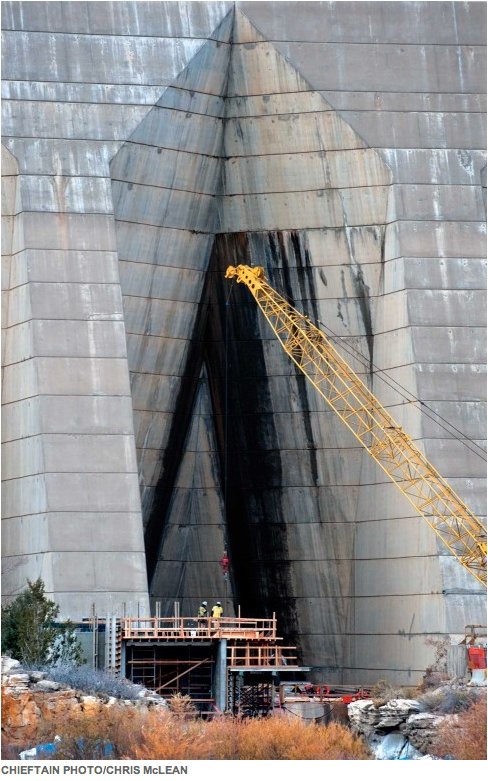
Flows ranging from 5-1,100 cubic feet per second will be released from the new outlet works during the tests. It’s the first time the outlet has been used since construction.

The Arkansas River has been fed by releases from flood gates in the central portion of the dam during construction. River flows have been in the 400 cfs range below the dam recently.

The first test occurred Wednesday afternoon, and more tests are planned Friday and Tuesday, said spokeswoman Kara Lamb.

The Y-shaped outlet is being constructed by Colorado Springs Utilities as part of the Southern Delivery System. It will connect to a 90-inch diameter pipeline leading to a Pueblo West tap and the Juniper Pump Station, which will be constructed near the dam. The other pipeline will serve as the river outlet.

More Southern Delivery System coverage here and here.
Southern Delivery System: State Representative Sal Pace calls on Colorado Springs Utilities to halt construction

sdspreferredalternative.jpg

From The Pueblo Chieftain (Chris Woodka):

Pace sent a letter to Colorado Springs Mayor Steve Bach Monday calling for a halt to the $986 million SDS, now under construction…

“According to your own environmental documents, the SDS will increase Fountain Creek flows by 40 percent,” Pace wrote in the letter. “That increase will now take place without the protections in place that your city promised when you submitted the project to the Bureau of Reclamation for environmental review.”

As part of its 1041 land-use permit with Pueblo County, Colorado Springs agreed to meet requirements in a record of decision by the Bureau of Reclamation, which included a fully funded stormwater enterprise. “Temporarily stopping the project is the least that your city can do to guarantee the protections downstream communities morally and legally deserve,” Pace wrote.

More Southern Delivery System coverage here and here.

‘Oil shale development would involve intensive use of water’ — Alan Hamel

oilshaledepositscowyutblmostseis.jpg

From The Pueblo Chieftain (Chris Woodka):

“We have to protect the water we have, as well as provide water for endangered species,” said Alan Hamel, executive director of the Pueblo Board of Water Works and a member of the Colorado Water Conservation Board. “Oil shale development would involve intensive use of water, particularly for use in power generation.” Last month, the Pueblo water board and other members of the Front Range Water Council weighed in on the Bureau of Reclamation’s environmental impact statement for oil shale and tar sands…

The Front Range Water Council includes the major organizations that import water from the Colorado River: Denver Water, the Northern and Southeastern Colorado water conservancy districts, Aurora Water, Colorado Springs Utilities, Twin Lakes Reservoir and Canal Co. and the Pueblo water board. Collectively, they provide water to 4 million people, 82 percent of the population in Colorado.

More Front Range Water Council coverage here and here.

Pueblo County leaders are beating the drum for Colorado Springs to re-establish a stormwater enterprise

fountaincreekstormwater092011chieftain.jpg

From The Pueblo Chieftain (Chris Woodka):

While the storm [Wednesday], centered over Colorado Springs for three hours, did little to impact Pueblo County, it caused internal problems. At a news conference Thursday, [Colorado Springs] Mayor Steve Bach said $7 million in city funds would be transferred to stormwater needs. About 40 people had to be rescued. Some comments from frustrated citizens on the Internet early Thursday, chided the City Council for dropping the stormwater enterprise in 2009…

“There has to be a steady stream of revenue,” said [Jay Winner, general manager of the Lower Arkansas Valley Water Conservancy District], who worked to convince Colorado Springs to adopt the stormwater enterprise in 2005. “I don’t see how $7 million does anything to address the $500 million in capital needs that have been identified.”[…]

State Rep. Sal Pace, DPueblo, agreed, saying the enterprise was providing $12 million-$15 million a year before the City Council eliminated it. Pace is drafting a letter to Colorado Springs demanding action on the stormwater question…

Pace said Colorado Springs voters are seeing the problems that resulted from the 2009 passage of Issue 300, which was interpreted by City Council as a mandate to repeal what tax-crusader Doug Bruce called a “rain tax.”[…]

County Commissioner Jeff Chostner, who chairs the Fountain Creek Watershed Flood Control and Greenway District board, said Colorado Springs has to address its stormwater problems immediately.

More coverage from Chris Woodka writing for The Pueblo Chieftain. From the article:

A rainstorm parked itself over [Colorado Springs] for about three hours Wednesday, dropping up to 4 inches of rain. Areas to the north and south of the city received less rain, anywhere from 0.5-2 inches. About 40 people and one dog had to be rescued from high water that collected in Colorado Springs, according to news reports. Mayor Steve Bach called it a “100-year flood,” but it wasn’t even close. It was about a 10-year event on Fountain Creek at Security, and the threat diminished as water traveled downstream, according to the U.S. Geological Survey.

While Pueblo braced for possible flooding, the effects were fairly minor by the time the water traveled 40 miles down the Fountain Creek channel. “It did not take away the hot tub that the flood last September deposited in my pasture, so I am very disappointed,” quipped Bill Alt, whose home is on Fountain Creek just north of Pueblo. “On the upside, it irrigated the pasture, which was good since we’ve had no moisture this year.”

More coverage from Daniel Chaćon writing for The Colorado Springs Gazette. From the article:

Pueblo County is threatening to suspend a permit for the Southern Delivery System water pipeline unless Colorado Springs spends more money on stormwater improvements next year. A condition of the so-called 1041 permit requires Colorado Springs to have an adequate stormwater management plan, Pueblo County Attorney Dan Kogovsek said Thursday…

Pueblo County is “very concerned” that Colorado Springs’ capital improvements to prevent stormwater damage have fallen by the wayside since the demise of the Stormwater Enterprise more than two years ago, Kogovsek said. When the enterprise was in operation, the city was spending about $13.3 million annually on maintenance, capital improvement projects and required permits. This year, the city budgeted $3.3 million for maintenance and permits but nothing for capital improvements. Kogovsek said the county will keep a close eye on the city’s 2013 budget to see how much Colorado Springs plans to spend on stormwater…

Mayor Steve Bach, who marked his first year in office Thursday, has sounded the alarm about the city’s stormwater needs. As part of his funding solution, he wants the City Council to direct Utilities to come up with $12 million to $15 million from its existing budget and rate base. “Why should Colorado Springs Utilities be involved in this? In my view, because Utilities will be bringing Southern Delivery System water here from down at the Pueblo Dam and the Arkansas River,” Bach said during a news conference Thursday in the wake of Wednesday’s storm. “Utilities will thereby be, frankly, exacerbating our stormwater challenges because after that water is used locally — whether it’s domestic consumption or irrigation or other purposes – it will be returned. It’s called return flow and that water will be additive to Fountain Creek flow going back down south. At least that’s a pragmatic reason that I see that Utilities should partner with us,” he said.

From the Colorado Springs Utilities twitter feed (@CSUtilities) yesterday:

Unmanaged storm flows outside of Colorado Springs city limits can jeopardize investments made within the city.

And:

We believe stormwater flows must be managed regionally, to fully protect our community’s investments.

More Fountain Creek coverage here and here.

Southern Delivery System: The CWQCC joins Colorado Springs Utilities in appeal of recent ruling about the project water quality permit

arkansasfountainconverge.jpg

From the Colorado Springs Independent (Pam Zubeck):

Colorado Springs Utilities isn’t alone in thinking Pueblo County District Judge Victor Reyes made a mistake.

The Colorado Water Quality Control Commission has voted unanimously to stand with Utilities in opposing Reyes’ decision to overturn the state’s 401 water quality certification for the Southern Delivery System. Reyes had ruled the state commission didn’t adequately account for Fountain Creek pollution caused by the SDS pipeline, which will increase Colorado Springs’ water supply by a third by 2016 by delivering water from Lake Pueblo. After certification in 2010, the Rocky Mountain Environmental Labor Coalition and Pueblo County District Attorney Bill Thiebaut sought judicial review, resulting in Reyes’ ruling.

State Commissioner John Klomp, a former Pueblo County commissioner, made the motion to appeal the ruling, noting that sufficient controls are in place and that Colorado Springs complies with the rules, the Pueblo Chieftain reports. Utilities spokesperson Janet Rummel says SDS construction continues.

More Southern Delivery System coverage here and here.
Fryingpan-Arkansas Project update: The Southeastern board and other agencies are implementing plans to bolster flows in the Arkansas mainstem over the summer

fryingpanarkansasproject.jpg

From The Pueblo Chieftain (Chris Woodka):

The Southeastern Colorado Water Conservancy District is operating its exchange right to move some of the water in Lake Pueblo up to Turquoise and Twin Lakes in order to boost flows through the summer. “To my knowledge, this is the first time the exchange has been used, since it’s a fairly junior water right,” said Jim Broderick, the district. Rafting companies are encouraged by the move, hoping it will keep flows stable in the river stable during July and early August…

The upper reservoirs in Lake County were drawn down during winter months with the expectation downriver in the spring. Colorado Parks and Wildlife will provide about 900 acre-feet of water to cover evaporation and transit loss, said Division Engineer Steve Witte. Water will be released at key times during the summer in blocks up to 100 cubic feet per second, Witte said.

Meanwhile, here’s a profile of three Southeastern board members with family roots on the board, from Chris Woodka writing for The Pueblo Chieftain. From the article:

…three members of the Southeastern Colorado Water Conservancy District are following in their father’s footsteps more than 50 years after the district was formed.

“People think I have the same knowledge about water as my father, but there’s no way I could ever start to wear his boots,” said Tom Goodwin, choking with emotion. Goodwin also is on the board of the Upper Arkansas Water Conservancy District, which his father, Denzel Goodwin, helped launch in 1979. Denzel Goodwin, who died last year, was a firebrand for Fremont County cattle and water issues from the 1950s, and Tom says he would come home from every meeting and discuss everything with his wife, Marcheta…

Two of Goodwin’s peers now on the Southeastern board also had fathers on the board: David Simpson, whose father, Lee Simpson, served from 1981-2009; and Ann Nichols, whose father, Sid Nichols, was a charter member from 1958 until his death in 1973…

[Nichols] also followed in her father’s footsteps professionally, working in the financial end of the water business for Colorado Springs during the purchase of Foxley Farms assets in Crowley County. She retired after working for 25 years as finance director for Colorado Springs. Now a financial consultant, she is treasurer of the Southeastern board and a member of the Colorado Water Resources and Power Development Authority board…

Simpson learned water working side-by-side with his father for 37 years in forming and running the St. Charles Mesa Water District east of Pueblo. When his father retired in 1999, Simpson became manager of the district.

More Southeastern Colorado Water Conservancy District coverage here.

Southern Delivery System: Colorado Springs Utilities appeals recent permit decision by Judge Reyes

arkansasfountainconverge.jpg

From KRDO.com (Rana Novini):

Colorado Springs Utilities says the April ruling is unfortunate and they have always met water quality standards. They joined the City of Colorado Springs, and the State of Colorado in filing an appeal against that ruling.

On Friday, Pueblo County District Attorney Bill Thiebaut stood near the Fountain Creek Flood Control marker in Pueblo and vowed he would not stop fighting against SDS. He held up two jars of water: one he said was from Lake Pueblo, the other from Fountain Creek. “You can see (the latter jar) is rather muddy and contaminated as compared to the Lake Pueblo water,” Thiebaut said. He attributes the pollution to Colorado Springs’ development projects, saying the runoff ends up in Fountain Creek. He says that Colorado Springs takes the clean water in Pueblo Reservoir and returns used, dirty water to Fountain Creek.

Mark Pifher of Colorado Springs Utilities works directly with water quality regarding SDS. He tells KRDO NewsChannel 13 that the pollution in Fountain Creek has nothing to do with SDS. “At this point in time, Southern Delivery is not yet operational. So that’s the ambient condition, if you will, of Fountain Creek,” Pifher said.
In a written statement from the Tenth Judicial District, Thiebaut claims the pollution in Fountain Creek has caused illness to Pueblo County residents. But Pifher says Utilities has never been made aware of any illnesses.

From The Pueblo Chieftain (John Norton):

In April, District Judge Victor Reyes ruled on a suit filed by Thiebaut and threw out a state water quality permit the Colorado Water Quality Control Commission gave the project.

Reyes ruled that the commission ignored potential impacts of growth on Fountain Creek water quality and failed to follow its own procedures in upholding a 2010 permit under section 401 of the Clean Water Act.

Friday afternoon, Thiebaut called on the state and Colorado Springs to give up the appeal. He held up jars of clear Pueblo Reservoir water and cloudy water from Fountain Creek.

Standing near the flood control marker across from the El Centro del Quinto Sol community center, he said, “Now, Colorado Springs wants to take this pristine (lake) water, use it in Colorado Springs and then discharge more of its used wastewater and stormwater into Fountain Creek.

From the Colorado Springs Independent:

…a new study from Summit Economics LLC says Colorado Springs residents pay less ($4.63 per capita annually) than those of every other Front Range city. The average is $52.11. To reach that average, El Paso County would have to impose a half-percent sales tax (50 cents on a $100 purchase), a property tax of 5.8 mills ($93 on the tax bill of a $200,000 house) or a $5.35 per month fee per home. Any of those taxing methods would yield the roughly $36 million a year needed to tackle a $600 million backlog for the county, Colorado Springs, Manitou Springs, Fountain and Monument, the study says.

And the issue lies here, not downstream in Pueblo County, which accounts for only 1 percent of the region’s stormwater infrastructure needs, the study found.

The Fountain Creek Watershed Flood Control and Greenway District, which covers portions of Pueblo and El Paso Counties, funded the study, and its manager Larry Small says the board is eying a November 2013 election if a tax increase is sought.

From the Colorado Springs Gazette (Daniel Chaćon):

Bach said his administration inherited “upwards of a billion” dollars in unfunded capital needs, including stormwater, and that the city needed to “come to grips” with the problem. “The day of reckoning is in front of us,” Bach said.

The lack of stormwater funding has other consequences that City Attorney Chris Melcher has said obligates Utilities, a billion-dollar-plus enterprise of the city. Stormwater is a crucial element of the 62-mile Southern Delivery System water pipeline that Utilities is building between Colorado Springs and Pueblo…

The Board of Pueblo County Commissioners, which issued the so-called 1041 permit for SDS, is now applying pressure on the city, too. The board sent Bach and the council a letter May 3, saying it was “encouraged” by reports that the city was exploring ways to fund stormwater but that it needed to act fast…

“A key component was the Stormwater Enterprise,” they wrote. “Unfortunately, in December 2009, only a few months after it obtained its SDS permits, Colorado Springs Council voted to abolish its Stormwater Enterprise fees.”

SDS spokeswoman Janet Rummel said the city’s stormwater issue is much broader than SDS. “Not only is utilities infrastructure impacted by stormwater run-off, but City and County roads and bridges are also affected for example,” she said in an email.

More coverage from the Colorado Springs Independent (Pam Zubeck):

After the enterprise was dismantled in 2009, the Springs City Council assured Pueblo County that a replacement funding source would be developed, Pueblo County commissioners note, but more than 2.5 years later, no such funding has been secured.

Pueblo County issued a construction permit for SDS, and that permit could be rescinded if Colorado Springs doesn’t live up to its promises.

County President Pro Tem Jan Martin wrote a letter to Pueblo County dated May 10, two days after Bach talked of a stormwater-related “day of reckoning” awaiting the Springs. In it, Martin says, “Protecting our watershed is a high priority for City Council …”

Really? Where’s the evidence? Rather, the Council is busy getting its package of road projects together to be included in an extension of a sales tax for the Pikes Peak Rural Transportation Authority. The tax doesn’t sunset until the end of 2014, but Councilors and others are rabid to get it renewed and want it on this November’s ballot.

More Southern Delivery System coverage here and here.

Southern Delivery System: ‘Colorado Springs remains in compliance, and is in regular contact with Reclamation’ — Kara Lamb via the Chieftain

sdspreferredalternative.jpg

Here’s a report from Chris Woodka writing for The Pueblo Chieftain. [ed. The link does not take you to the article in the Chieftain’s new format as of 5:11 AM. I had to scroll through the online paper to find it.] Here’s an excerpt:

Colorado Springs remains in compliance, and is in regular contact with Reclamation, spokeswoman Kara Lamb said this week. “Reclamation has not issued a permit. We are not a regulating agency,” Lamb explained. “What we have done is enter into a series of contracts with Colorado Springs Utilities and the other SDS participants.

“The contracts are based on the environmental compliance measures outlined in the final Environmental Impact Statement and associated record of decision and permits issued by other entities which do have regulating authority.”

More Southern Delivery System coverage here and here.
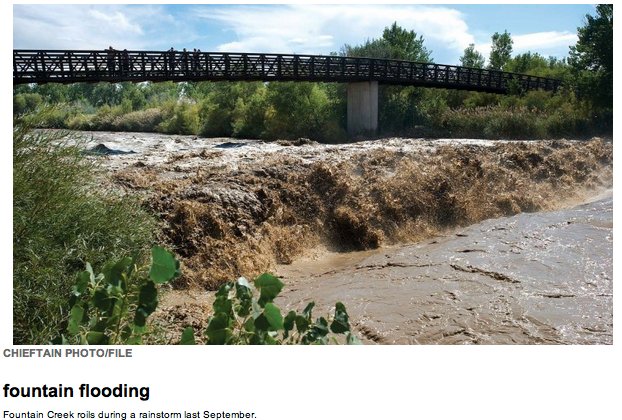
‘It just speaks to how increasingly difficult it is to get a project like this put on line’ — Janet Rummel (Colorado Springs Utilities)

sdspreferredalternative.jpg

From the Colorado Springs Independent (Pam Zubeck):

Even with recent good news regarding interest rates, SDS is going to cost ratepayers about $1.6 billion, including interest. Complications, of course, could drive the cost higher. And quite a few have been popping up lately.

A contrary court ruling. A competing reservoir plan. Skirmishes over access to engineer the 60-mile line from Pueblo Reservoir. Unresolved deals for real estate and trenching.

Utilities thought it was home-free last year after negotiating a long-term storage deal in Pueblo Reservoir with the federal government. It’s already installed 20 miles of pipe and acquired 63 percent of the roughly 300 parcels it needs. So what could go wrong?

Plenty, apparently.

“It just speaks to how increasingly difficult it is to get a project like this put on line,” Utilities spokeswoman Janet Rummel says. “At this time, we believe we can continue to manage these risks within the approved budget.”

More coverage from Chris Vanderveen writing for 9News.com. From the article:

The Southern Delivery System will, when completed in 2016, bring 78 million gallons of water a day from the Pueblo Reservoir to Colorado Springs.

Major construction began on the 60-mile pipeline last year.

“Colorado Springs Utilities has been planning on the Southern Delivery System since really the late 80s,” SDS spokesperson Janet Rummel said. “It’s really going to help insulate us from a drought like we saw in 2002.”

It’s impossible not to notice the massive project in Pueblo West. Construction crews are feverishly digging trenches to house the pipeline. It’s often grueling work, requiring crews to dig into land that is flush with rock…

What is clear is that the project is providing much-needed relief for a construction industry that has been hit hard by the economic downturn. Jared Nessler works for HCP Constructors and is based out of Pueblo West. “We started working on SDS early in 2011,” he said. This job, he said, is right in his backyard.

More Southern Delivery System coverage here and here.

Pueblo County officials plan to hold Colorado Springs Utilities feet to the fire for stormwater improvements for Fountain Creek

sdspreferredalternative.jpg

From The Pueblo Chieftain (Chris Woodka):

SDS, a pipeline under construction from Pueblo Dam to El Paso County, needs the federal permit in order to take water from Lake Pueblo.
The federal permit also is a key element of the Pueblo County 1041 permit issued in March 2009. In a letter to Colorado Springs Mayor Steve Bach and City Council President Scott Hente, the commissioners point out that council assured Pueblo County it would develop a replacement source of funding when it abolished the stormwater enterprise in December 2009.

“Now 2 1/2 years later, the city has yet to establish assured stormwater funding,” Commissioners Anthony Nunez, Jeff Chostner and John Cordova wrote in the letter sent Thursday. “Colorado Springs is the largest municipality in the state of Colorado without a stormwater enterprise or other assured mechanism to maintain and improve stormwater infrastructure.”

The letter makes it clear that there could be implications for the 1041 permit, a warning that Colorado Springs City Attorney Chris Melcher told the mayor and council about last month.

More Southern Delivery System coverage here and here.

Southern Delivery System: ‘Pueblo will not pay for the failure of the Colorado Springs stormwater enterprise’ — Jeff Chostner

fountaincreekstormwater092011chieftain.jpg

From The Pueblo Chieftain (Chris Woodka):

“We’re paying five times per capita in Pueblo County, while El Paso County has five times the resources,” Chostner said. “Pueblo will not pay for the failure of the Colorado Springs stormwater enterprise. This has implications for the 1041 permit.”

The Fountain Creek board got its first look at a regional stormwater study by Summit Economics that suggests a coordinated regional approach is needed to meet a backlog of more than $750 million in stormwater management needs. The study, which will be finalized after the sponsors have a chance to review it, also points out that Colorado Springs pays only $4.63 per capita for stormwater protection, less than one-tenth of the Front Range average. Pueblo pays $25.81 per capita.

Chostner, who guided the Fountain Creek board away from contributing any money to the study, was adamant that it is not Pueblo’s responsibility to pay for stormwater projects in Colorado Springs, which abolished its stormwater enterprise in 2009. As part of 2009 Pueblo County 1041 conditions, Colorado Springs agreed to provide $50 million to the district over five years after SDS goes online in 2016. Chostner balked at the economists’ suggestion that some of that money could defray stormwater costs. “This board decides how to spend that,” he said.

More Fountain Creek coverage here and here.

Flaming Gorge pipeline: FERC is reviewing Wyco Water and Power’s request for a rehearing for the project’s preliminary permit

flaminggorgepipelinemillion.jpg

From Chris Woodka writing for The Pueblo Chieftain. From the article:

The Federal Energy Regulatory Commission filed a notice Monday saying it needs more time to study a request for a rehearing filed by Aaron Million’s Wyco Power and Water Co.
While notice was titled “Order Granting Rehearing for Further Consideration,” it did not in fact approve a rehearing on the entire pipeline project, FERC spokeswoman Celeste Miller said [ed. emphasis mine]…

“All the notice meant was that the commission needed additional time to consider the rehearing request. If there was no action, the request would have been denied,” Miller said. “The commission is still reviewing the request.”

From the Northern Colorado Business Report (Mark Wilcox):

The rehearing comes despite multiple protests from environmentalist groups, the Wyoming Game and Fish Department, the U.S. Forest Service, Sweetwater County, Colorado Springs Utilities and others. Opponents claim it would damage the ecosystem surrounding Flaming Gorge, thereby damaging the $118 million local outdoor economy.

In his rehearing request, Million invoked the approved, 139-mile Lake Powell Pipeline, which will cost $1.064 billion and be finished in 2020. He said his preliminary proposal was similar to the Lake Powell Pipeline, but while Lake Powell got a green light, Million’s Wyco Power and Water Inc. was stopped on red.

“The commission’s order implies that the final pipeline alignment, all authorizations to construct the pipeline and even the construction of the pipeline should be completed prior to filing an application for a preliminary permit” Million’s rehearing request said.

More Flaming Gorge pipeline coverage here and here.

Flaming Gorge pipeline: FERC grants a rehearing for the project’s preliminary permit

flaminggorgepipelineearthjustice.jpg

Update: FERC did not grant a request for a rehearing. They need more time to review the request.

From The Pueblo Chieftain (Chris Woodka):

The Federal Energy Regulatory Commission announced Monday it will grant a rehearing for Aaron Million’s Wyco Power and Water Co., over the objections of environmental groups and Colorado Springs Utilities…

Among those opposing the rehearing were the Colorado Environmental Coalition, the National Parks Conservation Association, Western Resource Advocates and the Sierra Club.

Colorado Springs Utilities on April 6 filed a motion asking FERC to exclude consideration of a reservoir in El Paso County at the same site where it plans to build a reservoir for the Southern Delivery System. The Norris family, owners of T-Cross Ranches, are family friends of Million. They have filed an application with El Paso County for the Marlborough Metropolitan District with the intention of building a regional reservoir on Upper Williams Creek, southeast of Colorado Springs.

Million also could have competition in building the pipeline from the Colorado-Wyoming Coalition, led by Frank Jaeger, manager of Parker Water, which is studying its own plan for a Flaming Gorge Pipeline.

Meanwhile, a state task force continues to meet to identify issues that could arise if either project is built. Its next meeting is Wednesday in Grand Junction.

Here’s the agenda for the next task force meeting via email from the IBCC facilitator.

More Flaming Gorge pipeline coverage here and here.

Southern Delivery System: Did Colorado Springs violate their federal permit when they abolished their stormwater enterprise?

fountaincreek.jpg

From The Pueblo Chieftain (Chris Woodka):

A district formed to protect water in the Lower Arkansas Valley instructed its water attorney to investigate whether Colorado Springs violated a federal permit when it abolished its stormwater enterprise. “This is irresponsible behavior by Colorado Springs. They owe the rest of the area a service,” said Melissa Esquibel, who represents Pueblo County on the Lower Arkansas Valley Water Conservancy District board. “It’s unconscionable.”[…]

The board approved Esquibel’s motion to have Peter Nichols investigate whether Colorado Springs is in violation of a record of decision by the federal Bureau of Reclamation for SDS. The federal permit makes the assumption that Colorado Springs would have a certain level of funding annually under the former enterprise. Instead, Colorado Springs has spent about $1.2 million annually since voters instructed City Council to disband it in 2009. Stormwater funding is listed at $1.9 million this year, according to a budget comparison of Front Range cities distributed at the meeting. Colorado Springs spends $4.63 per capita on stormwater funding, less than 10 percent of the Front Range average. Pueblo is at half the average, at $25.81 per capita…

Last month, Colorado Springs Attorney Chris Melcher said Colorado Springs is obligated to spend $13 million-$15 million annually for stormwater improvements. At a Fountain Creek meeting last month, Councilwoman Brandy Williams said the council is working on a plan of how to come up with the money.

More Southern Delivery System coverage here and here.

Southern Delivery System: Colorado Springs Utilities plans to file appeal of Judge Victor Reyes’ decision about water quality permit

arkansasfountainconverge.jpg

From The Colorado Springs Gazette (Daniel Chaćon):

While the Colorado Department of Public Health and Environment evaluates its next move, Colorado Springs Utilities said Tuesday it plans to appeal the ruling. “Construction is proceeding,” SDS spokeswoman Janet Rummel said…

The court ruling came after a request for a judicial review from Pueblo District Attorney Bill Thiebaut and the Rocky Mountain Environmental Labor Coalition. Thiebaut argued that SDS will lead to potentially damaging water flows back to Pueblo, worsening “the existing flooding and contamination in Fountain Creek and the Arkansas River.” Thiebaut has a long history of opposing SDS, and during the permitting process, the labor coalition tried unsuccessfully to get Utilities to promise to use union labor for the construction of SDS…

Rummel said the 401 certification was meant to assure the U.S. Army Corps of Engineers that the SDS project would follow all applicable state water quality regulations and procedures. The certification was a condition of the 404 permit issued by the Army Corps of Engineers for SDS. That permit is required under the U.S. Clean Water Act because the project will have permanent and temporary impacts on jurisdictional wetlands.

Thiebaut told the Pueblo Chieftain newspaper this week that Utilities doesn’t have a valid permit for SDS. “In order for the SDS system to proceed, the owners need to obtain one from the state,” Thiebaut told the newspaper. “Approval of a new 401 certification will require a comment period and opportunity for appeal. In the alternative, the defendants can appeal to a higher court. We are prepared either way.”[…]

Rummel said the judge’s ruling means that if the appeal is unsuccessful, the state may be required to do additional water quality evaluation. “That may result in additional mitigation for the project. That is what we believe the worst case scenario to be,” she said.

More coverage from John Hazelhurst writing for the Colorado Springs Independent. From the article:

…thanks to SDS, we’ll have more water than we’ll ever need. Our future is assured: Our urban forest won’t die, we can keep our lawns green, and sustain ourselves indefinitely … right?

Not quite. Even with some surprising decreases to cost projections, SDS will still run about $1.6 billion total, and has already affected our water rates. To help mitigate costs, Utilities would like to make “temporary” deals with users outside the city.

That’s nuts. Doing so will just enable sprawl, further hollow out our tax base, and put us at risk in the years to come. Temporary deals have a way of becoming permanent. It’s best not to make such deals, and use the water to fuel our infill growth.

More coverage from Pam Zubeck writing for the Colorado Springs Independent. From the article:

Instead of a 120 percent increase [ed. in Colorado Springs water rates] between 2011 and 2017, the hike could be less than half that under a new rate forecast being drafted. The change stems in part from the recession creating more competition among contractors — thus, lower construction costs. But the biggest reason is lower interest rates, which could save $700 million from previous estimates. While officials won’t release new projections until the May 16 Utilities Board meeting, chief financial officer Bill Cherrier says, “What I can tell you is, we probably lopped off several years of rate increases. That would be four years of 12 percent increases, instead of six or seven. Even the ones we need, we believe, will be less than 12 percent. Once we get up to a certain level of rates, we’re likely to see virtually no water increases for quite some time.”[…]

Cherrier says the city will issue more debt for SDS in August, and in 2013 and 2014 to finish Phase 1 funding for the pipeline, construction of three pump stations and a water treatment plant, which continues even as the city spars with opponents over a water quality permit.

In 2010, City Council raised rates by 12 percent for 2011 and 2012. Under the initial plan, the typical residential customer’s average monthly bill would have leaped by 120 percent, from $37 in 2010 to $82 in 2017. If the last three years of 12 percent rate hikes aren’t imposed, the typical increase would be 57 percent, to $58.

More Southern Delivery System coverage here and here.

Southern Delivery System: Colorado Springs Utilities plans to file appeal of Judge Victor Reyes’ decision about water quality permit

southerndeliverysystemconstructioncelebration08192011.jpg

From The Pueblo Chieftain (Chris Woodka):

“We do plan to appeal the ruling,” said Janet Rummel, a spokeswoman for Utilities. “We will need to consult with the state on the timing, but anticipate it will be filed as soon as is practical.”

The city also would have the option of following Reyes’ order and seeking another set of guidelines from the Colorado Water Quality Control Division, presumably with another hearing before the commission. The state is evaluating which course to take…

Pueblo District Attorney Bill Thiebaut said SDS does not have a valid permit, but needs one for the project to continue. “In order for the SDS system to proceed, the owners need to obtain one from the state,” Thiebaut said. “Approval of a new 401 certification will require a comment period and opportunity for appeal. In the alternative, the defendants can appeal to a higher court…

Reyes ruled that the adaptive management plan Colorado Springs, the state and other agencies have agreed to is not a reasonable safeguard against contamination of Fountain Creek.

More Southern Delivery System coverage here and here.

An area on Upper Williams Creek, owned mostly by T-Cross Ranches, is a popular location for a terminal storage reservoir

From the Colorado Springs Independent (Pam Zubeck):

The Norris family, owners of T-Cross ranches, wants to create a water district and build a reservoir on Upper Williams Creek, the same general location eyed by Springs Utilities, the Pueblo Chieftain reported last week.

The family filed an application with El Paso County for Marlboro Metropolitan Water District. (Steve Norris’ father, Bob, portrayed the Marlboro Man in TV ads.) Steve Norris told the Chieftain that the reservoir would hold nearly 30,000 acre feet of water. The Norrises and the State Land Board own the property, located southeast of the Springs.

Norris couldn’t be reached, but from the sound of things, he believes his project would be used by Springs Utilities or another project that needs water storage. He told the Chieftain, “There has been lots of interest throughout the region for creating a regional storage reservoir.”

The reservoir site Norris chose would not require relocation of Bradley Road, as contemplated by SDS, the Chieftain reported, so Norris said his plan might save the city money. Norris and his friend, Aaron Million, who is planning a pipeline from Flaming Gorge Reservoir and the Green River in Wyoming, also envision the site as terminal storage.

But Utilities spokeswoman Janet Rummel says the Norris reservoir location “appears to conflict” with the city’s site planned as Phase 2 of the SDS project. SDS, an $880 million pipeline from Pueblo Reservoir to the Springs’ east side, will deliver water in 2016 and is causing water rates to rise sharply.

More Flaming Gorge pipeline coverage here and here. More Southern Delivery System coverage here and here.

Southern Delivery System: Colorado Springs Utilities is, ‘disappointed that the Court disregarded several years of studies and evaluation’

southerndeliverysystemnorthoutletworksconstructionpueblodampueblochieftain.jpg

From KRDO.com (Rana Novini):

A Pueblo County judge ruled Friday that the Southern Delivery System (SDS) would further degrade water quality and violates water quality standards in Pueblo County. The SDS water project would divert water from Pueblo Dam to Colorado Springs.

District Attorney Bill Thiebaut says he is pleased with the court’s decision. Thiebaut says he filed the lawsuit because the State of Colorado “failed to protect the citizens of Pueblo.”

Despite the ruling, Colorado Springs Utilities announced they will continue construction of the SDS project while they evaluate their appeal rights. Utilities says it is “disappointed that the Court disregarded several years of studies and evaluation by federal and state environmental agencies and the extensive mitigation already required of the project.”

More Southern Delivery System coverage here and here.

Southern Delivery System: ‘District Judge Victor Reyes set aside the Colorado Water Quality Control Commission’s decision to issue a water quality permit to Colorado Springs’ — Chieftain

sdspreferredalternative.jpg

From The Pueblo Chieftain (Chris Woodka):

District Judge Victor Reyes set aside the Colorado Water Quality Control Commission’s decision to issue a water quality permit to Colorado Springs and ordered new hearings by the commission. The lawsuit was brought by Pueblo District Attorney Bill Thiebaut and joined by the Rocky Mountain Environmental and Labor Coalition against the commission and Colorado Springs.

The commission approved a Section 401 permit under the federal Clean Water Act that was approved by the Water Quality Control Division in April 2010. However, in upholding the staff decision to grant the permit, the commission failed to consider scientific evidence and instead relied on “gut feeling” and “best professional judgment” in approving the permit, Reyes said in a 57-page ruling. Under deposition, a staff member admitted that no scientific measurement was used in reaching a decision. Reyes also chided the state for not documenting its findings, not evaluating the impacts of growth and failing to use its own methodology.

Thiebaut and the environmental groups argued that the impact of 800,000 people living in El Paso County by 2030 had not been fully considered, and that water quality in Fountain Creek and the Arkansas River would be significantly degraded…

Ross Vincent of the Sierra Club praised the decision as well. “Clean water is really important, and the agencies we rely on to keep it clean are not getting the job done,” Vincent said. “The decision shows Colorado Springs Utilities is not above the law. Urban growth and water quality are unavoidably linked and the state must consider those links when evaluating big projects like SDS.”

More coverage from Pam Zubeck writing for the Colorado Springs Independent. From the article:

The decision is a blow to Colorado Springs Utilities’ SDS pipeline project, now under construction, that will bring water here from Pueblo Reservoir. Utilities’ spokeswoman Janet Rummel explains in an e-mail to the Indy:

The Colorado Department of Public Health and Environment’s (CDPHE) Water Quality Control Division (Division) issued a 401 water quality certification under the Clean Water Act for the SDS project in April 2010, certifying that SDS would comply with all applicable state water quality requirements. The Rocky Mountain Environmental Labor Coalition (RMELC) and Pueblo County District Attorney, Bill Thiebaut, then appealed the CDPHE 401 certification for SDS.

Following extensive review, including testimony from experts at a hearing in December 2010, the Colorado Water Quality Control Commission voted unanimously in January 2011 to confirm the SDS 401 Certification issued by the Water Quality Control Division.

Today, we received Pueblo County Judge Reyes’ ruling regarding the RMELC and District Attorney Thiebaut’s request for a judicial review of the Commission’s affirmation of the Division’s certification. The judge reversed the Commission’s ruling and sent the case back to the Division to revise the 401 Certification.

We are disappointed that the Court disregarded several years of studies and evaluation by federal and state environmental agencies and the extensive mitigation already required of the project.

We are currently evaluating our appeal rights and coordinating with the appropriate state and federal agencies.

Construction of the SDS project is proceeding — providing hundreds of regional jobs and infusing tens of millions of dollars in the southern Colorado economy — while we work to resolve this issue in the courts.

Meanwhile, Colorado Springs has filed an application in water court to build a terminal reservoir for SDS on Williams Creek (same site planned for the Flaming Gorge pipeline), according to Chris Woodka writing for The Pueblo Chieftain. From the article:

The Utilities reservoir is part of a future phase of the Southern Delivery System. The first phase of SDS is a 50-mile long, 66-inch diameter pipeline, new outlet works at Pueblo Dam, three pump stations and a treatment plant now under construction. Completion is expected in 2016. To fully use the pipeline’s entire capacity, the reservoir would be built to provide terminal storage before water is treated. It would be developed in the 2020-25 timeframe. A March filing in Division 2 Water Court indicates a 129-foot high dam, spanning 8,100 feet would detain about 30,500 acre-feet of water. Water would come through the Williams Creek drainage, exchanges from other sources and direct deliveries from SDS…

It’s no secret that Colorado Springs has had designs on the site for years. The site was part of a water court exchange application Colorado Springs filed in 2007, when it was listed as an alternative site in the SDS study. After problems with Colorado Springs’ first choice for SDS terminal storage at Jimmy Camp Creek, to the north of Williams Creek, surfaced in 2008, the Bureau of Reclamation identified Williams Creek as the preferred location. In 2010, the El Paso County planning commission approved the site for location of a reservoir. In 2011, under state legislation adopted the previous year (HB1165), the State Land Board approved sale of land for the reservoir.

But much of the site is on private land owned by the Norris family, which has filed to create the Marlborough Metropolitan District…

The Marlborough district would be to construct a 30,000 acre-foot reservoir for regional use as well as recreation. Located south of the Colorado Springs site, it could be expanded with a higher earthen dam, according to engineering reports. The site also is identified as terminal storage for Aaron Million’s Flaming Gorge pipeline proposal…

There are major differences in approach. Utilities plan would require relocating part of Bradley Road, while the Norris plan does not. The Norris family also has discussed sharing revenue from storage fees with the State Land Board as an alternative to buying that portion of the land, Duncan said.

More coverage from Ryan Maye Handy writing for The Colorado Springs Gazette. From the article:

The crucial 401 certification, which has been battled over for two years, is headed back to the Colorado Public Health and Environment’s Water Quality Control Division. The division granted the certification for Utilities’ Southern Delivery System, a 62-mile-long pipeline, in April 2010. Pueblo County Judge Victor Reyes upheld concerns about the project and reversed a January 2011 decision by the Colorado Water Quality Control Commission to confirm the certification, according to Janet Rummel, a spokeswoman for the project. The 401 certification is a prerequisite for the only remaining obstacle in the project’s completion — a 404 permit issued by the U.S. Army Corps of Engineers…

Since 2010, the SDS project has battled with the Rocky Mountain Environmental Labor Coalition and Thiebaut over its 401 certification. Thiebaut and the coalition challenged the project’s certification when it was granted two years ago.

More Southern Delivery System coverage here and here.

Southern Delivery System: ‘They have to meet the level of commitments in the record of decision’ — Kara Lamb

fountaincreekthrucoloradospringsfromdippity.jpg

From The Pueblo Chieftain (Chris Woodka):

Colorado Springs voters in 2009 disbanded the stormwater enterprise approved by council in 2005. Since then, only about $1.2 million has been spent annually to meet federal mandates.

“They have to meet the level of commitments in the record of decision,” Reclamation spokeswoman Kara Lamb said this week. “If any requirement in the record of decision is not met, there has to be new mitigation. That’s the commitment they made.” Lamb clarified that, even once the SDS pipeline, pumping stations and treatment plant are constructed, Reclamation still may decide whether the project may use Lake Pueblo, a federal facility, to deliver the water.

Colorado Springs intends to fulfill its requirement with continued monitoring of conditions on Fountain Creek and the impact caused by SDS. There are regional issues that will play a role, too, as population grows in Colorado Springs and the surrounding communities, said Janet Rummel, a spokeswoman for the utilities agency. The city also will meet stormwater commitments in the 1041 permit for SDS issued by Pueblo County in 2009, Rummel said.

More Southern Delivery System coverage here and here.

It turns out that Colorado Springs did need a stormwater enterprise after all — where is Douglas Bruce?

rueterhesswithwaterexample1

From The Colorado Springs Gazette (Daniel Chacón):

Melcher gave Mayor Steve Bach and the City Council five options, including making stormwater a responsibility of Colorado Springs Utilities and asking voters to pass a tax.

Melcher emphasized that Utilities should play a big role in the solution because he said the future of the $2.3 billion Southern Delivery System water pipeline is at stake. “Utilities right now has a shared interest with the city for a number of reasons, but particularly because their SDS project is contingent on a permit that requires the city, which includes Utilities, the entire city, to have a functioning stormwater system,” Melcher said during the monthly Mayor’s Counsel Meeting between Bach and council members. The 62-mile pipeline from the Pueblo Dam to Colorado Springs is under construction.

Colorado Springs is falling woefully behind on its stormwater needs.

The city should be spending $13 million to $15 million annually on stormwater, and the unfunded capital needs for stormwater are estimated at $500 million. The city is spending only about $1.2 million to pay for the federally mandated stormwater component of the National Pollutant Discharge Elimination System program.

At least two council members — Tim Leigh and Angela Dougan — said the city should try to find a way to pay for stormwater through Utilities’ budget of more than $1 billion.

More coverage from Chris Woodka writing for The Pueblo Chieftain. From the article:

Colorado Springs Council, in a meeting with Mayor Steve Bach this week, was told by City Attorney Tim Melcher that it should be spending $13 million-$15 million a year for stormwater projects, rather than the bare minimum it now spends, about $1.2 million a year, to satisfy federal requirements…

There is a $500 million backlog of stormwater projects dating back to the 1980s. Options to fund improvements include raising water rates, already expected to double to pay for the $2.3 billion cost of SDS; shifting Utilities’ payments to the city; finding more money somewhere in general fund; or asking citizens to vote on creating a stormwater enterprise. Colorado Springs had a stormwater enterprise from 2005-09, but eliminated it after a campaign led by tax activist Doug Bruce against a “rain tax.”[…]

The option to vote on the enterprise could conflict with the Fountain Creek Watershed Flood Control and Greenway District’s plans to ask voters in El Paso and Pueblo counties to approve a mill levy. The district, formed in 2009, will run out of money at the end of this year, and no other source of funding is in sight until SDS is completed in 2016. At that time, Colorado Springs Utilities will begin making five annual payments totalling $50 million.

The [Fountain Creek Watershed Flood Control and Greenway District] will hear a report at its April 27 meeting from Summit Economics on a regional stormwater solution. The study was commissioned by El Paso County communities to come up with a unified approach to stormwater management.

More coverage from J. Adrian Stanley writing for the Colorado Springs Independent Indy Blog. From the post:

Really, this was inevitable. Drainage problems aren’t going away. In fact, neglecting them too long will get the city in trouble with the feds, piss off [Colorado Springs Utilities], and probably lead to a few streets caving in.

According to City Attorney Chris Melcher, who spoke on the issue at today’s Mayor’s Counsel meeting, the city has a few options. City Council could simply write a law making Stormwater, or at least parts of Stormwater, the responsibility of Utilities. Alternately, Council could ask for a tax increase, or simply ignore the problem.

One thing’s for sure, the city general fund can’t pay for what needs to be done — about $15 million a year in work.

Both Council President Pro Tem Jan Martin and Councilor Brandy Williams responded by saying the city should cooperate with the Fountain Creek Watershed board, which is working on a regional solution to Stormwater. When that process wraps up, voters will likely be asked to approve a tax to cover project costs.

More stormwater coverage here and here.