San Juans: Just two dust on snow events so far this winter #codrought

dustonsnowsanjuans.jpg

From The Telluride Daily Planet (Collin McRann):

One of the leading local climate research entities in the state is the Silverton Center for Snow and Avalanche Studies, which has been conducting research on local precipitation and snowpack for more than a decade. Over the years, the center has accumulated reams of data about the snowpack, and on Friday a researcher presented some of the center’s findings at the monthly EcoAction Roundtable at the Wilkinson Public Library to a crowd of more than 15 people…

Though a lot of climate change research is focused on increasing temperatures, there are many side effects of warmer temperatures that could have a profound impact locally. One of those is dust on snow, which the center has been studying for years. Since 2004, the center has been gathering data on the amount of sunlight radiation reflected from the snowpack at sites in Beck Basin. When the snow is clean it reflects more heat and melts slower, but when covered in dust it melts faster. [Researcher Kim Buck] said almost all of the dust on snow in Colorado comes off of the Colorado Plateau. She said once the dust blows in and gets on the snow, it can speed up the melt dramatically — by an entire month in the spring…

Locally, there have been two dust blow-ins this winter, but they were mild compared with dust storms of the past few years, notably 2009, Buck said…

The center’s and NOAA’s snowpack data shows that this year’s snowpack is lower than last year at this time. According to NOAA information, the snowpack in the San Miguel, Dolores, Animas and San Juan River Basin is around 85 percent of normal. Last year it was slightly higher. Buck said it could be bad news this summer.

“It is extremely unlikely that we’re going to catch up on precipitation,” Buck said “Last year the state was just coming off of that great big water year, so reservoirs were full. This year reservoirs are low and then we’re getting another low snow year back to back. So I think the cities in the Front Range will have a pretty hard time in the summer.”

Ridgway Reservoir: Tri-State hopes to start on the hydropower generation facilities in June

ridgwaydamusbr.jpg

From The Watch (Peter Shelton):

On the heels of a new Draft Supplemental Environmental Assessment released Feb. 25 by the Bureau of Reclamation, Mike Berry came before the Ouray Board of County Commissioners Tuesday with an update. Berry is general manager of Tri-County Water Conservancy District, which manages the dam and is building the power-generating facility at the base of the dam. Power wholesaler Tri-State Generation and Transmission will receive its permit to begin construction of the interconnection station and transmission lines when BuRec’s final EA is approved. Berry reported that Tri-State hopes to begin construction in June and finish the substation by November or December of this year.

“We hope to have the small generator up and running for this next winter,” Berry told the board. “It should be ready for Aspen’s PPA [Power Purchase Agreement].” The City of Aspen has contracted to purchase the wintertime output from the dam over 20 years. Tri-State, the wholesale electric supplier for San Miguel Power Association and the Delta-Montrose Electric Association, has agreed to purchase, for 10 years, the higher summertime output.

“Aspen probably won’t see any of those actual electrons,” Berry said. “They will most likely go to [the City of] Delta, which shares the same wholesaler, an outfit with the acronym MEAN out of Nebraska.”

Tri-County WCD is installing two generators, a smaller 800kV one that should run efficiently on the low, 30-60 cubic-feet-per-second flows in winter, and a bigger 7.2 megawatt one to run on summertime release levels. Together, they will provide enough juice to run 2,000 homes and take the equivalent, in greenhouse gases, of more than 4,000 cars off the road. The big generator should be ready for testing by April 2014, Berry said.

More hydroelectric coverage here and here.

Reclamation Releases Draft Supplemental Environmental Assessment on Ridgway Dam Hydropower Interconnection Facilities

ridgwayreservoir.jpg

Here’s the release from the Bureau of Reclamation (Steve McCall/Justyn Hock):

Reclamation announced today that it released a draft Supplemental Environmental Assessment on Ridgway Dam Hydropower Interconnection Facilities. The draft EA supplements the 2012 Ridgway Hydropower Environmental Assessment and Finding of No Significant Impact and addresses additional details and information on the interconnection and transmission facilities.

The proposed action in the EA is to issue a license agreement and rights-of-way to Tri-State Generation and Transmission Association for construction of interconnection facilities to interconnect Tri-County Water Conservancy District hydropower facilities to the existing 115-kV transmission line that runs along U.S. Highway 550. In addition, a memorandum of agreement will be signed with Tri-County to relocate dry storage facilities and utilities operated by Colorado Parks and Wildlife as part of Ridgway State Park.

Tri-County is currently constructing the hydropower facilities at Ridgway Dam on the Uncompahgre River in Ouray County, Colo. and operates and maintains Ridgway Dam.

The draft supplemental environmental assessment is available on our website or a copy can be received by contacting Steve McCall with Reclamation in Grand Junction at (970) 248-0638 or smccall@usbr.gov.

Reclamation will consider all comments received prior to preparing a final environmental assessment. Comments can be submitted to the email address above or to: Ed Warner, Area Manager, Bureau of Reclamation, 2764 Compass Drive, Suite 106, Grand Junction, CO 81506. Comments are due by Friday, March 15, 2013.

More Uncompahgre River Watershed coverage here.

Water meters may be on the horizon for Ouray

ouray.jpg

From the Watch (Samantha Wright):

Council unanimously approved a resolution supporting a $35,000 water efficiency grant application to the Colorado Water Conservation Board to help pay for the development and implementation of a Water Efficiency Plan. The plan was mandated by the Colorado Division of Water Resources last summer, when Ouray’s water supply was called by downstream senior water users.

The ultimate purpose of the Water Efficiency Plan, according to the grant application authored by the city’s water consultant Wright Water Engineers, is to develop a program to better meter water usage and reduce future water demand through multiple steps including leak detection and repair programs; landscape irrigation programs; educational programs on water use; plumbing fixture ordinances and programs and a commitment to track and report progress and make adjustments as needed.

A recent study conducted by Wright Water Engineers showed that residential use accounts for 71 percent of Ouray’s water demand, and that residents use more water than the national average. In implementing the Water Efficiency Plan, the goal is to lower per capita water demands by at least 10 percent over the next decade.

More infrastructure coverage here.

Aspinall Unit operations meeting recap: Forecasted April-July inflow to Blue Mesa is 370,000 acre-feet #coriver

aspinallunitdescription.jpg

From email from Reclamation (Dan Crabtree):

Participation: This meeting was held at the Holiday Inn Express in Montrose. Attendees are noted on the distribution list located at the end of these notes. Handouts and presentations are available for review at:

http://www.usbr.gov/uc/wcao/water/rsvrs/mtgs/amcurrnt.html

Purpose of Meeting: The purpose of operation meetings which are held in January, April, and August is to gather input for determining upcoming operations of the Aspinall Unit (Blue Mesa, Morrow Point, and Crystal Reservoirs). This input is used in Reclamation’s development of specific operations for the Aspinall Unit and for the overall 24-month study (www.usbr.gov/uc/water/crsp/studies/index.html) for operation of Reclamation projects in the Upper Colorado River Basin, which includes plans for Glen Canyon, Flaming Gorge, and Navajo Units, as well as the Aspinall Unit. Operation of the Aspinall Unit considers forecasted inflows to the reservoirs, hydropower and flood control needs, existing water rights, minimum instream flows, target elevations for reservoirs; flow needs and flow recommendations for endangered fish and other resources; recreation; and other factors. In addition, the meetings are used to coordinate activities and exchange information among agencies, water users, and other interested parties concerning the Gunnison River.

Handouts provided included data on 2012 operations; inflows to the reservoirs for 2012; and projected most probable, minimum, and maximum inflow forecasts for 2013; and potential operations for 2013.

The Fish and Wildlife Service flow recommendations for endangered fish were completed in 2003 and a final Aspinall Operations EIS and Record of Decision have been completed. Therefore operations to meet the flow recommendations have begun. In addition, the water right for the Black Canyon of the Gunnison National Park has been quantified and adjudicated. These operation meetings are used to discuss proposals for long-term operation plans to address these and related resource management issues.

Operations:

General: Blue Mesa Reservoir capacities are described in meetings as follows: The reservoir holds 940,700 acre-feet (af). Active capacity is 748,400 af; inactive capacity is 81,100af; and dead storage is 111,200. Live capacity is the active plus inactive, which totals 829,500af. Discussions during operation meetings use live capacity.

Gunnison Basin Reservoirs: In 2012, Paonia and Silver Jack were the only Reclamation reservoirs to fill because of the limited runoff; and similar conditions are predicted to occur in 2013. Presently Taylor Park is 53% full; Ridgway 66%; Paonia 7%; and Silver Jack 19%. Inflow forecasts for 2013 are 63% of average to Ridgway; 60-65% to Taylor Park and 65% in the North Fork basin.

2012 Operations: The actual April through July inflow to Blue Mesa Reservoir was 206,000 af, the third lowest since 1937. The years 1977 and 2002 were lower. The April-July runoff at the Whitewater gage near Grand Junction was only 18 percent of average. Maximum content of Blue Mesa in 2012 was 543,000 af in April. Based on the May 1, 2012 inflow forecast to Blue Mesa, the Black Canyon National Park water right called for a 1-day peak of 814 cfs, which was met by an 845 cfs peak at the end of June. Flow Recommendations for endangered fish called for a 900 cfs peak in 2012 at Whitewater and this corresponded to the 900 cfs baseflow target for June and July which was met.

Black Canyon flows from August-September, 2012 were in the 600 cfs range and lowered to 320 cfs in October and remained there for the rest of the calendar year.

Flows at Whitewater Gage held up well through the fall eventually dropping to around 750 cfs in late December.

2013 Operations: Precipitation in the Gunnison Basin in October and November, 2012 was well below 50% of normal; December precipitation was near normal.

As of January 23rd, snowpack in the Gunnison Basin is only 62 % of the long-term average. (We would need 138% of average for the next 5 months to reach an average year). The inflow forecast to Blue Mesa is now 55% of the long-term average.

Blue Mesa content is now 327,000 af and has gained only 2,000 af through the winter.

As of January 15th, the forecasted April-July inflow to Blue Mesa is 370,000 af which is considered a Dry Year category and would be expected to be exceeded in 92 % of years.

If this inflow forecast holds true, it would represent the 5th lowest inflow since Blue Mesa was constructed (1977, 1981, 2002, and 2012 were lower).

Black Canyon National Park peak flow will be based on May 1 forecast; if the present forecast is maintained the peak would be 1016 cfs. However, a drought provision in the water right (based on the previous dry year and low Blue Mesa content) reduces this peak to 768 cfs.

Flow Recommendations call for a 900 cfs peak at Whitewater in a Dry Year based on the present forecasted inflow. This again, is equal to the baseflow target of 900 cfs for June and July.

Under most probable conditions, Blue Mesa is expected to reach 7476 feet in elevation (480,000 af content) which is 43 feet short of filling.

Average monthly Black Canyon flows during January through April are expected to be around 300 cfs and then increase to 500-650 cfs in the spring and summer.

It should be noted that snowpack conditions can change significantly after January and projected operations should be considered preliminary at this time.

Weather Forecasts: The National Weather Service projected some precipitation in the short-term but below average in the 8-14 day period. Last fall El Nino conditions were projected but did not materialize. Conditions are now near neutral and historically such conditions have resulted in a wide range of precipitation conditions; however, below average precipitation for the remainder of the winter is possible.

Above average temperature conditions are projected for the basin for the remainder of the winter (however, valley inversions may make you think otherwise).

Drought conditions in the Gunnison Basin are expected to persist.

Special Flow Requests: None.

Reports:

State Engineer: In 2012 the Uncompahgre River was under call upstream from the M&D Canal beginning May 2. The Gunnison River gage at Gunnison reached record low flows. The North Fork basin and Grand Mesa water conditions were very low and carryover in private reservoirs is very low.

CRWCD: Discussing possible drought response with some of the large senior water right holders. State of the Gunnison River meetings will be held again this year: June 3 in Montrose and May 13 at Colorado Mesa University.

Upper Gunnison District: Lake San Cristobal work has been completed which increases available storage by 950 af.

National Park Service: Despite projected low reservoir levels, should still be good recreation opportunities at Blue Mesa.

Trout Unlimited: Relief Ditch Diversion restoration work is 35% complete and should be done by end of March. Will provide safer boat passage and improved diversion operations.

Delta County: Because of 2012 and 2013 dry conditions, very concerned with fire conditions this year. Noted that Larimer County was under Red Flag condition today.

Colorado Parks and Wildlife: Dan Kowalski has accepted a research position with CPW and his replacement has been selected.

Power Office: Normal maintenance of Aspinall dams and powerplants underway. No special projects.

UVWUA: South Canal hydropower project is under construction and some power may be produced this summer. Fish deterrent at the Gunnison Tunnel entrance has been completed and will be operated in 2013.

Western: Generation limited to 6 hours per day at Morrow Point and Blue Mesa. Crystal is generating using the 300 cfs release. Anticipates purchasing lots of energy this year due to dry conditions; prices are not too high this year. Had a high flow event at Glen Canyon; the high releases will be compensated with lower releases. Requested that National Park and endangered fish peaks be coordinated into one peak operation.

FWS: In January, the FWS proposed the Gunnison Sage Grouse as endangered under the Endangered Species Act. Comments on Federal Register notice are due March 12. Holding public meetings.

Tri-County: Ridgway is 15,000 af lower than January average. Releasing 30 cfs to preserve storage and will remain at 30 cfs until Uncompahgre Project needs water. Hydropower project is under construction and may produce some power by end of year.

BLM: 2012 was fairly slow year in the Gunnison Gorge…low flows make rafting very technical. Noted increase in fishing and recreation downstream from the North Fork confluence.

USGS: Gunnison River at Gunnison will now record water temperature.

Snow and Avalanche Center: One dust event last November 9th. Snowpack very low on study sites.

Next Meeting: April 25th at Reclamation’s Office in Grand Junction.

More Aspinall Unit coverage here.

Montrose County ponies up $50,000 for whitewater park engineering

uncompahgrevalleylookingsouthtowardsneffels.jpg

From the Montrose Daily Press (Will Hearst):

The greater Montrose community came one step closer to a collaborative application for a Great Outdoors Colorado grant Tuesday, after the city locked in an agreement with Montrose County for $50,000 toward the engineering of the whitewater park project.

All five city council members voted to accept the $50,000 offered, which will not only help cover the upfront design costs, but make for a much stronger application to GOCO because of the multi-agency participation. In exchange, the county asked that the city contribute an equal amount to an improvement project in the future to the fairgrounds or other county asset.

Councilor Bob Nicholson, while on board with the plan, hesitated at the way a letter worded the county’s agreement. Nicholson said he was more than willing to keep the city’s side of the bargain, but had assumed the county would ask for repayment only for fairgrounds improvements.

More Uncompahgre River coverage here and here.

Ridgway Reservoir: The Tri-County Water Conservancy District hopes to start turning dirt on hydro facility this fall

ridgwaydamusbr.jpg

From The Watch (Kati O’Hare):

In about a month, district officials are hopeful they it will be able to break ground on the project, which, upon completion, will create about $1 million annually in revenues and produce enough electricity for 3,000 houses each year.

The 8-megawatt project will contain two turbines and two generators — a 1.8-mw system that will operate in the winter months during lower flows, and a 7.2-mw system for the higher-flow irrigation months.

“Winter flows are significantly less than our summer flows, and we can’t get a generator that would operate efficiently for that wide range,” Tri-County Water General Manager Mike Berry said.

The two different systems, both of which can operate during peak flows, is the most efficient method of capturing energy from the dam, he said.

Tri-County Water has gone through the necessary steps to get the project underway, and is now waiting for the completion of just two items before construction begins: the design plans need final approval from the Bureau of Reclamation, and interconnection agreement — to allow the power that’s captured to be transferred onto the grid — must be reached between Tri-County Water and Tri-State Generation and Transmission.

More hydroelectric coverage here and here.

Aspinall Unit update: 400 cfs in the Black Canyon

blackcanyoninnercanyonnps.jpg

From email from Reclamation (Erik Knight):

With the recent rains, flows in the Gunnison River at the Whitewater gage are well above the September baseflow target of 890 cfs. Short term forecasts predict flows will stay above 1000 cfs while the baseflow target for October drops down to 790 cfs. Considering all this, releases from Crystal Dam will be reduced on Saturday, September 29th, with the intention of maintaining 400 cfs in the Gunnison River through the Black Canyon (down from the current flow of 480 cfs).

In the next couple weeks, decreasing irrigation demands will result in less diversion into the Gunnison Tunnel which may necessitate changes at Crystal Dam. Releases may be reduced further in light of the lower Whitewater gage baseflow target for October if rainfall and tributary flows continue to support flows in the lower mainstem of the Gunnison River.

More Aspinall Unit coverage here and here.

The Water Center at CMU is hosting a water law seminar and a tour of the Uncompahgre Valley

gunnisontunnelnps.jpg

From Colorado Mesa University (Hannah Holm) via the Grand Junction Free Press:

The Water Center at Colorado Mesa University is pleased to announce two exciting opportunities to learn about water in our region: An eight-hour “Water Law in a Nutshell” class Sept. 21, and a water tour of the Uncompahgre Valley Sept. 25. Both events are open to the general public.

• “Water Law in a Nutshell” – Friday, Sept. 21, 8 a.m.-5 p.m.

Do you have some understanding that senior water rights have priority over junior water rights in Colorado, but get a bit confused when people start talking about augmentation plans and conditional water rights? Are you a little fuzzy on the difference between a ditch share and a water right? And would you like to understand all of this a whole lot better? If so, then this course is for you.

The Water Center at CMU will host “Water Law in a Nutshell,” presented by Aaron Clay, attorney at law and former 26-year Water Referee for the Colorado Water Court, Division 4. This seminar will cover all aspects of the law related to water rights and ditch rights as applied in Colorado. Subject matter includes the appropriation, perfection, use, limitations, attributes, abandonment and enforcement of various types of water rights. Additional subject matter will include special rules for groundwater, public rights in appropriated water, federal and interstate compacts and more.

This seminar is open to all interested persons. Fee is $89; $113 for .5 graduate in-service credit. The course has also been pre-approved for eight hours of Continuing Legal Education credit. For more information or to register, see http://www.coloradomesa.edu/eso/WaterLaw.html or call the Water Center at 970-248-1968.

• Uncompahgre Valley Water Tour – Tuesday, Sept. 25, 7:30 a.m.-5 p.m.

Over 100 years ago, a tunnel was drilled from the Black Canyon of the Gunnison to carry water from the Gunnison River to the Uncompahgre Valley. The water flowed, and a rich diversity of farms flourished.

In an all-day tour Sept. 25, you can learn about this fascinating history and see how the valley is responding to newer challenges: The opportunity to develop hydropower from canals, the need to control the levels of salt and selenium leaching from farmland into the Uncompahgre and Gunnison rivers, and the need to get more precise with irrigation when water supplies dwindle.

The tour will start and finish at the Bill Heddles Recreation Center at Confluence Park in Delta, and is being co-hosted by the Uncompahgre Valley Water Users Association, the Delta-Montrose Electric Association, and the Water Center at CMU.

The tour will begin with a presentation on the history of water development in the Uncompahgre Valley by Steve Fletcher, manager of the Uncompahgre Valley Water Users Association. Stops will include the South Canal hydropower project, which is currently under construction; the Ironstone diversion on the Uncompahgre River; a ditch lining project on the EC lateral; Randy Meeker’s farm; and David Harold’s farm. Meeker employs sprinkler irrigation, and Harold uses a drip system.

The tour is open to anyone who is interested. The $40 fee includes transportation, breakfast and a picnic lunch at the Mountain View Winery near Olathe. For more information or to register, see http://www.coloradomesa.edu/watercenter/UncompahgreTour.html or call the Water Center at 970-248-1968.

More education coverage here.

Uncompahgre Valley water tour September 25

uncompahgrevalleylookingsouthtowardsneffels.jpg

From Colorado Mesa University:

Uncompahgre Valley Water Tour
September 25, 2012
7:30am – 5pm

Meet at the Bill Heddles Recreation Center at Confluence Park in Delta, CO

Co-hosted by the Uncompahgre Valley Water Users, the Delta-Montrose Electric Association and the Water Center at Colorado Mesa University.

Learn about the history of the Uncompahgre Valley Project, the South Canal Hydro Project, and current irrigation issues and practices. See complete itinerary below.

Cost: $40 – includes transportation, breakfast and lunch; $30 if you drive your own vehicle.

To register and pay on-line, click here.

More Uncompahgre River watershed coverage here and here.

Aspinall Unit update: Next operations meeting Thursday

aspinallunitdescription.jpg

From email from Reclamation (Erik Knight):

This is a reminder that the next Aspinall Operations meeting will be held this Thursday, August 9th at the Elk Creek Visitor Center at Blue Mesa Reservoir starting at 1pm.

More Aspinall Unit coverage here and here.

Uncompahgre River Watershed: ‘Good Samaritan’ clean up of Red Mountain Creek in the offing?

redmountaincreekacidminedrainage.jpg

From The Telluride Watch (Samantha Wright):

The Uncompahgre Watershed Partnership, a grassroots coalition of citizens, nonprofits, local and regional governments, and federal and state agencies dedicated to understanding the Uncompahgre Watershed, would like to do something about this caustic problem child. Red Mountain Creek is, after all, a tributary of the Uncompahgre River, and one of the main reasons why the southernmost portion of the river is deemed “impaired” – or, as some would say, dead, because it cannot support aquatic life.

The coalition has recently identified its top priority as improving water quality so as to remove impaired segments of the Uncompahgre River from the State of Colorado’s list of impaired streams.

Thus, Przeszlowska is watching with interest current efforts headed up by U.S. Senator Mark Udall (D-Colo.) to find a way to allow so-called Good Samaritans (ranging from individuals to citizen groups like UWP to governmental and nongovernmental agencies) to take on projects to improve water quality in areas where there are abandoned mines, without fear of incurring liability under the Clean Water Act.

Reclamation experts have found plenty of ways to shore up leaky old mines and reduce acid mine drainage flowing into impaired watersheds. These range from simple fixes, like reducing the amount of water entering into the mine by building plugs or diverting the water around old workings, to treating drainage with settling ponds, wetlands, limestone drains, or some other form of passive or active treatment.

But certain provisions in the federal Clean Water Act create major stumbling blocks to such efforts. The Clean Water Act likes big, perfect fixes – like permanent water treatment pants that cost millions to build and millions more annually to operate, and which convert toxic water into potable stuff that fish can cruise around in.

So-called Good Samaritans have had to walk away from more modest mine cleanup projects for fear that if they don’t bring the discharge water all the way up to CWA standards, they may be sued by a third-party citizen or even another environmental group.

Pat Willits, the executive director of the Ridgway-based Trust for Land Restoration, which helps communities deal with a myriad of issues related to abandoned mining, explains the liability problem like this: “Good Samaritans are spooked by the ‘citizen suit’ provision of the Clean Water Act, which says that if someone suspects a violation of the Clean Water Act, a citizen may begin a legal action and if successful, the defending party will have to pay all of the legal expenses of the citizen’s group. If they are unsuccessful, the defendant does not have recourse to countersue.”[…]

Two decades’ worth of efforts to shield would-be Good Samaritans legislatively by creating a new provision in the Clean Water Act (including, most recently, U.S. Senator Mark Udall’s Good Samaritan Cleanup of Abandoned Hardrock Mines Act of 2009), have floundered in Congress, due to fears from environmentalists about opening up the Clean Water Act, even for such benign and altruistic purposes as protecting Good Samaritans…

Fed up with past efforts, Udall is now taking a new approach. He believes that updating, or even simply clarifying, Environmental Protection Agency policy may accomplish pretty much the same thing as legislation in terms of affording legal protection to Good Samaritans.

The agency already has some existing guidance that encourages potential Good Samaritans to enter into voluntary agreements with EPA or federal land management agencies that helps to facilitate certain kinds of Good Samaritan cleanups.

As they stand, these protections are considered good enough protection for Good Samaritans to undertake reclamation projects that do not include direct attempts to improve water quality beyond, for example, rerouting a stream so it does not flow through a mining waste dump, or preventing water from flowing into old mine workings.

More water pollution coverage here.

Montrose: The Montrose County Commissioners endorse the the town’s whitewater park application

uncompahgreriver.jpg

From The Telluride Watch (Katie O’Hare):

City Councilors and the Montrose Recreation District board asked county commissioners to the table on July 31 to discuss if the county was willing – and at what cost – to support a project that would include creating a whitewater park along the Uncompaghre River at Riverbottom Park.

The city teamed up with MRD hoping to submit a Great Outdoors Colorado grant application by Aug. 29 that could provide $350,000 toward the project, which includes improvements to the MRD’s ball fields and surrounding areas, also in Riverbottom Park.

“In principal, it’s all about improving the community for all of us,” said Kerwin Jensen, City of Montrose community development director.

After a two-hour meeting, commissioners David White and Gary Ellis – who did most of the talking for the county – agreed to put the request for funding help on their regular commissioner meeting agenda for Monday, Aug. 6…

The city staff stressed the economic benefits the county could see from having a whitewater park in Montrose, which included increased tourism and new businesses to cater to those visitors, as well as the recreational opportunity it would provide county residents.

“Economic development is number one in our strategic plan, and things like this contribute to that,” Commissioner David White said.

Aspinall Unit operations update: Black Canyon streamflow between 500 and 600 cfs

aspinallunit.jpg

From email from Reclamation (Erik Knight):

Flows in the Gunnison River at the Whitewater gage continue to fluctuate with the periodic rainfall. Reclamation intends to meet the flow target of 900 cfs at the Whitewater gage through the end of July. The target will drop to 890 cfs starting August 1st. Releases from Crystal Dam will continue to cause flows in the Gunnison River through the Black Canyon to fluctuate between 500 cfs and 600 cfs.

More Aspinall Unit coverage here.

Aspinall Unit update: Monsoon moisture helps streamflow in the Gunnison River #CODrought #monsoon

aspinallunitdescription.jpg

From email from Reclamation (Dan Crabtree):

The rain came through this weekend and flows at the Whitewater gage have now reached 1400 cfs. Rain is expected to continue today and then taper off by Wednesday. Diversions at the Gunnison Tunnel are also decreasing by 50 cfs this morning. In order to further water conservation in the Aspinall Unit reservoirs, we will match the tunnel decrease from Crystal Dam plus an additional decrease of 100 cfs because of the higher flows at the Whitewater gage. After this change, flows in the Gunnison River through the Black Canyon should drop to about 520 cfs.

More Aspinall Unit coverage here.

Aspinall Unit update: 620 cfs in the Gunnison River through Black Canyon #CODrought

gunnisonblackcanyon.jpg

From email from Reclamation (Erik Knight):

Even with the last couple release increases at Crystal, flows in the Gunnison River at the Whitewater gage are still below the 900 cfs target. Therefore releases at Crystal Dam will be increased by another 50 cfs today, July 13th. Hopefully with some help from rainfall over the weekend, this will be enough to push flows back up to the target level. This operation should cause flows in the Gunnison River through the Black Canyon to increase to about 620 cfs.

More Aspinall Unit coverage here.

Aspinall Unit operations update: 500 cfs in Black Canyon

blackcanyoninnercanyonnps.jpg

From email from Reclamation (Dan Crabtree):

The Gunnison Basin is finally receiving some measurable precipitation from the monsoonal conditions. In order to take advantage of it and conserve storage in the Aspinall Unit, Reclamation will be decreasing releases from Crystal Reservoir by 100 cfs this afternoon. Following the change, flows in the Black Canyon and Gunnison Gorge will be about 500 cfs. With the current flow forecast, the target flow of 900 cfs at the Whitewater gage should be maintained or exceeded through this weekend and beginning of next week. However, releases will likely increase again next week as the monsoonal flow dissipates.

More Aspinall Unit coverage here and here.

Colorado Water 2012: The Gunnison River Basin is home to Colorado’s largest reservoir — Blue Mesa

gunnisonriverbasin.jpg

Here’s the latest installment of the Valley Courier’s Colorado Water 2012 series. Frank Kugel details water operations and facilities in the Gunnison Basin. Here’s an excerpt:

The Gunnison Basin is home to the largest body of water entirely within the state of Colorado, Blue Mesa Reservoir, which has a capacity of 940,000 acre-feet (830,000 acre-feet active capacity). It is the primary storage component of the three reservoirs comprising the Aspinall Unit. Morrow Point Dam is the middle structure and its primary purpose is production of hydropower. Crystal Dam creates a stabilizing reservoir for the variable flows produced by Morrow Point Dam releases. Below Crystal lies the Black Canyon of the Gunnison River National Park…

The Bureau of Reclamation has a number of other storage projects in the basin, in addition to the Aspinall Unit reservoirs, including Taylor Park on the Taylor River, Ridgway on the Uncompahgre River, Silver Jack on the Cimarron River, Crawford on the Smith Fork of the Gunnison, fruit growers on Current Creek and Paonia on Muddy Creek, tributary to the North Fork of the Gunnison River.

One of the first projects developed by the Bureau of Reclamation was the Uncompahgre Project, which provides irrigation water for a variety of crops in the Uncompahgre Valley between Colona and Delta. A key component of the project is the Gunnison Tunnel, a 5.7 mile long tunnel that diverts water from the Black Canyon of the Gunnison and discharges it into a series of canals in the Uncompahgre Valley. The tunnel has a 1913 water right for 1300 cfs and supplies some 60% of the irrigation water for the 76,000 acres under the project.

Taylor Park Dam was constructed in 1937 to provide supplemental irrigation for the Uncompahgre Valley. Taylor Park Reservoir has a capacity of 106,230 acre feet. The 1975 Taylor Park Exchange Agreement allows for transfer of storage downstream to Blue Mesa Reservoir to provide the Gunnison Tunnel with a more readily available source of irrigation water. An additional benefit of this exchange was the flexibility to make releases in time and amount that would benefit recreational and agricultural users in the Upper Gunnison basin.

More Colorado Water 2012 coverage here.

Aspinall Unit operations update: 700 CFS in Black Canyon

aspinallunitdescription.jpg

From email from Reclamation (Erik Knight):

Tributary contributions to the Gunnison River have continued to decline and it appears the last gasps of snowmelt have reached the rivers. Once again, the gage at Whitewater is forecast to drop below 900 cfs before this weekend. Therefore flows in the Gunnison River through the Black Canyon have been increased to 700 cfs as of late this morning, Wednesday, June 13th.

Current forecasts suggest this will be enough water to keep the Whitewater gage above the 900 cfs target described in the Aspinall Unit Operations Record of Decision (ROD) for a period that is hopefully longer than one week. River flows are projected to taper off more slowly as we exit the runoff period and enter into summertime baseflows.

More Aspinall Unit coverage here.

Aspinall Unit operations update: 600 cfs in Black Canyon

gunnisonblackcanyon.jpg

From email from Reclamation (Erik Knight):

Warm and windy conditions have continued to contribute to declining flows in the lower Gunnison River. Model forecasts show river flows at the Whitewater gage dropping around 100 cfs over this weekend, and this accounts for the 100 cfs increase from the Aspinall Unit yesterday afternoon. Therefore flows in the Gunnison River through the Black Canyon will be increasing to 600 cfs late this afternoon, Thursday, June 7th.

Current forecasts suggest this will be enough water to keep the Whitewater gage above the 900 cfs target described in the Aspinall Unit Operations Record of Decision (ROD) through the end of next week. River flows are projected to continue their decline however, so additional releases may be necessary to maintain flows in the lower Gunnison River as dry conditions continue.

Aspinall Unit operations update: Releases from Crystal Dam to bolster streamflow in Black Canyon of the Gunnison River

blackcanyoninnercanyonnps.jpg

From email from Reclamation (Erik Knight):

Flows in the Gunnison River through the Black Canyon will be increasing to 500 cfs tomorrow, Wednesday, June 6th , in response to decreasing flows in the lower Gunnison River. Pursuant to the Aspinall Unit Operations Record of Decision (ROD), the flow target in the lower Gunnison River, as measured at the Whitewater gage, is 900 cfs for June and July. Flows are forecasted to drop below this level by the end of the week without additional releases from the Aspinall Unit. Therefore releases from Crystal Dam will be increased by 100 cfs late afternoon on Wednesday, June 6th.

More Aspinall Unit coverage here.

Gunnison State of the River meeting June 4

westernstatecollegegunnisongreetingsfromus50.jpg

From the Colorado River Water Conservancy District website:

Mon., June 4, Gunnison County State of the Rivers, Student Center Ballroom at Western Colorado State University, Gunnison: 10 a.m., tour of the Aspinall Unit Reservoirs; 4 p.m. Gunnison Basin Roundtable Meeting: 6:30 p.m. Public Reception; 7 p.m. Snowpack and Streamflow levels and predictions for the summer; 7:20 p.m. Aspinall Operations Update; 7:40 p.m. a History of Construction at the Aspinall Unit; 8:15 p.m. the 75 Year History of the Colorado River District with author George Sibley.

More Gunnison River basin coverage here and here.

Uncompahgre River: Work begins on $22 million South Canal hydroelectric generation project

southcanalhydroelectricsitethetelluridewatch1.jpg

From the Montrose Daily Press (Will Hearst):

Ground was officially and symbolically broken Friday along Montrose’s South Canal just below the outflow of the Gunnison Tunnel for a $22 million hydroelectric project…The project will actually consist of two sites separated by a little more than a mile. The sites were selected from five identified more than 20 years ago as having a gradient steep enough to efficiently generate power without requiring a dam. From those two sites, DMEA will produce more than 6,000 kilowatts of power, which converts to 27 million kilowatt hours of electricity — enough to power more than 3,000 homes.

More hydroelectric coverage here and here.

Ouray: Crystal Lake Dam to get new outlook works over the summer

crosssectionearthdam.jpg

From the Montrose Daily Press (Katharhynn Heidelberg):

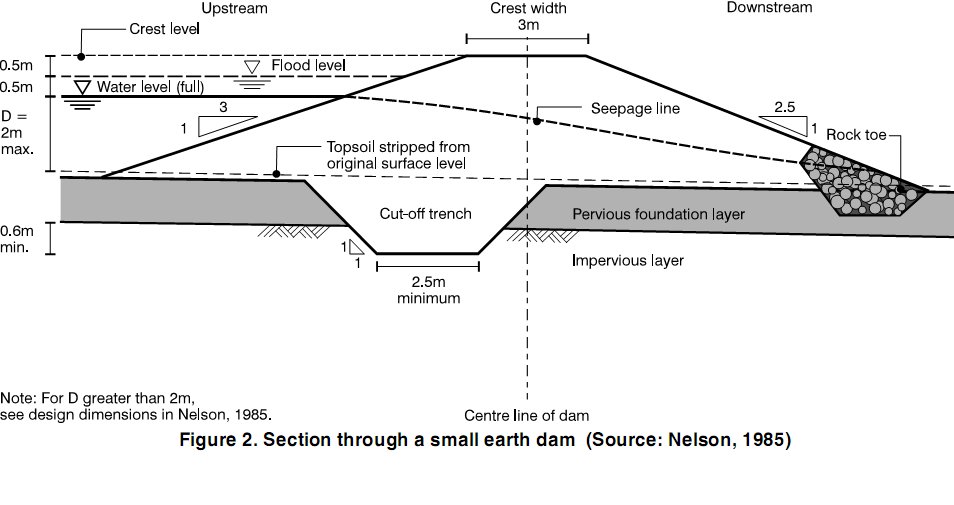
A massive repair project is expected to interrupt summer fishing at Crystal Lake Dam above Ouray — there is no other way to make the critical safety augmentations but to close the structure for a few months, starting in early July. “Probably about 50 percent of the dam will be removed and taken off-site. They’ll install a new outlet works,” said Tom Condos, engineering and minerals staff officer with the U.S. Forest Service. The dam provides water storage for the Uncompahgre River headwaters. During an inspection two years ago, officials noticed a problem.

From Colorado Radio (James MacDonald):

The Crystal Lake Dam near Ouray is going to be getting some major repairs. The dam will be closed this summer and partially removed to make the proper repairs and upgrades. The $300,000 project will also include the installation of an emergency spillway for the dam. The closure is slated for July and the repairs will force fishermen to look elsewhere until the project is completed in October.

More Uncompahgre River watershed coverage here.

Aspen: City council okays purchase of power from new hydropower facility planned for Ridgway Dam

ridgwaydamusbr.jpg

From the Aspen Daily News (Curtis Wackerle):

Aspen electric utility officials presented details of the proposal to City Council at a work session Tuesday. Nearly a decade ago, city officials began discussions with Tri County Water Conservancy District (TCWCD) officials about plans to retrofit the existing Ridgway Reservoir dam with two turbines to generate hydropower. The new facilities are expected to come online in 2015.

The city has worked out a deal with TCWCD and the Municipal Energy Agency of Nebraska (MEAN), which supplies Aspen with wind and coal power to supplement locally generated hydropower. Under the deal, Aspen will essentially swap coal-fired power from MEAN with power from the Ridgway dam during the winter months. The city will pay the same rate for the Ridgway power that it pays the Nebraska provider, which is 5.9 cents per kilowatt hour. The initial contract is for a 20-year agreement with MEAN and the Ridgway facility operators.

The city will only buy the Ridgway power during the winter months, as that is when Aspen’s demand peaks, but also when the supply of local hydropower is at its lowest.

“It fits our energy requirements like a well-tailored glove,” city utilities director David Hornbacher said of the Ridgway facility.

More hydroelectric coverage here and here.

Aspinall Unit update: Inflows to Blue Mesa revised to 330,000 acre-feet, 49% of average

aspinallunit.jpg

From email from Reclamation (Erik Knight):

The April 1st forecast for spring runoff to Blue Mesa Reservoir has been issued and the numbers keep dropping. This forecast now predicts 330,000 acre-feet of runoff between April and July, which is 49% of average. Warm and dry conditions have caused the forecast to drop 90,000 acre-feet since the mid-March forecast. The monthly runoff distribution also shows an increase in the April runoff volume while all other months decrease, indicating an early runoff. For comparison, this forecasted runoff volume is lower than every year’s runoff volume since 2000 except for 2002.

Given this information, flows in the Gunnison River through the Black Canyon will be dropping to 400 cfs today, Wednesday, April 4th, as diversions through the Gunnison Tunnel increase.

Reclamation plans to operate the Aspinall Unit to allow the Black Canyon of the Gunnison River one day peak flow target to be met. Under the current forecast this target is approximately 960 cfs. The final determination of the spring peak target will be made upon issuance of the May 1st forecast by CBRFC.

Using the current forecast the peak flow target at the Whitewater gage is 900 cfs. Reclamation expects this flow target to be met in conjunction with the spring peak flows in the Black Canyon of the Gunnison River.

As a reminder, the April Aspinall Operations Meeting will be held in Reclamation’s Western Colorado Area Office, Grand Junction location, on April 26th beginning at 1:00 p.m.

More Aspinall Unit coverage here.

Aspinall Unit update: Deliveries through the Gunnison Tunnel to start on Monday, spring has sprung

gunnisontunnelnps.jpg

From email from Reclamation (Dan Crabtree):

For those that work in an office all day and haven’t noticed, it has become quite warm outside. It appears spring has arrived and with that, it is time for the Gunnison Tunnel to start diverting water. The Uncompahgre Valley Water Users Association (UVWUA) plans to start tunnel diversions on Monday, March 19th. Initially diversions will start at 200 cfs. At this same time the UVWUA will need to complete some repair work on the apron of the diversion dam. This will require flows in the Gunnison River be reduced to approximately 400 cfs so that no water is spilling over the diversion dam. Work on the dam apron will be completed by the end of Tuesday, March 20th. At this time, Crystal Dam will increase releases by 100 cfs while the Gunnison Tunnel continues diverting 200 cfs. The resulting flow in the Gunnison River through the Black Canyon will be around 500 cfs.

Gunnison Tunnel diversions may increase later in the week of the 19th and releases at Crystal will be increased accordingly to maintain the 500 cfs flow in the Gunnison River.

Under the current forecast, Reclamation plans to operate the Aspinall Unit to allow the Black Canyon of the Gunnison one day peak flow target of approximately 2,200 cfs to be met; the timing of which is unknown at this time.

As a reminder, the April Aspinall Operations Meeting will be held in Reclamation’s Western Colorado Area Office, Grand Junction location, on April 26th beginning at 1:00 p.m.

Please contact Dan Crabtree or Erik Knight at the Bureau of Reclamation with questions regarding this operation.

More Aspinall Unit coverage here.

Reclamation Releases Final Aspinall Unit Operations Environmental Impact Statement

aspinallunitdescription.jpg

Here’s the release from the U.S. Bureau of Reclamation (Steve McCall/Justyn Hock):

Reclamation’s Western Colorado Area Office announced today the release of the final Aspinall Unit Operations Environmental Impact Statement. The purpose of the EIS is to outline Aspinall Unit operations to avoid jeopardy to downstream endangered fish species while continuing to meet the congressionally authorized unit purposes. In general, new operations will provide higher spring flows and protect base flows in the Gunnison River. Reclamation will not make a decision on the proposed action until at least 30 days after release of the FEIS. After the 30-day public review period, Reclamation will complete a record of decision which will state the action to be implemented and discuss all factors leading to that decision.

If you have questions or need additional copies of the final EIS, please contact Steve McCall at 970-248-0638 or Terry Stroh at 970-248-0608. The final EIS is also available on Reclamation’s web site.

More Aspinall Unit coverage here.

Reclamation To Issue a Lease of Power Privilege Permit for a Proposed Hydropower Project on the South Canal Near Montrose

southcanalhydroelectricsitethetelluridewatch1

Here’s the release from the U.S. Bureau of Reclamation (Steve McCall/Justyn Hock):

Reclamation announced today that it will issue a Lease of Power Privilege to the Delta-Montrose Electric Association and the Uncompahgre Valley Water Users Association to develop hydropower resources on the South Canal, a feature of Reclamation’s Uncompahgre Irrigation Project.

Reclamation will issue the LOPP based on the final environmental assessment and Finding of No Significant Impact for the proposal. These documents have been completed in compliance with the National Environmental Policy Act to address the effects of the construction and operation of hydropower facilities.

Federal policy encourages non-federal development of environmentally sustainable hydropower potential on federal water resource projects. The LOPP will ensure that the development of hydropower is consistent and compatible with existing operations and purposes of the Uncompahgre Project.

The final EA and FONSI are available on Reclamation’s web site or a copy can be obtained by contacting Steve McCall at (970)248-0638.

More coverage from Katharhynn Heidelberg writing for the Montrose Daily Press. From the article:

“It’s big news for us and big news for the Western Slope,” said Tom Polikalis, DMEA spokesman. “This will be the first utility scale project undertaken” by DMEA…

Plans are to construct two power houses on the South Canal, starting with a location at the far eastern end of Miguel Road. A second power house is to be built about 1.5 miles downstream on the canal’s “third” drop. When the project is complete, and depending on canal flows, DMEA expects to generate 6.5 to 7 megawatts — enough for 3,000 homes. (A megawatt is 1,000 kilowatts.)

More hydroelectric coverage here.

Montrose: Ag energy/water workshop March 1

nolandoesken1

Here’s the release from the Delta-Montrose Electric Association and Colorado State University via the Delta County Independent:

Are you looking for ways to improve energy efficiency on your farm, ranch, or small acreage? Are you looking to enhance your soil health with a new tool for your irrigation management toolbox?
If so, then you might want to register for a free workshop focused on ag energy and the local agricultural weather station network.

The workshop is from 9 a.m. to 3:30 p.m. on Thursday, March 1, in Montrose with a complimentary lunch from Camp Robber for all who register by Monday, Feb. 27.

The workshop — co-hosted by Delta-Montrose Electric Association (DMEA) and Colorado State University (CSU) — will be held in the DMEA’s classroom at 11925 6300 Rd, near the airport just north of Montrose. Staff of both DMEA and CSU will outline local and statewide programs that can improve efficiencies with energy and water use, and provide a foundation for a more profitable and sustainable agricultural operation.

Included in the program is a visit from state climatologist Nolan Doesken, whose enthusiasm for all things weather has helped raise the profile of water — particularly in the form of rain, snow, sleet, or hail — on both sides of the divide.

Recently Doesken was in western Colorado advancing his campaign to place a rain gauge in every school around Colorado. Now he’s back to engage with local producers and promote CSU’s imminent upgrades to the Colorado Agricultural Meteorological (CoAgMet) network. CoAgMet is a network of about 65 weather stations around the state that provide accurate crop water use and disease pressure data for farmers and ranchers. Doesken describes CoAgMet’s importance to the irrigation community as “the primary source of local and accurate crop water use information.”

Troy Bauder, the state water quality specialist at CSU, adds, “This information is one tool we’d like to get in the hands of irrigators that are interested in more precise irrigation scheduling, particularly those who might have a newer system and want to fully utilize its capabilities to deliver water according to crop needs.”

Indeed the entire afternoon session of the workshop will provide local irrigators a golden opportunity to become more familiar with CoAgMet, learn how CSU intends to make it work better, and to provide much needed feedback to Doesken, Bauder, and CSU staff on the upcoming improvements.

Jim Heneghan of DMEA and Abbie Brewer with the Governors Energy Office at DMEA (Fore Alliance), along with Cary Weiner, clean energy specialist with CSU Extension, will be hosting the morning session. Weiner will be discussing the benefits of on-farm energy audits, while Heneghan and Brewer will outline DMEA initiatives such as progress with the South Canal micro-hydro feasibility study, and the Business Energy Assessment Team (BEAT) program available to business owners and managers in the Delta-Montrose area. Heneghan — who also farms near Olathe — explains his support for the workshop, “DMEA is very interested in smart energy products for its service area. We believe that helping local residents understand where the opportunities lie for energy savings can help them be more successful with their agricultural operations, businesses, and home maintenance.”

If you are interested in attending the workshop (remember the workshop and lunch are free — please register in advance), or learning more about DMEA and CSU’s programs please contact Jim Heneghan at DMEA: 240-1269 or e-mail jim.heneghan@

dmea.com; or Denis Reich (CSU water resources specialist) in Grand Junction: 201-8467 or e-mail denis.reich@colostate.edu.

More Uncompaghre River watershed coverage here.

Aspinall Unit operations update: Flows in the Black Canyon around 600 cfs, forecasted inflows to Blue Mesa — 450,000 acre-feet

aspinallunitdescription.jpg

From email from Reclamation (Erik Knight):

The February 1st forecast is out and the prediction is still for 450,000 acre-feet of inflow to Blue Mesa Reservoir during the April-July runoff period. This represents 67% of the current 30 year average. In response to the continuing dry conditions, releases at Crystal Dam will be reduced by 200 cfs on Wednesday, February 8th. This will bring releases down to 600 cfs and with no Gunnison Tunnel diversions, flows in the Gunnison River through the Black Canyon should also be around 600 cfs.

More Aspinall Unit coverage here.

Aspinall Unit update: Reclamation is forecasting 450,000 acre-feet (67% of 30 year average) of inflow to Blue Mesa Reservoir

curecantibluemesa.jpg

From email from Reclamation (Erik Knight):

The January 1st forecast is out and the prediction is for 450,000 acre-feet of inflow to Blue Mesa Reservoir during the April-July runoff period. This represents 67% of the current 30 year average. In response to this dry forecast releases at Crystal Dam will be reduced by 300 cfs on Wednesday, January 11th. This will bring releases down to 800 cfs and with no Gunnison Tunnel diversions, flows in the Gunnison River through the Black Canyon should also be around 800 cfs…

As a reminder the next Aspinall Operations meeting will be held on Thursday, January 19th, at 1:00 p.m. in Montrose at the Holiday Inn Express. We have tentatively scheduled a presentation by Vern Jetley, a retired Reclamation photographer who will be talking about the construction history of Blue Mesa dam/reservoir.

More Aspinall Unit coverage here.

Reclamation Issues a Lease of Power Privilege to Develop Hydropower at Ridgway Dam

ridgwaydamusbr.jpg

Here’s the release from the U.S. Bureau of Reclamation (Steve McCall/Justyn Hock):

Reclamation announced today that it will issue a Lease of Power Privilege (LOPP) to the Tri-County Water Conservancy District to develop hydropower resources at Ridgway Dam, a feature of the Bureau of Reclamation’s Dallas Creek Project located near Ridgway, Colo.

Reclamation will issue the LOPP based on the final environmental assessment (EA) and Finding of No Significant Impact (FONSI) for the proposal. These documents have been completed in compliance with the National Environmental Policy Act to address the effects of the construction and operation of hydropower facilities. The FONSI concludes that the proposal will not significantly affect the human environment

The final EA and FONSi are available at: www.usbr.gov/uc/ under environmental documents or a copy can be received by contacting Steve McCall with Reclamation in Grand Junction.

More hydroelectric coverage here and here.

The Uncompahgre Watershed Group is hosting a public meeting about the draft watershed plan December 15

uncompahgrevalleylookingsouthtowardsneffels.jpg

Here’s the announcement from the Uncompahgre Watershed Partnership:

After more than three years of continuous work, the Uncompahgre Watershed Partnership (UWP) has completed a draft of the watershed plan for the Uncompahgre River made possible by grants from the Colorado Water Quality Control Division and the Healthy Rivers Fund. Community educational forums looked at issues impacting the watershed posed by mining, agriculture, storm-water, wildlife, and recreation in Delta, Montrose and Ouray Counties. The purpose of these presentations is not only for the public to hear the problems identified and the possible solutions targeted by the plan, but also to gather what concerns and input citizens of the Uncompahgre Watershed have prior to a final draft. It is the intention of the UWP to use the final draft of the plan both as a tool to restore health to the watershed where needed as well as to keep the watershed healthy in future decision-making.

Sarah Sauter, author of the Uncompahgre Watershed Plan, will make at least two public presentations. The first presentation is scheduled the evening of Thursday, December 15, from 6:30 to 8:00pm at Ridgway Community Center. The doors open at 6:00pm and refreshments will be provided. The Community Center is located at 201 N. Railroad St. in Ridgway. The second presentation will be scheduled for a later time in January in Ouray. The plan is available on uncompahgrewatershed.org to read before the presentations. There is a table of contents to assist in finding areas of interest.

Here is the file UncompahgrePlanDraftv1

More Uncompahgre River watershed coverage here and here.

Reclamation and the Tri-County Water Conservancy District deal would lead to a 7 megawatt hydroelectric generation plant at the Ridgway Dam

ridgwaydamusbr.jpg

From The Telluride Daily Planet (Benjamin Preston):

In September, the U.S. Bureau of Reclamation, which owns the dam, submitted a draft environmental assessment examining a lease agreement with the Tri-County Water Conservancy District, the agency that would build the plant and sell electricity to the grid. Public comment on the environmental assessment recently ended, and a spokesperson from the Bureau said that public input generally favored the project.

Tri-County manages Ridgway Dam, providing 28,100 acre-feet of water to 7,500 domestic water taps and 11,200 acre-feet to more than 50,000 acres of agricultural land. (An acre-foot is the amount of water it takes to cover an acre of land with a foot of water, or about 326,000 gallons.) Tri-County District Manager Mike Berry said that aside from storing municipal and irrigation water, the dam was originally intended to include a hydroelectric plant. Although the Bureau of Reclamation owns the dam, it can allow a non-federal agency to develop hydropower with a lease of power agreement. “The dam has been there a long time, so it’s time to use the power that comes from the release of water,” Berry said. “It’s clean, green energy and everyone likes it.”

Berry added that the district is in the process of seeking buyers for the electricity, and hopes to get a purchase of power agreement signed within the next 90 days. Without contracts in place, the project will not proceed, but the City of Aspen and a few other entities have expressed interest in buying power from the district…

Conceptual plans for the new plant call for two turbines, one rated at 4.9 megawatts and the other at 2.1. Berry said half the electricity produced by the plant would be cranked out between June and September, with the rest trickling in during the other eight months of the year.

Berry said that based upon federal biological studies, the way the turbines and their attendant pipework are designed could improve water quality. The turbines, planned to be independent of the dam’s current spillway, will discharge water through submerged pipes, slowing it down. Berry said the design aims to ameliorate a nitrogen-rich condition affecting fish downstream of the dam. Justyn Hock, a Bureau of Reclamation spokesperson, said that the U.S. Fish and Wildlife Service, Colorado Parks and Wildlife and environmental groups including Trout Unlimited and the High Country Citizens Alliance gave the project a thumbs-up during the comment period.

More Uncompahgre River watershed coverage here and here.

Aspinall Unit update: Reclamation’s winter target for Blue Mesa Reservoir — down to 7490 ft by December 31

aspinallunit.jpg

From email from Reclamtion (Erik Knight):

Over the last couple months, releases at the Aspinall Unit have been lowered to accommodate maintenance activities at the powerplants at Blue Mesa and Morrow Point reservoirs, as well as for the brown trout spawn. These events have concluded and releases will now be increased to bring the elevation in Blue Mesa Reservoir down to the winter ice target elevation of 7490 ft by December 31st.

Releases from Crystal Dam will be increased by 200 cfs on Monday, November 21st. Another increase of 200 cfs is expected to be made the following Monday, November 28th. This will bring the total release up to 1000 cfs. Additional increases will be made in the first days of December to bring the total release from Crystal to 1550 cfs. Since there are no diversions to the Gunnison Tunnel at this time of year, flows in the Gunnison River through the Black Canyon will be in the 1500 to 1600 cfs range after the completion of these release changes.

More Aspinall Unit coverage here.

Four Colorado irrigation districts receive federal dough to help control Colorado River basin salinity

uncompahgrevalleylookingsouthtowardsneffels.jpg

From the Associated Press (Catharine Tsai) via KJCT8.com:

Interior Secretary Ken Salazar said Friday that when complete, the projects to line irrigation canals or place them into pipe should prevent more than 23,000 tons of salt from entering the river every year…

The Interior Department says Stewart Ditch and Reservoir Co. of Paonia was awarded $6 million. The Uncompahgre Valley Water Users Association of Montrose is receiving $7.4 million. The Grand Valley Irrigation Co. of Grand Junction was awarded $2.8 million. Minnesota Canal and Reservoir Co. of Paonia was awarded $3.9 million.

More Colorado River basin coverage here.

Reclamation Requests Comments on a Proposed Hydropower Project at Ridgway Dam

hydroelectricdam.jpg

Here’s the release from the Bureau of Reclamation (Steve McCall/Justyn Hock):

Reclamation has released a draft environmental assessment for a proposed hydropower project at Ridgway Dam in Ouray County, Colo., to the public for review and comment.

The project, proposed by the Tri-County Water Conservancy District, would generate electricity using existing water releases from Ridgway Dam throughout the year. Ridgway Dam is a feature of the Dallas Creek Project, which is a federal Reclamation project designed to provide irrigation and drinking water to Montrose, Delta, and Ouray counties in western Colorado.

The draft environmental assessment is available online at http://www.usbr.gov/uc/ under environmental documents or by contacting Steve McCall with Reclamation at (970) 248-0638 or smccall@usbr.gov.

Reclamation will consider all comments received prior to preparing a final environmental assessment. Comments can be submitted to the email address above or to: Carol DeAngelis, Area Manager, Bureau of Reclamation, 2764 Compass Drive, Suite 106, Grand Junction, CO 81506. Comments are due by November 1, 2011.

More Uncompahgre River watershed coverage here and here.

The City of Montrose is hoping that Montrose County will pitch in some dough for a whitewater park on the Uncompahre River

kayaker.jpg

From the Montrose Daily Press (Katie O’Hare):

“We have a lot of requests this year, but we can put it in with the other requests in preparing for our budget season,” Commissioner David White said.

City officials are seeking the county’s help to build a proposed white water park on the river. White said he was leery about allocating the money to the white water park after the county just recently completed it fairgrounds master plan, which includes several capital improvement projects…

Although the park is projected to cost between $600,000 to $900,000, Erickson said the annual economic benefits the area would realize would be far greater.

More whitewater coverage here.

Aspinall Unit operations meeting August 18

curecantibluemesa.jpg

From email from Reclamation (Dan Crabtree):

The 2011 August Aspinall Operation meeting will be held starting at 1:00 p.m. on August 18th at the Elk Creek Visitors Center located on the balmy banks of beautiful Blue Mesa Reservoir. The meeting will last 2 – 3 hours depending on the depth of discussions and questions. We will be reviewing operations from this past spring and summer along with projected operations for the coming fall. The meeting is open to the public and we look forward to your questions and reports regarding activities related to operations of the Aspinall Unit. Agenda ideas are welcome.

More Aspinall Unit coverage here.

Colorado Parks and Wildlife and the U.S. Forest Service are embarking on a project to restore Colorado River Cutthroat trout to a 15 mile reach of Big Dominguez Creek

greenbackvscorivercutthroat.jpg

From The Grand Junction Daily Sentinel (Dave Buchanan):

The plan, which biologists say might take up to eight years to complete, would remove non-native fish, including rainbow trout, from a 15-mile expanse of Big Dominguez and La Fair creeks on the Uncompahgre Plateau. Once the cutthroat trout are restored, a fish barrier will be placed at the bottom of the restored stretch to prevent a reintroduction of non-natives, including rainbow and brook trout. The project is a cooperative effort between the Grand Mesa, Uncompahgre and Gunnison National Forest and Colorado Parks and Wildlife. The Forest Service is providing the funding for the project and doing needed preliminary work. Colorado Parks and Wildlife will be the lead in the removal of non-natives and the stocking of cutthroats.

“(Colorado Parks and Wildlife) and us had this list of projects but they didn’t have the money for this one,” said Matt Dare, an aquatic biologist for the GMUG. “For native cutthroat trout this is the best sort of proactive management we can do to restore more populations of cutthroat trout.”[…]

The plan includes poisoning La Fair Creek and a stretch of Big Dominguez Creek above and below its confluence with La Fair to remove non-native fish prior to restocking with cutthroat trout. La Fair meets Big Dominguez at Carson Hole. From there, it’s about two miles to the Big Dominguez Wilderness Area, which is on Bureau of Land Management land. Once the non-native fish are removed, a fish barrier will be built on Big Dominguez Creek near the wilderness boundary.

More restoration coverage here.

Aspinall Unit 2011 operations meeting August 18

curecantibluemesa.jpg

From email from Reclamation (Dan Crabtree):

As a reminder, the 2011 August Aspinall Operation meeting will be held starting at 1:00 p.m. on August 18th at the Elk Creek Visitors Center located on the balmy banks of beautiful Blue Mesa Reservoir. The meeting will last 2 – 3 hours depending on the depth of discussions and questions. We will be reviewing operations from this past spring and summer along with projected operations for the coming fall. The meeting is open to the public and we look forward to your questions and reports regarding activities related to operations of the Aspinall Unit.

More Aspinall Unit coverage here.

Aspinall Unit update: Releases from Crystal Dam to drop 1,100 cfs over 6 days

bluemesa.jpg

From email from Reclamation (Erik Knight):

With inflows to Blue Mesa Reservoir decreasing towards summer base flow levels, it appears to be time to reduce releases at Crystal Reservoir with the intention of ending the bypass releases. Blue Mesa Reservoir elevation peaked at 7519.25 feet on July 17th and now the reservoir is down to 7517.4 feet. Releases at Crystal Dam will be decreased by a total of 1100 cfs over the next 6 days, starting Saturday morning, July 30th and ending Thursday morning, August 4th. Releases will be decreased 200 cfs a day with a 100 cfs change occurring twice a day until the bypass release at Crystal Dam has ended. This should bring flows in the Gunnison River through the Black Canyon down to around 1100 cfs by Thursday afternoon.

More Aspinall Unit coverage here.

Aspinall Unit update: Inflows drop, Reclamation to start dropping outflows, 2,200 cfs in the Black Canyon Wednesday

aspinallunitdescription.jpg

From email from Reclamation (Erik Knight):

Inflows to Blue Mesa Reservoir have been steadily decreasing over the last week and side inflows to Morrow Point and Crystal Reservoirs have dropped significantly. Blue Mesa Reservoir is now at elevation 7518.2 and both Morrow Point and Crystal Reservoirs have lost some storage over the last week. Therefore releases from Crystal Reservoir will be decreased by a total of 500 cfs over the next 2 days. Flows will decrease 300 cfs today, July 26th, and 200 cfs tomorrow, July 27th. This should bring flows in the Gunnison River through the Black Canyon down to around 2200 cfs by Wednesday afternoon.

More Aspinall Unit coverage here.

Aspinall Unit update: 2,800 cfs in the Gunnison River through Black Canyon and the Gunnison Gorge

aspinallunitdescription.jpg

From email from Reclamation (Erik Knight):

After 2 weeks of steady inflow to the Aspinall Unit the forecast has finally come true – inflows to the Unit actually decreased over this past weekend. Blue Mesa Reservoir has filled to within 0.2 feet of full but the decrease in the side inflows has caused the elevation in Crystal Reservoir to drop significantly. Therefore releases at Crystal Reservoir will be decreased by a total of 600 cfs over the next 3 days. Flows will decrease 200 cfs a day, starting today, July 18th, and ending on Wednesday, July 20th. This should bring flows in the Gunnison River through the Black Canyon down to 2800 cfs by early Wednesday.

More Aspinall Unit coverage here.

Aspinall Unit update: Flows in the Gunnison River through the Black Canyon should be around 2,950 cfs by Thursday

A picture named aspinallunit.jpg

From email from Reclamation (Erik Knight):

Our pattern of good fortune continues. Late season snowmelt in combination with the early season monsoon rains has kept inflows from receding as previously (and continuously predicted). Blue Mesa Reservoir continues to rise at 0.5 feet per day and is now at an elevation of 7518.35 feet. While inflows are expected to recede in the next few days as the monsoon rains take a brief hiatus, the current rate of fill would have Blue Mesa Reservoir spilling within 3 days. Therefore in keeping with the theme of always receiving more inflow than expected, releases from Crystal Dam will be increased by a total of 400 cfs over the next 2 days. This increase will be done in 200 cfs increments, one on Wednesday, July 13th in the early evening, and one early Thursday morning, July 14th. This should preserve the safety of any potential visitors to the canyon and provide all aquatic creatures with sufficient time to become reacquainted with these higher flows. Flows in the Gunnison River through the Black Canyon are expected to increase from 2550 cfs to around 2950 cfs by Thursday, July 14th.

More Aspinall Unit coverage here.

Aspinall Unit update: Reclamation is bumping releases from Crystal Reservoir to avoid a possible Blue Mesa spill

A picture named aspinallunitdescription.jpg

From email from Reclamation (Dan Crabtree):

We continued to be blessed with higher than expected inflows due to late season snowmelt, and now, early season monsoonal moisture. Blue Mesa Reservoir has been rising about 0.7 feet per day and is now at an elevation of 7517.3 feet. Bountiful inflows are expected over the next few days and if releases are not increased there is a definite possibility that Blue Mesa Reservoir could spill. In order to avoid this undesirable event, releases from Crystal Dam will be increased by a total of 800 cfs over the next 3 days. Flows in the Gunnison River through the Black Canyon are expected to increase from a gage reading of 1750 cfs to around 2550 cfs by Wednesday, July 13th. Release changes will be done in 200 cfs increments, well below the recommended maximum ramp-up rate of 500 cfs per day, in order to preserve the safety of any potential visitors to the canyon and to provide a smooth flow increase that all fish can enjoy. We are quite fortunate that river flows in this range (>2000 cfs) will actually provide nearly ideal conditions for this year’s late rainbow trout emergence by providing increased fry habitat as the river level exceeds bankfull within the canyon. This should be of great benefit to all recreational users of the canyon – maybe not immediately, but certainly for the future.

More Aspinall Unit coverage here.

Aspinall Unit update: Blue Mesa is filling quicker than expected, streamflow was 4,600 cfs into the reservoir yesterday

A picture named curecantibluemesa.jpg

From email from Reclamation (Dan Crabtree):

The runoff just keeps coming! This year’s runoff has been exceptionally difficult to predict in the Gunnison Basin. For example, a week ago, the Colorado Basin River Forecast Center’s model predicted inflows to Blue Mesa for July 6th of about 3,200 cfs and declining. Actual inflow today is about 4,600 cfs which is obviously causing Blue Mesa Reservoir to fill quicker than expected.

To compensate, releases from Crystal Dam will be increased by 550 cfs over the next few days. No single change is planned to exceed 200 cfs. In addition, the Uncompahgre Valley Water Users have again reduced their Gunnison Tunnel Diversions by 100 cfs due to increased flows on the Uncompahgre River which are meeting their needs. As a result of these changes, the Gunnison River gage located below the East Portal of the Gunnison Tunnel will read about 1,700 cfs by mid-morning on July 9th ; up from this morning’s flow of 1,080 cfs. Additional changes may be necessary next week as conditions are reassessed.

More Aspinall Unit coverage here.

Aspinall Unit update: 1,200 cfs in the Black Canyon and Gunnison Gorge

A picture named aspinallunit.jpg

From email from Reclamation (Dan Crabtree):

The current elevation of Blue Mesa Reservoir is 7498.2 feet, leaving about 20 feet or 183,000 ac-ft of storage left to fill. Hydrologic conditions have continued to change, causing inflows to Blue Mesa Reservoir to lag behind predictions. Observed inflow rates have been dropping over the last few days and the forecast shows this trend to continue. The result will be an actual June runoff volume short of the forecasted inflow. Consequently, to improve the likelihood of a complete fill of Blue Mesa Reservoir this runoff season, Reclamation will again decrease releases from the Aspinall Unit. Over the next several days, releases will be slowly decreased by 100 to 200 cfs per day until flows in the Black Canyon and Gunnison Gorge reach about 1,200 cfs.

More Aspinall Unit coverage here.

Aspinall Unit update: 2,100 cfs in the Black Canyon and Gunnison Gorge

A picture named blackcanyoninnercanyonnps.jpg

From email from Reclamation (Dan Crabtree):

Blue Mesa Reservoir has filled to about elevation 7491 ft leaving 28 ft or 242,000 ac-ft to fill. At the current rate of inflow and outflow, it would take over a month to fill the reservoir. As a result, after assessing the latest April through July forecast and the current runoff rates into the Aspinall Unit, Reclamation has decided to further reduce releases from the Aspinall Unit in order to slightly accelerate the fill of Blue Mesa Reservoir. This release reduction will begin on Friday, June 17th, continue through the weekend, and result in a Gunnison River flow of about 2,100 cfs through the Black Canyon and Gunnison Gorge.

More Aspinall Unit coverage here.