CWCB halts funding for phase two of Flaming Gorge Task Force

greenwithenvytrailerscreenshottroutunlimited.jpg

From The Pueblo Chieftain (Chris Woodka):

A decision by the Colorado Water Conservation Board not to fund the second phase of a Flaming Gorge pipeline task force does not affect either project that wants to bring water into the state. The CWCB Tuesday turned down a $100,000 extension of the committee, saying its efforts duplicate the role of the Interbasin Compact Committee. Alan Hamel, of the Arkansas River basin, was the only member of the CWCB who voted in favor of continuing to fund the task force.

“I was surprised,” said Gary Barber, chairman of the Arkansas Basin Roundtable, and a member of the task force. “The state still needs to proceed with water planning, but did not approve our approach for moving forward.”

The task force was formed to identify questions that would face any statewide water project, and from the start said it would not endorse or eliminate either of two proposals to build a Flaming Gorge pipeline.

“This decision sends a clear message that the IBCC needs to step up and do something about new water supply,” said Jay Winner, one of the Arkansas Basin Roundtable’s IBCC representatives.

Environmental groups this week tried to depict the decision as a defeat for Aaron Million’s proposal to build a 500­ mile pipeline from the Green River to Colorado’s Front Range. However, Million claimed last week that the neutral decision by the task force was a win for him. He is working on engineering needed to resume federal consideration of the project.

The Colorado-­Wyoming Coalition also is pursuing its version of a Flaming Gorge pipeline, but is still waiting on Bureau of Reclamation studies to determine if it will move forward, said Eric Hecox of the South Metro Water Supply District.

From the Northern Colorado Business Report (Steve Lynn):

The developer of the proposed Flaming Gorge Pipeline denied Wednesday that the state’s decision to end funding for a group looking at the project would set it back…

Tuesday’s decision to halt funding represented a “critical wound” to the project, Boulder-based Western Resource Advocates said in a statement. Environmentalists oppose the project because they contend it would diminish Green River flows…

Jennifer Gimbel, director of the water board, said the environmentalists’ comments were “misleading.”

The decision “doesn’t reflect the board’s position on the pipeline,” she said. “It doesn’t endorse it; it she said. “It doesn’t endorse it; it doesn’t deny it.”[…]

The task force was formed to study issues surrounding the project, not to decide whether the project should move forward. After completing a report on the pipeline, the task force requested $100,000 to study “new supply projects in general” at Tuesday’s water board meeting, Gimbel said.

However, the Interbasin Compact Committee already is studying potential water supply projects, she said…

Aaron Million, principal of Wyco Power and Water Inc., called environmentalists’ characterization of the decision “grossly inaccurate.” The company has proposed building the pipeline to bring water from Wyoming to the Front Range, including Fort Collins.

“One of the reasons I think the environmental community’s been so vocal is that this project has a lot of merit to it,” said Million, who contends the project would add to Poudre River volume.

From The Salt Lake Tribune (Brett Prettyman):

Charlie Card, northeastern Utah coordinator for Trout Unlimited, says the news from Colorado is good, but he has heard similar news before and knows not to let his guard down when it comes to water in the West.

“Million said about a year ago that in two years he would be ready to submit another proposal and there is another group out of Parker, Colorado, that has asked the Bureau of Reclamation specifically to give them the actual number of acre-feet of water that is available,” Card said. “The report from Colorado is nice, but the threat is far from over.”

Numerous recreational and financial impacts from proposed pipelines pumping water out of Flaming Gorge Reservoir, which sits on the Utah/Wyoming border, or the Green River above it have been revealed by Trout Unlimited and other concerned groups.

Among them:

• Wide fluctuations of water levels at Flaming Gorge would create ideal conditions for noxious weeds along the shore, affecting waterfowl, mule deer, pronghorn, bighorn sheep, sage grouse and other species. Open shorelines may become inaccessible for recreation.

• Diminished flows on the Green River below the dam will affect species of concern like the northern river otter, bald eagle, peregrine falcon, osprey, Lewis’ woodpecker, southern willow flycatcher and yellow-billed cuckoo.

• A reduction of flows into the reservoir will inhibit recommended flow levels out of the dam. The recommendations were agreed upon by multiple agencies to benefit endangered fish (razorback sucker, Colorado pikeminnow, humpback chub and bonytail) in the Green River.

• The main sport fish of Flaming Gorge — kokanee salmon, lake trout and smallmouth bass — are already facing a number of challenges in a delicately balanced ecosystem that has been rocked by the recent appearance of illegally introduced burbot. Lower and fluctuating water levels will only add to the challenges.

• Access to the lake via existing boat ramps would likely not be possible if water as proposed in the Million project were removed from the reservoir. That impacts all businesses that rely on the reservoir including those on the shores of Flaming Gorge and including other towns and cities like Dutch John, Manila, Green River, Wyo., and Rock Springs.

Similar facts are presented on the ourdamwater.org/ website of Sportsmen for the Green.

From The Grand Junction Daily Sentinel (Gary Harmon):

The state’s most powerful water organization will spend no more money to study ways of piping water from the Western Slope to the Front Range, a move heralded by environmental organizations but one that might not squelch the idea. The Colorado Water Conservation Board turned away a request that it continue to fund a study of how to pursue large water projects, such as a proposed pipeline to the Front Range from Flaming Gorge Reservoir in Wyoming.

The board’s decision was greeted as a victory by Protect the Flows, an organization of recreation, agricultural and other interests that depend on the Colorado River. “This decision tells Coloradans that (Gov. John Hickenlooper) and the water board know how much we value our superb recreation opportunities and the huge economy in Colorado generated by outdoor enthusiasts and tourism,” Protect the Flows spokeswoman Molly Mugglestone said.

Water board members noted that such projects would be more appropriately studied by the Interbasin Compact Committee, a 27-member committee established to address statewide water issues.

The proposed Flaming Gorge pipeline has been rejected on several levels and by federal agencies. It was criticized by government agencies, including Mesa County and Grand Junction, which cited unanswered questions about the effects of the project.

The Interbasin Compact Committee “has a new water-supply committee and this seems to belong to them,” said Chris Treese, spokesman for the Colorado River Water Conservation District. “I think that’s an important dialogue to have and it’s one we’ve been involved with all along.”

The water board’s decision amounted to an endorsement of the need for conservation over development, Protect the Flows said.

Abandoning talk of water-development projects is a non-starter, Club 20 Executive Director Bonnie Petersen said. “Given the drought situation,” Petersen said, “at some level it would seem we would have to talk about storage.”

More Flaming Gorge Task Force coverage here.

CWCB: ‘Zombie Pipeline’ Takes Critical Wound in Vote — Jason Bane

cottermillcontaminationconcerndenverpost10232011.jpg

From email from Western Resource Advocates (Jason Bane):

The Colorado Water Conservation Board (CWCB) today voted overwhelmingly to end funding for the ‘Flaming Gorge Task Force,’ which had been considering future large-scale water diversion projects such as the ‘Flaming Gorge Pipeline.’ The decision is in line with public opinion; a recent Colorado water poll found that four-in-five Colorado voters favor focusing on water conservation efforts rather than water diversions.

In response to today’s decision, Drew Beckwith, Water Policy Manager at Western Resource Advocates, issued the following statement:

“The Flaming Gorge Pipeline has been called the ‘zombie pipeline’ from years of lumbering around trying to latch onto anything that might keep it alive. Today’s CWCB vote sends a strong message that it’s time to move on to other water demand solutions. No amount of discussion is going to make the pipeline less expensive or more realistic, and we applaud the CWCB for recognizing the need to move forward.”

The ‘Flaming Gorge Pipeline’ (FGP) is a proposal to pump 81 million gallons of water a year across more than five hundred (500) miles from the Green River in Wyoming to the Front Range of Colorado—all at a projected cost of $9 billion dollars (according to CWCB calculations). Western Resource Advocates has consistently opposed the idea as unreasonable and unnecessary.

More coverage from Bob Berwyn writing for the Summit County Citizens Voice. Here’s an excerpt:

The task force funding drew criticism from conservation groups, who said the money would be better spent studying realistic conservation and reuse options for water. By some state estimates, the pipeline could have cost as much as $9 billion. The CWCB denied a request for $100,000 of state water money for continued study…

We applaud Governor Hickenlooper and the Colorado Water Conservation Board for their decision to turn down spending additional money to examine new water diversions as a solution to meet Colorado’s water challenges, said Protect Our Flows director Molly Mugglestone. “It’s the right decision for what Coloradans want as reflected overwhelmingly in a recent bipartisan poll commissioned by Protect the Flows.

The poll showed that more than 80 percent of Colorado voters would tell state officials to spend their time and resources focusing on conservation efforts, rather than water diversions; a majority of voters across political and geographic lines oppose building additional pipelines; and almost all express strong regard for Colorado rivers and a desire to protect them.

[Aaron Million] has said the pipeline could actually help protect flows in over-used sections of the Colorado, especially in years like this, with abundant moisture in Wyoming, but well below average snowpack in Colorado.

More Flaming Gorge Pipeline coverage here and here.

Flaming Gorge Task Force: ‘I guess neutral is a big win for us’ — Aaron Million

flaminggorgepipelinemillion.jpg

From The Pueblo Chieftain (Chris Woodka):

More state discussions are needed on how to develop Colorado’s share of Colorado River water, a task force that met for more than a year on the Flaming Gorge water project reported Wednesday. The task force did not recommend either building or denying the Flaming Gorge pipeline idea, and wasn’t expected to. Instead, it worked to create a framework that would bring competing interests to the table to evaluate any project proposing development of a new supply from the Colorado River. Its conclusions will be submitted to the Colorado Water Conservation Board, which funded the task force. “I guess neutral is a big win for us,” said Aaron Million, who was one of two sponsors of a Flaming Gorge pipeline who met with the task force last year.

More engineering work is being completed so that the Flaming Gorge project can be resubmitted to a federal agency for environmental evaluation. Million said it would be submitted to the Federal Energy Regulatory Commission, which rejected an application last year, saying more information was needed. If FERC does not accept the new proposal, either the Army Corps of Engineers or Bureau of Land Management would be approached.

The task force recommended the CWCB and Interbasin Compact Committee, an umbrella organization that represents the interests of basin roundtables and the state, develop a way to evaluate if a project meets certain criteria. The top priorities are developing Colorado’s share of the water under the 1922 Colorado River Compact and protecting the state from a call on the river that could diminish Colorado’s water supply.

The group recommended forming a committee that would continue to discuss issues relating to water and is asking the CWCB for up to $100,000 for phase 2 of the study. The first phase was funded at $72,000 in September 2011, over the objections of environmental groups who tried to kill any consideration of a Flaming Gorge plan.

More coverage from the Associated Press via the Laramie Boomerang. Here’s an excerpt:

In a report to be presented to the Colorado Water Conservation Board, the Basin Roundtable Exploration Committee said questions that should be addressed include not only financing and how Colorado can maximize its entitlements to Colorado River water without overdeveloping the river, but also alternatives to new water supply projects.

The committee said state leaders and each of the basin roundtables in Colorado should participate in the conversation, which it called a “key threshold step” needed to move beyond the status quo in developing significant new water supply solutions. The roundtables represent each major river basin in the state, plus the Denver area.

The report, released Wednesday, described an urgent need for action, citing the gap between the demand for water on the populated Front Range and the supply.

“The municipal gap on the Front Range is immediate, the dry-up of agriculture is real and certain, and the environmental and economic concerns are serious and numerous,” the report said.

The report also listed several characteristics of “good” water supply projects. For instance, they should have funding and minimize the need for new infrastructure, and they shouldn’t reduce supplies to existing water users, the report said.

Colorado’s river basin roundtables agreed to form the committee after entrepreneur Aaron Million announced a $3 billion pipeline proposal to carry Flaming Gorge Reservoir water to Colorado, and a separate coalition of water providers said it was exploring its own plan. The committee didn’t set out to endorse any proposal but wanted to answer questions about cost, feasibility, water rights and legalities, along with the environmental, socioeconomics, agricultural and recreational impacts of any Flaming Gorge project, among other issues.

Million has yet to gain permits for his project. He said Thursday his team is doing more engineering work after the Federal Energy Regulatory Commission last year dismissed his permit application over a lack of specifics.

More coverage from the Wyoming Business Journal (MJ Clark):

The committee is aware of protests by environmentalists and issues raised by their own constituency.

“Rather than focusing on a Flaming Gorge project, the committee is exploring what the attributes would be of any successful new transmountain diversion,” the group wrote. “And foremost to that discussion is dealing with the uncertainties of water availability under the Colorado River Compact.”

Noting that the staff could not reach an agreement of whether or not to endorse the project, the group concluded that, “At this point, we don’t see the benefit of having the Flaming Gorge Committee continue … unless the board directs otherwise, this will be the direction staff takes.”

More Flaming Gorge Task Force coverage here.

Flaming Gorge Task Force’s phase one report is hot off the press

flaminggorgepipelineearthjustice.jpg

Click here to view the report and appendices A through F. Click here for appendices G through I. Thanks to Heather Bergman for sending them along in email. Here’s an excerpt from the report:

Recommendations

In the course of its work, the Committee has come to more fully understand and appreciate the gravity and risks of the status quo and the need to develop new supply1 solutions that balance the current and future consumptive and nonconsumptive needs of both slopes and all basins. The municipal gap on the Front Range is immediate, the dry-up of agriculture is real and certain, and the environmental and economic concerns are serious and numerous. In the process of becoming informed about and discussing the benefits and costs of a specific new supply project focused around Flaming Gorge, the Committee has identified a key threshold step that must happen in order to move beyond the status quo in developing any significant new supply solution: an immediate and focused conversation with each roundtable and state leaders at the table must begin, aimed at developing an agreement or agreements around how water supply needs around the state can be met. Our conclusion and consensus is that the conversation needs to be transparent and inclusive in order to arrive at consensus agreements that can lead to meaningful statewide-level water supply solutions. The immediate need for this robust, focused, transparent, and balanced conversation is at the heart of each of our recommendations.

The Committee has developed a consensus flow chart that identifies threshold steps and a process framework for moving forward with major new supply allocation from the Colorado River. The flow chart and the process it outlines suggests a pathway to achieving statewide consensus for a new supply project, based on roundtables defining the scope of a project, the IBCC and CWCB providing insight and approval, and project proponents or participants designing a project based on statewide consensus about the criteria of what characteristics and components are needed to be included into the design, implementation, and operation of a water project for that project to be considered a “good” project for Colorado. The flow chart is based on several assumptions:

  • The goal is to minimize the risk of a Compact call.
  • An M&I gap exists and needs to be filled. Some of the water needed to fill that gap may come from the Colorado River. That portion of the gap that is not satisfied by identified projects or processes, conservation, or new supply will likely come from the change of agricultural water to municipal and industrial use.
  • The current legal framework will apply.
  • All roundtables are affected by a new supply project.
  • This process would be voluntary. An inability to complete the process (all STOP signs in the complete framework) means that proponents revert to “business-as-usual” for building a new project.
  • More coverage from KUGR News:

    A task force studying issues related to proposals to divert water from the Flaming Gorge Reservoir in Wyoming to Colorado says state leaders first need to agree on how Colorado’s water needs can be met. In a report to be presented to the Colorado Water Conservation Board, the Basin Roundtable Exploration Committee says questions that should be addressed include how Colorado can maximize its entitlements to Colorado River water without overdeveloping the river and who would finance a new water supply project. It also lists characteristics of “good” water supply projects, which it says shouldn’t reduce supplies to existing water users, for one. The report, released Wednesday, says there is an immediate gap between the Front Range demand for water and the supply and mentions “risks of the status quo.”

    More Flaming Gorge Task Force coverage here.

    Silverthorne: The next meeting of the Flaming Gorge Task Force is January 3 #CORiver

    silverthornecitydata.jpg

    Here’s the agenda via email from Heather Bergman.

    More Flaming Gorge Task Force coverage here.

    ‘Platte River Recovery Implementation Program is creating a place for whooping cranes to stay during their migration’ — Kearney Hub

    whoopingcranes.jpg

    From the Kearney Hub (Lori Porter):

    Large, yellow earth movers circled 180 acres of land southeast of Kearney between the north and main channels of the Platte River, sculpting shallow depressions that will be seeded with wetland plants and, it’s hoped, be filled by spring rains. The goal in this initial “pothole” project is to create habitat attractive to endangered whooping cranes that migrate through the Central Platte Valley. The hundreds of thousands of sandhill cranes that make an annual late winter-early spring mid-migration stop also should like the wetland conditions, said Bruce Sackett, land specialist for the Platte River Recovery Implementation Program. Ducks, geese and small shorebirds also may visit the site, he added. To the south, along the river’s main channel, 300 acres have been seeded to grass that Sackett said needs moisture now to thrive next year.

    Both habitat restoration projects are part of an effort to manage 10,000 acres of habitat for threatened and endangered birds — least terms and piping plovers are the other two target species — for the first 13-year increment of a plan to put the entire Platte Basin into Endangered Species Act compliance.

    The other major component of the program involving the U.S. Department of Interior, Wyoming, Colorado and Nebraska is to reduce Platte River streamflow depletions. A successful program will allow all federally licensed or permitted entities within the three states, including Nebraska Public Power District and Central Nebraska Public Power and Irrigation District, to comply with the ESA. Otherwise, each project would have to have comply on its own.

    More endangered/threatened species coverage here.

    Silverthorne: Next meeting of the Flaming Gorge Task Force December 18 #CORiver

    flaminggorgepipelineearthjustice.jpg

    Here’s the agenda.

    More Flaming Gorge Task Force coverage here.

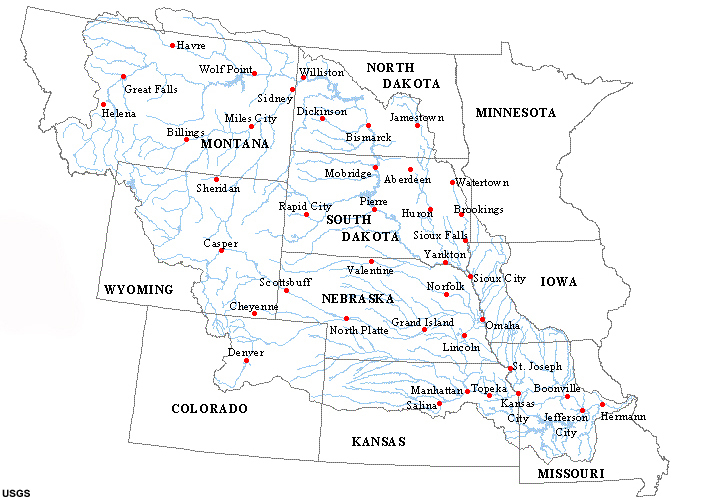
    Drought news: Many eyes are on the water in the Missouri River reservoirs #CODrought

    missouririverbasin.jpg

    From The Winona Daily News (David A. Lieb):

    From Montana to West Virginia, officials on both sides have written President Barack Obama urging him to intervene _ or not _ in a long-running dispute over whether water from the Missouri’s upstream reservoirs should be released into the Mississippi River to ease low water levels that have imperiled commercial traffic.

    The quarrel pits boaters, fishermen and tourism interests against communities downstream and companies that rely on the Mississippi to do business.

    “We are back to the age-old old battle of recreation and irrigation verses navigation,” said Sen. Claire McCaskill, a Democrat from Missouri.

    If the water is held back, downstream states warn that shipping on the Mississippi could come to a near standstill sometime after Christmas along a 180-mile stretch between St. Louis and the southern Illinois town of Cairo. But if the water is released, upstream communities worry that the toll of the drought could be even worse next year for farms and towns that depend on the Missouri.

    Obama has not decided whether to enter the dispute, nor has the White House set a timetable to respond. But tensions are rising in this decades-old battle.

    From his perch as executive director of the Southeast Missouri Regional Port Authority, Dan Overbey watched this week as workers scrambled to ship out as much grain as possible before the Mississippi gets so low that it is not economically feasible or physically possible to move loaded-down barges…

    More than 800 miles to the northwest, Michael Dwyer was also stewing. He’s the executive vice president of the North Dakota Water Users Association.

    To Dwyer, the downriver interests are “taking selfishness” to “a level you can’t even comprehend.”

    “We suffered the impact of these reservoirs” when they were created decades ago by dams that flooded 500,000 acres of bottomland, Dwyer said. “To have some use of the resource only seems appropriate.”

    At the Mississippi River port near Cape Girardeau, Mo., about a million tons of cargo are loaded or unloaded annually, providing about 200 jobs, Overbey said.

    The water is also vital in parts of the Dakotas, where the dammed-up Missouri River has spawned a tourism industry centered on boating and fishing…

    Over the past three decades, more than a dozen lawsuits have been filed challenging the management of the river, many of which set Missouri and other downstream states against the Dakotas and other upstream states.

    The battles started in 1982, when Missouri, Iowa and Nebraska challenged a government contract allowing water to be drawn from the Missouri River in South Dakota to flush coal through a pipeline to power plants in the southeast. The U.S. Supreme Court blocked the project, but other lawsuits followed, including an effort by upstream states to reduce the water released from dams in an attempt to boost sport fishing in the reservoirs.

    Missouri, meanwhile, sued the Army Corps of Engineers when it held back water because of droughts and shortened the navigation season. Environmental groups also joined the court battles, advocating for spring surges and summer declines in downstream river levels to help threatened species of birds and fish.

    So far, no lawsuits have been filed in the current competition for water. But battle lines have been drawn…

    The Corps of Engineers, which manages both the Missouri and Mississippi rivers, says its guidelines prohibit it from releasing water from the Missouri River reservoirs for the primary purpose of improving navigation on the Mississippi. That position was backed up by a 1990 report from the federal government’s General Accounting Office, though officials from downstream states believe Obama could trump that by declaring an emergency to avoid an “economic calamity.”

    The Flaming Gorge Task Force October meeting summary is hot off the press

    flaminggorgepipelineearthjustice.jpg

    Click here to read a copy.

    More Flaming Gorge Task force coverage here.

    Can the Flaming Gorge pipeline save ag and water Colorado’s burgeoning population?

    flaminggorgepipelineearthjustice.jpg

    Here’s the latest installment of the Valley Courier’s Colorado Water 2012 series, written by Eric Hecox. He is exploring the benefits of the Flaming Gorge pipeline, originally conceived by Aaron Million, now in the gunsights of the Colorado-Wyoming Coalition. Here’s an excerpt:

    One potential new water project, the Flaming Gorge Pipeline, is being discussed and analyzed for its feasibility. The newly formed Basin Roundtable Project Exploration Committee is taking a closer look at this pipeline project. Simultaneously to this process, both public and private groups are investigating the potential of the project to meet present and future water demands. The Colorado/Wyoming Coalition, a public organization comprised of water and municipal entities in Colorado and Wyoming that could receive water from the pipeline if it is built, is conducting a feasibility study. A private developer, Aaron Millions, is also examining the project.

    The Basin Roundtable Project Exploration Committee has identified three areas of focus related to the Flaming Gorge Pipeline: explore interests and issues related to a possible Flaming Gorge water supply project; gather and analyze current information about the potential impacts of such a project; and explore what additional work or activities would be needed to address the issues and interests.

    The committee itself is a pilot project, created to assess the effectiveness of roundtable-based collaborations to explore water supply projects and issues. While the committee is focused on the Flaming Gorge project, it will also evaluate and track ideas and issues that emerge that can be applied to other potential water supply projects. The committee’s purpose is to gather information and explore ideas. It will not make recommendations about whether or not to build the Flaming Gorge Pipeline.

    The Colorado/Wyoming Coalition is also analyzing the feasibility of the project. Established in 2010, the coalition is a joint collaboration between Colorado and Wyoming entities. The Colorado entities are: Douglas County, South Metro Water Supply Authority, Parker Water and Sanitation District, Town of Castle Rock and Pikes Peak Regional Water Authority. The Wyoming entities are: City of Cheyenne, City of Torrington and Laramie County…

    The Colorado/Wyoming Coalition is committed to a transparent examination of the Flaming Gorge Project. The coalition will complete the study, develop information, and engage in discussions with supporters as well as with skeptics and opponents.

    Meeting Colorado’s water needs undoubtedly necessitates developing new water projects. The Flaming Gorge Pipeline project appears promising, however there is much work to be done including an objective examination of the project and open discussions among interested parties. Colorado has a robust water supply planning process and it is encouraging that, through this process and through project proponents, potential solutions to Colorado’s water shortage are emerging.

    More Flaming Gorge Pipeline coverage here and here.

    Flaming Gorge Task Force meeting recap: Concern that Colorado does not have the ‘courage’ to build projects

    flaminggorgepipelinemillion.jpg

    Here’s a recap of the recent Flaming Gorge Task Force meeting, from Chris Woodka writing for The Pueblo Chieftain. Click through and read the whole article. Here’s an excerpt:

    “I’m left with the feeling that other states have the courage to embark on water projects. We don’t have that,” said Mike Gibson, president of Colorado Water Congress and manager of the San Luis Valley Conservancy District.

    The task force reviewed projects that other Western states have undertaken — including California’s state water project, started in late 1950s, and a $19 billion project to manage demands in the Sacramento-San Joaquin delta; Arizona’s water bank program and Central Arizona Project; and Utah’s proposal to build a $1 billion Lake Powell pipeline similar to the Flaming Gorge proposal…

    …the state lacks a water plan and unlike other states, has no way to centrally plan projects or allocate water.

    More Flaming Gorge Task Force coverage here and <a href="

    Salida: Flaming Gorge Task Force meeting Tuesday

    salidacolorado.jpg

    Click here for a copy of the agenda. Thanks to Heather Bergman for sending it along in email.

    More Flaming Gorge Task Force coverage here.

    Colorado, Wyoming and Utah and the remaining water under the Upper Colorado River Basin Compact

    uppercoloradoriverbasinstatesultimatum09011925denverpost.jpg

    Back in 1925 the Upper Colorado River Basin States united to fight the lower basin states over Colorado River projects like Boulder Dam unless the Colorado River Compact was signed. (Click on the thumbnail graphic for a graphic of The Denver Post front page from that time.) Fast forward to 1948 and the upper basin states inked the Upper Colorado River Basin Compact. With both compacts signed everyone would be buddy-buddy for all time, right?

    Maybe not, here’s a report from Bart Taylor writing for the Planet Profit Report. Here’s an excerpt:

    The Bureau of Reclamation estimates that demand on the Colorado River will significantly exceed supply in the coming years, and likely already has. This, along with drought and some rather dire climate change-related impacts, have forced state planners to reassess their Colorado River water supply and demand metrics. The Upper Basin has never fully utilized its full allocation of river water, either collectively or by individual state…

    It’s also begun to analyze its options to develop this remaining Colorado River allocation, and to the dismay of some in Wyoming and Utah (and Colorado, as I’ve written), one option involves a pipeline that taps the Colorado from its primary tributary, the Green River, at Flaming Gorge reservoir in southwest Wyoming and northeast Utah.

    For its part, Wyoming has also awakened to the tenuous future of its water resources. The Green has increasingly been identified as a river “at risk” – to the effects of drought, climate-change and a competition for water that’s reaching a fever-pitch throughout the region. Wyoming’s residents and politicians are therefore pushing back on what’s perceived by many here to be a water grab by Colorado – reminiscent of the threat posed by Lower Basin interest’s decades ago.

    According to my contacts, Wyoming water officials, including the state engineer, were initially neutral on the Flaming Gorge pipeline. Colorado is legally entitled to Green River water, and Flaming Gorge, like lakes Powell, Mead, Navajo and others, was built to implement the terms of the Colorado River Compact. To over-simplify greatly, the huge impoundments make it possible to even-out the distribution of water from wet years to dry for all parties to the agreement. Wyoming administrators initially had little reason (or recourse) to get worked up about the project, though from its source in Flaming Gorge, the pipeline would traverse the I-80 corridor west through Wyoming, then south to Colorado’s Front Range.

    Also, since Aaron Million conceived of a Flaming Gorge pipeline and reminded Colorado officials of the state’s right to file on the Green, most, but not all, water observers gave the project little chance of success. Building any water project, let alone a multi-state, multi-jurisdictional, trans-basin project, is daunting.

    Now, the political winds in Wyoming seem to blow hard against Flaming Gorge, the state engineer’s (yet unpublished) opinion notwithstanding. Ironically, Colorado water planners may be warming to the idea, again, driven by self-interest motivating all parties to the Compact. Colorado’s the fast-grower in the region and requires more water, even as it is entitled to more than its Upper Basin brethren. The state may simply not be able to turn its back on a huge, new source of water. (More on Colorado’s Flaming Gorge deliberations next time.)

    Utah’s perspective may also be changing. Within the last year, the state engineer approved water-transfer that will result in a new and fairly substantial appropriation, also from the Green River. As I outlined before, the premise is similar to that which may also drive Colorado to the Green – an unused portion of its Colorado River allocation.

    More Colorado River Basin coverage here and here.

    Flaming Gorge pipeline task force update: Have the committee members been spending too much time on problems?

    flaminggorgepipelineearthjustice.jpg

    From The Pueblo Chieftain (Chris Woodka):

    “There was a great deal of negativism in the first meetings, but at the last meeting we had a bit of a turnaround because we realized that we had not considered any of the positive things that would happen if we built Flaming Gorge,” Betty Konarski told the Arkansas Basin Roundtable Wednesday. Konarski, a task force member who represents El Paso County on the roundtable, said the task force has been so busy trying to identify problems that it has neglected the other side of its mission: to evaluate the potential benefits of a new supply of water. The task force was formed to evaluate competing plans by Fort Collins entrepreneur Aaron Million and the Colorado-Wyoming Coalition to build a Flaming Gorge pipeline.

    More Flaming Gorge Task Force coverage here.

    Flaming Gorge Task Force: Mixed views towards the feasibility of building the pipeline

    flaminggorgepipelineearthjustice.jpg

    From the Fort Collins Coloradoan (Bobby Magill):

    On Friday, a task force of water interests from across Colorado charged to look into the feasibility of tapping the Green River met in Colorado Springs to discuss whether it’s possible or desirable to build a Flaming Gorge pipeline. While some on the task force said building a massive pipeline from western Wyoming to the Front Range would help restore the headwaters of the Colorado River while also preventing eastern Colorado farms from going dry, others were adamant that a Flaming Gorge pipeline is, at best, a project that could cause more strife than anything else…

    “There’s been no real analysis of the environmental impacts,” [Chuck Wanner of Colorado Trout Unlimited] said, adding that he doesn’t believe that it’s possible for the task force to fully assess the feasibility of a Flaming Gorge pipeline by the end of the year.

    Whatever project the state decides to build to bring more water to the Front Range, Colorado must tap all the Colorado River Basin water the state is entitled to, including Green River water, said Eric Wilkinson, general manager of Northern Water in Berthoud. That project, whether it’s a Flaming Gorge pipeline or something else, has to maximize currently-available infrastructure, and the proposed pipeline accomplishes that by using the Interstate 80 corridor in Wyoming, he said…

    “The most important issue in this is whether or not a project unites the state,” said T. Wright Dickinson, a Brown’s Park rancher and former Moffat County commissioner. He said a Flaming Gorge pipeline as it is being envisioned would be too divisive to be built, doesn’t address what happens when Western Slope farmers need more water and isn’t adequate to address the state’s long-term water needs. Dickinson suggested an even bigger project: Tapping the Mississippi or Missouri rivers with a massive westbound pipeline…

    The task force will meet once each month through December before making a final recommendation to state water regulators in January.

    More Flaming Gorge Task Force coverage here.

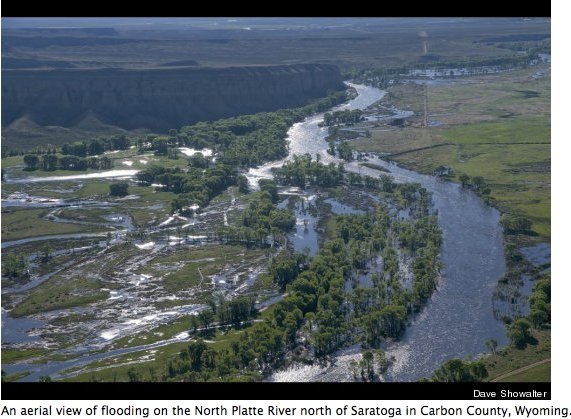
    Colorado Water 2012: ‘Anyone in the basin will say that North Park remains a quiet and unique place’ — Caitlin Coleman

    northplatteriver.jpg

    Here’s the latest installment of the Valley Courier’s Colorado Water 2012 series. Caitlin Coleman takes us on a tour of the North Platte River Basin. Here’s an excerpt:

    The North Platte Basin—a 2,050 square-mile area that encompasses all of Jackson County and a portion of Larimer County—is nestled up against the Continental Divide in north central Colorado between the Front Range, Routt County and the Wyoming border. About 65 percent of Jackson County is public land, managed by state and federal agencies; still there is plenty of room for the basin’s small population of about 1,400 people.

    Anyone in the basin will say that North Park remains a quiet and unique place. Bearing the headwaters of the North Platte River and connected by this artery to Wyoming and Nebraska, the North Platte Basin is somewhat insulated from the booming population and water worries of the rest of Colorado. Geography, lack of major development and a U.S. Supreme Court Decree governing water development have protected the basin…

    The basin’s first water rights were adjudicated in 1892. Until then, there were no water districts, no water commissioners, and no official water appropriations in the North Platte Basin, but that doesn’t mean there weren’t water diversions and development. Rather, the basin slowly developed throughout the 1880s, according to former water commissioner and historian Eric Wagner.

    The water adjudication system began as a response to droughts in 1891, when people faced with stressed water resources wanted legal recognition of their water diversions. In the North Platte Basin, this precious water is used mostly for flood irrigation—watering meadows to produce a crop of high mountain hay, which sustains cattle locally or is trucked outside the basin and sold as a commodity, such as horse or cattle feed. That’s the way it’s been for years. Ditches wind across the basin, transporting water from rivers, streams and reservoirs to nourish agricultural land.

    More Colorado Water 2012 coverage here.

    Flaming Gorge Pipeline: ‘Colorado has water available under the Colorado River Compact’ — Nathaniel Budd

    flaminggorgepipelineearthjustice.jpg

    Here’s a guest column written by Wyco Water and Power, Director of Business Development, Nathaniel Budd, running in the Fort Collins Coloradoan. From the column:

    Colorado has water available under the Colorado River Compact, a 1922 agreement among seven Colorado River basin states governing allocation of water rights for the Colorado River. Until Colorado’s apportionment is fully developed, the Lower Basin (California, Nevada, and Arizona) will benefit at the detriment of Colorado. For 90 years, our region has over-delivered to the Lower Basin, largely because the infrastructure does not exist to utilize the water supply available to this state. The water belongs to Colorado, not California…

    Rather than develop waters allocated for the state’s beneficial use nearly 100 years ago, opponents of the Regional Watershed Supply Project would prefer to stunt economic growth and endanger the Upper Basin’s future water supply. If Colorado’s forefathers had been of this mindset, the eastern slope communities and the multi-billion-dollar agricultural base that supplies open spaces, preserves western culture, and provides innumerable environmental benefits would not exist as we know them today.

    Meanwhile, here’s a report about FERC’s latest rejection of the pipeline’s preliminary permit, from Mary Bernard writing for the Vernal Express. From the article:

    Aaron Milllion’s hydropower and water supply project, renamed the Wyco Power and Water Project was denied by the Federal Energy Regulatory Commission on May 17. That’s the second refusal of the project’s preliminary permit request from FERC, preceded by the U.S. Army Corps of Engineers’ termination in 2011. FERC refused a rehearing on the decision saying, Million’s arguments were unsupported and no preliminary permit for its proposed Regional Watershed Supply Project would be issued…

    The project has received widespread resistance from the private sector throughout the tri-state area. Formal opposition from Daggett and Uintah Counties, the Wyoming communities of Green River and Rock Springs, Sweetwater County, Wyo. and Moffatt County, Colo.

    Local fly fishermen openly opposed the water project saying it would draw down reservoirs and destroy world class fisheries on the Green River and Flaming Gorge. High Desert Anglers president Jeff Taniguchi warned that the “Million Project would absolutely decimate one of the most beautiful places in Utah, and compromise every downstream user of water on the Green.”

    Western Resource Advocates filed objections representing itself, the National Parks Conservation Association and the Colorado Environmental Coalition.

    More Flaming Gorge Pipeline coverage here and here.

    Flaming Gorge Pipeline: Protect the Flows asks Governor Hickenlooper to put the kibosh on the project

    coloradoriverbasin.jpg

    Here’s the release from Protect the Flows.

    118 West Slope businesses sent a letter this morning to Colorado Governor John Hickenlooper, expressing their opposition to the proposed Flaming Gorge pipeline. The businesses are members of Protect the Flows, a coalition of over 500 small business owners in the seven state Colorado River region (AZ, CA, CO, NM, NM, UT, WY) who depend upon flows in the Colorado River and its tributaries that are adequate to support the recreation economy.

    In the letter…Protect the Flows asks that the administration cease devoting state resources to studying the Flaming Gorge pipeline upon conclusion of the state’s special task force examining the project’s feasibility. As the task force has deliberated, troubling facts about the pipeline have continued to emerge, opposition to the pipeline has continued to grow, and federal agencies have continued to deny all permit attempts for the pipeline. Protect the Flows indicated that they would welcome a dialogue on water that welcomes and fosters ideas beyond the proposed pipeline and adequately accounts for the economic interests of the recreation and tourism industry. The task force, known formally as the Basin Roundtable Project Exploration Committee, is funded by a state grant issued by the Colorado Water Conservation Board and is scheduled to continue discussions through the end of 2012.

    “The state’s task force is focused only on one increasingly controversial idea — the Flaming Gorge pipeline proposal,” said Molly Mugglestone, Coordinator for Protect the Flows. “But to come up with the most effective solutions on future water usage we must apply a broader, more inclusive framework, like the one that was applied in achieving the newly completed agreement between Denver Water and West Slope interests.”

    Protect the Flows recently released a report showing that the Colorado River and its tributaries support a quarter million American jobs and generates $26 billion annually in total economic output. In Colorado alone, the Colorado River supports about 80,000 jobs and about $9.6 billion in total economic output.
    
    The proposed Flaming Gorge pipeline puts that economy in harm’s way. The plan would siphon 80 billion gallons each year from the Green River (a Colorado River tributary), which was recently declared the second most endangered river in America by American Rivers, for shipment to the Front Range. Moreover, the State of Colorado estimates that construction costs for the pipeline could reach $9 billion. An economic study by Western Resource Advocates indicated that the pipeline would take nearly a quarter of the Green River’s flow, which would result in a $58.5 million dollar annual loss to the region’s recreation economy. That same study reported that the water delivered to the Front Range by the pipeline would have to be sold at a price that is the most expensive in Colorado’s history (up to 10 times more than any existing project) because of the pipeline’s steep construction and operation costs.

    “Construction of this pipeline would be devastating to the entire Colorado River System,” said Tom Kleinschnitz, President of Adventure Bound River Expeditions in Grand Junction, which employs 30 people. “The significant loss of flows in the Green River would dramatically impact the quality of river recreation and affect tourism for everyone downstream all the way to Mexico.”

    Protect the Flows has committed to spend 2012 reminding Governor Hickenlooper and state officials that public resources would be better spent on more affordable solutions that support recreation industry jobs, such as improving water conservation efforts, water reuse and recycling, and better land-use planning and growth management.

    More Flaming Gorge Pipeline coverage here and here.

    ‘The Flaming Gorge Pipeline has been rejected more often than a freshman before prom’ — Stacy Tellinghuisen (Western Resource Advocates)

    flaminggorgepipelineearthjustice.jpg

    It looks like Aaron Million will have to pony up the big bucks for engineering and attorney’s fees to flesh out his application with the Federal Energy Regulatory Commission. Here’s a report from Ben Neary writing for the Associated Press via the Fremont County Ranger. From the article:

    The Federal Energy Regulatory Commission on Thursday refused a request from Aaron Million of Fort Collins, Colo., to reconsider its February denial of his permit. In denying Million’s application in February, FERC said it was premature and lacked specifics about the proposed pipeline…

    His plans have drawn opposition from Gov. Matt Mead as well as county and local governments in southwestern Wyoming and downstream states. “I continue to oppose this particular proposal and continue to believe that FERC is not the regulatory body to review Mr. Million’s proposal,” Mead said Thursday. “I am glad that FERC denied the request for a rehearing.”[…]

    “We anticipated that they would not change the direction from the original response, part of the request frankly had to do with a clarification of issues related to their original decision,” Million said. “And indeed, they did clarify several things, and we now understand the rationale, in essence. They said the application was too broad.”

    From The Denver Post (Bruce Finley):

    Million’s company, Wyco Power and Water Inc., “presented no information in its permit application or its request for rehearing to indicate that the planning, routing or authorizations for the water conveyance pipeline are in progress or reasonably foreseeable,” FERC’s order said. Until Wyco can do that, the order said, there’s no point in issuing a preliminary permit…

    Million said he expected this rejection and learned from the process. “They need some more specifics,” he said, estimating $5 million has been invested so far. “We’re pushing ahead. FERC will be involved at some point because they permit hydropower.”

    From the Colorado Independent (Troy Hooper):

    FERC deemed the application from Million’s company, Wyco Power and Water Inc., inadequate in February but Wyco returned the next month asking the agency to reconsider. “We are not persuaded by any of Wyco’s unsupported arguments that it should be issued a preliminary permit for its proposed Regional Watershed Supply Project,” the commissioners wrote in their decision. “Therefore, we affirm the February 23 Order and deny Wyco’s request for rehearing.”

    Here’s a release from Western Resource Advocates (Jason Bane):

    The Federal Energy Regulatory Commission (FERC) today re-affirmed its decision to deny a rehearing on a preliminary permit application for the Flaming Gorge Pipeline. This is now the third time (in less than a year) that a federal agency has rejected plans for the Flaming Gorge Pipeline.

    “The Flaming Gorge Pipeline has been rejected more often than a freshman before prom,” said Stacy Tellinghuisen, Water & Energy Policy Analyst at Western Resource Advocates. “It doesn’t matter how you try to alter the proposal, or whose name is on top. You can change the wording. You can change the font. You can print it on a different color paper. It’s still too expensive, too harmful to the environment, and just not necessary for meeting future water demands.”

    In July 2011, the U.S. Army Corps of Engineers terminated its review of the pipeline proposal, prompting Million to shift his application request to FERC. On February 23, 2012 FERC denied a preliminary permit application for the pipeline proposal, and on March 23 Million requested a “rehearing and clarification.” In a decision released this morning, FERC stated:

    We are not persuaded by any of Wyco’s unsupported arguments that it should be issued a preliminary permit for its proposed Regional Watershed Supply Project. Therefore, we affirm the February 23 Order and deny Wyco’s request for rehearing.

    Said Robert Harris, Staff Attorney with Western Resource Advocates: “Enough is enough. This is a strong signal to the State of Colorado to focus more time and attention on proposals that — unlike the Pipeline — are more ripe for serious consideration.”

    Million had been seeking a federal permit from FERC to review his ‘Flaming Gorge Pipeline’ (FGP) proposal to pump 81 billion gallons of water a year for more than five hundred (500) miles from the Green River in Wyoming to the Front Range of Colorado—all at a projected cost of $9 billion dollars (according to CWCB calculations). Western Resource Advocates (WRA) filed objections to the application in representing itself, the National Parks Conservation Association (NPCA) and the Colorado Environmental Coalition (CEC); in total, more than 5,000 objections were filed in December 2011 to Wyco’s proposal.

    Opposition to the Flaming Gorge Pipeline has continued to grow since December. Wyoming Gov. Matt Mead has formally objected to the proposal, as have numerous local governments in both Colorado and Wyoming (such as Grand Junction, CO and Laramie, WY).

    Here’s a release from Earth Justice (McChrystie Adams):

    Today, the Federal Energy Regulatory Commission (FERC) closed the door on what will hopefully be the last attempt to permit the Flaming Gorge Pipeline. FERC denied a request for rehearing from Aaron Million’s company, Wyco Power and Water, Inc.—an attempted “do-over” on FERC’s earlier denial of a preliminary permit. The Colorado developer has spent several years, and a claimed $5 million, attempting to launch this ill-conceived boondoggle. His proposal has been met with stiff opposition from conservation groups, individuals, and local communities and businesses. Now, FERC has provided a point-by-point refutation of Wyco’s application and rehearing request, and left no doubt that this pipeline remains a pipe dream.

    FERC’s order recognized that the Flaming Gorge Pipeline proposal is poorly defined, and the approval process would be “difficult and lengthy” due to the opposition and controversy surrounding the project. As a result, FERC states that it would be premature to issue the permit for the project at this time. Importantly, FERC also made clear that it would not license the entire 501-mile water conveyance project. FERC is now the second agency to reject Mr. Million’s attempts to review and approve the Pipeline, following the Army Corps of Engineers’ termination of its review of the project in 2011.

    McCrystie Adams, staff attorney for Earthjustice, had the following statement on FERC’s action:

    “The Flaming Gorge Pipeline would be one of the biggest, most expensive, most environmentally damaging water projects in the history of the western United States. FERC got it right when they dismissed the permit application, and got it right again today when they denied Mr. Million’s rehearing request. We hope this will finally put an end to Mr. Million’s attempt to profit at the expense of one of the West’s last great rivers and the fish and wildlife, as well as the local economies, which depend on it.

    “This project—and any similar, large-scale transbasin diversions—is the worst way to meet Colorado’s water challenges. Such a project is unnecessary and distracts us from the important work we must do to build a secure water future. Unfortunately, we cannot be confident that this project is dead until Mr. Million and those who might follow his path abandon this futile scheme. We will continue to work to ensure that the Green River is protected and that this and other assaults on the West’s rivers do not succeed.”

    The Flaming Gorge Pipeline is a massive transbasin water supply project that would annually take approximately 81 billion gallons (250,000 acre-feet) of water from the Flaming Gorge Reservoir and the Green River and pipe it more than 500 miles over the Continental Divide to Colorado’s Front Range and southeastern Wyoming. This diversion would have devastating impacts on the native fish and wildlife in the Green and Colorado Rivers, batter regional recreational opportunities and jobs that depend on river flows, and potentially be a fatal blow to one of the West’s last great rivers. The plight of the Green River and the impacts of the proposed Flaming Gorge Pipeline were highlighted this week when American Rivers declared it #2 on its list of “most endangered rivers” in the United States.

    After an attempt at permitting through the Army Corps of Engineers was rejected last year, Aaron Million’s new company Wyco Power and Water, Inc. turned to the FERC. In February, FERC, acting well within its discretion and following its governing regulations, dismissed Wyco’s preliminary permit application as “premature.”

    FERC, in its review of the preliminary permit application, rightly found that Wyco would be unable to gain the many authorizations and the design certainty necessary to file a license application within the three year permit term. Again failing to take “no” for an answer, Wyco then requested a rehearing, yet failed to provide any meaningful evidence or arguments that FERC got it wrong the first time. FERC’s ruling today upheld its earlier finding and left it clear that Wyco’s application is without merit.

    Earthjustice had intervened in FERC’s preliminary permit review and filed papers urging the agency to deny the rehearing request. Earthjustice represents a coalition of ten conservation groups with interests throughout the Colorado River Basin: Sierra Club, Center for Biological Diversity, Rocky Mountain Wild, Save the Poudre: Poudre Waterkeeper, Biodiversity Conservation Alliance, Wyoming Outdoor Council, Citizens for Dixie’s Future, Glen Canyon Institute, Living Rivers: Colorado Riverkeeper, and Utah Rivers Council.

    From the Summit County Citizens Voice (Bob Berwyn):

    The controversial Flaming Gorge pipeline (formally known as the regional water supply project) was initially under review by the U.S. Army Corps of Engineers, but partway through that process, proponent Aaron Million switched gears and asked the Federal Regulatory Energy Commission to review the proposal as an energy generating project.

    FERC rejected the application once and Million subsequently appealed that decision under an administrative procedure. This week’s FERC ruled denies his appeal and appears to put the project on hold, at least for now.
    The proposal garnered widespread opposition from businesses that rely on recreational flows in regional rivers and streams, collectively represented by Protect the Flows.

    “The thousands of people in our region whose jobs depend upon a strong Colorado River system dodged another bullet today, but it’s time to move beyond this threat once and for all,” said the group’s coordinator, Molly Mugglestone. “Enough time and public money has been spent fixating on this one controversial idea, it’s time to bring people together to come up with a smarter way forward.”

    From the Fort Collins Coloradoan (Bobby Magill):

    FERC spokeswoman Celeste Miller said in a statement Thursday that the order “confirms that it is premature to issue Wyco a preliminary permit for its seven proposed hydropower developments.”

    Miller said Wyco presented no information in its permit application or its appeal to show that Wyco has permission from landowners to build the pipeline across their property.

    “Until Wyco is able to do so, there is no point in issuing a preliminary permit for the hydropower developments because Wyco would be unable to study the feasibility of, and prepare a license application for, a project whose location has not been sufficiently narrowed,” the statement said.

    From KSL.com (Amy Joi O’Donoghue):

    The application for Wyco to study the feasibility of the pipeline — described officially as the Regional Watershed Supply Project — lacked concrete information such as the route or if any authorizations from land managers had been sought, according to the FERC decision. Also incomplete were details about the locations of its proposed hydropower stations. Aaron Million, a Fort Collins, Colo., entrepreneur who is pushing the project, said trying to provide that kind of detail this early in the process is premature — it needs more research…

    Wyco has 60 days to file an appeal of Thursday’s decision with the U.S. Circuit Court of Appeals.

    From the Northern Colorado Business Report (Steve Lynn):

    Million on Friday said the latest ruling has given his team a better understanding of what it must include in its formal application. “We’ll address the issues and keep heading through the permitting process,” he said.

    Large engineering construction firms involved in the project remain interested, he added. He declined to name them, citing confidentiality agreements. The pipeline would help meet the water needs of Colorado, which faces a water supply shortfall, Million said. It also would bolster flows in the Poudre River.

    Finally, Chris Woodka talked to Aaron Million. The entrepreneur remains focused, according to Mr. Woodka’s report. From the article:

    “We plan to move forward and will submit a more complete application,” Million said. He added that he is continuing to secure financing for the project.

    More Flaming Gorge Pipeline coverage here and here.

    North Park: CDPHE issues new cease and desist order to Lone Pine Gas over releases into Spring Gulch Creek

    northplatteriverfloodjune2011.jpg

    From the Associated Press via The Columbus Republic:

    One of the company’s owners, Stephen Shute, said Tuesday he’s reviewing the order.

    The company has oil and natural gas wells west of Walden in the North Park area. It has a permit to discharge treated produced water into Spring Gulch Creek, but a cease-and-desist order issued Tuesday says the company has been discharging copper and iron at levels above what’s allowed under its permit. The company received a similar order in 2010.

    More oil and gas coverage here and here.

    How would the State Engineer administer diversions with respect to the Flaming Gorge pipeline?

    flaminggorgepipelineearthjustice.jpg

    From The Pueblo Chieftain (Chris Woodka):

    “I just laid out the options we have if either Flaming Gorge plan were to move forward,” State Engineer Dick Wolfe said following a meeting last week of the Flaming Gorge Task Force in Grand Junction. The options include special legislation to cover bringing water from outside the state, an agreement between the states or state rules on water imports…

    Wolfe is concerned that a pipeline could inadvertently injure Colorado water rights. Prompted by Million’s plan, Wolfe talked to the Colorado legislative interim committee on water resources last year about the possibility of legislation…

    Colorado already has agreements with Wyoming and Utah on how to administer specific rights that cross state lines. Those involve smaller quantities of water than Flaming Gorge would divert, and neither targets a specific water right. Under an agreement, Colorado would be able to ask Wyoming to curtail diversions if they threatened rights on the Colorado River within Colorado. There could also be impacts to the Colorado River Compact, among seven states, that could affect Flaming Gorge diversions. “We don’t want Wyoming making judgments on how much water we have left to develop under the compact,” Wolfe said…

    “It would involve a very public process, and would create the conditions for importing water,” Wolfe said. “Right now we have no venue to do that.”

    More Flaming Gorge Pipeline coverage here and here.

    North Platte River basin: The EPA sounds the alarm over discharges from Lone Pine Gas facilities into Spring Gulch Creek

    northplatteriverfloodjune2011.jpg

    From The Denver Post (Bruce Finley):

    Oil stains extend from Lone Pine Gas facilities for about 1.25 miles along shorelines of Spring Gulch Creek. Besides oil, Englewood-based Lone Pine — with state permission — has been releasing 200,000 to 400,000 gallons a day of treated drilling wastewater directly into creek waters, raising landowner concerns. The Environmental Protection Agency has begun to assess the damage along the creek, which flows into Hell Creek and then into the North Fork of the North Platte River.

    A Colorado Oil and Gas Conservation Commission inspector will join an EPA coordinator today. “We got a call from concerned landowners on April 3. We were up there by April 5,” EPA spokesman Matthew Allen said. “(The EPA) is categorizing the types of damage along the shoreline to determine the best cleanup actions for the responsible party to take.” This is the latest of crude-oil spills dating to 2006 at Lone Pine’s gas and oil field about 14 miles west of Walden — near protected state wildlife areas.

    A COGCC inspector in December found the spill, and agency officials met with Lone Pine managers in January. Lone Pine’s operations are somewhat uncommon because the Colorado Department of Public Health and Environment has allowed the company, through a discharge permit, to release up to 420,000 gallons of drilling wastewater per day into the creek from settling ponds. A couple of years ago, CDPHE learned that Lone Pine’s drilling wastewater did not meet state water-quality standards and, in September 2010, ordered the company to stop polluting the creek.

    The CDPHE “cease-and-desist” order, however, “does not require that Lone Pine cease its operations while they return to compliance,” agency spokesman Mark Salley said. CDPHE’s water-quality division “is primarily concerned with the wastewater treatment facility’s ongoing inability to reliably and consistently comply with the terms and conditions of its discharge permit.”

    From the Associated Press via Billings Gazette:

    Wyoming water quality director John Wagner says the water is not from fracking or drilling and he believes it’s not harmful to Wyoming streams and wildlife.

    Colorado water officials said Lone Pine Gas violated water quality standards a number of times since 2007, including dumping water with excess levels of copper and iron. The company says it shut down the plant in March and did a complete cleanup.

    More oil and gas coverage here and here.

    IBCC: The Flaming Gorge Task Force March 27 meeting notes are hot off the press

    greenwithenvytrailerscreenshottroutunlimited.jpg

    From email from Peak Facilitation (Heather Bergman):

    …please find the summary of the March 27 meeting of the Basin Roundtable Project Exploration Committee: Flaming Gorge here.

    More Flaming Gorge Pipeline coverage here and here.

    Flaming Gorge pipeline: FERC is reviewing Wyco Water and Power’s request for a rehearing for the project’s preliminary permit

    flaminggorgepipelinemillion.jpg

    From Chris Woodka writing for The Pueblo Chieftain. From the article:

    The Federal Energy Regulatory Commission filed a notice Monday saying it needs more time to study a request for a rehearing filed by Aaron Million’s Wyco Power and Water Co.
    While notice was titled “Order Granting Rehearing for Further Consideration,” it did not in fact approve a rehearing on the entire pipeline project, FERC spokeswoman Celeste Miller said [ed. emphasis mine]…

    “All the notice meant was that the commission needed additional time to consider the rehearing request. If there was no action, the request would have been denied,” Miller said. “The commission is still reviewing the request.”

    From the Northern Colorado Business Report (Mark Wilcox):

    The rehearing comes despite multiple protests from environmentalist groups, the Wyoming Game and Fish Department, the U.S. Forest Service, Sweetwater County, Colorado Springs Utilities and others. Opponents claim it would damage the ecosystem surrounding Flaming Gorge, thereby damaging the $118 million local outdoor economy.

    In his rehearing request, Million invoked the approved, 139-mile Lake Powell Pipeline, which will cost $1.064 billion and be finished in 2020. He said his preliminary proposal was similar to the Lake Powell Pipeline, but while Lake Powell got a green light, Million’s Wyco Power and Water Inc. was stopped on red.

    “The commission’s order implies that the final pipeline alignment, all authorizations to construct the pipeline and even the construction of the pipeline should be completed prior to filing an application for a preliminary permit” Million’s rehearing request said.

    More Flaming Gorge pipeline coverage here and here.

    Flaming Gorge pipeline: FERC grants a rehearing for the project’s preliminary permit

    flaminggorgepipelineearthjustice.jpg

    Update: FERC did not grant a request for a rehearing. They need more time to review the request.

    From The Pueblo Chieftain (Chris Woodka):

    The Federal Energy Regulatory Commission announced Monday it will grant a rehearing for Aaron Million’s Wyco Power and Water Co., over the objections of environmental groups and Colorado Springs Utilities…

    Among those opposing the rehearing were the Colorado Environmental Coalition, the National Parks Conservation Association, Western Resource Advocates and the Sierra Club.

    Colorado Springs Utilities on April 6 filed a motion asking FERC to exclude consideration of a reservoir in El Paso County at the same site where it plans to build a reservoir for the Southern Delivery System. The Norris family, owners of T-Cross Ranches, are family friends of Million. They have filed an application with El Paso County for the Marlborough Metropolitan District with the intention of building a regional reservoir on Upper Williams Creek, southeast of Colorado Springs.

    Million also could have competition in building the pipeline from the Colorado-Wyoming Coalition, led by Frank Jaeger, manager of Parker Water, which is studying its own plan for a Flaming Gorge Pipeline.

    Meanwhile, a state task force continues to meet to identify issues that could arise if either project is built. Its next meeting is Wednesday in Grand Junction.

    Here’s the agenda for the next task force meeting via email from the IBCC facilitator.

    More Flaming Gorge pipeline coverage here and here.

    Flaming Gorge pipeline: The Garfield County Commissioners go on record opposing the project

    greenwithenvytrailerscreenshottroutunlimited.jpg

    From the Glenwood Springs Post Independent (John Stroud):

    …the decision to oppose the proposed 560-mile-long Flaming Gorge pipeline was not a unanimous one. The Garfield Board of County Commissioners voted 2-1 Monday to take the position against the controversial project. Commissioner Tom Jankovsky said that, although philosophically opposed to Front Range water diversions, it’s too early in the process for the county to be taking a position on the controversial project…

    But Commissioners Mike Samson and John Martin disagreed.

    Samson has been pushing for the county to take a stance against the project, as other Western Slope governments, water users and conservation groups have done. “We can’t continue to give West Slope water to Eastern Slope entities,” Samson said. “Enough is enough.

    “I’m looking down the road to our future needs,” he said. “Western Colorado will grow and expand, and we will need that water. And once it’s over there, there’s no way to get it back.”[…]

    Garfield County’s resolution opposing the project questions the costs for the project, as well as the potential threats to the western Colorado and other downstream water users on the west side of the Continental Divide. “The Flaming Gorge pipeline is not feasible without subsidies, with some estimates suggesting that the project would need as much as $370 million in state or federal subsidies,” the resolution states.

    “Garfield County urges Colorado water leaders and policymakers to devote the state’s attention and financial resources on water projects and programs that are cost-effective and that do not pit one region of the state against the others,” it concludes.

    More Flaming Gorge pipeline coverage here and here.

    An area on Upper Williams Creek, owned mostly by T-Cross Ranches, is a popular location for a terminal storage reservoir

    From the Colorado Springs Independent (Pam Zubeck):

    The Norris family, owners of T-Cross ranches, wants to create a water district and build a reservoir on Upper Williams Creek, the same general location eyed by Springs Utilities, the Pueblo Chieftain reported last week.

    The family filed an application with El Paso County for Marlboro Metropolitan Water District. (Steve Norris’ father, Bob, portrayed the Marlboro Man in TV ads.) Steve Norris told the Chieftain that the reservoir would hold nearly 30,000 acre feet of water. The Norrises and the State Land Board own the property, located southeast of the Springs.

    Norris couldn’t be reached, but from the sound of things, he believes his project would be used by Springs Utilities or another project that needs water storage. He told the Chieftain, “There has been lots of interest throughout the region for creating a regional storage reservoir.”

    The reservoir site Norris chose would not require relocation of Bradley Road, as contemplated by SDS, the Chieftain reported, so Norris said his plan might save the city money. Norris and his friend, Aaron Million, who is planning a pipeline from Flaming Gorge Reservoir and the Green River in Wyoming, also envision the site as terminal storage.

    But Utilities spokeswoman Janet Rummel says the Norris reservoir location “appears to conflict” with the city’s site planned as Phase 2 of the SDS project. SDS, an $880 million pipeline from Pueblo Reservoir to the Springs’ east side, will deliver water in 2016 and is causing water rates to rise sharply.

    More Flaming Gorge pipeline coverage here and here. More Southern Delivery System coverage here and here.

    Flaming Gorge pipeline: Earthjustice, et al. to FERC — ‘No’ should mean no to do-over for preliminary permit

    flaminggorgepipelineearthjustice.jpg

    From the Earthjustice blog (Doug Pflugh):

    Million is back at it again, asking the Federal Energy Regulatory Commission to reconsider his application for a preliminary permit. Million’s request comes on the heels of FERC’s dismissal of his preliminary permit. You may remember that Million turned to FERC after an earlier attempt to permit this project was terminated by the Army Corps of Engineers last summer. That’s two no’s in less than one year. Will a third do the trick?

    This week, Earthjustice, representing 10 environmental groups, filed papers with the Federal Energy Regulatory Commission (FERC) objecting to a do-over by FERC. FERC’s decision to deny the permit was right on the money and should have been the end of this scheme. But, with at least $1.4 billion at stake—according to Million—it’s easy to understand why he isn’t giving up easily…

    Earthjustice represents a coalition of ten conservation groups with interests throughout the Colorado River Basin: Sierra Club, Center for Biological Diversity, Rocky Mountain Wild, Save the Poudre: Poudre Waterkeeper, Biodiversity Conservation Alliance, Wyoming Outdoor Council, Citizens for Dixie’s Future, Glen Canyon Institute, Living Rivers: Colorado Riverkeeper, and Utah Rivers Council.

    More coverage from Mark Wilcox writing for the Wyoming Business Report. From the article:

    Aaron Million’s confidential business plan to annually pump about 81 billion gallons out of Flaming Gorge and the Green River that feeds it has been revealed to the Associated Press, and it is no small wonder he has not taken ‘no’ for an answer. The plan would bring in an estimated net profit of between $1.4 and $2.4 billion. And that’s after construction costs of somewhere between $2.8 billion and $3.2 billion. And end users of the water would pay up to $117 million in annual operating costs based on a “cost plus 20 percent” business model with estimated operating costs of between $70 million and $90 million…

    “Million’s plan is a blatant attempt to transform an important public good into billions of dollars of private profit,” said Earthjustice staff attorney McCrystie Adams in a statement urging the Federal Energy Regulatory Commission not to rehear Million’s request. Earthjustice represents various conservation clients on this issue. “We know from the developer’s public statements and documents that he’s looking for someone else to cover the millions of dollars of permitting costs that will undoubtedly be associated with what they describe as ‘the largest water infrastructure, pipeline, hydropower and storage project’ in the region.”

    Adams’ statement refers to portions of the plan showing that Million’s Wyco Power and Water Inc. is seeking to raise $15 million through 2015 to get through the permitting process. While the amount raised so far is confidential, $5 million has been spent on the permitting process.

    “It is clear that Million sees the Flaming Gorge Pipeline as his Mega-Millions jackpot and hopes someone else will pay for his tickets,” Adams wrote. “Fortunately, the odds of permitting this boondoggle are similar to winning the lottery.”

    More Flaming Gorge pipeline coverage here and here.

    Flaming Gorge Pipeline: Aaron Million estimates profits at $1.4 billion

    flaminggorgepipelineearthjustice.jpg

    If you’ve wondered why Aaron Million has been so dogged in his pursuit of his pipeline dream facing while facing huge opposition across Wyoming, Colorado and Utah and from conservationists across the U.S., you need only to focus on the potential rewards from a for-profit operation in the middle of Colorado’s last remaining developable water in the Colorado River basin and the wealthy Denver southern suburbs. Here’s a report from Catharine Tsai writing for the Associated Press via The Colorado Springs Gazette. From the article:

    His team’s confidential business proposal, shown to potential contractors, estimates construction costs of $2.8 billion to $3.2 billion, with annual operating costs of between an estimated $70 million and $90 million per year being paid by water users.

    The project would initially deliver about 110,000 acre-feet of water to municipal and industrial users, with re-use available to farm and environmental interests, according to the business plan. The water would be sold under a “cost plus 20 percent” financial model, with 20 percent being added on top of costs for delivering the water. That would result in a one-time $360 million to $480 million profit to the contractor from water sales, according to the plan.

    The second stage of the project would deliver up to 140,000 acre-feet, with water sold at market rates. “Potential net profit is targeted in the $1.4 billion to $2.4 billion range,” the plan said.

    Though the business plan lays out staged development, Million said the project likely would be built all at once to avoid having infrastructure costs balloon over time. In any case, costs should be lower if it’s developed privately, not publicly, he said. “The project is financially sound. We think we can get it done for 30 to 40 percent less than a public sector project,” Million said.

    Million provided the business proposal to The Associated Press in response to questions about an earlier version of the plan obtained by the AP.

    The role of Million’s Wyco Power and Water Inc. would be to shepherd the project through the permitting process, Million said. It would earn a management fee, which could range from 0.25 percent to 3 percent of money raised for its work, he said. The plan said Wyco is seeking to raise $15 million through 2015 to get through the permitting process. Million said the amount he has raised so far is confidential, but he has said $5 million has been spent on the project during the four years since he proposed it.

    “We’ve finally learned what this proposal is about. It’s about people wanting to get extremely rich off of the natural wealth of the Colorado River and the communities up and down the basin that depend on it,” said Gary Wockner of Save the Colorado.

    More Flaming Gorge pipeline coverage here and here.

    IBCC: Wyco Water and Power, Inc. and the Colorado-Wyoming Cooperative Water Supply Project proponents briefed the state task force yesterday

    flaminggorgepipelinemillion.jpg

    From The Pueblo Chieftain (Chris Woodka):

    A private developer and a public group who want to build major water supply pipelines from Flaming Gorge Reservoir in Wyoming to Colorado’s Front Range met Tuesday for the first time with a state task force. “Can both projects go? Folks, there should be collaboration. If this task force wants an additional task it could look at finding collaboration,” said Aaron Million, who first came up with the idea for the project about six years ago. “One of the outcomes of the task force has been a huge pushback from the environmental community.”

    Million’s Wyco Power and Water Inc. faces competition from the Colorado-Wyoming Coalition, led by Parker Water and Sanitation General Manager Frank Jaeger. The task force, formed at the request of the Arkansas and Metro basin roundtables, was formed to identify issues, interests and impacts associated with a Flaming Gorge project. It won’t recommend either project, and right now just has a growing list of questions and concerns…

    The Colorado-Wyoming Coalition still is investigating whether it even wants to pursue the project and is waiting on a Bureau of Reclamation determination of whether water is available, Jaeger said. “We don’t have all the answers,” Jaeger said. “We have to know what the Bureau of Reclamation plan says before we go any further.” The group has clearly identified it would serve a population of 569,000 in the next 60 years. The project would divert 100,000 acre-feet of water, which through re-use could provide about 200,000 acre-feet of need. About one-fourth of the water would go to communities in Wyoming.

    Million filed for water rights in 2007 on the Green River in Wyoming and has applied for a contract with Reclamation. He is using an earlier decision by Reclamation as the basis for his claim of 250,000 acre-feet. He has identified potential users, but does not have a specific list, unlike the coalition. So far, $5 million has been spent to develop his plan…

    While the project faces stiff opposition in Western Wyoming, there is a growing realization that the decision could be made without the area’s consensus. There is a spectrum of opinion heavily weighted toward stopping the project to those who realize control of the water is in someone else’s hands and the object is to reduce the impacts of diverting some of it. “I think our mission is to stay informed on the issues,” said Don Hartley, of the Rock Springs, (Wyo.,) Chamber Enterprise Committee. “We have to stay abreast of the issues with an eye to minimizing the impacts.”

    More Flaming Gorge Pipeline coverage here and here.

    The Norris Family plans to build the reservoir at the site eyed by both the Flaming Gorge Pipeline and the Southern Delivery System

    flaminggorgepipelineearthjustice.jpg

    From The Pueblo Chieftain (Chris Woodka):

    The Norris family, owners of T-Cross Ranches, has filed a plan for the Marlboro Metropolitan Water District with El Paso County. “I’m going to build the reservoir,” said Steve Norris…“There has been lots of interest throughout the region for creating a regional storage reservoir.” Norris said it would hold nearly 30,000 acre-feet of water and would be built on land owned by the family and the State Land Board southeast of Colorado Springs. The application was filed earlier this month. The dam would be just south of the site targeted for the second phase of the Southern Delivery System. Colorado Springs Utilities, Security, Fountain and Pueblo West are building the SDS pipeline from Pueblo Dam, along with three pumping stations and a treatment plant. It is expected to be complete in 2016.

    The reservoir on Upper Williams Creek is contemplated several years after the first phase of SDS…

    The reservoir is also identified as terminal storage in Aaron Million’s plan to build a pipeline from Flaming Gorge Reservoir and the Green River in Wyoming. Million and Norris are longtime friends.

    More Arkansas River basin coverage here.

    Flaming Gorge pipeline: Aaron Million files a reconsideration request with FERC in response to their denial of the preliminary application

    flaminggorgedrycoloradoestuary9billionbillboard.jpg

    From The Pueblo Chieftain (Chris Woodka):

    Environmental groups promise to fight the project at every turn, while a state task force will hear about Flaming Gorge pipeline proposals next week in Glenwood Springs. Fort Collins entrepreneur Aaron Million on Friday filed for a rehearing with the Federal Energy Regulatory Commission for his proposed 500-mile water pipeline from the Green River and Flaming Gorge Reservoir in Wyoming to Colorado’s Front Range. FERC rejected the application from Million’s Wyco Power and Water Inc. on Feb. 23.

    Million’s response states that FERC made errors in its determination that the application was filed prematurely. The basis was that the water pipeline associated with hydropower projects has not been constructed. “Wyco contends that sufficient information and maps associated with the pipeline alignment have been provided to the commission,” Million stated in an 11-page request for rehearing and clarification. “We’re asking for clarification of why the decision was made, other than political pressure. That shouldn’t be a factor,” he said.

    Million contends FERC has granted preliminary permits to other power projects in their infancy, including the Lake Powell pipeline project in Utah. He said Wyco plans to build the pipeline. Wyco already has issued requests for proposals to manage the project.

    On Tuesday, the Flaming Gorge task force, formed by the Colorado Water Conservation Board at the request of the Arkansas Basin and Metro roundtables, will hear presentations from Million and from Frank Jaeger, whose Colorado-Wyoming Coalition has proposed a similar, but competing project.

    More coverage from Electa Draper writing for The Denver Post. From the article:

    On Feb. 23, the Federal Energy Regulatory Commission dismissed Wyco Power and Water Inc.’s application for a preliminary permit on the basis it was premature. Officials said there was no purpose in issuing a hydropower permit without information on construction and operation of the pipeline, which Million couldn’t provide. Conservationists hailed the decision as a victory for the environment because, they said, Million’s project, which would divert water from the Upper Colorado River Basin to Front Range cities, would drastically lower the level of Flaming Gorge Reservoir, threaten four species of endangered fish, and further harm ecosystems, wildlife and recreation. “We hope that FERC will reject this appeal, and the project will die a much-deserved death,” wildlife biologist Erik Molvar said in a statement from the Biodiversity Conservation Alliance…

    Million, in a telephone interview from Fort Collins, said FERC had asked for some additional information when Wyco filed the application in September. If there were additional deficiencies in the application, he said, FERC should have told him before accepting the application. However, Million said, Wyco doesn’t need the FERC preliminary permit to keep moving forward with other elements of the project. “We already hold the water filings in the river and for federal water rights,” Million said. “We already hold the priority filings. We’re going to move through the process, regardless.”

    More coverage from Brandon Loomis writing for The Salt Lake Tribune. From the article:

    Utah has used the same rationale in seeking approval for a Lake Powell pipeline to St. George, and Million’s new application questions whether FERC imposed the same requirements in advancing that project. “Wyco contends that it will be counterproductive and cost-prohibitive to secure all necessary permits and authorizations to construct the pipeline without confirming the locations of the associated hydroelectric facilities,” the company said in its filing…

    “FERC certainly got it right the first time,” Earthjustice attorney Michael Hiatt said. “This project would clearly devastate the Green River.”

    More coverage from Troy Hooper writing for the Colorado Independent. Here’s an excerpt:

    Critics say the pipeline would drain 81 billion gallons of water each year from the Green River, a tributary of the already stressed Colorado River, and the state of Colorado projects the pipeline could cost as much as $9 billion to build. The Colorado River Water Conservation District, Wyoming Gov. Matt Mead, county and local governments in southwestern Wyoming and a multitude of conservation groups are opposing the potential pipeline that Million claims is needed for Colorado to meet its rising demand for water.

    “FERC made the right decision in February,” said Matt Rice, director of the Denver-based chapter of American Rivers. “It is clear this is nothing more than a speculative project that if ever built would severely harm the recreational, economic, agricultural and natural values of the Green River. Mr. Million is grasping for straws. It is highly unlikely that FERC will reverse their decision.”

    Gary Wockner of Save The Poudre added that “Mr. Million seems to think this process is like an Etch-A-Sketch, where he can just keep shaking and redrawing until he finally wears down the federal agencies and the opposition. The Flaming Gorge Pipeline is a fatally flawed concept that would devastate the Green and Colorado River ecosystems — we will fight it at every opportunity.”

    More coverage from Amy Joi O’Donoghue writing for the Deseret News. Here’s an excerpt:

    In a document filed Friday requesting a rehearing before the agency, Million argued that FERC should question if it erred by tossing his application for a permit in February on the basis that it was “premature” or incomplete…

    Million said the agency needs to consider if it let the amount of comments and objections on record by multiple agencies unduly sway the commission. Opponents like the Wyoming Game and Fish Department, the U.S. Forest Service, Sweetwater County and Colorado Springs Utilities — as well as numerous conservation organizations — have asked the commission to legally recognize objections raised.

    When the commission dismissed the preliminary permit application for Million’s Regional Watershed Supply Project, the agency said until the pipeline is built and authorizations are in place, it would be premature move the hydropower project forward. “The commission’s order implies that the final pipeline alignment, all authorizations to construct the pipeline and even the construction of the pipeline should be completed prior to filing an application for a preliminary permit” Million’s rehearing request said. Such a requirement, he added, is counterproductive and cost prohibitive absent knowing where the hydroelectric components would be sited…

    “The developer’s application for a rehearing is a waste of taxpayer dollars,” said Michael Hiatt, an attorney with Earthjustice.

    More coverage from Mark Wilcox writing for the Wyoming Business Report. From the article:

    Aaron Million and his company Wyco, first proposed the water project to the Army Corps of Engineers. The Corps rejected the application in July of 2011 after two years’s consideration because they said Million failed to provide sufficient information. Million then proposed the Flaming Gorge pipeline to FERC as a power-generating project that would simultaneously quench the Front Range’s thirst in Colorado, and received an initial dismissal Feb. 23. The multi-billion dollar pipeline would transport water more than 500 miles to a reservoir at its final destination in Pueblo, Colo. “As presented in Wyco’s application, these hydropower projects are exclusively dependent on water from the proposed water supply pipeline,” the dismissal stated. “However, this pipeline does not currently exist, and Wyco’s application does not provide any information about the timeline for seeking and obtaining the necessary authorizations for the construction and operation of such a pipeline.”

    Additionally, officials cited a lack of information on the route the pipeline would take through public and privately held lands. “Until…authorizations have been obtained for a specific route or the process to identify a specific route has been substantially completed, Wyco will be unable to prepare “[s]uch maps, plans, specifications, and estimates of cost as may be required for a full understanding of the proposed [hydropower] project,” the order read.

    While the initial government dismissal was based on technicalities, many environmentalist groups are pushing for a more permanent dismissal. “Anyone who tries to divert Wyoming’s Green River over the Continental Divide doesn’t appreciate the value that it provides for native fish and wildlife, local economies and the western way of life,” said Earthjustice attorney Michael Hiatt in a statement. “The Flaming Gorge Pipeline—one of the biggest, most environmentally damaging water projects in the history of the western United States—would irreparably damage the Green and the Colorado River downstream.”[…]

    Another group is now touring the region with a short film and presentation that reflect the damage the pipeline would do to Flaming Gorge and the Green River’s $118 million outdoor recreation economy. Studies indicate the lost water could raise salinity levels in the gorge and river to lethal levels for fish and other marine mammals. Opponents of the pipeline also indicate the potential downsides to mammals of building a 10-foot pipeline over the Continental Divide. “This thing is still on the rails,” said Walt Gasson, Trout Unlimited’s endorsed business director, “And still constitutes — to my way of thinking — to our way of thinking, a clear and present danger to wildlife conservation in Wyoming.”

    More coverage from Steve Lynn writing for the Northern Colorado Business Report. From the article:

    “[Wyco Power and Water Inc] respectfully requests that the commission grant re-hearing of the dismissal of preliminary permit application for the regional watershed supply project and to issue the preliminary permit for a term of 36 months,” the company stated in the document…

    The pipeline would help meet the water needs of Colorado, which faces a water supply shortfall of between 500,000 and 700,000 acre feet in the next two decades, Wyco principal Aaron Million has said. He contends the federal government will take steps to protect river flows for recreation as well as enhance fisheries.

    From the Denver Business Journal:

    The Associated Press reports that Aaron Million of Fort Collins filed the request Friday with the Federal Energy Regulatory Commission…

    FERC’s permission was needed for the pipeline’s water to be used to generate electricity.

    More Flaming Gorge pipeline coverage here and here.

    Flaming Gorge pipeline: Aaron Million files a reconsideration request with FERC in response to their denial

    pumpedstoragehydroelectricschematic.jpg

    From the Associated Press (Ben Neary) via The Columbus Republic:

    Fort Collins businessman Aaron Million on Friday filed the reconsideration request with the Federal Energy Regulatory Commission. The agency last month dismissed his application, saying it was premature and lacked specifics about the proposed pipeline…

    Million says his project is essential to helping Colorado meet its increasing demand for water. The state of Colorado also is evaluating the project’s merits.

    From the Summit County Citizens Voice (Bob Berwyn):

    As he indicated in late February, Million has submitted a new application to the Federal Energy Regulatory Commission for the project, challenging the same agency’s previous rejection of the application by requesting a rehearing and clarification.

    In the new document, Million says it would be prohibitively expensive to secure pipeline permits without first “confirming the locations of the associated hydroelectric facilities.” The application also claims that, for the purposes of the preliminary permit he’s seeking, “sufficient information and maps associated with the pipeline alignment have been provided to the Commission.”

    Million also charged that FERC’s rejection is inconsistent with other preliminary permits issued by the agency.

    More Flaming Gorge pipeline coverage here and here.

    Flaming Gorge Pipeline: The ‘Green with Envy’ tour hits Fort Collins March 22, Durango April 7

    greenwithenvytrailerscreenshottroutunlimited.jpg

    From Westword (Alan Prendergast):

    Million’s plan, the subject of a 2009 feature by Joel Warner, calls for moving 81 billion gallons of water annually from the reservoir to municipalities in Colorado, including several in Douglas County. The costly project has hit a few snags, including a recent refusal by the Federal Energy Regulatory Commission to grant a preliminary permit. But the river’s defenders are keeping the pressure on with their own education campaign.

    “The fight is far from over,” the promoters of the film claim in a press release. “Aaron Million, the wealthy entrepreneur behind the project, has already announced he will resubmit a stronger proposal in the near future.”

    Green With Envy plays in Fort Collins on March 22 and in Durango on April 7. For more information, check out the It’s Our Dam Water website.

    More Flaming Gorge pipeline coverage here and here.

    Flaming Gorge pipeline: The ‘Green with Envy’ tour releases new trailer, you have to attend a tour session to see the whole film

    greenwithenvytrailerscreenshottroutunlimited.jpg

    Here’s the link to the Green with Envy webpage. Here’s the link to the trailer.

    Here’s the current schedule:

    Laramie, Wyoming
    Monday, March 19, 7 p.m.
    University of Wyoming
    Education Auditorium
    1000 E. University Ave.

    Cheyenne, Wyoming
    Tuesday, March 20, 7 p.m.
    Cheyenne Depot Museum
    121 W. 15th St.

    Casper, Wyoming
    Wednesday, March 21, 7 p.m.
    Izaac Walton Building
    4205 Fort Caspar Rd.

    Fort Collins, Colorado
    Thursday, March 22, 6 p.m.
    Avogadros Number
    605 South Mason St.

    Park City, Utah
    Thursday, April 5, 7 p.m.
    Hotel Park City
    2001 Park Ave.

    Durango, Colorado
    Saturday, April 7, 7 p.m.
    Durango Art Center
    802 E. 2nd Ave.

    More Flaming Gorge Pipeline coverage here and here.

    Flaming Gorge pipeline: ‘Green with Envy’ tour’s first stop was in Jackson, Wyoming

    jacksonwy.jpg

    From the Wyoming Business Report (Mark Wilcox):

    Yesterday, a group formed to defend the Green River and Flaming Gorge from a proposed pipeline that would siphon roughly 81 billion gallons of water to Colorado’s Front Range held the first stop of a region-wide educational tour here at the Wort Hotel. The “Green with Envy” roadshow, which included presentations and a short film, will have six more stops in Colorado, Utah and Wyoming.

    Presenter Walt Gasson, Trout Unlimited’s endorsed business director, briefly invoked Dr. Seuss’s Lorax in his impassioned plea to save the Green River. “This is not a problem for people in Colorado or Thneedville who just want to wash their car or water their lawn,” Gasson said. Instead, he said it is Wyoming and its $118 million local outdoor economy that will suffer the consequences of exporting 250,000 acre-feet of water annually. Of that water, 85,000 acre-feet would come from the Green River above Flaming Gorge while the rest would come from the reservoir itself.

    Talking of Aaron Million, the entrepreneur who still hopes to build the pipeline despite one failed permitting attempt through the Federal Energy Regulatory Commission (FERC), Gasson said Wyoming gets the shallow end of the pool. “He gets the goldmine; we get the shed,” he said.

    Here’s the rest of the tour schedule:

    Laramie, Wyoming
    Monday, March 19, 7 p.m.
    University of Wyoming
    Education Auditorium
    1000 E. University Ave.

    Cheyenne, Wyoming
    Tuesday, March 20, 7 p.m.
    Cheyenne Depot Museum
    121 W. 15th St.

    Casper, Wyoming
    Wednesday, March 21, 7 p.m.
    Izaac Walton Building
    4205 Fort Caspar Rd.

    Fort Collins, Colorado
    Thursday, March 22, 6 p.m.
    Avogadros Number
    605 South Mason St.

    Park City, Utah
    Thursday, April 5, 7 p.m.
    Hotel Park City
    2001 Park Ave.

    Durango, Colorado
    Saturday, April 7, 7 p.m.
    Durango Art Center
    802 E. 2nd Ave.

    More Flaming Gorge Pipeline coverage here and here.

    Aaron Million: ‘This project would divert less than 5 percent annually out of the massive Flaming Gorge Reservoir’

    Conceptual route for the Flaming Gorge Pipeline — Graphic via Earth Justice

    Here’s a guest column about the Flaming Gorge pipeline written by Aaron Million running in the Northern Colorado Business Report. Here’s an excerpt:

    The argument that no further Upper Basin water projects be developed, which is a position some have taken, by default and in the simplest terms means California, Nevada and Arizona all benefit to the detriment of this region. Colorado faces a massive water supply shortfall, projected to be between 500,000 to 700,000 acre-feet over the next 20 years. New water and new storage, one of Gov. Hickenlooper’s keystone policy objectives and a long-standing objective for Colorado, can basically be accomplished with a pipe connection. This project would divert less than 5 percent annually out of the massive Flaming Gorge Reservoir, which is 25 times larger than Horsetooth Reservoir…

    …the Flaming Gorge Project has several advantages for a new water supply. The Green River system itself, starting just south of Jackson Hole, has a different snowpack regime, which mitigates risk compared to relying on water from a single source or watershed. Also, global warming models predict the Green’s more northerly region to be wetter than average, while the Colorado River main-stem drainage, the historical focus of Front Range water needs, is predicted to be dryer than average. And the Green River is as large as the Colorado River main-stem, with comparatively little consumptive use and very few diversions.

    Without question, the river has major environmental and recreational benefits that require protection…

    So why does that matter for this region? It matters because an overall systems analysis on the Green River following implementation of the ROD indicates substantial surplus flows after meeting all the environmental needs of the river. Those surpluses, estimated at several hundred-thousand acre feet in a river system that flows over 1.5 million acre-feet annually, could be used to bring in a new water supply for the South Platte and Arkansas basins, generate new alternative energy, produce hundreds of millions of dollars in economic benefits, and provide re-use of waters for agriculture to keep the region strong and vibrant.

    So the real question is this: If a large river system can be fully protected, and at the same time some of the potential surpluses from that same system alleviate major supply issues elsewhere, isn’t that an environmentally sound and reasonable water supply approach? The question remains unanswered until a rigorous and thorough environmental impact evaluation is completed…

    I believe this we need to take this project through its paces. If it is environmentally sound, it should be permitted and built. If not, then stick a fork in it. The truth of a full scientific and environmental evaluation may be hard for some in the environmental community to swallow, but the consequences of not allowing that evaluation to occur remain: A continued bulls-eye on the Poudre, reverse-osmosis plants on the South Platte because of poor water quality, more future dry-up of the agricultural base in this state, and continued pressure on the western high country of our nearby mountain peaks.

    The Flaming Gorge pipeline will be the topic of discussion March 14 at the Collegiate Peaks Anglers Chapter of Trout Unlimited. Here’s the release via The Chaffee County Times:

    More Flaming Gorge pipeline coverage here and here.

    Colorado Springs Utilities’ Steve Berry: ‘In looking at the numbers in this executive summary, it does not appear that many of our comments were considered’

    transmountaindiversionscoloradostateengineer2011

    Last week, the day before the Statewide Roundtable Summit, Western Resource Advocates, et. al., released a report titled, “Meeting Future Water Needs in the Arkansas Basin.” Colorado Springs and Pueblo are taking a hard look at the report, according to this article from Chris Woodka writing for The Pueblo Chieftain. Here’s an excerpt:

    There may be a question whether water providers accept the figures used in the reports. “Colorado Springs Utilities was asked to peer review the draft version, and made extensive and substantial comments on it. In looking at the numbers in this executive summary, it does not appear that many of our comments were considered, and many of our suggested changes or corrections were not made,” said Steve Berry, spokesman for Utilities. The largest amounts of water, and presumably the largest conservation and reuse savings, come from Colorado Springs.

    The Pueblo Board of Water Works is also reviewing the final report for accuracy, said Alan Ward, water resources manager…

    The environmental groups say a combination of projects already on the books — conservation, reuse and temporary ag-urban transfers — could provide as much as 140,000 acre-feet, more than enough to meet the needs. Those numbers are being examined by urban water planners, who say the savings might not be attainable. “In general, we were unable to verify or recreate most of the numbers cited in their report, and their estimates for conservation and reuse are significantly greater than what our water conservation experts have calculated as realistic,” Berry said…

    When asked how conservation savings would be applied to new supplies, a practice cities find risky, Jorge Figueroa, water policy analyst for Western Resource Advocates, said they could be put into “savings accounts” for future use. When asked where the water would be stored, he cited the T-Cross reservoir site on Williams Creek in El Paso County that is part of the Southern Delivery System plan…

    Drew Peternell, director of Trout Unlimited’s Colorado Water Project, said the group supports [the Southern Delivery System]. Because the project already is under way, the groups look at SDS as a key way to fill the gap. The report also supports programs like Super Ditch as ways to temporarily transfer agricultural water to cities without permanently drying up farmland.

    Meanwhile, here’s a look at a report from the Northwest Council of Governments, “Water and Its Relationship to the Economies of the Headwaters Counties,” from Bob Berwyn writing for the Summit County Citizens Voice. From the article:

    The report, released in January at a Denver water conference, takes a fresh look at the critical importance to the economy of water in West Slope rivers, and why Colorado leaders may want to take careful thought before making future transmountain diversion policy decisions. Visit the NWCCOG website for the full 95-page report.

    “This report makes an important contribution to the on-going dialogue about adverse economic impacts associated with losing water by focusing attention on Eagle, Grand, Gunnison, Pitkin, Routt and Summit counties,” said Jean Coley Townsend, the author of the report. “This has never been done before. The report provides an important counterbalance to earlier studies that show economic impacts of losing water from the Eastern Plains.”

    Balancing the supply and demand of water could be the State’s most pressing issue. The report does not take issue with Front Range municipal or Eastern Plains agricultural water users — all parties have important and worthy concerns and points of view — but is meant as a thorough review of water as an economic driver of headwaters economic development.

    The report provides a balance to the existing solid body of work that measures the potential economic effects of less water on the Front Range and the Eastern Plains and the loss of agriculture in those parts of the state.

    “If we … are going to solve our Statewide water supply shortage challenges there must first be statewide mutual respect and true understanding of each other’s water supply challenges,” said Zach Margolis, Town of Silverthorne Utility Manager. “The report is a remarkable compilation of the West Slope’s water obligations and limitations as well as the statewide economic value of water in the headwater counties of Colorado.”

    More transmountain/transbasin diversions coverage here.

    Flaming Gorge pipeline: Should Front Range businesses more supportive of the project?

    flaminggorgedrycoloradoestuary9billionbillboard.jpg

    Bart Taylor (ColoradoBiz) is wondering why Front Range businesses are not clearly on board with Aaron Million’s plans for the Flaming Gorge pipeline. Here’s an excerpt:

    There’s been little or no reaction from Front-Range business, the main beneficiary of the pipeline, though more than a dozen communities have committed to buy water if the pipeline is built. Jaeger’s group supports the Colorado Water Authority’s proposal, unaffiliated with Million’s and not affected by the FERC ruling. In a statement, South Metro remained committed to Flaming Gorge as one option to develop new supplies of “renewable surface water” for the region.

    Million and Jaeger, famously at odds, are seemingly left to defend Flaming Gorge on their own. Jaeger, in the Post, doubted that the tool-kit proposed by opponents, including conservation, would be sufficient to address the state’s substantial long-term water needs. He’s consistently asserted that Colorado must think big to tackle the issue. So far, businesses here seem unconvinced…

    Data may be tilting in favor of Million and Jaeger. One prominent study has show Colorado may be using less water than interstate agreements allow. More research is on the way. The Bureau of Reclamation will release a Basin-wide supply and demand study this summer. If it’s shown Colorado is entitled to more and is able to maneuver to use or store more water, Flaming Gorge will remain very much in play.

    It might serve Colorado’s Front-Range business community to determine if its proponents are right.

    More Flaming Gorge pipeline coverage here and here.

    Flaming Gorge pipeline: Was last week’s FERC application dismissal a fatal blow to Aaron Million’s plans?

    flaminggorgepipelineearthjustice.jpg

    From The Salt Lake Tribune (Brandon Loomis):

    Wyco Power and Water Inc. downplayed the denial as a glitch that it can address by submitting a better application to the Federal Energy Regulatory Commission (FERC), but opponents say it effectively kills the pipeline until the company gets environmental permits and secures the water — approvals they doubt are coming. “We think that’s going to be impossible,” said McCrystie Adams, an Earthjustice attorney who represented the Sierra Club, Utah Rivers Council and other groups that intervened to oppose the federal permit…

    A FERC official ruled Thursday that the route was too uncertain and the application premature. Although Wyco’s application maps show only federal rights of way, FERC Office of Energy Projects Director Jeff Wright wrote in his decision, the pipeline would also have to cross state, county and private lands. “Until some certainty regarding the authorization of the pipeline is presented,” Wright wrote, “Wyco will not be able to gather and obtain the information required to prepare a license application for a proposed hydropower project.” He also noted that the hydropower stations on which the application is based require water from a pipeline that doesn’t exist, and the application provides no timeline for seeking other agencies’ authorizations to build it…

    The proposal has drawn criticism from a number of sectors, including Wyoming’s governor, environmentalists opposing trans-basin diversions, Utahns fearing effects on their state’s water supply, advocates for the Green River’s endangered and sport fish, and those who question private control of 200,000 acre-feet of scarce Colorado River Basin water…

    Million insisted Thursday’s decision just means he needs to fill in more details before resubmitting a FERC application. Gaining permission to cross lands on the map isn’t an issue, he said, given that water projects are entitled to condemnation rights…

    Identifying an exact route means getting permission from other federal agencies more suited to studying water projects, said Adams, the Earthjustice attorney. The Bureau of Reclamation likely would not consent, she said, because there’s insufficient water at its Flaming Gorge Reservoir, and endangered fish would suffer downstream.

    More coverage from The Salt Lake Tribune via Power Engineering. From the article:

    Million has said the water is there and, if not, Utah’s plans for a Lake Powell pipeline likely are doomed. In fact, he said he modeled his proposal after Utah’s project, which also is before FERC because it includes hydropower production. FERC’s decision on the Flaming Gorge pipeline may indicate the agency learned a lesson after approving an initial permit for study of the Lake Powell pipeline, Harris said. Maybe the energy regulators will no longer take the lead on projects that are primarily about supply. A FERC spokeswoman did not respond to a question about whether the Powell project was more complete.

    Zach Frankel, executive director of the Utah Rivers Council, said Utah’s proposal to supply water to St. George likely carries more weight with federal regulators than does Million’s “speculative” concept. Still, he was surprised FERC shot down the Flaming Gorge proposal before even granting a permit for further study. “They give those out like candy,” he said.

    Gov. Gary Herbert has said he would not stand for the Green River project if it threatens Utah’s supply, but he did not intervene in the FERC application as Wyoming’s governor did.

    More Flaming Gorge pipeline coverage here and here.

    Outfitter Reed Dils: A voice for recreation and the environment on the committee evaluating the Flaming Gorge pipeline

    raftingarkriver.jpg

    From The Mountain Mail (Cailey McDermott):

    Reed Dils of Salida is serving on the 20-member committee studying issues related to the proposed 578-mile pipeline to move water from Flaming Gorge Reservoir in Wyoming to the Colorado Front Range…

    Dils said he has served on the Arkansas Basin Round Table as a recreational-environmental representative since its inception…

    Dils said the committee’s task is to study all related issues, but “it’s not a process of determining whether the project is good or bad.” Effects to Western Slope water providers, environmental impacts to endangered fish in the Green River and the effects of water leaving the gorge are a few issues, he said.

    So far, Dils has attended one meeting and said about four more are planned. He said anticipation is for study completion in the fall.

    More Flaming Gorge Pipeline coverage here and here.

    Stacy Tellinghuisen (Western Resource Advocates): ‘The Flaming Gorge Pipeline is a zombie’

    flaminggorgepipelineearthjustice.jpg

    Western Resource Advocates (Jason Bane) sent this release via email:

    In an unusual denial report, the Federal Energy Regulatory Commission (FERC) officially dismissed a preliminary permit application for the Flaming Gorge Pipeline this morning. This marks the second federal agency to dismiss an application from Aaron Million (in July 2011, the U.S. Army Corps of Engineers terminated its review of the pipeline proposal) and casts new doubts on whether the State of Colorado should continue to spend taxpayer money studying the flawed plan.

    “The Flaming Gorge Pipeline is a zombie,” said Stacy Tellinghuisen, Water & Energy Policy Analyst at Western Resource Advocates. “It’s just staggering around looking for anything to latch onto to keep it alive, while everyone else is running away screaming.”

    In its order dismissing a preliminary permit application from Aaron Million and Wyco Power and Water, Inc., FERC was clear that the project is nowhere near being ready for even an introductory review:

    “Until some certainty regarding the authorization of the pipeline is presented, Wyco will not be able to gather and obtain the information required to prepare a license application for a proposed hydropower project. Therefore, there is no purpose under the FPA for issuing a permit to Wyco for its proposed hydropower project at this time. For this reason, Wyco’s preliminary permit application is dismissed as premature.”

    Said Robert Harris, Staff Attorney with Western Resource Advocates: “I can’t recall ever seeing a similar decision. The rejection here isn’t being made on minor technical deficiencies, which is what happens most commonly. We’re pleased with this ruling because it essentially acknowledges that there are significant, fundamental holes in the basic premise of the pipeline proposal.”

    The decision from FERC that the pipeline is not ready for additional review should inform other studies on this project, including discussion via an “exploratory committee” funded by the Colorado Water Conservation Board (CWCB ) last fall. Governor John Hickenlooper should take a new look at the necessity of continuing to use taxpayer-funded resources to explore the Flaming Gorge Pipeline.

    “There are a lot of local governments, nonprofit organizations and individual stakeholders who came to this same conclusion a long time ago,” said Becky Long with Colorado Environmental Coalition. “The Flaming Gorge Pipeline idea just doesn’t make sense no matter how many different times you look at it, and that’s not going to change.”

    Million had been seeking a federal permit from FERC to review his ‘Flaming Gorge Pipeline’ (FGP) proposal to pump 81 billion gallons of water a year for more than five hundred (500) miles from the Green River in Wyoming to the Front Range of Colorado—all at a projected cost of $9 billion dollars (according to CWCB calculations). Western Resource Advocates (WRA) filed objections to the application in representing itself, the National Parks Conservation Association (NPCA) and the Colorado Environmental Coalition (CEC); in total, more than 5,000 objections were filed in December 2011 to Wyco’s proposal.

    Opposition to the Flaming Gorge Pipeline has continued to grow since December. Wyoming Gov. Matt Mead has formally objected to the proposal, as have numerous local governments in both Colorado and Wyoming (such as Grand Junction, CO and Laramie, WY).

    For More Information on the Flaming Gorge Pipeline, go to: http://www.westernresourceadvocates.org/water/pipeline/million.php

    To read the FERC denial in full, go to: http://elibrary.ferc.gov/idmws/common/OpenNat.asp?fileID=12900017.

    More Flaming Gorge pipeline coverage here and here.

    Flaming Gorge pipeline: Aaron Million plans to try again for a FERC permit for the project

    flaminggorgepipelinemillion.jpg

    From the Associated Press via The Pueblo Chieftain:

    …Million says he’ll resubmit the application in a couple of weeks. The commission said Million’s application was premature because there is no pipeline and no specifics about the proposed pipeline. Million says he sees FERC’s objections as relatively minor…

    The idea has drawn strong opposition from the state of Wyoming, local governments and various conservation groups…

    Million this week issued a request for proposals to permit and build the project. He said he plans to continue working to develop the project and resubmit the application with updated information.

    More coverage from the Associated Press via The Columbus Republic:

    Opponents of the proposal, which include the state of Wyoming, hope any subsequent applications meet the same demise. “FERC is still going to have to consider public comment, and I think maybe this guy’s not listening to what people are trying to tell him,” Green River Mayor Hank Castillon said.

    The commission on Thursday issued an order through Jeff Wright, director of FERC’s office of energy projects, saying Million’s application was premature and lacked specifics about the proposed pipeline.

    Opponents hailed the decision while Million downplayed its significance…

    The state of Wyoming, local governments and various groups have opposed the plan, worrying it would draw down Flaming Gorge Reservoir, which is fed mainly by the Green River. They maintain recreation, the local economy and the environment would all be hurt. “This is a pipeline that’s going to devastate the Green River,” said McCrystie Adams, staff attorney for Earthjustice…

    Steve Jones, watershed protection program attorney with the Wyoming Outdoor Council in Lander, said the “hydropower part of this project was more sort of a subterfuge than anything else” in order for Million to avoid going through the Army Corps of Engineers. Wyoming Gov. Matt Mead also questioned whether FERC was the proper agency to handle the permitting.

    Thursday’s FERC order did not specifically say it was not the proper agency to review the project, but it noted that it could not properly consider Million’s application because no pipeline exists and there was no information from Million about seeking authorization for a pipeline.

    More coverage from Bruce Finley writing for The Denver Post. From the article:

    “The Flaming Gorge Pipeline is a zombie. It’s just staggering around looking for anything to latch onto to keep it alive,” said Stacy Tellinghuisen, a Western Resources Advocates energy policy analyst. But Aaron Million says he’s undaunted and soliciting bids after investing millions in planning the pipeline. He’ll submit new engineering and pipeline details within two weeks.

    And Parker water manager Frank Jaeger is moving ahead with a rival project to divert water from Wyoming. Jaeger says he has 19 water utilities committed — mostly in southern suburbs dependent on depleted underground aquifers. State natural resources planners also are exploring possibilities for diverting unallocated water from Wyoming and have planned a forum featuring both Million and Jaeger…

    [Population growth] control is one possibility, said Zeke Hersh, owner of Blue River Anglers in Frisco, part of a recreation-oriented business coalition opposed to a permit for Million’s project. “Growth’s great, but we need jobs. People come here for a reason and, if there’s no water in rivers, people aren’t going to be coming here.”[…]

    Meanwhile Jaeger, manager of the Parker Water and Sanitation District, has enlisted 19 public water providers in Cheyenne, Castle Rock, Parker and elsewhere around south metro Denver who have committed to buy 105,000 acre-feet of diverted water. Jaeger said he’ll complete a full investigation before applying for permits. “Conservation is not the solution. Conservation is a management tool.”

    A state task force, launched last year using funding from the Colorado Water Conservation Board, is exploring water diversions from Wyoming despite opposition from Wyoming’s governor. Task force leaders invited Million and Jaeger to discuss their ideas on March 27. “FERC’s action does not affect Colorado’s plans, which at this stage are simply to learn more about the project proposal as part of our ongoing conversation about addressing the challenge of meeting the state’s long-term water needs,” state natural resources spokesman Todd Hartman said.

    More coverage from Troy Hooper writing for the Colorado Independent. From the article:

    “Our region’s economy depends upon river flows that can support recreation and tourism,” said Arvin Ramgoolam, owner of Rumors Coffee and Townie Books in Crested Butte. “The state should be working to protect and promote jobs out here rather than pursuing dead end projects that will rob the resources on which our jobs depend,” Ramgoolam said.

    The Colorado Water Conservation Board recently funded a “project exploration committee” that is considering the Flaming Gorge pipeline. The task force held its first meeting Jan. 12 in Silverthorne, and is scheduled to continue meeting to discuss the pipeline through the end of the year…

    A Western Resource Advocates study said the pipeline would deprive the Green River of almost a quarter of its flow, and result in a $58.5 million annual loss to the region’s recreation economy. The same study said it would produce the most expensive water ever seen in Colorado.

    Protect the Flows, a coalition of over 370 businesses who depend upon the Colorado River system, says it is rounding up resolutions opposing the pipeline from local governments. “This is a victory for Colorado’s economy, the West Slope’s Economy, water users and our communities. It’s time to get past this proposal once and for all,” Mesa County Commissioner Steve Acquafresca said.

    More coverage from Bob Berwyn writing for the Summit County Citizens Voice. From the article:

    After the proposal faltered and languished in the early review stages by the U.S. Army Corps of Engineers, Million suddenly tried to reinvent the pipeline as an energy project, switching the review process to the FERC.

    The pipeline was controversial from day one, drawing opposition from the environmental community as well as from the Colorado River Water Conservation District, representing the Colorado Western Slope. The River District characterized the project as speculative and said there was no evidence that any of the projected users could pay for the pipeline. Environmental groups tabbed it as a boondoggle that would result in the most expensive water developement project ever in Colorado. The agency said it received more than 200 comments.

    Proponent Aaron Million said his understanding is that FERC wanted more details on the exact route. He plans to resubmit his plans well within the 60-[day] rehearing period. “We’ll have something in within a couple of weeks. We’ve cowboyed through worse,” he said, describing the rejection as just another step in the permitting process.

    More coverage from Bobby Magill writing for the Fort Collins Coloradoan. From the article:

    Since Million’s company, Wyco Power and Water, submitted its application to FERC in September, the federal government’s chief hydropower regulator received hundreds of public comments from residents, city governments and a host of environmental groups in Wyoming and Colorado objecting to the pipeline partly because of the volume of water it would remove from the Green River and its possible impact on Fort Collins’ Soapstone Prairie Natural Area…

    “These hydropower projects are exclusively dependent on water from the proposed water supply pipeline,” FERC Energy Projects Office Director Jeff Wright said in the agency’s dismissal letter Thursday. “However, this pipeline does not currently exist, and Wyco’s application does not provide any information about the timeline for seeking and obtaining the necessary authorizations for the construction and operation of such a pipeline.” Until the pipeline is built, permissions for its route obtained or the process to establish the pipeline’s route nearly completed, Million has no ability to provide the information necessary for FERC to issue him a permit, Wright said…

    He said he’s so confident the project will move ahead that Wyco issued a request for proposals this week, “a $3 billion RFP for design-build-finance-operate.” “Our first call was out of Australia,” he said. “The big national and international engineering and construction firms have shown tremendous interest in this project. We’re getting calls from all over the world.”[…]

    McCrystie Adams, an attorney for Earthjustice in Denver, called the pipeline a “water grab.” “This pipeline would have devastated the Green River – one of the West’s last great rivers – to enable unfettered development and sprawl. FERC made the right decision,” Adams said.

    More coverage from Cathy Proctor writing for the Denver Business Journal. From the article:

    FERC’s permission was needed for the pipeline’s water to be used to generate electricity. FERC isn’t the only federal agency to review the project. In May 2011, the U.S. Army Corps of Engineers halted its review of the pipeline proposal. At the time, Million told the Corps that he was shifting the pipeline’s focus from moving water to generating electricity and was shifting his focus from the Corps’ permitting process to FERC.

    More coverage from MJ Clark writing for the Wyoming Business Report. From the article:

    The $7 billion, 501-mile long pipeline, the brainchild of Fort Collins businessman Aaron Million, had initially applied for a permit from the Army Corps of Engineers. After working on the application for two years, the Corps cancelled his application on July 14, 2011. A number of claims about this pipeline proposal, such as the amount of power it could potentially generate and the water demand in Colorado necessitating such a project, are not backed by the facts on the ground and deserve further investigation, the corps said.

    Million called reporters on July 15, 2011, announcing he would apply instead to the FERC, because of the potential hydro-power component of the project. At the time, he said the FERC application would shorten the time line “dramatically.”[…]

    On Oct. 18, 2011 the FERC issued public notice of Wyco’s proposal. Motions to intervene were filed by conservationists, utility companies, outfitting associations, conservation districts and by Sweetwater County in Wyoming (home to both the Green River and most of Flaming Gorge). The pipeline was also opposed by the state of Wyoming. By January, more than 250 businesses from seven states had announced their opposition to the pipeline.

    More coverage from Amy Joi O’Donoghue writing for the Deseret News. From the article:

    [Aaron Million] added the agency seemed most uncertain over the location of the seven hydropower components in his proposal. “We thought we had addressed them, but obviously not well enough,” he said. “They left open the window to get the documentation that is needed.”

    More coverage from Gary Harmon writing for The Grand Junction Daily Sentinel. From the article:

    “This is kind of a non-issue,” Million said, saying he expected the rejection. It won’t be difficult to provide “finality” about the pipeline routing or to complete an environmental report over the next 18 months, he said.

    Hailing the decision as “a victory for West Slope communities and water users,” [Mesa County Commissioner Steve Acquafresca] said the pipeline poses a threat to Colorado’s water future and wellbeing.

    The rejection “amounted to a pretty dramatic statement for a federal agency,” said Chris Treese, spokesman for the Colorado River Water Conservation District. It was as if the agency looked at the project and decided: “How many resources should we be spending on this?” Treese said.[…]

    Grand Junction, Fruita, the [Colorado] River District and several other agencies in western Colorado all opposed the project…

    “It’s a natural evolution of the development of water in the western U.S.,” Million said. To make it work, “You need to be as tough as they are on the Utah desert.”

    Here’s a release from Earth Justice (McCrystie/Taylor McKinnon)

    Today, a scheme to build the proposed Flaming Gorge Pipeline—one of the biggest, most environmentally damaging water projects in the history of the western United States—was dismissed by a federal agency. The pipeline would have devastated the Green River, one of the West’s last great rivers and a sanctuary for native fish and wildlife, and severely harmed the Colorado River downstream. The dismissal of the preliminary permit application by the Federal Energy Regulatory Commission (FERC) is a significant setback for the plans of a private developer to turn water into profits.

    “FERC made the right call,” said McCrystie Adams, Earthjustice staff attorney in Denver. “This proposal would have drained the Green River, placing local economies, recreation, fish and wildlife in jeopardy. We are confident that this project will never be approved. We will continue to oppose any project that threatens the West’s rivers and way of life like the Flaming Gorge proposal did.”

    The applicant, Aaron Million, previously sought a permit for the pipeline from the U.S. Army Corps of Engineers (Corps). In July of 2011, the Corps terminated its review of the project because the applicant missed multiple deadlines and did not provide information requested by the Corps. A few months later, the applicant redesigned the project to include some incidental hydropower components and requested review through the Federal Energy Regulatory Commission (FERC). Despite the modifications, the project remained a huge energy hog—the proposal included at least nine air-polluting natural gas-fired pumping stations that would be required to pump the water uphill across Wyoming and over the Continental Divide. Million has acknowledged that pumping the water uphill would have used more energy than the project would have created through hydropower.

    “It’s hard to imagine a worse idea, in this era of global warming, than burning fossil fuels to pump already-imperiled rivers hundreds of miles across mountains to fuel sprawl,” said Taylor McKinnon with the Center for Biological Diversity. “Today’s decision is a victory for rivers, endangered fish and people—a victory we hope proves fatal for the pipeline proposal.”

    A coalition of 10 conservation groups from Colorado, Utah, Wyoming, and Arizona, the Colorado River Protection Coalition, intervened in the FERC review of the pipeline project. The coalition, represented by Earthjustice, called upon FERC to deny the permit on numerous grounds.

    The coalition’s lead argument—and the one that FERC adopted in its decision—was that the pipeline was a water supply project requiring environmental review and approval of a massive pipeline and diversion, not merely a “hydropower project,” and thus FERC’s involvement in the process was premature. The Colorado River Protection Coalition argued that the pipeline was unlikely to gain necessary approvals due to the irrevocable harm to the Green and Colorado Rivers and other extreme environmental damage that would be associated with the pipeline’s construction and operation. Specifically, the proposed Flaming Gorge Pipeline would likely violate the Endangered Species Act, would adversely affect four national wildlife refuges, and would be located in a U.S. Forest Service roadless area, in addition to a number of other impacts.

    Earthjustice is representing Sierra Club, Center for Biological Diversity, Biodiversity Conservation Alliance, Wyoming Outdoor Council, Save the Poudre: Poudre Waterkeeper, Living Rivers: Colorado Riverkeeper, Utah Rivers Council, Rocky Mountain Wild, Citizens for Dixie’s Future, and Glen Canyon Institute.

    Here’s a short audio clip from Wyoming Governor Matt Mead commenting on the FERC action.

    More Flaming Gorge Pipeline coverage here and here.

    Flaming Gorge pipeline: Federal Energy Regulatory Commission dismisses preliminary permit application in surprising announcement

    flaminggorgepipelineearthjustice.jpg

    Download the FERC order here http://elibrary.ferc.gov/idmws/common/OpenNat.asp?fileID=12900017.

    Here’s the release from Western Resource Advocates (Jason Bane):

    The Federal Energy Regulatory Commission (FERC) has officially dismissed a preliminary permit application for the Flaming Gorge Pipeline in an order released this morning. This marks the second federal agency to dismiss an application from Aaron Million; in July 2011, the U.S. Army Corps of Engineers terminated its review of the pipeline proposal.

    “The Flaming Gorge Pipeline is no closer to reality today than it was 10 years ago,” said Stacy Tellinghuisen, Water & Energy Policy Analyst at Western Resource Advocates. “This denial essentially says that the pipeline proposal is nowhere near being ready for even a preliminary permit. We have always argued that there is no reason to spend taxpayer resources studying such a flawed idea, and we are pleased to see today’s ruling.”

    Aaron Million, President of Wyco Power and Water, Inc., was seeking a federal permit from FERC to review his ‘Flaming Gorge Pipeline’ (FGP) proposal to pump water more than five hundred (500) miles from the Green River in Wyoming to the Front Range of Colorado—at a projected cost of $7-9 billion dollars. Western Resource Advocates (WRA) filed objections representing itself, the National Parks Conservation Association and the Colorado Environmental Coalition.

    For More Information on the Flaming Gorge Pipeline, go to:
    http://www.westernresourceadvocates.org/water/pipeline/million.php.

    To read the FERC denial in full, go to: http://elibrary.ferc.gov/idmws/common/OpenNat.asp?fileID=12900017

    More Flaming Gorge pipeline coverage here and here.

    Flaming Gorge pipeline: Wyco Water and Power’s request for proposal is drawing a lot of interest from around the world

    flaminggorgepipelineearthjustice.jpg

    From The Pueblo Chieftain (Chris Woodka):

    There is international interest in a proposal to build a 578-mile water pipeline from the Green River and Flaming Gorge Reservoir in Wyoming to Colorado’s Front Range. “The first phone call we got this morning was from an Australian firm,” said Aaron Million, whose Wyco Water and Power Co. released a request for proposals on the pipeline project Monday…

    The request for proposals will identify a contractor for the project, possibly by the end of April. A timeline in the document projects the FERC record of decision could be issued as soon as 2015, with construction of the first stage of the project by 2018…

    The project has met opposition from conservation groups, the Colorado River District and communities in Wyoming. Some contend the price of building the pipeline would be three times greater than Million anticipates…

    Million has not lined up specific customers for water from the pipeline, but says he’s willing to work with all who are interested. “I’m hoping the project would engender cooperation,” he said. “I think the scientific analysis of it will show that it is good for the environment.”

    More Flaming Gorge pipeline coverage here and here.

    Flaming Gorge pipeline opposition talking point: Outdoor recreation supports 52,000 jobs in Wyoming

    flaminggorgepipelineearthjustice.jpg

    From the Wyoming Business Report (Wyoma Groenenberg):

    The group said it has gathered resolutions from West Slope governments opposing the pipeline, which is proposed to transport 80 billion gallons of water annually, which could negatively impact the region’s recreation industry. The coalition plans to lobby Colorado Gov. John Hickenlooper to drop the project…

    Protect the Flows plans to spend the year reminding Hickenlooper and state officials that public resources would be better spent on more affordable solutions that support recreation industry jobs, such as improving water conservation efforts, water reuse and recycling, and better land-use planning and growth management.

    Outdoor recreation supports 52,000 jobs in Wyoming, according to the January edition of the Wyoming Business Report. That means that about 1 in 11 Wyoming residents works in that industry. In Colorado, about 107,000 jobs are in outdoor recreation, according to a 2006 economic impact report from the Outdoor Industry Association.

    More Flaming Gorge pipeline coverage here and here.

    Laramie: State legislator wants the state to buy 11,000 acres over the aquifer that waters the city

    laramiewyomingforeignpolicyblog.jpg

    From the Associated Press (Ben Neary) via the Wisconsin Rapids Tribune:

    Nonetheless, Wyoming Water Development Commission Director Michael K. Purcell told Gov. Matt Mead in December that development of other land outside the proposed acquisition area could still affect the quality of the city’s well water.

    “Basically, the acquisition would only provide a portion of the insurance policy,” Purcell wrote.

    In a recent interview, Purcell said residential development itself may not be a concern.

    “You wouldn’t want a power plant or a mine, or a refinery up there, but typically just the normal rural development shouldn’t be a problem,” Purcell said. “A lot of water comes through that recharge area.”

    Sen. Phil Nicholas, R-Laramie, has pushed state acquisition of the property. He is co-chairman of the Legislature’s Joint Appropriations Committee, which last month voted in favor of his recommendation to spend up to $15 million to acquire the land if it becomes available.

    Nicholas said opinion among hydrologists and other experts in the Laramie area is split on whether development of the land would likely pollute the aquifer.

    More North Platte River basin coverage here.

    Basin Roundtable Project Exploration Committee: Flaming Gorge — summary of January 12 meeting

    flaminggorgepipelineearthjustice.jpg

    Here’s the link to the summary document from the meeting. My thanks to facilitator Heather Bergman for forwarding it in email. Here’s a tidbit:

    During the December Committee meeting, the Committee agreed to reach out to various stakeholder organizations in an effort to fill the open seats for agriculture, environmental, and recreational representatives. As directed by the Committee, Heather contacted the Colorado Agricultural Water Alliance (CAWA) and invited them a) to determine if there is a need for additional agricultural representation on the Committee and, if so, b) to nominate individuals to fill up to two allotted seats. In response, CAWA identified Gene Manuello to fill one seat and is working to find another available representative to fill the second.

    On behalf of the Committee, Heather sent out letters to the environmental and recreational groups identified in the December meeting inviting each group to nominate up to two representatives to serve on the Committee. A conference call was held on January 6th for each stakeholder group to discuss and develop their representative nominations. The environmental conference call was attended by seven people. Several environmental stakeholder groups invited to participate in the nomination conversation declined for various reasons. The recreation conversation also had limited participation. However, from these conversations, it was determined that Chuck Wanner will fill the West Slope environmental seats with the hope that (if still willing and available) Bob Streeter will fill the Front Range environmental seat. Reed Dils and Ken Neubecker will fill the Front Range and West Slope recreational seats respectively. These representatives (as well as others engaged in the nomination conversations) wanted to stress that while they are filling specifically identified seats as Committee members, they do not represent the views of the environmental or recreational “communities” at large; they are serving as individuals on the Committee in order to represent overarching environmental and recreational interests.

    More Flaming Gorge Task Force coverage here.

    The Northwest Colorado Council of Governments has released a report about the importance of water to Colorado’s headwaters counties

    headwaterscountiesnwccog.jpg

    From the Sky-Hi Daily News (Tonya Bina):

    The Front Range benefits from spending associated with the fishing industry, for example, by as much as 57 percent, even though fishing takes place largely in the streams, rivers, lakes and reservoirs of the headwater counties.

    The economic impact of fishing in the Colorado River Drainage headwaters counties — Routt, Grand, Eagle, Pitkin and Gunnison counties — equates to about 14 percent of the overall fishing expenditures. The remainder is attributed to other parts of Colorado.

    And it’s important to note, the sport of fishing like other river recreation that attracts tourism to the state has minimal consumptive water use (water taken from rivers and never returned), the study emphasizes.

    Snow-making for skiing, for example, has about 20 percent consumptive water use; transmountain water diversions are 100 percent consumptive.

    “Colorado is continuing to look to the headwaters for growth; our message is you cannot dry up your headwater counties,” said Grand County Commissioner James Newberry, who is the chair of the Northwest Colorado Council of Governments Water Quality and Quantity Committee and the vice chair of the Colorado River Water Conservation District.

    More transmountain/transbasin diversions coverage here.

    Brian Werner: ‘Tell me when the next big drought comes, and you’re going to see people screaming about storage’

    nisp2

    From the Fort Collins Coloradoan (Bobby Magill):

    “Tell me when the next big drought comes, and you’re going to see people screaming about storage,” said Brian Werner, spokesman for the Northern Colorado Water Conservancy District in Berthoud. “Their willingness (to consider building new reservoirs) ebbs and flows based on when your last drought was.”

    The uncertainty about the mountain snowpack, which fluctuates every year, is the primary argument for building new reservoirs in the West, said Reagan Waskom, director of the Colorado Water Institute at Colorado State University. “The amazing thing is, it comes down to three or four big storms every year, whether they get them, or they bypass us,” he said…

    One of five major proposed water storage projects in Larimer County that are in various stages of planning, [Northern Integrated Supply Project] calls for storing about 170,000 acre-feet of Poudre River water in the proposed Glade Reservoir north of Ted’s Place. A final decision could come sometime in 2013 or 2014…

    The other four proposed projects include expansions to Fort Collins’ Halligan Reservoir and Greeley’s Seaman Reservoir, the Chimney Hollow Reservoir west of Carter Lake and the more uncertain Cactus Hill Reservoir proposed for a site on the Weld County line between Wellington and Nunn. If those projects are built, Waskom said, it’s hard to conceive of other such large projects being built in Northern Colorado regardless of the need because there are few other places to build them, at least in Larimer County. “Unless we can get Aaron Million’s project or a West Slope diversion built, we don’t have any more water left,” he said…

    “All the easy projects have been built,” [Waskom] said. “Now we’re dealing with the hard projects. What comes after the projects, that’s the question, right? Where’s the water and reservoir sites, and where’s the political will to build projects?”

    More infrastructure coverage here.