Brian Werner: ‘Tell me when the next big drought comes, and you’re going to see people screaming about storage’

nisp2

From the Fort Collins Coloradoan (Bobby Magill):

“Tell me when the next big drought comes, and you’re going to see people screaming about storage,” said Brian Werner, spokesman for the Northern Colorado Water Conservancy District in Berthoud. “Their willingness (to consider building new reservoirs) ebbs and flows based on when your last drought was.”

The uncertainty about the mountain snowpack, which fluctuates every year, is the primary argument for building new reservoirs in the West, said Reagan Waskom, director of the Colorado Water Institute at Colorado State University. “The amazing thing is, it comes down to three or four big storms every year, whether they get them, or they bypass us,” he said…

One of five major proposed water storage projects in Larimer County that are in various stages of planning, [Northern Integrated Supply Project] calls for storing about 170,000 acre-feet of Poudre River water in the proposed Glade Reservoir north of Ted’s Place. A final decision could come sometime in 2013 or 2014…

The other four proposed projects include expansions to Fort Collins’ Halligan Reservoir and Greeley’s Seaman Reservoir, the Chimney Hollow Reservoir west of Carter Lake and the more uncertain Cactus Hill Reservoir proposed for a site on the Weld County line between Wellington and Nunn. If those projects are built, Waskom said, it’s hard to conceive of other such large projects being built in Northern Colorado regardless of the need because there are few other places to build them, at least in Larimer County. “Unless we can get Aaron Million’s project or a West Slope diversion built, we don’t have any more water left,” he said…

“All the easy projects have been built,” [Waskom] said. “Now we’re dealing with the hard projects. What comes after the projects, that’s the question, right? Where’s the water and reservoir sites, and where’s the political will to build projects?”

More infrastructure coverage here.

The Northwest Colorado Council of Governments has released a report about the importance of water to Colorado’s headwaters counties

headwaterscountiesnwccog.jpg

Here’s the Outreach Summary from NWCCOG. Here’s an excerpt:

REPORT PURPOSE

This report describes the:
– Unique economic characteristics of six headwaters counties;
– Direct link between water and these local economies;
– Economic relationship between water and the headwaters
counties and their relationship with the Front Range and Eastern Plains, and;
– Compromised conditions triggered by transmountain diversions and other competing demands for water and potential economic consequences of over allocation of West Slope water.

The report provides a counterbalancing perspective to the recent attention to the adverse economic consequences of purchasing agricultural water rights from properties on the Eastern Plains. This report is descriptive; it does not take issue with Front Range municipal water users or Eastern Plains agricultural water users. All parties have important and worthy concerns and points of view.

KEY MESSAGES

1. Front Range water users, Eastern Plains agricultural properties and statewide economic developers need healthy headwaters county economies. There are numerous, mutually supportive economic relationships among the regions of the State.

2. Water in its natural stream course is essential to the economies of headwaters counties. Headwaters counties’ water needs are primarily nonconsumptive.

3. The West Slope is already compromised from historic transmountain water diversions. Diverting more water without full mitigation will have West Slope and statewide adverse economic consequences. From the water-basin- of-origin, transmountain water diversion is 100% consumptive.

4. Historical strategies to manage remaining West Slope water have provided mitigation relief but a continuation of these same strategies may not work in the future. We may be near the environmental tipping point.

5. Moving forward, future transmountain water diversions from the headwaters counties should only be approved after close coordination with interests of the basin-of-origin counties and robust mitigation of environmental and socioeconomic impacts. There are creative management solutions to be explored and activated. West Slope and East Slope interests have a strong history of creative and cooperative problem solving. High-level and inclusive leadership is needed now.

UNIQUE CHARACTERISTICS OF THE HEADWATERS COUNTIES

– Provide a source of water not only throughout Colorado, but also to six other states and the Republic of Mexico.

– The adage: “The West Slope contains 11% of the State’s population and 85% of the State’s water.” is often misinterpreted because a substantial portion of this water is legally and physically spoken for.

– Contain world-class recreation venues that attract national and international visitors and require minimal consumptive water.

– Provide the iconic image and draw for many Front Range economic development initiatives.

Download the full report here.

More coverage from Laura Glendenning writing for the Vail Daily. From the article:

The environmental consequences of pumping Western Slope water to the east include everything from lower streamflows and increased water temperatures to degradation in water quality and clarity, compromised aquatic environments and the health of fish, according to the report. But it’s the economic consequences that are often overlooked, the report says…

Streamflows in local rivers are part of the local economy, said Linn Brooks, general manager of the Eagle River Water & Sanitation District. The report, she said, is raising the awareness of just how important the rivers are for the overall state economy.

“Without a good, healthy river system with all its components — habitat, clearness, flows — without that, Colorado as a whole loses out,” Brooks said. “Because if we don’t have ski resorts and fishing and hunting and all the things that people come to the Western Slope for, a lot of people won’t come to Colorado at all.”

Anglers, for example, might do most of their fishing in headwaters counties, but the impact is felt statewide. The report says that headwaters counties capture 14 percent of the total positive economic impact from anglers, while the Front Range captures 57 percent because anglers spend so much on transportation and equipment there.

Water attorney Glenn Porzak said the report is countering the thought that the East Slope should primarily focus on transmountain diversions to meet future water demands.

Eagle County has been successful in protecting its headwaters from heading east, Porzak said. In an agreement made a few years ago, the city of Denver can’t seek new water rights in Eagle County without the permission of the local stakeholders — Eagle River Water & Sanitation District, the Upper Eagle Regional Water Authority, Eagle County and Vail Resorts.

More transmountain/transbasin diversions coverage here.

Frank Jaeger: ‘The CWCB, in the face of a high-profile, professionally orchestrated lobbying campaign, kept its promise to consider all options,’ with the Flaming Gorge pipeline

flaminggorgepipelineearthjustice.jpg

I caught up with Mr. Jaeger at this week’s Colorado Water Congress 2012 Annual Convention on Thursday. He told me that the Colorado-Wyoming Coalition has the customers signed up for the water so that there is little question that the group will meet the “can and will” provisions in the permitting process. He also says that the coalition’s estimates of costs for building the project are between two and three billion dollars. In addition they plan to use existing storage in southeastern Wyoming with their partners there.

I got to chat briefly with Aaron Million as well. He is positive that the project, now modeled after the Lake Powell Pipeline to the St. George, Utah area, is on track and will pass environmental muster.

Here’s a report Chris Woodka writing for The Pueblo Chieftain. Here’s an excerpt:

The Colorado- Wyoming Coalition this week wrote to state water officials confirming its interest in a Flaming Gorge pipeline. The group represents 550,000 people in five Colorado and three Wyoming cities or water districts…

“The CWCB, in the face of a high-profile, professionally orchestrated lobbying campaign, kept its promise to consider all options, including new projects that have some level of support and appear worth examining,” Frank Jaeger, manager of Parker Water and Sanitation District, wrote…

Jaeger said a pipeline project could help both Wyoming and Colorado develop what is left of each state’s allocation under the compact. “This project is a bi-state effort that provides an approach for two upper basin states to develop a portion of our compact entitlement in a collaborative manner,” Jaeger said.

More Colorado-Wyoming Coalition coverage here.

Flaming Gorge task force meeting recap

flaminggorgepipelinemillion.jpg

From The Pueblo Chieftain (Chris Woodka):

The task force met Thursday at Silverthorne to organize its work over the next six months. Members from the Arkansas River basin include Gary Barber, chairman of the roundtable; Betty Konarski, former mayor of Monument; and Reed Dils, who is representing environmental and recreation interests. Other members represent roundtables from throughout the state, as well as various water interests. “Today, we went through a lengthy discussion of protocols and got to know each other,” Barber said. “We decided which documents, reports and studies we need to look at.”

The group agreed to review preliminary findings with the roundtables before hosting larger public meetings, and to invite the project’s proponents and Wyoming water interests to address the task force.

More Flaming Gorge task force coverage here.

Flaming Gorge pipeline: Conservations groups urge the IBCC to suspend their evaluation effort

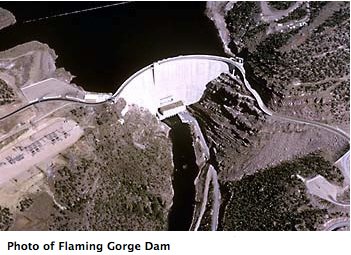
flaminggorgedamusbr.jpg

Here’s the release from Western Resource Advocates (Jason Bane):

Conservation leaders from across the West today encouraged the Colorado Water Conservation Board (CWCB) to suspend examination of the so-called ‘Flaming Gorge Pipeline’ and focus its efforts on water supply and conservation efforts that are both more realistic and cost-effective.

“The Flaming Gorge Pipeline is a bad idea that is never going to make sense for Colorado, and no amount of debate is going to change this very basic fact,” said Bart Miller, Water Program Director at Western Resource Advocates. “There isn’t enough lipstick in the world to make this pig more presentable.”

Today [Thursday, January 12] is the first meeting of ‘The Flaming Gorge Pipeline Task Force,” which was convened by the CWCB to further discuss a proposal to pump water more than five hundred (500) miles from the Green River in Wyoming to the Front Range of Colorado. Western Resource Advocates (WRA) is just one of numerous conservation groups that declined invitations to take part in the ‘task force’ to study a project that CWCB estimates would cost some $9 billion to complete.

“We declined invitations to participate in further discussions about the pipeline project because it distracts from realistic proposals that Colorado can undertake now,” said Miller. “The public doesn’t want the pipeline, elected officials don’t like it, and we can’t afford it. We need to move on to other ideas.”

The pipeline proposal has already encountered widespread opposition. Wyoming Gov. Matt Mead has formally objected to the proposal, as have cities and counties across Colorado and Wyoming (from Rock Springs, Green River and Sweetwater County in Wyoming, to Mesa County and the City of Grand Junction in Colorado). A survey conducted by the sportsmen’s group Trout Unlimited in Fall 2011 showed that nearly 80% of Wyoming residents opposed the pipeline.

“Like most conservation groups, we encourage cooperative decision making for Colorado’s water needs,” said Becky Long of the Colorado Environmental Coalition, which also declined to participate in the ‘task force’. “At the same time, it is incumbent of any responsible organization to recognize when an idea has run its course. Nobody should spend any more time or money beating their heads against this particular wall.”

Many regional conservation groups are already supporting existing proposals for water availability, such as ‘Prairie Waters’ in Aurora; Chatfield Reservoir re-allocation; the WISE water project; and the ‘Super Ditch’ in Southern Colorado. These projects represent just a partial list of water plans that can be pursued now and in the near future – projects that should be prioritized over pipe(line) dreams.

Aaron Million, President of Wyco Power and Water, Inc., is seeking a federal permit from the Federal Energy Regulatory Commission (FERC) to review his proposal for a pipeline project, which has become something of a test case for any similar proposals in the future. More than 5,000 comments from citizens, governments and non-profit organizations were formally submitted to FERC in December 2011; out of more than 5,000 submissions1, only 1 (one) was supportive of the idea.

For More Information on the Flaming Gorge Pipeline, go to:
http://www.westernresourceadvocates.org/water/pipeline/million.php

More Basin Roundtable Project Exploration Committee: Flaming Gorge process coverage here. More Flaming Gorge pipeline coverage here and here.

Basin Roundtable Project Exploration Committee: Flaming Gorge process meeting Thursday in Silverthorne

flaminggorgepipelineearthjustice.jpg

From The Pueblo Chieftain (Chris Woodka):

The task force is scheduled to meet from 10 a.m. to 3 p.m. Thursday at the Silverthorne Town Pavilion to identify interests, existing studies and priorities as it works to complete a report to the state by June. The task force was formed last year at the request of the Arkansas Basin and Metro roundtables to evaluate proposals to build the 500-mile pipeline. First proposed by Fort Collins entrepreneur Aaron Million, the idea is also being studied by the Colorado-Wyoming Coalition…

[John Stulp, Gov. John Hickenlooper’s water policy adviser] explained that the task force will not endorse a Flaming Gorge project, but will identify the issues that are associated with any large-scale diversion from the Colorado River to the Front Range…

“It is important that the idea for the task force came from two roundtables that thought they needed more information,” Stulp said. “While this task force is looking specifically at Flaming Gorge, the information gathered will be applicable to other transfers out of the Colorado River, and will work toward answering the question of how much is left for Colorado to develop.”

Here’s the draft agenda for the meeting. Here’s the December 13 meeting summary.

More Basin Roundtable Project Exploration Committee: Flaming Gorge process coverage here. More Flaming Gorge pipeline coverage here and here.

Fort Collins plans rehab of Michigan Ditch facilities

transmountaindiversionscoloradostateengineer2011

From the City of Fort Collins (Brain Janonis) via the Fort Collins Coloradoan:

During the winter 2011, record snowfall accumulated in the region. While the snowfall created plentiful water supplies for the northern Front Range, the snow’s depth and weight resulted in structural damage to reaches of the 6-mile Michigan Ditch. Two projects were planned on the ditch this summer, but heavy snow accumulation delayed the start of construction. Snow melted slowly this spring and the condition of the pipe was difficult to evaluate until mid-summer.

Once our city staff, engineers and consultants completed their evaluation, crews moved quickly to stabilize the damaged structure before late summer snow began to fall again.

Several phases of repair and stabilization will be required to prevent or minimize future damage and protect the Michigan Ditch. More work will be completed in the next few years, and city water customers will benefit from the use of this asset for decades to come.

More Cache la Poudre River coverage here and here.

Colorado River Basin: What are the reasonable water management options and strategies that will provide water for people, but also maintain a healthy river system?

coloradoriverbasin.jpg

Here’s a guest commentary written by Eric Kuhn, David Modeer and Fred Krupp running in The Denver Post. The trio are issuing a call to arms of sort, asking for input for the Colorado River Basin Study. Here’s an excerpt:

Management of the Colorado River is a complex balancing act between the diverse interests of United States and Mexico, tribes, the seven basin states, individual water users, stakeholders, and communities. The challenges posed by new growth and climate change may dwarf anything we faced in the past. Instead of staring into the abyss, the water users, agencies, and stakeholder groups that make managing the Colorado River responsibly their business are working together, using the best science available to define the problem, and looking for solutions.

We’re calling our inquiry the Colorado River Basin Study, and we want your help. As Colorado River management professionals, we have a lot of knowledge and ideas, but we know that we don’t have them all. We want ideas from the public, from you, but we need your input by February 1. You can submit your suggestions by completing the online form at: http://on.doi.gov/uvhkUi.

The big question we need to answer is: What are the reasonable water management options and strategies that will provide water for people, but also maintain a healthy river system? We don’t believe there’s a single silver bullet that will resolve all of our challenges. We want to continue to explore the benefits and costs of every possibility, from conservation to desalination to importing water from other regions.

The West was built on innovation and hard work, and that spirit is still strong. Our landscapes and communities are unparalleled in their beauty, resilience, and character. The economic well-being of our rural and urban communities in the Colorado River basin is inextricably linked to Colorado River and its environmental health.

That’s why we are asking for the public’s input to help us craft a study showing a path forward that supplies our communities with the water they need to thrive and protects the health of the Colorado River-and the ecosystems and economies it supports.

More Colorado River basin coverage here.

Jim Pokrandt: ‘The River District’s [motion to intervene] also cites the [Flaming Gorge pipeline] as speculative with relatively small demands’

coloradoriverbasinusgs.jpg

From email from the Colorado River District (Jim Pokrandt):

Update: Here’s the release from the Colorado River District website.

The Colorado River District is opposing a proposed Flaming Gorge Reservoir pipeline project through a motion to intervene with a federal regulatory agency that is reviewing the plan to pump water from the Wyoming reservoir to the Front Range of Colorado.

Fort Collins, Colo., businessman Aaron Million is proposing a 560-mile pipeline, the Regional Water Supply Project (RWSP), which would carry up to 250,000 acre feet of water. It is under review by the Federal Energy Regulatory Commission for its power-generating aspects. The River District’s motion to intervene says, “The volume of water at issue would adversely impact existing users of Colorado’s entitlement to the waters of the Colorado River, and could usurp the remainder of the state’s compact allocation.”

Although the water would be taken out of the Colorado River system from the Green River, a tributary with Wyoming headwaters, under the Colorado River Compact of 1922, the amount still counts against Colorado’s limited ability to use the river.

The River District’s motion also cites the RWSP as “speculative” with “relatively small demands – nowhere near the volume claimed by the RWSP. Moreover, none of the projected water users have demonstrated the ability to pay for the enormous cost of the project.” The RWSP also threatens the ability of the Colorado River District, the state of Colorado and other public entities to plan for the development of the state’s remaining entitlement to the Colorado River in a “responsibly conservative matter,” the motion states.

Other objections include:

– The need first for the Colorado Water Conservation Board to complete its Colorado River Water Availability Study;
– The need for the U.S. Bureau of Reclamation to complete is Colorado River Basin Water Supply and Demand Study;
– The need for Colorado’s West Slope to finalize its own consumptive and nonconsumptive studies; and
– The need for there to be interstate and intrastate agreements on how the water would be managed under the Prior Appropriation System.

More coverage from the Associated Press via The Billings Gazette. From the article:

Colorado River District officials are telling regulators the cost for the pipeline, which would stretch more than 500 miles, will be “enormous.” They also say the proposal could cause Colorado to use up its allocation of Colorado River system water under a multistate compact and hurt existing users of that water. Million contends there’s enough water available for his proposal. Federal and state studies on Colorado River water availability aren’t complete yet.

More coverage from Ken Green writing for the Denver Examiner. From the article:

The Center for Biological Diversity said that “online action alerts” issued by it and another environment advocacy group, Earthjustice, prompted the flood of public comments to the Regulatory Commission from members of the public who oppose construction of the 500-mile pipeline they claim would be “disastrous” to the ecosystem of the Green River, including the Colorado pikeminnow, the humpback chub and razorback sucker, as well as damage the communities whose economy is based on the river…

The current proposed project would require Wyco to construct natural-gas fired pumping stations (“at least nine”, said the Center) to pump the water over the Continental Divide. The Center claims that even Wyco officials acknowledge that the energy needed to pump the water over the divide would be greater than the project might create through hydropower

From the Summit County Citizens Voice (Bob Berwyn):

According to the River District’s motion, the project is speculative and, thus far, none of the projected users have shown an ability to pay for the expensive project…

“The volume of water at issue would adversely impact existing users of Colorado’s entitlement to the waters of the Colorado River, and could usurp the remainder of the state’s compact allocation,” the River District wrote in its motion to intervene. Although the water would be taken out of the Colorado River system from the Green River, a tributary with Wyoming headwaters, under the Colorado River Compact of 1922, the amount still counts against Colorado’s limited ability to use the river.

The River District also said the pipeline threatens the ability of the Colorado River District, the state of Colorado and other public entities to plan for the development of the state’s remaining entitlement to the Colorado River in a “responsibly conservative matter.”

More Flaming Gorge pipeline coverage here and here.

Taylor McKinnon: ‘Burning fossil fuels to pump river water across 500 miles to feed urban sprawl is a ludicrous idea — and that’s what the public told the Federal Energy Regulatory Commission this week’

flaminggorgedamusbr.jpg

Here’s a release from the Center for Biological Diversity (Taylor McKinnon/McCrystie Adams):

More than 5,000 public comments were sent to the Federal Energy Regulatory Commission this week opposing the proposed Flaming Gorge Pipeline, which would pump more than 250,000 acre-feet of water annually over 500 miles from Flaming Gorge Reservoir to Colorado’s Front Range. The project would suck massive amounts of water out of the Green and Colorado rivers in Utah, unleashing disastrous impacts on those river ecosystems, four species of endangered fish — the Colorado pikeminnow, humpback chub, razorback sucker and bonytail chub — and human communities dependent on those rivers. The commission is currently evaluating whether to grant a preliminary permit for the project.

“Burning fossil fuels to pump river water across 500 miles to feed urban sprawl is a ludicrous idea — and that’s what the public told the Federal Energy Regulatory Commission this week,” said Taylor McKinnon of the Center for Biological Diversity. “It’s hard to imagine a worse proposal for the already over-allocated Colorado River system that’s beset by a warming climate, declining flows and disappearing native fish populations.”

This week’s public comments come on the heels of formal intervention in the commission’s process filed last week by the Colorado River Protection Coalition — a coalition of 10 conservation groups, including the Center. The coalition asserts that the Flaming Gorge Pipeline is unlikely to be permitted because it would likely violate the Endangered Species Act and adversely affect four national wildlife refuges; part of the project would be located in a U.S. Forest Service roadless area. The coalition also argued that the permit should be denied because the applicant, Wyco, failed to meet several requirements during a previous attempt at permitting a nearly identical project with the U.S. Army Corps of Engineers.

The new batch of comments this week came from online action alerts created by the Center for Biological Diversity and Earthjustice.

“The opposition to this project is amazing,” said McCrystie Adams of Earthjustice. “The pipeline would devastate the Green River and severely harm the Colorado River downstream — the public is strongly speaking out against this pipeline scheme.”

Wyco previously sought a permit for the pipeline from the U.S. Army Corps of Engineers. In July 2011 the Corps terminated its review of the project because Wyco missed multiple deadlines and did not provide information requested by the Corps. A few months later, Wyco redesigned the project to include some incidental hydropower components and requested review through the Federal Energy Regulatory Commission. Despite the modifications, the project remains an energy hog — at least nine air-polluting, natural gas-fired pumping stations would be required to pump the water uphill across Wyoming and over the Continental Divide. Wyco’s president has acknowledged that pumping the water uphill would use more energy than the project would create through hydropower.

Since its inception, the Flaming Gorge Pipeline has met with opposition in Colorado, Wyoming and Utah. The water would go to the Front Range of Colorado, which is projected to double in population in the next 50 years. Colorado is already a parched state with severely depleted rivers, while the majority of the water in Colorado’s cities is used to keep lawns green for three months in the hot, dry summer across sprawling suburban landscapes.

The coalition’s intervention comments can be downloaded here.

More coverage from Kathy Gilbert writing for the Green River Start. From the article:

The coalition contends that the project cost could reach as much as $9 billion and that Million has failed to demonstrate a need for the water with customers committed to paying for it if it could be delivered.

They also say preventing that much water from flowing into the Green River would hurt wetlands, birds, fish and the recreation economies of surrounding communities.

The coalition believes the pipeline is extremely unlikely to be permitted because it would likely violate the Endangered Species Act, would adversely affect four national wildlife refuges and part of the project would be located in a U.S. Forest Service roadless area…

“The water in the Green River is essential for the operation of many of Sweetwater County’s major industries including four trona mines and the Jim Bridger Power Plant,” the county’s letter states. The power plant relies on a constant stream of water piped from the Green River for use in its four cooling towers.

The county asserts that the Regional Watershed Supply Project and the effects it would have on the water supply in the Green River, would “dramatically impact Sweetwater County’s industrial base.”

The county also states 38,769 or the county’s 43,806 population rely on the river to provide potable water and fire suppression supplies.

Finally, the county suggests its tourism industry would be impacted because the Flaming Gorge Reservoir is the basis of a multi-million dollar tourism industry…

In the Wyoming Game and Fish Department’s filing, they’re intervening with the purpose of ensuring its interests, including the protection of all Wyoming wildlife, is considered during the FERC process.

More Flaming Gorge pipeline coverage here and here.

Deadline for Comments on Flaming Gorge Pipeline Closes with One Positive Note out of More Than 5,000 Objections

greenutriverbasin.jpg

Here’s the release from Western Resource Advocates (Jason Bane):

If official public support for the ‘Flaming Gorge Pipeline’ (FGP) is any indication of its future potential, the project to pump water from Wyoming to Colorado won’t become a reality any time soon. Public comments and objections regarding the FGP were due to the Federal Energy Regulatory Commission (FERC) by Monday, Dec. 19, and out of more than 5,000 submissions, only 1 (one) was supportive of the idea.

“The question here is obvious: If virtually nobody took the time to argue here that the pipeline is a good idea, why is any federal agency even considering a permit for this proposal?” said Western Resource Advocates Water Attorney Robert Harris. “Finding a supporter in the FERC filings is about as difficult as getting a perfect score on your SATs.”

Aaron Million, President of Wyco Power and Water, Inc., is seeking a federal permit from FERC to review his FGP proposal to pump water more than five hundred (500) miles from the Green River in Wyoming to the Front Range of Colorado. More than 5,000 comments from citizens, governments and non-profit organizations were formally submitted to FERC by Dec. 19, and only 1 comment – from a private citizen in Casper, WY – was supportive of the proposal. That comment represents roughly the same odds (.0002%) as an American high school student getting a perfect score on the SAT test.

Western Resource Advocates (WRA) submitted formal objections last week along with the Colorado Environmental Coalition and the National Parks Conservation Association. Wyoming Gov. Matt Mead formally objected to the proposal, saying: “This project would cut a vast swath across southern Wyoming, with the potential for huge impacts in many significant sectors of our economy and aspects of critical resources to Wyoming and Colorado.”

Additional objections included those from:

– City of Rock Springs, WY
– City of Green River, WY
– Sweetwater County, WY
– Wyoming Game and Fish Department
– Upper Yampa Water Conservancy District, CO
– City of Colorado Springs, CO
– City of Ft. Collins, CO
– Daggett County, UT
– Utah Rivers Council
– Colorado River District
– Colorado River Outfitters Association

Public comments and ‘Motions to Intervene’ can be found at: http://elibrary.ferc.gov (docket # P-14263).

BACKGROUND INFORMATION
On September 1, 2011, Mr. Aaron Million of Wyco Power and Water, Inc. applied to FERC for a permit application for the Regional Watershed Supply Project proposal (generally referred to as the Flaming Gorge Pipeline, or FGP). Two months earlier, the U.S. Army Corps of Engineers terminated its review of the project, citing Million’s failure to meet required deadlines to provide information. Wyco applied to FERC under the premise of reclassifying the FGP as a hydropower project, but because it is primarily a water-delivery system, FERC only has limited jurisdiction and cannot approve the entire project.

The FERC deadline for public comments and ‘Motions to Intervene’ is December 19, 2011. If FERC eventually decides to consider permitting for the FGP, it would begin a 3-year study period of the project. Before the FGP could begin to be constructed, Wyco would almost certainly need a permit from multiple additional federal agencies, such as the Forest Service and the Bureau of Land Management. At some point, Wyco would also likely need to resubmit an application to the U.S. Army Corps of Engineers.

For More Information on the Flaming Gorge Pipeline, go to:
http://www.westernresourceadvocates.org/water/pipeline/million.php

To access FERC Submissions/Filings directly, go to:
http://elibrary.ferc.gov/idmws/file_list.asp?accession_num=20111013-5035

A footnote from the release reads: “The Center for Biological Diversity submitted 3,388 individual public comments, and Earthjustice submitted 1,706 public comments”

More Flaming Gorge pipeline coverage here and here.

Flaming Gorge pipeline: Mesa County Commissioners vote to oppose the project, Wyoming Game and Fish files motion to intervene with FERC

flaminggorgepipelineearthjustice.jpg

From the Associated Press via The Columbus Republic:

Mesa County commissioners in Colorado have joined those opposing a proposal to build a pipeline to carry water from the Flaming Gorge Reservoir in Wyoming to Colorado…

Mesa County commissioners voted 2-0 Monday, with a third commissioner out sick, to oppose the idea. The Daily Sentinel reports commissioners said the idea is ill-conceived, expensive, and could cause Colorado to use more water than it has been allocated under a multistate compact divvying up water in the Colorado River system.

Meanwhile, here’s a release Wyoming Governor Matt Mead outlining his opposition to the pipeline. Thanks to Sagebrush Sam’s (@SagebrushSam) Twitter feed for the link:

Governor Matt Mead sent a letter to the Federal Energy Regulatory Commission (FERC) today. That letter expresses the Governor’s deep concern about the proposed water pipeline from the Green River in Wyoming to Colorado’s Front Range. Governor Mead’s comments are meant to protect Wyoming’s economy and resources and show the project is not feasible.

“This project would cut a vast swath across southern Wyoming, with the potential for huge impacts in many significant sectors of our economy and aspects of critical resources to Wyoming and Colorado,” Governor Mead wrote. He added, “The proponent has stated this project will cost $3 billion to construct but little is known about the future cost to consumers or others from such a massive project.”

FERC is considering a preliminary permit for this project, which is now billed as a hydroelectric endeavor. It had been before the U.S. Army Corps of Engineers until the Corps withdrew the application earlier this year. The project applicant then took it to FERC. Governor Mead expressed concern that FERC is not the correct entity to review this proposal, “The proponent has, by all appearances, shifted federal permitting venues to short-circuit the regulatory process and/or sidestep fundamental issues. I do not believe FERC should be the lead or initial permitting agency for this project.”

In terms of Wyoming’s water rights, Governor Mead wrote that the Upper Colorado River Basin Compact must be given full consideration because no project can disrupt Wyoming’s potential to develop its remaining appropriation under that Compact. While most of the water for this project would supposedly come from whatever Colorado’s unused portion of the compact is Governor Mead noted, “The applicant is proposing use of 25,000 acre feet of water per year from Wyoming’s undeveloped allocation under the Compact, and Wyoming has not agreed to this allocation.”

Governor Mead also raised concerns about the impact on recreation opportunities in the Flaming Gorge and the Green River as well as impacts on endangered species recovery programs in the Green and Colorado Rivers.

Wyoming Game and Fish Department has also filed a notice of intervention with FERC.

More coverage from Jake Nichols writing for the JH Weekly. From the article:

“Although in its proposal a hydroelectricity angle has been attempted, it is important to note that hydroelectric production is a minor purpose of the project,” Mead wrote. “The project first, foremost and always is a water supply project.”

Wyoming Game and Fish Department, along with a host of environmental groups including the Sierra Club, Earthjustice and Utah Rivers Council have joined Mead in urging that FERC deny Million’s application.

More coverage from Bobby Magill writing for the Fort Collins Coloradoan. From the article:

[John] Stokes, director of the Fort Collins Department of Natural Resources, said entrepreneur Aaron Million’s Regional Watershed Supply Project, also known as the Flaming Gorge Pipeline, would be “highly detrimental” to the 22,000-acre Soapstone Prairie and nearby 26,500-acre Meadow Spring Ranch. Both are located near the Wyoming border.

Million, however, believes his own proposal showing the pipeline threading through those lands is a mistake which will be corrected.

In a letter to the Federal Energy Regulatory Commission, or FERC, which is permitting the pipeline, Stokes wrote last week that Million’s company, Wyco Power and Water, plans to construct the pipeline, hydroelectric power facilities and major electric transmission lines across Soapstone Prairie and Meadow Spring Ranch…

…FERC received about 200 comments or motions to intervene in the pipeline permitting process.

Of those, few supported the project, and the most vehement objections came from cities along the pipeline corridor, environmentalists and federal and local government agencies warning that the pipeline would have a tremendous impact on the Colorado and Green rivers, endangered species, national forests and natural areas such as Soapstone Prairie.

“The magnitude of disturbance from installing an underground pipeline and transmission lines across several miles of SPNA and MSR would be great, both in the short term and longer term,” Stokes said…

On Monday, Million said the map in the proposal submitted to FERC showing the pipeline routed through Soapstone Prairie and Meadow Springs Ranch was an error. “That’s an artifact of GIS,” he said. “We have no intention of going through the natural area. John (Stokes) asked it to be moved, and I said I would.”[…]

Robert Stewart, an environmental officer for the U.S. Department of Interior, urged officials to determine if climate change will reduce the water flow in the Green River before the pipeline is built. He added that water diversions out of the Colorado River Basin, of which the Green River is a part, have altered the flow downstream, and water diversions for the Flaming Gorge Pipeline could further harm four endangered fish species in the Colorado River…

In his letter of opposition, Green River, Wyo., Mayor Hank Castillon joined a chorus of Wyoming counties and towns objecting to the project, because, he said, “the Regional Watershed Supply Project will profoundly and negatively affect every citizen and business in this community.”

Other major organizations objecting to the pipeline include the Glenwood Springs-based Colorado River Water Conservation District, the Upper Yampa Water Conservancy District of Steamboat Springs, the Colorado River Outfitters Association, the Wyoming-based Coalition of Local Governments, several counties in Utah and Wyoming and a host of environmental groups, including Trout Unlimited, Save the Poudre, the Sierra Club and others.

More Flaming Gorge pipeline coverage here and here.

Wyco Water and Power’s proposal to supply water for hydraulic fracturing is an insult to injury proposal for conservationists

flaminggorgepipelineearthjustice.jpg

Aaron Million has a history of trying to be all things to all people. At various times he’s said the Flaming Gorge pipeline will save agriculture in northeast Colorado, be environmentally friendly by using existing utility corridors, use natural gas for pumping instead of coal-generated power, etc. Last week he suggested that the project could supply the needed water for hydraulic fracturing. At least the oil companies could afford to pay the water haulers just about any price that he needs to charge to make a profit on his speculative venture. However, water providers in Weld County might object. The City of Greeley will sell about $1.4 million worth of water to oil companies this year, helping to keep rates down, according to their water manager, Jon Monson.

Last week ten conservation organizations filed the paperwork to intervene in the permit process now that the project has morphed into a hydroelectric generation project. Here’s a report from Deb Courson Smith writing for the Public News Service – Wyoming. From the article:

Duane Short, wild species program director with the Biodiversity Conservation Alliance, Laramie, is a spokesman for the coalition that has filed to intervene. “Probably the most local concern is the impact that this pipeline, which would consume some 81-billion gallons of water a year, would have on the Green River area water-sport and recreation industries.”

The list of objections is long, Short says. It includes violations of the Endangered Species Act, landscape destruction to build the pipeline, and downstream effects of removing so much water from the Green River, which connects to the Colorado River in Utah.

The company proposing the pipeline, Wyco Power and Water Inc., has touted its job-creation benefits and the fact that it includes hydropower construction plans. Short claims the hydropower was only added so FERC would look at the permit. He says the project will use much more power than it generates, because the water has to be pumped uphill across Wyoming and over the Continental Divide. The developer also recently announced that some of the water would be used for hydraulic fracturing (fracking). “With that type of history, and with all these other concerns that have been expressed in Wyoming, Colorado and even in Utah, to make this water available for fracking is sort of an ‘insult to injury’ type of proposal.”

More Flaming Gorge pipeline coverage here and here.

McCrystie Adams, ‘The Flaming Gorge Pipeline would be one of the biggest, most environmentally damaging water projects in the history of the western United States’

greenutriverbasin.jpg

As the Federal Energy Regulatory Commission’s Monday deadline for comments on the proposed project approaches conservationists have galvanized their opposition to Aaron Million and Wyco Power and Water and the 500 mile pipeline. Western Resource Advocates, on Thursday, labeled it a boondoggle. Here’s a report from Chris Woodka writing for The Pueblo Chieftain. From the article:

The Colorado River Protection Coalition, representing 10 environmental groups, also filed to intervene in the case.

“The Flaming Gorge Pipeline would be one of the biggest, most environmentally damaging water projects in the history of the western United States,” said McCrystie Adams of Earthjustice, the coalition’s lead attorney. “The pipeline would devastate the Green River, one of the West’s last great rivers and a sanctuary for native fish and wildlife, and severely harm the Colorado River downstream.”

Communities Protecting the Green River, which includes the cities of Green River and Rock Springs, Wyo. and Sweetwater County, Wyo., filed in opposition to the project earlier this week…

Million has said the pipeline is cost-competitive with other plans to import water and environmentally friendly because it would prevent worse impacts from occurring within Colorado.
The project also has attracted interest from Colorado and Wyoming municipalities, which have launched their own study of the project’s viability. They are awaiting revised water availability studies by the Bureau of Reclamation.

The Interbasin Compact Committee, formed by the Colorado Legislature in 2005 to sort out state water issues, at the request of member roundtables, has formed a task force to identify impacts of Flaming Gorge. The task force is being funded by the Colorado Water Conservation Board, over the objections of the environmental groups, as a model to develop a way to talk about statewide water projects.

Here’s the release from Earthjustice (McCrystie Adams/Gary Wockner/Steve Jones/Taylor McKinnon):

Today a coalition of 10 conservation groups from Colorado, Utah, Wyoming, and Arizona—the Colorado River Protection Coalition—moved to intervene in the Federal Energy Regulatory Commission (FERC) review of the Regional Watershed Supply Project, more commonly known as the Flaming Gorge Pipeline. FERC is currently evaluating a preliminary permit application for the Flaming Gorge Pipeline from Wyco Power and Water Inc. FERC allows members of the public with a stake in projects to intervene in preliminary permit proceedings, and the Colorado River Protection Coalition, represented by Earthjustice, has called upon FERC to deny the permit on numerous grounds.

“The Flaming Gorge Pipeline would be one of the biggest, most environmentally damaging water projects in the history of the western United States,” said McCrystie Adams of Earthjustice, the Coalition’s lead attorney. “The Pipeline would devastate the Green River, one of the West’s last great rivers and a sanctuary for native fish and wildlife, and severely harm the Colorado River downstream.”

In its intervention comments, the Colorado River Protection Coalition asserted that the Flaming Gorge Pipeline is extremely unlikely to be permitted because it would likely violate the Endangered Species Act, would adversely affect four national wildlife refuges, and part of the project would be located in a U.S. Forest Service roadless area. The Coalition also argued that the permit should be denied because the applicant failed to meet various requirements during a previous attempt at permitting a nearly identical project with the U.S. Army Corps of Engineers. Further, the Coalition asserted that the Pipeline is an extremely environmentally damaging water supply project that would irrevocably harm the Green and Colorado Rivers, not a “hydropower project,” and thus FERC is not the appropriate agency to lead federal review of the proposal.

“The Flaming Gorge Pipeline would severely harm the Wyoming landscape it crosses,” said Steve Jones of the Wyoming Outdoor Council. “Our state’s heritage, wildlife, and economy are dependent on protecting roadless and wilderness areas.”

“Four endangered fish—the Colorado pikeminnow, humpback chub, razorback sucker, and bonytail chub—are dependent on the water this pipeline proposes to drain out of the Green and Colorado Rivers,” said Taylor McKinnon of the Center for Biological Diversity in Flagstaff, Arizona. “The pipeline would spell disaster for those fish and the river ecosystems we and they depend on. It’s a foolish proposal in the face of global warming and projected declines in river flows.”

“The Green River flows through Utah’s largest roadless area, provides 40 percent of the water entering the Colorado River at Lake Powell each year, and supports a world-famous trout fishery averaging 6,000–8,000 fish per mile” said Zach Frankel, executive director of the Utah Rivers Council. “This catastrophic proposal would not only mar these treasures, it would forever alter life in Utah.”

The applicant previously sought a permit for the Pipeline from a different federal agency, the U.S. Army Corps of Engineers (Corps). In July of 2011, the Corps terminated its review of the project because the applicant missed multiple deadlines and did not provide information requested by the Corps. A few months later, the applicant redesigned the project to include some incidental hydropower components and requested review through FERC. Despite the modifications, the project remains a huge energy hog—at least nine air-polluting natural gas-fired pumping stations would be required to pump the water uphill across Wyoming and over the Continental Divide. Wyco’s president has acknowledged that pumping the water uphill would use more energy than the project would create through hydropower.

“We know this project would burn more energy than it produces,” said John Spahr of the Sierra Club. “Claiming it is a hydropower project is nothing more than a thinly veiled attempt to make an end-run around federal law.”

Since its inception, the extremely controversial Flaming Gorge Pipeline has met with great opposition in Colorado, Wyoming, and Utah. The water would go to the Front Range of Colorado which is projected to double in population in the next 50 years. Colorado is already a parched state with severely depleted rivers while the majority of the water in Colorado’s cities is used to keep lawns green for three months in the hot, dry summer across sprawling suburban landscapes.

Duane Short of Biodiversity Conservation Alliance noted, “The Coalition believes that Colorado and other western citizens are beginning to realize that unbridled consumption of water from our rivers and aquifers will leave our precious water resources depleted leading to even more severe water shortages for our children and grandchildren. We hope the public will work with us to prevent this shortsighted and irresponsible water grab.”

“The Flaming Gorge Pipeline would be a flaming disaster for Colorado,” said Gary Wockner of Save the Poudre: Poudre Waterkeeper. “The Pipeline would be a devastating step backwards for water supply policy and river protection in Colorado and the Southwest U.S.—our coalition will work as long and hard as it takes to stop this project.”

This Coalition’s intervention is one of several being filed by public interest groups and local communities. Over a hundred public comments urging FERC to deny the preliminary permit have already been filed before the deadline on Dec. 19th. Comments are posted on FERC’s website. (Search for Docket Number: P-14263.)

View a map of the pipeline’s proposed 550 mile route across Wyoming and down through Colorado.

Read the motion to intervene.

Meanwhile, Governor Matt Mead of Wyoming has submitted his comments on the pipeline. Here’s a report from Ben Neary writing for Associated Press via The Columbus Republic. From the article:

“This project would cut a vast swath across southern Wyoming, with the potential for huge impacts in many significant sectors of our economy and aspects of critical resources to Wyoming and Colorado,” Mead wrote…

“Although in its proposal a hydroelectricity angle has been attempted, it is important to note that hydroelectric production is a minor purpose of the project,” Mead wrote. “The project first, foremost and always is a water supply project.” Mead stated that it appears Million shifted federal agencies “to short-circuit the regulatory process and/or sidestep fundamental issues.”[…]

Mead stated that Million has not shown how much water Colorado is still entitled to under the Colorado River Compact. The U.S. Bureau of Reclamation, which operates Flaming Gorge Reservoir, is working on a study of how much water, if any, it believes could be available for withdrawal there…

Mead wrote that Wyoming has been involved in efforts to recover endangered fish species on the Upper Colorado River for decades. He said the agency’s review must consider the likely effect on the fish both of the pipeline project as well as Wyoming’s possible future use of its share of water from the Green River. The Wyoming Game and Fish Department filed a separate request with FERC to intervene in the permit application to track the issue…

[Aaron Million] said he agrees federal regulators need to consider water supply issues as well as his project’s likely effect on wildlife and recreation.

More coverage from Amy Joi O’Donoghue writing for the Deseret News. From the article:

Since its inception, the controversial Flaming Gorge Pipeline has met with opposition in Colorado, Wyoming, and Utah. The water would go to the Front Range of Colorado which is projected to double in population in the next 50 years. Although the project would be privately financed, critics say the end water would be so publicly expensive it wouldn’t be viable. It also smacks at tapping water that river watchers say is already over allocated.

Million has said that the water his project proposes to take from the Green River in Wyoming is sustainable, according to a review of water resources by federal water managers with oversight of Flaming Gorge.

According to a Tweet from Jennifer Petersen (@BCAWY): “Last night [December 14], Laramie Council voted unanimously to oppose the Million pipeline & send in a letter intervening in the FERC permitting process.”

More Flaming Gorge pipeline coverage here and here.

Opposition to Wyco Water and Power’s Flaming Gorge Pipeline straddles the Colorado-Wyoming-Utah borders and includes the National Park Service

flaminggorgepipelinemillion.jpg

First up is a release from Western Resource Advocates calling the project a boondoggle:

Western Resource Advocates (WRA) announced that it is filing formal objections today with the Federal Energy Regulatory Commission (FERC) regarding the proposed ‘Flaming Gorge Pipeline.’ The objections are being filed by WRA along with the Colorado Environmental Coalition and the National Parks Conservation Association.

“The Flaming Gorge Pipeline has more unanswered questions than a Presidential debate,” said WRA Water Attorney Robert Harris. “The bottom line is that there is no good reason for FERC to contemplate the proposal. The pipeline idea is getting messier by the day, and it’s not going to get cheaper or more realistic in the future.”

Aaron Million, President of Wyco Power and Water, Inc., is seeking a federal permit from FERC to review his ‘Flaming Gorge Pipeline’ (FGP) proposal to pump water more than five hundred (500) miles from the Green River in Wyoming to the Front Range of Colorado.

The objections to a potential FERC permit as filed by WRA focus on four points:

1. Ridiculously Expensive: The Colorado Water Conservation Board estimates that the project would cost $9 billion, which would easily qualify the FGP as the most expensive water project in Colorado history. The 2011 General Fund for the entire state of Colorado is about $7.4 billion.

2. Unnecessary and Illegal Water Hoarding: There is simply no need for the FGP. If it proceeded, the project would be open to charges of water hoarding [ed. speculation], which is against state law.

3. Against the Public Interest: There is no scenario in which the FGP could be completed in an
environmentally-safe manner, and there is widespread opposition to the proposal in both Wyoming
and Colorado. Wyoming Gov. Matt Mead, among others, has publicly condemned the project.

4. Wyco and Million are Unsuitable Applicants: Mr. Million and Wyco Power and Water have a history of missing deadlines and failing to provide complete information; in July 2011, the U.S. Army Corps of Engineers terminated Million’s application for these reasons.

“The real shame of this entire process is that it is a distraction from discussions of much more reasonable and cost-effective water supply projects that Wyoming and Colorado can implement already,” said Stacy Tellinghuisen, Energy & Water Policy Analyst at WRA. “If Wyco or any other company wants to go off chasing unicorns, they should do it on their own time and their own dime.”

Becky Long, organizer for the Colorado Environmental Coalition, said: “Citizens across Colorado and Wyoming think this project is a bad idea. Multiple cities and counties in both states have publicly condemned the plan, and a recent survey by the sportsmen’s group Trout Unlimited showed that almost 80% of Wyoming residents opposed the proposal.”

The complete filing from WRA will be available this afternoon on the FERC website and at www.WesternResources.org.

BACKGROUND INFORMATION
On September 1, 2011, Mr. Aaron Million of Wyco Power and Water, Inc. applied to FERC for a permit application for the Regional Watershed Supply Project proposal (generally referred to as the Flaming Gorge Pipeline, or FGP). Two months earlier, the U.S. Army Corps of Engineers terminated its review of the project, citing Million’s failure to meet required deadlines to provide information. Wyco applied to FERC under the premise of reclassifying the FGP as a hydropower project, but because it is primarily a water-delivery system, FERC only has limited jurisdiction and cannot approve the entire project.

The FERC deadline for public comments and ‘Motions to Intervene’ is December 19, 2011. If FERC eventually decides to consider permitting for the FGP, it would begin a 3-year study period of the project. Before the FGP could begin to be constructed, Wyco would almost certainly need a permit from multiple additional federal agencies, such as the Forest Service and the Bureau of Land Management. At some point, Wyco would also likely need to resubmit an application to the U.S. Army Corps of Engineers.

For More Information on the Flaming Gorge Pipeline, go to:
http://www.westernresourceadvocates.org/water/pipeline/million.php

To access FERC Submissions/Filings directly, go to:
http://elibrary.ferc.gov/idmws/file_list.asp?accession_num=20111013-5035

More coverage from Bruce Finley writing for The Denver Post. From the article:

Federal authorities deciding whether to grant a preliminary permit for the project proposed by Fort Collins entrepreneur Aaron Million have received more than 170 mostly negative comments on the proposal.

But Million said he’s undaunted. He said he’s talking with energy-industry representatives about using the water for oil and gas production. The pipeline to move up to 200,000 acre-feet of water a year could sustain water-intensive hydraulic-fracturing operations in Wyoming and Colorado, Million said. “We’ve heard rough figures of 15,000 to 20,000 acre-feet annually for fracking needs,” Million said. “If this new water supply helps with the fracking issues, then, without question, we would consider delivering water for the industry.”[…]

“A preliminary permit does not authorize construction or operation of a project,” federal regulatory commission spokeswoman Celeste Miller said. “All it does is give you priority over a site for three years to study feasibility.”[…]

The Colorado Environmental Coalition, National Parks Conservation Association and Western Resource Advocates on Thursday were filing formal objections to the project. Another coalition of 11 environmental groups, including Sierra Club, Wyoming Outdoor Council and Save the Poudre, also objected…

“If (the Federal Energy Regulatory Commission) takes on this application, they will be using taxpayer dollars and resources to look into the project,” [Stacy Tellinghuisen, an energy and water policy analyst for Western Resource Advocates] said. “This is a totally unrealistic project.”

Writer Bobby Magill posted a link to the City of Fort Collins letter to FERC on his website. Also, according the Magill’s Twitter feed (@bobbymagill), “DOI Comments on #FlamingGorgePipeline: NPS worries lower flows in Green River could hurt Dinosaur National Monument”

More coverage from Brandon Loomis writing for The Salt Lake Tribune. Here’s an excerpt:

A coalition of 10 conservation groups is seeking to intervene in a federal permitting process for a proposed pipeline that would take water from the Green River to Colorado’s Front Range…

Groups, including the Utah Rivers Council and the Wyoming Outdoor Council, formed the Colorado River Protection Coalition to advocate against the project, which they argue would imperil endangered fish and water rights in Utah. “This catastrophic proposal would not only mar these treasures, it would forever alter life in Utah,” said Zach Frankel, executive director of the Utah Rivers Council.

More Flaming Gorge pipeline coverage here and here.

‘Communities Protecting the Green River’ file objections to Wyco Water and Power’s proposed Flaming Gorge pipeline

greenutriverbasin.jpg

From the Fort Collins Coloradoan (Bobby Magill):

Rock Springs, Wyo.-based Communities Protecting the Green River was the first to lodge objections to Fort Collins entrepreneur Aaron Million’s Regional Watershed Supply Project.

The group includes the cities of Green River and Rock Springs, Wyo. and Sweetwater County, Wyo.

“In reality, it is an investment scheme masquerading as a water supply project, which is masquerading as a pump-back hydropower project,” Don Hartley, the group’s vice-chairman, wrote in a letter to the Federal Energy Regulatory Commission on Dec. 9…

“This project is portrayed as a hydropower project, but pumping water over the Continental Divide will require more energy than can be generated from the fall of the water on the east side (of the divide),” Hartley wrote.

He added that consideration of such a massive water pipeline is premature because a federal study of the amount of water available to be consumed by growing communities in the Green River-Colorado River watershed is ongoing.

More coverage from the Associated Press via the Billings Gazette. Here’s an excerpt:

Many in western Wyoming say they’re concerned the project would draw down Flaming Gorge Reservoir. The city of Green River has joined the city of Rock Springs and Sweetwater County to fight Million’s proposal.

Green River Mayor Hank Castillon said Monday that residents are unified in opposition to the project. “They just don’t want to see Wyoming water going to Colorado,” Castillon said. “The main issues are recreational, and they feel that it’s going to affect their lifestyle as far as sporting events and water because we have the Flaming Gorge here also the fishing up and down the Green River, fish habitat.”[…]

Million filed an application with the Federal Energy Regulatory Commission this summer spelling out plans to construct a system of turbines and reservoirs along the pipeline to generate electricity. While he has said the project wouldn’t generate more electricity than pumping the water would consume, he said generation would help cover its pumping costs. He wants to construct a reservoir on the slopes of Sheep Mountain, west of Laramie, and generate electricity by pumping water into the reservoir and having it flow through turbines on its way downstream to another lake nearby, Lake Hattie…

Steve Jones, watershed protection program attorney with the Wyoming Outdoor Council in Lander, said his group is concerned with the prospect of such large-scale pumping out of the Green River. “It’s obvious to me that some years, there is not going to be any water available, and other years there might,” Jones said. “But to me, the idea that, that reservoir could supply that year in and year out, is just wrong, according to the statistics that I’ve looked at.”[…]

Duane Short, wild species program director with the Biodiversity Conservation Alliance in Laramie, said federal roadless policies would prohibit construction on Sheep Mountain…

Wyoming Gov. Matt Mead has expressed opposition to Million’s project. His office said this week that the state plans to file comments with FERC.

More Flaming Gorge pipeline coverage here and here.

Green River: The Sweetwater County Board of Commissioners unanimously adopt a resolution opposing the Flaming Gorge pipeline proposed by Wyco Power and Water

flaminggorgepipelinemillion.jpg

From the Green River Star (David Martin):

Wyco Power and Water Inc. filed a application for preliminary permit to the Federal Energy Regulatory Commission, and FERC is seeking public comment about the proposal. The proposal would include hydroelectric power generating developments north of Green River, however it would also pump approximately 250,000 acre feet of water per year from the Green River basin, through eastern Wyoming and into Colorado’s Front Range.

According to the document, an imbalance greater than 3.5 million acre feet of water could exist over the next 50 years due to potential changes in climate. The commission argues that if such imbalances are possible, the water demands of local and regional entities should be placed above transbasin needs.

The commissioners also said the population of the Colorado River basin is rapidly growing, creating an increasing demand for water. However because of the population increases, they claim water needs for the Colorado Basin are not fully understood and allowing the project to move forward could compromise the potential for growth through the basin.

The commission’s resolution claims the water added to the Colorado River Basin could impact programs aimed to mitigate endangered species by altering the temperature and water quality of the river.

Finally, the resolution claims a proposed pump reservoir on White Mountain could compromise at least four high-pressure gas lines, fiber optics cables and the water line to the Jim Bridger Power Plant.

More Flaming Gorge pipeline coverage here and here.

The strategy of switching federal agencies for the permitting of the Flaming Gorge pipeline project may not lead to a faster approval

flaminggorgepipelinemillion.jpg

From WyoFile (Allen Best):

“(Million) has been suggesting that he could get this project done in a significantly shorter amount of time (through FERC). My [Matt Rice, director of Colorado conservation for American Rivers] first reaction is this: He’s totally forgetting about the federal hydropower licensing requirements under the Federal Power Act. The process can be incredibly complex, especially for a project of this size, geographic scope and complexity.”

Based on his experience working on hydropower projects seeking permits in South Carolina and Alabama, Rice expects a process that lasts at least a decade. “I wouldn’t be surprised if this project took at least 10 years…and more like 12 to 15 years,” he says. “Augusta, Ga., just got a license for a small project, and that process took more than 30 years.”

And before a permit is awarded by FERC, it must also get review under the applicable environmental laws – possibly including the Clean Water Act, which is what had triggered the original review by the Army Corps.

Million needed a section 404 dredge-and-fill permit under the provisions of that law because of proposed use of fill at Flaming Gorge Reservoir for his proposed take-out structure and possibly at other wetlands locations along the pipeline route.

A spokeswoman for the Army Corps describes a process that was delayed because of Million’s foot-dragging. “It had to do with the many delays and the applicant continuing to ask for more extensions and more time,” says regulatory specialist Rena Brand. “Toward the end of July, his group explained that they were thinking about moving to energy production.” And that, she said, meant a new purpose and need.

More Flaming Gorge pipeline coverage here and here.
There are differing opinions to be found in eastern and western Wyoming counties with respect to the Flaming Gorge Pipeline

flaminggorgepipelinemillion.jpg

From WyoFile (Allen Best):

Yet the idea of a pipeline has a certain allure in Torrington, Cheyenne, and in Laramie County, each of which has chipped in $25,000 as members of the Colorado/Wyoming Coalition, a rival to Million’s plan.

“If someone is going to provide water through a pipeline near our water system, we are going to be interested,” says Tim Wilson, director of the Cheyenne Board of Public Utilities.

The Cheyenne urban area, with 70,000 people, has sufficient water to meet growth during the next 15 to 25 years, Wilson says. Most of the city’s water comes from snowmelt in streams west of the city, including some water from the Colorado River headwaters near the Colorado-Wyoming border, with water brought through a tunnel and then an exchange of rights.

Cheyenne’s Wilson says many unanswered questions remain about a possible new supply piped in from Flaming Gorge, including the costs and the water rights.

Laramie County has a similar position. “If, in fact, there is additional (Colorado River) Compact water, and it can be brought into Laramie County, we want to tap into that,” says Gary Kranse, planning director. Almost exclusively dependent on groundwater, the county wants more diversity of supplies as population growth continues.

Torrington, population 6,000, is also at the prospective pipeline table. City engineer Bob Juve says conservation and efficiency measures have dampened demand in Torrington 30 percent, with more savings possible. But with the city growing 1 percent annually, those savings will have been exhausted in a few decades. And the North Platte River, which flows through the town, is already spoken for. Nebraska and Wyoming in 2001 signed a legal settlement that reaffirmed the longstanding arrangement that majority of the water in the river goes to Nebraska. A current expansion of the Pathfinder reservoir west of Casper, however, will allow some future new water supplies from the river for Wyoming communities along the Platte, along with some water to sustain whooping cranes, least terns and other endangered species downstream in Nebraska.

Supporting a Flaming Gorge pipeline has not, Juve acknowledges, made him popular in Southwestern Wyoming. He’s OK with that. “I don’t mind fighting with anybody, but I first want to know what we’re fighting about,” he says. “We are not trying to be adversarial with people in Sweetwater County. Obviously, they have interests that they have not fully defined yet.”

More Flaming Gorge pipeline coverage here and here.

Opposition to the Flaming Gorge pipeline project grows in Utah, Wyoming and Northwestern Colorado

greenutriverbasin.jpg

From the Vernal Express (Mary Bernard):

…widespread resistance to the project continues from the tri-state area. That resistance prompted Uintah County officials to formalize their opposition in a resolution last year. Elsewhere, Daggett County, the Wyoming communities of Green River and Rock Springs, Sweetwater County, Wyo. and Moffatt County, Colo. joined Utah in formal opposition…

Wyoming’s Gov. Matt Mead opposes the project. “I generally oppose trans-basin diversion projects and in particular I believe Aaron Million’s project is not well thought out,” Mead wrote.

Criticism spans concern over the reduction in scant water resources as well as impact to existing habitats. The proposed project has little popularity west of the Rockies where variable snowfall and runoff make assured flows into the Flaming Gorge Reservoir somewhat unpredictable.

Stacy Tellinghuisen, Western Resource Advocates, energy and water analyst, calls Million’s latest effort blatantly misleading. “He’s now trying to re-classify his project as a power supply project,” Tellinghuisen said. “It’s a water supply project — not a power supply project because it’s going to consume more energy than it will produce.”[…]

Million proposes to pump water from western Wyoming’s natural gas region through a system of turbines and reservoirs along to generate electricity along the pipeline. “We’re planning on using natural gas turbines to maximize the hydro-power and minimize energy use, perhaps tying some wind,” Million said…

Colorado estimated the price of water under a voluntary agreement between cities and farmers for the temporary leasing of ag-water ranged from $300 to $500 per acre-foot per year. Tellinghuisen said a private consultant to the Western Resource Advocates gauged Million’s water as costing as much as $4,000 and acre-foot per year. “Realistically, I just don’t see this project relieving pressure on any of the basins in Colorado,” she said.

More Flaming Gorge Pipeline coverage here and here.

Colorado River basin: More storage, more growth or a commitment to conservation and preservation?

coloradoriverbasin.jpg

The Pueblo Chieftain ran three columns in yesterday’s edition. First up is Chris Woodka’s musings about the river, preservation and growth in the West. Here’s an excerpt:

Back in 1974 [ed. during a rim to rim hike of the Grand Canyon], my young mind didn’t quite grasp that the pristine river I enjoyed so much was a product of timed releases between Lake Powell and Lake Mead. I did understand enough to know the beautiful canyon walls and mesas were the product of millions of years of relentless, unchecked erosion. Those kind of thoughts were running through my head the other evening as I sat in the Cornerstone Arts Center Celeste Theater in Colorado Springs listening to two legal experts tangle over the worthiness of the Colorado River Compact in a changing world…

The irony of talking about Colorado River issues in a city 80 percent dependent on Colorado River water brought over the Continental Divide did not escape me — you learn to think like this as a water reporter…

One of the speakers, Colorado Supreme Court Justice Gregory Hobbs, took the point of view that more storage is essential to continued enjoyment of the benefits of the Colorado River. Hobbs argued that building more projects along the Colorado River is not only probably, but necessary and desirable. “It’s high-risk water, but it’s going to be there in some years,” Hobbs said. “We can’t just pretend we don’t need more storage and risk drying up all the agricultural land.”

The other speaker, University of Wyoming legal professor Larry MacDonnell, argued that it’s time to start folding up the tents because the Colorado River basin is running out of water. Climate change is going to increase the pressure on the river’s resources. It’s foolish to try to develop any more, he argued. “Is this a sensible use of water?” MacDonnell asked, after listing several projects he considered folly. “In compromise, projects have been built that waste water.”[…]

The states along the Colorado River need to weigh how much more the river can deliver to avoid gobbling up more farm land in the support of growth. The preservation of its awesome beauty should be a major focal point. A frank discussion could lead to surprising conclusions about conservation, growth, land use and, ultimately, the storage of water that makes all that possible.

Meanwhile, Aaron Million’s column talks about developing the water left under the Colorado River Compact and Upper Colorado River Compact for the benefit of Colorado. Here’s his guest column from The Pueblo Chieftain. Here’s an excerpt:

The Upper Basin has over-delivered this region’s water supplies to the Lower Basin in every 10-year running average. Those waters are allocated to the Upper Basin. Why does it matter?

The Upper Basin has major natural resource concerns directly related to diminished water supplies and future increasing demands. Why not consider the Flaming Gorge Project? As a proponent of the project and the principal architect, I’m not afraid of an in-depth, critical environmental review…

…half the Upper Basin has moved forward to develop the supplies that the historic agreements gave to them. Both New Mexico, arguably up against that state’s compact allocation, and Utah, via the Lake Powell Project, have moved toward developing their respective water resources. Colorado and Wyoming need to do likewise. A new water supply would alleviate a myriad of environmental and socio-economic pressures throughout the region, allow aquifers to replenish, protect and enhance flows for use in agriculture, provide for the huge shortfall projected in municipal supplies and add huge new storage capacity with the addition of Flaming Gorge and other new reservoirs along the route. Preliminary scientific data indicates major water surpluses and supplies are available in the Green River-Flaming Gorge system to help alleviate pressures in water-short areas elsewhere, from Cheyenne to Pueblo. And the project, projected to move about 200,000 acre-feet, would take pressure off of western Colorado watersheds…

The build-out cost for this project is about $3 billion — one third of Western Resource Advocates’ estimate. How do we know its $3 billion and not $9 billion? Because we asked several nationally recognized pipeline and construction firms to give us estimates…

This state needs and deserves a straight-up evaluation of the Flaming Gorge project. The scare tactics of the environmental community are sophomoric, unnecessary and will not serve the interests of this region. Why not allow the project to be fully vetted? It’s currently in the federal environmental review process.

Finally, here’s Western Resource Advocates’ Karn Sheldon weighing in on the project from The Pueblo Chieftain. She writes:

Western Resource Advocates wants to see a water supply that sustains urban, agricultural and environmental needs. We want water that is affordable and reliable for all Coloradans. While The Pueblo Chieftain may disagree with our assessment that the Flaming Gorge Pipeline proposal is an implausible illusion (“Strange priorities,” 10/14/11), there are several important facts that should not be confused with opinion:

– The pipeline proposal would annually move 80 billion gallons of water 500 miles up and over the Continental Divide, from the Green River in southwestern Wyoming to Colorado’s Front Range. State agencies estimate the cost of the plan at $7 to $9 billion, which would make this the most expensive water in Colorado history. To put that into perspective, the most costly recent water project completed in Colorado is Aurora’s “Prairie Waters,” with a price tag of about $700 million.

– According to The Chieftain, “there is growing support for the pipeline in both Wyoming and Colorado.” But all available evidence indicates exactly the opposite. A statewide poll released in September by Trout Unlimited showed that 79 percent of Wyoming residents oppose the pipeline. “It makes perfect sense to me that so many people in Wyoming oppose this project,” said Wyoming Gov. Matt Mead, who has also said that the plan is “not well thought-out.” Sweetwater County Commission member John Kolb called it “a sham.”

– Million has tried to reclassify his pipeline plan as an energy project in order to find a federal agency that will agree to give him a permit. Million claims that the pipeline would generate 550 to 1,000 megawatts of hydroelectric power, but by first moving water over the Continental Divide, the pumping stations would consume more energy than they could generate.

More Flaming Gorge pipeline coverage here and here.

Flaming Gorge pipeline: FERC accepts the Million Resource Group’s application which opens a sixty day comment period

pumpedstoragehydroelectricschematic.jpg

From the Associated Press (Ben Neary) via The Columbus Republic:

The Federal Energy Regulatory Commission on Tuesday notified Fort Collins businessman Aaron Million that it had accepted his preliminary permit application — a decision that opens a 60-day public comment period…

If FERC issues Million a preliminary permit, it would allow him to apply to build the hydroelectric facilities for his project. FERC specified in its notice to Million that it only has jurisdiction over the proposed hydroelectric development elements of the pipeline project. It said construction of other substantial portions of the pipeline would require permits from other federal agencies…

One proposed “pump storage” project associated with the pipeline calls for building a new reservoir on the side of Sheep Mountain, west of Laramie. Million said Thursday that water could drain from the proposed reservoir on Sheep Mountain down to nearby Lake Hattie to generate power while possibly using wind power to pump the water back uphill.

The pipeline would have to move water over the Continental Divide on its way to Colorado. Although Million said the project couldn’t produce more energy than it uses, he said the hydropower could provide a valuable offset to its operating costs. “The hydropower has the potential to be a net benefit of the project. Not zeroing out the energy, that’s not realistic in any scenario,” Million said. But he said the hydropower would be consistent, and could provide a valuable addition to wind energy that’s increasingly under development in southeastern Wyoming…

Several environmental groups have come out against Million’s project. Wyoming Gov. Matt Mead also recently said he opposes it. “It makes perfect sense to me that so many people in Wyoming oppose this project,” Mead said in a written statement released by his office. “Water is the state’s most valuable natural resource and everyone wants to ensure it is used wisely. I generally oppose trans-basin diversion projects and in particular I believe Aaron Million’s project is not well thought out.”

More Flaming Gorge pipeline coverage here and here.

Flaming Gorge pipeline: FERC asks the Million Resources Group for more information, warns that there may be a need to involve other federal agencies

flaminggorgepipelinemillion.jpg

From the Summit County Citizens Voice (Bob Berwyn):

The Regional Watershed Supply Project, first propossed in 2008 by a private water development entity known as Million Conservation Resource Group, would divert water from the Green River via Flaming Gorge Reservoir to the greater Denver area.

Proponent Aaron Million had at first submitted the project for review and approval to the U.S. Army Corps of Engineers, but earlier this year resubmitted it to FERC as a project that would generate hydropower.

The Corps terminated its review in late July. And last week, the FERC said Million must provide more specific information on proposed pump stations for the pipelines, as well as new reservoirs that would also be part of the diversion project. The federal agency also seeks more information on other permits that might be needed as part of the project.

More Flaming Gorge pipeline coverage here and here.

Cool photo of the week: Big trout, big smile

bigtroutcatch.jpg

Update (October 10, 5:20 a.m.): The Salt Lake Tribune deep link doesn’t work any longer. You can click here for my screen shot of the photo.

Click on the thumbnail graphic to the right to go to this column by Tom Wharton running in The Salt Lake Tribune. The photo is of a proud fisherman and his recent catch. Mr. Wharton also jabs the Flaming Gorge Pipeline:

…there was the news that the Colorado Water Conservation Board will spend $72,000 to fund an exploratory study to look at the feasibility of taking 81 billion gallons of water from Flaming Gorge Reservoir 560 miles in a pipeline to Colorado’s Front Range. The cost of such a project, opposed by 87 percent of Wyoming voters according to a recent Trout Unlimited poll, would be $7 to $9 billion.

If you fish on the Green River, boat and fish on Flaming Gorge or, for that matter, want to use water from Lake Powell for southwestern Utah via another pipeline, this pipeline should be frightening.

More Flaming Gorge pipeline coverage here and here.

Flaming Gorge pipeline: FERC asks the Million Resources Group for more information, warns that there may be a need to involve other federal agencies

flaminggorgepipelinemillion.jpg

Bump and update:

More coverage from Chris Woodka writing for The Pueblo Chieftain. From the article:

The Federal Energy Regulatory Commission issued the notice this week on Aaron Million’s preliminary permit application for hydroelectric power along a proposed 500-mile pipeline from the Green River and Flaming Gorge Reservoir in Wyoming to Colorado’s Front Range.

Western Resource Advocates seized upon the notice as an indication of reluctancy of federal agencies to take on a “hot potato” of a water project, saying the Bureau of Land Management or Bureau of Reclamation should be the lead agency in evaluating the proposal.

“This is yet another indication that the Flaming Gorge Pipeline is nothing more than an empty promise,” said Stacy Tellinghuisen, senior policy analyst for Western Resource Advocates. “We are over two years into the process of evaluating the project, yet fundamental questions are still unanswered.”[…]

“The notice has no impact, actually,” Million said. He characterized the notice as a standard request for more information about the project, a standard procedure in any federal process.

The notice cites two deficiencies in Million’s application:

Identifying owners of the reservoirs to be used in the project, which are the Bureau of Reclamation for Flaming Gorge and Lake Hattie in Wyoming.

Identifying the location of certain features of the project, including the Wild Horse Canyon pumped storage project, nine natural-gas powered pump stations, and four reservoirs that would be built as part of the project.

The notice also states Million would need additional permits from other federal agencies since FERC has jurisdiction over hydroelectric power generation only. FERC also asked for mapping details of elevation changes.

FERC also pointed out it could take up to five years to complete the process. Million was not fazed by any of the requests in the FERC notice, and said he thinks the Flaming Gorge pipeline will progress more quickly as an energy project. “FERC is the only federal agency with a maximum timeline,” Million said. “They get the information and then you move on.”

From the Associated Press (Catharine Tsai) via Forbes:

The Federal Energy Regulatory Commission requested more details Wednesday from a Colorado businessman on his permit application to build a 501-mile pipeline to divert water from Wyoming’s Flaming Gorge Reservoir to southeast Wyoming and Colorado.

The commission also told Aaron Million he may need permits from other agencies for his proposal, which involves hydropower and new reservoirs, because FERC has jurisdiction over only the hydroelectric component.

More coverage from the Colorado Independent (David O. Williams):

The Federal Regulatory Energy Commission (FERC) sent a letter to Fort Collins businessman Aaron Million requesting more information within a month, but FERC officials also appeared to have serious jurisdictional questions.

“Because the Commission would only have jurisdiction with regard to the proposed hydroelectric development, which is only one component of the proposed 501-mile-long water supply pipeline project, construction of substantial parts of the overall project may require permits from other federal agencies,” FERC officials wrote.

Million is on his second federal agency after having pulled his initial application to the U.S. Army Corps of Engineers and resubmitted to FERC after adding the hydroelectric component.

More Flaming Gorge pipeline coverage here and here.
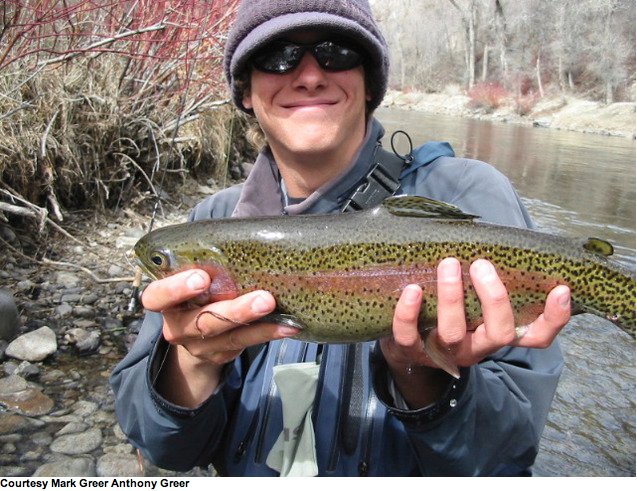
Flaming Gorge pipeline: Wyoming residents and water wonks may have the final say

flaminggorgepipelinemillion.jpg

From the North Forty News (Jeff Thomas):

State compacts dating from 1922 and 1948 entitle Colorado to water in the Flaming Gorge Reservoir, but “I don’t have the legal ability to go up there and administer those rights,” said Dick Wolfe, Colorado’s state engineer and director of the Colorado Division of Water.

While that ability may seem like just one of the many intricacies involved in a proposed 500-mile pipeline to bring water from southwestern Wyoming to a thirsty Colorado Front Range, it’s a key point that could be decided by Wyoming Gov. Matt Mead, who has already expressed opposition to the project. “He is opposed to the pipeline,” confirmed Renny MacKay, communication director for the governor’s office. MacKay said in a recent interview the governor said he opposes trans-basin diversions in general, and in particular, “I don’t think that Aaron Million’s project is well thought out.”[…]

For Wolfe, being able to administer such water rights is not a trivial matter. The whole project hinges upon Colorado’s ability to take more water out of the Colorado River, which it is entitled to do under an interstate compact with fellow headwater states, Wyoming and New Mexico, and downstream states, such as California and Nevada. As much as 250,000 acre feet of water could be brought to the Front Range by the project, about enough for 1 million new residents with current usage. However, the state engineer’s office also has to protect the rights of other users that draw water from the Colorado, such as the senior rights for the Colorado-Big Thompson project, which already supplies water to much of northeastern Colorado. “The point of diversion doesn’t have to be in the state of use,” Wolfe noted. “But then we have to deal with how to administer that right, and how that diversion gets counted under the compact.”[…]

At a minimum, Wolfe said, the state engineers from both Wyoming and Colorado need to put new rules in place that would allow him to shut down the headgate for the pipeline when it is not in priority — when there’s not enough water in the Colorado to comply with the compact. While both offices noted there is a high degree of cooperation between the headwater states regarding the compact, this is fairly new ground and legislative action may be required.

More Flaming Gorge pipeline coverage here and here.

Energy policy — oil and gas: The Niobrara rush is moving into Jackson County

laramierivercoloradadostate.jpg

From the Fort Collins Coloradoan (Bobby Magill):

The rush to drill the Niobrara formation – the same oil and gas boom that required the construction of a paved truck bypass around tiny Grover in remote northern Weld County – is moving into Jackson County. Since September 2010, the Colorado Oil and Gas Conservation Commission has approved 15 drilling permits for companies seeking to tap the Niobrara in Jackson County. Approximately 50 have been approved for the area since 2007 and five more are pending. Many of the approved wells are being drilled by EOG Resources, the Houston company that is one of the biggest players in drilling the Niobrara in Weld County. In 2009, the company drilled the “Jake” well near Grover, which kicked off the rush to explore the Niobrara when the well produced more than 1,500 barrels of oil in one day…

Sportsmen’s groups are concerned new oil and gas development in North Park will contaminate water, fracture wildlife habitat, harm the threatened sage grouse and sully tourism in the region. “My concerns have to do with habitat disruption and potential contamination of surface water before we even get into the potential contamination of groundwater by fracking,” said Barbara Vasquez, a local organizer for the Colorado Wildlife Federation and co-chair of the North Platte Basin Roundtable. “All these wells are fracked, so you have the opportunity for spills of concentrated fracking fluids on site.”[…]

Because of the potential for…spills to pollute rivers and streams, the Colorado Wildlife Federation is urging energy companies and federal land managers to create a comprehensive regional drilling plan and ensure drilling occurs with as little environmental harm as possible, said Colorado Wildlife Federation President John Smeltzer, of Fort Collins.

More oil and gas coverage here and here.

Flaming Gorge Pipeline: Some in Routt and Moffat counties are keeping a close eye on the project

flaminggorgepipelinemillion.jpg

From the Craig Daily Press (Tom Ross):

So, if the Green River only flows through Moffat County for about 35 miles or so, why should people in Routt County concern themselves with the pipeline proposal? The decision to fund the first part of the study of the plan comes at a time when energy development is making more demands on Western Slope water. We’re seeing the beginnings of what could be a boom-let of oil wells here. And if those wells use fracturing techniques to pry the hydrocarbons out of the Niobrara shale, they’ll require large amount of precious water…

Heather Hansen, of Red Lodge Clearing House Natural Resources Law Center at the University of Colorado Boulder, zoomed in on the essential point in a recent essay published in High Country News.

Hansen pointed out that the Green River plays a major role in the obligation Colorado, Utah, Wyoming and New Mexico have to deliver 7.5 million acre feet of water annually to the lower basin states of California, Nevada and Arizona under the 1922 Colorado River Compact.

The 250,000 acre-feet the Million proposal would subtract from the Green only puts more pressure on the Yampa, White, Eagle, Roaring Fork and Gunnison rivers to meet those obligations in a future that includes a growing Front Range of Colorado.

More Flaming Gorge Pipeline coverage here and here.
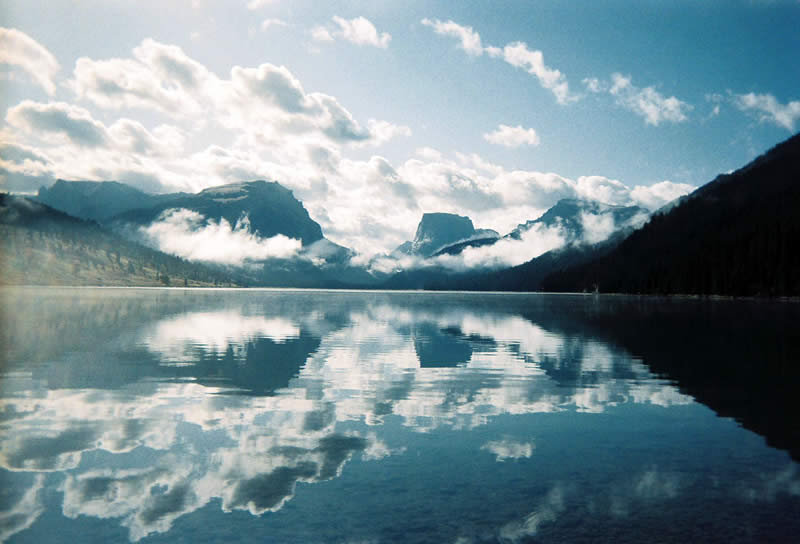
Flaming Gorge pipeline: Conservationists are not convinced that the proposed feasibility study is worth even $72,000

lowergreenriverlake.jpg

From the Colorado Independent (David O. Williams):

“We are encouraged that the state will waste less taxpayer money on this study, but we still think it’s a complete waste of time and money even in its watered-down form,” said Gary Wockner of Save the Colorado.

“The pipeline would irrevocably harm the Green and Colorado Rivers, cost up to $9 billion, and negatively impact the West Slope’s economy. The state should spend the public’s money elsewhere.”

Here’s a joint release from Save the Colorado (Gary Wockner), the Colorado Environmental Coalition (Elise Jones) and Western Resource Advocates (Peter Roesmann):

At its Wednesday, September 14, 2011 meeting, the Colorado Water Conservation Board passed a diluted proposal to fund an exploratory study for the Flaming Gorge Pipeline. The original proposal was for $240,000 and multi-year meetings; the final proposal approved by the board funds just over $72,000 with only a few months of meetings. The watered-down proposal passed despite opposition from thousands of members of the public, a large coalition of environmental groups, taxpayer representatives, and West Slope businesses. Board members expressed many concerns, only some of which were addressed in the water-down version.

Our organizations continue to have numerous concerns about the project even in a scaled back form. While smaller, the proposal would still spend thousands of dollars in state funds to investigate a controversial and environmentally damaging project which thousands of Colorado citizens believe should not be funded at all. This week members of the Joint Budget Committee expressed their concerns over the project notably that this process seems to duplicate an existing efforts of the Interbasin Compact Committee.

Ultimately, a Flaming Gorge pipeline project entails enormous costs and infeasibility. We will continue to work with the CWCB, project proponents, water utilities and other stakeholders to further the important and difficult dialog around meeting Colorado’s future water needs, in ways that—unlike the Flaming Gorge pipeline—are cost-effective, feasible, and do-able in a short time frame.

Finally, Trout Unlimited released results today from a survey of Wyoming reaction to the proposed pipeline. From their release:

Public Opinion Strategies recently completed a statewide survey of voters throughout Wyoming regarding their perceptions of water. The survey results show that Wyoming voters are soundly opposed to a proposal to pump water from the Green River near Flaming Gorge Reservoir to Colorado communities and farms, and to eastern Wyoming. In fact, a majority are strongly opposed to the proposal, and opposition remains high even after hearing arguments in support of the project. After all additional information was provided, an overwhelming 90% of Wyoming voters reject the proposed pipeline.

Respondents in the survey and those in focus groups conducted earlier in Cheyenne indicate their opposition is founded in a concern for allowing Wyoming water to leave their state and an uncertainty over the state’s future needs due to drought or other conditions.

More Flaming Gorge Task Force coverage here.

The Colorado Water Conservation Board is set to pony up $70,000 to study feasibility of the proposed Flaming Gorge pipeline water supply project

flaminggorgepipelinemillion.jpg

From the Fort Collins Coloradoan (Bobby Magill):

“I think it’s interesting and probably good that the state is looking at it,” said Fort Collins entrepreneur Aaron Million, whose Regional Watershed Supply Project is the most advanced proposal for a Flaming Gorge pipeline now being considered. CWCB members think the project proposal is strong enough for the state to study it, Million said. “I’ve always argued for the project to be fully vetted on all environmental issues and all issues associated with it,” he said. “The more it can be looked at, the more beneficial it will be to the eventual outcome.”[…]

Environmentalists are unhappy that the state is spending money to study a pipeline they believe will be too costly both to taxpayers and the environment.

More Flaming Gorge pipeline coverage here and here.

The Colorado Water Conservation Board votes unanimously to fund Flaming Gorge pipeline study, now whittled down to $70,000 with more dough available if project looks feasible

flaminggorgedamusbr.jpg

I just got out of staff meeting at work and I was wondering about the outcome from the CWCB meeting in Grand Junction, so I opened up Twitter. You have to love the Internet.

Here’s a tweet from @beckylong who attended the meeting, “Statements from proponents & Board members on the #FlamingGorge proposal. Say they’ve invited us [ed. conservationists and environmentalists] to dinner. Feel a little like the turkey.”

From The Denver Post (Bruce Finley):

Members of the Colorado Water Conservation Board voted unanimously to spend $70,000 on a study exploring the idea for a 570-mile pipeline — and $170,000 more if the first study deems the diversion promising, according to participants at a CWCB meeting in Grand Junction…

This morning’s CWCB decision “shows the potential value of the project” for delivering “a new water resource for Colorado,” [Aaron Million] said. “We’ve been watching from the sidelines. The project needs to be studied. This is a move-forward decision.”

Some environmental groups objected to spending state money to explore the project, saying it would hurt the reservoir and the Green River ecosystems. Western Resource Advocates, a Boulder-based law and policy group, called state pursuit of the pipeline “a colossal waste of time and energy… All interested parties should instead spend time on more realistic means to meet future water demands.”

The CWCB is charged with protecting and developing water resources for the state.

More Flaming Gorge Task Force coverage here.

Flaming Gorge pipeline: The CWCB will discuss funding today for the Flaming Gorge Task Force

flaminggorgedrycoloradoestuary9billionbillboard.jpg

Click on the thumbnail graphic for the image of the billboards on display in Grand Junction this week. The Colorado Environmental Coalition, Save the Colorado [ed. be careful clicking on this link at work] and Western Resource Advocates are hoping to influence the vote. The photo is from Peter McBride and is of the dry Colorado River estuary in Mexico. The Colorado River is now an ephemeral stream at its terminus.

Here’s a report detailing the state of the battle over moving water from the Green River basin to slake the thirst of the Front Range, from Bob Berwyn writing for the Summit County Citizens Voice. From the article:

The Colorado Water Conservation Board is meeting Sept. 13 in Grand Junction to decide whether to spend $150,000 in taxpayer dollars on a special task force to further study the feasibility of the project, projected to cost as much as $9 billion to construct.

One big goal of the billboards is to raise public awareness. In the past, many major water projects received little public scrutiny in the early stages. By the time formal public comment periods are announced, the projects have already taken on a life of their own.

“At a time when government budgets are in deficit and we need to create jobs, it makes no sense to spend $9 billion on a pipeline that will hurt our economy,” said Bill Dvorak, owner of Dvorak Expeditions. “If we drain billions of gallons out of the Colorado River basin, fewer people will come out here to fish, boat and hike – businesses like mine will suffer and the West Slope will lose jobs.” Dvorak’s company leads boating expeditions on the Green River, which is a tributary of the Colorado River, and other rivers in the region.

Colorado Environmental Coalition, Save the Colorado and Western Resource Advocates joined forces to unveil the billboards, which display an image of a dried-up river bed with the message, “This will only cost you $9 billion.”

More coverage from NBC11News.com (Scott Aldridge):

…the chairman of the Colorado Wyoming Coalition, Frank Jaeger says he doesn’t know where they are coming up with those numbers, because their initial studies aren’t even done yet. “As far as numbers that others have thrown out there or published, I can’t speak to that…Right of way is going to be of immense concern, cost of pipeline, cost of pumping, electrical cost, all of these things are going to be reviewed in a study that we’re proposing to get those answers to…All of those issues have to be answered before you can put numbers on the table.”

Yet the Colorado Environmental Coalition is convinced the impacts would be devastating to Western Colorado. “Many aquatic habitats being devastated, all the great fishing on the green river would be hugely impacted.” Argues Wedemeyer.

“The Colorado River is the lifeblood of this community, we use it for our winery’s, we use it for tourism, for rafting, fishing, it’s the most important thing to our economy, and protecting water on the Western Slope is crucial to our livelihood.” Says Claudette Konola with Western Colorado Congress of Mesa County.

But Jaeger asks, how can critics cite these problems if the proposed study to find problems hasn’t even been done yet?

“Well it’s premature in that when we started this process two and a half years ago we went immediately to the Bureau of Reclamation first to find out if there’s adequate water. We are still waiting to determine that because the Bureau of Rec started a study to determine what the hydrologic amount of water would be on the reservoir, we don’t have that information yet…Until you’ve done a full investigation of a project how can you tout the pros and con’s if you don’t have the answers? I mean it’s kind of nonsensical to me for people to sit on the outside and say this is bad or that is bad, they don’t know what all the issues are.”

More coverage from KJCT8.com (Honora Swanson):

[Save the Colorado’s Gary Wockner] says the pipeline would cost between seven and nine billion dollars, making it the most expensive water in Colorado’s history. He says instead of a pipeline, the state should pursue conservation and recycled water.

More coverage from Alan Prendergast writing for Westword. He’s linking to Joel Warner’s in-depth piece from 2009 about the proposed pipeline. Here’s an excerpt Mr. Prendergast’s article:

The Colorado Water Conservation Board has pegged the cost of the pipeline at somewhere between $7 billion and $9 billion, up to triple the cost of Million’s own estimates. Despite that daunting figure, the CWCB is looking into spending $150,000 on a task force to study the project.

When board members arrived in Grand Junction to take part in that discussion, they were greeted by three billboards erected by a cadre of conservation groups, including Western Resource Advocates, Save the Colorado and the Colorado Environmental Coalition. The signs feature the dried-up, parched delta where the Colorado River supposedly (but only rarely) reaches the Sea of Cortez and refer viewers to an online petition at a website address — which, according to WRA spokesman Peter Roessmann, shut down at midnight last night after collecting 21,300 signatures protesting the plan.

More Flaming Gorge Task Force coverage here.

Restored Lake John Fishery Opens September 3

lakejohn.jpg

What a great name for a lake, if I do say so myself. Here’s an excerpt from the release from the Colorado Department of Wildlife and Parks:

Colorado Parks and Wildlife has completed a reclamation project at Lake John, setting the stage for a rejuvenated fishery that will be open for angling in early September. Lake John is located northwest of Walden along CO Road 7A.

“The success we have had with the reclamation is like a reset button for Lake John,” said Kurt Davies, aquatic biologist for the northeast region. “The lake will be back online by the first week of September and back to growing fish at its maximum potential. The fish we are planting now will see tremendous growth before the lake is even iced up and with the large brood fish we are putting in there, there’s the possibility someone will hook into a real trophy.”

Parks and Wildlife biologists and managers anticipate dramatic improvements in Lake John post –reclamation. Signs posted at the entrance to Lake John will notify the public of the re-opened fishery in the near future.

“The reclamation has been very successful to this point and I’m looking forward to seeing anglers catch fish out of Lake John this September,” said Walden District Wildlife Manager Josh Dilley. “This water is important to the local economy as well as to the recreation of my district.

More North Platte River basin coverage here.

CWCB: Alan Hamel — ‘To me, Flaming Gorge needs to be in the top two or three projects we consider’

A picture named dnrpipelineconcepts309

Chris Woodka sat down with CWCB member Alan Hamel (Pueblo Board of Water Works) to talk about the future for water supplies in Colorado. Here’s his report from The Pueblo Chieftain. From the article:

“To me, Flaming Gorge needs to be in the top two or three projects we consider,” Hamel said. “I do think Flaming Gorge could take pressure off agriculture in the South Platte and Arkansas basins. It could also eliminate some, but not all, of the West Slope consequences of water projects within Colorado.”

Through the roundtable process, Hamel has been working on a water bank concept with the Gunnison Basin Roundtable that would use Blue Mesa Reservoir as a backstop for junior water rights in the Colorado River basin, rather than piping water from it. Keeping a pool of water available for release during a potential downstream call would prevent the need to curtail transmountain water rights, under the roundtables’ proposal.

Flaming Gorge provides a different advantage by bringing a new source of water into the state, adding storage that could benefit the entire state as well. “With Flaming Gorge, or any new project, we need to prioritize. There are not enough resources to build all of them,” Hamel said.

Hamel, who formerly represented the Arkansas Basin Roundtable on the IBCC, sees a role for both state water agencies in moving a project forward. “To me, the CWCB is the policy side, and it has a talented staff and the expertise to evaluate a project,” Hamel said. “The IBCC can find common ground, communicate and resolve the concerns between the East Slope and the West Slope.”

More CWCB coverage . More IBCC — basin roundtables coverage here.

Interbasin Compact Committee: Can the IBCC help the Front Range tap into the proposed Flaming Gorge Pipeline?

A picture named flaminggorgepipelinemillion.jpg

From The Pueblo Chieftain (Chris Woodka):

The Flaming Gorge pipeline project, a proposal by Fort Collins entrepreneur Aaron Million that also is being examined by a coalition of water providers in Colorado and Wyoming, may provide a test of the decision-making capabilities of the IBCC. “The whole IBCC process is about bringing people together,” Stulp said. “The IBCC helps people understand the larger picture.”

In the case of Flaming Gorge, the larger picture includes the South Metro Water Supply Authority, a consortium of 13 of the thirstiest water providers in the growing area who are looking for ways to supplement a dwindling supply of groundwater from the Denver Basin aquifers. The aquifers make up a closed system that is not replenished as fast as it is being pumped…

“Any project, whether it’s Flaming Gorge or something else, has to be good for the whole state,” Stulp said. “That doesn’t mean everyone has to be happy. I think the IBCC can look at it from that wide perspective.” The CWCB is looking at forming a Flaming Gorge task force, which would provide the same sort of away-from-the-table setting that led to the Denver Water-Colorado River agreement. The IBCC still would be a place where ideas could be exchanged and concerns brought to light, Stulp said. The unique aspect of Flaming Gorge, from Stulp’s perspective, is that it brings more water into the state that could not be used anywhere else because of how the Green River flows into and out of the state…

“It’s kind of like bringing in an outside company for economic development,” Stulp said. “You bring new water in without hurting what’s already here.” At the same time, Stulp does not rush into a position where Flaming Gorge would be the only solution. He approves of the IBCC’s approach to consider conservation, alternative agricultural transfers, improvement of yield from identified projects and potentially even other transmountain projects.

More Flaming Gorge pipeline coverage here and here.
Poudre River watershed: ‘The Poudre Runs Through It’ final installment — public dialogue — April 11

A picture named cachelapoudreriver.jpg

From the editorial staff of the Northern Colorado Business Report:

The final public dialogue portion of the program will be held in two sessions in Fort Collins: Monday, April 11, from 6 to 8:30 p.m. at the Timberline Church on South Timberline Road, and Saturday, April 16, from 2:30 to 5 p.m. at The Drake Center on West Drake Road. These sessions, facilitated by CSU’s Center for Public Deliberation, will be where we all can discuss alternatives for Northern Colorado’s water future.

To prepare for the public deliberation and to see recordings from previous sessions of The Poudre Runs Through It, go online to www.univercityconnections.org/.

More Poudre River watershed coverage here.

Platte River basin: Will the feds fund the Platte River Recovery Implementation Program this year?

A picture named platteriverbasin.jpg

From the Kearney Hub (Lori Potter):

“There is a level of concern,” Executive Director Jerry Kenny of Kearney said Monday, because federal funds — annual appropriations — provide most of the dollars for [Platte River Recovery Implementation Program] projects in the first 13 years. “Will the federal government honor the promises it made in the authorizing legislation?” Kenny asked. “Or will other priorities force cuts? I think it’s a legitimate concern.”

During a visit to south-central Nebraska’s Rainwater Basin and Platte River Monday, U.S. Interior Secretary Ken Salazar said, “I’m very concerned. At the end of the day, if we don’t invest in conservation, we take away the legacy (that’s been built). “Even though we’re in a time of crisis, this is not the time to go back on conservation,” he said, adding that Abraham Lincoln protected Yosemite from development during the Civil War.

More South Platte River basin coverage here. More North Platte River basin coverage here.

Energy policy — oil and gas: The Niobrara shale play in northern Colorado may get a close look by the Environmental Protection Agency

A picture named niobrarashale.jpg

From the Fort Collins Coloradoan (Bobby Magill):

Responding to public outcry about the risks to drinking water fracking might pose, Congress directed the EPA to conduct a study about how fracking affects drinking water. The EPA’s findings are expected to be made public by the end of 2012, with a more detailed report following in 2014. The EPA’s study plan includes an 11-page list of chemicals the agency has found in fracking fluid, including gelling agents, surfactants, biocides, corrosion inhibitors, lubricators, viscosifiers and the fracturing fluid trimethylbenzene, among others. The Niobrara oil play straddles the state line and stretches from northern Weld, Logan and Larimer counties in Colorado to as far north as Torrington, Wyo…

The EPA will look closely at the mechanics of Niobrara shale fracking in Laramie County, Wyo., which borders Weld County, and study water quality changes with time. The agency also will look at how fracking has impacted water quality in Western Colorado’s Piceance and San Juan basins.

More oil and gas coverage here and here.

Flaming Gorge pipeline: Rock Springs City Council gets update briefing

A picture named flaminggorgepipelinemillion.jpg

From The Green River Star (David Martin):

The main point [Don Hartley, a representative of the group Communities Protecting the Green] stressed was the fact that the issue would be around for a long time. Hartley told the Council a number of the proposed projects overlap one another. Due to the amount of time needed to sort out the projects and perform the research needed, Hartley said the Army Corps of Engineers believes a final decision could be made by 2018. “We’re in this for the long haul, “ Hartley said…

The estimated costs of the coming legal battle are enormous, as are the players involved, according to Hartley. However, the amount of money pledged by the cities of Rock Springs and Green River and Sweetwater County are “only the tip of the iceberg,” as Rock Springs Councilman Neil Kourbelas said. Kourbelas asked if other concerned communities and groups were pledging funds to help with potential legal costs, saying more than just the three government bodies involved with the organization would be affected by a trans-basin water project.

More Flaming Gorge pipeline coverage here and here.

Flaming Gorge pipeline: Opposition to the transmountain diversion project grows

Say hello to the temporary home for OurDamWater.org. They’re online to spread the word against the Million Resources Group’s plans to build a pipeline from the Green River in Southwest Wyoming to Colorado’s Front Range and points south. Thanks to CBS4Denver.com for the link.

More Flaming Gorge pipeline coverage here and here.
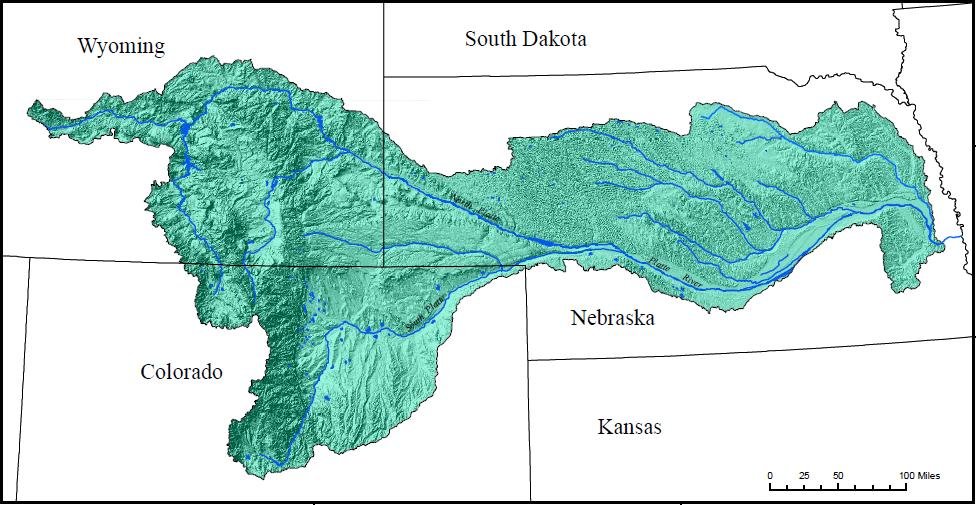
Flaming Gorge Pipeline: Is there enough water for the project?

A picture named flaminggorgepipelinemillion.jpg

From the Fort Collins Coloradoan (Bobby Magill):

“In my view, there’s a very high risk there’s not enough water,” Eric Kuhn, manager of the Glenwood Springs-based Colorado River Water Conservation District, said Friday.

Many residents of southwestern Wyoming fear Million’s Regional Watershed Supply Project could kill the region’s recreation economy centered on Flaming Gorge Reservoir.

Kuhn spoke to some of those residents in Rock Springs in late October to provide them with a western Colorado perspective of the implications of the pipeline…

Long term averages of water flow in the Green River suggest there’s plenty of water in the river system that hasn’t been appropriated for human consumption, Kuhn said. But averaging the river’s declining flows over the last 30 years, “it’s nowhere close,” he said.

If the pipeline were to deplete Flaming Gorge of its water, southwest Wyoming’s recreation economy could take a huge hit, he said. “I think there’s going to be significant opposition in Wyoming, and specifically in southwestern Wyoming, to this project,” Kuhn said.

Million said Kuhn and the Colorado River District have a political agenda aimed at keeping as much water as possible in the Colorado River system rather than letting it be pumped to the Front Range.

More Flaming Gorge Pipeline coverage here and here.

U.S. Army Corps of Engineers: Flaming Gorge pipeline draft EIS now slated for release in 2016

A picture named flaminggorgepipelinemillion.jpg

From the Associated Press via The Grand Junction Daily Sentinel:

Project manager Rena Brand says the proposal requires more time because it is so complex. Brand tells the Rock Springs Rocket-Miner that a draft environmental impact statement on the project will be released in 2016, rather than in 2012 as originally planned. A final decision by the corps will be released about 2018 instead of 2014.

More Flaming Gorge pipeline coverage here and here.

Jackson County: New Zealand mud snails found in South Delaney Butte Reservoir

A picture named newzealandmudsnail

From the Summit County Voice (Bob Berwyn):

Wildlife experts discovered the mudsnails during a shoreline survey at the end of July. This is the fourth location where the invasive freshwater mollusks have been detected in Colorado.
“The New Zealand mudsnail competes with our native invertebrate species,” said Elizabeth Brown, the division’s invasive species coordinator. “So far, we haven’t seen huge impacts to our fisheries. But New Zealand mudsnails have the potential to seriously disrupt the aquatic communities that are the foundation of the food web. If mudsnails become numerous enough, they can reduce the availability of nutrients to their point where it harms fish populations.”

Native to New Zealand, New Zealand mudsnails were first detected in the United States in 1987 in Idaho’s Snake River. Since then, the species has spread rapidly throughout the West, infesting waters in Arizona, California, Colorado, Idaho, Montana, Nevada, Oregon, Utah, Washington, Wyoming and British Columbia.

State wildlife officials first discovered New Zealand mudsnails in South Boulder Creek in 2004. Subsequently, the DOW has confirmed infestations in the South Platte River between Eleven Mile and Spinney Mountain reservoirs and in the Green River near the Colorado/Utah border…

A major reason for DOW’s concern is the snail’s astounding reproductive capacity. New Zealand mudsnails reproduce asexually and the release of one snail can create a population with a density of between 100,000 to 700,000 snails per square meter. New Zealand mudsnails have no natural predators in outside their native range. Scientists have not yet found a way to contain or eliminate mudsnail infestations.
“Our primary goal at this point is to keep them from spreading, and for that we need anglers and boaters to take common-sense steps to prevent the transport of mudsnails to other locations,” said Brown.

The primary vector for spreading New Zealand mudsnails is human-assisted transport overland, on waders, fishing gear and boats. Unlike zebra and quagga mussels, New Zealand mudsnails cannot attach to hard surfaces. Instead, they “hitchhike” or hide in mud or plant materials embedded on dirty boats and fishing equipment. The mudsnails–only 1/8 inch in length when fully mature–can live out of water for days in mud or other moist environments…

For more information about New Zealand mudsnails and how to prevent their spread, please visit this link.

More invasive species coverage here.

Platte River tour July 12-15

A picture named missouririverbasin

From the North Platte Bulletin:

A four-day water and natural resources tour in July will examine the challenges of sharing water supplies in the North and South Platte River basins in Nebraska, Colorado and Wyoming. The tour covers all three states and includes a visit to the North Platte River irrigation project. It will be held July 12-15, beginning and ending in Kearney. Stops will be along the North and South branches of the Platte River.

More South Platte River Basin coverage here.

Flaming Gorge pipeline: Aaron Million pitches the project at the University of Wyoming

A picture named flaminggorgepipelinemillion.jpg

From the Laramie Boomerang (Carrie Haderlie):

“Certainly, this project we looked at initially from an environmental standpoint, first and foremost,” Million told a packed crowd during a panel discussion hosted by the Potter Law Club of the University of Wyoming College of Law Wednesday. “If it doesn’t stand ground on (environmental) merits, then the project should not move forward.” Million said the agricultural community along the Front Range and in other parts of Colorado are facing a need for water that isn’t being addressed. “We have present problems today that I think will be unmitigatable (sic) two decades from now,” Million said…

[Environmental scientist and hydrologist Dan Luecke] said there are a number of issues that might be raised during pipeline discussions, not the least of which include the impact water removal would have on the Green River itself, compact issues and what Luecke called the “demand for water versus the desire for water.” “All of these are related to what I see as one of the most environmentally damaging kinds of water projects that one can conceive of, and that is a trans-basin diversion. That is taking water out of one system and putting it into another,” Luecke said.

Albany County Sen. Kermit Brown was present Wednesday, and he said he thinks the pipeline project poses two major risks. The first is climatological and the other is environmental. “That risk falls … on the unappropriated water that is left in the river,” Brown said, noting that the unappropriated water left in the Green River, if this project moves forward, will belong to Wyoming. “The appropriators fix their take from the river and leave the risk with the unappropriated water. We have seen that in Wyoming, Nebraska,” Brown said.

More Flaming Gorge pipeline coverage here and here.

Flaming Gorge pipeline: What is the environmental cost?

A picture named flaminggorgepipelinemillion.jpg

From the Fort Collins Coloradoan (Bobby Magill):

Boulder hydrologist and environmentalist Dan Luecke and the pipeline’s inventor, Fort Collins entrepreneur Aaron Million, faced off in attempt to answer [environmental questions] Wednesday night at the University of Wyoming…

[Aaron] Million reiterated his view that the pipeline – a public-private partnership – would keep Front Range farms operating, provide a plethora of wind and hydropower development opportunities and prevent the fragile Green River ecosystem from being harmed. If the project proves to be environmentally unsound, he said, the pipeline should not be built.

Environmentalists are concerned the pipeline could harm endangered fish in the Green River, potentially forcing water to be diverted from pipeline users to put more water back into the river for the fish. Leucke called the pipeline “one of the most damaging kinds of water projects I can conceive of” because it would pump water above the Continental Divide from one river system to another to be consumed by growing Front Range communities…Environmentalists want the South Platte and Arkansas river systems to be managed more efficiently with an eye toward water conservation, and Million’s pipeline could encourage them to do otherwise, Leucke said.

Million countered, saying users of water from the pipeline will be mandated to comply with water conservation restrictions.

Just as serious, Leucke said, is the expense of the water from the project. He said Colorado water officials have estimated pipeline water would cost about $2,200 per acre-foot, while new water projects within Colorado could deliver water for $800 per acre-foot…

“I think the numbers we’ve been talking about didn’t look at any sort of climate variability scenarios yet,” [Former Wyoming State Engineer Jeff Fassett] said, adding that the Army Corps of Engineers will study the matter more thoroughly.

More Flaming Gorge pipeline coverage here and here.

Flaming Gorge pipeline: Million Resources Group in Casper pitching the project to Wyoming officials

A picture named flaminggorgepipelinemillion.jpg

From the Casper Star-Tribune (Pete Nickeas):

The Casper City Council heard from two of Million’s representatives at Monday night’s work session, after hearing from the group of municipal investors in February. At that meeting, the council agreed to set aside $20,000 to help the municipal group study the pipeline’s feasibility.
Though the city’s water supply is considered safe and reliable, the council is looking 50 to 100 years out at projected water needs. Owning a piece of the water supply from the Green River Basin, which would be dumped into the North Platte River via Million or the other group’s pipeline, would allow the city to account for future growth…

Under Million’s plan, Casper and other water districts would own the right to the water, and Million’s pipeline would ship it from point A to point B. Water districts would be charged based on how far the water has to be pumped, said Jeff Fassett, former state engineer who is now working for Million. “He’s the highway. Our model is that the individual end users, including Casper, Cheyenne, Lake Hattie … we believe you need to apply and obtain and secure and maintain your own water rights,” Fassett said. “There’s no reason for Mr. Million or anybody else to have control over the city’s water supply.”[…]

Council Vice President Paul Bertoglio and others repeatedly asked for a cost estimate, a request [Million’s attorney, Steve Freudenthal] danced around without providing specifics. Bertoglio, an engineer by trade, said the costs of pumping water hundreds of miles through a pipe over a mountain could make the entire project cost prohibitive. “In terms of what we’re looking at — the precision is so far off that I hesitate to go into that,” Freudenthal said. “But the basic preposition at the far end is what potential users — what’s their second cheapest alternative? And our numbers come in well below those.”[…]

None of the council members have questioned the need to plan long-term for the city’s water supply, and the city hasn’t committed to either party yet. For now, the city seems content “riding both horses” and seeing which group can piece together the best proposal.

More Flaming Gorge Pipeline coverage here and here.

Nebraska ponies up $8.8 million for habitat for the 3 state Platte River Recovery Implementation Program

A picture named whoopingcranes.jpg

From the Kearney Hub (Lori Porter):

More than $8.8 million has been committed so far for land in Dawson and Buffalo counties that will be managed as wildlife habitat under the three-state Platte River Recovery Implementation Program. Program Land Committee member and Central Platte Natural Resources District Biologist Mark Czaplewski gave an update at Thursday’s CPNRD board meeting in Grand Island on progress made toward the first 13-year increment goal to protect 10,000 acres of habitat in the Central Platte Valley. The program’s overall goal is to enhance river flows and protected habitat used by threatened and endangered species — least terns, piping plovers and whooping cranes in the Central Platte — and allow projects in Colorado, Wyoming and Nebraska with federal permits or funding to comply with the Endangered Species Act.

Whooping Cranes were seen dancing in the streets to the music of The Piping Plovers. More endangered species coverage here.

Flaming Gorge pipeline: Reclamation estimates that 165,000 acre-feet per year is available for development

A picture named flaminggorgepipelinemillion.jpg

From the Associated Press (Ben Neary) via CBS4Denver.com:

The study found that up to 165,000 acre feet of water could be drawn from the reservoir each year through 2049 while still allowing enough water to generate hydropower and to meet the needs of endangered fish species downstream.

Drawing 165,000 acre feet a year over 40 years would draw the level of Flaming Gorge Reservoir down from its current elevation of 6,030 feet a bove sea level to just above 5,900 feet, the study found. According to bureau figures, the reservoir has a surface area of nearly 30,000 acres when its elevation is at 6,000 feet and its surface area would drop to just under 11,000 acres at the 5,900 foot level.

After 2050, as development in Wyoming increases, the bureau study projected Flaming Gorge Reservoir could sustain an annual diversion rate of 120,000 acre feet. The agency is updating that draft analysis, and agency officials say their projections of the amount of available water may well go lower.

More Flaming Gorge pipeline coverage here and here.

Flaming Gorge pipeline: Corps of Engineers extends comment period to September 28

A picture named flaminggorgepipelinemillion.jpg

From the Casper Start Tribune (Jeff Gearino) via Billings Gazette:

The scoping comment period for the U.S. Army Corps of Engineers’ environmental impact statement will now close Sept. 28, Corps project leader Rena Brand said Tuesday in a media release.
She said the extended comment period will allow the Corps additional time to respond to more than 40 requests for cooperating agency status from a variety of agencies and organizations, including Green River and Sweetwater County.
“The Corps intends to communicate with some entities on consolidating participation by appointing a single point of contact to represent multiple entities,” Brand said…

locals contended the project would hurt local businesses in the area, would curtail future growth in Green River and neighboring Rock Springs and could threaten the world-class fisheries on the river and in the gorge. Last week, Rock Springs council members voted to join a coalition with Green River and the county that aims to fight Million’s proposal. The three governmental entities allocated a combined $450,000 to the Communities Protecting the Green River coalition for the effort, which officials said may include litigation. Additionally, the county and Green River are seeking cooperating agency status as part of the Corps’ environmental impact statement process. Corps officials predicted the draft EIS could be released as early as 2012, with a final permit decision taking up to five years.

In written comments submitted to the Corps last week, the U.S. Fish and Wildlife Service said it was opposed to the Million project plan. Service officials said the agency’s concerns focused on how the pipeline would affect threatened or endangered species, migratory birds and habitats, and the overall ecosystem balance.

More Flaming Gorge pipeline coverage here and here.