A look at the global water supply gap

From the Guardian (Dominic Waughray):

Currently about 70% of the world’s freshwater withdrawals are for agriculture, 16% are for energy and industry and 14% are for domestic purposes. Recent work suggests that unless we change our historic approach to how we use water, we could face a 40% gap by 2030 between global demand and what can sustainably be supplied. Why is this, and what are the implications?

To meet the forecast growth in demand for food over the next 20 years, farmers will need to increase production by 70-100%. Changing diets will increase demand for meat and dairy products in particular. A kilogram of meat requires up to 20,000 litres of water to produce (compared to about 1,200 litres to produce a kilo of grain), and global demand for meat is forecast to increase 50% by 2025. Herein lies the water challenge. If we already use over 70% of freshwater withdrawals for agriculture and face an increase in demand for food by 70% by 2030, especially for water-intensive meat and dairy, it is clear that a business-as-usual approach is not an option. We cannot use over 100% of our freshwater for agriculture. Significant, perhaps radical changes in agricultural water usage will be required.

At the same time, our demand for energy will also grow; and energy is also a thirsty sector. The International Energy Agency forecasts that the world economy will demand at least 40% more energy by 2030. McKinsey and Company estimates that 77% of the power stations we will need by then have yet to be built. By that year, China will need to expand its power generating capacity by over 1,300 GW (1.5 times the current level of the US) and India by 400 GW (equal to the current combined total power generation of Japan, South Korea and Australia). Increasing access to energy is a priority for many countries. 1.5bn people in the developing world still lack access to electricity and over 3bn rely on biomass for heating and cooking. Yet, energy needs a lot of water. In richer countries, up to 50% of freshwater withdrawals can be used in the production of oil, gas and electricity…

Many countries are extracting groundwater faster than it can be replenished (Mexico by 20%, China by 25% and India by 56%). Over 70 of the world’s major rivers now hardly reach the ocean due to the extensive diversion of water for human use. If current trends continue, by 2030 increasing water scarcity could cause annual grain losses equivalent to 30% of current world consumption (just as we need 70% more food). As demand continues to grow, competition for water will intensify between economic sectors, as well as between geographies.

Thanks to Loretta Lohman for the link.

Wiggins: The town council is slowly moving through the paperwork required for new water system

From The Fort Morgan Times (Dan Barker):

The council unanimously approved a resolution authorizing indebtedness for its water project, but that is not quite what it sounds like, said Wiggins Town Attorney Sam Light. This was basically approval of signing a USDA form contract which sets up conditions for taking a loan and grant package from the federal agency, and which indicates that the entire debt could come due if Wiggins defaults on its loan once bonds are issued, he said. It pledges the water system as security for the loan, and states that Wiggins cannot contract to build the project without USDA consent after the agency has a chance to see designs, Light said. Essentially, this contract says that Wiggins understands all the provisions and agrees to them, he said. The resolution also agrees that Wiggins will comply with all state and federal laws, and will continually operate the facility in good condition. Part of the agreement is to provide for adequate revenues to pay the debt on time, and to operate and maintain the facility. Revenue cannot be used to pay any expenses which are not directly incurred for the facility, and no free use of the facility will be permitted.

Board members went into a closed-door executive session for 2-1/2 hours to discuss a land and water purchase for the water project, legal issues pertaining to the water project, use of land from previously purchased acreage which was part of buying water, and getting permission from the Weldon Valley Ditch Co. to change the use of the water from that property, Light said…

The USDA did approve a grant and loan package for Wiggins to build the new water system, which includes a pipeline to bring water from a farm northwest of the town and to build a water treatment facility at the farm. Certain conditions must be met before the town can begin taking bids from contractors to do the job, said Tim Holbrook, who is overseeing the engineering aspect of the project for Industrial Facilities Engineering. Staff is working to secure easements for the pipeline, including negotiating for private land for the pipe, he said. They have also applied to the Colorado Department of Transportation for approval for the pipeline to cross Highway 144 and Highway 34, and did secure approval from the Burlington Northern Santa Fe Railroad to trench under its property to lay pipe. Holbrook said he is working on completing an engineering design to send in to the USDA, which will include the treatment part of the project. That is also needed for a permit to construct the project, and getting that permit could take 30 to 60 days, he said.

More Wiggins coverage here and here.

‘Protect Our Rivers’ license plate on tap for Colorado?

Here’s the announcement from Colorado Trout Unlimited:

In the 2011 legislative session, Colorado Trout Unlimited is introducing a bill to create the Protect Our Rivers license plate. To help ensure passage of the bill, we need to collect 3,000 signatures from Colorado residents that are interested in later purchasing the license plate. Note that signing the petition does not obligate you to purchase – at this time, you are merely expressing an interest.

Once the bill is passed, to obtain the Protect Our Rivers license plate, you must make a one-time, tax-deductible donation of $25 to Colorado Trout Unlimited. This money will be used to help CTU fulfill its mission of protecting, conserving and restoring Colorado’s rivers – the money will remain local, 100% will be allocated within Colorado. The design of the license plate has not been finalized yet, but it is likely to be very similar to the sample [click on the thumbnail graphic to the right]:

To learn more about the Protect Our Rivers license plate, read the FAQ (frequently asked questions).

For now, we’d really appreciate it if you’d sign our petition! And don’t forget to tell your friends!!

From the Montrose Daily Press:

The High Country Citizens Alliance and other conservation groups are advocating the creation of a “Protect Our Rivers” special license plate. They need 3,000 signatures by Nov. 30 in order to get the Legislature to consider approving the plate’s creation. If the state approves the plate, it can be purchased for $75, of which $50 goes to the state. The remaining $25 will go to Colorado Trout Unlimited.

More conservation coverage here.

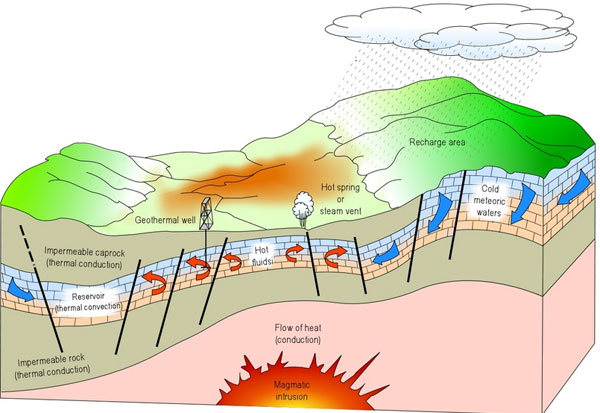
Energy policy — geothermal: 3E Geothermal, LLC leases Colorado’s first geothermal lease for $37 per acre

From The Mountain Mail (Keith Berger):

After some spirited competitive bidding, the parcel sold for $37 per-acre to 3E Geothermal, LLC, in Colorado Springs. The company paid a bonus bid of $29,600 for the parcel.

You may be wondering what is next. There were 16 protest letters submitted on the geothermal parcel during the protest period. Prior to the sale, the protests were screened for any critical issues that would merit deferring the parcel from the sale. Though the expressed concerns are important, they were not deemed critical, or were addressed in our pre-sale environmental review, so the sale of the parcel proceeded. Concerns included contamination of ground water, surface water and vegetation, interruption of animal habitat and recreational activities, traffic, noise from industrial drilling, unstable soils below some prominent cliff formations, and a potential for earthquakes. Each letter will be reviewed in-depth with a response to the protester as to whether the protest is upheld or dismissed and why. The lease will not be issued until all 16 protests have been resolved. If the lease is issued it would be the first step in any geothermal development process.

The bureau’s next action would come if the lessee submits a project proposal. The bureau would then initiate an environmental review of the proposal and seek your input for concerns and potential issues related to that proposal…

Information about the Mount Princeton Geothermal Lease Parcel is available on our website at http://www.blm.gov/co/st/en/fo/rgfo.html or you can contact Melissa Smeins, Royal Gorge Field Office geologist at (719) 269-8523.

More coverage from Joe Stone writing for The Mountain Mail. From the article:

3E Geothermal LLC, the company that acquired the Mount Princeton geothermal lease Wednesday, is a wholly owned subsidiary of Young Life and will “protect the natural beauty of our camp’s setting,” said Steve Lundgren, camp manager of Frontier Ranch. Frontier Ranch, a Christian youth camp owned by Young Life, occupies much of the surface estate of the 799-acre geothermal lease near Nathrop. “We did not want to be in a situation where other parties would have the ability to scar the landscape so critical to giving our guests a great camping experience,” Lundgren said…

When asked about the possibilities for developing the geothermal resource, Lundgren said lease owners have a responsibility “to make a good faith effort to evaluate the viability of geothermal resource production.” He said Young Life desires to protect the natural beauty of the land but is “currently contemplating the most conscientious way of complying with the requirement.” Under U.S. Bureau of Land Management terms of the lease, failure to develop the geothermal resource would result in termination of the lease in 10 years.

More geothermal coverage here and here.

Custer County Conservation District names ā€˜Conservationists of theĀ Year’

From The Wet Mountain Tribune (Nora Drenner):

This year’s recipients were Alice and Charles Proctor, Marian Shearn, Peggy McIntosh and the late Jim Proctor of the M66 Ranch. Charles, Alice and Marian, who purchased the ranch in 1977, were on hand to receive the esteemed award. Local Conservation District Manager Robin Young said the M66 Ranch was chosen due to the owners commitment to following conservation measures on their 195-acre ranch including the placement of a conservation easement on the ranch in 2004. Also noted was the owners’ dedication to bringing the awareness of conservation to others by inviting art students to visit their ranch and creating art projects with what they find in nature. ā€œThey have a love of the land, people, teaching and learning,ā€ said Young.

More Custer County coverage here and here.

Yuma: Water rates going up in January

From The Yuma Pioneer (Tony Rayl):

The Yuma City Council gave final approval to an increased water rate at its regular meeting, last week, November 2. The basic rate for the first 5,000 gallons is increasing from $8 per month to $8.50. The charge for each additional 1,000 gallons is going up from 85 cents to $1.25. The higher rates will go into effect in January, which means city customers will not see it reflected on their bills until the one that is due in early March…

Even with the increase, Yuma’s water rates still are half the average of the other northeast Colorado municipalities. The new revenue is expected to be about $77,000 annually. City Manager Doug Sanderson was questioned by City Attorney Roger Seedorf during the public hearing held prior to the council’s vote. Sanderson explained the Water Enterprise Fund currently is breaking even, and the new revenue will allow for reserves to be built to go toward future projects. Those projects include helping purchase a new SCADA system (a combined project with the Sewer Department), along with replacing old water lines, valves and such, purchasing water rights through the Yuma County Water Authority, and painting the inside of the water towers.

More infrastructure coverage here.

Cedaredge: Wastewater fees to rise?

From the Delta County Independent (Bob Borchardt):

During the Nov. 4 budget work session one item discussed was the likelihood that the current sewer rates charged to area residents will be increased $9 over the next two years. According to Town Administrator Kathleen Sickles, there are three projected increases of $3 per month, every six months, over an 18-month period starting January 2011, for a total increase of $9 per month. Trustee Nancy Sturgill said she was not excited about having more than one increase per year. Sturgill recommended having a $4.50 per year, instead of having two increases in one year. ā€œI’d rather not ding residential property owners twice in one year.ā€

More infrastructure coverage here.

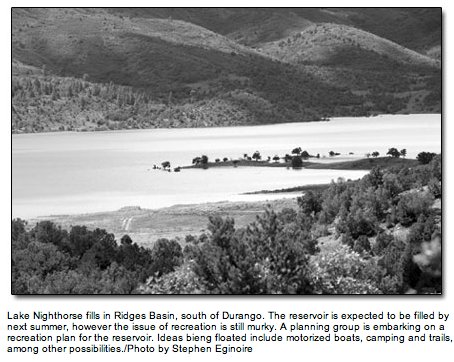
Animas-La Plata Project: Lake Nighthorse recreation meetingĀ recap

From The Durango Herald (Dale Rodebaugh):

On Wednesday, about 30 people turned out at the La Plata County Fairgrounds for the first in a series of public meetings about recreation on the lake, which will cover 1,500 surface acres when fully filled in 2011. Posted for public viewing were comments on the subject, and almost all of them contained a pitch for either motorized or nonmotorized boating…

Friends Anne Sutherland and Cindy Ortman, who hadn’t seen one another in six years, found they still have a lot in common. They don’t want motorboats on the lake, too. ā€œI’m here to give input,ā€ Sutherland said. ā€œNo motorized craft – boats or jet skis.ā€ Ortman said she’d like to see sailboats and rowing and high school and college crew teams…

Joy Lujan, a National Park Service community planner, is coordinating creation of a recreation master plan at the lake. Lujan wants participants in upcoming forums and workshops to have a solid foundation for discussions. Lujan points out that although federal Wallop-Breaux funding that helped build a boat ramp at Lake Nighthorse requires access for motorized craft, the master plan will spell out the type and location of water-based activities…

Also on hand to answer questions at the meeting were employees of the Bureau of Reclamation, which owns Lake Nighthorse; board members of the Animas-La Plata Water Conservancy District, which is leading the campaign to fund the recreation master plan; and a representative from consultant DHM Design…

Another open house is scheduled from 5 to 8 p.m. today at 175 Mercado St., Suite 117, in Three Springs. Public forums and workshops will follow until a final recreation plan is unveiled Jan. 12.

More Animas-La Plata Project coverage here and here.

San Juan Basin: Water Supply Community Work Group meeting recap

From the Pagosa Sun (Randi Pierce):

When group chairman Bruce Dryburgh called the meeting to order, the group lacked a quorum, though with the arrival of Steve Van Horn, official business could begin — approval of past minutes and ā€œremoving members from the island.ā€ Jan Clinkenbeard was voted out of the group due to her recent appointment to the Pagosa Area Water and Sanitation District Board of Directors, as was Archuleta County Commissioner John Ranson for his conflict of interest in light of the BoCC’s statutory oversight duties concerning PAWSD…

Following a brief hiatus, the group then met with the PAWSD board, with Shellie Peterson, interim district manager, presenting a report on the history of the PAWSD schedule of fees and charges. The presentation included the development and justification of all of the PAWSD fees, with many board members noting the informative value of the report.

PAWSD Special Projects Manager Renee Lewis said in a later interview that the report provided a good platform for the WSCWG’s future work, should they decide to continue on and in what capacity to do so. According to Dryburgh, no further meetings of the WSCWG had been scheduled as of presstime.

More San Juan Basin coverage here.

Energy policy — nuclear: Cotter Corp, Inc. and the Colorado Department of Health and Envrironment are far apart on groundwater monitoring costs

Update: From the CaƱon City Daily Record (Rachel Alexander):

In January, Cotter submitted an estimate of $2,891,319 to which the department responded with an estimate of $15,066,000. At the Community Advisory Group meeting, Oct. 28, Steve Tarlton, radiation control project manager for CDPHE, explained the differences in the initial estimates and how the department and company came to the new estimate. ā€œWe were proposing active systems, they were proposing passive systems,ā€ Tarlton said of the initial numbers, stating the main difference was in scope.

Following the initial estimates, informal negotiations were undertaken to attempt to come to an agreement, Tarlton said. The negotiations addressed three groundwater plumes: Lincoln Park north the De Weese Dye Ditch, the SCS Dam to the the De Weese Dye Ditch and the facility itself. The golf course plume was addressed earlier with the license surety. The two parties agreed to a scope of work needed in each area and that was used as a basis of the estimate. The agreed-to scope is not a final decision as to what work will actually need to be done, that will need additional data and a public process. The surety for Lincoln Park is $1,108,074, for the facility is $6,874,684 and for the dam to the ditch it is $1,938,803.

Cotter has a period of time to respond to the estimate from CDPHE before the numbers are made final. Cotter spokesman John Hamrick said the company does not have a comment on the surety process at this time.

From The Pueblo Chieftain (Tracy Harmon):

The Colorado Department of Public Health on Oct. 26 issued an order requiring Cotter Corp. to adjust its $2.6 million surety to $9.9 million to cover estimated costs to install and monitor groundwater wells and prevent groundwater from seeping off site at the currently idle uranium mill just south of Canon City.

On Nov. 5, Cotter attorney Mark Mathews notified the state that Cotter disputes the state’s estimate of $9.9 million and requested an informal mediation…

The state and Cotter officials also are trying to work out an agreement on decommissioning costs when the mill finally closes. State officials estimate the final cleanup cost at $43.7 million, while Cotter Corp. officials estimate it to be $23.2 million. The draft decommissioning funding plan may be viewed at http://www.cdphe.state.co.us/hm/cotter/index.htm. Public comment will be accepted through Nov. 24. Comments should be faxed to 303-759-05355 or mailed to Steve Tarlton, manager, Radiation Control Program, Colorado Department of Public Health, 4300 S. Cherry Creek Drive, Denver, CO 80246-1530. E-mail comments also can be sent to steve.tarlton@state.co.us

More nuclear coverage here and here.