Prairie Waters tour

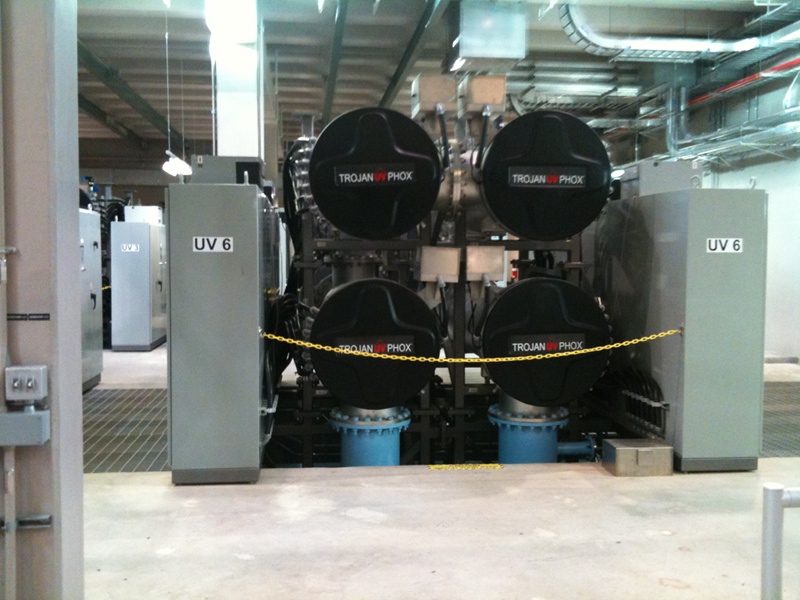
A picture named uvpretreatmentbinneyplant11172010

Last week I was the guest of Aurora Water for a tour of the Prairie Waters facilities.

The project’s official rollout was October 8. It consists of an alluvial well system across the South Platte River from Brighton, a 34 mile pipeline to the Peter D. Binney Water Purification Facility at Aurora Reservoir along with future augmentation storage and a planned aquifer recharge and recovery facility.

Here’s a video tour of the project from Aurora Water via YouTube.

The UV pre-treatment caught my eye.

Another cool part of the plant is that it treats both mountain water from the upper part of Aurora’s system along with the more problematic water from down the South Platte. The plant has two separate trains that enable different treatment processes for the two supplies. Finished water is blended just prior to entering the regular distribution system.

More Prairie Waters coverage here and here.

World Toilet Day 2010

A picture named worldtoiletday2010

I missed the announcement. World Toilet Day was Friday. Here’s the link to their website.

More education coverage here. More wastewater coverage here.

Chaffee County Commissioner Tim Glenn named ‘Conservationist of the Year’ by the Land Trust of the Upper Arkansas

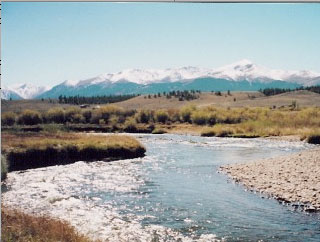
A picture named arkansasriverleadville.jpg

From The Mountain Mail (Jessica Wierzbinski):

Executive Director Andrew Mackie said Glenn received the award because of his “outstanding leadership and commitment to protecting the natural and agricultural resources of the Upper Arkansas Valley. “During his terms as county commissioner, Tim has consistently supported conservation easements in the county, especially on ranching land. “He was the driving force behind the conservation easement on the Roberts Ranch and a strong supporter of other conservation easements, such as Chubb Park in 2009.”

More conservation coverage here.

Wiggins: The town council approves clean water rate increase starting January 1

A picture named typicalwaterwell.jpg

From The Fort Morgan Times (Dan Barker):

At a special meeting Wednesday night, the council agreed to raise the minimum clean water rate from $36 a month to $49 a month starting Jan. 1, but not to change the sewer rates. Eventually, the rate will have to rise to about $80 a month in order to repay a USDA loan which is paying for the water project, said Wiggins Town Administrator Bill Rogers. But that figure is just a guess. When the project was first initiated, it was believed that each household would have to pay $93 as a basic water rate, but a grant from the USDA helped cut that cost, he said.

More Wiggins coverage here and here.

Animas River watershed: Is Cement Creek heading towards superfund designation?

A picture named cementcreekanimasrivermixingzoneusgs.jpg

From the Silverton Standard & The Miner (Mark Esper) via The Durango Herald:

The creek has long been considered one of the worst sources of metals contamination in the upper Animas River basin, owing to water laden with heavy metals gushing from abandoned mines in the Gladstone area. And the water quality in the creek appears to be worsening, said Sabrina Forrest, site assessment manager for the EPA in Denver. This degradation was not what EPA had in mind in the 1990s when EPA backed away from possible Superfund listing of the watershed, Forrest said. Prior EPA management had agreed to forego listing as long as progress was being made in the watershed. Forrest said the EPA is conducting a site reassessment to determine if the complex of mines near Gladstone could qualify for the National Priorities List (NPL), which would make it eligible for the so-called Superfund. Superfund is officially called the Comprehensive Environmental Response, Compensation and Liability Act…

Since 2009, monitoring has been conducted to see how water quality and flows have been changing since the American Tunnel was plugged and water treatment in Gladstone was stopped in 2004. ā€œWe don’t have a comprehensive-enough data set to say that this is a (National Priorities List)-caliber site,ā€ Forrest said. She said more sampling has been completed in recent weeks. ā€œIt will be another four to eight weeks before we start getting data and tasking our contractors to start poring over it,ā€ Forrest said. She added that she expects a determination about whether the site qualifies as a Superfund priority to come in January or February at the earliest…

Bill Simon, coordinator of the Animas River Stakeholders Group, said that while the group has sought ā€œappropriate and cost-effective assistanceā€ from the EPA, the group has ā€œconsistently rejectedā€ the Superfund program. The stakeholders group was formed in 1994 as a collaborative approach to water-quality issues in the region and as an alternative to a Superfund designation in the area. It includes representatives from the EPA, Colorado Department of Health and Environment, the San Juan Public Lands Office and community members. Many in the Silverton community felt that the stigma of such a Superfund designation would devastate the area’s tourism industry. ā€œNevertheless, all options are on the table, as they have been in the past,ā€ Simon said. ā€œThe EPA has obligations that (it) must attempt to address, and we have ours. They are not always the same.ā€

More Animas River watershed coverage here and here.

Energy policy — nuclear: The Telluride Town Council plans letter in opposition to the proposed PiƱon Ridge Mill in Montrose County

A picture named pinonridgesite.jpg

From The Telluride Daily Planet (Katie Klingsporn):

Members of council and town staff are in the process of penning a letter to Colorado Department of Public Health and Environment officials that details concerns that the uranium mill could damage the health of the region’s people, environment and economy. ā€œThe town and our local residents and visitors are very concerned about the possible significant and long-term deleterious impacts that could occur if the PiƱon Ridge Facility is approved by CDPHE and becomes an operational mill for the processing of uranium ore,ā€ reads a draft of the letter…

Based on the draft, the chief concern for the town is the danger a uranium mill could pose to the region’s water and air quality. The letter explains that air modeling research from Dr. Mark Williams from the University of Colorado INSTAAR has shown that airborne materials are transported easterly by prevailing winds — and the fear is that dangerous particulates will settle into the San Juan snowpack and end up in the local drinking water. ā€œThe question is not whether this will occur, but how significant is the increase of airborne and windborne radionuclide particles as a direct result of the potential operation of PiƱon Ridge and the feeder mine operations that will support PiƱon Ridge,ā€ the letter reads. ā€œThe increased presence of radionuclide particles that will contaminate our surface water bodies, currently used as our municipal drinking water source, is of critical concern to the Town of Telluride.ā€

The letter also requests that the CDPHE consider enlarging the current 50-mile study radius for the environmental impacts of the mill and include a baseline monitoring component within the Telluride region with regard to air- and windborne radionuclide particles…

The report considers Telluride as well as Montrose, Norwood, Naturita, Bedrock and Moab, Utah, as off-site locations where humans could be receptors of its materials. It goes on to list processes that could have a potential for generating airborne radioactivity. They include: transportation of ore to the mill; transportation of yellowcake from the mill to out-of-state processing plants; on-site storage and use of ore; ore handling and grinding; leaching; uranium recovery including solvent extraction, precipitation, drying, and packaging; waste disposal facilities including tailings cells and evaporation ponds. The report also lists measures that would be taken to prevent the spread of airborne materials. These include spraying down materials with water, capping tailing cells with soil, creating pools over tailings cells and monitoring ore trucks and other equipment within the mill and leaving the site.

More nuclear coverage here and here.

Arkansas Valley Conduit update

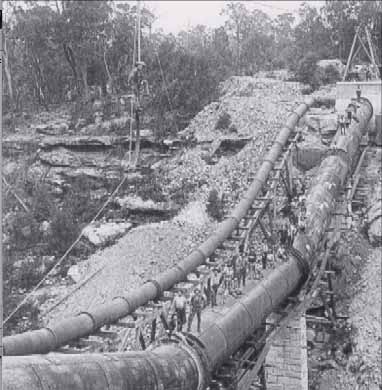
A picture named pipeline.jpg

From the Pueblo Chieftain (Chris Woodka):

n the past month, there have been several changes in the evaluation of [the] conduit under the National Environmental Policy Act by the U.S. Bureau of Reclamation, Project Manager Phil Reynolds told the Southeastern Colorado Water Conservancy District Board on Thursday.

The connection at Pueblo Dam could tie together the existing South Outlet Works with a new North Outlet Works that is part of the proposed Southern Delivery System, Reynolds said. The south connection already is used by the Pueblo Board of Water Works, Pueblo West and the Fountain Valley Authority. Colorado Springs, primary sponsor of SDS, had discussions with Reclamation during contract hearings about the north connection, which it plans to build at the river outlet on the north side of Pueblo Dam. Colorado Springs asked for credit in building the connection, as well as for future excess capacity revenues. In a compromise, Reclamation reduced the price of storage and conveyance in exchange for federal control of the North Outlet Works. One of the selling points of the north connection was always that it would provide redundancy for other systems now using the South Outlet Works. It could provide protection if one outlet were unavailable because of the need for repairs or infestation of invasive species, such as zebra or quagga mussels…

Reclamation also is looking at water quality in the conduit. The plan by the Southeastern district called for raw, filtered water, but higher levels of treatment also will be studied, Reynolds said…

In meetings with conduit participants, the Southeastern district has determined that more than 10,000 acre-feet of additional storage is needed. The storage is for water outside the Fryingpan-Arkansas Project — imported water from the Western Slope stored to supplement native supplies.

More Arkansas Valley Conduit coverage here and here.

Drought news: Most of eastern Colorado in stage one drought

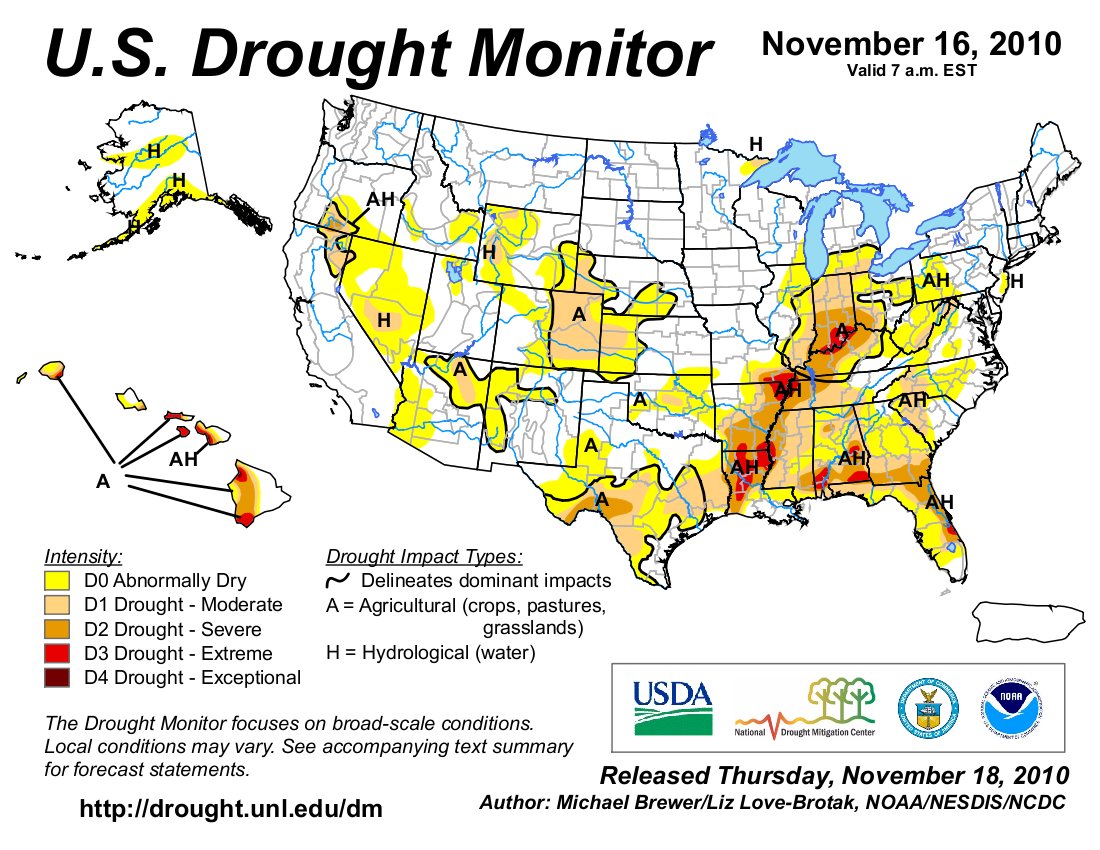
A picture named usdroughtmonitor11162010

Click on the thumbnail graphic to the right to check out the latest U.S. Drought Monitor map. Here’s a report from Chris Woodka writing for The Pueblo Chieftain. From the article:

ā€œWe’ve had no rain to speak of since July,ā€ said Fred Heckman, a farmer in McClave, about 17 miles west of Lamar. ā€œYes, we’re concerned.ā€[…]

ā€œWe are seeing very dry subsoil conditions,ā€ said Mike Bartolo, of the Colorado State University Research Center at Rocky Ford. Precipitation for the year is nearly at average, however, and reservoir levels are high. River levels are slightly below normal for this time of year, according to U.S. Geological Survey reports…

The cause for concern is a strong La NiƱa weather pattern — cool surface temperatures on the central Pacific Ocean. Weather forecasters called it one of the strongest on record in September. It has been predicted that the pattern could last for two years, although no one can be 100 percent certain. ā€œTypically what you see with La NiƱa are wetter conditions in the Pacific Northwest and dry conditions in the Southwest,ā€ said Wendy Ryan, a research associate at the Colorado Climate Center. ā€œIt’s hit and miss for Colorado.ā€[…]

Meanwhile, Lake Pueblo is at more than 120 percent of average, while Turquoise and Twin Lakes are about average for this time of year. That’s a different situation from 2001, when dry conditions had drawn down levels right before the historic drought of 2002. ā€œReservoirs are at very good levels,ā€ Ryan said. ā€œWater managers are saying that with an average snowpack in the mountains, reservoirs should be all right next year. Still, it’s always good to prepare.ā€