Colorado-Big Thompson project update: Shadow Mountain/Grand Lake connecting channel work complete

A picture named grandlake.jpg

From the Sky-Hi Daily News:

The channel had been closed since early October for a rehabilitation project to increase the safety and efficiency of the 65-year-old structure. Because most of the project work is completed, normal water operations have resumed. Workers will continue paving and re-vegetation work through mid-November. The channel is part of the Colorado-Big Thompson Project, which is owned by the U.S. Bureau of Reclamation and operated by Northern Water, a public agency created in 1937 to contract with the U.S. Bureau of Reclamation to build the Colorado-Big Thompson Project, which collects water on the West Slope and delivers it to the East Slope through a 13- mile tunnel that runs underneath Rocky Mountain National Park.

More Colorado-Big Thompson Project coverage here

Energy policy — nuclear: Powertech’s lawsuit update

A picture named uraniuminsitu.jpg

From the Fort Collins Coloradoan (Bobby Magill):

Powertech USA President Richard Clement said the company is on track to file a permit application in 2011 for its Centennial Project uranium mine northeast of Fort Collins despite the lawsuit. “What we’re doing by filing (the lawsuit), there’s a number of issues there that we felt were inappropriately dealt with, but the rules themselves, we feel the rules are livable and we can work within the rules,” Clement said. Some provisions of the rules, he said, didn’t conform to the 2008 state law requiring Powertech to keep the groundwater clean…

Clement said earlier this year that the one provision in the rules, which requires companies to establish baseline groundwater purity before they even start looking for uranium underground, would be “fatal” to all future in situ mining operations statewide. “This is a suit on behalf of industry, not just Powertech,” he said Tuesday…

Jeff Parsons, senior attorney at the Western Mining Action Project, which represents local residents opposed to the mine, said it’s difficult to gauge the possible success of Powertech’s lawsuit, but it’s hard to imagine the company submitting its Centennial Project permit application to the state while the suit is making its way through the courts. “They previously said they plan to file their application for the Centennial Project by the end of the year, and now they’re suing,” Parsons said. “That raises the questions about what their timeline is for this project. This litigation can last years.” He said it would be awkward for Powertech to be legally challenging regulations they say they can comply with in their permit application.

More coverage from David O. Williams writing for the Colorado Independent. From the article:

Two uranium mining companies have filed lawsuits against the state this fall, challenging rules requiring cleanup of existing uranium mines and mandating water reclamation at a proposed mining site. Conservationists say the recent lawsuits filed by the Cotter Corp. and Powertech USA demonstrate the industry isn’t serious about a higher level of environmental protection in a new uranium mining boom…

An executive for Uranium One, a Canadian company with Denver offices, told the Colorado Independent (TCI) in October that his company is divesting itself of Colorado mine holdings in part because of the cost of increased environmental scrutiny and state regulation. But a Powertech attorney last week told TCI that his company’s lawsuit is less about money and more about reducing regulatory hurdles.

“No, it isn’t a fiscal issue at all,” said John Fognani of Fognani and Fought law firm. “If you want to narrow it down, it’s a resource issue in terms of utilizing more water resources to make sure that you meet the mandate and bring water quality back to background or better, which is what the rule states, and of course that’s what the legislation states. At the end of the day it’s really the water resource issue.”

More nuclear coverage here and here. More Powertech coverage here and here. More HB 08-1161 coverage here.

TheDenverChannel.com grills Denver Water exec over expenditures, Denver Water responds

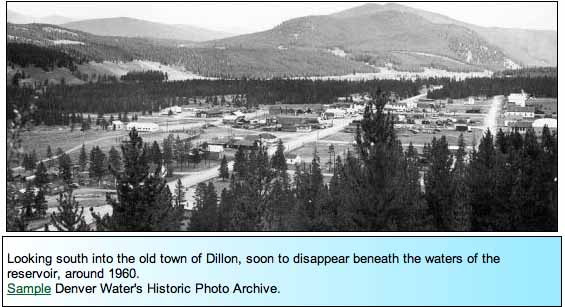
A picture named dilloncolorado.jpg

John Ferrugia and Tom Burke from the television station have penned this report about the results of their investigation into Denver Water expenditures in light of the approximately $40 per year rate increase. Click through and read the whole article. Here’s an excerpt:

If all are approved, residential customers of Denver Water could see an increase of more than $40 a year. “When we see Denver Water upping their rates for their next three years, I wonder, ‘Are they being as efficient as possible Are they being as responsible as possible with our money?'” said Denver City Councilman Paul Lopez. Lopez has been a vocal opponent of the proposed rate hike…

Soon after Denver Water announced the proposed rate increase to city council in October, the CALL7 Investigators asked for and obtained a copy of all the department’s expenditures since January 2009. 7NEWS found a large majority of the expenses went to expected items like tools, pipes, repairs, vehicles, consultants and utility bills. But we also found a number of expenditures that raised questions, including $1.8 million going to community outreach and public relations. “I don’t think there is a need to do that level of community outreach when they are a monopoly, essentially,” said Lopez, referring to the fact that most of Denver Water’s 1.3 million customers do not have a choice of water provider for their homes or businesses…

“What benefit do I, as a Denver Water customer get, through your community outreach?” Ferrugia asked Denver Water Director of Finance Angela Bricmont. “Community outreach is key because it’s part of our campaign. The ‘Use Only What You Need’ campaign is part of our strategic plan to really provide water for the future,” explained Bricmont. “Many consumers look at this campaign and say, ‘I’ve conserved. I’m not using as much water… and then it costs me more money?'” asked Ferrugia. “The reality is it’s not costing you more money. In the long run, it’s actually costing you less,” said Bricmont. “What’s driving up your monthly water bill is that we have 50-year-old pipes and the fact that we need to go out and repair those so we can continue to supply clean, safe drinking water.”[…]

“Line dancing classes? Why would Denver Water need line dancing classes?” asked a visibly surprised Lopez. “This is reckless — $2,000 of our money for line dancing classes is reckless, especially now.”

Bricmont explained that the line dancing classes as well as expenditures for cooking classes, aerobics, $4,800 for golf outings and $2,500 for the Denver Water softball team were part of the department’s “Workplace Wellness Program.” “We have invested in our employees’ health and one reason we’ve done that is we’re self-insured. It’s in our best interest, both as an employer and bottom line, that we have healthy productive employees,” said Bricont. “We have a program to reach out to make sure our employees and taking advantage of the things we know work and to keep them on the job and healthy.”

Denver Water (Stacy Chesney) issued a release late yesterday in response to the article:

We take very seriously the obligation to spend our ratepayer’s money wisely. Denver Water is a well-managed organization and we take careful steps to ensure we’re fiscally responsible. When verifiable problems are brought to our attention, we fix them. We will continue to take appropriate steps to assure our operations are efficient and accountable.

Water rates are driven by the vital maintenance and capital projects needed to maintain and improve our system and to keep Denver Water’s infrastructure reliable and strong into the future. The request for a rate adjustment in 2011 is based on the need to invest in these critical projects. Next year’s projects include work like dredging Strontia Springs Reservoir, our watershed protection initiative with the U.S. Forest Service, as well as replacing the 105-year old valves at Cheesman Dam, finishing major upgrades at Williams Fork Reservoir and Dam, and stepping up our pipe rehabilitation and replacement program.

Denver Water’s rates are among the lowest in the state. If it weren’t for the need to dredge Strontia Springs Reservoir, our budget for 2011 would be less than it was in 2010. We will continue to invest in our system’s infrastructure to fulfill our obligation to provide reliable clean water to our customers now and in the future. We also have a responsibility to invest in conservation as a critical part of our strategy to provide water to our customers in the future, to eliminate waste and to help the environment.

Our mission is to provide a reliable supply of safe, clean water to more than 1.3 million people in Denver and the surrounding suburbs. As we deliver on that mission, we have a responsibility to our employees, who work hard every day to take care of our 3,000+ miles of pipe, 19 raw water reservoirs, 22 pump stations, four treatment plants, and much more. As part of that, we support wellness programs, which help reduce health and lost productivity costs in the long run. We also reimburse meals for legitimate business expenses, which include employees working overtime to repair the system. We’re committed to fostering a healthy workforce and need to retain and attract employees with the expertise to run our complex water system.

The expenses related to employee wellness, food, community outreach and the Use Only What You Need campaign amount to less than 1 percent of Denver Water’s budget.

We work hard to keep our costs reasonable and stay accountable to our ratepayers. Over the course of a year, we handle more than 50,000 financial transactions. We’re not perfect, but we do our best to make sure we are a fiscally responsible organization. When we find violations of our policies, we will follow up and deal with them. We’re proud of the work we do. We have controls in place to ensure the proper review and approval of all payments. In addition, periodic review is done by accounting, as well as internal and external auditors.

More Denver Water coverage here and here.

Pueblo: The Board of Water Works lays out 2011 budget with 5% rate increase

A picture named fountainpavementdrawing.jpg

From The Pueblo Chieftain (Chris Woodka):

The Pueblo Board of Water Works Tuesday proposed a $30.7 million budget, a little less than originally proposed. The budget will mean a 5 percent rate increase for Pueblo water customers, mostly to cover rising energy costs and increased legal and engineering expenses. Employee salaries and benefits will increase about 2 percent, including a 1.43 cost of living increase. For residential customers, the increase would mean a typical increase of about $1.50 per month in winter months, or less than $5 per month during summer months with lawn watering for single-family homeowners.

More infrastructure coverage here.

Fryingpan-Arkansas Project: Senator Udall is seeking consensus from Colorado’s congressional delegation for Aurora’s use of project facilities to move water out of basin

A picture named puebloreservoir.jpg

From The Pueblo Chieftain (Chris Woodka):

“It’s not fair to suggest that I’ve put my thumb on the scales toward Aurora or the Arkansas Valley,” Udall said. “The role I was playing was in assuring the court that if the parties would agree, then I would be a mediator in the process.” Udall also said there would have to be consensus from the entire congressional delegation, including newly elected Republicans Scott Tipton and Cory Gardner, who will be in the U.S. House.

The Lower Arkansas Valley Water Conservancy District is suing the Bureau of Reclamation in the Denver federal court over a 40-year contract awarded to Aurora by Reclamation in 2007. The Lower Ark contended the contract violated the 1962 legislation authorizing the Fryingpan-Arkansas Project, but signed a 2009 agreement with Aurora to stay the case for two years. Part of the agreement was to seek federal legislation that legitimizes use of the Fry-Ark Project by Aurora.

Udall looks at the possibility of such legislation as “one last attempt” to avoid costly court battles over the issue in the future. “If the parties reach agreement, then I would help them vet it,” Udall said. “If there’s not an agreement, then I’m not going to introduce legislation.”[…]

“I’m relying on the parties who come to the table to keep the valley whole, if those parties can come to an agreement,” Udall said. “If the parties don’t agree, I’m doing nothing.”

More Fryingpan-Arkansas coverage here and here.