Boulder County: Keep it Clean partnership

A picture named effluent.jpg

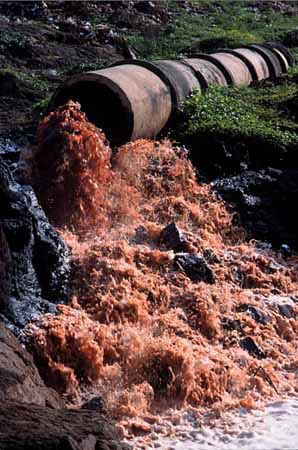
Say hello to the Keep it Clean Partnership. They’re organizing to educate folks in Boulder County on good practices that help keep pollutants out of storm sewers, rivers and streams.

Thanks to the Boulder Weekly for the link.

More stormwater coverage here. More water pollution coverage here.

Flaming Gorge pipeline: Rock Springs City Council gets update briefing

A picture named flaminggorgepipelinemillion.jpg

From The Green River Star (David Martin):

The main point [Don Hartley, a representative of the group Communities Protecting the Green] stressed was the fact that the issue would be around for a long time. Hartley told the Council a number of the proposed projects overlap one another. Due to the amount of time needed to sort out the projects and perform the research needed, Hartley said the Army Corps of Engineers believes a final decision could be made by 2018. “We’re in this for the long haul, “ Hartley said…

The estimated costs of the coming legal battle are enormous, as are the players involved, according to Hartley. However, the amount of money pledged by the cities of Rock Springs and Green River and Sweetwater County are “only the tip of the iceberg,” as Rock Springs Councilman Neil Kourbelas said. Kourbelas asked if other concerned communities and groups were pledging funds to help with potential legal costs, saying more than just the three government bodies involved with the organization would be affected by a trans-basin water project.

More Flaming Gorge pipeline coverage here and here.

2010 Annual Meeting of the Arkansas River Compact Administration

A picture named arkansasriverbasinwikipedia.jpg

From the Ditch and Reservoir Company Alliance:

The 2010 Annual Meeting of the Arkansas River Compact Administration (“ARCA”) will be held on Tuesday, December 14, 2010, commencing at 8:30 A.M. MST** (9:30 A.M. CST) in the Lamar Community Building, 610 South Sixth Street, in Lamar, Colorado. The meeting will be recessed for lunch at about 12:00 PM and reconvened for the completion of business in the afternoon as necessary. Meetings of ARCA are operated in compliance with the federal Americans with Disabilities Act. If you need a special accommodation as a result of a disability please contact Stephanie Gonzales at 719-734-5367 at least three days before the meeting.

The Engineering, Operations, and Administrative/Legal Committees of the Administration will meet on Monday, December 13, 2010, The Lamar Community Building, 610 South Sixth Street, in Lamar, Colorado at 2:00 PM. MST** (3:00 P.M. CST) and continuing to completion. Tentative agendas for the Committee meetings are also set out below. The public is welcome to attend the Committee meetings, but time for comments may be limited.

** Meeting times may change, please check the final notice and agenda for the actual meeting times. The final meeting notice and draft agenda will be posted on both the Kansas Department of Agriculture’s website http://www.ksda.gov/ and on the Colorado Water Conservation Board’s website at http://cwcb.state.co.us on or after December 1. This preliminary notice was prepared
on November 12, 2010.

More Arkansas River basin coverage here.

New whitewater park for Montrose?

A picture named kayaker.jpg

From The Telluride Watch (Peter Shelton):

Now retired from competition and fresh from the opening of the 2012 Olympic kayaking venue in London, which was built by his firm, S2O Design of Boulder, [Scott] Shipley made a pitch for a family-oriented whitewater park on the Uncompahgre River at Upper Cerise (Riverbottom) Park.

City Park Planner Dennis Erickson hosted the event at the Pavilion, which also included a presentation by lead planner Ann Christensen of DHM Design in Durango, who introduced the draft plan. Also on hand was Gabe Preston of CPI Consulting, who led the group in a keypad polling exercise on priorities within the draft plan.

Participants indicated their preferences – high priority, medium or low – for a number of goals being considered in the plan, including: developing new city-owned parks on the northern third of the 10-mile-long river corridor, building more pedestrian bridges across the river, connecting downtown Main Street more directly to the river, building tails to link existing and future parks, acquiring private property for river improvements, and preservation/enhancement of the river ecosystem.

A whitewater park scored high on the list. But the highest priority for the public on this night was clearly trails, bicycle/pedestrian trails, to connect parks and link existing segments of river trail, thereby providing alternate-transportation routes, not just for recreation, but for commuting and shopping as well.

More whitewater coverage <a href="

La Niña update

A picture named elninolanina.jpg

From the San Diego Union-Tribune (Robert Krier):

Klaus Wolter, a long-range forecaster who consults with the California Department of Water Resources to help set water-management strategies, said the current La Niña is one of, if not the strongest La Niña on record. The stronger the La Niña, the more likely it will last, he said. “The odds are quite high that we won’t see a short-lived La Niña,” Wolter said in San Diego Wednesday. “The odds are higher than 50-50 (that it will continue). “La Niña is fundamentally different (from El Niños). Events (of this size) have lasted two, even three years.”[…]

Wolter, who spoke at the Westin Hotel in the Gaslamp Quarter during a workshop on the winter outlook sponsored by the DWR, said the rain this weekend and the abnormally wet October in California and the Colorado River Basin, another major source of imported water for the region, will have little bearing on the coming months. “As much as we rejoice with all this moisture, it doesn’t mean much for the rest of the winter,” said Wolter, who works for the National Oceanic and Atmospheric Administration’s Western Water Assessment Team and the University of Colorado. “The winter season is really what counts.”

Energy policy — nuclear: Schwartzwalder mine cleanup update

A picture named uranium.jpg

From The Denver Post (Bruce Finley):

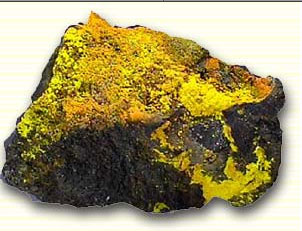
Cotter’s attorneys conceded that Cotter has not taken a step toward complying with an existing state order to pump out and treat toxic water filling the Schwartzwalder mine. That mine sits upstream from Denver Water’s Ralston Reservoir, which supplies drinking water to 1.3 million metro-area residents…

“We are entitled to know what compliance would look like,” Cotter attorney Nea Brown said before the state Mined Land Reclamation Board. Board members then read aloud a prior order requiring Cotter to pump water from the mine to a level at least 500 feet below the opening of the mine. There was an Aug. 31 deadline. “I’m just a farmer from down east, but I can read that,” said board chairman Ira Paulin, who represents the mining industry at state hearings. “It says you have got to implement it.”

Brown argued that the required corrective actions are broad and unclear and that Cotter would need time to move in equipment and have a place to put the water it removes…

Board members will continue their hearing today, when they will decide whether to impose additional fines of up to $1,000 a day for 78 days, issue new violations and a “cease and desist order” that essentially repeats state demands. Cotter separately has taken its case to Denver District Court, filing a lawsuit against the state. It asks that a judge block state efforts to order the cleanup and impose fines and accuses the state mined lands board members of abusing their discretion.

More Schwartzwalder mine coverage here. More nuclear coverage here and here.

Silt: Town water violates state standards for trihalomethanes for the second time this year

A picture named watertreatment.jpg

From the Rifle Citizen Telegram (John Gardner):

According to the Silt’s public works director Gerry Pace, the town of Silt’s water supply is in violation of the Colorado drinking water standard for a class of chemicals called total trihalomethanes (TTHMs). This is the second time this year that the town’s water has been in violation. “We went up one notch on TTHMs,” Pace said of the third quarter tests which took place in October.

TTHMs form when the source water with natural organic matter is treated with chlorine. Municipalities are required to test TTHM levels quarterly at multiple locations throughout the water system. The state regulates TTHMs to reduce the likelihood of chronic health outcomes due to long-term water consumption. Some people who drink water containing total TTHMs in excess of maximum contamination level, over many years, may experience problems with their liver, kidneys and central nervous system, and may have an increased risk of getting cancer, according to a letter sent to Silt residents.

Test results from an Oct. 25 test showed that Silt’s water system exceeds the allowable TTHM level of 80 micrograms per liter. The levels reported from the October test were 84 micrograms per liter, compared to 83 from the second quarter tests this year, Pace said. Subsequently, every quarter that TTHM levels remain above 80, the city is required to notify residents.

More water treatment coverage here.

Denver Water Board announces 2011 rates

A picture named rehabbedwaterlinedenverwater.jpg

Here’s the release from Denver Water (Stacy Chesney):

The Denver Board of Water Commissioners voted to adjust water rates for 2011 at its meeting today. The adjustment will provide further funding for the utility’s capital projects, which include upgrades to aging infrastructure over the next decade. The new water rates will take effect March 2011.

“Water rates are driven by the vital maintenance and capital projects needed to maintain and improve our system and to keep our infrastructure reliable in the future,” said Todd Cristiano, manager of rates. “Next year’s critical projects include work like dredging Strontia Springs Reservoir, our watershed protection initiative with the U.S. Forest Service, replacing the 105-year old valves at Cheesman Dam, finishing major upgrades at Williams Fork Reservoir and Dam, and stepping up our pipe rehabilitation and replacement program.”

The effects of the proposed changes on customer bills would vary depending upon the amount of water the customer uses and whether the customer lives in Denver or is served by a suburban distributor under contract with Denver Water; the more customers use, the more they will pay. Under the current rate proposal, average Denver residential customers would see their bills increase by about $41 a year — an average of $3.40 per month. Typical suburban residential customers served by Denver Water would see an increase of $32 per year — an average of $2.66 per month. For example, the average annual cost for water for an inside-city customer in 2010 was $330, and would be $371 in 2011. Similarly, the average annual cost for an outside-city customer in 2010 was $555, and would be $587 in 2011. Adjustments also have been proposed for commercial, industrial and government customers.

Rates for Denver Water customers living inside the city would remain among the lowest in the metro area, while rates for Denver Water residential customers in the suburbs would still fall at or below the median among area water providers.

Denver Water owns and maintains more than 3,000 miles of distribution pipe — enough to stretch from Los Angeles to New York — as well as 12 raw water reservoirs, 22 pump stations and four treatment plants. Ongoing rehabilitation and replacement of infrastructure is needed throughout the water distribution system, much of which dates back to post-World War II installation or earlier.

Denver Water is funded through rates and new tap fees, not taxes. Its rates are designed to recover the costs of providing reliable, high-quality water service and to encourage efficiency by charging higher prices for increased water use. A significant portion of Denver Water’s annual costs do not vary with the amount of water sold and include maintenance of the system’s distribution pipes, reservoirs, pump stations and treatment plants. Denver Water also examines and adjusts its capital plan as necessary each year.

Details of the 2011 rates can be found Denver Water’s website (www.denverwater.org). Members of the public who have questions about the proposed rate adjustment may call 303-628-6320.

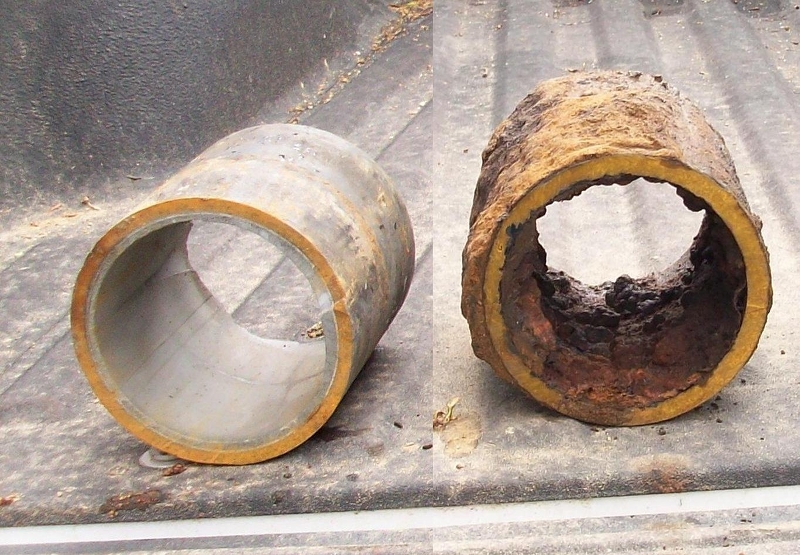
Click on the thumbnail graphic for a quick look at a rehabbed waterline.

More coverage from Bruce Finley writing for The Denver Post. From the article:

Starting in March 2011, metro-area residents’ bills will increase by an average of $41 a year in Denver and $32 a year in suburban areas, utility spokeswoman Stacey Chesney said. It will be the 20th straight year that Denver Water customers have faced rate hikes. Denver Water board members said the rate hike is required to cover the cost of maintaining more than 3,000 miles of pipe, 12 water reservoirs, 22 pump stations and four treatment plants…

This year, the average annual cost for Denver Water’s urban customers was $330. For suburban Denver Water customers, the average cost was $555 — still lower than the cost of water supplied by other water providers, Chesney said. Denver Water also raised rates about 5 percent for commercial, industrial and government customers.

More Denver Water coverage here.

Lower Arkansas Valley Water Conservancy District board meeting recap

A picture named arkbasinditchsystem.jpg

From The Pueblo Chieftain (Chris Woodka):

Two meetings today will help test support for the Super Ditch. The Super Ditch board this month sent signup cards and information packets to shareholders on seven ditches in advance of the meetings, which are at 1 p.m. at the Gobin Community Building in Rocky Ford and at 6 p.m. at the Bowman Building at Lamar. The process will gauge interest among water rights owners for contracts with the Pikes Peak Regional Water Authority and Aurora. While agreements have been signed, the specific water rights to be used in meeting supply have to be identified to satisfy legal and engineering requirements. The Bessemer, Catlin, Fort Lyon, High Line, Holbrook, Otero and Oxford ditch systems are eligible for participation…

The Lower Ark is seeking two grants from the Colorado Water Conservation Board for Super Ditch projects:

– $254,000 for engineering of delivery systems, including storage; the Lower Ark would match with $28,000.

– $28,000 to study long-term farm financial planning from temporary water transfers, with $3,000 from the Lower Ark.

The CWCB funds would come from $1.5 million which is available for studies of alternative projects to municipal purchases of water rights in agriculture.

[Colorado State University] is doing studies on farms owned by the Lower Ark district on the High Line and Holbrook canals to determine how much expense per acre farmers could expect during a lease. That would include the value of crops not grown and ground preparation. Part of the study mirrors corn test plot research at the CSU Arkansas Valley Research Center, but there is an additional economic component as well. Cabot is developing a spreadsheet tool that farmers could use to calculate whether a lease makes sense for them. The research also is looking at whether alternative crops that require less water, such as canola or sorghum, could be grown on irrigated ground as dryland crops during fallowing periods.

More coverage from Chris Woodka writing for The Pueblo Chieftain. From the article:

A group plan for irrigators that would allow them to comply with new state rules on surface irrigation in the Arkansas Valley was approved Wednesday. The Lower Arkansas Valley Water Conservancy District approved its plan 6-1 and will begin signing up farmers immediately in advance of Jan. 1, when the new rules take effect. Otero County Director Wayne Whittaker opposed the plan, saying it costs farmers too much and puts the Lower Ark district in a role that should belong to the state. “When we first discussed this, it was going to cost farmers $100 and we would just do the paperwork to submit to the division engineer,” Whittaker said.

More Lower Ark coverage here and here.