
From The Grand Junction Daily Sentinel (Dennis Webb) via The Denver Post:
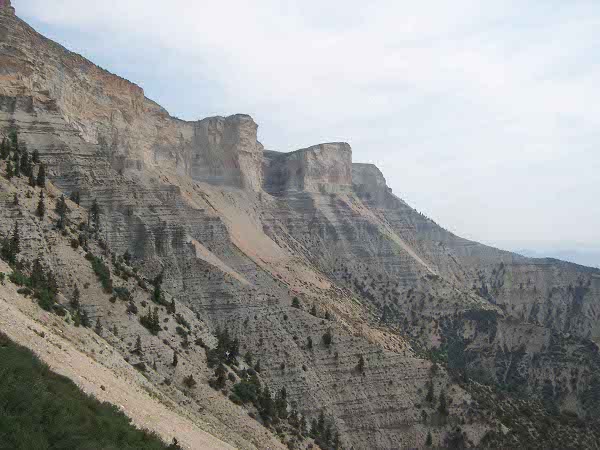
High up the Roan Plateau above the 365-acre research site, four gaping mine portals large enough that big trucks once drove through them have been closed off to all but bats. The portals tapped mines that were sometimes 1,000 feet long or more, employed hundreds of miners at their peak and provided 400,000 cubic yards of oil shale that underwent retort heating processes at the research site…
Congress transferred the research site and the oil shale reserves to the Bureau of Land Management in 1997, and provided that cleanup of the site would be paid for by federal revenues from nearby oil and gas development. “There were huge waste piles of retorted oil shale that didn’t pose an immediate hazard but still needed to be cleaned up,” said John Beck, who is branch chief for lands and realty for the Colorado state office of the Bureau of Land Management, and oversaw the $24 million cleanup project.
“I think they did a very good job with the (cleanup) work over there,” Cooley said.
He said he didn’t think the site posed much of an environmental concern. But still, “I think it did need to be cleaned up and put to bed, so to speak, from an aesthetic standpoint if nothing else,” he said.For the BLM, part of the problem was that waste shale had been dumped in an adjacent valley that’s home to the intermittent West Sharrard Creek, a tributary of the Colorado River, raising concern about the potential for contamination from runoff. Carla DeYoung, a BLM ecologist who was an inspector for the project, said arsenic levels in the waste measured six times background levels in the area.
In addition, a fire of undetermined origin in a waste pile created a lot of ash that had to be shipped to a landfill in Denver. The fire also drew oil out of the shale and it accumulated at the base of the waste pile. Petroleum-contaminated material was shipped to C B Industries Delta, a Delta facility where it could be spread out and “land-farmed,” a process under which bacteria can consume the petroleum.
The sheer volume of waste also proved daunting. The BLM planned on building one waste repository but ran out of room and had to build a second, smaller one nearby, and eventually an even smaller third one…
The repositories include geomembrane liners at the bottom and 30-inch-thick clay caps on top, covered by reseeded topsoil. Other aspects of the cleanup included demolition and site restoration work involving a former water treatment plant near the river that supplied Anvil Points, and closing off of the mine entrances, which are highly unstable because of the loose surrounding shale.