
Drought news: Storage required to benefit from conserved water from watering restrictions #COdrought

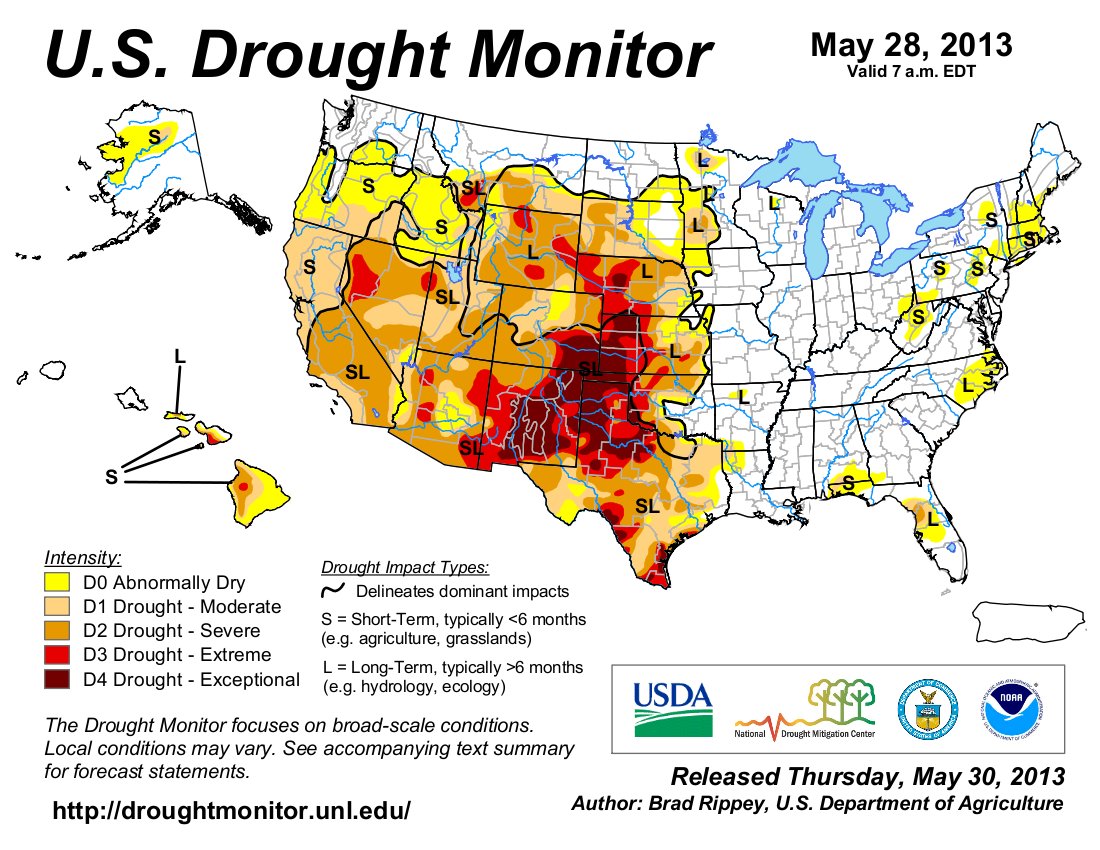
usdroughtmonitor05302013

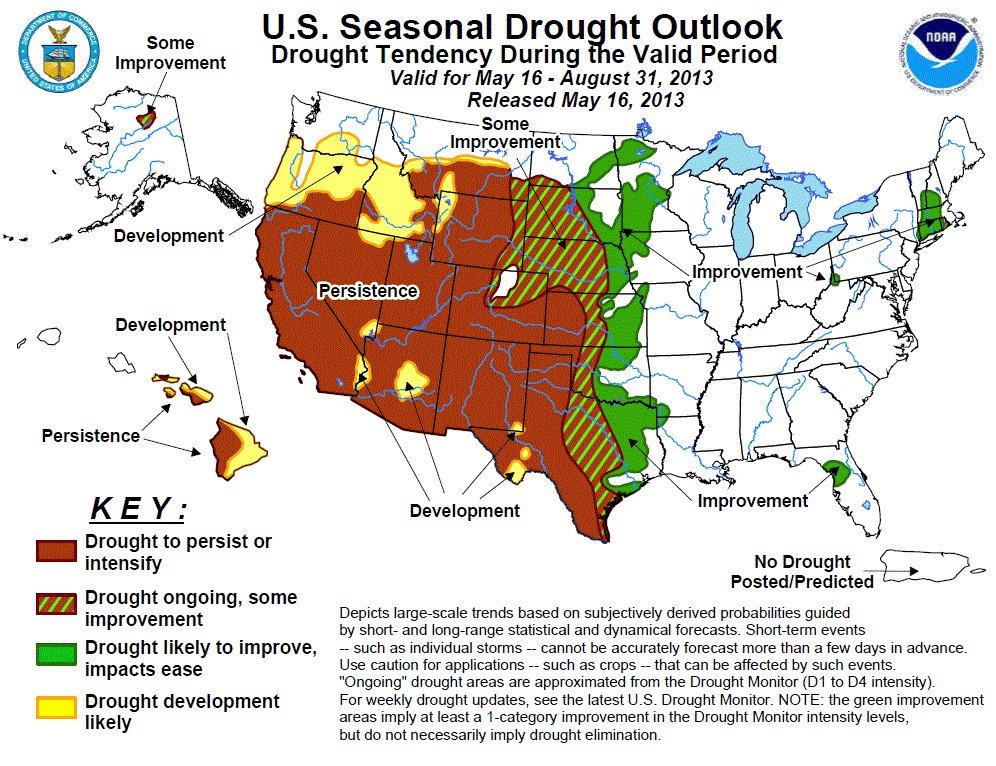
seasonaldroughtoutlookcpc0516to08312013

From the Fort Collins Coloradoan (Bobby Magill):

Fort Collins simply lacks the storage space for mandatory water restrictions to benefit the city, said Fort Collins water resources manager Donnie Dustin.

Denver Water has space to store about 550,000 acre-feet of water in its reservoirs, but Fort Collins owns only a small fraction of the water in Horsetooth Reservoir, which is controlled by the Northern Colorado Water Conservancy District, he said. When Denver Water imposes water restrictions, they have a large “bank” in which to store water, he said. “The city of Fort Collins just doesn’t have that,” Dustin said.

Of all the major cities along the Front Range, Fort Collins and Loveland own the least amount of reservoir storage, relying mostly on Colorado-Big Thompson Project reservoirs, including Horsetooth, he said. Northern Water limits the amount of water cities can save for use in future years, and the city can’t store more there even if it wants to.

Loveland is in a similar situation and did not ponder any water restrictions at all this year. The city, which hasn’t imposed water restrictions since 2003, doesn’t yet have a specific plan for how to respond to a drought, something the Loveland City Council is planning to consider Tuesday…

Some cities keep some level of mandatory water restrictions in place all year, regardless of drought conditions.

Both Aurora and Greeley limit lawn watering to specific days of the week all year.

While Greeley has ample water supplies, Aurora’s complicated network of reservoirs and pipelines stretching all the way to Eagle County has been hit hard by the drought.

The city’s reservoirs are at only 54 percent of capacity, and even with recent snowfall, it won’t be clear until late June if Aurora will need to change its water conservation measures, said Aurora Water spokeswoman Gabrielle Johnston…

Because every city is vulnerable to drought in different ways because their water sources and water rights can be dramatically different, it’s difficult to compare cities’ drought responses, said Harold Evans, chairman of the Greeley Water and Sewer Board. Greeley, which has access to adequate water because it has senior rights to Poudre River water and water rights in three other river basins, imposed permanent water restrictions in 1906…
Kiowa: The town is working on paying down debt incurred from water and sewer projects

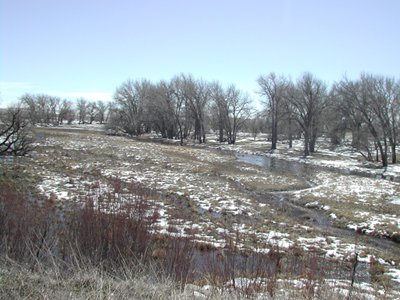
kiowacreek.jpg

From The Denver Post (Carlos Illescas):

The town is deep in debt after borrowing millions of dollars for water and sewer projects, with some locals worrying that the historic town — first settled in 1859 along the banks of Kiowa Creek — could have gone bankrupt. Kiowa joins the ranks of communities large and small that are struggling to get out of the downturn in the economy.

Kiowa’s situation got so bad that a judge last year appointed an outside firm to take “receivership” of Kiowa’s water and sewer system, charged with helping the town pay back $5.5 million for a new water and sewer system the town had defaulted on with several banks…

The town is moving toward a separate water and sanitation authority district. That move is expected to attract a new federal loan spread out over a longer period of time and featuring a lower interest rate…

Kiowa’s downfall began in 2005, when the town board approved issuing bonds for $5.5 million. About 60 percent of that money paid for new water pipes and the water tower, and 40 percent went to a mechanical sewer plant. The town had previously used natural “lagoons” for disposing its waste. The upgrade was mandated by the state because Kiowa didn’t meet certain quality standards.

The water tower was needed, the town council felt at the time, in part because a new residential subdivision was being planned there — and those folks would need water. It made sense for the town to do it, they rationalized, because homeowners would be charged tap fees, which would help pay for the tower and the water system…

He suggested to the town council the creation of a separate water and sanitation authority that he will initially oversee. By doing so, [Rick Block] is expected to secure a new loan from the U.S. Department of Agriculture at an interest rate of 3.25 percent instead of the current 5 percent and pay off the current bond holders. Block said he expects to be done with his Kiowa involvement by year’s end. In the meantime, some bulk water is being sold to an intermediate outfit that is working to sell Kiowa’s water to energy companies for fracking, among other customers.

More infrastructure coverage here.

NWS: How Has the Climatological Average Changed over the Last 100 Years in Eastern Utah and Western Colorado?

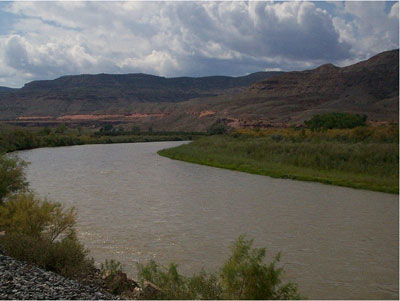
coloradorivergjwik.jpg

Click here to read the document. Here’s an excerpt:

Since 1911, the climate in eastern Utah and western Colorado has become warmer, especially the minimum temperatures. There is also some indication that the region has seen increased precipitation. After a cooling trend from the 1940s through the 1960s, the trend towards warmer and wetter conditions has occurred since the 1970s. These general trends in regional temperature and precipitation are matched in surrounding sites. Large decade-to-decade and site-to-site variability was noted in the temperature and precipitation data.

Keep current with wildfire information from the USFS and Google Earth

weberfiremancos.jpg

Click here for the active fire maps from the USFS using Google Earth.