The Global Climate 2001-2010: A decade of climate extremes – summary report from the World Meteorological Organization

wmoglobalclimate20012010reportcoverjuly2013.jpg

Click here to read the summary report. Click here to go to the website.

Thanks to the Summit County Citizens Voice (Bob Berwyn) for the link. From the post:

It was the warmest decade since the start of modern measurements in 1850, with more national temperature records broken than in any previous decade. Along with analyzing global and regional temperatures and precipitation, the report took a close look at extreme events, including heat waves in Europe (2003) and Russia (2010), Hurricane Katrina in the United States of America, Tropical Cyclone Nargis in Myanmar, droughts in the Amazon Basin, Australia and East Africa and floods in Pakistan.

The decade was the warmest for both hemispheres and for both land and ocean surface temperatures. The record warmth was accompanied by a rapid decline in Arctic sea ice, and accelerating loss of net mass from the Greenland and Antarctic ice sheets and from the world’s glaciers.

As a result of this widespread melting and the thermal expansion of sea water, global mean sea levels rose about 3 millimeters per year, about double the observed 20th century trend of 1.6 mm per year. Global sea level averaged over the decade was about 20 cm higher than that of 1880, according to the report.

Drought news: Reclamation details changes in Rio Grande flows #NMdrought #COdrought

pecosriverriograndewatershedswiki.jpg

From email from Reclamation:

As of July 2, the Middle Rio Grande Conservancy District exhausted its water stored in reservoirs on the Rio Chama. Flows in the Middle Rio Grande are now primarily comprised of federal supplemental water leased for the Rio Grande silvery minnow and water released from El Vado Dam to supplement the meager natural flows for irrigation of the six Middle Rio Grande Pueblos’ Prior and Paramount lands.

The water in the river below Cochiti Dam is either water Reclamation leased specifically to maintain flows below diversion dams for the silvery minnow or irrigation water for the Pueblos. The only water that the MRGCD can divert and deliver to its non-Pueblo farmers are native flows occurring due to rain or water remaining after the minnow and Pueblo needs are satisfied.

“We are now up to 36 months of consecutive drought. It’s the driest three-year period on record for much of New Mexico. Reclamation is focused on working closely with the Pueblos and MRGCD to ensure that the water in the river is reaching its intended destinations,” said Albuquerque Area Manager Mike Hamman. “It is critical to all water users that the small populations of silvery minnow are maintained through the summer in order for us to meet our commitments under the Endangered Species Act.”

Reclamation and other water management agencies are operating under an emergency management plan developed by the Minnow Action Team, which was formed under the Middle Rio Grande Endangered Species Collaborative Program. This plan allows for earlier than usual drying of parts of the river as well as deviation from target flows normally required under the 2003 Biological Opinion issued by the U.S. Fish and Wildlife Service. The intent is to stretch out supplemental water and deliver limited amounts to key areas that provide refugial habitat to the silvery minnow.

CPC: The latest El Niño/Southern Oscillation (ENSO) Diagnostic Discussion is hot off the presses #COdrought

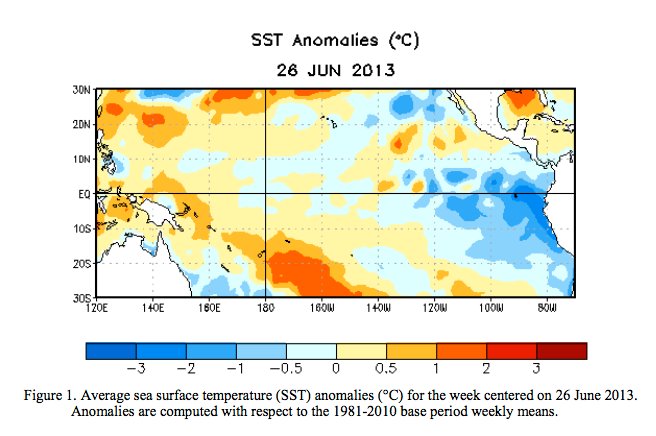
ensosstanomaliescenteredonjune232013.jpg

Click here to read the discussion. From the synopsis:

During June 2013, below-average sea surface temperatures (SST) prevailed in the eastern Pacific, while near-average SSTs persisted across the rest of the equatorial Pacific. This ENSO-neutral pattern was also reflected in the Niño indices, which were warmer than -0.5°C in Niño-4 and Niño-3.4 and cooler than -0.5°C in Niño-3 and Niño-1+2 during the month. Meanwhile, the oceanic heat content (average temperature in the upper 300m of the ocean) anomalies increased during June, due to the emergence of above-average subsurface temperatures in the eastern half of the Pacific. Across the equatorial Pacific, the low-level winds remained near average, while weak upper-level westerly anomalies persisted in the central Pacific. Convection remained enhanced over Indonesia and weakly suppressed near the International Date Line. Collectively, these atmospheric and oceanic conditions were consistent with ENSO-neutral.

Southern Delivery System: Transmountain water not subject to just one use

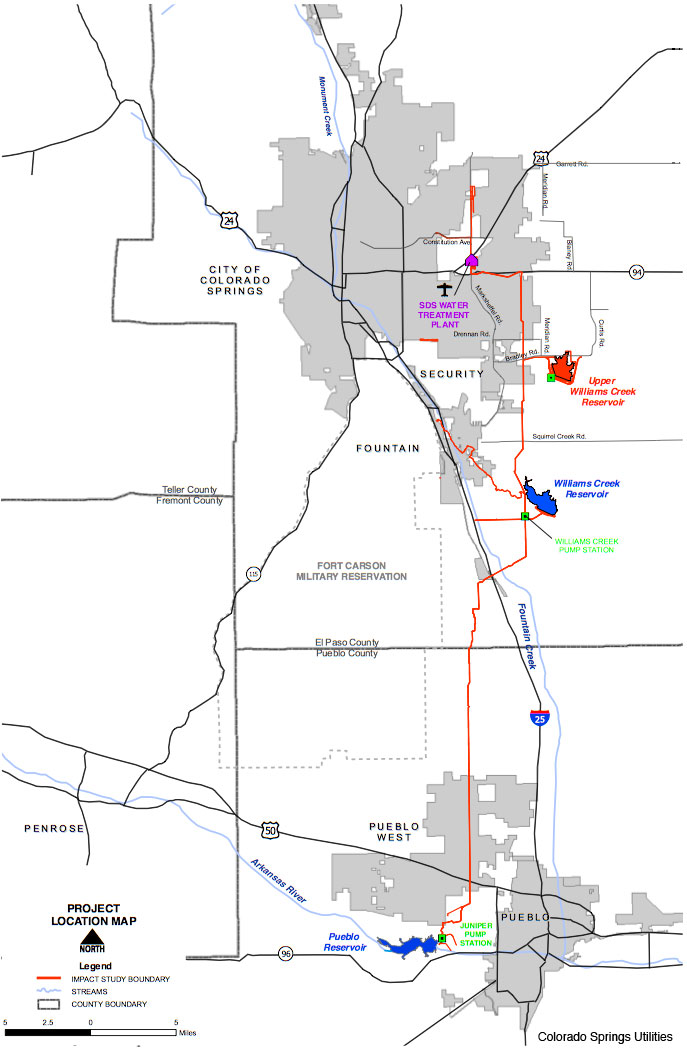
sdspreferredalternative.jpg

From Colorado Springs Style (Joe Stone):

As SDS Program Director John Fredell explains, Colorado water law dictates that water native to Front Range streams and rivers can only be used once. For example, Colorado Springs Utilities can divert Fountain Creek water for use by residential customers, but any of that water not consumed must be treated and released for downstream users. With Western Slope water, Colorado Springs has the right to “use the water to extinction.”

However, Fredell says, no “plumbing”currently exists to allow the Springs to fully consume its Western Slope water. The water gets used once then flows downstream to the Arkansas River via Fountain Creek. By connecting a pipeline from Pueblo Reservoir to the Springs’ water system, the SDS provides the plumbing that will change that. Colorado Springs Utilities will soon be able to exchange water sent down Fountain Creek for water stored in Pueblo Reservoir. “With SDS, we’re basically reusing our water, getting two to three uses of that water, which is extremely valuable.”

Fredell points to several economic benefits of reusing the city’s Western Slope water, including preservation of Arkansas Basin agricultural water rights, which are frequently targeted by growing Front Range cities. Once municipalities acquire agricultural rights and change them to municipal use in Water Court, productive farmland is dried up with little chance of ever being returned to agricultural production.

The immediate benefits of the SDS include revenue for local businesses and jobs for the local workforce. “The SDS is the biggest thing going,” says Fredell, “and we worked hard to get local contractors and companies involved. A lot of people questioned the timing of this project, asking why we would start such a big project during an economic downturn. My answer is, ‘Why wouldn’t you start now?’ You get better pricing on materials and services because of a more competitive market, and you help move the economy forward. This project provides work for over 300 Colorado businesses.” Furthermore, historically low bond rates add up to huge savings over the project’s forty-year finance period.

Officials with Colorado Springs Utilities must also take into account the age of the city’s existing water infrastructure. Bringing Western Slope water to the Springs requires a complex system of twenty-five dams, 200 miles of pipes and four major pump stations in nine counties. That infrastructure is aging, and some parts of the system are more than fifty years old. As parts wear out and fail, the redundancy provided by the SDS will ensure an uninterrupted water supply during repairs and maintenance, which will become more frequent as system components get older.

More Southern Delivery System coverage here and here.

The Western States Water Council newsletter is hot off the presses

cloudseedingexplained.jpg

Click here to read the newsletter. Thanks to WaterWired for the link.

Drought news: C-BT water is commanding a premium price this dry season #COdrought

usdroughtmonitorjuly22013.jpg

From The Greeley Tribune (Eric Brown):

The price for a share of northern Colorado’s largest water-supply project has nearly doubled just this year, and such upswings in prices create a tough situation for anyone in the agriculture industry who’s needing more of the resource. In January, a unit of the Colorado-Big Thompson Project was selling for $9,500, but last month units sold for as much as $18,500, according to officials at the Northern Colorado Water Conservancy District, who oversee operations of the C-BT Project’s 12-reservoir system.

Brian Werner, a spokesman and historian who’s been with Northern Water for more than 30 years, said the recent price marks an all-time high for C-BT Project shares, and added that one would have to go back to the mid-1980s to find a time when the price of a C-BT unit doubled within one year.

Water experts in the region say the skyrocketing water prices are partly attributed to recent profitability in agriculture and farmers’ increased reluctance to sell their water rights. Seeing less farmers sell their water is good news for northern Colorado’s robust agriculture industry, which has watched its ownership of water decline over the years.

However, the resulting minimal amount of water on the market is pushing already high prices to a point where farmers could have even more trouble affording water if they’re looking for it. “It’s certainly not farmers who are paying these high prices right now,” Werner said.

For years, farmers have sold their water to growing cities in the region, either because they were retiring from farming and didn’t have children taking over operations, or because they were pursuing other careers, since farming wasn’t profitable at the time. That’s not the case anymore. Increased demand for corn and other agricultural goods — stemming from droughts and upswings in biofuel production and food demand abroad — has led to higher commodity prices, and recently to some of the best income years in decades for many farmers and ranchers.

Because of that, producers still in the agriculture game want to stay in it, and they’re hanging on tighter to their water. Local water officials say growing cities in Colorado are still buying water, but there’s much less of it to buy anymore.

“From my understanding, cities have already picked the low-hanging fruit,” said Randy Ray, executive director with the Central Colorado Water Conservancy District in Greeley, which provides water to farmers in three counties. “For a long time, there were plenty of farmers wanting to get out of agriculture and were eager to sell their water to cities. There’s not many of those farmers left now.” Ray, who’s constantly in search of more water for farmers in his district, said prices for other water sources haven’t increased as much as the Colorado-Big Thompson Project.

But he added that water certainly isn’t getting cheaper anywhere. “The price everywhere is only going to keep climbing, so that’s why we’re trying to buy it now, before it gets too expensive,” Ray said of Central Water, which last fall passed a $60 million bond issue in order to increase its water supplies. “In the early 1980s, digging new gravel pits for water storage cost us about $200 per acre foot. Now it’s about $3,000 per acre-foot. “Thirty years ago, water shares were in the hundreds of dollars. Now you’re probably paying $10,000, anywhere you look.”

Werner noted that a recent upswing in home building in northern Colorado might be adding to the demand and price of C-BT water. The region’s oil and gas production is skyrocketing, and could also be contributing some to C-BT’s water-price increases. But, as Werner noted, the oil and gas industry uses less than 1 percent of the state’s water, so that industry’s increased demand can only impact things so much. “It still probably just comes down to agriculture users not wanting to sell it anymore,” Werner said.

C-BT water flows to more than 640,000 acres of irrigated farm and ranch land and about 860,000 people in portions of eight counties, according to Northern Water. When the C-BT Project went it to full use in 1957, 85 percent of its water was owned by agriculture users. Agriculture’s ownership of the C-BT Project has fallen since then to 34 percent.

Overall, agriculture still uses much of the state’s water — 85 percent — and does so in large part by renting water from cities. However, in drought years particularly, renting water isn’t always a reliable source. In dry times, cities are more reluctant to lease water to farmers and ranchers. And as cities in northern Colorado continue to grow and their water supplies become more stretched, they’re expected to lease even less water to agriculture.

Because of that, agricultural users have stressed the need to buy more of their own water supplies. But the sky-rocketing price is making it difficult for Ray and others who are trying to buy water on behalf of agriculture. “The prices certainly aren’t making things any easier,” Ray said. “But we’ll keep looking.”

From The Denver Post (Howard Pankratz):

The drought that has scorched the state is sending hay prices skyward and forcing horse owners to make painful decisions. Many owners, who struggled to keep their horses through the economic downturn, are giving up their animals — either selling them for a pittance, euthanizing them or sending them to Mexico or Canada for slaughter.

“The drought has really decreased the amount of hay,” said Scot Dutcher, chief of Colorado’s Bureau of Animal Protection. “It is basically simple economic rules of supply and demand. When the supply is high, the price goes down. But when the supply is low, obviously the price goes up — and it went way up.”

The price of hay in Colorado, which once was $120 a ton, now ranges from $250 to $350 a ton, Dutcher said…

Over the course of the past year, Wallden has gotten rid of three of her horses, placing two on what she and other owners refer to as “the killer truck” to be sent outside the U.S. for slaughter, while a third was sold at auction, a purchase she suspects was also for slaughter. Because of the drought, Wallden said she can no longer grow hay on her Kiowa property and can’t keep up with the rising prices being charged by other growers.

Glen Canyon Institute: Top off Lake Mead lower Lake Powell to obviate water loss #ColoradoRiver

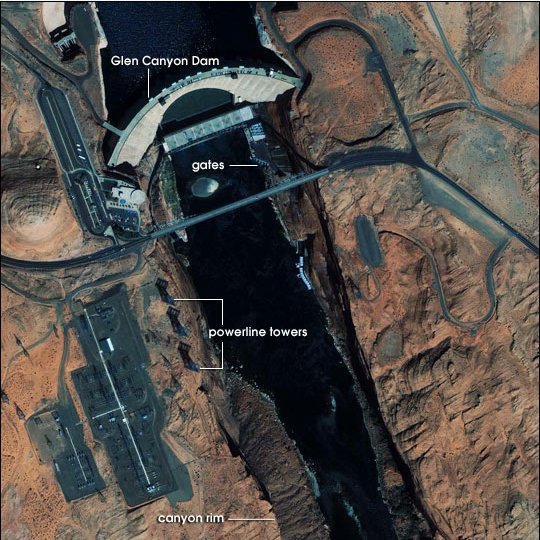
glencanyondamnasaearthobservatory.jpg

Here’s an in-depth look changing operations for the two big reservoirs on the Colorado River mainstem, from Bob Berwyn writing for the Summit County Citizens Voice. Click through and read the whole post. Here’s an excerpt:

The porous sandstone along the shore of Lake Powell may soak up as much as 380,000 acre-feet of water each year — more than Nevada’s entire annual allocation of Colorado River water, according to a new study by hydrologist Thomas Myers.

The research, published in the Journal of the America Water Resources Association, supports the idea of reconfiguring the way water is stored in Lake Powell and Lake Mead with the overall goal of using the Colorado River in the most efficient way possible, according to Glen Canyon Institute director Christi Wedig.

More Colorado River Basin coverage here and here.

Sterling Ranch gets another chance in front of the Douglas County Commissioners

sterlingranch.jpg

From the Our Colorado News (Ryan Boldrey):

The county approved the project in 2011, but a 2012 court ruling by 18th Judicial District Court Judge Paul King stated that the project did not have sufficient water secured to break ground. Plans for Sterling Ranch call for a 12,000-home community on 3,400 acres northeast of Roxborough State Park.

After requests to have the ruling overturned, Sterling Ranch officials submitted a 121-page filing to the county in March stating that it had since met the necessary water requirements for build-out and that it is ready to begin the 25-year development.

“The ruling said that we must have 25 years of water before we can start, so we set about to obtain sufficient water for the entire development, and we’ve done that,” said Harold Smethills, Sterling Ranch managing director, following an agreement to acquire 4,200 acre-feet of water from Dominion Water.

At the time of King’s ruling, Smethills said Sterling Ranch had already purchased 88 million gallons from Aurora Water — enough to meet the needs of the first plat scheduled for the phased development. Plans at the time, he said, called for purchasing or leasing the remainder of the water on a phase-by-phase basis. Now, Smethills says, they have all the water required, and he expects the county to give the project the green light once again.

Jim Kreutz, the attorney who represented the Chatfield Community Association in the suit that halted the development in 2012, said Sterling Ranch’s filing might not satisfy all of the issues they had raised in court. “There may be other unresolved issues, such as transportation and other regulations we didn’t feel that they complied with,” Kreutz said. “The court didn’t address the other issues because they only ruled on the water issue.”

More South Platte River Basin coverage here.

Drought news: This past June was the fourth-driest on record for Breckenridge #COdrought

usdroughtmonitorjuly22013.jpg

From the Summit County Citizens Voice (Bob Berwyn):

June, the second-driest month in Summit County, ended up especially dry this year, with only 0.26 inches of precipitation at the official National Weather Service site in Breckenridge, and even less — 0.19 inches at the Dillon station. Averages for the two sites are 1.37 inches in Breckenridge and 1.14 inches at Dillon, where there was measurable precipitation on two days, June 18 and June 29.

The sparse total in Breckenridge made it the fourth-driest (tied with 2006) on record, dating back more than 100 years, said weather observer Rick Bly. The driest June ever (0.06 inches) was in 1980, during another notable Colorado dry spell, followed by June 1891 (0.10 inches) and June 2002 (0.24 inches).

Federal money for wildfire mitigation lands in Colorado

hewlettfire5162012.jpg

From The Greeley Tribune (Analisa Romano):

Greeley has been reimbursed another $350,000 in federal dollars for mitigation following last year’s High Park and Hewlett Gulch fires, bumping up the city’s total reimbursement to $576,000. It brings the final count for the city’s out-of-pocket expenses to clear Greeley’s water supply of soot and ash to $1.2 million. Eric Reckentine, Greeley’s deputy director of water resources, said that’s the last Greeley will pay. Following Congress’ passage of a bill this spring to fund the protection of threatened water sources in Colorado, the remainder of mitigation will be fully funded by federal dollars, he said.

Last fall, stakeholders in the Poudre Canyon — Greeley, the city of Fort Collins and the tri-districts (North Weld County, Fort Collins-Loveland and East Larimer County water districts) — agreed to share the cost of keeping water supply in the Poudre River clean. They paid a combined $4 million to treat the most-damaged areas, covering about half of what was needed.

This year, the rest of the tab — at a cost of about $7.3 million — will be picked up by the federal government, with Greeley’s $1.2 million used as matching funds for federal grant money, Reckentine said.

Fort Collins and the tri-districts also have been reimbursed by National Resources Conservation Services.

In the mitigation process, mulch and straw is dumped from helicopters to keep soot, ash and debris from slipping off of hills and into the water supply. Reckentine said Greeley will still be responsible for managing some of the mitigation. He said the city hopes to see work on burn areas start in mid-August.

From KUNC (Erin OToole):

Last fall, the three water districts in Weld and Larimer counties, and the cities of Greeley and Fort Collins agreed to share the cost of keeping water in the Poudre River clean. Stakeholders paid a combined total of $4 million to treat the most damaged areas – only about half of what was needed.

This year the rest of the tab – about $7 million – will be picked up by the federal government. Fort Collins and the tri-districts are also being reimbursed.

Drought news: Spring storms brought too little water too late #COdrought

irrigationditchgreeleyhistoricalresources.jpg

From the Fort Collins Coloradoan (Bobby Magill):

The spring storms brought too little water too late, and late May and June were dry enough to wither some farmers’ hope. The U.S. Department of Agriculture on Wednesday declared 38 Colorado counties natural disaster areas because of the drought, making farmers eligible for additional Farm Service Agency assistance. Those counties include Larimer County, which is suffering through one of the 25 driest water years on record. Weld County is not included in the natural disaster declaration…

In March, Wellington farmer Richard Seaworth expected just such a bleak growing season this year as he considered a dry summer ahead and possibly laying off staff as a result. But the spring storms kept the worst from happening, and he didn’t lay off any workers. “We were able to get the crops up without using all our water,” he said.

Seaworth, who primarily grows sugar beets, beans and wheat, fallowed 20 percent of his land this season because of the drought. The remaining 80 percent has been planted and looks good right now, he said. But with water supplies dwindling, Seaworth said he’s unsure if there will be enough to finish the crops he started. “It’s our own fault,” he said. “We were warned.”

Garfield County: Instream flow rights sought for six streams #ColoradoRiver

coloradoriverbasincgs.jpg

From the Glenwood Springs Independent (John Colson):

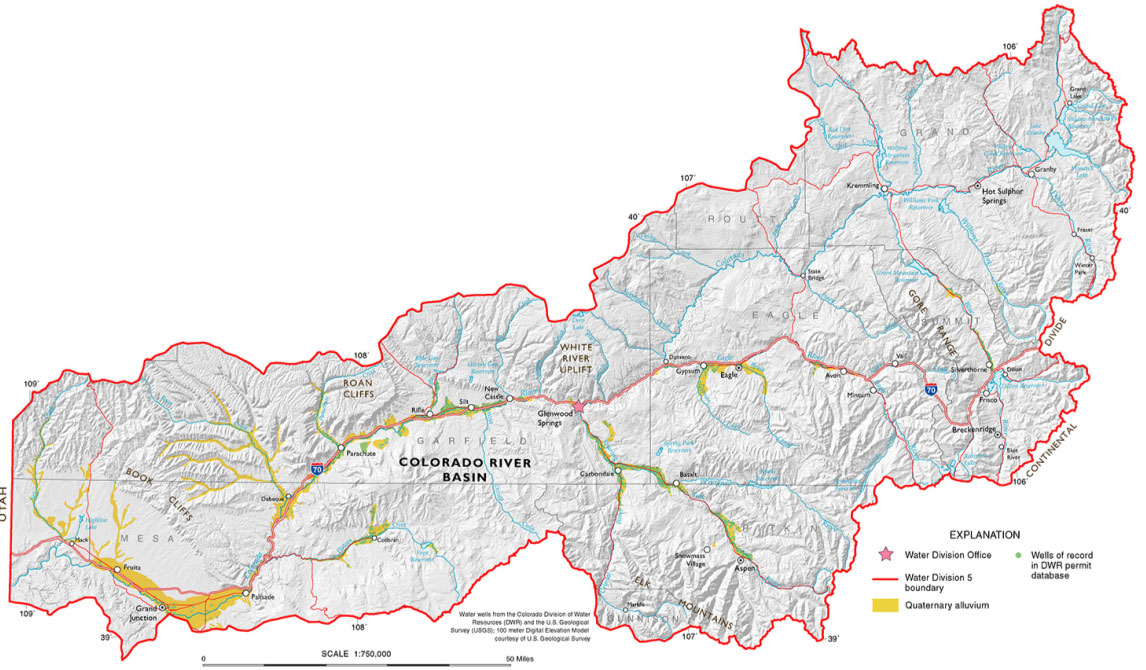
The state is looking at six streams, said Jeff Baessler, deputy section chief of the Stream and Lake Protection Section of the Colorado Water Conservation Board (CWCB). Those six, he said, include upper East Divide Creek, Beaver Creek, the Dry Fork of Roan Creek, the Left Fork of Carr Creek and the East Fork of Parachute Creek. The streams are situated generally in the central to western portions of the county, and one, a section of East Divide Creek, wanders into Mesa County, Baessler said. The flow of water in all six streams is to be supplemented by varying sizes of water rights, as permitted by 1973 legislation intended to “correlate the activities of mankind with some reasonable preservation of the natural environment,” and giving the CWCB the power and authority to do so…

In order to designate a stream for minimum-in-stream augmentation, Baessler said, three conditions must be met.

First, it must be shown that there is a “natural environment” supported by the flowing stream, typically identified by the presence of a cold-water fishery, but not exclusively, and that the “natural environment” under study will be preserved by the water that is available for in-stream designation. Proponents of minimum-flow designation must also show that doing so would cause no injury to other water rights on the same stream…

Roy Smith, who works on wild and scenic designations as well as minimum-streamflow matters for the U.S. Bureau of Land Management (BLM), told the commissioners that a majority of Garfield County streams already have minimum-flow rights in place. And two creeks now under consideration — East Fork Parachute Creek and Left Fork Carr Creek, “are basically in pristine condition, and we are interested in maintaining that condition.”[…]

The rights being sought by the state, said Jay Skinner of the Division of Parks and Wildlife, are relatively small, ranging from a high of 7.2 cubic feet per second (cfs) in Lower East Divide Creek in the summer, to 0.15 cfs in Upper East Divide Creek in the winter. Similar, if not quite so extreme differences in flow are being sought for the other streams, he explained.

In response to a question from Commissioner John Martin, Skinner explained that even in cases where ranchers or other users have been using water without the proper water-court decrees, the state is generally willing to let that infraction slide.

“Well, I’m telling you, you’ve got some folks using ingenuity in their survival up there,” Martin continued, noting that one rancher is filling his stock ponds with water from streams in which he holds no rights. “And they do carry guns up there, too,” Martin added with a grin, getting a laugh from around the room, including from the state agents at the table.

More instream flow coverage here and here.

Drought news: US Drought edges up a bit #COdrought

usdroughtmonitorjuly22013.jpg

From KOAA (Kirsten Bennet):

The U.S. Department of Agriculture (USDA) has designated 38 Colorado counties suffering from severe losses due to drought as natural disaster areas. The designations mean that farmers and ranchers in these counties are eligible for additional Farm Service Agency assistance. Fourteen counties were declared primary natural disaster areas, while 24 counties were designated as contiguous disaster counties…

Producers in the following counties are eligible for assistance: Adams, Alamosa, Arapahaoe, Archuleta, Boulder, Broomfield, Chaffee, Clear Creek, Conejos, Costilla, Custer, Delta, Denver, Douglas, Eagle, Fremont, Garfield, Gilpin, Grand, Gunnison, Hinsdale, Huerfano, Jackson, Jefferson, Larimer, Mesa, Mineral, Moffatt, Montrose, Ouray, Park, Pitkin, Rio Blanco, Rio Grande, Routt, Saguache, San Miguel, and Teller.

Here’s the release from Governor Hickenloope’s office:

Gov. John Hickenlooper was notified today by U.S. Secretary of Agriculture Tom Vilsack that 14 counties qualify for federal disaster relief because of drought conditions. Fourteen counties were declared primary natural disaster areas due to a recent drought and an additional 24 were declared as contiguous disaster counties.

The primary counties are Alamosa, Conejos, Delta, Garfield, Gunnison, Jackson, Jefferson, Mesa, Moffat, Montrose, Rio Blanco, Rio Grande, Routt and Saguache. The contiguous counties are Adams, Arapahoe, Archuleta, Boulder, Broomfield, Chaffee, Clear Creek, Costilla, Custer, Denver, Douglas, Eagle, Fremont, Gilpin, Grand, Hinsdale, Huerfano, Larimer, Mineral, Ouray, Park, Pitkin, San Miguel and Teller.

The federal disaster relief includes Farm Service Agency (FSA) emergency loans. Farmers in eligible counties have eight months from the date of the declaration to apply for emergency loan assistance. FSA will consider each emergency loan application on its own merits, taking into account the extent of production losses, security available and repayment ability.

Local FSA offices can provide farmers with more information.

From Reuters (Christine Stebbins):

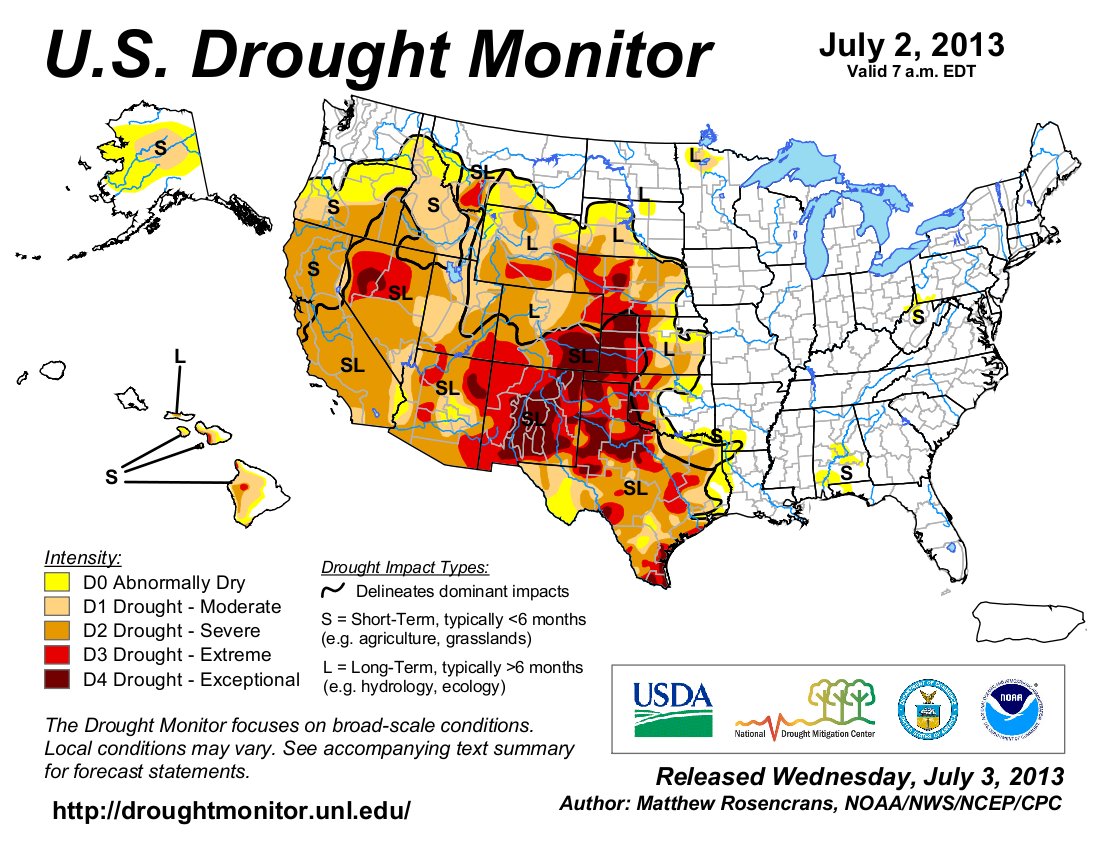
Drought conditions expanded in the contiguous United States over the past week given persistent heat and dryness in the southern Plains, while the eastern half of the country is out of drought amid steady rains, according to a weekly drought report. The U.S. Drought Monitor, issued by state and federal experts on Wednesday, said drought areas in the “moderate to exceptional” categories grew to 44.06 percent, from 43.84 a week ago. “This is the third straight week of the drought expanding,” Matthew Rosencrans, with the U.S. Climate Prediction Center and author of the drought monitor, told Reuters. “The biggest expansion was in northeast Texas but the drought also expanded into southeast Texas and Oklahoma.”[…]

Of the big U.S. crop states, Nebraska – the fourth largest corn state and a leading producer of cattle, sorghum and wheat – is the driest with 88.41 percent in moderate to exceptional drought. That compares to 88.36 percent a week ago and 64.63 percent a year ago.

From the US Drought Monitor:

The U.S. Drought Monitor map for the seven days ending Sept. 18 showed little change from the preceding week, although the total area of the country in moderate or worse drought crept up to yet another record high in the 12-year U.S. Drought Monitor data.

Statistics released with the map showed that 54.25 percent of the country was in moderate drought or worse, the largest percentage so far recorded at that level, up slightly from 53.70 percent the week before. The map showed 34.35 percent in severe drought or worse, down from 34.97 percent a week earlier; 17.35 percent in extreme drought or worse, compared with 17.63 percent the week before; and 4.98 percent in exceptional drought, compared with 5.20 percent the preceding week.

Moderate drought expanded in Minnesota, Wisconsin and the Dakotas. Although all of Kansas is still in severe drought or worse, the area in exceptional drought decreased to 51.04 percent from 60.61 percent. Oklahoma saw slight intensification, with the area in extreme drought increasing to 95.33 percent from 94.68 percent, and the area in exceptional drought increasing to 42.09 percent from 39.66 percent.

Western Governors elect Colorado Gov. John Hickenlooper Chairman at 2013 Annual Meeting

hickenlooperstulpsalazarcoloradowaterbraintrust2012.jpg

Here’s the release from the Western Governor’s Association:

Colorado Gov. John Hickenlooper was elected Chairman of the Western Governors’ Association (WGA) and Nevada Gov. Brian Sandoval was elected as Vice-Chairman on the final day (June 30) of the WGA 2013 Annual Meeting in Park City, Utah.

Gov. Hickenlooper, during his remarks, said that the WGA motto for the coming year will be “We Go Altogether.”

The Colorado Governor said he expects during his chairmanship to examine issues central to the West such as water and forest health, as well as broader issues such as health care, immigration and education reform. The governor was elected by Colorado voters in 2010; he previously had served as Mayor of Denver since 2003.

The WGA also announced Gov. Sandoval’s election as Vice-Chairman. “Western states face unique challenges and the WGA provides a forum for Governors to listen and learn from one another,” said Gov. Sandoval.” Gov. Sandoval was elected by Nevada voters in 2010 after previously serving as a U.S. District Judge in Nevada since 2005.

Gov. Hickenlooper assumed the gavel from Utah Gov. Gary Herbert, who served as Chairman for the past year. During his chairmanship, Gov. Herbert focused on “Responsible Energy Development,” with a goal of providing reliable, affordable and cleaner energy for the long term.

‘Even though these two sets of water molecules are separated soon after birth, their fates remain closely tied’ — Hannah Holm

transmountaindiversionscoloradostateengineer2011.jpg

Here’s an in-depth look at Ruedi Reservoir administration from Hannah Holm writing for the Glenwood Springs Post Independent. Click through and read the whole thing. Here’s an excerpt:

Take, for example, a few water molecules that begin their terrestrial journey as snow in the mountains just East of Aspen. In the spring, they melt and flow into the Frying Pan River, a tributary to the Roaring Fork.

Some of these molecules are captured early and flow east into a tunnel bound for the Arkansas River Valley. Once across the Divide, they may help float a raft or two on their way to a cantaloupe field in Rocky Ford. Other molecules keep flowing west, until they are captured a little ways downstream in Ruedi Reservoir.

Even though these two sets of water molecules are separated soon after birth, their fates remain closely tied.

The molecules in Ruedi Reservoir will stay there, helping provide a pleasant boating and fishing environment, until they are released to flow down to the Roaring Fork and then the Colorado River en route to a Palisade peach orchard that has been relying on water out of the Colorado River since long before any of those tunnels to the Arkansas were drilled.

The ability to store and release water from Ruedi is what permits those other molecules to keep flowing across the Divide, even when water is needed downstream by users with more senior, and therefore higher priority, water rights.

More Fryingpan-Arkansas Project coverage here and here.

Fountain Creek: ‘What’s the point of having this district?’ — Jay Winner

fountaincreek1999floodcwcb.jpg

From The Pueblo Chieftain (Chris Woodka):

The Fountain Creek district board is weighted 5-4 in favor of El Paso County, its attorney also represents El Paso County, its manager is a former Colorado Springs City Council member and now El Paso County has claimed some of the land use authority granted to the district by the state Legislature.

“El Paso County has been disingenuous to the other intergovernmental agreement partners on Fountain Creek,” said Jay Winner, general manager of the Lower Arkansas Valley Water Conservancy District. “It seems to me we are outnumbered. They’ve taken control of 80 percent of the watershed this district was supposed to address. What’s the point of having this district?”

The district was formed in 2009 after nearly three years of meetings of a Vision Task Force sparked by flooding in 1999, and a flurry of lawsuits over spills of raw sewage by Colorado Springs Utilities into Fountain Creek.

But Colorado Springs yanked the rug out from under Pueblo County and the Lower Ark district when it abolished its stormwater enterprise in late 2009, and Winner has become distrustful of anything happening north of the county line.

“What’s going to go away next?” Winner asked.

At a meeting last week, there were a few sharp exchanges between Winner, District Executive Director Larry Small and attorney Cole Emmons, who is on loan from El Paso County.

After the meeting, Winner said the Fountain Creek district board had no notice that El Paso County was claiming some of its authority.

Dennis Hisey, chairman of the El Paso County commission, said Emmons notified Small of the land use changes. Aside from that, he said the district’s board, made up of elected representatives and citizens from both counties, did not discuss the new land-use rules until a retreat last month, after the changes had occurred.

But Hisey believes the board is working together in good faith.

“For Jay to say that we’ve wrested power, that’s a stretch,” Hisey said. “I’m not so sure the district wasn’t asserting more authority than it actually has.”

From The Pueblo Chieftain (Chris Woodka):

New regulations in El Paso County erode the authority of a district that was formed in 2009 to protect Fountain Creek.

“I believe El Paso County has wrested authority from Pueblo County and the Lower Ark district,” said Jay Winner, general manager of the Lower Arkansas Valley Water Conservancy District. “Does it put the Fountain Creek district in a position where it has to go through the 1041 process if it wants to do a project?”

El Paso County has adopted regulations under 1974’s HB1041 that gives counties authority over projects of statewide impact. The regulations were used in 2009 by Pueblo County to obtain conditions for the construction of Southern Delivery System.

The Fountain Creek Watershed Flood Control and Greenway District was created by the state Legislature in 2009, and given land-use authority over the Fountain Creek flood plain from Fountain to Pueblo.

But in the new 1041 regulations, El Paso County is claiming control over utility projects, including SDS, that are built anywhere in the county, including the Fountain Creek flood plain.

“It changes the district’s authority on the aspect location of utilities,” said Dennis Hisey, chairman of the El Paso County commissioners, who also sits on the Fountain Creek board.

In the past, the Fountain Creek district has made decisions on everything from gas plants to gravel pits to motorcycle parks. It still would have authority on any nonutility projects.

But there could be a gray area on the district’s own projects.

“I’m not sure this discussion is over yet,” Hisey said, adding that he still is in discussion with attorneys for El Paso County. “Speaking as a Fountain Creek board member who has been there from the beginning, it doesn’t seem quite right.”

From The Pueblo Chieftain (Chris Woodka):

Commissioner Terry Hart doesn’t think Pueblo County is getting steamrolled by El Paso County in its dealings on Fountain Creek.

In particular, he believes there are sufficient safeguards in the legislation that set up the Fountain Creek Watershed Flood Control and Greenway District.

“There is a requirement for supermajority (seven of nine members) approval that hasn’t been tested,” said Hart, who represents Pueblo County on the Fountain Creek board. “My No. 1 mission is to make sure Pueblo County is protected.”

That said, he doesn’t think it should come down to a test of wills. Pueblo can gain more by cooperation rather than continued fighting, he said.

From The Pueblo Chieftain (Chris Woodka):

A new foundation is vying for the attention of the district formed to fix Fountain Creek.

“There’s a tremendous opportunity for people to come back to the creek,” said Gary Barber, representing the Fountain Creek Watershed Greenway Fund.

The foundation would be the second devoted to helping the Fountain Creek Watershed Flood Control and Greenway District get private support to implement Fountain Creek improvement projects. So far it has raised about $15,000, Barber said.

The Fountain Creek Foundation, headed by David Struthers of Denver, has been active in community education through activities and video production; identifying projects that would benefit Pueblo’s East Side; and in promoting a wildlife viewing project near Pinon that is included in the Fountain Creek corridor master plan.

The Fountain Creek Watershed Greenway Fund is taking a different approach, connecting the Colorado Springs business community with youth.

“We’re still about the whole watershed,” Barber said. “But we’ve decided it’s time to get people on our end of the watershed engaged.”

Barber, a Colorado Springs realtor and water consultant, chairs the Arkansas Basin Roundtable. He was the first interim executive director of the Fountain Creek district and helped write the legislation that formed the district.

Part of the concept for the district is patterned after the Denver Urban Drainage and Flood Control District’s relationship to the Greenway Foundation, which have worked hand-in-hand to improve the South Platte River and Cherry Creek since the 1965 flood.

After hearing Barber’s presentation Friday, some members of the Fountain Creek board recalled the Fountain Creek Foundation, which has not been in contact with the district recently.

More Fountain Creek coverage here and here.

The drought has the City of Durango pumping from the Animas to supplement supplies #COdrought

animasriveratdurango0401to07032013.jpg

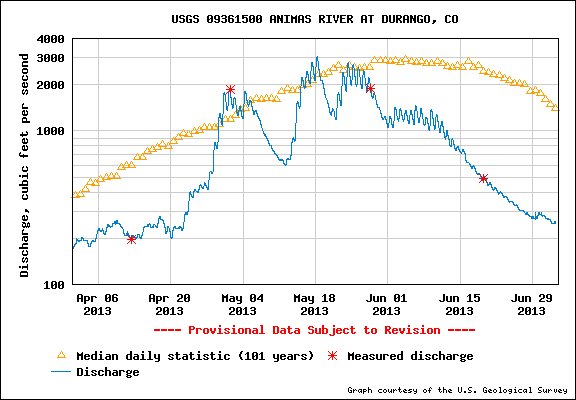
Click on the thumbnail graphic for the streamflow graph from the Animas River at Durango since April 1. Here’s a report from Jim Haug writing for The Durango Herald. Here’s an excerpt:

However you do it, the city of Durango would like you to cut back your water usage by 10 percent…

The city’s terminal reservoir is currently about a foot below the level it should be. Officials would like to maintain it at maximum capacity so the city can respond to crises such as wildfires or a sudden loss of water.

For most of the year, the Florida River is sufficient to meet the city’s needs with a daily supply of 5.7 million gallons, but in summertime, the city’s average of daily water usage is 9.5 millions gallons. The reservoir must be supplemented with water from the Animas River.

The city has three water pumps at Santa Rita Park. Since the peak water usage day of June 22 when the demand reached almost 14 million gallons, the city has been able to use only one pump because the water level in the river has gotten so low.

Because of the drought, water from Florida River is expected to diminish to 5.2 million gallons a day…

City officials think voluntary measures might be sufficient to get through the season. Asking people to voluntarily decrease their water by 10 percent is “thought to be a first good step,” said Steve Salka, director of utilities. “These are all small changes, but they will help us maintain the water level in the reservoir.”

More Animas River watershed coverage here and here.

Drought news: ‘Reservoirs are also dropping’ — Hannah Holm #COdrought #ColoradoRiver

usdroughtmonitor06253013.jpg

From the Glenwood Springs Post Independent (Hannah Holm):

We are still in a drought, despite the brief easing of conditions we enjoyed during our cool, relatively wet spring. Some parts of Colorado didn’t get any relief even then — the southeastern corner has been solidly in the dark red, “exceptional” drought category (that’s the worst one) on the US Drought Monitor maps since the end of last summer.

Meanwhile, the bright red, second-worst “extreme” category has crept back into southwestern Colorado, after a brief window where all of western Colorado enjoyed the milder yellow and orange categories of drought. No portion of Colorado is in anything less than “moderate” drought at the moment — that’s pale orange.

Zooming out, the picture doesn’t improve much. New Mexico is almost entirely in bright or dark red, and has been for some time. The rest of the Colorado River Basin, and the out-of-basin areas that depend on it (like Denver and Los Angeles), are also all in drought to some extent. And this is the second year in a row…

Reservoirs are also dropping, and the bigger the reservoir, the more it tells the story of long-term trends. The Gunnison River has reclaimed the upper end of Blue Mesa Reservoir, and the reservoir is expected to fall further before the year is out — though still not reaching the lows experienced in 2002. The giant reservoirs of Lakes Powell and Mead are expected to reach their lowest combined levels seen since 1968 this year. For reference, Glenn Canyon Dam, which created Lake Powell, was completed in 1969…

The US Bureau of Reclamation recently announced a process to follow up on their recent study that forecasts worsening long-term imbalances between water supply and demand in the Colorado River Basin as a whole. Work groups of water managers and stakeholders throughout the basin have been formed to address agricultural water conservation and transfers, municipal conservation and re-use, and how to achieve healthy streamflows in the face of these supply challenges.

Within Colorado, the governor’s Executive Order to develop a statewide water plan has now been supplemented by guidance to roundtables of stakeholders in each of the state’s river basins on how to develop their own plans to meet their own needs — which are then supposed to feed into a single, unified plan sometime in 2015.

The current drought and its consequences demonstrate vividly that these are not academic exercises. It’s simply not possible for water use to continue as it has in the past. The future will be different than the present, but how?

From The Denver Post (Kirk Davidson):

So how does all this affect fish and wildlife? I am not a lawyer and can only carry on a limited discussion regarding the legal issues, but being a conservationist I can relay the impact and change in our state’s wildlife and fishing resources, particularly in the southeast [Colorado].

My first experience in seeing the impact of water for wildlife was in 1962, when, as a boy, I watched the complete draining of the prominent southeast Colorado water impoundment, John Martin Reservoir. What a dismal sight to see tens of thousands of fish, half dead and half alive, being dumped into the spillway of the dam and watch as folks sorted out the more desirable fish with unlimited creel limits. My dad and I spent time going through dying fish in small pockets of water along the Amity Canal to either save the good fish for the freezer or move them to one of the two Verhoeff Lakes located within a mile of the dam and owned by the family of my friend Lance Verhoeff.

Those lakes held an abundance of fish and annually hosted up to 30,000 wintering geese and a higher number of ducks. These lakes were so supportive of waterfowl that they were used in the Colorado Division of Wildlife’s frequent aerial waterfowl counts in the fall and often served as a banding site for the U.S. Fish and Wildlife Service. In addition, these lakes were a premier nesting area for the endangered least tern and piping plover, neither of which has successfully nested in the former lakes area since they were ordered drained in 2002. When Lance fought the draining based on its refuge for hundreds of species of birds and wildlife, he learned the legal truth: Fish and wildlife have no rights, nor do they impact water-rights issues.

Over the ensuing decades Coloradans and nonresidents hunted and fished popular southeast areas such as Turks Pond, Two Buttes, Queens State Wildlife Area, Nee Noshe Reservoir, Timber Lake, Purgatory Wildlife Area, Verhoeff Lakes and, to the north, Bonny Reservoir. During this time, fall aerial waterfowl counts by the Colorado Division of Wildlife would routinely show astonishing numbers of birds, such as 150,000 geese, in the southeast area. Each of these bodies of water held sufficient water to provide our state and visiting sportsmen and outdoor enthusiasts with excellent hunting, fishing and camping recreation.

Now only a few of those remain, the others drained at the direction of the state to stop the holding of water and/or to honor higher priority water rights, including with neighboring states.

Two years ago we witnessed the destruction (actually draining) of Bonny Reservoir, and with it all the fish and wildlife it supported — victims of water issues with neighboring states. And as recently as this spring, Colorado Parks and Wildlife announced unlimited creel limits at Lake Henry and Antero Reservoir because of draining caused by drought conditions.

From the Cortez Journal (Jim Mimiaga):

The Montezuma County sheriff’s office is reporting an increase in the number of disputes over irrigation water this spring and summer. Police scanners crackle with calls from irate landowners frustrated with neighbors taking more than their share from communal ditches.

As water supplies dwindle, there has been more theft and misuse of water, causing tempers to flare and raising the specter of violence. “It is a lot of mitigation work, a lot of calls,” said Deputy Dave Huhn, a water law specialist handling irrigation issues for the sheriff’s office.

“The lack of water has escalated the tension and fright. People’s livelihood is dependent on water.” In normal years Huhn fields four to eight calls per day. These days the volume is more like 20-30 per day, “so I’m responding every day, including weekends.”

McPhee Reservoir is at historic lows, and project users will get just 20 percent of a normal year’s amount, with complete cutoff expected for August. The other major water source, Montezuma Valley Irrigation District (with its senior water rights) is reporting a drop in availability of 25 percent. MVI has not announced a cutoff date yet…

It’s an issue of denial for some, Deputy Huhn says, and he has a unique prop to educate water hoggers. “I bring a simple yard sprinkler and a garden hose, and set it up to demonstrate the amount of water they actually have rights to, versus what they are using,” he says. One MVI share equals 5.61 gallons per minute, and a garden hose and simple lawn sprinkler is about 4-5 gallons per minute.

“If they have two shares, they can have two small sprinklers going for a certain amount of time,” Huhn said. “It’s a fraction of the water they’re pushing through the large-nozzle water cannons. They’re using someone else’s water.” Armed with individual water-rights data, water law documents, a calm but firm demeanor, a badge and a ticket book, Huhn makes the rounds…

Huhn said there is a statewide trend to more aggressively enforce laws regulating adequate measuring devices for irrigators. Replacing ditches with pipe is the ultimate solution. Metered pipe is the most ideal, and is used for Dolores Project users. “We have had a smooth year considering,” said Ken Curtis, DWCD engineer. “The meters show users exactly the amount they are getting.”

Rural water districts have less pipe and less metered technology, which can lead to problems. “You and I might stand on a ditch. You say it is your three shares, and I say it is five — over the limit. Proper measuring provides the real answer,” said Less Nunn, general manager for MVIC.

“Other times people don’t realize they have been getting extra for years, and now the actual owners are diverting that amount.”

From The Atlantic Wire (Philip Bump):

One reason for last year’s devastation was last year’s massive drought. The Southwest has been consistently dry for several years, but last year — and into this year — the drought reached levels not seen since the Dust Bowl era.

CWCB: The next Water Availability Task Force Meeting is July 18 #COdrought

towinganiceberg.jpg

From email from the Colorado Water Conservation Board (Ben Wade):

The next Water Availability Task Force meeting is scheduled for Thursday, July 18 from 9:30-11:30am & will be held at the Colorado Parks & Wildlife Headquarters, 6060 Broadway, Denver in the Bighorn Room.

The agenda has been posted at the CWCB website.

More CWCB coverage here.

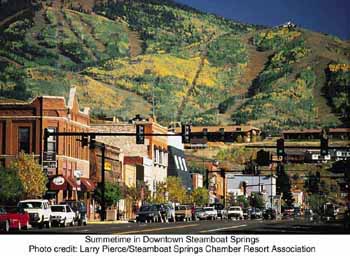
Steamboat Springs: The Colorado Water Congress Summer Conference August 21 to 23

steamboatsprings.jpg

Click here for the pitch and links for registration. From email from the Colorado Water Congress (Doug Kemper):

The 2013 Colorado Water Summer Conference is now just over 7 weeks away. We are excited to release the program outline for the first day of the conference, Wednesday, August 21 and a description of some of the POND activities. Additional conference details will be released over the next several days.

Our conference this year will bring to a close a run of 3 consecutive years in Steamboat Springs. It may be another 2 or 3 years before we return for our summer event. So this will be our chance to say farewell for a while. Our POND Committee has organized an evening on the mountain again this year – ride the gondola up to the Thunderhead deck on Thursday for a great evening of music and networking.

The Interim Water Resources Review Committee will meet on Wednesday morning. Their work will begin in earnest on what promises to be an energetic 2014 Legislative Session.

We will have 3 workshops on Wednesday morning. Emily Brumit, our new Communications Coordinator, will lead a session on how to use social media to stay informed and for professional development. We will begin a program called Snow School. Most every water professional in Colorado should have a deep understanding of snow accumulation by river basin, the factors that drive snowmelt, and how to track snow water equivalent. Our third workshop will be on recent Supreme Court cases and legislation of importance in water storage and changes of use.

We are very excited to open the Summer Conference with Dan Keppen who is the Executive Director of the Family Farm Alliance. A dynamic speaker, Dan runs one of the most effective water advocacy groups in the Western U.S. He will give an agricultural perspective on the Colorado River Basin Study and discuss the economic importance of irrigated agriculture.

Certainly the Colorado Water Plan has the water community buzzing with concerns and expectations. The plan will be the focus of the early part of the conference. Our State Affairs committee begins work next week to coalesce the water community’s reaction to the plan and will present their thinking. For some additional perspective, we are excited to have Tim Quinn representing the Association of California Water Agencies, back this year to talk about the California Water Plan and other California activities of interest to us. And we will do something unique that we are calling the Gallery of State Water Plans. This will be an entertaining opportunity to learn about the planning activities in many other Western States in a very condensed format. You can decide which State you think is doing the best job.

We are pleased to announce a collaboration with the Water Law Section of the Colorado Bar in a ceremony recognizing the careers of several of our water attorneys. The induction of the Ancient and Honorable Order of the Water Buffalo will be held on Wednesday evening.

Our focus on Day 2 of the conference will be on agricultural conservation as a source of water supply for instream flow and municipal water supply. We will lay the foundation for the discussion on this controversial topic that will be a major area of focus for us over the next several months.

On Day 3, we will turn our attention to a very serious issue that has evolved over the past 30 days. Both California and Texas have withdrawn from the National Water Resources Association that has represented Colorado and other western states in Washington D.C for about 80 years. As a result, the future of the organization is in peril. We are actively working on next steps as we develop how we will engage on water matters at the federal level.

The conference will conclude with a presentation on the survey of public attitudes toward water that the Water Congress has just commissioned. This is the first time that we have contracted to do such a survey. It is the first substantive work product of the Public Trust Special Project that is off to a strong start.

And we will spend some time reviewing how this water year went as we somewhat nervously look ahead to the 2014 snow accumulation season.

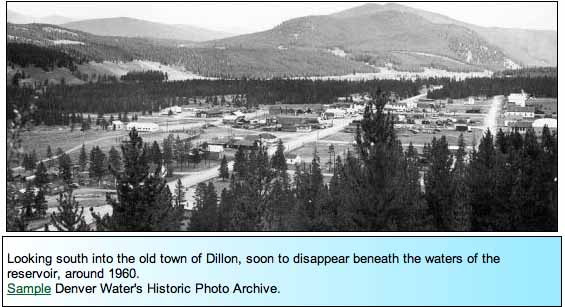
The July issue of Denver Water’s Water News is hot off the presses #ColoradoRiver

dilloncolorado.jpg

Click here to read the news. Here’s an excerpt:

…Dillon Reservoir, the largest in Denver Water’s system, is celebrating 50 years as one of Denver Water’s most important water storage sites.

Water leaders began tossing around the idea for the project in the early 1900s when it became apparent that Denver could not subsist on South Platte River water alone. After years of geologic studies, engineering reports and legal wrangling, Denver Water began making formal plans to build the project. Lawyers worked to buy the rest of the town, offering to help people move structures or rebuild on a site east of the reservoir.

Denver’s $77.6 million Blue River Diversion Project was a massive plan to divert water from the West Slope to the East Slope. It included building the Harold D. Roberts Tunnel — which conveys water from Dillon Reservoir, 23.3 miles to the South Platte River — as well as buying land, securing water rights and building Dillon Dam.

Originally, Denver’s Board of Water Commissioners planned to build a small dam and diversion structures to send water to the tunnel. But the Board rethought those plans, opting instead to build what became Denver Water’s largest reservoir.

More Denver Water coverage here.

Drought/runoff news: Greeley June precipitation = 1/3 of an inch #COdrought

usdroughtmonitor06253013.jpg

From The Greeley Tribune (Eric Brown):

Well below average rainfall in June put the Greeley area back in the “drought” category, and also evaporated some of the optimism local farmers had earlier in the growing season.

Weld County and the rest of the South Platte River basin entered June with a snowpack that was about 50 percent above normal. The snowmelt from the mountains, farmers thought at the time, would keep their irrigation ditches running with water well into the summer.

But the Greeley area last month received about one-third of an inch of rain — less than 20 percent of the historic average — and the dry conditions forced some local farmers to use more of their irrigation water than originally anticipated.

Northern Colorado is now back in a “moderate drought,” according to the U.S. Drought Monitor, after it had briefly shaken its drought status in early June.

The lack of rain and increased use of irrigation water last month now has ditch levels dropping, local farmers say. “If we don’t get some decent rains in the next 10 days to two weeks, things could get ugly pretty quickly,” said Dave Eckhardt, a LaSalle-area grower of corn, onions, sugar beets and wheat.

Storm clouds rolled into the Greeley area only a few moments after Eckhardt made those comments Monday afternoon, and rains were expected again Friday and Saturday. Local farmers are hoping it will be enough to keep their crops growing, since irrigation water for some of them might run out before the end of the growing season.

Artie Elmquist, a Mead-area farmer, said he’s wanting to see 60-70 percent of his sugar beet crop survive. He got a late start planting this year because rains in April and May muddied his fields. The June dryness set in not long after he finally planted his beets. He’s typically finished planting in April, and then uses May rains to get the crop growing out of the ground. But this year, with June giving him little moisture to work with, he had to irrigate his crop out of the ground — something he has to do only once every 10 years or so, he noted. Crop insurance can help, if it stays dry and his crops suffer, Elmquist said. But, in many cases, insurance payments only help re-coup some of the farmer’s input costs. “You’re certainly much better off if you can just grow a crop,” Elmquist said.

Despite the lack of rain last month and increased water use, overall conditions are so far better now than they were a year ago, Eckhardt and Elmquist said. In 2012, the two irrigation ditches that run water to Eckhardt’s fields ran dry by mid-June. On one ditch, the Eckhardts could use extra water from the Colorado-Big Thompson Project — the largest water-supply project in northern Colorado. Last year, the Northern Colorado Water Conservancy District board of directors, which oversees C-BT operations, set a high water quota, and that freed up additional water for the Eckhardts and other farmers in the region. However, the other irrigation ditch used by the Eckhardts doesn’t have access to C-BT water, and last year the Eckhardts had to let 700 acres of crops along that ditch dry up.

Since the C-BT Project went into use in 1957, the Northern Water board has set a quota each year to balance how much water could be used through the growing seasons and how much water needed to stay in storage for future years. The Northern Water board upped its water quota to 100 percent last year, because reservoirs were filled to historically high levels, thanks to a record snowpack in 2011. But that extensive use during the 2012 drought drained some of the C-BT Project’s 12 reservoirs to historically low levels, and they now need to be filled back up, Northern Water board members have said.

Cities in the area, which in many years lease extra water to local farmers, are also holding on tight to their water, trying to re-fill their low reservoirs. Additionally, a number of farmers in the area are limited in their ability to pump water out of the ground to make up for any lack of rain. In the mid-2000s, augmentation requirements were made more stringent in Colorado. Augmentation water is required to make up for depletions to the aquifer. With those changes, many farmers and their irrigation ditch companies today can’t afford enough augmentation water to get their wells pumping at full capacity. With groundwater-pumping limitations and city officials and Northern Water board members reluctant to release water from their reservoirs, farmers are left to hope that Mother Nature cooperates better in the upcoming months than it did in June.

Helping a number of farmers, including Alan Frank, who farms near LaSalle, is the fact that they planted more acres of wheat — a crop that requires less water. Many farmers in Weld County doubled or even tripled their wheat acres back in the fall, anticipating water-availability issues when the spring and summer rolled around. “It’s helped save water,” Frank said of growing more wheat this year. “But we’re still going to need more help from the weather to make sure everything else can survive.”

From The Pueblo Chieftain (Chris Woodka):

If you thought June was exceptionally hot and dry . . . Not even close. In terms of temperatures, it was just the seventh hottest June since record-keeping began in the 1890s. But June can be very dry in many years, and it was only the 16th driest on record. The average temperature for the month was 74.3 degrees, which is well above the average of 70 degrees. The hottest June was 77 degrees in 2012.

Just 0.27 inches of rain fell in June. In June 1990, the driest, there was no rainfall. Try telling that to your lawn or garden. So far this year, Pueblo has received just 2.2 inches of precipitation, even less than at this time last year, which ranked right behind 2002 as the driest.

Puebloans poured water on their lawns, but not as much as last year. The 1.3 billion gallons pumped by the Board of Water Works was 3 percent above average, but 7 percent lower than last year. Pueblo is not under water restrictions, but wise use of water still is encouraged and customers are advised to avoid watering between 10 a.m. and 6 p.m.

Meanwhile, flows on the Arkansas River have dropped as runoff slowed in the past two weeks. The flow near Salida was 776 cubic feet per second at the end of June, about one-third of the peak reached earlier in the month.

The Fryingpan-Arkansas Project is close to meeting its goal of 47,231 acre-feet of imported water across the Continental Divide. So far, about 44,750 acre-feet have been brought over, which is helping to fill some of the holes left in reservoirs by three years of drought. But hot, dry weather is expected to continue, so levels should continue to decline until winter storage begins in November.

From the Summit County Citizens Voice (Bob Berwyn):

After a short-lived burst of late spring moisture, much of Colorado is veering back toward drought conditions, with soil moisture declining in many parts of the state. Even the north-central mountains, which saw above-average precipitation in late April and May, are drying out again, and parts of Summit and Grand counties are once again designated as experience “moderate” drought conditions, according to the June 18 drought monitor. The far southwestern corner of the state slipped back into “extreme” drought conditions…

Nearly all of the state (with the exception of a tiny area in the far southeastern corner) saw less than 50 percent of average June precipitation, which isn’t very high to begin with. A significant portion of western Colorado received less that 25 percent of average precipitation for the month.

June temperatures were near average across much of the mountains, but slightly warmer than average to the west and east of the Continental Divide…

For Summit County, the second half of July and the first part of August is often one of the wettest periods of the year — if the Southwest monsoon develops normally to deliver periodic afternoon thunderstorms.
Late August and September can go either way. An extended monsoon can sometimes persist through late August, and a developing El Niño can bring autumn moisture, but there’s no indication yet that an El Niño is forming out in the Pacific Ocean. In fact, most long-term climate models are suggesting that the equatorial Pacific sea surface temperatures will continue to hover near neutral or perhaps slightly below, with better odds for yet another La Niña year, continuing a string that’s somewhat unprecedented in recent times.

Sterling Ranch gets another chance in front of the Douglas County Commissioners

chatfieldstatepark.jpg

From The Denver Post (Carlos Illescas):

A special hearing is scheduled for next month, when Douglas County commissioners will hear from Sterling Ranch and the public to see whether the county will give a thumbs-up to the project, which includes up to 12,050 new homes in the Chatfield Basin.

The hearing comes after a judge blocked the project in August. Citing state law, the judge argued that Sterling Ranch had not lined up enough water and needed to prove it had enough water secured though build-out.

Douglas County appealed that ruling, and then sought and received a change in state law this legislative session. Now, Sterling Ranch officials believe the project can finally move forward.

More 2013 Colorado Legislation coverage here.

More than two dozen Colorado craft brewers appeal to Governor Hickenlooper better regulate hydraulic fracturing

denverjulesburgbasindrillpadoilandgasjournal.jpg

From The Grand Junction Daily Sentinel (Charles Ashby):

More than two dozen craft brewers from around the state, including several on the Western Slope, are asking Gov. John Hickenlooper to be more beer friendly and less oil-and-gas friendly. The brewers, including 13 from such Western Slope places as Paonia, Telluride and Montrose, sent a letter to the former-brewer-turned governor Friday asking him to be more concerned about the environmental impacts the oil-and-gas industry has on the state and less interested in the industry itself.

Before becoming governor and mayor of Denver, Hickenlooper was one of the state’s first microbrewers, starting the Wynkoop Brewing Co. in Denver’s lower downtown in the late 1980s that later became part of a small restaurant/pub empire. He did that, however, after he was laid off from his job as a petroleum geologist for the oil and gas industry.

The brewers say Hickenlooper has been too lenient with production companies, citing as examples the recent lawsuits his administration has filed against local communities over water and environmental ordinances they’ve enacted in recent months. “I think there is a natural concern from brewers about the oil and gas industry since good, clean Colorado water is our most important ingredient in beer,” said Gretchen King, co-owner of Revolution Brewing in Paonia.

“We want to be known as a state of natural beauty, pristine natural resources, outdoor activities and great beer, not just a state that promotes drilling and the gas industry,” added Chip Holland, head brewer at Glenwood Canyon Brewery in Glenwood Springs. “We need to strike a balance between this type of energy development and conservation for our economy’s sake.”

The brewers have requested a face-to-face meeting with the governor to discuss the matter — over beers, of course.

Hickenlooper’s office had only just received the letter, but his press secretary, Eric Brown, said the governor would respond. “The craft brewing industry is a great economic driver for Colorado, and we value our relationship with brewers across the state,” Brown said.

More coverage of water and oil and gas from (David Persons):

Oil and gas industry officials who oversee operations in shale plays — like the Niobrara in Weld County — have lots of things on their minds these days. They are concerned about HAPs (hazardous air pollutants), VOCs (volatile organic compounds), TDS (total dissolved solids), and TSS (total suspended solids).

However, the one concern that supercedes all others is H2O — water. Without it, the current shale oil boom would be nothing more than a big bust. Fortunately for the oil and gas industry, Colorado has enough water and the industry consumes only a tiny percentage of the water consumed in the state. Obtaining that water, however, can be time-consuming and, in some cases, costly. But, that is only the beginning of a series of water-related challenges, say industry officials who took part in the recent Water Management For Shale Plays 2013 Summit in Denver.

Besides obtaining the necessary water, industry officials say they face challenges in transporting water, storing water, the use of flowback and produced water, water treatment, recycling/ reuse, meeting air quality standards related to water storage, and eventually water disposal.

Despite those challenges, there’s no second-guessing the enthusiasm of shale industry officials about the potential of the industry in northeastern Colorado. “It’s an exciting time because we have, thanks to the shale plays, an abundance of oil and gas,” said Ken Burris, vice president of Water/Geosciences for WorleyParsons. “Isn’t it nice that we can thumb our nose at OPEC and tell them we don’t need them?”

Burris also pointed out the potential of the shale plays in the U.S. is tremendous and promises to be long-term. “The person who drills the last hole in shale play has not been born yet,” Burris said. “We’ll be in this for a long time.”

Acquiring water

Colorado, unlike most shale play states, has an abundance of surface water that starts on the snowy slopes of the Rocky Mountains and ends up in our streams, rivers and reservoirs. Colorado produces so much water, that what’s left (after farm draws, municipal draws, and manufacturing/industrial draws) flows out of state and is covered by nine separate compacts for downstream users. “Water today (in Colorado) is not a limiting factor (for oil and gas operations),” said Dick Wolfe, the state engineer for the Colorado Division of Water Resources.

While many might suspect that oil and gas companies are using a lot of Colorado’s produced water, that is not the case. The largest users of Colorado’s water are farmers. “About 86 percent of the water used in Colorado is used for agriculture,” Wolfe said. “Less than one-tenth of one percent is used for oil and gas wells.”

Many oil and gas companies prefer using fresh water for their drilling operations. However, it’s not the only water source available, Wolfe said. He pointed out that besides the available surface water, oil and gas companies can use ground water (below the surface) and produced water (water returned through drilling after flowback water has been retrieved). “All oil and gas wells produce water,” Wolfe said.

The problem with ground water or produced water is that it must be determined if the water is tributary or nontributary. All groundwater is considered tributary to natural surface streams except when it is determined to be isolated and has no effect on a surface stream. In that case, it is determined to be nontributary, Wolfe said. If the groundwater is tributary, it requires a well permit which can take time. If it’s nontributary, it doesn’t require a permit. Wolfe said nearly all the groundwater and produced water in the Niobrara is nontributary and varies from clean to salty.

While fresh water is still highly preferred, it’s not the only source of water for drillers. Water can also be obtained from nearby municipal/industrial firms in the form of waste water. And some drillers are learning to recycle flowback water and treat and use produced water.

Transporting water

One of the big headaches for oil and gas companies is transporting water to the drill site and then hauling water that can’t be recycled to a water disposal well site. By and large, there are just two options for bring water to the site: trucking or piping. Each has its advantages and drawbacks, said Drew Poeckes, the director of engineering for West Dakota Water LLC. Trucks are inefficient, create dust, destroy roads (an overloaded truck can destroy a road 20 times faster than a normally loaded truck) and have a safety impact on roads. However, they are cheaper and more cost-effective.

Pipes take years to build. Right-of-way acquisition can be costly and also take time. It has a high upfront cost.

Because of the economics, most oil and gas companies prefer trucking, Poeckes said.

Storing water

One way to limit truck trips and reduce wear and tear on roads is to store fresh water on site. It has been done in a variety of ways over the years: earthen tanks, above ground tanks, burial tanks, port-a-dams, and lined tanks. Storing flowback water, on the other hand, requires enclosed storage tanks.

Jonathan Hoopes, the president and COO of GreenHunter Water LLC, said his company has developed a MAG tank — a modular above ground tank — for storing fresh water. “Our goal is to reduce truck time since that is about 75 percent of the cost of handling fluids,” Hoopes said. He says his company’s MAG tank can hold about 60,000 barrels of water and takes only two days to set up.

Use of flowback and produced water

One way to reduce the demand for fresh water at drilling sites is to reuse flowback water and to use produced water. Halliburton, one of several oil and gas companies operating in the Niobrara, is rapidly becoming a leader in this area. Flowback water generally is defined as a water-based solution that flows back to the surface during and after the completion of hydraulic fracturing. It consists of the fluid used to fracture wells in the shale formation. Produced water is naturally occurring water found in shale formations that flows to the surface throughout the entire life span of the gas well. “One of the oldest problems we have in drilling is produced water,” said Walter Dale, the strategic business manager for Halliburton. “We actually make more water than oil and gas. We have about 111 billion barrels of water produced annually.”

Dale said Halliburton, long known for its insistence for fresh water, is now looking to maximize the reuse of water (flowback and produced) to reduce water sent for disposal. At the same time, this would minimize the waste stream and reduce trucking. “Our focus is to virtually eliminate fresh water from fracking and use alternative water sources,” Dale said. “When you make fracking fluid, you do not need fresh water. You can do it with impaired waters. “It’s a paradigm shift … and it will take time (to be widely accepted).”


More oil and gas coverage here and here.

Drought news: June among the driest on record for Grand Junction #COdrought #ColoradoRiver

usdroughtmonitor06253013.jpg

From The Grand Junction Daily Sentinel (Paul Shockley):

Coming off one of the driest Junes on record for Grand Junction, there are dim prospects for change for the beginning of July, according to the National Weather Service in Grand Junction. As measured at Grand Junction Regional Airport, the city recorded 0.01 inch of rain for the month just ended, well below a normal value for June of 0.45 inch, National Weather Service senior forecaster Chris Cuoco said. “We’re certainly down there for one of the driest June’s on record,” Cuoco said. “(Saturday) had some of the first raindrops I’ve felt in the valley in quite a long time.”

As dry as the past month registered, June 2012 recorded trace amounts of rain, he said. Don’t look for change anytime soon. “We have the slightest hint of precipitation for July 7 and July 8, but certainly it’s not something we’re banking on yet,” Cuoco said. “We’ll be watching it and hopefully we may see a little bit of moisture coming out of the south.”

Despite the dry June, Grand Junction is still wetter year to date compared with last year. The city has recorded 3.42 inches so far of the year, still below the normal value of 4.29 inches. At the same point in 2012, Grand Junction was almost 3 inches below normal. “April helped us out quite a bit,” Cuoco said of this year’s total.

From the Pikes Peak Courier-View (Pat Hill):

Owner of Becky’s Bovines and Brews in Highland Meadows in southern Teller County, [Becky Sandefur] runs a dairy business that offers fresh milk and homemade cheese from the 80-acre ranch. For the past several years, the enterprise has been self-sustaining. Until now. With one of two wells going dry, in addition to a dry pond and another gradually evaporating, Sandefur has reduced the herd to five cows and a bull. Nonetheless, she has her fingers crossed that the five will produce calves in January. The well supplies water for the household but the pond nourishes the livestock that includes five horses. “If something happens to the pond, I’m finished,” she said.

Say hello to the new General Manager of the Grand Valley Water Users’ Association — Mark Harris #ColoradoRiver

grandvalleyirrigationditch.jpg

From The Grand Junction Daily Sentinel (Sam Waters):

Water is an essential part of life, especially in the high desert of the Grand Valley. One man who understands that is Mark Harris, the newly selected general manager for the Grand Valley Water Users’ Association. “Right here in the valley, everything that we do is made largely possible by the fact that we have this huge benefit of good water,” Harris said.

Dick Proctor stepped down from the position in March, leaving association board members with the task of finding a new general manager. The board selected Harris for the position after weeks of deliberation. “I consider myself very lucky. There’s not that many jobs of this nature anymore,” Harris said. The first few weeks have gone well, he said, crediting interim manager Kevin Conrad and officer manager Shirley Joslin in helping ease the transition.

A resident of the Grand Valley since 1958, Harris has been involved in agriculture for most of his life. He worked in the farm building business for 17 years and helped build many of the grain bins throughout the valley. Harris later became co-owner of Grand Valley Hybrids farm, working mainly on the commercial side of things, he said. The company sold the commercial division of the business to Dow AgroSciences in 2010, so he began to look for another job.

Knowing that the job market would look different than it did years ago, Harris made the decision to go back to school and earn his master’s degree in agricultural development through Texas A&M University. He completed that degree in December 2012 and said it has already helped him in his new position. “This job is an ideal venue for me,” Harris said. “I wanted to remain involved with natural resources, particularly water. I wanted to be involved with the ag and rural community along with the broader community.”

And reaching out to the broader community is something he plans to do more as general manager. “One of the things we want to make sure we focus on is that there is appreciation on the part of the greater community of the economic engine that these conveyance systems and everything that has to do with them provides for the community,” Harris said.

While he said he is confident in the position, he no doubt realized the significance of taking on the job as water chief of this “complicated bathtub” that is the Grand Valley. Harris said he intends to maintain good relationships with rest of the state and other water users downstream but plans to keep Grand Valley water users a top priority. “We want to be good stewards of this resource but we also need to protect our access to it. We need to protect our water rights,” Harris said.

More Colorado River Basin coverage here and here.

ARCADIS Grant to Establish Center at Colorado State University to Support Groundwater Research

groundwatermovementusgs.jpg

Here’s the release from Colorado State University (Tony Phifer):

Colorado State University and ARCADIS are partnering to establish the ARCADIS-CSU Center for Excellence in Remediation Hydrogeology, which will focus on groundwater restoration research that will have application in mining, the oil and gas industry, and other critical areas.

The $200,000 unrestricted, renewable gift from ARCADIS, a 125-year-old company whose U.S. headquarters is in Highlands Ranch, Colo., will allow CSU’s renowned College of Engineering to enhance a decade-long collaboration with the company. The gift will be used to fund several aspects of the Center for Excellence in Remediation Hydrogeology, including graduate students, technical support, research, and an adjunct faculty position within the college.

“Over the past decade, a remarkable collaboration has developed between ARCADIS, an international engineering services company, and Dr. Tom Sale in CSU’s Center for Contaminant Hydrology,” said Wade Troxell, Interim Dean in the College of Engineering. “We are extremely grateful for this gift.”

The gift will also support the annual Steven B. Blake Water Resources Lecture Series. Blake, a 1978 graduate of CSU in Watershed Science and recently retired CEO of ARCADIS, was central in expanding the relationship between the company and the College of Engineering.

“We are tremendously grateful and pleased to welcome ARCADIS as a partner with Colorado State as we create the Center for Excellence in Remediation Hydrogeology,” said Brett Anderson, vice president for University Advancement. “The incredible reputation of ARCADIS in engineering and water resource development paired with Colorado State’s world-class research and expertise in environment and groundwater restoration is a formula for extraordinary success for our students, our communities, and the world.”

The ARCADIS-CSU Center of Excellence will be directed by Sale and Fred Payne of ARCADIS. “The research done here will provide new ideas and solutions that will have application in mining, the oil and gas industry, environmental remediation and even water supply,” Payne said.

Highlights of the CSU-ARCADIS relationship include:

  • ARCADIS was an early adopter of patented CSU technologies, providing royalty revenue on three CSU technologies.
  • ARCADIS has provided numerous career opportunities for CSU students.
  • CSU has trained ARCADIS staff in the use of CSU’s cutting-edge remediation and site characterization technologies.
  • CSU was the first university to use ARCADIS’s text, Remediation Hydraulics, as a course textbook.
  • CSU has provided ARCADIS with new employees with cutting-edge knowledge in modern contaminant hydrology, and collaborated on advancing transformational ideas in the fields of contaminant transport and water resources.
  • More groundwater coverage here and here.

    The North American Monsoon and August rain in Colorado

    Above is a post from 2010 with details about the North American Monsoon. Many of Colorado’s biggest rain events historically have come during the monsoon season (usually the last two weeks of July and first two weeks of August).

    Late 20th century increase in ENSO activity tied to global warming #COdrought

    typicallaninanoaa.jpg

    From the Summit County Citizens Voice (Bob Berwyn):

    scientists working at the International Pacific Research Center, University of Hawaii at Manoa say a new tree ring record extending back about 700 years has helped decipher long-term trends. The tree ring samples from both the tropics and mid-latitudes in both hemispheres support the idea that the unusually high ENSO activity in the late 20th century is a footprint of global warming said Jinbao Li, lead author of the study published online in the journal Nature Climate Change.

    “Many climate models do not reflect the strong ENSO response to global warming that we found,” said co-author Shang-Ping Xie, meteorology professor at the International Pacific Research Center. “This suggests that many models underestimate the sensitivity to radiative perturbations in greenhouse gases. Our results now provide a guide to improve the accuracy of climate models and their projections of future ENSO activity. If this trend of increasing ENSO activity continues, we expect to see more weather extremes such as floods and droughts.”

    The inclusion of tropical tree-ring records enabled the team to generate an accurate archive of ENSO activity, matched with records from equatorial Pacific corals and with an independent Northern Hemisphere temperature reconstruction that captures well-known teleconnection climate patterns.

    These proxy records all indicate that ENSO was unusually active in the late 20th century compared to the past seven centuries, implying that this climate phenomenon is responding to ongoing global warming.

    State Sen. Gail Schwartz plans legislation to change ‘use or lose it’ features of water law #COleg

    dripirrigation.jpg

    From the Aspen Daily News (Nelson Harvey):

    It seems obvious…that making agriculture more efficient is a surefire way to preserve Colorado’s dwindling water supply. And yet, state water law often encourages farmers and ranchers to use as much water as they legally can, just to keep their water rights intact.

    This summer, Democratic state Sen. Gail Schwartz of Snowmass Village plans to draft legislation that will remove the usage incentive from the law. Her bill would allow Western Slope irrigators who adopt more efficient watering systems to get credit for the water they save. Schwartz is chairing the Water Resources Review Committee, a state body made up of lawmakers who meet every summer to draft legislation on water issues. Several Roaring Fork Valley water lawyers, ranchers and activists also participate. The group will hold eight meetings throughout the summer, beginning July 17 in Gunnison, and Schwartz said she plans to reintroduce an irrigation efficiency measure that was stripped from a bill she carried, partly because of opposition from Front Range water interests, during the 2013 legislative session.

    When an irrigator makes improvements to their water delivery system by replacing flood irrigation with sprinkler irrigation, improving a head gate or piping a ditch, for instance, they wind up diverting less water from a river, Schwartz explained.

    Under Colorado’s “use it or lose it” water law, an irrigator who isn’t diverting the maximum amount of water that their right allows is at risk of losing some of it when they go to court to change its use or sell it. In court, judges examine a water right owner’s “historic consumptive use,” the amount that’s put to work irrigating crops. If that historic use is less than what a water right allows, a judge can strip the unused water from its owner and put it up for sale.

    People sometimes go to extraordinary lengths to avoid this fate: Bill Fales of Cold Mountain Ranch, south of Carbondale, said some ranchers in Colorado install sprinkler systems but leave their flood irrigation systems in place as well, to allow for the possibility of boosting their water use on short notice to preserve their rights.

    More 2014 Colorado legislation coverage here.

    Southern Delivery System: Colorado Springs Utilities has spent $58 million in Pueblo County so far

    sdspreferredalternative.jpg

    From The Pueblo Chieftain (Chris Woodka):

    About $58 million of the $337.8 million spent on Southern Delivery System so far has gone to contractors in Pueblo County, according to the latest accounting of the project. Now estimated to cost about $940 million, SDS would build a 50-mile raw water pipeline from Pueblo Dam to El Paso County. There are three pump stations along the way and a new water treatment plant in northeast Colorado Springs. The project benefits Colorado Springs, Security, Fountain and Pueblo West.

    Allison Moser, a Colorado Springs Utilities engineer, gave the Fountain Creek Watershed Flood Control and Greenway District an update on SDS Friday.

    So far, 38 of the 50 miles of underground pipeline — most of it 66 inches in diameter — have been placed. The North Outlet Works at Pueblo Dam has been completed and construction work on the Juniper Pump Station below the dam will begin this fall. The treatment plant in Colorado Springs is under construction, and contracts have been awarded for all three pump stations.

    Most of the money for the project has been spent within Colorado, with $165 million in El Paso County, $800,000 in Fremont County and $48 million in the rest of the state. Another $66 million has been spent outside the state, mostly for specialized equipment not manufactured in Colorado, Moser said.

    The Fountain Creek district has authority of some parts of SDS that cross the flood plain in El Paso County. That will change, however, because of new 1041 regulation in El Paso County that give county commissioners authority over all utility projects under a 1974 law. The major portion of Fountain Creek affected by SDS is the underground crossing of the pipeline several miles south of Fountain, which would be about 40 feet below the surface. That portion has been redesigned to avoid any disturbance of wetlands, Moser said.

    More Southern Delivery System coverage here and here.