
Some plastics contain BPA: chemicals that may affect children's health. Choose safer plastics: http://t.co/hdQpG0BJDG #childrenshealth
— U.S. EPA (@EPA) October 24, 2013
Month: October 2013
Can the Weld County commissioners advocate for the 51st State Initiative?
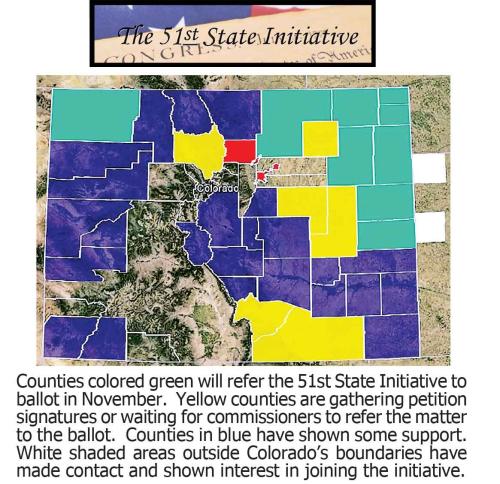
From The Greeley Tribune (Analisa Romano):
A legal concern over Weld County commissioners’ involvement in the 51st state movement was whittled down on Monday to whether passage of the ballot proposal would give commissioners authority they don’t have.
The Weld County Council heard arguments for and against the idea at their regular meeting on Monday, per the request of three Greeley attorneys who originally said they would like council members to review whether commissioners could legally spend time exploring the idea and writing editorials on it. Nearly 100 people attended the meeting at the Weld County administration building in Greeley, and some clapped and groaned during public comment.
The three Greeley men — Robert Ruyle, Stow Witwer and Chuck Dickson — said wording in the ballot proposal means commissioners would be given the unauthorized power to advocate for the 51st state movement and to allocate taxpayer money to explore the creation of a new state.
Weld County Attorney Bruce Barker said a more proper time to debate whether commissioners have that power is to wait to see if the 51st state question passes. Even so, he said, commissioners could legally pass a resolution in support of the 51st state movement and show it to the General Assembly, or they could individually contact state legislators to advocate for the movement.
Ruyle disagreed, saying court precedent requires commissioners to act as a board in those matters, and the board can’t legally pursue the 51st state by advocating for it through state legislators.
The ballot proposal asks Weld voters whether they would like commissioners, “in concert with the county commissioners of other Colorado counties, (to) pursue those counties becoming the 51st state of the United States of America.”
Ruyle and Witwer said “pursuing” secession is outside of commissioners’ authority, but it was also outside of their authority to place something on the ballot that would give them that power.
Barker said commissioners wouldn’t have authority to pass a resolution that initiates secession, because the movement must go through the proper channels, including the state Legislature and a statewide ballot measure. But he said the ballot proposal does not initiate secession — it asks voters whether they would like commissioners to spend time and money exploring the 51st state movement. He cited several state court cases to support his argument that commissioners can budget money to investigate the effects of secession, saying they have wide discretion over the county budget.
Weld County Council Chairman Don Mueller said council members would not decide on anything on Monday, but were there to listen to each side’s arguments and “digest” the information. Still, some council members voiced their opinions on the matter.
Jeffrey Hare, a council member who is also a member of the 51st state movement and updates its Facebook page, told Ruyle and Witwer he felt they were “jumping the gun a little bit.”
“That’s your interpretation of what the referendum intends to do,” he said of the attorneys’ arguments.
Originally, Ruyle, Witwer and Dickson said the state Constitution explicitly says only Colorado citizens have the authority to alter or dissolve their government, but the power of commissioners is limited to what is listed in state statute.
Barker said commissioners have so far acted legally because the Colorado statutes cited by the three Greeley attorneys pertain only to official actions, such as resolutions or ordinances. The only official 51st state action commissioners have taken is a resolution referring the 51st state question to the ballot. He said Weld County’s Home Rule Charter gives commissioners a process for putting an initiative or referendum on the ballot with no restrictions.
“The fact of the matter is, they haven’t done anything else,” Barker said.
More 51st State Initiative (North Colorado Secession) coverage here.
The Middle Colorado River Watershed Council scores $25,000 from Garfield County #ColoradoRiver
From the Glenwood Springs Post Independent (John Stroud):
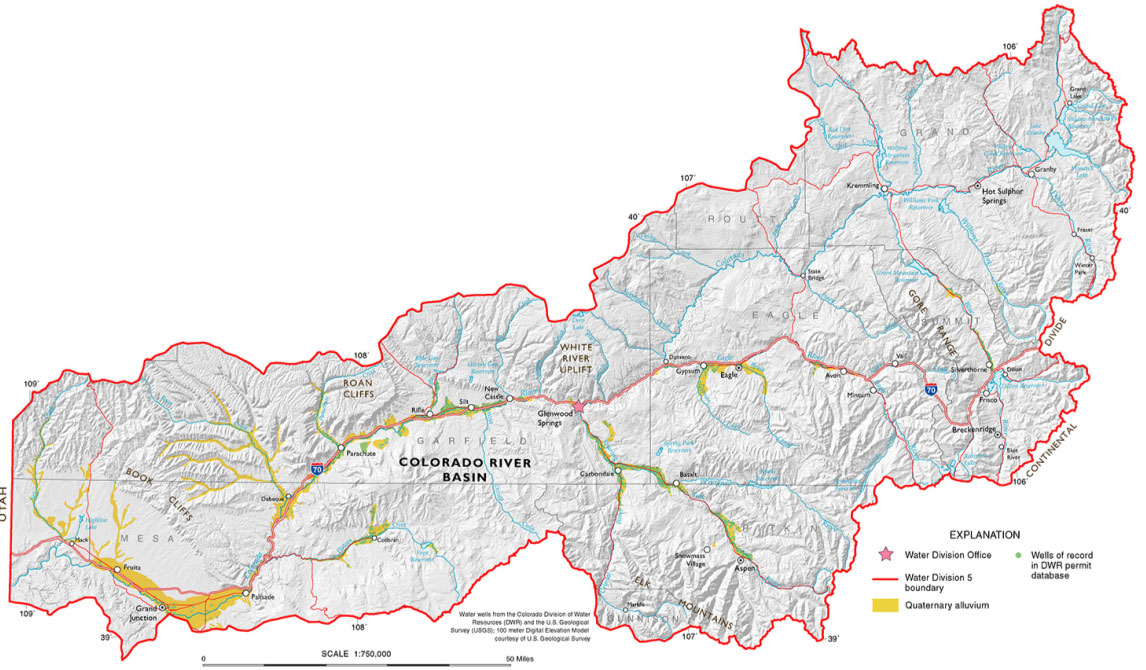
This week, the Garfield County commissioners agreed to grant $25,000 to the Middle Colorado Watershed Council, as long as the coalition meets its matching fund obligations. Commissioners awarded $13,000 immediately, in recognition of funds already obtained by the group. Another $12,000 will be released if the organization is successful in getting new matching funds by Jan. 31, 2014. Requests totaling $13,000 are still pending, Donna Gray, who chairs the group’s leadership committee, said at the Oct. 21 Garfield Board of County Commissioners meeting.
The Council has applied to become an official nonprofit organization. It is also working to line up additional funding support from local governments, the energy industry and others that can work together to protect the water resources in the middle Colorado drainage as it passes through Garfield County. The group was formed in 2009 with funding mainly from the Colorado Department of Public Health and Environment. Currently, the organization has just one paid part-time employee, Watershed Council Coordinator Laurie Rink of Carbondale.
Other financial partners to date include Garfield County, the cities of Glenwood Springs and Rifle, the Battlement Mesa Metro District and the Colorado River District.
“This is an area of the river that didn’t have a citizens conservation group established until now,” said Chris Treese, external affairs manager for the River District who works with the group…
The Middle Colorado Watershed Council’s 2014 planning efforts will involve a series of public meetings to identify issues, answer questions and come up with strategies for water quality preservation in the future.
Drought news: Much improvement in Colorado over last year
Click here to go to the US Drought Monitor website for the current skinny on drought. Here’s an excerpt:
The Plains
Precipitation in northwest Kansas allowed for improvements to the D3 conditions. In South Dakota, D1 was pushed out of eastern portions of the state as well as along the southern border with Nebraska. D0 conditions were also improved along the border with Nebraska. In Nebraska, the D0 and D1 conditions were pushed to the south along the entire northern border. A full category improvement was made in the panhandle of Nebraska as a further of assessment of recent precipitation events has the area recovering on multiple time scales.The West
The wet pattern continued with upper elevation snows and lower elevation rains in both Colorado and Wyoming. In Colorado, D1 was improved in the northwest and southern portions of the state and into northern New Mexico. Wyoming had widespread improvements as a reassessment of the last few months of precipitation prompted improvements to the D1 and D2 in the southwest portion of the state and a full category improvement in the northeast.Looking Ahead
Over the next five days (October 24-28) temperatures are expected to be below normal over the eastern half of the United States and above normal over the West. With a trough setting up over the East, temperatures will be 6-9 degrees Fahrenheit below normal over the Ohio River Valley and 3-6 degrees above normal over the Southwest. Precipitation over the next 5 days is projected to be greatest over the Great Lakes and east Texas as most of the country will remain dry.The CPC 6-10 day forecast (October 29-November 3) has the continued chance of below-normal temperatures centered over the central Plains and extending over much of the central United States. Temperatures are expected to be above normal over Alaska and in the Southeast. The best chances for above-normal precipitation are over the Ohio River Valley and covering much of the eastern two-thirds of the country as well as Alaska. Precipitation chances are trending below normal in the Pacific Northwest.
Global warming: USGS study shows 20 percent decline in Rocky Mountain snow cover since 1980
Global warming: Researchers document profound cascading ecological effects as Rocky Mountain snowpack diminishes
Rising temperatures cause snow to melt earlier, which alters flows in rivers w/sources in the mountains
Rising temperatures cause snow to melt earlier, which alters flows in rivers w/sources in the mountains http://t.co/UWX9zjQTz1 #ActOnClimate
— U.S. EPA Water (@EPAwater) October 24, 2013
Weekly Climate, Water and Drought Assessment of the Upper #ColoradoRiver Basin

Upper Colorado River Basin month to date precipitation through October 20, 2013 via the Colorado Climate Center

Seasonal Drought Outlook October 17, 2013 through January 31, 2014 via NOAA
NRCS: Wet September across Colorarado Basin helps with soil moisture deficits
Wet September across Colorarado Basin helps with soil moisture deficits: http://t.co/YoYTwC2ZMf
— NRCS Water Supply (@ColoradoBasin) October 23, 2013
H.R. 3080: Water Resources Reform and Development Act of 2013 passes the US House now on to the US Senate
Click here to go to GovTrack.us’ web page for the bill.
From the Associated Press (Henry C. Jackson) via Northern Colorado 5:
Bucking some of the same conservative groups that encouraged the government shutdown, Republicans and Democrats united Wednesday to overwhelmingly pass an $8.2 billion House bill mapping out plans for dams, harbor, river navigation and other water projects for the coming decade…
The water bill’s sponsors attracted support from members of both parties by including projects from coast to coast and labeling the measure an engine for job creation. To attract conservatives, sponsors emphasized the measure’s lack of earmarks, or projects for lawmakers’ home districts, and changes including an accelerating of required environmental reviews that have dragged out many projects for years…
Congress last enacted a bill approving water projects in 2007, a lapse that created pent-up demand among lawmakers for such work…
Added Rep. Alcee Hastings, D-Fla., “Repairing our nation’s aging infrastructure, including our water infrastructure, is the best jobs creator out there.”[…]
The legislation would allow work to proceed on 23 shipping channel, flood management and other water projects that the Corps of Engineers has started studying. Actual money for the work would have to be provided in future legislation [ed. emphasis mine].
The bill gives the go-ahead to a slew of projects, including a more than $800 million flood protection project in Fargo, N.D., and Moorhead, Minn.; a $461 million on expansion of the Savannah, Ga., port; and up to $43 million for the San Clemente, Calif., shoreline. The measure increases the share of federal dollars for the Olmsted Lock and Dam project on the border between Illinois and Kentucky.
It also would shelve at least $12 billion of old, inactive projects approved in the last water resources bill while accelerating environmental reviews, which Republicans said had slowed many projects almost to a halt…
Some Democrats and environmental groups objected to the speedier reviews, saying they would weaken environmental protections. Many Democrats said they would back the bill anyway and try to change the language when House and Senate bargainers try to put a compromise version together later. The Senate passed its version of the water bill in May with a broad, bipartisan vote.
“The real problem is lack of money, not environmental reviews,” said Rep. Rush Holt, D-N.J.
More infrastructure coverage here.
CWCB bumps flood relief funds to $40 million, 77% of damaged roadways now back in service #COflood

Here’s the release from the CWCB (Todd Harman):
The Colorado Water Conservation Board this week increased to $40 million the funds available for low-interest loans to help irrigators and other water users start repairing flood damaged systems, an increase from the $15 million it had designated earlier this month.
The CWCB has also approved the first round of loans, for a total of $12 million. The loans carry a 30-year term with no interest and no payments the first three years. The loans were distributed to 10 irrigation and ditch companies for emergency repairs of diversion structures and ditch systems and ranged in amount from $202,000 to the Boulder and Larimer County Irrigating and Manufacturing Ditch Company to $3.3 million for the Left Hand Ditch Company.
“These repairs are a critical part of recovery from the September floods and the CWCB will continue providing loans and taking other proactive steps to get irrigators, farmers and water suppliers back on their feet,” said CWCB director James Eklund. “We thank the board for its far-sighted and quick action in directing these loans to these important projects.”
Other loans approved as part of the $12 million package include: Highland Ditch Company ($2 million); Rough and Ready Irrigating Ditch Company ($1.8 million); Oligarchy Irrigation Company ($1.3 million); Big Thompson and Platte River Ditch Company ($800,000); Ish Reservoir Company ($207,000); Consolidated Home Supply Ditch and Reservoir Company ($1.6 million); Church Ditch Water Authority ($606,000); and North Poudre Irrigation Company ($482,000). For more information about the CWCB 2013 Flood Event Emergency Loan program, including eligible projects, go here.
The increase in loan funds for affected water providers follows a grant of $1.8 million to the South Platte Basin Roundtable for flood-impacted infrastructure recovery. More information on that grant is available here.
Board actions this week included approval to repurpose the remaining balance of the watershed restoration program (at least $400,000) to address flood-damaged streams needing restoration. The Board also adopted a policy supporting wise rebuilding practices and reinforcing previous Board-approved higher floodplain management standards. This will help Colorado to become more flood resilient for present and future generations. Many flood stricken communities have contacted staff for assistance with adopting higher standards. Other communities have expressed a strong interest in joining the National Flood Insurance Program.
In related action, the CWCB is partnering with FEMA and local governments to obtain 4,600 square miles of digital imagery and topographic mapping in the flood-impacted areas of the South Platte basin. This information can be used to assess or generate updated flood hazard mapping.
From the Boulder iJournal:
Roughly 77 percent of Colorado roadways damaged by the historic September floods are now open, Gov. John Hickenlooper said today.
In a news release, the governor noted that 491 of the state’s flood-impacted bridges have been inspected, only 120 need repair; FEMA has approved $43.9 million in individual assistance; The Small Business Administration has approved $29 million low-interest disaster loans; The Federal Highway Administration Emergency Relief Program cap was raised to $450 million; The Colorado Water Conservation Board increased to $40 million the funds available to help repair water systems and approved $12 million in loans this week.
Another accomplishment the governor highlighted is The Office of Vital Statistics and local vital records offices have issued 254 free birth certificates and waived the correction fee for 12 certificates — meaning families affected by the floods saved a total of $4,800 in fees.
Residents of Fremont and Morgan counties whose homes or businesses were damaged in the floods now are eligible for individual assistance from FEMA. Also, eight additional counties are eligible for FEMA public assistance: Arapahoe, Crowley, Denver, Fremont, Gilpin, Lake, Lincoln and Sedgwick.
Government workers have been busy.
More than 1,600 people in Colorado — comprised of members from FEMA, the Colorado Department of Transportation, the Colorado Office of Emergency Management, the National Guard from Colorado, Kansas, Montana and Utah, the Army Corp of Engineers, IHS and other technical and service providers — are working on recovery efforts across the state.
The Colorado Department of Transportation facilitated two telephone town halls to discuss progress on repairs, access to personal property and county roads. The U.S. 34 call on Oct. 10 had more than 3,600 participants and on Oct. 22 there were 650 participants on a Coal Creek Canyon call.
Additionally, in its first week, officials said more than 8,0000 people accessed the ColoradoUnited.com website to get information and resources related to the flood recovery. The ColoradoUnited team has provided the promised 24-hour response to 57 inquiries received via the Contact Us page.
More flooding coverage from Jessica Maher writing for the Loveland Reporter-Herald. Here’s an excerpt:
At the annual Colorado Municipal League District 2 meeting that focused largely on the Northern Colorado flood, its impacts and how communities have worked together since, [Governor Hickenlooper] praised local officials for the speed and ease with which recovery has progressed. When he speaks to other governors who have experienced disasters in their states, Hickenlooper said they are amazed by the progress that has been made in just more than six weeks…
In an unprecedented move, the state has committed to covering half of a local government’s share for rebuilding damaged infrastructure. The federal government usually covers 75 percent of costs, which for the city of Loveland are expected to exceed $20 million.
Hickenlooper said that the state’s large reserves have enabled the state to pay the share of the local match, and the governor has made another pledge to small communities who may struggle with the local match for infrastructure rebuilding. For communities that use TABOR reserves for the local match and then find that reserve depleted, the state will help out, he said.
“At that point the state will step in and pay 100 percent,” Hickenlooper said. “They’re going to be way over their head, we’re going to find a way to get them through.”
Denver Water’s system is at 96% of capacity after the very wet September

From the Summit Daily News (Joe Moylan):
On Tuesday, Jim Lochhead, CEO and manager of Denver Water, met with the Summit Board of County Commissioners during a workshop in Frisco. Lochhead provided the commissioners with an update on Denver Water’s service system following September’s historic flooding on the Front Range.
Although Lochhead said the system worked “perfectly” in the sense that service to customers was not interrupted and no dams were breached during the flood, Denver Water sustained $15 million to $20 million in damage to roads, exposed conduits and one of its gravel pits located near the South Platte River.
Despite the damage, and Denver Water’s commitment to assist its partner communities in recovering from flood damage, Lochhead said there is a silver lining to take away from the event. According to the most recent reports, Denver Water’s reserves, which consist of 15 fully or partially owned reservoirs across more than 4,000 square miles of watershed in eight counties, is at 96 percent capacity.
Update: Stacy Chesney sent a correction via email:
The story states: “Gross Reservoir near Boulder, for example, increased in capacity by 26 acre-feet as a result of the flooding, Lochhead said.” As a result of the storms, Gross Reservoir gained 7,600 acre-feet of water and went up in elevation by 19.6 feet. This equates to an increase in storage of about 26 percent.
Gross Reservoir near Boulder, for example, increased in capacity by 26 acre-feet as a result of the flooding, Lochhead said. Gross Reservoir’s capacity is 41,811 acre-feet, according to Denver Water’s website.
Lake Dillon, Denver Water’s largest reservoir at 257,304 acre-feet, also is reporting some of its highest seasonal levels in history, Lochhead said.
But the increased water capacity presents a handful of short-term challenges, Lochhead said, including spring water management should the High Country receive dense snowpack this winter. All of its water comes from mountain snowmelt, according to the Denver Water website.
More important, however, is the fact that the recent increase in capacity does little to ease future water shortage concerns as Denver, the Front Range and the rest of Colorado continue to grow in population…
Lochhead’s idea is fairly simple — encourage upward, rather than outward growth along the Front Range and the challenges surrounding water conservation will begin to remedy themselves.
For example, a single-family home with a garden in Denver uses the same amount of water as a four-unit building constructed on a similar-sized lot, he said. However, much of the growth on the Front Range is sprawling away from urban centers; meeting growing water needs is only exacerbated by the current trend of purchasing or building single-family homes on quarter-acre lots.
It’s a type of growth that is unsustainable not only in terms of water use, Lochhead said, but also in terms of providing services, such as transportation and energy delivery, because property tax revenue cannot meet the needs that come with a sprawling population.
More Denver Water coverage here.
Net Zero Cities conference recap: ‘We’re beginning to bump right up against true scarcity’ — Steve Maxwell

From the Northern Colorado Business Report:
Both locally and globally, water is going to become an increasingly large concern as it is a limited resource with ever-growing consumption, said [Steve Maxwell], who spoke at the second annual Net Zero Cities conference, an event sponsored by the city of Fort Collins and BizWest Media, publisher of the Northern Colorado Business Report.
Water must be viewed as a “factor of production,” such as energy, labor or capital, Maxwell said. As it becomes more expensive it needs to be thought of as an economic factor rather than simply a basic human right.
Americans must also learn to take a more holistic view of water consumption, he said, looking not just at what comes out of the tap, but looking at what our larger water footprints contain.
On average, Americans use 100 to 150 gallons of water per person, per day, he said. But our actual water footprint is much larger. For example, Maxwell said, most people don’t think about the amount of water it takes to grow the beans that are ground up to grow the beans that are ground up to make our morning coffee, but that water contributes to a person’s water footprint.
Similarly, Maxwell said policy makers and consumers need to think about water as “one water,” including all types, even waste water and storm water, when considering use and reuse.
“People won’t do a whole lot until it impacts their wallets,” Maxwell said. “For many, water is ‘out of sight, out of mind.'”
But the time is coming when the issue can no longer be ignored, he said.
“We’re beginning to bump right up against true scarcity,” he said.
More coverage from the Northern Colorado Business Report:
New Belgium Brewing made an on-the-spot pledge of $10,000 to a new initiative that will help determine an organization’s water footprint and identify strategies to reduce water consumption and impacts on water quality.
The pledge was made during the second-annual Net Zero Cities conference, according to Judy Dorsey, executive director of the Colorado Clean Energy and Colorado Water Innovation clusters, two Fort Collins-based organizations dedicated to finding solutions to energy and water challenges.
Earlier this year, the Colorado Water Innovation Cluster began fundraising for a project called the Net Zero Water Planning Template aimed at making companies aware of their water footprints and helping find ways to reduce that footprint…
The Colorado Water Innovation Cluster has presented the idea to several groups, including the Water Smart Innovations Conference in Las Vegas, and is working to garner pledges and bring together experts to refine the process.
The project’s official kick-off is schedule for winter 2013 and spring 2014.
During one of the sessions at the Net Zero conference, Jenn Vervier, director of strategy and sustainability at New Belgium, decided to pledge $10,000 to the project, making the brewery a platinum sponsor of the Net Zero Water Template, Dorsey said. New Belgium officials could not be reached for comment.
More infrastructure coverage here.
Say hello to Our Colorado River project from Colorado Trout Unlimited #ColoradoRiver

From the Vail Daily (Derek Franz):
…Trout Unlimited, a non-profit conservation organization, is currently working to unite the Western Slope to ensure the region has a strong voice at the bargaining table [ed. during development of the Colorado Water Plan]. The group is asking governments to sign onto the Our Colorado River project, which outlines five “core values” that various stakeholders might agree upon.
“We’re trying to show unity and resolve on matters that have sometimes been points of contention between the agriculture and recreation communities,” said TU’s Colorado River Basin Outreach Coordinator Richard Van Gytenbeek. “By agreeing to these core values, we can provide a united focus on a common platform as we move toward the Colorado Water Plan, which is due in 2014.”
Gytenbeek said he has asked seven counties to sign the plan since this spring, including Eagle County on Oct. 15.
“I’ve also asked Routt, Summit, Gunnison, Garfield and Mesa counties,” he said. “Garfield and Mesa counties are the only ones that seem to be waffling.”
Our Colorado River project’s five core values are:
Cooperation, Not Conflict – Work together to ensure the Colorado River is able to meet our diverse needs, from agriculture to recreation and tourism. Cooperation is the key to sustaining our economy and way of life.
Protect Our Quality of Life – Maintain our open spaces through a vigorous agricultural sector and ensure that our rivers and streams are flowing and healthy.
Modernize Irrigation – Upgrade our aging irrigation infrastructure systems to make them more productive, economical and habitat-friendly.
Innovative management – Explore new ways to meet our water supply needs through innovative conservation and management practices.
Keep Our Rivers at Home – Leave water in its home basins and oppose new, large-scale, river-damaging trans-basin diversions from the Colorado River to the Front Range.
Lincoln Park/Cotter Mill superfund cleanup: Cotter wants to reduce the frequency of groundwater monitoring

From The Pueblo Chieftain (Tracy Harmon):
Public comment is being sought on a Cotter Corp. uranium mill proposal seeking to reduce the frequency of groundwater monitoring on 11 new wells. The state health department has preliminarily approved the request and will take public input before making a final decision. Cotter Corp. Mill Manager John Hamrick indicated more than a year’s worth of sampling has been amassed on 11 new wells, which were dug in late 2011 to help establish the extent of groundwater contamination.
“Once we’ve established 12 months of measurements, we generally move to quarterly sampling as we do with all the other wells,” Hamrick explained.
The mill and a portion of the neighboring Lincoln Park community have been an EPA Superfund site since 1988 due to uranium and molybdenum contamination in groundwater and soils. Groundwater is not used by residents in the contaminated area of Lincoln Park as they all have been connected to the city water supply.
Hamrick said the average uranium value for each of the new monitoring wells is below the Colorado Groundwater Quality Standard. Only three wells have exceeded the standard for uranium — one six times, another twice and the third just once.
The average molybdenum concentration for most of the new wells also was below the state standard and only three wells have exceeded that standard out of 115 samples.
The state health department reviewed the request as did the Cotter Community Advisory Group. Regulators feel, “Significant baseline data” has been collected to allow for quarterly monitoring instead of monthly, said Jennifer Opila, unit leader for the state heath department’s radioactive materials division.
Public comment will be accepted Monday through Sept. 13. Comments can be sent to Warren Smith, community involvement manager, via email at warren.smith@state.co.us or by calling 303-692-3373.
Say hello to Lucy Waldo the new conservation director of Land Trust of the Upper Arkansas
From the Leadville Herald-Democrat (Ann Marie Swan):
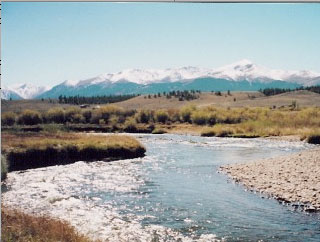
Protecting productive, hard-won agricultural lands and their natural systems is the life work of Lucy Waldo, new conservation director of Land Trust of the Upper Arkansas. Waldo’s affinity for distinct Colorado ranchlands and the people who work them has moved her to facilitate conservation easements.
“We need to pay attention to protecting the natural resources that we depend on,” Waldo said. She calls this “one of our fundamental goals as humans.”
Before joining the Land Trust, Waldo served as director of the Gunnison Ranchland Conservation Legacy for 11 years. There, she helped ranching families complete 25 conservation easements that protected nearly 10,000 acres of productive ranchland. Waldo was also director of the Colorado Water Workshop, a western water policy conference hosted by Western State College in Gunnison. Waldo sees conservation easements on private lands as serving landowners, the surrounding community and, ultimately, humankind. Conservation easements are voluntary, coming from landowners, and another expression of private-property rights.
“It’s a win-win solution,” Waldo said. “We need to value the agricultural lands and natural areas that provide food, water, shelter and clean air for people and other creatures.”
Waldo grew up in Maryland, where her father worked with dairy cattle at the Beltsville Agricultural Research Center. Her mother was a family counselor. Waldo came to Colorado in 1980 to attend Colorado State University in Fort Collins. She earned degrees in agricultural extension education and history.
Waldo found her career path in the early ’90s while working with a community group in Gunnison, focusing on a grand vision for the valley.“There was a strong consensus to see working ranchlands continue to be a part of the community’s future,” Waldo said.
Despite her years of experience, Waldo is challenged by every conservation easement. Keeping up with ever-changing legal requirements, tax benefits and finding funding is only part of the process. Each parcel of land has unique characteristics and landowners have specific needs and desires.
“I find it especially satisfying to listen to people’s stories of how their families worked diligently to create a productive farm or ranch,” Waldo said.
“Generations have devoted themselves to improving their operations and taking care of their land. You can hear the pride and love in their voices. Helping landowners conserve the land they love is incredibly satisfying.”
Waldo is rooted in the central Rockies, her home for more than 20 years. Her work takes her to Lake, Chaffee, Fremont, Saguache and western Park counties.
“I have great respect for people who work the land in this challenging climate,” Waldo said. “I watch my neighbors haying and see the long hours, sweat and dedication that go into the year’s crop. The lush abundance of the meadows in August depends on the hard work of the ranchers, and the recurring gifts of the water and the soil.”
Waldo spends her free time riding horses, hiking and cross-country skiing.
“I hope that I will always keep this awareness of how blessed we are and how important it is to take care of the world,” Waldo said.
Waldo can be contacted at lucywaldo@ltua.org. For information about Land Trust of the Upper Arkansas, visit http://www.ltua.org.
What happens in the Arctic does NOT stay in the Arctic
Ag practices in Weld County impact RMNP, the Colorado Livestock Association hopes to help

From The Greeley Tribune (Eric Brown):
The local agriculture industry is teaming up with scientists and other experts, looking to possibly take the “biggest step yet” in addressing what’s been a major concern at Rocky Mountain National Park for several years. While Greeley is about 60 miles away from the park, ammonia drifting westward from ag operations in Weld County and surrounding areas, among other sources, has impacted the park’s ecosystem, according to studies.
Biologist Jim Cheatham said the 2006 Rocky Mountain National Park Initiative report revealed that nitrogen levels in the park are about 15 times more than natural amounts — with the excess coming in the form of nitrogen oxide from sources like fossil fuels, and also ammonia from ag operations. Such levels, according to Cheatham, have altered the vegetation composition, aquatic communities and overall natural processes of the alpine tundra the park was created to protect under its designations as a National Park, an International Biosphere Reserve and a Class I Airshed.
Now, the Colorado Livestock Association is voluntarily working with climatologists and other scientists in hopes of controlling the problem.
The Greeley-based organization is spearheading an effort to develop a warning system that will tell ag producers — based on atmospheric conditions — when they should or shouldn’t scrape manure from pens at feedlots and dairies, fertilize crops or perform other tasks that release ammonia into the atmosphere. Only when weather conditions are right does that ammonia drift from farms, ranches and dairies along the Front Range and northeast Colorado plains to Rocky Mountain National Park.
“So if we can just get more exact data about how and when that ammonia is moving into Rocky Mountain National Park … and then develop a warning system … that could really go a long way in fixing the problem,” said Bill Hammerich, president of the Colorado Livestock Association. “We know we’re not the only contributor to the issue, but we certainly want to do our part to help fix it.”
Such a warning system has been in discussions for about two years, Hammerich said, and it finally got off the ground this month, thanks to a recent $100,000 boost from the Conservation Innovation Grant program.
Cheatham said he’s “very appreciative” of the efforts being made by the Colorado Livestock Association and others, saying the development of a warning system could be the “biggest step yet” in addressing the high nitrogen levels in the park.
There’s no exact numbers showing how much of an impact agriculture operations have on the high nitrogen levels, but he said the 2006 report showed that about 55 percent of the excess nitrogen was coming from sources in Colorado, while the other 45 percent drifted in from outside the state. Cheatham said ongoing studies are attempting to pinpoint precisely how much ag and other industries are affecting nitrogen levels.
“We know agriculture’s impact is significant.”
William Brock Faulkner — a professor at Texas A&M University’s Biological and Agricultural Engineering Department, who’s helping with the warning-system endeavor — said the Colorado Livestock Association and other parties involved (Cheatham, the Colorado Corn Growers Association in Greeley and Colorado State University Atmospheric Science Department professors Jeffrey Collett and Russ Schumacher, among many others) are hoping to have about 30 to 40 producers in the region participating in a “pilot” program by March or April of next year, after more data is collected. Faulkner said some of the effort will be determining whether a warning system would even be economically feasible — not requiring producers to delay practices like manure removal, needed as part as of animal-health measures, for too many days.
But local producers say they’re willing to do their part.
“Myself and others in agriculture certainly don’t want to have a negative impact on the environment,” said Steve Gabel of Eaton, former president of the Colorado Livestock Association, and also operator of Magnum Feedyards, which has the capacity to hold nearly 25,000 head of cattle.
Gabel explained that many producers already have practices in place that help reduce the release of ammonia into the atmosphere, but added that, if a warning system can be developed, he could hold off on performing ammonia-releasing tasks for as many as a few days at a time, or even up to a week, if needed.
Cheatham said the overall goal is to ultimately cut nitrogen levels in the park by half — 1.5 kilograms of reactive nitrogen per hectare per year. He noted that it’s a “realistic and achievable goal,” but those levels would still be about seven or eight times the natural amounts of nitrogen in the park.
“We understand that, with human activity, natural levels are not achievable anymore,” he said, describing Rocky Mountain National Park as ahead of the curve in addressing the nitrogen issue compared to other parks. “But we certainly need to do what we can to control the problem.”
More water pollution coverage here.
Drought news: 3 years of drought, DWR enforcement regarding seep ditches leads to loss of bird habitat #COdrought

From The Pueblo Chieftain (Chris Woodka):
A McClave farmer who has watched a reservoir dry up during the drought of the last three years is nearing the end of a court battle with the state and downstream water users to protect a wildlife refuge. Unless some other source of water is found, the two reservoirs that provide habitat for migrating birds, including some endangered species, could become just so many more acres of weeds and salt cedar, said Lance Verhoeff.
“There is a real risk of the wildlife refuge disappearing,” Verhoeff said. “I think there’s a real opportunity if conservation groups could come together to find water to put in the reservoirs.”
So far, there only have been efforts to take water from the small reservoirs, located just downstream of John Martin Reservoir.
In 2011, the Division of Water Resources began enforcing water rights on seep ditches throughout the Arkansas River basin — the type that used to provide water to the Bent County reservoirs.
For Verhoeff, the decision has been perplexing. His family was encouraged by the state to build the reservoirs — one in 1946 and one in 1962 — and received funding from the federal Soil Conservation Service. Using the reservoirs, the Verhoeffs were able to turn meadows into fields with the full support of state and federal agencies. In the process, the reservoirs became prime habitat for migrating birds.
In 2002, the U.S. Fish and Wildlife Service even funded a habitat improvement project. “The biggest problem has been the change in the management of water, through buy-and-dry by the cities and the lawsuit with Kansas,” Verhoeff said.
In 2011, the state cracked down on seep ditches — water intercepted on its way back to the river from more senior diversions. Verhoeff filed a water court application in late 2011 seeking to gain storage rights, as well as shore up his claim to water on several ditches.
Verhoeff maintained that water development in the area early on separated the reservoirs from the river. The state and downstream water users such as the Amity Canal, Tri-State Generation and Transmission Association and the Lower Arkansas Water Management Association argued that a ditch was needed to convey water to the river — and away from the reservoirs.
Trial is set for November in water court, but Verhoeff is working with the other groups on a settlement. The likelihood is that the upper reservoir will be able to store water when it is available, while the lower one, already full of tamarisk and weeds, will remain dry unless other sources of water are found.
“The reservoirs are not under restriction for any dam safety purposes,” said Steve Witte, Water Division 2 engineer. “They could be used for storage if a way was found to put water into the reservoirs through augmentation and exchange.”
CFWE reading recommendation: Kevin Fedarko’s, The Emerald Mile
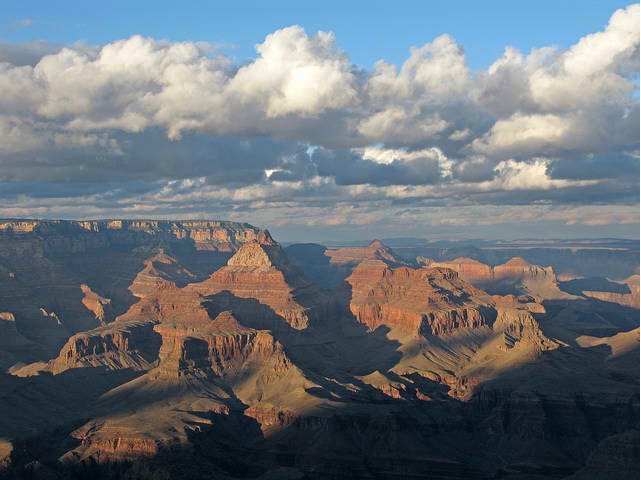
Nicole Seltzer has written an introduction to the book The Emerald Mile for Your Water Colorado Blog. Click through and read the whole thing then go out an buy the book for the author’s (Kevin Fedarko) visit in January.
More Colorado Foundation for Water Education coverage here.
Clear Creek County scores $90,000 in flood relief so far #COflood

From the Clear Creek Courant (Ian Neligh):
[Clear Creek County Commissioner Tom Hayden] told Hickenlooper that some private driveways that were washed out remain out of service.
“But they’ve received, thanks to you, the (financial) assistance through FEMA for not only individual assistance, but now we’ve got public assistance, so if it is a county road, we are able to go in with some of that public assistance,” Hayden said.
[Clear Creek County Commissioner Phil Buckland] added that the Federal Emergency Management Agency assisted county residents quickly after the flooding.
By the end of September, FEMA had awarded $90,000 to 130 households with flood damage in the county.
Hickenlooper said he was amazed by the amount of restoration work that had occurred throughout the state in five weeks.
Gov. Hickenlooper announces a roadway reopening, funds for water systems and a benefit concert

Here’s the release from Governor Hickenlooper’s office:
Gov. John Hickenlooper today announced several significant improvements and resources for communities recovering from the historic September floods: the Colorado Department of Transportation will reopen a section of US 34 to residents; the Colorado Department of Public Health and Environment will offer grants to repair flood-damaged water and waste systems and water quality testing and the Colorado Water Conservation Board will provide low-interest loans for water systems repairs; and a benefit concert on Sunday, Oct. 27 with several of Colorado’s favorite musicians for flood recovery efforts.
“We are leveraging all available resources from the federal government, local businesses and communities to repair and rebuild Colorado after the historic September flooding,” Hickenlooper said. “We want to thank everyone involved in helping impacted communities recover quickly. We have more work to do across the state, but our resolve is strong.”
US 34 Road Recovery
Significant progress has been made on US 34 to reestablish access for residents only between Estes Park and Drake. As of noon Sunday, Oct. 20, US 34 will open from Estes Park to Drake for canyon residents to come and go at any time. Access to Drake is being restricted to residents only.As of today over 80 percent of roads damaged by the September floods are open and CDOT is on pace to have all damaged roads open by Dec. 1. CDOT has completed inspections of the 411 state owned bridges impacted by the floods and the inspectors determined that 120 bridges are in need of repair and no bridges were destroyed. CDOT continues outreach to residents in other corridors to discuss progress on roadway construction.
Water Systems Recovery
The Colorado Department of Public Health and Environment (CDPHE) will facilitate $2 million in grant funding provided by the Colorado Water Resources and Power Development Authority to help communities in FEMA-designated flood counties that sustained damage to drinking water and waste water systems. The Water Quality Control Division at CDPHE will review submitted applications and work with the Authority on the grant awards. The application provides grant criteria and the deadline is Nov. 8.The Colorado Water Conservation Board will make available $15 million for low-interest loans and $1.65 million in grants to help water providers start repairing flood-damaged systems. The loans carry a 30-year term with 0 percent interest the first three years. Click here for more information.
Colorado Rising Benefit Concert
A benefit concert, Colorado Rising, has been organized by some of Colorado’s best-known musicians to raise money for flood relief efforts. The Sunday, Oct. 27 concert will be at 1stBank Center in Broomfield. Musicians scheduled to perform include Dave Matthews, The Fray, Big Head Todd and The Monsters, DeVotchKa, Nathaniel Rateliff and members of The Lumineers.All proceeds from the concert will go directly to LiveUnitedColorado.org, which was formed by United Way chapters across Colorado to help people affected by last month’s deadly and devastating floods. Rival concert promoters AEG Live Rocky Mountains and Live Nation announced the concert, which is being presented by radio station KBCO and TV station KCNC.
About ColoradoUnited
Gov. John Hickenlooper appointed Jerre Stead, executive chairman of Englewood-based IHS Inc., to be the state’s Chief Recovery Officer. The Recovery Team is working to make Colorado more innovative, safer and resilient in its infrastructure, individuals, economy, community, ecosystem and environment. The recovery effort is guided by ensuring health and safety as a priority, responding to all “asks for help”, being transparent and open in communication, planning for winter, containing costs and demonstrating fiscal responsibility. Go to http://www.ColoradoUnited.com for more information.
H.R. 3189: Water Rights Protection Act — Garfield County adopts resolution in support (NSAA vs. USFS)

From the Glenwood Springs Post Independent (John Stroud):
The bill, if passed, would prohibit the U.S. Forest Service and BLM from conditioning permits on the transfer or relinquishment of privately held water rights, or requiring water users to apply for a water right in the name of the U.S. government, instead of the purchaser, as a condition of the permit approval.
In doing so, “Federal land management agencies are using coercion to acquire private water rights,” according to a resolution recently passed by the governing board of Associated Governments of Northwest Colorado (AGNC).
“These and related actions constitute a federal taking of private property without just compensation,” the AGNC resolution states.
Garfield County Commissioner Mike Samson said during Monday’s regular commissioners meeting that it’s important for the county, as an AGNC member, to lend its individual support to the bill also…
According to the AGNC resolution, the practice of asking permittees to give up water rights violates state water law, and, “these actions have already had a negative impact on local ski businesses, which are important contributors to our regional economy.”
Municipal, agricultural and energy-related operations that have water storage facilities similar to ski resorts could also be negatively impacted, it said.
Tipton’s bill “would protect communities, businesses, family farms and other stakeholders in northwest Colorado that rely on privately held water rights from having these property rights taken by an agency of the federal government,” the resolution concludes.
More NSAA vs. USFS coverage here. More water law coverage here.
Springs’ City Council hopes to kickstart a stormwater department, public meetings planned by El Paso County

From the Colorado Springs Independent (Pam Zubeck):
In a letter to Mayor Steve Bach, City Council asserts its budgetary authority under the City Charter and code, saying, “It is what the Charter expects us to do and what the citizens of our city have elected us to do.”
In the past City Attorney Chris Melcher, hired by Bach and approved by Council, has said Council has very limited power to override a mayoral veto involving the budget.
Besides asking Bach to produce more detail for his proposed 2014 budget, the three-page letter, signed by all nine members of Council, also states two major changes that Council plans to introduce:
— Council will be proposing a Stormwater appropriation department dedicated to stormwater operations and maintenance.
— Council will be proposing a supplemental budget appropriation ordinance out of the 2013 fund balance of $2 million dollars to the Stormwater appropriation department to begin work during this fiscal year on some of the stormwater issues from the 2013 summer flood.Council also asserts its authority to adopt specific line items, which Melcher has said isn’t allowed unless they pertain to “major legislative budget determinations.”
Meanwhile the El Paso County stormwater task force is holding public meetings about the stormwater issue. Here’s a report from Pam Zubeck writing for the Colorado Springs Independent:
Three public meetings are being hosted by the Stormwater Task Force, a regional panel, that’s been meeting for more than a year on the topic. The meetings, in collaboration with the Colorado Springs City Council and the El Paso County Board of Commissioners, will seek feedback on stormwater management and discuss recent management proposals.
The format for the meetings will be oriented toward group discussion, the task force says in a news release, to try to get as much input as possible.
The meeting schedule:
Thursday, Oct. 24, 6:30-8:30 p.m.
Conservation and Environment Center, 2855 Mesa RoadWednesday, Oct. 30, 6:30-8:30 p.m.
Leon Young Service Center, 1521 S. Hancock ExpresswayWednesday, Nov. 6, 6:30-8:30 p.m.
Cheyenne Mountain High School, 1200 W. Cheyenne Road
More coverage from J. Adrian Stanley writing for the Colorado Springs Independent. Here’s an excerpt:
Many area leaders and volunteers gathered at City Hall following the meeting to lambaste the mayor’s plan. Among the gripes were that it: would create debt; wasn’t vetted through a public process; wouldn’t fund stormwater regionally; and would only address the problem in the short-term. Proponents of the regional plan stressed that stormwater should be treated differently than other capital needs because “water knows no boundaries.”
“We don’t have any desire in the county to take power away from the city,” County Commissioner Amy Lathen said.
Following the meeting, though, Bach explained to the Independent that he was concerned with more than power. He believed his plan would more holistically address the city’s capital needs, since his proposed bonds would also help beautify parks, fix roads and bridges, and replace police cars. And, he noted, it would do so without a tax increase.
“To me that’s the last resort,” he said. “We may get there, [but] I believe we can bridge this over the next half-decade and demonstrate that we can be efficient and effective redeploying existing dollars so that then, if we need to ask for a tax, we’ve got the confidence of the public.”
Lathen countered that Bach was being unrealistic.
“I don’t want [a tax or fee], either,” she said. ” … We’ll look at absolutely any possibility out there, including what [Bach] has proposed. But we have to be honest about what we’re looking at, and we have to be honest about the scope of this problem and our responsibilities. … We have identified over a half billion dollars in issues, in this case, in the city alone. We don’t have that in our budgets. We don’t have it.”
San Luis Valley Advisory Committee Meeting October 24

Click here to go to the Division of Water Resources website to view the agenda and draft rules.
Greeley’s wastewater treatment plant wins awards for energy efficiency

Here’s the release from the City of Greeley:
Greeley’s Water Pollution Control Facility (WPCF) recently received statewide recognition for sustainability and energy reduction from the Colorado Environmental Leadership Program and the Colorado Industrial Energy Challenge. The awards ceremonies occurred on October 17 in Denver.
For its energy reduction programs, the WPCF received the Partner of the Year award from the Colorado Industrial Energy Challenge (CIEC). The wastewater plant reduced energy use from 2011-2012 by 11.5 percent. Greeley received the top honor and only six other organizations were recognized. The program acknowledges achievements in energy efficiency for large industrial facilities with more than $300,000 in annual energy costs.
The second award is from the Colorado Environmental Leadership Program (CELP).The WPCF received a Bronze Award for its efforts to reduce energy use at the wastewater treatment plant. The CELP is a voluntary program that encourages and rewards superior environmental performers that go beyond the requirements of environmental regulations and move toward the goal of sustainability.
The WPCF has recently implemented several projects that have contributed to the decrease of energy use. The 2011 installation of high-speed turbo blowers improved aeration at the plant, increased energy efficiency, and lowered energy costs. In 2012, 2,106 solar panels were installed making it the largest solar farm in Weld County. Greeley’s Water and Sewer Department will continue to find ways to make the WPCF and other facilities more energy and cost efficient.
Greeley recently scored some grant money from the state. Here’s the release from the City of Greeley:
Gov. John Hicklooper announced today that 21 municipal wastewater and sanitation districts throughout Colorado will receive a total of $14.7 million in state grants to help with the planning, design and construction of facility improvements to meet new nutrient standards. The City of Greeley’s Water Pollution Control Facility will receive a total of $80,000 for planning and $1 million for design and construction.
“Greeley is in the forefront of water quality and water management. This grant simply helps the City do its job with less cost to residents,” stated Greeley Mayor Tom Norton.
Excessive nutrients harm water bodies by stimulating algae blooms that consume oxygen, kill aquatic organisms and ultimately lead to smaller populations of game and fish. While nutrients are naturally occurring, other contributors include human sewage, emissions from power generators and automobiles, lawn fertilizers and pet waste.
“Coloradoans in rural and urban areas will benefit from these new water standards that improve and protect our water,” Hickenlooper said. “This grant funding will help communities offset the costs of bringing their systems into compliance. In addition, the grants announced today will help ensure safe and healthy water for wildlife, agriculture, recreation and drinking water purposes.”
The state’s Water Quality Control Commission adopted new standards in September 2012 to help prevent harmful nutrients, such as nitrogen and phosphorus, from reaching state waters. The new regulation requires certain larger domestic wastewater treatment facilities to meet effluent limits for nutrients.
The Nutrient Grant Program will help wastewater facilities with the costs of planning for, designing and implementing system improvements. Funding for the program was made available through HB13-1191 “Nutrient Grant Domestic Wastewater Treatment Plant,” sponsored by Reps. Randy Fischer and Ed Vigil and Sens. Gail Schwartz and Angela Giron.
There are about 400 municipal wastewater systems in Colorado. The new nutrient standards apply to about 40 systems and will have the greatest impact on the waters of the state.
October 21 is the anniversary of the approval of the Mancos Project

Click here to visit the Bureau of Reclamation Mancos Project website.
Arizona Central: The history of Glen Canyon before the dam #ColoradoRiver

John Wesley Powell

The Colorado River begins to back up behind Glen Canyon Dam during construction

A high desert thunderstorm lights up the sky behind Glen Canyon Dam — Photo USBR
From Arizona Central (Ron Dungan):
In May of 1869, a one-armed explorer named John Wesley Powell set off on an expedition to explore the Colorado River. Powell, who had lost an his arm during the Civil War, began the journey with a crew of nine men in four wooden boats crammed with full of supplies.
Most of the crew, Edward Dolnick writes in “Down the Great Unknown,” was a bit bleary.
“As a farewell to civilization,” they had “done their best to drink Green River Station’s only saloon dry,” and they departed with “foggy ideas and snarly hair.”[…]
Most early attempts to settle the West did not result in neat grids of farmland, but in land speculation, fraud, wealthy land barons, failed crops and empty homesteads.
Powell recommended modifying the Homestead Act by forming irrigation districts rather than promoting individual homesteads. But much of the water in the West had already been claimed, and Congress was reluctant to challenge the status quo. It certainly did not want to fund large irrigation projects.
“Powell did his best: Here’s a rational plan for managing the water. Here’s a rational plan for managing the forests,” Fowler said.
“He ultimately got ran out of the USGS because of what he was trying to do. They cut his budget until he resigned.”
Powell left the Geological Survey in 1894, though he stayed with the Bureau of Ethnology until he died in 1902.
By that time, Congress had begun to think differently about water-reclamation projects. New technology made it easier to build big dams, Fowler said, and it was possible for them to generate alternating-current electricity that could be transmitted long distances. That would pay for the projects, and “that was how they sold it to Congress,” Fowler said…
Perhaps the most permanent residents were Pueblo Indians, who built small villages and planted crops. When work began on Glen Canyon Dam, archaeologists began to search the area for artifacts from these early residents. Fowler was among those scientists.
“I was there the day they started pouring the concrete.”
He got to Glen Canyon in the fall of 1957, when the blasting began. He watched the dam grow, and saw Page, which did not exist prior to the construction, slowly take form.
Bill Lipe, professor emeritus of anthropology at Washington State University, was a crew chief for the University of Utah from 1958 through August 1960, and came back to work in the summer of 1961.
“It was very hot,” Lipe said. The crews spent their summers digging and their winters writing reports.
“It was a logistically difficult place to work in, because of the lack of roads…. We spent a lot of time just getting around and surviving,” Lipe said.
The work was the largest salvage-archaeology project of its time, Fowler said…
On Sept. 13, 1963, the last bucket of concrete tipped 583 feet above the Colorado River, spilling both prosperity and perpetual controversy. Glen Canyon Dam was completed, and the newly plugged Lake Powell was on a 17-year rise toward 9 trillion gallons.
School of Mines 33rd Oil Shale Symposium recap

From The Grand Junction Daily Sentinel (Gary Harmon):
It could require less than half a barrel of water to buoy up a barrel of oil from the high desert of the west, Shell Oil Co. said. One barrel of oil could be produced from oil shale for as little as a third of a barrel of water, Tom Fowler, commercial lead for the Shell project, said at the 33rd Oil Shale symposium at Colorado School of Mines.
Water use has long been a point of contention in the running battle over the development of oil shale.
Shell’s announcement comes on the heels of its decision to shift assets away from oil shale in northwest Colorado to other assets, among them a $12.5 billion shale-to-gas plant in Louisiana.
“We were laser-focused on water,” and the techniques refined in Colorado “translate very well to other places, I’m specifically thinking of Jordan, where they also are very concerned about their water, Fowler said.
Shell’s new estimates are based on a project producing 50,000 barrels of oil per day.
One major factor in Shell’s reduction in anticipated water use was to switch from water cooling to air cooling, especially in the power-generation part of the process. Power is needed to heat the rock to about 700 degrees Fahrenheit to free kerogen from the rock. Vaporized kerogen condenses into crude oil that can be recovered.
Shell also reduced its estimates of water use by targeting the deepest, though not richest, layers of oil shale, Fowler said. By recovering oil from the deepest layers, which lie beneath groundwater, the company eliminated any need to steam-strip the area from which it removed kerogen. That, combined with other efforts to reduce and better manage water, could reduce the ratio of water to oil to 0.3 barrels of water to 1 barrel of oil. It also would leave the richest layers of shale still available for development with more refined techniques in the future, Fowler said. Shell’s estimates include domestic water and usage for reclamation and other purposes.
The most kerogen-rich oil shale in the world sits in northwest Colorado, under thousands of feet of overburden and Shell’s departure leaves one company pursuing development of shale in place, with little surface disturbance.
Two companies, Enefit American Oil and Red leaf Resources, are mining more shallow resources in Utah and heating them to recover oil.
Shell’s estimates don’t apply to those techniques, but Enefit American Oil says its methods will require between one and three barrels of water per barrel of oil, with the likely outcome closer to the lower end.
Opponents of oil shale development frequently cite a Government Accountability Office report, widely panned by industry officials, citing water needs at seven barrels per barrel of oil produced.
More oil shale coverage here via Gary Harmon writing for The Grand Junction Daily Sentinel:
While oil shale development in the United States suffered a blow when Shell Oil announced it was pulling out of its much-touted Mahogany project, other nations are encouraging industry development. Genie Energy, which is still moving ahead on its project in northwest Colorado, has a new project in Mongolia. Irati Energy, based in Canada, is moving ahead on a pilot oil shale project in Brazil. Enefit American Oil, a subsidiary of Eesti Energia, the world’s largest oil shale company, also has a concession, or lease, in Jordan, to produce electricity and oil from shale deposits there.
And while Shell pulled out of Colorado, it didn’t pull out of oil shale. The international energy giant still is working on an oil shale project in Jordan, despite abandoning its plans to produce oil from shale in the Colorado portion of the Green River formation.
China, Morocco and other countries are seeing development of their oil shale deposits, as well.
Northwest Colorado, the focal point of the richest, thickest deposits of oil shale in the world, however, is seeing no new interest in its deposit even as Enefit American Oil is working to produce oil from shale in neighboring Utah.
David Argyle organized Irati Energy to begin work on the Brazil project and he’s on the lookout for new resources. He’s not looking immediately at the U.S., however.
“We don’t have the time or patience” to work through the regulatory issues facing oil shale development in the United States, Argyle said, noting that he doesn’t reject development in the United States out of hand.
The industry, however, has to overcome emotional opposition, despite having a good environmental record, Argyle said.
“In Brazil, we’re getting quietly on with it. In Israel, they’re getting quietly on with it,” Argyle said of oil shale development.
Boom-bust cycles aren’t a major issue because the Brazil project anticipates a 200-year lifespan, Argyle said.
Another project in Brazil has a 300-year lifespan, he said.
The development around the world demonstrates that “oil shale has a global footprint” that is growing, Argyle said. That footprint expanded into Mongolia by accident, said Claude Pupkin, Genie Energy CEO. Genie Energy sent a geologist to Mongolia on an unrelated mission and he stumbled on a “world class,” previously unrecognized oil shale deposit, Pupkin said.
“We’ll do a pilot project that is smaller than AMSO,” Pupkin said, referring to the American Shale Oil project in Colorado.
In both cases, the projects will be in-situ, meaning that there will be little surface disturbance. Genie obtained commercial production rights and is working with the government in Mongolia to establish a regulatory system for development, Pupkin said.
Colorado’s deep oil shale deposits don’t fit with the retorting technology developed in Estonia, Enefit American Oil CEO Rikki Hrenko said.
Update: From The Grand Junction Daily Sentinel (Gary Harmon):
With the shadow of Nazi occupation looming over the country, Sweden turned to oil shale in 1940.
“Oil shale got the Swedish economy through World War II,” Dr. Harold Vinegar said.
Vinegar outlined for the Oil Shale Symposium at Colorado School of Mines last week how Sweden exploited a low-grade oil shale deposit near the town of Kvantorp, using an in-situ process that bore a striking resemblance to the in-situ process Shell Oil Co. was pursuing in northwest Colorado. Vinegar is an oil and energy scientist who spent more than 30 years with Shell.
The Swedes already were mining the same oil shale deposit when they became frustrated by the cost and difficulty of digging to reach the shale they retorted to produce oil, Vinegar said.
Fredrick Ljungstrom came up with the idea of heating the shale in place and leaving the soil above it undisturbed. Ljungstrom drove heating elements in a closely spaced hexagonal pattern down into the shale and sunk a collection well in the center.
The heaters and wells were shallow, in the tens of feet instead of the thousands of feet below the surface in the Piceance Basin.
Making the project more difficult was the lack of electricity. Ljunsgstrom could only get electricity to heat the shale four months of the year, during the spring runoff, when hydroelectric power was available, Vinegar said.
During those months, Ljungstrom used a mobile transformer to direct power into the cells he was using at any given time to heat the rock to 400 degrees Fahrenheit.
“It really was a brilliant idea,” Vinegar said.
And it worked.
The Ljungstrom process produced 90,000 barrels of oil from 1942 to 1945 and 1.5 million barrels during its production life that ended in 1959. The oil produced from Ljungstrom’s in-situ process was lighter and cleaner than the oil produced from the retort process on the same deposit, Vinegar said. Groundwater beneath the deposit was protected by an impermeable clay layer that prevented contamination, Vinegar said.
In addition to inventing what is known as the Ljungstrom process for oil shale, Ljungstrom was also a co-inventor, with his brother, of high-pressure steam boilers, steam turbines and steam locomotives.
He also was a sailing innovator and the Ljungstrom rig — an arrangement of sails — is named for him.
The land he used to produce oil from shale over the years has changed.
“The area revegetated naturally,” Vinegar said. “It’s now a park where the in-situ process was run.”
Forecast news: ‘In some ways looking at woolly bears is as good as anything’ — Dan Bean

Experimental forecasts from Klaus Wolter via the Colorado Climate Center

Seasonal Drought Forecast thru December 31, 2013 via the Climate Prediction Center

ENSO Model plume September 2013
From The Grand Junction Daily Sentinel (Dennis Webb):
The best tool for predicting Colorado winters is what’s called the El Niño Southern Oscillation, or ENSO, says National Weather Service meteorologist Joe Ramey of Grand Junction. That tool tracks water temperatures in the equatorial eastern Pacific Ocean. Warm phases are El Niños, and cool ones La Niñas, and the two appear to dictate how the winter jet stream sets up in the United States. El Niños generally mean dry and warm conditions in northern Colorado, and cool and wet ones in southern Colorado, with the opposite being the case for La Niñas. But this year those ocean temperatures are near normal, or what Ramey calls ENSO-neutral, or “No Niño.”
Ramey considers such seasons “wild cards” in terms of forecasting. He has tried to determine what might happen this winter based on past No Niño seasons, 19 of which have occurred since 1950. On average, western Colorado snowfall those years was below the latest 30-year average. Looking just over the past 15 years, there have been three No Niño years, including last winter, and those seasons were either dry or semi-dry.
Examining things other ways, it doesn’t get any better.
Ramey also considered the fact that another factor in our winter weather, the Pacific Decadal Oscillation, based on temperatures off Alaska, is in a cold phase. But in the case of nine No Niño seasons that had a cold PDO, snowfall was below average.
What about No Niño seasons that followed a previous No Niño season? Again, Ramey found nine out of the 19, and snowfall again was below normal.
Finally, Ramey took into account the encouraging sign of the wet fall we’ve been having. This time he found seven such instances out of the 19, all of which had below-average snowfall except, of course, in the fall.
“No matter how I tried to look at these 19 years, no matter how I sliced and diced it, it came in below normal,” he said.
Ramey is expecting a wet November and possibly December, a dry January and February and perhaps a wet March-April, especially if an El Niño arrives then.
A year ago, Ramey pointed to the fact that the last several previous No Niño years resulted in wet starts and finishes to the season, but with the midwinter being dry and the season usually ending up with below-average snow.
That led him to accurately predict that the same would happen last winter.
Now he said he’s making “basically the same forecast as last year because it worked.”
“I’m going to use that forecast until it doesn’t work again,” said Ramey, who is the first to acknowledge how hard it can be to get such winter forecasts right.
He notes that he didn’t even listen to himself, buying a ski pass to Powderhorn Mountain Resort and donating to the Grand Mesa Nordic Council for its trail grooming.
“I’ve literally put my money on a good snow season this year locally,” he said.
From The Grand Junction Daily Sentinel (Dennis Webb):
If you’re wondering what this winter’s weather might hold in store, you might as well consult with a woolly bear. The width of the caterpillar’s reddish-brown middle stripe is said to indicate what winter holds in store (wide supposedly means mild, narrow means severe). The belief doesn’t appear to be backed up by much science, but it’s perhaps as good as what forecasters have to go on as they take their best guesses about what’s coming this winter, particularly as it pertains to that all-important snowfall.
As with last winter, the challenge is exacerbated by the fact that neither an El Niño nor La Niña weather pattern is taking shape. Those patterns generally can give forecasters some idea of what to expect in terms of snowfall in Colorado.
“That’s a little bit of a problem. It does decrease the overall confidence in a winter forecast,” said Dave Samuhel, a meteorologist with AccuWeather.
That lack of confidence might help explain the differing projections about what the Centennial State might expect in the coming months.
AccuWeather predicts a little better than normal chance for precipitation this winter. The prospects are particularly good in the center and western parts of the state, Samuhel said. He said temperatures could average a degree or two below normal as well, thanks both to the expected storms and to cold temperatures from Canada.
Joe Ramey, a meteorologist with the National Weather Service in Grand Junction, sees a probability of below-normal precipitation for the season, but with some hope coming from signs that an El Niño may develop late in the season and boost March-April snowfall, at least in the southwest mountains. Much of his analysis stems from what the region has experienced in past No-Niño years (see related story).
But for anyone wondering, he also points out that the Farmer’s Almanac is predicting normal snowfall and “piercing cold” in Colorado and other nearby states including Wyoming, Kansas and Nebraska.
Samuhel said AccuWeather’s forecast is based partly on an expectation of a more active pattern of storms originating over the Pacific and heading east. It also looks at similar years that resulted in above-normal precipitation for Grand Junction.
Meteorologist Klaus Wolter, who works for the University of Colorado and the National Oceanic and Atmospheric Administration, has issued what he has termed a “fairly optimistic” forecast of above-average snowpack by Jan. 1 for all but the Yampa and Rio Grande river basins. His forecast presentation also says early season snowpack “appears to have more bearing on the final runoff yield than any other season.”
Jim Pokrandt, spokesman for the Colorado River District, can only hope Wolter’s optimism is borne out.
“We need a good snowpack and we need a couple years of good snowpack,” he said.
With winter approaching, a friend sent Ramey a picture of a woolly bear caterpillar with a center band of the same size as the outer ones.
“That’s supposed to mean something. I’ll tell you in May,” Ramey said.
Dan Bean, manager of the Palisade Insectary, hasn’t seen any woolly bear caterpillars this fall.
“Maybe that’s a bad sign,” he said.
He doesn’t get many signals from insects in terms of what specific weather might be coming. Every fall, they tend to dig into the soil.
“They don’t try to do any forecasting. … We know they all disappear and we know we’re not going to see them until next April or May regardless of what happens between now and then,” he said. “They’re playing it safe.”
He doesn’t claim any special insight regarding woolly bears’ reliability as winter prognosticators, but also points to the difficulty of such forecasting in general.
“In some ways looking at woolly bears is as good as anything,” he said.

Six cities eyeing gravel pit storage east of Pueblo at Stonewall Springs

From The Pueblo Chieftain (Chris Woodka):
Developing reservoirs east of Pueblo remains an important component of a 2004 agreement to protect Arkansas River flows through the city. So far, the participants in the six-party intergovernmental agreement have relied on stop-gap measures to recover water, but recently there has been more activity that could lead to long-term changes.
The situation was reviewed last week by the Southeastern Colorado Water Conservancy District, which is a minor player in the effort, but shares some of the planning costs.
Colorado Springs, Aurora and the Pueblo Board of Water Works are the major players, and they have each had a role in the recovery of yield program. Fountain and the Southeastern district have smaller parts.
“This is an important regional effort to understand the allocation costs,” said Gary Bostrom, water chief for Colorado Springs Utilities, and a Southeastern board member.
The Pueblo water board took the lead in locating a reservoir site in 2005, trying to lease the Stonewall Springs site near the Pueblo Chemical Depot. When the cost proved too high, it was bought by private developers who proceeded with reservoir plans and a gravel mining operation.
Colorado Parks and Wildlife has an agreement to purchase a reservoir being developed by Stonewall Springs LLC, and it could be a candidate for municipal storage, said Bob Hamilton, Southeastern’s engineering director. Cities could participate by contributing water or money.
A nearby reservoir plan by Two Rivers Water and Farming Co. on Southwest Farms appears less likely. Alan Hamel, chairman of the Colorado Water Conservation Board, said Two Rivers’ loan application for the project will be “de-authorized” in November.
Both sets of reservoirs would be filled and emptied by gravity flows on the Excelsior Ditch.
A third plan is being tested by Colorado Springs that involves pumping between gravel pits just east of the Pueblo wastewater treatment plant.
Up until now, Colorado Springs and Aurora have bypassed the most water, recapturing some of it in a reservoir on the Holbrook Canal north of La Junta under an agreement brokered by Aurora.
More insfrastructure coverage here.
Floyd Ciruli’s presentation Public Perception of the Public Trust Doctrine is now available for download from the CWC website

Click here to go to the Colorado Water Congress’ Public Trust Special Project page to download the presentation.
Update: Here’s a report about the survey and the issue from Chris Woodka writing for The Pueblo Chieftain:
A survey by the Colorado Water Congress indicates voters trust local water providers, support agricultural water values and generally favor the existing legal framework of water rights in Colorado. The group is gathering the information in preparation for the possible return of a public trust question on next year’s ballot.
“The public trust doctrine in Colorado would be unlimited employment for water lawyers,” Doug Kemper, executive director of CWC, told the Southeastern Colorado Water Conservancy District last week.
“The survey showed most people are uncertain, but (the public trust proposal) does have certain resonance,” Kemper said. “Most people are comfortable with local control of water.”
The CWC has been gearing up for a return bout with Richard Hamilton of Fairplay, who is planning on using the same ballot language that finally was approved in 2012. Hamilton said legal challenges by the CWC to the ballot title hurt chances for gathering signatures by reducing the time needed, so he withdrew the initiative last July. After Hamilton earlier this year announced his intentions to begin a campaign for 2014, CWC began a two-year, $325,000 program to counteract the effort.
Water groups, such as the Southeastern district or Pueblo Board of Water Works — even the CWC itself — are limited in their ability to campaign against the measure once it is on the ballot, Kemper said.
The survey provides arguments that might be made by private groups against the proposal. The Colorado Farm Bureau already has stepped up to fill that niche.
The public trust doctrine, relied on by some other states, could throw the state’s prior appropriation doctrine into chaos because it could elevate “public good” arguments above property rights.
The Colorado Constitution provides that those who first divert water to beneficial use have a senior claim to water, and gives domestic use preference over agricultural and manufacturing uses. Subsequent court cases have interpreted the laws to provide a strict pecking order of water rights within seven water districts in Colorado. Changes in the law in 1969 incorporated groundwater diversions with surface rights. Interstate compacts have added more restrictions about how water can be diverted within the state.
More public trust doctrine coverage here.
A review of flooding impacts on the oil patch is underway #COflood
After last month’s Front Range flooding tore through oil and gas facilities, causing some tanks to leak and even become unmoored, employees with the energy producer Encana noticed an interesting trend. Although Encana’s tanks were damaged, the company didn’t experience the kind of damage that some other companies did from trees falling on tanks or being swept into them. As it happens, Encana spokesman Doug Hock said, the company typically fences in well pads where it operates in the flooded area because its operations there tend to be in more densely populated areas. While the fences weren’t installed for flooding purposes, they ended up helping keep out debris.
“It was kind of an ah-ha, light-bulb moment to say, going forward we should do this because it helped protect those pads,” Hock said.
As the energy industry continues cleaning up after the flooding and bringing wells back on line, companies, regulators and environmental advocates are all looking increasingly at what lessons can be learned from the disaster — what went wrong, what went right, and what can be done to reduce problems in the case of future flooding. Eventually, this consideration will likely turn to what possibly should be required of the industry in the future, including in terms of floodplain and riparian regulations.
“I’d like to see us get a stakeholder group together to evaluate and assess the floods and also see what worked, what didn’t work, what we can make better” in terms of oil and gas operations, said state Rep. Diane Mitsch Bush, a Steamboat Springs Democrat who earlier this year got legislation passed tightening oil and gas spill reporting requirements.
Alan Gilbert, special assistant for flood response to state Department of Natural Resources Executive Director Mike King, said while it’s still early, the department and Colorado Oil and Gas Conservation Commission staff are evaluating how things went during the flood and what can be improved in the future, including possibly through new regulations.
“We take that very seriously. We think that’s true, we should do that and that’s what we will do,” he said.
INITIAL ALARM
Photos of floating tanks and reports of leaks alarmed Front Range residents concerned about oil and gas drilling there. U.S. Rep. Jared Polis, D-Boulder, who shares some residents’ general concerns over drilling, called in late September for a congressional hearing on the flood-induced oil and gas damage.
“Congress must deal with this issue to ensure that natural disasters do not also become public health disasters,” he said in announcing that request.
More recently, though, state health officials reported no evidence of pollutants from oil and gas spills in rivers and streams affected by flooding, even as it found in some areas high levels of E. coli from sewage contamination. That contamination amounted to many millions of gallons, whereas as of Friday 47,106 gallons of oil and 28,149 gallons of produced water from drilling were reported spilled.
Gilbert voiced some relief over no single catastrophic release or cumulative collection of spilled oil or other contaminants being found so far.
“It’s an emergency and a tragedy and a terrible situation but this aspect of it is on the side where we are grateful for less rather than more contamination and releases,” he said.
Although the sheer volume of floodwaters heavily diluted what spills occurred, oil and gas activist Dave Devanney of Battlement Mesa said he shares the concerns of Front Range residents about what happened there.
“Any time you have volatile organic compounds and … chemicals in the waterways, that’s an issue. No matter how much it’s diluted it’s still there, and I think it’s something that the oil and gas conservation commission should be taking a look at and ensuring that there’s adequate protections for future oil and gas development at or near water sources.”
He noted last winter’s natural gas liquids leak from a pipeline leaving a Williams gas processing plant outside Parachute. Contamination reached Parachute Creek and threatened the Colorado River.
“We don’t want to see that happen again,” he said.
UNFINISHED BUSINESS
Devanney believes preventing such problems means having the oil and gas commission take up the issue of riparian setbacks, which were unfinished business from its comprehensive 2008 rules rewrite, except for setbacks it established to protect municipal water supplies.
“The events of the last few weeks on the Front Range demonstrate that it’s an important topic that needs to be addressed sooner rather than later,” Devanney said.
Pete Maysmith, executive director of Conservation Colorado, agrees.
“I mean, this is just an unfinished topic of conversation,” he said. “… If this isn’t a wake-up call to take a look at those issues I don’t know what would be.”
Noble Energy, which like Encana also has operations in western Colorado’s Piceance Basin, reported four floodwater-related releases totaling about 9,000 gallons. But it also points to several things it believes minimized flood-related damage, including proactive emergency response training of more than 150 workers on the Front Range, and automatic technology that let it shut in 85 percent of its wells remotely, with almost all the rest being manually shut in by the time the water reached flood level.
“Overall, our equipment held up amazingly well and was a testament to our engineering and facility design,” the company said in an emailed response to inquiries for this story.
“… We believe we can successfully operate in the flood plain, as proven by this event. We are in the process of evaluating our operations in and around flood plains, and we’re working with the state of Colorado and all stakeholders on how we can improve future preparedness. We will use lessons learned to create new best management practices in those areas.”
WELL DAMAGE SLIGHT
Gilbert said the industry’s proactive effort to shut in wells ahead of the flooding, oftentimes through automated means, was a significant action because it was designed to ensure fluids aren’t moving up wells if the wells are damaged.
Of note was that damage to wells in general was relatively slight compared to the more significant tank damage that occurred, he said. And like Encana, the state has noticed the extra protection that metal fences or berms seemed to provide to tanks and other infrastructure.
“We will take a look at that in more detail and talk to everybody to find what their experiences were as well with that,” he said.
He said something else of note applied to tank batteries in wetlands. State rules require them to be tied down, but companies do so in different ways, some “relatively flimsy,” he said.
“We have noticed some of those ways have held better than others,” he said.
The degree to which it will be left to companies to apply lessons learned as they see fit, as opposed to being required to do so by state rules, is likely to be one of the decisions oil and gas regulators will be left to make.
“Why wouldn’t we require best practices? Why shouldn’t we hold the oil and gas industry to the highest possible standard?” Conservation Colorado’s Maysmith said. “I think the answer is, we should.”
Maysmith also has been critical of the state for not requiring rather than requesting information from the industry pertaining to the status of facilities potentially impacted by flooding. But Gilbert said it hasn’t mattered whether the state asked or required: “The industry is giving us the information we’re asking for.”
WITHHOLDING JUDGMENT
Mitsch Bush, who sits on the House Agriculture, Livestock and Natural Resources Committee, credited both the oil and gas commission staff and the industry for their post-flooding responses, and said it’s still too soon to know what regulatory or other changes should occur due to what the flooding has taught the state.
“I don’t want to be jumping to any conclusions. … Let’s get all the input from all the sides on what happened and get some technical assessment from (the Colorado Department of Public Health and Environment) and COGCC and really understand the impacts,” she said.
The flooding only added to the highly contentious debate over oil and gas development on the Front Range, but Encana’s Hock believes a lot of the more strident voices critical of the industry as it pertains to flood impacts “are opposed to oil and gas whether there’s a flood or not. So that really didn’t change anything.”
For Maysmith, things such as the flooding and the Parachute Creek contamination demonstrate the need to protect an important natural resource in the West.
“We’ve got to be asking ourselves, are we doing all we can to protect our water sources?” he said.
He worries when he sees well pads close to creeks, and knows tanks can be knocked over or other things can cause leaks and benzene and other toxic substances to reach waterways.
“That says we have a problem. That says we don’t have this figured out,” he said.
From The Grand Junction Daily Sentinel (Dennis Webb):
While ruptured oil and gas infrastructure was part of the problem when it came to the recent Front Range flooding, the energy industry also was part of the solution in terms of providing flood relief. Companies have contributed more than $2 million to American Red Cross relief efforts. Some of the donations initially were prompted by a $500,000 contribution by Noble Energy, a major Front Range oil and gas developer that also has operations in Garfield County. Noble challenged other Colorado Oil & Gas Association members to match its gift and raise a total of $1 million, an amount that now has been more than doubled.
At last report, donations by COGA members had reached about $2.15 million. That doesn’t include donations from company employees or company matches for those donations. It also doesn’t include relief-related contributions from companies who are not members of COGA, such as Encana, which contributed $250,000 to local United Way entities and other organizations assisting in relief. Some of the COGA-member contributors with Western Slope operations include Chevron ($250,000), ConocoPhillips ($200,000), Whiting Petroleum ($100,000), Bill Barrett Corp. ($25,000), Marathon Oil Co. ($10,000), Calfrac ($5,000) and Black Hills Exploration and Production ($2,500). Utility Xcel Energy gave $50,000.
“Their members have been a very generous supporter of our flood relief as well as donating to our general disaster relief over the last month,” said Patricia Billinger, spokeswoman for the American Red Cross of Colorado.
She said her organization’s flood-relief costs alone at this point are around $7 million, and it has received flood-designated donations of about $4 million. But general-relief donations also have helped enable the organization to respond to continuing other needs such as families left homeless by house fires.
“The recovery process is going to be long, and for some, very difficult,” Michael DeBerry, area manager for a business unit of Chevron U.S.A. Inc., a Chevron subsidiary with operations in Colorado, said in a news release. “We want the people who have been affected by these devastating storms to know that they are in our hearts. With longstanding ties to Colorado, we hope this donation eases the hardship.”
COGA has said that in cases in which companies’ personnel and equipment could be freed up, they were made available for rescue and relief efforts, such as by providing pumps, trucks and earth-moving equipment to affected communities.
Noble says its employees bought and delivered 14 truck- and SUV-loads of relief supplies for one shelter, and served meals three times a day for five days at shelters in Greeley and Evans, and 60 of its workers processed and sorted 57,000 pounds of food in a day for the Weld County Food Bank. The company and a contractor also provided 200 portable toilets in Evans, where a no-flush rule was in effect.
The company also has matched $40,000 in employee donations.
“We have 450 employees who live and work in the Greeley area, where we have operated more than 30 years — we are committed for the long-term,” Noble said in a prepared statement.
Drought news: Welcome moisture in the San Luis Valley #COdrought

US Drought Monitor October 15, 2013

Seasonal Drought Forecast thru December 31, 2013 via the Climate Prediction Center
From the Valley Courier:
Wet weather is swelling the streams, and it is making all the difference. The latest reports from the Division III Engineer’s Office show a gain in the Valley’s stream flows and aquifer, a result of the high precipitation the early autumn season brought the region. The Rio Grande’s projected annual index supply as of Oct. 8 is 450,000 acre-feet , which is 150,000 acre-feet more than forecasts predicted, according to the reports. The increase, however, creates a higher demand on the Rio Grande Compact, up to 25 percent, requiring Colorado to deliver a total of 112,000 acre-feet from the river. This month, the Rio Grande’s estimated to see a 47,700 acre-foot stream flow and a 31,000 acre-foot stream flow in November and December combined, according to the reports.
Curtailments are at 18-percent, three times what they were previously because of the flow increase.
Daily flows have stabilized at about 900 acre-feet at the Rio Grande at Del Norte, having dropped in the last few weeks, according to the reports. For the time of year, daily averages are usually 500 acre-feet.The Rio Grande obligations include sending 8,600 acre-feet downstream this month and an additional estimated 29,700 acre-feet by the end of the year, which is ultimately expected to under deliver 3,000 acre-feet from the Rio Grande, according to the report. The remaining Closed Basin Project share is 1,900 acre-feet , and its allocation is 100 percent.
“We are delivering water to the river,” said Rio Grande Water Conservation District Manger (RGWCD ) Steve Vandiver during the RGWCD quarterly board meeting on Tuesday. “We are meeting our obligations.”
The Conejos River looks like it will over deliver 7,000 acre-feet downstream to satisfy its Rio Grande Compact obligations, according to the reports. Its total obligation is 20,000 acre-feet, which it will easily meet since the river has a 27,000 acre-foot delivery credit. Estimates show the Conejos River will flow at 7,400 acre-feet this month, and at 7,700 acre-feet in November and December combined. There have been zero curtailments on the Conejos River this year, according to the reports. The obligations, however, could change depending on when Division III Engineer Craig Cotten sets the irrigation shut off date. Right now, he said during the meeting, he is considering Nov. 1, but he has yet to consult with the producers and consider their needs and understanding of the current water condition.
RGWCD confined aquifer monitoring reports show gains in several Valley test wells. Two wells in Alamosa County have increased 1.32 and 4.36 feet since 2012, and two Saguache County wells have increased .63 and 3.47 feet, according to the report. The 12 other test wells showed less promise. The highest decline is in Conejos County, minus 16.8 feet, and the lowest in Alamosa County, minus .06 feet. The average difference is minus 2.43 feet, according to the report.
“Rain and a lack of pumping is helping with significant recharge,” Vandiver said. “It is increasing the aquifer levels. The monitoring wells showed a nice response. It did what it should in these conditions.”
Only a small amount of water used for hydraulic fracturing in northern Colorado is recycled

From the Northern Colorado Business Report (Steve Lynn):
In Northern Colorado, estimates have put water recycling levels at just 2 percent of water used for fracking.
Noble Energy Inc. (NYSE: NBL), for example, has recycled about 2 percent of its water so far this year, or 600,000 barrels, said Adam Prior, technical water specialist for the company. Noble Energy, one of the largest oil companies in Northern Colorado, is working with CSU to improve its water recycling capabilities, but most of its water still comes from water wells and ponds.
“It’s not economical right now,” Prior told an audience at the 2013 Natural Gas Symposium on Wednesday. The CSU event drew hundreds of people from the oil and gas industry, environmentalists and students.
Prior was one of three panelists who spoke about the barriers to water recycling in the Denver-Julesburg Basin, which includes Northern Colorado. The low cost of fresh water, prevalence of wells used by companies to dispose of used fracking to dispose of used fracking water, recycling infrastructure challenges and a lack of regulations have led to lower water-recycling levels in the region, panelists said…
Noble has improved its water-recycling program since 2011, when all of its water came from cities. Today, about 80 percent of Noble Energy’s water comes from ponds and wells, 18 percent comes from cities and 2 percent is recycled…
Increased water recycling by companies can improve people’s opinion of oil and gas companies, said David Ellerbroek, vice president of MWH Global, an engineering company focused on water.
‘This is the last significant water rate increase we anticipate for the SDS project’ — Gary Bostrom

From The Colorado Springs Gazette (Monica Mendoza):
Capital projects dominate the 2014 utilities budget with more than $391 million planned for construction, including $229 million for two massive projects, the Southern Delivery System and bringing the coal-fired Martin Drake and Ray Nixon power plants up to federal Environmental Protection Agency standards.
To the residents, whose utility bills contribute 78 percent of the total utilities operating budget, it means rate hikes to pay for those capital projects. A typical residential customer can expect a $9.37 monthly increase in their utility bills next year, which includes $5.99 for a water rate increase that was approved last year and kicks in Jan. 1. The combined rate increases will bring in an additional $31 million.
Colorado Springs Utilities Chief Planning and Finance Officer Bill Cherrier presented the proposed 2014 utilities budget to the City Council, which doubles as the utilities board of directors…
Utilities is nearing the finish line with one of its largest projects – SDS, a 53-mile water pipeline from Pueblo Reservoir to Colorado Springs. It’s a $1 billion project that started four years ago and amounted to four straight years of 10- and 12-percent water rate increases. In 2014, utilities will spend $178 million on SDS and expects to complete the project in 2016, said Gary Bostrom, chief of water services.
“This is the last significant water rate increase we anticipate for the SDS project,” Bostrom said.
Climate.gov: What’s it like to be an author for the IPCC report?

From NOAA:
Today, Working Group I of the Intergovernmental Panel on Climate Change (IPCC) presented 14 chapters, a Technical Summary, and a Summary for Policymakers to IPCC member governments for approval and acceptance. This report represents the first of four sections that will make up the IPCC’s 5th Assessment Report. The Summary for Policymakers is available online, and the full Working Group 1 report, “Climate Change 2013: The Physical Science Basis,” will be available next week.
For this latest report, more than 250 scientists from around the world evaluated all the peer-reviewed studies about climate change that were published or accepted for publication before April 2013. They presented new evidence to support a series of scientific conclusions: that climate change is real and caused by human activity, and that the need to address it is more urgent than ever.
Ron Stouffer and Gabriel Vecchi of NOAA’s Geophysical Fluid Dynamics Laboratory (GFDL) in Princeton, N.J., share their experiences working on one of the most comprehensive scientific documents in history.
Gabe, this was your first time being a lead author for the IPCC report. How is this different from your day-to-day job at NOAA’s Geophysical Fluid Dynamics Laboratory?
Gabe: It’s a whole host of commitments, being a lead author. My son was one year old when I left on my first IPCC trip. I didn’t want to be gone from my family for a week at that stage. And now he’s four years old and getting his first big boy bike. So it’s a really long-term commitment: four years of your professional life.
[Another difference is] the assessment report is not our own research. It’s our synthesis of the research that is in the published literature, some of which may be your own personal research and interpretations of the data. A fraction of your own work might make it into the report, or it might not. So you have to read a lot of papers—many more than you end up actually citing, because you’re trying to find some coherent structure within them or inconsistencies. And then, there’s the international aspect. There is a lot of travel, and there are a lot of phone meetings at weird hours because you want to involve people across all continents…
Ron: You haven’t mentioned the 50 million emails.
Gabe: Oh, and the emails! Emails and emails. What’s interesting is that as these emails come in, you can see the work day move around the planet. Because you’ll wake up in the morning and check your email and see the first email comes from your colleague in Hawaii, then your colleague in New Zealand, and then your colleague in Japan — all the way around. By the time a document has been handed off to you, it’s already been edited many times and you better do it in a hurry before your colleague in Chicago gets it.
So it’s a big commitment, but it also seems like a big honor. How did you both come to be a lead author?
Ron: I was at one of the first lead author meetings for Working Group I held anywhere on the planet. It was at GFDL in the late 1980s. I sat in on that meeting and I got interested in it. One of the following lead author meetings was in Brisbane, Australia, and my boss was a convening lead author. He didn’t want to fly all the way to Brisbane so instead, he sent me! That’s how I got involved in the process.
For the next three reports, I was involved in the process the whole time, serving as an author. I was also was involved in writing the Summary for Policymakers [for Working Group I] and the Summary for Policymakers for the Synthesis Report. For this latest report, I served as a reviewer.
Gabe: I first heard about [the IPCC] when I was in college in the ‘90s. In the news, they were talking about a climate change report that came out but I didn’t really know what it meant. I don’t think I ever thought I’d be a part of it. At the time, I was more focused on things like El Niño and variability in my research. Climate change wasn’t on my scientific radar. Then I came to GFDL and was surrounded by a lot of different people who did climate change research. Little by little, I started shifting my research interests to include more and more the climate change problem.
At the laboratory, an email went around asking us if any of us were interested in being lead authors, contributing authors, or review editors, and for which chapters we were willing to do it. So I submitted my name and listed the chapters that I would want to do. From that point, a collection of nominations must have gone up the chain. The United States State Department sent a set of names out to be evaluated by the United Nations so that they could see if they had the right combination of experts and so forth.
At some point, in early 2010, I got an email that I had been selected and asked if I would still be willing to be a lead author on Chapter 11 [of the 5th Assessment Report]. This chapter wasn’t in the previous reports. It focuses on how variability and change come together to give you the climate that you’re likely to see over the next few decades. It was a broadening of my horizons and a broadening of the IPCC’s horizons. It was a neat opportunity.
So at first, there’s this feeling: “Wow, they selected me, how nice.“ And then: ”Wait a second, now I have to decide. Am I really willing to do this or not?” It actually took a while to decide because it’s not just a commitment of my time, it’s a commitment from my family. We eventually decided that yes, it was going to be a lot of work, but it was worth it and an important contribution. So I accepted.
Are you glad you did it?
Gabe: Ha! Ask me in a few weeks…. Personally, by the time the review round came around, I was so burnt out I had a hard time providing feedback for other chapters. It was tough. Going into it, you think you know what you’re getting into but you don’t really know until you’ve done it. I think now I can reflect a little because my role in it is pretty much done.
But in addition to the sense of participating in what is a very important enterprise, I think there have been some interesting questions that I’ve thought about for future work. There are some interesting relationships I’ve developed throughout this process that are good for me, some potential collaborations.
Ron, for this latest report, you helped design and evaluate the IPCC modeling experiments that took place in advance of the forthcoming report. Why must modeling experiments be designed specifically for the IPCC process?
Ron: The way you phrased it is a very common misconception. Actually, the CMIP [Coupled Model Intercomparison Project] panel—a subcommittee of the World Climate Research Programme—designs experiments to get at the science, to understand: why do models behave like they do? The lead authors of the IPCC can use that data, but so can other scientists who write papers on what they find. Those papers end up being a part of the assessment process that Gabe went through this time. But CMIP doesn’t design experiments for the IPCC per se; it designs them for the science.
Gabe: So, for example, rather than have this report scattered about with, for example, one figure that is an anomaly relevant to 1971-2000, and another that is an anomaly relevant to pre-industrial climate, you have to come up with some consistent way of showing the results. The CMIP models become a tool by which you can do that. But then, you shouldn’t be making figures that present some sort of new result or level of understanding that is not contained in previously published papers.
Most scientific papers in journals are the collaboration between a small group of scientists, and are peer-reviewed by two or three experts. The IPCC report, on the other hand, is based on the work of more than 250 scientists and experts from nearly 40 countries who receive more than 50,000 review comments. How do the report’s authors work together to ultimately reach the scientific conclusions that make it into the final report?
Gabe: Before the IPCC lead authors are even contacted and decided upon, there’s a scoping meeting that occurs that identifies what the layout of the IPCC report will be, what the chapters will be and what the scope of each chapter will be.
Then comes the process of combing the literature. Papers start trickling in. You and your co-authors share them with each other, you start collecting them, you put them in piles, and your office ends up looking like a horror show. In this whole process, you’re writing what will be become the zero order draft. It’s called zero order because it’s really rough, it hasn’t had much feedback. So you write that, and you send that in for review. The review is usually incredibly harsh, and rightly so.
Ron: It’s called a ”friendly” review because it’s only a select handful of scientists that are invited to comment on specific chapters in this review round. It’s not like the other reviews where anyone can ask to be a reviewer. I think Gabe had the misfortune of having me as one of his reviewers this last time. I had the easy job!
Gabe: Yeah, Ron had the easy time. His job was to read the report and just start hurling things over the fence at me saying, “Fix it.” And then I had to fix it. With every draft’s review process, you argue, you debate with your co-authors, and you try to figure out how you’re going to respond to the comments. Each draft has more references, a cleaner structure, cleaner results, cleaner assessments.
Ron: The first draft goes out for expert review — only people who can claim some level of expertise on the manner. That’s a big group of people. Climate science is a very integrative science. There are statisticians, civil engineers, amateur scientists, physicists — they can all claim expertise, and rightly so. The second draft goes out to experts as well as reviewers selected by all the countries involved, and the third extends the circle to non-governmental organizations.
Gabe: Meanwhile, you’ve got to make sure that your chapter is consistent with the other chapters. You argue with other chapter authors over who is going to say what. Each chapter has a certain number of words and certain things need to be included. We’re fighting under a tight space constraint. Well, I shouldn’t say fight…
Ron: It’s a negotiated settlement!
Gabe: Right! And then the fourth draft, or last draft, is what comes out [this week], along with the Summary for Policymakers. Whatever ends up in the Summary for Policymakers must match what’s in the assessment chapters. And each bit of text in those chapters is supported by published literature. So you can see, these statements are incredibly buttressed. Literally every line has been reviewed.
Wow, it sounds like there is a lot of debate throughout this process. How do disputes get resolved?
Gabe: I think where there are truly scientific disagreements, in my experience, we highlight it in the report. If we can’t come to consensus, we don’t come to consensus. We explain that this particular topic remains a challenge and explain why it is a challenge. And then somebody researching this down the line will hopefully come and take a look at that, and find a way to reconcile the disagreement, maybe by proving somebody wrong.
Ron: For example, during the process when the Summary for Policymakers is approved, if the representatives can’t agree on specific words or phrasing or points, what will happen is they will actually make footnotes and they’ll say “Countries A, B, and C do not agree to this statement.” That has not happened on Working Group I reports but it’s happened on Working Group II and III reports.
You know, I’ve always said that scientists are trained to not talk about what they agree on but focus on their disagreements. But the IPCC is a process that is about 180 degrees off of that. The idea is to find consensus among a group of authors and then to clearly define the places of disagreement. Scientists love to spend all their time arguing about the disagreements rather than the agreements. But in the IPCC writing, most of the writing should be about the agreement part, the consensus part. It’s a different kind of process for most scientists and one that we’re not well trained for. You have to learn how to do it.
Gabe: What we do, our main topics of research, and our own main interpretations of the data and the theory, are generally foremost in our mind. But this is a process that is much more explicit about considering the other — looking at the big picture and the broad evidence. This is one aspect that is very unique about this report: the extent to which it considers many different points of view. It makes you have to take a much humbler view of your own work. It’s very, very different. What comes out of the process is a much more robust assessment of our state of understanding and the way the world works.
Is there anyone that is just flat-out skeptical of the science?
Ron: Skeptic is one of those interesting words because scientists are supposed to be skeptical by nature. So having that as a moniker for a set of people who don’t believe in global warming, I don’t like that very much.
Gabe: I would hope that the reviewers were all to some degree skeptical of what was written [in the initial drafts]. They wouldn’t be very helpful reviewers if not. Everyone with expertise on the matter was included by the review structure of the process.
Have some of the conclusions remained the same from the last report, or even from the very first one? What can we expect to learn from the latest report?
Ron: The pattern of warming hasn’t changed much. The statements about certainty are becoming more certain over time about the human influence on climate. Climate change by 2100 — that story is not going to change much from past reports. The new thing on this report is actually taking a hard look at near-term climate change over the next several decades.
Gabe: For global mean temperature a hundred years from now, I think it very much becomes a story of CO2. Things in the middle part of the next century, from now until somewhat closer than mid-21st century, become a very subtle and interesting question, especially as you look regionally. CO2 is an important player in timescales of decades, but it’s not the only player. There are other elements at play, such as other trace gases, changes in aerosols — not what comes out of the spray can but little particles of soot and dust in the air. There are also modes of natural variation in climate such as the Pacific Decadal Oscillation, or the variations that arise when the North Atlantic circulation speeds up and slows down.
The chapter for which I served as a lead author for the latest IPCC report focuses on how variability and change come together to give you the climate that you’re likely to see over the next few decades. As we look at the last 10-15 years and as we’re looking forward, we need to look at how the rate at which we force climate change — be it from [increased levels of] carbon dioxide or aerosols — and natural climate instability are intertwined. Understanding what will happen at any given place or at any given period of time that is shorter than the next 100 years really involves considering these aspects of climate science together.
We’ve heard about some of the challenges inherent in being an IPCC contributor: time away from family, extra hours spent working, the vast amount of feedback you need to address during the writing process. But what are some of the rewards?
Gabe: Well, a lot of them are intangible. There’s the sense that you’ve contributed to an important project. So I can look back and say, I did my part as a scientist. As scientists, it’s our responsibility to make sure this report is written in as correct a manner as possible. I mean, really, it’s very much community service.
Ron: For one of the previous reports, I went through the process of finalizing the Summary for Policymakers. The Summary for Policymakers is approved by representatives from all the countries, and it’s a process that typically takes about 3 days. It goes day and night. It’s incredibly intense. I’ve been involved in these things where I was awake for 36 straight hours in conferences and meetings, talking about the wording. They literally go through it line by line.
The people who set up the IPCC originally were trying to divorce the arguments over the science from the political arguments of what to do about the science. During the Summary for Policymakers approval process, you see those two forces intersect and you can see it happening right in front of you as a participant in that process. You know, there were folks that had agendas that were obvious and there were folks who were just trying to communicate the science better, trying to get the wording right. That was a very eye-opening experience for me. It was a fascinating process and it gave me a much larger sense of community service than I had before I went through that.
Slow recovery for immigrants left homeless from September flooding #COflood

From KUNC (Kirk Siegler):
A woman named Claudia, who doesn’t want to use her last name because of her immigration status, is sitting on a couch in the lobby of a shabby hotel in Greeley, about an hour’s drive northeast of Denver.
She’s come because a friend has been staying here. Both women lost their homes when the floodwaters wiped out the mobile home park in the nearby town of Evans.
“Where can we go?” Claudia says in Spanish. “We lost everything in the floods — all of our clothes, everything, from our 10 years living here.”
Her husband is trying to keep his construction job. The family has been told that they qualify for FEMA assistance because her youngest daughter was born in the U.S. and is a citizen. But the agency is still processing their application, and she doesn’t know if it’s been approved.
The rental market here was already tight due to an oil boom. The women say landlords are preying on them, asking them questions like: “Have you received FEMA money? How much did you receive? What is your immigration status?” And the county hasn’t returned her calls for help finding an apartment.
These are common stories being told right now across this flooded region, where thousands of immigrants from Mexico and El Salvador have flocked to jobs in the fields and the dairy and meatpacking industries.
Colorado Foundation for Water Education Energy Tour November 8

Click here for the pitch.
‘The Town of Fraser is locked in an epic battle with beavers on the Fraser River’ — Reid Tulley

From the Sky-Hi Daily News (Reid Tulley):
Dams have caused flooding on portions of the Fraser River Trail, closing the trail for longer than three weeks.
Other municipalities would just exterminate the creatures for damaging a town asset such as the Fraser River Trail, said Town Manager Jeff Durbin. But according to Durbin “we take a more friendly approach in this community.”
The town isn’t in the business of beaver brutality, he said, and doesn’t necessarily want to remove all of the beavers from that particular section of the river.
What the town is planning to do is to “strategically remove” the beavers causing the biggest problems. This process involves bringing in trappers to capture the beavers alive and relocate the rodents, according to Durbin. The process of live trapping and relocating the beavers also requires the approval of Colorado Parks and Wildlife to ensure where the beavers are relocated can sustain the animals.
United Water: Chambers Reservoir beginning to fill
Chambers Reservoir beginning to fill! pic.twitter.com/RC4LH6Uab7
— United Water (@UnitedWaterCO) October 18, 2013
Weld County Farmers Union: ‘…secession is not a solution’
From The Greeley Tribune (Eric Brown):
Agriculture is one of the industries Weld County commissioners say they’re standing up for in their push to secede from Colorado, but some members of the industry this week spoke out against the commission’s ongoing secession efforts.
“We recognize there is a disconnect between rural and urban communities, but we also agree secession is not a solution,” states a special resolution adopted by Weld County Farmers Union members attending the organization’s recent annual meeting.
Weld County commissioners since this summer have spoken out in favor of creating a new state to allow northeast Colorado’s robust agriculture and oil and gas industries to thrive under regulations of their own design — rules different than those created through the influence of the state’s urban lawmakers. Commissioners have said a collective mass of issues have accumulated during the past several years that isolate rural Colorado from the rest of the state and put those rural counties at a disadvantage. They’ve specifically made reference to state regulations impacting agriculture and oil and gas.
“We all appreciate that rural communities, along with farmers and ranchers, seem to have less of a voice each year,” said Ray Peterson, president of Weld County Farmers Union, in a news release. “Action to withdraw into a 51st state does not solve the larger problems. All this will do is isolate us even more. Maybe we need to do some serious analyzing as to why our rural message is not getting though.”
However, Weld County Commissioner Sean Conway said Thursday he and other commissioners are hearing from many others in the ag community that they are fed up with disconnect between rural Colorado and urban lawmakers and still support the secession movement.
As of Thursday afternoon, the Weld County Farm Bureau, a separate ag organization, had not officially spoken out in favor or against the 51st state movement, according to its board members.
Peterson is a former Colorado state senator who operates the ranch on which he was born, northeast of Nunn.
“I grew up appreciating the values of rural Colorado. But I see secession as a reactionary response to legislative actions at the state capitol,” Peterson said. “To withdraw will cause further fragmentation of Colorado. We need to be working together to iron out differences.”
Weld County Farmers Union members said in their news release they believe people need to know there are residents of the county who are not in favor of forming a 51st state.
Peterson said residents of Weld County would be better served if their elected officials worked with their counterparts in both rural and urban communities to find common ground. Otherwise, Weld County residents run the risk of being locked into a situation that has short-term uncertainty and potentially long-term harm.
From Aljazeera America (Sandra Fish):
On Nov. 5, residents in Weld and 10 other counties will vote on whether to start the process to create a 51st state. Those counties account for 24 percent of Colorado’s landmass, but only about 7 percent of the state’s 5 million people.
It’s a quixotic effort, and one not unique to northern Colorado, that highlights the deep divisions between urban and rural — or, at least, the sense of disconnectedness that residents of rural America are feeling. Two northern California counties recently voted to leave their state. There’s an effort underway in western Maryland.
“I think it’s a good idea,” said Julie Taylor, co-owner of Gilcrest Farm Supply.
Gilcrest is about 40 miles northwest of the college town of Boulder, which is often held up as a poster child of all that’s wrong with urban Colorado. Taylor said the recent floods in Boulder and Weld counties are an example of the differences between urban and rural life.
“Around here, it was more worry about how’s it going to affect your livelihood, with animals and crops,” she said. “In Boulder, it was ‘How are we going to get around?’”[…]
Jeffrey Hare, a spokesman and organizer for the 51st State Initiative, said gun control legislation — universal background checks and magazine capacity limits — and laws requiring higher renewable energy standards for rural electric cooperatives are part of the impetus for the movement.
“Ultimately, what we’re trying to accomplish is better representation for rural America and more direct representation,” Hare said. “We have a disenfranchised class of voters, that are smaller and don’t have the votes to fend for their values.”
A new state, he said, “would provide a better check-and-balance for the urban-rural divide. It would also provide check-and-balance for the Republican-Democratic divide.”
That political divide may be the real root of the problem, said Daniel Lichter, a professor of policy analysis and management at Cornell University who specializes in rural demographics.
“You’ve got a tea party that is disproportionately rural, it’s disproportionately white. They are oftentimes anti-government,” Lichter said. “They see urban America, urban minorities taking over their country.
“I think we have a very big cultural gap between urban and rural America at the moment, with rural states having a whole different set of cultural values.”
That gap is evident at both the local and national levels, Lichter said. But even rural areas differ, as Jess Haynes pointed out in a conversation break while studying at Zoe’s Café in Greeley recently.
Haynes grew up in the rural mountains of Park County and has worked in the ski town of Breckenridge.
“It’s very high income, a lot more liberal, a lot more tolerant,” she said of the mountain towns. “A lot of my friends who are in the agricultural rural (region), it’s a lot more conservative, more politically right, more of a work-ethic based as opposed to play … It’s a more somber, less frivolous society.”
Here’s a guest column written by Dave Young that’s running in The Greeley Tribune:
Voters in Weld and a handful of other Colorado counties will soon have the opportunity to weigh in on the notion of seceding from Colorado and forming a separate, 51st state. As a proud native Coloradan, I have deep misgivings about the idea.
The secessionists insist that the state government isn’t concerned with anything outside the Denver metro area. Yet Gov. John Hickenlooper and members of his administration have been spending a lot of time lately in Weld County and other rural areas hammered by last month’s flooding.
The flood illustrates a critical point: We’re all in this together. Hickenlooper, just like his predecessors, takes seriously his role as governor of all of Colorado. He and state officials on both sides of the aisle are making sure the state is doing everything it can to provide short-term relief in all flood-ravaged areas and to marshal the funds to rebuild damaged roads, bridges and other infrastructure.
When the floods came, volunteer first responders converged on Weld County from around the state. Our Colorado National Guard engineers and civilian crews hired by the state are working feverishly to rebuild U.S. 34 and other storm-damaged roads and bridges before winter sets in. I’m grateful for their effort. A vote to secede is hardly a way of saying thanks, and it could undermine the recovery.
The state’s attention is not just a one-time disaster relief effort. A recent I-News report estimates that Colorado spends between $60 million and $120 million more per year in the 11 counties considering secession than it receives from those counties in taxes and fees.
Regardless of the outcome of next month’s vote, secession would require the approval of the Colorado Legislature, the U.S. Congress and, probably, the voters of Colorado. It’s next to impossible to envision the Legislative and popular majorities that would both be needed to partition Colorado. It’s equally inconceivable that Congress would ever vote to set a dangerous national precedent by breaking up a state.
The only state formed without the blessing of its “parent” state was West Virginia, which split from Virginia in 1863. Because Virginia had seceded from the Union in 1861, and because the nation was in the middle of the Civil War to reverse the secession of Virginia and the other Confederate states, the U.S. Congress welcomed any move to weaken Virginia, and unilaterally recognized the upstart West Virginia government.
Those were extraordinary circumstances, when the issues of the day were nothing less than preserving the Union and abolishing slavery. By contrast, the North Colorado secessionists seem most worried about the changes to our renewable energy standard. But as even the Rocky Mountain Farmers Union points out, “Wind development in Weld and Logan counties has had a positive economic impact for those counties, leading to around $2.5 billion of private investment in infrastructure just in those counties.” The new standard will create even more investment and more jobs.
Many in Weld County and northeastern Colorado feel Denver isn’t listening. I share their frustration. If the secession vote is meant to send a message that we need more dialogue, then I hear you loud and clear. But the fix for a breakdown in dialogue is better and more productive dialogue, not a divorce.
Different areas of this state will disagree now and then, but we all have a role to play in making Colorado great.
I’m proud to represent House District 50 and its residents, and I’m working hard to make our voices heard in Denver in a constructive way. I urge a no vote on secession.
State Rep. Dave Young’s House District 50 includes Greeley, Garden City and Evans.
Here’s a guest column written by Sean Conway that’s running in The Greeley Tribune:
As a Coloradan and Weld County resident, did you watch with alarm as the Colorado General Assembly passed legislation this past session that went after our farmers, ranchers and small business owners?
Do you remember where you were in June when you heard Gov. John Hickenlooper intervened in the execution of Nathan Dunlap despite more than two decades of judicial review and the Colorado Supreme Court upholding his conviction for the cold-blooded murder of teenagers working at Chuck E. Cheese in Aurora? Did you have a sense of outrage?
Do you remember seeing our legislators last March ignoring the pleas of law enforcement, sheriffs and police chiefs to not pass into law unconstitutional and unenforceable gun control laws in Colorado just because the mayor of New York City demanded they do so?
Are you embarrassed that Colorado college students and their families who qualify for in-state tuition pay more to go to CU, CSU or UNC than they would pay in out-of-state tuition for the University of Wyoming or other state universities in the Rocky Mountain region?
Are you tired of seeing hundreds of millions of dollars generated by oil and gas production in Weld County going to Denver to fund K-12 school districts in the metro areas, while our Weld County districts have some of the worst per-pupil funding levels in Colorado?
Then vote yes on Question 1A, the statehood question on this year’s ballot, to send a clear message to Denver that we need a change.
Hickenlooper and the current leadership in the General Assembly have too long ignored Weld County and rural Colorado. They have supported anti-agriculture, anti-oil and gas and anti-small business legislation that, if fully enacted, will destroy our economy and very way of life in Weld County.
In the summer of 2012, when farmers asked the governor to invoke the same emergency powers he used to help put out the wildfires — emergency powers that would help farmers in Weld County and northeastern Colorado save their crops from a devastating drought — he said no. It is time to send a message that that was wrong, and everyone in a time of need should be treated equally.
When urban legislators passed Senate Bill 252, imposing renewable energy mandates on rural REA’s and co-ops and then exempting their own municipal utilities and Xcel from those same standards, it was hypocritical and wrong. Still, Hickenlooper signed the bill into law. It is time to send a message that this type of selective legislation is not acceptable.
And when law enforcement officials from across the state came to the state Capitol last spring to explain why the gun control bills being proposed could not possibly be enforced and in fact violated the Second Amendment, they were ignored, kept from testifying and made fun of by legislators who cared more about Mayor Michael Bloomberg and his feelings than the brave men and women who put their lives on the line every day for us. It is time to send a message that this behavior is not acceptable.
Question 1A is simply a straw poll on whether you believe the governor and leaders in the Colorado General Assembly are acting in the best interests of all Coloradans. A yes vote does not create a new state immediately; it only allows the conversation to continue.
By voting yes on 1A, you are sending a message: We want to see a change to a more common sense approach that respects rural Colorado as well as urban Colorado.
I respectfully ask you join me in sending a strong message to Denver on Nov. 5. Vote yes on Question 1A, the statehood question.
Sean Conway is a Weld County commissioner serving in his second term.
From the Associated Press via the The Colorado Springs Gazette:
In a letter sent on Monday to Don Mueller, chairman of the Weld County Council, the three attorneys – Robert Ruyle, Stow Witwer and Chuck Dickson – say the Colorado Constitution gives citizens the authority to alter their form of government, but no such authority is granted to county commissioners.
“We have reviewed the Colorado Constitution, the statutes of Colorado and the Weld County Home Rule Charter,” the letter states. “We can find nothing in the law giving the Board of County Commissioners the power or authority to advocate, investigate or initiate the secession of Weld County from the state of Colorado.”
Weld County Commissioner Doug Rademacher said those claims are “totally baseless.”
“We obviously wouldn’t be doing it if we didn’t have a legal basis to do it,” Rademacher said.
Witwer, one of the attorneys who signed off on the letter, said commissioners’ proposal to secede from Colorado is their most recent action in a number of instances that he said don’t necessarily fall under their authority. He said no state law or county charter outlines commissioners’ authority to focus on issues outside of county affairs.
Weld commissioners have said they were approached by a group of residents who asked them to start a secession movement. But Witwer said the fact that constituents approached them still doesn’t grant commissioners authority to start the movement.
Witwer said the November ballot question asking voters whether they would like to secede isn’t an official action, but more of a poll. He said that kind of initiative has no real legal base.
Weld County Attorney Bruce Barker acts as legal counsel for commissioners and the Weld County Council, so the letter asks the county council to seek a neutral attorney to investigate commissioners’ authority.
Finally, here’s an editorial from The Greeley Tribune editorial staff:
It won’t surprise anyone who regularly reads this page to learn that we’re urging residents to vote against Weld County Ballot Question 1A, which asks the county commissioners to work with commissioners from other counties to form the nation’s 51st state.
In June, when commissioners first proposed working with roughly 10 other eastern plains counties to break away from Colorado and form their own, largely agrarian state, many around Colorado and the nation simply laughed.
We didn’t.
We understand full well the frustration and sense of alienation that many in this part of the state feel after last year’s legislative session in which leaders of the Democratic majority — predominantly from the state’s urban corridor — frequently seemed to eschew debate in favor of lock-step, party-line votes that were certain to elicit the kind of reaction that has led to the secession movement.
The commissioners and other supporters of the 51st state are right to point out that the diminishing influence of rural areas comes as the result of large, long-term trends that have seen cities and suburban areas rise in political and economic influence around the country as the nation has become more urban during the past two centuries. However, other things also have contributed to the decline of rural power in Denver. Term limits, for example, pushed out several effective and experienced legislators who ably represented the interests of rural communities. The legislators who have gone to Denver in recent years to represent Weld County have proved woefully inadequate to the task.
Rural discontent and estrangement are real problems, and they need serious solutions. The chimera of secession offers no such result.
In fact, it’s hard to say exactly what an affirmative vote on Ballot Question 1A would accomplish. It won’t create a new state. It won’t repeal the onerous requirement that rural electric cooperatives double the amount of power they get from wind and solar sources. It won’t change the state’s gun control laws or redraw legislative boundaries.
What it will do is push this county onto a path that’s fraught with uncertainty. How would the commissioners work toward forming a new state? How much would these efforts cost? How would others in Colorado and around the country view these efforts? And how would that affect existing business and personal relationships around the state and country?
Even its supporters grant that the actual formation of a 51st state is a virtual nonstarter because it requires approval of both the Colorado Legislature and Congress. However, if a new state were ever to become more likely, that, too, would carry its own unprecedented levels of uncertainty. Everything from water rights to regulations on business and even in-state tuition at the University of Colorado and Colorado State would be up in the air. More importantly, even supporters of secession grant that Weld County has its own divide between urban and rural residents, and concede that the formation of a new state isn’t sure to heal the fissure.
Secessionists contend a “yes” vote would send a message to politicians in Denver. There may be some truth to that, but there are other, less costly ways to send such a message. And even supporters of the new state say that leaders at the capitol have already taken greater notice of rural Colorado.
Hickenlooper, himself, has signaled a renewed willingness to engage in constructive dialogue.
“If this talk of a 51st state is about politics designed to divide us, it is destructive,” Hickenlooper told the Craig Daily Press. “But if it is about sending a message, then I see our responsibility to lean in and do a better job of listening.”
To the degree that the secession movement has resulted in a better place at the table for Weld and other rural counties, the commissioners and their allies deserve credit for that. However, it’s unlikely that pushing the 51st state movement further will accomplish more. In fact, any effort to continue further down the rabbit’s hole of secession will only squander the real opportunity that exists to address the divide facing this state and much of the country. To do that, we must engage our urban counterparts in real dialogue. The legislators who represent Weld and other rural communities must play a more effective role in that conversation than they have in the recent past. But we also must have a conversation among ourselves as residents of a rural part of the state. We must work to reach a real consensus about which policies are of vital importance to our way of life and which can be traded as bargaining chips.
In a new state or the old, dialogue and smart, effective leadership offer the only real hope of bridging the divide between us. Secession is simply a distraction.
More 51st State Initiative coverage here.
The CWCB meeting and the State Water Plan road show hit Telluride this week

From The Telluride Daily Planet (Katie Klingsporn):
The board is holding its bimonthly meeting at The Peaks Resort, where it will spend two days discussing Colorado River conditions, flood protection and ongoing work on a state water plan, among other topics.
The meeting begins at 8:30 a.m. on Tuesday and will continue through Wednesday afternoon. It is open to the public.
“I think anyone who has an interest in state water policy might be interested in sitting in on some of the agenda items,” said April Montgomery, a Telluride resident who serves as the Dolores/San Juan/San Miguel Basin representative on the CWCB…
The most notable item on the board’s agenda is perhaps the state water plan. The board will discuss that issue Wednesday from 9-10 a.m.
More Colorado Water Plan coverage here.
Drought news: Hope and angst for the upcoming snowpack season up and down the #ColoradoRiver Basin
Experimental forecasts from Klaus Wolter via the Colorado Climate Center
Seasonal Drought Forecast thru December 31, 2013 via the Climate Prediction Center

US Drought Monitor October 15, 2013
From the Las Vegas Review-Journal (Henry Brean):
After 14 years of record drought, it will take an unusually wet year — one like the basin saw in 2011 — to stave off the first-ever water shortages on the overdrawn river and slow the decline of its two main reservoirs.
Lake Mead, the source for 90 percent of the Las Vegas Valley’s water supply, has seen its surface fall by more than 100 feet since the drought began. Current projections call for it to lose another 25 vertical feet of water and sink to a record low by November 2014.
Should the lake keep falling from there, it could force the shutdown of one of two intake pipes used to deliver water to the valley. The Southern Nevada Water Authority is rushing to complete a new $817 million intake that will draw from the deepest part of the reservoir, but the complicated project is unlikely to be finished until late next year or early 2015.
“This is an alarming trend, and one that we would really like to see come to an end,” said water authority spokesman J.C. Davis. “Even if we have an ‘average’ year on the Colorado this year, Lake Mead is projected to continue falling. In order to make a significant dent, we would need at a minimum something on the order of 150 percent of normal.”
Almost all of the river’s flow starts as snow that collects in the mountains of Colorado, Utah and Wyoming from November to late May. Lake Powell, on the Utah-Arizona border, fills with that water in early summer, rising sometimes by a foot or more a day as the snow starts to melt and water flows downstream…
Pennsylvania-based AccuWeather, which supplies data for the Las Vegas Review-Journal’s daily weather page, is forecasting a wet, snowy season in the Northwest, the Rockies and in California, where heavy precipitation in December and January could help fill reservoirs drained by dry conditions in that state…
Just don’t get your hopes up quite yet, Goodbody said. “I’d be reluctant to put a whole lot of stock in forecasts like that. They’re fairly low-skill.”
Long-range forecasts for the Rockies are tricky because the mountains rest between two areas generally influenced by the El Niño and La Niña weather phenomena. It’s even more complicated right now, Goodbody said, because the climate is in what he called a “neutral phase” between El Niño and La Niña.
But the stage is set for a good winter on the Colorado.
The heavy downpours that triggered devastating floods in eastern Colorado last month also soaked the headwaters for the river, moistening soil left parched by the long dry spell. Goodbody said that could allow more snowmelt to flow down into the river system rather than be absorbed by the dry ground.
The flow of water into Lake Powell was more than twice what it normally is in September, which is the driest month of most water years but ranked as the third wettest of water year 2013.
That’s almost unheard of, Goodbody said, and it serves to illustrate just how unusually wet September was and how unusually dry it was during the rest of last year.
Protect the Flows seminar: ‘Hundreds of thousands of jobs depend directly on the #ColoradoRiver’ –@MarkUdall

From The Durango Herald (Joe Hanel):
Sen. Mark Udall laid out a pro-business case for conservation of the Colorado River on Friday, and he also threw cold water on the idea of building new large dams on the Western Slope.
Although discussions about the Colorado River Basin are traditionally dominated by water utility mangers, anglers and rafting company owners, a broader array of businesses are starting to pay attention. About 50 businesspeople gathered Friday for a seminar by Protect the Flows, a group that urges conservation of the river that supports most of the cities in the southwestern United States.
“Hundreds of thousands of jobs depend directly on the Colorado River,” Udall told the group.
The fate of Colorado’s share of its namesake river is getting more attention this fall, as state leaders are ramping up a publicity campaign around Colorado’s Water Plan, a first-ever statewide water strategy that Gov. John Hickenlooper wants to debut by next winter…
James Eklund, executive director of the Colorado Water Conservation Board, shared Hickenlooper’s goals for the state water plan. The governor wants action to replace decades of talk about Colorado’s water woes, but at the same time he wants to make sure solutions come from people around the state, not from the offices of power in Denver, Eklund said.
“In water, you usually talk about decades. Instead, we’re in a position where we need to act in real time, not water time,” Eklund said…
Eklund reminded people during his lunch presentation that the Western Slope already supports the Front Range’s water consumption.
“The water in your glass – half of that comes from the Colorado River,” Eklund said.
From The Denver Post (Jason Blevins):
“In the West, when you touch water, you touch everything.”
Sen. Mark Udall repeated that famous quote by Colorado congressman Wayne Aspinall at a unique gathering Friday of corporate forces working to protect and sustain the encumbered Colorado River.
Population growth, drought and increasing demand are challenging the Colorado River and threatening Western economies and outdoor lifestyles.
“In order to meet those challenges, we have to acknowledge that the current management and current use of the river is unsustainable. We’ve got to start from that point,” said Udall, addressing the first Business of Water Corporate Leaders Summit in Denver, hosted by Protect the Flows, a network of almost 1,000 businesses advocating for protection of the 1,450-mile river.
More than 30 business leaders rallied for the two-day summit, sharing innovations and strategies for better water management.
Catherine Greener, head of sustainability for Xanterra Parks & Resorts, the largest national park concessionaire with operations in Rocky Mountain, Zion and Grand Canyon national parks, told the gathering how her company has decreased water use, gas emissions and fossil-fuel use by enlisting guests in its “softer footprint” mission.
Mark LeChevallier is the scientist in charge of innovation and sustainability at American Water, a utility that serves 15 million people in 30 states. His utility’s conservation measures have reduced residential consumption by 15 percent in the past decade despite years of drought using innovation such as acoustic monitoring to detect leaks and reducing water pressure during low-demand hours.
Liese Dallbauman, director of water stewardship for PepsiCo, detailed her company’s global efforts to provide community watersheds with the same amount of water used by PepsiCo plants in the region. PepsiCo’s three plants in Arizona work with the Nature Conservancy on several water-conserving programs that have led the company to reduce its water use by 20 percent.
“The water we use is a debit. We are spending something. We want to offset that,” Dallbauman said.
Every speaker offered concrete strategies for not just protecting water but educating consumers on its value. George Wendt urges the 3,000 people a year who float his OARS rafts down the Colorado River to support conservation. Broomfield’s WhiteWave Foods makes sure consumers know its plant-based drinks require 77 percent less water per half gallon than cow milk. MGM Resorts International is fighting to include water conservation in energy-saving metrics that often focus only on reducing carbon impact.
The idea is to build a groundswell of consumer and business support for water conservation. With Western populations swelling, demand for the Colorado River’s water is expected to exceed supply by 3.2 million acre-feet in 2060, according to the Bureau of Reclamation’s alarming multiyear “Colorado River Basin Water Supply & Demand Study” released last year.
That does not bode well for the 40 million people who drink Colorado River water. Or the farmers who irrigate 4 million acres with that water. Or the 5 million people who recreate around Colorado River water, generating a $26 billion impact that sustains 230,000 jobs across seven states.
Protecting that natural resource protects jobs and fuels economies, Udall said.
“Conserving the great outdoors is a long-term investment in jobs that can’t be outsourced,” said Udall, who suggested that a balance between increased conservation and wastewater treatment, expanding storage and recharging groundwater supplies would alleviate pressure on the Colorado River.
Climate: U.S. Supreme Court eyes greenhouse gas ruling
Wetlands Program awards $700,000 in grants for 2013
Here’s the release from Colorado Parks and Wildlife (Randy Hampton):
Colorado Parks and Wildlife has selected 18 wetland and riparian restoration projects that will share in $700,000 in grants for the 2013 Wetlands Program grant cycle.
Approved grant applications include a project to enhance the Shields Pit in Fort Collins to make it suitable for native fish introduction, water and infrastructure development for wetlands around Prewitt Reservoir, stream bank restoration along the Carpenter Ranch section of the Yampa River, and the removal of invasive tamarisk trees on Brown’s Park National Wildlife Refuge. The selected projects encompass 1,225 acres around the state.
“Wetland and riparian habitats cover only about two percent of the land in Colorado, but provide benefits to the majority of the wildlife species in the state,” said Brian Sullivan, Wetlands Program Coordinator for Colorado Parks and Wildlife. “The value of these habitats can’t be overstated. Clearly, conservation of wetland and riparian habitat is key to conserving wildlife diversity in Colorado.”
The species that will benefit from the projects funded during the 2013 cycle include eight priority waterfowl species and 15 priority non-game species. Those species include the bald eagle, northern leopard frog, American bittern, sandhill crane, piping plover, least tern, New Mexico meadow jumping mouse, river otter and brassy minnow.
The funded projects will receive a share of $700,000 that was available this grant cycle. Funds for the Wetlands Program come from lottery-funded Great Outdoors Colorado (GOCO) and sales of the Colorado waterfowl stamp.
“GOCO shares the commitment to wetland preservation and restoration and has been contributing to these efforts since 1997,” said Lise Aangeenbrug, GOCO Executive Director.
The Colorado waterfowl stamp program is designed to conserve wetlands for waterfowl and other wildlife. Hunters age 16 and older are required to purchase a $5 stamp validation to hunt waterfowl in Colorado.
Sixteen funding partners will contribute an additional $834,205 for these projects. Funding partners include private landowners, city, county, state and federal governments, and nonprofits such as Ducks Unlimited, The Nature Conservancy, and the Rocky Mountain Bird Observatory.
“These projects will improve wildlife habitats by restoring areas for native fish introduction, removing invasive species and improve public hunting opportunities for waterfowl,” said Steve Yamashita, acting director of Colorado Parks and Wildlife.
The complete list of 2013 wetland and riparian restoration projects can be found online at the Wetlands Project Funding webpage.
Buy and dry: ‘Agriculture has a big target on it’ — Jim Pokrandt

From KVNF.org (Maeve Conran):
Jim Pokrandt with the Colorado River District doesn’t mince words in describing where growing cities are finding new water supplies.
“Agriculture has a big target on it,” said Pokrandt. “There are willing ranchers and farmers who are willing to sell their water to the cities.”[…]
Agricultural water rights in some parts of Colorado can fetch thousands of dollars per acre-foot. As Jim Pokrandt explains, for some farmers struggling to make ends meet, it’s a bittersweet deal that’s often too good to pass up.
“It’s a double-edged sword,” said Pokrandt. “The rancher wants to be able to sell his or her water right but then there’s also the concern in the ranching and farming community that we need to keep land in production.”
It’s that long-term impact on farming that has many people concerned. Buy and dry has been more prevalent on the Front Range where most urban development is happening…
[Brian Werner] and others advocate for increasing water storage in the state as an alternative to buy and dry. But reservoir expansion in Colorado has prompted opposition by many environmental groups. Werner says if municipalities don’t get the water from storage, they’ll buy it from the farms, drying up the land.
“We’re not going to stop buy and dry, that isn’t going to happen, but what we hope to do is make sure that that’s not the only alternative for our future growth.”
Other alternatives include creating conservation easements, to help protect water supplies. Also, instead of selling outright, some farmers are leasing a portion of their water rights to local cities. But water suppliers contend owning the rights is really their only supply guarantee. Water managers and farming advocates throughout the state do agree that long-term solutions must be sought if the state’s farming industry is to be protected, and the state’s growing population is to have enough water.
Surviving Lyons After the Colorado Floods
Drought news: Wet across much of Colorado and Wyoming the past week #COdrought
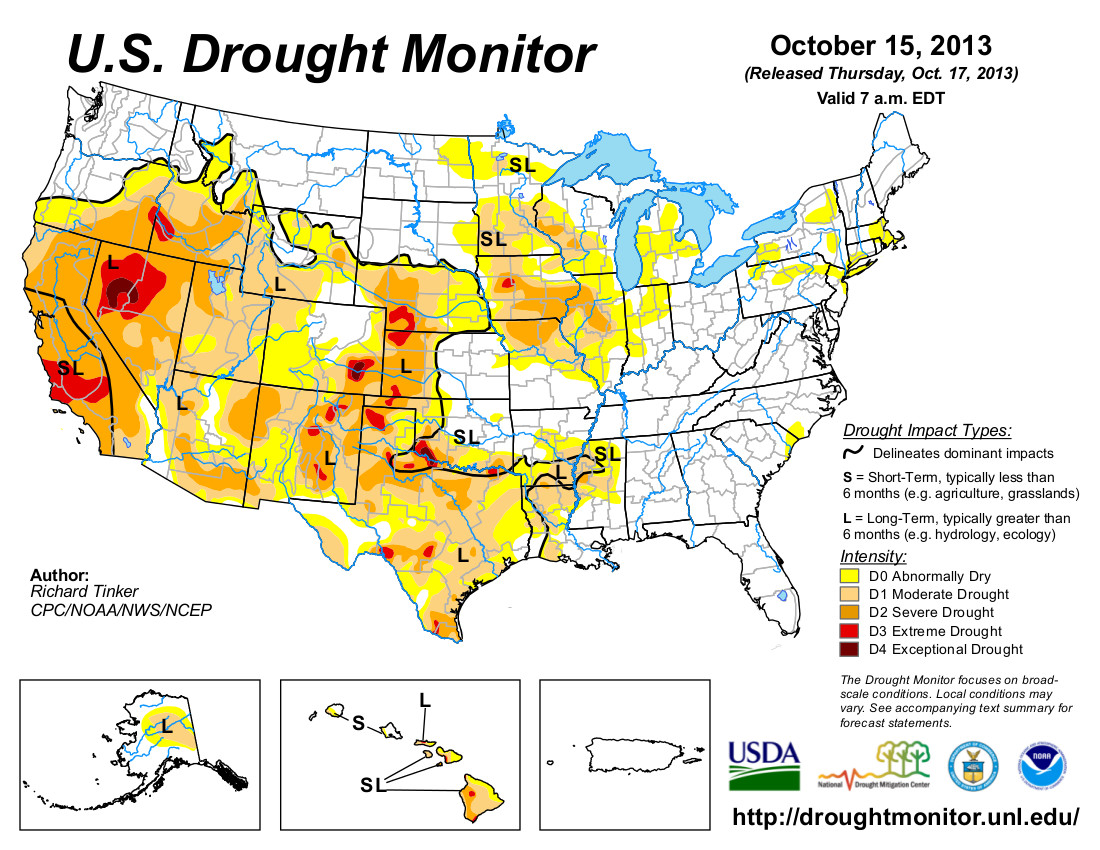
Click here to visit the US Drought Monitor website. Here’s an excerpt:
The Rockies Westward to the Pacific
The Rockies Westward to The Pacific Coast: The wet week that affected much of Wyoming, Colorado, and adjacent areas continued a generally wet pattern dating back several weeks. Since mid-August, large swaths across south-central Montana, northern and central Wyoming, southeastern Wyoming, and much of northeastern Colorado have received 2 to locally 5 times their normal amount of precipitation. As a result, additional improvements were made in central and eastern portions of both states. Through the rest of the dry areas in the West, only light precipitation fell, if any, keeping dryness and drought unchanged from last week. So far this year, less than half of normal precipitation has been reported in the southwestern half of Nevada and all but the southern and northern extremes of California, along with isolated sections of the Intermountain West. Only about 25% of normal has been reported for the last 9 1/2 months in much of central and western California.
The Northern and Central Plains and the Midwest
Heavy to excessive precipitation in the region, reaching as far east as northwestern Iowa and central Minnesota, prompted another round of broad-scale improvements in areas of dryness and drought. One-category improvements were widespread through all but the northeasternmost sections of the Dakotas and sizeable areas across the rest of the region. Most locations from the northern and western tiers of Iowa to the north and west now report surplus precipitation on time scales dating back at least 60 days. East of these area, precipitation was light at best, and short-term precipitation deficits persisted from interior Iowa and parts of southern Minnesota southward and eastward through the dry areas in the middle Mississippi Valley and Great Lakes region.