Aspinall Unit update: 350 cfs in Black Canyon

Aspinall Unit
Aspinall Unit

From email from Reclamation (Erik Knight):

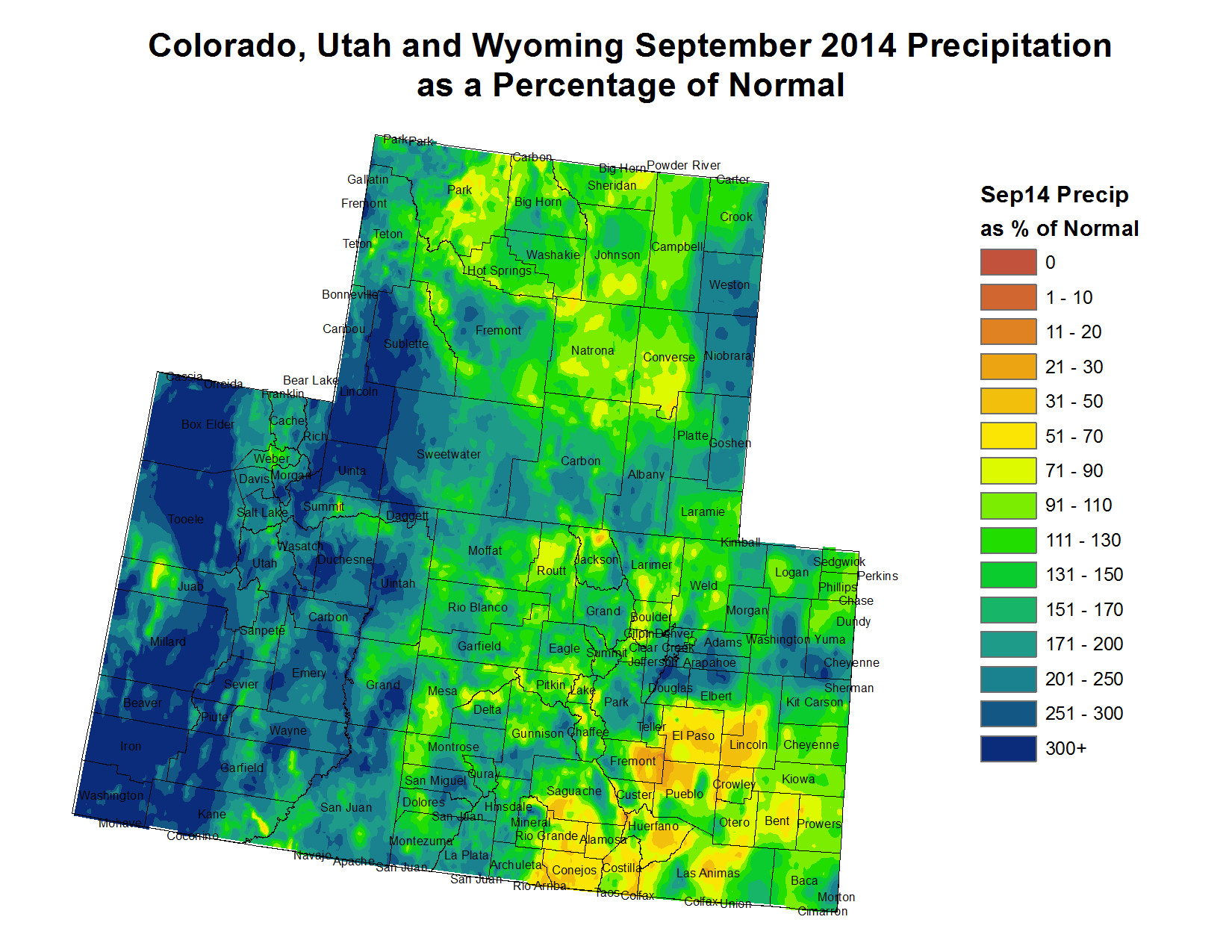
Releases from Crystal Dam will be decreased from 1250 cfs to 1150 cfs on Wednesday, October 15th at 8:00 AM. Releases are being decreased to time with the brown trout spawn. Flows in the lower Gunnison River are currently above the baseflow target of 1050 cfs. River flows have remained relatively high due to the September rains and flows are expected to stay above the October baseflow target for the foreseeable future.

Pursuant to the Aspinall Unit Operations Record of Decision (ROD), the baseflow target in the lower Gunnison River, as measured at the Whitewater gage, is 1050 cfs for September through December.

Currently, diversions into the Gunnison Tunnel are around 800 cfs and flows in the Gunnison River through the Black Canyon are around 450 cfs. After this release change Gunnison Tunnel diversions will still be around 800 cfs and flows in the Gunnison River through the Black Canyon will be around 350 cfs. Current flow information is obtained from provisional data that may undergo revision subsequent to review.

Check out this new bipartisan poll on #COwater

Water Lines: How will Colorado’s water plan address West-East water transfers? #COWaterPlan #ColoradoRiver

From the Grand Junction Free Press (Hannah Holm):

As the first draft of Colorado’s Water Plan nears completion (it’s due in December), many who have participated in its development remain anxious about what will and won’t be in it — particularly in relation to the potential for more West Slope water to be transported east to serve growing cities on the Front Range.

Colorado’s Water Plan, which was ordered by Governor Hickenlooper in May of 2013, is intended to close a projected gap between water needs and developed supplies in coming decades. “Basin Roundtables” of water providers and other water stakeholders in each of the state’s major river basins contributed key building blocks to the plan back in July, when they turned in plans for how to address needs within their own basins.

Now, Colorado Water Conservation Board staffers are scrambling to integrate information from each of the basin plans, as well as their own statewide analysis and public input, into a cohesive document. This would be a big task even if all of the basin plans agreed with each other — which they don’t.

The West Slope basin plans reflect an extremely dim view of additional diversions of West Slope water to the Front Range, citing damage to the environment and river-based recreation and the concern that failure to meet water delivery obligations to downstream states would put both West Slope and Front Range users of Colorado River water at risk. The South Platte basin plan, on the other hand, states that additional Colorado River imports will be needed to supply future urban growth and prevent the dry-up of irrigated land.

At a meeting on Oct. 6, Gunnison Basin Roundtable members asked how this conflict would be resolved in the statewide plan. The answer they got from the basin’s representative to the Colorado Water Conservation Board, John McClow, was that it wouldn’t. He said, as other CWCB representatives have also stated in previous meetings, that the plan will not endorse any particular type of transmountain diversion project. The individual basin plans will stand on their own, without any forced reconciliation.

An early draft chapter of the Colorado Water Plan, however, does contain a draft “conceptual agreement” on how to approach a potential future transmountain diversion. This agreement was hammered out between representatives from all the state’s roundtables and released for comment.

The draft conceptual agreement got a mixed reception at the Gunnison Basin Roundtable meeting. Members welcomed an acknowledgement by Front Range parties that any new transmountain diversion may only be able to take water in wet years, due to existing demands and downstream obligations.

Language about the need for an “insurance policy” to protect “existing uses and some increment of future development” was greeted with much more skepticism, however. There was concern that this meant that irrigated agriculture could be sacrificed to enable continued urban uses, although no one could say with certainty what it really meant. There was also concern that the agreement would go into the December draft of Colorado’s Water Plan without sufficient additional discussion.

Some comfort was provided by the fact that, once the complete draft of Colorado’s Water Plan is released in December, the current timeline allows a full year for additional discussion and public comment before the document is final. You can find all the documents developed to date at http://www.coloradowaterplan.com.

More Colorado Water Plan coverage here.

Chatfield Reservoir: Lawsuit Claims “Massive Environmental Damage” From Project — Westword

Proposed reallocation pool -- Graphic/USACE
Proposed reallocation pool — Graphic/USACE

From Westword (Alan Prendergast):

As we reported back in 2012, the long-simmering proposal has set off alarm bells among environmentalists, bird fanciers and many park users because it involves flooding more than 500 acres of the 5,378-acre park and raising the water level by twelve feet. Critics say that will wipe out groves of cottonwood trees, destroy bird habitat, wetlands and walleye spawning areas, and leave an unsightly “bathtub ring” of barren mud flats around the reservoir when water levels are low. The lawsuit claims that the Corps improperly evaluated the project’s impacts and dismissed a number of less damaging alternatives to the current plan.

Chatfield draws 1.6 million visitors a year and hosts 375 different species of birds — fourteen of which are listed as protected by state or federal authorities. Audubon’s attorneys contend that the project will cost the state around $3.4 million in lost park revenues, much of which is used to support less popular parks.

But the most intriguing claim in the suit has to do with whether the project will actually be of much use in boosting water storage for various agricultural and suburban interests. Several of the parties who initially signed on to the project, including the Parker Water and Sanitation District and the City of Brighton, have since dropped out and sought to meet water needs from other sources. Others, including the City of Aurora, “are trying to leave the project or have already left,” the complaint states.

The reason for all those defections? While the project claims an estimated 8,539 acre‐feet of water per year as its average yield, the estimated “dependable yield” is zero. While the project has been presented as a “restoration” of the South Platte, the Corps’ own studies predict that the river’s flows would actually decrease nine months out of twelve after the project’s completion and increase only one month of the year. Much of the water storage is allocated to junior rights holders and may be available only three years out of ten.

“It’s a bad deal for the public and for Colorado,” said Polly Reetz, conservation chairman of Denver Audubon, in an statement announcing the lawsuit.

But the Colorado Department of Natural Resources and the Colorado Water Conservation Board remain solid supporters of the project, and backers insist that the overall effect on Chatfield will be minimal. Denver Audubon and other environmental groups have said they would prefer to see more conservation measures and less drastic storage projects.

More Chatfield Reservoir coverage here.

Roundtable focuses on ‘augmentation gap’ — The Pueblo Chieftain

Straight line diagram of the Lower Arkansas Valley ditches via Headwaters

From The Pueblo Chieftain (Chris Woodka):

Agriculture has a $1.5 billion annual impact to the Arkansas Valley, but production hinges on the availability of water. So, the Arkansas Basin Roundtable is trying to turn the state’s thinking around from looking at the agricultural “water gap” as a shortage of irrigated acres to prevention of further economic erosion.

“When the state first looked at the agricultural water gap, it came down to the number of acres, but it really had to do more with the $1.5 billion impact of agriculture,” said Jay Winner, general manager of the Lower Arkansas Valley Water Conservancy District.

“What we have is an augmentation gap.”

A study for the Lower Ark district and the Super Ditch showed that the amount of water needed to fill agricultural augmentation plans — methods to replace loss of return flows from pump­ing or surface irrigation improvements — could be as high as 50,000 acre feet (16.3 billion gallons) annually by 2050.

At the same time, traditional sources for augmentation water such as Colorado Springs Utilities or Pueblo Board of Water Works leases will diminish as the cities grow into their water supplies.

“A lot of the sources for augmentation water were double-counted,” Winner said.

Agriculture is not the only area that will be shorted. Mountain subdivisions, industrial users and cities are finding themselves under-subscribed when it comes to replacement water, said Terry Scanga, general manager of the Upper Arkansas Water Conservancy District.

“If growth continues, whether it’s outside or inside the communities, we will continue to see a wider augmentation gap,” Scanga said. “More storage and better use of it can mean an increase in supply.”

The only other ways to find new water will be to continue to take it from farms, for many years the easiest target in the Arkansas River basin, or the much more difficult task of bringing more water across the Continental Divide, he said. But the quest to find more water must be tempered by protecting what is already in place.

In stating its preferences, the roundtable agreed to recommend language in the state water plan that encourages the state to: “Prevent future water supply gaps from increasing by protecting water rights and adhering to the prior appropriation doctrine.”

Meanwhile, the roundtable elected Jim Broderick to lead them for the next term. Here’s a report from Chris Woodka writing for The Pueblo Chieftain:

Jim Broderick, executive director of the Southeastern Colorado Water Conservancy District, was elected chairman of the Arkansas Basin Roundtable at its annual organizational meeting Wednesday. But the annual selection of the slate of officers, usually a routine formality, came with a minor ripple.

The roundtable also selected the proposed slate of officers on the executive committee, including vice-chairwomen SeEtta Moss and Betty Konarski, and Interbasin Compact Committee representatives Jay Winner and Jeris Danielson.

The lineup was challenged by Brett Gracely, water resources manager for Colorado Springs Utilities, who pointed out there were no agricultural or municipal representatives on the executive committee.

Three of them, Broderick, Winner and Danielson, are water conservancy district managers. Moss, of Canon City, represents environmental interests and Konarski, a real estate agent, is the El Paso County representative.

“They have been there for several years, and represent one viewpoint, but not all the viewpoints on the roundtable,” Gracely said.

“What action are you proposing?” Broderick replied.

Gracely nominated Mike Fink, Fountain water resources engineer, to serve on the IBCC instead of Winner, whose term ended.

Broderick checked the bylaws and announced that Fink was not eligible to serve on the executive committee because he was not a member of the roundtable.

Colorado Springs Utilities already has a member on the 27-member IBCC, Wayne Vanderschuere, who was appointed by the governor.

Broderick then explained that the same people wind up in the leadership roles because they have the time to attend numerous meetings and the resources to do the work involved.

Winner, who also chairs the needs assessment committee, which screens grants, offered to step down from that job if others were interested in taking on the task.

“It takes a lot of time,” he explained.

Broderick invited other roundtable members to become more active in committees.

More IBCC — basin roundtables coverage here.

Telluride election forum, October 13

Supreme Court Justices to wade into decades-old water use dispute — E&E Publishing


From E&E Publishing (Jeremy P. Jacobs):

The Supreme Court tomorrow will wade into a decades-long water use dispute between Kansas and Nebraska.

At issue is a localized disagreement among the two states and Colorado over an interstate compact that allocates water from the 430-mile Republican River.

The river — which rises in Colorado, crosses the northwest tip of Kansas before crossing into Nebraska, and then re-enters north-central Kansas — travels a sparsely populated area. It drains a nearly 25,000-square-mile watershed, and more than 1.8 million acres of land is irrigated using its water to grow crops like corn, soybeans and milo.

Use of the river has been contentious since the three states sought to create a compact in the early 1940s. President Franklin Roosevelt vetoed the first version, and later signed the congressionally ratified compact in 1943.

The case is narrow in scope and is unlikely to yield a ruling from the justices with broad implications.

Kansas has long claimed that Nebraska is using more than its allotment. The state first took the case to the Supreme Court in 1999, claiming that Nebraska’s groundwater pumping was depleting the river.

That case led to a 2003 settlement that added groundwater to the terms of the compact.

However, by May 2010, Kansas claimed that Nebraska used about 79,000 acre-feet more than its allotment in 2005 and 2006. It again asked the high court to review the case, and the court, for the second time, appointed a federal judge — or “special master,” in court parlance — to resolve the dispute.

The judge’s report found that Nebraska did knowingly violate the compact in 2005 and 2006, but has since taken steps to come into compliance. It recommended requiring Nebraska to pay Kansas $5.5 million, roughly the equivalent of the water Kansas lost plus a $1.8 million penalty.

It also recommended amending how the states administer the compact by changing its accounting procedures to include water entering the basin that is not part of the Republican River’s “virgin water supply.” “Imported water” drains into the basin every year from the Platte River, which sits at a higher elevation to the north.

The original compact did not include water that migrated from the Platte River, and the judge reasoned that use of the imported water should not count against a state’s Republican River allotment.

The judge suggested that the Supreme Court adopt a “five-run solution” proposed by Nebraska and backed by Colorado that more accurately reflects groundwater consumption and imported water.

Tomorrow morning, the justices will consider each state’s exceptions to the report’s recommendations. Kansas, for example, does not want to rewrite the compact’s accounting procedures and is seeking more money from Nebraska for its violations. It is also seeking an injunction to bar Nebraska from taking too much water from the basin.

Nebraska, on the other hand, contests the $1.8 million penalty to be awarded to Kansas and takes exception to the judge’s conclusion that it “knowingly failed” to comply with the compact.

The Obama administration has also weighed in on the dispute and has urged the justices to uphold all of the judge’s recommendations.

“The United States supports the Master’s report,” Solicitor General Donald Verrilli wrote in court documents, adding that the government supports “overruling the parties’ exceptions.”

The court will rule on Kansas v. Nebraska and Colorado by the end of next June.

From the Kearney Hub (David Hendee):

Nebraska’s regulatory landscape is significantly different now from when the state consumed more Republican River water than allocated in 2006.

So is some of the physical landscape in and around the basin in southwest and south-central Nebraska.

There are stricter regulations on how much underground water farmers may pump to irrigate cropland. Two pipeline projects pour water into the Republican River to supplement flows during dry periods. And there are fewer acres of irrigated cropland.

Nebraska’s biggest challenge under a 71-year-old interstate compact that shares the river water with Kansas and Colorado has been staying within its allotment in dry years. Now the state should never again find itself violating the compact in dry years, said Dean Edson, executive director of the Nebraska Association of Resources Districts.

“Everything’s in place,’’ he said. “Taxpayers are protected, the aquifer is protected and the irrigated-acre tax base of rural communities in the basin is protected.’’

New state laws, tighter regulations and innovative projects by the Upper, Middle and Lower Republican Natural Resources Districts and the Twin Platte NRD have made the difference since 2007, Edson said.

The estimated 1.1 million irrigated acres in Nebraska’s portion of the river basin represent what is believed to be the largest area of regulated groundwater use in the eight-state region that overlies the Ogallala Aquifer, a vast underground reservoir of fresh water.

No other state has more stringent water-pumping regulations than Nebraska, Edson said. Allocations in Nebraska’s Republican basin have declined to between 9 and 13 inches annually. That’s approximately 45 percent less than allowed in neighboring Kansas, Edson said.

Rules and regulations have helped produce rising aquifer levels in some regions, stabilized levels in others and significantly slowed rates of decline elsewhere, he said. Further reductions in water use are assured by requirements agreed to with the State of Nebraska that groundwater pumping volumes decrease by 20 percent, to 1998-2002 levels. An additional 5 percent reduction is required by 2015.
Nearly two years ago, four Natural Resources Districts bought 19,500 acres southwest of North Platte that lie squarely between the Platte and Republican Rivers. About 15,800 of those acres were irrigated and now are retired from irrigated production.

A six-mile pipeline is taking water from about 30 wells that would have been used to irrigate crops on that land and delivering it to the Republican via Medicine Creek. The 42-inch-diameter pipeline was used for the first time this year to meet Nebraska’s flow obligations to Kansas.

“Without this project, severe and sudden reductions in water allocations might have to have been imposed on irrigators in the basin,’’ Edson said.

Edson said the willingness of landowners to impose a $10 per irrigated acre tax on themselves made the project possible.

“I’ve not met anyone yet who wants their taxes raised, but if we don’t augment stream flows, we’d be looking at the forced shutdown of at least 300,000 irrigated acres, or nearly a third of the irrigated acres in the basin,’’ he said. “It’s pretty doggone cheap compared to what they could lose. It would be devastating.’’

A similar project in the southwest corner of the state retired 3,260 irrigated acres in Dundy County. Water that would have been consumed by crops is sent seven miles through a 24-inch pipeline to Rock Creek for delivery into the Republican River.

From Supreme Court of the US Blog (Ryke Longest):

Origins of the Republican River Compact

The Republican River begins in Colorado on the eastern side of the Rocky Mountains, then flows through part of Kansas. The river then crosses and into Nebraska before crossing back into Kansas, where it then turns southeasterly. In Junction City, Kansas, it joins with the Smoky Hill River to become the Kansas River, a tributary of the Missouri River.

More than 24,000 square miles of watershed on the Great Plains support the flow of the Republican River. This territory contains rich agricultural soils and relatively abundant average annual rainfall. During the Great Depression, the three states and the federal government planned to use the Republican River for water resource development. This area was at the western edge of the Great Plains Dust Bowl, which experienced horrific dust storms in 1934 through 1935 that carried tons of soil through the air as far as the Atlantic Ocean.

Federal relief programs were mobilized to help the residents respond to the terrible conditions. A devastating flood on the Republican River in 1935 hastened along state and federal planning to create both flood control and irrigation projects. Federal agencies endorsed the need for the projects as well as their feasibility, but the Bureau of Reclamation warned that they should not go forward until the three states entered into a compact.

The states had agreed to terms within a few years, but President Franklin Delano Roosevelt vetoed the first attempted compact in response to objections by federal agencies. On December 31, 1942, on their second attempt, the federal government and Colorado, Kansas, and Nebraska agreed to an interstate compact to allocate water flowing in the Republican River. This compact was then ratified by the state legislatures, approved by Congress and signed into law by the President on May 26, 1943. However, rather than resolving all controversy about water allocation between the parties, the compact merely moved the locus of the disputes. Since its signing, disputes between the states over water use focus on the compact’s terms.

Origin of disputes under the Compact

Flows in the Republican River have been declining for decades, with reduced flows in nearly all its tributaries. The reduced flows alarm farmers in all three states who rely on irrigation to keep crops at profitable yields. As the primary downstream users, Kansans look to the compact to protect them from overuse by upstream users. As the state with the largest allocation, Nebraskans look to the compact to protect their farmers from unreasonable demands from Kansans.

When use increases and flows decrease, disputes follow. As the aphorism often attributed to Mark Twain goes, “Whiskey is for drinking, but water is for fighting.” Disputes among users and their political leaders come quickly behind the spread of economic prosperity.

Under the compact, disputes first flow through the Republican River Compact Administration, which consists of one representative of each of the three states. Following ratification, all states needed to change water resource allocation laws within their respective states to ensure compliance with the new compact’s requirements. In 1945, Kansas enacted a statute that combined allocation of groundwater and surface water into a unified permitting system using prior appropriation principles. In Nebraska, allocation of groundwater remained subject to restriction by common law principles of reasonable use within the context of correlative rights as set forth in the 1933 case of Olson v. City of Wahoo. The state codified these principles in 1975 and later adjusted its groundwater law in 1996 with amendments under LB 108, promoted by Nebraska Governor Ben Nelson. Nebraska’s efforts under LB 108 were clearly designed to prevent allocation of groundwater in a way that causes violations of an interstate compact. Yet its critics maintain that these efforts hampered management by putting the fox in charge of the henhouse (local Natural Resource Districts).

Groundwater’s special place

When the compact was signed, one of its key purposes was to remove all causes that “might lead to controversies.” Yet, within its key terms lay the seed of controversy: the term “Virgin Water Supply.” It was defined as the “water supply within the Basin undepleted by the activities of man.” Nebraska interpreted the caveat “within the basin” to exclude groundwater pumping from the scope of activities that deplete the Virgin Water Supply. The compact defines “basin” as the “area naturally drained by the Republican River and its tributaries.” Nebraska’s argument unduly restricted the scope of the Virgin Water Supply by taking the groundwater that drains into the Republican River and its tributaries out of the compact.

In many places, the Republican River is a gaining stream, one where groundwater from alluvial and surficial aquifers seeps into the riverbed. Excluding groundwater from allocation formulas in a gaining stream will always lead to problems unless groundwater pumping from alluvial and surficial aquifers is completely prohibited. In a gaining stream system, these aquifers are just as important sources to stream flow as the surface tributaries. However, these flows are harder to measure, model, and quantify.

Litigation before the Supreme Court: Round I

In 1999, the Supreme Court granted Kansas’s motion for leave to file a bill of complaint. Kansas complained that Nebraska had violated the compact by allowing proliferation of thousands of groundwater wells that were connected to the Republican River. Kansas’s complaint asserted that Nebraska’s regulatory apparatus failed to prevent the violations into the future, and it asked for damages and a decree commanding Nebraska to meet its delivery obligations under the compact. Nebraska sought leave to file a motion to cismiss the complaint under Federal Rule of Civil Procedure 12(b)(6) and presented affirmative defenses to Kansas’s complaint. Nebraska’s Rule 12(b)(6) motion was limited to the question whether the compact applied to groundwater consumptive use within Nebraska. Colorado responded that groundwater from alluvial aquifers was included within the compact but groundwater from the deeper Ogallala aquifer was not. The Court appointed a special master to preside over the hearing, after which the special master’s report recommended that Nebraska’s motion be denied. In June 2000, the Supreme Court denied Nebraska and Colorado’s exceptions and sent the case back. Following a series of memoranda on various issues by the special master, the parties negotiated a settlement stipulation.

Republican River Compact settlement stipulation

The settlement stipulation imposed additional obligations on the parties beyond those required by the Compact itself. All parties waived any claims against each other arising prior to 2002, and the stipulation required a drilling moratorium on wells within the Republican River Basin. It also explicitly recognized that groundwater was a component of the Virgin Water Supply. Beyond that, the parties to the current dispute disagree about significant aspects of the settlement stipulation as well as the special master’s report. While the stipulation established that the scope of covered water was water originating in the basin, there arose a dispute over the method of accounting for “imported water” – water that was originally part of the neighboring Platte River Basin but now percolates into the Republican River. In places, this seeping imported water had raised the water table by ten feet. The special master has proposed changing the accounting procedure so that Nebraska may use water imported from the Platte. Kansas vehemently objects that this change violates the terms of the compact.

Each state will argue objections to the special master’s report. Expect to hear Kansas argue forcefully in favor of the Court strengthening its disgorgement remedies against Nebraska and requesting injunctive relief. Nebraska will argue that the special master’s disgorgement remedy was too harsh. Nebraska also admits that it overused its allocation for the year 1996, but that in so doing it did not violate the compact but took steps immediately thereafter to reduce consumptive use and to pay Kansas for its actual damages. Kansas also objects to the special master’s proposed amendment to the settlement stipulation, a remedy defended by Nebraska.

Colorado will argue that the disgorgement is not allowed for unintentional violations by Nebraska and that the proposed award represents a windfall for Kansas. The Solicitor General will argue that the special master’s report falls within the scope of the broad discretion afforded the Supreme Court in fashioning remedies for breaches of compacts. He will defend the partial disgorgement remedy as protective against efficient breach concerns, but he will also argue against Kansas’s request for injunctive relief. It will be interesting to see whether the Court inquires about injunctive relief as a further protection against efficient breach concerns.

More Republican River Basin coverage here.

Clean water drives Colorado tourism and business — Taylor Edrington

The Holy Cross Mountains from the air with fall colors in the foreground via Summit County Citizens Voice

From The Pueblo Chieftain (Taylor Edrington):

There truly is no better feeling than stepping into a beautiful, high-mountain stream or river in Colorado on a quest to fool one of its inhabiting trout. It’s a surreal surrounding — with the crisp, clean air, the clean, cool water and the rugged landscapes that make up our playground as an angler in Colorado. I have been exploring Colorado’s backcountry fly fishing opportunities my entire life, and have made it my mission to help other outdoor enthusiasts experience Colorado’s phenomenal trout streams.

As a Colorado business owner, and as a sportsman, exploring Colorado’s Gold Medal trout streams and all they offer is priceless. However, these bodies of water are at an increased risk because of confusing decisions from the Supreme Court about the jurisdiction of the Clean Water Act.

Fortunately, there is a rule being proposed by the Environmental Protection Agency and Army Corps of Engineers that clears the muddied waters and ensures we have rules in place to protect the waters that supply drinking water to nearly three out of four Coloradans. These agencies are in the process of taking input from the public right now on how to improve the Clean Water Act.

I support the efforts to clarify the Clean Water Act because I’ve seen firsthand that healthy headwaters and streams — and our outdoor way of life — depend on clean water. For sportsmen, this proposed rule is critical. In addition to reducing flooding, filtering pollution, and recharging underground aquifers, clean, productive wetlands and headwater streams here in Colorado provide essential habitat for fish and wildlife.

Beyond inspiring aesthetics, outdoor recreation is also big business, contributing over $686 billion to our national economy annually. Here in Colorado, hunting and fishing alone is a $1.5 billion industry, contributing $150 million in state and local taxes each year and employing nearly 19,000 Coloradans. That means this rule also matters to our economy.

Recently I was guiding a group from Williams Lake, British Columbia, Canada, on my home water —the Upper Arkansas River in Bighorn Sheep Canyon. We enjoyed a typical day on Colorado’s longest Gold Medal River — plenty of fish to the net, beautiful surroundings, the sounds, the smells, the essential Colorado fly fishing experience. During the day we discussed the recent Mount Polley disaster near their hometown.

The Mount Polley Mine tailings pond dam breached in that crisis, releasing 17 million cubic meters of slurry into the local watersheds. This disaster destroyed all watershed habitats in the nearby area, drinking water sources and much more.

While we were discussing the tragedy, I realized that all too often we take clean water for granted. Properly managing our watersheds requires vigilance, and it starts with a restored Clean Water Act.

Yet, instead of working for clean water, some members of Congress are actively trying to scuttle the EPA’s and Army Corps’deliberative process. I urge our U.S. senators to stand up for the 10,000 miles of streams and 2,000 lakes we have in Colorado that are at risk.

I personally spend countless hours fly fishing throughout Colorado. My business depends on the great resources this state has to offer. Restoring the Clean Water Act is the right thing to do, to protect what we have.

Taylor Edrington is the owner and president of Royal Gorge Anglers Inc., in Canon City.

Editorial: Mark Udall for U.S. Senate #COpolitics

Mark Udall, Colorado Foundation for Water Education, President's Award Reception, 2012
Mark Udall, Colorado Foundation for Water Education’s President’s Award Reception, 2012

I have never endorsed a candidate here on Coyote Gulch but this year I’m making an exception and asking you to vote for Mark Udall. You can consider this post a call to arms of sorts.

Like many progressives I was dismayed to see the major Colorado dailies endorsing Congressman Gardner.

I found The Pueblo Chieftain’s endorsement particularly troubling in its focus. Here’s the link (no paywall for this one).

You will see the omission of many of the areas where Congressman Gardner’s positions and record would not carry the day.

No mention of environmental issues, no mention of women’s issues, no mention of immigration, no mention of climate change, no mention of the millions that have taken advantage of the Affordable Care Act, no mention of the pressing infrastructure needs, no mention of the need to control air pollution, no mention of renewable energy or even a sensible energy policy, no mention of gay marriage, no mention of views about economics, no mention of respective records supporting Colorado business, no mention of the Colorado recreation economy, no mention of an understanding of Colorado’s place in the Colorado River Basin, no mention of education, no mention …

I guess if you feel like support for an environmental disaster for Canada and global CO2 (Keystone XL), premature opposition to Clean Water Act rulemaking (“Waters of the US”) instead of participation in the process, and opposition to extending healthcare to more Americans, are the most important positions for a Colorado Senator in 2014, then the congressman fits the bill. That’s the list for the editors of The Pueblo Chieftain.

It really comes down to Congressman Gardner’s campaign and their cynical hope that if you are a voter in the groups that support Senator Udall in the areas listed above you won’t take the trouble to fill out and return your ballot.

I do know that every election comes down to getting out the vote. So when your mail-in ballot shows up please put a checkmark next to Senator Udall’s name.

One final note. The Chieftain also mentions Congressman Gardner’s, “deep roots in the Eastern Plains,” which is a cool story.

Mark Udall’s father and uncle helped shape the current policy and facilities of the Colorado River Basin. Stewart Udall put his mark on wilderness as well. In my book the deep roots contest goes to Udall.

Disclosure: I registered as Republican in 1982 and left the party the morning after Rudy Giuliani’s speech at the 2008 Republican Convention.

Hunters and Anglers Need a Restored Clean Water Act — Theodore Roosevelt Conservation Partnership, et al.

More Environmental Protection Agency coverage here.

EPA grab for water power ? Not so, says Rocky Mountain Farmers Union — Mountain Town News

Summitville Mine superfund site

From The Mountain Town News (Allen Best):

The Environmental Protection Agency proposes to tidy up currently ambiguous definitions of what waters are covered under the Clean Water Act. There’s some pushback in the hinterland from the American Farm Bureau, which usually aligns with Republicans, and others.

“Opponents say the rules are a power grab that could stifle economic growth and intrude on property owners’ rights,” reported the New York Times in a March story.

In Colorado, U.S. Rep. Scott Tipton told the Durango Herald in September that it was a “water grab” by the EPA. “This is straightforward: You either want to protect the private-property rights of water in Colorado and protect our state law or you don’t,” Tipton said.

The Farmers Union doesn’t see it that way. It traditionally aligns with Democrats and stronger environmental protections. This is no exception. To that end, the Rocky Mountain Farmers Union on Thursday morning held a session in Denver designed to both provide explanation from the EPA and to affirm more broadly the support of the Farmers Union for the role of the federal government in ensuring clean water.

Bill Midcap, director of external affairs for RMFU, set the tone in his introduction. He noted that when growing up north of Fort Morgan, he had learned to swim in the Riverside ditch that served his family farm. In that same ditch, he taught his children how to swim, he said.

He went on to say that he wouldn’t go swimming in the ditch now. The connection to the EPA proposed new rules wasn’t clear, although the insinuation was that water quality has worsened—and needs corrective action.

Further testimony came from Alphonso Abeyta, who is 76 and is a fifth-generation farmer and rancher in the San Luis Valley. He’s southwest of Antonito at about 8,000 feet in elevation, he said.

He told several stories about water quality. One was a plan by the U.S. Department of Energy to transfer contaminated soil from the Los Alamos National Energy Laboratory onto a train siding at Antonio, just 100 feet from a tributary to the Rio Grande. It took some backbone, but the locals blocked the transfer and the risk of contamination water.

“Well, we stopped the Department of Energy from shipping waste from our little town,” he said.

But in another case, the locals got stung – and they’re still stung. That’s a result of the famous Summitville mining fiasco in the 1980s, which resulted in costly pollution of the Alamosa River.

“How can we have organic food when we use water that killed all those fish?” he asked. “Today, we still don’t have fish in that stream. That’s where life begins, at the headwaters.”

If none of these stories spoke directly to the proposed regulations, the background message was again clear: Protecting water quality is important.

The RMFU position is clearly articulated as “common-sense guidance” that “protects clean water for our farms and families, and provides greater certainty for landowners.”

The Clean Water Act is complex and comprehensive, as one speaker described it. Adopted by Congress in 1972 and signed into law by President Richard Nixon, it took several years for the the EPA to formulate the rules and regulations to execute Congressional intent.

Shaun McGrath, the administrator of the six-states EPA region headquartered in Denver, said that the EPA analyzed more than 1,000 scientific studies in creating the proposed rules. The public comment period ends Nov. 14.

The fundamental problem is that the original rules left some questions of what waters are covered by the Clean Water Act. The EPA concluded in the 1970s that Congress intended a broad definition of what “waters of the United States” were to be covered under the law, and courts have upheld this broad definition. But there were some areas of lingering uncertainty, and the U.S. Supreme Court has muddled the waters with its decisions.

One key area of uncertainty is what exactly constitutes “uplands,” which are undefined in current rules, and what water located above ordinary high-water mark for a river or stream would be covered.

In a detailed explanation of the existing and proposed rules, the EPA’s Karen Hamilton emphasized that the proposed rules would not expand areas to be covered to include floodplains and riparian areas.

However, ponds located above the ordinary high-water mark would be specifically come under the jurisdiction of the Clean Water Act under the new rules.

Groundwater would remain exempt, although the current rules recognize some connection between groundwater and flows of navigable rivers. See much, much more at the EPA website.

A dozen or so farmers and ranchers were at the meeting, coming from diverse parts of the Eastern Slope. The questions they asked suggested agreement with Midcap’s opening statement that, if anything, the EPA doesn’t go far enough in ensuring clean water.

One question revealed a fundamental mistrust of chemicals used in hydraulic fracturing. The proposed rules do not venture into fracking.

Abeyeta, in a video produced by RMFU, summarized the story well. “Farmers know that everything is connected,” he said. “Snow from the mountains feed the streams, the streams feed the rivers, the rivers feed us. You can’t grow food without water. You can’t live without water.”

For a more in-depth sorting out of the issues, the EPA goes very, very deep. The Durango Herald story is modestly deep, as is a story from High Country News in June. But for a Republican perspective see the essay by U.S. Sen. David Vitter of Louisiana. In this posting on The Hill, he calls the proposed rules the “granddaddy of EPA abuse of the Clean Water Act.” However, the Los Angeles Times thought the rules sensible.

Footnotes: This correspondent’s grandparents lived along the Riverside Ditch north of Fort Morgan, maybe two miles from where Midcap grew up and farmed. Abeyeta’s son, Aaron, is a modestly famous poet who just released a new book called “Letters from the Headwaters.” Aaron Abeyeta is also the mayor of Antonito and the high school football coach.

More Environmental Protection Agency coverage here.

NASA: The Earth just had its warmest September—and six-month stretch—on record

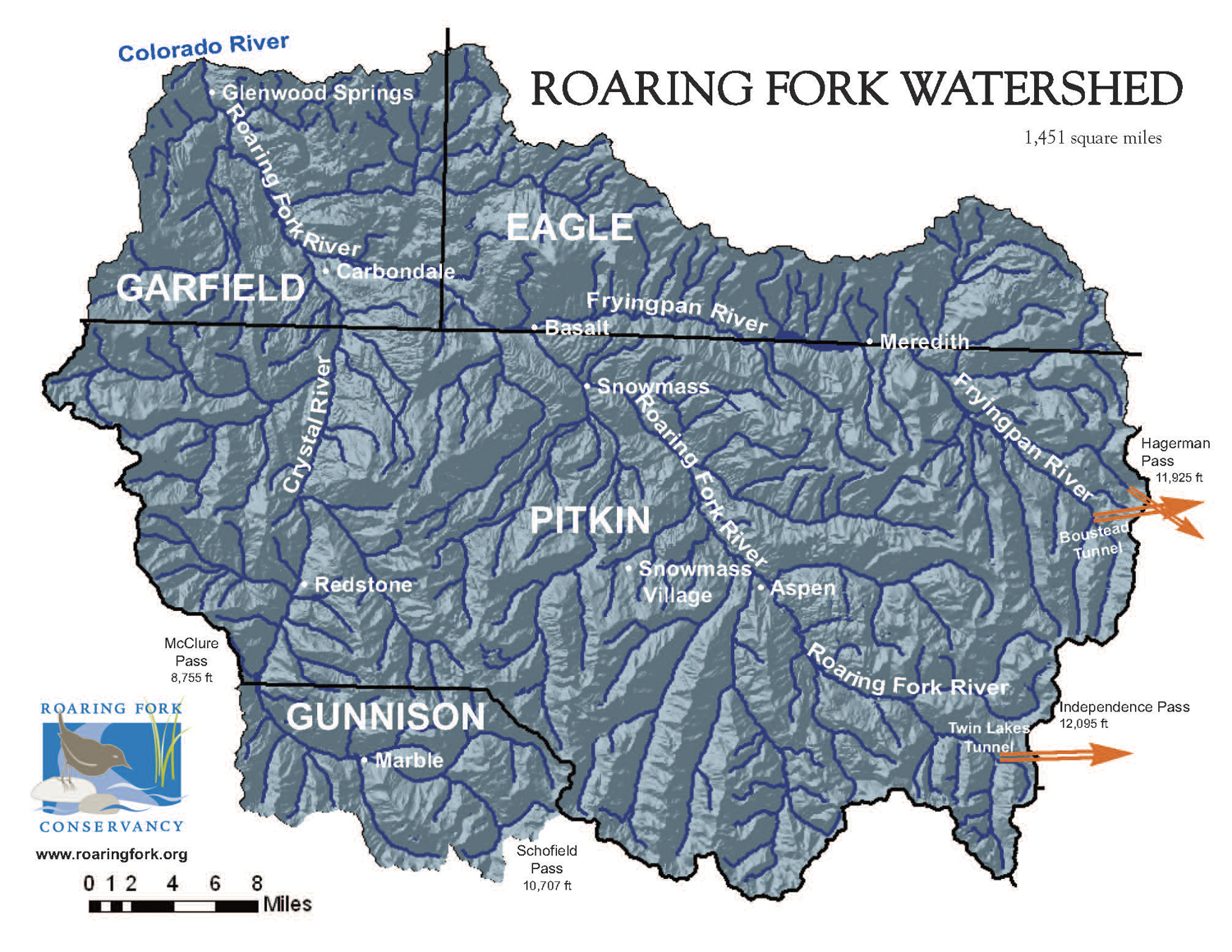
Roaring Fork Conservancy District: We’re hosting a middle school teacher workshop on November 1

“We are trying to understand how much water is available in agriculture without jeopardizing agriculture” — Perry Cabot

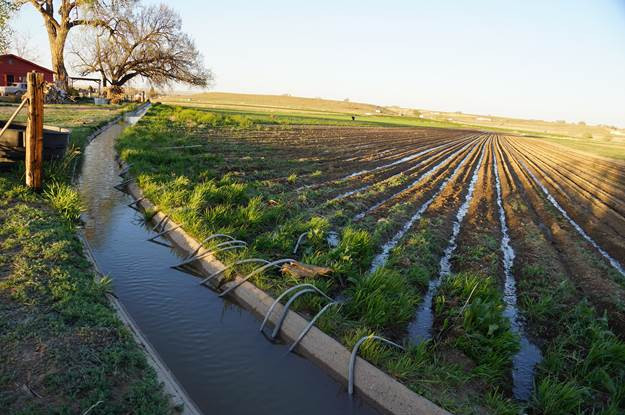
Flood irrigation in the Arkansas Valley via Greg Hobbs

From The Grand Junction Free Press (Brittany Markert):

…through his current research, he’s [Cabot] suggesting that farmers and Grand Valley residents adopt more efficient water use practices — from crop watering to shorter showers — for its long-term benefits.

To prove his theory, Cabot is studying water impacts on two Mesa County farms. One is dealing with irrigation conservation related to split-season watering. The other is irrigation efficiency, comparing the three watering systems — drip, irrigation, and furrow.

“We are trying to understand how much water is available in agriculture without jeopardizing agriculture,” Cabot said. “We look at both conservation and efficiency, to prepare them for future water issues.”

This is important to western Colorado because, according to Cabot, residential use of water takes precedence over agriculture use of water. He suggests that conservation and efficiency work hand in hand, and the future of agriculture water is up to how residents and farmers use the water available now.

Cabot said he hasn’t found the best solution for water conservation yet, but he continues to study ways for farms to be more efficient locally.

“Western Slope agriculture and Western Slope water cannot and will not be considered as a single, easy-to-go-to solution to the water-supply concerns of others,” said Mark Harris, the general manager of the Grand Valley Water Users Association.

There is no easy solution, Harris agreed, but there’s also no denying a large chunk of water is tied up. All communities along the Western Slope and downstream are dependent upon water available, including agriculture and municipal use.

“The future holds a lot of different opinions, though through the lens of farmers, they are resilient,” Cabot said. “If they want to keep farming, they will.”

FUTURE OF AGRICULTURE & WATER

According to Colorado Mesa University’s Water Center coordinator Hannah Holm, when water becomes scarce, farmers have a target on their backs as the first to lose it. And with Colorado currently putting together a water plan to accommodate population growth and reduction in resources, water availability is a hot topic in the agriculture industry these days.

Farmers are as concerned as the rest of the state about having enough water for the state’s future, Colorado Agriculture Water Alliance confirmed. And they’re working to understand the challenges and what the future will hold.

John Harold, an Olathe Sweet Corn farmer at Tuxedo Corn Company, said agriculture is just part of the water-shortage solution.

“We can get by with less and do just as good as job,” he said. “My son and I have 200 acres of drip irrigation and proved we can grow quality crops with less water. There’s tremendous investment to it.”

Farmers are also encouraged to invest in efficient water systems to promote less waste, while also keeping up with population growth.

“It’s a perfect example of doing more with less,” Cabot added.

For more information, visit http://www.crwcd.org.

Valley Floor sewer lagoons to get makeover — The Telluride Daily Planet

Photo via TellurideValleyFloor.org

From The Telluride Daily Planet (Mary Slosson):

Town Council approved a restoration project Tuesday that will transform two man-made sewage lagoons on the Valley Floor into new wetlands.

The two artificial ponds, located in the open Valley Floor space adjacent to the southwest corner of the Pearl Property, are believed to have been excavated in the 1960s with the intent to use as sewage treatment lagoons. They were never used and almost immediately filled with water, officials said. As a result, they were eventually left alone to grow as wild as they could.

“We look at this as a naturalizing of what was obviously a mechanical, man-made and never used excavation, the spoils of which isolated it from the wetland ecosystem,” said Angela Dye, chair of the Open Space Commission. “This project will integrate it into the wetland system we have up there now.”

The restoration project is expected to take two to three weeks and is budgeted at $116,500. Town officials hope to complete the project this fall, when they say the construction would least impact wildlife that calls the ponds home.

In fact, that wildlife is one of the reasons that planners decided to incorporate some of the ponds’ already existing standing water into the final wetland restoration design, instead of reverting the plots back to their native state and removing the standing water altogether.

“There was a desire to keep the pond, and it wasn’t purely for aesthetic reasons,” said Town of Telluride Program Director Lance McDonald, summarizing planning discussions leading up to the restoration proposal.

“There is a lot of wildlife that use the standing water. There is not a lot of standing water on the floor,” McDonald said. “The diversity of animals is quite high here: raccoons, muskrats, fox, geese, ducks. This was an opportunity to have a place for those species on the Valley Floor even though it’s not a natural feature.”

Dye said that the restored sewer ponds would become an environmental education opportunity, with student groups able to observe the waterfowl, mammals and wildlife that flock to the area.

The restoration project will remove the land beam between the lagoons that was created during the original pond excavation to create one uniform body of water, and then use that soil to create wetland benches in the water. The project will also reintroduce native vegetation to the area using samples and seeds from the immediate wetland areas.

A total of 34,800 square feet of new wetlands will be rehabilitated, creating a seamless natural environment from the Pearl Property to the rest of the Valley Floor.

More restoration/reclamation coverage here.

[Central] Water district seeks tax revenue for ag infrastructure — The Greeley Tribune

Typical water well
Typical water well

From The Greeley Tribune (Kayla Young):

Two Weld County ballot initiatives aim to direct more tax dollars toward the Central Colorado Water Conservancy District with the intention of increasing water infrastructure and maintenance investments for agriculture and communities.

Ballot issue 4B proposes increasing the district’s annual tax allotment to a maximum of $750,000 in order to provide a stable water supply and maintain storage projects for farms, ranches and municipalities in Weld, Adams and Morgan counties.

Broken down, the home-owners’ tax would equate to an additional $2.34 a year for the owner of $100,000 house, said Kathy Parker, the district’s public information officer. She specified that business owners would not be subject to the levy.

Board member Randy Knutson emphasized the need for infrastructure improvements, especially following the wear and tear brought in 2013.

“With the flood last year and the increased maintenance and repair that we’ve been faced with, that’s a big reason for this particular tax increase, that and aging infrastructure,” he said.

He encouraged non-agricultural landowners to consider the possible benefits the tax would bring to overall quality of life.

“They benefit from agriculture; they benefit from water quality; they benefit from delivery of water, which eventually provides food for them,” he said.

The second ballot issue, 4C, would “de-bruce” funding restrictions created through the Taxpayer Bill of Rights (TABOR). In other words, the issue would open up excess tax revenue and grants not currently available to the district due to tax code regulations.

“We have lost millions of dollars by not being able to participate in funding and grant money that has been available. The TABOR amendment has limited our ability to participate,” Knutson said.

More 2014 Colorado November election coverage here.

Moab tailings cleanup update: Around half the pile has been moved #ColoradoRiver

From The Grand Junction Daily Sentinel (Gary Harmon):

Nearly half of what had been a 16 million-ton pile of uranium mill tailings sitting on the north side of the Colorado River near Moab, Utah, is gone, having been hauled some 30 miles to the north, well away from the river. About 7.2 million tons of tailings that date to Cold War efforts to refine uranium were taken to Crescent Junction to be buried in a disposal cell below the Book Cliffs (spelled with two words in Utah).

“It’s amazing to think about where we were 10 years ago,” when planning for the cleanup got underway, said Don Metzler, federal project director for the cleanup.

“I drove by there the other day and, boy, it’s really noticeable,” Moab Mayor Dave Sakrison said of the shrinking mill-tailings pile.

“The townspeople are really happy about seeing that pile go away.”

Moab residents have long wanted the pile removed, and their hopes were echoed by downstream states that depend on the Colorado for water.

The tailings are shipped by rail from the site to Crescent Junction, where they’re removed for burial in the cell. Estimates about the magnitude of such projects frequently run low, but so far the original estimate of 16 million tons has proven pretty accurate, Metzler said.

“In the end, it might be a little larger,” but the disposal cell should be easily able to contain the tailings, Metzler said.

So far, progress on the pile has been on budget and on time, Metzler said, noting that there were no lost-time accidents or injuries on the project in the fiscal year ended Sept. 30.

The Department of Energy is requesting $35.8 million for the project in 2015 and the estimated total cost is in a range of $928 million to $936 million.

The project employs 136 people, 30 of them Mesa County residents.

Cleanup is to be complete by 2025.

Officials in Moab and Grand County are now looking ahead to what will come next on the 480-acre site. About 130 acres were covered by the pile.

Ideas include additional parking for Arches National Park, a consolidated federal office structure, a park and bike trails, or an outdoor amphitheater, Sakrison said.

Whatever goes on the site, said Sakrison, “It’s not going to be industrial.”

More nuclear coverage here.

Silt, Rifle voters asked to ‘de-Bruce’ water district — Rifle Citizen Telegram

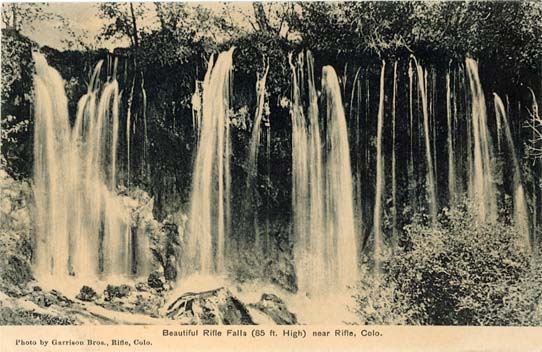
Rifle Falls back in the day via USGenWeb

From the Rifle Citizen Telegram (Heidi Rice):

Aging equipment and water lines in need of repair are the driving force behind the Silt Water Conservancy District’s ballot question 5A in November’s election seeking voter permission to “de-Bruce” and allow the agency to collect money to repair and replace needed equipment.

The district operates Rifle Gap Reservoir, Harvey Gap Reservoir and the irrigation systems for most the farmers north of the Colorado River in the Rifle and Silt areas.

According to the district’s board, a “yes” vote will not increase property or sales taxes, but it will give the district access to government grant money to help pay for the repairs.

“We are not going to raise taxes — all we’re doing is de-Brucing so we can get funding,” said Kelly Lyon, president of the Silt Water Conservancy District (SWCD). “Right now, there is a problem with Harvey Gap. There’s a big hole that’s not enclosed and there’s leakage. It’s not been fixed in years.”

The ballot measure would not only benefit those who use the irrigation ditch water, but also those who enjoy the Rifle Gap and Harvey Gap reservoirs that provide recreational activities.

Where Is El Niño? And Why Do We Care?

elninolanina

From Climate Central (Andrea Thompson):

the reason we still care so much about it, following all of its tiny fluctuations toward becoming a full-blown El Niño, is that it can have important effects on the world’s weather, including in the U.S. It can even boost global temperatures, helping set the planet on the course to be the warmest year on record.

In their monthly update, scientists at the National Oceanic and Atmospheric Administration’s Climate Prediction Center and the International Research Institute for Climate and Society at Columbia University said there is still a two-thirds chance that a weak El Niño event emerges and that it will likely do so in the October-to-December timeframe, lasting until spring 2015.

“I think it’s pretty safe to say that we’re essentially taking one step forward, that is one month forward since last month,” CPC forecaster Michelle L’Heureux told Climate Central.

While the conditions that mark an El Niño — such as warmer-than-average sea surface temperatures in the tropical Pacific and a reversal of prevailing winds in the region — haven’t fully gotten in synch, they still can, and in some cases are, impacting the global climate and weather.

There’s a robust connection between El Niños and quiet Atlantic hurricane seasons, which the 2014 season has turned out to be, and hurricane experts have said that the burgeoning El Niño is part of the reason.

Even though waters in the eastern and central parts of the tropical Pacific haven’t consistently been warm enough to herald an El Niño, they are still affecting the atmosphere in a way that creates more stable, subsiding air over the Atlantic and more wind shear. Both of those factors tamp down on hurricane formation and development.

“This is fairly typical in fall” when the system is leaning toward El Niño conditions, L’Heureux said.

Those warmer waters, particularly ones in the central tropical Pacific, also helped bump this past summer into the books as the warmest summer on record. That heat has put 2014 on the path to possibly becoming the warmest year on record. If the El Niño continues to develop and forms before the end of the year, it will help nudge the planet toward that record.

The story isn’t quite the same for other El Niño impacts, namely the connection to a wet winter in Southern California. Only strong El Niños are associated with above-average winter precipitation there, something the region desperately needs in the midst of a three-year drought that is one of the most intense in the state’s history. But with this El Niño expected to be a weak one, the picture for California’s winter is unclear right now.

Reclamation: Check it out! Two Reclamation employees perform a rope inspection of Granby Spillway #ColoradoRiver

Leaf-eating beetles laying waste to salt cedar trees — the Albuquerque Journal

tamariskleafbeetle

From the Albuquerque Journal (John Fleck):

Introduced in the 19th century to protect railroad bridge abutments, praised for its ability to protect riverbanks from erosion, vilified for alleged water-sucking ways while simultaneously defended as wildlife habitat, the story of the Eurasian tamarisk – also known as salt cedar – is a textbook example of unintended consequences.

The beetle, introduced in small populations in an attempt to control the tamarisk, is the latest example. Brought from Europe to Utah and Colorado a decade ago, along with small populations in Texas, the beetle has run amok, spreading far beyond the narrow range biologists predicted.

After initial beetle arrival in 2012, the beetle rapidly spread uninvited up and down New Mexico’s rivers.

“Last year was really the year of the beetle,” said Oglesby, an attorney at a University of New Mexico water policy think tank and board member of the Tamarisk Coalition, a nonprofit tracking the beetle’s spread. “It came charging down the Jemez. It came charging down the Rio Grande, and now it’s charging up the Pecos as well.”

The beetles lay their eggs on tamarisks, with their larval offspring eating the leaves, quickly turning green patches of trees brown. Depending on local conditions, they often do not kill the tree outright, leaving it bristling with dead growth that nevertheless can sprout new leaves the following year.

Getting rid of tamarisk always has been an article of faith along Western rivers, but the dying trees along rivers’ edges in New Mexico and around the West are raising new questions – about fire risk and lost habitat for birds and other creatures that have made their homes in the artificial forests…

Oglesby saw the entire panoply of the tree’s history on display as he and a group of colleagues kayaked down the Rio Grande north of Albuquerque one recent fall afternoon.

Tamarisk swarmed over the river’s banks, crowding out native vegetation. In some areas, humans had intervened at great expense to clear them, creating an open bosque cottonwood forest.

But everywhere the scrubby tamarisk remained, there were signs of beetles chomping their way through them.

Formed to pursue habitat restoration along Western rivers, the Colorado-based Tamarisk Coalition now has become the de facto chronicler of the beetle’s spread. The group’s 2014 monitoring efforts are not yet complete, said Ben Bloodworth, who is overseeing the effort for the group.

But preliminary reports suggest that the beetle has become firmly established in Bernalillo and Valencia counties, and that a second population of beetles introduced in Texas has made its way through Las Cruces and is moving north up the Rio Grande.

The first beetle introductions, in Colorado and Utah, were approved by the U.S. Department of Agriculture, with the belief that the beetle’s impacts would be local.

Once it became clear the beetle was spreading much farther than expected, the agency stopped the program, but the beetle has continued to spread, undeterred…

For now, action in the middle Rio Grande is limited to monitoring the beetle’s progress. “People are just waiting and watching,” Oglesby said.

More Tamarisk control coverage here here and here.

The newest Colorado River management widget: the “System Conservation Program” — John Fleck

Colorado River Basin including out of basin demands -- Graphic/USBR
Colorado River Basin including out of basin demands — Graphic/USBR

From JFleck at Inkstain:

The Colorado River Pilot System Water Conservation Program crept forward last week, in the process demonstrating an endearing quirk of Colorado River Basin water governance – no one is in charge. This no-one’s-in-chargeness is one of the central themes of my book. With the System Conservation Program, the folks not in charge are handing me an easy story line.

The news was the announcement Wednesday (press release here, scroll to the bottom of this post for the full solicitation document) of a “Funding Opportunity for Voluntary Participation in a Pilot System Water Conservation Program.” It’s a modest effort among basin water agencies to pool some cash to “conserve Colorado River System water for storage in Lakes Powell and Mead.” The $11 million involved is not nearly enough to fill the empty reservoirs, and no one expects that it should. Rather, it is an experiment in the construction of a new kind of water management widget aimed at staving off a particular kind of disaster – a tragedy of the commons among the nine states (seven in the U.S., two in Mexico) trying to figure out how to share the shrinking river.

When I say “no one is in charge,” I’m not describing a state of either anarchy or chaos. It’s actually a pretty orderly system. Rather, the system operates via a set of emergent properties based on existing rules and institutions, developed collectively, and people who know one another and are trying to figure out how to solve problems together by collectively developing new widgets. As opposed to, say, Secretary of the Interior Jean-Luc Picard just saying, “Make it so.”

Here’s how the newest widget would work. The big municipal water agencies representing the basin’s four largest metro areas – Southern California, Phoenix-Tucson, Las Vegas and Denver – pool money in a fund to pay farmers or cities to do something (the request for proposals doesn’t specify what) to “develop short-term pilot projects that keep water in Lakes Powell and Mead through temporary, voluntary and compensated mechanisms.” In other words, we’ll pay you to cut your water use and leave the water in the river, so it can get to the reservoirs. (The proposal letter says the water could come from cities or farms, but who are we kidding? The water’s gonna come from farms. I promise to correct this post if I turn out to be wrong on this.)

It is being done this way because everyone knows there are problems (chiefly not enough water), but no one has the authority to impose solutions, to mandate that water users use less in a way that’s binding across the basin, leaving any individual user with the classic “tragedy of the commons” dilemma – if Phoenix gets real and slashes its use, that would just leave more surpluses for L.A. The two alternatives, therefore, are to continue draining the reservoirs, with confusion and uncertainty about who would bear the brunt of shortages once the shit gets real, or some sort of collective action where everyone gets together and agrees on a plan to avoid said shortages. But wow, that’s sure hard to do.

If you look at the history of basin management widget invention over the last 15 years, the major innovations have emerged from fuzzy collective negotiations that are difficult for outsiders like myself to fully understand. The 2001 Interim Surplus Guidelines, which led to a significant reduction in California’s overuse of surplus water, grew out of seven-state/federal negotiations that dragged on for a painful decade. (See Jim Lochhead’s remarkable history for a great picture of how that deal went down). The 2007 shortage sharing agreement, similarly, was a seven-state/federal affair, with the tent expanded in important ways to include environmental interests in the discussion. I don’t think that story has been written yet. (Buy my book! As soon as I finish writing it!)

More Colorado River Basin coverage here.

Western Governors protest U.S. Forest Service water directive — Las Vegas Review-Journal

Fen photo via the USFS

From the Las Vegas Review-Journal (Sean Whaley):

In a letter signed by Gov. Brian Sandoval, the Western Governors Association is criticizing a proposed U.S. Forest Service directive that seeks significant changes to water policy without their involvement.

The agency says the proposed directive would create a more consistent approach in its evaluation and monitoring of the impact on groundwater from actions on national forest system land.

The Western Governors say the agency is over-reaching.

“This proposed directive was developed without any state consultation of which the Western Governors’ Association (WGA) is aware,” the letter dated Oct. 2 notes. “We invite the USFS to work through WGA, Western States Water Council, and individual states to facilitate dialogue on ways to improve this (and any future) proposed directive.”[…]

The USFS has said the directive is needed to establish a consistent approach for addressing both surface and groundwater issues that appropriately protects water resources, recognizes existing water use, and responds to the growing societal need for high-quality water supplies.

But Sections of the directive “assume that the service has some type of authority over the management of groundwater, which it does not,” the governors counter in their letter. “The proposed directive should clearly state that state issued water rights for allocations of water must be recognized. The USFS does not have the authority to limit the amount of withdrawals authorized by a state. Limiting the quantity of groundwater withdrawals through special use authorizations would, in effect, amount to superseding states’ authority to issue water rights.”

Sandoval and other governors also express concern about the “rebuttable presumption” that surface water and groundwater are hydraulically connected, regardless of whether state law treats these resources separately.

“The directive should defer to the laws of individual states in recognition of their authority over water management,” the letter says.

The governors also say the directive requires the federal agency to evaluate water right applications on adjacent land that could adversely affect Forest Service groundwater, which oversteps the agency’s authority.

The comment period on the proposed directive ended Oct. 3.

“The idea that we can build it and the water will come needs to be reversed” — Reed Dils #COWaterPlan

Sprawl
Sprawl

It seems that every time someone considers land-use planning on a statewide basis it becomes radioactive quickly. Here’s a report from Chris Woodka writing for The Pueblo Chieftain:

It’s probably wise to expect a little pain when you grab the bull by the horns. So, the Arkansas Basin Roundtable this week wrestled the question of new development, land use policies and local control to the ground, only to find that it jumped back up to torment. The roundtable looked at a white-paper approach to explain the need for water planning in land use decisions by local authorities.

“The idea that we can build it and the water will come needs to be reversed,” said Reed Dils, a retired outfitter who served on the Colorado Water Conservation Board and the Southeastern Colorado Water Conservancy District in recent years.

In a continuation of a discussion that began at the September roundtable meeting, the group batted at the issue.

The group is leaning toward recommending that local land-use authorities receive more education about how water will be provided to developments they approve.

The spectrum of local control is broad however. Counties make frontend decisions based on the availability of water, but sometimes there is little follow-through on whether the plans were carried out. It can mean that a development with a supposedly firm water supply fails to develop at the proper pace and residents resort to hauling water. Several examples were cited during the meeting.

“Who ultimately has the responsibility for maintaining accountability after 20 years and 15 iterations of county commissioners?” said Brett Gracely, water resources manager for Colorado Springs Utilities.

“I think if you want local control, you’re going to have to figure out how they’re going to get water,” said SeEtta Moss, the roundtable’s environmental representative from Canon City.

Local planners also have the ability to stretch their water supplies with policies that encourage high-density or cluster development or landscape irrigation limits, said Dave Taussig, a water attorney from Lincoln County.

At the other end of the spectrum is a sort of veto power counties can use to shape projects through 1974 HB1041, which gives counties authority to regulate statewide projects.

That could needlessly hinder otherwise beneficial projects, some members said.

Some roundtable members thought the amendment to the water plan might be confusing. Terry Scanga, general manager of the Upper Arkansas Water Conservancy District, said well permits, water administration by the state and planning processes already in place provide protection for water rights.

“We’re back to Square One,” Scanga said.

“We’re looking at the question of do we have enough water for future growth.”

In the end, the roundtable delayed any action on this particular plank of the water plan.

More Colorado Water Plan coverage here.

Reclamation, Northern Water Reach Tentative Agreement on Windy Gap Firming Project #ColoradoRiver

Here’s the release from the Bureau of Reclamation (Tyler Johnson):

Bureau of Reclamation, Northern Water Conservancy District and Northern Water’s Municipal Subdistrict have been negotiating a contract that would allow the Subdistrict to use excess, or unused, capacity in Reclamation’s Colorado-Big Thompson Project for the Windy Gap Project and future Windy Gap Firming Project.

The 30-day public comment period will open October 8, and close November 7. The comment period provides the public the opportunity to comment on the Contract, Senate Document 80, and Section 14 (Reclamation Project Act of 1939) Determination Memos.

“This project will make more efficient use of existing water rights,” said Reclamation’s Great Plains Regional Director Mike Ryan. “When completed, Windy Gap Firming would provide water storage for 13 municipal providers.”

The contract will allow for the introduction, storage, conveyance, exchange, substitution, and delivery of water for Municipal Subdistrict, Northern Colorado Water Conservancy District and allows the flexibility to move or preposition water from the Colorado-Big Thompson Project in Colorado.

Section 14 authorizes the Secretary of the Interior to enter into contracts for the exchange or replacement of water, water rights, or electrical energy for the adjustment of water rights. Senate Document 80 contains guidelines for Project Facilities operations and Auxiliary Features.

“There has been a need for a storage reservoir for Windy Gap water for more than 25 years,” said Ryan. “We are getting much closer to making that a reality, and making better use of America’s infrastructure, while also creating needed jobs in the process.”

For more information on the contract, Senate Document 80, and Section 14 Determination Memos, contact Lois Petersen at (406) 247-7752 or lapetersen@usbr.gov.

More Windy Gap coverage here.

A satellite finds a potent hot spot of global-warming methane over Colorado’s Four Corners

DOI, et al., developing water conservation projects as part of a landmark collaborative agreement #ColoradoRiver

Colorado River Basin including out of basin demands -- Graphic/USBR
Colorado River Basin including out of basin demands — Graphic/USBR

Here’s the release from the Bureau of Reclamation (Rose Davis):

Faced with the increasing probability of shortage on the Colorado River, municipal water providers in Arizona, California, Nevada and Colorado, and the Bureau of Reclamation are implementing a landmark Colorado River System Conservation program.

Beginning today, Reclamation is soliciting water conservation project proposals from Colorado River entitlement holders in Arizona, California, and Nevada. At a later date, water users in the Upper Basin will be invited to participate in this unique agreement.

Central Arizona Project, Denver Water, the Metropolitan Water District of Southern California, Southern Nevada Water Authority and Reclamation are providing up to $11 million to fund new Colorado River water conservation projects. The projects are intended to demonstrate the viability of cooperative, voluntary projects to reduce demand for Colorado River water. The program is soliciting project proposals from agriculture, and municipal and industrial Colorado River water entitlement holders.

“This partnership demonstrates our commitment to find solutions in meeting the future challenges we face in water supply and demand,” said Reclamation’s Lower Colorado Regional Director Terry Fulp. “Our goal is to put in place a suite of proactive, voluntary measures that will reduce our risk of reaching critical reservoir levels. This pilot program is a good first step toward reaching that goal and, depending upon its success, could be expanded in the future.”

For more than a decade, a severe drought unprecedented in the last 100 years has gripped the Colorado River, reducing water levels in storage reservoirs throughout the Basin and increasing the risk of falling to critically low water levels. In July, reservoir levels in Lake Mead dipped to the lowest level since Hoover Dam was filled in 1937.

“A decade ago, municipal and agricultural agencies in California came together to help the state permanently reduce its use of Colorado River water. The goal of this latest effort is to develop new basin-wide partnerships to expand conservation activities during this historic drought for the benefit of all Colorado River water users,” said Jeffrey Kightlinger, general manager of the Metropolitan Water District of Southern California.

“With shortage looming on the Colorado River, CAP, with its partners, is taking immediate steps to protect Arizona’s Colorado River supply. The goal of this unique program is to develop new conservation programs from municipal, industrial, and agricultural water users from across the seven states which share the river,” said Pam Pickard, Board President, Central Arizona Project. “The program saves water in Lake Mead and Lake Powell for the benefit of all Colorado River water users and promotes a healthy river system.”

All water conserved under this program will stay in the river system, helping to boost the declining reservoir levels and protecting the health of the entire river system. The municipal agencies and the federal government agree that collaborative action is needed now, to reduce the risk to water supplies, hydropower production, water quality, agricultural output, and recreation and environmental resources across the entire Colorado River basin. The Colorado River and its tributaries provide water to nearly 40 million people for municipal use, and the combined metropolitan areas served by the Colorado River represent the world?s 12th largest economy, generating more than $1.7 trillion in Gross Metropolitan Product per year.

This first call for proposals is for Lower Basin parties. Upper Basin proposals will be requested in the future.

“We are pleased to see the momentum established in the lower basin. We look forward to a similar process starting soon in the upper basin with our partners along the Colorado River, including The Colorado Cattlemen’s Association, Colorado Farm Bureau, Colorado River District, Southwestern Water Conservation District, The Nature Conservancy and Trout Unlimited. Together, we will identify and fund pilot programs that demonstrate the viability of cooperative, voluntary compensated means to reduce water demand,” said Jim Lochhead, CEO Denver Water.

Reclamation is currently requesting project proposals for 2015 and 2016 funding allocations. The due date for the responses to the solicitation is November 17, 2014. Following the two-year period, Reclamation and the municipal agencies will evaluate the effectiveness of the conservation projects funded by this program and determine if the successful programs could be expanded or extended to provide even greater protection for the Colorado River system.

“Managing the Colorado River requires a cooperative and concerted effort between diverse stakeholders, and this pilot program furthers that collaboration and provides another tool we can use in response to the drought,” said John Entsminger, General Manager, Southern Nevada Water Authority. “This program is the mechanism for developing a wide array of adaptable and scalable conservation projects to provide real benefit to the overall river system.”

Chatfield Reservoir water supply project OK’d by feds, faces lawsuit — The Denver Post

Proposed reallocation pool -- Graphic/USACE
Proposed reallocation pool — Graphic/USACE

From The Denver Post (Bruce Finley):

Federal water engineers on Thursday launched the long-planned and controversial Chatfield Reservoir water supply project, closing a deal with Colorado sponsors.

Audubon Society opponents filed a lawsuit in federal court trying to block construction.

A reallocation of the South Platte River water that is captured in the reservoir, created in 1975 for flood control, is expected to add 2.8 billion gallons a year to water supplies.

But the project will inundate 10 percent of the premier state park.

Col. Joel Cross, the U.S. Army Corps of Engineers Omaha district commander, signed an agreement with the Colorado Department of Natural Resources and the Colorado Water Conservation Board — clearing the way for state-supervised construction after 15 years of negotiation.

“This completes the study and gives approval to move forward. This is a huge milestone,” Army Corps of Engineers project manager Gwyn Jarrett said.

Colorado natural resources director Mike King on Oct. 6 signed for the state. Colorado water supply planners have estimated that, by 2050, the state’s population probably will grow to between 8.6 million and 10.3 million people, up from 5 million in 2010. Today’s water supplies are expected to fall short by 390,000 to 450,000 acre-feet.

“As we look to meet our state’s future water needs, taking advantage of existing infrastructure and maximizing yield from Chatfield is by far the most environmentally responsible option available,” King said.

“This project will not pull any additional water from the West Slope, and the environmental impacts can and will be mitigated through an aggressive plan to ensure that Chatfield remains a tremendous recreational and wildlife viewing site,” he said. “At the same time, the new project will provide additional water to the already stressed farms and communities along the South Platte.”

The 20,600 acre-feet of water stored in Chatfield Reservoir, located 25 miles southwest of downtown Denver, has been reallocated for municipal and industrial water supply along with other purposes, including agriculture, environmental restoration, recreation and improving fish habitat.

Federal engineers said using Chatfield to augment water supplies is better than building a new dam and reservoir elsewhere.

The plans say the water level will rise by up to 12 feet and the project will provide an average of 8,539 acre-feet of water (about 2.8 billion gallons) for municipal, industrial, environmental and agricultural use.

This will inundate 10 percent of the 5,378-acre Chatfield State Park, which draws 1.6 million visitors a year.

Lengthy reviews and negotiation among federal engineers, state officials and water users led to plans to mitigate adverse impacts.

The plans describe new habitat for birds and replacement of park structures and roadways. State officials said water providers purchasing storage space in the reservoir must place funds to pay for mitigation work in an escrow account before construction begins. And no new water can be stored until on-site recreational and environmental work is done.

The Army’s assistant secretary for civil works, Jo-Ellen Darcy, has deemed the Chatfield project “technically sound, environmentally acceptable and economically justified.”

Bird-watchers opposed it. Cottonwoods that serve as bird habitat likely will be lost.

The Audubon Society of Greater Denver this week filed the lawsuit in U.S. District Court, arguing that federal authorities arbitrarily dismissed better alternatives and that the Clean Water Act allows only the least-damaging alternative. It argues that federal documents show the “dependable yield” of water from the project is zero and that project reviewers’ “segmentation” in evaluating impacts led to an improper analysis.

“They need to take another look at alternatives they dismissed,” Audubon Society member Gene Reetz said. “Everybody realizes that demands for water are growing. And, especially with climate change, water is going to be very short. We all have to get more serious about conservation.”

More Chatfield Reservoir coverage here.

City’s efforts to conserve Roaring Fork highlighted — Aspen Journalism

Map of the Roaring Fork River watershed via the Roaring Fork Conservancy

From Aspen Journalism (Brent Gardner-Smith):

The city of Aspen’s efforts in the summers of 2014 and 2013 to leave more water in the Roaring Fork River as it flows through central Aspen were highlighted Wednesday at the 2014 Sustaining Colorado Watersheds Conference in Avon.

David Hornbacher, the city of Aspen’s director of utilities and environmental initiatives, told a crowd of over 50 people at a conference session on “collaborative water management” that Aspen’s partnership with the Colorado Water Trust to add more water to the river was “innovation for a stream in need.”

The annual watershed conference is sponsored by the Colorado Watershed Assembly, the Colorado Foundation for Water Education and the Colorado Riparian Association It attracts professionals from watershed organizations, such as the Roaring Fork Conservancy, regional water districts, municipalities, and other entities from Colorado’s water world.

During his presentation, Hornbacher said that due to water diversions upstream of Aspen, sometimes less then 10 percent of the Roaring Fork’s natural flow is left by the time it reaches Rio Grande Park near downtown Aspen.

And in the dry years of 2002 and 2012, the river through Aspen on many summer days was well below 32 cfs, which is the level the Colorado Water Conservation Board has determined is necessary to protect the river’s environment “to a reasonable degree.”

In an effort to help the situation in 2013 — which was expected to be drier than normal — city officials worked with the nonprofit Colorado Water Trust to review the municipality’s portfolio of water rights and see if it could add some water to the river, if necessary.

After reviewing its options, the city council approved entering into a “non-diversion agreement” in 2013 with the Water Trust.

Under a senior 1889 water right, the city has the right to divert up to 10 cfs at the Wheeler Ditch, and normally uses the water to irrigate parkland, to bring water to Aspen’s downtown malls, and to send water through the stormwater system in Rio Grande park Hornbacher said the city was able to modify its normal routine in those areas in order to leave 2 to 3 cfs in the river instead.

In 2013, the river dropped below 32 cfs in July On July 9, the city modified its usual irrigation practices on the Wheeler Ditch and began bypassing 2 to 3 cfs of water and letting it run down the river instead of being diverted.

This year, the city once again entered into a non-diversion agreement with the Water Trust and stopped diverting 2 to 3 cfs of water on August 21 after the river first dropped below 32 cfs.

While 2 to 3 cfs is a relatively modest amount of water, Hornbacher noted, it is a “significant increase” when the Roaring Fork’s flow has been reduced to around 15 cfs, as is frequently in the case in late summer.

The Water Trust helped cover some of the costs of the project, including installing temporary water measuring gauges on the river near the Rio Grande Park in order to monitor results.

One finding from the two summers of the program was that while it did raise the volume of water in the river, it did not appreciably drop the temperature of the water in the reach, which could have been beneficial to fish in the river.

Amy Beatie, the executive director of the Denver-based Water Trust, which works to restore and protect streamflows, said it helped Aspen developed a matrix of its water rights and the available tools and techniques it could possibly use to leave more water in the river.

All options had some degree of risk to the value and sanctity of Aspen’s water rights, Beatie said, but the city was comfortable with the risk of a “non-diversion agreement,” which did not include a trip through Colorado’s expensive and slow water court system.

She said the approach developed by the Trust was a flexible and quick way for Aspen to achieve its environmental goals But she added this was a pilot program and progress should not be seen as success.

“This is not a permanent solution and Aspen has long said that this water right can’t be a permanent solution because of the way the Colorado water law system works in regard to abandonment,” Beatie said, “but at least for the first two years, they were willing to take the risks of how their water right is quantified in the future by putting this water back in the river.”

One aspect of Colorado’s water law is “use it or lose it,” as limited use of a water right can come back to haunt the owner of a right who someday goes to sell or change the use of their water.

Hornbacher, after his presentation, said that if the city was willing to take the risk of leaving water in the river under certain circumstances, then other upstream diverters might as well.

The city and the Water Trust are now talking about whether the program should be implemented in 2015 for a third time.

Hornbacher said the city needs to consider if it is willing to take on the additional risk to its water rights posed by a third year of the effort, and it remains to be seen how dry next summer might be.

During the same session at the conference on collaborative water management, a consultant working on water efficiency and conservation plans with the municipal water utilities in Aspen, Snowmass Village, Basalt, Carbondale and Glenwood Springs gave an update on that effort.

Updated water plans for each city are nearly complete and a regional plan is now coming together in draft form, said Beorn Courtney of Element Water Consulting, Inc, who is helping put the plan together with assistance from the Roaring Fork Conservancy and the Ruedi Water and Power Authority.

On Tuesday at the watershed conference, James Eklund, the director of the Colorado Water Conservation Board, gave an update on the draft Colorado Water Plan, which is due on the governor’s desk by Dec 10 Eklund said public comments on the draft chapters of the plan — posted at wwwColoradowaterplancom — are due by Friday, Oct 10.

Eklund stressed that the draft plan will not include a call for a departure from the state’s “prior appropriation” system for managing water rights, which is based on the premise of “first in time, first in right.”

More Roaring Fork River coverage here and here.

Video: Farmer from Colorado Supports Clean Water — Rocky Mountain Farmers Union

Here’s the release from the Rocky Mountain Farmers Union:

In advance of the October 18 anniversary of the Clean Water Act, the Rocky Mountain Farmers Union (RMFU) today released a new video in support of the proposed Waters of the U.S. clean water rule. The video stars fifth-generation San Luis Valley rancher and farmer Alfonso Abeyta, and uses with permission of the band R.E.M., their song, “Cuyahoga,” about the Ohio river that caught fire (although not the first time) in 1969. The fire and subsequent Time magazine coverage motivated Congress to pass the Clean Water Act in 1972.

“That’s why it puzzles me when some politicians in Washington don’t want to protect America’s streams and wetlands,” Abeyta says in the video. “You can’t grow food without water. You can’t live without water. Without water, nothing survives. I’m not thinking about myself; I’m thinking about my grandkids. I want them to be healthy and have clean water like I had growing up. I think it’s our job to protect it.”

R.E.M. is well-known for its leadership on clean water and countless environmental issues, so it is no surprise that the group authorized the use of its poignant song in this powerful PSA.

“This common-sense guidance protects clean water for our farms and families, and provides greater certainty for landowners,” said Rocky Mountain Farmers Union President and farmer Kent Peppler. “The White House should finalize the clean water rule.”

Approximately 117 million people – one in three Americans – get drinking water from public systems that rely on seasonal, rain-dependent, and headwater streams, which would be protected by the clean water rule. The RMFU video is being shared through social media including Facebook (Rocky Mountain Farmers Union) and Twitter (@RMFUnion), with policy-makers directly, and is available online at http://rmfu.org.

The public comment period for the clean water rule closes November 14th, 2014.

More Environmental Protection Agency coverage here.

Drought news: Good rains in the San Juan mountains help, SE Colorado needs a good winter

Click here to go to the US Drought Monitor website. Here’s an excerpt:

Summary

Another large weather system moved across the country’s midsection last week, bringing the heaviest rains to those areas outside of dryness/drought. The system brought anywhere from 3 to 5 inches of rain across eastern Nebraska and Kansas and then through Missouri, Iowa and into the Midwest and Great Lakes region, with cooler temperatures following in its wake. The rest of the country saw a much drier week and California, Oregon and Washington recorded well above normal temperatures…

The Plains and Midwest

A large, slow-moving storm system brought heavy rains (3 to 6 inches) and flooding to eastern Nebraska, eastern Kansas, southwestern Iowa, northern Missouri, central Illinois and extreme western Indiana. One-category improvements are noted in these areas, leaving behind small pockets of D0-D1 as the dryness/drought has been pushed farther south. Streamflow values across much of the Missouri and upper Mississippi basins are running very high for this time of year, emptying swollen streams and rivers into reservoirs along the way as recovery from the 2012-2013 drought continues.

One area that has missed out on the wetness of late is the tri-point region between extreme northeast South Dakota, southeast North Dakota and extreme west-central Minnesota, which sees the introduction of D0 this week. Although the past month was particularly dry, some locales in this region have been experiencing this pattern back to 60 and even 90 days. This isn’t necessarily a bad thing as the harvest season is underway for many…

The West

Hot temperatures (6-10 degrees above normal) and dry conditions were widespread across coastal California all the way up to Washington. Conditions remain unchanged this week on the map, however, as a critical new Water Year begins to spin up. With the 2014 Water Year in the books now, the National Weather Service in Sacramento issued some preliminary numbers that help put this drought into perspective. The Sacramento Water Supply Index (WSI) came in as the 4th driest water year in terms of runoff in the 109-year period dating back to 1906. In case you’re interested, 1977 was the worst year, followed by 1924 and 1931, respectively. Several of California’s largest reservoirs are running at their second-lowest levels, only running behind 1977. This is of particular importance given that the population has roughly doubled since the drought of 1977. No doubt about it, though, an above-normal Water Year is sorely needed to stave off even further depletion of surface and ground water supplies.

Elsewhere across the region, good rains came to the San Juan Mountains of Colorado, resulting in some minor trimming of the western notch of D0-D1 found there. Good rains over the past 90 days (or more) has also led to some trimming of the D3 in extreme southeast Colorado, northeast New Mexico, southwest Kansas and the extreme western Panhandle of Oklahoma. Conditions are still dire, though, as the region has weathered four years of intense, persistent drought. This is another region that could use a good beneficial winter…

Looking Ahead

For the period October 9-14, temperatures are expected to remain well above normal (3-6 degrees) across most of the West. Temperatures could prove to be even hotter across the Gulf Coast region and the Mid-Atlantic, with temperatures as high as 9 degrees above the norm. The Central Plains, Midwest and the Great Lakes regions are expecting to see much cooler than normal weather, with readings 3-6 degrees below normal. As for precipitation, one place expecting to see good precipitation is the coastal ranges of Washington. The major rainmaker, however, is expected to come from the remnants of Tropical Storm Simon trekking across the Desert Southwest (southern Arizona and New Mexico), central and southern Plains, Mississippi Valley, the Tennessee and Ohio Valleys and the Northeast. Totals are expected to range anywhere from 2 to 5 inches over widespread areas that are currently under the grip of drought.

Looking out a bit further at the 6-10-day time frame (October 14-18), the models are showing a greater likelihood of above-normal temperatures for virtually all of the contiguous United States, with the exception being the Pacific Northwest. The prospects for this unseasonable warmth are quite strong in the West, western Plains and Atlantic Coast. Southern Alaska is the only place that is expecting below-normal temperatures during this period. All areas except northern Alaska are also expected to be below normal on the precipitation side of things. For the Lower 48, the Pacific Northwest and eastern third of the country are showing better odds of above-normal precipitation. The Four Corners region and the central and southern Plains show a stronger tendency of being below normal with regard to the wet stuff.

The latest El Niño/Southern Oscillation (ENSO) diagnostic discussion is hot off the presses from the Climate Prediction Center

Mid-September 2014 plume of ENSO predictions

Click here to read the latest discussion. Here’s an excerpt:

Synopsis: El Niño is favored to begin in the next 1-2 months and last into the Northern Hemisphere spring 2015.

During September 2014, above-average sea surface temperatures (SST) continued across much of the equatorial Pacific. The weekly Niño indices were relatively unchanged from the beginning of the month, with values ranging from +0.3°C (Niño-3.4) to +1.1°C (Niño-1+2) at the end of the month. The change in subsurface heat content anomalies (averaged between 180o-100oW) was also minimal due to the persistence of above-average temperatures at depth across the central and eastern Pacific. Equatorial low-level winds were largely near average for the month, though brief periods of westerly wind anomalies continue to arise. Upper-level winds were also close to average for the month. The Southern Oscillation Index has remained negative, and rainfall was near average around the Date Line, with a mix of positive and negative anomalies over Indonesia and Papua New Guinea. The lack of coherent atmospheric and oceanic features indicates the continuation of ENSO-neutral.

Most models predict El Niño to develop during October-December 2014 and to continue into early 2015. The consensus of forecasters indicates a 2-in-3 chance of El Niño during the November 2014 – January 2015 season. This El Niño will likely remain weak (3-month values of the Niño-3.4 index between 0.5°C and 0.9°C) throughout its duration. In summary, El Niño is favored to begin in the next 1-2 months and last into the Northern Hemisphere spring 2015 (click CPC/IRI consensus forecast for the chance of each outcome).

Denver Water sets course for 2015

Ashland Reservoir roof construction via Denver Water

Here’s the release from Denver Water (Stacy Chesney/Travis Thompson):

At its meeting today, the Denver Board of Water Commissioners adopted rate changes to fund essential repairs and upgrades to Denver Water’s system in 2015.

The required revenues for 2015 equate to a rate increase of less than $1 per month on average for Denver residential customers and are needed to help fund a number of multi-year projects, such as replacing failing underground storage tanks and aging pipes, upgrading water treatment facilities to maintain water quality and meet new regulatory requirements, and rehabilitating Antero Dam in Park County and Marston Dam in Lakewood, Colo.

“Like water providers across the country, Denver Water faces many challenges to ensure we are providing our customers with a clean, safe, reliable supply of water,” said Jim Lochhead, CEO/manager of Denver Water. “From upgrading our aging facilities and staying ahead of regulatory requirements, to planning water projects in the face of climate change and much more, we are working hard to provide Denver Water customers high-quality water and reliable service every day, 24/7.”

Effective February 2015, the revenue increase of 2.2 percent equates to a rate increase of $0.95 per month on average for Denver residential customers using 115,000 gallons annually (the average annual consumption for Denver Water’s entire PDF document service area). The amounts will vary depending upon customer water usage and whether the customer lives in Denver or is served by a suburban distributor under contract with Denver Water. Customers in Denver tend to use less than 115,000 gallons per year; suburban customers tend to use more.

Under the 2015 rates, customers living in Denver will still pay among the lowest water rates in the metro area, and rates for suburban Denver Water residential customers will fall at or below the median among area water providers.

“It’s all connected,” said Lochhead. “Denver Water’s infrastructure is not just pipes and reservoirs. It includes millions of acres of Colorado forests and thousands of miles of rivers and streams, which Coloradans love. Denver Water is committed to investing money and resources to continue to strengthen the health of those rivers and streams. We have a responsibility to the environment in which we operate.”

Denver Water operates and maintains more than 3,000 miles of distribution pipe — enough to stretch from Los Angeles to New York — as well as 19 reservoirs, 22 pump stations, 30 underground storage tanks, four treatment plants and more. The water provider’s collection system covers more than 4,000 square miles and operates facilities in 12 counties in Colorado.

Moody’s Investors Service recently upgraded Denver Water’s revenue bonds from Aa1 to Aaa, its highest rating. “Denver Water is one of only 10 utilities in the country to receive this rating,” said Lochhead. “This upgrade is a result of having a well-maintained system and strong management team focused on long-term planning. Along with receiving the highest ratings from Standard & Poor’s and Fitch Ratings, this top rating allows Denver Water to borrow money for major capital projects at a much lower cost.”

Denver Water is a public agency funded by water rates, hydropower sales, fees for new service (tap fees), bond sales and cash reserves, not taxes. Water rates are designed to recover the costs of providing water service — including maintenance of pipes, reservoirs, pump stations and treatment plants — and also encourage efficiency by charging higher prices for increased water use. Most of Denver Water’s annual costs are fixed and do not vary with the amount of water sold.

More Denver Water coverage here.

It’s Time For America To Talk About The Price Of Water — The Huffington Post

From The Huffington Post (Cynthia Barnett):

Squeezed by drought, U.S. consumers and western farmers have begun to pay more for water. But the increases do not come close to addressing the fundamental price paradox in a nation that uses more water than any other in the world while generally paying less for it. And some of the largest water users in the East, including agricultural, energy and mining companies, often pay nothing for water at all.

As a result, we’re subsidizing our most wasteful water use — while neglecting essentials like keeping our water plants and pipes in good repair. “You can get to sustainability,” says David Zetland, a water economist and author of the book Living with Water Scarcity. “But you can’t get there without putting a price on water.”

Cheap, Abundant Illusion

Water is the most essential utility delivered to us each day, meeting our drinking and sanitation needs and many others, from fire protection to irrigation. Incongruously, it is also the resource we value least. This is true generally for both the way we use water and the price we put on it.

On the global scale, Americans pay considerably less for water than people in most other developed nations. In the U.S., we pay less for water than for all other utilities. That remains true in these times of increasing water stress, says Janice Beecher, director of the Institute of Public Utilities at Michigan State University, whose data show the average four-person household spends about $50 a month for water, compared with closer to $150 for electricity and telephone services.

Water’s historically cheap price has turned the U.S. hydrologic cycle abjectly illogical. Pennies-per-gallon water makes it rational for homeowners to irrigate lawns to shades of Oz even during catastrophic droughts like the one gripping California. On the industrial side, water laws that evolved to protect historic uses rather than the health of rivers and aquifers can give farmers financial incentive to use the most strained water sources for the least sustainable crops. In just one example, farmers near Yuma, Ariz. — the driest spot in the United States, with an average rainfall of 3 inches per year — use Colorado River water to grow thirsty alfalfa; under the law of the river, if they don’t use their allotment, they’ll lose their rights to it.

For both municipal waterworks and those that carry irrigation water to farms, the illusion of cheap, abundant water arose with the extensive federal subsidies of the mid-20th century. The Bureau of Reclamation built tens of billions of dollars worth of irrigation and supply projects that were supposed to have been reimbursed by beneficiaries; most were not repaid. After passage of the Clean Water Act and the Safe Drinking Water Act in the 1970s, the feds doled out billions more dollars, this time to local communities to help upgrade water plants and pipes. Since ratepayers didn’t have to bear the costs, they didn’t balk at treating water destined for toilets and lawns to the highest drinking-water standards in the land.

Americans got used to paying wee little for a whole lot of pristine water. At the same time, many utilities delayed the long-term capital investments needed to maintain their pipes and plants. Water boards are often run by local elected officials, making decisions uneasily political. A board member with a three-year term might not vote for a water project that would pay off in year six. Officials who tried to raise rates risked being booted out of office. It was easier to hope federal subsidies would continue to flow. They did not. A Reagan Administration phase-out of water-infrastructure grants began 25 years ago. Over the past decade, U.S. Environmental Protection Agency water infrastructure funding has declined (with the exception of 2009, the year of the American Recovery and Reinvestment Act), and policy has shifted from grants to loans.

Unfortunately for water utilities, the timing coincided with the arrival of requirements to scrub dozens of newly regulated contaminants out of drinking water and record numbers of water mains and pipes bursting due to age and extreme temperatures, both hot and cold.

Playing Catch-Up

In recent years, municipalities have begun raising rates to play catch-up. Since 2007, city water prices have risen at rates faster than the overall cost of living. Even so, the water sector reports it is not enough to pay for an estimated $1 trillion in anticipated repair costs for buried water pipes and growth-related infrastructure costs over the next 25 years.

When it comes to meeting needs associated with growth, many of the most promising solutions are found on the demand side. Americans still use more water per person than anywhere else in the world. But the U.S. today taps less water overall than it did 40 years ago despite population and economic growth, thanks to increased efficiency and awareness. From irrigation to manufacturing to toilet flushing, everything we do takes a lot less water than it used to.

Because utilities’ funding relies on revenue generated by water sales, efficiency has many utilities up a creek and churning blame. Earlier this fall, The Washington Post published a story, reprinted in newspapers around the nation, that blamed “federally mandated low-flow toilets, shower heads and faucets” for water utilities’ financial woes. Conservation, the story said, was the cause of higher water rates and new fees.

The reality is just the opposite, says Mary Ann Dickinson, president and CEO of the Alliance for Water Efficiency, a Chicago-based nonprofit dedicated to sustainable water use. Everyone is beginning to pay more for water — but communities that conserve have lower long-term costs than those that don’t. In many cases, simply saving water can eliminate the need for costly new sources, Dickinson says. Growing, water-stressed cities including San Antonio and Perth, Australia, have saved ratepayers more than a billion dollars in long-term capital costs by helping them slash water use in half. An analysis by the city of Westminster, Colo., found that reduced water use by citizens since 1980 saved residents and businesses 80 percent in tap fees and 91 percent in water rates, compared to the costs of acquiring the new water — close to $220 million on Colorado’s Front Range.

Efficiency will be the answer in many communities, although it cannot save the day in financially strapped cities that are losing population. Detroit’s emergence from bankruptcy depends in part on its ability to sell water, but it has lost a quarter of its population over the past decade. Under pressure to reduce more than $90 million in bad debt, the Water and Sewerage Department in the spring began ordering shutoffs for customers who had fallen behind on their bills, prompting a global outcry and a warning from the United Nations.

Pictures of American families bathing and brushing teeth from five-gallon buckets hold a mirror to the nation’s hydro-illogical cycle: We subsidize water for the largest users in the United States, including agriculture and energy plants, yet we do not ensure a basic amount of water for the poorest citizens.

Agriculture at the Table

Likewise, efficiency doesn’t solve water-quality issues like Toledo’s, where ratepayers could be looking at $1 billion for a new drinking-water plant advanced enough to filter out the pollutants brewing in Lake Erie, their water source. Donald Moline, commissioner of Toledo’s public utilities department, says the cost issues are opening up much-needed dialogue with the agricultural community on its contribution to nonpoint-source pollution in Lake Erie. Fueled by farming, septic systems, urban runoff and other causes, nonpoint-source pollution is the largest contributor to water-quality problems in the United States. “It used to be we just weren’t allowed to get into the agricultural causes, but given the science of this, we can’t ignore that piece,” Moline says.

Indeed, concerns over both quality and quantity make agriculture an increasingly important part of the conversation about how we value and price water, says University of Arizona law professor Robert Glennon, author of the books Water Follies and Unquenchable: America’s Water Crisis and What To Do About It.

Irrigation costs differ significantly for American farmers depending on whether they operate in the West or in the East. Reclamation Reform Acts in the 1980s and 90s began to shift the costs of major U.S. irrigation projects — which move river water around the West — from federal taxpayers to western farmers, whose bill depends on an arcane mix of water rights, allocations and contracts. But in the Colorado River basin, century-old water law can still create a tragedy of the commons in which farmers risk losing their allotment if they don’t use it. To solve this waste-encouraging dilemma, Glennon advocates a regulated system of markets and trading that would allow farmers to sell their water allotments to cities in times of drought or let a manufacturer pay to convert a large farm from flood to drip irrigation in exchange for the saved water.

Groundwater presents yet another paradox of price: Rising energy costs and declining water levels in troubled aquifers such as the Ogallala in the U.S. Great Plains have helped motivate many farmers to use less water. Agricultural and industrial water users pay for the wells, pumps and energy to draw water up from belowground, but in much of the country they still pay nothing for the water itself — which in some cases has provoked a race to the bottom that can dry up neighbors’ wells and even collapse the ground underfoot. In one hot spot in California’s San Joaquin Valley, U.S. Geological Survey scientists found that steady groundwater pumping in the nut-tree region south of Merced is sinking the ground nearly a foot a year, threatening infrastructure damage to local communities…

New Approaches

Going forward, water infrastructure, supply and quality challenges intensified by the droughts, floods, temperature extremes and other influences of a changing climate will require new approaches to not only price, but also ethics: using less and polluting less, recycling more, and sharing costs among all users.

At the local utility level, higher prices and tiered price structures, in which households that use more pay more, are both working to encourage conservation. Utilities are also turning to new types of bonds to cover long-term projects, such as the 100-year “green bond” sold this summer by the District of Columbia Water and Sewer Authority to finance environmentally friendly stormwater solutions.

Water-science and engineering groups such as the American Society of Civil Engineers make the case that the U.S. infrastructure crisis is severe enough that local communities cannot solve it alone; they suggest that federal investment is crucial to forestall significant costs in emergency repair and business losses.

Market fixes and agricultural partnerships are also part of the answer — especially if water law can evolve to do a better job of protecting the environment and local communities. Over the past two decades, drought-addled Australia has built the world’s largest water market, trading $2.5 billion per year and allowing the government to buy back overallocated rights and return water to nature. Price trends are up — both utility customers and agricultural users are paying more for water — while overall consumption is down. However, feared adverse social impacts may be coming to pass; researchers from Griffith University in Queensland found governments trading “with little regard or knowledge of Indigenous interests, and many Indigenous people believe that contemporary water resource management is amplifying inequities.”

Human rights advocates often oppose water markets on the grounds that we should not commodify an essential human need. But U.S. water use and price have been so skewed for so long that market solutions may be the only politically feasible way to right them. If we are to subsidize anyone, perhaps it should be the poor: A sustenance level of water for those who need it — free or dirt cheap — and higher prices for those who want more and choose to pay. “I argue for a human right to water,” says Glennon. “If we can’t guarantee that in the richest country in the world, we are a sorry lot.”

Key tenets as U.S. water law and policy evolves, Glennon says, are making sure the environment and communities where water originates are not harmed. “It’s glacial, but we are finally seeing people do things differently,” he says. “Across California, you see block rates and municipalities paying people to rip out lawns. Price is going to give us the opportunity to do some things before crisis becomes a catastrophe.”

Water Lines: Former Las Vegas water czar to speak at CMU forum — Grand Junction Free Press #ColoradoRiver

Pat Mulroy via The Earth Institute at Columbia University

From the Grand Junction Free Press (Hannah Holm):

Pat Mulroy will give a dinner speech at Colorado Mesa University in Grand Junction at 6:15 p.m. on Nov. 5. Mulroy is the former head of the Southern Nevada Water Authority, which provides water to the City of Las Vegas, Nev.

She led the agency during a time when persistent drought spurred numerous innovations, from paying Las Vegas residents to remove lawns to negotiating new agreements with other Colorado River water users on how to manage water. Mulroy is currently the senior fellow for Climate Adaptation and Environmental Policy for the Brookings Mountain West program at the University of Nevada, Las Vegas. She is known as a fiery and straight-talking speaker.

Mulroy’s talk will be the centerpiece of the 2014 Upper Colorado River Basin Water Forum, which will begin with pre-forum workshops on Tuesday, Nov. 4 and wrap up Thursday afternoon on Nov. 6. The forum theme is “Seeking a Resilient Future.”
Over the two days of the forum, researchers, water managers, policy makers and other stakeholders from each of the Upper Basin states, as well as Nevada and California, will exchange information and ideas related to enhancing the region’s ability to respond and adapt to changing water conditions.

Speakers will address climate change, state water plans, tribal water claims, Colorado headwaters challenges and responses, agricultural irrigation innovations, demand management and the Colorado River Delta pulse flow, as well as the management of Lake Powell and Lake Mead. A key goal of the forum is to generate insights into how science and history can inform management and policy.

The Thursday lunch keynote speaker will be William Hasencamp, Manager of Colorado River Resources for the Metropolitan Water District of Southern California. He will discuss what lessons can be learned from California’s current extreme drought.

The dinner with Pat Mulroy will begin at 6:15 on Nov. 5. Registration is open to all to attend, regardless of whether or not they will also attend the full forum. Details on the forum, with a links to register for all related activities, can found at http://www.coloradomesa.edu/WaterCenter, or by calling 970-248-1968. One-day and student registration options are available, and the event is free for CMU students, faculty and staff.

More Colorado River Basin coverage here

Roan Plateau: Settlement on the horizon?

Remember Luna Leopold on his birthday

From the United States Geological Survey:

In honor of Earth Science Week, October 14-20, 2012, the USGS is taking a look back into history at the scientists who laid the foundation for the innovative earth science research taking place today. Without the work conducted by these pioneers, much of the science used for decision making worldwide would not be possible.

“Water is the most critical resource issue of our lifetime and our children’s lifetime. The health of our waters is the principal measure of how we live on the land.”
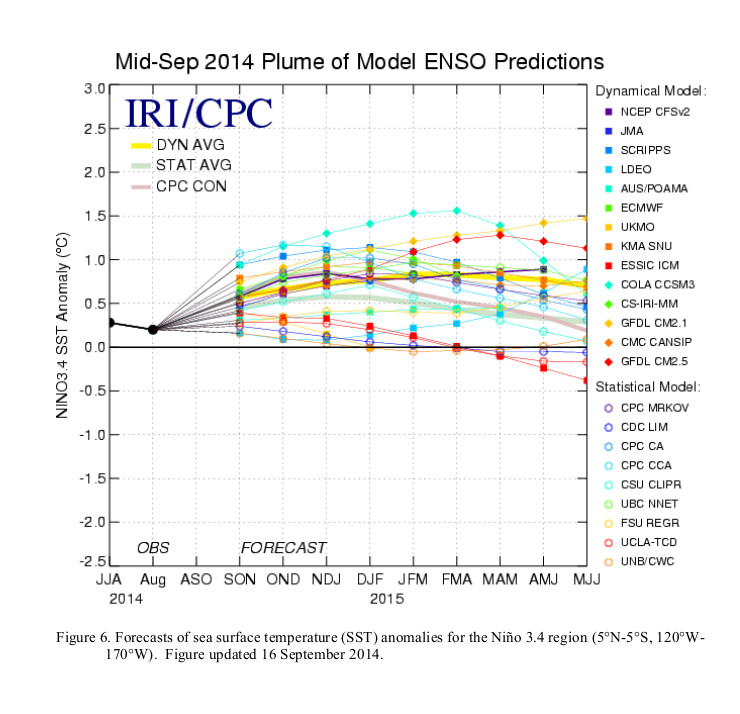
–Luna B. Leopold, Former USGS Chief Hydrologist

Luna B. Leopold, son of famed conservationist Aldo Leopold, arrived at the USGS in 1950. For the next two decades, Leopold revolutionized hydrologic sciences within and outside the USGS. He is best known for his work in the field of geomorphology, the study of land features and the processes that create and change them. His work is often cited today by leading scientists in water research, both at the USGS and around the world.

Leopold had a lasting impact on the field of water science. He knew the broader importance of our water resources and that humans can have great impact on whether water is available, now and in the future. Our society depends on safe and reliable water supplies, as do the Earth’s diverse and valuable ecosystems. Today, our nation is faced with the challenge of balancing a finite freshwater supply between competing needs, such as agriculture, drinking water, energy production, and ecosystems.

Leopold recognized the fundamental value of science in making smart decisions about water resources and laid the groundwork for modern water science. During his tenure he transformed USGS water research into a professionally-recognized provider of water quality and availability information.

For six years, he served as a hydraulic engineer before becoming the first Chief Hydrologist in the history of the USGS, a position he held until 1966 when he stepped down to pursue his research. While at the USGS, he led the effort to restructure the water science programs to focus on viewing water as a single resource. For example, USGS continues to research the interactions between surface water and groundwater, because use of either of these resources affects the quantity and quality of the other.

Leopold also directed the agency to assist in developing hydrology education programs at universities across the country and promoted a future in which all hydrologic research organizations—both public and private—would come together to share information and advance their ideas.

“In effect, Luna turned the hydrologic division of the USGS into a premier research organization, contributing to the prominence the field now has,” said Bill Dietrich, a professor of earth and planetary science at the University of California, Berkeley, and a former colleague of Leopold’s.
Randall J. Hunt, USGS Research Hydrologist for Geology, and Curt Meine, the biographer of Aldo Leopold, have written an account of Luna Leopold’s contributions to the world of water science that will appear in the November/December issue of Ground Water and is currently online. In the article, “Luna B. Leopold – Pioneer Setting the Stage for Modern Hydrology,” they describe Leopold as a brilliant and humble researcher intrigued by the impact that human activities have on natural bodies of water.

“From the earliest steps in his career,” wrote Hunt and Meine, “Luna Leopold demonstrated a fascination with hydrology, an understanding of basic hydrological connectivity, and an appreciation of the role of science in informing resource management and stewardship.”

Not only did Leopold lead the transition to a more effective organization structure for the study of hydrology; he also changed the underlying philosophy behind the research.

“In 1957, newly minted USGS Chief Hydraulic Engineer Leopold brought with him a conviction that water on and beneath the Earth’s surface and the quality of both were interdependent parts of one water-resources system,” wrote Hunt and Meine. “Leopold believed, moreover, that the USGS and the field of hydrology had to change to reflect this reality. He also recognized that hydrologic research was critical in meeting the needs of water-resource planning…This approach became manifest within the USGS.”

Leopold’s contributions to the field of water science have been recognized by institutions throughout the United States. In 1967, just a year after completing his tenure as Chief Hydrologist, Leopold became the first hydrologist to be inducted into the National Academy of Sciences. In 1968 he won the Cullum Geographical Medal from the American Geographical Society, and in 1991 was awarded the National Medal of Science by President George H. Bush in a Rose Garden ceremony at the White House. During his career, he was elected as a Fellow of the American Academy of Arts and Sciences, the American Philosophical Society, the American Society of Civil Engineers, and the American Geophysical Union.

Coyote Gulch posts about Dr. Leopold (who is quoted at the top of the blog):

Luna Leopold: Pioneer of water science</>

Luna B. Leopold (scroll down)

Luna B. Leopold: Water, Rivers and Creeks

Click here to order a copy of the book from Tattered Cover in Denver.

NIDIS: Weekly Climate, Water and Drought Assessment of the Upper #ColoradoRiver Basin

Upper Colorado River Basin September 2014 precipitation as a percent of normal

Click here to read the current assessment. Click here to go to the NIDIS website hosted by the Colorado Climate Center.

More Colorado River Basin coverage here.

SDA Honors St. Vrain and Left Hand Water Conservancy District as a 2014 Collaboration Award Winner

St. Vrain River floodplain November 2013 via the Longmont Times-Call

Here’s the release from the Special District Association (Ann Terry):

The St. Vrain and Left Hand Water Conservancy District has been named one of three winners of the Special District Association of Colorado’s 2014 Collaboration Award.

The Special District Association of Colorado (SDA) presents this award annually to special districts that have effectively and efficiently partnered with other entities and local governments to form successful working relationships for the benefit of their citizens. The awards were presented at the SDA Annual Awards Luncheon as part of the SDA Annual Conference which was held September 10-12, 2014 in Keystone, Colorado.

In the aftermath of the disastrous flood of September 2013, the St. Vrain and Left Hand Water Conservancy District, Boulder County, City of Longmont, Town of Lyons, and local property owners began the incredible challenge of addressing short term recovery and the channel’s ability to handle spring runoff. The group became known as the St. Vrain Creek Recovery and Restoration Team or R2T for short.
From the beginning, R2T identified rebuilding and repair opportunities and aligned them with state and federal financial resources. “R2T was really the first multiagency collaboration to address creek repairs after the flood”, said Board President Dennis Yanchunas. “R2T was quickly viewed by impacted citizens as safe, un-bureaucratic, nimble, and effective – that is really what you want from your local government.” R2T has now shifted to the long term recovery of the area as part of the St. Vrain Creek Coalition. The Coalition is working on a comprehensive St. Vrain Creek Watershed Master Plan that will promote for a holistic healthy riparian corridor and a stream system that will be better able to handle future floods.

Ann Terry, SDA’s Executive Director, was pleased to recognize the exceptional work of the District and R2T. “The commitment of the District and R2T to their residents has played a significant role in the area’s recovery, and this collaboration is a true testament to the success that can be achieved through partnerships.”

More Saint Vrain River coverage here.

The latest newsletter “The Current” is hot off the presses from the Eagle River Watershed Council

Eagle River Basin
Eagle River Basin

Click here to read the news letter. Here’s an excerpt:

In 2014-15, the Watershed Council is working to put the finishing touches on the Edwards Eagle River Restoration Project.

We were thrilled to have a group of Vail Mountain School 7th & 8th graders help us out for their service learning day. Together we planted 34 narrowleaf cottonwood trees and installed cages around each to protect them from busy beavers. It was a gorgeous and productive day by the river. Many thanks to Ms. Littman, Ms. Zimmer, Mr. Felser and their wonderful students!

Thanks to the work of the VMS students and the Colorado Alpines professional planting crew, all that’s left to round out the $4 million, 6-year project is to continue with weed mitigation. To learn more about the project, click here.

More Eagle River watershed coverage here.

Some still wait for #COflood relief dough

Plume of subtropical moisture streaming into Colorado September 2013 via Weather5280

From the Estes Park Trail-Gazette (David Persons):

The town, local businesses and residents have rolled up their collective sleeves and gone about the task of rebuilding the community.

It has taken a lot of hard work. It’s also taken a lot of money from a variety of sources. But, a large part of the recovery work has been accomplished.

The work was expected. The recovery money was expected, too.

What wasn’t expected was how hard and how long it was going to take to get funds – especially grant money – that was needed to offset huge losses.

While some federal and state recovery funds have been received by the town, the only money that local businesses have received has been SBA loans, which must be paid back, and some assistance from the United Way of Larimer County’s Small Business Recovery Funds.

The latter amounted to 42 small businesses divvying up a gracious pot of $1.17 million. That’s about $28,000 per business on the average. While it helped a lot, and business owners admit they’re very grateful, most of those businesses suffered a loss in business exceeding those amounts.

That’s why receiving federal and state flood recovery grant funds – assistance they applied for many months ago – would be a big help right now for local businesses as the tourist season winds down.

Arkansas Valley: “…there’s an abundance of hay because of the shortage of cattle” — Dale Mauch

Flood irrigation in the Arkansas Valley via Greg Hobbs

From The Pueblo Chieftain (Chris Woodka):

A more normal year for rainfall in the Arkansas Valley meant better yields for crops this year, but that may not translate into big financial gains for farmers.

“It really is tough. We’ve got crops, but there’s going to be people who made more with preventive planting (drought crop insurance) than they got for their crop,” said Lamar farmer Dale Mauch.

Rainfall for the area is about 93 percent of average on the year, although it has varied widely. Some areas flooded in early summer, while others are awaiting a break from the drought that began in 2010.

Some corn yields on irrigated land are topping 200 bushels per acre, but the cost per bushel is about $3 — half of what it was when crops were planted. Also, many acres were not planted in corn because it looked like another dry year might have been coming last spring.

“Corn dictates everything,” Mauch said. “Hay has followed suit, because there’s an abundance of hay because of the shortage of cattle.”

Cattle prices have soared this year after farmers thinned herds during the drought of the past three years.

“With all the rains, we grew a lot of weeds, but we didn’t have the cattle to eat them,” said Dan Henrichs, a Pueblo County rancher who also is the superintendent of the High Line Canal.

“I would imagine that the calf you sold three years ago for $1,000 would sell for $3,000 today,” he said.

Cattlemen still face tough choices of whether to keep cows to try to rebuild herds or sell them to pay the bills. Some also could face tax consequences from previous sales.

The high price of cattle also is making a dent on cattle feed lots in the Arkansas Valley.

“We’re slower than we were last year,” said Tyler Karney, manager of the Ordway Feedyard. “There are higher prices for cattle and a lower supply.”

At Ordway, there are about 35,000 cattle on the lot, which is 20,000 less than at the same time last year. The situation is similar at the Rocky Ford Feedyard.

“One of the biggest reasons is the drought of the last couple of years. People have reduced the size of their herds. This year, people are holding cows,” said Robert Petty, manager of the Rocky Ford operation.

The smaller numbers in feed yards has implications for farmers because they are buying less feed, adding to the oversupply and lower prices.

“The yields look great, but it’s not the bonanza you think it is,” Mauch said. “With prices where they are, it’s not enough to cover the expense of getting the crop in.”

More on the SE Colorado drought from Chris Woodka writing for The Pueblo Chieftain:

Grassland in Southern Colorado is making a comeback after taking a beating the last three years, but it will take a while to get anywhere close to normal.

“Range production is average or above average,” said Rich Rhoades, conservationist for the Natural Resources Conservation Service in Pueblo. “It’s still poor in isolated spots.”

Grasses are coming back in, and the die-off so far has not been as severe as in the last three years.

“If we have another good year rain-wise, we could see a lot of improvement,” Rhoades said. “I think the further west you go, the better off you are.”

Summer rains benefited some of the warm-season grasses, but not at a sustainable level, said Bruce Fickenscher, Colorado State University Extension range specialist.

“The rain came as the warm-season grasses were peaking,” Fickenscher said. “It helped growth in the short term. But the grasses in a lot of places are dead, or have not filled in.”

Weeds — the kind that will blow and tumble after they freeze and break off — also popped up following the rains, but neither Rhoades nor Fickenscher expect them to be as big a problem as last year’s crop.

“Most the weeds are maturing out and are past their growth point,” Fickenscher said. “We’re always going to have tumbleweeds, but I think the level of management has been higher. I don’t think it will be as bad as last year.”

Ranchers are being encouraged not to graze too many cattle on new grass, and reseeding is probably too expensive an option for most, he added.

“The basic problem is still the subsurface moisture,” Fickenscher said. “Some of the areas haven’t recovered from drought for a long time, so they have to watch how they graze it.”

More Arkansas River Basin coverage here.

CMU: Upper #ColoradoRiver basin water forum, November 5-6

UpperColoConf2014Poster

More Colorado River Basin coverage here and here.

13th Annual DARCA Convention February 13, 2015

From email from DARCA:

DARCA is coming together for the 13th Annual DARCA Convention. The event will take place in Grand Junction, Colorado at the Two Rivers Convention Center. The pre-convention workshop is scheduled for February 11th, 2015, with the topic of technology and ditch companies. The convention will be on February 12th & 13th, with the theme of Colorado’s Water Plan and Irrigated Agriculture. For more information and to register, visit http://www.darca.org or call (970) 412-1960.

CWC: We’re partnering with the Colorado Foundation for Water Education to bring you three webinars on Transbasin diversions

Colorado transmountain diversions via the State Engineer's office
Colorado transmountain diversions via the State Engineer’s office

Gov. Hickenlooper releases year-in-review and outlook report of flood recovery efforts

Plume of subtropical moisture streaming into Colorado September 2013 via Weather5280

Here’s the release from Governor Hickenlooper’s office:

Governor John Hickenlooper and the Colorado Recovery Office today released an annual report that provides an overview of the recovery efforts of the September 2013 floods, looks at lessons learned and an outlook to ongoing and continuing recovery efforts.

“With the release of this report, we take a short pause in the recovery efforts to review a year of both tragedy and inspiration,” said Hickenlooper. “We committed to build back better, stronger and more resilient and while we’ve made tremendous progress, there continues to be communities in need. We remain a strong partner in those efforts and will continue to move with the same urgency as we did in the immediate aftermath.”

The historic flooding – the single most devastating natural disaster in the state’s 138-year history – took 10 lives, forced more than 18,000 people from their homes, destroyed critical roads and bridges and wreaked an estimated $3 billion in damages. In rapid response, the Colorado Recovery Office was created and the governor called upon more than 20 state agencies to immediately begin work on plans to assess damage and recovery efforts.

One year later, this report captures the recovery plans for the state, including how state and federal agencies, non-profits, the private sector and citizens collaborated to secure $1.6 billion in resources and continue to work with communities most in need to distribute funds.

The report highlights the accomplishments resulting from these collaborations and the heroic, day-to-day work of Coloradans united in their efforts, demonstrating their resiliency and working toward recovery, including:

  • Opened all state highways by December, 2013, and utilized an innovative approach in designing, engineering and reconstructing highways and restoring streams that makes Colorado highways and stream corridors more resilient to future disasters.
  • Created an online resource at http://www.coloradounited.com to provide up-to-date information to local communities and the public at large, as well as a forum to request support from the state. To date the website has been visited more than 60,000 times;
  • Partnered with the agriculture industry to ensure more than 88 percent of damaged diversions and ditches were operational before growing season.
  • Finally, the report lays out the framework for how the Colorado’s long-term recovery support for local communities will continue in the weeks, months and years ahead to help them rebuild better, stronger and more resilient.

  • Develop more affordable housing, incorporating technology, energy efficiency and other sustainable building practices.
  • Synchronizing the rebuilding of transportation infrastructure and stream restoration activities to protect roadways from future damages while preserving natural stream function, and enhancing wildlife habitat.
  • Supporting business recovery with access to capital and promoting economic diversification in impacted communities.
  • Facilitating local multi-objective planning efforts that chart a clear course for recovery and long-term resiliency while leveraging federal, state and non-governmental resources to implement those plans.
  • The full report is available online at http://www.coloradounited.com.

    At head gate atop pass, Western Slope, Front Range interests meet — The Grand Junction Daily Sentinel

    From The Grand Junction Daily Sentinel (Dennis Webb):

    A water-measuring flume on a ditch sitting exactly astride this pass outside Leadville might be as good a place as any to bring Western and Eastern Slope interests together to talk about water.

    Those interests met in the middle here last week, at this point where the Ewing Ditch crosses the Continental Divide, on a transbasin diversion tour presented by the Colorado Foundation for Water Education. It was a chance to consider the past of water development in Colorado while also pondering its future. And where better to look back at the history of transbasin diversions than at Ewing Ditch, the oldest diversion of Western Slope water to the Eastern Slope?

    This straightforward, unassuming dirt conduit seemingly defies gravity, diverting water from Eagle River tributary Piney Gulch just a short walk from Tennessee Pass, and just high enough up the gulch that the water can follow a contoured course crossing basins and head into the Arkansas River Valley.

    “It’s simple, but I love simplicity. It fits my mind,” Alan Ward, water resources manager with the Pueblo Board of Water Works, joked about the ditch, which the utility bought in 1955.

    Buried in snow

    It was built in 1880 and also is called the Ewing Placer Ditch, which Ward believes suggests early use of the water in mining.

    As transbasin diversions go, it’s a minuscule one, delivering up to 18.5 cubic feet per second, or an average of about 1,000 acre-feet in a year. It diverts about five square miles of melt-off from snowpack that can leave the ditch buried beneath 10 to 20 feet of snow in the winter. David Curtis is in charge of clearing that snow and maintaining and operating the ditch during the seven months out of each year that he works out of Leadville as a ditch rider for the utility.

    The utility says Ewing Ditch is about three-quarters of a mile long.

    “I think it’s a little longer,” Curtis said, adding that at least it seems that way when he and others are busy clearing spring snow.

    A chartered bus delivered more than two dozen tour participants to view the ditch, including Boulder County resident Joe Stepanek. He found last week’s two-day tour to be highly informative. He’s interested in Colorado’s history of water development, and is retired from a U.S. Agency for International Development career that had him traveling abroad.

    “I come back and join this water tour and learn a lot about Colorado,” he said.

    Sonja Reiser, an engineer with CH2M HILL in Denver, likewise was finding the tour to be eye-opening.

    “I’m learning so much about how complicated Colorado water law is,” she said as the tour bus moved on from this tiny diversion point to the outlet of the five-mile-long Homestake Tunnel, which goes under the Continental Divide from Homestake Reservoir in Eagle County and is capable of delivering a much more massive 800 cubic feet per second to help meet municipal needs in Colorado Springs and Aurora.

    Before getting to those cities, that water also is put to use at another tour stop, the Mount Elbert Power Plant just above Twin Lakes. There, the water goes through hydropower turbines that can be reversed to pull water back up from the lakes to a reservoir above the plant, helping ensure the water is available to create on-demand power to meet grid shortages at times when renewable energy from wind and solar sources wane.

    While traveling to the tunnel, the busload heard Pitkin County Attorney John Ely discuss legal means that county has to at least weigh in on transbasin diversion proposals, even if it can’t outright stop them.

    He then opined that Pitkin County has more in common with some Front Range counties than it does with some counties on the Western Slope.

    “I think that at the end of the day everybody appreciates that we’re in this together,” he said.

    More water

    Such thinking is helping drive an ongoing effort to develop a state water plan in Colorado. Ely said the priority is always going to be providing water for human consumption, but beyond that, decisions must be made about how to distribute it among competing uses such as agriculture, watering lawns, generating hydropower and maintaining streamflows.

    “The only way you can get at that is to invite the public to participate,” he said.

    Since 1880, many others have followed the lead taken with the Ewing Ditch and diverted Western Slope water for use on the populous Front Range. As a result, a big challenge facing the state water planning process is reconciling the Front Range’s desire to be able to access yet more of that water with the feeling of many on the Western Slope that they’ve given up enough of it. Although tours like last week’s can’t be expected to lead to breakthroughs on such difficult issues, they at least help to put faces behind the entities involved.

    “We’re not three-headed monsters on the Eastern Slope,” Kevin Lusk, who works with Colorado Springs Utilities, said during a windy lunch break alongside Turquoise Lake, which stores water delivered by the Homestake Tunnel.

    Front Range lawns

    Fielding questions from a few Western Slope residents as they ate, Lusk and some other Front Range utility officials found themselves defending the amount of water conservation they’ve already undertaken, and questioning the Western Slope frustration about water being used to keep Front Range lawns green. Brett Gracely, also with Colorado Springs Utilities, said that watering accounts for just 3 percent of state water use.

    “I don’t get it — why do people hate grass?” Lusk wondered.

    But as Lusk later described Colorado Springs’ efforts to better shore up its diversion infrastructure to reduce leakage far up the Roaring Fork Valley in Pitkin County, it engendered a frustrated sigh from Lisa Tasker, a member of Pitkin County’s Healthy River Board. She has hiked around that infrastructure, and what has leaked from it has helped vegetation in the same pristine mountain basins from where that water originates, rather than irrigating Front Range lawns.

    Still, Tasker bit her lip during Lusk’s presentation. She was on the tour to look and listen, and said earlier it was a chance to see diversion infrastructure firsthand and hear not just the perspectives but the passions of people from the Front Range.

    “I’m strictly in learning mode,” she said.

    Chris Treese, external affairs manager of the Colorado River Water Conservation District, based in Glenwood Springs, sits on the board of the Colorado Foundation for Water Education, which uses tours and other means to provide unbiased information on water resources and issues. Treese, who also was a presenter during last week’s tour, said he believes such events help foster dialogue about water in the state and get new voices involved in the state’s water future.

    “If it’s going to be a state water plan, it can’t just be water buffaloes’ state water plan,” Treese said, referring to the more traditional participants in water issues on both sides of the divide.

    “It’s good for us to get outside of our box and look at the bigger picture,” said tour participant Joe Burtard, who works in external affairs for the Ute Water Conservancy District utility in Mesa County. “… It’s good for us to be exposed to the Front Range and Eastern Slope perspectives as well.”

    More Colorado Foundation for Water Education coverage here.