Did the Paris climate accord save civilization? Maybe. That may not sound like a ringing endorsement, but it’s actually the best climate news we’ve had in a very long time. This agreement could still follow the path of the 1997 Kyoto Protocol, which seemed like a big deal but ended up being completely ineffectual. But there have been important changes in the world since then, which may finally have created the preconditions for action on global warming before it’s too late.
Until very recently there were two huge roadblocks in the way of any kind of global deal on climate: China’s soaring consumption of coal, and the implacable opposition of America’s Republican Party. The first seemed to mean that global greenhouse emissions would rise inexorably no matter what wealthy countries did, while the second meant that the biggest of those wealthy countries was unable to make credible promises, and hence unable to lead.
But there have been important changes on both fronts.
[…]
Still, what reason is there to believe that the accord will really change the world’s trajectory? Nations have agreed both to emission targets and to regular review of their success or failure in meeting those targets; but there are no penalties other than censure for countries that fail to deliver.
And achieving those emission targets would definitely hurt some powerful special interests, since it would mean leaving most of the world’s remaining fossil fuels in the ground, never to be burned. So what will stop the fossil fuel industry from buying enough politicians to turn the accord into a dead letter?
The answer, I’d suggest, is that new technology has fundamentally changed the rules.
Many people still seem to believe that renewable energy is hippie-dippy stuff, not a serious part of our future. Either that, or they have bought into propaganda that portrays it as some kind of liberal boondoggle (Solyndra! Benghazi! Death panels!) The reality, however, is that costs of solar and wind power have fallen dramatically, to the point where they are close to competitive with fossil fuels even without special incentives — and progress on energy storage has made their prospects even better. Renewable energy has also become a big employer, much bigger these days than the coal industry.
This energy revolution has two big implications. The first is that the cost of sharp emission reductions will be much less than even optimists used to assume — dire warnings from the right used to be mostly nonsense, but now they’re complete nonsense. The second is that given a moderate boost — the kind that the Paris accord could provide — renewable energy could quickly give rise to new interest groups with a positive stake in saving the planet, offering an offset to the Kochs and suchlike.
Of course, it could easily go all wrong. President Cruz or President Rubio might scuttle the whole deal, and by the time we get another chance to do something about climate it could be too late.
But it doesn’t have to happen. I don’t think it’s naïve to suggest that what came out of Paris gives us real reason to hope in an area where hope has been all too scarce. Maybe we’re not doomed after all.
Solar panels, such these at the Garfield County Airport near Rifle, Colo., need virtually no water, once they are manufactured. Photo/Allen Best
The state has put Pueblo on a shorter leash for dealing with selenium in wastewater discharges.
On Monday, the Colorado Water Quality Control Commission rejected Pueblo’s plea for a 10-year extension of a temporary modification, instead just giving the city a little over two years to develop a discharge specific variance that sets numerical limits and strategies to attain them.
“Everyone, even the EPA, recognizes that selenium is naturally present in the Arkansas River,” said Gene Michael, Pueblo’s wastewater supervisor. “What we’ll have to do in the next two years is come up with an effluent limit and a compliance schedule.”
Pueblo already is implementing a $32 million project to line sewage collection pipes on the West Side to reduce infiltration of groundwater tainted with selenium.
The city’s position is that more of that selenium could reach the Arkansas River because it would not be removed in treatment.
“We still will be in negotiations with the state health department on selenium levels to determine standards,” Michael said. “The potential exists to extend the temporary mods as well.”
Another contaminant, sulfates, is also being looked at. But it may not be an issue, since there are few diversions of surface water for domestic use directly downstream from Pueblo, Michael said.
From email from the Colorado Foundation for Water Education:
The Colorado Foundation for Water Education is excited to announce that applications for the 2016 Water Leaders Program are open. Make sure your staff and colleagues know about this professional development opportunity and sign up for a free webinar on December 18 to learn more.
Register to join us this Friday, December 18 from 9:00-10:00am when program staff and Water Leaders Alumni will host a webinar to discuss goals and expectations for interested candidates and prospective employers, register here. Contact kristin@yourwatercolorado with any questions.
Water once destined to be exported to feed growth on the Front Range could fuel economic growth in the Lower Arkansas Valley, but Bent County officials are wary of unforeseen consequences.
“Where is the water going to move to?” asked Bent County Commissioner Lynden Gill after Monday’s presentation by Arkansas River Farms at the Fort Lyon Canal’s annual meeting. “Are they going to double up water on sprinklers near Las Animas or move it somewhere else? I had assumed the water would be staying in Bent County.”
Arkansas River Farms outlined its plans to dry up 6,700 acres on the Fort Lyon while improving another 5,700 acres with surface-fed sprinklers, rather than flood irrigation. The company owns 18,400 shares of Fort Lyon water, about one-fifth of the total.
The water was purchased by High Plains A& M 15 years ago with grand plans to market it statewide. Those were shot down, first in water court and then by the state Supreme Court.
C&A Companies, one of the Arkansas River Farms partners also unveiled its plan to pipe Lamar Canal water to the Front Range in 2011.
But now, the plan is to use the water to open up new farming opportunities in Bent and Prowers counties, said Karl Nyquist, one of the principals in C&A.
“We could be the biggest job creators in this area,” Nyquist said at Monday’s Fort Lyon meeting.
And what about those pipeline plans?
“You haven’t heard me talk about it lately, have you?” Nyquist answered, adding the company will be more open as plans progress.
Bill Grasmick, the largest farmer on the Lamar Canal and a board member of the Lower Arkansas Water Management Association, said wells that have not been used in several years would be operated thanks to the water taken off the Fort Lyon.
They have talked to Bent and Prowers counties about building dairies, feed lots or vegetable farms that would provide an additional boost to the local agricultural economy. But the plans are not specific.
The water from the Fort Lyon would be used in LAWMA well-augmentation plans, which are not limited to historic boundaries for use. “About 22 percent of our local economy comes from agriculture, so any reduction will have a negative impact,” said Bill Long, another Bent County commissioner.
But looking at map of Arkansas River Farms plans, most of the improved farms are located near Las Animas, while dry-ups largely are further east, where farmers are just as likely to trade in Lamar as Las Animas, he said.
“Ultimately, there’s a chance it could be very beneficial,” Long said.
Of more concern to Long is the upcoming water court change case. That would quantify the consumptive use of the Fort Lyon shares and open them up for other uses.
“That’s one step closer to getting it in a pipeline,” said Long, who is president of the Southeastern Colorado Water Conservancy District, which took the lead role in the legal battle to stop High Plains.
There are too many unanswered questions to pass judgment, Gill said. Tuesday, the commissioners met with conservancy districts that want to supervise revegetation. And the Fort Lyon shareholders have set aside Jan. 28-29 to question the company about its impacts on the canal itself. Primary concerns so far are the revegetation question and the proposal to leave some water behind to cover losses on shared laterals.
Gill, who is also chairman of the Lower Arkansas Valley Water Conservancy District, is alarmed that dry-up could begin next year under a substitute water supply plan concurrent to a water court filing.
Long pointed out that in previous cases where revegetation was insufficient and caused problems later with weeds and blowing dust. If the Fort Lyon water is used outside Bent County, 1041 regulations also could be applied, Long said.
“We’re going to do everything we can to protect the ag economy in Bent County, and make sure if anything is done, it is beneficial to the county,” Long said.
Straight line diagram of the Lower Arkansas Valley ditches via Headwaters
Here’s the release from the US Bureau of Reclamation (Peter Soeth):
As part of an ongoing effort to further technological advances related to imbalances between water supply and demand, the Bureau of Reclamation announced today it will seek proposals for research, laboratory studies and pilot-scale projects that target increasing the usable supply of water in the United States as part of its Desalination and Water Purification Research Program. Today’s announcement occurred as private sector and governmental representatives attended a White House Roundtable on Water Innovation being led by Secretary of the Interior Sally Jewell and other senior Administration officials. Participants at the roundtable are discussing how to plan, efficiently use and develop new clean water supplies to ensure our nation’s resilience to water supply shortages.
Reclamation will provide up to $150,000 for the research and laboratory studies. Between five and 15 projects are expected to receive funding. Studies must be completed within one year. All applicants are required to have a minimum of a 50 percent non-federal cost-share except for institutions of higher learning. Institutions of higher learning are encouraged to have some cost-share.
For pilot-scale projects, Reclamation will provide up to $200,000 per year, per project. The pilot-scale projects must be completed within two years. Between one and five projects are expected to receive funding. All applicants must provide at least 50 percent non-federal cost-share.
Individuals, higher education institutions, commercial or industrial organizations, private and public entities (including state and local), non-profit organizations, and Indian Tribal Governments are all eligible to apply for these funding opportunities.
The Desalination and Water Purification Research Program is helping Reclamation and its partners confront widening imbalances between supply and demand in basins throughout the Western United States through testing and development of new advanced water treatment technologies.
The DWPR Program focuses on three main goals: (1) augment the supply of usable water in the United States; (2) understand the environmental impacts of desalination and develop approaches to minimize these impacts relative to other water supply alternatives; (3) develop approaches to lower the financial costs of desalination so that it is an attractive option relative to other alternatives in locations where traditional sources of water are inadequate.
The funding opportunity announcements are available at http://www.grants.gov. For research and laboratory studies, search for announcement number R16-FOA-DO-009. For pilot scale studies, R16-FOA-DO-010. Phase one applications are due by 4 p.m. MST on Feb. 8, 2016. The phase two deadline is 4 p.m. MDT on April 27, 2016.
Releases from Crystal Dam will be increased from 600 cfs to 1100 cfs on Thursday, December 17th. The powerplants at Morrow Point and Crystal have returned to full service. The current content of Blue Mesa Reservoir is 649,000 acre-feet which is 78% full.
Flows in the lower Gunnison River are currently above the baseflow target of 1050 cfs. River flows are expected to stay above the baseflow target for the foreseeable future.
Pursuant to the Aspinall Unit Operations Record of Decision (ROD), the baseflow target in the lower Gunnison River, as measured at the Whitewater gage, is 1050 cfs for the remainder of the year.
Currently, there are no diversions into the Gunnison Tunnel and flows in the Gunnison River through the Black Canyon are around 600 cfs. After this release change Gunnison Tunnel diversions will still be at 0 cfs and flows in the Gunnison River through the Black Canyon should be around 1100 cfs. Current flow information is obtained from provisional data that may undergo revision subsequent to review.
Park officials say there are several factors behind the rash of tree removals. Some of the elderly conifers were simply at the end of their lives, they suggest; some had been stressed by drought or attacked by bugs; some apparently never recovered from a couple of vicious cold snaps in recent years, including a 77-degree temperature drop over three days last year. John says she doesn’t doubt that a few individual trees might have fallen victim to such predations, but that doesn’t begin to explain what happened on Evergreen Hill.
“The official line is that there are many things that cause trees to decline and die,” [Sonia John] notes. “Virus. Bacteria. Fungal diseases. Weather. Anthropogenic causes, like compacting the soil with construction equipment. But nobody has come up with a credible potential cause of this die-off that will explain why that cause isn’t operative on trees in neighbors’ yards across the street from the park.”
The primary reason for the die-off, John contends, is much simpler: The healthy trees on private property across the street from the park receive potable water — not the recycled water that’s been used in Washington Park since 2004.
Last June, Denver Water officials agreed to meet with members of Denver INC, short for Inter-Neighborhood Cooperation, a coalition of registered neighborhood associations and other groups. High on the agenda was a discussion of Denver Water’s recycled-water program, which provides wastewater that’s been sufficiently treated for irrigation purposes at a fraction of the cost of drinking water. The meeting was the first opportunity that John and others had to question the program’s boosters about several studies that had been done, mostly at the utility’s request, on the program’s impact on soils, vegetation — and especially trees. Collectively, the studies make a persuasive case that foliage and soils in city parks treated with Denver Water’s recycled product contain high amounts of sodium — which, over time, can be particularly lethal to conifers, since they draw water from their roots most of the year.
Washington Park was one of the first city parks to convert to recycled water; John says it’s no surprise that the ill effects should surface there more rapidly than at other parks. But 20 percent of the department’s irrigated properties are now using recycled water, which involves an entirely separate delivery system from that used for potable water. Park advocates say the high-sodium regimen is beginning to claim evergreens in other parks, too, and John fears it may be only a matter of time before deciduous trees get affected as well; she’s already seen “a lot more leaf scorch” on lindens in Wash Park, a possible indication that the trees are overdosing on salt. The City of Denver now saves a million dollars a year on park watering costs because of recycled water, but the park department’s critics claim that the city hasn’t embarked on any “meaningful remediation” to address a problem it’s known about for years.
Denver Parks deputy manager Scott Gilmore says the situation isn’t as black-and-white as the neighbors want it to be. “When people say it’s reused water, that’s trying to simplify a very complicated situation,” he sighs. “This isn’t Seattle. This isn’t California or back east, where you have lots of natural forest. This is an urban forest that humans created. We’re losing trees because of weather conditions and drought — and reused water. All those things coming together.”
Governor Matt Mead has selected three Wyoming citizens to serve in positions that support Wyoming’s participation in the management of the Colorado River. The three are being named, in part, to fill positions that were previously held by Dan Budd, who passed away in September.
Mr. Randy Bolgiano and Mr. Keith Burron have been named as Alternate Wyoming Commissioners to the Upper Colorado River Commission (UCRC). Where previously Wyoming had two Alternate Commissioners, there now will be three due to the rising importance to Wyoming of water supply and use issues in this basin.
The UCRC is an interstate, administrative agency established by the Upper Colorado River Basin Compact of 1948 (Upper Basin Compact). UCRC members consist of a Commissioner representing each of the four Upper Division States of Colorado, New Mexico, Utah and Wyoming (Upper Division States) and a Commissioner appointed by the President of the United States who serves as the Chair of the Commission.
The Commission assists the Upper Division States in developing their apportionments of Colorado River water pursuant to the Colorado River Compact of 1922 and the Upper Basin Compact, and has specific responsibilities to assist in implementing the Upper Basin Compact consistent with laws of the Upper Division States.
Benjamin Bracken of Green River continues to serve in the third Alternate Commissioner position.
Mr. Bolgiano is a rancher from Boulder, Wyoming and has been active in the Green River Basin on water and other natural resource activities for more than two decades.
Mr. Burron is an attorney for Crowley Fleck in Cheyenne focusing predominantly on water rights, natural resources, public lands, water quality, oil and gas, and regulatory matters. Mr. Burron has been an active member of the Colorado River Water Users’ Association for almost 20 years. The two will serve on the Commission along with Wyoming’s Commissioner, State Engineer Patrick Tyrrell, and Ben Bracken of Green River, also an Alternate Commissioner.
Governor Mead has also named Mr. Chad Espenscheid of Big Piney to serve as one of three Wyoming representatives on the Colorado River Basin Salinity Control Forum (Forum).
Mr. Espenscheid is a rancher and small business owner.
Created in 1973, the Forum is an organization of the seven Colorado River Basin states of Arizona, California, Colorado, Nevada, New Mexico, Utah and Wyoming.
The purposes of the Forum are to coordinate salinity control efforts among the states, coordinate with federal agencies on the implementation of the Colorado River Basin Salinity Control Program, work with Congress on the authorization and funding of the Program, act to disseminate information on salinity control and otherwise promote efforts to reduce the salt loading to the Colorado River.
For questions, please contact Mr. Steve Wolff at 307-777-1942 or at steve.wolff@wyo.gov
The Colorado River Basin. The Upper Colorado River Basin is outlined in black.
The review timeline for the Northern Integrated Supply Project has been extended again. It’s the latest in a series of pushbacks for a proposal to build two new reservoirs in Northern Colorado to supply 40,000 acre feet of water each year to 15 participating communities and water districts.
The final environmental impact statement for the project, which will come in advance of the U.S. Army Corps of Engineers’ ruling on whether Northern Water can build two reservoirs drawing from Poudre and South Platte river water, is now projected to come out in 2017 instead of the previously predicted summer 2016.
The delay comes because the Army Corps needs to complete 13 complex tasks before releasing the final EIS. Some of those tasks include adding more measures to mitigate the project’s environmental impacts, completing analysis of alternatives to NISP and finishing models that predict how the project would affect water quality and temperature.
The Army Corps also wants to take “a hard look” at public comments on the last version of the environmental impact statement that came out in June, project manager John Urbanic wrote in an email. After looking at the comments, the Army Corps may decide to conduct additional analysis of the project.
“Between the anticipated activities and review of comments we do not think that a 2016 release of the Final EIS is realistic and we adjusted the estimated release into 2017,” Urbanic wrote.
Map of the Northern Integrated Supply Project via Northern Water
Are the embattled “Waters of the U.S.” regulations in violation of the Tenth Amendment? A group of 22 State Attorneys General have petitioned the Supreme Court, asking for a review of a lower court’s decision that lets the EPA trump state rights to regulate runoff from farmland and other sources.
These states argue that WOTUS amounts to micromanaging nutrient and sediment runoff, and that the EPA “unilaterally granted itself the power to make thousands of land-use decisions that have traditionally been, and should remain, State decisions.”
[…]
The brief was filed in American Farm Bureau Federation, et al., v. United States Environmental Protection Agency, et al. States joining the brief include Alabama, Arizona, Arkansas, Colorado, Georgia, Indiana, Kentucky, Michigan, Missouri, Montana, Nebraska, Nevada, North Dakota, Ohio, Oklahoma, South Carolina, South Dakota, Texas, Utah, Wisconsin and Wyoming.
“The agreement is a clear articulation of the fact that almost all countries of the world now agree that climate change is a serious problem—and more serious than they agreed to in the past,” says Jonathan Overpeck, co-director for the University of Arizona’s Institute of the Environment and professor in the university’s Geosciences and Atmospheric Sciences departments.
By recognizing the magnitude and importance of climate change, he says that delegates in Paris did achieve a “major milestone in human history.”
But, he adds: “the devil is in the implementation.”
[…]
Last week, delegates recognized that trying to restrict warming to two degrees will not protect many countries, especially island and coastal nations that are being inundated by sea level rises.
Instead, it now seems imperative to limit global warming to 1.5 degrees Celsius above pre-Industrial levels…
For New Mexicans, the conversation isn’t an abstract one.
“The impacts of climate change are really clear in the Southwest right now,” says Overpeck. “There is very noticeable warming, and it is greater than the global average warming.”
While the focus lately has been on California, Overpeck points out that the larger Southwest has been in drought for more than a decade.
“This drought has been moving around the Southwest since 1999,” he says. “And this drought is unique: it’s the worst drought we’ve seen in the rain gauge record, and it’s made worse because it’s a ‘hot drought.’” That is, the drought is driven as much by anomalously hot temperatures as by precipitation.
“The effects on forests and water supply are already happening,” he says, citing forest mortality and larger, more severe forest fires. “They were predicted to happen, and they’re already happening. They aren’t hypothetical.”
Warmer temperatures will also affect people’s health, thanks to things like longer heat waves in the summer and an increase in dust storms.
“One of the other health effects, that scientists worry about most, is an increase in infectious disease in our region, as more disease is able to spread out of the tropics into the US, into the Southwest,” he says. “Dengue and other mosquito-borne illnesses will probably be favored more and more in the Southwest as the climate warms.”
And while science is his specialty, Overpeck allows himself to step into the political realm.
Although the number of Americans denying or ignoring climate change has become increasingly small, they still have a great deal of influence on policy, which affects people across the globe, he says.
East Fork Jemez River Valles Caldera New Mexico via the Associated Press
A forested lava dome in the midst of the Valle Grande, the largest meadow in the Valles Caldera National Preserve
After two intense weeks of negotiations reflecting twenty years of climate discussions, representatives from nearly 200 countries reached accord on the Paris Agreement.
The Conservancy’s Andrew Deutz, director of international government relations said, “This landmark agreement signals the turning point in the road to a low-carbon economy, a road paved by continued innovation in the technology, energy, finance, and conservation sectors. Years in the making, the agreement affirms a new paradigm of global cooperation to address climate change which points towards a future that is more prosperous, healthy and secure.
“Over the last year, countries have produced the most ambitious and comprehensive set of emissions reductions ever on offer. These are an essential down payment on global action. The Paris Agreement now ensures a formal process to continually ratchet up those offers every five years until we solve the climate challenge. The agreement also includes essential provisions to enhance accountability, environmental integrity, and scaled-up financing to help poor countries.
Duncan Marsh, director of international climate policy said, “The Paris Agreement ensures a role for market mechanisms, which should accelerate the deployment of private capital for climate action. In fact, the Paris Agreement signals that the world is on an irreversible path to a low carbon economy, which should shape investment for decades to come.
The agreement also affirms the important role that ecosystems, biodiversity, and land use can play in reducing greenhouse gas emissions and helping communities and countries reduce risks and adapt to climate change impacts. It also promotes sustainable management of land, which can range from conserving and restoring forests to improving agriculture.”
“Beyond the agreement itself, we commend France’s President Hollande and the French hosts, who masterly mobilized their considerable diplomatic capacity around the world for the last year to make this moment happen,” noted Deutz. “The agreement reached today, when combined with the unprecedented collection of announcements of new investments and far-reaching actions by the private sector and sub-national governments, signals that the world is on a historic new path towards protecting the planet for future generations. Tomorrow we will roll up our sleeves again and continue to dedicate ourselves to accelerating the transition to a low carbon future.”
From left, President François Hollande of France; Laurent Fabius, the French foreign minister; and United Nations Secretary General Ban Ki-moon during the climate change conference on Saturday in Le Bourget, near Paris. (Credit Francois Mori/Associated Press)
The Paris conference brought cheers not only from renewable energy advocates but from water groups. For years, organizations that focus on the world’s freshwater resources felt marginalized in the climate change debate. A warmer planet means nastier droughts, bigger floods, and unsettling perturbations in the water cycle, but the question of adaptation was mostly ignored by diplomats.
In Paris, that changed. Though the final text does not mention it by name, water was at the core of numerous debates and side agreements. Water advocates succeeded not by narrowing their agenda but by broadening it.
They did this in two ways. First, by targeting climate adaptation at the national level. Seventy-five percent of the national climate plans, or INDCs, which 186 countries submitted ahead of the conference, mentioned water adaptation. The detail in these plans varies tremendously, according to Melisa Cran of the French Water Partnership, but they do represent a starting point.
Second, water groups brought more parties to the table. Cities, non-governmental organizations, research institutes, utilities, and businesses pledged to address water as part of the “Agenda for Solutions,” a platform for promoting climate action outside of international politics.
The approach was a success. Water was discussed with greater depth and detail than at any previous UN climate conference.
“We were very happy that the topic of water became relatively serious in Paris,” Leon Awerbuch of the International Desalination Association, which helped advance an agreement to cut carbon emissions from desalination, told Circle of Blue.
The conference produced a number of notable agreements. More than 300 organizations signed the Paris Pact, to improve water management practices at the watershed level. Roughly $US 1 billion in funding for infrastructure projects has already been secured, according to Tales Resende Carvalho of the UNESCO-International Hydrological Program. Funds for adaptation could also flow to water projects from the Green Climate Fund, to which rich countries pledged at least $US 100 billion per year by 2020.
Twenty-seven large businesses agreed to measure and report water use, under an initiative called the Business Alliance for Water and Climate Change. The MegaCities Coalition, which represents 20 cities with 85 million people, will share data and best practices. The Global Clean Water Desalination Alliance aims to reduce carbon emissions from desalination, first by increasing the efficiency of membranes and power generation and eventually by a wholesale transition to renewable energy, Awerbuch explained. Without action, carbon emissions from desalination will increase nearly five-fold by 2040 because of the growth of thirsty seaside cities.
Altogether, the pledges made at Paris represent a significant step forward for water. Resende Carvalho said the importance is evident in the breadth of the negotiations.
“It goes without saying that given its cross-cutting nature and its important potential mitigation and adaptation aspect, water has found an important place among the measures provided under the INDCs and the ‘Agenda for Solutions’, Resende Carvalho told Circle of Blue.
Hickenlooper speaks at Ag Water Summit in Loveland
Gov. John Hickenlooper took his speaking engagement Tuesday at the Ag Water Summit in Loveland as an opportunity to celebrate the recently completed Colorado’s Water Plan and to urge its full implementation…
“We have for a long time known we have sustainability issues around water,” Hickenlooper said to the farmers, ranchers and ag businesspeople and officials at The Ranch in Loveland. “This was a can that had been kicked down the road for a long time.”
A statewide consensus developed that it was time to do something, he said, “to guarantee that there would be peaches from Palisade, cantaloupes from Rocky Ford into the next century.”
[…]
“Buy-and-dry is not sustainable; it’s not acceptable,” Hickenlooper said. “It’s a bad deal for Colorado, and it’s a bad deal for agriculture.”
The plan suggests “alternative transfer methods” of water, such as allowing farmers and rancher to lease water to other users but retain ownership…
Although the water plan emphasizes conservation, it also acknowledges that Colorado will have to build and expand its storage facilities.
Hickenlooper said the infrastructure projects that typically make headlines these days are roads and high-speed Internet, “but water and storage projects are probably just as critical if not more critical to the overall long-term viability of the state.”
“The water plan knows that we’re going to have to make some fairly large investments. The state is going to have to step up,” he said.
The water plan calls for $100 million annual funding over 30 years, starting in 2020, he said, to pay for 400,000 acre-feet of new storage capacity. Not all of that funding will come from the state, he added…
“Water is one of the places where I think we can win,” he said. “We can actually deliver on what we’ve planned … and put it in place to make sure we do have enough water for the generations ahead.”
The governor’s speech came during the morning session of the daylong Ag Water Summit sponsored by the Colorado Ag Water Alliance.
The agenda included topics such as the future of food production in Colorado, water court issues and lessons learned from the California drought.
Colorado will be hard-pressed to fund the goals laid out in its historic water plan without involvement from the state legislature, Gov. John Hickenlooper said in a Tuesday morning speech at the 2015 Colorado Ag Water Summit in Loveland.
Officials estimate implementation of the recently released Colorado Water Plan will require $100 million in annual funding between 2020 and 2050. That money will have to come from a variety of sources, including loans, federal and state grants and public-private partnerships, Hickenlooper said, because Colorado’s Department of Natural Resources receives little money to pay for water projects.
The governor made a “brief plug” for reclassification of the state’s hospital provider fee, charged to hospitals and used to provide matching funds for federal Medicaid money and increase provider payments for indigent care. The fee currently counts against state revenue limits imposed by the Taxpayer Bill of Rights, or TABOR. If the legislature passed a law reclassifying it as an enterprise fund, the move could free up hundreds of millions of dollars to spend on things like water infrastructure.
“If the legislature won’t agree to recategorize (the hospital provider fee), to be honest, we’re going to have to try to figure out some way to go to the public and ask for more resources for this kind of infrastructure,” Hickenlooper said. “But based on every poll, that’s going to be a very difficult hill to climb.”
Speaking at an annual gathering of agricultural water users from across the state, Hickenlooper emphasized the importance of agriculture as a driving force for Colorado’s economy and a means to feed the state’s growing population.
He applauded the cumulative efforts that led to Colorado’s first statewide attempt to confront a projected water supply shortage of 560,000 acre feet — enough to fill Horsetooth Reservoir three and a half times — by 2050. Stakeholders took a “bottom-up” approach to crafting the plan, which initially consisted of individual river basin plans that were later joined and prioritized for the final draft…
The plan’s goals include:
Reducing the projected 2050 municipal and industrial water gap to zero acre feet by 2030.
Achieving 400,000 acre feet of municipal and industrial water conservation by 2050.
Ensuring that, by 2025, three-fourths of Coloradans live in communities that have incorporated water-saving actions into land-use planning.
Attaining 400,000 acre feet of additional water storage by 2050.
Covering 80 percent of locally prioritized rivers with stream management plans and 80 percent of critical watersheds with watershed protection plans by 2030.
Investigating ways to raise $100 million annually for plan objectives starting in 2020.
Significantly improve public awareness of water issues statewide by 2020, determined by water awareness surveys.
Hickenlooper said his priorities for the upcoming legislative session will include water storage projects and alternative transfer methods – ways to meet growing municipal water demand without resorting to buy and dry, which is what happens when a municipality buys land from a farmer for the water rights and lets the land go dry.
The state needs to identify a variety of alternative transfer methods that conform to water law and provide security for water users, Hickenlooper said.
The legislature may not pass any laws directly related to storage projects or alternative transfer methods this session, but “now is the time to start looking at it,” the governor said.
“Buy and dry is not sustainable,” he said. “It’s not acceptable. It’s a bad deal for Colorado, and it’s a bad deal for agriculture. People in the urban and suburban parts of the state need to understand that.”
Here’s the release from the US Department of the Interior (Jessica Kershaw):
At White House Roundtable on Water Innovation, Interior launches Natural Resource Investment Center to support water, species, and habitat conservation
U.S. Secretary of the Interior Sally Jewell today announced that the Department will establish a Natural Resource Investment Center to spur partnerships with the private sector to develop creative financing opportunities that support economic development goals while advancing the Department’s resource stewardship mission.
At a White House Roundtable on Water Innovation, Jewell outlined that the Center will use market-based tools and innovative public-private collaborations to increase investment in water conservation and critical water infrastructure, as well as promote investments that conserve important habitat in a manner that advances efficient permitting and meaningful landscape-level conservation.
“Given increased development pressures, climate impacts and constrained budgets, Interior is pursuing innovative approaches with private sector organizations to help accomplish our balanced land management and conservation mission,” Secretary Jewell said. “As a former CEO, I am confident the private sector can play a meaningful role in working with us to advance the goals of smart development alongside thoughtful conservation. The Natural Resource Investment Center will facilitate this effort by building on current activity to incent private investments in the infrastructure and conservation of water, species, habitat, and other natural resources.”
The Center will work closely with the private sector and others to identify innovative ideas and financing options for projects that conserve scarce Western water resources and protect species habitat.
The Center will focus on three objectives:
Increase investment in water conservation and build up water supply resilience by facilitating water exchanges or transfers in the Western U.S;
Increase investment in critical water infrastructure – both major rehabilitation and replacement of existing infrastructure and new infrastructure needs – by developing new financing approaches and helping to execute project ideas; and
Foster private investment and support well-structured markets that advance efficient permitting and effective landscape-level conservation for species, habitat and other natural resources.
The Center is part of President Obama’s Build America Investment Initiative, which calls on federal agencies to find new ways to increase investment in ports, roads, water and sewer systems, bridges, broadband networks, and other 21st-century infrastructure projects; and Pay for Success, an initiative that seeks to employ innovative new strategies to help ensure that the essential services of government produce their intended outcomes. The infrastructure improvements are facilitated by building partnerships among federal, state, local and tribal governments and private-sector investors. The U.S. Departments of Transportation and Agriculture and the Environmental Protection Agency also have centers initiated in response to these Initiatives.
Interior’s Natural Resource Investment Center will harness the expertise of the Department’s bureaus, including the Bureau of Reclamation, U.S. Fish and Wildlife Service, Bureau of Land Management, National Park Service, Bureau of Indian Affairs and U.S Geological Survey, and will tap external private sector experience to deliver on its objectives.
The Center will model its water efficiency and transfer efforts in part on the successful initiatives of the Central Valley Project (CVP) in California. The CVP improves operational flexibility and water supply reliability through expanded use of voluntary water transfers.
Individuals or water districts receiving CVP water can transfer all or a portion of their water to other California water users or a water agency, state or federal agency, tribes, or private non-profit organizations. Through this program, between 300,000 and 400,000 acre-feet of water is transferred in a typical year, allowing high-value agriculture and cities to maintain deliveries through scarcity.
To promote increased investment in critical water infrastructure, the Center will also work to develop new financing approaches and engage with non-federal partners to make investments that build water supply resilience. These could include storage, pipelines, canals, and investments in efficiency that help to stretch and better manage scarce water supplies and sustain river ecosystems. One recent example of this approach is the Warren H. Brock Reservoir in California.
To respond more effectively to the changing conditions on the river, Reclamation and stakeholders in Nevada, Arizona, and California collaboratively constructed this storage facility to conserve water and maximize the use of available water supplies. The Bureau of Reclamation conducted environmental compliance, oversaw construction, and integrated the project into its operations in the Lower Colorado River system, and the project was completed in roughly two years.
The Center will also identify opportunities for private sector investments in important habitat conservation needs on public and private lands. One creative example is demonstrated in a partnership between Interior, Barrick Gold of North America and The Nature Conservancy to enhance habitat in Nevada for the greater sage grouse. The agreement allowed Barrick to accumulate credits for successful habitat improvement projects on its private ranchlands. In return, the company receives assurance from Interior that the credits can be used to offset impact to habitat from planned future mine expansion on public lands.
The Department of the Interior manages approximately 20 percent of the land in the United States, and is the largest wholesale water provider in the country. The Department is establishing the Center under its existing authorities.
Last month, the Bureau of Reclamation invited states, tribes, irrigation districts, water districts and other organizations with water or power delivery authority to participate in its latest WaterSMART grant opportunity. A total of $21 million in cost-shared funding is available for water conservation and energy efficiency projects that help move the West towards resilience in the face of drought and ongoing imbalances between water supply and demand.
The grant opportunity, which closes on January 20, 2016, is being highlighted as part of a series of initiatives related to water resilience the Obama Administration will feature in this week’s scheduled White House Roundtable on Water Innovation. The Roundtable will feature Secretary of the Interior Sally Jewell along with other senior Administration officials and several private sector investors, in discussions on ways to plan, efficiently use and develop new clean water supplies to ensure our nation’s resilience to water supply and demand imbalances.
WaterSMART aims to improve water conservation and sustainability, helping water resource managers make sound decisions about water use. The program identifies strategies to ensure this generation and future ones will have sufficient amounts of clean water for drinking, economic activities, recreation and ecosystem health. The program also identifies adaptive measures to address climate change and its impact on future water demands.
Reclamation awarded more than $23 million for 50 Water and Energy Efficiency Grants in 2015. Since 2009, Reclamation has provided more than $174 million in funding through WaterSMART Grants to states, Tribes and other partners. That funding is being leveraged with more than $426 million in non-federal funding to complete more than $600 million in improvements, which are expected to result in annual water savings of more than 570,000 acre-feet once completed, enough water for more than 2.2 million people.
Applications may be submitted under one of two funding groups:
Funding Group I: Up to $300,000 will be available for smaller projects that may take up to two years to complete.
Funding Group II: Up to $1 million will be available for larger, phased projects that will take up to three years to complete.
Proposals must seek to conserve and use water more efficiently, increase the use of renewable energy, improve energy efficiency, benefit endangered and threatened species, facilitate water markets, carry out activities to address climate-related impacts on water, or prevent any water-related crisis or conflict. To view examples of previous successful applications, including projects with a wide-range of eligible activities, please visit http://www.usbr.gov/watersmart/weeg.
The funding opportunity announcement is available at http://www.grants.gov using funding opportunity number R16-FOA-DO-004. Proposals must be submitted as indicated on http://www.grants.gov by 4 p.m., MST, Jan. 20, 2016. It is anticipated that awards will be made in spring 2016. To learn more about WaterSMART please visit http://www.usbr.gov/WaterSMART.
From the Western Resource Advocates blog (Jorge Figueroa):
A recent voluntary effort in the Town of Crested Butte to improve water use is a great example of a community taking steps to protect its creeks and rivers.
While there can be controversial issues related to water management, water efficiency is one of the solutions where many community members can find common ground. A recent voluntary effort in the Town of Crested Butte to improve water use is a great example of a community taking steps to protect its creeks and rivers.
In October, the Town of Crested Butte, High Country Conservation Advocates (HCCA), and Western Resource Advocates (WRA) collaborated to replace an open ditch from 6th to 7th Street in town (called the McCormick Ditch) with a pipe. The ditch takes water from Coal Creek to be used for various community irrigation uses, including irrigating the local Gothic Ball Field. Piping the unlined open air ditch reduces water loss to seepage, evaporation, and water-sucking weeds. This in turn reduces the amount of water being diverted out of the creek, leaving more water in the creek for fish and wildlife. In addition, piping the ditch makes maintenance easier and cheaper for the town, lowers the occurrence of blockages caused by flooding, and makes it safer for children playing in the vicinity.
This 6th to 7th Street piping project is part of a larger effort by the Town of Crested Butte to improve water efficiency along the entire McCormick Ditch and in town irrigation systems.
In August the Crested Butte Parks and Recreation Department also partnered with WRA and the Center for Resource Conservation to complete a comprehensive audit of the Town’s outdoor irrigation systems to maximize irrigation efficiency once water reaches irrigated parks. The assessment found irrigation systems to be in overall good condition and identified minor retrofit improvements.
HCCA and WRA staff helped secure grant funding from the Upper Gunnison River Water Conservancy District for the 6th to 7th Street McCormick Ditch piping project. WRA also provided funding for the water audit of the Town park system, and for the irrigation retrofit improvements recommended in the audit. The willingness of the Town of Crested Butte to champion water efficiency and work with local organizations is a model for other communities – showing how efficiency investments meet community needs while also helping keep more water in creeks and rivers to support fish, wildlife and recreation. It’s not just the technical efficiency that is important to highlight, but how conservationists, local government, water conservancy districts, and other community stakeholders can voluntarily collaborate on projects benefiting everyone.
HCCA and WRA commend the Town of Crested Butte on these voluntary efforts to improve water use and look forward to future partnerships throughout the region.
Fort Lyon Canal shareholders learned Monday that about 6,700 acres will be permanently dried up to support wells on farm ground not on the ditch.
Arkansas River Farms, which purchased 18,400 Fort Lyon shares — about one-fifth of the total — earlier this year also plans to convert 5,700 acres on the Fort Lyon Canal to sprinklers, flood irrigate the remaining acres and leave some of its water behind to maintain flows on shared laterals.
Karl Nyquist, Bill Grasmick and other Arkansas River Farms officials gave a brief summary of the plans at the annual Fort Lyon shareholders meeting. While ending speculation about what their plans are, they left many questions unanswered, particularly the sufficiency of efforts to protect other shareholders on the canal.
But shareholders will have the opportunity to review a written report and ask all the questions they want at a Jan. 28-29 hearing in Las Animas, said board member Dale Mauch.
It will be similar to the hearing in 2003 for High Plains A&M, which originally purchased and consolidated the 84 farms on more than 14,000 acres now owned by Arkansas River Farms. The hearing will be to answer Fort Lyon questions in advance of a water court filing that would change the use of the water.
High Plains sold it to Pure Cycle Corp., which sold it to Arkansas River Farms for $53 million in August. All three have had plans in the past to move water to the Front Range.
Engineer Duane Helton, who worked for Fort Lyon on the High Plains case, explained the details of the new plan to shareholders Monday.
Curtis Tempel of the Bent County Conservation District said the restoration of land to avoid weed, blowing dirt and other problems is critical. Teaming up with the Prowers County Conservation District, he plans to meet with commissioners in both counties to explore what type of revegetation program is needed.
“What we’d like to do is work through the canal company at the hearing in January to make sure revegetation is done the right way,” Nyquist said.
Straight line diagram of the Lower Arkansas Valley ditches via Headwaters
The first-ever congressional hearing inside a mine was held Monday, offering a dramatic image of the impact the Gold King Mine spill has had on policy talks.
The Subcommittee on Energy and Mineral Resources held its field hearing inside the Edgar Mine in Idaho Springs, where the panel discussed legislation aimed at training and recruiting engineers to work on mining reclamation efforts…
This image was taken during the peak outflow from the Gold King Mine spill at 10:57 a.m. Aug. 5. The waste-rock dump can be seen eroding on the right. Federal investigators placed blame for the blowout squarely on engineering errors made by the Environmental Protection Agency’s-contracted company in a 132-page report released Thursday [October 22, 2015]Some of the focus [after the Gold King Mine spill] has been placed on whether federal agencies have enough engineers and other mining experts on staff to consult on reclamation projects. Out of that discussion came the legislation that would direct funding to mining schools to train a talent pool.
“The generation coming up wants to make a difference. Right now, the mining industry is not perceived as a way to do that,” said Leigh Freeman, a mining consultant who testified Monday inside the mine in support of the legislation.
With at least 23,000 inactive mines identified in Colorado alone, the restoration issue has left Congress searching for answers.
Several good Samaritan proposals remain on the table – including one from U.S. Rep. Scott Tipton, R-Cortez – in which private entities would be empowered to restore inactive mines by limiting their risk of liability.
Other more contentious legislative proposals include assessing fees and royalties on mining activities to establish a fund for restoration. The GOP is opposed to this approach.
Doug Lamborn, R-Colorado Springs, said the discussion needs to be narrow in scope, which is what his hope is with a separate good Samaritan bill he introduced as part of a larger package of mining reforms.
“If you try to tackle everything globally, there’s just too many moving parts, and the legislation does not end up going anywhere,” he said.
The Edgar mine, the Colorado School of Mines Experimental Mine, is a contemporary to that era. In the 1870s, it produced high-grade silver, gold, lead and copper. Today, as an underground laboratory for future engineers, it produces valuable experience for those who are being trained to find, develop, and process the world’s natural resources. Photo via http://inside.mines.edu/Mining-Edgar-Mine [Colorado School of Mines]
Here’s an opinion piece from Kerry Donovan via The Aspen Times:
Recent weeks marked a moment in Colorado’s water history by charting a path to the future with a comprehensive water plan being released to the public. The Colorado Water Plan was delivered to Gov. John Hickenlooper and, with it, the thoughts and goals of months of work by the basin roundtables. Senate District 5 is home to the Colorado, Gunnison and Arkansas rivers. All three rivers are part of our identity in the high country, our lifestyle out west and making sure that we’re building an economy that gives everyone a fair shot at getting ahead. From rafting Brown’s Canyon to fishing the upper reaches of the Gunnison to turning on head gates on the Colorado, we know our rivers.
We also know that in order to maintain healthy and free-flowing rivers, we must keep the water in the basin it was born in. The Western Slope even bears the burden of delivering water across the border to the downstream states. The Upper Arkansas is burdened with downstream demands. We cannot also be expected to support population growth in arid areas with additional diversion that sends our water to the Front Range. We value agriculture, outdoor recreation and healthy streams that support a diverse ecology, but these values are challenged when anything but a whole-state approach is used to make water-policy decisions.
Unfortunately, too many of my colleagues in the state Legislature only think of the metro area when drafting bills dealing with the state’s water. When I was first running for the office of state senator, I promised to be a strong voice for the Gunnison, the Colorado and the Upper Arkansas. We have much that needs protecting…
Conservation has taken a front seat in the Colorado Water Plan, as has avoiding any new, large transmountain diversions. By emphasizing restoration of our rivers and implementing a serious plan to conserve our water, future generations have a chance at enjoying the rivers and streams that we do, and the Front Range will use less even while population booms in our metro areas.
To honor the work done to create the Colorado Water Plan, we in the state Legislature should honor the work of Colorado residents by not taking parts of the plan out of context to justify a pet project in a metro area. Through state water projects and increasing storage capacity of our water, and ensuring that conservation doesn’t negatively impact access to water for our farmers and ranchers, I will be a fierce advocate for making sure that our Western priorities are represented in any legislation related to the plan.
Much of our way of life is tied to the rivers, creeks and streams that cascade down our mountains or meander through our valleys. It’s time for Colorado to have a water plan that reflects our values and makes sure that we delicately balance conservation with protecting our water rights and fighting for our water to stay where it belongs — with us.
Last year a block of earth twenty times the size of Coors Field slid downhill at upwards of 80 mph, bowling over a forest and killing three Coloradans near Collbran. Two decades prior, and not too far away, a football-field-sized chunk of Interstate 70 heaved upward 14 feet, making the roadbed more suited to monster trucks than Camrys.
As the nation’s cradle for steep slopes and high mountains, Colorado experiences more than 1,000 mass movements of earth each year. Should we be concerned?
Most of these are as small as your backyard, but some are the size of towns. Although there are many names to describe different types of downslope earth movements, we can lump them together as “landslides.” Landslides are to dirt and rock as avalanches are to snow, except landslides are a year-round affair.
Fortunately there is some predictability to such events. Many are triggered by rainfall — whether from a hovering storm system or an afternoon downpour. And those wildfires we’ve had in recent years? They just exacerbate the situation. Vegetation-less landscapes slough off curtains of loose sediment, turning rainy runoff into walls of moving mud.
Water infiltration, which peaks when snowmelt slides its way down into cracks and pores in the earth, is another big cause of Colorado landslides, generating hillside slumps, rock slides and embankment failures. These types of landslides can lag behind their triggering event, sometimes occurring months after a snowmelt or late summer monsoon because it can take a long time for the pores and cracks in soils and rock to become filled with slowly infiltrating meltwater. Not only does the water-saturated dirt become heavier, but water also reduces the frictional characteristics of the soil, inhibiting its ability to “hold” its place on a slope.
Colorado’s large daily temperature variations are another cause of landslides. Think of those days when you walk the dog with morning frost on the ground but later step out for lunch on a sunny 50-degree afternoon. These temperature fluctuations cause expansion and contraction of rock and soil as water in pore spaces and rock fractures repeatedly freezes and thaws, triggering downslope movement of unstable earth. It’s the same thermal process that causes so many potholes to form in our roads.
Not surprisingly, high-elevation communities are in the belly of the landslide-producing beast, much as they are for avalanches. Just pick your favorite pass. Loveland, Red Mountain, Slumgullion — they teem with downward-moving rock and dirt. Ditto for Colorado’s high parks and mesas, where slides are catalyzed by flood-and-furrow agricultural irrigation practices together with our bad habit of lopping off the toes of slopes during development.
The Front Range? Western Colorado Springs is a classic example. Much of the Springs was developed over the past few decades with builders siting houses on ancient landslides or slide-prone surfaces. It’s like a perfect storm. Grade some of these sites, exuberantly irrigate the turf and add a wet winter or two and — kasloosh! — landslides let loose. Ponder that next time you’re sipping chai at the Broadmoor.
Surprisingly, Colorado doesn’t require all builders, municipalities or agencies to assess risk before commencing development. Moreover, just because a property (home, road, business, farm) was platted back in the day doesn’t mean it was ever assessed for geohazards like landslides, underground faults, abandoned mines or swelling or collapsible soils.
There’s a saying among landslidologists: “Some landslides you fix and others you name.” Fixing landslides includes buttressing the earth, holding it back using soil- or tie-back anchors and making it less heavy by drying it out or removing weight or earth from atop it. And the landslides that get named? Usually we address them by avoiding them and/or monitoring them with devices that notify authorities when their rate or distance of movement changes markedly.
The good news? Fatalities from these geohazards are extremely rare. Also, Colorado has a bunch of dedicated scientists who’re embedded in places that count.
Like the study of earthquakes, the study of landslides has moved from reactive to proactive in the past few decades.
With new laser-based scans of ancient and current landslides, Colorado’s landslide science could soon be predictive, employing risk-based asset management principles to protect people and property.
View along Main Street in early Montrose (between 1905 and 1915). Shows a horse-drawn carriage, bicycles, and two men talking. Signs include: “The Humphries Mercantile Co. Dry Goods, Clothing, Hats & Shoes” “Montrose National Bank” and C. J. Getz, Pharmacist, Druggist.” via http://photoswest.org
Click here to register for the forum. From the Western Colorado Food and Farm Forum website:
The conference has a wide array of breakout sessions which convey vital, regionally specific agricultural information in areas including maximizing crop and livestock production, innovative agricultural marketing and management strategies, and specialty crops. Please join us in improving the sustainable production, marketing and consumption of local food.
The conference is for anyone with an interest in the future of agriculture, including: ranchers, farmers, gardeners, students, and ag professionals. Whether you’re looking to improve or innovate on your existing practices, the forum has myriad resources and networking opportunities.
Maurice Strong, a Canadian who made a fortune in oil and then went on to organize the Earth Summit in Rio de Janeiro in 1992—a direct forerunner of the climate change negotiations held in Paris this month—died just before Thanksgiving. He was 86.
At least initially, his passing got little attention in the national and international press. Somewhat belatedly, the UK’s The Telegraph had this observation:
“A very odd thing happened last weekend. The death was announced of the man who, in the past 40 years, has arguably been more influential on global politics than any other single individual. Yet the world scarcely noticed.”
The column, “Farewell to the man who created ‘climate change,’” by Christopher Booker, described Strong as “the man who created ‘climate change’ and drew a direct link to news of today: “And all along it has been Strong’s ideology, enshrined at Rio in “Agenda 21,” which has continued to shape the entire process, centered on the principle that the richer developed countries must pay for a problem they created, to the financial benefit of all those ‘developing countries’ that have been its main victims.”
Maurice and Hanne Strong with Graca Marcel and Nelson Mandela
The Telegraph writer wasn’t fond of Strong, and others in conservative websites similarly reported no sorrow. “Maurice Strong, father of the global eco-control movement,” reported LifeSite USA.
Dig a little deeper, and you can find Strong linked to the Aspen Institute and, of course, Al Gore and then other nefarious people, ideas, and schemes.
People in the San Luis Valley might not have marked his passing with regrets, either—if they even took note. “Maurice who?” asked a waitress at Bliss, an organic restaurant in Crestone, a town at the foot of the Sangre de Cristo Range.
She was perhaps 25, so still a baby when Strong’s plan for exporting water from an aquifer underlying the San Luis Valley to Denver’s rapidly expanding suburbs, located about four hours away, was in the news. That was in the early 1990s.
The idea, if now significantly downsized, hasn’t entirely died.
Born into poverty
Strong was born into poverty in Manitoba during the Great Depression and graduated from high school at age 14. He then hopped a train for Vancouver, B.C., working for a year in the merchant marine but soon learned geology. By age 25, he was vice president of a petroleum company in Calgary, Alberta, and by 31 was president of the Power Corporation of Canada. See this short biography from his website.
Early on, he also developed an interest in environmental issues, and by 1972 was involved in putting on a major conference in Stockholm under the auspices of the United Nations. Later that year he was appointed by the UN to launch the Environmental Programme, and he moved to Kenya for several years, as it was based in Kenyatta.
In 1978, by then a billionaire, Strong bought the 200,000-acre Baca Ranch in the San Luis Valley. The ranch was part of an old Spanish land grant (Luis Maria Baca Grant No. 4) located between the Great Sand Dunes National Park and the old mining town of Cretonne.
A Buddhist stupa is located on the Baca Ranch, about two miles from Crestone, with the Sangre de Cristo peaks in the background. Photo/Allen Best
On the ranch, Strong’s Denmark-born wife, Hanne, created a multi-faith spiritual center. To this day, it has two Buddhist stupas amid the pinyon and juniper, along with houses of worships for other religions, plus scores of houses. The ranch is also a real estate development, but the houses tend toward the unusual, many emphasizing environmental-friendly features. It should be noted that many are also for sale. It’s a better place to go once you’ve made money than a place to make money.
The backdrop is so dramatic, though, that you just might be willing to forego a few paychecks. These are mountains that grip your eyes. They rise from the valley floor, at about 8,000 feet in elevation, with a string of 14,000-foot peaks immediately behind Crestone and the Baca Ranch, with only slight hesitation in their ascension. In the Rocky Mountains, only Wyoming’s Teton Range has greater visual drama.
Lying underfoot
With his geological training, Strong saw opportunity to make money from what lay under his ranch.
In an October 1998 article in Colorado Central, the late Ed Quillen explained the geology. The San Luis Valley is drained by the Rio Grande, but the northern half is geologically separate, with no drainage. Instead, water in this 3,000-square-mile Closed Basin percolates into what is called the Confined Aquifer, with bedrock as much as 30,000 feet below the surface.
By some estimates this aquifer has 50 times the volume of water as the combined capacities of Lake Powell and Lake Mead, or about 200 times the annual flow of the Colorado River.
“The Confined Aquifer is a magnificent water supply that seems to make people go crazy,” Alex Prud’homme observed in his 2011 book, “The Ripple Effect: The Fate of Freshwater in the Twenty-First Century.”
Strong, with others, including former Colorado Gov. Dick Lamm, formed AWDI, with the intent of exporting up to 200,000 acre-feet a year to cities along Colorado’s Front Range.
Houses on the Baca Ranch tend toward environmental principles and eccentric designs. A great many are also available for sale. Photo/Allen Best
How much is 200,000 acre-feet? By way of comparison, the total of all of the 25 transmountain diversions in Colorado—including those from near Aspen, Vail, Summit County, Winter Park, and Grand Lake—ranges from 400,000 to 650,000 acre-feet in any given year. In other words, a vast amount.
In the San Luis Valley, though, the plan was hated. The pumping plan was rejected by water courts and in 1991 Colorado Water Court upheld the rejection. In time, The Baca Ranch became protected as the Baca National Wildlife Refuge, and with it the water underneath
Strong moved onto other global save-the-environment advocacies, including the Rio conference, but the idea was taken on by Gary Boyce, a native son of the San Luis Valley.
In the late 1990s, Boyce failed in his water-export proposal and The Nature Conservancy stepped in and gained title to the ranch, ceding a portion to the National Park Service for an enlarged (and new) Great Sand Dunes National Park. It had previously been a national monument. That meant water under the Baca Ranch was off limits—but not the even more northerly part of the valley, from around Villa Grove.
It’s back…
Boyce has now returned with another, down-sized proposal. He now proposes to develop 35,000 acre-feet of water. His new business, Sustainable Water Resources, owns 25,000 acres of deeded ranch lands with senior water rights and will purchase remaining water rights from other sources, explains The Crestone Eagle, in a November 2015 story.
In addition, Boyce and his backers have sweetened the pot for locals: $50 million to be donated over the course of 25 years in Saguache County, one of the nation’s most sparsely populated and most impoverished counties.
The same story said that Boyce had approached the Rio Grande Water Conservation District last year in seek of support, offering $150 million “to buy their cooperation,” in the words of David Robbins, the district’s attorney. The board said no.
In October, Boyce’s group went before the Saguache County commissioners seeking assurances the commissioners would not oppose the water export. They took no position.
Does this new idea have any legs whatsoever? I asked that of a prominent farmer from the San Luis Valley that I sat next to at a water meeting in Denver.
“No,” he said, but did not elaborate.
As for Strong, he may be remembered as a great figure who helped alert us to unsustainable environmental follies. He did a great many things with the United Nations and, for a time, was thought to be a possible candidate for the secretary-general.
In an article several decades ago, The New Yorker almost deified him. “The survival of civilization in something like its present form might depend significantly on the efforts of a single man,” it said.
The National Review saw Strong far less favorably. A 1997 article, “Who is Maurice Strong,” described him as somebody who would advance a world government meddling in local affairs, as with “World Heritage Site” at Yellowstone National Park. A 2013 article about environmentalism, “Our Climate Change Cathedral,” unfavorably discussed his influence on global warming activism.
In Colorado, though, he’ll likely be remembered for the big pipeline that didn’t happen—at least not yet.
This story is from the Dec. 10, 2015, issue of Mountain Town News. Subscriptions are $45 a year.
FromThe Grand Junction Daily Sentinel (Melinda Mawdsley):
Clifton Water customers will see a rate increase next year to help pay for all operating and maintenance costs for the district.
The rate increases will take effect Jan. 1, 2016.
Customers who use the base minimum of 3,000 gallons or less a month will pay $1.50 more per month.
Customers at the next level of 3,001 to 10,000 gallons per month will notice a monthly increase of $1.90. Customers who use more than 10,000 gallons monthly can also expect a rate increase.
The increases were approved by the district’s board of directors earlier this month. In addition, the board approved an increase in the cost of a new water tap from $5,000 to $5,500.
Although monthly water rates have slowly gone up in recent years, this is the first new water tap increase since 2004, District Manager Dale Tooker said.
The Clifton Water District does not receive any tax revenue, so the funds it takes in are exclusively from rates charged to existing water users and tap fees for new users, Tooker added.
The Clifton Water Distrist uses the money to pay for operation costs, as well as rehabilitation and replacement issues such as replacing damaged or aging water lines or maintaining the water storage tanks north of Interstate 70.
This year marks a major milestone for the district with the completion of its $16 million Water Treatment Plant Improvement Project developed to utilize “a state-of-the-art Micro/Ultra Filtration process.”
An open house is planned for next year.
“We have employed a high amount of technology and treatment processes that are different,” Tooker said.
None of the improvements the district has made and will continue to make “could have been implemented without the customers participating in the rate structures,” Tooker said. “Water sales pays for the operation of our facility.”
Clifton Water District, formed in 1951 with 321 customers, now serves nearly 13,900 customers, producing more than 1 billion gallons of water a year that it takes and treats from the Colorado River, Tooker said.
U.S. Secretary of State John F. Kerry, left, talks with China’s special representative on climate change Xie Zhenhua prior to the opening of the COP21 conference in Le Bourget, France on Saturday. (Francois Mori / AP)
FromThe Los Angeles Times (Julie Makinen and Chris Megerian):
Even as smog levels in Beijing often turn the sky a smoky gray, one thing was clear at the global climate change talks in Paris: China, once a laggard, emerged as a key player in the battle to help avert the worst effects of global warming.
The shift, by the world’s largest emitter of greenhouse gases, helped pave the way for the commitment by nearly 200 nations to reduce emissions. “You had a developing country and somebody who had been leading the efforts against us,” said Secretary of State John F. Kerry, “that opened the door.”
[…]
Obama and Chinese President Xi Jinping appeared side by side at the start of this year’s Paris climate change talks. And on Saturday, as global leaders congratulated themselves on reaching an agreement, the U.S. was singling out China for praise for its constructive engagement.
Asked after the vote to cite the most important steps along the way that enabled the deal, Kerry immediately pointed to China’s willingness to “build a working partnership” with Washington and jointly announce national emissions-reduction targets in advance.
Click here to read the inaugural blog post from Colorado Native Son Ken Salazar. Here’s an excerpt:
When I first ran for public office, I adopted as my campaign theme, “Fighting for Colorado’s Land, Water and People.” Genuinely rooted in my life experiences, working on a farm and cattle ranch, laboring in the outdoors built the foundation of those core values and became a major focus throughout my career. It has led to inspiring experiences and taught me great and humbling lessons.
I have spent a lifetime working to protect America’s legacy in conservation, recreation, and preservation. In my time as Secretary of the Interior, United States Senator, Colorado Attorney General, Director of the Colorado Department of Natural Resources, and in the creation of Great Outdoors Colorado, I have attempted to make the case that jobs and economic development are supported by conservation efforts, open and working lands – our great outdoors. Indeed, outdoor recreation and preservation account for millions of jobs in the United States.
As Americans, we should all be proud of the legacy given to us by President Theodore Roosevelt and many others who have made the United States the conservation leader of the world. Continuing this legacy requires new stewards: each generation needs people who will fight to protect the land today, and for the future.
One of the many Americans who have taken up the mantle as a conservation leader for this generation is Louis Bacon. Louis has dedicated his time and resources to restore, preserve and hone best practices on his own lands, and to help the likes of the Audubon Society, the Nature Conservancy, the Land Trust Alliance, and other national and local land trusts and conservation groups to protect our working lands, public spaces, wildlife habitat, rivers and streams.
In his personal life and through The Moore Charitable Foundation, I know Louis pursues two simple and equally important passions: the love of nature, and the desire and willingness to protect it.
His actions demonstrate that caring for and protecting the environment is a goal around which everyone can rally. A unifying force, conserving land and cultural resources for our children and future generations is neither a liberal nor a conservative value. It’s not Republican or Democratic, urban or rural. Instead, nature is character defining for all. [ed. emphasis mine]
Colorado Springs Utilities wants to be Super Ditch’s “dance partner.”
“For 10 years we’ve talked about how a (water leasing) program would work,” said Pat Wells, water resources supervisor for Utilities. “Super Ditch has always seemed lik e a logical fit. . . . If you’re interested in another dance partner, it’s a natural fit for Colorado Springs.”
A formal letter suggesting a partnership was sent to the Super Ditch and Lower Ark district in October. It outlined the conditions under which Utilities would be willing to participate.
Wells made the offer again to the combined boards of the Arkansas Valley Super Ditch and Lower Arkansas Valley Water Conservancy District last week. They were reviewing the success of the first year of a pilot program that delivered 409 acre-feet of water from farmers on the Catlin Canal to Fountain, Security and Fowler.
While the pilot program aims to provide a sustained yield to the cities under varying hydrological conditions, Colorado Springs is interested mainly in topping off its supplies in drought recovery years.
One of the provisions of the 2013 HB1248 legislation would allow for leasing water from farms in three years out of 10. That scenario is most appealing to Utilities because it usually has enough water from other sources.
The Colorado Springs system can hold 252,000 acre-feet of water in storage, but small amounts are useful.
“In a recovery year, 2,000 acre-feet in the right place would help us,” Wells said. “We’re not looking for a base supply year-in and year-out.”
Colorado Springs does not anticipate needing to establish a program in the next year, but is looking ahead to have a program in place should it be needed.
“Our storage is as full as it has been in several years,” Wells said.
The breathing room will allow Utilities and Super Ditch at least a year to negotiate and the soonest a program would be launched is in 2017, both sides agreed.
Colorado Springs purchased part of the High Line Canal lease from Aurora in 2005. During that year, Utilities also leased water from Pueblo Water to make up for depletions from three drought years prior to that time.
Meanwhile, here’s a report detailing this year’s pilot alternative transfer from Super Ditch to Arkansas Basin municipalities written by Chris Woodka for The Pueblo Chieftain:
A handful of farmers on the Catlin Canal were able to dry up some of their land this year and lease the water to cities in the first demonstration of how the Arkansas Valley Super Ditch would work.
The temporary fallowing of ground was carried out under a program supervised by the Colorado Water Conservation Board under the 2013 HB1248 that allows lease-fallowing project demonstration throughout the state. No more than 30 percent of farm ground can be dried up in any year over a 10-year period, or any parcel more than three years in 10.
“I think it’s calmed down the water community statewide, because it’s not hurting farmers, and the farmers say ‘We’re getting a good deal,’ ” Peter Nichols, told the combined boards of the Lower Arkansas Valley Water Conservancy District and the Super Ditch last week. “We had a good year and learned to build a bigger project.”
There were 60 conditions placed on the project in a rule-making process earlier this year in the third attempt to get a lease program off the ground. The Lower Ark district helped form the Super Ditch in 2008.
About 409 acre-feet (133 million gallons) were leased to Fountain, Security and Fowler, netting $500 per acre-foot for the farmers. They were also paid a $150 per acre readiness to serve fee.
To get to that number, the farmers dried up 235 of the 900 acres — well under the 30 percent annual limit — which translated into 252 shares of the 1,047 Catlin Canal shares enrolled in the program. The yield worked out to about 1.75 acre-feet per acre, so the total payoff was a little more than $1,000 per acre. That was not a bad outcome, considering depressed commodity prices were the norm.
“We put more water into the ground than we would have owed,” said Jack Goble, an engineer with the Lower Ark district. “It’s paid up so we don’t have to release water from Lake Pueblo for the next 20 years.”
The program gave the district and Super Ditch a chance to look at the real-world impacts of weather conditions on a lease-fallowing program. The farmers used one augmentation station to show water was being bypassed and two recharge ponds that replace flows that would have seeped into the ground from fields. Water was transferred to Lake Pueblo, where it could be used directly by Fountain and Security, or for augmentation flows that support Fowler’s wells through the Colorado Water Protective and Development Association.
Ironically, a rainy May and June made it difficult to claim recharge credits because it was too wet to run much water through the canal. But the high water levels made exchanges and trades easier so the program could be a success. The test program provided about 90 percent of the water that would have been available under the best conditions.
Typical Drip Irrigation System via Toro
“As a farmer, I couldn’t have been happier,” said Phillip Chavez, of Diamond A Farms. “We put in drip systems and laser-leveled the (fallowed) fields.”
One of the outcomes of the project was a leasefallowing tool that conforms the engineering of the project to other water models, including those set up for surface sprinklers and wells to comply with the Arkansas River Compact. Still, Kansas looked at each of the farms in the program twice during the irrigation season to make sure the required ground had been fallowed.
With farming, it’s always a wild guess in planning for the year ahead.
Crop prices could be high at the beginning of a season, and plummet by the end. Weather could bring drought, floods or hail — sometimes all of them — in any given year. Or, in that rare year, a bumper crop could bring premium prices as well.
All of which provides the groundwork for the theory of water leasing — providing a stable income with a known price for an expected amount of water.
It could be another crop for farmers, but there are hidden considerations.
“Leasing water depends on conditions. If it’s wet, no one wants it,” Brett Bovee, regional director for WestWater Research said. “It also depends on where you are in the state, and what kind of premium you can get over your baseline crop.”
Bovee was one of the featured speakers at a workshop last week at Pueblo Community College hosted by the Ditch and Reservoir Company Alliance. The workshop studied the economic, legal and political issues surrounding alternative transfer methods in Colorado.
ATMs, as the water community has chosen to shorthand them, have been a big topic in the state over the last decade. The Arkansas Valley Super Ditch is at the forefront, completing the first statesupervised transfer this year. ATMs also are a big piece in Colorado’s Water Plan.
ATM: The acronym conjures an unfortunate analogy, where you put money in and take water out. It’s not as simple as that.
Super Ditch has raised the bar for water prices in Colorado. While the average per-acre yield for the Arkansas Valley’s major crops is at the lower end in the state, it is leasing water to cities at the highest rate.
In other parts of the state, the rates range from $35-$337 per acrefoot, showing a wide disparity.
Farmers have to evaluate whether leases help their bottom line or pull water away from crops that might pay off better, Bovee said.
There are online tools that allow them to work out how much might be made growing a crop versus leasing the water.
Beyond the simple economics, there are multiple considerations to be taken into account.
On the plus side, leasing provides relatively stable prices, a high return, financing for other on-farm improvements and an alternative use for water while retaining a water right.
Drawbacks include impacts to the community, keeping a cover crop growing, keeping weeds down and the headaches of the transfer itself (engineering, legal issues and transaction costs).
“Leases can disrupt farm employment and business relationships,” Bovee said.
Statewide, water leasing has had little impact on the overall economy, but the effects locally can be tragic, as the dry-ups in Crowley County illustrate.
“The harm comes from taking water from one area and moving it out,” he said. “If agriculture makes up most of the economy and you move the water out, the effect is magnified.”
From left, President François Hollande of France; Laurent Fabius, the French foreign minister; and United Nations Secretary General Ban Ki-moon during the climate change conference on Saturday in Le Bourget, near Paris. (Credit Francois Mori/Associated Press)
Delegates on Saturday were presented with the final draft of a landmark climate accord that would for the first time commit nearly every country to lowering planet-warming greenhouse gas emissions as a way to help stave off the most drastic effects of climate change.
The document was made available midafternoon, after several delays while negotiators wrangled behind the scenes to nail down final details.
Earlier on Saturday, Foreign Minister Laurent Fabius of France made a formal announcement about the document, which had originally been scheduled to be presented on Friday, after two weeks of intense negotiations at this United Nations summit meeting.
Along with President François Hollande of France and Secretary General Ban Ki-moon of the United Nations, Mr. Fabius, who has presided over the assembly, made an emotional appeal to delegates to approve the accord.
“Our text is the best possible balance — a balance which is powerful yet delicate, which will enable each delegation, each group of countries, with his head held high, having achieved something important,” Mr. Fabius said.
Strange bedfellows alert! What do ExxonMobil, four Nobel laureates, Tesla and SpaceX CEO Elon Musk, Russian aluminum magnate Oleg Deripask and renowned climate scientist James Hansen have in common? They all believe that putting a steadily rising tax or fee on greenhouse gas emissions – with at least some of the revenue used to offset increased energy costs for lower-income households – is the best way to combat climate change.
Throughout the U.N. climate conference in Paris, diplomats, world leaders and CEOs are calling for a clear price on carbon. Already, 90 countries have committed to putting a price on fossil fuels, shifting the debate from if to how carbon will be priced. Calls for carbon fee plans are rapidly gaining ground over older emissions trading systems (ETS), also known as a cap-and-trade programs.
The Problems With Emissions Trading
The theory behind pricing carbon is simple: Increasing the cost of fossil fuels will make renewable energy sources more competitive. People will respond and buy the less expensive option. Many policymakers still think of cap-and-trade as the primary way to price carbon, because in 1997 a central feature of the Kyoto climate treaty was its requirement for countries to cap or reduce their greenhouse gas emissions. Kyoto promoted ETS and its Clean Development Mechanism as a way for developing nations with fewer emissions to sell certificates to allow industrial nations to offset their carbon pollution and meet their emissions cap. The greater the demand for offset certificates by industries, the more they were supposed to cost, thereby increasing the cost of carbon. But in most instances the markets haven’t worked too well.
Ángel Gurría, secretary-general of the Organization for Economic Co-operation and Development, speaking at the Paris launch of the Carbon Pricing Leadership Coalition, said, “Practically all of the other ETS [programs], including the seven pilots in China and [the] four times that we have attempted…in Europe, we have not been able to make it. We already know that taxes seem to work better than the ETS system.”
Marc Breslow is the co-director of ClimateXChange, an organization working to pass carbon fee and rebate legislation in Massachusetts. In an interview he said that a decade ago he was “one of the main advocates” of the Regional Greenhouse Gas Initiative (RGGI), a cap-and-trade program in the Northeastern U.S. Although he supports both means of reducing greenhouse gas emissions, he believes that a carbon fee “is simply more straightforward … Running the periodic auctions of emission allowances is complex.” The auctions create “all kinds of speculation and people being forced to guess what future prices of emissions permits are going to be … A fixed price enables businesses and consumers to plan better.”
Breslow is also concerned that ETS can allow emission trading offsets. “In Europe it’s been a disaster.” He said that a large fraction of the offsets in the European Clean Development Mechanism, mostly done in the third world, “are bogus.” He added, “It requires a huge amount of effort” to make sure the offsets “are really worthwhile, principally because for every offset you need to ensure it meets a variety of criteria. The most difficult one is conditionality, a jargon term for ‘would this have happened anyway’ if you weren’t paying for it specifically as an offset. Would people have planted some trees or not cut down some trees anyway? [Determining conditionality] is very difficult and requires a lot of expensive monitoring.”
Brent Newell, legal director of the Center on Race, Poverty & the Environment, works with environmental justice organizations that are opposed to California’s cap-and-trade program. California’s plan primarily regulates emissions at power plants, cement plants and refineries. According to Newell, they believe it “denies the communities living near those facilities the benefits of direct emissions reductions.” Newell said people do not consider there are other pollutants besides CO2 that come out of these plants that are toxic and have serious health implications on nearby communities. This could include asthma, cardio-pulmonary diseases and cancer. “If you’re breathing and live near one of these facilities you are being negatively affected,” said Newell.
Newell is not alone in his concern for how emissions trade schemes impact the poor. In his recent encyclical Pope Francis says that the “strategy of buying and selling carbon credits can lead to a new form of speculation which would not help reduce the emission of polluting gases worldwide. This system … may simply become a ploy which permits maintaining the excessive consumption of some countries and sectors.”
On April 1 this year, a snow survey in California’s Sierra Nevadas near Echo Peak had to be conducted on bare grass — an unprecedented April Fool’s joke from Mother Nature. Fast forward to December, and the same area has had modest improvement — now 53 percent of normal — but go just south near Sequoia National Park, and snow survey sites are buried, reporting nearly 200 percent snowpack for early winter. Farther south still, the change is dramatic; sites in the Central Valley that would typically be measuring a few centimeters by now, haven’t seen any snow.
And that pattern is holding up across the West. Taken as a whole, Western snowpack measurements in early December paint a widely varied picture — some places are far above historic normals, while others are still far below. For watersheds, that means things are looking better than they have been, but we’re not out of the woods yet.
According to the Natural Resources Conservation Service’s SNOTEL sites, which measure snow depth at thousands of stations nation-wide, only two Western states — Nevada and Idaho — are above the historic benchmark for “normal” at this time of year.
Nevada, Idaho, Alaska and Colorado have had nearly normal to above normal snowpack readings so far, according to state data compiled by SNOTEL. The states’ overall averages, however, can be misleading, Haynes says. It’s important to look at where the snow is falling in the states. As long as precipitation is falling within important watersheds for municipal water supply, areas that have been dry will still benefit from more fortunate areas. In Colorado, the Rocky Mountains, which provide water for the bulk of the state’s urban population, have had above normal early season snowpack readings, but a cluster of low readings near the Gunnison National Forest on the Western slope have brought the state’s average just slightly below normal.
So far, Montana is lagging for early season snowpack in the West. The state has the lowest reading in the region — only 73 percent of the historic average. In Nevada, much of the state is experiencing the opposite. The state’s average snowpack readings are 117 percent of normal, and much of the early winter precipitation has fallen in the western edge of the state near Truckee and Tahoe, which bodes well for reservoirs in neighboring California.
Other parts of the region are beginning to see problems from too much early season snow. Snowpack readings in the Pacific Northwest are above normal and at lower elevations above-normal rainfall is predicted. NOAA is telling residents to prepare for flooding through the Bellingham, Seattle, Olympia and Yakima areas for the remainder of December. Already, numerous highways have been closed from landslides and floods in Washington, and a woman in Oregon drowned after her vehicle was submerged in a flood about 60 miles northwest of Portland.
And of course, the question remains: When will El Niño show up? The weather anomaly, as High Country News reported recently, is set to impact most heavily parts of Southern California and the Pacific Northwest, with higher precipitation and warmer temperatures. Since the first week of November, the Sierras have been in a cycle of storms that have brought snow each week. “It’s impossible to tie one storm — or even a series of storms — to El Niño. It’s too bold to say these storms are a symptom of that phenomenon,” says Randall Osterhuber, a research at the UC Berkeley Central Sierra Snow Lab.
But overall, NOAA long-range forecasts call for above-average snowfall for Southern California, Haynes says. In Colorado, Nevada, Idaho and Washington, the bulk of winter precipitation is expected in January through March. Osterhuber says late season flurries that maintain snowpack through the spring months are crucial across the region. “When snowpacks don’t even make it to mid-March, that’s a huge problem,” he says. “California has tremendous demands on its water resources, and we rely on the Sierras. After four years of miniscule snowpack, we need this.”
Click on a thumbnail graphic below to view a gallery of snowpack data for Colorado from the Natural Resources Conservation Service.
Statewide snowpack map December 9, 2015 via the NRCS
Arkansas River Basin High/Low graph December 10, 2015 via the NRCS
Upper Colorado River Basin High/Low graph December 10, 2015 via the NRCS
Gunnison River Basin High/Low graph December 10, 2015 via the NRCS
Laramie and North Platte Basin High/Low graph December 10, 2015 via the NRCS
Upper Rio Grande River Basin High/Low graph December 10, 2015 via the NRCS
San Miguel, Dolores, Animas, and San Juan Basin High/Low graph December 10, 2015 via the NRCS
South Platte River Basin High/Low graph December 10, 2015 via the NRCS
Yampa and White Basin High/Low graph December 10, 2015 via the NRCS
Close your eyes and picture your best memory with your family and friends. If you’re like me, that memory is filled with the warmth and comfort of a familiar home. I hope that, unlike me, you are never asked to put a price on that home because of the effects of climate change.
Welcome to Shishmaref, Alaska, population: 650. We’re a small Iñupiaq community where everyone knows each other. Shishmaref is a barrier island that has been eroding and flooding for the past 50 years — even before disruption from climate change was widely recognized.
Over the past 35 years, we’ve lost 2,500 to 3,000 feet of land to coastal erosion. To put this in perspective: I was born in 1997, and since then, Shishmaref has lost about 100 feet. In the past 15 years, we had to move 13 houses — including my dear grandma Edna’s house — from one end of the island to the other because of this loss of land. Within the next two decades, the whole island will erode away completely.
During my lifetime, I’ve seen unusual weather patterns that villagers have never witnessed before. It rained during winter last year and ice formation is coming later in the year. My grandfather remembers when 30-35 years ago ice used to form fully in late September or the middle of October. It is December, and the ice barely formed enough for us to safely cross it.
The lack of ice has affected our hunting, fishing and other traditions. We use handmade wooden boats to hunt and fish in the surrounding areas of Shishmaref as well as snowmachines to get around in the winter time. Every year it gets harder and harder to collect enough meat for the winter. Tomcod and whitefish are a large part of our winter diet, but since the ice forms later in the year, it’s more difficult for us to gather enough food.
Our village is so remote that it is only accessible by airplane, and we only get fresh food products from other parts of Alaska every one to two months. If we can’t hunt and fish to feed ourselves in the winter, we will starve.
In 2001, my people voted to relocate along the coast of mainland Alaska, but the estimated cost is $200-250 million. The reality of moving is very complicated. There is not enough funding for relocation efforts. And even though we made this decision, everyone wants to stay — especially the older generations who have spent their whole lives in Shishmaref.
But we realize we have no choice. It really hurts knowing that your only home is going to be gone, and you won’t hunt, fish and carry on traditions the way that your people have done for centuries. It is more than a loss of place, it is a loss of identity. Once you see how vulnerable my community is to sea-level rise and erosion, you won’t be able to deny that Arctic communities are already feeling the impacts of climate change.
Despite this reality, I appreciate every day that I get to wake up and see the scenery that’s still here and that I’m able to call this place home. For now. While it’s too late to save the island of Shishmaref, we still have a little bit of hope that we’ll be able to preserve our traditions and stay united as a culture.
That’s why I am determined to speak up for my community.
This year, I became an Arctic Youth Ambassador — a program started by the Interior and State Departments in partnership with Alaska Geographic. It gives Alaskan youth the chance to share our perspectives on issues in our communities. As an ambassador, I not only attend the Arctic Council meetings, but I’m also invited to travel with the Arctic Council.
This week, I am in Paris, France, for the United Nations climate talks. It’s only the second time in my life that I have left Alaska, and it’s been a powerful experience. This week, I met with Secretary Jewell and other indigenous people. This meeting gave me insight into how issues of the Arctic and climate change are being handled by our world leaders.
My reason for attending the 21st Conference of Parties in Paris — COP21 — is to tell leaders that climate change is affecting the Arctic more than other places of the world, and if the ice in Greenland melts, these villages and islands will be under water.
I hope that world leaders will hear my message and rise to the challenge because it is not just a political issue to me. It’s my future.
As the result of a binational agreement between the United States and Mexico, the Colorado River received a pulse flow of water in spring 2014 that once again connected the river to the Gulf of California.
Conservationist Sandra Postel’s continued work in the Colorado River delta will be profiled this weekend on the new National Geographic show “Breakthrough.”
Postel is the founder of the Global Water Policy Project. She first visited the Colorado River delta in 1996.
“And at that point, we really sort of had the impression the Colorado delta was dead,” Postel said.
The overstretched river had long stopped short and left a dry channel. But scientists found if water could be returned to the area, the habitat could come back.
Many conservation groups are working to provide water to the once-again living delta. Following the 2014 pulse flow, the Colorado River Delta Water Trust leases water from farmers in the river basin to supply part of what’s called base flow — the continuous, low amount of water required to support the delta’s plants and animals.
Postel created a campaign, “Change the Course,” which engages the public and gathers corporate donations for these restoration efforts.
“At this point we have 140,000 people in our pledge community, which means we’ve returned 1,000 gallons of water for each of those pledges,” Postel said.
The Colorado River project is a pilot for “Change the Course,” and Postel plans to apply the fundraising model to other watersheds.
Postel’s work in the Colorado River basin will appear Dec. 13 at 7 p.m. on the National Geographic Channel.
The Colorado River supplies water to Lake Mead, the largest man-made reservoir in terms of capacity in the United States. New research from The University of Texas at Austin has found natural variability, not humans, have the most impact on water stored in the river and the sources that feed it. U.S. Geological Survey
From the University of Texas (Anton Caputo/Monica Kortsha):
Researchers have found that the water supply of the Colorado River basin, one of the most important sources for water in the southwestern United States, is influenced more by wet-dry periods than by human use, which has been fairly stable during the past few decades.
The study, led by The University of Texas at Austin, took the most comprehensive look to date at the state of a water source that serves 40 million people in seven states. The researchers used 30 years of local water monitoring records and more than a decade of data collected from the NASA satellite system GRACE to reconstruct changes in the basin’s water storage since the 1980s.
The Colorado River Basin is divided into upper and lower portions. It provides water to the Colorado River, a water source that serves 40 million people over seven states in the southwestern United States. Colorado River Commission of Nevada
The team found that water storage decreased by 50 to 100 cubic kilometers (enough water to fill Lake Mead as much as three times) during droughts that occur about every decade. The big difference between recent and previous droughts is that there have been few wet years since 2000 to replenish the water. In contrast, multiple wet years followed drought years in the 1980s and 1990s.Scientists from the U.S. Geological Survey, NOAA, UT Center for Space Research, the Arizona Department of Water Resources and Tsinghua University were part of the team. The findings were published online in Water Resources Research Journal on Dec. 10.
Researchers also found that total water storage changes are controlled mostly by surface reservoir and soil moisture changes in the upper basin, with additional reductions in groundwater storage in the lower basin that mostly reflect natural responses to wet and dry climate cycles and irrigation pumping in areas without access to Colorado River water.
“This study explains how the system works, what’s important and what to look out for,” said lead author Bridget Scanlon, a senior research scientist at the Bureau of Economic Geology. “The upper basin is critical. Eighty percent of the runoff in the basin comes from the upper basin, so the climate of the upper basin is really important.”
The bureau is a research unit of The University of Texas at Austin’s Jackson School of Geosciences.
Water is stored in the Colorado River Basin as snow, soil moisture, reservoir water and groundwater. The on-the-ground measurement data helped the researchers understand where and how water was stored, and the GRACE satellite data gave insight into the total water storage in the basin.
Launched in 2002, the GRACE satellite measures changes in total water storage in an area by monitoring fluctuations in the Earth’s gravity field, a value that is influenced by the presence of water.
“GRACE gives us a holistic view on a large scale about variations in total water storage including snow, reservoir, soil moisture and groundwater storage,” said Scanlon. “We need to use those data along with as much ground-based data as we can access to understand where the storage changes are occurring in the system.”
William Alley, director of science and technology at the National Ground Water Association, said the study is an important example of supplementing GRACE data with on-the-ground research.
The Central Arizona Aqueduct delivers water from the Colorado River to underground aquifers in southern Arizona. UT researcher Bridget Scanlon recommends more water storage projects like the aqueduct to help protect against variability in the river’s water supply. U.S. Bureau of Reclamation.
“Overall, this paper makes a much needed contribution by demonstrating the importance of supporting GRACE data with a thorough hydrologic analysis,” Alley said. “The authors pull together an impressive array of hydrologic data in conjunction with GRACE data to examine natural and anthropogenic influences on water storage in the basin and its basic components.”
Scanlon said that this research underscores the importance of saving water in rainy years for the droughts that historically have followed. Whereas most water was stored in surface reservoirs in the past, primarily lakes Mead and Powell, Arizona has been storing much of its allocation of Colorado River water in underground aquifers since the Central Arizona Project aqueducts were completed in the early 1990s. Scanlon said the research should encourage more storage projects.
“We need to manage this variability of supply,” she said. “And we do it by storing water in surface and subsurface reservoirs.”
Click here to learn all about atmospheric rivers from NOAA. Here’s an excerpt:
Atmospheric rivers are relatively long, narrow regions in the atmosphere – like rivers in the sky – that transport most of the water vapor outside of the tropics. These columns of vapor move with the weather, carrying an amount of water vapor roughly equivalent to the average flow of water at the mouth of the Mississippi River. When the atmospheric rivers make landfall, they often release this water vapor in the form of rain or snow.
North America from space. Elements of this image furnished by NASA
Although atmospheric rivers come in many shapes and sizes, those that contain the largest amounts of water vapor and the strongest winds can create extreme rainfall and floods, often by stalling over watersheds vulnerable to flooding. These events can disrupt travel, induce mudslides and cause catastrophic damage to life and property. A well-known example is the “Pineapple Express,” a strong atmospheric river that is capable of bringing moisture from the tropics near Hawaii over to the U.S. West Coast.
The plan presents nearly 500 pages of solutions for more water that include improving the permitting process, funding more storage and reducing the state’s projected 2050 municipal water demands by 400,000 acre-feet through conservation. That equates to a nearly 1-percent annual reduction in water use for the state’s cities and towns, according to the advocacy groups Conservation Colorado and Western Resource Advocates.
Aurora Water officials say they are disappointed with that goal because it could overly burden Front Range cities.
“I view the plan as a good starting point,” said Marshall Brown, director of Aurora Water. “To address this gap is going to require cooperation across all water users in the state. It’s not just addressed by focusing on the municipal sector.”
Brown said municipal and industrial use accounts for less than eight percent of the state’s water use, while agricultural use makes up the lion’s share…
Aurora has proven a leader in Colorado when it comes to water conservation with its innovative Prairie Waters Project, which developed in response to the 2003 drought.
The $653-million project increased Aurora’s water supply by 20 percent when it was completed, and today provides the city with an additional 3.3 billion gallons of water per year.
“It’s going to be difficult to come up with new savings when we already have a lot of the suggestions in place,” Brown said of the water plan.
Aurora water officials also said they are concerned about the plan’s discouragement for more water diversions, stating Colorado watersheds and ecosystems cannot handle any more of them.
“In fact, new diversions and storage will be needed to develop collaborative, regional projects,” said Joe Stibrich, a water resources policy manager with the city, in October.
Advocates of the plan have touted that the plan makes large, new river diversions from the Western Slope to the Front Range highly unlikely.
“A framework presented in the plan about how to make decisions on these projects will help ensure the expense, time and alternative approaches are thoroughly considered,” wrote Bart Miller, director of the Healthy Rivers Program for Western Resources Advocates, in a column for the Aurora Sentinel. “There are cheaper, faster and better ways to meet our water needs than piping water west to east over the Rockies.”
[…]
The plan does not yet have any legislation to enact its recommendations. That will be the role of state and local governments in coming months.
“This is a moment for Coloradans to be proud,” said James Eklund, director of the Colorado Water Conservation Board, in a statement. “For 150 years water has been a source of conflict in our state. More recently, that story is changing, and Colorado’s Water Plan — a product of literally thousands of meetings and conversations across our state — is the best evidence yet for a new way of doing our water business.”
Mid-November 2015 plume of ENSO predictions from the Climate Prediction Center
Click here to read the latest diagnostic discussion. Here’s the synopsis:
ENSO Alert System Status: El Niño Advisory
Synopsis: El Niño is expected to remain strong through the Northern Hemisphere winter 2015-16, with a transition to ENSO-neutral anticipated during late spring or early summer 2016.
A strong El Niño continued during November as indicated by well above-average sea surface temperatures (SSTs) across the central and eastern equatorial Pacific Ocean. The Niño-4, Niño- 3.4 and Niño-3 indices rose to their highest levels so far during this event, while the Niño-1+2 index remained approximately steady. The subsurface temperatures in the central and eastern Pacific, while still well above average, decreased slightly due to the eastward push of the upwelling phase of an equatorial oceanic Kelvin wave. Low-level westerly wind anomalies and upper-level easterly wind anomalies continued over the most of the tropical Pacific. The traditional and equatorial Southern Oscillation Index (SOI) values remained negative. These conditions are associated with enhanced convection over the central tropical Pacific and suppressed convection over Indonesia. Collectively, these atmospheric and oceanic anomalies reflect a strong El Niño episode that has matured.
Most models indicate that a strong El Niño will continue through the Northern Hemisphere winter 2015-16, followed by weakening and a transition to ENSO-neutral during the late spring or early summer. The forecaster consensus remains nearly unchanged from last month, with the expectation that this El Niño will rank among the three strongest episodes as measured by the 3-month SST departures in the Niño 3.4 region dating back to 1950. El Niño is expected to remain strong through Northern Hemisphere winter 2015-16, with a transition to ENSO-neutral anticipated during the late spring or early summer 2016 (click CPC/IRI consensus forecast for the chance of each outcome for each 3-month period).
El Niño has already produced significant global impacts and is expected to affect temperature and precipitation patterns across the United States during the upcoming months (the 3-month seasonal outlook will be updated on Thursday December 17th). Seasonal outlooks indicate an increased likelihood of above-median precipitation across the southern tier of the United States, and below-median precipitation over the northern tier of the United States. Above-average temperatures are favored in the West and northern half of the country with below-average favored in the southern Plains and along the Gulf Coast.
This is the first of a series focusing on the responses filed to the Rio Grande Basin groundwater rules.
Although water users in Saguache County still have until the end of the month to respond to the Rio Grande Basin groundwater rules filed earlier this fall, the rules had generated nearly two dozen objections by the response deadline for everyone else last week.
About half of the 22 “objections ,” or responses to the rules, were in favor of the state promulgating rules requiring aquifer sustainability , setting the irrigation season and governing well usage in the basin, which encompasses the San Luis Valley. Several other responses were opposed to at least part of the rules, and a few responses were somewhat ambiguous.
The way the response mechanism was set up, those who supported the groundwater rules had to file statements of objections . Organizations filing statements of objections in support of the rules included : Rio Grande Water Conservation District; Rio Grande Water Users Association ; San Luis Valley Irrigation District; San Luis Valley Water Conservancy District; Battle Mountain Resources; Conejos Water Conservancy District; Natural Prairie Colorado Farmlands Holdings, LLC and Alpha Hay Farms, LLC; and Senior Water of the Rio Grande.
The organizations filing in support of the rules reserved the right to challenge future modifications of the rules. They and virtually all those responding to the rules also wanted leeway to respond or object to new information that might arise in the future in connection with the rules.
The towns of Del Norte, Crestone, Saguache and Monte Vista, all represented by the same law firm (Berg Hill Greenleaf Ruscitti LLP of Boulder), acknowledged they owned surface and groundwater rights (except for Crestone, which has no surface rights) in the Rio Grande Basin and might be required to replace out of priority well depletions under the rules.
They all stated the rules should only be approved “to the extent that they are adequately supported by accurate water modeling and equitably protect vested water rights in the Rio Grande Bain from injury from the withdrawal of groundwater.”
Those communities also reserved the right to raise additional objections “as additional information becomes known.”
The same law firm also represented Senior Water of the Rio Grande whose members hold the first 216 priorities decreed on the Rio Grande. The group “endeavors to protect and preserve the doctrine of prior appropriation while working to create partnerships to secure the health of the Rio Grande watershed for generations to come.” The group supported the rules.
The Northeast Water Users Association generally supported the rules but reserved the right to oppose portions of them in the future if it became necessary.
The City of Alamosa also generally supported the rules but stated the rules were subject to interpretation on two points, namely the criteria used in considering deviation from the presumptive irrigation season and in determining compliance with the sustainability requirement with respect to the confined aquifer. The city filed its statement in order to monitor litigation concerning those two aspects and ensure “judicial construction of the rules” on those two aspects was inline with the city’s understanding of those provisions, “allowing for consideration of irrigation needs of specific water users that may differ from overall average irrigation needs and providing benchmark tests for sustainability based on proportionate reduction of groundwater withdrawals of proponents of individual augmentation plans and not response area wide considerations.”
Another point the city of Alamosa wants to monitor is its understanding that the rules “consider point discharge effluent in coming up with net accretions to the stream in which the discharge is located, so long as the model predicts such accretions.”
The Trinchera Water Conservancy District was not opposed to the rules but sought clarification regarding the sub-district’s ability to develop a groundwater management plan. Given no opposition , the water court approved the sponsoring district’s sub-district in 2008.
“The proposed rules appear to contemplate that a subdistrict of a water conservancy district may pursue and implement a groundwater management plan,” the Trinchera district stated.
“However, they are not totally clear in this regard .”
The Rio Grande Water Conservation District has sponsored, and is in the process of sponsoring, several sub-districts , which are permitted under the state groundwater rules. The Trinchera Water Conservancy District sought the same type of clarification and permission for its sub-district .
Since the rules require compliance within a year, the Trinchera District asked for resolution of this issue as soon as possible , since it would have to make plans and investments in water rights, facilities and forbearance agreements or other arrangements “to protect wells within the Trinchera Subdistrict under the proposed rules.”
San Luis Valley. In this perspective, S is on top. Costilla County is along the edge of the southeastern side of the Valley between the Sangre de Cristo sub-range known as the Culebra Mountains (on the E) and the Rio Grande (on the W); upper left quadrant within SLV on this map. Source: http://geogdata.scsun.edu.
Click here to go to the US Drought Monitor website. Here’s an excerpt:
Northern California and the Northwest
It was a stormy week across Idaho, Washington, Oregon, and (to a lesser extent) northern California. Heavy precipitation pounded the western half of Washington (from the Cascades to the coast) and northwestern Oregon, with more than 20 inches reported in a small part of the latter region near the coast. Along the western slopes of the Washington Cascades and a larger section of northwesternmost Oregon, 10 to locally over 15 inches prevailed. More than 5 inches fell on the northern and central Oregon Cascades, along most of the Oregon and extreme northern California coastline, and spotty areas across the Idaho Panhandle. More moderate amounts of 2 to 5 inches were common in central and northern Idaho, eastern Washington, parts of northeastern Oregon, the northern Sierra Nevada, the California Cascades, and a broader area of northwestern California from west of the Cascades to the Pacific Coast, and southward along the coast to Santa Rosa County. Lesser amounts fell on the remainder of the Northwest and northern California, but almost all areas received at least half an inch.
However, an unusually small proportion of the precipitation fell as snow in the Oregon Cascades, reducing the positive impact of the heavy precipitation. Snowfall was a little more generous in the Washington Cascades, but the mountain chain in both states has less snowpack than normal for this time of year.
The California precipitation has produced some tangible benefits. National Agricultural Statistics Service reports say winter grain and silage is growing well, as are winter vegetables. On the east slope of the coastal range, some green-up has occurred, but not enough to bring cattle in to graze. However, the area’s multi-year drought means recovery will likely happen very slowly, and the only improvement made this week was the removal of the D3 in coastal northwestern California. Another small change was made in the southwestern Idaho Panhandle, where D3 improved to D2.
In contrast, Drought Monitor classifications improved by one category throughout northwestern Oregon, south-central Washington and adjacent Oregon, and the Washington Cascades, eliminating abnormal dryness as far southeast as Portland, OR. In a swath along the western side of the central Washington Cascades and in coastal northwestern Oregon, precipitation totals are 8 to locally 16 inches above normal. Most of the improved areas recorded a small surplus of precipitation during this period, and some orographically-favored areas, despite higher normals, are now a few inches above normal for the last 6 months…
The Great Plains
Little if any precipitation fell last week, keeping dryness and drought unchanged in most areas. Abnormal dryness was removed from a few regions where prior precipitation eased conditions more than initially thought. Specifically, dryness was removed from southwestern Oklahoma and adjacent Texas, as well as north-central Oklahoma and adjacent Kansas. Both of these areas received 1.5 to 3.0 more precipitation than normal during the last 30 days.
Only a small area in Deep South Texas deteriorated last week as the area of abnormal dryness expanded slightly. Only a few tenths of an inch of rain has fallen since early November, and observed evaporation rates have been higher than normal…
The High Plains, Rockies, Great Basin, Four Corners States, and Central and Southern California
This area covers everywhere from the High Plain westward to the Pacific Ocean, except northern California and the 3 northwesternmost states. The vast majority of this large area received little or no precipitation last week. Significant precipitation was limited to 2 areas: Northwestern Wyoming, where 0.5 to 1.5 inches of precipitation fell, and northwestern Montana, where amounts approached 3 inches in a few spots. Given how early it is in the cold (snowpack-producing) season, a week of moderate precipitation at best won’t affect conditions, and the Drought Monitor is unchanged from last week across this broad area…
Looking Ahead
During December 9-14, stormy weather should continue in the Northwest , bringing additional heavy precipitation to the climatologically-favored areas from the Cascades westward, as well as the Sierra Nevada. From the Washington Cascades westward, generally 2 to 5 inches of precipitation are anticipated while at least 4 inches are expected farther south into northern California. Coastal areas near the Oregon/California border should get 10 to 15 inches by mid-December. Farther east, a broad swath of moderate to heavy precipitation is forecast from the Great Lakes southwestward through much of the Mississippi Valley and eastern Texas. At least 1.5 inches are expected, with totals topping out near 5 inches in western Arkansas. Elsewhere, moderate precipitation is expected to the west and east of the wet swath in the central United States, specifically from the Plains to the Appalachians. Spotty areas in the central and northern Rockies and across Idaho can also expect moderate precipitation, with light amounts at best elsewhere.
The ensuing 5 days (December 15-19) bring enhanced chances for above normal precipitation to the Northwest and the northern half of the contiguous states from the Rockies to the Atlantic Ocean. Both Florida and Alaska have increased odds for above normal precipitation as well. Odds tilting toward drier than normal conditions are limited to much of Texas and adjacent New Mexico.
Last section of pipe for Southern Delivery System photo via The Colorado Springs Gazette FromThe Pueblo Chieftain (Chris Woodka):
Plans for a federal lawsuit against Colorado Springs over Clean Water Act violations are being shelved until state and federal agencies show how stormwater violations will be handled.
But the Lower Arkansas Valley Water Conservancy District still intends to be active and urge the city and county of Pueblo to join in assuring that Colorado Springs controls stormwater pollution of Fountain Creek, possibly by blocking the startup of the Southern Delivery System — the $841 million water pipeline scheduled to go online next year.
“We can’t sue, because both the state and federal government are taking enforcement action,” attorney Peter Nichols told the Lower Ark board Tuesday in a work session. “They’re not going to go away. This is not going to be a slap on the wrist.”
The Environmental Protection Agency last month revealed Colorado Springs is in violation of its state permit to discharge stormwater into Fountain Creek. The EPA said Colorado Springs is not spending enough or enforcing its own policies when it comes to stormwater after an audit showed the city made no progress in a two-year period.
“It may be a coincidence, but the EPA did an audit and found everything we found and more. They have more resources,” Nichols said. “When you look at the appendices (to the audit), there’s some egregious [stuff] in there.”
Most likely, that will lead to a federal court case with compliance from Colorado Springs or the possibility of daily fines of up to $37,500 for each violation. It’s unusual for a city to be cited, said Nichols, who was once director of the Colorado Water Quality Control Commission, which enforces permits.
“There are aggressive and tight requirements of what a city has to do,” Nichols said. “The penalties are held in abeyance so long as the violator complies with them.”
Nichols provides a memorandum showing similarities between the Lower Ark’s findings, compiled over the past five years, and the EPA audit, which include lack of funding, maintenance and enforcement of basic stormwater measures.
“We were a voice in the wilderness several years ago, but when we filed an intent to sue, the EPA paid attention,” Nichols said.
“So we care about it, but the city and county of Pueblo don’t?” asked Lower Ark board Chairman Lynden Gill.
One of the provisions of Pueblo County’s 1041 agreement in 2009 with Colorado Springs for SDS requires compliance with all county, state and federal regulations. It’s also one of the provisions in a 2004 intergovernmental agreement (Article VI, No. 8) among Pueblo, Colorado Springs and the Pueblo Board of Water Works.
General Manager Jay Winner pointed out that the district’s criticism has fallen on deaf ears with federal agencies related to SDS as well.
Those include the Bureau of the Reclamation, which approved the use of Lake Pueblo for SDS. Winner wants to reopen the federal process, which was mostly completed prior to abolishment of the stormwater enterprise by Colorado Springs City Council in late 2009.
Reclamation approved a contract for SDS in 2010, even after objections were raised that there was no stormwater enterprise. The only remedy suggested in the documents related to the contract, such as the environmental impact statement, is a vague “adoptive management plan” that is supposed to kick in when violations for things such as water quality violations occur.
“We’ve seen these happening for a long time,” Winner said. “It seems to me the EIS is based on bad information.”
Nichols added the district also can remain involved in questioning whether the violations cited by the EPA could aect the Clean Water Act Section 401 and 404 federal permits issued for SDS.
Gold King Mine circa 1899 via The Silverton Standard
From the Associated Press (Matthew Brown) via The Durango Herald:
Republicans alleged a “whitewash” of a Colorado mining accident that unleashed 3 million gallons of toxic wastewater and requested a nonpartisan investigation after Interior Secretary Sally Jewell said Wednesday she’d seen no evidence of criminal negligence in the case.
The accident prompted harsh criticism of the EPA for failing to take adequate precautions despite warnings that such a blowout could occur. Yet Jewell said a review by her agency showed the spill was “clearly unintentional.”
“I don’t believe there’s anything in there to suggest criminal activity,” Jewell testified during an appearance before the House Natural Resources Committee.
GAO asked to investigate
Immediately after Wednesday’s hearing, Committee Chairman Rob Bishop asked Congress’s nonpartisan Government Accountability Office to investigate the Interior Department’s evaluation of what happened. The Utah Republican accused Jewell and other agency officials of stonewalling his repeated efforts to obtain documents relevant to the spill.
Bishop also questioned why the authors of the Interior evaluation included an agency official, civil engineer Michael Gobla, who discussed cleanup work at Gold King with EPA prior to the spill. Gobla also worked with the EPA during its response to the accident.
“How can you claim this report was even remotely independent?” Bishop asked.
California Republican Rep. Tom McClintock later added that the Interior review was “a complete and deliberate whitewash.”
Broader discussion sought
With assistance from the minority Democrats on the House panel, Jewell sought repeatedly during the 2½-hour hearing to steer the conversation to the broader issue of tens of thousands of abandoned mines on public and private lands across the country.
Many of those are “legacy” mines whose owners have long since abandoned them, leaving taxpayers potentially on the hook for cleanup costs.
There is little money to spend on old mines that could cost tens of billions of dollars to clean up, Jewell said, leaving government officials struggling simply to determine the scope of the problem.
Rep. Don Beyer, a Democrat from Virginia, suggested Republicans were distracting from that broader issue with their focus on who was at fault in Colorado.
“We are having another hearing that ignores the elephant in the room. Instead, we are looking at a scapegoat,” Beyer said.
The response to the Gold King spill had cost the EPA almost $17 million through Nov. 24, according to an agency spokeswoman…
Federal officials have not released documents related to the Gold King investigation that The AP has sought through a public-records requests. That includes criticisms over the scope of the Interior evaluation, from a U.S. Army Corps of Engineers geotechnical engineer who peer-reviewed the agency’s work.
Jewell aide David Palumbo, the deputy commissioner for operations at the U.S. Bureau of Reclamation, said during Wednesday’s hearing that pending record requests were under internal review to determine what documents could be released.
Sean Cronin and John McClow at the 2014 CFWE President’s Award Reception
FromThe Business Times of Western Colorado (Kelly Sloan):
“We need a chance for legislators to digest this,” said John McClow, a representative of the Gunnison-Uncompaghre River District on the Colorado Water Conservation Board. “We need to get the big picture and make sure that everyone’s interests are represented in the conversations. We don’t want to be helter-skelter on this.”
[…]
While it’s non-binding and therefore lacks legal force, the plan outlines proposals to address a projected shortfall between future water needs and supplies in Colorado. Conservation is a priority and sets a goal that by 2025, 75 percent of residents will live in communities that have incorporated water conservation measures into land-use planning. The plan also calls for more water storage projects in the state.
“The plan calls for 400,000 acre-feet of conservation as well as 400,000 acre-feet of storage,” Ecklund said…
Officials said key components of the water plan protect water rights and prevent transmountain divisions.
Prior to the rollout of the water plan, a group of Western Colorado state legislators sent a letter to Hickenlooper calling for the plan to protect West Slope interests, including a rejection of any additional transmountain divisions and to set priorities for efficiency and conservation and promote water-sharing agreements.
Hickenlooper said he believed the water plan addresses those concerns.
“They’re very worried about transmountain diversions, and that’s what I addressed up there … that the whole point of the water plan was that you try to make those superfluous,” Hickenlooper said. “We can’t take people’s property away, but we can make a system that provides alternatives that are beneficial to everyone.”
Most West Slope officials said that they needed time review the plan and examine the details.
Mesa County Commissioner Scott McInnis took a pragmatic view. “It’s a planning tool, so from that perspective it is positive.”
But the plan doesn’t serve as the final word on water issues, McInnis added. “The courts will still have significant future involvement.”
State Rep. Yeulin Willett, a Republican from Grand Junction, said he would like to see the state’s executive branch consider such big issues as development and water use in a more inclusive manner.
“Rather than spending billions of dollars on further transmountain diversions and billions more on expansions of I-25 and I-70, why shouldn’t the state and private industry look to expand and start up on the West Slope, where we have plenty of water together with open roads and other transportation?” Willett asked. “Let’s collectively view the state more as a whole.”
Eklund said the plan would require state legislative action to implement its various parts, indicating that funding would be a key issue given the constraints on state budget.
He also pointed to a law passed two years ago that regulates the use of high-efficiency indoor water fixtures and suggested a similar law mandating the use of similar outdoor fixtures could be a possibility.
Gail Schwartz, a former state senator, agreed with McClow that the Legislature must proceed thoughtfully. Calling the water plan a “working document,” she said “the General Assembly needs to be careful how it weighs in.”
On the funding issue, Schwartz said severance tax should be a part of the conversation and funds should be put into water infrastructure. “We need to protect severance tax, especially as we see it diminish.”
Colorado Water Plan website screen shot November 1, 2013
Colorado transmountain diversions via the State Engineer’s office
Basin roundtable boundaries
Gail Schwartz
James Eklund and Governor Hickenlooper roll out the Colorado Water Plan, Thursday, November 19, 2015 via The Colorado Independent
Chris Treese, Katie Melander, Coyote Gulch, Colorado Water Congress, January 2014
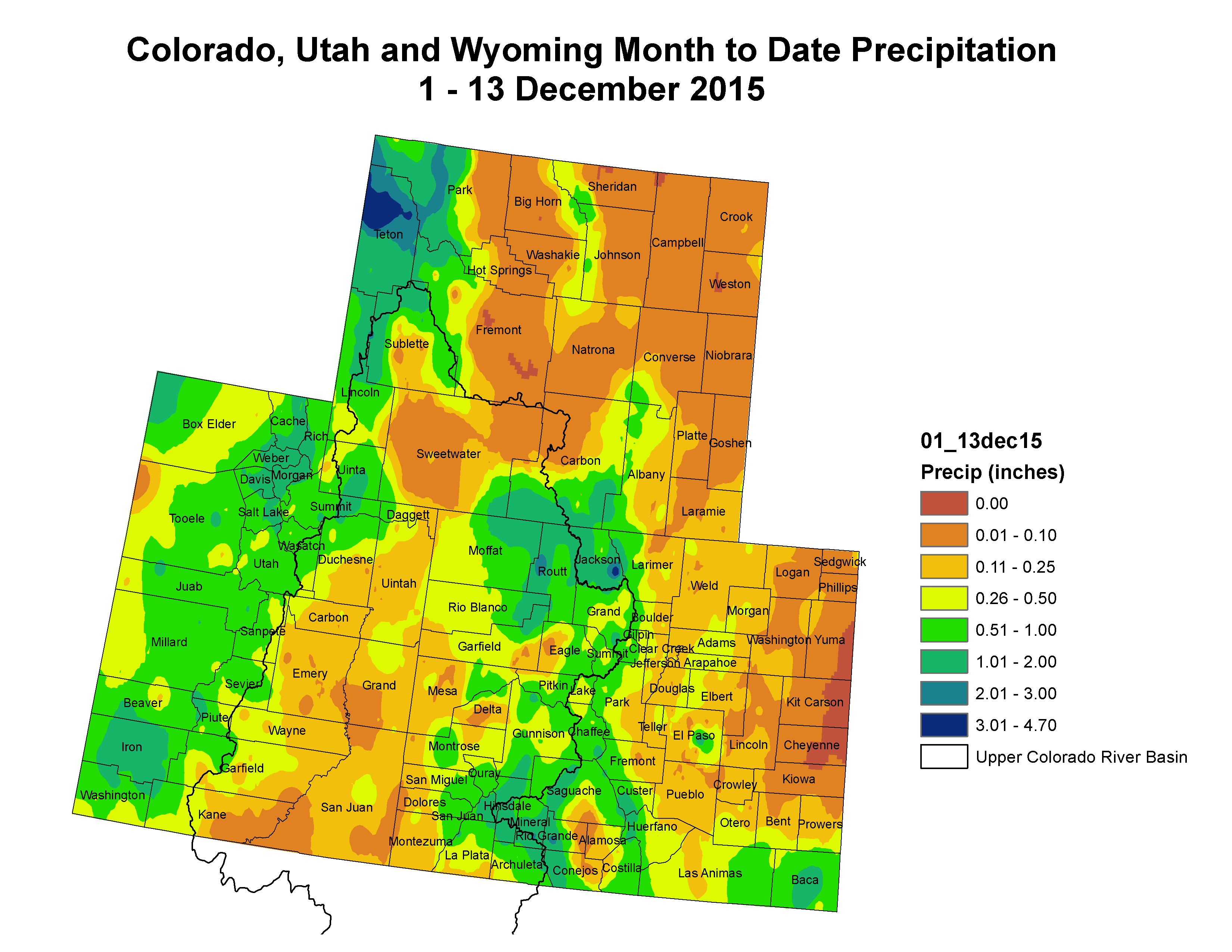




 East Fork Jemez River Valles Caldera New Mexico via the Associated Press
 A forested lava dome in the midst of the Valle Grande, the largest meadow in the Valles Caldera National Preserve
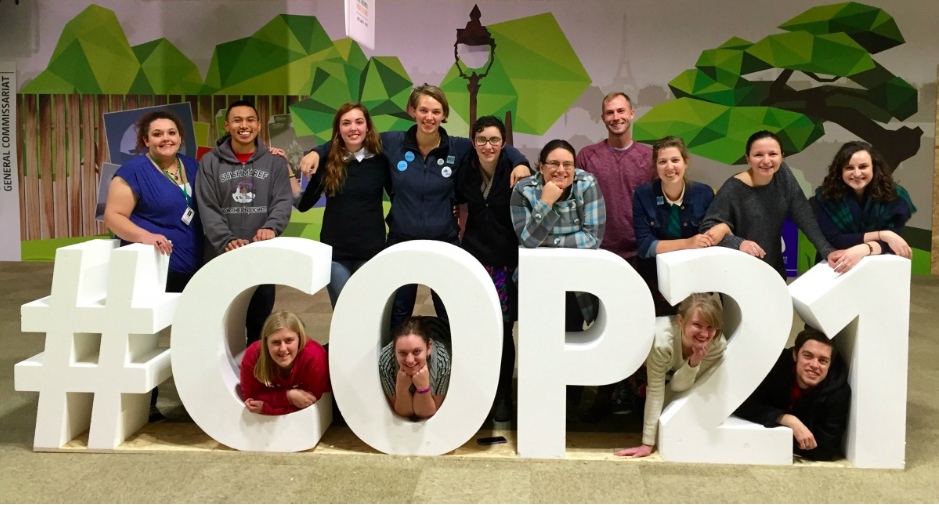

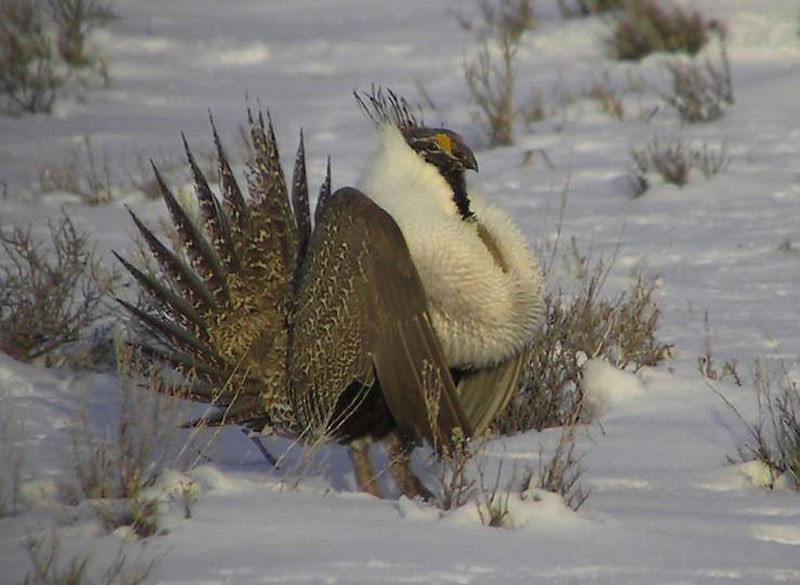
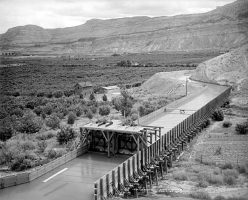


![The Edgar mine, the Colorado School of Mines Experimental Mine, is a contemporary to that era. In the 1870s, it produced high-grade silver, gold, lead and copper. Today, as an underground laboratory for future engineers, it produces valuable experience for those who are being trained to find, develop, and process the world's natural resources. Photo via http://inside.mines.edu/Mining-Edgar-Mine [Colorado School of Mines]](https://coyotegulch.blog/wp-content/uploads/2015/12/undergroundclassroomedgarmineschoolofmine.jpg)

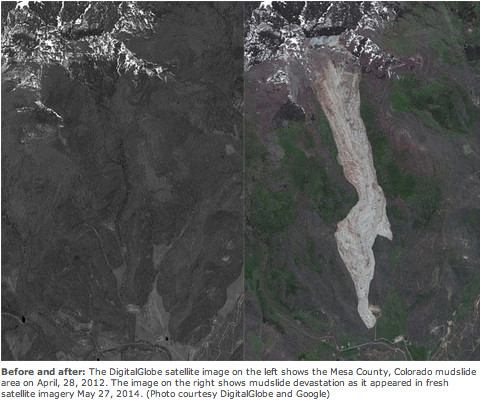





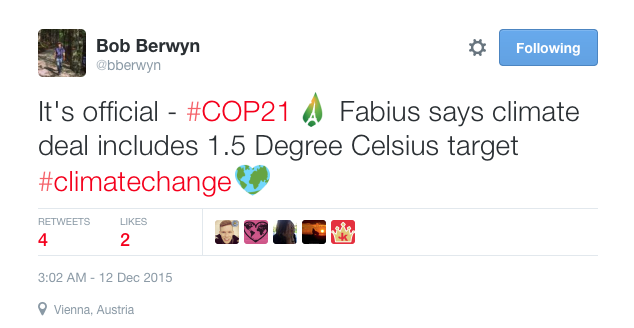


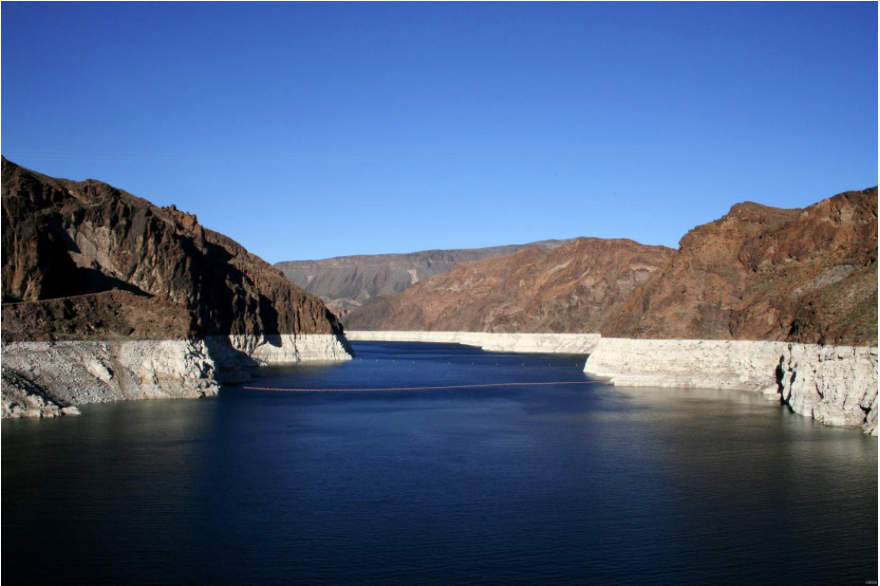
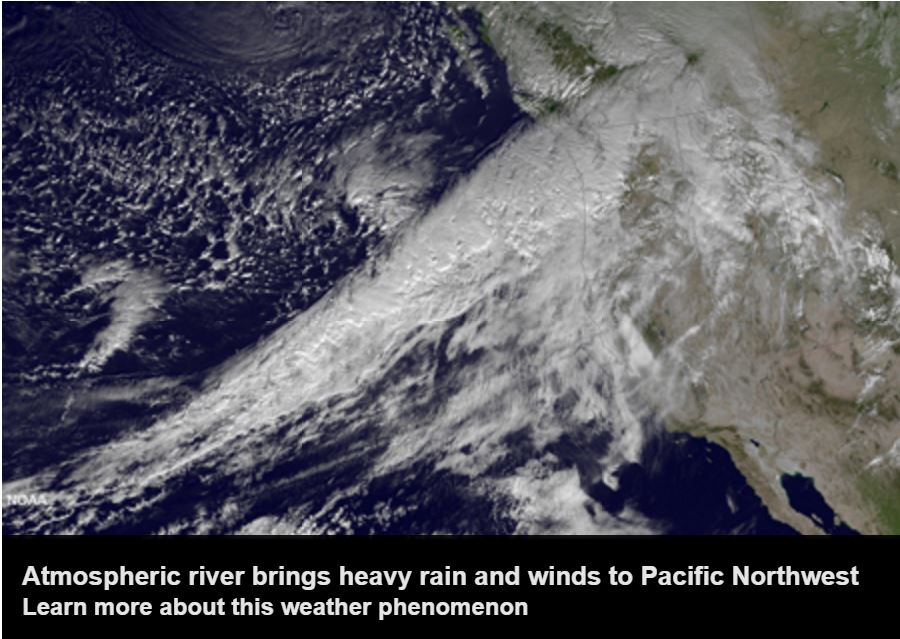

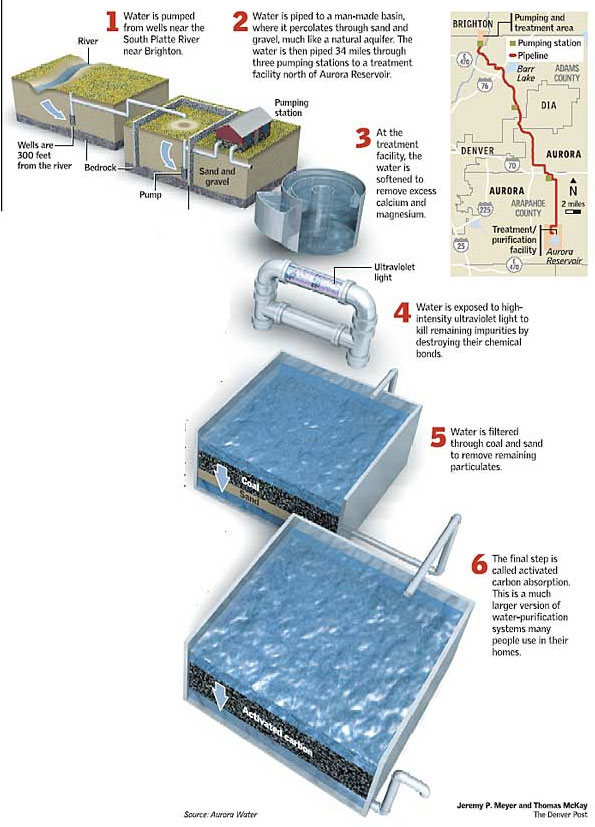
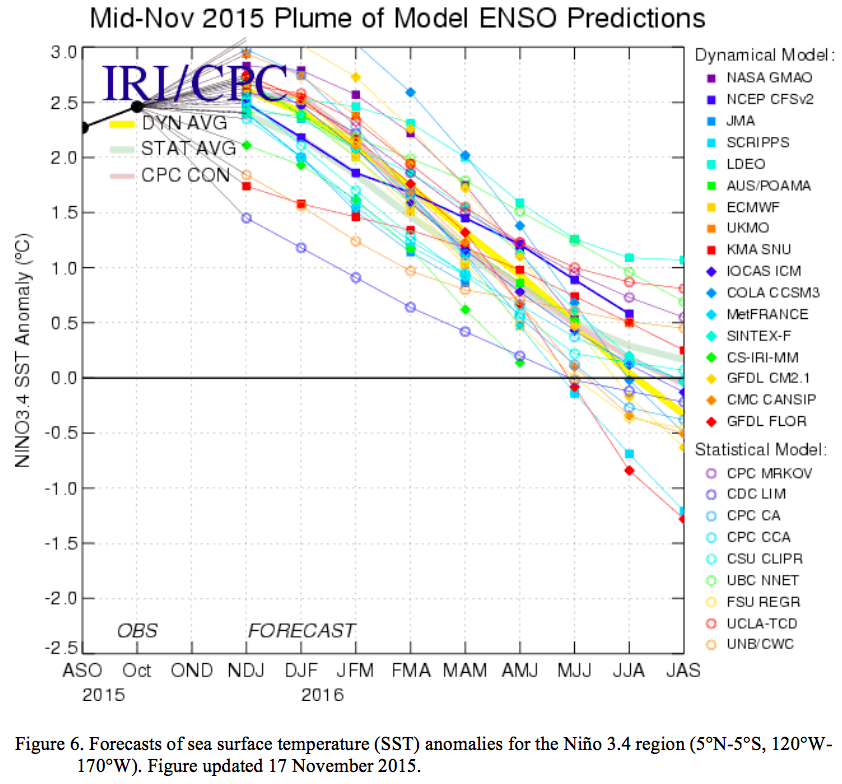






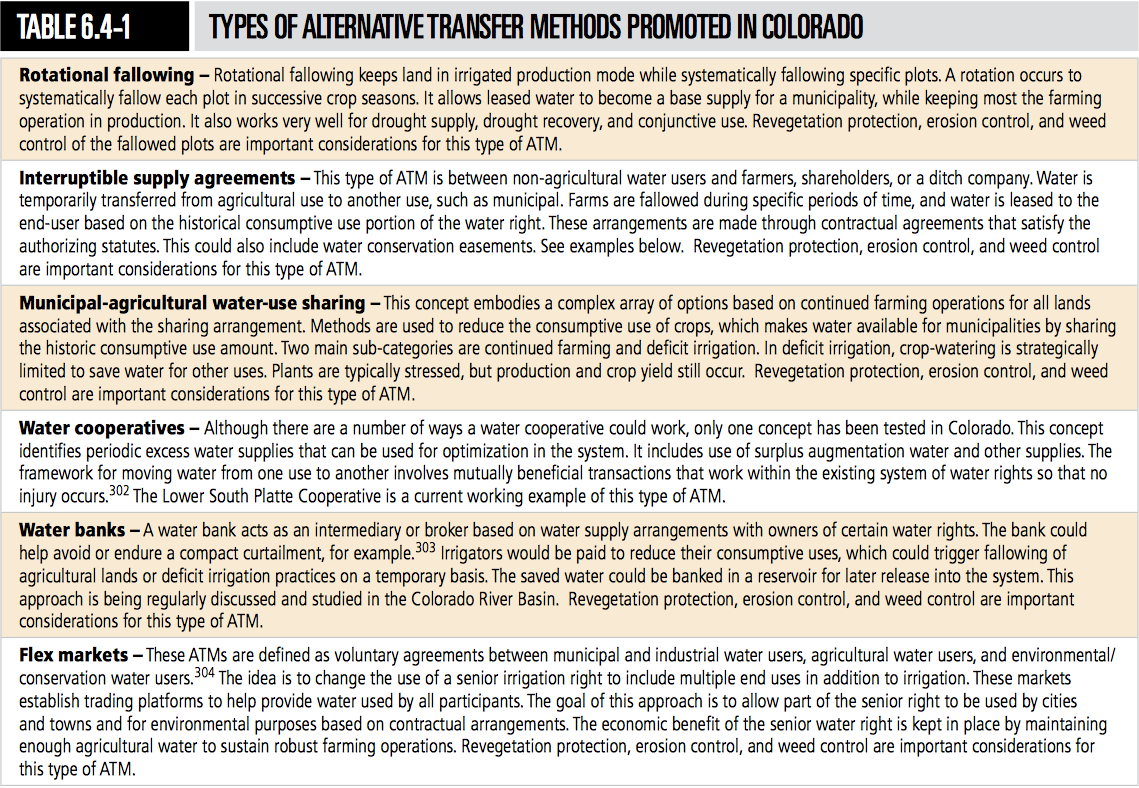
![This image was taken during the peak outflow from the Gold King Mine spill at 10:57 a.m. Aug. 5. The waste-rock dump can be seen eroding on the right. Federal investigators placed blame for the blowout squarely on engineering errors made by the Environmental Protection Agency’s-contracted company in a 132-page report released Thursday [October 22, 2015]](https://coyotegulch.blog/wp-content/uploads/2015/10/goldkingminespill1057am08052015viaepa.png)