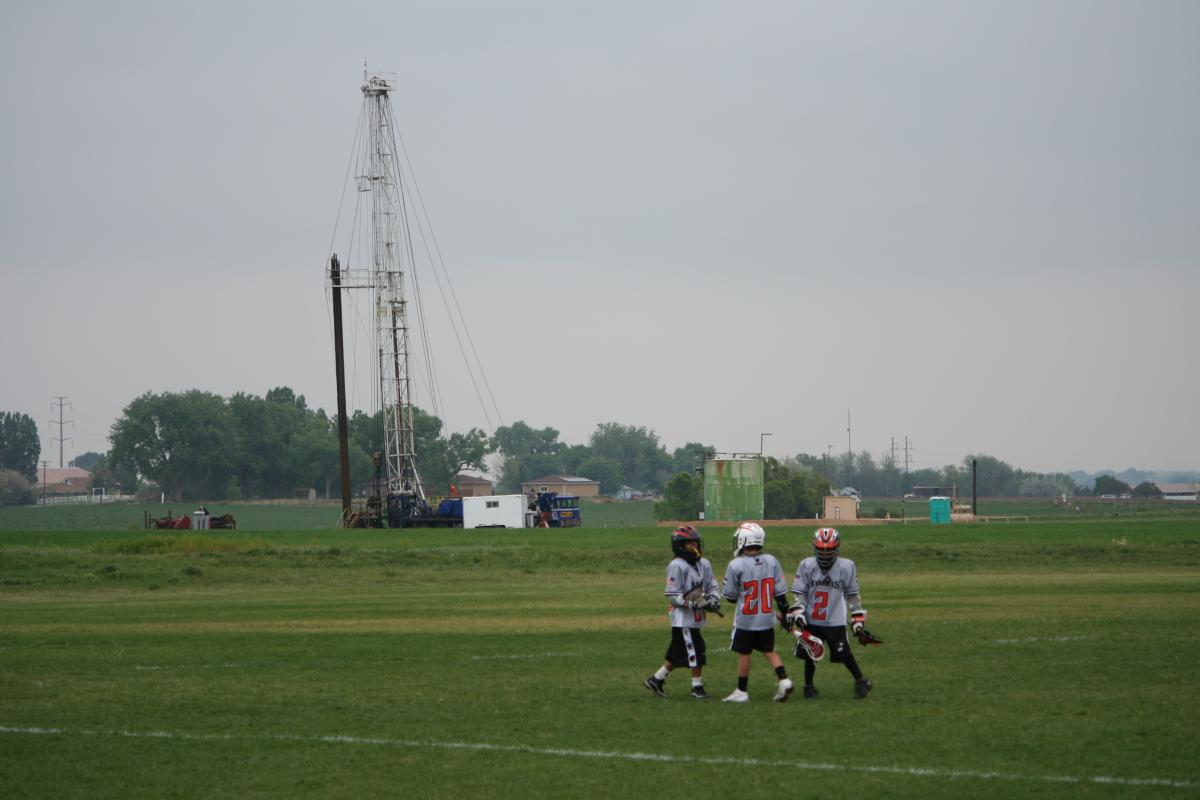
From email from the Colorado Oil and Gas Conservation Commission (Todd Hartman):
The nine-member Colorado Oil and Gas Conservation Commission (COGCC) today approved new rules that amplify the role of local governments in siting large oil and gas facilities near communities and further bridge the regulatory roles between state regulators and local jurisdictions.
The regulations address two recommendations from the Governor’s Oil and Gas Task Force. Specifically, the rules will:
Provide earlier notice to local governments and opportunity for local officials to work with operators on the location of large oil and gas facilities adjacent to communities.
Require additional mitigation measures and best management practices at these locations to address the potential impacts of oil and gas development activities.
Require operators to share information with municipalities about future oil and gas development plans to encourage discussion and improve planning for both parties.
Monday’s decision followed extensive public involvement, including three and a half days of testimony on the proposed rules dating to late last year, three stakeholder meetings in October and 11 statewide outreach meetings over the summer that included 39 local governments as well as several citizen and industry groups.“I appreciate the hard work of the COGCC staff and Commission to develop rules that implement the intent of the Task Force recommendations,” said Bernie Buescher, a Task Force member who supported the recommendations that led to the new rules. “The consultation and information sharing provisions reflect the desires of the Task Force to create more collaboration and communication between local governments and operators on large facilities near communities.”
“The new rules provide meaningful opportunity for operators and local governments to negotiate siting issues early in the permitting process,” said Kirby Wynn, Oil and Gas liaison for Garfield County and representative for a coalition of Western Slope local governments at the rulemaking. “This was an extremely challenging rulemaking with diverse, entrenched, opinions. COGCC is to be commended for finding balance between the needs of local governments to consult with industry on well pad locations while providing sensible time limits for that consultation to occur.”
“Going into this rulemaking, there were many expectations about its purpose, but the discussions among local and state governments, industry, and citizens have increased understanding on all sides of how local and state authority can be exercised in a complementary fashion to protect the public from oil and gas-related impacts,” said Barbara Green, an attorney specializing in local government issues and a participant in the rulemaking.
The new rules are tied to recommendations (Nos. 17 and 20) of the Governor’s Oil and Task Force. On February 24, 2015 a two-thirds majority of the Task Force approved nine recommendations. Two of those required action by other agencies and two required action of the General Assembly. Five others required action by the COGCC, but only two of those five required a rulemaking process by the Commission.
All documents, party statements, meeting audio and many other materials related to this rulemaking are housed on the COGCC website here: http://cogcc.state.co.us/reg.html#/rules/gtfrulemaking
The rules approved Monday are the latest activity in a years-long effort at COGCC to strengthen its oversight of oil and gas development in Colorado. Since 2011, the COGCC and the administration of Governor John Hickenlooper has crafted rules to lengthen distances between drilling and neighborhoods, reduce the effects of light, noise and odors, protect groundwater, cut emissions, disclose hydraulic fracturing chemicals, increase spill reporting, significantly elevate penalties for operators violating Commission rules and toughen requirements for operating in floodplains.
The Commission has also significantly expanded oversight staff, increased ease of access and volume of data available to the public, intensified collaboration with local governments, sponsored ongoing studies to increase understanding of impacts to air and water and adopted several formal policies to address health and safety issues brought about by new technologies and increased energy development in Colorado.
From The Durango Herald (Peter Marcus):
The Colorado Oil and Gas Conservation Commission left several sides of the debate – including environmental and industry interests – dissatisfied with certain results, suggesting that the process struck a compromise…
Under the rule-making that concluded Monday, operators are required to consult and register with local governments when building large facilities.
Perhaps the biggest issue was defining a large-scale facility. The definition for large facilities was connected to “urban mitigation areas,” which include areas within 1,000 feet of at least 22 homes, a school or a hospital.
Commissioners set the trigger for operators to consult with local governments in urban mitigation areas at eight new wells, or 4,000 new or existing storage barrels, not including water storage. The motion passed on a 5-4 vote.
No operations in La Plata County would fall under the definition, according to the La Plata County Energy Council. The county has only two urban mitigation areas, which were built after natural gas wells were drilled.
Some counties, including La Plata, pushed for counties to be included in the mandate to register with local governments, as opposed to just requiring registration with towns and cities. The COGCC ultimately included counties in the registration process.
But La Plata County Commissioner Gwen Lachelt, a Democrat, who co-chaired the governor’s task force, said counties are left with a limited voice.
“It doesn’t require companies to provide counties with the same information they will be required to provide municipalities,” Lachelt said. “This is an erosion of local control.”
Having dedicated six months to the task force, Lachelt was disappointed with the end result. She said the commission fell short of providing better protections for communities.
“This process did not achieve those goals,” Lachelt said. “We have much work to do in Colorado to protect communities and local control.”
Not all of La Plata’s three county commissioners, however, are concerned. Republican Brad Blake believes counties have had and continue to have a strong voice.
“I’m not thrilled with the outcome, or sad with the outcome, because I think we still have the authority to look into these issues,” Blake said.
He and the La Plata County Energy Council were disappointed that the county joined an alliance of several Front Range governments – led by Boulder – in calling for stricter rules. They wanted La Plata to represent its own interests.
“La Plata entered into rule making with counties that they have absolutely nothing in common with,” said Christi Zeller, executive director of the La Plata County Energy Council.
She also pointed out that there are existing memorandums of understanding with operators and a quarterly notification process in La Plata County.
“La Plata County operators have been the leaders in sharing information and participating in local land-use codes and complying with COGCC regulations for decades,” Zeller said.
Meanwhile, anti-fracking interests have proposed a slew of ballot proposals for this year, including banning fracking altogether and mandating larger setbacks of wells.
“It’s not just the wells or the drilling, or the noise and lights and traffic 24 hours a day,” said Shawndra Barry, with the newly-formed League of Oil and Gas Impacted Coloradans. “It is being disenfranchised with no due process.”
From The Denver Post (Emilie Rusch):
A contentious state rule-making process intended to give local governments more say in the siting of large oil and gas facilities in their communities ended Monday as divided as it began almost a year and a half ago…
But on the heart of the matter — how big a proposed oil and gas facility must be to trigger local government involvement — commissioners were split, just like the many industry representatives, environmental groups, local government officials and members of the public who testified during the marathon, day-long hearing.
Commissioners voted 5-4 in favor of defining “large scale” as eight new wells or 4,000 barrels of new or existing storage, not including water.
Tripping either threshold gives local governments a say on where the well pads can be sited and provides nearby residents with more stringent protections regarding noise, emissions, fire control, etc. — but only when the proposed facility falls within an urban mitigation area.
Urban mitigation areas, as defined by state law, are areas where oil and gas operations are within 1,000 feet of 22 or more homes or a large facility such as a school or hospital.
Whether the new rules, which will go into effect 20 days after publication by the secretary of state, are enough to head off future conflict remains to be seen.
Industry representatives and advocates of local control expressed disappointment immediately after the commission’s vote.
“We’re disappointed that the COGCC chose to go beyond the original task force recommendations, especially in these economic times with oil prices the way that they are and jobs suffering,” Colorado Petroleum Council executive director Tracee Bentley said.
“But we do very much appreciate the process that COGCC staff ran. It was a very thorough and very well-vetted process,” she said. “We’ll continue like we always have, to work with local governments and stakeholders.”
Oil and gas companies had advocated for a much higher 12-well or 9,600-barrel storage threshold.
Allied Local Governments — a pro-local control consortium representing Brighton, Broomfield, Erie, Fort Collins, Longmont and Loveland, and Boulder and La Plata counties — hoped the commission would err on the side of requiring more communication, triggering local input at 2,000 barrels of on-site storage including water, and 45,000 feet of well-bore length.
At the beginning of Monday’s hearing, the COGCC staff proposed 90,000 feet of well-bore length and 2,000 barrels of storage, not including water.
Larimer County resident Katherine Hall, who testified in favor of local control, said she would not be surprised if a citizen-initiated measure ended up on November’s ballot.
“The final outcome of the rule making does not go far enough to ease the concerns of Colorado citizens,” Hall said.