Today is World Water Day 2017

World Water Day, on 22 March every year, is about taking action to tackle the water crisis. Today, 1.8 billion people use a source of drinking water contaminated with faeces, putting them at risk of contracting cholera, dysentery, typhoid and polio.

The Sustainable Development Goals, launched in 2015, include a target to ensure everyone has access to safe water by 2030, making water a key issue in the fight to eradicate extreme poverty.

In 1993, the United Nations General Assembly officially designated March 22 as World Water Day. World Water Day is coordinated by UN-Water in collaboration with governments and partners.

Find out more about this year’s theme: wastewater.

The American West from the air — @publicbooks @EcoFlight

From Public Books (Laura Pritchett):

I recently found myself 1,500 feet above ground, traveling at 180 mph. When I wiped away the breath-mist from the window, I could see the American West in the chill of November: snowy mountain ranges, high alpine, high desert, waves of blue mountains, the shocking red rocks of Utah, the undulations of landscape as it bore out its transformation from range to basin and back again. If I peered closer, the details revealed themselves: the way snow had blown itself into watersheds, the paths I’d hiked winding up mountains, the glint on the curves of some of the nation’s best cutthroat trout streams.

I also saw the unbeautiful: spiderwebs of fracking roads, missing mountainsides, uranium mines, orange ponds for storing tailings and dust, stands of felled trees, the white puffs and yellow haze from coal-fired power plants.

My ticket to this view was a program called “Flight Across America,” which gives college-age and early professional folks the chance to see the West from the air. It’s a program of EcoFlight, a nonprofit dedicated to advocating for environmental issues from the air. Ecoflight was started by Bruce Gordon (good friend to the late John Denver, another pilot-conservationist) 13 years ago; since then, EcoFlight has flown politicians, conservation groups, media, scientists, and celebrities.

In three small Cessnas, we took off from little airports in Colorado, Utah, New Mexico: Grand Junction, Farmington, Cortez, Durango, Moab, Walden. We crammed into these 1970s-era planes with recording gear and notebooks and cameras, with hats and gloves, with headsets for communicating both within the plane and to the other planes, and with curiosity.

Below, we saw Colorado, Utah, New Mexico, Wyoming; saw the Navajo nation, site of the most polluting coal-fired power plant in the United States; saw the West’s many rivers and diversions; saw the Roan Plateau of western Colorado, a major drilling site. We flew over the proposed Hermosa Wilderness Area in southern Colorado; we camped in freezing temperatures at the Hovenweep National Monument near the ruins of the ancestral Pueblo; we hiked in the heat of Moab and in a blizzard at the Maroon Bells. We also met with an array of experts representing Colorado’s politicians, ranchers, mountain bikers, conservationists, and photographers.

The amount of information we absorbed from our pilots and guest speakers was immense. But perhaps the most important discovery—for those of us who hadn’t flown like this before—was the simple but essential confirmation that the landscape is a whole. Despite the state lines, designations, management agencies, political jurisdictions, and roads, the planet Earth is the planet Earth, a continuous entity. As the snowy peaks morphed into plateaus and into high desert, it was clear that the natural world does not segment or cut herself up at all…

Every day, we witnessed yet more instances of ecological and political interconnectedness; each night, the students would gather around and discuss the questions these examples raised: How can we see the West as a whole, and act accordingly? And how does one action influence others? Indeed, was this very trip culpable in some way? Was using up fuel to see these areas worth it? When I posed that question to Bruce Gordon, the program founder, he said, “That’s always a tough question, but we do our best to offset our carbon footprint as much as possible through various carbon savings in other areas. We work diligently to minimize flight times. We ensure that on each and every mission the value added of empowering our passenger participants and the subsequent outreach is worth the cost in adding to a carbon footprint. We aren’t against oil and gas, but we feel it can and should be done properly, and there are some places it just shouldn’t be done.

#Runoff news: Melting #snowpack = start of whitewater season on the Dolores River, 2,000 cfs McPhee release planned this season

Ponderosa Gorge, Dolores River. Photo credit RiverSearch.com.

From The Cortez Journal (Jim Mimiaga):

Flows on the upper Dolores River above McPhee Reservoir were at 1,000 cubic feet per second (cfs) as of Sunday.

Below McPhee Dam, a 60-day whitewater release is planned, with initial ramp-up of 400 cfs per day starting on April 11. By April 16, rafting flows will reach 2,000 cfs, and stay there for 30 days.

In the third week of May, managers will release flushing flows of 4,000 cfs for several days to provide ecological benefits to the river. The high flows mimic a natural spring hydrograph, and benefit the river by scouring the channel, redistributing cobbles for fish spawning and improving pool habitat for native fish species. Flood-plain inundation also helps generate native vegetation growth by spreading seeds beyond the main channel.

After the spike in flows, the river will return to 2,000 cfs for the Memorial Day weekend, with ramp-down of 400 cfs per day expected in early June…

Natural flows at Slick Rock Canyon
Even without the dam release, low-elevation snowmelt has already boosted river flows on the Slick Rock to Bedrock section to 600 cfs and higher, enough for a canoe, kayak or small raft. The popular 50-mile section features Class II and III rapids in remote red-rock canyon country…

The main Lower Dolores River boating run stretches for 100 miles through winding, red-rock canyons interspersed with rapids ranging from Class I to Class IV, including the famed Snaggletooth Rapid at mile marker 27. The Lower Dolores River is considered one of the premiere multiday boat trips in the nation when it has enough water to run. No permit is required.

In the past, when there was a whitewater release, McPhee Reservoir managers targeted 800 cfs for as long as possible below McPhee Dam. But after hearing from boaters in the past few years, the release level was adjusted to the preferred 2,000 cfs flow whenever possible.

“The water managers have made a huge effort to listen to the boating community,” said Sam Carter, of the Dolores River Boating Advocates.

For updates on the whitewater release schedule, go to http://doloreswater.com/releases/ The next update will be April 5. Once the spill begins, regular updates will occur on Mondays and Thursdays.

Dolores River Canyon near Paradox

Meanwhile, the higher flows are an opportunity for scientists to study river ecology. Here’s a report from Jim Mimiaga writing for The Cortez Journal. Here’s an excerpt:

Biologists with Colorado Parks and Wildlife will do fish counts on native and non-native populations, and conduct habitat improvement measures.

The Nature Conservancy, Fort Lewis College and American Whitewater will be studying geomorphology, benefits of flushing flows and recreational boating conditions…

“We have a lot of opportunity this year for fish sampling and monitoring,” said Jim White, a fish biologist for Parks and Wildlife, during a presentation Thursday at the Dolores Water Conservancy office.

His team will be studying population health of three native fish in the Lower Dolores: the roundtail chub, flannelmouth sucker and bluehead sucker.

One of their objectives is to measure the non-native small-mouth bass population, then work toward reducing them. Small-mouth bass are a threat to native fish, preying on their young and competing for food sources.

“We want to find out how widespread small-mouth bass are, especially if they are established in Slick Rock Canyon,” White said.

The bass have developed a stronghold upstream from Slick Rock Canyon to Snaggletooth Rapid. But the high runoff year has opened up an opportunity to try and take out small-mouth bass, White said. In mid-July, Parks and Wildlife plans a flush of 400 cubic feet per second (cfs) for 3-4 days from its fish pool reserves within McPhee Reservoir to disrupt the small-mouth bass spawn…

Parks and Wildlife manages a 32,000 acre feet “fish pool” in McPhee Reservoir for minimum base flows releases below the dam.

During a whitewater release, the fish pool is not debited, White said, giving fish biologists more flexibility in how to use it. They will tap into 2,600 acre feet of the reserve for the bass-removal flush.

Channel scour
The Nature Conservancy is sending a team of researchers to the Lower Dolores for 10-15 days, said Colorado chapter representative Celine Hawkins.

Their work plan includes studying sediment transport and flood-plain inundation, which is needed to widely distribute native seeds. They are especially interested in the impact 4,000 cfs peak flows will have on scouring the river channel…

The Nature Conservancy will be using drones to take aerial photos of the Lower Dolores before and after peak flows to track changes and compare them to past years.

They are focusing monitoring efforts at Disappointment Creek, Dove Creek Pumps, Big Gypsum Valley and Bedrock.

Students at Fort Lewis College will be conducting ecological monitoring on the river as well, including on the alluvial groundwater aquifer…

2016 study results on Lower Dolores
Colorado Parks and Wildlife shared results of a 2016 fish study on the Dolores River.

A cold-water fishery sampling below the dam showed two-thirds brown trout and 16 percent rainbow trout.

Algae due to infrequent flushing flows is abundant in the 12 miles of stream immediately below the dam. There is a concern it could have a negative impact on fish.

In June, the 20-mile Ponderosa Gorge section (Bradfield Bridge to Dove Creek pump house) was surveyed. Of the 180 fish caught, 73 percent were brown trout, and roundtail chub was the second-most abundant. No small-mouth bass were found in the gorge.

Sampling at the Dove Creek pump station showed roundtail chub were holding steady, in part because they are an adapted pool species. Bluehead and flannelmouth suckers were in relative low abundance, and depend more on a ripple environment. In 1992, fish sampling showed much higher numbers of native fish species, the study noted.

“The impact of flushing flows in (2016) was evident, and backwaters looked cleaner,” according to study results.

The past two years, Parks and Wildlife has been stocking bluehead suckers in the Lower Dolores. The fish historically relied on Plateau, Beaver and House creeks for spawning areas, but the dam and reservoir altered the river so suckers cannot reach those ephemeral streams. In 2016, 4316 bluehead fingerlings were released downstream of the Dove Creek Pump house. In 2013, a pit-tag array recorded one flannelmouth traveled 264 miles.

Dolores River watershed

The “Water Values” podcast: John Fleck on the Importance of Water Journalism and Western Water Myths

Click here to listen to the podcast from David McGimpsey:

John Fleck, Director of the University of New Mexico’s Water Resources Program, author and retired water journalist, joins The Water Values Podcast for a discussion of water journalism and why it (and other areas of journalism) are so important to a citizenry understanding their government. He also delves into his journey where he flipped from seeing a water apocalypse to seeing a world where adaptation and collaboration have produced tremendous water success stories. John is an excellent story-teller, so you don’t want to miss this one!

In this session, you’ll learn about:

  • Why water journalism (and journalism in general) is imporant
  • Water journalism’s role in educating people about water governance
  • The cultural awareness of water in arid regions
  • The roots of the West’s apocalyptic water tradition
  • Why John ultimately renounced the apocalyptic water vision
  • The water success story of Albuquerque
  • John’s thoughts on the West’s growth with water as a limiting factor
  • John’s thoughts on our ability to conserve water
  • John’s thoughts on water and agricultural uses
  • How Colorado River politics have changed over the years
  • Who water negotiations in the West need to bring to the table
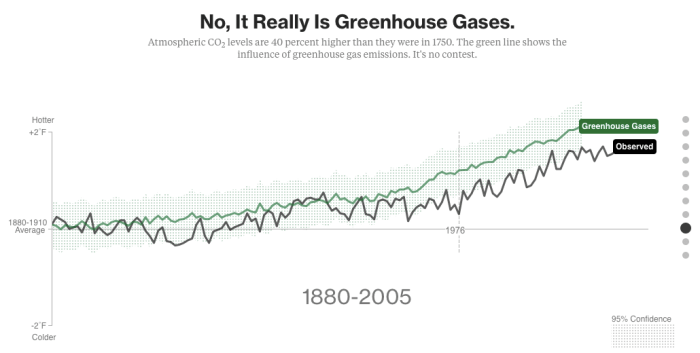
  • #ClimateChange: What’s really warming the world? — Bloomberg

    Here’s a great animation showing the components of global warming and attributing the current warming to various causes. It’s a nice summary based on NASA data. You’ll have to click through to observe the animation.

    Poudre River Forum: Powerpoints, video footage, program and more now available

    CLick here to go to the website to view the materials. From the website:

    Nearly 280 people registered to learn more from and about the diverse stakeholders of the Poudre River, and to explore the continuing challenges and opportunities for collaboration.

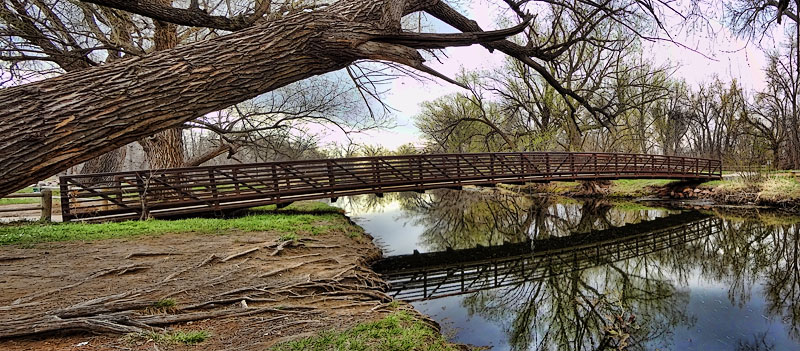
    Poudre River Bike Path bridge over the river at Legacy Park photo via Fort Collins Photo Works.

    Webcast: Stormwater Contaminants of Emerging Concern — @theCWPInc

    Emerging contaminant transport. Graphic via the USGS.

    Click here to register for the webcast from The Center for Watershed Protection. Here’s their pitch:

    Newly recognized contaminants of emerging concern (CECs) include a broad list of synthetic or naturally occurring chemicals (e.g., pharmaceuticals, synthetic fragrances, detergents, disinfectants, plasticizers, preservatives) or any microorganisms that have the potential to cause adverse ecological and(or) human health effects. Advances in our ability to detect and study CECs in the environment have shown that they are widespread throughout the aquatic ecosystem, and some studies are showing adverse impacts to aquatic organisms and public health. While a major source of CECs is POWT discharges, illicit discharges containing sewage into the municipal separate sewer system is a major pathway for CECs to be delivered to urban and suburban stream systems. Illicit discharge detection and elimination (IDDE) systems have the potential to be effective tools to mitigate the effect of CECs on the environment. This webcast focuses on CECs and the potential for IDDE programs to reduce their impacts.

    2017 #coleg HB17-1273: @wradv — Build It Water-Smart From the Start in Colorado

    From Western Resource Advocates (Drew Beckwith):

    New legislation can help fill the state’s water supply gap and close a loophole that allows new home developments to waste water.

    Current Colorado law contains a loophole that allows new home developments to waste water. In a state with already strapped water resources, that’s not OK. But new legislation that Western Resource Advocates is supporting will help ensure that all new development implements common-sense conservation actions and is built water-smart from the start.

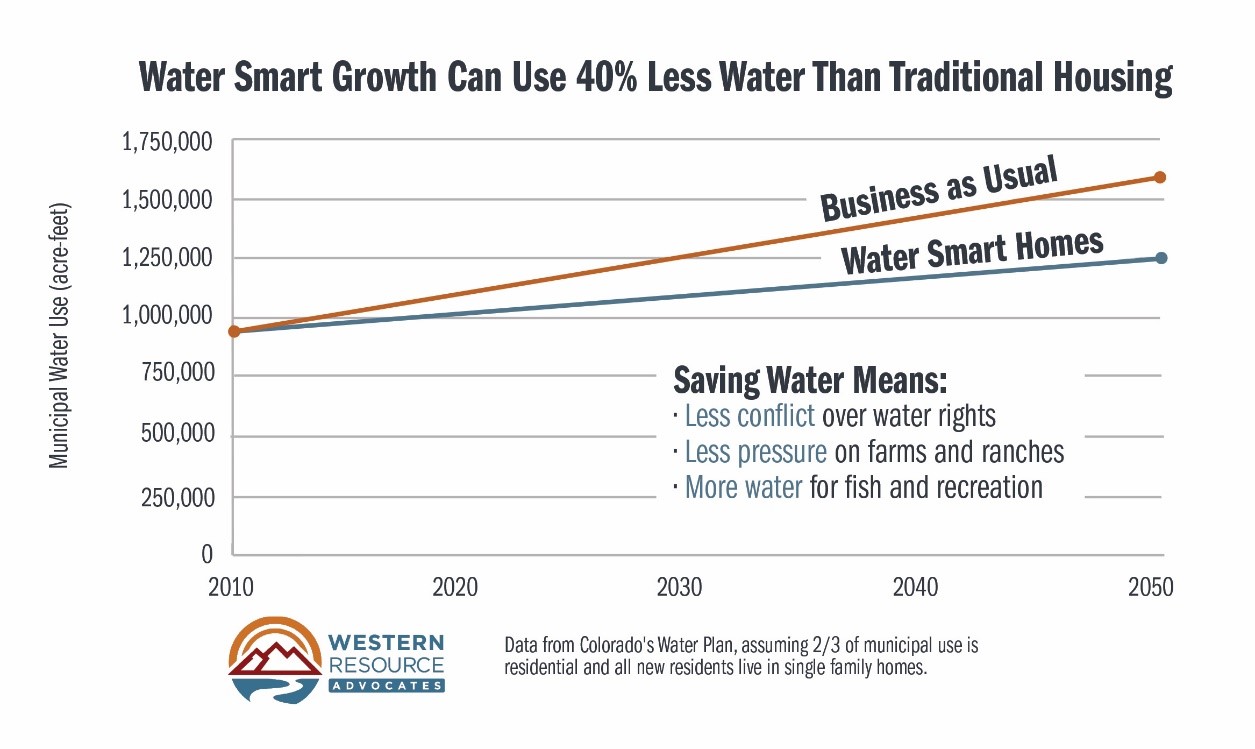
    Some background to set the stage on why this legislative change is needed: Due to major population growth and climate change, Colorado is facing an impending water supply gap. If we continue with business as usual, our communities will need more water than they currently have. This gap can be best prevented by increasing water conservation, reusing water, and the voluntary and compensated sharing of water supplies between agricultural and urban water users. Fortunately, water conservation is a priority tool in Colorado’s Water Plan, and doing more conservation will lessen potential conflicts between new urban/suburban growth and existing water users, decrease the pressure to transfer water from farms and ranches, and keep more water in rivers for fish, recreation, and tourism.

    Unfortunately, water conservation is not being considered consistently statewide by the local governments that determine what new home developments will look like. [HB 17-1273: Real Estate Development Demonstrate Water Conservation], sponsored by Representatives Chris Hansen (D – Denver) and Hugh McKean (R – Loveland), will require new housing tract developers to present how the homes they plan to build will incorporate water conservation measures as part of gaining permit approval to move forward.

    Building “water-smart from the start” is one of the easiest, cheapest, and most politically viable ways to reduce future water needs. There are a multitude of affordable conservation actions available for new development, including high-efficiency indoor water fixtures like toilets and shower heads, efficient outdoor irrigation systems, and Colorado-friendly landscaping choices. But since current law does not require new home developments to even list the water-wise actions that will be implemented, these cost-effective options for homeowners are sometimes left out. Local governments need information on what water conservation actions are going to be used in new housing in order to make better-informed decisions about whether the proposed development is right for their communities.

    The upfront planning cost for including conservation strategies in new home development is minimal. And importantly, developers using water-smart planning can save money on the cost of water they are required to purchase from the local water provider or obtain from other sources.

    Even better news for future homeowners is that this legislation will help save people money. Residents living in water-smart homes will pay less on their water bills because water-smart new growth can use 40% less water annually than comparable development from a decade ago.

    A recent poll shows overwhelming support, with 77% of Colorado voters polled saying they prefer using our current water supply more wisely as a means to address the state’s water needs. If you’re one of them, sign up for our e-updates so we can keep you informed on the right time to contact your elected representative to support HB 17-1273!

    #Drought news: “I’ve never seen it like this before…There is no snow at all up there” — Jason Morley

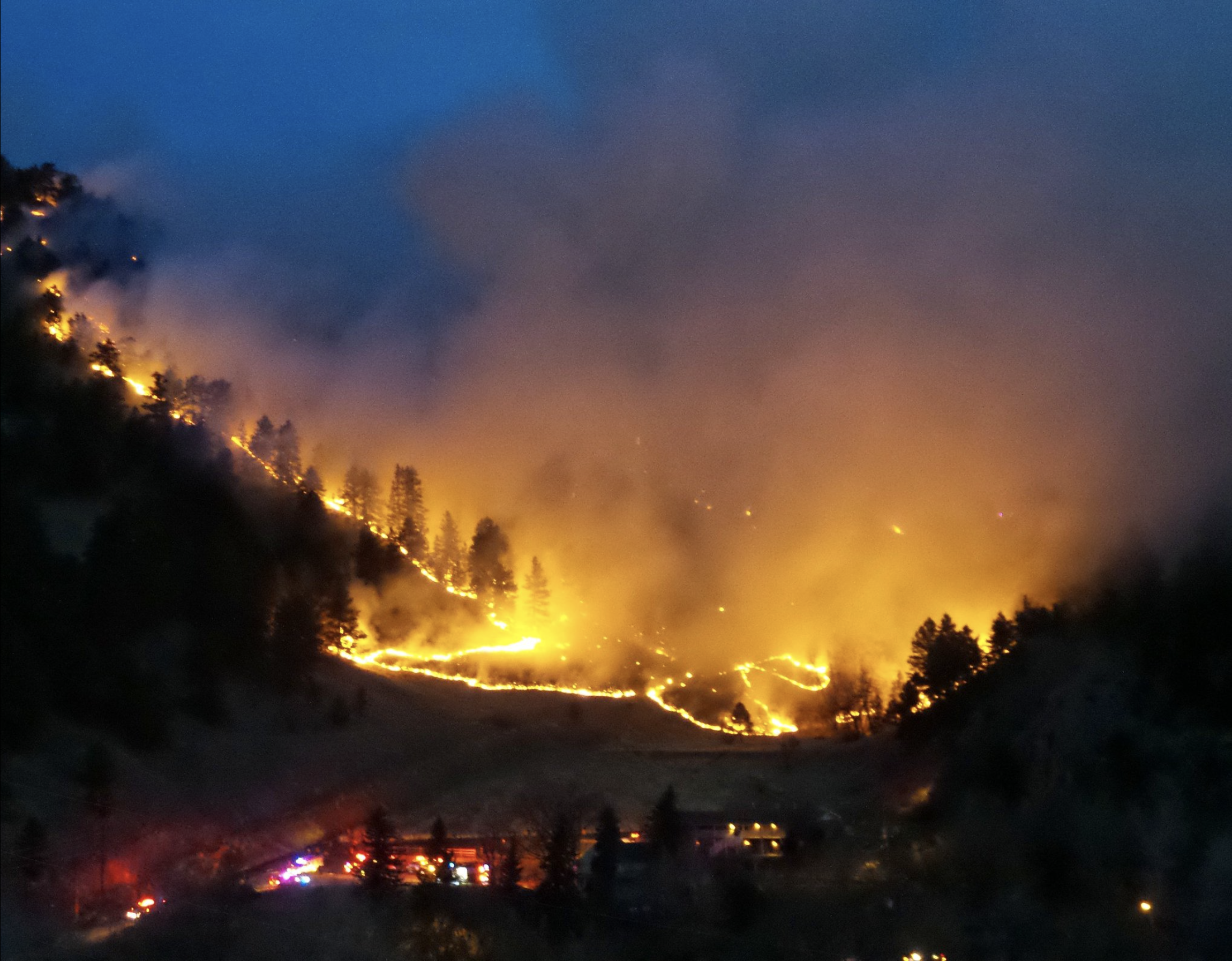
    Early morning shot of the #SunshineFire at Settlers Park by @samuelmforsyth via Twitter.

    From The Longmont Times-Call (Mitchell Byars):

    The [Sunshine Fire] grew to 74 acres from the 62 acres reported on Sunday, but crews were able to reach 100 percent containment on the fire after 5 p.m., according to the Boulder Office of Emergency Management.

    The OEM tweeted that firefighters would continue to work overnight on hot spots and flare-ups.

    The high winds that fire crews were fearing overnight Sunday never materialized, and as a result firefighters were “comfortable” enough with where the fire was on Monday morning that they could lift the evacuations.

    Boulder OEM also said limiting access to residents was lifted at 7 p.m. Monday after firefighters and their equipment was out of the area.

    The fire prompted mandatory evacuations for 426 homes and pre-evacuation notices for another 836 homes. The cost of fighting the fire has been estimated at $500,000 so far, and there were 178 firefighters and 50 fire trucks on scene Monday.

    Much of the air support from Sunday was not needed for a second day, as hand crews and a smaller helicopter capable of more accurate drops addressed hot spots within the fire.

    Boulder hotshot firefighter Jason Morley arrived on scene shortly after 9 a.m. Sunday and spent the day fighting the fire in rough terrain.

    “Our guys did a great job,” Morley said. “We’re there digging lines, attacking hot spots.”

    Morley said conditions Sunday in the canyon were brutal for firefighters and highly unusual for this time of year.

    “I’ve never seen it like this before,” Morley said. “There is no snow at all up there. If you picked up grass, it would just crumble in your hands.”

    Wagner said firefighters reported the conditions were more like June than March.

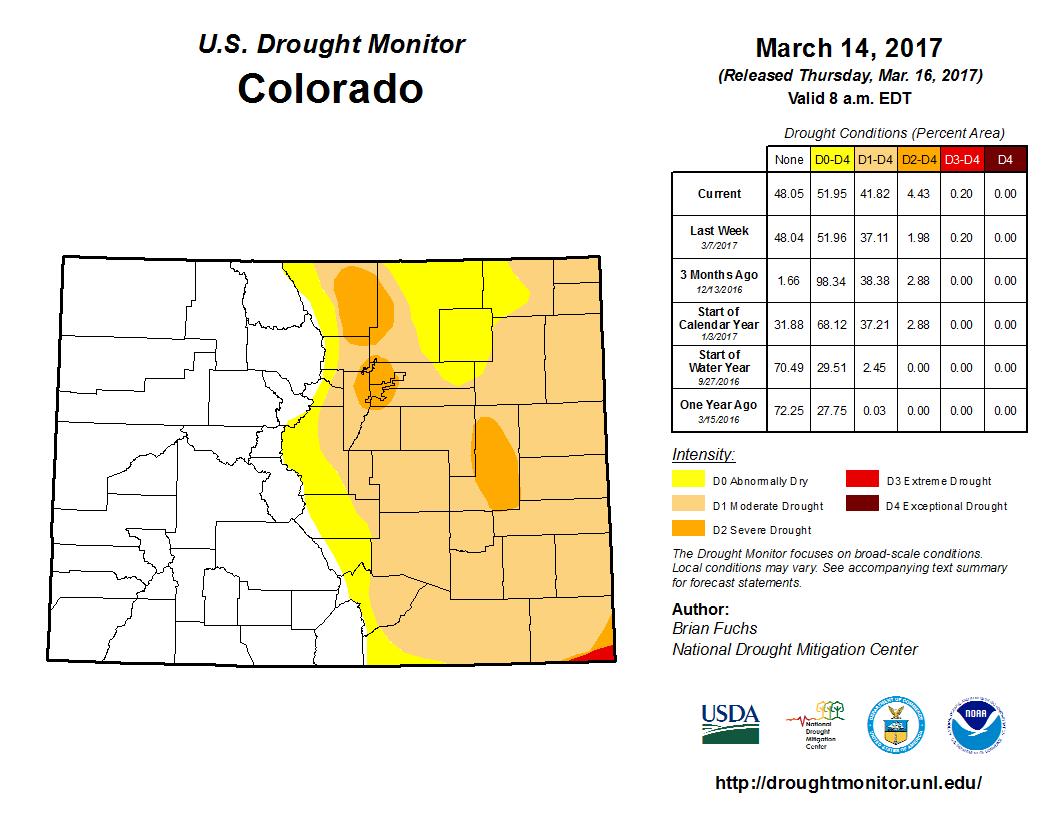
    West Drought Monitor March 14, 2017.

    #Snowpack news: Eagle River Valley snowpack drops, still above median

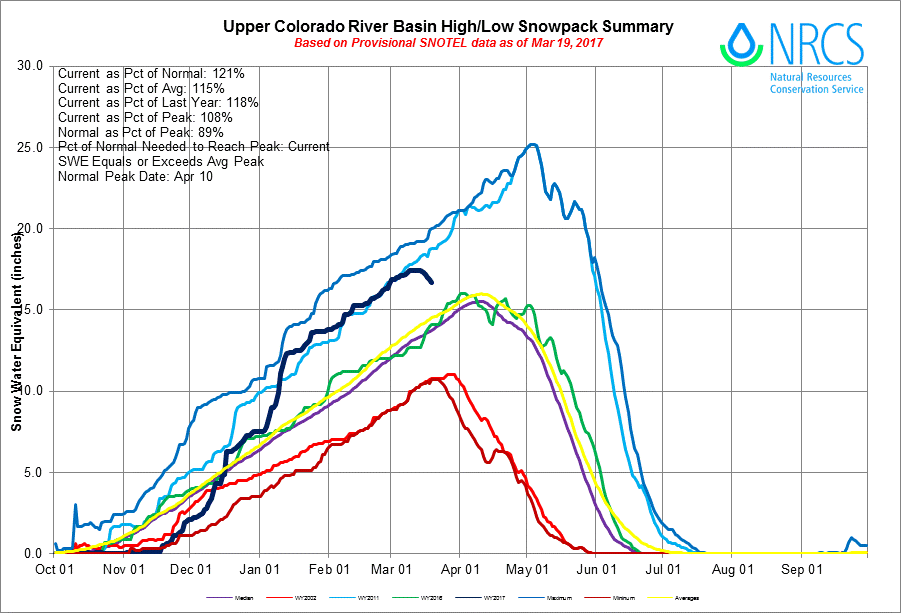
    Upper Colorado River Basin High/Low graph March 19, 2017 via the NRCS.

    From The Vail Daily (Scott Miller):

    After a warm, sunny start to March, Western Colorado may start to return to a more seasonal weather pattern this week.

    Jim Pringle, a forecaster at the Grand Junction office of the National Weather Service, said we could start to see those changes by Wednesday or Thursday of this week. That initial storm system could bring as much as an inch of precipitation to some parts of the Western Slope, Pringle said, adding that Vail’s moisture total won’t approach the peaks.

    Most of the moisture from the mid-week storm is expected to fall in the higher elevations of the San Juan Mountains and the Grand Mesa.

    Still, a quarter-inch of precipitation could bring a few inches of new snow, at least at higher elevations.

    The big change is set to come Friday, when the forecast brings snow and rain to virtually the entire state.

    Moisture will be especially welcome east of the Continental Divide. Wildfires have started to hit that part of the state, and the U.S. Drought Monitor website shows moderate drought conditions through essentially all of Eastern Colorado.

    Pringle said that Friday storm could bring several inches of snow to the Vail area.

    COOLER TEMPS WELCOME

    That snow will be welcome, both for play and our summer’s water supply.

    The U.S. Department of Agriculture’s graphs of snow water equivalent in the area show snowpack is still running significantly ahead of the 30-year median, thanks to plentiful snow from early December into February. But some of the snow measurement sites have shown erosion of the snowpack.

    The biggest drop in the past week has been at the snow measurement site on Vail Mountain. That site has changed in the past couple of years. The measurement devices are in the same spot, but the trees that once sheltered the equipment are gone, leaving the site exposed to sun and wind.

    The sun, along with daytime high temperatures well into the 40s, has eaten into the snow water equivalent at the Vail site. Snow at the site contained roughly 20.3 inches of water as of March 13. That number had fallen to 16.8 inches on Monday.

    The story is better at Fremont Pass, near the Eagle River’s headwaters. There, the snow water equivalent at the measurement site remained constant at 15.7 inches between March 13 and Monday.

    The snow fields on Vail Mountain, near Vail Pass and near Fremont Pass all serve as the area’s water storage. Lots of snow and a slow runoff season are critical to maintain domestic water supplies.

    At the moment, there’s a solid supply of water in all that snow.

    But in an email, Eagle River Water & Sanitation District Communications Manager Diane Johnson wrote, “These warm temperatures need to go!”

    Graphic via the Metropolitan Water District of Southern California.

    #Runoff news: Elk river streamflow way up with record #Colorado heat

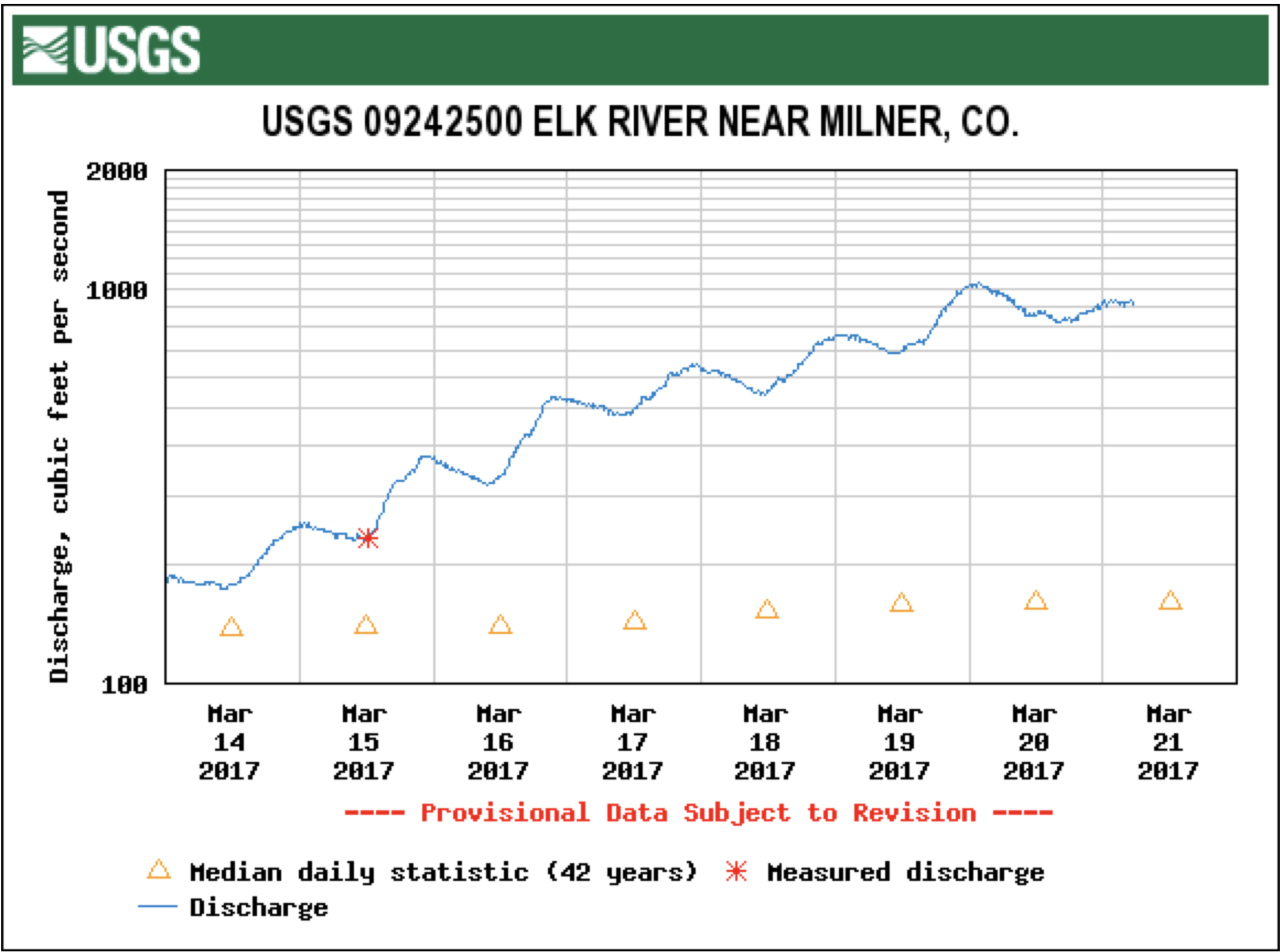
    Elk River near Milner gage March 21, 2017 via the USGS.

    From The Craig Daily Press (Tom Ross):

    “It’s crazy how high the flows are for this time of year,” Ashley Nielson, a senior hydrologist with the Colorado Basin River Forecast Center in Salt Lake City Utah, said. “I think we’re getting snowmelt at low and middle elevation and not at the higher elevations. But this is not something we expect this time of year.”

    The Elk is still well below flood stage, but the acceleration of snowmelt during a time when snowpack is typically increasing stands out from the norm.

    Flows in the river, which has its headwaters in the Mount Zirkel Wilderness Area northeast of Clark, hit a 24-hour peak of 1,050 cubic feet per second at 1:45 a.m. March 20, nearly doubling the previous record for the date, according to the U.S. Geological Survey. The previous record was 524 cfs, recorded in 2007. The median March 20 flow is 160 cfs.

    At the same time, the Yampa River was flowing through downtown Steamboat Springs at a rate of 408 cfs, well above the median of 150 cfs (in the 90th percentile range for the date), but significantly lower than the 1916 record for the date of 690 cfs.

    High flows in the Elk have been driven by snow melting under bright skies and daytime temperatures in the 60s, which have dominated the weather throughout the month. The National Weather Service reports the high temperature in Steamboat reached 70 degrees March 19, but a cooling trend is on the way.

    The Elk had calmed down to 896 cfs as of 9:30 a.m. Monday as it went through its diurnal cycle of rising and falling flow volumes. However, the River Forecast Center foresees the river will continue to rise to more than 1,000 cfs through March 23, when a cooling trend calms things down March 25 through 31 and the river could remain above 600 cfs.

    A pair of snowpack measurement sites operated by the Natural Resources Conservation Service confirm the record flows in the Elk are attributable to snowmelt above 9,000 feet, Nielson agreed.

    The Lost Dog site, at 9,320 feet of elevation on the edge of the Zirkel Wilderness, has lost 3 inches of snow water equivalent since March 16, leaving it at 113 percent of median for the date. The Elk River measuring site, at 8,700 feet, has also lost 3 inches of snow water equivalent in the same timeframe, and snowpack there stands at 93 percent of median.

    Nielson pointed to the Tower measuring site on the summit of Buffalo Pass northeast of Steamboat Springs as evidence that snowmelt has not begun at the highest elevations in the Park Range. The water content of the snowpack there, at 10,500 feet, has not changed more than a fraction of an inch since March 7.

    James Eklund to leave @CWCB_DNR, good luck from @CoyoteGulch! @COWaterPlan

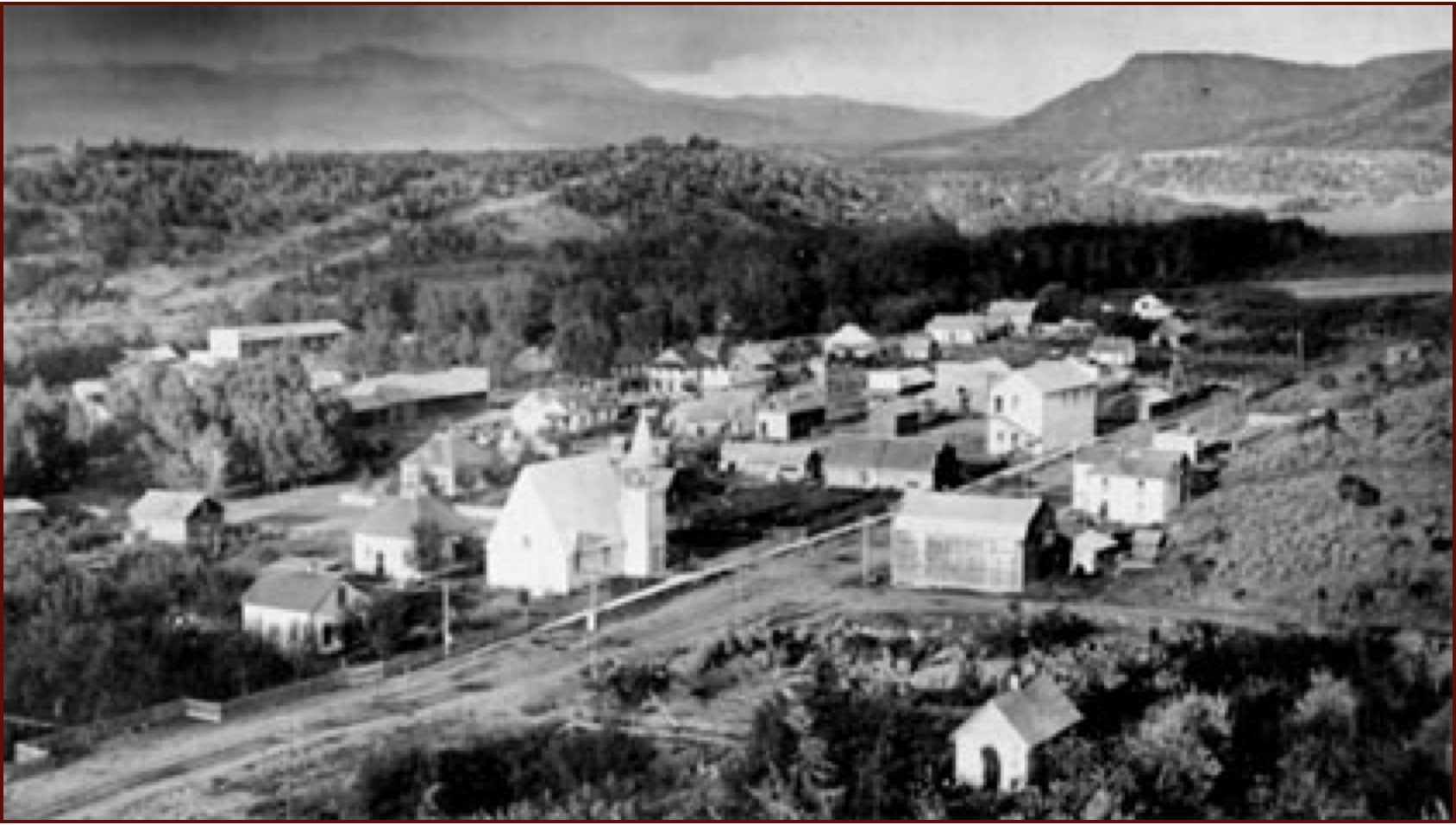
    Collbran 1906. Photo credit Charlie Koch via the Town of Collbran.

    From The Grand Junction Daily Sentinel (Dennis Webb):

    James Eklund, director of the Colorado Water Conservation Board, is stepping down this month to begin work as an attorney with the international law firm Squire Patton Boggs, which has a Denver office.

    Eklund has worked for the state for more than a decade. He initially did water work in the Attorney General’s Office before becoming senior deputy legal counsel to Gov. John Hickenlooper in 2011. He became director of the CWCB in 2013, putting him in charge of the state’s water policy and planning efforts. There, he led the agency’s creation of a state water plan aimed at identifying ways to address the gap between the state’s water supply and anticipated future demand.

    “Definitely that’s kind of the signature piece that I was able to work on,” Eklund said Monday. “The stars aligned. It was a perfect environment for that to really be successful.”

    He said the effort to get the plan adopted was driven by Hickenlooper’s “willingness to spend political capital on water where it hadn’t been spent before,” the grassroots roundtable groups in each of the state’s major river basins that helped develop the plan, and the drought that has beset the region for some 15 years.

    An important thing for Eklund was how the plan and a separate cooperative agreement reached between Denver Water and Western Slope entities addressed concerns over future development of Western Slope water by the Front Range.

    “Just as a Western Slope person it really made me proud to see that kind of leadership from the Western Slope,” he said.

    Eklund continues to have family ties in the Plateau Valley, where his great-great-grandparents homesteaded in 1888.

    He said he didn’t know whether his new work would involve Front Range water projects.

    “I hope to use my knowledge and skill set to move water infrastructure projects forward statewide. We are one connected state,” Eklund said, pointing to the improved relationships he believes have been achieved between the Front Range and Western Slope when it comes to water issues.

    Eklund said he will remain the state’s representative for negotiations on interstate and international Colorado River issues as long as Hickenlooper wants him to remain in that capacity…

    Jim Pokrandt, spokesman for the Colorado River District and chair of the roundtable for the Colorado River Basin, said Eklund was fair-minded and understood the viewpoints from both sides of the Continental Divide.

    “I thought the water plan was a victory and a lot of credit goes to his staff as well as to him,” Pokrandt said.

    Good luck James!

    @NOAAclimate: Assessing the Global Climate in February 2017

    Photo credit Pixbay.com via NOAA

    Here’s the release from NOAA:

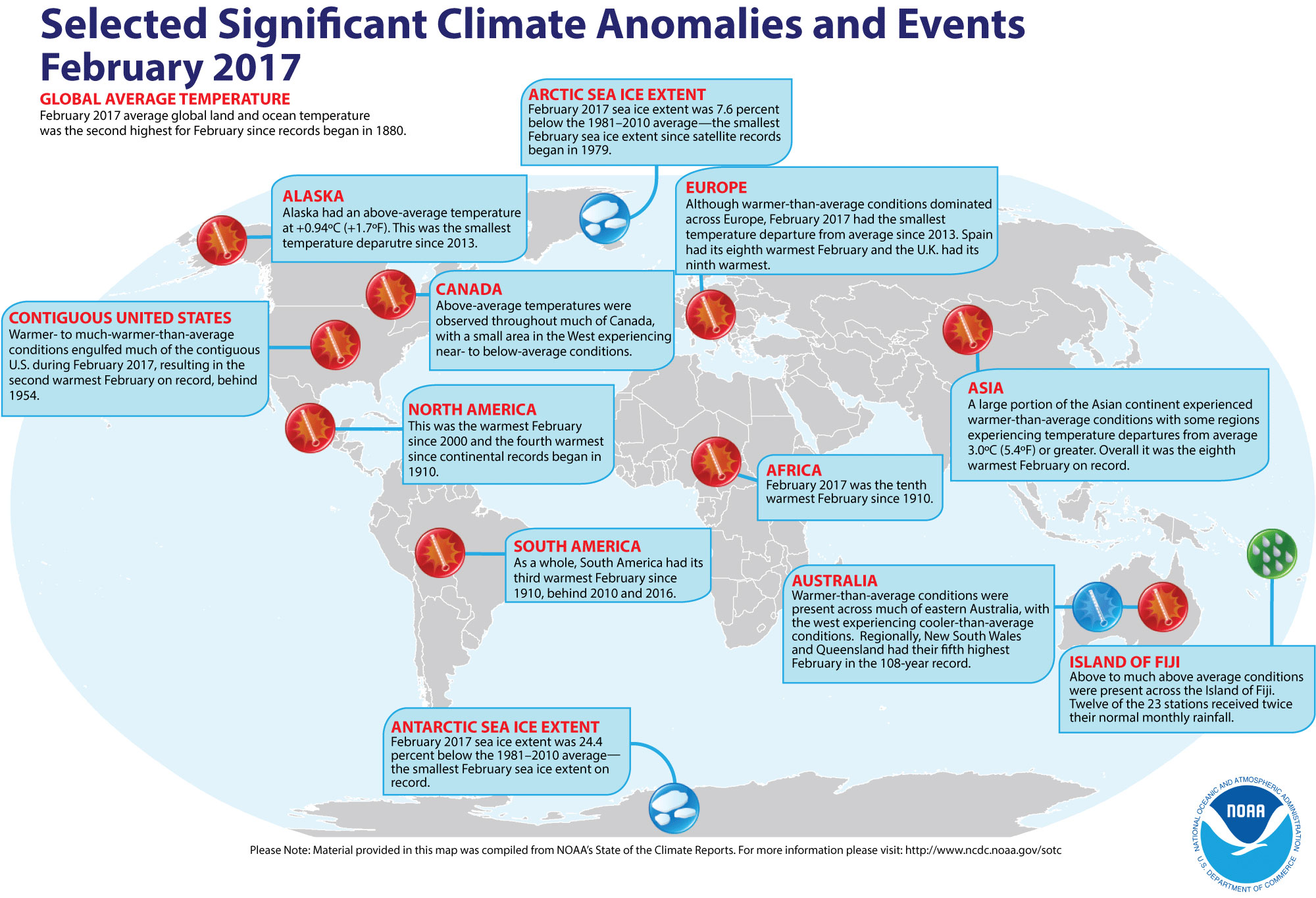
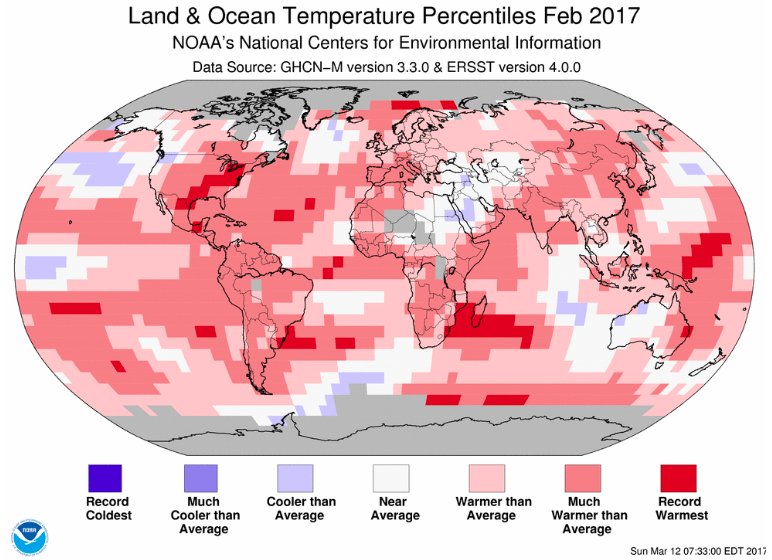
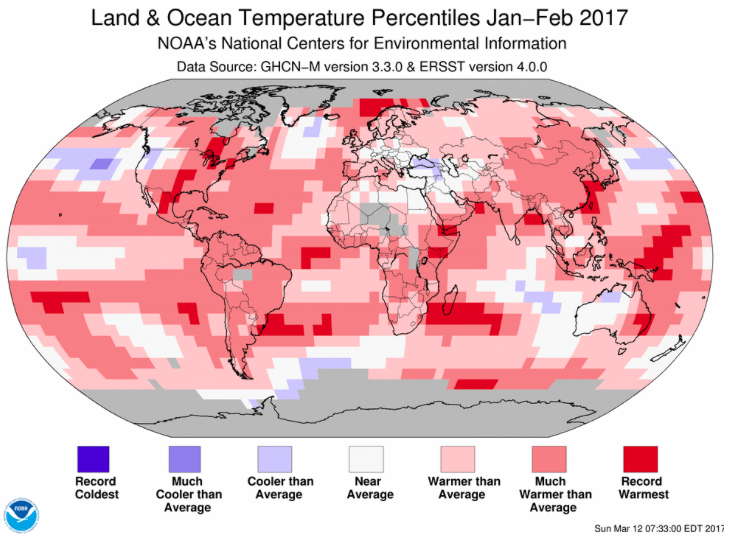
    The globally averaged temperature over land and ocean surfaces for February 2017 was the second highest for the month of February in the NOAA global temperature dataset record, which dates back to 1880. The December–February seasonal and year to date global temperatures were also second warmest on record.

    This monthly summary is part of the suite of climate services NOAA provides to government, business, academia and the public to support informed decision-making.

    February 2017

    Temperature

  • The February temperature across global land and ocean surfaces was 1.76°F above the 20th century average of 53.9°F. This was the second highest for February in the 1880–2017 record, behind 2016.
  • The February globally averaged land surface temperature was 3.20°F above the 20th century average of 37.8°F. This value was also the second highest February land global temperature in the record, trailing behind 2016.
  • The February globally averaged sea surface temperature was 1.24°F above the 20th century monthly average of 60.6°F—the second highest global ocean temperature for February in the record, behind the record year 2016.
  • Snow Cover and Sea Ice

  • According to data from NOAA analyzed by the Rutgers Global Snow Lab (link is external), the Northern Hemisphere snow cover extent during February was 150,000 square miles above the 1981–2010 average. This was the 22nd largest February Northern Hemisphere snow cover extent in the 51-year period of record. The North American snow cover extent was the 15th smallest on record, while the Eurasian snow cover extent was the 19th largest.
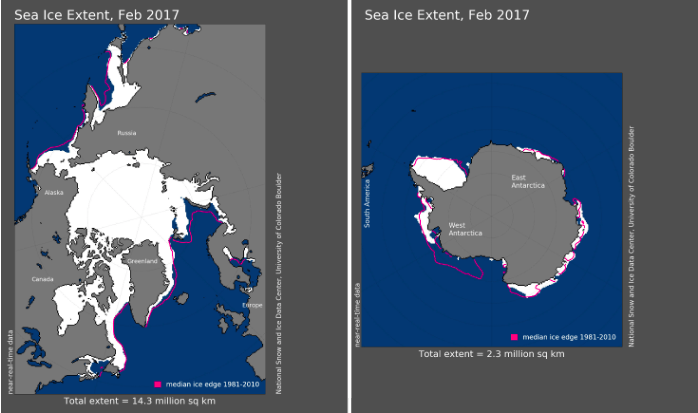
  • The average Arctic sea ice extent for February was 455,600 square miles (7.6 percent) below the 1981–2010 average. This was the smallest February extent since records began in 1979 and 15,400 square miles smaller than the previous record set in 2016, according to an analysis by the National Snow and Ice Data Center (link is external) based on data from NOAA and NASA.
  • The Antarctic sea ice extent for February was 290,000 square miles (24.4 percent) below the 1981–2010 average. This was the smallest February Antarctic sea ice extent since records began in 1979 and 60,000 square miles smaller than the previous record set in 1997. On February 13, the daily Antarctic sea ice extent reached a new record low at 884,000 square miles and continued to drop throughout the month, reaching 822,400 square miles by February 28.
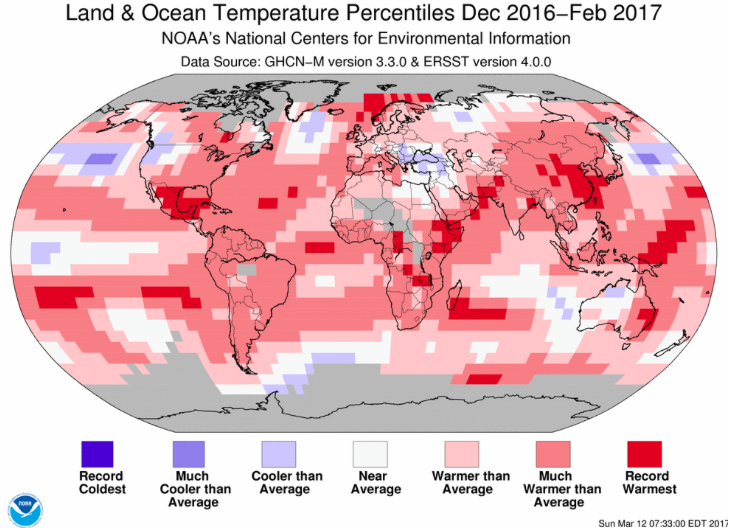
  • Seasonal (December 2016–February 2017)

  • The December–February average temperature across global land and ocean surfaces was 1.60°F above the 20th century average of 53.8°F. This was the second highest for December–February in the 1880–2017 record, trailing behind 2015/16.
  • The globally averaged land surface temperature for December–February was 2.74°F above the 20th century average of 37.8°F. This was the second highest for December–February in the record, behind 2015/16.
  • The December–February globally averaged sea surface temperature was 1.19°F above the 20th century average of 60.5°F – also the second highest for December–February in the record, behind the record set during 2015/16.
  • Year-to-Date (January–February 2017)

  • The year-to-date temperature across global land and ocean surfaces was 1.69°F above the 20th century average of 53.8°F. This was the second highest for January–February in the 1880–2017 record, behind 2016.
  • The year-to-date globally averaged land surface temperature was 2.99°F above the 20th century average of 37.4°F. This was also the second highest for January–February in the record, behind 2016.
  • The year-to-date globally averaged sea surface temperature was 1.21°F above the 20th century average of 60.6°F. This was the second highest for January–February in the record, behind 2016.
  • What to do when your toilet takes a leak – News on TAP

    Save water and money by hunting down and plugging those irritating drips during Fix a Leak Week.

    Source: What to do when your toilet takes a leak – News on TAP

    The March 2017 “Headwaters Pulse” is hot off the presses from @CFWEwater

    Click here to read the newsletter. Here’s an excerpt:

    “Why waste water?” That’s the campaign for this year’s World Water Day, coming up next week on March 22, as designated by the United Nations. It’s a day to celebrate water and take action to tackle the world water crisis. In Colorado, while some organizations are working internationally to increase access to water and to boost public health through increased sanitation, many will be celebrating and taking action closer to home.

    How will you mark World Water Day? We have some ideas…

  • Revel in your connection, through waterways, to other parts of the world—Colorado is a headwaters state after all. Or consider how infrastructure connects so many of us to adequate clean water supplies and wastewater treatment systems.
  • Get physical by tackling a home-improvement project to conserve water, like building and installing a rain barrel. If you’re registered to join our sold-out workshop on March 24, you’ll be doing just that!
  • Learn and share new information about Colorado water, wastewater, sanitation, conservation, or water reuse by checking out our publications, connecting with your water or wastewater provider, or attending an upcoming event—find some upcoming offerings at the end of this email.
  • Support an organization doing water work that you can get behind (hint, hint).
  • …and, well, the list goes on. Here at the Colorado Foundation for Water Education, we’ll celebrate with a blog post or two. Plus, the timing is right to share the feature article below on water reuse.

    It’s great to feel the global connection with others celebrating and working with water on March 22, but we hope that your commitment to water extends beyond the day, perhaps to encompass this week…or if you’re like our team, every day is water day. Carry the spirit of World Water Day forward by joining us to connect with friends and learn about water on any or all of our upcoming tours, workshops or webinars this spring and summer.

    Presentations: #ClimateChange is water change — #Colorado update #ActOnClimate

    Smiley Library, Denver, Colorado. Photo credit courthouselover via Flickr.

    I will be speaking about the the climate crisis and the effects on Colorado at two events soon:

    Wednesday, March 29, 2017, 6:00 PM – 7:30 PM
    Smiley Branch Library
    4501 W 46th Ave
    Denver, CO 80212
    (The meeting is in the basement)

    Monday, April 3, 2017, , 6:00 PM – 7:30 PM
    Thornton Community Park
    2211 Eppinger Blvd.
    Thornton, CO 80229
    (Community Building next to the swimming pool)

    Please be sure to bring your children along. Mitigating the effects of the climate crisis is really for them. It is an existential threat for many species along with being the social justice movement of our time.

    I will address three questions:

  • Should we act to mitigate climate change?
  • Can we and how can we mitigate climate change?
  • Will we act to mitigate climate change and what can we do?
  • The program is presented in conjunction with the Climate Reality Project.

    As a kid I spent a lot of my time at Smiley Library, so it’s very appropriate that I kick off my current climate actions there.

    One of the librarians, Miss Ayres, always made me feel welcome. She seemed glad to see me and she actively helped direct my reading.

    I ran into her when I was managing the Hatch’s Book Store in the old Cinderella City shopping center. I was stationed at the cash register and she was making a purchase. We recognized each other and she said as she left, “And you’re still in books!”

    That was a big day for me.

    Rio Grande Basin Ag Producers workshop recap

    Pond on the Garcia Ranch via Rio Grande Headwaters Land Trust

    From The Valley Courier (Ruth Heide):

    Division of Water Resources State Engineer Dick Wolfe tackled the “use it or lose it” concern during the Rio Grande Basin Ag Producers’ Water Future Workshop in Alamosa on Tuesday.

    “People think they have got to divert everything under their water right or they will lose it,” Wolfe said.

    He said the important thing to remember is historical consumptive use.

    Most water in Colorado is diverted for irrigation, “for beneficial crop use,” he explained. Wolfe was involved in compiling a special report issued in February 2016 by the Colorado Water Institute in an effort to educate people on the “use it or lose it” concept.

    The report addresses five main concerns: 1) maintaining conditional water right; 2) administering absolute water right; 3) abandoned water right; 4) changing use of a water right from agriculture to municipal use; and 5) implications of conservation program participation.

    Wolfe specifically dealt with the fourth concern, changing the use of a water right, during Tuesday’s conference. He explained that water right changes come under dual administration, both from the state engineer’s office and the water court, which adjudicates the water right.

    “Any change of water right can be time consuming and costly,” he said.

    A change of water rights case has to consider whether the change will injure existing users or use more water than historically used.

    Water rights come with restrictions such as the maximum that can be diverted, flow rate and area of land, Wolfe explained. The historic consumptive use is critical in water use change cases, he added, with the historical consumptive use of a water right often being less than the maximum that was allowed to be diverted under the original decree. Wolfe used a hypothetical example of a water right decreed for 150 cfs (cubic feet per second), but only 100 cfs had historically been used to irrigate the farmland, with only 60 cfs actually consumed by the crop and 40 cfs returning to the river. If the owner of the property wanted to dry up the farmland and sell the water right to a factory, for example, the owner could not transfer the full 150 cfs that was decreed in the water right, Wolfe explained. The owner could only transfer the 60 cfs that was historically consumed on that property. The water that has historically gone down the river must continue to do so.

    Wolfe said someone might argue that they should divert their entire decreed right, then, but the crop can only consume so much water, and that consumptive use is what can be transferred.

    “The measure of that is still historical consumptive use,” Wolfe said. “It’s limited by the amount the crop can consume.”

    The duty of water is also something to consider, Wolfe added. If folks are diverting more water than they need, they could be depriving others and causing unintended impacts to the stream system, he explained.

    Colorado water law does not permit wasteful water use, and Wolfe said he would be issuing an order in the next few months giving clear guidance on what wasting water means.

    Less urgency for the #Drought plan for the Lower #ColoradoRiver Basin states #COriver

    The Colorado River Basin. The Upper Colorado River Basin is outlined in black.

    From The Arizona Daily Star (Tony Davis):

    For many months, water agencies including Tucson Water have discussed a plan to save 1.2 million acre-feet of river water over three years to delay the threat of shortages to the Central Arizona Project, which brings drinking water to Tucson and Phoenix and irrigation water to Central Arizona farmers.

    But the snowy winter appears to mean that the river and lake will be flush enough this year to significantly reduce the odds of short-term water cuts even without a conservation plan. The abrupt weather shift has intensified an already major split among water officials about what to do next.

    CAP officials say the earlier proposal is “no longer viable” and that it’s time for a new approach.

    “The improved hydrology has changed the landscape and given us a reprieve,” said Suzanne Ticknor, CAP’s water-policy director. “We have the opportunity to get it right, to sit back and find out what we want to do to find consensus in the state. We don’t need to do huge volumes of conservation right now.”

    Other water users disagree with this position, including the Arizona Department of Water Resources (DWR), the Tucson and Phoenix water utilities and the Gila River Indian Community, which controls the largest share of CAP water.

    “I do not believe one year of good hydrology is enough to stop us from seeking to conserve water in the lake,” Arizona DWR Director Tom Buschatzke said, referring to Lake Mead, a reservoir of Colorado River water.

    He and other officials said recent weather doesn’t substitute for a long-term policy during a 17-year drought, the longest in the historical record dating to 1906.

    WATER FEAST OR FAMINE
    At stake is an Arizona version of the Drought Contingency Plan, an effort by this state, California and Nevada to negotiate a long-term, water-use reduction agreement. The goal is to reduce the risks of Lake Mead dropping below 1,025 feet, compared to the 1,070s to 1,080s it has been at recently.

    At the lower lake level, water deliveries to Tucson and Phoenix would be jeopardized and Hoover Dam’s power output would be dramatically curtailed. The risk is due to what authorities say is a structural deficit, in which people in the Lower Colorado River Basin use more water each year than the over-allocated river provides, even when it’s not in a drought.

    The Arizona plan, called DCP Plus, seeks to delay for three years or longer the first CAP shortage, which would happen if the lake drops below 1,075 feet at year’s end. Last December, the U.S. Bureau of Reclamation predicted that the chance of a shortage for 2018 through 2020 was around 50 percent and warned the river was “on the brink”.

    But at a March 2 CAP board meeting, project officials were rejoicing over the heavy snowfalls that had fallen in the river’s Upper Basin, which supplies crucial spring runoff to Lake Powell, another Colorado River reservoir.

    “The Green River has a tremendous snowpack situation. Flooding will occur in that watershed this spring. Not that we’re wishing it on our Wyoming friends, but quite frankly I’m for it,” said CAP Colorado River program manager Chuck Cullom.

    There’s so much snow that a major Wyoming cloud-seeding program has been suspended to reduce the risk of flood damage, Cullom added.

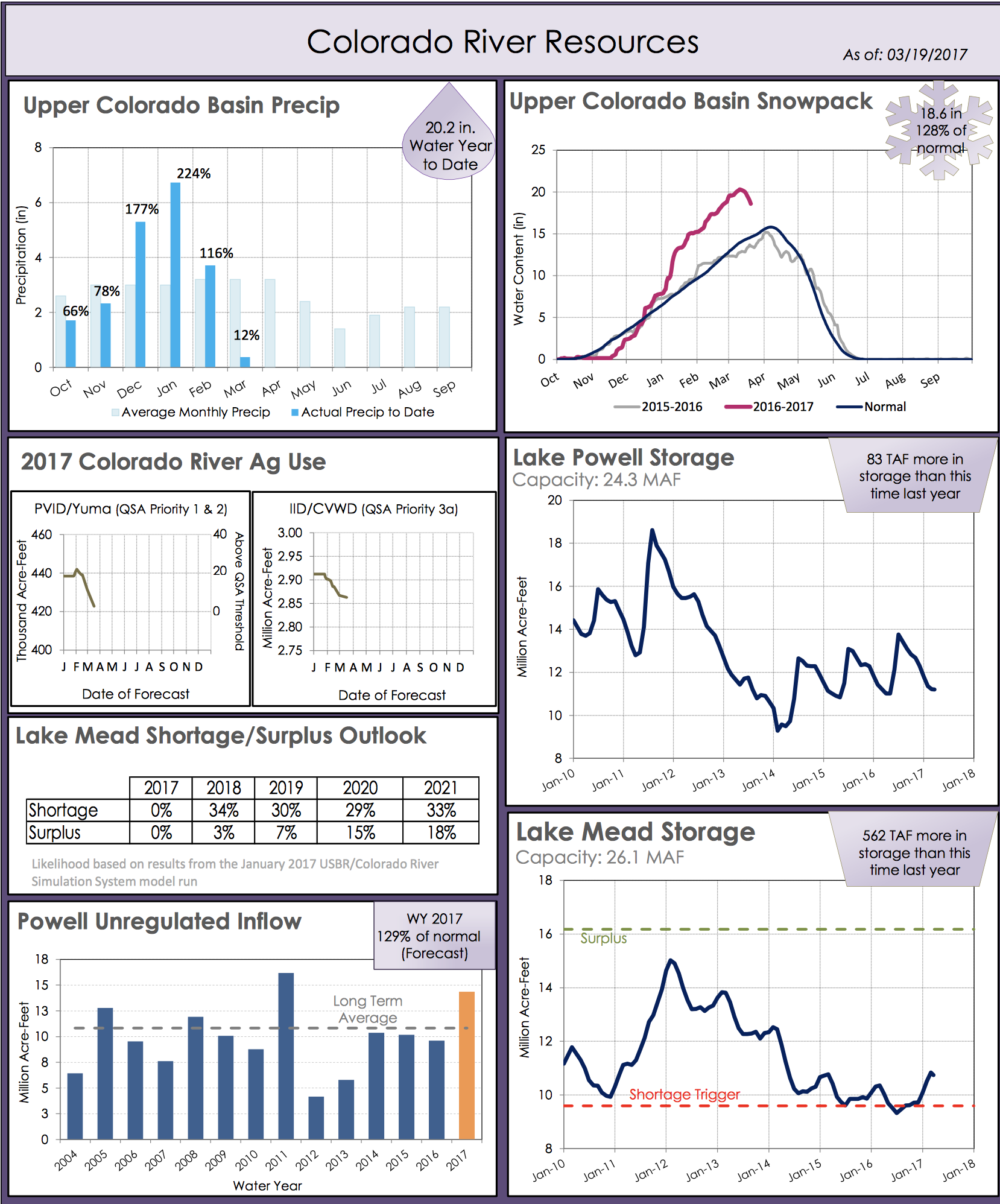
    As of March 1, Upper Basin snowpack was 154 percent of normal. Annual spring runoff into Powell was predicted to be 10.4 million acre-feet, or 145 percent of average, said Brenda Alcorn, a federal Colorado Basin River Forecast Center hydrologist.

    The reclamation agency now sees a greater chance of above-average water releases from Powell to Mead for three years than it does of shortages.

    So instead of a fixed, three-year conservation plan, CAP official Ticknor said that while the agency remains committed to reducing the river’s structural deficit over the long term, the best solution now is to plan annually.

    “It has to be more of an adaptive approach and look at things in real time and understand the hydrology, what the inflow to Powell is and what Mead’s elevation is each year,” she said.

    Setting hard, three-year targets can create an “overconserving” risk, Ticknor said.

    That’s possible due to the complex, seven-state guidelines covering management of Lake Mead at the Arizona-Nevada border and Lake Powell at the Arizona-Utah border, she said. Worrying about “overconserving” is a shift in emphasis among CAP officials, who have a “Protect Lake Mead” message on their home page and produced videos and other material saying the same.

    While remaining concerned about Mead’s long-term risks, CAP officials say that under certain circumstances, the guidelines mean that too much conservation can reduce how much water Powell releases to Mead. That deprives the three Lower Colorado River Basin states, including Arizona, of additional water.

    Phoenix Water Director Kathryn Sorensen counters, “The ‘risk’ of overconserving is a Colorado River that is less vulnerable to shortages and more resilient over the long run, a river that is more protective of our economy and our quality of life.”

    Under guidelines approved in 2007 by the seven basin states, Lake Mead gets an extra surge of water from Powell in a year in which forecasters predict that Powell will stay above 3,575 feet while Mead falls below 1,075 feet on a given date.

    This year, conditions are good enough that the lake is expected to get at least 9 million acre-feet, nearly 700,000 acre-feet above average. But if conservation pushes Mead’s forecast above 1,075 at the end of 2017, that extra water goes away.

    “You could have an unintended consequence,” Ticknor said. “You have a narrow band of operating space with the reservoirs. You have to be careful about what you do.”

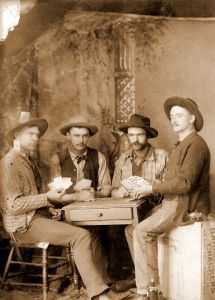
    Old Time Poker Players. Photo credit: the 19th Century on Pinterest.

    “NOT A GAME OF POKER”
    Phoenix’s Sorensen replied that playing the probabilities of shortage year-by-year is a short-sighted strategy that fosters uncertainty and keeps Arizona’s economy closer to the razor’s edge.

    “This is not a game of poker. Arizona has weathered the last 17 years of drought precisely because generations ago, we planned methodically for the long run. We must continue this legacy,” Sorensen said.

    State Water Resources Director Buschatzke said he prefers the risk of overconserving “because if you underconserve there isn’t much you can do about it” if a shortage occurs. Tucson Water Director Tim Thomure said authorities should err on the side of conservation and focus on the longer term.

    “We have to be nimble enough to manage year by year, but decisions need to be made with the long-term in mind,” Thomure said.

    Plus, Mother Nature can make unanticipated weather shifts, Buschatzke said. Just since March 1, hot, dry weather has caused federal river-basin forecasters to lower projections for runoff into Powell by half a million acre-feet. That’s enough to serve Tucson Water’s 700,000-plus customers for five years.

    The April runoff forecast is still expected to be high enough for an above-average release from Powell. But if the region experiences the flip side of the “Miracle May” rains that pounded the Rockies in May 2015 — saving the river from an almost certain shortage — that wouldn’t leave authorities much time to forestall a 2018 shortage, Buschatzke said.

    “These are hard issues — harsh decisions. I want to err on the side of more certainty,” he said.

    The bottom line is that the water agency now can’t meet its goal of getting a water-saving plan to this year’s legislative session for approval, he said.

    #Snowpack is dropping across the state, still above the median

    Click on a thumbnail graphic below to view a gallery of snowpack data from the NRCS.

    From The Mountain Mail (Brian McCabe):

    Despite a slightly drier February, snowpack for the Arkansas River Basin measures 143 percent above median, while statewide snowpack is at 139 percent, the Natural Resources Conservation Service reported.

    Reservoir storage for the Arkansas Basin at the end of February was 103 percent of average, down from 124 percent last year.

    Current streamflow forecasts range from 125 percent of average for the Arkansas River at Salida to 98 percent of average for Grape Creek near Westcliffe.

    Snowpack is also above average around the rest of the state, ranging from 155 percent for the Gunnison Basin to 125 percent for the combined Laramie, North Platte, Yampa and White basins.

    “With one more month of the primary snow accumulation season behind and above-normal snowpacks across the state in combination with these near-normal reservoir storages, water supply shortages in Colorado are looking less and less likely for the upcoming summer months,” said Brian Domonkos, NRCS Colorado snow survey supervisor.

    “Despite areas that experienced below-normal monthly snow accumulations during February and localized periods of unseasonably warm temperatures, the exceptional snowpack that fell during January allowed the mountains to remain at least 120 percent above normal in all areas,” he said.

    State reservoir storage had a small net gain between February and March and is now at 107 percent of average storage. All major basins are retaining more water relative to normal.

    “Thanks to the abundant snowfall this water year, 2017 is projected to be the first year since 2008 that the entire state is expected to have above normal April-July streamflow volumes,” Domonkos said.

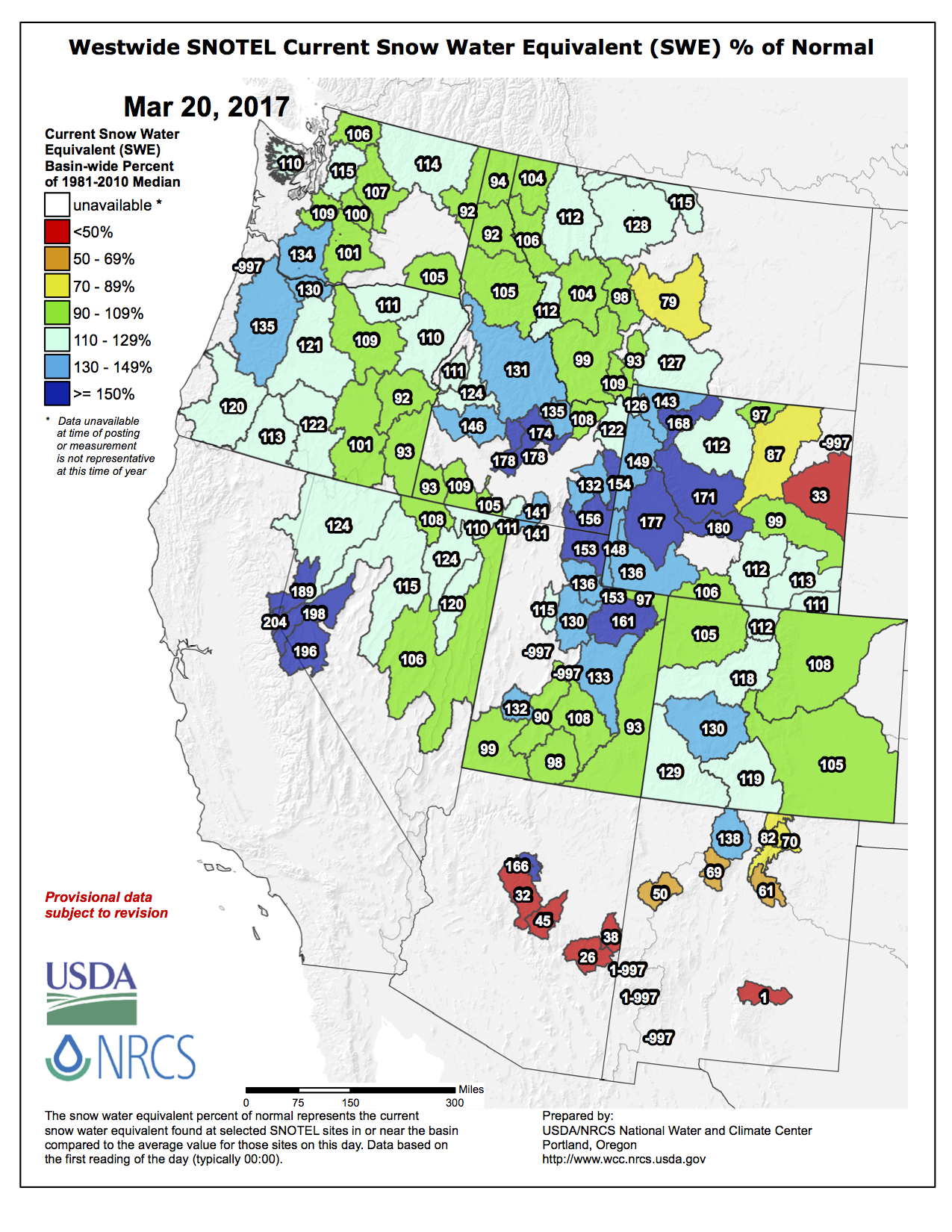
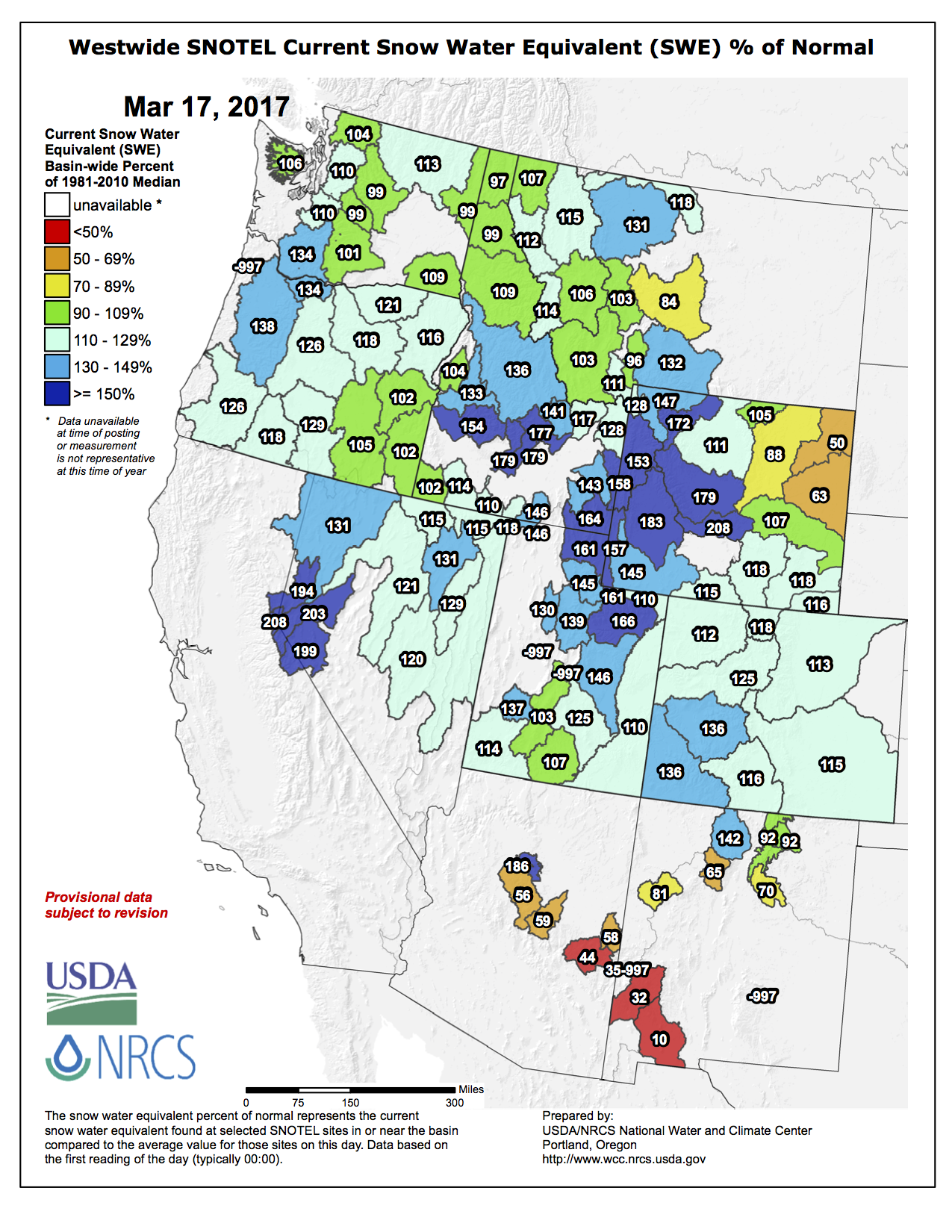
    Here’s the westwide basin-filled SNOTEL map from the NRCS.

    Westwide SNOTEL basin-filled map March 20, 2017 via the NRCS.

    Water Rights and Governance Guide for #Colorado’ s Acequias (Revised 2016)

    Click here to download the handbook. Here’s an excerpt:

    This handbook is a joint effort of the Sangre de Cristo Acequia Association, the Getches-Wilkinson Center for Natural Resources, Energy, and the Environment at the University of Colorado Law School, Colorado Open Lands, and dedicated private attorneys. The handbook was inspired by the New Mexico Acequia Association’s Acequia Governance Handbook, which served as a wonderful model.

    The handbook represents the work of law student volunteers at the University of Colorado Law School, with supervision and guidance from Colorado law professors and attorneys.

    Building climate bridges, not walls — Allen Best

    From The Mountain Town News (Allen Best):

    Amid the bluster of the new president and the stampede toward a mythic past of a supposedly safer, more insular America, it’s been hard to bear down on climate change. Today’s noise drowns out tomorrow’s danger. But even as President Donald Trump builds walls, the climate change movement needs to build bridges.

    Climate activists have been built too many walls of their own, self-righteously dismissing laggard thinkers as “deniers” and rejecting their concerns. Creating a world smugly divided into believers vs. deniers serves no useful purpose. The politics of climate change are trickier than just red hats vs. blue shirts, conservatives vs. liberals.

    Voters in Washington state, among our most reliably Democratic since the late 1980s, last November were asked to approve a tax on carbon emissions. Nearly all economists say a carbon tax will most effectively accelerate changes in how we produce and consume energy. It assigns a price, or cost, to greenhouse emissions, but does not presume to know the best way to respond. It leaves the market to figure out solutions.

    Among the most vocal opponents in Washington state were liberal groups, among them Black Lives Matter, the Labor Council of the AFL-CIO, and Service Industries Union International. They argued the tax would disproportionately hurt lower-income residents. So did Van Jones, the CNN commentator and activist (who was also in the Obama White House). “I have been a climate hawk for 15 years,” Jones said in a pre-election conference call with reporters. “I literally wrote the book. I have never opposed any climate proposal at all. But I am opposing this one because it is that bad. It is just that bad.”

    This opposition offered a valuable lesson for those of who think that broad and deep changes must be made in how we produce and consume energy. The argument of these opponents in Washington state differed little from the traditional argument from red-state Republicans about the stinging economic impacts of shifting from fossil fuels. Somehow, the argument for the urgency of climate change must be recalculated to broaden support. More muscle must be enlisted to share the oars. Snarling the name “climate denier” isn’t likely to deliver the most robust cooperation.

    Finger-wagging was egregious in the November issue of a ski magazine called Powder. The magazine investigated the campaign contributions of ski area operators through the prism of climate change. Many major ski area operators give money to Republicans, and nearly all the Republicans cited in the story have opposed climate change efforts such as the Clean Power Plan. The story was strewn with the phrase “climate denier.”

    Photo credit Allen Best, the Mountain Town News.

    For example, Rusty Gregory, the chief executive of California’s Mammoth Mountain, gives money to his local congressman, U.S. Rep Paul Cook, a Republican who has bad-mouthed the Clean Power Plan as “sidestepping Congress and over-regulating the American economy.” He was, of course, a “climate denier.” In Wyoming, the chief executive of Wyoming’s Jackson Hole Mountain Resort, Jerry Blann, gives money to Republicans while advocating environmental reform within the industry trade organization, the National Association of Ski Areas. This makes him an environmental hypocrite. Vail Resorts, the nation’s largest ski area operator, gave $5,000 to House Majority Leader Paul Ryan, also a “climate denier.”

    If people in ski towns of the West veer liberal, the broader West remains more red than blue. Wyoming hasn’t had a Democrat in Congress since 1978, when a young Dick Cheney replaced a labor Democrat, Tino Roncalio. Even purplish Colorado, where Vail Resorts is based, sends more Republicans (5) to Congress than Democrats (4). Ski area operators say they give money to Republicans because they have a lot of business with the federal government and it’s not all about climate change. In the West, most operate on federal lands.

    Campaign contributions alone don’t explain the stalled progress on climate change policy. The top political donor in the 2016 elections was climate-change partisan Tom Steyer, the former hedge-fund manager from San Francisco. He gave $87.6 million to Democrats and liberals, according to OpenSecrets.org. In the 2014 mid-term elections, he gave $75.4 million. Democrats and supporters of climate change policies lost ground in both elections.

    Even when Democrats owned both the White House and Congress in 2009, cap-and-trade legislation stalled in the Senate. The coalition that defeated cap-and-trade consisted largely of coal and farm states. Fossil fuels have been a major component of industrialized agriculture, and the electrical cooperatives that serve many rural areas became heavily invested in coal-powered generation.

    If a majority of Americans see human fingerprints on the changing climate, only a minority see it with alarm. Even fewer act as if there truly is an apocalyptic clock ticking. Instead, we live our lives day to day, month to month. This is true even of the Aspen Skiing Co., the most vocal of the ski companies about the perils of climate change. The company’s basic business model will be severely damaged by the shift from snow to rain that climate models forest for later this century. Yet the company continues to build luxury hotels and cater to cater to customers who travel by gas-guzzling jets. Money matters in Aspen as it does among Republican farmers in Nebraska, liberals in Washington state, and everywhere else.

    Former Republican Congressman Bob Inglis, who was described by Atlantic magazine as a spokesperson of sorts for the “ecoright,” is among those pushing for a free market solution stimulated by a carbon tax. This differs from the somewhat less flexible approach of the Clean Power Plan. When I heard Inglis speak before a small group of climate activists in Boulder, Colo., last April, he singled out House Speaker Paul Ryan. “He knows it’s real – to the tip of his toes,” said Inglis, who has a group called RepublicEn, of the threat of climate change.

    The idea of a carbon tax got more wind in its sails recently when George P. Shultz, a cabinet secretary in three presidential administrations, and James. A. Baker II, the secretary of state in two presidential administrations, proposed a gradually increasing carbon tax beginning at $40 per ton carbon tax, with revenues to be redistributed to Americans in the form of dividends. Carbon adjustments would be imposed on imports based on their carbon footprints.

    Commenters on the website of the Wall Street Journal, where the Shultz-Baker proposal was published, quickly trashed the proposal as unnecessary. After all, there is no problem. Are they deniers? Maybe, but what matters more are those in the middle, including farmers.

    Farmers must be persuaded that they can benefit in this swivel to new energy economy. So must blue-collar voters and those in military communities. The Pentagon long ago identified climate change as a key threat to U.S. security. Too few people know this.

    Banish the word denier. Built bridges to those in the middle, not hurl insults to those at the far end. Find commonalities under the tent of red, white and blue patriotism. Stress America’s exceptionalism. The United States should lead this global transformation in energy innovation. That will make a great America even greater.

    I will be speaking about the climate crisis and the great message about renewable energy, and the jobs and recurring revenues for farmers and ranchers, on March 29th and April 3rd.

    Roundtable on renewable energy recap — The Guardian

    Wind farm Logan County

    From The Guardian (Martin Wright):

    What impact will the climate-sceptic, coal enthusiast President Trump have on the prospects for renewable energy? How will Brexit affect the UK’s renewable sector? And what’s driving the growth of clean energy in Asia? These were key questions for participants at a Guardian roundtable on the future of wind and solar power, supported by Julius Baer.

    And the answer to the Trump question? Precious little impact at all. The sheer strength of the renewables sector – driven by plummeting costs and a growing appetite among consumers and business alike – means it will continue to thrive despite the new administration’s doubts. That was the near-unanimous view of the participants. And it might even win over the president himself, as his business brain engages with the potential of clean energy on the one hand, and coal’s lack of it on the other.

    Gina V Hall, investment director at The Carbon Trust, predicted that “a lot of the talk about bringing back coal jobs will start to fade. The rhetoric will be put aside in the face of the facts.” And the most persuasive fact of all is market logic. With renewables approaching grid parity (costing the same as electricity bought from the mains supply), their momentum is becoming unstoppable.

    Many of America’s most powerful companies, such as Apple and Google, are strongly committed to clean energy, said Hall, “and they’re not going to let the government get in the way of what they want to do.”

    Several participants at the roundtable pointed to the fact that clean energy enjoys strong bipartisan support. As Laura Cozzi from the International Energy Agency commented, over half of the renewable capacity installed recently is in Republican-governed states. Such support might even help secure the future of the tax credits that presently help underpin new investments in the sector, said Anja-Isabel Dotzenrath of E.ON Climate and Renewables.

    “The word ‘renewable’ doesn’t feature in Trump’s America First plan – but it is full of talk of exploiting the country’s natural resources, delivering low-cost energy and creating jobs. Well, wind and solar can do all that.” And they have the potential to do a lot more, particularly in the rustbelt areas Trump is committed to helping.

    The jobs argument is particularly powerful, given that more US citizens are employed in solar power than in generating electricity through coal, oil and natural gas combined. As Clark MacFarlane, CEO of Siemens Wind Power UK, put it: “Trump’s core policy is more jobs. So why do anything to destroy American jobs, especially ones delivering low-cost energy?”

    Investors in the US are wary of being caught on the wrong side of history, said Martin Wright, chair of the Renewable Energy Association. “A lot of them are starting to view fossil fuels like tobacco – as a pariah sector.” And they don’t want to be left with stranded assets, stuck in coal as the market moves decisively away from it. By contrast, the falling prices of solar and wind make it increasingly appealing. Environmental economist Paul Ekins, of University College London, summed it up: “The markets will trump Trump.”

    […]

    Growth in China and India
    The real growth story in wind and solar, of course, is happening not in Europe or the States, but Asia, with both China and India investing heavily. So what’s driving that?

    It’s partly the same story of falling costs, with China eyeing huge export markets – in solar in particular. But there’s also growing local demand, driven by two things – energy access and health. “Public health concerns in China are changing energy policy fundamentally. There’s no going back now,” said Helena Molin Valdés of the UN Environment Programme.

    Anil Raj, co-founder of Indian solar business OMC Power, pointed out that air quality is front-page news there. “People worry about pollution in European cities, but they are like sanatoriums compared to New Delhi. Politicians spend a lot of time there, and they can’t help but see and feel it too, and that’s why things are happening.”

    But, he added, the need for energy access will always be the prime driver. “There are two narratives around energy. A developing-world narrative and a carbon-reduction one.” For the former, energy access is king. “We have 350 million people living off grid in India. If we needed to burn coal [to connect them], we would do that.” So it is fortunate, he continued, that fossil fuels are not the solution: “The cheapest and fastest way of connecting [off-grid people] in India is via renewables.” Sarah Chapman, CEO of Faro Energy, said that’s increasingly true in Latin America too.

    Energy storage next big thing
    So is everything in the renewables garden rosy? Not for Ekins. “We’re not getting nearly enough investment to meet the Paris target [of keeping the global temperature rise to two degrees above pre-industrial levels].” Other panellists echoed his concerns.

    So how can the process be sped up? “We need to design the power markets of the future to favour renewables,” said Cozzi. That will become all the more important as technologies such as smart grids and improved battery storage come into play. Wright argued for simplification, moving away from incentives based around specific technologies to a system in which if you’re producing renewables – or enabling storage of renewable power – you get paid for it, regardless of technology.

    And, he added, the government shouldn’t be shy of setting some tough rules to drive progress: “Look at the buildings industry. If you hadn’t had some tough regulation there, you wouldn’t have indoor toilets or double glazing.” Householders need incentives to do the right thing, he argued: “So why not link stamp duty to SAP [energy-efficiency] ratings?”

    All panellists agreed that the sheer speed of technological change would continue to disrupt the energy market – and, in the long term at least, renewables should be the clear winner. As battery technologies improve, so wind and solar will become even more appealing, overcoming the intermittent nature of such power sources (the wind doesn’t always blow, the sun doesn’t always shine), by storing the electricity they produce for when it’s needed. “Storage will give us the next generation of energy billionaires,” predicted Ekins.

    Put all that together, and the logic of renewables becomes irresistible, said Wright. “It’s not a case of doing it to save the planet any more. People are seeing this as a business opportunity. It’s as simple as that.”

    I will be speaking about the climate crisis and the great message about renewable energy on March 29th and April 3rd.

    #Drought news: D2 (Severe) expanded in E. #Colorado

    Colorado Drought Monitor March 14, 2017.

    From The Fort Collins Coloradoan (Cassa Niedringhaus):

    …Sunday’s was the eighth red flag warning for lower Larimer County this year, according to the Wellington Fire Protection District. The warning took effect at noon and was set to expire about 7 p.m.

    Most of the area in Larimer, Boulder and Weld counties is abnormally dry or in a drought, according to an update last week by the U.S. Drought Monitor. A swath across the east side of Larimer County — which includes Fort Collins and Loveland — is in a severe drought.

    Fort Collins had been in a severe drought for months at the end of 2016 and then improved at the beginning 2017, but the city has regressed into a severe drought again.

    Beyond Larimer County and neighboring counties, the eastern half of the state is also dry or in a drought. The southeastern corner of the state is in an extreme drought. The agency uses five classifications: abnormally dry, which is the precursor to drought, and moderate, severe, extreme and exceptional drought.

    From The Denver Post (Kieran Nicholson):

    “It’s not time to panic and turn on your sprinkler system, your yard is doing just fine,” said Travis Thompson, a Denver Water spokesman.

    Thompson recommends hand watering at this time of year, and giving special attention to shrubs, bushes and trees.

    The mountain snow pack water supply, stoked by above average snow in December and January, remains above average for this time of year, Thompson said.

    Current water supply for most Front Range residents isn’t low or critical, despite current drought and drought-like conditions parching lower-lying elevations of eastern Colorado.

    Denver Water, which typically sets water restrictions during the summer, does not have any current watering restrictions.

    Colorado State University Extension recommends winter watering during extremely dry stretches — the first day of spring is March 20 — of about 10 gallons of water for each inch of tree trunk diameter once or twice per month and anywhere from 5 to 18 gallons per month for shrubs. Water only when air and soil temperatures are above 40 degrees and where there’s no snow on the ground.

    Two Rivers Water Co. is suing farmers under the Welton Ditch

    Cucharas Dam via The Pueblo Chieftain

    From The FencePost:

    For generations, this community under the Welton Ditch has been growing hay, winter wheat, barley, oats, vegetables and livestock, but all of that could soon come to a crashing halt…

    Two Rivers Water & Farming Co. (Two Rivers) is suing Welton Water and its shareholders for what they are calling “wasteful and inefficient water use practices.”

    In accordance with Welton Water’s senior rights, water is allocated from the Huerfano River in priority; however, satisfaction of those senior water rights, in accordance with Colorado law, means Two Rivers is sometimes precluded from filling its storage reservoirs while Welton Water’s senior rights are unsatisfied. If Two Rivers wins the suit, Welton Water, and its shareholders, will lose its right to divert and use water in accordance with their water rights in certain months of the year and a new precedent will be set for future water rights of Colorado farming and ranching families.

    “Two Rivers is suing each of the shareholders individually, and we believe that their game plan is to get us tied up in a legal battle that none of these farmers and ranchers can afford,” said Larry Morgan, Welton Land & Water Co. president. “If we can’t defend ourselves and we lose our water rights, we will all be in serious trouble.”

    TENUOUS SITUATION
    Welton Water’s senior rights are still junior to the water rights of appropriators who live higher up in the mountains, meaning that very little summer water is available to satisfy the water rights decreed to the Welton Ditch and therefore the shareholders receive very little summer water. Without the winter water, it could prove difficult for Welton Water’s shareholders to run livestock on this land, raise winter wheat or get the ground wet in the springtime for planting.

    “We don’t know when we’ll go to court on this; I suppose, it depends on how much paperwork they throw at our attorneys,” Morgan said. “We think they are going to deep-pocket us to death, and without water, we won’t be able to water our cattle or crops, and our land becomes basically worthless.”

    John Justus, legal counsel for Welton Water, says he questions the validity of Two Rivers’ claims.

    “The litigation was initially triggered by a Colorado State Engineer’s enforcement action seeking enforcement of an unappealed administrative order requiring Two Rivers to cut down the dam associated with Cucharas Reservoir, one of Two Rivers two junior reservoirs,” Justus said. “That order was based on public safety concerns as a result of the condition of the dam at Cucharas Reservoir. Two Rivers, in its defense against the engineer’s enforcement action alleged that it was unreasonable to demand that the Two Rivers comply with the dam cut-down order, and the associated costs, unless the engineers addressed what Two Rivers characterized as ‘wasteful and unreasonable water practices’ by Welton Water and its shareholders. Consistent with that allegation Two Rivers brought a separate set of claims against Welton. Although Two Rivers ultimately entered into a consent decree with the state and division engineers, which requires it to cut down the dam and complete certain other tasks, it continues its litigation against Welton Water and its shareholders.”

    According to Justus, Two Rivers has several “creative claims” against Welton Water.

    The first is “Two Rivers claim that certain traditional winter irrigation practices of the Welton shareholders fail to constitute beneficial use of water under Colorado law,” Justus said. “Because of the nature of this claim and its impact on their individual water rights, the court required that Two Rivers join Welton Water’s shareholders to this action. However, many ditch companies and their shareholders utilize the same types of irrigation practices that Welton Water’s shareholders do, so this should be of great interest for other people with winter water rights across the state of Colorado.”

    Justus further explained, “Prevention of the form of winter irrigation practiced under the Welton would mean irrigation practices that are necessary for maintaining viability of certain lands for agricultural production would no longer be permitted. Importantly, the Winter Water Storage Program in Pueblo Reservoir, and the decree confirming the change of water rights necessary for the operation of that program would have been improper if Two Rivers’ theories are correct.”

    CONCRETE STRUCTURES
    The second is “Two Rivers claim that Welton’s diversion structure from the Huerfano River must be a permanent concrete structure in order to be a reasonable means of diversion under Colorado law,” Justus said. “If that was to become the new standard, it would mean that hundreds and possibly thousands of structures in the state no longer constitute reasonable diversion methods. Although the court has declined to dismiss this claim at this point in the litigation, Welton Water is confident that the law paired with the facts to be demonstrated at trial will show Two Rivers’ allegations to ultimately be groundless.”

    Third is “Two Rivers claim that stream losses which occur in the division engineer’s administration of the waters of the Huerfano River in response to a ‘call’ petition by Welton Water pursuant to its senior water rights constitute unreasonable and actionable waste by Welton Water.”

    In a briefing to the court, which has yet to be decided, Justus said, “Both Welton Water and the state and division engineers have argued that no such claim is cognizable under Colorado law. The court has yet to issue an order on the matter.”

    The concept is simple according to Justus, “an appropriator like Welton Water and its shareholders cannot legally waste water over which it has no control, until water is diverted by Welton Water, the water remains within the exclusive administrative control and authority of the state and division engineers.”

    Not only is Two Rivers seeking year-round water rights for its cannabis business, but it appears development projects might be in the works.

    “In an investor update to its shareholders dated December 2016, Two Rivers says they are a vegetable company, but that document suggests that the entity is pivoting its near term focus to utilizing its water to grow hemp and for the development of infrastructure for the cannabis industry,” Justus said. With respect to its long-term focus, “that document suggests Two Rivers wants to take its existing water rights and use it in a development fashion, generating revenue through selling taps for development. Interestingly, Two Rivers water rights are not decreed for nonagricultural uses like domestic or municipal purposes. Nonetheless that document suggests Two Rivers plans to invest approximately $42 million in Cucharas Reservoir over the next two years.”

    Justus noted that “eliminating the effect of Welton Water’s downstream senior rights will however potentially increase the yield of Two Rivers more junior rights associated with its reservoirs and therefore its return on its investments.” 
The case is ongoing, and as Two Rivers is suing each shareholder individually, Justus said it’s unclear when this will go to trial; however, he anticipates a July setting conference with the court, with a trial following 6 to 9 months after.

    COUNTER CLAIM
    Meanwhile, Welton Water has a counter-claim against Two Rivers arguing that out-of-priority depletions to the Cucharas and Huerfano Rivers by Two Rivers’ Cucharas Reservoir, in amounts approaching 3,000-acre-feet per year, are injuring the water rights of Welton and others. Welton anticipates that the unabated depletions will continue again this irrigation season.

    Taos Valley Acequia Association Annual Meeting, March 26, 2017

    Taos Pueblo via Burch Street Casitas

    From the Taos Valley Acequia Association:

    Taos Valley Acequia Association will hold its Annual Meeting at the Juan I. Gonzales Agricultural Center Taos, New Mexico on Sunday March 26, 2017 Beginning at 1:00 p.m. As elected Mayordomo or Commissioner, it is part of your responsibility to your acequia and Parciantes, to report to them keep them informed on the acequia issues by attending this critical Annual Meeting. TVAA looks to the Mayordomos and Commissioners to pass this information to its parciantes.

    If you have any questions please feel free to contact the office at (575) 758-9461.

    We look forward to seeing you at the Annual Meeting

    Park County commissioners approve water lease

    Upper South Platte Basin

    From The Fairplay Flume (Lynda James):

    The commissioners signed a resolution that approves the second amendment to the county’s water court application March 2.

    The case filed in 2008 is to obtain a water rights decree for public works to use water for dust suppression and road construction.

    The case also asks approval of the county’s water augmentation plan to replace water used by the department when a call on the river is in place…

    The original water rights case was filed for six diversion points and plan of augmentation for 5.6 acre feet with an appropriation date of Dec. 2008…

    The first water court amendment in 2013 added 12 points of diversion with an appropriation date of Oct. 2013, increased water from 5.66 to 15 acre feet and added places of storage.

    The second amendment approved March 2 adds the five acre feet of water recently purchased from Lone Rock Water LLC as a source of augmentation water…

    Until the county obtains water court approval for water rights and plan of augmentation, the county is using water under a Substitute Water Supply Plan approved by the State Engineer’s Office.

    A SWSP allows one to use and augment water according to a written plan until the water rights application is actually approved by water court.

    Rio Grande Roundtable meeting recap: “Shovel ready” projects get design and engineering funding

    Mountain Home Reservoir via The Applegate Group

    From The Valley Courier (Ruth Heide):

    Water leaders on Tuesday approved funding for two projects that will improve local reservoir and river operations.

    The Rio Grande Roundtable approved $70,000 from locally allocated water funds for engineering work for Mountain Home Reservoir upgrades and $90,000 for surveying, design, and permitting work for projects primarily around the Rio Grande State Wildlife Area near Monte Vista. These funds will be matched with money from other sources to complete the projects. The Mountain Home Reservoir project is in its second of three phases, with the third phase encompassing construction work. The state is mandating repairs at the reservoir. Only one of the gates at the reservoir is operational, and not operating that well.

    The reservoir, located east of Fort Garland, is operated by the Trinchera Irrigation Company and supports the irrigation of several thousand acres of farmland in Costilla County as well as fishing and boating opportunities. The Colorado Parks & Wildlife operates a State Wildlife Area at the reservoir and stocks the reservoir with trout. Both local residents and tourists enjoy the recreational opportunities at Mountain Home.

    The dam was built in the early 1900’s and is showing its age. Leakage at the gate is costing irrigators, and replacement of the dam gates would restore the reservoir’s capacity and benefit the farmers and ranchers who depend on a portion of their water supply from the reservoir.

    Trinchera Irrigation Company Superintendent Wayne Schwab presented the request for local roundtable funds, which the roundtable approved on Tuesday. The funds would go towards engineering and design work to replace the dam gates. The irrigation company has chosen Engineering Analytics, Inc., out of Fort Collins to conduct the work. The firm has experience in dam rehab work.

    The total for the design phase portion of the dam rehab project is $100,000, with the roundtable funding comprising $70,000 of that. The remainder is coming from the irrigation company and Trinchera Blanca Foundation…

    The roundtable was also receptive to the projects around the Rio Grande State Wildlife Area. Roundtable members Karla Shriver and Heather Dutton abstained from voting, Shriver because she is a member of one of the ditches that will benefit from the work and Dutton because she oversees the Rio Grande Headwaters Restoration Program requesting the funding.

    As with the Mountain Home Reservoir project, the Roundtable funds for the wildlife area project will primarily be used for design, survey and permitting work, for which the roundtable board approved $90,000 from the local basin account, to be matched from other sources to complete the $213,990 total.

    This project will ultimately stabilize eroded stream banks, preserve riparian vegetation and habitat and replace old diversion infrastructures on the SLV Canal and Centennial Ditch…

    In high flows , the stream could wash away a siphon the Colorado Parks & Wildlife maintains for wetland areas and possibly cut off water delivery to the Centennial Ditch, a senior water right provider for 22 stockholders and irrigating 8,500 acres.

    As part of this project, the diversion structure for the Centennial Ditch would be improved…

    Headgate repairs would also be incorporated into this project on the SLV Canal, also a senior water right provider, which serves 78 stockholders, irrigates more than 20,000 acres and borders the wildlife area.

    Bachman explained that another smaller project upstream near Del Norte is included in this request and although it is not geographically adjacent to the wildlife area has similarities in that it will improve the river, and all three are “shovel ready,” so work could begin as soon as funding is in place. Bachman said that in addition to roundtable funding , this project would be supported by funds from Colorado Parks & Wildlife, Great Outdoors Colorado and the North American Wetlands Conservation Act Grant Program.

    Is there a sustainable path forward for @DenverCityGov Parks to mitigate #ClimateChange and overuse?

    Denver skyline, view is west from City Park. Photo credit The City of Denver.

    Maybe. Click here to read the March 2017 Existing Conditions Report. Here’s an excerpt:

    The Existing Conditions Report culminates the first phase of the 2017 Game Plan Update for Denver Parks and Recreation. Its purpose is to document the existing state of the system as a whole in order to uncover the key issues that the Game Plan will want to address.

    Denver’s Park and Recreation system is incredibly diverse, spanning from the mountains to the prairie and encompassing more than 20,000 acres of parkland full of amenities and 27 recreation centers offering a wide range of programming. The analysis falls into three major categories: environment and climate, equity and access, and economic and organizational health. Key findings in each of the categories are summarized at right.

    Understanding the current state of the system provides a launchpoint to envision the future of the Denver Parks and Recreation.

    Here’s a report from Jon Murray writing for The Denver Post. Here’s an excerpt:

    A new city report that’s part of a drive to set the course for Denver Parks and Recreation for the next 15 to 20 years says such adaptations must accelerate as the parks system contends with several emerging challenges. Chief among them are a rapidly growing population with changing expectations and health needs, climate changes that will impose new environmental stresses on the landscape, and limited budgets and resources that could strain all of those efforts.

    Those findings are contained in an “Existing Conditions Report” unveiled by city parks officials Friday.

    R.I.P Chuck Berry

    During the video Mr. Berry says that “Sweet Little Sixteen” was dedicated to a young fan in Denver, Colorado.

    From The Chicago Tribune (Greg Kot):

    Chuck Berry, who died Saturday at 90, was one of the architects of rock ‘n’ roll as a singer, songwriter and guitarist. More than any artist of the ‘50s, his songs exploded with imagery that saw rock ‘n’ roll not just as a fad but as the future — a vision of freedom that transcended generation and race.

    Berry’s opening solo on “Johnny B. Goode” blared reveille for subsequent generations of rockers. Every rock guitarist since is in his debt. In addition, Berry wrote and sang at least two dozen rock ‘n’ roll classics, including “Maybellene,” “Roll Over Beethoven” and “Back in the U.S.A.,” many of them recorded at Chicago’s Chess Studios in the 1950s and ’60s and later covered by countless artists, including the Beatles, Beach Boys and Rolling Stones.

    “If you tried to give rock and roll another name, you might call it ‘Chuck Berry,’ “ John Lennon once said…

    Born Charles Edward Anderson Berry in St. Louis in 1926, Berry grew up singing in church and listening to blues and country music on the radio. An admirer of Louis Jordan, T-Bone Walker and Nat “King” Cole, he began playing guitar in high school. As a teenager, he was sent to a reformatory after being convicted of attempted robbery. He moonlighted as a beautician in St. Louis and worked on a car assembly line to support his family. While in his twenties, he led a three-piece blues group during regular weekend gigs.

    Berry developed a sound that synthesized genres and created the most popular template for rock ‘n’ roll: a small, guitar-led combo performing original songs. A half-century before, country guitarists borrowed riffs and runs from blues performers. Berry flipped the formula; he was essentially a country-music guitarist who added blues inflections and a faster rhythm-and-blues beat. Plus, he played electric guitar, and the amplification enabled him to simulate the sound of two or three guitars playing at once. He thickened the sound by employing a two-string technique, sliding along the frets and bending them to create enormous power and drive. His tone evoked a trumpet.

    Berry’s staccato-laced rhythmic drive also derived from swing jazz and the ebullient boogie-woogie played by another St. Louis musician, pianist Johnnie Johnson, who would become his often unsung collaborator. Johnson would sue Brown in 2000 for songwriting credit on more than 50 songs, but the claim was dismissed because a judge determined too much time had passed since the songs were written. Together, they played counterpoint melodies and solos that raised the excitement level of countless classic songs, with Johnson’s strong left hand and Berry’s hard strumming beefing up the rhythmic pulse.

    Keith Richards of the Rolling Stones, who acknowledged that his own rhythm-guitar style was based on Berry’s technique, said the guitarist “always was the epitome of rhythm and blues playing, rock and roll playing. It was beautiful, effortless, and his timing was perfection. He is rhythm supreme.”

    The Berry-Johnson partnership was forged on New Year’s Eve 1952, when the guitarist was enlisted as a last-minute replacement for an ailing saxophone player in the Johnnie Johnson Trio in East St. Louis. Berry became a regular in the already well-established band, and soon became the star attraction with a style that included his signature “duck walk,” skipping across the stage in a half-crouch while playing his guitar.

    “Every weekend, they’d be looking for Chuck,” Johnson told the Tribune in a 1992 interview. “When he’d play that guitar, the people would form a circle and square dance. Chuck did this song from the Grand Old Opry, ‘Ida Red,’ and the people loved it.”

    […]

    Berry came to Chicago in spring 1955 determined to become the next Muddy Waters. On hearing Berry’s guitar playing, Waters was impressed enough to introduce him to Leonard Chess, co-founder of Chess Records, who encouraged the handsome, articulate stranger with the big hollow-body guitar to make a demo tape.

    The tape included Berry’s bid for blues stardom, the slow, sensual “Wee Wee Hours,” with a lavish Johnson piano line. But Chess much preferred another song on the tape, “Ida Red,” an old country song that Berry juiced up with comically exuberant boy-chases-girl lyrics involving a Cadillac Coup Deville and a V-8 Ford.

    “The big beat, cars and young love,” Leonard Chess later said. “It was a trend and we jumped on it.”

    Chess liked the song’s upbeat tempo and saw it as a way for his blues label to break into the teenage pop market. He was right. By Aug. 20 of that year, the song he retitled “Maybellene” was the No. 5 pop record in the country.

    The song was as distinctive lyrically as it was musically. In the first line of his first hit, Berry coined the term “motorvatin’,” as if he were bent on reinventing the English language even as he invented rock ‘n’ roll. The longtime critic Robert Christgau called him “the greatest rock lyricist this side of Bob Dylan.” Narratives populated with images of cars, girls and school brimmed with humor and underdog charm. At a time when most grown-ups sneered at rock ‘n’ roll as mere juvenilia, Berry invested it with poetic power. Rock ‘n’ roll, in his telling, was more than just a passing fad, “kids music” that would be dismissed and forgotten in a year or two. In the vision laid out in Berry songs from “Roll Over Beethoven” to “Back in the U.S.A.,” rock ‘n’ roll was a world of endless possibility, a promised land where even a poor black kid could be a star.

    His lyrics invariably identified with teenagers in their endless struggle with adult authority, and championed the idea that fun was just as much a part of growing up as preparing to be an adult. But he also infiltrated the charts with seemingly upbeat songs that painted subtle portraits of racism (“Brown Eyed Handsome Man”) and satirized the work-day runaround (“Too Much Monkey Business”).

    He also celebrated his newborn sound and its break from the past. As an African-American who had his fill of the status quo, there was double-edged meaning when he sang, “Hail, hail rock ‘n’ roll/Deliver me from the days of old.”

    The narrators and protagonists in his songs were inevitably thinly veiled alter-egos, never more so than “Johnny B. Goode,” the little country boy “who could play his guitar just like a-ringin’ a bell.” He also demonstrated a feel for Latin music in “Havana Moon,” doo-wop in “Almost Grown” and deep blues in “Childhood Sweetheart.” From 1955 to 1959 he had nine top-40 hits, an African-American in his thirties who embodied the yearning, joy and frustrations of a largely white, teenage audience.

    Granada wrestles with debt load for water and landfill infrastructure

    View of Amache (Granada) concentration camp, c. 1944, Colorado Courtesy of Densho, the George Ochikubo Collection

    From The Prowers Journal (Russ Baldwin):

    The Granada Trustees are faced with two expensive issues that will impact the town’s residents in the future. The Trustees discussed their revenue options to upgrade the aging water lines in the community, a matter that is being carried over from last year; and how to afford to bring the town’s landfill into compliance with state regulations, again with only limited funds available needed to correct those deficiencies. The Trustees met in regular session, Wednesday, March 8th at the town complex.

    The main concern is being able to repay a zero percent, 30 year, Drinking Water Revolving Fund Loan which could save 80% of the cost of the two phase project. Last year, a rough estimate of the complete project, wells and pipeline, would cost approximately $2.2M with $1.17M for the distribution system and administrative costs and another million dollars for rehabilitating the tanks and drilling a fourth well. Consultants from GMS Engineering want to touch base with the Trustees to get a determination on a possible grant from the Department of Local Affairs which would help pay down costs. Even with grant funding, the cost to the community would be in the neighborhood of $600,000.

    Agriculture Day at the Capitol set for March 22 in Denver

    Denver City Park sunrise

    From The Prowers Journal:

    The 48 ag organizations that make up the Colorado Agriculture Council will once again host Agriculture Day at the Capitol, starting at 10:45 a.m. and featuring the teaming up of 13 local chefs with various lawmakers and ag representatives in a cook-off competition of Colorado-grown foods. Lunch will be served around 11:30 a.m.

    Producers, the public and media are all invited to attend the event, which takes place as part of National Agriculture Week.

    The Colorado ag event at the State Capitol has become one of the most popular events under the Golden Dome – attended by about 1,000 people last year, including the governor, state legislators, farmers, ranchers and many others.

    Each year, the event showcases all that Colorado’s ag industry does for our state, highlighting its efforts in feeding Colorado’s 5 million-plus people, its stewardship of our resources, and its $40 billion economic impact – a top two or three contributor to the state’s economy each year. The event also recognizes the ag industry’s incredible generosity to those in need, as Colorado producers continue to be some of the biggest supporters of the state’s food banks.

    “This has got to be the most popular event that happens in the State Capitol, and for good reason,” Gov. John Hickenlooper said in his remarks during last year’s Agriculture Day at the Capitol. “We take the quality of our food, the freshness, the diversity and abundance that we enjoy, and we mix that in with the shelters, and making sure that we provide as much food as we can for those who are less fortunate. It’s amazing.”

    Anyone looking for more information about Agriculture Day at the Capitol can contact event manager David Collie at david@5280culinary.com.

    #Snowpack news

    Westwide basin-filled SNOTEL map March 17, 2017 via the NRCS.

    From The Kiowa County Press:

    The Natural Resources Conservation Service (NRCS) recently released its Colorado Water Supply Outlook Report, based on March 1 figures, which marks the third comprehensive, update for Colorado since the “2017 water year” began on Oct. 1.

    According to the report, statewide snowpack levels had decreased some since the Feb. 1 report, but remained above the historic average statewide.

    #Drought risk under #ClimateChange

    From the PLOS.org:

    Drought risk assessment under climate change is sensitive to methodological choices for the estimation of evaporative demand

    Abstract

    Several studies have projected increases in drought severity, extent and duration in many parts of the world under climate change. We examine sources of uncertainty arising from the methodological choices for the assessment of future drought risk in the continental US (CONUS). One such uncertainty is in the climate models’ expression of evaporative demand (E0), which is not a direct climate model output but has been traditionally estimated using several different formulations. Here we analyze daily output from two CMIP5 GCMs to evaluate how differences in E0 formulation, treatment of meteorological driving data, choice of GCM, and standardization of time series influence the estimation of E0. These methodological choices yield different assessments of spatio-temporal variability in E0 and different trends in 21st century drought risk. First, we estimate E0 using three widely used E0 formulations: Penman-Monteith; Hargreaves-Samani; and Priestley-Taylor. Our analysis, which primarily focuses on the May-September warm-season period, shows that E0 climatology and its spatial pattern differ substantially between these three formulations. Overall, we find higher magnitudes of E0 and its interannual variability using Penman-Monteith, in particular for regions like the Great Plains and southwestern US where E0 is strongly influenced by variations in wind and relative humidity. When examining projected changes in E0 during the 21st century, there are also large differences among the three formulations, particularly the Penman-Monteith relative to the other two formulations. The 21st century E0 trends, particularly in percent change and standardized anomalies of E0, are found to be sensitive to the long-term mean value and the amplitude of interannual variability, i.e. if the magnitude of E0 and its interannual variability are relatively low for a particular E0 formulation, then the normalized or standardized 21st century trend based on that formulation is amplified relative to other formulations. This is the case for the use of Hargreaves-Samani and Priestley-Taylor, where future E0 trends are comparatively much larger than for Penman-Monteith. When comparing Penman-Monteith E0 responses between different choices of input variables related to wind speed, surface roughness, and net radiation, we found differences in E0 trends, although these choices had a much smaller influence on E0 trends than did the E0 formulation choices. These methodological choices and specific climate model selection, also have a large influence on the estimation of trends in standardized drought indices used for drought assessment operationally. We find that standardization tends to amplify divergences between the E0 trends calculated using different E0 formulations, because standardization is sensitive to both the climatology and amplitude of interannual variability of E0. For different methodological choices and GCM output considered in estimating E0, we examine potential sources of uncertainty in 21st century trends in the Standardized Precipitation Evapotranspiration Index (SPEI) and Evaporative Demand Drought Index (EDDI) over selected regions of the CONUS to demonstrate the practical implications of these methodological choices for the quantification of drought risk under climate change.

    US Drought Monitor March 14, 2017.

    Cotter Mill spill

    Lincoln/Cotter Mill Park superfund site

    From The Pueblo Chieftain:

    Colorado Department of Public Health officials on Friday received a report of a spill that occurred at the Cotter Crop. Uranium Mill south of here.

    Steve Cohen, Cotter manager, reported the spill occurred just before 8:30 a.m. as Cotter workers were trying to drain a section of pipes that connect the new and the old pipeline. A new pipeline is being installed to prevent contaminated water escaping the site.

    About 5,200 gallons of water was spilled, all of which was contained within the trench and Cotter workers were able to recover most of the spilled water using a water truck, said Warren Smith, health department spokesman.

    From Canon City Daily Record (Kara Mason):

    It’s unclear how much “slightly contaminated” water seeped into the ground or will evaporate, but Steve Cohen, Cotter’s plant manager estimates around 3,000 to 4,000 gallons were picked up with the truck.

    The spill happened when Cotter workers were attempting to drain a section of pipe where the old pipe and the new replaced pipe connect. A brittle or cracked valve is to blame, Cohen said. “Basically when the workers touched the valve it blew.”

    The valve will be replaced, Cohen added.

    The water was contained in the trench where pipeline construction has been ongoing for the last couple of weeks. Now, the water will return to the impoundment pond on Cotter property.

    Cotter is replacing the pipeline after several leaks the last couple of years. Last August, Cotter reported a 7,000-gallon leak, which occurred over the course of 48 hours. That leak was the result of a hairline fracture in the pipleline — which is now being replaced on site.

    Despite the most recent spill, Cohen said the pipeline replacement is still on track to finish the final week of March.

    Cotter is required by Colorado law to report spills to the Colorado Department of Public Health and Environment, which posts the information on its website. CDPHE is expecting a report on the spill next week.

    Arkansas River Basin Water Forum Seeks Nominees for Bob Appel Award

    Arkansas River Basin — Graphic via the Colorado Geological Survey

    From The Prowers Journal (Russ Baldwin):

    Nominations are being accepted for the 13th Annual “Bob Appel – Friend of the Arkansas” Award that is presented each year at the Arkansas River Basin Water Forum.

    This year’s forum will be April 26-27 at the Hotel Elegante, 2886 S. Circle Drive, Colorado Springs. Reservations and information about the program are available at http://www.ARBWF.org.

    The award, named for one of the forum’s founders, is intended to honor an individual who has over the years demonstrated a commitment to improving the condition of the Arkansas River as it flows from its headwaters near Leadville to the Colorado-Kansas state line.

    The award is meant to recognize someone who has helped to promote the best management practices in the usage of water in the Arkansas River basin. Such efforts may include contributions in the general areas of development, preservation, conservation and/or leadership…

    Past winners include Mike Conlin, Denzel Goodwin, Paul Flack, Reed Dils, Carl Genova, Allen Ringle, Bud O’Hara, Alan Hamel, Steve Witte, Greg Policky, Lorenz Sutherland and Bernard Smith.

    Nominations may be sent to: Jean Van Pelt, Arkansas River Basin Water Forum, PO Box 11295, Pueblo, CO 81001, or ARBWF1994@gmail.com. Nominations must be received no later than 5 p.m. Monday, April 3, 2017.

    A perfect time to rethink your yard. (That would be now) – News on TAP

    Changing seasons, changing landscapes: How to turn your yard into a water-efficient urban oasis.

    Source: A perfect time to rethink your yard. (That would be now) – News on TAP

    #Snowpack news: Have we hit the statewide water year 2017 peak?

    Yes, unless the melting stops and precipitation returns. Click on a thumbnail graphic to view a gallery of snowpack data from the NRCS.

    From The Fort Collins Coloradoan (Jacy Marmaduke):

    After a healthy start to the snow season, the flakes just stopped falling after early January. Fort Collins has received about 5 inches of snow since our last big storm in January, and halfway through what’s usually the snowiest month of the year, we have received a trace of snow.

    State climatologist Nolan Doesken calls this our “abbreviated winter.” And while it’s lovely to hike Horsetooth without a jacket in February, the warmth and dryness don’t bode well for regional drought, residential lawns and fruit trees that bud early during warm winters.

    Fort Collins has received about 9 inches of precipitation in the last 12 months, compared to a normal amount of about 15 inches, rendering our moisture levels “really painfully low,” Doesken said.

    The coming spring, which officially starts Monday, is our best shot at catching up, Doesken said. If spring storms don’t come through, it’s time to start worrying about worsening drought.

    So what’s to blame for our lack of moisture? Blame it on the jet stream, that meandering wind ribbon that brings Northern Colorado much of its winter cold snaps and snowstorms.

    In recent months, the jet stream has wriggled just north of our reach, bringing big snows to Wyoming and leaving Northern Colorado out to dry. South of the jet stream sits a pesky high pressure ridge that keeps conditions warmer and dryer than usual.

    You can also blame this winter’s weirdness on climate change, according to Doesken.

    “Normal temperatures have definitely risen,” Doesken said. “You’d expect every three to six years you’d have one year that was considerably below the long-term average, and we just haven’t been seeing any years like that.”

    Weather data from this season is a bit deceptive because several short-lived cold snaps evened out average temperatures. February’s freak ice storm and early January’s intense cold snap and snowstorm made this winter look more average on paper than it felt for residents.

    Oh, and don’t forget all the crazy wind we’ve seen lately. Northern Colorado has been collecting red flag days for weeks, with gusts of wind fueling grass fires and knocking trees into houses and cars.

    Doesken argues the winds aren’t so crazy, although Northern Colorado wind data is admittedly sparse…

    Back in Northern Colorado, mountain snowpack will probably save us from the worst-case scenario of regional drought paired with tepid water supply. A burst of big snows from mid-November to mid-January amped up mountain snowpack from about half of the average amount to nearly 160 percent of the average by Jan. 12. A recent dry and warm spell for the mountains has eaten into that abundant snowpack level, but we are still above average…

    “We’re moving into our normal wetter season from the Front Range eastward,” Doesken said. “Will it arrive before we get more wind and heat? It’s always sort of a wait and see.”

    From Steamboat Today (Tom Ross):

    When Denver-based federal Snow Survey Supervisor Brian Domonkos, of the Natural Resources Conservation Service, released his March 1 water forecast, he noted that the water in the snowpack of the Yampa Basin was 115 percent of median for the date. And, the water currently stored in Stagecoach Reservoir, just east of Oak Creek, and in Yamcolo Reservoir, on the edge of the Flat Tops south of Yampa, is more than 120 percent of average.

    But Kevin McBride, general manager of the Upper Yampa Water Conservancy, which owns the two reservoirs, said March 9 his office is looking at the snowpack on a weekly basis — and sometimes, on a daily basis, this time of year — and tweaking how much water it is releasing from Stagecoach. It’s all about balancing releases of water with the projected inflow of melting snow in order to get to the finish line with a reservoir that’s full, but not too full.

    “It’s hard to outthink the weather, but so far, it look pretty good,” McBride said March 9. “We’re making full (hydroelectric) power right now at Stagecoach and bringing it down a little bit. It’s carbon-neutral power, and we’d like to make as much as we can.”

    McBride said he’s less interested in reports of average reservoir storage, because those numbers can be skewed by either record low or record high years. He and District Engineer Andy Rossi meet with the dam managers every Monday to strategize.

    With the reservoir level at Stagecoach almost 125 percent of average going into the second week of March, one might think dam managers have it made. But McBride doesn’t take anything for granted. After heavy snowfall in both December and January, the upper Yampa Valley has seen meager snow in February, continuing through the first week in March. Spring snowmelt can peak suddenly, catching dam operators by surprise, and summer precipitation could falter, causing the level of the reservoir to slip as irrigators seek to flood their hayfields.”

    “On March 1, we start tracking the river and every drop that goes in or out of Stagecoach,” McBride said. It’s also “the beginning of our administrative year for water rights.”

    Upper Yampa keeps close track of the same snow-measuring sites (referred to as snotels) the Conservation Service manages but customizes the data for its needs. Bullish snowpack measurements in early March don’t necessarily convert to a smooth runoff for dam managers. McBride observed that, while the snotels at higher elevations are reflecting above average snowpack, “town looks kind of dry.” That leads him to wonder if low elevation runoff might occur earlier than usual this season, affecting inflow at the dam later in spring.

    “Last year, we had pretty good snowpack, but the (July/August) monsoons weren’t very good,” McBride said. “We want to be 90 percent sure we’re going to fill.”

    On the other hand, McBride said, the ideal scenario would be if the snowpack that feeds Stagecoach came off “nice and slow, and we can control it.”

    McBride hopes against a heavy rain-on-snow event that could bring the snowpack off faster than dam managers can keep up with. Were that to happen while ice still covers the reservoir, there’s a chance chunks of ice could be washed over the spillway and potentially cause damage.

    Here’s the Westwide SNOTEL basin-filled map for March 17, 2017.

    Westwide basin-filled SNOTEL map March 17, 2017 via the NRCS.

    Webinar: Stream Management Planning – Merging science and stakeholder involvement to support river health and community needs

    The Yampa River Core Trail runs right through downtown Steamboat. Photo credit City of Steamboat Springs.

    From Audubon:

    Stream Management Planning – Merging science and stakeholder involvement to support river health and community needs
    Wednesday, March 22, Noon – 1 p.m. MT

    Rivers play an important role to all members of a community, and people with a wide range of interests have a stake in how rivers and the lands around them are managed. Engaging stakeholders in a process that incorporates their interests is critical for stream management plans to be effective and practicable. In this webinar, we describe the practical aspects of stream management planning, including understanding values and interests, assessing available resources and capabilities, and evaluating potential management strategies. This process overlays a rigorous scientific assessment using the River Health Assessment Framework (RHAF). Successfully communicating these scientific findings and their management implications to a diversity of stakeholders is critical to developing a community-supported and executable plan. Recently-completed and in-process stream management plans provide working examples of how detailed scientific analysis and community input come together for evaluating the costs and benefits associated with alternative land use, water management, and restoration scenarios.

    Presenter biographies
    Seth Mason. Seth Mason is the Principal Hydrologist at Lotic Hydrological, a consulting firm based in Carbondale, CO. He received his M.S. in Land Resources and Environmental Sciences from Montana State University and his B.A. in Environmental Studies from the University of Colorado, Boulder. He specializes in hydrological modeling; stream characterization; deployment and operation of data collection and management systems; and development and coordination of water quality monitoring and assessment activities. Seth works extensively with city and county governments, federal agencies, and 501(c)3 organizations on a variety of watershed, land use, water quality, and water quantity issues.

    Julie Baxter. Julie is a Senior Associate with Acclivity Associates and lives in Steamboat Springs, CO. She is a certified planner and floodplain manager with 13 years of experience assisting federal, state, and local governments in strategic planning, outreach and communications, and mitigation and resiliency planning. She enjoys developing stakeholder engagement and outreach activities to support highly technical projects. Her past experience includes serving as the program manager for the natural hazards mitigation planning program for FEMA Region VIII in Denver from 2009-2015. Prior to FEMA, Julie worked in the private sector as a project manager, as the communications specialist at the University of Colorado Natural Hazards Center, and as a GIS and natural resources specialist for the Colorado Department of Parks and Wildlife. Julie has a Bachelor of Science in Natural Resources from the University of Michigan and a Masters in Community and Regional Planning from the University of Oregon.

    Mark Beardsley. Mark’s experience is grounded in a diverse educational and practical background. He holds B.S. degrees in chemistry and biology, an M.S. in ecology, and supplemental studies in environmental philosophy and mathematics, along with more than 20 years hands-on field experience as a stream, riparian and wetlands scientist. Mark specializes in interpreting scientific data to assess the functional condition of streams and wetlands and to evaluate the effectiveness of restoration and mitigation. He is a leader in the development, testing, and implementation of Colorado’s FACWet, FACStream, and RHAF functional assessment methods and is well-versed in all the common ecological and geomorphic assessment frameworks. As a freelance scientist and principal of EcoMetrics, Mark designed and carried out ecological research projects, hundreds of site-scale assessments, watershed inventories, and stream and wetland restoration projects that use natural approaches.

    Register here

    How to spot a fake water worker – News on TAP

    Thieves target homeowners by posing as utility workers; follow these tips to make sure you don’t get ripped off.

    Source: How to spot a fake water worker – News on TAP

    @EPA: “…abolishing the agency…I personally think it’s a good idea” — Myron Ebell

    From ColoradoPolitics.com (Peter Marcus) via The Colorado Springs Gazette:

    The man who led transition efforts for President Trump at the EPA said the administration’s proposed budget signals a commitment to abolish the agency.

    But Myron Ebell, a Colorado College graduate and an outspoken climate change skeptic who leads energy and environment policy at the conservative Competitive Enterprise Institute, said it is not an overnight effort.

    The administration’s preliminary 2018 budget proposal released Thursday charts a course that could lead to the end of the federal environmental agency, Ebell said, speaking to a conservative group at the libertarian-leaning Independence Institute in Denver on Thursday.

    Ebell had proposed Trump make a 10 percent cut to the EPA in his first budget request. The proposal unveiled Thursday would cut the agency by significantly more, up to 31 percent. It represents about a $2.6 billion cut to the agency’s relatively small, when compared to other federal agencies, $8.2 billion budget.

    The cuts would result in about 3,200 employees being laid off in the initial wave, which could include many regional staff. Denver is home to Region 8 headquarters, a multi-state jurisdiction that covers much of the Intermountain West, which employs about 500 people.

    “I think there’s a serious commitment here to draining the swamp,” Ebell, calling upon a popular Trump campaign mantra, said to applause.

    The preliminary budget request would eliminate as much as a fifth of the agency’s workforce, which stands at around 15,000. More than 50 programs would be eliminated, including energy grants that help to fight air pollution. Scientific research would also face massive cuts.

    Environmental interests had feared Trump’s budget proposal would start to chip away at the EPA, ultimately leading to closure. News of the preliminary budget sent many into a tailspin, as it potentially signals a much faster outcome.

    Trump also proposed a 12 percent cut to the Interior Department and a 5.6 percent cut to the Department of Energy.

    “The president’s budget is a moral document, and President Trump has shown us exactly where he stands. These unprecedented cuts will hamper the ability of our park rangers, scientists, those who enforce the law against polluters, and other Coloradans from doing their important work,” said Jessica Goad, spokeswoman for Conservation Colorado.

    “This is not just cutting the fat, this is a complete butchering of programs and jobs that are critical to Colorado.”

    The move leaves specific uncertainty in Colorado, where the EPA has promised to cleanup toxic leaking mines that are spilling into the Animas River in Durango. The Gold King Mine spill in August 2015 was triggered by an EPA engineering error, causing about 3 million gallons of mustard yellow sludge to pour into the river.

    In the aftermath of the spill, the EPA declared the area a Superfund site, which allows it to spend significant resources to implement a long-term water quality cleanup effort. Some worry those efforts would be diminished by reductions at the EPA.

    But Ebell said a pushback to the EPA’s “regulatory rampage” does not mean that environmental controls would go away. He said regulations would still be enforced – especially on the state level – including around Superfund sites and clean drinking water.

    “The question is, why do we need 15,000 people working for the EPA?” asked Ebell. “I understand why we need some … Maybe abolishing the agency is something that President Trump … would want to have a discussion about … I personally think it’s a good idea.”

    Busting up the EPA is not a good idea, Myron.

    Environmental Defense Fund looking for win-wins with farmers RE: groundwater depletion

    The High Plains Aquifer provides 30 percent of the water used in the nation’s irrigated agriculture. The aquifer runs under South Dakota, Wyoming, Nebraska, Colorado, Kansas, Oklahoma, New Mexico and Texas.

    [ed. Coloradans know that ranchers and farmers are key stakeholders in the preservation of habitat and water resources, and they grow our food.]

    Here’s an interview with EDF staffers from Matt Weise writing for Water Deeply. Click through and read the whole article. Here’s an excerpt:

    Environmental Defense Fund is launching a new Western water strategy that aims to solve the problems of groundwater depletion and habitat restoration by working jointly with farmers.

    FARMERS AND ENVIRONMENTALISTS have often been at odds. Farmers, for instance, rarely want it known that their land might host an endangered species, for fear regulations could come crashing down. Environmentalists are fond of regulations to protect natural resources, but rarely do much to help farmers comply.

    These old patterns are beginning to change as the two camps find they have more in common than stereotypes suggest. One group working along this path is Environmental Defense Fund, which is developing a new Western water strategy aimed at helping farmers cope with scarcity.

    The new policy, still being developed, aims to help farmers and irrigation districts comply with California’s Sustainable Groundwater Management Act (SGMA). EDF also plans to help create water markets, so farmers can sell or trade water when they have a surplus…

    To get a preview of the new strategy and how it can help both wildlife and farm economies, Water Deeply recently spoke with three EDF staffers: David Festa, senior vice president, ecosystems; Maurice Hall, associate vice president, ecosystems and water; and Ann Hayden, senior director, California habitat and Western water.

    Water Deeply: What region are you focusing on, exactly?

    Maurice Hall: Generally, we think of our problem set as the areas where irrigated agriculture is the prominent water use. That tends to correspond to the area where we have the biggest stresses on water and water scarcity issues.

    Right now, there are two really big opportunities to insert new solutions. One is California, and in large part the opportunity we have now is due to passage of SGMA. Because of the stresses that is going to add to an already stressed system, it will cause us to have do a lot of things differently.

    The second big opportunity is in the Colorado River Basin, especially in the Lower Colorado region. There are clear signs of imbalance on Lake Mead, the big storage reservoir that the Lower Basin states depend on.

    Water Deeply: You’re developing an open-source toolkit to help people comply with California’s SGMA and a series of workshops. That’s kind of unusual for an environmental group, isn’t it?

    Ann Hayden: We recognized that the responsibility SGMA was going to put on local agencies to figure this out was going to be a huge burden. Our strategy is really to target those folks in the Central Valley who seem more willing and better positioned to get out ahead of the far-off deadlines in SGMA, and figure out ways they can be credited for doing those things.

    Specifically, we’re thinking of ways we can help with groundwater recharge and developing a groundwater market. We’re focusing on where those opportunities lie.

    We also recognized that in order for this to be a sustainable solution, we really need to figure out ways in which we can get disadvantaged communities to have a seat at the table, and equip them with tools and resources to engage in decision-making. We’re working with partners on the ground in the Central Valley to establish a Water Leadership Program.

    Water Deeply: And you’re actually working on trying to incubate new water markets. How will that work?

    Hall: Consider, right now, the agriculture water users who have water rights. Because of the way we’ve built our system and the social norms and policies we have established, they have few choices of how they can use their water. They can either grow their crops or not use their water. Because if you don’t use your water, you lose the water right. So there’s an incentive to use the water whether or not it’s really economically viable, or whether it’s really what you want to do most.

    So the value of water markets, generally, is to give those who have the rights some flexibility in how they use water, so they can manage it as an asset, as opposed to just an input of their agricultural production. That opens up a lot of options. Maybe I’m growing a crop I’m barely making money on, and somebody downstream needs some water to supplement their almond orchard. And I can trade my water to them and use less on my land, and we’re both better off.

    One of the problems is that if you do that without the right sideboards in place, you can have some undesirable impacts. For instance, you might reduce the recharge to groundwater in your local areas because you’re not irrigating your field. So building water-trading programs that include those externalities is what is necessary going forward, and why we see the importance of us being involved in making this happen.

    Water Deeply: You sponsored a bill last year, AB 2304, to help launch water markets in the state. What’s the status of that bill, and what comes next?

    Hayden: We started working with the Association of California Water Agencies, which is also coming out with its policy principles on what should and could happen to improve water markets. There was a lot of common ground. Unfortunately, there’s a whole spectrum of perspectives among its members. When it came down to it, it was too challenging to gain full support of ACWA at this point to make movement on legislation. That said, we are committed to working with ACWA on other possible policy improvements, maybe those that don’t require legislation at first.

    Hall: There have been really bad examples of what ill-planned water trades can do. A dramatic example happened on the Front Range of Colorado, where pretty significant communities have been dried up through purchase of agricultural land and the water rights that go along with them – so-called “buy-and-dry” transitions that have been in the news for decades. So we recognize we have more education to do.

    Water Deeply: You also want to incentivize farmers to idle land for environmental purposes. Is this a kind of land trust?

    Festa: What we’d like to do is create the economic systems that will allow farmers and ranchers to look at the environment, essentially, as a crop. They can manage their lands in ways that produce a very specific environmental benefit and get paid to do it. The concept is a cousin to things like conservation easements and land banks, where land is taken out of production. But in a lot of those cases, not much, oftentimes, is actually done to manage it for a particular environmental outcome.

    Hayden: In the groundwater context, it is one area where we may have a nice linkage with land restoration. We’re probably going to see more land that has to go idle in order for farmers to adjust to how water supply is going to change under SGMA. We want to get out ahead of that and help farmers design good habitat on their land – and have them be paid for that. There also could be opportunities for farmers to do on-farm groundwater recharge, and ways we can design those activities that are also beneficial to creating habitat.

    Water Deeply: Any examples on the ground now?

    Hayden: We have a number of pilot projects where we have been able to test our habitat quantification tool. It’s a tool to be able to measure a habitat function on a parcel of agricultural land. It allows you to plug in different practices a farmer could implement to improve that function for a suite of at-risk species.

    The one site where we’re about to launch a restoration project is called Elliott Ranch in West Sacramento. We were able to get Proposition 1 funding from the Delta Conservancy to be able to compensate that landowner to make some changes in agricultural practices and direct deliberate restoration on the property. We’re about to start on the actual project and get shovels in the ground in the next couple of months. That’s a project that’s really focused on Swainson’s hawk.

    Groundwater movement via the USGS

    #Drought news: D2 (Severe Drought) expanded in Denver, Adams, Arapahoe, Boulder, Jefferson, Larimer, Weld, and Douglas counties

    Click on a thumbnail graphic below to view a gallery of drought data from the US Drought Monitor.

    Click here to go to the US Drought Monitor website. Here’s an excerpt:

    Summary

    A blast of winter returned to much of the eastern half of the United States with multiple storm systems impacting the Midwest, Mid-Atlantic, and Northeast. Most areas east of the Rocky Mountains had below-normal temperatures, with portions of North Dakota 20-25 degrees below normal. The West was warm with temperatures 5-10 degrees above normal, especially in southern California and Arizona. The coastal areas of Oregon and Washington recorded up to 5 inches of precipitation and the wet pattern extended into Idaho and western Montana. Areas from south Texas up into the Tennessee Valley also recorded good precipitation amounts with some areas of eastern Mississippi and western Tennessee receiving over 3 inches of rain. At the end of the current U.S. Drought Monitor period, a strong Nor’easter moved up the Atlantic coast and brought with it significant rain and snow to much of New England. The impact of this storm will be determined during the next U.S. Drought Monitor period…

    High Plains

    Temperatures were mixed over the region. In the western portions, temperatures were above normal, with departures of up to 5 degrees. Most of the rest of the region was below normal, with departures of 5-10 degrees common in Kansas and Nebraska and departures of 10-15 degrees below normal over the Dakotas. Almost the entire region was dry during the week, with only portions of the Dakotas recording precipitation associated with a fast-moving snow event. No changes were made to the drought depiction for the region this week, but conditions are being monitored closely as the short-term indicators have dried out significantly over the last few weeks…

    West

    Warmer than normal temperatures dominated the region, with departures of up to 5 degrees common. Precipitation was greatest over the Pacific Northwest and northern Rocky Mountains as snow continued to accumulate in the higher elevations. Minor changes were made over the region this week as severe drought was improved upon over Catalina Island in California and abnormally dry conditions were removed from Utah. In Montana, some abnormally dry conditions were expanded to include more areas where the snow totals for the water year are below normal. In Colorado, severe drought was added in the north while moderate drought expanded in the southeast. It has been very dry on the plains, and conditions will need to be watched closely in the near term…

    Looking Ahead

    Over the next 5-7 days, the impact of the winter storm over New England will subside and another system will make its way across the Ohio River valley. Precipitation is anticipated to be greatest over an area from Kentucky to New York. Another series of storms will impact the Pacific Northwest from Washington to California, possibly bringing several inches of precipitation to the area. Temperatures are expected to be warmer than normal over most areas west of the Missouri River valley, with departures of up to 8-10 degrees above normal possible. Cooler than normal temperatures will dominate the eastern seaboard, with departures of 6-9 degrees below normal possible over portions of the Southeast.

    The 6-10 day outlooks show that the probability of below-normal temperatures will be greatest over Alaska, California, the upper Midwest and into New England. The highest probabilities of above-normal temperatures are centered over Texas, with much of the South and Rocky Mountain regions anticipating warmer than normal temperatures. The highest probabilities of above-normal precipitation will be over California and Nevada and into the Ohio River Valley. Drier than normal conditions are anticipated over Texas and the Gulf Coast as well as in Alaska and the upper Midwest, where the greatest probabilities of below-normal precipitation exist.

    #ColoradoRiver: Conservation is the primary tool for @CAPArizona reduction targets #COriver

    The Central Arizona Aqueduct delivers water from the Colorado River to underground aquifers in southern Arizona. UT researcher Bridget Scanlon recommends more water storage projects like the aqueduct to help protect against variability in the river’s water supply. U.S. Bureau of Reclamation.

    From The Western Farm Press (Cary Blake):

    The winter and spring storms were a real blessing for Arizona producers, says Chuck Cullom, CAP’s Colorado River programs manager.

    In “August 2016, the probability of shortage (in Arizona) was greater than 50 percent for the next five years – for every year – upwards of 60 percent.”

    Today, shortage prospects have dropped to about 30 percent.

    “The risk has essentially been cut in half for the next five years because of the snowpack this year. We’ve (Colorado basin) had an incredibly wet December and January,” Cullom told about 900 agricultural folks gathered in late February for the 2017 Southwest Ag Summit held at Yuma, Ariz.

    Cullom noted, “While I’m enthusiastic about the improvement it’s temporary and the structural deficit will erase these gains over the next couple of years.”

    A Colorado River level one emergency shortage call was originally expected as early as last year or this year. The extra basin moisture could push back water reductions to central Arizona farms to about 2019 or later.

    Lake Mead from Hoover Dam December 13, 2016.

    EYES ON LAKE MEAD

    Meanwhile, Arizona water leaders have their eyes peeled on the water mark at Lake Mead, the storage reservoir for the lower basin states and the largest reservoir in the nation. When the Mead dipstick measures water under the 1,075-foot mark around August of any given year, the secretary of the Interior can declare a Colorado River level one shortage call.

    Arizona, specifically the central portion, would face the first water cuts under a shortage for the three lower basin states – California, Arizona, and Nevada. The annual Colorado River apportionment for these three states is 4.1 million acre feet for California, 2.4 million AF – Arizona, and 300,000 AF – Nevada.

    California has senior rights in the lower basin and would receive every drop of water under its 4.1 million AF allotment under a level one shortage situation. Only Arizona’s allotment would be cut by 325,000 AF total which includes the 200,000 to 220,000 AF specifically earmarked for agriculture (75 percent of the reduction).

    Also cut would be 75,000 to 100,000 acre feet of water (25 percent) normally shifted to underground storage (excess pool) by the Arizona Banking Authority and held for Arizona water emergencies.

    AGRICULTURAL EFFICIENCY

    Cullom says water delivery cutbacks to food and fiber growers in Arizona’s tri-county area would be “unfortunate.”

    “Arizona has some of the most efficient agriculture in the West, if not the nation,” Cullom told the told the Ag Summit crowd. “(It would be) a significant reduction to ag.”

    The water reductions would impact about 17 irrigation districts with CAP contracts.

    With less surface water available to grow food and fiber, many farmers in the affected areas would be required to shift to more groundwater use to irrigate crops. This could be a serious problem for some growers as many old wells are in disrepair and repairs would be expensive at a time when grower prices for many of the major crops grown in the area – wheat, alfalfa, and cotton – are low. Some farm fields would likely be fallowed.

    Under a level one call, the greater Yuma area in the state’s southwestern most reaches – regarded as the nation’s “winter salad bowl” leafy greens capital – would receive 100 percent of its river allotment due to its senior Arizona water rights on the river.

    Each basin – the upper and lower – receives 7.5 MAF of water annually from the river. The upper basin states include Wyoming, Colorado, Utah, and New Mexico. The lower basin total also includes mandatory Colorado River water sent to the Republic of Mexico.

    REGIONAL CONSERVATION

    Cullom spent part of his presentation discussing various conservation efforts to reduce Colorado River water use inside and outside the CAP service area on a voluntary compensated basis – basically paying people not to use water.

    One near term strategy is the Lake Mead protection program started in 2014 to keep the lake above the trigger level.

    Cullom explains, “Suffering a 320,000 AF reduction for the CAP will impact our customers, the economy of central Arizona which is linked to the ag economy in Yuma, and that starts a problem that would be difficult to stop.”

    He discussed a joint upper-lower basin initiative called the Pilot System Conservation Program, a cooperative agreement between the Bureau of Reclamation, Metropolitan Water District of Southern California, CAP, Southern Nevada Water Authority, and Denver Water.

    These groups which represent the upper and lower basins are pooling financial resources to fund competitive conservation projects across both basins.

    The projects would help mitigate drought across the entire Colorado River basin to help all users offset declining reservoir levels at lakes Mead and Powell. Lake Powell is the storage reservoir for the upper basin states, and the second largest U.S. reservoir.

    The role of public/private (P3s) in water infrastructure, utilities still need an adequate rate structure

    Water infrastructure as sidewalk art

    From Circle of Blue (Brett Walton):

    More common in the transportation sector, P3s have garnered support in Congress from both political parties as a source of funding to fix America’s water infrastructure. Advocates tout better services and lower operating costs. Private partners are more readily able to take on the financial risk of construction delays or faulty equipment. Backers also point to a pile of private money that could address the $US 633 billion in spending that the U.S. Environmental Protection Agency estimates that water utilities will need in the next decade to maintain service.

    There is little debate about the urgency of modernizing America’s transport, transmission, and water supply networks. Many have surpassed retirement age. Others, in an era of powerful storms, renewable energy, urban growth, and extreme temperatures, do not match changing environmental and economic conditions.

    But the repair bill, especially for water, arrives in the offices of municipal and county leaders who are sometimes reluctant to raise rates or taxes to pay for the remodeling. Local officials, facing state and federal water pollution mandates, limited budgets, maxed out debt loads, and the potential for citizen wrath at rate increases, feel the money pinch. They understand the need to invest in water but are restricted in their response.

    These formidable trends, moving on a collision course, are the reason that municipalities implore the federal government to do what it did until the mid-1980s during the post-Clean Water Act expansion of the nation’s wastewater treatment facilities, which is to pick up much of the tab.

    But those days are long gone and Republican lawmakers, trained and fed on a political formula that heaps scorn on any mention of increasing tax revenues for public purposes, have indicated no particular interest in ponying up for infrastructure spending. Thus the emergence of public-private partnerships in American municipal water supply systems.

    Depending on how they are counted and defined, there are anywhere from five dozen to nearly 2,000 public-private partnerships in the U.S. water sector. They aren’t especially popular, though, and generate storms of opposition.

    Opponents argue that P3 contracts, though they often provide much needed upfront payments to municipal governments, are a quick-fix for communities in financial distress. Higher water rates are a burden to residents, and multi-decade contracts are difficult to renegotiate. Critics also cite lawsuits against contractors such as Veolia for alleged management failures in two states.

    Michigan filed a civil suit in June 2016 against Veolia and Lockwood, Andrews, and Newman, an engineering services firm, for negligence and fraud related to the Flint lead scandal. The suit claims that the defendants ignored the warning signs of corrosion in the city’s water system. The Flint lawsuit followed the Massachusetts attorney general’s lawsuit against Veolia in April 2016 for failure to maintain the wastewater system in the town of Plymouth.

    More recently opponents have criticized a new target: the WIFIA program, a low-interest loan program approved by Congress in 2014 and administered by the U.S. Environmental Protection Agency. WIFIA is open to P3s, and the window for submitting letters of interest for the initial round of funding — estimated to finance up to $US 2 billion worth of projects — opened in January.

    Opponents say that the government ought not to subsidize the private sector when there are existing federal water infrastructure programs that offer financial aid to the poorest communities. Rural utilities in particular favor expanding EPA’s state revolving funds and USDA’s water and wastewater grants because they are the cheapest, and sometimes only, source of financing for communities too small to issue low-interest municipal bonds.

    Investors are excited but wary of the new program. They told Public Works Financing, a newsletter that tracks private sector deals, that EPA’s endorsement on WIFIA could help jumpstart a slow-growth P3 market that has seen no sizable contracts in the last two years. But some of the program’s restrictions on how quickly money can flow to private partners are a potential hang up.

    A new study from the University of North Carolina’s Environmental Finance Center, one of the country’s foremost organizations for analyzing utility finances, adds nuance to this debate. It found “neither miracles nor devastation” for utility finances in nine P3 deals it studied in the United States and Canada, according to Jeff Hughes, the report author.

    Nearly every community in the study touted the potential for cost savings. But the report did not find much evidence that that was the case. In fact, the contracts were complex documents that required significant time and oversight to execute. Utilities instead benefited from higher-quality facilities, more responsive service, guaranteed performance targets, and money to pursue municipal goals not related to water service such as paying for pension benefits.

    Hughes, the center’s director, notes that private dollars, while helpful in certain circumstances, are not a “magical solution” that will heal deep-rooted problems that caused some of the utilities in this group of nine to seek out a private partner: mismanagement, financial distress, or a public agency’s unwillingness or inability to raise enough revenue to maintain systems.

    In a rigidly partisan American political environment, infrastructure spending is perhaps one arena of cooperation. Rejecting all other Trump initiatives, Democrats are nonetheless encouraged by the president’s seeming willingness to champion public works.

    They do differ, however, on the source of funding. For Democrats, public money is a far greater slice of the pie. Four days after Trump’s inauguration, Senators Patrick Leahy and Bernie Sanders, a Democrat and an Independent from Vermont, and Senator Charles Schumer, a Democrat from New York, published their own blueprint for rebuilding U.S. infrastructure. The $US 1 trillion plan includes $US 110 billion in grants and low-interest loans for drinking water and sewers but also endorses an expansion of the WIFIA program.

    The exact ratio of public to private funding in a federal infrastructure package will be worked out in the coming months. President Trump will send his budget proposal to Congress on March 16 and flesh out his infrastructure plan later this spring. Hughes cautions that when determining a role for the private sector, elected and utility leaders should not assume that setting loose herds of private capital will automatically result in success.

    “The idea that water utilities need capital and the private sector has capital and we just need to connect the two is a dangerous oversimplification,” Hughes told Circle of Blue. P3 deals are sophisticated financial and technical arrangements that, if well-designed, can result in public benefits, but they aren’t a silver bullet solution. In other words, Hughes said, the relationship between private capital and public infrastructure is not like putting a plant in water. “It’s not just pour here and watch it grow,” Hughes said.

    What Does Grow?
    The concept for the UNC Environmental Finance Center’s study — an autopsy of whether promised financial results were actually delivered — piqued Hughes’ interest. Many assessments of P3s, he thought, were inadequate. Proponents such as the National Council for Public-Private Partnerships produced cheerleading reports that highlighted mostly successes. On the other side, Food and Water Watch, which campaigns for public water, and similar groups view with suspicion the private sector’s advance into municipal assets.

    The study, funded by the EPA, sheds light on how well partnerships have performed by examining an aspect of P3s that is often used as a selling point: that they are better for a utility’s bottom line.

    Researchers drew lessons from eight case studies in the United States and one in Canada. They discovered exaggerated promises and unforeseen pitfalls as well as projects that were successfully implemented.

    “We found much more nuanced outcomes than we had been led to believe from a general review,” said Hughes, the center’s director.

    The study examined a variety of partnerships designed to execute midsized water utility projects, those in the $US 75 million to $US 200 million range:

    Concession agreements in which a private entity managed the entire water system or a particular facility
    Design-build-operate arrangements in which a private group built and operated a new treatment plant but the public agency retained ownership
    Service purchase agreements in which a private entity built a desalination plant or water recycling facility and sold water to a public utility
    Partnerships between two local governments
    Hughes stressed that the cases studied were not privatization deals. None of the utilities sold existing assets. In all cases, ownership of the system remained in public hands.

    A number of lessons emerged from this collection. One, private capital is not cheap. Equity partners expect a return on investment of between 10 and 20 percent, a far higher interest rate than the roughly two percent that a public utility would pay through the state revolving fund, a federal loan program for water infrastructure, or the five percent from a tax-exempt municipal bond.

    In none of the nine examples was private equity the exclusive financing source. Most used a mix of municipal bonds, bank loans, and government loans that brought the blended interest rate significantly lower than if private equity were the only source of capital.

    Private entities expect a higher rate because they take on the risk associated with construction delays, permitting challenges, or simply trying something new — an alternate energy source perhaps or a facility design that might cost more to build but will reduce long-term operating costs.

    Hughes said that policymakers and public officials should not confuse two related but separate concepts: capital and revenue. What might appear for U.S. water systems to be a capital problem — lack of upfront money — is actually an issue of revenue: an inability to pay back what was borrowed. “For many systems the problem is not a lack of capital but the ability to raise revenue sufficient to compensate capital providers,” Hughes explained.

    Water rates are often controlled by elected officials who often are unwilling to approve higher expenditures, especially in a poor city where affordability is already a concern. Kevin DeGood, director of infrastructure policy at the Center for American Progress, made the same point about capital and revenue at a U.S. House committee hearing on March 9. “For many cities and water utilities, access to affordable credit is not the binding constraint. Instead, there is a shortage of local revenue to support new project debt,” he said.

    No Free Lunch
    The second conclusion from the UNC study is that you pay for what you get. Many P3 deals resulted in significant rate increases, but the increase was linked to better customer service, repairs to leaky pipes, and new facilities. The UNC researchers found no evidence that improved service and new investment in a P3 deal can happen while reducing rates at the same time.

    Rialto, California, for instance, anticipated a 115 percent rate increase over four years after signing a 30-year concession agreement in 2012. But the city also was able to pay down debt, repair the wastewater system, and store money in reserve funds.

    Third, deals are frequently about more than infrastructure. Several of the cities in the study used a P3 deal to put out fiscal fires in other municipal departments. Allentown, Pennsylvania, for one, executed the equivalent of a home mortgage in its concession agreement with the county government. The city converted some of the equity value in its water system into a $US 211 million lump sum payment. In return, the Lehigh County Authority operated the water and sewer system and collected customer payments based on a rate schedule established in the contract. Allentown used the cash to pay down pension obligations.

    In a separate case, Bayonne, New Jersey entered into an agreement in 2012 with United Water, a water services company, and KKR, a private equity firm, to operate and maintain the city system for 40 years. Bayonne used more than 80 percent of its $US 150 million upfront lease payment to pay off water utility debt that had accumulated because of inadequate revenue. Bayonne also used $US 18.5 million from the deal to cover general operating expenses in the city budget and to slow the increase in local property taxes. In both examples, the study notes, P3s provided community benefits beyond the water system, largely by patching budget holes. These benefits flowed to certain community members — pensioners and property owners — but the cost was shifted to water customer bills.

    The utilities in the study also used P3 contracts to lock in performance expectations and hold the private entity responsible for actions that public officials were unwilling to do. This was the case in Bayonne, which hadn’t raised rates in the six years before its P3 deal despite increasing water utility debt and declining water sales. The private partners agreed to spend $US 2.5 million per year, adjusted for inflation, over the 40-year contract on capital improvements and $US 500,000 per year on maintenance.

    “What the partnership does is remove the need for political will for the maintenance of the system,” Tim Boyle, executive director of Bayonne Municipal Utilities Authority told Wharton Business School researchers. “It’s hard to imagine politicians committing an equal amount of money to maintaining our water supply.”

    Hughes said the contract was a way of guaranteeing investments that local officials might not make. “It’s a way of protecting themselves against themselves,” he remarked. Like giving the car keys to a sober friend before going to the bar.

    Fourth, P3s are buffeted by the same declines in water demand that are destabilizing water utility finances in general. None of the private partners in the nine case studies was willing to take on the risk of losing revenue because of reduced demand. If water use projections are off, and utilities frequently overestimate demand, then revenue will fall short. If that happens, rate increases beyond what was sold to the public become necessary.

    This happened in Phoenix, where water demand in 2010 was 16 percent lower than had been forecasted a decade earlier. The 40 million gallons of water Phoenix had contracted to buy each day from the Lake Pleasant Water Treatment Plant was nearly superfluous. The plant, built using a P3 model, was approved when water demand expectations had been much higher. In the end, Phoenix water managers were able to renegotiate the contract to 25 million gallons per day, a savings to the city of $US 1.1 million per year.

    Declining demand also plagued Bayonne, where a four percent rate increase in 2015 was followed by a 13 percent jump in 2016. The reasons, according to the study, were complex. New water meters mandated by the contract were more accurate and allowed for earlier detection of leaks, thus less water was lost. The utility authority, meanwhile, did not put any of its concession money into a rate stabilization fund that would be tapped when revenue was short.

    Above all, said Hughes, well-designed P3s offer a number of benefits for utilities and communities. They can transfer the risk of construction delays and overruns to private entities and provide short-term financial flexibility. The deals can also result in facilities that employ new technologies that are costlier up front but deliver long-term savings from lower operating expenses. But P3s are not a cure all. Revenue expectations ought to be moderated by keeping an eye on the persistent decline in urban water demand. Writing a fair contract that ensures the right investments are made is not easy and borrowing costs are higher if using private capital, Hughes emphasized.

    “I think there is a role for private capital, particularly for larger projects, but it’s not going to be the missing source of capital for many systems,” he said.


    Gila River Indian Community, State Of Arizona, City Of Phoenix, Walton Family Foundation Announce Cooperative Water Conservation Partnership

    Report: High and Dry, #ClimateChange, water, and the economy — The World Bank

    Click here to read the executive summary.

    From The World Bank:

    Key Findings

  • Water scarcity, exacerbated by climate change, could cost some regions up to 6% of their GDP, spur migration, and spark conflict.
  • The combined effects of growing populations, rising incomes, and expanding cities will see demand for water rising exponentially, while supply becomes more erratic and uncertain.
    Unless action is taken soon, water will become scarce in regions where it is currently abundant – such as Central Africa and East Asia – and scarcity will greatly worsen in regions where water is already in short supply – such as the Middle East and the Sahel in Africa. These regions could see their growth rates decline by as much as 6% of GDP by 2050 due to water-related impacts on agriculture, health, and incomes.
  • Water insecurity could multiply the risk of conflict. Food price spikes caused by droughts can inflame latent conflicts and drive migration. Where economic growth is impacted by rainfall, episodes of droughts and floods have generated waves of migration and spikes in violence within countries.
  • The negative impacts of climate change on water could be neutralized with better policy decisions, with some regions standing to improve their growth rates by up to 6% with better water resource management.
  • Improved water stewardship pays high economic dividends. When governments respond to water shortages by boosting efficiency and allocating even 25% of water to more highly-valued uses, such as more efficient agricultural practices, losses decline dramatically and for some regions may even vanish.
  • In the world’s extremely dry regions, more far-reaching policies are needed to avoid inefficient water use. Stronger policies and reforms are needed to cope with deepening climate stresses.
  • Policies and investments that can help lead countries to more water secure and climate-resilient economies include:

  • Better planning for water resource allocation
  • Adoption of incentives to increase water efficiency, and
  • Investments in infrastructure for more secure water supplies and availability.
  • The first climate model (now 50 years old) predicted #ClimateChange pretty well

    The earth’s atmosphere and the setting sun, viewed from the Space Shuttle (Source: NASA)

    From Forbes.com (Ethan Siegel). Click through and read the whole article. Here’s an excerpt:

    Modeling the Earth’s climate is one of the most daunting, complicated tasks out there. If only we were more like the Moon, things would be easy. The Moon has no atmosphere, no oceans, no icecaps, no seasons, and no complicated flora and fauna to get in the way of simple radiative physics. No wonder it’s so challenging to model! In fact, if you google “climate models wrong”, eight of the first ten results showcase failure. But headlines are never as reliable as going to the scientific source itself, and the ultimate source, in this case, is the first accurate climate model ever: by Syukuro Manabe and Richard T. Wetherald. 50 years after their groundbreaking 1967 paper, the science can be robustly evaluated, and they got almost everything exactly right.

    If there were no atmosphere on Earth, calculating the climate would be easy. The Sun emits radiation, the Earth absorbs some of the incident radiation and reflects the rest, then the Earth re-radiates away that energy. Temperatures would be easily calculable based on albedo (i.e., reflectivity), the angle of the surface to the Sun, the length/duration of the day, and the efficiency of how it re-radiates that energy. If we were to strip the atmosphere away entirely, our planet’s typical temperature would be 255 Kelvin (-18 °C / 0 °F), which is most definitely colder than what we observe. In fact, it’s about 33 °C (59 °F) colder than what we see, and what we need to account for that difference is an accurate climate model.
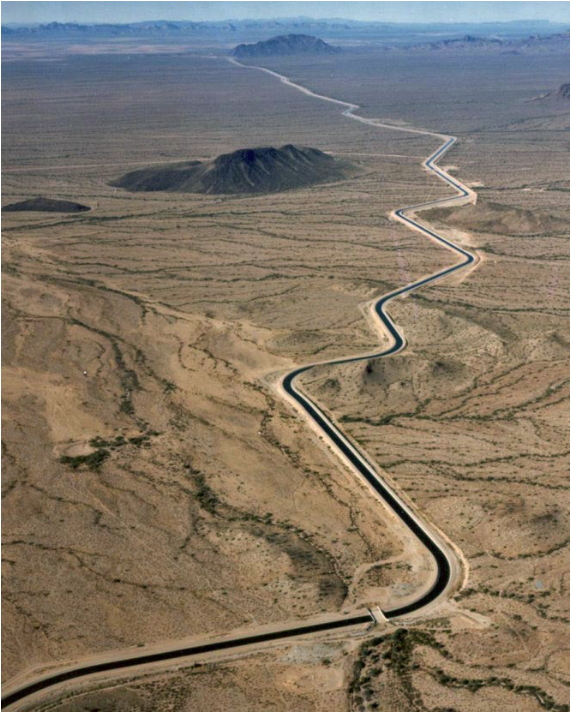
    The number one contributor, by far, to this difference? The atmosphere. This “blanket-like” effect of the gases in our atmosphere was first discovered nearly two centuries ago by Joseph Fourier and worked out in detail by Svante Arrhenius in 1896. Each of the gases present has some amount of absorptive effects in the infrared portion of the spectrum, which is the portion where Earth re-radiates most of its energy. Nitrogen and oxygen are terrible absorbers, but good ones include water vapor, methane, nitrous oxide, ozone and carbon dioxide. When we add (or take away) more of those gases from our planet’s atmosphere, it’s like thickening (or thinning) the blanket that the planet wears. This, too, was worked out by Arrhenius over 100 years ago.

    But a true climate model is more complex, because there’s more at play than just the atmosphere. The oceans ensure that the amount of water vapor (and cloud cover, which impacts temperature significantly) change dependent on conditions, and if you tinker with one component of the atmosphere — like carbon dioxide, for instance — it impacts the concentrations of other components. Scientists refer to this general process as feedback, and it’s one of the largest uncertainties in climate modeling.

    The big advance of Manabe and Wetherald’s work was to model not just the feedbacks but the interrelationships between the different components that contribute to the Earth’s temperature. As the atmospheric contents change, so do both the absolute and relative humidity, which impacts cloud cover, water vapor content and cycling/convection of the atmosphere. What they found is that if you start with a stable initial state — roughly what Earth experienced for thousands of years prior to the start of the industrial revolution — you can tinker with one component (like CO2) and model how everything else evolves.