Graphs showing water-year time series of basin-mean, annual-mean (A) precipitation (millimeters per year), (B) temperature (degrees Celsius), (C) April 1 snow water equivalent (millimeters), (D) surface albedo, (E) surface net radiation (watts per square meter), (F) evapotranspiration (millimeters per year), and (G) discharge per unit area (millimeters per year). Blue curves represent estimates from observations, and grey bands represent ensemble range of model outputs. Black line represents least-squares linear fit.(Credit: Paul (Chris) Milly, USGS)
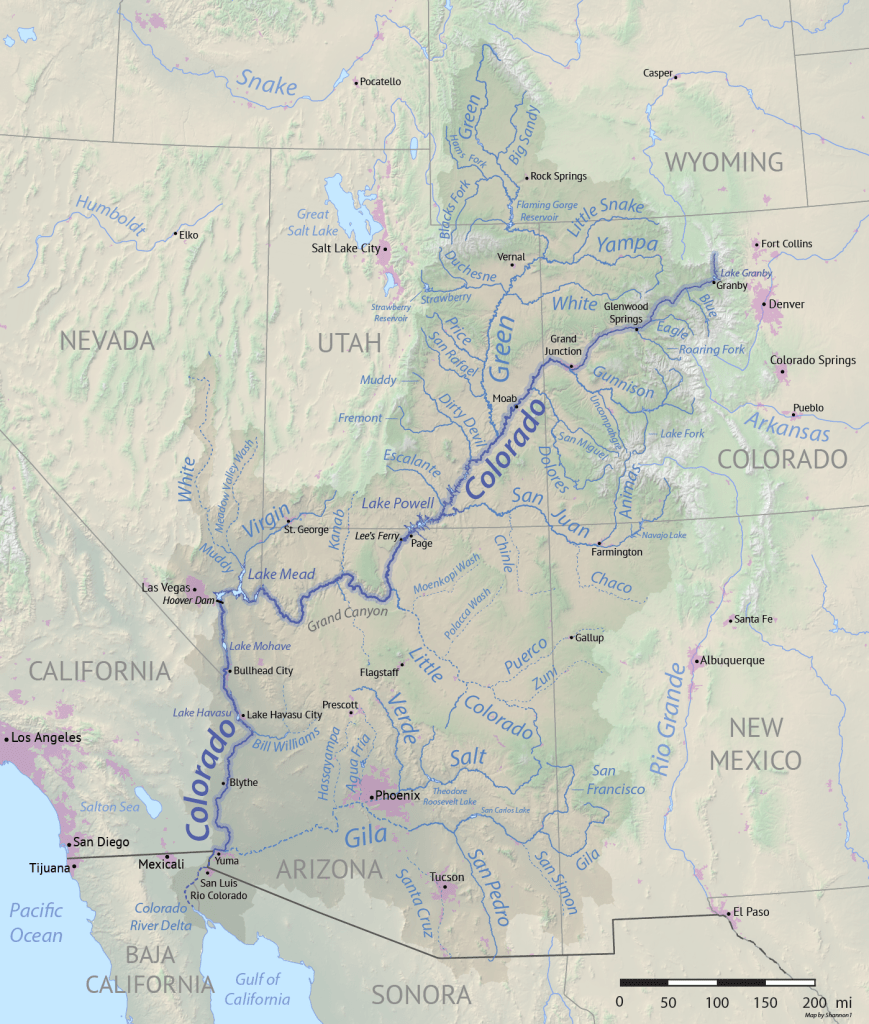
Streamflow in the Southwestern U.S. is projected to decrease by as much as 36–80% by the end of this century, reports a new study by the U.S. Geological Survey. Decreases of this magnitude would challenge our ability to meet future water demand in this region and could jeopardize compliance with interstate and international water-sharing agreements.
The study projects streamflow for the seven major river basins that comprise the U.S. Southwest, including the Colorado River and Rio Grande basins. Projections were done for three 30-year intervals starting in 2020 using seven different climate models, two greenhouse gas concentration scenarios, and a streamflow model. The maximum projected decreases for the river basins range from 36 to 80%. Some increases are projected as well, mostly during the next 30 years. However, most models suggest that substantial water stresses in the region are likely by about 2060.
Streams in the region provide water for drinking, agriculture, hydroelectric power, recreation, and ecosystems. Water-supply shortages would affect all uses and would affect interstate and international water-sharing agreements. Decreases in streamflow in key areas for interstate and international water sharing agreements show potential declines up to 62%, putting agreement compliance at risk.
The results of this study, reached using an entirely different approach, are consistent with and support those of a recent USGS study that investigates how declining snow cover is playing a key role in decreasing the flow of the Colorado River.
Citation: Miller, O.L., Putman, A.L., Alder, J., Miller, M., Jones, D.K., Wise, D.R., 2021. Changing climate drives future streamflow declines and challenges in meeting water demand across the southwestern United States. Journal of Hydrology X, 11: 100074. DOI:https://doi.org/10.1016/j.hydroa.2021.100074
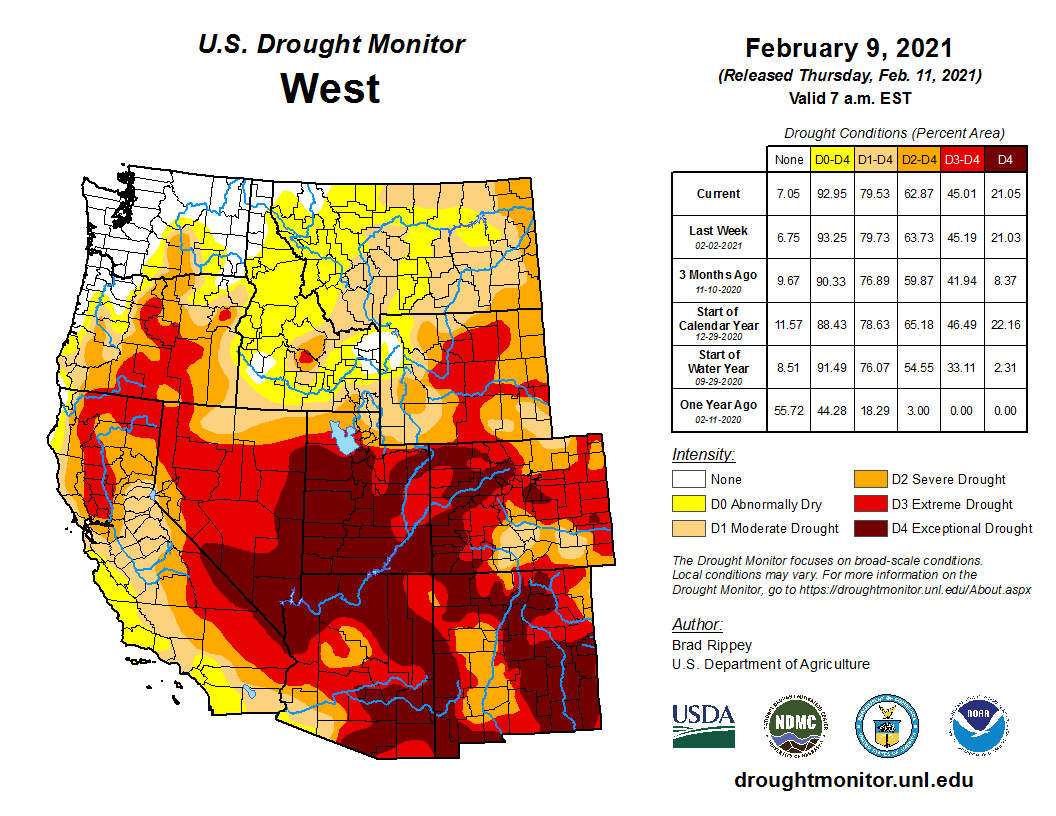
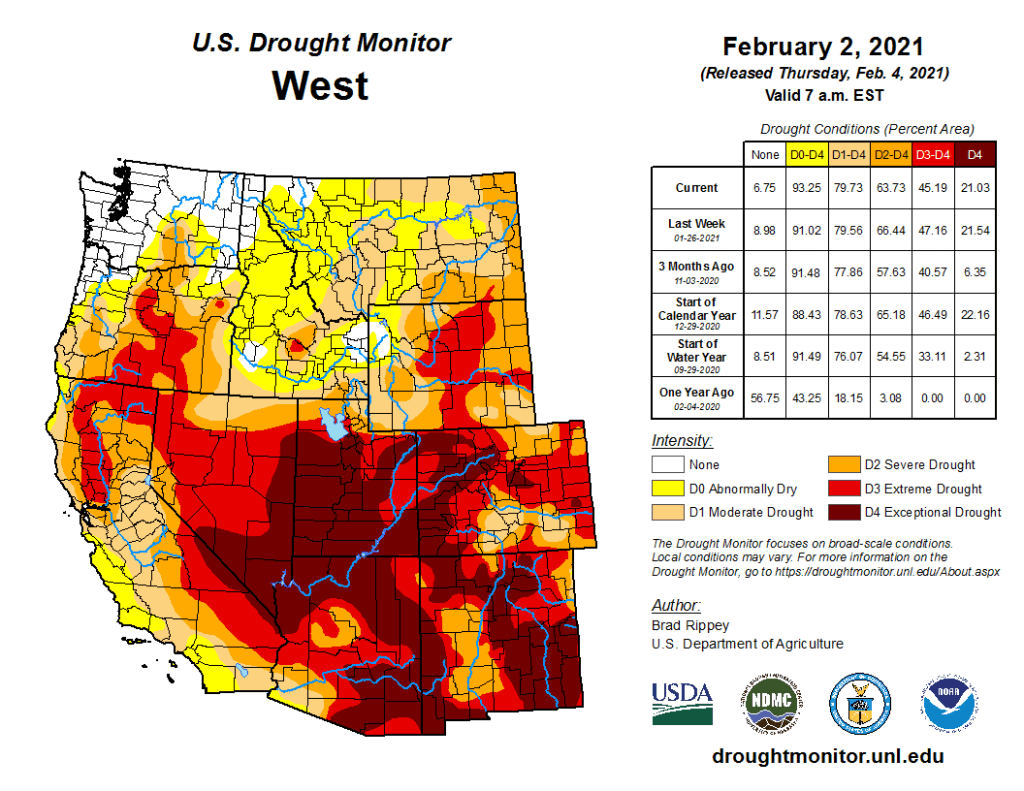
Click on a thumbnail graphic to view a gallery of drought data from the US Drought Monitor.
US Drought Monitor February 16, 2021.
West Drought Monitor February 16, 2021.
Colorado Drought Monitor February 16, 2021.
Click here to go to the US Drought Monitor website. Here’s an excerpt:
This Week’s Drought Summary
Arctic air spilled into the Nation’s midsection and persisted throughout the week, producing weekly departures of more than 25 deg F below normal from the northern Plains and upper Midwest southward into Texas. Numerous daily record lows were broken, with minimums plunging to -50 deg F in the northern Plains, and sub-zero readings southward into the Texas Panhandle. In contrast, high pressure over the Southwest and Southeast kept temperatures above-normal for the week. With several storm systems traversing along the boundary of the cold vs mild air, ample precipitation, much in the frozen form, fell on most of the West Coast, Intermountain West, Rockies, southern and central Plains, and much of the eastern third of the U.S. The combination of extreme cold and frozen precipitation across the South and Southeast taxed the power grid, made transportation hazardous, and brought down trees. The snows, however, were welcomed in the West as snow packs and basin snow water equivalents (SWE) increased throughout the West, although many basins were still below normal as of Feb. 16, especially in the southern Rockies. Frigid conditions also enveloped Alaska, with precipitation limited to western and southwestern sections. Shower activity continued across Puerto Rico, especially along the northern and eastern portions, but rain was lacking in the northwest. Across Hawaii, a weak cold front brought some showers early in the period, with trade wind conditions and windward showers later in the week…
While bitterly cold air enveloped the High Plains this week (except western Colorado and southwestern Wyoming), frequent storm systems have zipped their way across much of the region, dropping snow across both high and low elevations. After several weeks of decent precipitation, some improvements were warranted for those areas with surplus precipitation out to 2-3 months and wet short-term SPIs. Although longer-term SPIs (>6 months) were still severe, the short-term conditions have been wetter, and this is what these improvements were attempting to depict. This included 1-cat improvements to parts of Nebraska and adjacent western Iowa, sections of Wyoming, southeastern Montana, northeastern Kansas, and portions of Colorado. As mentioned in the Midwest summary regarding western Iowa, low elevation snow melt and infiltration into the soils can have problems, so take these improvements with caution. Fortunately, higher elevation (mountain) snows tend to melt more evenly and slowly. In sharp contrast, storms and precipitation continued to elude the frozen northern Plains, but unfortunately the bitterly cold Arctic air did not…
Another in a series of Pacific storms battered the West Coast and tracked southeastward across the Intermountain West and Rockies, dropping heavy precipitation (more than 4 inches) along the Washington-Oregon-northwest California coasts and on the Cascades, with lighter totals (2-4 inches) falling on the Sierra Nevada. Beneficial precipitation fell farther east on higher elevations of northeastern Oregon, most of Idaho, northern Nevada, central Utah, western and eastern Wyoming, western Colorado, northeastern Arizona, and most of New Mexico. With precipitation increasing over the past 30 days or so, short-term indices not showing D3-D4 on multiple time scales (short-term much wetter), and SNOTEL basin average SWE (as of Feb. 16) improving and getting closer to normal (but still below), some improvements were justified to depict areas with the aforementioned conditions, although long-term drought still remained (going back to the failed southwest summer monsoon). However, there were some small areas of deterioration as not all locales received this beneficial moisture. This included portions of Oregon and Wyoming. No improvements were made for areas with very large deficits, lower weekly precipitation totals, and smaller basin SWEs. With February normally one of the wettest months for California, the moderate precipitation falling on the Sierra Nevada this week was enough to keep conditions stabilized. As of Feb. 16, the northern, central, and southern Sierra Nevada SWEs stood at 68%, 76%, and 54%, and the state average was 69%. When applied to an April 1 (normal peak snow) date, these values dropped to 54, 59, 40, and 53%, respectively. Basin SWEs remained the lowest in the southern Rockies (6-45% of normal), even though light precipitation fell across most of New Mexico…
Arctic air set-up shop in parts of the region, especially Oklahoma, Texas, northern Louisiana, Arkansas, northern Mississippi, and western Tennessee, with wintry weather blanketing or glazing many parts of these states. Although the precipitation was welcome after a rather dry 30-60 days prior, the form it came in (frozen) was not, nor was the Arctic air. With light to moderate totals (0.5-2 inches) from south-central and eastern Texas northeastward across the remaining Southern states, and heavier totals (2-5 inches) in southern sections of Louisiana and Mississippi, some D0 and D1 was improved, especially along the central Gulf Coast. However, since there were 60-day deficits of 3-6″, the precipitation in the lower Mississippi Valley was not great enough to eliminate them, thus many areas remained unchanged. But with the combination of the extreme cold (no evaporation) and widespread precipitation, no deteriorations were made this week…
Looking Ahead
During the next 5 days (February 18-22), temperatures should remain below normal across much of the lower 48 States, although moderating temperatures are expected later in the period in the northern Plains. A vigorous storm system will impact the Southeast and Northeast early in the period, with significant snow and icing possible. Tranquil weather should prevail in the Nation’s midsection, while a series of storms hit the Pacific Northwest, bringing heavy rains to the coast and heavy snows to the Cascades, and light precipitation to the Rockies.
The ensuing 5 days (February 23-27) brings enhanced chances of above-normal precipitation to the northern tier of States, from Washington eastward to the Great Lakes region, and across Alaska. The odds favor subnormal precipitation across the southern half of the Nation. With a pattern change, above-normal temperatures are most-likely across the northeastern quarter of the country, especially in the upper Midwest, across southern sections of the Southwest, and in southwestern Alaska. In contrast, subnormal readings are anticipated in the Northwest and the remainder of Alaska.
US Drought Monitor one week change map ending February 16, 2021.
A powerful sprinkler capable of pumping more than 2,500 gallons of water per minute irrigates a farm field in the San Luis Valley June 6, 2019. Credit: Jerd Smith via Water Education Colorado
Imposing hefty taxes on speculative water sales, requiring that water rights purchased by investors be held for several years before they can be resold, and requiring special state approval of such sales are three ideas that might help Colorado protect its water resources from speculators.
The ideas were discussed Wednesday at a meeting of a special work group looking at whether Colorado needs to strengthen laws preventing Wall Street investment firms and others from selling water for profit in ways that don’t benefit the state’s farms, cities and streams.
The anti-speculation group was created last year by lawmakers and is charged with reporting back to them this August.
As prices for Colorado’s water have soared and Wall Street firms and others have begun buying up agricultural lands and their associated water rights, concern is rising that the state could lose control of its vast, though heavily used, streams and rivers.
“It’s a tough nut to crack,” said Joe Bernal, a rancher and work group member from the Grand Valley on the West Slope, where hedge funds are actively buying land and water.
Water has always been a scarce resource in Colorado. In the 1800s, as miners and farmers were moving in, the courts developed a system so that no one could hoard water, drive up its price, and profit from its sale. To combat the problem, they required that water rights be granted only to those who could put them to beneficial use, whether in farm fields or mines, or in people’s homes and businesses.
Under state law, water is considered a public resource. The legal right to claim it and use it for some beneficial purpose, such as farming or manufacturing or municipal use, must be approved in water court. Once obtained, water rights are considered a private property right and can be bought and sold, again with approval from the courts.
Colorado already has some of the strictest anti-speculation laws in the West.
But the rise in water prices and the purchase of water-rich farms and ranches on the West Slope by deep-pocketed, out-of-state investment firms, as well as in-state efforts to export water from the San Luis Valley, prompted lawmakers in late 2019 to call for more work on the issue.
The work group has yet to make any formal recommendations, but Alex Davis, an attorney for Aurora Water and work group member, said new ideas have to be considered because Colorado’s existing laws were written more than 100 years ago, long before hedge funds existed.
“This idea of appropriating water rights and not using them, we have that covered,” Davis said. “It’s well prevented by the laws that exist. It’s the financial speculation that we’re focused on here. How do you prevent it? It’s a very difficult question.”
Imposing a hefty tax on any profits made in a speculative sale, similar to a capital gains tax, could serve as a disincentive to investors, Davis said.
Still another work group member, Adam Reeves, an attorney with the Denver- and Durango-based firm Maynes, Bradford, Shipps and Sheftel, said forcing certain investors to hold onto water rights for several years before being allowed to sell them again could provide another powerful disincentive.
Still others suggested some kind of state approval by existing water courts or other state authorities could be required, effectively limiting any sales deemed speculative.
But key to any of these tools is defining what is and isn’t speculation.
“What are the criteria by which you determine that ‘x’ investment is speculative and ‘y’ investment is not?” Davis asked. “Any time anyone purchases an asset it’s an investment…when does it become an investment that is problematic or predatory? Is a Colorado billionaire different than a New York billionaire?”
Bernal said any definition of speculation should consider whether transactions in which cities are buying agricultural water with an intent to permanently remove it at some future date to serve a growing population could also be considered speculative and therefore subject to some limitation.
“The concern we all have here is where it might go and who will end up with it. Is it right, is it proper that it go to large municipalities?” Bernal asked. “Why are some of these transactions bad because of who they involve, and what limitations do we put on these transactions, and how does that affect people who’ve owned the water traditionally? Is there something we need to do that doesn’t interfere with private property transactions?”
Work group member Peter Fleming, a water attorney for the Glenwood Springs-based Colorado River District, said the state should be careful not to limit investment in ways that are harmful.
“There is no risk to Coloradans from a non-speculative investment in water,” Fleming said. “We need that to increase productivity and maximum utilization of the state’s water resources.”
The work group has six months to finish its research and craft recommendations for lawmakers to consider later this summer.
The group plans to meet next in March, though a date has not yet been set.
Jerd Smith is editor of Fresh Water News. She can be reached at 720-398-6474, via email at jerd@wateredco.org.d
Carrots or sticks—or, more likely, what mixture? That will be among the questions as Colorado legislators sort through several dozen bills during the next few months that seek to build on the state’s ground-breaking energy and climate laws from 2019.
Foremost among the 13 energy and climate laws of that session was H.B.19-1261, the Climate Action Plan to Reduce Pollution. The law specified economy-wide carbon reduction targets of 26% by 2025 and 50% by 2030, with even deeper mid-century reduction.
The 2019 session provided only a partially defined pathway to reduction. The legislative session that begins today after a month-long semi-hiatus looks to be a big, big year for expanding the tool kit and defining more explicitly the decarbonization path. Some describe it as the session that will be known for beneficial electrification.
“We have obviously done a lot as a state when it comes to climate and energy issues in just the last two years,” said Senate Majority Leader Steve Fenberg at a forum last week sponsored by Empowering Our Future. “But we all know it’s nowhere near what we need to be doing.”
Fenberg urged the 200 energy-change advocates on the video-conferenced town hall to use the accomplishments as inspiration even though, later in the evening, he cautioned against expecting a ban on new natural gas hookups in the built environment.
This is from Big Pivots, an e-magazine tracking the energy and water transitions in Colorado and beyond. Subscribe at http:bigpivots.com
One giant gain in the last two years has been the rash of announced closings of coal plants. If market forces were already aligned behind those closings, some believe Colorado’s action in 2019 hastened at least some of those announcements. The result of closing coal plants will be a dramatically decarbonized electrical supply by the end of the decade that can then be used to decarbonize other sectors, most notably transportation and the built environment.
Legislators, of course, are facing pressures from several sides. Major utilities generally want to go slower, to maintain traditional models of profit, worried about too much disruption.
Environmental advocates want to go faster and have a strong appetite for massive change. “I think it’s alarming to think that we didn’t get to 26% (carbon reduction, as targeted by the law two years ago) even at the height of the stay-at-home orders,” says Jan Rose, an advocate aligned with several organizations.
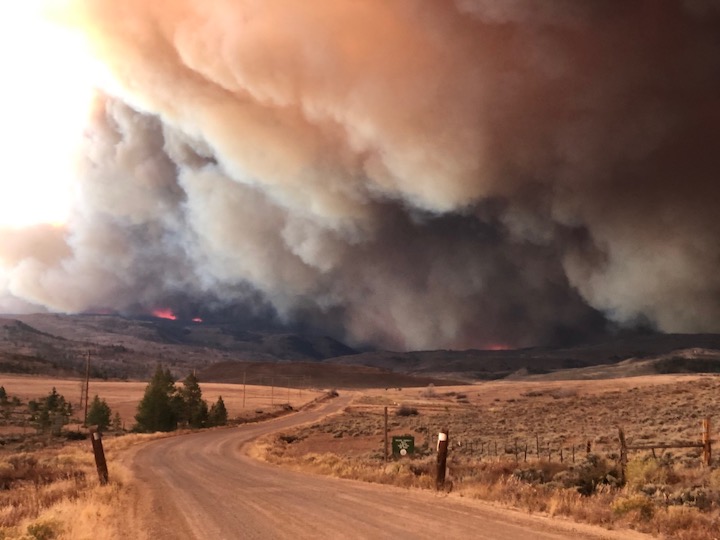
Memories of wildfires, even in the coldest, sub-zero days of winter, will provide a backdrop for the session. The smoke was awful but also deadly. In Larimer County, heart attacks and other emergencies spiked during the season of smoke, which there began in mid-August with the outbreak of the Cameron Peak Fire and never completely ended until after the first snows of November.
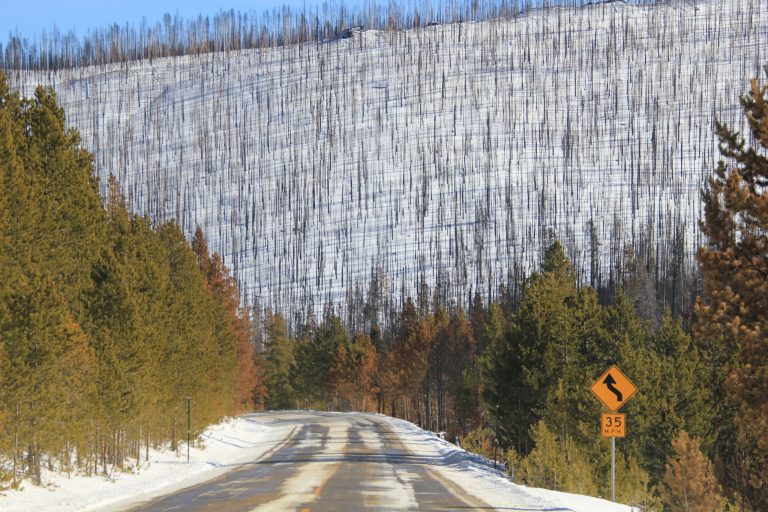
Drivers between Granby and Walden will encounter many scenes of hillsides where only snags remain from the 193,000-acre East Troublesome Fire in October. Water managers say the worst impacts of the fire may be felt with summer rains. Photo credit: Aspen Journalism
“I think this last summer was a real wakeup call for a lot of people—and a lot of lawmakers—about what is at stake here and what it will take for us to solve this problem. I have never experienced anything like the physical and emotional turmoil we saw related to our failure so far to get our climate emissions under control,” she says.
“I think there’s a real sense of urgency. We passed some incredible pieces of legislation in 2019, and we made some progress, but we haven’t made nearly enough.”
Mike Kruger, chief executive of Colorado Solar and Storage Association, also points to this heightened sense of urgency. The goal of 50% decarbonization is less than 9 years away. That goal was premised on the best science available about the reductions that will be needed.
“We can’t just bargain our way to a couple of extra years,” says Kruger. “We need to address things now.”
State Sen. Rachel Zenzinger, a Democrat from Arvada, warns against moving forward in ways that fail to have a sustainable foundation. She describes broad coalitions that define common ground. “That is what is going to make your policies have staying power. That is what will make them work,” says Zenzinger, a self-described moderate who nonetheless has notched a 100% voting record rating from Conservation Colorado during the last four years.
Big Pivots has identified several dozen proposals likely to be introduced by legislators this week and in coming weeks. Some will be reintroductions of bills that were shelved last year because of the covid-induced shortened session, or even bills introduced repeatedly, if in variant fashion. Others will be entirely new.
The two biggest energy and climate bills will center around transportation and building emissions.
“This legislation session will be very focused on progress in both the built environment and transportation to ensure that we are extending the benefit of the (greening) of electricity and start making progress in other sectors that are lagging behind the power sector,” says Zach Pierce, the special climate and energy advisor to Colorado Gov. Jared Polis.
Transportation has replaced electrical generation as the No. 1 source of greenhouse gas emissions in Colorado. In his first executive order as governor in 2019 Polis specified a goal of having 940,000 electric vehicles on roads by 2030. Legislation in 2019 provided tools to advance that. But Colorado needs to hurry harder on transportation decarbonization.
Sen. Faith Winter, a Democrat from Westminster, has not revealed details of the big bill that she is said to have been working on. The transportation bill needs to cover a lot of ground. Colorado’s funding for transportation has fallen short for many years as voters have resisted raising the gas tax (or, if you prefer, the “fee” on gasoline). Now, with electric cars starting to rapidly enter the automotive fleet, there’s a further complication about how to make them pay their way.
As Sen. Winter was unable to make a scheduled interview for this story last Friday, my details on this bill are sketchy and second- or third-hand.
There is no doubt that Colorado’s funding for transportation needs an overhaul. And transportation must change if Colorado is to meet its decarbonization goals built on the foundation of climate science.
What I hear is that this bill will try to address the need for revenue from both electric vehicles, or EVs, and internal-combustion engines, or ICEs. How it will do so is unclear. One way may be through increased registration fees. Another thought is to add a fee for electricity used for charging EVs. Still another idea is to apply a road use fee, not a fuel fee. I’m unsure of the mechanics of that, although it’s been talked about for about 30 years.
“We want a tool that keeps up with the times,” says Ariana Gonzalez, Colorado policy director for the Natural Resources Defense Council.
NRDC wants to see legislation that looks at transportation more holistically, she says, “not penalizing people who travel a lot but providing them more options, whether it’s more fuel-efficient vehicles or more mass transit.”
What does this mean specifically? Well, the Gonzalez interview was conducted in the first week of February, and details were sparse. Others interviewed for this story were similarly short on details except to point out that anti-tax (or fee) opponents still have powerful influence in Colorado. And Polis, in a public interview, conspicuously refrained from talking about either taxes or fees.
Heavy traffic on I-70. Photo credit: Allen Best/The Mountain Town News
A carbon-reduction component, however, has to be a central piece of what Winter proposes. Transportation funding identified in the bill must align with the emissions reductions the governor’s roadmap has identified, says Katie Belgard, of Conservation Colorado.
Land use may be part of the discussion, as dispersed settlement tends to result in more transportation. It was discussed in the state’s decarbonization roadmap release in mid-January.
State Sen. Chris Hansen, a Democrat from Denver, says the transportation bill must deliver “broad-based solutions where each part of the transportation user groups all need to be involved in the solutions.” That package must involve trucks and heavy-duty vehicles, he added.
The Air Quality Control Commission is scheduled to take up transportation this summer as part of its rule-making to achieve decarbonization goals. You can be assured this legislative session will almost certainly produce a big pivot in transportation.
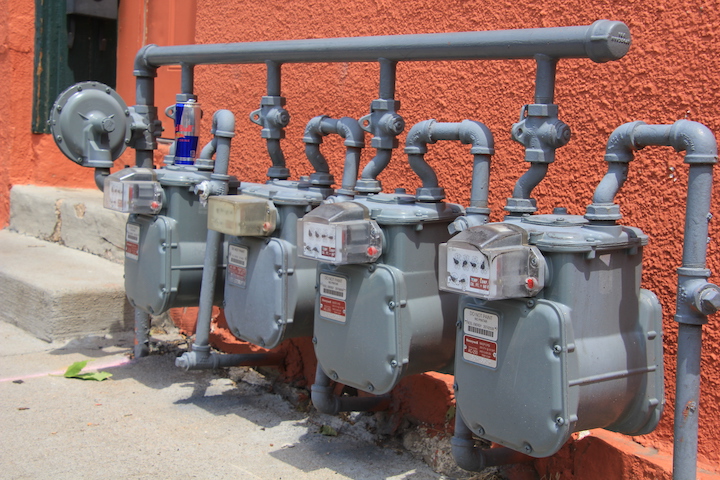
Building emissions will be the focus of a second big bill. Buildings rank fourth in Colorado in responsibility for greenhouse gas emissions. They pose an enormous challenge because the turnover rate is so terribly slow. Most of Colorado’s coal-burning plants were constructed from the late ‘60s to the early ‘80s. Now, they’re rapidly being retired. But you can drive from Pueblo to Brush to Craig in a day and see them all. In contrast, Colorado has perhaps a million buildings, give or take, each with its own small power plant, mostly natural gas furnaces for space heating, gas-powered hot water heaters, and gas stoves.
How to tamp down the combustion of natural gas? The intuitive answer might be to stop building tens of thousands more houses each year that require natural gas. That doesn’t seem to be the direction Colorado is headed, at least not soon.
Polis favors incentives, not mandates, and that was also the language of Fenberg at the Empowering our Future session. He would not, he said, be calling for a ban on natural gas.
“For a few reasons,” he went on to explain. “One, I am not sure the bill would pass, and if it is really about transitioning people’s homes to electricity I want a bill that passes. He also suggested that focusing solely on future buildings without considering how to retrofit existing buildings was misguided. Too, a lot of people like to cook with natural gas, even if they don’t care particularly how their homes are heated.”
It is, he added, an item for “further policy discussion. The goal now is to get as many dollars into homes for heat pumps and other decarbonization techniques.”
In other words, incentives, not mandates.
For example, the Polis budget includes $40 million for clean-energy financial programs, including $30 million for green banking, and another $10 million for various other programs.
Even so, there could be a soft mandate. One approach that was being talked about in recent weeks was a performance-based standard for natural gas utilities, a required reduction in emissions from the natural gas sold to consumers by Colorado’s four natural gas utilities, Xcel Energy, Black Hills Energy, Atmos Energy, and Colorado Natural Gas. But then let the utilities figure out how to achieve this.
Also part of the discussion are required energy efficiency upgrades, or demand-side management. Talk of a carbon tax on methane, similar to the PUC’s social cost of carbon, may have been walked back. I hear that from a good source, but I don’t know that for sure. This has been a fluid environment even in the last two weeks. “Lots of stake-holding going on,” a legislator said at a recent meeting.
There will be themes, though. One is about equity. Legislators in 2019 made it clear that equity needed to be part of the conversations as they applied pressure to create this big pivot in Colorado’s energy foundation. Those of lower incomes, which tend to be racial minorities, need to benefit from this transition. This will be part of the conversation in regard to transportation and other bills, too.
Energy Outreach Colorado has been monitoring the conversation about proposed bills with an interest in how well they affect energy affordability, reliability, and accessibility. “There is a lot of transition happening in the energy space, which is exciting, but that speed of transition can often leave people behind when they are not considered upfront,” says Jennifer Gremmert, executive director .
“I think the aggressive goals the state has will require a lot of shifts in generation, transportation and buildings,” she says. “I think there are a lot of very smart people pulling together good solutions, and we’re looking forward to the process of debate and consideration.”
Another element running through many of the energy and climate bills will be the role of evolving technologies. There’s much talk about hydrogen, for example, but also battery storage. What mix of carrots and sticks will be needed to help induce technological innovation and adoption while remaining agnostic about what the solutions look like?
Even in the shaping of bills, the enormous clout of Colorado’s major utilities and oil-and-gas interests can be detected. Xcel Energy, for example, urged a far slower approach to building electrification, even if it will theoretically benefit by selling more electricity to replace lost gas sales. It cites various concerns, including whether the transmission can be created to deliver the renewables sufficiently fast as needed to supply both electrified transportation and electrified homes.
On Thursday, Feb. 18, Xcel plans to disclose its electric resource plans in advance of its scheduled March 31 filing with the PUC. That could conceivably have a bearing on the legislation.
Geographical schisms also are evident. Boulder and Weld counties share a border but preciously little else on political talking points. As both Boulder and Boulder County seek to replace natural gas in big and remodeled homes, a bill is said to be coming from a Weld County legislator that would ban any bans on natural gas.
Some of those involved in helping shape legislation say they have been advised to trim their proposals, because of time limitations imposed by covid. Hansen, who is part of the legislative leadership team, disagrees. “I don’t think this session will be shortened very much in a functional way,” says Hansen. “All the legislative days we need will be available. This is going to be a very busy and important session. Big legislation typically passes in odd-numbered years, because it’s often harder to get the big pieces done in an election year.”
Fenberg sees opportunity amid the many crises. “In many ways I think the crises in front of us are a massive opportunity to rethink and imagine what we want our society to look like.”
This story attempts to be semi-comprehensive, but it has gaps of which I’m aware and likely important gaps of which I’m unaware. The conversation is fluid, so some information is likely dated. It’s a view from 15,000 or 20,000 feet, with a few clouds obscuring visibility here and there. I hope to follow the legislative session closely, as it is part of Colorado’s Big Pivot.
East Troublesome Fire. Photo credit: Brad White via The Mountain Town News
Wildfire is top of mind
It’s a given that the state will have to step up its response to the prospect of wildfire. The three largest wildfires in Colorado history occurred in 2020.
The East Troublesome Fire wasn’t the largest — that distinction belongs to the Cameron Peak Fire west of Fort Collins—but it was the scariest, racing from north of Hot Sulphur Springs to cover more than 100,000 acres within 24 hours, leaping across the Continental Divide and forcing the evacuation of Estes Park.
That’s a California-sized fire – and more California-type fires are almost certainly headed to Colorado given the rising temperatures and the increasing propensity toward drought, both manifestations of climate change.
“We are absolutely going to focus on wildfire mitigation,” said Senate Majority Steve Fenberg, a Democrat from Boulder, at the February forum sponsored by Empowering Our Future.
Some of this mitigation will involve funding, such as for equipment, and I didn’t dig up anything here. I did hear about two bills that relate to wildfire.
Renewal of 2008 funding opportunity
Bipartisan support has already been lined up for a bill that would renew a law adopted in 2008 that allows the Colorado Water Resources and Power Development Authority to issue bonds for certain projects related to what is often called forest health.
Ellen Roberts, a Republican from Durango, was a state representative in 2008 who was among that original bill’s sponsors. Now out of the Legislature, she has been engaged in a project, the Southwest Wildfire Impact Fund, which seeks to use that legislation to remove vegetation from forested landscapes.
“Dense, unhealthy forests. Increasing drought. Dead trees from insect infestations. All these factors combine to increase the public safety threat of catastrophic wildfire in populated areas of Southwest Colorado, like Durango and La Plata County,” the website says. “There are ways to remove or reduce the dangerous tinderbox of these fuels through forest health treatments and reduce catastrophic wildfire risk, but the region lacks a sufficiently funded, long-term, and coordinated approach to forest restoration on all lands, private or publicly owned.”
After two years of trying, the project Roberts, the Colorado State Forest Service, and others envisioned in southwestern Colorado together still hasn’t launched and only the first phase of the project will get done before the authority for bonding by the state’s water and power authority expires. The second phase of the project may be getting started post-2023, she says.
“It’s tricky,” she says of the project. “It involves local government financing. It involves finding the collaborative pieces between federal and non-federal lands, identifying areas of high risks in watersheds, identifying critical values, public safety, and natural environmental concerns. It’s very complicated, and it takes a lot of collaboration.”
But the project, she says, should serve as a template for those in other places, as reflected in the districts of the bill’s primary co-sponsors: Rep. Marc Catlin, a Republican from Montrose, and Rep. Jeni Arndt, a Democrat from Fort Collins, whose district experienced two big wildfires in 2021.
In the other chamber, Sen. John Cooke, a Republican from Greeley, and Sen. Chris Hansen, a Democrat from Denver, are also sponsors. Their districts include two major water providers, Denver Water and Northern Water.
If not a lobbyist herself, Roberts talks up the bill as resulting in rural job generation but also improved public safety, in that it will reduce the fuels for wildfire. It will also have a climate change component: younger forests absorb carbon, and wildfires create massive amounts of carbon dioxide emission.
“Fire is part of our ecosystems. We aren’t trying to eliminate fire. But we are trying to manage it in a world in which more and more people are moving into the forests of Colorado. So we need to think about it differently. This bill aims at projects that are thinking outside of the box but also dealing with the reality on the ground in terms of needing to think about the forests in areas of high risk.”
Wildfire, power lines
Utilities, already nervous about their liability if power lines start wildfires, were galvanized by the Camp Fire at Paradise, Calif. The fire in November 2018 caused by electrical wires in strong winds resulted in 85 deaths and $16.5 billion in damages and the bankruptcy of Pacific Gas and Electric.
The Colorado Rural Electric Association hopes to see a bill that would give the state’s 22 electrical cooperatives protection from liability if they undertake mitigation efforts. The essential problem is that rights-of-way for distribution lines often were negotiated 30, 40, or even 60 years ago, says Geoffrey Hier, director for government relations for CREA.
“That may have been adequate at the time, but it is no longer adequate,” says Hier. “You have property owners who aren’t necessarily excited about having a utility come in and chop down trees on their property.”
The proposal being shopped to legislators by Heir would give utilities permission to clear trees in 16-foot swathes along power lines, 8 feet on each side. “Under current law, we don’t have the ability to address that,” says Hier. “We need some way to address the identified hazards that fall outside of our rights-of-way in addition to maintaining the right of way.”
The carrot-and-stick approach favored by CREA, modeled on legislation adopted last year by Utah and Missouri, would require the co-ops to submit their mitigation plans to the Public Utilities Commission. In exchange, the co-ops would get shielded from some liability if they filed plans and adhered to their mitigation plans.
Most wildfires of 2020 in Colorado occurred in the service territory of utilities, although none of the fires were caused by wires. However, managers have fretted privately about how even a small fire in the wrong place among very expensive real estate could expose them to enormous liability that could potentially bankrupt the co-op.
Utilities see a huge need for vegetative mitigation that the $88 million proposed for allocation in the state budget will hardly touch. Too, while last year was the largest ever in Colorado in terms of acres burned, this year is already shaping up to be much, much worse, given the absence of snowfall.
If not the size of the federal government, Colorado’s state government has considerable weight through the simple fact of its purchasing power. Some environmental groups have been saying that Colorado needs to use that purchasing power to help shift the markets.
One easy example is in transportation. There, Colorado hopes to move the needle more rapidly toward electrification by getting fleet owners to convert. Colorado, the argument goes, can help move the market itself through fleet purchases of electrified vehicles.
Just Transition funding
Legislators in 2019 created a Just Transition office, with one staff member, and a mission to deliver a final report to legislators by Dec. 31, 2020.
The office still has one employee, Wade Buchanan, the director. But the Polis budget calls for two additional full-time equivalents positions, for a total of 3.5.
“It’s just a down payment. It’s not the money we will need for the programming and for the funding of communities,” says Zach Pierce, special advisor on climate and energy to Gov. Jared Polis. “In a difficult budget year, it’s a statement.”
Various ideas are being talked about among legislators, even if there is no specific legislation (of which I’m aware).
Photo credit: Allen Best/The Mountain Town News
Time to slow emissions from the built environment
There will be a tremendous focus on the built environment, that attention being long overdue, in the minds of many environmental advocates.
The built environmental is No.4 on the list of emission sources in Colorado, behind transportation, electrical generation, and the oil and gas sector. The problem is that to achieve long-term goals of decarbonization will require a broad and deep effort. And unlike cars, which get swapped out every 10 or 15 years, buildings last for decades and, in the case of the house of this writer, well along on the second century (constructed 1889, and later expanded).
What you can expect, said Keith Hay, director of utility policy at the Colorado Energy Office, are proposals that fall into four buckets:
1) Modernizing and updating gas energy efficiency programs, which have not been updated since 2007. This would apply to the gas-regulated utilities: Xcel Energy, Black Hills Energy, Atmos Energy, and Colorado Natural Gas.
2) A requirement that the state’s two investor-owned electrical utilities, Xcel and Black Hills, file plans with the PUC to support beneficial electrification, similar to what was required of Xcel and Black Hills for transportation, but this time for gas. Again, the idea is of incentives but softly pressing down the carbon intensity of the building sector.
3) A renewable natural gas bill proposed by State Sen. Chris Hansen in 2020 that got shelved because of covid.
4) Benchmarking of buildings.
Gas demand-side management
Most buildings in Colorado are heated by combustion of natural gas. A bill being sponsored by Rep. Tracey Bernett, Democrat from Boulder County, would require utilities to expand their energy efficiency efforts, hence reducing demand. She plans to promote it as a jobs-creation proposal, but also one that reduces greenhouse gas emissions. Methane is a powerful greenhouse gas.
“It’s not shutting down gas,” she said when we talked in early February. “We are still going to need gas for a while in our buildings, especially in this colder environment. Things like heat pumps don’t necessarily work well at low temperatures.”
At the time of the conversation, she said the bill would include an “accounting for the external economic costs of burning fossil fuels.” I’ve since heard that this component—essentially a carbon tax applied to methane—has been stripped from the proposal.
So, we’ll see when the bill gets introduced. It’s worth reviewing the thinking of Laurent Meillon of the policy committee of the Colorado Renewable Energy Society. For more than a decade, he has been working with legislators with the hope of passing legislation that causes state regulators to review demand-side management programs through the lens of long-term gains.
It’s worth emphasizing: What he wants to see and what ends up in the bill may be two very different things.
Photo credit: Allen Best/The Mountain Town News
One metric that Meillon wants Colorado to adopt for evaluating demand-side management programs is how capital is treated. “$100 ten years from now is not the same as $100 now,” he explains.
We all know that’s true. That’s why we invest money, instead of just putting it into shoeboxes or at least safe-deposit boxes.
In the case of adding insulation to an attic, though, the investment is viewed through the metric of whether the benefits outweigh the costs in the short term. Will the added insulation save money in the next two or three years?
Viewed through that short-term prism, only the lowest-hanging fruit will be seized. You will add only the minimal amount of insulation. However, if you took a long view, the amount of energy that would be saved and hence the lower cost to the consumer of the course of 30, 40 or 50 years, would be a greater cumulative return on the investment.
Benefits are less when evaluating energy efficiency programs using the weighted average cost of capital, as is now used by Xcel and regulators. If, however, regulators used something called net-present value—a way of viewing the long-term benefits—much more work in energy efficiency could be justified.
The existing system “has turned out to be unfair, inaccurate, and against clean energy and ratepayer interests,” says Meillon.
Then there’s the metric of the external costs of fossil fuels. We know that burning fossil fuels damages the environment and imposes costs even now on people, directly and indirectly. Colorado in the 2019 legislative session recognized this by imposing a social cost of carbon of $46 per metric ton of emissions through which state regulators evaluate generation plans by Xcel and other utilities. Meillon believes the same social cost of carbon should be applied to heating resources when decisions are made.
A decade ago, Meillon was working with then State Sen. Gail Schwartz with this same sweep of ideas. Last year he worked with former State Sen. Mike Foote.
He’s a solar developer with a giant interest in solar thermal. Solar thermal got a bad name in the 1970s when it was introduced – and performed badly. Since then, says Meillon, solar thermal has improved and should be taken seriously. “My first car was a Fiat, and it didn’t work so well, but I did not conclude that all automobiles are crap,” he says.
Solar thermal has continued to struggle to get traction. The renewable portfolio standards first adopted in 2004 and updated several times since have not provided for solar thermal. They provide credits only for production of electricity. As such, there is no financial incentive for creating solar thermal projects. Without that stimulus, solar thermal has struggled to compete against the low cost of natural gas in Colorado.
If slowly, solar thermal is making inroads. One such project is a 44-unit all-electric apartment complex in Longmont. The hot water is pre-warmed by solar.
Photo via Allen Best/The Mountain Town News
Building benchmarking
This is one of the four pillars of the energy legislation described by Hay from the Colorado Energy Office. It would require owners of commercial buildings of more than 50,000 square (actually, there is at least one residential building of more than 50,000 square feet; it’s on the outskirts of Aspen) to collect and report on energy-use benchmarking data and comply with performance standards related to energy and greenhouse gas emissions.
Denver has such a law applicable to buildings of more than 25,000 square feet. It requires tracking of energy use and sharing of that information. It serves as a way of alerting building managers to problems. If they’re using far more energy than the owner of another comparably sized building, it will likely cause them to want to make changes.
This bill has the sponsorship of Representatives Cathy Kipp of Fort Collins, Alex Valdez of Denver, and Tracey Bernett of Boulder County.
The city’s Climate Action website reports that buildings caused 51% of Denver’s emissions. Buildings overall increased energy use 1.2% on average since 2016, but those in the benchmarking program cut use an average 0.4%. This compared to a goal of reducing energy use from buildings 30% by 2030.
The Polis administration decarbonization roadmap reports that the Colorado Energy Office is launching a commercial building benchmarking program that will enable building owners to report energy-use data to a state-wide database.
GHGs embedded in building materials
Look for a bill from Hansen along the same lines as last year’s SB20-159, Global Warming Potential for Public Project Materials. That bill proposed to establish a maximum acceptable global warming amount embodied in concrete, asphalt, and other materials used in public buildings. Concrete has a heavy carbon footprint, for example. This would require designers of state buildings to consider the emissions produced in the creation of those materials and would impose a lid on those emissions.
Dairy cattle Morgan County. Photo credit: Allen Best/The Mountain Town News
Renewable natural gas
Hansen last session sponsored SB20-1250, Adopt Renewable Natural Gas Standard, which would have required the PUC to create a renewable natural gas standard for large natural gas utilities, those of more than 250,000 customers.
The intent is to induce harvesting of methane from dairies, sewage treatment plants, and landfills, but also at least one coal mine near Somerset in the North Fork Valley.
The bill proposed to mandate Xcel Energy to use 5% renewable natural gas by 2025 and 15% within a decade. The bill also would have required the PUC to develop renewable natural gas programs for smaller utilities and require municipal utilities to report emissions from natural gas.
Expect to see that bill return this session. The bill will specify a maximum impact to ratepayers of 2% from the projects.
Environmental groups have been somewhat skeptical. The Colorado Renewable Energy Society policy committee, for example, frets that this may delay the transition from natural gas. Hansen says he has heard concerns about double-counting but indicates that shouldn’t be a problem.
As mentioned previously, I have only glimpses of what this bill will look like, at least in part because it was still being shaped up well into February. It will be big.
“We are very hopeful a large transportation bill comes out of this session,” said Senate Majority Leader Steve Fenberg last week.
He identified the need for multi-modal transit, as well as electrification of transportation. The upshot is that transportation should look very different in just a few years.
Electrical co-ops governance
State Rep. Judy Amabile, a Democrat from Boulder who was elected to fill the seat vacated by term-limited K.C. Becker, the former speaker of the House, has a bill that would seek to reform the governance of Colorado’s 22 electrical cooperatives
Those co-ops serve 30% of electrical consumers in Colorado, and their functioning is often a mystery to those who live in co-op land.
(An aside, I lived in co-op land myself for 21 years, first in Mountain Parks and then Holy Cross Energy, with time spent in Yampa Valley Electric as well, working mostly as a newspaper reporter and editor. I can testify that the co-op business was very, very low profile. It has a higher profile now, but not among the general public. Election turnout remains far lower than for the town board, city council, and county commission elections).
Amabile, whose district expands beyond Boulder to include Grand, Gilpin and Clear Creek counties, all areas served by co-ops, says her bill would address transparency, would require disclosure of compensation, and make it easier for new members of the public to get elected to the boards of electrical cooperatives. This would, she says, also apply to Tri-State—of which 18 of Colorado’s 22 cooperatives are members. (Tri-State, however, also includes members from Wyoming, Nebraska, and New Mexico).
“No other state has the kind of legislation that we are proposing, but they are looking to us so that they can do something similar,” she said at an Empower Our Future forum on Feb. 11, 2021.
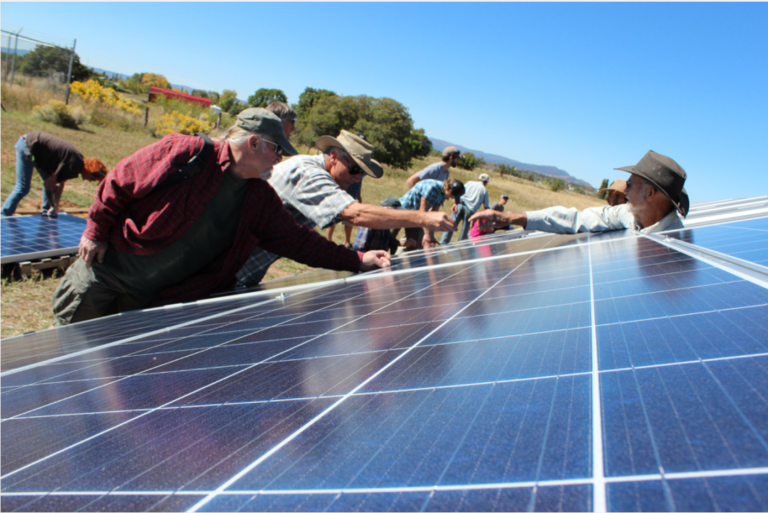
Volunteers help to construct the solar system at a low-income, rental-housing subdivision in La Plata County. Photo/LPEA
Solar and some tweaking
Expect several bills in the solar arena.
Revisiting permitting fees
Several years ago Colorado adopted a law that limited how much local jurisdictions can charge for solar permitting such as on rooftops and garages. The goal was to encourage roof-top and other solar development.
Members of the Colorado Solar and Storage Association say that many jurisdictions have figured out ways that avoid the spirit of that law. COSSA wants to see legislation that keeps local jurisdictions hewing to the spirit and avoid end-around fees and restrictions.
Lift the 120% cap?
Senate Majority Leader Steve Fenberg, a Democrat from Boulder, will introduce a bill that would remove the current cap on how much solar capacity customers of Xcel Energy and Black Hills can produce.
Existing law allows residential customers of the investor-owned utilities to get credited for solar-photovoltaic capacity up to 120% of the annual consumption of electricity by the customer. Xcel and Black Hills must credit them with the retail rate, not the wholesale rate, which is far less.
At issue is whether the customers should be able to get greater credit for more than 120%—how much and also how?
Fenberg explains: “The pushback from the utilities on this topic is generally that they don’t want to pay the customer for the energy that is produced above and beyond what the customer uses himself.
“Currently the utility has to pay at the wholesale rate for that excess energy, and they’d like to keep it that way rather than paying at the retail rate. Some would argue that compensating at the wholesale rate is unfair because distributed solar has more value due to the avoided generation and transmission costs as well as avoided environmental externalities.
“However, with that said, the compensation rate isn’t actually the crux of the issue. Their main demand is that customers shouldn’t be able to roll over their excess generation credits at the end of the year. Instead, the utility wants to force the customer to take a check for those excess credits (at the wholesale rate). Currently customers can roll over credits, but the utility fears this will be a bigger threat to them if people are allowed to install larger systems on their roof.”
Colorado Solar and Storage Association members say this issue of exceeding 120% hasn’t been much of an issue. True, concedes Fenberg, but he sees need for even more distributed solar in the future.
“If we’re trying to rapidly electrify people’s homes and their cars, we need to lift this arbitrary cap. Installing a solar system based on your last year’s average electricity use isn’t a relevant cap once that homeowner buys an electric car and an electric heat pump,” Fenberg says.
“Due to economies of scale, it’s much better for that homeowner to build the system based on likely future electricity use rather than past electricity use. Part of the state’s path to reduce emissions is to electrify home heating and transportation, which means the average home will have a much larger electricity load in the future. And if we want to decarbonize that increased electric load, we want more roof-space covered by solar panels.
“Another aspect to this story is the recent Boulder/Xcel settlement. Xcel agreed to advocate for the lifting of the 120% cap in the Legislature this year as part of the settlement.”
Also operative, as he said at a recent forum, is that the utilities are in the business of selling electricity. “They don’t want to have to buy energy from you,” he said.
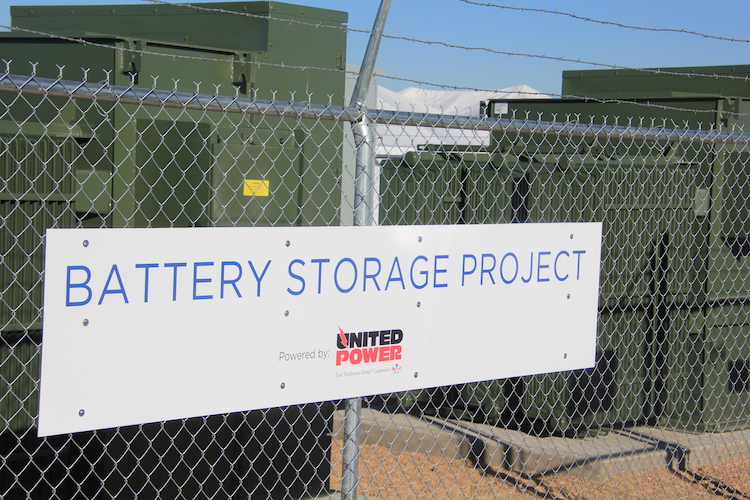
Battery storage project United Power. Photo credit: Allen Best
Policies to drive equitable expansion of storage
Colorado remains in the infancy of energy storage. Aside from pumped-storage hydro at Cabin Creek and Mt. Elbert, the largest energy storage system in the state is a bank of Tesla Powerwall batteries behind the United Power building along Interstate 25 between Longmont and Firestone. They can store 4 megawatts for up to 4 hours.
Behind the meter, the battery capacity isn’t much greater. Xcel Energy customers have 300 to 400 batteries in the Central Park neighborhood of Denver. Customers of Holy Cross Energy in the Aspen-Vail areas have more batteries, and there may be more scattered around Colorado, particularly in Boulder County.
That must change dramatically in the coming decade. As Colorado quadruples the penetration of renewable energy, it will need to increase storage capacity roughly 250-fold. “The Future of Energy Storage in Colorado,” a report commissioned by the Colorado Energy Office in 2019, called for 1.1 gigawatts of storage by 2030.
“We have a long way to go, and the longer we wait, the steeper the hill to climb,” says Mike Kruger, chief executive of Colorado Solar and Storage Association.
PUC guidance on storage
COSSA wants legislators to give the Public Utilities Commission specific guidance about phasing in storage.
In the past, says Kruger, the PUC has been leery of justifying storage, given its still great cost. That’s understandable. But battery storage provides benefits to the grid, such as in stabilization, that need to factored into the decision-making calculus. COSSA wants legislators to help inform that decision-making process.
Kruger points to a report issued in September 2020, “The Colorado Public Utilities Commission’s Operational Modernization Plan.” The document points to the need for a formal, coherent policy. Options for reducing greenhouse gases from the electric sector “can appear across many proceedings, and a determination in one proceeding may affect the outcome of another proceeding,” the report said.
The report cites the example of battery storage, with its potential to reduce the need for additional electric generation to meet system peak demand: “At the same time, the PUC may be called upon to make decisions regarding investments in battery storage technologies in multiple proceedings that may involve different regulated utilities that occur over a period of months or years.”
Utilities are already starting to invest in batteries. Xcel Energy has awarded bids for 50 megawatts, part of its plans for 275 megawatts in Pueblo and Adams counties. And Colorado Springs Utilities has a power-purchase agreement for the Pike Solar and Battery Energy Storage Systems, which will add 25 megawatts of battery storage by December 2023 to supplement 175 megawatts of solar.
This bill falls under the heading of unfinished business. In 2018, legislators passed a law, HB 18-1270, Public Utilities Commission Evaluation of Energy Storage Systems. The law required the PUC to establish mechanisms for investor-owned electric utilities to procure energy storage systems if certain criteria are satisfied.
COSSA members believe there has been too little movement. Details of exactly what will be proposed were still being worked over in stakeholder outreach in late January. What drives the legislation, though, is a sense of urgency, a desire to make things happen quickly, to decarbonize the economy 50% by 2030.
“We have 8 years and 11 months. We can’t have proceedings in which the stakeholder process takes years before we even get to a proposal. We have to move faster,” says Kruger.
Rules for behind-the-meter storage
Colorado Solar and Storage Association wants to see rules laid down for behind-the-meter storage. It’s still a frontier, when relatively few homes or buildings have battery storage.
Working with the Colorado Municipal League and Colorado Counties Inc., COSSA hopes to come up with state regulations to ensure the spirit of legislation is honored by counties and municipalities. “If the Legislature says it should be $500,” says Kruger of fees. “That means it shouldn’t be $500 plus X, Y and Z.”
Somewhat related in the battery question is where they will be deployed. Will battery storage remain the province of higher-end homes, or will batteries also be part of the lower-income neighborhoods, too?
Colorado legislators in 2019 inserted provisions in several laws designed to ensure that equity is a consideration in energy transition decisions. In the past, those of lower incomes, who tend to be racial minorities, have tended to suffer disproportionate impacts of the fossil fuel-based economy. The intent is to avoid repeating mistakes of the past. Battery storage is one place for this consideration.
COSSA would like to see legislators give the PUC guidance to ensure that equity is a consideration in battery storage programs.
Office of Consumer Counsel
As required by state law, the Office of Consumer Counsel must be reauthorized by statute in this session, if it is to continue to exist.
In 2019, legislators chose to reauthorize the PUC by substantially expanding its purview and mission. It’s possible legislators may do so this year with the Office of Consumer Council. For example, legislators could give much more direction in advocacy for low-income populations in the coming energy transition.
Transmission lines southeast of Denver. Photo credit: Allen Best
Electrical transmission, one of the big missing pieces
This is the bailiwick of State Sen. Chris Hansen, a Democrat from Denver who grew up amid the steady winds of the Great Plains before going off to college and eventually getting a Ph.D. in economic geography from Oxford University
In a sense, he’ll return to his roots this session with three bills that in various ways would help advance development of wind resources in eastern Colorado. But all three components of the bill he has prepared have the word “regional” embedded or implied in their text
Senate Majority Leader Steve Fenberg calls transmission “one of the missing pieces of getting renewables to customers, especially from areas that are traditionally under-represented and don’t have a lot of economic opportunities.”
Streamline PUC permitting
One component would streamline permitting and rules at the state’s Public Utility Commission for new transmission projects. Regulators, Hansen says, need to acknowledge regional benefits when evaluating projects. The bill is a revision of Hansen’s bill from last year, SB20-190, Boost Renewable Energy Transmission Investment.
Transmission authority
A second component would create a transmission authority, which New Mexico already has. The transmission authority’s mission would be to help coordinate development of transmission needed to develop currently stranded renewable assets.
One such area is Bent County, in southeastern Colorado. Studies by the National Renewable Energy Laboratory have found that this county snuggled against the Kansas and Oklahoma borders has some of the steadiest wind in the country. Trucks constantly cross the county on Highway 287 on their way to Denver and other destinations, but no such wire highway exists to get wind-generated electricity from farms to urban markets.
Xcel Energy and Tri-State Generation and Transmission both operate in eastern Colorado, and both have built transmission lines and have plans for upgrade. But the movement has been slower than what Hansen says Colorado needs to execute its energy transformation.
Hansen believes he has a strong argument because there’s something in it for everybody, but especially consumers. Accessing the renewable resources in the state will result in lower rates. Improved transmission should also result in more jobs. “We need to maximize job growth and clean energy, and that is dependent on a robust transmission grid,” he says.
Pushing an RTO
A third component would seek to accelerate integration of Colorado utilities with utilities in other states. Colorado is currently something of an island. It’s connected by electric lines to other states, but not particularly well. There’s been talk and study for four years or more. All utilities say they want this, but action has been lagging. Hansen wants to hurry this along.
The first modest step occurred on Feb. 1 with launch of the energy imbalance market by the Arkansas-based Southwest Power Pool. Colorado participants include Tri-State Generation and Transmission and the Western Area Power Authority. Xcel Energy and three utility partners along the Front Range will begin an imbalance market next year, but that one is conducted by the California Independent System Operator, or CAISO.
The real prize will be creation of a regional transmission organization or RTO, with more tools (and investment) to allow better movement of electrons across broad distances to align with demands. For a deeper dive, see Feb. 12 story, “Why this electric market matters for Colorado decarbonization.”
Hansen professes to see advantages whether going eastward or westward. He does, however, see Colorado’s wind resources contouring wonderfully with the solar resources of Arizona and other Southwestern states
“My observation is that every power operator in the state is supportive of more grid integration, but some are more excited about it than others,” he says
Describing it as a “slam-dunk economic case,” Hansen says he does not expect substantial opposition. A Republican legislator, whom he has not identified, will co-sponsor the bill
This integration must be pushed firmly, he says. If Colorado does end up with what is called a seam, a division within the state, with parts going east and some parts going west., then it must be done in a way that does not harm ratepayers. Examples of both success and failure when seams divide states or regions can be found in other parts of the country.
Changes to give the PUC commissioners more tools
Look for a bill from Sen. Chris Hansen that will seek to modernize the Public Utilities Commission and revise budgeting, giving commissioners more resources and more direct control over staff members.
“We have a PUC that is not well positioned to implement all of the important work that is ahead of us. (The commissioners) need better resources to do their work,” says Hansen.
The PUC is currently embedded within the Department of Regulatory Agencies, and the staff members are answerable to the department director, Doug Dean. Hansen’s legislation would make the staff members, at least some of them, directly answerable to PUC commissioners. The bill would also expand the staff to reflect the increasing workload of PUC commissioners in a time of unprecedented shifts in the world of electricity and, quite likely in the decade ahead, natural gas.
The move has the support of the Colorado Solar and Storage Association. Mike Kruger, the executive director of COSSA, says there needs to be a direct link between the staff member and commissioners given that the commissioners are “responsible for a huge chunk of our decarbonization.”
Kruger also points out to the statutory ban of commissioners meeting in private. All of their interaction is in public meetings. Aside from very specific and narrow proceedings, they meet only weekly. That limited meeting schedule can result in three weeks or a month to make a relatively simple decision about forward movement.
“Given that complication, you definitely need to have a staff that provides the commissioners what they need to make decisions,” Kruger says. “From our perspective, the 2020s will be the decade of deployment for solar and batteries. We will go from around 20% renewable generation to around 80%, a four-fold increase over 9 years. And the PUC is going to guide and direct that. They need to know they are getting the best information and results from their staff.”
PUC processes have often been drawn out. But there’s a sense of urgency about figuring out the way forward reflected in the admonishment by Eric Blank in his first weekly meeting in January as the PUC chairman. Studies can’t take a year or more, he said, but timelines demand a quicker pulse.
Another shot at Community Choice Energy
Rep. Edie Hooton, a Democrat from Boulder, will return this session with her proposal to study community choice energy, also known as community choice aggregation.
The goal of community choice is to accelerate the transition to clean electrical generation by allowing individual communities currently served by Xcel Energy and Black Hills Energy, the state’s two investor-owned utilities, to procure their electricity directly from providers. Those two utilities would still service the distribution lines. Together, Xcel and Black Hills were responsible for 56% of electrical sales in Colorado in 2018, according to a study by the Colorado Energy Office
“Introducing competition into the wholesale electricity sector would encourage a more vibrant wholesale electricity market in Colorado, from which many co-ops and municipal utilities purchase all or part of their electricity,” she writes. “Competition tends to put downward pressure on prices, as well as pressure to increase the renewable energy content in the energy mix.
Hooton also sees this helping other electrical consumers. A more vibrant wholesale market for clean energy “would likely expand the number of independent power producers and power marketers that are active in Colorado, leading to lower wholesale prices and more opportunities for all buyers, including co-ops and municipal utilities.”
The Colorado Municipal League supports the study, as does the Sierra Club, whose “ready for 100” yielded voluntary participation by 14 Colorado communities that formally want to achieve 100% renewable energy between 2025 and 2035. The measure is also supported by Colorado Communities for Climate Action, or CC4CA, which has 34 member communities in Colorado, evenly split between the Front Range and Western Slope. City councils for Denver, Pueblo, Boulder, Golden, and Lafayette have also adopted resolutions of support.
California is the poster child for the effectiveness of pushing clean electrical generation. There, communities authorized to use community choice have entered into long-term contracts for 6,000 megawatts of new-build clean energy sources. There, it’s common for multiple cities and/or counties to form joint power authorities to share administration and combine their purchasing power, governed by a board of elected officials from each member jurisdiction.
A study by the UCLA Luskin Center for Innovation found that nearly 50 communities in California have already reached their 100% renewable energy goals, and the vast majority of them have community choice.
In theory, communities could choose to procure electricity from 100% carbon sources. That’s unlikely, given that renewables have become so much cheaper.
Hooton’s bill— which is co-sponsored by Rep. Cathy Kipp, a Democrat from Fort Collins—would only authorize a study by the Colorado Public Utilities Commission staff between October 2021 and November 2022. The bill authorizes one full-time employee to the study, the money $112,000 spread across two years – to be taken from the Fixed Utility Fund, the surcharge on ratepayer bills that funds the PUC.
If the PUC study looked promising, says Hooton, she would consider sponsoring enabling legislation in the 2023 legislation session. This bill, she emphasizes, only authorizes a study.
Inherent in this study is the potential for gains. She points to a request from Boulder last year for indicative pricing from wholesale suppliers. The city in August received 11 responses that together indicated the city could have 89% renewable energy in 2024 at two-thirds the project cost of Xcel.
She also contends this would add pressure to form a regional transmission organization, or RTO, which would lower costs by expanding the footprint of energy trading in the West and by reducing the needed level of reserve generating capacity.
One thing the study—if approved by legislators—would have to address is what real difference this will make in the latter half of the 2020s, when Black Hills and Xcel are rapidly decarbonizing their electric supplies.
Hayden Station. Photo credit: Allen Best/The Mountain Town News
What about the Air Quality Control Commission?
This was the agency delegated by the 2019 foundational legislation with the largest single authority for devising and executing strategies for achieving the economy-wide decarbonization goals. Elements were also given to the Public Utilities Commission, with it authority for overseeing the decarbonization of the electrical sector and also regulated gas utilities. But the AQCC is numero uno, dai-ichi, number 1.
Does the AQCC have the resources it needs to get the job done? This was a thread in AQCC conversations for much of 2020. Environmental organizations, Western Resource Advocates and the Environmental Defense Fund in particular, argued that the AQCC was moving too slowly. The AQCC personnel, particularly John Putnam, the then-director of environmental programs for the Colorado Department of Public Health and Environment, politely pointed to lack of adequate resources.
I heard that legislators are working to secure more resources for the Air Pollution Control Division, the agency within CDPH&E that works directly with the appointed commission. I was told that Sen. Dominique Jackson was writing the bill. I did not get a response from her.
The question of the AQCC was raised more broadly at the Empowering our Future forum. Senate Majority Leader Steve Fenberg took the question and addressed it broadly, if not in the particulars.
“We got a slow start,” he said. “I think it will accelerate. We are going to start taking a significant bite of the apple in the next few years, tackling our transportation system. And electrifying as much as possible will have a huge impact. Xcel Energy is just about to file their electric resource plan (update: Xcel will release details on Thursday, Feb. 18) that will show there is a lot more of where they think they are capable of going in the next couple of years. Things are happening, and they’re happening pretty fast.”
Among the questions before the AQCC in late 2021 will be whether to approve the request for Earthjustice and the National Parks Conservation Association to order to effect the earlier retirement of coal plants. All but two are scheduled to close by 2030, but the environmental organizations wanted the AQCC to nudge the retirements up a year, to 2028. The AQCC approved that by a 5-2 vote then, the next month, unanimously backtracked for legal procedural reasons, whose intricacies I never understood. Xcel Energy then preempted this by announcing the closure of the Hayden units in 2028.
Could the PUC have the authority to instead order earlier retirements? That was hinted at by State Rep. Edie Hooton, who spoke at the Empowering Our Future forum about adjusting retirements to meet the 2025 decarbonization target of 2026. “There was consideration,” she said. “I don’t know if it will happen this year, not because of will, but because of capacity,” she said.
Divestment policies
Rep. Emily Sirota, a Democrat from Denver, will be carrying legislation again, as she did with her HB 19-1270, to require the Colorado Public Employees’ Retirement Association to review its $45 billion in holdings through the lens of climate change, specifically fossil fuels.
That bill didn’t make it out of committee. Since then, however, New York state’s comparable fund dido go ahead with a gradual divestment strategy in December.
350 Colorado also hopes to find a sponsor for a bill that would allow cities, counties, and other jurisdictions to hold investments in financial institutions that are not FDIC insure. This would allow jurisdictions to avoid the megabanks like Wells Fargo and Chase Morgan, who are FDIC insured and who also invest in fossil fuels.
The Colorado Public Banking Coalition makes no mention of divestment but instead paints a broader picture of rising interest in public banking since the 2008 financial crash. “Currently, over half of the states in the United States have either organized, conducted research, or introduced legislation to promote public banking,” says the coalition.
Tanks from Masters area. Photo credit: Allen Best/The Mountain Town News
Regulation of oil and gas industry, don’t expect much
Don’t look for much here. Senate Majority Leader Steve Fenberg was a primary sponsor of SB19-181, which he describes as the most substantial reform of oil and gas regulation in Colorado in 60 years.
“I think we forget how much that did tackle, because it did so much at once,” he says. The law basically turned Colorado regulation upside down, inverting the mission of regulation to support extraction to instead emphasize community protection values.
It created basic standards for jurisdictions across Colorado, including a minimum setback of 2,000 feet (with some exceptions), while leaving latitude for local jurisdictions to create regulations that are right for them.
What about stopping “fracking?” he was asked at a recent forum, the word fracking being apparently meant to mean drilling for oil and gas altogether.
No, that wasn’t the intention of the 2019 law, he said. And what used to be considered the major players in Colorado have disappeared as a result of acquisitions and mergers. “I think the Wild West days of fracking in Colorado are not over, but they will be soon,” he said. He also noted that the market for Colorado oil and gas extends beyond Colorado, so the demand depends upon national policies.
This is from Big Pivots, an e-magazine tracking the energy and water transitions in Colorado and beyond. Subscribe at http://bigpivots.com
Judge Stephen J. Jouard of Larimer County District Court ruled in favor of the Larimer County Board of Commissioners’ decision to deny the city of Thornton’s application to build a water pipeline in the county, a major blow to the city in its years-long effort to complete the Thornton Water Project by 2025.
The ruling forces Thornton to appeal the decision with the Colorado Court of Appeals or submit a new application, creating new problems for the 26-mile stretch of proposed pipeline in Larimer County.
Jouard’s decision arrived after three years of back-and-forth conversations between Larimer County and its citizens to determine the least disruptive route for Thornton’s pipeline, which the city has determined is necessary to adequately supply water to residents in the future.
“We are certainly disappointed and disagree with elements of the Larimer County District Court’s decision,” said Thornton spokesperson Todd Barnes. “We remain committed to ensuring the people of Thornton get the water they own and after taking sufficient time to review the judge’s decision we will determine our next steps.”
[…]
Thornton filed its first application for the stretch in Larimer County on Jan. 5, 2018. The route in the application was one of four viable paths the pipeline could travel. Larimer County staff said the first application met all the criteria, according to the city’s complaint in Larimer County District Court. However, the county planning commission recommended that the board of commissioners deny the application, which it ultimately did.
In subsequent months, the city revised its application several times over, proposing the alternate routes it initially identified. None of the alternative routes involved diverting water down the Poudre River in place of a pipeline, a suggestion the city has vehemently rejected. However, some citizens and county commissioners have endorsed the Poudre River alternative.
Ultimately, the board issued its final rejection of Thornton’s application March 19, 2019 and said the city’s application didn’t meet seven of the 12 criteria required for approval. The board cited the Poudre River alternative as a reason for its denial. The city filed its civil case in Larimer County District Court April 16, 2019.
Though Jouard ultimately sided with the county commissioners, he didn’t do so completely. He said three of the criteria the board used to deny the application were valid, such as the pipeline being inconsistent with the county master plan and that the pipeline would have “significant adverse effects on associated land without adequate mitigation.” Meanwhile, the judge said there wasn’t enough evidence to support the other four criteria the board cited in its denial.
One of Jouard’s big findings the city celebrated is that the board could not deny the application because of the Poudre River alternative. “We agree with the court’s decision that the commissioners exceeded their authority to require any consideration of a non-pipeline alternative such as sending Thornton’s water down the Poudre River,” Barnes said.
Barnes said the city doesn’t anticipate delays in the overall timeline for the Thornton Water Project’s, which the city plans to complete by 2025. “We’ve prioritized other sections of the project so we have time to work on the issues in Larimer County,” he said.
So far, the city has completed five miles of it in Johnstown and Windsor. Thornton will go before the Weld County Board of Commissioners May 5 for approval of the pipeline’s other major section.
FromThe Fort Collins Coloradoan (Sady Swanson and Jacy Marmaduke):
Jouard’s decision, released Monday, said Thornton officials did not meet three of the criteria required: The plan submitted was not consistent with the county’s Master Plan, did not provide reasonable design or siting alternatives, and did not provide an adequate mitigation plan to any adverse environmental effects of the land, according to court documents.
“Thornton was hopeful to move forward in Larimer County with the process of bringing the quality water Thornton owns via pipeline to our residents,” Thornton’s Communications Director Todd Barnes said in an email statement. “We remain committed to ensuring the people of Thornton get the water they own and after taking sufficient time to review the judge’s decision, we will determine our next steps.”
Barnes did not say if Thornton officials plan to appeal this decision…
Larimer County commissioners included Thornton’s lack of consideration of the Poudre River alternative in their initial denial. In Monday’s court decision, Jouard found the commissioners had no authority to deny the permit because Thornton officials didn’t explore that specific alternate path for the pipeline.
However, Jouard upheld their decision because the application failed to meet multiple criteria.
While disappointed with the court’s ruling, Barnes said Thornton agrees with the court’s decision that the county “exceeded their authority to require any consideration of a non-pipeline alternative such as sending Thornton’s water down the Poudre River.”
Larimer County’s rejection of Thornton’s permit application applies only to the proposed path through unincorporated parts of the county. Thornton has intergovernmental agreements with Windsor and Timnath allowing pipeline construction and is crafting an agreement with Johnstown, Barnes previously told the Coloradoan.
FromCenter Square (Robert Davis) via The Kiowa County Press:
Colorado lawmakers returned to the Capitol to complete the 2021 legislative session on Tuesday after a month-long hiatus…
Wildfire Funding
A bill seeks to transfer money from the state’s general fund to wildfire mitigation efforts. The legislation, which has bipartisan sponsorship, would allocate $6 million to a grant program for forest restoration and wildfire mitigation, $3 million to a wildfire preparedness fund, and $4 million to the Colorado Water Conservation Board Construction Fund.
Wildfire mitigation will be a key topic throughout the legislative session, as the state was hit with historic wildfires last year amid the ongoing COVID-19 pandemic.
Water enterprise
Senate Bill 21-034, introduced by Sen. Don Coram, R-Montrose, would create an enterprise fund with fees paid by consumers. The revenue generated by the enterprise would go towards grants or loans for water providers in the state.
“The fee for each individual metered connection in a drinking water supplier’s public water system is 25 cents per 1,000 gallons of drinking water delivered per month in excess of the first 4,000 gallons of drinking water delivered in that month to the individual metered connection,” according to the bill’s description.
Another proposition that passed in November will reestablish wolves on the Western Slope, though they are already coming in naturally. Sen. Kerry Donovan, D-Vail, said Colorado Parks and Wildlife is studying how best to manage wolves, and legislators need to wait for them to come up with a proposal.
Donovan said the state needs to create a compensation program that is well-funded for ranchers who lose livestock to wolves but also need to reestablish wolves in a way that is good for the species.
While he does not have a bill on water right now, Roberts said there is a committee studying how rules could be strengthened to prevent out-of-state entities from making money off of water resources.
Donovan added that demand management of water is another really important issue, because the state has a legal obligation to share water. What could happen if they are not careful, she warned, is that water rights could become their own market where out-of-state interests start buying up these rights to sell them when water becomes more scarce.
“As well as our Republican colleagues, we are all very tightly aligned on this topic,” Donovan said. “One of the most closely aligned things when party absolutely disappears is when we talk about water.”
Short-eared Owl and Northern Harrier. Photo: Joseph F. Jasper/Audubon Photography Awards
Click here for all the inside skinny and to register.
Audubon Afterschool
For kids 7-11 years-old
Thursday, March 11, 2021 @ 4:00 PM
Zoom
Raptors are found on almost every continent! In this session of Audubon Afterschool, youth explorers will learn about the variety of raptors found in North America and what makes each a unique hunter. From hawks and eagles to owls and falcons, raptors are some of the most charismatic and popular birds.
March 1 is the last day to register, only 20 spaces offered.
Please contact jacelyn.downey@audubon.org for scholarship opportunities for this event.
Conceptual work has begun on a pumped-storage hydro project along the Yampa River five miles east of Craig. The project was conceived to provide electricity to assist Colorado utilities in balancing the intermittency of wind and solar generation as they advance toward 100% renewable portfolios during the coming decade.
In pumped-storage hydro, water is released from a higher reservoir to produce electricity when needed most. The water in the lower reservoir is then pumped uphill to the higher reservoir when electricity has become more readily available.
Colorado has two existing pumped-storage hydro projects. Cabin Creek Generating Station, between Georgetown and Guanella Pass, harnesses a 1,200-foot vertical drop to produce up to 324 megawatts of electricity. Completed in 1967 and operated by Xcel Energy, it serves as effectively a giant battery with a four-hour life, the same as a humongous bank of Tesla batteries.
Near Leadville, at Twin Lakes, the Mt. Elbert pumped storage hydro plant can produce up to 200 megawatts. Operated by the U.S. Bureau of Reclamation, that pumped-storage hydro was completed in 1981.
Near Craig, the project—it’s really no more than an idea—would use three turbines to produce 600 megawatts, nearly as much as Colorado’s largest coal-fired power plant. The idea submitted to the Federal Energy Regulatory Commission on Aug. 20 calls for two relatively small reservoirs of storage capacity of 4,800 acre-feet each connected via a tunnel and conduit, with a total drop of 1,450 vertical feet. This compares with a 1,200 drop at Cabin Creek.
The lower reservoir would not be on the Yampa River, nor would it require a constant infusion of water. Rather, it operates in a closed loop. Only water lost to evaporation would have to be replaced. In an open loop hydro system, water is drawn directly from a river to be pumped uphill.
Matthew Shapiro, the applicant, says the preliminary permit awarded by FERC in November for the Craig-Hayden project is best described as a placeholder for a future license application. He hopes to begin producing electricity toward the end of this decade, just as several utilities in Colorado aim to achieve 100% renewable generation. See Nov. 24 notice in the Federal Register.
Creating pumped-storage hydro, he says, requires considerable patience but also capital. One project in Wyoming that Shapiro’s company proposes has an estimated cost of $1.8 billion.
The United States has not had a new pumped-storage project since 1993. The Craig-Hayden project is the only FERC filing for Colorado.
North Park is traversed by the 345-kV line that transmits electricity from Hayden Station to Ault, in northeastern Colorado. Photo/Allen Best.
Meeting the checklist
Despite its jumbled geography and abundant water, the Centennial State actually is a difficult place for new pumped hydro projects, says Shapiro. The right kind of topography, with enough vertical drop over a short distance but not too much is needed, but also proximity to transmission and low environmental sensitivity.
“It’s a significant challenge. Finding the combination of factors is not easy,” Shapiro says. “But that is what a good pumped-storage developer does during the site-screening process.”
The Craig site checks all the boxes. Private land is easier to develop than public land, says Shapiro, and it has that. Transmission lines export the electricity in three directions and to several states, but especially to east of the Continental Divide in Colorado. The Hayden and Craig coal-fired stations together have 1,724 megawatts of generating capacity, the most of any area of Colorado.
Water is also needed. The two coal-burning stations together own 15,000 acre-feet from the Yampa River, far more than the 5,000 acre-feet needed for this project. The plants will close between 2025 and 2030.
This is from the Jan. 15, 2021, issue of Big Pivots, an e-magazine tracking the energy transition in Colorado and beyond. Subscribe at http://bigpivots.com
Finally, a pumped-storage hydro project needs customers. Shapiro reports seeing a promising market within Colorado. Two utilities—Platte River Power Authority, a co-owner of the Craig plant, and Holy Cross Energy—both have adopted goals of 100% renewables by 2030. Xcel Energy, the primary owner of the Hayden units and a part owner at Craig, has a 100% emissions-free goal for 2050.
All analyses of attaining high levels of renewables in electricity supplies have focused on three crucial pillars:
One, demand needs to be recontoured to better take advantage of when renewables are abundant, such as linking warming of hot water to times of abundant electricity.
Second, energy supplies in Colorado need to be better connected with a broader geographic area, either to the west or possibly to the Great Plains and conceivably in both directions, thus allowing greater ability to take advantage of renewable energy. The sun might not be shining everywhere, but the wind is always blowing somewhere. There is actually some predictability to this, if you get large enough terrain.
And third, there needs to be storage. The Craig-Hayden idea envisions eight-hour storage, compared to the four-hour value of lithium-ion batteries. So-called green hydrogen, which uses renewable electricity to create hydrogen from water, can deliver 50 to 100 hours of storage, but the technology and economics lag. “I think there is going to be a mix, particularly over the next 20 to 30 years before I think green hydrogen really matures,” says Shapiro. “We will see a mix of storage types. I don’t think we are going to do 100% renewable energy without additional advanced energy storage technology.”
Utilities have been closely watching developments. Duane Highley, chief executive of Tri-State Generation and Transmission, operator of the three units at Craig, said on an October webinar that his utility sees no need to make decisions about energy storage until 2024 and does not actually need it until 2029-2030. The three units at Craig will be shut down between 2025 and 2030. The two Hayden units operated by Xcel are to be shut down in 2027 and 2028.
Three units at Craig Generating Station will be closed during by 2030. Photo/Allen Best
The value of storage
A 2019 report by Synapse Energy Economics that was commissioned by the Colorado Energy Office spoke to the need for advanced energy storage as Colorado decarbonizes its electricity.
“Although pumped hydro is currently the most prevalent type of energy storage in the United States, traditional battery storage technologies (primarily lithium-ion) have experienced rapid market growth within the last few years. As costs continue to decline in the coming decade, flow batteries are also expected to become common in large-scale storage applications.”
Pumped-storage hydro does not figure prominently in the analysis by Synapse. However, the consultant did find need for public policy that serves to encourage the market for storage in Colorado.
“Though lithium-ion battery costs are projected to decline in the coming years, there is debate about whether they are expected to become cost-competitive with traditional generators prior to the late 2020s without supportive policy mechanisms.”
In removing two coal-burning units at the Comanche station near Pueblo, Xcel Energy is adding 275 megawatts of battery energy storage. On a vastly different scale, United Power began using a 4-megawatt battery storage in late 2018.
In viewing the Craig project, Shapiro hopes to time completion to the closure of the coal plants. These projects require patience.
Shapiro already has already demonstrated great patience. In a life with many twists and turns since his upbringing in the New York City borough of Brooklyn, Shapiro by 1991 was on the Blackfeet Indian Reservation in Montana. In a paper titled E Pluribus Unum, Shapiro describes himself as a “creator, an entrepreneur, a public philosopher, a conscious citizen, a writer, and a father.”
In that paper, he says he was motivated to help the Blackfeet and, in that outlook, he began to wonder whether the steady winds of the Montana reservation could be harnessed to benefit the tribe. He quickly grasped the limits of renewable generation.
“Upon my return to New York, I immersed myself in the study of energy storage as a means of helping wind energy compete with conventional energy resources,” he explained. There were then 40 pumped-storage hydro projects in the United States among well more than 100 around the world.
Since then, in 1993, just one additional project pumped-storage hydro has been built in the United States. Many gas-fired plants were built, however, to address the need for peaking power.
Growing interest from utilities
About 2009, though, Shapiro noticed a shift.
“Renewable energy was surging, the interest in storage was starting to pick up, and more and more utilities were mentioning pump-storage in their resource plans,” he explained in a telephone interview. “So partners and I formed GridFlex to identify the best new sites in the country.”
His partners now include David Gillespie, who served a stint with Duke Energy as vice president of business development, and John Spilman, the general counsel, who has provided services to Vestas Americas, among others. Shapiro is the chief executive.
Utilities have shown much greater interest in the last two years after solar prices tumbled and, in response to consumers, many embraced 100% carbon-free goals. But the time was not lost. “We spent a lot of those years honing our knowledge about how to make the business case,” he said in a recent phone interview. “And we built relationships with equipment vendors and environmental consulting firms and others needed to move ideas into projects.”
Shapiro’s company, Gridflex, now in partnership with another company called rPlus Energies, a developer of utility-scale wind and solar, has filed with the FERC for seven sites: two in Nevada and one each in California, Colorado, New Mexico, Oregon, Washington and Wyoming.
Most, like the Craig site, are placeholders in the FERC process. Two, in Wyoming and Nevada, have moved to a second step with FERC, the pre-application stage.
In Wyoming, Shapiro last summer outlined a plan to use Seminoe Reservoir in conjunction with a new reservoir on federal Bureau of Land Management property for a capacity of 700 megawatts, somewhat larger than the Craig-Hayden proposal. The Rawlins Times reported that officials in Carbon County declined to endorse the project but were OK with the application with FERC proceeding. Cost of that project has been estimated at $1.8 billion
In Nevada, progress came earlier with the White Pine project getting press attention in Ely in 2014. But it has moved little further along than the Colorado project.
In Arizona, other developers have several proposals for even larger pumped-storage hydro projects. One using water from Lake Powell proposes to use the transmission built for the Navajo Power plant now being demolished. It has a price tag of $3.6 billion.
About the Craig-Hayden site, Shapiro declined to identify whether his company has agreements with landowners and other specific elements of what will be needed. He said he has begun outreach to utilities.
Holy Cross Energy might be one such utility. Its service territory includes Vail and Aspen but also Rifle, which is within 100 miles of the pumped-storage hydro, connected by a major transmission line. In its resource plan posted in 2020, Holy Cross specifically mentioned pumped-storage hydro as one option for being able to attain its goal of 100% renewable generation by 2030.
Jonah Levine, who wrote a master’s thesis about pumped-storage hydro in 2007, now works in the realm of biomass for Louisville, Colo.-based Lignetics.
“The evolving story is not of wind vs. biomass or even traditional resources vs. renewables,” he says. “The real question is how do we deploy these things together in the most efficient and effective ways? I don’t see that story enough. What is the best utilization of the resources to our society?
This story has been updated to reflect that the pumped-storage hydro plan envisions eight-hour storage, not six.
Allen Best is a Colorado-based journalist who publishes an e-magazine called Big Pivots. Reach him at allen.best@comcast.net or 303.463.8630.
The Mulwala Canal, an irrigation channel near Berrigan, New South Wales. |Source=Taken by self |Date=2007-02-25 |Author=Mattinbgn
FromBoise State Public Radio (Rae Ellen Bichell) via KUNC:
For farmer Carly Marriott, in Barooga, Australia, selling water is as easy as selling a couch on Craigslist.
“Here’s our account,” she said, opening a website on her smartphone last February. “We want to sell 85 megaliters and we put a price on it of $600.”
In some ways, the website is better than Craigslist, because it takes out the guesswork. It tells you how much your “couches” are actually selling for right now. (There are also several smartphone apps that, as one app puts it, make checking water prices “as easy as checking the weather.”)
It’s not hard to set a price, she said. “You just look at everyone else and what they’re doing.”
Marriott usually grows wheat. But when water is scarce, it becomes expensive, and that means it’s not worth it for them to buy enough water to grow wheat…
It’s a market. And that’s an idea that leaders in some Western U.S. watersheds are eyeing, with proponents saying that, as the New York Times has reported, “water is underpriced and consequently overused.” Australia, meanwhile, has had just such a system for years – revealing the tradeoffs involved…
Murray-Darling Basin Australia
In the Murray-Darling, water rights are more like currency – or like shares in a company – than they are a family heirloom…
[Mike] Young doesn’t think the system is perfect, but he said in the water world, the U.S. system is like a Model T Ford, while Australia has a Cadillac – maybe even a Tesla.
One Nevada ranching community is trying to turn their Model T into a Tesla, by borrowing elements of the Australian system.
Jake Tibbitts is the natural resources manager for Eureka County, Nevada. It’s an area known as Diamond Valley, and he said it has a reputation as a “poster child for water mismanagement.”
“There’s way more water rights than there’s water available on a sustained basis,” he said. There’s about 30,000 acre feet of water that’s consistently available each year in an underground aquifer. But there’s more than four times that amount on the books that people have a right to use.
“The status quo is something we just don’t feel we can live with,” Tibbitts said.
When the community convened in 2015 to talk about what to do, who showed up but Mike Young from Adelaide.
“I really thought maybe he’d be poo-pooed and folks would move on to something else,” Tibbitts said. “But there was a lot of interest by those in attendance at that meeting and some of the concepts.”
It was clear, he said, that water users wanted a market. So they came up with a plan: They would ditch the use-it-or-lose-it setup, where people actually get punished for conserving water, and instead create incentives to save water.
“If they don’t use the water, they can sell it to somebody else, they can move it to another piece of ground that they may have or they can bank it,” he explained. “So in good years, water they don’t use, they can put into the water bank. And then in subsequent years, they can withdraw on that water that they banked when they have a water shortage.”
It wouldn’t be exactly like Australia – water would still be tied to a water right on a specific piece of land and part of that land’s deed. Transactions would happen on paper, not on a smartphone. And water would not be allowed to be moved out of Diamond Valley. But it would be a market (or at least, they hope) where private parties work out an agreement about trading and submit a form to the state engineer to move water from one account to another. Tibbitts said it would be way faster and cheaper than water trading now.
But even if the Diamond Valley manages to pull off this overhaul, it might not be the silver bullet against water woes. Erin O’Donnell, a water law and policy specialist at the University of Melbourne, said the story with Australia’s water market is complicated. The major overhaul happened 15 years ago…
O’Donnell said the government spent an “extraordinary” amount of money – about $13 billion – to buy water for the environment, to keep waterways healthy. The rights to use the rest were up for grabs.
“The right to own water and the physical amount of water became highly tradable,” said O’Donnell. “But there wasn’t a lot of trade until 2007.”
That’s when people really started to panic. The drought was extreme. Irrigators were panic-buying water like toilet paper in 2020. Suddenly, the water market was in action, big time. O’Donnell said state and federal governments alike thought this was good – the water would move to where it was most needed.
Say you’re a rice farmer. Just sell your water this year to someone who needs it to keep their trees alive, like an almond grower. The idea, O’Donnell explained, was that they’d get the water they need, the rice farmer would get an income source and most people would stay in business…
Water became dirt-cheap, and a lot of people saw an opportunity. They started planting very thirsty crops, like almonds and pistachios. New businesses popped up, like stock fund managers for water. The game changed, because water became an easily tradable commodity, and people found ways to make money on it.
O’Donnell said all that is leading to widespread “angst and unhappiness” in places like where Carly Marriott lives. Marriott said farmers, her friend for example, just can’t compete…
On top of that, they’re worried about deep-pocketed investors, like a Canadian pension fund that made the news last year as one of the top owners of water in the Murray-Darling Basin. So far, O’Donnell said, there is no evidence that big investors are driving prices; instead, there’s evidence that water scarcity and the shift to higher value crops is behind it. Still, it’s jarring to someone who’s on the ground producing food for the country…
That brings us back to the U.S. The American Southwest is worried about just this – a farmers’ revolt over any tinkering with frontier-era water law that could make an expansive water market possible. Smaller, contained markets already exist in pockets of the West, like the Colorado-Big Thompson project on the Colorado Front Range, where water held in high mountain reservoirs is converted into units and bought and sold by cities and farmers alike…
[Dustin Garrick] said the question now is, will that delicate progress hold when the Colorado River Basin encounters the “black swan” disasters that climate change is projected to bring? With its biggest reservoirs likely to hit their lowest points ever in the next year, the region could face that test soon.
Platte River Power Authority’s call for customers to conserve energy on Sunday resulted from a perfect storm of energy supply issues, as extreme cold created a regional shortage of natural gas, ice and frigid temperatures restricted power from wind turbines and blankets of snow covered solar panels.
The power provider for Fort Collins, Loveland, Estes Park and Longmont issued a call to conserve energy — both gas-powered heat as well as electricity — Sunday from 4-10 p.m. Platte River spokesperson Steve Roalstad said the public call to conserve came after Xcel Energy notified Platte River on Sunday that gas supplies were being curtailed to preserve fuel for heating.
The curtailment has ended, and Platte River doesn’t expect further supply issues in the immediate future, Roalstad said. Xcel Energy didn’t explicitly confirm the curtailment in written comments provided to the Coloradoan, but a spokesperson said that “extreme weather conditions can be a challenge for power providers, and we are managing our resources to make sure our customers have the heat and power they need at this time.”
The supply challenges began this weekend as extreme cold impacted Platte River’s renewable energy resources, Roalstad said.
NextEra Energy, the company that operates the Roundhouse Renewable Energy wind farm in southern Wyoming, shut those turbines down as ice coated the blades and frigid temperatures threatened the turbines’ structural components. Meanwhile, snow coated the solar panels at Platte River’s Rawhide Energy Station…
Natural gas typically supplies less than 2% of the electricity Platte River provides to its owner-communities, because the power provider only uses it to provide an extra boost when demand is especially high. Platte River’s natural gas capacity is close to 400 megawatts, even more than the 280 megawatts of capacity at the Rawhide Unit 1 coal plant that supplied almost half of electricity in 2020.
Because of the temporarily curtailed supply, though, Platte River couldn’t run its natural gas units. So on Sunday, Platte River was essentially relying only on the Rawhide Unit 1 coal plant and Craig Units 1 and 2 (coal units Platte River co-owns). That didn’t leave much wiggle room for electricity supply, so the utility issued the public call to action. It was the first time in recent memory that Platte River has had to ask customers to conserve electricity in the face of a supply shortage.
Platte River asked customers to conserve energy by turning down their thermostats a few degrees and abstaining from using laundry machines, clothes dryers, dishwashers and other electric devices. The reason for the call to conserve gas-powered heat was two-fold, Roalstad said: Building heat pumps use electricity, and lessening the pressure on gas supplies for heating would hopefully lead to a quicker end to the gas curtailment.
Platte River sent the call to conserve to local media, shared it on social media and coordinated with local utilities to disseminate the information. That outreach appeared to be effective in reducing electricity demand, Roalstad said. Demand dropped by about 10 megawatts, which is roughly equivalent to the power needed for 5,000-8,000 households.
Roalstad described the call to conserve as a precautionary measure rather than a situation where rolling blackouts were imminent.
“I don’t think we were that close, but we just wanted to make sure we didn’t get any closer” to that point, Roalstad said…
Sunday’s scenario was noteworthy not just because of the extremely cold temperatures but because of the widespread regional nature of the issue. Frigid temperatures and winter storms swept much of the country this weekend, from Colorado to Texas to Tennessee. The broad geographical footprint of the extreme weather put more pressure than usual on the nation’s natural gas supply…
The renewable energy supply shortage illustrates a challenge that Platte River is working to address as it shifts to more renewable electricity supply in the years ahead, Roalstad said. Renewable sources are projected to make up about 50% of electricity delivered to Fort Collins, Loveland, Longmont and Estes Park in 2021, and the power provider has a goal of achieving 100% non-carbon electricity by 2030 if it can do so without sacrificing affordability and reliability.
Platte River is contemplating larger investments in battery storage or other alternatives to carbon resources. The power provider is also working to join a regional energy imbalance market, which could be helpful in situations where weather affects renewable energy supply in select areas. The science around renewable energy is also growing more sophisticated, which enhances predictability and reliability, Roalstad added.
Amid dry soils and struggling snowpack in Denver Water’s collection area, longer-term Colorado River challenges also loom large.
Denver Water’s supply managers are closely attuned to the dry weather, lagging snowpack and poor soil moisture in its mountainous collection area that could mean heightened efforts to conserve water this summer.
At the same time, the utility is closely engaged with a more persistent and growing long-term challenge: a drying trend across the seven-state Colorado River Basin.
The Colorado River, which feeds into Lake Powell, begins its 1,450-mile journey in Rocky Mountain National Park near Grand Lake, Colorado. Denver Water gets half of its water from tributaries that feed into the Colorado River. Some of these tributaries include the Fraser River in Grand County and the Blue River in Summit County. Photo credit: Denver Water
The two issues go hand-in-hand.
While early snowpack has been underwhelming, a few recent storms brought us closer to average in the two nearby basins that matter most to Denver Water: The South Platte and the Colorado.
Even so, the long-running drought across the southwestern United States persists. And earlier this year, a new warning was triggered after updated projections from the U.S. Bureau of Reclamation suggested poor inflows to Lake Powell could put the reservoir at a level low enough to take new steps.
In short, the BOR said Lake Powell — the massive storage vessel that serves as the bank account for the upper basin states of Colorado, New Mexico, Wyoming and Utah — is at risk of falling below an elevation of 3,525 feet in 2022.
That’s important to Denver Water and many Colorado water users as a century-old law requires states in the upper basin to send a certain allotment out of Lake Powell each year to the lower basin states of Arizona, California and Nevada.
Under major agreements developed between the federal government and the seven states in 2019 called drought contingency plans, Reclamation’s projection initiates a planning process with water leaders across the upper basin states to address ways to avoid further elevation declines in Powell.
This is a trigger point to say, “Hey, it’s time to ramp up our monitoring and planning, to be ready to address the potential further decline in reservoir levels,” explained Rick Marsicek, planning manager for Denver Water. “This was a metric, developed to ensure the upper basin states focus harder on next steps should Lake Powell be at risk of hitting that level.”
Lake Powell ended the 2020 “water year” at an elevation of 3,596 feet above sea level. That is 104 feet below what is considered Powell’s full capacity. The “water year” is a term used by the U.S. Geological Survey to measure the 12-month hydrologic cycle between Oct. 1 and Sept. 30. The October start date is used to mark when snow begins to accumulate in the mountains. Photo credit: Denver Water
Planners focused on 3,525 feet as a trigger point, so as to have time to act before Lake Powell falls another 35 feet, which would threaten its ability to send enough water through turbines to generate hydropower, another important element of Powell’s operations. Hydroelectricity at the dam provides power to more than 5 million customers.
It’s an initial step toward drought contingency plans, which could be triggered as early as 2022 in the Upper Basin. The lower basin’s DCP was triggered last year, when projected shortages in Lake Mead, the other gargantuan Colorado River reservoir — a sister of sorts to Powell — required Arizona and Nevada to pull smaller amounts from supplies stored there.
Signing ceremony for the Colorado River upper and lower basin Drought Contingency Plans. Back Row Left to Right: James Eklund (CO), John D’Antonio (NM), Pat Tyrell (WY), Eric Melis (UT), Tom Buschatzke (AZ), Peter Nelson (CA), John Entsminger (NV), Front Row: Brenda Burman (US), and from DOI – Assistant Secretary of Water and Science Tim Petty. Photo credit: Colorado River Water Users Association
All of this movement comes amid other developments important to Denver Water and water interests throughout Colorado.
The state of Colorado is working with water providers and users across the state to gauge the potential of a “demand management” plan. Such a plan would compensate water users to temporarily and voluntarily conserve water that would flow instead to Lake Powell as a deposit in a sort of bank account. Such a “pool” of water would maintain critical water levels in Lake Powell and could later be released if necessary to assure Colorado River Compact compliance.
Water users kicked off a study related to demand management in 2020. Irrigators in the Kremmling area fallowed some parcels as part of a detailed study on how high-elevation farmland would respond should water be left off the land in some growing seasons.
At the same time, the basin states, in partnership with the federal government, are beginning to dig into a new set of guidelines to help manage river supplies that must be complete in 2026, when an existing set of interim guidelines is set to expire. These guidelines co-exist with the 1922 Colorado River Compact and numerous other agreements that make of the “law of the river,” which split the river between the two big basins and the country of Mexico.
Closer to home, Denver Water and other metro area and Front Range water providers are coordinating in preparation for a year when they may have to toughen summer watering restrictions to address a dry winter and spring. It’s too early yet to know for sure how supplies will look, but the meetings that kicked off this month are an effort to get ahead of the situation and see where watering and conservation messages can be aligned to help the public understand the potential need to reduce outdoor irrigation between May and October.
“There is a lot happening, and that’s a good thing,” Marsicek said. “Far better to overplan and overprepare than to simply hope for the best. We’ve had drought years before, and we have a long-term drought now in the Colorado River Basin. By working together and planning not just for a hot summer, but for a drier long-term future, we can meet this challenge with our eyes wide open.”
The LaPrele dam is an Ambursen style dam, which makes it unique. CREDIT J. E. STIMSON / WYOMING STATE ARCHIVES
FromWyofile.com (Angus M. Thuermer Jr) via The Wyoming Business Report:
Lawmakers appropriated $24.3 million for water development, earmarking significant funding to rebuild the old and suspect LaPrele Dam above Douglas and repair a domestic water line to Midwest and Edgerton.
The Wyoming House and Senate both approved two water bills last week despite questions over cloud seeding and whether the state should prioritize water development over other crucial needs amid the ongoing budget crisis. Much of the money, some of which will be spent over several years, will upgrade aging water infrastructure.
In the largest appropriations, lawmakers earmarked grants of $4.3 million to study replacement of the unconventional and suspect Ambursen-style LaPrele Dam and $7.3 million to rehabilitate the Salt Creek water line to Midwest and Edgerton north of Casper.
Underscoring the need to repair aging infrastructure, one provision in the bills would transfer $7.5 million from a planning to a rehabilitation account to help fund the LaPrele reconstruction. The 137-foot high, 325-foot long dam, finished in 1909, may be the poster child for suspect, aging infrastructure.
LaPrele Dam held 20,000 acre-feet for an irrigation district before operators restricted storage because of safety worries. The $4.3 million allocation would help find a replacement for the unusual buttressed concrete-wall construction that blocks a canyon on LaPrele Creek above Ayres Natural Bridge Park, Interstate 25 and the city of Douglas 27 miles away.
The Water Development Office favors building a new dam downstream at an estimated cost of $50-$80 million, according to the Glenrock Independent…
Bust-town blues
Another big-ticket item addresses aging infrastructure and a lack of maintenance in an oilfield boom community north of Casper that’s gone bust. The bills would grant $7.3 million to the towns of Midwest and Edgerton, two Teapot Dome-Salt Creek oilfield communities that rely on a 45-mile water line.
Midwest and Edgerton were home to a combined 1,500 people in 1980, but by 2010, only 600 lived there. There’s no good water to be found in the area, according to a consultant.
The towns built their transmission line in 1996, didn’t maintain it well and corrosive soils have eaten at it. The line connects to the Central Wyoming Regional Water System at Bar Nunn, which draws water from the North Platte River.
Until it recently failed, part of the towns’ water system operated on a Windows 95 program and a dial-up modem, consultants wrote. Now operators manipulate valves manually. Water meters are plagued by freezing, poorly insulated pits and neglect.
Water spends 20 days in the system before reaching the user, degrading quality with “disinfectant residues and byproduct residuals,” the consultant wrote. As recently as 2017, Edgerton violated a water-quality rule limiting coliform bacteria.
Edgerton must monitor for impacts from its system’s asbestos-cement pipes.
The grant would amount to approximately $12,166 per resident. Those residents’ water bills could double from about $50 a month.
Cloud-seeding graphic via Science Matters
The legislation’s $24.3-million price tag is a fraction of the roughly $315 million Wyoming has already appropriated for water projects. The water Development Office holds those previously allocated funds in earmarked accounts and is poised to spend them. Those appropriations include $156 million for dams and reservoirs, $36 million for a rehabilitation account and $123 million that’s essentially for planning.
With the bills’ approval, water development will have about $35 million to appropriate going into next year’s biennium budget process, Gebhart told lawmakers.
Laws fund the water office annually with about $23.3 million diverted from mineral severance taxes. Because the diversion comes from the first $155 million of taxes generated annually, the arrangement isn’t threatened by declining revenues from fossil fuels.
Wyoming water development will receive that $23 million whether oil sells for $25 a barrel or $77 a barrel, Rep. Steve Harshman (R-Casper) told a House committee. Sen. Brian Boner (R-Douglas) told colleagues the most recent estimate put those tax revenues at $500 million a year, well above the $155 million necessary to generate the expected water office funding.
The state has a couple of dam projects under construction and “probably five or six additional projects at various levels of permitting” Gebhart told a committee. “Not many states are able to do what we’re doing,” he said.
Work is completed on the Big Sandy Dam enlargement in Sweetwater County and planning continues to enable Fontenelle Dam in Lincoln County to disgorge an additional 81,000 acre feet a year, Rep. Eklund said. Reconstruction is ongoing on the suspect Middle Piney Dam, partially located on a landslide.
Fly fishing below Olympus Dam (Colorado-Big Thompson Project) September 17, 2015 via the Bureau of Reclamation
Here’s the release from the Department of Interior:
The Interior Department today took steps to strengthen the Land and Water Conservation Fund (LWCF) by rescinding Trump administration policies that significantly undermined the landmark conservation program. Secretarial Order 3396 revokes an order signed on November 9, 2020 (Secretarial Order 3388) that unilaterally imposed new restrictions to inhibit the availability of LWCF funding for federal land and water acquisitions.
“The Land and Water Conservation Fund has been crucial to protecting public lands, conserving wildlife habitats, and improving access to outdoor recreation. Interior’s actions today affirm our support for one of America’s most successful and popular conservation programs,” said Shannon A. Estenoz, Principal Deputy Assistant Secretary – Fish and Wildlife and Parks. “We look forward to further strengthening this successful program to ensure that all communities – from hikers and sportsmen to urban and underserved communities – have access to nature and the great outdoors.”
In addition to rescinding the November 2020 Bernhardt policy, Secretarial Order 3396 instructs the National Park Service to revise the Land and Water Conservation Fund Assistance Manual to remove the restrictive policies implemented in the previous order, and to reinstate pre-existing implementation of the LWCF state assistance program and Outdoor Recreation Legacy Partnership (ORLP) program. The ORLP program is the only LWCF competitive grant program dedicated to addressing the recreational gap in underserved urban areas.
Since its inception in 1965, the LWCF has funded $4 billion worth of projects in every county in the country. Last year, Congress permanently funded the LWCF at $900 million per year with wide bipartisan support. At no cost to taxpayers, the LWCF supports increased public access to and protection for federal public lands and waters – including national parks, forests, wildlife refuges, and recreation areas – and provides matching grants to state and tribal governments for the acquisition and development of public parks and other outdoor recreation sites.
With a proposal in Santa Fe threatening its very existence, the New Mexico Entity of the Central Arizona Project — the group that was formed in 2015 to build the ultimately unsuccessful Gila diversion project — is having to defend the role it could play when it comes to administering the more than $80 million in the N.M. Unit Fund.
The massive pot of money is destined to be spent, per the 2004 federal Arizona Water Settlements Act, either on a New Mexico Unit,” i.e., a surface water diversion, or on other water utilization alternatives to meet water supply demands in the Southwest Water Planning Region of New Mexico.”
Since the Entity’s diversion project was put down last summer, the second option is now on the table, and the diversion group wants a say in who and what gets funded.
Ultimately, how that $80 million is spent — and it may only be spent on projects within the counties of Luna, Hidalgo, Catron and Grant — is determined by the New Mexico Interstate Stream Commission in consultation with the Southwest New Mexico Water Study Group or its successor,” according to the 2004 law. But whether the N.M. CAP Entity is the true successor” to the original study group is debatable, according to the Entity’s opponents.
The argument in favor
Rolf Schmidt-Petersen, executive director of the ISC, has repeatedly stated that the Entity is the successor organization, and should be considered the consultant group” that will help vet water projects for future funding.
The New Mexico CAP Entity has documentation designating it as the successor to the Southwest New Mexico Water Study Group,” Schmidt-Petersen wrote in a Feb. 3 analysis of HB 200 that was requested by Legislative Finance Committee Fiscal Analyst Caitlyn Wan. Further, the New Mexico CAP Entity has been receiving funding from the NMISC, in part, as the successor to the Southwest New Mexico Water Study Group.”
The Entity’s executive director, Anthony Gutierrez, told the Daily Press that, in addition to state and federal law, the Entity’s documentation” consists of the records from the past 17 years of the succession from the original group.”
Schmidt-Petersen has argued that the Entity is an ideal foundation on which to build a four-county stakeholder group — something like the Eastern New Mexico Water Authority, the board of which is composed of representatives from two counties, several municipalities and Cannon Air Force Base, and which oversees the Eastern New Mexico Rural Water System. In his vision, Schmidt-Petersen sees the Entity as nearly tailor-made to identify important water projects in the four counties.
Its members are representatives from the four-county region of southwest New Mexico,” Schmidt-Petersen noted in his analysis: That is, designated representatives from Catron, Grant, Hidalgo, and Luna counties; the cities of Deming and Lordsburg; [the] village of Santa Clara” — although Lordsburg’s representative hasn’t attended a meeting in months, and Santa Clara’s representative hasn’t attended a meeting in years — the Hidalgo Soil and Water Conservation District, San Francisco Soil and Water Conservation District, Grant Soil and Water Conservation District; and Fort West Irrigation Association, Gila Farm Irrigation Association, Gila Hot Springs Irrigation Association, and Upper Gila Irrigation Association all sit on the N.M. CAP Entity Board.”
The ISC itself sits on the Entity’s board as a nonvoting member, but ultimately the state agency approves any Unit Fund allocations. Whether any other stakeholders will eventually join — the town of Silver City is conspicuous in its absence — remains to be seen.
The argument against
New Mexico is divided into 16 water planning regions. Does the N.M. CAP Entity best represent the four-county area that makes up the Southwest Planning Region?
The Entity’s critics say no, and argue that the agriculture-centric membership of the Entity also lacks the expertise and motivation to serve as a water planning group for the region.
Although the state ended diversion planning last June, the Entity continues to prioritize development of a Gila diversion,” Allyson Siwik, executive director for the Gila Conservation Coalition, said in a statement.
The Center for Biological Diversity’s Todd Schulke told the Daily Press that, without a diversion to build, the Entity’s mission is forfeit, according to his group’s legal interpretation, because the 2004 federal law only mentions the N.M. CAP Entity in relation to building a diversion to capture surface water allocated to New Mexico in the settlement — not as having any role in determining how settlement money might be spent on non-unit” projects.
“Worse than silent, the New Mexico CAP Entity is mentioned elsewhere in the AWSA [only] in conjunction with N.M. Unit provisions,” Schulke said. That Congress did not specify the N.M. CAP Entity in Section 212(i) when it specified the N.M. CAP Entity in many other places demonstrates that Congress didn’t presume the N.M. CAP Entity would be the ‘successor’” to the Southwest New Mexico Water Study Group.
In the AWSA, the N.M. CAP Entity is defined as “the entity or entities that the state of New Mexico may authorize to assume responsibility for the design, construction, operation, maintenance, and replacement of the New Mexico Unit.”
Beyond Thunderdome
A bill now pending in the state Legislature, HB 200, titled ※Water Trust Board Projects and N.M. Unit Fund,” goes even further and, in a move that has the Entity’s members crying foul, proposes canceling the diversion group’s role entirely by striking it from the state statute governing the N.M. Unit Fund and handing over the successor role” to the New Mexico Water Trust Board — an entity that has no representation from the four-county region, but has had plenty of experience vetting water projects for funding since it was created in 2001.
The bill now has three co-sponsors in addition to District 50 Rep. Matthew McQueen, who originally introduced the legislation: District 17 senator and Senate President Pro Tem Mimi Stewart, District 36 Rep. Nathan Small and District 28 Sen. Siah Correa Hemphill.
Were HB 200 to be signed into law, the ISC would still retain authority over which projects are ultimately funded.
In a resolution adopted during its special meeting Wednesday, the Entity took its stance in opposition to the legislation…
At Wednesday’s special meeting, Howard Hutchinson, who represents the San Francisco Soil and Water Conservation District on the Entity, and who will testify when the House Agriculture and Water Resources Committee meets to discuss the bill Saturday, went further still, arguing that the whole purpose” of the 1968 Colorado River Basin Project Act and the subsequent 2004 Arizona Water Settlements Act ※is diversion and storage for New Mexico water users.”
Because water shortages in the Colorado River impact energy production, food and drinking water security, forestry and tourism, tools to predict drought and low water levels could inform management decisions that affect millions of people. Photo credit: Utah State University
Last month the governor appointed the state’s newest Colorado River commissioner, but just what does this position entail and how does it relate to Southern Utah?
“The role of the commissioner is to represent the state of Utah in negotiations with regards to the use of its portion of the Colorado River,” Gene Shawcroft, the state’s newly appointed Colorado River Commissioner said Monday. “(It’s) coordinating with the other six (Colorado Basin) states, as well as the federal government as decisions are made state by state with each state’s individual right to use its allocation from the Colorado River.”
Gov. Spencer Cox announced Shawcroft’s appointment Jan. 14. As the state’s Colorado River Commissioner, Shawcroft will serve on the Upper Colorado River Commission. In addition to Utah, this commission includes fellow commissioners from Colorado, New Mexico and Wyoming…
While sitting on the commission, Shawcroft will continue to serve in his current position as the general manager of the Central Utah Water Conservancy District located in Orem…
“I think Utah has water they are not yet using and the intent would be for us to find the most efficient and productive way to use that water,” Shawcroft said, adding it is important for the other basin states to be able to do the same.
Proposed Lake Powell Pipeline project map via the Washington County Water Conservation District (Utah) as of November 30, 2020.
Water, overall, is extremely important to the state, and people in the state are worried about the Colorado River, Shawcroft added. While he will be focused on current projects and uses connected to the river, Shawcroft said he is also mindful of Southern Utah and the pipeline proposed to bring water to it…
Currently, Washington County’s sole source of water is the Virgin River Basin.
Last week, Shawcroft spoke before the Utah House Natural Resources Committee in support of a bill that would create the Colorado River Authority of Utah. The new agency would bring the state’s best minds together to help promote and protect Utah’s interest on the river.
Though Zachary Frankel, executive director of the Utah Rivers Council, argued the creation of the new agency was a front for building of the Lake Powell Pipeline.
Shawcroft said that wasn’t the case, as he and the authority – should it be created – are focused on all of Utah’s uses of the Colorado River and not one that hasn’t been built yet. However, planning for the future, particularly where water is concerned, is vital, he said.
“Water isn’t something we look at three or five years in the future – it’s something we have to look at, sometimes a couple of generations – 50 years out – into the future,” he said…
Utah’s Colorado River Compact allotment is 1.725 million acre-feet of water per year, or 23% of the [Upper Colorado River under the Colorado River Compact]. The state is currently using about one million acre-feet annually, according to a statement from the governor’s office.
Shawcroft has bachelor’s and master’s degrees in civil engineering from Brigham Young University and is a licensed professional engineer in Utah. He also is active in various professional groups and serves on several governing boards in the water industry, including serving as a trustee for the Colorado River Water Users Association and board member of the National Water Resources Association.
As snow and rain fell outside, about 50 audience members gathered at the indoor arena of the Montezuma County Fairgrounds for the morning meeting session to hear presentations, some broadcast via Zoom…
State House bills
Republican Marc Catlin, state representative for the 58th District, listed some bills he plans to introduce.
A watershed mitigation bill proposes to provide funding for cities and counties for timber thinning projects on private land. A water rights bill would protect the water rights of mutual ditch companies. Another bill would allow tribes to operate their own foster homes so Native American foster children could grow up in their culture. Catlin said a bill providing a tax exemption for the removal of beetle-killed trees in forests would be an incentive to remove the fire-prone dead trees.
Kiowa County Courthouse, Eads, Colorado, 1903 via wikimedia.
From the Town of Eads Board of Trustees via The Kiowa County Press:
Water and Sewer rate increase -Town Clerk, Robin Fox, informed the Board of Trustees that it has been 2 years since the last rate increase for Water, Sewer, and Trash Services. Kathy McCracken motioned to increase water and sewer service rates 3% for 2021. Dennis Pearson seconded, motion passed unanimously…
GMS – Director of Public Works, Van Brown, informed the Board that after talking with GMS, the repairs on the Elevated Tank will cost an additional $4,000 because of the additional problems found.
For two hours, a cascade of Zoom presenters on the final day of the 39th Annual Southern Rocky Mountain Agricultural Conference and Trade Show explained different aspects of the San Luis Valley water situation.
Thursday’s, Feb. 4, updates included historical data and projected forecasts, but water users on the call also heard about pressing deadlines. The 2015 Ground Water Use Rules fully take effect on March 15. Some well owners, for example, may not realize how new regulations will affect them this spring…
The program manager for Subdistricts 2, 3 and 6, Pacheco has already been absorbing some of Simpson’s duties since he won the Colorado State Senate District 35 seat. She presented his legislative update while he attended committee meetings in Denver. According to Pacheco, draft legislation called the “30 by 30 Resolution to Save Nature” sets a goal of measuring meaningful improvements in conservation across the country before 2030.
Pacheco said she was “not familiar with the legislation, so I can’t answer many questions. But looking over a short summary, it looks like there may be some potential economic opportunities for producers in the Valley who are looking to participate in conservation efforts.”
Pacheco mentioned retiring wells, planting cover crops and conducting soil projects as examples of these efforts, “just to name a few.”
Before moving on to updates for Subdistricts 2, 3 and 6, Pacheco encouraged participants to contact the San Luis Valley Ecosystem Council Director Christine Canaly for legislative details — 719-589-1518 or info@slvec.org.
In April, Subdistricts 2 and 3 will complete the second year of Annual Replacement Plans (ARPs). “So far,” Pacheco said, “we’ve successfully replaced all stream depletions to all river systems as required under our plans.” Pacheco added that Subdistrict 6 is currently in its first year, and “they have successfully replaced all their depletions to date.”
Subdistricts 3 and 6 operate with sustainability requirements defined in the 2015 Ground Water Use Rules. They are currently within 78% of requirements and look sustainable for a while, although continued drought conditions may threaten the 22% cushion.
Pacheco closed by addressing water users in Subdistricts 2, 3 and 6 who received letters from DWR regarding commercial non-exempt well uses. If they want to become a subdistrict member, they need to contact Pacheco immediately. The customary deadline for receiving subdistrict applications is the first of December for the following year. But the DWR letters mailed in January.
The contract deadline for Subdistricts 4 and 5 is Feb. 15. Although they are no longer soliciting new members, they’re looking for wet water sources on San Luis Creek and Saguache Creeks. They are also seeking Well Injury Payments (WIPs or “forbearance”) on Kerber Creek and Crestone Creek. Partial and full-year Annual Replacement Plans are due. Plans covering March 15 to April 30 are due on March 1, and the annual plan starting in May is due April 15.
The same deadlines apply to Subdistrict 1 water users, according to Program Manager Marisa Fricke. Fricke celebrated 2020, the year with the highest enrollment in subdistrict history. Of the 399 well owners who received letters from DWR, 300 are in the Subdistrict 1 response area. Fricke encouraged owners to reply before making conclusions. One letter recipient called DWR for clarification and resolved the issue right away.
DWR District Engineer Cotten recapped water history from 1938 to present while showing forecasts for hotter, dryer conditions this year. Throughout his update, he referred to the dry years of 2002, 2018 and 2020.
As of Feb. 3, the Snow Water Equivalent for the Upper Rio Grande looks promising at 107%. But runoff forecasts are low. None reach 100% of average as of Feb. 1, and the San Antonio River meandering into New Mexico and back into Colorado ranks lowest among forecasts at 58%.
Referring to letters some well owners received, Cotten reiterated new groundwater rules about to take effect. Wells permitted for domestic drinking and sanitation only will be subject to the Rio Grande rules, which means they will have to cover depletions by joining a subdistrict or presenting an augmentation plan. They can contact DWR for more information.
Closing out the water presentations, SLV Water Conservation District Manager Heather Dutton described opposition to the fifth water export proposal from the San Luis Valley. Previous proposals — San Marcos Pipeline, American Water Development Inc. (AWDI), Stockman’s Water and Sustainable Water Resources – failed. The current pitch from Renewable Water Resources (RWR) does not include water court or permit filings to date, although marketing activities continue.
The RWR website (http://renewablewaterresources.com) provides background and objectives about the proposal. Dutton encouraged people to compare the RWR website with protectsanluisvalleywater.com and the Protect San Luis Valley Water Facebook page to compare data points.
The depth (and salinity) of the water has been disputed since geologist Phil Emery hinted at two billion acre-feet stored in the deposits in 1971. He later explained his miscalculation, but the billion-acre-feet notion persists. Meanwhile, all the Valley water has already been allocated. Two ditches carry water from the Sangre de Cristo mountains to the Wet Mountain Valley between May and July, approximately 1,063 acre-feet a year. The rest heads downstream.
Slopes above Cheesman Reservoir after the Hayman fire photo credit Denver Water.
Here’s a guest column from the Fountain Creek Watershed Flood Control and Greenway District (Bill Banks) that’s running in the Tri-Lakes Tribune:
How do wildfires impact our watersheds?
This seemingly straightforward question actually has a variety of answers, and some are quite complex. First, here are the more evident issues:
Fire retardants enter our streams, which degrades water quality.
The soil in a burn area can become hydrophobic — it actually repels water!
This increases surface runoff and erosion and can lead to devastating mudslides, flash floods and debris flows that dump soil, rocks and trees into our streams and reservoirs. These water-driven incidents endanger our citizens and significantly impact water quality for wildlife and people.
According to a recent article published by Eos.org, new science is revealing a variety of risks to surface water after a wildfire. For example, after two large fires in California, environmental engineers identified benzene (a known carcinogen) and other volatile organic compounds (VOCs) in the drinking water distribution network where wildfires had overtaken communities, burning houses and plastic pipes.
Wildfires in areas that are predominantly wilderness — such as the foothills of Pikes Peak — present another set of challenges for watersheds. The article points out that different trees release different metals when burned. Ponderosa pines might release iron, manganese and other metals absorbed from the soil and air; aspen and spruce trees might emit lead and copper. Scientists are studying this ash and sediment’s geochemical reactions in water to more clearly understand the impact to water quality.
Clearly, the type of burn area — wilderness with vegetation or a community with structures — will affect what ends up in the surface water. Additional considerations that impact runoff and water quality include these questions: How much of the watershed burned? Was the fire behavior considered extreme, as with Colorado’s Cameron Peak Fire and East Troublesome Fire?
We can continue to expect “extreme fire behavior” in the future
In a recent statement, Monte Williams, the forest supervisor for Arapaho and Roosevelt National Forests, said: “The number of large fires and extreme fire behavior we are seeing on our forests this year is historic.” In fact, according to the U.S. Forest Service, the wildfire-management environment has profoundly changed over the last few decades:
The fire season lasts longer.
Fires are larger and, on average, burn more acres each year.
Fire behavior is more extreme.
To address these challenges, the Forest Service and its many partner organizations — including the Fountain Creek Watershed Flood Control & Greenway District — are collaborating to support a Wildland Fire Management Strategy in which a key component is creating “fire-adapted communities.”
In a fire-adapted community, residents are knowledgeable about the risks of wildfire and engaged in wildfire mitigation efforts. This means everyone in the community — including individual homeowners — actively participates in mitigation projects. This reduces the impact of wildfire and helps to protect our watershed.
We can ALL help. Here’s how…
When you participate in mitigation efforts — at your home, neighborhood, and public lands — you are contributing to a fire-adapted community. The many benefits include improved public safety, water quality, restored wildlife habitat and a healthy creek system. Find tips from Firewise USA to help protect your home from wildfire at tinyurl.com/y4kzcet4.
Bill Banks is the executive director of the Fountain Creek Watershed Flood Control and Greenway District. The District was established in 2009, to manage, administer and fund capital improvements necessary to maintain critical infrastructure and improve the watershed for the benefit of everyone in the Fountain Creek watershed.
Here’s the release from the Backcountry Hunters & Anglers (Walker Conyngham):
Interior order reverses restrictions, restores funding for public access programs, repeals damaging changes put in place by the Trump administration
The Interior Department today announced its intent to restore clarity to the implementation of and elevate conservation and access programs in the Land and Water Conservation Fund, reversing damaging measures put in place by former Interior Secretary David Bernhardt and reinstating bipartisan language passed overwhelmingly by Congress in the John D. Dingell Jr. Conservation, Management and Recreation Act and the Great American Outdoors Act.
The secretarial order from Acting Interior Secretary Scott de la Vega rescinds the order from the previous administration, removing a litany of rules governing deployment of LWCF funds that effectively eliminated funding for land acquisition projects by the Bureau of Land Management and stipulated that state and local officials could veto LWCF-funded land acquisitions from willing sellers (thereby infringing on the rights of private landowners). Interior’s new order also restores the Outdoor Recreation Legacy Partnership program, LWCF’s only competitive grant program dedicated to underserved recreation needs in urban areas – a program experiencing increased demands and needs.
Backcountry Hunters & Anglers for years has advocated for LWCF’s permanent reauthorization and full, dedicated funding and had strongly criticized the actions by the former administration at the time they were announced. BHA welcomed today’s action by the Biden administration.
“No other federal program has achieved such substantial, durable outcomes – outcomes that have benefited every county and citizens nationwide – than the Land and Water Conservation Fund,” said BHA President and CEO Land Tawney. “Over and over again, Backcountry Hunters & Anglers members have joined with other sportsmen and women, recreationists, business owners and others to stand up for LWCF. Today we offer thanks to the Biden administration for heeding the wishes of the people and the intent of bipartisan lawmakers to restore clarity and purpose to LWCF implementation.
“For over half a century, the Land and Water Conservation Fund has enhanced public access, conserved critical fish and wildlife habitat and bolstered state and local recreation infrastructure,” Tawney continued. “It’s well established as the most effective and popular conservation and access program in the country. BHA looks forward to working with the Biden administration to ensure that crucial LWCF funds are deployed in ways that will open up public recreational and access opportunities and sustain important populations of fish and wildlife, continuing a national outdoors legacy that is unique the world over.”
Advanced by Congress and signed into law last August, the Great American Outdoors Act achieved a longtime BHA goal by securing resources for deferred maintenance needs on public lands and ensuring full and dedicated funding at $900 million annually for LWCF. The Dingell Act, which became law in 2019, responded to the outspoken advocacy by millions of Americans, including sportsmen and women, by permanently reauthorizing LWCF.
Were there virtual high-5s among Colorado’s architects of decarbonization?
Surely there were in the wake of the announcement by General Motors that it was shifting its production and sales from the internal combustion engine to electric vehicles in the next 15 years.
Ford Motors followed up late last week that it was doubling its investment in EVs by 2025. “We’re not going to cede the future to anyone,” Jim Farley, the chief executive of Ford, told CNBC.
This should make it far easier for Colorado to achieve its goal of 42% penetration of the automotive fleet by 2030. That goal, announced soon after Gov. Jared Polis took office in 2019, calls for 940,000 EVs by 2030.
Asked for comment after GM’s announcement, Will Toor, executive director of the Colorado Energy Office, agreed that it is “very good news for Colorado’s EV goals, and we look forward to working with GM and other automakers to transition to a fully electric fleet.” GM was, he noted, the first major automaker, beyond the EV-only companies like Tesla and Rivian, to announce EV plans that match the scale of changes needed to confront the climate crisis.
This is from Big Pivots, an e-magazine tracking the energy and water transitions in Colorado and beyond. Subscribe at http://bigpivots.com
The GM announcement was part of a broader somersault by the automotive sector since the November election of President Joe Biden.
The short story is that Trump lost, of course, and California won—and so did Colorado.
Some history: California by virtue of a ruling in the 1990s had the authority to set stricter emissions standards for vehicles than those imposed on automakers by the EPA.
The Obama administration adopted pollution rules that were modeled on those adopted by California. The California and Obama rules required auto companies to make and sell vehicles that reached an average fuel economy of about 54.5 miles per gallon by 2025. It was, says the New York Times, the most salient effort by the Obama administration to reduce emissions of greenhouse gases.
Arriving in the White House, Donald Trump set out to roll back those standards, the centerpiece of his deregulatory agenda. The Trump administration last year rolled the standard back to 40 miles per gallon by 2026.
Meanwhile, Colorado in 2019 joined the coalition of California and 12 other states requiring zero-emission vehicle regulations.
Within the automotive industry, some automakers—including General Motors and Toyota—sided with the Trump administration rollback. They filed suit against California. But five automakers—Ford, Honda, BMW, Volkswagen, and Volvo, together with 30% of the market in California—had agreed last August to abide by California’s standards. The agreement required them to increase their average fuel economy from about 38 mpg to about 51 mph by 2026.
Last week, Toyota, Fiat Chrysler, and others who had banded together under the name of Coalition for Sustainable Automotive Regulation dropped the lawsuit.
This comes after the Alliance for Automotive Innovation, which includes 99% of automakers, offered principles for a national program of clean car standards and a long-term focus on electric vehicles.
The decision to drop the lawsuit was described by Travis Madsen, the transportation program director at the Southwest Energy Efficiency Project, as important for Colorado as the clean-car standards are a “central part of Colorado’s strategy to accelerate vehicle electrification and deliver on our climate goals, and it will be important to have all automakers moving in the same direction.”
Polis, in a statement, had much the same to say.
“We are also encouraged to see the auto industry come to the table with a willingness to support stronger year over year improvements to fuel economy and greenhouse gas emissions than the rules adopted by the previous administration,” he said.
“Moving forward, we are focused on achieving large scale electrification, which is what is required to meet the climate crisis we face. With most of the real-world manufacturing decisions for the next few years already made, we encourage all parties to put the fighting of the past behind us and chart a new path to successfully electrify the light-duty fleet as soon as possible.”
The National Weather Service is forecasting for a chance of snow showers mixed with rain to start Friday morning and to continue on and off until next Tuesday, Feb. 16…
According to the U.S. Department of Agriculture National Water and Climate Center’s snowpack report, the Wolf Creek summit, at 11,000 feet of elevation, had 22.1 inches of snow water equivalent as of 11 a.m. on Feb. 10.
That amount is 102 percent of the Feb. 10 median for this site.
The San Miguel, Dolores, Animas and San Juan River basins were at 79 percent of the Feb. 10 median in terms of snowpack.
Water report
Pagosa Area Water and Sanitation District (PAWSD) Manager Justin Ramsey outlined the current water levels in local lakes in a Feb. 8 press release…
River report
According to the U.S. Geological Survey (USGS), the San Juan River was flowing at a rate of 45.4 cfs in Pagosa Springs as of 11 a.m. on Wednesday, Feb. 10.
Based on 85 years of water records at this site, the average flow rate for this date is 61 cfs.
The highest recorded rate for this date was in 2015 at 128 cfs. The lowest recorded rate was 26 cfs, recorded in 1990.
An instantaneous reading was unavailable for the USGS station for the Piedra River near Arboles.
It is noted on the USGS website for this station that the reading of the river flow rate is affected by ice at the station.
Based on 58 years of water records at this site, the average flow rate for Feb. 10 is 81 cfs.
The highest recorded rate was 200 cfs in 2017. The lowest recorded rate was 16.9 in 2003.
Some Colorado River water users in 2020 will begin taking voluntary reductions to protect the water elevation level at Lake Mead. (Source: Bureau of Reclamation)
The Colorado River system is highly managed, strained, stressed, and challenged, but is also one of the most loved, revered, enjoyed and sacred rivers in the world.
As we teased in a blog last week, we’re back to continue breaking down the compelling, and quite frankly, sea-changing recent study coming out of the Center for Colorado Rivers Studies at Utah State University. In it, we highlighted key findings from the study’s authors, Kevin Wheeler, Jack Schmidt, Eric Kuhn, Brad Udall and others. If you missed the initial release, you really should take a few minutes to at least read the Executive Summary, as it does a great job illustrating the challenges that the entire Colorado River ecosystem faces in the face of climate change. We also took the opportunity to pivot off of a blog post by John Fleck, author and Director of the Water Resources Department at University of New Mexico, about the same study.
At the end of our post, there was what amounts to a Top 10 List of key takeaways from the Center’s white paper, and a few of them seemed especially relevant to American Rivers body of work in the Colorado Basin, and to how we are thinking about the future of the Colorado River.
Laguna Dam, AZ | Photo by Sinjin Eberle
We can’t stop thinking about the line, “The Colorado River has been profoundly altered from its highest reaches to its delta,” which is something we all know, but describing it in that way is significant. There can be no argument that there has been major alteration to the river, from the highest headwaters trickling down from Poudre Pass (and the Grand Ditch, built between 1890 and 1936) all the way to the first dam built on the Colorado River, Laguna Dam near Yuma (1903) on to Morelos Dam on the Mexican border. Major impoundments and diversions like Flaming Gorge and Fontenelle on the Green, Granby Dam in the Colorado headwaters, tributary dams like Ruedi on the Frying Pan and the Aspinall Unit on the Gunnison, and yes, Lakes Powell and Mead, whose storage levels drive the vast majority of the policy rules, compacts, and guidelines that manage the river. We also should acknowledge two other aspects of this changed river – that ecosystems like the Grand Canyon, Glen Canyon, Black Canyon, and the San Juan are changed due to these alterations, but also that nearly 40 million people, a 1.4-trillion-dollar economy, and millions of jobs depend on the sum of all of these parts.
Is the system altered? Absolutely. But does that mean it’s dead and that we should not keep doing whatever we can to preserve it? Absolutely not.
December 8, 2015 Credit: Sinjin Eberle UT, Lake Powell
The Colorado River system is highly managed, strained, stressed, and challenged, but is also one of the most loved, revered, enjoyed and sacred rivers in the world. Tribal communities whose lands are currently located hundreds of miles from its banks still call the Colorado River sacred. Millions upon millions of visitors, from across the country and around the globe, from all walks of life, gaze onto it’s waters every year. Tens of thousands of people raft, fish, swim, kayak, and yes, drink, it’s flowing bounty. It preserves life in so many ways, but the most prominent way is in our hearts. The Colorado River is one of us, and we are it.
In part, that is why the statement from the white paper was so striking. Even if you are not a dedicated river conservationist, you know that the Colorado River has been providing so much, for so long. Now with the onset of a warming climate, even the baseline amount of water the river carries is declining – and will decline over the next 30 years. Our laws and policies around the river were built on a totally different climate, with a totally different set of pressures, and demands, than what we have today.
The science matters, and teasing out the detail, as well as the topline implications from this report will take time, and it will catalyze critical debate, and demand hard choices. American Rivers, our partners, and our team here in the Colorado Basin is ready, and enthusiastic, about confronting and helping to solve the challenges facing the Colorado River. But we can’t solve these challenges alone. Ultimately, we need everyone who relies upon, and who loves the Colorado River on board. Hopefully you are too!
Next week, we will be teasing out more from the report around how climate change is causing flow declines and that additional declines even more likely to occur looking forward. Stay tuned!
Sunrise illuminates clouds over the Black Mountains along the Virgin Basin on Lake Mead in the Lake Mead National Recreation Area on the Arizona-Nevada border (Photo from Arizona looking into Nevada Lake Mead, AZ | by Colleen Miniuk via American Rivers)Graphic via Holly McClelland/High Country News.
Click on a thumbnail graphic to view a gallery of snowpack data from the NRCS.
Colorado snowpack basin-filled map February 12, 2021 via the NRCS.
Statewide Basin High/Low graph February 11, 2021 via the NRCS.
Yampa and White Basin High/Low graph February 11, 2021 via the NRCS.
South Platte River Basin High/Low graph February 11, 2021 via the NRCS.
San Miguel, Dolores, Animas, and San Juan Basin High/Low graph February 11, 2021 via the NRCS.
Upper Rio Grande River Basin High/Low graph February 11, 2021 via the NRCS.
Laramie and North Platte Basin High/Low graph February 11, 2021 via the NRCS.
Gunnison River Basin High/Low graph February 11, 2021 via the NRCS.
Upper Colorado River Basin High/Low graph February 11, 2021 via the NRCS.
Arkansas River Basin High/Low graph February 11, 2021 via the NRCS.
FromThe Grand Junction Daily Sentinel (Dennis Webb):
Colorado’s snowpack this winter continues to lag behind normal — much less the above-normal amount needed for the state to escape from a continuing drought — but it has improved thanks to recent storms, and more moisture is on the way.
Snowpack in the state as of Wednesday was at 85% of median, according to the Natural Resources Conservation Services. That’s up from 74% just under a month ago, and reflects a wetter recent weather pattern that has dropped multiple feet of powder on some Colorado ski areas.
Snowpack levels have shown similar increases in the Upper Colorado River and Gunnison River drainages, which now sit at 82% and 79% of median, respectively. The Gunnison drainage currently is the driest major basin in the state, with the Upper Rio Grande Basin having the highest amount of snowpack at 103% of median.
Tom Renwick, a forecaster for the National Weather Service in Grand Junction, noted that a series of weather systems are due to move through the state starting [February 11, 2021]. The second one, now expected to arrive Saturday evening, “really looks like it’s got a lot of precipitation with it,” he said.
A third storm expected to show up Monday night doesn’t look as promising, Renwick said. “Still, anything we can get will help,” he said.
He thinks that if the three systems deliver as now expected, they could push the state close to normal snowpack for this time of year.
In a monthly webinar put on this week by Colorado State University’s Colorado Climate Center, Peter Goble, a climatologist with the center, also indicated the forecasted storms could improve the snowpack situation in the state…
But he reiterated what water-watchers have been saying all winter — that even if the snowpack in the state reaches normal levels before seasonal accumulations peak in a few months, that likely would result in below-normal runoff levels due to dry soils and low base flows in streams as a result of continuing drought…
West Drought Monitor February 9, 2021.
All of Colorado remains in drought, according to the U.S. Drought Monitor. Eastern and southwestern Mesa County are in exceptional drought, the worst category, with the northwestern part of the county in extreme drought. Much of western Colorado and much of the state’s eastern plains are in exceptional or extreme drought…
Low soil moisture levels and their streamflow impacts are of concern to the Ute Water Conservancy District, the Grand Valley’s largest provider of domestic water.
“The ground is going to take what it can before it gives us any,” said district spokeswoman Andrea Lopez.
The district tries to rely on the Jerry Creek reservoirs in the Plateau Valley as its primary water supply because of the high quality of the water that fills them. Lopez said those reservoirs are currently doing pretty well, considering the drought that kicked in last year, and are now 95.5% full. But she said that percentage will go down.
Snowpack levels at NRCS measurement sites on Grand Mesa, which feeds those reservoirs, range from 62% to 72% of normal.
Ute Water probably will eventually have to pull water from watersheds that aren’t its first choice, turning to the Colorado River, and mixing that water with water from the Jerry Creek reservoirs.
That affects its water quality and is more expensive due to the pumping and extra treatment that is required.
The Ute Water board could end up deciding to impose drought rates if needed…
According to the NRCS, reservoir storage at the end of January in the state was at 80% of average for this time of year. The Bureau of Reclamation currently expects runoff into Blue Mesa Reservoir to be at 70% of average between April and July, and for the water level at Blue Mesa to top out this year at 576,000 acre feet, out of a reservoir capacity of 830,000 acre feet…
Renwick said that in La Niña winters, if the Western Slope is going to get precipitation it typically happens as the state starts heading into spring, “which is exactly what is happening.”
Westwide SNOTEL basin-filled map February 12, 2021 via the NRCS.
Lake Powell, the current poster child for things gone awry in the Colorado River Basin, is shrinking from the top and sides, its old water lines scarring the southern Utah desert.
The numbers from Lake Powell Water Database don’t make it any prettier; the central storage bin for the Colorado River and a legendary playground for houseboaters, Lake Powell is down 29.67 feet from a year ago. The rivers feeding it are running at 70 percent of average and the 28 tracked reservoirs above it are at 70 percent capacity. The water level is at 39.1 percent of what they call full pool. At capacity, Lake Powell holds roughly 26 million acre feet of water.
The U.S. Bureau of Reclamation, which builds and manages dams, power plants and canals, and which hails itself as the largest wholesaler of water in the country, recently fired a warning shot. In a January forecast the agency warned that lakes Powell and Mead, the two largest reservoirs in the U.S., are heading toward record-low levels, which could result in the loss of hydropower at Glen Canyon Dam. Front-Range cities are girding for water cutbacks as the larger seven-state region stands ready to put drought contingency plans into place.
A seven-hour drive from here, Lake Powell is sufficiently out of sight to not be a constant reminder about the water situation in Colorado. Chaffee County Commissioner Greg Felt calls the reservoir “the big train station for water.” For now he says he’s not panicking about a possible major derailment and reminds us that history can be an optimist. Some dry winters have staged spectacular comebacks, he says.
But Felt also reminds us that we’re in a dry year that was preceded by another dry year. With recent precipitation propping up the snowpack, we’ve seen encouragement in February. But lest we forget, there was 2020.
The moisture-sucking year that gave us a global pandemic also wreaked havoc on America’s West. The record-setting wildfires were a reminder that our lands were brittle and dry to begin with.
In layman’s terms, the soil in Colorado is wrung out. Which means, among other things, that much of the runoff heading for our waterways stands a good chance of getting sucked into the ground…
Right now the state drought map remains awash in tones of red and dark brown, and 70 percent of the state is seeing extreme conditions, according to drought.gov. Chaffee County, which has a mix of severe and extreme conditions, is seeing its 13th driest in 127 years, according to the U.S. Drought Monitor. About a quarter of Colorado is categorized as an exceptional drought – the most extreme of the five categories.
Colorado’s snowpack holds much of the story for the spring and summer and currently, the statewide figure is 81 percent of average, according to SNOTEL, a snow-reporting function of USDA’s Natural Resources Conservation Service. On the optimistic side, the Upper Rio Grande Basin is running at 108 percent of normal, which plays into the 243 inches recorded so far at Wolf Creek Ski Area. But the Upper Rio Grande also skews Colorado’s average upward.
Snowpack for the North Platte Basin is at 73 percent, the Colorado River Basin at 79, Gunnison at 78, and the Arkansas Basin at 94 percent…
Felt noted that February, March, and April tend to be the best snow months hereabouts, so there is always hope for a better finish to snow season. But at this point, he says, “it needs to be extraordinary.”
That said, Felt says municipal water supplies in Chaffee County are good. The major questions remain for agricultural production, wildfire danger, and recreation. “It’s worrisome when you combine that with our forest health issues,” he says…
He acknowledges that several long blasts of snow and a significant boost to the snowpack would do wonders to calm some of the emerging warnings.
Two proposed water management bills filed for the 2021 Colorado General Assembly session could prove to be problematic to water interests. Both bills were discussed Tuesday during the Lower South Platte Water Conservancy Districts board of directors meeting in Sterling.
One bill, originated by State Rep. Richard Holtorf, R-Akron and co-sponsored by Sen. Jerry Sonnenberg, R-Sterling, calls for an evaluation of ways to implement underground water storage, as called for in the five-year-old Colorado’s Water Plan. Another seeks to clarify the rights of various members of a mutual ditch company, especially when some shares of the company are owned by non-irrigators.
LSPWCD manager Joe Frank told his board he has “some concerns that we’re mixing apples and oranges” with the underground storage bill. Frank said that, although it’s a statewide bill, it still comes down to taking unappropriated water out of the South Platte River Basin and storing it outside the basin.
“You’d have to move the (water) out of the South Platte basin into a designated basin,” Frank said. “Almost any underground storage inside the (South Platte) basin is going to be alluvial to the river.”
Colorado designated groundwater basins. Map credit: Robert Longenbaugh September 14, 2014
That means attempts to store the water underground inside the basin would only result in water being pulled out of the river in times of excess flow and pumped right back into the river’s aquifer, resulting in no actual benefit. Instead, the water would have to be pumped and piped to a designated basin outside the South Platte basin, such as the Ogallala Aquifer, to be pumped out again at a later time.
The other problem, Frank said, is getting the water into the storage basin in the first place. He said designated basins are best recharged by pumping water into a surface reservoir and letting it seep into the aquifer below. Otherwise, high-powered pumps are required for deep injection well storage.
According to Holtorf’s bill, the Colorado Water Conservation Board would contract with “a Colorado institution of higher education” to do the study, but no specific college or university was mentioned in the draft bill.
The second draft that Frank discussed concerns water rights for members of mutual ditch companies. Sometimes called irrigation companies or just ditch companies, these companies are owned by member shareholders who receive water during the irrigation season according to the size of their shareholdings. As the name implies, the shareholders mutually agree on who gets their water when. Irrigators don’t receive their water continuously during the irrigation season, but in large quantities over short periods of time. Over the course of an irrigation season, all shareholders get their share of the water, just not all at the same time.
Problems arise when non-irrigators, such as municipalities or industries, own shares of mutual ditch companies. That ownership occurs through a change-of-use case adjudicated in Colorado Water Court. Those “change cases” can cause confusion in the running of a ditch company because the new users generally want their water continuously during the irrigating season.
There also is contention over what happens to water that a shareholder doesn’t use; at issue is whether the unused water can be used by other shareholders or must be turned back to the river or reservoir from which it came.
At the heart of the matter is a 1975 water case, Jacobucci v. District Court, which should have settled the matter. A key passage in that decision states, “the benefit derived from the ownership of such stock is the right to the exclusive use of the water it represents …” Exclusivity, as understood by most in the legal profession, means “if it’s mine and I don’t use it, you can’t use it either.”
Most ditch companies, however, don’t actually operate that way, but allow the use of unused water as long as it’s put to beneficial use. It is, according to LSPWCD Vice President Gene Manuello, a matter of common sense.
“It’s just common sense that we all work together,” Manuello said during the meeting Tuesday. “That’s why it’s called a mutual ditch company, we work to our mutual benefit. Let’s not change how we run a mutual ditch company.”
The draft legislation seeks to clarify the rights of mutual ditch company shareholders but, according to the discussion at Tuesday’s meeting, it does anything but that.
Frank told the board the bill has “a lot of moving parts,” and seems to have been inspired by recent change cases. He said attempts to figure out exactly what the bill means haven’t been very helpful. Manuello, who sits on a number of water boards and committees, said he was on a conference call about the bill recently and gained no new insight from the meeting…
The draft legislation was submitted by Rep. Jeni Arndt, D-Fort Collins, who chairs the House Agriculture, Livestock and Water Committee, and Rep. Marc Catlin, R-Montrose, who is the ranking Republican on that committee.
South Platte River Basin via the Colorado Geological Survey
Arkansas River Basin — Graphic via the Colorado Geological Survey
FromColorado Politics (Marianne Goodland) via The Colorado Springs Gazette:
The Biden administration Thursday canceled a Trump administration executive order, issued on the day before the former president’s last day in office, that stripped a program designed to improve access to federal recreation for underserved communities, among other provisions.
On Jan. 19, then-Secretary of the Interior David Bernhardt announced grants totaling $452 million. Colorado’s share was $5,172,872.
Priority for grants totaling $302 million, according to an Interior news release, would be given “to projects that improve physical connectivity between federal and state-managed lands for recreational opportunities such as hunting, hiking, fishing, boating, camping and wildlife observation.”
Another $150 million would be allocated in grants in a competitive bid process, allowed under the Great American Outdoors Act, a bill sponsored by then-Sen. Cory Gardner, R-Yuma.
But the total is about half of what Congress appropriated for the LWCF and left off projects approved for funding in the 2020 budget year.
In addition, $125 million in funding for the Outdoor Recreation Legacy Program was rerouted to other Interior priorities. The program supports parks and greenspace projects in cities, urban areas and historically underserved communities.
The LWCF was approved by Congress for permanent authorization in 2019. Through the Great American Outdoors Act, the LWCF was finally approved for full funding of $900 million per year.
The program dates back to the 1950s and the Eisenhower administration. In 1965, the LWCF was fully funded for the first time; since then, Colorado has seen more than 1,000 projects covered by LWCF funding, according to the Colorado Division of Parks and Wildlife. Its funding comes from federal oil and gas drilling lease revenues from offshore sites. However, over its history, much of its funding has been siphoned off for other purposes, according to the Land and Water Conservation Fund Coalition, a nongovernmental nonprofit that advocates for the LWCF.
Specifically, the coalition said, the order “misuses LWCF funds, patently violates LWCF’s underlying statutes as well as the FY 2021 appropriations law, and undermines conservation and recreation projects across the country. Particularly objectionable is the blatant attempt to simply erase the Outdoor Recreation Legacy Partnership program and siphon away funding that Congress specifically directed to provide equitable and just park access to underserved communities who need it most.”
On Wednesday, the coalition, backed by 100 members of Congress, called on the Biden administration to rescind the order. Among the signatories: U.S. Reps. Diana DeGette, D-Denver; Jason Crow, D-Aurora, and Joe Neguse, D-Boulder.
The letter to the acting secretary of the Interior noted that the Trump administration undermined the LWCF for months after the Great American Outdoors Act was signed…
In the Thursday announcement to rescind the order, the Interior Department news release said that Secretarial Order 3396 “instructs the National Park Service to revise the Land and Water Conservation Fund Assistance Manual to remove the restrictive policies implemented in the previous order, and to reinstate preexisting implementation of the LWCF state assistance program and Outdoor Recreation Legacy Partnership (ORLP) program.”
The coalition cheered the decision Thursday. In a statement, coalition spokesman Tom Cors, director of government relations for lands at The Nature Conservancy, said the administration’s decision is “a swift and decisive step toward reversing the damaging policies of the previous Administration and unleashing the full potential of the Land and Water Conservation Fund in its first year of full funding.”
Moab City and Grand County are reckoning with recent studies that suggest their underground water supply might not be as abundant as originally thought.
Now the city is working to solidify an estimate and determine what restrictions or changes might be necessary to keep the growing area and thriving tourist destination hydrated.
In the early 1970s, a study from U.S. Geological Survey estimated there was 22,000 acre-feet of water entering and leaving the Spanish Valley aquifer system each year…
There are two main aquifers supplying water to the area: the valley-fill aquifer and the Glen Canyon Group aquifers. The city’s culinary water comes entirely from the Glen Canyon Group aquifer, particularly its deeper sections. Douglas Kip Solomon, a University of Utah geologist who helped author both recent reports, told KSL.com that “essentially all” the water recharging the aquifer each year is already being withdrawn for use, about 3,600 acre-feet per year between all entities.
In other words, withdrawing more water would require “mining” the aquifer, or taking out more than is going back in. “There just isn’t any unaccounted-for water,” Solomon said, “that was somewhat, I think, previously assumed.”
Why not just use another source, like the valley-fill? Solomon said the water rights from the valley-fill aquifer and the shallow Glen Canyon waters are already claimed and are used primarily for irrigation and agriculture. They are treatable, he said, but not as high-quality as the Glen Canyon Group waters.
“Water from the Glen Canyon Group aquifer, especially the deep aquifer that the city of Moab uses, is outstanding quality water,” Solomon said. “Just the right amount of salt to be really tasty. It’s thousands of years old, it’s free of contamination — it’s just an excellent source of water supply.”
Solomon said the City of Moab will “have to really think about other sources of water” other than drilling wells into the Glen Canyon Group aquifer. “They may have to think about using water from the Colorado River,” he said, but that’s an “expensive proposition.”
[…]
[Mike] Duncan wants the city to start carefully measuring how much water it’s using, tracking its future commitments and, if necessary, considering a quota system for future allocations. “The city has plenty of water rights,” he said, “but that’s not the issue anymore. How much real water do we have to use?”
Other potential sources include Mill Creek, surface water supplied from the Glen Canyon Group aquifers, which is currently used agriculturally by the Moab Irrigation Company. There’s also the valley-fill aquifer, but its waters would be expensive to treat, and drawing it down could have environmental impacts. Using Colorado River waters would also be expensive.
Every option has its tradeoffs, Duncan and Solomon agree, but it’s important to start this conversation now.
Xcel Energy reached 10,000 megawatts of wind energy capacity in its eight-state service territory by the end of 2020. The company expects to achieve 31% of its nameplate energy capacity from wind by the end of 2021.
In Colorado, Xcel expects to have 4,135 megawatts of wind-generating capacity by the end of 2021. That will represent 35.3% of the utility’s electrical sales in Colorado.
Four wind farms were completed in 2020. The largest was the 500-megawatt Cheyenne Ridge, located east of Denver near the Kansas border. Xcel owns the farm.
This is from Big Pivots, an e-magazine tracking the energy and water transitions in Colorado and beyond. Subscribe at http://bigpivots.com
Others were 300-megawatt Bronco Plains, the 162-megawatt Colorado Green, and the 171-megawatt Mountain Breeze. Two of the above are power-purchase agreements, and Colorado Green was a repowering of an existing project.
Rush Creek, a 600-megawatt project east of Denver, near Limon, was completed in 2018 and is owned directly by Xcel.
The company will file a proposal with Colorado regulators by the end of March that enumerates its plans. Xcel, in a statement, said the plan is “expected to include continued expansion of wind.
Colorado is now gearing up for a second giveaway. The Can Do Colorado eBike Pilot will award more than 100 e-bikes with $560,000 from the Colorado Energy Office, the City of Denver and the Regional Air Quality Council.
Unlike the first round, individuals can’t apply for a free e-bike. Instead, organizations had to submit concepts before the end of January to manage the bikes for the benefit of essential workers.
Will Toor, the director of the Colorado Energy Office, said the pilot program came in response to the pandemic. Last spring, his office started hearing stories about essential workers who had decided to avoid the closed confines of buses and light rail cars and instead some used their own cars to get around. RTD later cut some of those routes altogether.
Going forward, Toor thinks e-bikes could play a much larger role as Colorado confronts the threat of climate change. Transportation now accounts for more emissions than any other sector of Colorado’s economy. A lot of those emissions come from Coloradans driving bikeable distances. According to the U.S. Department of Energy, three-fifths of each household’s 2017 car trips, nationwide, were six miles or less.
“I think there is significant potential over time for e-bikes to play a really important role in replacing a lot of those short-to-medium distance automobile trips,” Toor said…
Toor said equity “is really important” as Colorado tries to get people out of internal-combustion cars. He noted the Colorado Energy Office supported Xcel Energy’s recent plan to provide $5 million in rebates for low-income electric car buyers. (What Toor didn’t mention is Colorado’s Public Utilities Commission shot down a plan his office submitted for $30 million in rebates. Some PUC members did not like that the plan would have incentivized luxury cars.)
Click on a thumbnail graphic to view a gallery of drought data from the US Drought Monitor.
US Drought Monitor February 9, 2021.
West Drought Monitor February 9, 2021.
Colorado Drought Monitor February 9, 2021.
Click here to go to the US Drought Monitor website. Here’s an excerpt:
This Week’s Drought Summary
A slow-moving coastal storm delivered heavy precipitation in parts of the Northeast on January 31 – February 1, with impacts (windy weather and snow showers) lingering for several days. Later, the focus for stormy weather briefly returned to the western U.S., although significant precipitation was confined to the northern Rockies and Pacific Northwest. By February 4, wintry weather shifted into the upper Midwest, where blowing snow and gusty winds briefly resulted in blizzard conditions. The same weather system produced generally light rain across the South. Later, additional patchy precipitation fell in the central and eastern U.S., although dry weather prevailed during the drought-monitoring period across much of the nation’s southwestern quadrant. At the height of the early-February cold outbreak, temperatures plunged below -20°F across portions of the northern Plains and upper Midwest. Sub-zero readings occurred across a much larger area, extending southward across the central Plains and into the middle Mississippi Valley…
Overall, there were few changes to the High Plains’ drought depiction. Frigid weather settled across the region in early February, accompanied by periods of snow mainly in Nebraska and upslope (western) regions. Mostly dry weather persisted, however, in several areas, including northeastern Montana and the Dakotas, where lack of snow cover remained a concern with respect to lack of insulation for winter wheat during the protracted spell of sub-zero temperatures. In Glasgow, Montana, snow cover totaled an inch or less each day during the cold blast, which began with a low of 0°F on February 4 and included at least four consecutive readings below -20°F from February 7-10. In contrast, parts of Nebraska remained beneath a blanket of snow, some of which had fallen during a major storm on January 25. However, some additional snow fell in Nebraska and environs during the drought-monitoring period. For example, the weekend of February 6-7 featured Nebraska snowfall totals of 11.6 inches in North Platte, 9.6 inches in Lincoln, and 9.3 inches in Grand Island…
Aside from widespread precipitation in the Pacific Northwest and northern Rockies, the western U.S. experienced a much more tranquil drought-monitoring period. In fact, little or no precipitation fell across southern California, the Great Basin, and the Southwest, although mostly status-quo drought coverage was noted in the wake of late-January storminess. Farther north, coverage of severe to extreme drought (D2 to D3) was reduced in parts of southeastern Montana and northeastern Wyoming. Meanwhile, Oregon’s changes were mixed, with some general deterioration of conditions in the northeast and further improvement west of the Cascades. Following the late-January storminess, the California Department of Water Resources indicated that the average water equivalency of the high-elevation Sierra Nevada snowpack stood at nearly 13 inches (65% of normal for February 10), well above the January 24 value of 6 inches…
Despite a few showers, the general trend toward drier conditions continued, with some increasing coverage of abnormal dryness (D0) and moderate drought (D1) in Arkansas, Louisiana, Mississippi, and Tennessee. During the first 40 days of the year (January 1 – February 9), precipitation ranged from one-third to one-half of normal in locations such as Crossville, Tennessee (3.02 inches, or 49% of normal); Meridian, Mississippi (3.24 inches, or 46%); Lake Charles, Louisiana (2.86 inches, or 45%); Greenville, Mississippi (2.95 inches, or 43%); Jackson, Tennessee (2.25 inches, or 41%); New Iberia, Louisiana (2.57 inches, or 40%); Lafayette, Louisiana (2.78 inches, or 39%); Monroe, Louisiana (2.43 inches, or 38%); Vicksburg, Mississippi (2.37 inches, or 36%); and New Orleans, Louisiana (2.39 inches, or 35%). Short-term dryness also extended westward to coastal Texas, where some D1 was introduced between Port O’Connor and Galveston. During the first 40 days of the year, rainfall in Galveston totaled just 0.81 inch (16% of normal). Meanwhile, persistent warmth accompanied dry weather in southern Texas, resulting in growing coverage of moderate to extreme drought (D1 to D3). Drought deterioration was also noted on the High Plains, particularly in northern Texas and portions of neighboring states. According to the U.S. Department of Agriculture, statewide topsoil moisture in Texas was rated 55% very short to short on February 7, although agricultural district values were as high as 96% on the Northern High Plains (Amarillo area), 90% in the Lower Valley (Brownsville area), and 84% on the Southern High Plains (Lubbock area). In addition, 53% of Texas’ rangeland and pastures were rated in very poor to poor condition on that date, along with 31% of the winter wheat…
Looking Ahead
During the next several days, multiple storm systems will travel along or near a boundary separating warm air across the Deep South from frigid conditions farther north. Where storm-related moisture overruns cold air, there will be a significant threat of wintry weather (e.g. snow, sleet, and freezing rain), leading to potential travel disruptions and power outages. The parade of storms will produce generally light snow across the central Plains, Midwest, and Northeast, with periods of wintry precipitation expected from the southern Plains to the mid-Atlantic. Five-day Southeastern rainfall totals could reach 1 to 3 inches or more, except across the southern tip of Florida. Much of the West will also experience multiple rounds of precipitation. Each passing storm system will help to draw cold air farther southward, leading to sub-zero weekend temperatures possibly as far south as northern Texas.
The NWS 6- to 10-day outlook for February 16 – 20 calls for the likelihood of colder-than-normal conditions nationwide, except for near-normal temperatures in southern California and above-normal temperatures along the southern Atlantic Coast. Meanwhile, near- or above-normal precipitation will occur in most areas of country, with drier-than-normal weather limited to southern California, the Desert Southwest, and the north-central U.S.
US Drought Monitor one week change map ending February 9, 2021.
In the five years since Colorado’s Water Plan took effect, the state has awarded nearly $500 million in loans and grants for water projects, cities have enacted strict drought plans, communities have written nearly two dozen locally based stream restoration plans, and crews have been hard at work improving irrigation systems and upgrading wastewater treatment plants.
But big challenges lie ahead — drought, population growth, accelerating climate change, budget cuts, wildfires and competing demands for water, among others.
And though the state has made progress on the plan’s ambitious goals and funding needs since November 2015, it hasn’t yet been able to secure the estimated $100 million needed each year through 2050 to fully fund the plan.
Colorado water leaders are optimistic about advances made under the plan thus far. But they acknowledge that this five-year milestone is just the beginning of a long-term effort with no easy path forward. The plan is also undergoing a comprehensive update that will help refine its direction moving forward by incorporating lessons learned and better data.
“Five years in water time is really a blink of an eye,” said Lauren Ris, deputy director for the Colorado Water Conservation Board (CWCB), the statewide water policy agency tasked with administering the plan. “Even though we’re so proud of the progress we’ve made, we’ve got a lot of work in front of us. There’s a lot to celebrate but I also think we can’t rest too much on our laurels here.”
The water plan, explained
The plan provides a framework for ensuring there’s enough good-quality water for all of Colorado’s diverse users, as well as the state’s downstream neighbors. Gov. John Hickenlooper called for the plan’s creation in May 2013, which set in motion 30 months of meetings, public input, writing and reviewing to ultimately create the 567-page plan.
Colorado has long faced unique water challenges in part because its high-altitude rivers deliver water to 18 other states and Mexico, activity that is carefully governed by legal agreements that include compacts and treaties. Accelerating climate change and rapid population growth have only added more complexity. Colorado’s population is expected to grow as high as 8.1 million by 2050, up from 5.76 million in 2019, with much of that growth occurring on the East Slope. Meanwhile, 70 to 80 percent of the state’s water originates on the West Slope.
Many Colorado water leaders agree that the plan — and the multi-year processes for creating and updating it — has fostered an authentic spirit of collaboration. Even if they disagree, people have to work together to find common ground because the plan prioritizes projects that achieve multiple benefits, which in turn makes them more likely to receive state funding.
“Collaboration is now the starting point of conversations about water and maybe that wasn’t always true before,” said Russ Sands, water supply planning section chief for the CWCB. “Like any dinner party, you have some strong conversations and it’s hard. But then ultimately, we do come together around these multi-purpose, multi-benefit projects.”
Key to putting the plan to work are the public roundtables in each river basin, whose volunteer members are charged with identifying each region’s needs and the methods and funding to meet those needs.
The plan hasn’t completely eased tensions, but it has given water users a forum for voicing their opinions, popular or unpopular. And, perhaps above all else, it has succeeded in keeping water top of mind.
“The best thing the water plan has done is kept the water problem in everybody’s face,” said Max Schmidt, manager of the Orchard Mesa Irrigation District and Grand Valley Project Power Plant. “Traditionally, we have a dry year and everybody gets all worried. Then the next year’s a wet year and everybody forgets about it. People are now saying, ‘This is a long-term, serious problem.’”
Progress under the plan
Work on the plan is occurring mostly on specific projects in Colorado’s eight river basins, which are often funded by loans and grants administered by the CWCB. Five years in, the plan has provided $63.5 million in grants to 241 projects, and $420 million in loans to 82 projects.
According to the CWCB’s data, 76 percent of the plan’s actions have been initiated or completed, but how this translates to progress on the plan’s eight measurable objectives isn’t clear yet. Those objectives set measurable targets for things like water conservation, new water storage, and water-smart land use, as well as informing the public. When asked about progress toward the objectives, the CWCB said it is no longer calculating specific progress metrics using the objectives but is instead tracking new projects or programs that work toward the goals outlined in the plan.
Since taking office in 2019, Gov. Jared Polis has made water one of his “Wildly Important Goals,” issuing a call to the CWCB and roundtables to create a database of 500 local water projects that are ready or nearly ready to launch and are backed by strong data demonstrating costs and potential outcomes.
While the “water WIG,” as it is known, did not come with any funding attached, the exercise has forced local water leaders to refine, prioritize and provide cost estimates for their most promising ideas.
Though the focus on specific projects has been effective for achieving goals in each river basin, some water leaders feel the plan doesn’t go far enough to address statewide issues.
“We need to think more broadly about water,” said Kathleen Curry, chair of the Gunnison Basin Roundtable on the West Slope, rancher and lobbyist. “Having a project-specific focus is great if you’re the entity pushing the projects, but really, overall forest health, stream measurement, snowpack measurement, some of the overall statewide water supply challenges that are out there, those need to be part of the plan as well. [We need to] make sure the plan isn’t simply a laundry list.”
Funding wins and challenges
Since the Colorado Water Plan’s inception, state funding for implementation has ranged from a low of $5 million in 2016 to $30 million in 2019, far short of the estimated $100 million needed each year through 2050
In 2020, lawmakers appropriated $7.5 million for the water plan, however, that money is expected to be stretched over three years because of declining oil and gas severance tax revenue and the economic consequences of COVID-19 on the state budget. Many other water-related programs are also not expected to receive additional funding in the near future, according to CWCB spokesperson Sara Leonard.
The plan got a new funding source in 2019 when voters approved Proposition DD, which legalized sports betting and directed tax revenue to the water plan.
Sports betting got off to a slow start in the spring of 2020, thanks to the near-total shutdown of sporting events because of the coronavirus pandemic. But activity picked up speed during the second half of the year, generating $3.4 million in taxes between May and December, double the estimated $1.5 million to $1.7 million per year.
Though not an immediate source of cash, the sports betting initiative was a big win in a state where voters have historically balked at statewide funding for water.
“The water plan requires about $100 million a year in sustainable funding to meet many of the goals outlined for 2025, 2030, 2050,” said Alec Garnett, D-Denver, the lead sponsor of the sports betting bill. “We never thought Prop DD was going to achieve that annual goal, but at least it established a reliable critical revenue source.”
Garnett said he always envisioned general fund money, plus the sports betting tax revenue, to help get the water plan closer to $100 million a year, but this year’s state budget challenges showed just how fraught that path forward may be. Since its launch, lawmakers have contributed general funds to the plan just once.
“Our economy and state budget have been turned upside down by the pandemic and we have to move through this period before we can talk about sustainable funding,” Garnett said. “It’s just hard to navigate with the changing environment.”
There were other wins for water funding over the last five years, too. Several local water districts and initiatives found success at the polls, garnering millions of dollars in new taxpayer support for an array of local and regional goals aligned with the plan.
In November 2020, voters approved property tax increases to support water projects in the Glenwood Springs-based Colorado River Water Conservation District and the Longmont-based St. Vrain and Left Hand Water Conservancy District.
“We’re already seeing where [funding is] being piecemealed together so maybe it’s statewide or maybe it’s a local thing,” said Garrett Varra, who chairs the South Platte Basin Roundtable and sits on the board of the St. Vrain and Left Hand Water Conservancy District. “Voters are more apt to trust people they know and be able to sit down and talk with directly than maybe the state Legislature itself or the CWCB or whoever it is. One way or another, whether it’s done region by region or statewide, it will happen at some point.”
Looking ahead
Colorado water leaders are in the middle of a comprehensive water plan update that will conclude in 2022. The update will incorporate five potential supply and demand scenarios for Colorado water in 2050, created by adjusting variables like water availability, climate change and population growth.
“It’s about choices that we make,” said the CWCB’s Ris. “We’re not locked into any future, that we have the ability to make choices in how we deal with everything coming down the pipe, including population growth, funding, climate change.”
Using the various planning scenarios and other data, the CWCB has also developed new tools to help estimate the environmental impacts and costs of water projects, as well as the costs and consequences of doing nothing. The board also created a new “Engage CWCB” website to encourage more community engagement with the plan.
This month, the Interbasin Compact Committee, a statewide board charged with helping shape policy and coordinating among the various river basins, will re-ignite talks about how best to fund the water plan and, ultimately, achieve its goals.
Set against the backdrop of record-setting wildfires, intensifying drought in the Colorado River Basin and other parts of the state, escalating climate change, and fears around potential water speculation, state water leaders say that funding can’t come soon enough.
“There’s a lot of talk about how do we get to that $100 million mark with the ever-increasing challenges that Colorado faces, with climate change happening faster than anyone really thought, even in 2015 when the water plan was created,” said Garnett.
Sarah Kuta is a freelance writer based in Longmont, Colorado. She can be reached at sarahkuta@gmail.com.
Graphics created by Chas Chamberlin, principal with cdcgraphics. He can be reached at chasdcham@gmail.com.
Cars pass the Shanghai Waigaoqiao Power Generator Company coal power plant in Shanghai on March 22, 2016. – Environmental watchdog Greenpeace warned on March 22, 2019 the worlds coal plants are deepening the global water crisis as the water consumed by them can meet the basic needs of one billion people. China, the world’s largest emitter, has promised to reach zero net carbon emissions by 2060. (Photo by JOHANNES EISELE / AFP) via Voice of America
The pledges countries made to reduce emissions as part of the 2015 Paris agreement are woefully inadequate, and the world must nearly double its greenhouse gas-cutting goals to avoid the most catastrophic effects of climate change, according to research published [February 9, 2020].
“The commitments are not enough,” said Adrian Raftery, a University of Washington statistics professor and co-author of the study, published in Communications Earth & Environment.
The study found that even if countries were to meet their existing pledges, the world has only about a 5 percent chance to limit the Earth’s warming to “well below” 2 degrees Celsius (3.6 Fahrenheit) over preindustrial levels — a key aim of the international agreement.
Raftery and a colleague calculated that global emissions would need to fall steadily — about 1.8 percent each year on average — to put the world on a more sustainable trajectory. While no two countries are alike, that amounts to overall emissions reductions roughly 80 percent more ambitious than those pledged under the Paris agreement, he said.
In many respects, the race to slow the Earth’s warming is a daunting math problem. Emissions have risen about 1.4 percent annually on average over the past decade, not including the abnormal plunge in 2020 driven by the coronavirus pandemic.
In 2019, the world logged the highest emissions ever recorded, at 59 billion tons of carbon dioxide equivalent emissions, a category that includes not only carbon dioxide but also methane and other climate-warming agents. If that trend continues unabated, scientists say, the world could begin to cross troubling climate thresholds within the coming decade.
The architects of the Paris accord and numerous world leaders have long underscored that the pledges made in 2015 were not enough to limit warming to acceptable levels. The expectation was always that nations would grow more ambitious with time, and there is evidence that is happening.
But as global emissions have continued to rise, as countries have failed to hit even modest targets and as the consequences of a warming world have become more tangible, the push for leaders to act more aggressively has become only more urgent.
Coloradans legally bet more than $1.1 billion on sports in 2020, exceeding expectations and funneling some cash to the Colorado Water Plan sooner than anticipated.
Colorado collected more than $3.4 million in sports betting taxes in 2020, with operators running from May through December. Voters agreed to legalize and tax sports betting in November 2019 with the passage of Proposition DD, which also directed much of the tax revenue to the Colorado Water Plan, a comprehensive vision for the state’s water future created in 2015.
Colorado’s fiscal year runs from July 1 to June 30, which makes the sports betting numbers even more promising, since December was only the halfway mark for the current fiscal year. From July to December 2020 — the first half of the current 2020-21 fiscal year — Colorado collected $3.1 million in sports betting tax revenue.
Even with six months remaining in the fiscal year — a span that includes big-time sporting events like the Super Bowl, March Madness, the Kentucky Derby and more — that $3.1 million is already double the gaming division’s initial projections of $1.5 million to $1.8 million for the full 2020-21 fiscal year. That means the Colorado Water Plan could see sports betting funds as soon as this fall, a year earlier than initially projected.
“We took a very conservative approach based on how fast the market would pick up, how fast people would embrace it, what effect we were going to have on moving people from the black market to the regular market, and we’ve just really blown all of those things out of the water — no pun intended for the water front,” said Dan Hartman, director of the Colorado Division of Gaming. “We really moved a lot of needles a lot further, a lot faster that we thought we were going to. We’re optimistic and really excited about where sports betting is and, ultimately, that there’s going to be better-than-projected amounts going to the water plan.”
Based on tax revenue collected in the first half of the current fiscal year, and factoring in the other ways sports betting tax revenue must be spent under the new law, the water plan so far stands to gain a little more than $1 million — and counting.
That’s still well short of the $100 million officials estimate they need each year in new funding to accomplish the water plan’s goals by 2050, but sports betting was never expected to fully fund the water plan — and every little bit counts, said Alec Garnett, D-Denver, the lead sponsor of the sports betting bill.
“We’ve always known that Coloradans love sports. We always knew that there was a black market and that people were already doing this,” Garnett said. “From a regulatory standpoint, I feel very strong and good about what these numbers mean for the market we created.”
If these early numbers are any indication, the sports betting program is likely to continue to grow in future years as the market matures and sports calendars get back to normal.
Though he has not created an official updated projection based on 2020’s wagers and tax revenue, Hartman said he believes annual sports betting tax revenue could double by next year.
“I’m comfortable in projecting that we’re probably on pace to do twice as much next year as we did this year,” Hartman said.
Sports betting got off to a slow start in Colorado, since it launched in the middle of the coronavirus pandemic when many sporting events were canceled. But as the sports betting program got underway and more live sporting events were held (often without fans in the seats), the tax revenue started growing.
Even so, before any of that money goes to the Colorado Water Plan, the gaming division must first pay back the $1.7 million lawmakers allocated from the state’s general fund to start the new sports betting program, which will likely happen at the beginning of March, Hartman said. The program’s ongoing operating costs are paid for with fees from licensed sports betting operators in the state, which now number 17.
The gaming division must also set aside 6 percent of tax revenue for a hold-harmless fund, provide $130,000 per year to the Colorado Department of Human Services’ Office of Behavioral Health, and give $30,000 per year to Rocky Mountain Crisis Partners to operate a gambling hotline.
Any remaining tax revenue can then go to the Water Plan Implementation Cash Fund, pending the approval of the Colorado Limited Gaming Control Commission, according to Suzi Karrer, a spokesperson for the Colorado Division of Revenue.
“The gaming commission will take that up in one of their meetings in the fall,” Hartman said. “Legislatively, it’s been turned over to the commission to follow the formula and give [the funds] to the beneficiaries.”
The early sports betting numbers were also a small bright spot for the Colorado Water Conservation Board (CWCB), the state agency tasked with administering the water plan, which expects to be rationing much of its current funding over the next two years.
CWCB hasn’t received any of the sports betting tax revenue yet and, since it’s difficult to predict how much Coloradans will wager in future years, the agency hasn’t yet made plans for spending it.
“Based on what has been collected so far, sports betting revenue does look promising as an additional — and more permanent — funding source for the water plan and important water projects, but again, it is still new, and we really don’t know yet what the revenue generation capacity will be,” said Sara Leonard, CWCB spokesperson.
As of right now, the CWCB is not planning to ask the Colorado Legislature to allocate funding to the Colorado Water Plan for the next two years and will instead rely on the 2020-21 allocation of $7.5 million, according to Leonard and state budget officials speaking at recent CWCB meetings.
The approval of the new sports betting tax, which created a dedicated funding source for the Colorado Water Plan, was an accomplishment in a state where voters have historically rejected statewide water funding efforts. But it’s still not enough to meet the ambitious goals outlined in the plan.
To that end, state and local water leaders plan to re-start conversations about water funding this month. Those talks will begin at the Feb. 23 meeting of the Interbasin Compact Committee (IBCC), according to the committee’s director Russell George. The IBCC, created in 2005, is a statewide public board that helps set policy and coordinate talks between river basins.
“We’re going to re-ignite that large discussion and see where we can go,” said George during his Jan. 25 update to the CWCB. “I don’t have to tell you the need for an input, an infusion of capital, in all of the things that we’re trying to do…It’ll just be the beginning of a conversation that I think’s going to go on until we’ve succeeded.”
Garnett said he wasn’t aware of any upcoming legislation related to new funding sources for the water plan, but said he was happy that funding for Colorado’s water future remains in the public eye.
“There’s just a lot of focus on this area because of the pressures that are being put on our most precious natural resource,” he said. “It’s always hard to find dedicated revenue streams in Colorado and it was certainly a hard process to get Proposition DD passed. I’m sure everyone has their eyes wide open about the challenges.”
Sarah Kuta is a freelance writer based in Longmont, Colorado. She can be reached at sarahkuta@gmail.com.
As atmosphericscientists, we cringe when the term polar vortex is used to loosely refer to blasts of cold weather. The actual polar vortex can’t put snow in your backyard, but changes in the polar vortex can load the dice for wintry weather – and this year, the dice rolled Yahtzee.
A weak polar vortex in early 2021 created a curvy jet stream that brought cold and winter storms to the northeastern U.S. AP Photo/John Minchillo
The winds of winter
The polar vortex is an enormous, three-dimensional ring of winds that surrounds the North and South poles during each hemisphere’s winter. These winds are located about 10 to 30 miles (16 to 50 kilometers) above Earth’s surface, in the layer of the atmosphere known as the stratosphere. They blow from west to east with sustained speeds easily exceeding 100 mph (160 kph). In the darkness of the winter polar night, temperatures within the polar vortex can easily get lower than minus 110 F (minus 79 C).
Fortunately for everyone, the stratospheric polar vortex itself won’t appear outside your front door. The polar vortex does influence winter weather, but it is more like a domino – when it is knocked over, it can start a chain of events that later result in wild weather.
The strength of the polar vortex can vary widely during winter, and these variations can lead to shifts in the strength and position of the jet stream, the fast-flowing river of air in the troposphere beneath the polar vortex. When the jet stream changes, it affects the movement of weather systems, causing different parts of the world to see much warmer or colder, or much wetter or drier conditions.
The disruption of the polar vortex during the beginning of 2021 was dramatic. Zachary Lawerence/CIRES/NOAA.
The domino effect
Since the Earth’s atmosphere is one giant shell of air that moves like a fluid, the polar vortex is interconnected with the weather that moves around the Earth at lower altitudes. Normal variations in the jet stream and weather can disturb the structure of the vortex in the stratosphere. Like an elastic band, the vortex usually rebounds back to its normal shape and size, maintaining its strong winds and low temperatures.
Between December (left) and January (right), the polar vortex moved entirely off the North Pole and lost much of its structural integrity. Zachary Lawrence/CIRES/NOAA
But sometimes, these weather and jet stream variations can knock the polar vortex off balance, causing significant wobbles in its shape, location, temperatures and winds. When this happens, the structural integrity of the polar vortex begins to break down. If this happens often enough over a period of time, everything can go haywire with the polar vortex as the winds break down and the vortex warms up.
As the polar vortex deforms between December and January, the jet stream became much wavier and brought cold storms farther south. Zachary Lawrence/CIRES/NOAA
This is precisely what has unfolded this year: On Jan. 5, the polar vortex was completely thrown out of whack by an event called a sudden stratospheric warming. Sudden stratospheric warming is the technical name for these violent disturbances that severely distort and weaken the vortex, knocking it off of the pole or even ripping it apart. When this happens, temperatures in the normally cold polar stratosphere explosively rise by as much as 90 F (50 C) over the span of a few days – hence the name of these events.
At this point, the domino has tipped over: Eventually the jet stream feels the effects of the weakened polar vortex above, and it can begin to undulate. When the jet stream gets wavy, it can dip farther south, bringing cold air and winter storms with it.
The January 2021 event pushed the polar vortex from its normal position over the North Pole all the way over to Europe and Siberia, nearly pulling it apart multiple times in the process. It can take weeks or months for the polar vortex to recover from something like this. While the vortex pieces itself back together, the undulating, curvy jet stream can bring frigid Arctic air and winter storms to the U.S. and Europe while allowing unusually warm weather to get into the far north.
A strong polar vortex means warmer, not colder, weather
In some winters, weather systems barely affect the polar vortex at all, allowing the vortex to grow colder with faster winds. This can have the opposite effect on the jet stream, causing it to keep cold Arctic air from the polar regions locked up north. This is what happened during the Northern Hemisphere winter of 2020, when the polar vortex was extraordinarily strong and many regions experienced an exceptionally warm and mild winter.
Calling any blast of cold air a polar vortex is wrong. The behavior of the polar vortex doesn’t just portend colder weather – it can also foreshadow much warmer weather. Most of the time the polar vortex has little influence on winter weather as it flows like normal, miles above the surface. But forecasting and monitoring huge disturbances to the polar vortex allows us to anticipate the chain of events that may leave feet of snow and frigid weather at your doorstep.
[The Conversation’s science, health and technology editors pick their favorite stories.Weekly on Wednesdays.]
High-tech device ‘swims’ through Denver Water pipelines looking for trouble spots.
How do you inspect a water pipeline buried several feet underground and far too small to safely walk through?
In some cases, you send in a tool specifically designed to go with the flow and collect data along the way.
In the fall of 2020, Denver Water tested a somewhat unusual looking, high-tech device called a PipeDiver to inspect several miles of buried pipeline.
The PipeDiver is a state-of-the-art piece of equipment operated by Pure Technologies, a division of Xylem Inc., a company that specializes in pipeline monitoring and assessments for clients around the world. The company has been using the tool for inspections since 2010.
“We have about 3,000 miles of pipes in the metro area and we take a proactive approach toward monitoring their condition,” said Devin Shable, an engineer at Denver Water. “We have several methods to inspect our pipelines, but this was our first time using the PipeDiver.”
Workers from Pure Technologies carefully insert the PipeDiver into a water pipeline. Photo credit: Denver Water.
Denver Water used the PipeDiver to inspect two pipelines, a 3.7- mile stretch of pipe in Centennial that runs under open space, University Boulevard, East Dry Creek Road and Colorado Boulevard. The other inspection was on a 2-mile stretch of pipe under West Alameda Avenue and West Bayaud Street in Denver’s Baker and Valverde neighborhoods. The pipelines range in size from 30 to 36 inches in diameter.
Over time, pipelines can deteriorate, leading to leaks and ruptures. Many sources of stress from inside and outside the pipe can take a toll on a pipeline’s condition. These sources include soil type, how the soil interacts with the pipe, age, pipe material and how the pipe was constructed.
“Based on problems we’ve had on other pipelines of similar age and conditions, we wanted to do a thorough assessment of these two pipelines to see if there are any issues,” Shable said. “Proactive inspections are a critical part of our operations to prevent pipe breaks.”
Shable said buried pipelines are challenging to inspect for many reasons.
A Pure Technologies worker checks the balance of the PipeDiver in a pool before inspection. Photo credit: Denver Water.
First off, exterior inspections of pipelines would be costly and very disruptive to the community, as they would require large excavations to expose long exterior sections of pipe for inspection.
As for inspecting a pipe from the inside, some pipes are too small for a person to walk through. Even if a pipe is large enough, there are many safety and logistical challenges to overcome before allowing someone to perform an internal “manned” inspection.
Another challenge is that traditional “manned” inspections require draining a pipe, which can lead to lengthy disruptions in water service to customers.
The PipeDiver solves many of these issues.
“One of the biggest benefits of the PipeDiver is that we can leave a pipeline in service while we do the condition assessment,” said Brian Hext, project manager for Pure Technologies. “This tool can be more convenient for water utilities.”
The PipeDiver allows water utilities to keep a pipeline in service during an inspection. Photo credit: Denver Water.
But using the PipeDiver to inspect a buried pipeline still requires extensive planning, coordination and proper execution.
“Each time we do an inspection, we have to custom build the PipeDiver for the specific type and size of the pipe,” Hext said. “For Denver Water, we used two different PipeDivers for the two pipelines.”
The PipeDivers used for the Denver Water inspections look like 10-foot-long, mini-submarines made of several tube-like canisters that contain the electronics systems.
The articulated sections of the PipeDiver allow it to bend around sharp turns in the pipeline, much like the joint at the middle of a “bendy bus” allows it to weave through city streets.
On the front of the PipeDiver is a special nose that helps guide it through valves inside the pipeline. About 24 flexible, flower-like plastic petals stick out of each section to keep the device centered in the pipe as it moves along.
The PipeDiver is equipped with either ultrasonic or electromagnetic technology to inspect concrete or metallic pipes. Photo credit: Pure Technologies.
One of the PipeDivers used in Denver Water’s inspections was equipped with high-definition cameras on the tail to capture images inside the pipe.
“We like to joke that it looks a little bit like a prehistoric fish,” Hext said. “It does not have a motor and simply uses the flow of the water to move through the pipe.”
Crews must carefully assemble, test, balance and disinfect the device before each inspection.
Maintaining safe water quality is critical during the inspection process. In addition to an extensive cleaning and disinfection process for the PipeDiver, Denver Water had a water quality operations expert on hand to run tests during the inspection to ensure the utilities’ safe drinking water standards were not impacted by the inspection.
Once the PipeDiver is put together, the Pure Technologies team inserts it into an access point in the pipeline. The devices are equipped with GPS technology so crews can keep track of them as they float through the pipe.
After the PipeDiver completes its route, crews use custom-designed nets to catch the device and pull it out of the pipe.
The PipeDiver goes through several rounds of disinfection before being inserted into the pipeline. Photo credit: Pure Technologies.
To inspect pipes made of metal, such as cast iron, the PipeDivers are fitted with ultrasonic technology while electromagnetic technology is used to inspect pipes made of concrete.
“What we’re looking for with the concrete pipe are the wires wrapped around the pipe that help hold it together,” Hext said. “If those wires break, it can cause the pipe to burst.”
This photo is an example of a prestressed concrete cylinder pipe with wire damage. Photo credit: Denver Water.
The ultrasonic technology used for metallic pipes measures the thickness of the pipe and areas of corrosion.
“If we find a place where the thickness is less than what it should be, we pinpoint that location as a potential issue,” he said.
“As with any new inspection technique, there was a learning curve that we had to work through to complete the inspection with the PipeDiver tool,” Shable said.
Denver Water crews worked with the Pure Technologies team to open all the valves in the pipeline, to give the PipeDiver a clear path through the pipe sections it was inspecting. Another challenge involved adjusting the flow of water through the pipes to ensure the PipeDiver moved at the optimal speed for data collection.
Denver Water crews adjust valves and the flow of water for the inspection. Photo credit: Denver Water.
Following the inspection, Pure Technologies will analyze the data from the inspections and then send reports with the findings to Denver Water.
“The inspection went well and the PipeDiver did its job,” said Luke Switzer, field team leader with Pure Technologies. “We should be able to get some good data to help Denver Water make informed decisions down the road.”
In addition to using the PipeDiver, Denver Water’s proactive approach to assessing pipelines includes “manned” inspection techniques and real-time pipeline monitoring equipment.
Manned inspections require draining the water from the pipeline to allow for an inspector to walk through and assess the pipe.
Denver Water used the PipeDivers for the first time during two inspections in 2020. Photo credit: Denver Water.
Real-time monitoring equipment, used on some sections of important pipelines, includes the use of acoustic fiber optic monitoring systems (read a TAP story about that technology here) and equipment designed to detect pressure changes and leaks.
Data from inspections also helps in the planning process of prioritizing when pipes should be replaced. This is important because replacing large water pipelines is expensive. For example, a project to replace 2,205 feet of pipeline in north Denver in 2020 cost nearly $4 million dollars.
Denver Water uses inspection data as well as other factors including number of leaks, breaks, maintenance projects and outages to collect a full picture of a pipelines’ overall health.
Once all the information is compiled, the utility decides if small “targeted” repairs are needed or if certain sections need to be repaired to maintain a desired level of pipeline reliability.
If those options are not deemed to be cost effective, then full replacement of the entire pipeline may be needed.
“Having a good understanding of the condition of the pipe allows us to make decisions about the timing of replacement and allows us to push expensive projects out into the future,” Shable said. “The inspections help inform our decisions on what we need to address today and what we need to plan for down the road.”
Jim Broderick. Photo credit: The Southeastern Colorado Water Conservancy District
Here’s the release from the Southeastern Colorado Water Conservancy District (Chris Woodka):
Jim Broderick honored by Colorado Water Congress with Wayne N. Aspinall Award
Jim Broderick, a Pueblo native who has spearheaded regional and state water projects for nearly two decades, was given the top honor at the 2021 Colorado Water Congress convention.
Broderick, executive director of the Southeastern Colorado Water Conservancy District, was presented the 2021 Wayne N. Aspinall “Water Leader of the Year” award at the CWC virtual water conference Tuesday.
“What a great honor,” Broderick said, after being surprised by the award. “Let me thank the past winners for this award. I’d also like to thank the Southeastern Board of Directors for giving me the opportunity to do the work I love to do. I have been privileged to have people on staff who have helped me… Most of all, I thank my wife (Cindy) and daughter (Amy).”
“I couldn’t be more honored to present this award,” said Christine Arbogast, a water consultant who received the Aspinall Award in 2020. She grew up in Pueblo at the same time as Broderick, and works for the Southeastern District.
Pueblo dam releases
The exterior of the James W. Broderick Hydroelectric Power Facility at Pueblo Dam, which began producing electricity this week. Photo credit: Southeastern Colorado Water Conservancy District
Arkansas Valley Conduit “A Path Forward” November 22, 2019 via Southeastern.
Southeastern Board President Bill Long praised Broderick for advancing the Excess Capacity Master Contract for storage in Pueblo Reservoir, hydroelectric power at Pueblo Dam, and the Arkansas Valley Conduit, as well as other District improvements.
Eric Wilkinson, retired executive director of the Northern Colorado Water Conservancy District and an Aspinall Award recipient himself, praised Broderick for his service to Water Congress.
Also on hand for the presentation were Southeastern Board Members Alan Hamel (a 2012 Aspinall recipient), Kevin Karney and Seth Clayton, who were gathered for a presentation on AVC immediately following the Aspinall presentation.
Broderick said he had no idea he was there for anything other than the AVC presentation.
Although about 250 people were in the virtual meeting at the time, only a few were in the Zoom meeting room with Broderick. Normally, there would be a larger crowd, but because of COVID-19 restrictions, only a few presenters were on-screen during the presentation.
Broderick was named executive director of the Southeastern Colorado Water Conservancy District on November 1, 2002. The Southeastern District is the state authority for the Fryingpan-Arkansas Project, which was created by an Act of Congress in 1962. Its primary purpose is to deliver a supplemental supply of water to the Arkansas River basin from the upper reaches of the Colorado River.
At the helm of the Southeastern District, Broderick completed the Excess Capacity Master Contract for storage in Pueblo Reservoir. The contract enables stakeholders to store non-Project water in Pueblo Reservoir for 40 years when space is available. The Master Contract covers environmental compliance issues which otherwise would require annual analysis, and firms up storage options for participants.
Broderick oversaw the construction of a 7.5-megawatt hydroelectric power plant at Pueblo Dam under a Lease of Power Privilege with the Bureau of Reclamation. The facility opened in 2019 and the Southeastern Board voted to name the James W. Broderick Hydropower Plant in his honor. The plant provides a source of clean energy, which is being purchased by the city of Fountain and Fort Carson (through Colorado Springs Utilities).
Broderick revived the Arkansas Valley Conduit project, meeting with stakeholders for a decade, shepherding the AVC through the NEPA process, working with Reclamation to develop AVC, and tirelessly urging Congress to fund the AVC. Those efforts paid off in 2020 with the first federal appropriation for construction of the AVC, which will begin by early 2022. The AVC will be a 130-mile long pipeline that will provide fresh drinking water to 40 communities with 50,000 people east of Pueblo.
Broderick in 2020 completed a two-year term as President of the Colorado River Water Users Association, a non-profit, non-partisan organization that provides a forum to exchange ideas and perspectives on the Colorado River. Its members include Arizona, California, Colorado, New Mexico, Nevada, Utah, Wyoming, and the Ten Tribes Partnership. The group also works closely with Mexico. During his tenure at the helm, the seven states reached a Drought Contingency Plans agreement that describes how states will operate if there is a shortfall of water on the Colorado River basin.
Broderick is past president of the Colorado Water Congress and Arkansas Basin Roundtable. He is also a member of the National Water Resources Association and Family Farm Alliance.
He also served as a director for the Arizona Water and Pollution Control Association from 1996-1999, resided as president on the board from 2001-2002, chaired the Arizona Section of AWWA from 2001-2002., and was President of the Arizona section of WEF from 2001-2002.
Prior to joining the Southeastern District, Broderick was the Business Administrator for Tucson Water which served 700,000 customers at the time in Tucson, Arizona. In that position, he oversaw Financial Services, Operations & Maintenance Budgets, Capital Budgets, Rate and Revenues analysis, Asset Management, Information Technology Systems, Customer Service and Billing, Enterprise Call Center, Meter Reading, Demand-side Energy Efficiency Planning and reengineering for a multi-site operations.
Glen Canyon in 1873, near the confluence of the Colorado and San Juan Rivers. By Timothy H. O'Sullivan – U.S. National Archives and Records Administration, Public Domain, https://commons.wikimedia.org/w/index.php?curid=17428088
A bill would allow the new agency — which environmentalists call “shadowy” — to close its meetings and keep its records confidential.
Utah legislative leaders on Thursday unveiled plans for a new $9 million state agency to advance Utah’s claims to the Colorado River in hopes of wrangling more of the river’s diminishing flows, potentially at the expense of six neighboring states that also tap the river.
Without any prior public involvement or notice, lawmakers assembled legislation to create a six-member entity called the Colorado River Authority of Utah, charged with implementing “a management plan to ensure that Utah can protect and develop the Colorado River system.”
Sponsored by House Speaker Brad Wilson and Senate President Stuart Adams, R-Layton, HB297 would establish the Colorado River Commission of Utah, with a $600,000 annual budget. Utah shares the river’s flow with six neighboring states, most of which have dedicated large resources and expertise to preserve their interests in the river, according to Wilson. HB297 would help Utah better compete as it renegotiates the century-old agreement that governs how the river’s water is apportioned…
Dismayed the bill was drafted in secrecy, environmentalists argued the legislation is premised on the false idea that Utah is not receiving its full allotment of the Colorado’s flow. They characterized the commission as a “shadowy new government agency” aimed at promoting the Lake Powell pipeline and other big water diversions…
The bill would give broad authority to the new agency to close its meetings and keep its records confidential.
“This bill isn’t about water. It’s about money. It’s about climate change denial,” said Zach Frankel of the Utah Rivers Council. “This bill is a water war. This bill ignites more frustration from other states by creating mythologies and ignorances and disinformation. And those conversations can be done behind closed doors because this bill exempts [the authority] from having to comply with all of the open and public meetings.”
Frankel’s impassioned remarks swayed no Republicans on the committee, who voted to advance HB297 on a party-line 9-2 vote…
Utah officials have long complained that the Beehive State is not taking its full allotment, which they say is 1.4 million acre-feet. For years, Utah’s unused share has been slipping past Glen Canyon Dam for use elsewhere, they complain.
But Frankel and others say state water officials ignore the reality of climate change, which has reduced the river’s flows by about 20% over the past two decades. That means Utah’s cut is a lot less than what has been claimed.
HB297 appears to be an outgrowth of a resolution passed last year that commits Utah agencies to “expeditiously develop and place to beneficial use [the Colorado’s flow] wherever within the state the need may arise.”
HCR22 sponsor Rep. Brad Last, R-Hurricane, told colleagues Utah must either use its share of the Colorado or lose it to the other states, framing the question of water development as an us-versus-them proposition…
According to the U.S. Bureau of Reclamation, Utah is drawing about 1 million acre-feet from the Colorado, or about two-thirds of what Utah water officials contend is Utah’s share under the 1922 compact.
The river is under severe pressure from drought and urban growth, according to Gene Shawcroft, Utah’s representative on the Upper Colorado River Commission and the general manager of the Central Utah Water Conservancy District.
In the gloomiest long-term forecast yet for the drought-stricken Colorado River, a new study warns that lower river basin states including Arizona may have to slash their take from the river up to 40% by the 2050s to keep reservoirs from falling too low.
Such a cut would amount to about twice as much as the three Lower Basin states — Arizona, California and Nevada — agreed to absorb under the drought contingency plan they approved in early 2019.
Overall, the study warned that managing the river sustainably will require substantially larger cuts in use by Lower Basin states than currently envisioned, along with curbs on future diversions by Upper Basin states.
While climate change’s impacts on the river have been repeatedly studied, this is the first study that seeks to pinpoint how warming temperatures would translate into reductions in water that river basin states could take over the long term.
Carrying out the study’s recommendations, under the most likely conditions of climate change, almost certainly would mean more supply curbs for the $4 billion Central Arizona Project.
The CAP is already slated to lose nearly half its total allocation under the worst case, shorter-term scenarios envisioned under the 2019 drought plan.
Tucson and Phoenix-area cities and tribes, along with Central Arizona farmers, all depend on the CAP for water for drinking or irrigation.
The study, written by 13 researchers, was posted online about a week ago, at a time the drying river is on the edge of its first major shortage.
Federal forecasters predict Lake Mead will drop low enough to require cutbacks in water deliveries to Central Arizona farmers in 2022 due to river flow declines.
But exactly how much will be cut in long-term, future water deliveries is far from settled. The seven states are about to start renegotiating guidelines under which the river has been managed since 2007. Changes to the guidelines won’t take effect until 2026.
“SELF-INFLICTED WOUNDS”
In other forecasts, the study took a shot at longstanding plans by the four Upper Basin states — New Mexico, Colorado, Utah and Wyoming — to increase their take from the river under rights held from the 1922 Colorado River Compact.
The Upper Basin states’ forecasts of river diversions are unrealistic and would make it virtually impossible to maintain stable water supplies over an extended period, the study said.
“New demands in the era of climate change resulting in decreasing flows are the equivalent of self-inflicted wounds,” the study said.
Also, more, major Upper Basin diversions could drain both lakes Mead and Powell, dramatically reducing the amount of water available to serve people for drinking and irrigation and to generate electricity, the study said.
That would also result in the release of very warm water from Powell, compared to colder waters being released today. The Grand Canyon’s ecosystem downstream would be drastically changed, said Jack Schmidt, one of the study’s authors.
The study also warned that the current, downward trend in river flows will likely continue or worsen as temperatures keep rising.
That will lead to additional evapotranspiration — the absorption of atmospheric water supplies by plants — and aridification of the landscape, in which soils get drier and runoff keeps declining, the study said.
“Under this scenario, the basin will soon face a tipping point,” the study said.
The carbon dioxide data on Mauna Loa constitute the longest record of direct measurements of carbon dioxide in the atmosphere. C. David Keeling of the Scripps Institution of Oceanography began measurements in 1958 at the NOAA weather station. NOAA started its own CO2 measurements in May of 1974, and they have run in parallel with those made by Scripps since then. Credit: NOAA and Scripps Institution of Oceanography.
FromThe Grand Junction Daily Sentinel (Dennis Webb):
Diminishing water supply part of report
Numerous western Coloradans were part of a group that has presented U.S. Sen. Michael Bennet, D-Colo., with recommendations for how to increase resilience to climate change in the West.
Bennet said in a news release that he plans to use the recommended priorities to drive his policy work in the Senate and in working with the Biden administration on its national climate strategy.
“The terrific work this group has done to reimagine climate policy is already informing my team’s work. I plan to share their framework with my colleagues in the Senate and the Biden Administration to help them understand why climate resilience is so important to Colorado and the rest of the Mountain West,” Bennet said in the release. “I will do my part to ensure these priorities are part of every discussion going forward about climate and the country’s economy. I think this framework will be an important tool to demonstrate to the country that climate change isn’t a future condition in the West — it’s here now. And the survival of our economy and our way of life depends on tackling this challenge.”
The group was formed in November and chaired by Andy Mueller, general manager of western Colorado’s Colorado River District, which has been focused on dealing with the challenges of diminishing water supply in a warming climate, and the implications that may have for Western Slope agriculture and communities…
The group made recommendations focused on three overall priorities, saying:
Resilience is dependent on strong local economies in the West, and a climate resilience strategy must include tools for local economies to adapt to changing climate and economic conditions and build long-term prosperity in a future powered by a clean economy.
Supporting healthy soils, forests, rangeland, rivers and watersheds will make communities more resilient and help maximize the climate mitigation potential of western landscapes.
Climate resilience is dependent on a thorough and science-based understanding of actions needed to sustainably adapt to and mitigate climate change.
A wide range of more specific recommendations within the framework of those priorities include:
Helping communities transitioning from fossil-fuel-based economies through measures such as job training, support for building broadband infrastructure, and investing in forest restoration, clean energy and outdoor recreation to attract new business, jobs and tax revenues;
Modernizing and building new infrastructure, including water infrastructure that protects and enhances rivers and habitat, and provides water for communities and agriculture while enhancing a vibrant outdoor economy;
Updating federal management of natural resources so it is informed by the best available science;
Increasing funding for research and development programs throughout the West that focus on developing climate change solutions.
Bennet’s office said he already is taking action based on the recommendations.
He recently urged the Biden administration to prioritize locally driven economic development solutions for communities transitioning away from fossil fuels. He plans in coming weeks to reintroduce a bill to invest in $60 billion in forest and watershed restoration across the West.
A fresh face was appointed to the Southwestern Water Conservation District to bring new ideas to decades-old problems surrounding water in the arid Southwest – at least that’s the hope of La Plata County officials.
In January, La Plata County commissioners Gwen Lachelt and Julie Westendorff, in their last meeting before leaving office, along with commissioner Clyde Church, appointed local water attorney Amy Novak Huff to the district.
The move ousted longtime board member Bob Wolff, who has represented La Plata County on the commission for more than 10 years.
Lachelt, speaking to The Durango Herald, said commissioners will sometimes replace people who have served long bouts of time to bring in new perspectives about various issues facing the county…
Huff was raised in Southern California, but went to school at the University of Colorado-Boulder and never looked back. After teaching high school in Durango and Mancos, she went to law school at the University of Denver while working at Denver Water, where she became drawn to water law.
After she passed the bar exam, Huff was selected for a judicial clerkship in Division No. 1 Water Court and then worked for a water law firm in Denver. All those years on the Front Range, where water is scarce, allowed her to experience firsthand the contentious water issues…
Huff said she has now been practicing water law for 18 years, the majority of which has been in Southwest Colorado where water issues abound, exacerbated by drought, increasing demand and tricky multi-state compacts…
Huff, for her part, will take a seat at her first board meeting Tuesday. She said she understands the gravity of the moment and how important local decisions will affect water availability and people’s way of life.
“We’re going to be faced with water restrictions, changing landscapes and people are going to be forced to learn (about water issues),” she said. “It’s a lot more complicated than people think.”
Several Colorado ski resorts are now reporting more than 2 feet of fresh powder this month, and more is on the way.
It’s a welcoming sight as we’re now more than halfway through the ski season, and still lagging behind.
In just the past week, Vail has reported nearly 2.5 feet of fresh snow.
Places like Breckenridge, Aspen Snowmass, Beaver Creek and Copper Mountain all picked up between 20-25 inches of new snow this past week.
Crested Butte, Keystone, Winter Park and Monarch are all reporting around 1.5 feet of fresh snow…
Home to Wolf Creek Ski Area, the Upper Rio Grande Basin is the only region that’s above average. Currently, Wolf Creek is reporting a base depth of 88-95″, nearly double that of Breckenridge, which has a base of 46″.
Westwide SNOTEL basin-filled map February 9, 2021 via the NRCS.
Vail Mountain is reporting 29 inches of new snow in the past seven days. That’s been enough to boost the measurement site on Vail Mountain — which measures “snow water equivalent,” the amount of water in snow — to 88% of the 30-year median. The same site on Jan. 18 showed snowpack at just 69% of that 30-year median.
The numbers were roughly the same at sites on Copper Mountain and Fremont Pass, the sites closest to Vail Pass and the headwaters of the Eagle River, respectively.
Tom Renwick, a forecaster at the Grand Junction office of the National Weather Service, said the Central Rockies, including the area around Vail, could see between 6 and 12 inches starting late Monday and continuing to Wednesday…
West Drought Monitor February 2, 2021.
The drought persists
But even if the local snowpack nears normal levels, the fact is that Eagle County remains in a prolonged drought period.
Even with normal snowfall, the ground is parched underneath that snow. That means much of the snowpack will melt into the ground before it runs off into local streams.
With that and other factors in mind — including summers when expected rainfall hasn’t materialized — local water officials are urging customers to adapt to a continued dry climate…
[Diane] Johnson’s email notes that reducing outdoor water use is particularly important. Outdoor irrigation uses far more water than indoor domestic use, Johnson wrote. And, while almost all water used indoors eventually returns to local streams, very little water used for outdoor irrigation returns to streams…
It’s all part of being able to “adapt to an aridifying environment,” Johnson wrote. That holds no matter how much more snow this season may bring.
FromThe Steamboat Pilot & Today (Kari Dequine Harden):
Based on recent data and statistical modeling, there is only a 10% chance spring precipitation will be robust enough to bring a normal water supply to the Yampa Valley heading into the summer, said Dave Kanzer, deputy chief engineer at the Colorado River District.
There’s also a 10% chance of reaching record low water supply levels for the Yampa River, Kanzer warned.
And in terms of the drought bell curve, Kanzer said the fringe areas on either side of the middle are increasingly important, as the entire curve looks to be shifting toward a higher propensity for less precipitation and warmer temperatures.
Making summer drought predictions in February is certainly early, Kanzer noted, with the forecast season just beginning.
But the current snowpack is already well below average for the Yampa River Basin.
Based upon data from SNOTEL sites around Routt County that are maintained by the U.S. Department of Agriculture, the area is currently tracking in the range of 75% of what’s typical for this time of year. It should be noted 75% of snowpack does not translate to 75% of water supply season volume.
Runoff primarily occurs between April and July, and that’s the data to show the water flow that makes up about 80% of the whole year’s balance, Kanzer said…
The Yampa River, Kanzer said, has a relatively low amount of storage. And a lot of that flow is essentially gone from the system by July, he said.
Entering this winter with what Kanzer described as “about six to nine months of record dry soil moisture conditions,” the moisture level of soil will also play a critical role in how the summer looks.
The soil is so dry it will soak up a lot of the moisture before it has a chance to run off into streams and rivers.
The above normal temperatures of recent years — some record setting — also causes more evaporation…
Todd Hagenbuch, director and agriculture agent for the Colorado State University Extension Office in Routt County, said he’s seeing data suggesting drought seasons like in 2002 and 2012…
And given a very dry fall for 2020, and very low soil moisture levels, “We are starting way behind the eight ball.”
As of Feb. 1, Kanzer said the forecast for the Yampa River is to be at 50% to 65% of its normal water supply…
Looking at the Colorado River Basin as a whole — of which the Yampa River is part — the numbers are alarming.
A recent article by Yale Climate Connections displayed the headline, “Drought-stricken Colorado River Basin could see additional 20% drop in water flow by 2050.”
The Bureau of Reclamation’s recent quarterly report was grim, showing Lake Powell and Lake Mead, both fed by the Colorado River, at 42% and 40% of capacity, respectively.
Colorado has been experiencing drought conditions for nearly 20 years. About three-quarters of the state is designated as being in extreme drought conditions, according to the U.S. Drought Monitor.
It’s the second worst 20-year period in the past 1,200 years, according to Bradley Udall, a senior climate and water scientist at Colorado State University’s Colorado Water Center.
According to data from the Natural Resources Conservation Service, statewide snowpack is at about 73% of normal.
“That’s the fourth lowest snowpack that we’ve measured for this date in the past 36 years,” said Brian Domonkos, supervisor of the Natural Resources Conservation Service’s Colorado Snow Survey, in a KUNC story.
Most scientists are now projecting a continuation of the hotter and drier conditions — accepting a world in which the current drought is not part of a shorter cycle that will balance itself out, but rather part of the enduring impacts of climate change.
Here’s the release from the State of the Rockies Project at Colorado College (Katrina Miller-Stevens and Jacob Hay):
New Poll Shows Surge in Concern about Nature and Continued Bipartisan Support for Conservation Among Western Voters
11th annual Conservation in the West Poll reveals policy opportunities for new administration and Congress on public land conservation
Colorado College’s 11th annual State of the Rockies Project Conservation in the West Poll released today showed a marked increase in levels of support for conservation, with voters in the Mountain West calling for bold action to protect nature as a new administration and Congress consider their public lands agendas.
The poll, which surveyed the views of voters in eight Mountain West states (Arizona, Colorado, Idaho, Montana, Nevada, New Mexico, Utah, and Wyoming), found 61 percent of voters are concerned about the future of nature, meaning land, water, air, and wildlife. Despite trying economic conditions during the COVID-19 pandemic, the level of concern for things like loss of habitat for fish and wildlife, inadequate water supplies, pollution in the air and water, the loss of pollinators, uncontrollable wildfires, and climate change outpaced the overall level of concern about unemployment.
“We are seeing strong voter concern for nature, which is translating into calls for bold action on public lands in the West,” said Katrina Miller-Stevens, Director of the State of the Rockies Project and an Assistant Professor at Colorado College.
“If federal and state policy leaders are looking for direction on public lands, the view from the West is clear.”
Westerners’ heightened concerns about their natural landscapes are matched with strong consensus behind proposals to conserve and protect the country’s outdoors.
● 77 percent support setting a national goal of conserving 30 percent of land and waters in America by the year 2030, which was recently announced in an Executive Order by the new Biden administration.
● 72 percent support making public lands a net-zero source of carbon pollution, meaning that the positive impacts of forests and lands to create clean air are greater than the carbon pollution caused by oil and gas development or mining.
● 66 percent support gradually transitioning to 100 percent of our energy being produced from clean, renewable sources like solar, wind, and hydropower over the next ten to fifteen years.
● 77 percent support restoring national monument protections to lands in the West which contain archaeological and Native American sites, but also have oil, gas, and mineral deposits.
● 84 percent support creating new national parks, national monuments, national wildlife refuges, and tribal protected areas to protect historic sites or outdoor recreation areas, in part because 77 percent of voters believe those types of protected public lands help the economy in their state.
● 91 percent of voters in the West agree that despite state budget problems, we should still find money to protect their state’s land, water, and wildlife.
Conservation intersects with equity concerns
The poll broke new ground this year in examining the intersection of race with views on conservation priorities. Results were separated by responses from Black, Latino, and Native American voters, along with combined communities of color findings. The poll included an oversample of Black and Native American voters in the region in order to speak more confidently about the view of those communities.
The poll found notably higher percentages of Black voters, Latino voters, and Native American voters to be concerned about climate change, pollution of rivers, lakes, and streams, and the impact of oil and gas drilling on our land, air, and water. The poll also found higher levels of support within communities of color for bold conservation policies like the 30 percent conservation by 2030 effort, transitioning to one hundred percent renewable energy, and making public lands a net-zero source of carbon pollution.
Furthermore, the poll showed a desire by strong majorities of Western voters for equitable access to public lands and to ensure local communities are heard. 73 percent of voters in the West support directing funding to ensure adequate access to parks and natural areas for lower-income people and communities of color that have disproportionately lacked them. 83 percent of voters in the West support ensuring that Native American tribes have greater input into decisions made about areas within national public lands that contain sites sacred to or culturally important to their tribe.
Concerns over climate and fires are growing and viewed as interconnected
More voters than in the past expressed deep concern over both climate and wildfires. 51 percent of voters in the West say climate change is an extremely or very serious problem in their state, compared to 27 percent when the survey began in 2011 and 47 percent as recently as 2020. Similarly, 60 percent of voters in the West say uncontrollable wildfires that threaten homes and property are an extremely or very serious problem in their state, which is up from 32 percent in 2016 and 47 percent in 2020. 71 percent of voters in the West say wildfires are more of a problem than ten years ago, with 42 percent saying the reason is changes in the climate and 40 percent citing drought.
Sights on a cleaner and safer energy future on public lands
With oil and gas drilling taking place on half of America’s public lands, Western voters are well aware of the harmful impacts and want to ensure their public lands are protected and safe. 91 percent of voters support requiring oil and gas companies to use updated equipment and technology to prevent leaks of methane gas and other pollution into the air and 93 percent support requiring oil and gas companies to pay for all of the clean-up and land restoration costs after drilling is finished.
Asked about what policy makers should place more emphasis on in upcoming decisions around public lands, 69 percent of Western voters pointed to conservation efforts and recreation usage, compared to 27 percent who preferred energy production.
Nearly three-fourths of Western voters want to significantly curb oil and gas development on public lands. 59 percent percent think that oil and gas development should be strictly limited on public lands and another 14 percent say it should be stopped completely. That is compared to 25 percent of voters in the West who would like to expand oil and gas development on public lands.
Growing support for water and wildlife protections
The level of concern among Westerners around water and wildlife issues is growing. 52 percent of voters in the West say loss of habitat for fish and wildlife is an extremely or very serious problem in their state, which represents a sharp increase compared to 38 percent in 2011 and 44 percent in 2020. 63 percent of voters in the West believe the loss of pollinators is an extremely or very serious problem. 54 percent of voters in the West also say pollution of rivers, lakes, and streams is an extremely or very serious problem in their state, up from 42 percent in 2011 and 54 percent in 2020.
Those concerns translate into strong support among Western voters for water and wildlife protections:
● 81 percent support designating portions of existing public lands where wildlife migrate each year as areas which should not be open to oil and gas drilling.
85 percent support restoring Clean Water Act protections for smaller streams and seasonal wetlands.
● 73 percent support restoring protections for threatened species under the Endangered Species Act that were removed.
● 67 percent support restoring limits on drilling or industrial activities that could negatively impact threatened wildlife on national public lands, such as sage-grouse.
● 94 percent support dedicating funding to modernizing older water infrastructure and restoring natural areas that help communities protect sources of drinking water and withstand impacts of drought.
This is the eleventh consecutive year Colorado College has gauged the public’s sentiment on public lands and conservation issues. The 2021 Colorado College Conservation in the West Poll is a bipartisan survey conducted by Republican pollster Lori Weigel of New Bridge Strategy and Democratic pollster Dave Metz of Fairbank, Maslin, Maullin, Metz & Associates.
The poll surveyed at least 400 registered voters in each of eight Western states (AZ, CO, ID, MT, NV, NM, UT, & WY) for a total 3,842-voter sample, which included an over-sample of Black and Native American voters. The survey was conducted between January 2-13, 2021 and the effective margin of error is +2.2% at the 95% confidence interval for the total sample; and at most +4.8% for each state. The full survey and individual state surveys are available on the State of the Rockies website.
The biggest ever opinion poll on climate change has found two-thirds of people think it is a “global emergency”.
The survey shows people across the world support climate action and gives politicians a clear mandate to take the major action needed, according to the UN organisation that carried out the poll.
While younger people showed the greatest concern, with 69% of those aged 14-18 saying there is a climate emergency, 58% of those over 60 agreed, suggesting there is not a huge generational divide.
Even when climate action required significant changes in their own country, majorities still backed the measures.
In nations where fossil fuels are a major source of emissions, people strongly supported renewable energy, including the US (65% in favour), Australia (76%) and Russia (51%).
“If 64% of the world’s people are believing in a climate emergency then it helps governments to respond to the climate crisis as an emergency.
“The key message is that, as governments are making these high-stakes decisions, the people are with them.”
Flynn said the survey connects the climate concerns of people, particularly the young, with governments at a time when accelerated action must be agreed, in particular at a UN climate summit in November. The climate crisis continued unabated in 2020, with the joint highest global temperatures on record…
The poll found the highest proportion of people saying there is a climate emergency was in the UK and Italy, both at 81%. Australia was at 72% and the US at 65%, the same as Russia, and India was at 59%. Even the lowest proportion, in Moldova, was 50%…
The reason why more men and boys said there was a climate emergency than women and girls in countries such as Nigeria and Vietnam may be because girls have less access to education in those places.
The poll found that the more education a person had completed, the more likely they were to think there is a climate emergency. Why more women and girls are more concerned in the four English-speaking nations is unclear.
The poll was distributed via advertisements in video games and puzzles, including Angry Birds, Subway Surfers, Sudoku and Words With Friends, and this particularly helped reach younger people.
The idea came to Flynn when she was on the subway in New York City: “I looked around and everyone was on their phones and most were playing games.”
The data was collected between October and December 2020 and, despite the coronavirus pandemic, 59% of the people saying there is a climate emergency also said the world should “do everything necessary and urgently” in response.
With another abysmal runoff forecast on the Rio Grande, New Mexico is entering a fascinating experiment, playing out in real time, in climate change adaptation.
The latest model runoff forecast, circulated this morning by the folks at NRCS, is for flow of just 59 percent of average where the Rio Grande enters central New Mexico at a place called Otowi. That’s a midpoint forecast, with a big uncertainty range with a couple of months of snow season to go. But even the best case scenario at this point in the model is for below-average flow.
The worst case scenario is awful.
As my UNM colleague Dave Gutzler points out, there’s some really important recognition of the impacts of climate change embedded in these numbers. The snowpack isn’t actually all that bad. But (thanks to many scientists working on this question, but especially Dr. Gutzler and his collaborators here on the Rio Grande) we now understand that we should expect, for a given amount of snow, less water actually ending up in the rivers.
It’s warmer. Plants take up more water, and more evaporates.
What we also see is a sort of policy window opening up. In John Kingdon’s classic work on policy formation (see the indispensable Paul Cairney on this) the political/policy system, with limited capacity to wrestle with all the things before it, ignores lots of stuff until it doesn’t. Attention lurches from thing to thing, and when it lurches in your direction, you’d best be ready. But, importantly, you’ll be much more successful in contributing in that moment if the people doing the lurching already know you’re there. (Dr. Gutzler is a great example of this. He’s been soldiering along for years making himself available to explain this stuff, and doing the research to advance our understanding. Much of my own understanding of climate change came from many hours, during my time as a journalist, sitting in his office in what amounted to a bunch of on-demand graduate seminars.)
On the Rio Grande, one of those lurches is happening, now, in real time.
Consider first the Elephant Butte Irrigation District, on the Rio Grande in southern New Mexico. Per Veronica Martinez in the Las Cruces Sun-News:
“Unless conditions improve in the late fall and winter, we can expect 2021 to be a critically low water supply year for the Rio Grande Project, perhaps the worst in the project history,” Phil King, the district’s water resource consultant, said.”
Meanwhile upstream in the Middle Rio Grande Conservancy District, the stretch of river where I live, Theresa Davis reports:
“The Office of the State Engineer recommends ‘that farmers along the Rio Chama and in the Middle Valley that don’t absolutely need to farm this year, do not farm,’ according to a staff report that Interstate Stream Commission Director Rolf Schmidt-Petersen presented to the Commission earlier this month.”
The Colorado Basin River Forecast Center (CBRFC) geographic forecast area includes the Upper Colorado River Basin, Lower Colorado River Basin, and Eastern Great Basin.
Water Supply Forecast Summary
Early February water supply volume forecasts are below to much below average throughout the Colorado River Basin and Great Basin. Upper Colorado River Basin water supply forecasts generally range between 35-80% of the 1981-2010 historical April-July average. Great Basin water supply forecasts are 10-80% of average. Lower Colorado River Basin January-May water supply runoff volumes are 20-65% of the historical median. Water supply forecast ranges (percent of normal) by basin:
‘We have shareholders, and when there’s high demand, they’re entitled to use the water.’
As a citizen campaign presses elected officials to intervene in the depletion of Lake Loveland, the Greeley Loveland Irrigation Co. this week responded to criticisms and concerns about the water level in the city’s central lake.
Lake Loveland was transformed from a natural depression into a man-made reservoir around 1900. Today, GLIC operates the lake and owns the land it covers, which fills up in April and May. The company starts delivering water to clients around June, and drainage stops at the end of the irrigation season, around October.
When the lake is drained, parts of the lake bed may become exposed, generating aesthetic complaints from residents as well as clouds of airborne dust.
Greeley Loveland Irrigation Co. general manager Dan Kammerzell said Thursday that the lake was then 38% full, or about 20 feet deep at its deepest point (he said if the lake was filled enough to reach the edge of the landscaped area next to U.S. 34, it would be about 42 feet deep).
He said he believes the frustrations fueling the recent Fill the Love campaign are due to a “misunderstanding” of the fact that the lake is a water storage resource. He added that water levels have always fluctuated with the piping of water to the company’s clients in Weld County…
After a regular meeting of the company’s governing board on Wednesday, Kammerzell declined to answer additional questions about levels relative to past years but sent the newspaper a statement in which he said the lake is generally around 40% full when drainage stops in the fall.
He added in the statement that one factor causing levels to drop in recent years was a 2018 decree by the Northern Water Conservancy District limiting how Colorado-Big Thompson water may be stored…
In 2018, a rule introduced by the district ensured that project partners would only be able to store C-BT water if the water was released and used the same year, Kammerzell wrote. Greeley previously stored about 5,000 acre-feet of C-BT water in the Lake Loveland, a significant share of the lake’s 12,000-13,000 acre feet of storage capacity, but has since stopped…
Loveland Water and Power director Joe Bernosky and City Manager Steve Adams sent a memo to the City Council last week laying out the city’s analysis the problem of “fugitive windborne sand” blowing off of the lake bed,
Council members last held a closed-door meeting on Jan. 19 to talk about the water level of the lake as well as threats of lawsuits from nearby property owners because of the blowing dust. Loveland owns rights to less than 1% of the water and uses it to irrigate city parkland.
The memo states that water levels were lower in 2018-19, when Greeley and GLIC were working on the hydraulic gates that allow filling and drainage of the lake.
A 2020 analysis by Loveland Water and Power’s Water Quality Laboratory shows the dust is primarily comprised of quartz, making up about 60% of the material by weight on the north side of the lake and 56% to the south.
The lab also tested the sediment for potentially toxic chemicals such as aluminum, arsenic, cadmium, copper, lead and iron, but “none were detected at concentrations of concern.” Further analysis showed that less than 5% of the lake bed dust was 10 micrometers in diameter or smaller — small enough to be breathable…
Ultimately, the memo dismisses the possibility that the city could regulate the problem on its own or add its own water to the lake to cover more of the sand.
It recommends that “the Lake Loveland Recreation Club Inc. and affected lakefront residents work with the GLIC to implement lake bed controls such as silt fences or roughening the surface through harrowing or chiseling” to stop the dust from becoming airborne.
Swamps, wet meadows, floodplains, bottomlands, bogs, freshwater and saltwater marshes, places where the water stands still and the soil becomes inundated to the point of saturation — these are wetlands.
Tuesday, Feb. 2, marked the annual celebration of World Wetlands Day (check out http://worldwetlandsday.org). Though this day will have passed once this edition of The SUN makes it to print, it’s important to note that this often-neglected habitat type is a true reflection of life and biodiversity, so let’s celebrate it.
After all, wetlands are the great defenders. They control flooding events by slowing down and spreading out pulse runoff flows, they absorb and purify water by trapping excess sediment, they sequester many impurities by trapping and storing them in their anaerobic soils, thereby protecting the adjacent and often more vulnerable aquatic life in riparian zones. Along coastlines, wetlands act as bulwarks, taking the brunt of tidal shifts and defending inland waterways from erosion.
Why, then, must we continue to undermine and take for granted this portent of necessity and life? In 1990, the U.S. Fish and Wildlife’s National Wetlands Inventory determined that between the 1780s and 1980s in what we now call the lower 48 of the United States, we had somewhere close to a net loss of 53 percent of its total wetlands. A startling figure, it’s been estimated that during this 200-year period, 60 acres of wetland were lost every hour to development and associated means. A more recent (2019-2020) toll included the devastating and uncensored groundwater pumping from the iconic 2,400- acre San Bernardino National Wildlife Refuge in southern Arizona for border wall construction. This wetland complex houses a wide array of diverse life, including two species of native and endangered fish found nowhere else. The bottom line is: We have a long-standing debt to pay back on our wetland take.
Now for the good news. Among other top-line priorities, the current administration plans to restore protections ensured within the Clean Water Act and National Environmental Policy Act (NEPA), two measures that offer wetlands hope and security. If you have access to water rights and have an interest in re-establishing defunct wetlands, consider contacting the Colorado Division of Water Resources to learn more about what you can do to provide valuable habitat. Additionally, development projects can visit Colorado’s Wetland Information Center to learn more about the difference between Compensatory Mitigation vs. Voluntary Restoration.
Ask yourself, how familiar are you with your local wetlands? Consider a visit to a local wetland and ask some questions. If you have children, here are a few activities to try out:
(1) How many different types of plants can you find in and around the wetland? Notice that some of the plants are either partially or fully submerged in the water. These are hydrophytes. What adaptations may these plants have adopted to live in a wetland?
(2) What kind of wildlife can you detect? Though it’s still winter time, pay a visit to our warm-water wetlands downtown and with a few minutes of observation, one may note a surprising amount of life. There are roughly 180 species of birds that visit this area yearly. How many can you spot? Once the red-winged blackbirds arrive, watch for their unique breeding and nesting activities.
(3) As we advance toward spring, keep an eye out for increased activity and noises. One spring tradition I have with my daughter is to crawl commando-style on our bellies as close to our neighborhood wetland as possible to see if we can spot the Houdini-act of the boreal chorus frogs as they emanate piercing mating songs. Give it a shot.
(4) For more age-appropriate challenges, visit http://plt.org/stem-strategies/ watch-on-wetlands/ where Project Learning Tree offers STEM-based activities ranging from mapping activities to quantifying ecosystem goods and services gained from preserving wetlands.
For more regional-appropriate resources, visit http://rockies.audubon.org and enter “wetlands” into our search bar. Additionally, learn of upcoming plant and bird walks along the downtown San Juan Riverwalk by following Weminuche Audubon Society events at http://weminucheaudubon.org and by following Pagosa Wetland Partners, an associated group, on Facebook.
Photo credit from report “A Preliminary Evaluation of Seasonal Water Levels Necessary to Sustain Mount Emmons Fen: Grand Mesa, Uncompahgre and Gunnison National Forests,” David J. Cooper, Ph.D, December 2003.
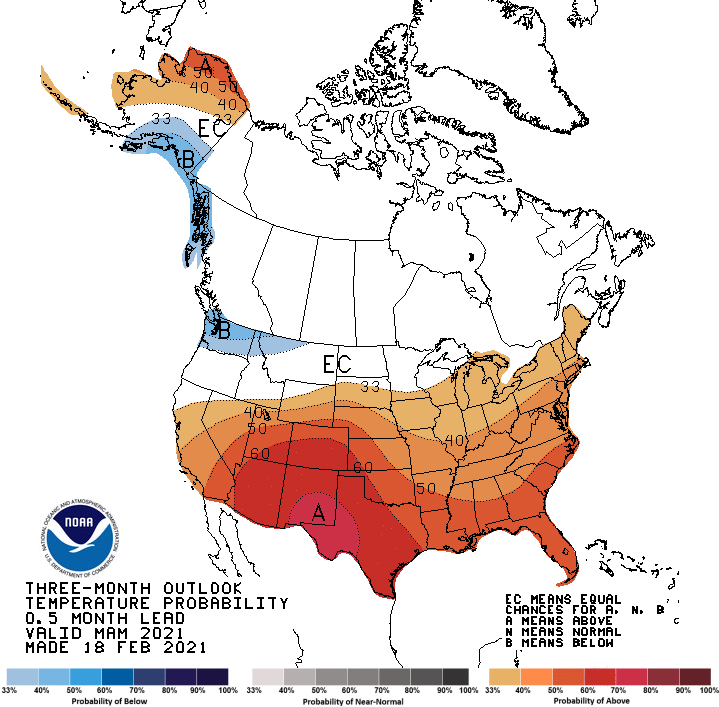
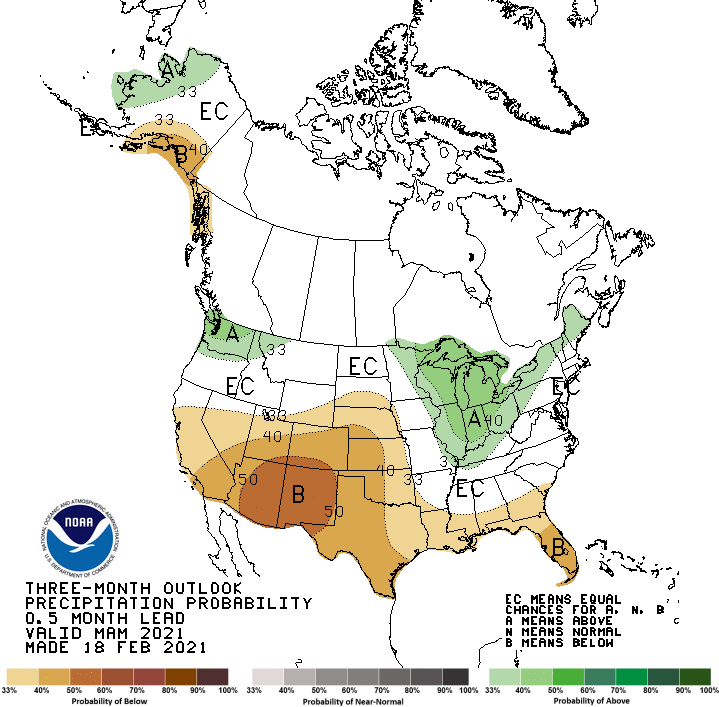
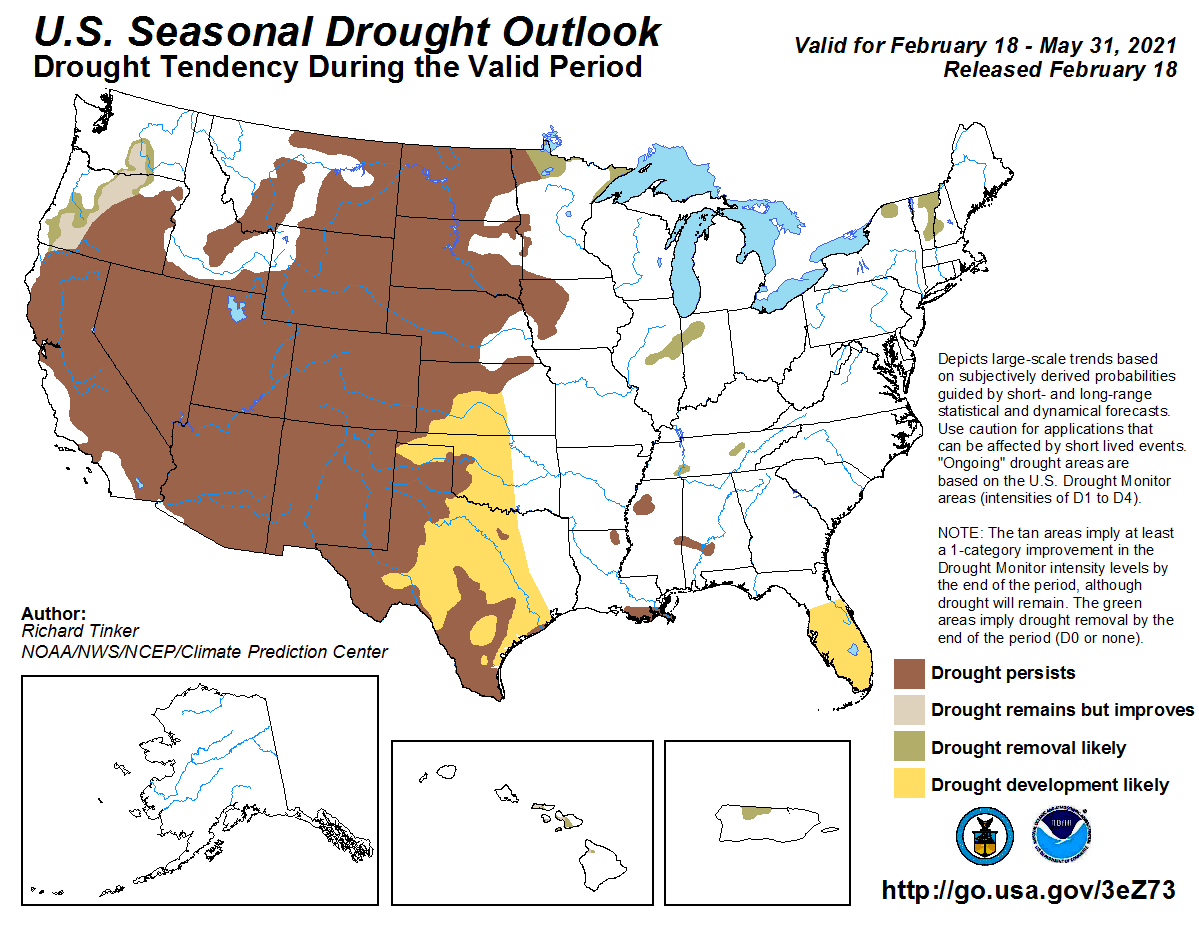

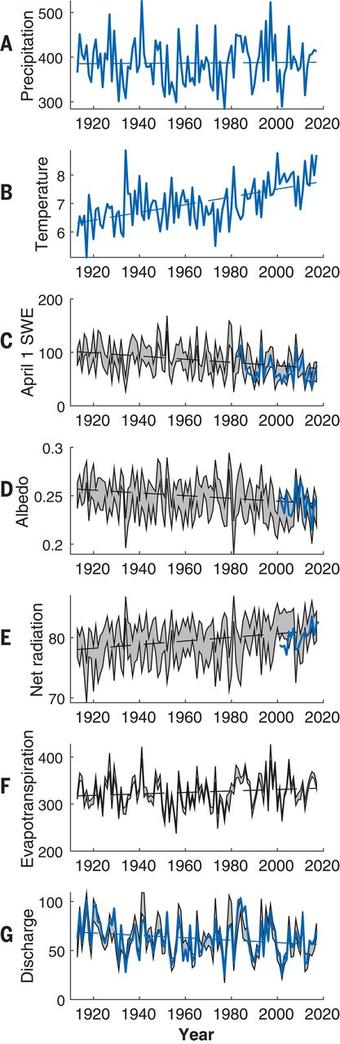


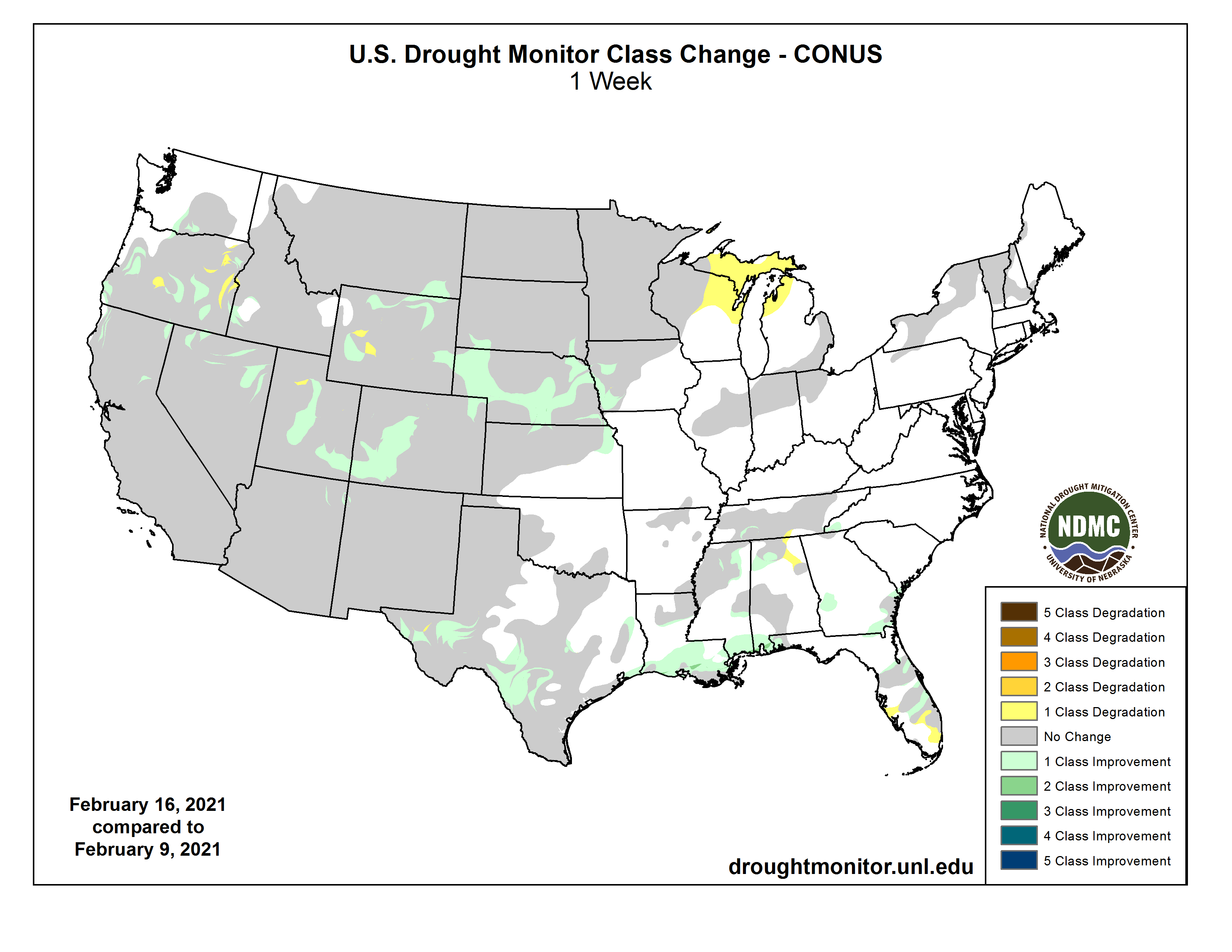

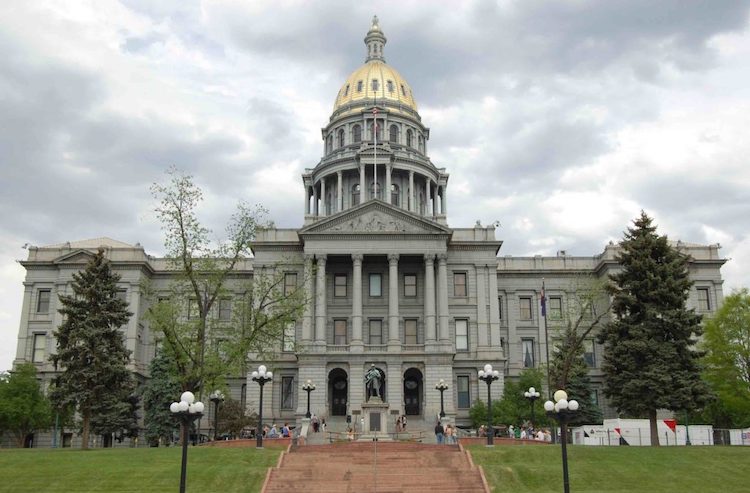





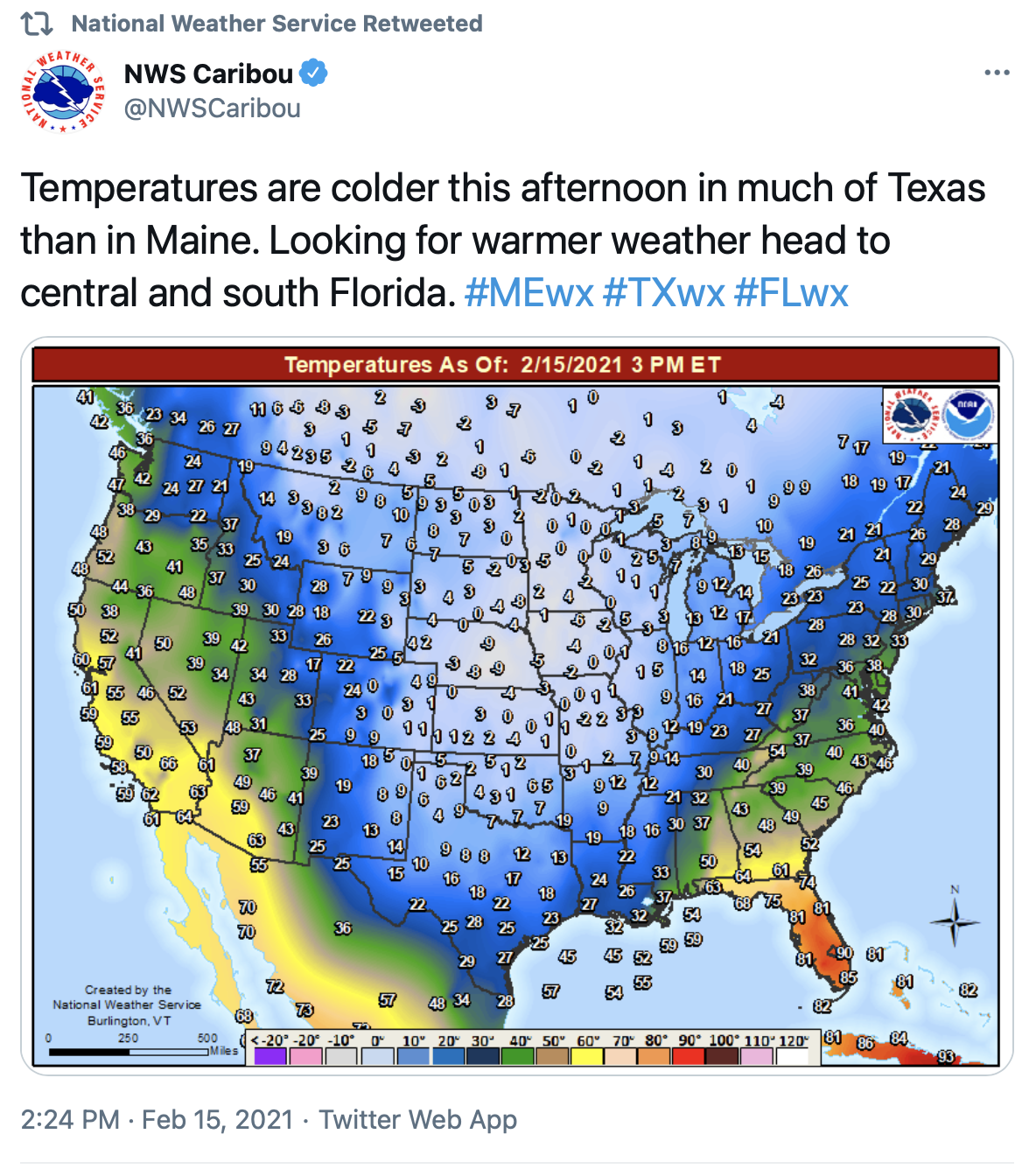
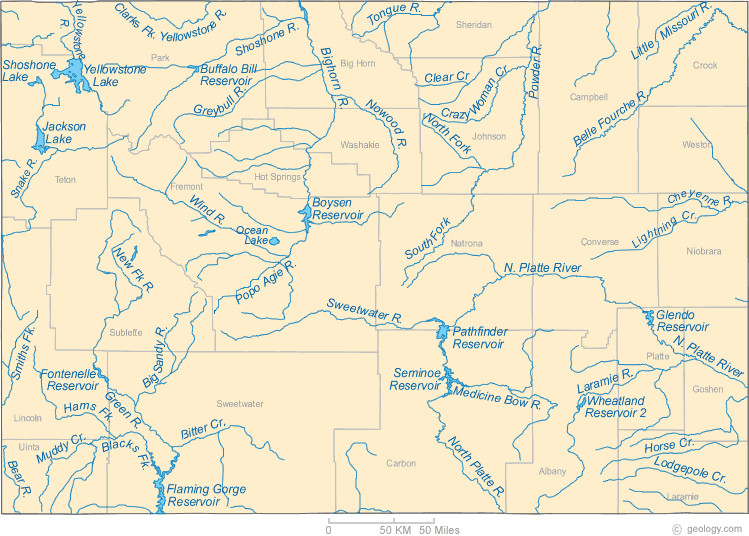
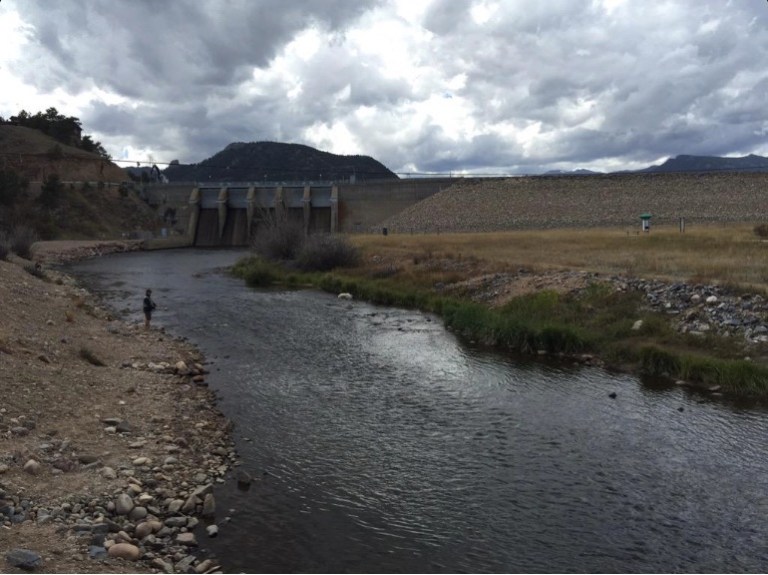

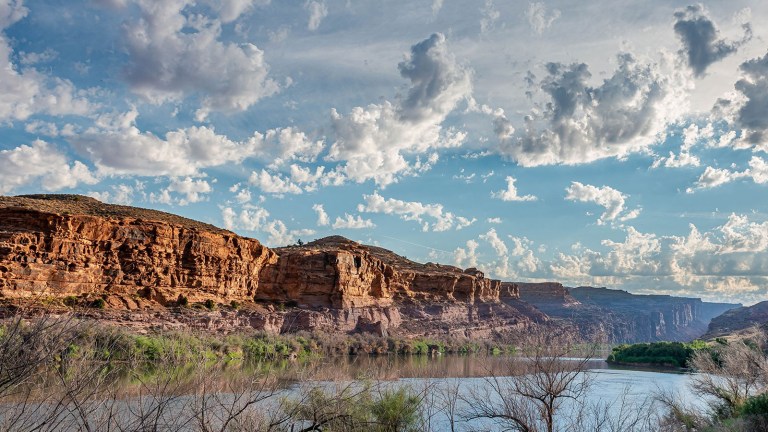

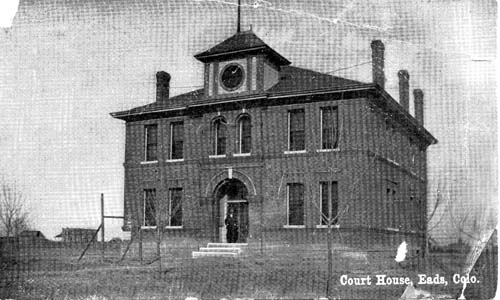

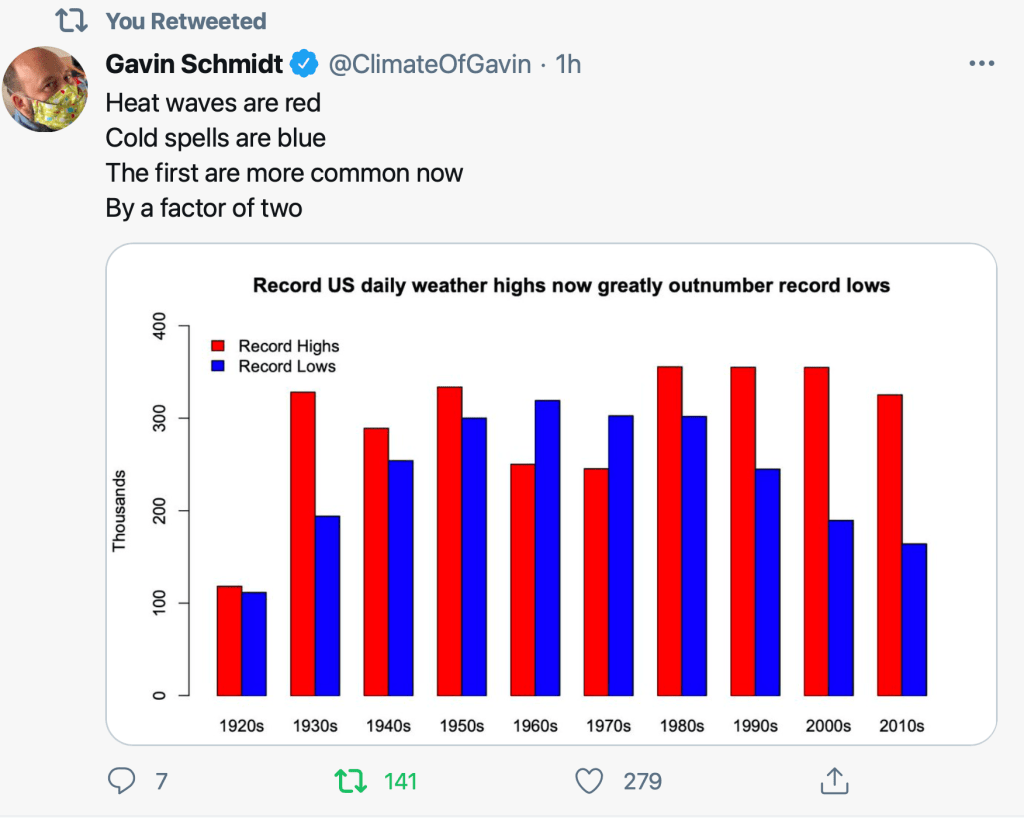
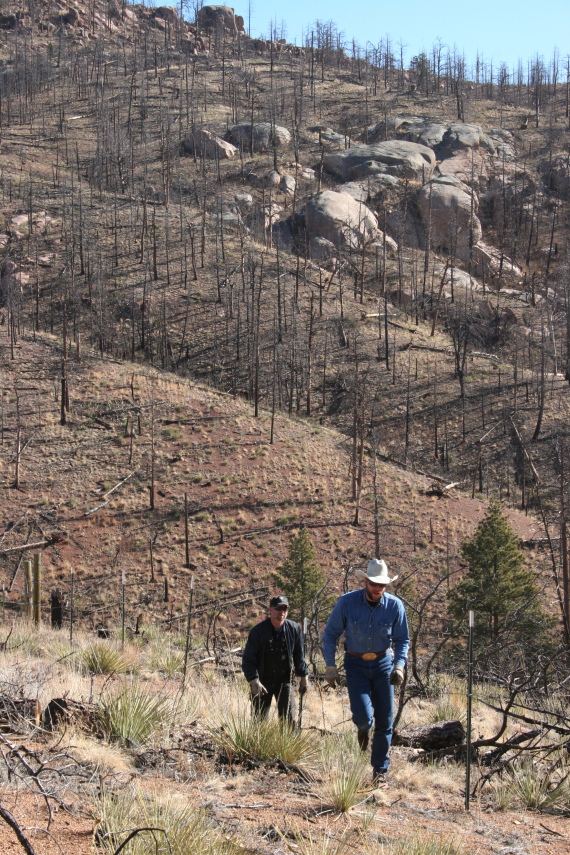
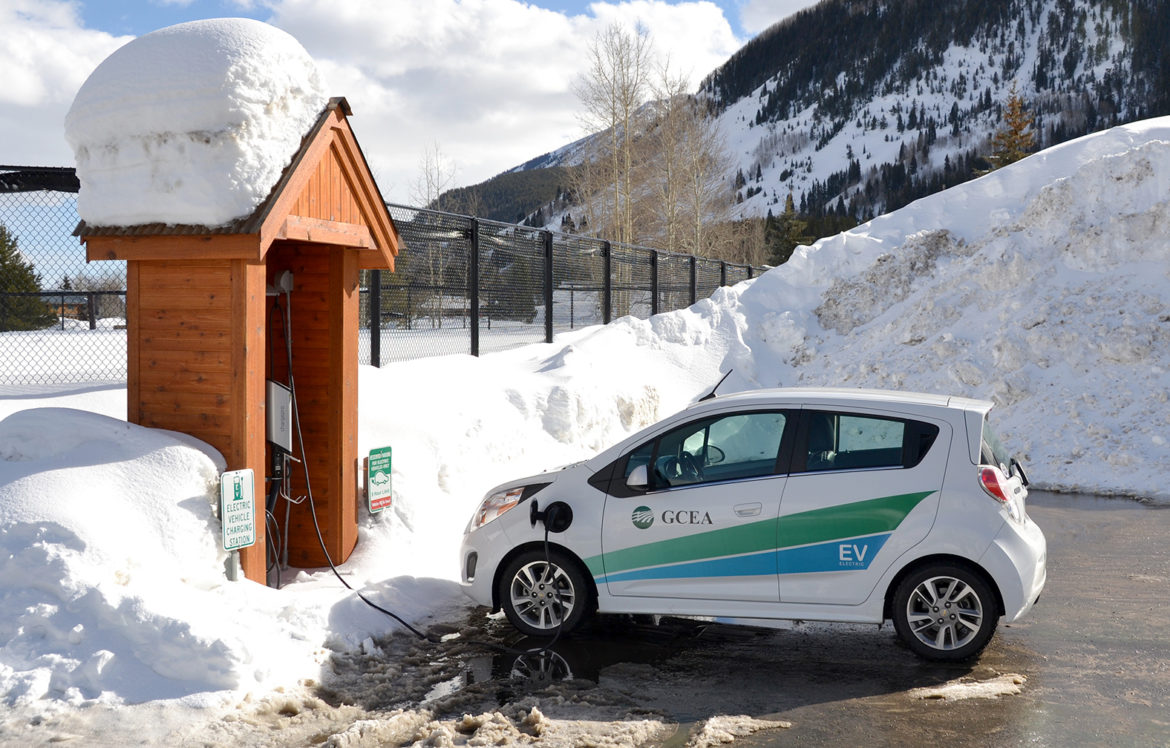
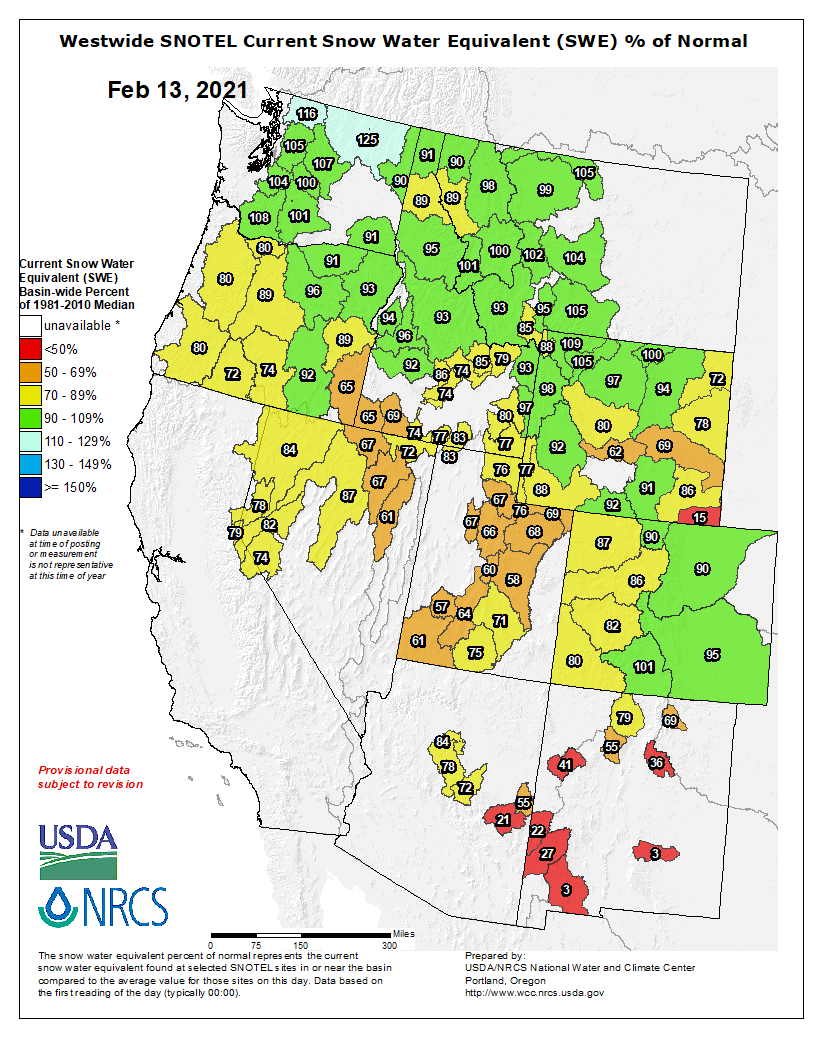
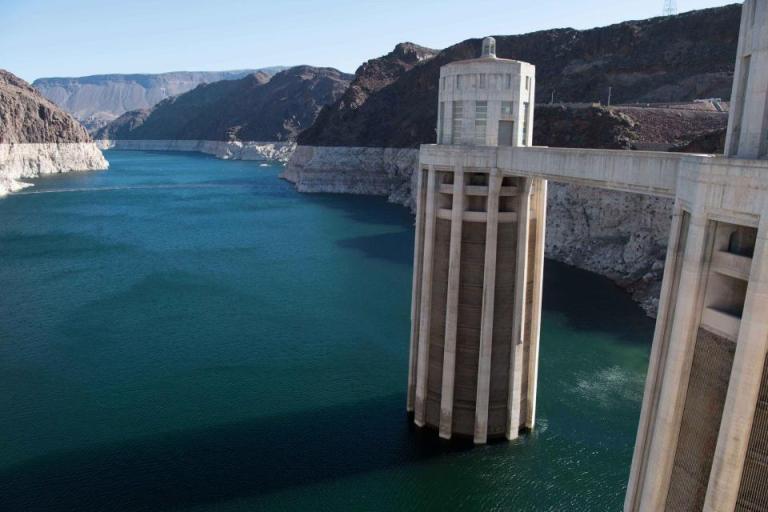


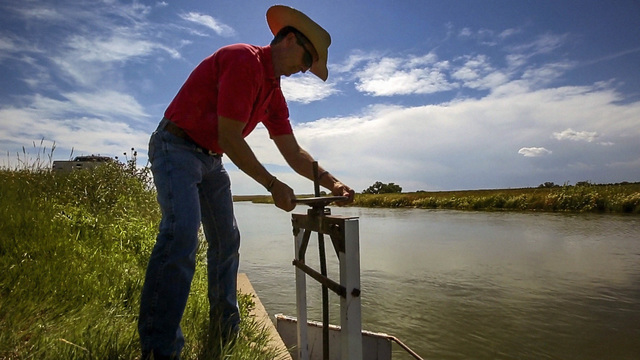


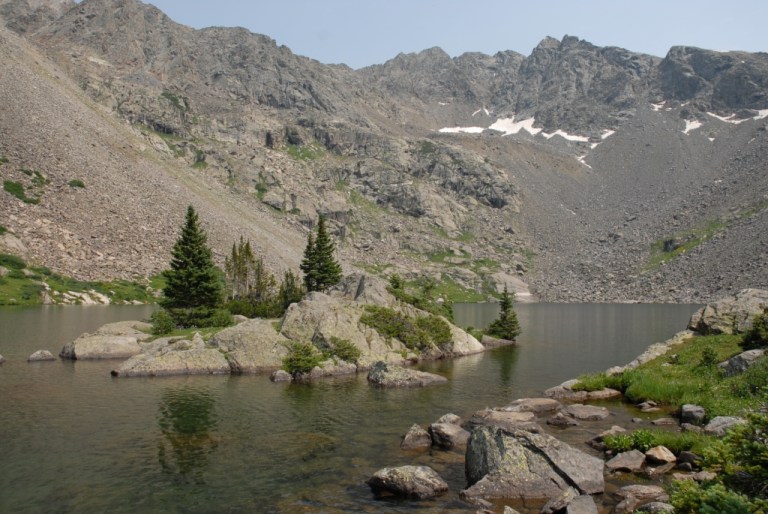


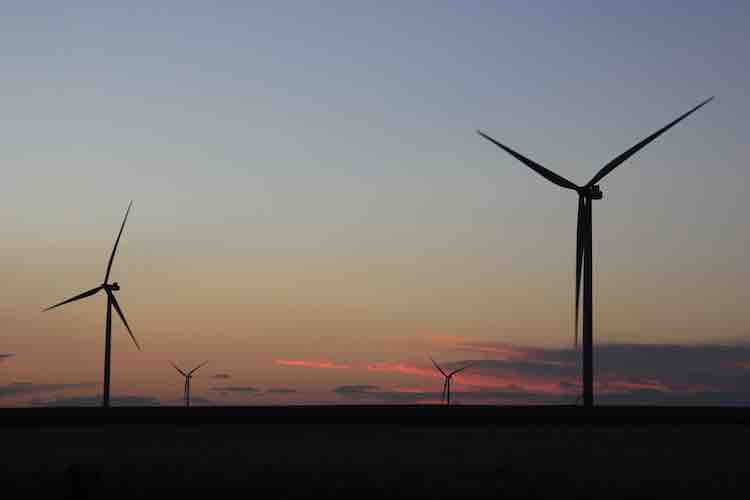



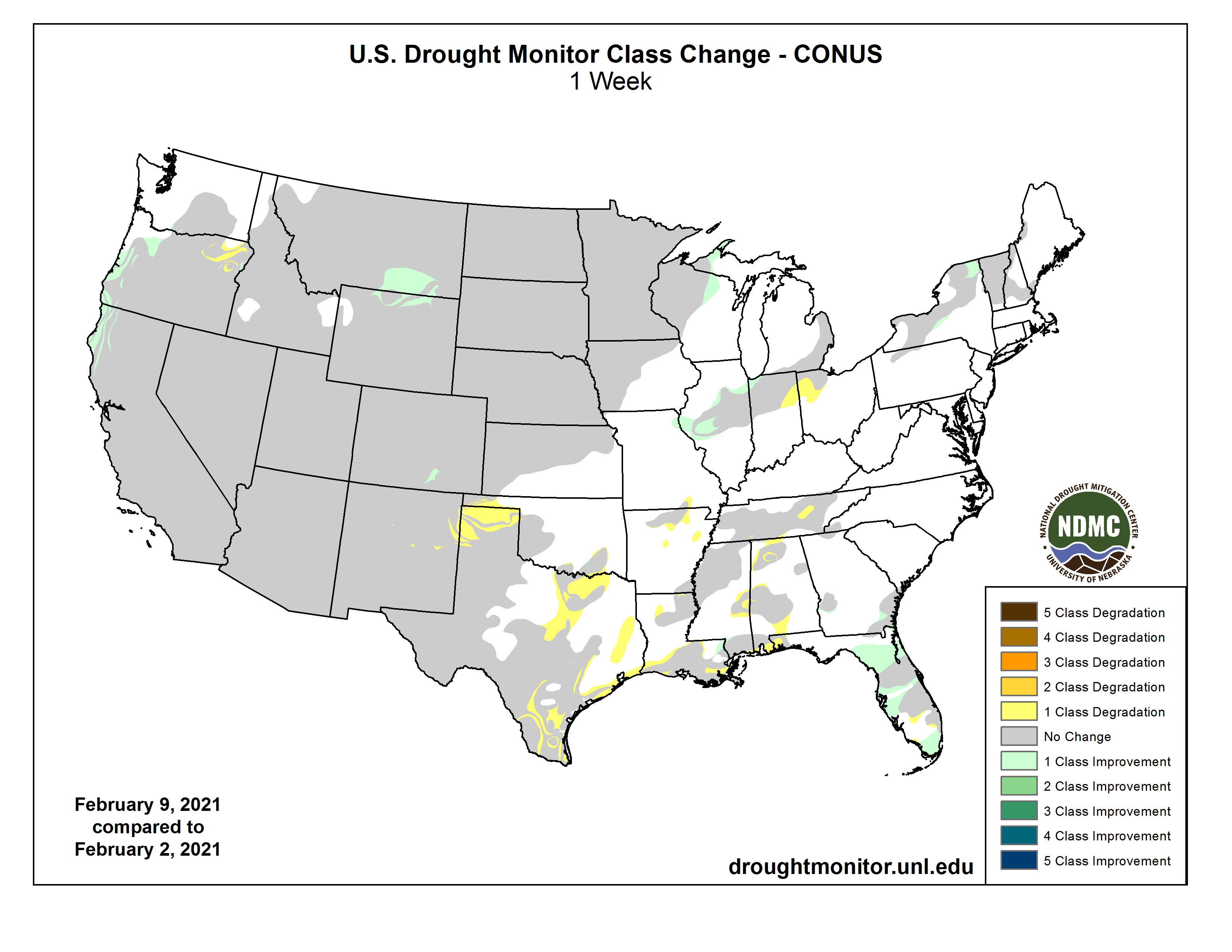



 Pueblo dam releases
 The exterior of the James W. Broderick Hydroelectric Power Facility at Pueblo Dam, which began producing electricity this week. Photo credit: Southeastern Colorado Water Conservancy District
 Arkansas Valley Conduit “A Path Forward” November 22, 2019 via Southeastern.