
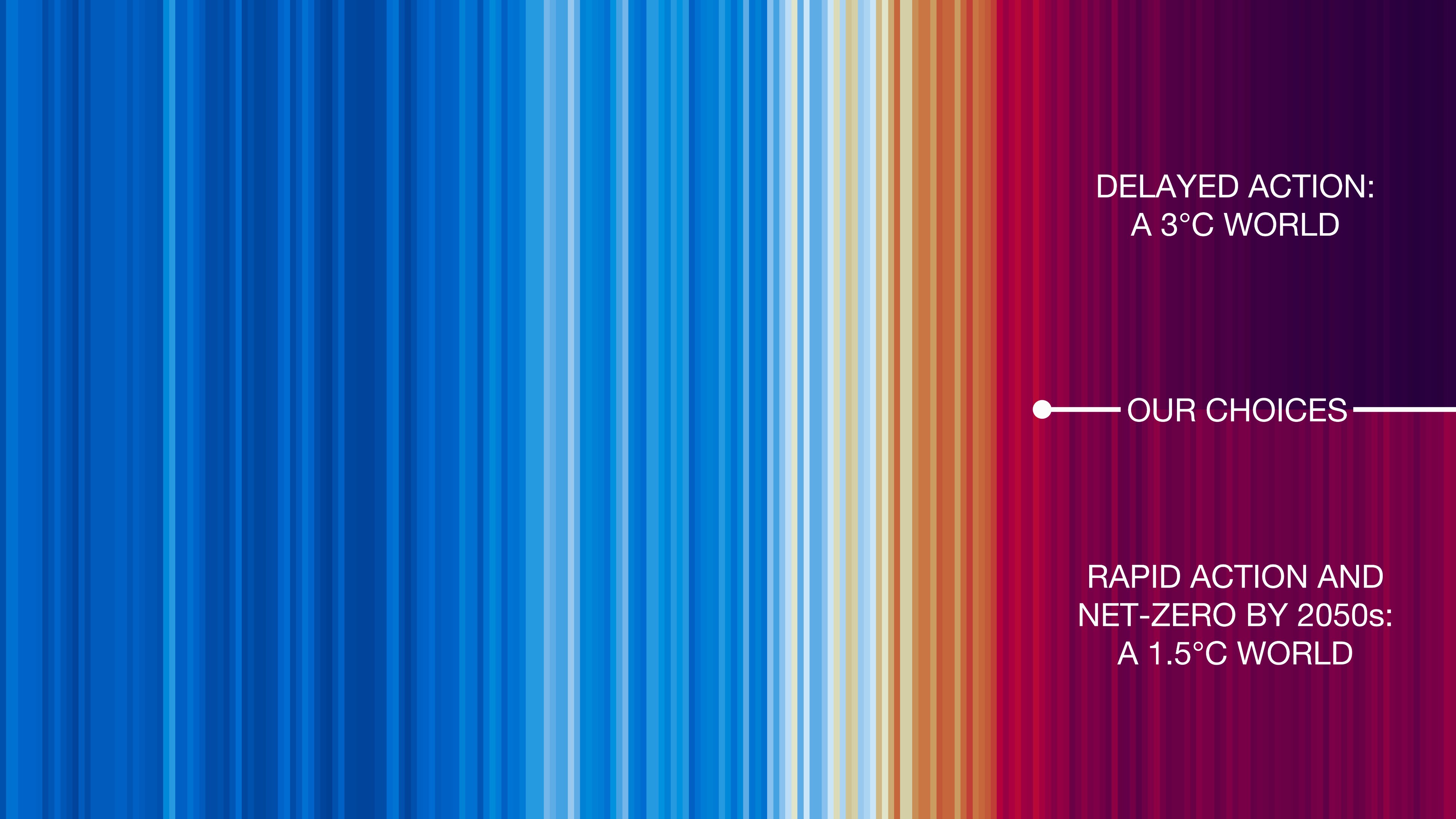
Click the link to read the article on The Washington Post website (Chris Mooney, Naema Ahmed and John Muyskens). Click through for the full article and the graphics, here’s an excerpt:
IT’S THE WORLD’S MOST IMPORTANT CLIMATE GOAL: limiting the Earth’s warming to 1.5 degrees Celsius (2.7 Fahrenheit). It’s the aspiration of global agreements,and to inhabitants ofsome small island nations, the marker of whether their homes will continue to exist. Keeping warming this low will help save the world’s coral reefs, preserve the Arctic’s protective sea ice layer and could avoid further destabilizing Antarctica and Greenland, staving off dramatic sea level rise. But with the world having already warmed by more than 1.1 degrees Celsius (2 degrees Fahrenheit) above preindustrial temperatures, achieving the goal is in grave doubt.
TO SEE WHAT HOPE REMAINS,The Washington Post examined over 1,200 different scenarios for climate change over the coming century, based on the models produced by the world’s leading climate scientists and considered in a key 2022 report of the U.N. Intergovernmental Panel on Climate Change…
In the end, these are simply well-informed models of how the world will work. What’s more, we still have a limited understanding of how the climate system will respond to emissions. At the U.N. Climate Change Conference late last month, world leaders reaffirmed the 1.5C goal. But these scenarios show that without dramatic action — action the leaders did not commit to taking — it most likely will not be possible. Or at least, not without a major overshoot first.That is where the world is currently heading.