
Click the link to read the article on the KUNC website (Alex Hager). Here’s an excerpt:
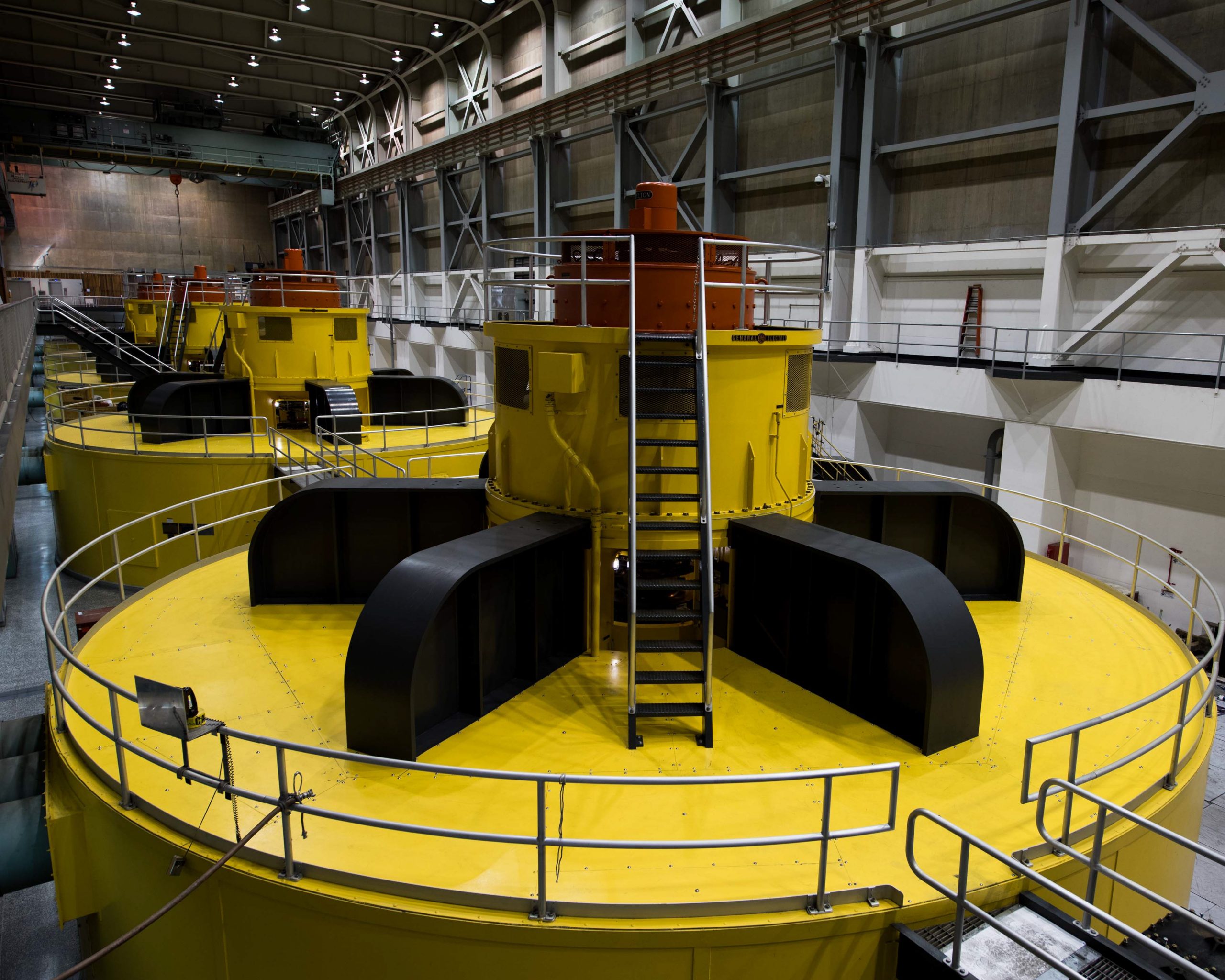
The dam’s innards are a time capsule of 1960s engineering. Bolts as thick as a forearm hold together the hulking metal casing for hydroelectric generators. Here, the Colorado River surges through turbines, producing power for about 5 million people across seven states. Now, the Colorado River is on the decline, and the dam faces threats that could soon render it useless after decades as a symbol of American engineering achievement. In a room that evokes the inside of a submarine, Bob Martin opened a heavy door to reveal one of those turbines. A gleaming silver cylinder whirred along inside.
“This is all original,” he said. “This is like pulling your grandpa’s 1964 Cadillac out of the garage and it’s in the same condition it was in 1964. That’s the world class maintenance that we’ve done – generations have done – at Glen Canyon.”
[…]

Below the hydropower intake is the pipe which allows water to pass from Lake Powell to the river on the other side. Water levels could conceivably drop below that, too. At that point, the only pass-through would be a set of four rarely-used backup tubes near the bottom of the concrete. Those tubes, known as the “river outlet works,” were originally meant to be a failsafe pr to pass water in high flow years, and aren’t wide enough to carry the legally required amount of water from one side to the other. A century-old agreement mandates that the Upper Basin states of Colorado, Wyoming, Utah and New Mexico must deliver a specific amount of water downstream to the Lower Basin states of California, Arizona and Nevada each year. The bulk of that water starts as high-mountain snow in the Rockies. Because winter snowpack varies widely year to year, the Upper Basin states resolved to add some insurance in the form of Lake Powell. Since the 1960s, it has served as a way to bank excess during wet years, and ensure enough would flow to the Lower Basin during dry years.