Roberta Flack, the magnetic singer and pianist whose intimate blend of soul, jazz and folk made her one of the most popular artists of the 1970s, died on Monday in Manhattan. She was 88…After spending almost 10 years as a Washington, D.C., schoolteacher and performing nights downtown, Ms. Flack zoomed to worldwide stardom in 1972, after her version of “The First Time Ever I Saw Your Face” was featured in a Clint Eastwood film…The song had been released three years earlier, on her debut album for Atlantic Records, but came out as a single only after the film was released. Within weeks it was at No. 1 on the Billboard chart — a perch she would reclaim two more times, with “Killing Me Softly With His Song” (1973) and “Feel Like Makin’ Love” (1974).
Ms. Flack’s steady, powerful voice could convey tenderness, pride, conviction or longing, but hardly ever despair. Most of her best-known albums included at least a few funk and soul tracks, driven by a slapping backbeat and rich with observational social commentary. But her biggest hits were always something else: slow folk ballads (“The First Time”) or mellifluous anthems (“Killing Me Softly”) or plush love songs (“Feel Like Makin’ Love”)…Critics often struggled to describe the understated strength of her voice, and the breadth of her stylistic range. In its poise, its interiority and conviction, its lack of sentimentality or overstatement, her singing seemed to press the reset button on any standard expectations of a pop star. She placed equal priority on passion and clear communication — like an instructor speaking to an inquisitive student, or a lover pledging devotion.
Here in New Mexico, our growing season has lengthened since the 1970s, even as stream flows have decreased. Fire season starts earlier, lasts longer, and in some years, ignites the forests into record-breaking blazes, like the gargantuan Hermits Peak-Calf Canyon and Black fires in 2022.
If you look at the last century in New Mexico, stretches of higher temperatures have lengthened; heat waves are hotter and nights, consistently warmer.
Rising heat and expanding aridity harm ecosystems and wildlife and hotter days are dangerous for anyone outside, especially people without housing or access to cool spaces. Extreme heat even interacts with certain medications people need for their physical and mental health.
It should be no surprise that we’re facing another crackly-dry spring, summer, and fall. Fans watching the March 2 Oscars on Albuquerque TV saw flashing red-flag fire warnings. The next day, high winds and dust storms blasted the state; near Deming, a haboob of fast-moving dust shut down highways.
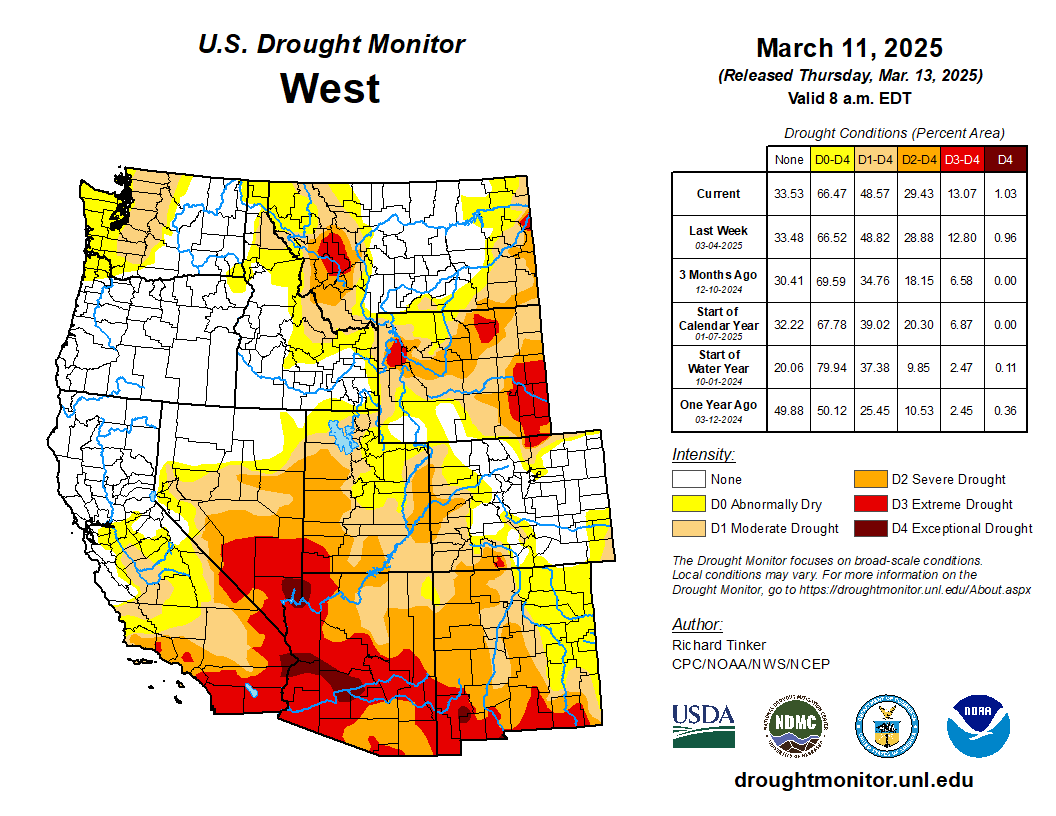
West Drought Monitor map March 11, 2025.
As of early March, 92 percent of New Mexico was experiencing drought, with almost 30 percent of the state in severe to extreme drought, according to the U.S. Drought Monitor.
Arizona is in even worse shape: 100 percent of the state is in drought, with 87 percent in severe to exceptional drought. And the interior West’s three-month outlook is for warm, dry conditions — especially in Arizona and New Mexico.
Here in New Mexico, the Middle Rio Grande Conservancy District—which supplies water for farms—is warning runoff season will be short and river flows, low. The district’s leaders are urging farmers to plan for extended periods between irrigation deliveries and say that without summertime monsoons, they will not meet everyone’s needs this year.
During the 1900s—including during the infamous 1950s drought and earlier in this century—armers could often still expect full water allocations in a dry year.
Now, when farmers don’t receive water—and the Rio Grande dries for long stretches—it’s not only because there isn’t enough snow melting off the mountains. It’s also because consistently dry soils suck up any moisture, making both forests and croplands thirstier.
Not only that, but decades of persistent drought and warming temperatures have desiccated reservoirs along the Rio Grande and its tributary, the Chama River.
On the Chama River, Heron Reservoir is 14 percent full; its neighbors, El Vado and Abiquiu, are at 14 percent and 51 percent respectively. Further down the watershed, on the Rio Grande in southern New Mexico, Elephant Butte Reservoir is only 13 percent full, and its neighbor, Caballo, nine percent full.
In New Mexico, some water users, including the irrigation district, rely on water piped from the Colorado River watershed into the Chama and then the Rio Grande. This year, most of that supplemental water won’t be there.
The view upstream on both watersheds is also troubling, especially in Arizona, New Mexico and southern Utah where the snowpack is “below to well-below median.” Last month, the Colorado River’s two largest reservoirs, Lake Powell and Lake Mead, were 34 percent full, the lowest they’d been in early February for the last 30 years of records.
I’m alarmed by many things happening right now, including the disappearance of climate data from federal websites and the gutting of federal workforces and budgets. We need wildland firefighters, scientists, and the staffers who kept our parks and public lands functioning.
But as a reporter who has covered climate change and its impacts in my state for more than two decades, I take the long view along with a local view.
We have known for decades that the planet is steadily warming and that the impacts of climate change would intensify. And we must resist focusing solely on the current chaos of the federal government. [ed. emphasis mine]
Laura Paskus. Photo credit: Writers on the Range
There’s never been a better time to become immersed in local politics or organizing, and to hold state and local leaders accountable for action on climate.
We can collaborate on local solutions and work together to better deal with the crises we face. Really, we have no choice.
Laura Paskus is a contributor to Writers on the Range, writersontherange.org, an independent nonprofit dedicated to spurring lively conversation about Western issues She is longtime reporter based in Albuquerque and the author of At the Precipice: New Mexico’s Changing Climate and Water Bodies.
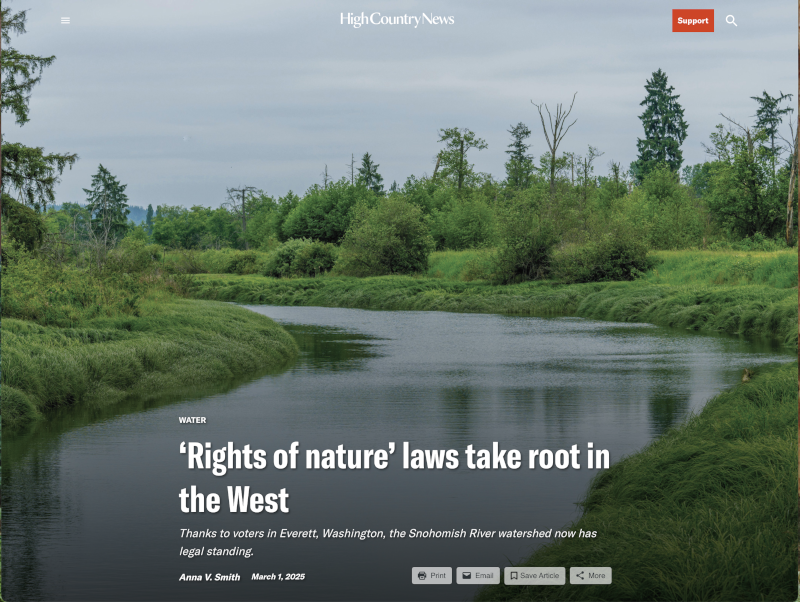
Last fall, Everett,Washington, became the first city in the Western United States to pass a ballot measure recognizing the rights of a river’s watershed — that of the Snohomish River, which curves north and east around the city before emptying into Puget Sound. The municipal law protects the river’s “rights to exist, regenerate and flourish” and is designed to be a tool for residents seeking to prevent or repair harm to the river’s watershed.
“These ecosystems have inherent rights. We are just acknowledging them by giving them legal standing in a court of law,” said Abi Ludwig, co-founder of Standing for Washington, a political action committee that supported the initiative.
The law is the latest attempt in two decades of concerted efforts at the tribal, city and international level to codify a different legal relationship between people and their environment — one in which water, wildlife and land are not just resources to be used and abused by humans. In the U.S., several similar “rights of nature” laws have failed legal challenges, and Everett’s law could meet the same fate: In late January, a group of local developers and business owners filed suit against it. But according to Ludwig, the campaign learned from past experience, and the new ordinance is designed to survive. “Even though it’s this emergent strategy,” she added, “I think people are ready to embrace something new, and to try something new.”
In our current legal system, in order to sue over harm to a river or a species, a plaintiff must prove that they have “standing” — that they’ve been personally injured by the decline of that river or species. Rights of nature laws eliminate this requirement by giving legal standing to nonhuman entities. The strategy is relatively new, but the concept of reciprocity between ecosystems and human beings is much older and found in Indigenous knowledge, said Britt Gondolfi, rights of nature project coordinator with the nonprofit network Bioneers and a descendant of the Houma Nation.
In the U.S., tribal nations including the Yurok Tribe and White Earth Nation have used their sovereignty to adopt resolutions or amend their constitutions to enact rights of nature laws. In 2021, two town councils in Colorado passed non-binding resolutions recognizing the rights of local rivers. Other initiatives have met with more pushback; a ballot measure passed in Toledo, Ohio, that recognized the legal rights of Lake Erie was struck down in 2020 by a federal court, and in 2024, the Utah Legislature preemptively banned similar laws after author Terry Tempest Williams made a public case for the legal personhood of the Great Salt Lake.
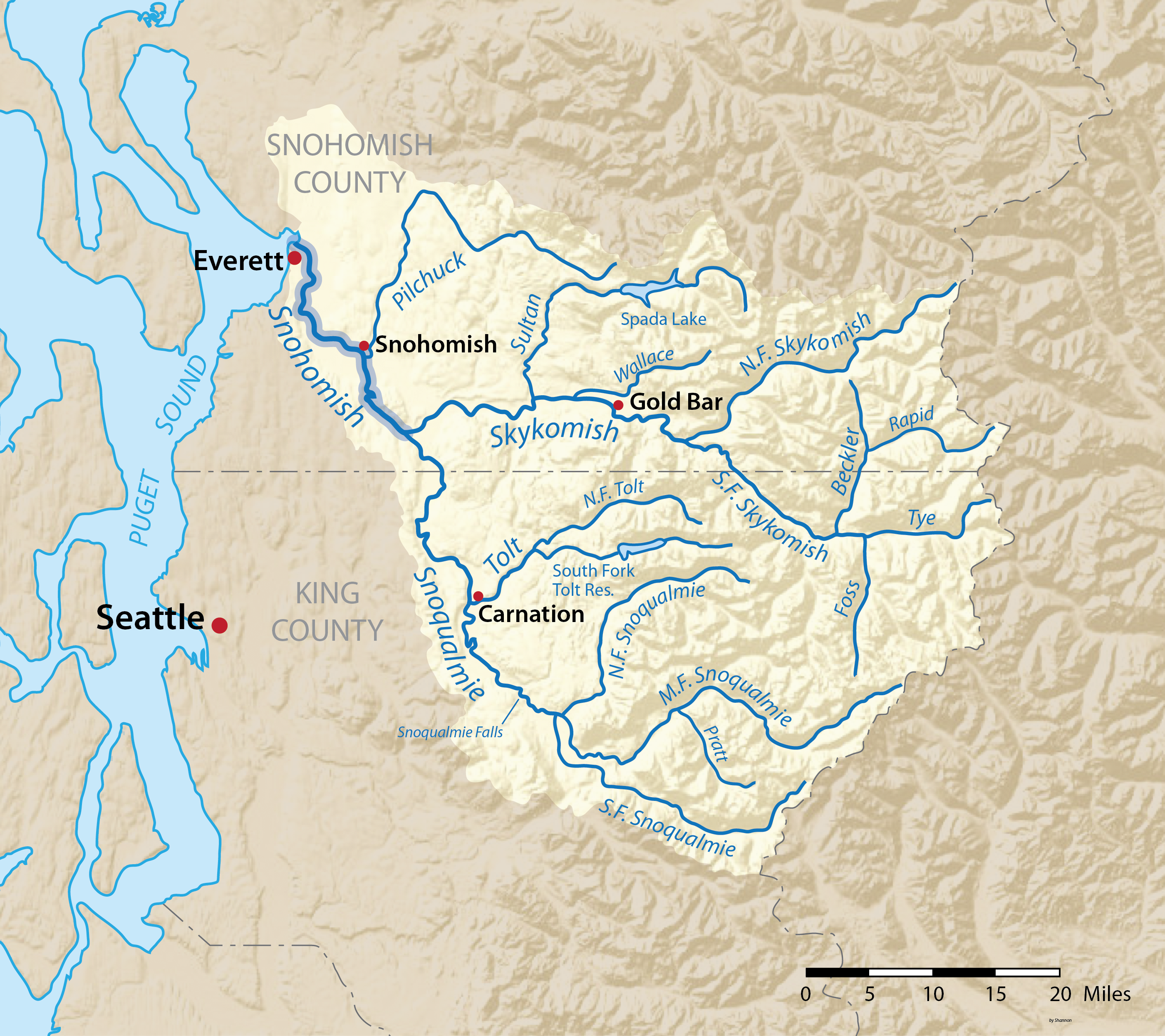
Map of the Snohomish River watershed in Washington, USA with the Snohomish River highlighted. Made using USGS National Map data. Replacement for File:Snohomishrivermap.jpg. By Shannon1 – Own work, CC BY-SA 4.0, https://commons.wikimedia.org/w/index.php?curid=47085604
In Everett, organizers deliberately restricted the law’s reach to city limits, since the potential for conflicts of jurisdiction doomed Toledo’s attempt to protect Lake Erie. The Snohomish River has long suffered from industrial pollution and agricultural runoff, and Everett residents’ interest in restoring the watershed helped the measure pass with 57% of the vote.
The Tulalip Tribes, whose reservation is just north of Everett, did not endorse the initiative, but Tribal Chairwoman Teri Gobin said in a statement that the tribe looks forward to seeing it translated into action: “We see value in using all tools available in the pursuit of sustainability and co-existence for the people, plants, animals, lands, and waters of our world.”
Under the new law, any Everett resident can bring a case, and any money from successful lawsuits will fund the city’s watershed restoration efforts. “We now think of it as a community stewardship model,” Ludwig said. Despite the opposition, “we have to try,” Gondolfi said. “We have to try every legal argument available to us for the preservation of what little natural world is left, in comparison to what we’ve destroyed.”
This story is part of High Country News’ Conservation Beyond Boundaries project, which is supported by the BAND Foundation.
Data Dump: Setting baselines to monitor “energy dominance” under Trump
When Republican Jeff Hurd was elected to represent Colorado’s third congressional district, I believe I heard a bipartisan, collective sigh of relief. Democrats may have been sad that their candidate didn’t win, but at least the new guy wasn’t Lauren Boebert. And, many of us hoped, Hurd would represent a return of the independent and pragmatic Western politician of old to western and southern Colorado.
We were wrong.
So far, Hurd’s performance in office has pretty much followed Boebert’s lead, politically, albeit without the gun-slinging and other outrageous antics. When one of his aides showed up to meet with constituents in Dolores, she fled after seeing the size of the crowd assembled there. Hurd, himself, chickened out from attending a town hall in Grand Junction for similar reasons. Instead of apologizing for refusing to listen to the people he represents, he accused the crowd of being George Soros-funded activists — a false and worn-out, right-wing anti-semitic trope that really needs to be retired. In fact, the folks were his constituents, including members of Indivisible and the League of Women Voters. These weren’t exactly molotov cocktail hurling radicals.
And when CPR’s Ryan Warner asked him about the mass federal employee firings that have hit his district especially hard, Hurd gave mealy mouthed answers, saying efficiency is good, acknowledging he had no idea how many employees had lost their jobs, and lamenting the possibility that some good people may have been terminated, too, though it was also clear that he wasn’t going to do anything about it, especially if it meant questioning or, God forbid, standing up to Musk and Trump.
Hurd introduced a bill that would move the Bureau of Land Management headquarters to Grand Junction because it’s better to have management staff on the ground, yet he has not pushed back on DOGE’s plans to close federal offices throughout his district, including the Bureau of Reclamation and Army Corps of Engineers offices in Durango. He has teamed up with Boebert to criticize Colorado for importing “foreign wolves” into the state and has parroted MAGA’s anti-immigrant hysteria in regards to Denver’s tolerance.
Now Hurd has introduced the Productive Public Lands Act to “unlock resource development on some of our most productive lands.” It would toss Biden-era Bureau of Land Management resource management plans — which he claims “locked up access to viable lands” — and replace them with fossil fuel-friendly ones with the aim of putting “us on a path to energy dominance.” Talk about inefficient: Those RMPs took years to develop and are the result of extensive studies, public input, and compromise. Trashing them is a perfect example of government waste. [ed. emphasis mine]
Note to Rep. Hurd: Public lands are not locked up. Quite to the contrary. Unfortunately Hurd — like his predecessor — has chosen to let MAGA ideology and disinformation blind him to the facts. Still, I’ve got to try, so here I go again: The United States is producing more oil and gas — much of it from public lands — than it ever has before, and is the world’s leader in hydrocarbon production. Read that again. Then again. And keep doing so until it penetrates your thick skull so that you can stop wasting all of our time with your “war on energy” nonsense.
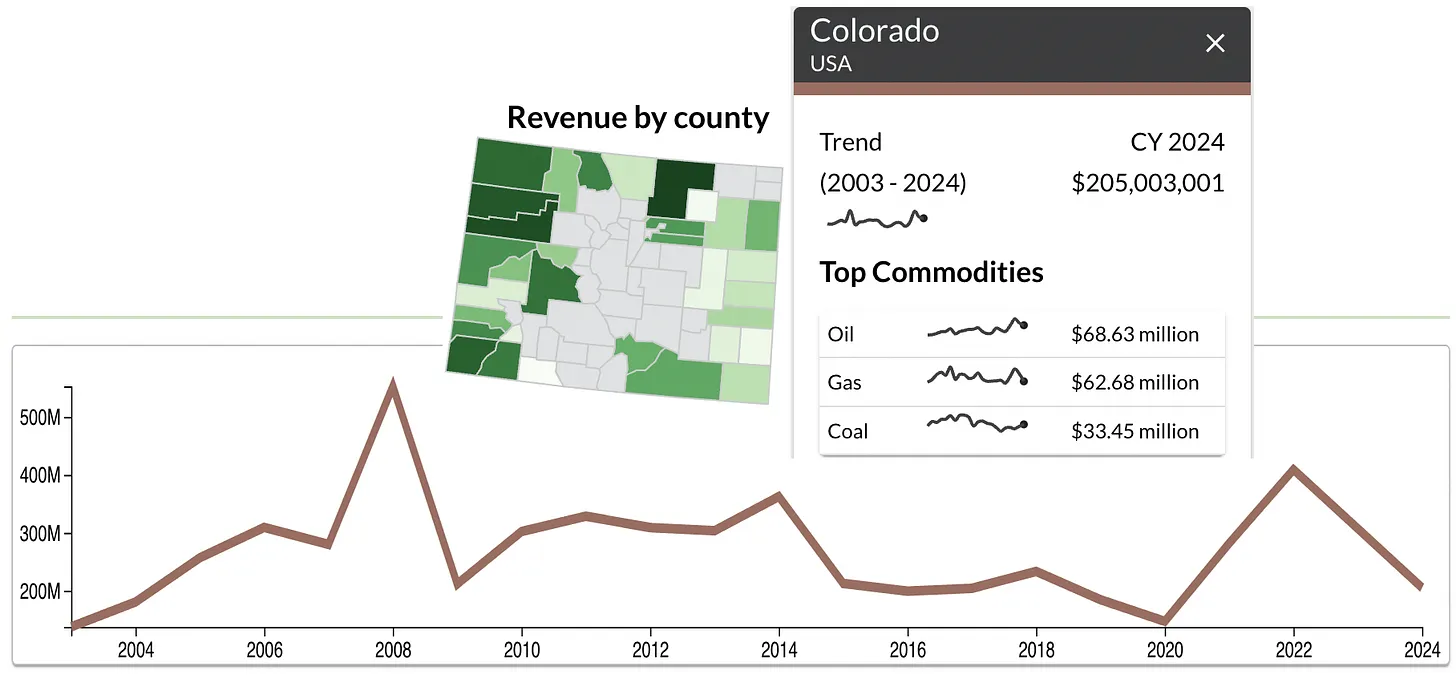
While drilling has shifted away from Colorado and is now centered on the Permian Basin, it has nothing to do with BLM regulations or resource management plans. It’s because western Colorado is rich in natural gas, not so much in oil, and there’s far less money in natural gas production than there is in crude oil. Nevertheless, oil, gas, coal, and carbon dioxide production from federal lands in Colorado (much of which are on the Western Slope) generated $205 million in revenue last year. Locked up? I don’t think so.
***
As long as I’m on the topic of “energy dominance,” I figured it would be a good time to set out some baseline data for tracking the progress of Trump’s “drill, baby, drill” agenda. As has been established, the Trumps and Hurds of the world believe that energy production from federal lands has been “locked up,” and that by “unleashing” it — i.e. rescinding environmental protections — the oil and gas industry will bring in a battalion of drill rigs, send oil and gas production through the roof, and bring down prices at the pump to make it cheaper to drive those gas-guzzling behemoths that now dominate the roadways.
It’s too early in Trump’s term to determine whether that’s actually happening or not, so let’s just check in on where we are and what has happened over the last four years. And we’ll keep updating these graphs periodically. Land Desk readers have seen some of these before. Sorry about that.
This one shows U.S. crude oil production. It was in steady decline until about 2009, kicking back up again just as Obama took office. Is that because Obama slashed regulations on drilling? No. It’s because that’s when horizontal drilling-multistage hydraulic fracturing, i.e. fracking, came into its own and oil prices increased. Production dipped at the end of Obama’s second term because OPEC decided to wage a price war on U.S. producers, glutting the market with crude in hopes of driving some U.S. companies out of business. And it dipped again at the end of Trump’s first term because of COVID. In December, while Biden was still in office, U.S. fields produced 418 million barrels of crude, an all-time record high. Source: Energy Information Administration.
Production goes up after drilling activity increases. Drilling activity generally responds to crude oil prices. When prices are high, it’s more profitable to develop new oil and gas wells, so the drilling rigs are dusted off and head out into the fields. When prices are low, they are folded up and hauled back to the storage yard.
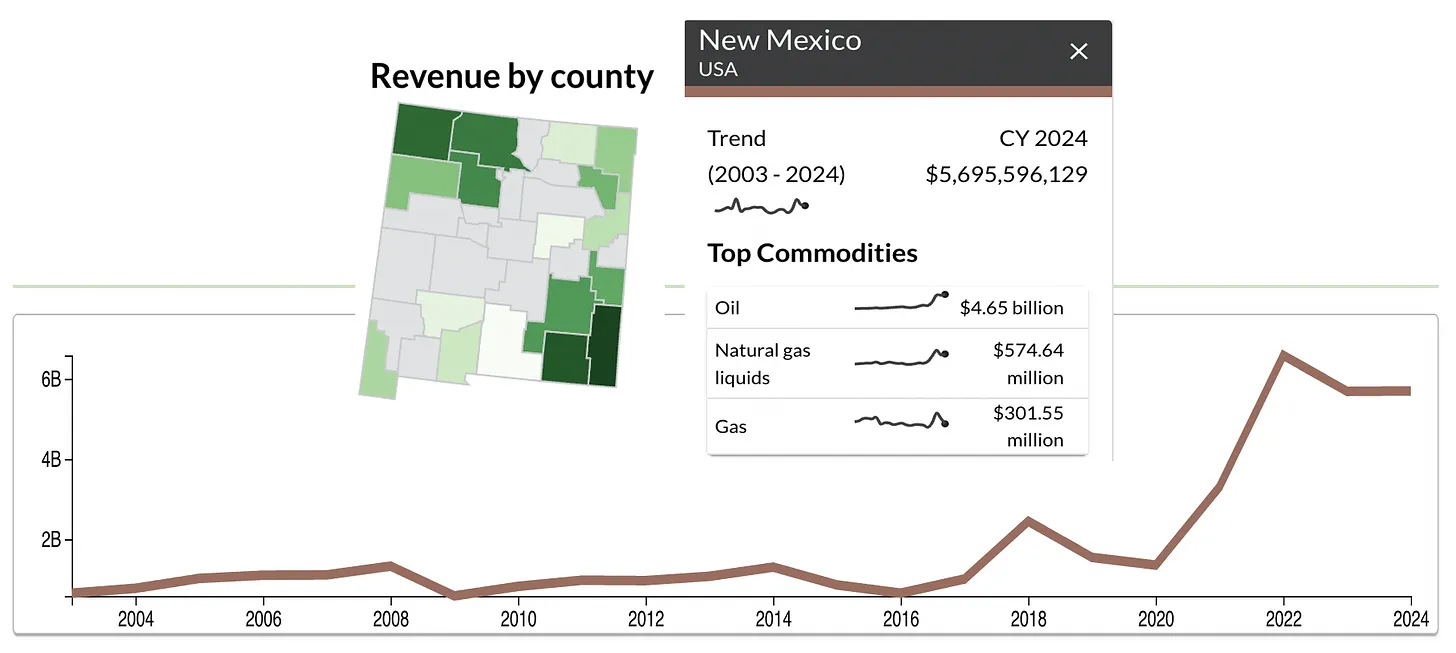
And lest you think that maybe all of that production is coming from private or state lands since, after all, the federal land has all been “locked up” by Biden’s purported war on energy, check out the revenues from federal land resource production for New Mexico and Colorado. Funny how they shot up right after Biden was elected, no?
Oil production from federal lands in New Mexico generated $4.65 billion last year, down slightly from 2022 but still significantly more than during any other time during the last two decades. Source: Office of Natural Resource Revenue.
Colorado’s energy industry has had a slightly rougher go of it, mainly because it specializes in natural gas, not crude oil, and methane prices have been low since the 2009 crash. Note to Jeff Hurd: Revenues were substantially higher under Biden than under Trump I. Just sayin’. Source: ONRR
The best way to get a feel for drilling activity is to check out the weekly rig count. So here it is. But a note to all you statisticians out there: The time intervals are uneven on this graph, in part due to my own laziness. But it still gives a fairly accurate picture of drilling activity over time, so it works.
This gives a good illustration of the level of drilling activity and where it’s taking place. This shows the OPEC price war dip in 2015 and 2016 and the COVID dip in 2020. Again, these are driven almost entirely by the price of crude oil, which is determined by the global market. North Dakota dominated for a while, but never recovered from the 2015 crash. Instead, activity moved to the Permian Basin in New Mexico and Texas. The rig count for Western states remained remarkably stable during the Biden administration. Source: Baker-Hughes.
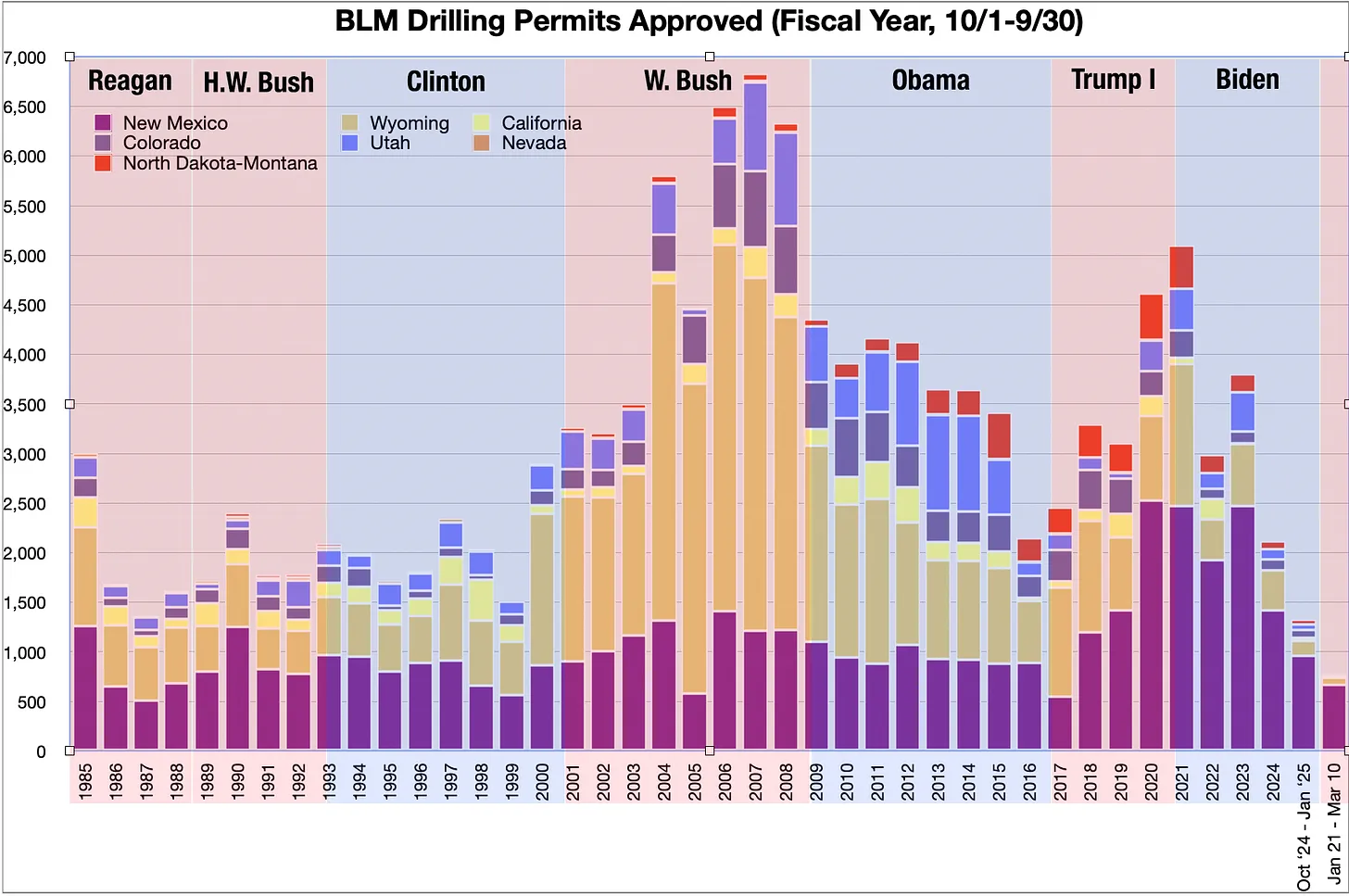
The thing about production and rig counts, though, is they don’t really reflect White House policy. So how about the number of drilling permits approved by the Bureau of Land Management?
On average, Biden’s BLM issued around the same number of drilling permits as Trump I. This may have something to do with policy, but it is also driven by how many firms apply for permits and how well-equipped and staffed the field offices are to process those applications. Note that during the last four months of Biden’s term, the BLM issued over 1,300 permits. So far, the Trump II administration has issued 774 permits in just over two months. Source: BLM.
Now that we have a snapshot of where we’ve been and where we are in terms of oil and gas development, we can track where we might be headed under Trump 2.0. My guess? We’re going to see all of the above indicators begin falling soon. Sure, rig counts are staying steady, meaning production will continue to rise for a few more months. But after that, lower oil prices are likely to kick in, dimming companies’ enthusiasm for drilling, which will hit the rig count first and then production.
Graphic credit: The Land Desk
Oil prices are dropping — they hit sub-$70/bbl this week for the first time since 2021 — because OPEC decided to start pumping more crude and because the economy is struggling, which will likely dampen demand. The economy is struggling because markets are reacting unfavorably to the chaos Trump, Musk, and company are wreaking from the White House. Turns out that tariffs, trade wars, and haphazard termination of critical federal employees is bad for the economy. Gasoline prices will likely fall, too, except in places that rely on Canadian crude, where they might increase. So there is that. Of course, if you lose all your money in the plummeting stock market, it won’t really matter much, I suppose.
Speaking of tariffs, remember when I wrote about Trump’s trade wars and predicted that American whiskey and bourbon makers would be casualties? Turns out I was right. Kentucky distillers, especially the small ones, are already feeling the pain, and even large ones are smarting from Canada’s retaliatory moves. I suppose Trump will claim the Canadians started the trade war, just as he’s ridiculously asserting Ukraine invaded Russia.
📸 Parting Shot 🎞️
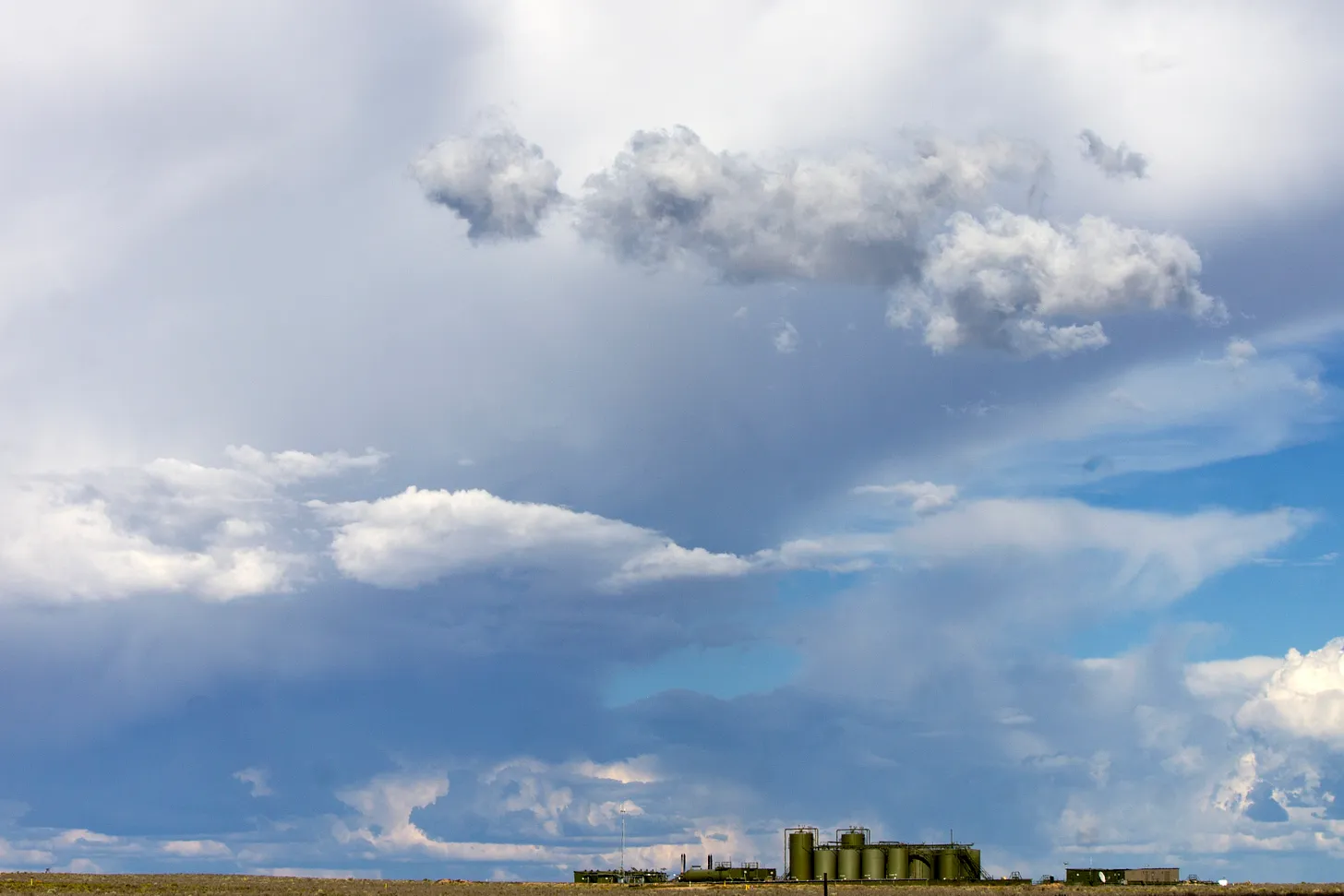
St. Joseph’s Church, San Fidel, New Mexico. Jonathan P. Thompson photo.