Lawsuit settlement clears the way for #NISP construction — Northern Water #PoudreRiver #SouthPlatteRiver

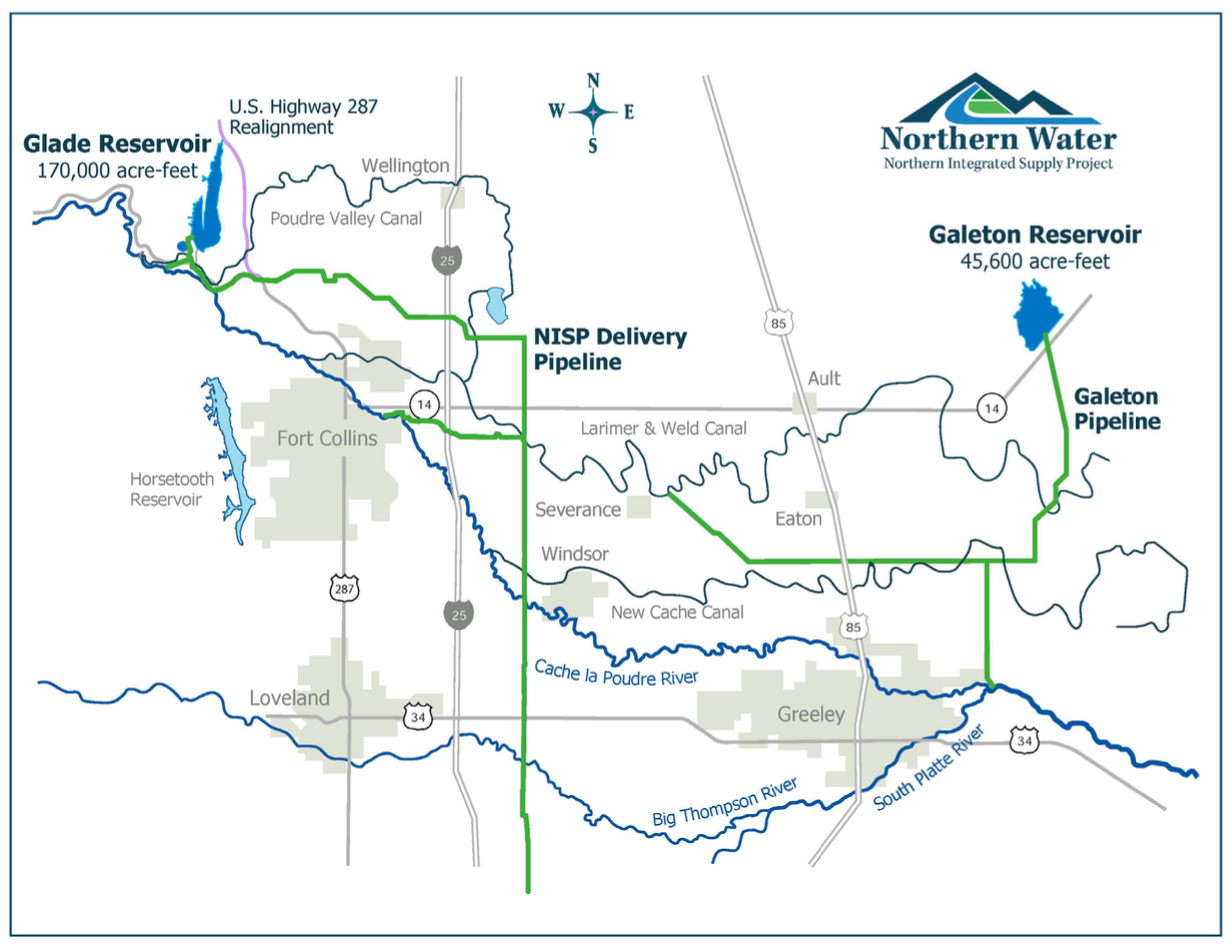
The Northern Integrated Supply Project, currently estimated at $2 billion, would create two new reservoirs and a system of pipelines to capture more drinking water for 15 community water suppliers. Credit: Northern Water

Here’s the release from email from Jeff Stahla at Northern Water:

February 28, 2025

BERTHOUD, Colorado – Northern Water, on behalf of the Northern Integrated Supply Project (NISP) Water Activity Enterprise, and the nonprofit group Save the Poudre have reached a settlement to the lawsuit challenging the federal permit issued for NISP, clearing the way for the construction of the vital water supply project in Northeastern Colorado. 

The agreement, signed late on Friday, Feb. 28, by the Northern Water Board of Directors, outlines the creation of a new and long-term funding source for additional investments to benefit the reach of the Poudre River from the mouth of the Poudre Canyon to the river’s confluence with the South Platte River near Greeley. Throughout the next two decades, $100 million will be contributed by project participants to create a fund likely at the NoCo Foundation, or similar type foundation, with the intention of the money to be made available for projects and initiatives that improve the river for recreational uses, wildlife, water quality and more. 

The agreement includes dismissal of the legal challenge to the federal Section 404 Clean Water Act permit issued by the U.S. Army Corps of Engineers in January 2023. Northern Water received the permit after two decades of work showing the need for the project. The mitigation requirements in the permit will remain, with the settlement funding adding projects beyond those outlined in the various permit documents issued for the project.  

“This is a milestone day for the communities participating in the project,” said Northern Water General Manager Brad Wind. “The settlement agreement will close the permitting process for the project, open the door to constructing a project that will deliver much-needed water supplies to vibrant communities, and allow for dozens of large-scale riverine investments in and along the Poudre River.” 

NISP’s Program Manager, Carl Brouwer, added, “This added investment to the river will complement the mitigation and enhancements identified by the involved permitting agencies.”  

When complete, the project will include Glade Reservoir northwest of Fort Collins, a forebay and pump plant below the Glade Reservoir dam, Galeton Reservoir northeast of Greeley, 50 miles of buried pipelines to convey water to project participants, four additional pump plants, improved diversions on the Poudre River to allow fish passage and a requirement to convey 30 percent of the NISP water downstream for added benefit to the Poudre River. A section of U.S. Highway 287 will be rerouted around Glade Reservoir at the expense of project participants. Engineers estimate the project will cost $2 billion, with full buildout producing an annual yield of 40,000 acre-feet. 

Construction of a fish passage at Watson Lake northwest of Fort Collins and a wetlands area at Eastman Park in Windsor has already occurred. Work on the remaining pipeline segments, the relocation of U.S. Highway 287 and the Glade Reservoir dam is projected to begin in 2026, with construction at Galeton Reservoir occurring after the completion of Glade Reservoir. 

NISP includes participating communities and water providers large and small. The 15 participants include Fort Collins-Loveland Water District, Erie, Fort Morgan, Left Hand Water District, Central Weld County Water District, Windsor, Frederick, Lafayette, Morgan County Quality Water District, Firestone, Dacono, Evans, Fort Lupton, Severance and Eaton. 

Water storage such as NISP is identified in the Colorado Water Plan as a necessary component for Colorado’s long-term water future. It joins water conservation, land use planning and other solutions to meet future water needs in Colorado. 


About Northern Water

Northern Water, a public agency created in 1937, provides water for food production and municipal, domestic and industrial uses for more than 1 million people in Northeastern Colorado via the Colorado-Big Thompson Project, Pleasant Valley Pipeline and Southern Water Supply Project. Northern Water also generates hydropower at two sites and provides water quality services throughout the region. Its Municipal Subdistrict delivers water through the Windy Gap Project.  

Through the building of two new reservoirs in Northern Colorado, the Northern Integrated Supply Project will supply 15 Northern Front Range water providers with 40,000 acre-feet of new, reliable water supplies. Aside from needed water storage, the project will incorporate an array of environmental and wildlife mitigation aspects and bring additional recreation opportunities to the region. Learn more at www.NISPwater.org

Federal funding pause includes 17 water projects on Western Slope: Projects aimed at drought, environment funded with IRA money — Heather Sackett (AspenJournalism.org)

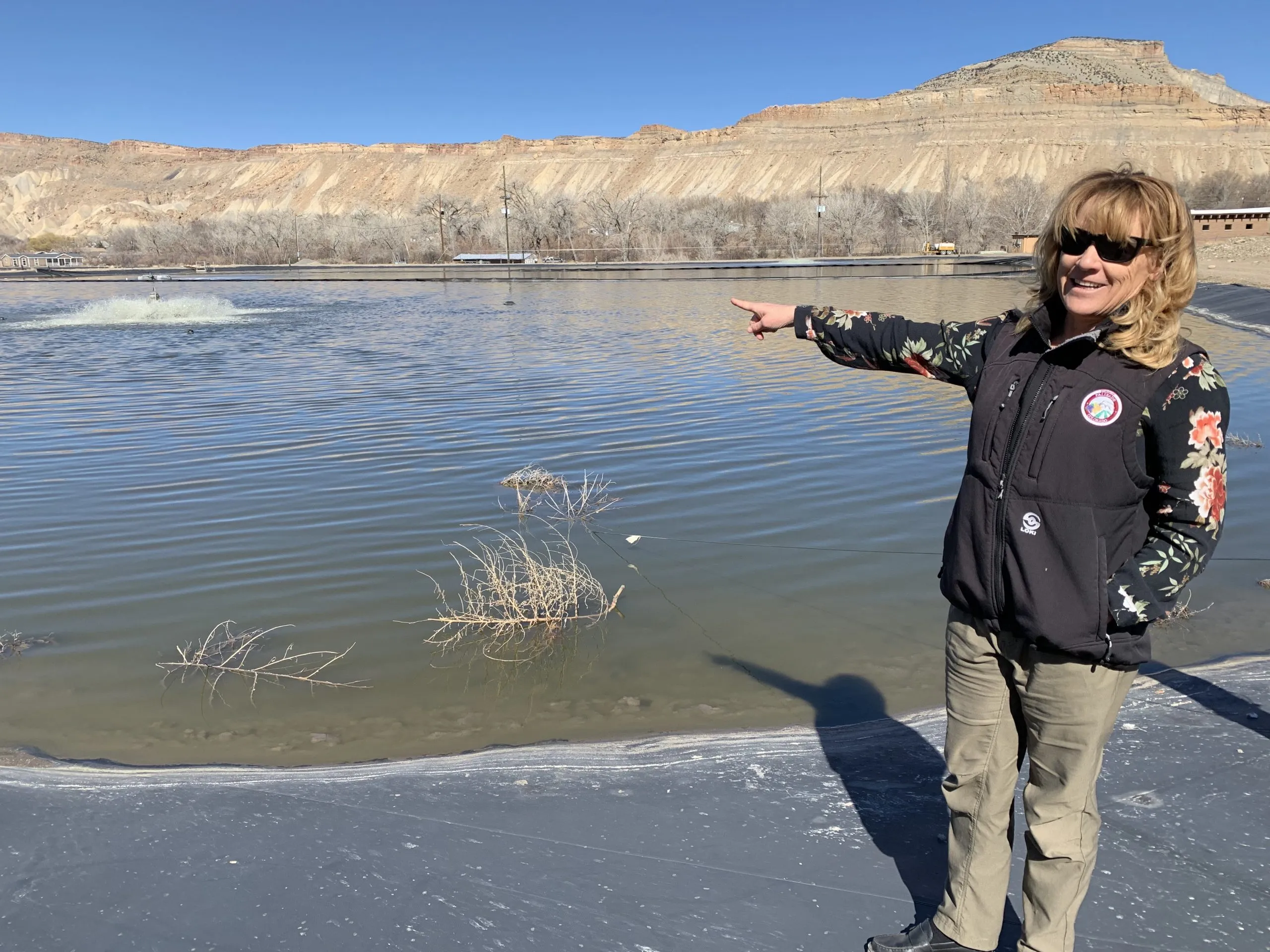
Palisade Town Manager Janet Hawkinson points out the aerators in the town’s wastewater lagoons. The Town plans to pipe its wastewater to Clifton’s treatment plant and reclaim the nine-acre area as wetlands using a $3 million federal grant — funding which has now been paused by the Trump administration. Credit: HEATHER SACKETT/Aspen Journalism

Click the link to read the article on the Aspen Journalism website (Heather Sackett):

March 2, 2025

In the Grand Valley south of Highway 50, Orchard Mesa Canal No. 1 winds through 18 miles of rural agricultural farmland and residential backyards. 

In January, the Orchard Mesa Irrigation District was promised $10.5 million from the U.S. Bureau of Reclamation to pipe the open canal — which has crumbling chunks of concrete and rebar poking out along its sides — and install more-efficient valves instead of headgates. In addition to delivering water more easily to the 6,700 users in the district, a goal of the project is to improve the irrigation system’s efficiency so more water could be left for endangered fish in a critical 15-mile stretch of the Colorado River. 

But the future of the project is uncertain because about $151 million in funding for projects aimed at conservation and drought resilience on the Western Slope has been frozen by the Trump administration.

“We are on hold ourselves because we don’t have the revenue to move forward,” said Jackie Fisher, manager of the Orchard Mesa Irrigation District. 

On Jan. 17, during the final days of the Biden administration, the U.S. Bureau of Reclamation announced it had awarded $388 million in funding through the Inflation Reduction Act for projects throughout the Colorado River’s Upper Basin (Colorado, New Mexico, Utah and Wyoming). The money was allocated through what the bureau called “Bucket 2, Environmental Drought Mitigation,” or B2E, which is earmarked for projects that provide environmental benefits and address issues caused by drought.

But just three days later, the Trump administration issued an executive order, “Unleashing American Energy,” which said “all agencies shall immediately pause the disbursement of funds appropriated through the Inflation Reduction Act of 2022.”

Water managers say they are waiting on information from the bureau and have not heard anything about the status of funding since the Jan. 17 announcement. Most are operating under the assumption funding is still paused and, with it, their projects. The Trump administration has yet to appoint a new Bureau of Reclamation commissioner. 

“Officially, from Reclamation we have not heard a thing,” said Steve Wolff, general manager of the Durango-based Southwestern Water Conservation District, which was awarded $26 million for drought mitigation. “We’re very happy we were successful, but now we are in a no-man’s land.”

Officials from the bureau did not respond to questions from Aspen Journalism about the status of the funding.

Seventeen of the 42 Upper Basin projects are in western Colorado and include things such as almost $3 million for dam removal and wetlands restoration at Fruita Reservoir; $1.9 million for studying the effectiveness of beaver dam analogs in the headwaters of the Roaring Fork River; and $4.6 million for drought resiliency on conserved lands. The funding pause also affects six tribal water projects in the Upper Basin, including $16 million for the Southern Ute Indian Tribe for drought mitigation on the Pine River.

Abby Burk, a senior manager with Audubon Rockies’ Western Rivers Program, said everyone awarded the funding is in limbo now. Burk is involved with two of the projects awarded B2E money in the Grand Valley: the Fruita Reservoir dam removal and restoration, and a project in Palisade that would convert wastewater lagoons into wetlands.

“We’ve got some great projects that are just hanging in the air waiting for a decision,” Burk said. “We in the environmental community are trying to support our project partners; we are just at a momentary loss. There’s just quite a bit of uncertainty.”

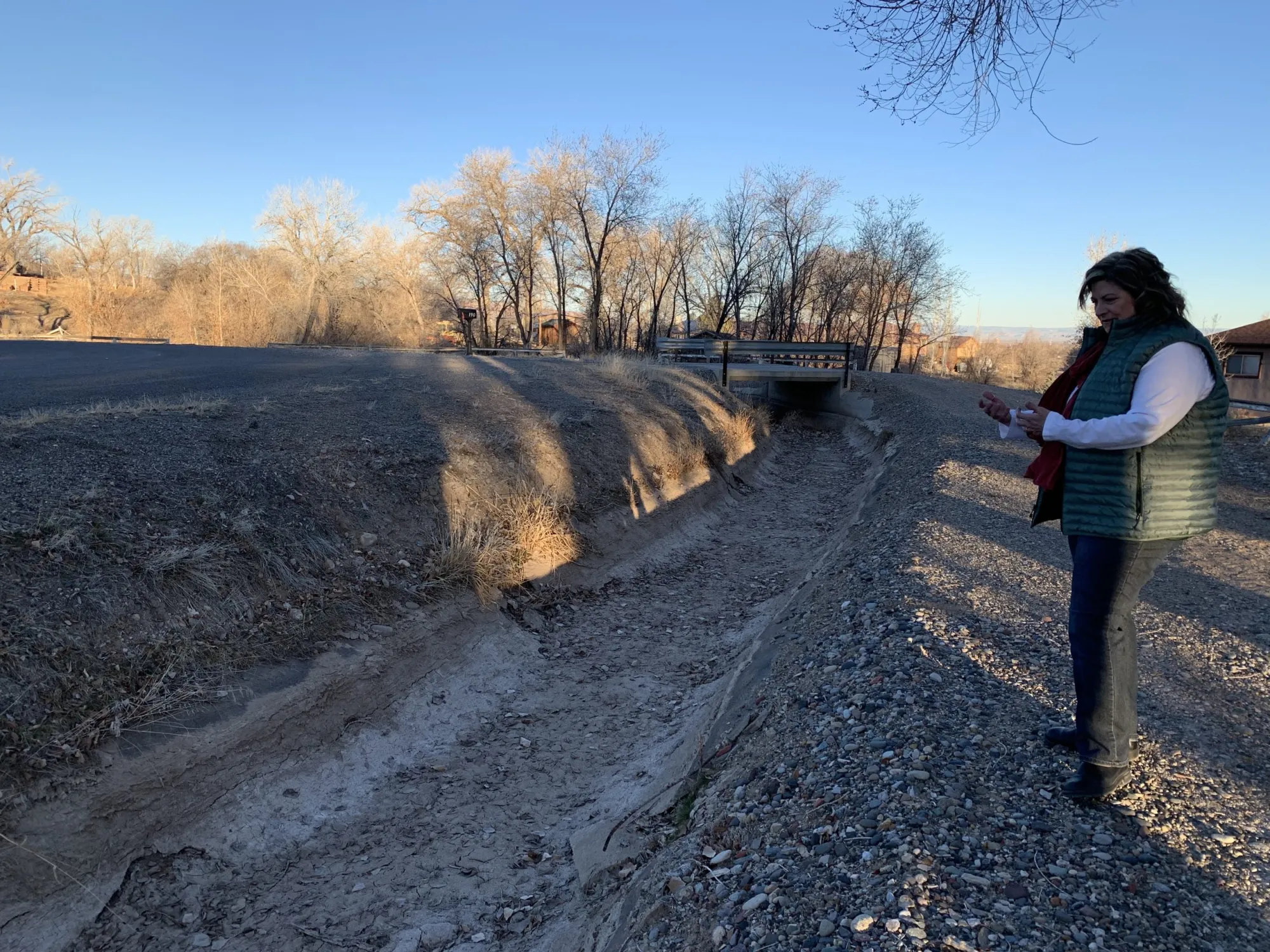
Manager of the Orchard Mesa Irrigation District Jackie Fisher points out the crumbling concrete in the lining of the district’s canal No. 1. OMID was awarded a $10.5 million federal grant for infrastructure upgrades, but that funding has been paused by the Trump administration. Credit: HEATHER SACKETT/Aspen Journalism

The uncertainty surrounding B2E funding comes at a crucial time for the Colorado River basin, which has been plagued by drought and dwindling streamflows due to climate change for more than the past two decades. Representatives from the seven Colorado River basin states (California, Arizona and Nevada, which comprise the Lower Basin) are in the midst of tense negotiations about how the nation’s two largest reservoirs — Lake Powell and Lake Mead — will be operated and how water-supply shortages will be shared in the future. 

Some water managers said that without this once-in-a-lifetime federal funding they were promised, many of these projects probably won’t happen. Southwestern Water Conservation District was awarded the grant, but the district plans to distribute the money to smaller local entities for a variety of projects, including invasive plant control through the Mancos Conservation District; to the Ute Mountain Ute Tribe for erosion control and restoration; and to Mountain Studies Institute for restoration of fens.

“For these projects to happen, we absolutely need this funding,” Wolff said. “I certainly hope it does shake loose.”

The $10.5 million awarded to the Orchard Mesa Irrigation District would cover the entire cost of the canal piping project, and without federal money, the district would struggle to pay for it, Fisher said. 

“We already run on a shoestring budget, so a $10.5 million project is nearly impossible,” Fisher said. “We’re pinching pennies all the way around.”

The Glenwood Springs-based Colorado River Water Conservation District is the recipient of the biggest B2E award in Colorado: $40 million toward the purchase of the Shoshone water rights. The River District is in the midst of a campaign to buy the water rights associated with Xcel Energy’s hydropower plant in Glenwood Canyon for $99 million. These water rights are some of the oldest nonconsumptive rights on the Western Slope and help keep water flowing to downstream ecosystems, cities, agricultural and recreational water users. 

In a prepared statement, the River District’s general manager, Andy Mueller, struck a slightly more optimistic tone.

“While the timing of federal funding to secure the Shoshone water rights remains uncertain, the River District is encouraged by key appointments within the Department of the Interior,” Mueller said. “We are prepared to work closely with the next Bureau of Reclamation commissioner to advance this critical effort and other essential water projects that protect agriculture and the communities that rely on it — both in Colorado and across the basin.”